Hormuz Halt: India Boosts Russian Oil Imports Amid Strait Crisis

Hormuz Halt

Hormuz Halt Latest News

  • Due to disruptions in oil flows through the Strait of Hormuz amid the West Asia conflict, the Indian government and public sector refiners are considering increasing imports of Russian crude to maintain supply continuity.
  • India had recently reduced Russian oil purchases during trade negotiations with the United States. However, with Hormuz shipments effectively suspended, abundant Russian supplies could help India manage potential shortages.

India’s Oil Dependence and the Strait of Hormuz

  • Around 2.5–2.7 million barrels per day of India’s crude imports pass through the Strait of Hormuz. 
  • This accounts for nearly half of India’s total oil imports, mainly from Iraq, Saudi Arabia, the UAE, and Kuwait.
  • India is the world’s third-largest crude oil consumer and imports over 88% of its oil needs. 
  • A large share of its gas consumption also depends on imports from West Asia through the Strait.

Strategic Importance of the Strait of Hormuz

  • The Strait of Hormuz is a narrow waterway between Iran and Oman connecting the Persian Gulf to the Arabian Sea. 
  • It is the world’s most critical oil transit chokepoint, handling about one-fifth of global petroleum and LNG trade.
  • Following messages from Iran’s Islamic Revolutionary Guards Corps claiming closure of the Strait, many traders, insurers, and shipping companies suspended shipments to avoid conflict risks.

Russian Crude as an Alternative

  • With Hormuz shipments disrupted, India may turn to Russian oil. Russian crude is available in significant volumes in the Indian Ocean and Arabian Sea, including in floating storage.
  • Industry estimates suggest about 10 million barrels of Russian crude are currently available in Asian waters.

Changing Import Patterns

  • India imported about 1.1 million barrels per day of Russian crude in February, lower than the 2025 peak of over 2 million barrels per day.
  • Loadings for Indian ports, which averaged 1.7 million barrels per day last year, fell to 0.7 million barrels per day in February.
  • This earlier reduction in Russian imports has now created room for a possible increase if supply from the Strait of Hormuz remains disrupted.

India’s Immediate Energy Cushion

  • Indian refiners currently hold more than 10 days of crude oil inventories and about a week’s worth of fuel stocks. 
  • In addition, roughly a week’s supply of crude is available in India’s strategic petroleum reserves.
  • These buffers provide short-term protection against sudden supply disruptions.

Alternative Sourcing Options

  • To manage potential shortages, India can draw from strategic reserves and accelerate spot purchases from non-Hormuz regions. 
  • Alternative suppliers include the United States, West Africa, Latin America, and Russia.
  • Russian crude available in nearby waters, including floating storage, offers immediate flexibility if Middle Eastern imports are constrained.

Risk Depends on Duration of Disruption

  • The overall impact on India will depend on how long the Strait of Hormuz remains disrupted. Most experts believe a prolonged blockade is unlikely.
  • However, the longer the disruption continues, the greater the effect on global energy markets and domestic fuel prices.

LPG and LNG: Key Vulnerabilities

  • LPG is India’s biggest vulnerability. The country imports 80–85% of its LPG needs, mostly from Gulf suppliers through Hormuz. 
  • Unlike crude oil, India does not maintain large strategic LPG reserves, making supplies more sensitive to disruption.
  • Similarly, around 60% of India’s LNG imports pass through the Strait. Structural buffers for LNG are limited, and spot cargo availability is relatively thin.
  • In the event of a prolonged closure of Hormuz, securing LPG and LNG supplies could become more challenging than crude oil.

Source: IE | IE

Hormuz Halt FAQs

Q1: Why is Hormuz Halt significant for India?

Ans: Hormuz Halt threatens nearly half of India’s crude imports, forcing policymakers to consider alternative supplies like Russian oil to ensure energy security.

Q2: How much Indian crude passes through Hormuz?

Ans: Around 2.5–2.7 million barrels per day, nearly half of India’s oil imports, transit the Strait of Hormuz.

Q3: Why is Russian oil important during Hormuz Halt?

Ans: Hormuz Halt increases the importance of Russian crude, as nearly 10 million barrels are available in Asian waters for quick procurement.

Q4: Does India have buffer stocks during Hormuz Halt?

Ans: Yes. India holds over 10 days of crude inventory and maintains strategic petroleum reserves to manage short-term supply disruptions.

Q5: Which fuels are most vulnerable during Hormuz Halt?

Ans: LPG and LNG are more vulnerable during Hormuz Halt because India imports 80–85% of LPG and 60% of LNG via Hormuz.
Iran’s Power Pyramid: Role of the Supreme Leader Explained

Iran’s Power Pyramid

Iran’s Power Pyramid Latest News

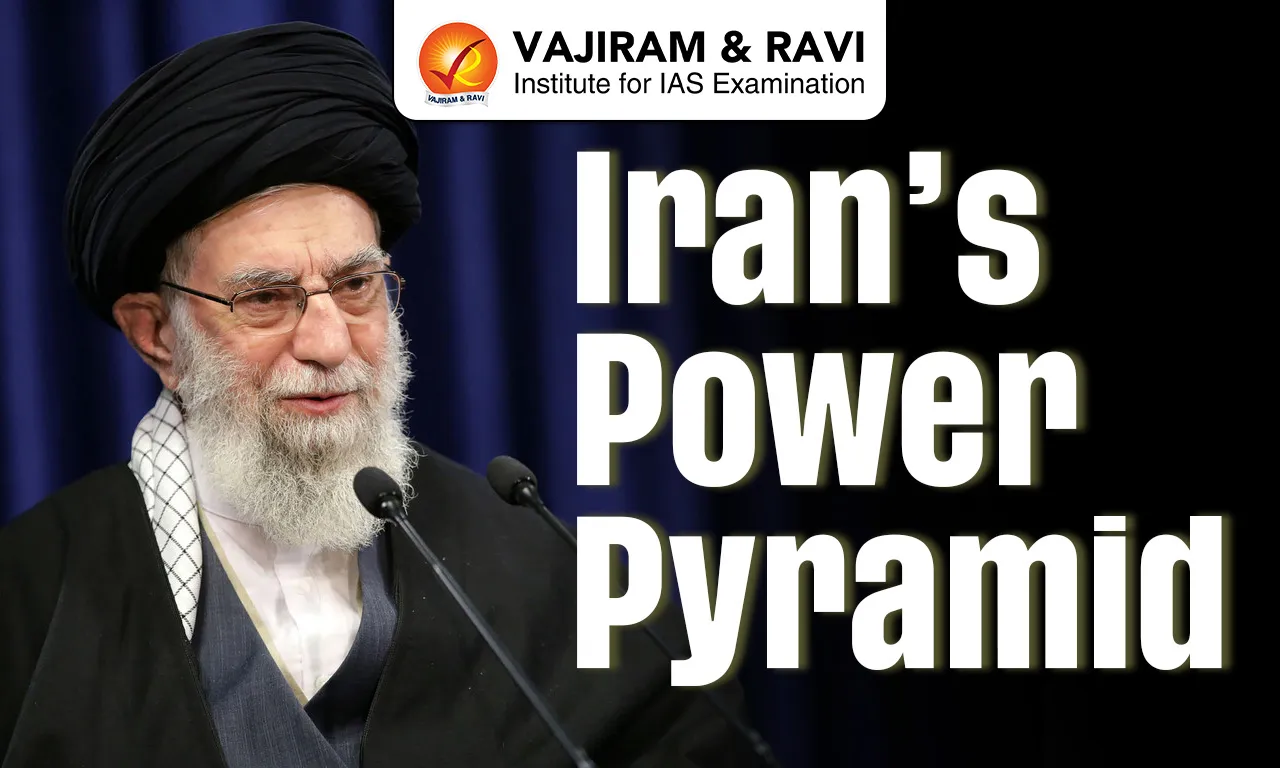
  • The assassination of Ayatollah Ali Khamenei, Iran’s 86-year-old Supreme Leader, marks the end of a defining era in the country’s post-1979 Islamic Revolution leadership. He was killed in an attack by US and Israeli forces.
  • Following his death, the constitutional process to appoint a successor was immediately activated. The Assembly of Experts has begun deliberations to select the next Supreme Leader.
  • In the interim, a three-member Interim Leadership Council has taken over his duties, as provided under Iran’s Constitution. 
  • These developments highlight the structured mechanisms within Iran’s political system to manage leadership transitions during crises.

Religion and Politics in Iran: Historical Roots

  • The close relationship between religion and politics in Shia-majority Iran predates the 1979 Islamic Revolution. 
  • Shia clerics often adopted an anti-monarchist stance and actively participated in political movements.
  • Important examples include: 
    • the 19th-century Tobacco Movement against British concessions, 
    • the Constitutional Revolution of 1906–11 demanding a constitutional monarchy, 
    • protests against the Shah’s 1963 White Revolution reforms, and 
    • finally the 1979 Revolution.

The 1979 Revolution and Clerical Leadership

  • The ideological leadership of Ayatollah Khomeini, even while he was in exile in France, played a decisive role in shaping the 1979 Revolution and the Islamic Republic that followed.
  • Although diverse groups such as workers and communists joined the anti-Shah protests, the religious establishment gained greater legitimacy and influence after the Revolution due to its strong ideological direction.

Mosques as Political Spaces

  • One key factor behind the clergy’s rise was the central role of mosques in political mobilisation. Friday prayer gatherings became important platforms for religio-political expression.
  • In a repressive environment where public spaces were monitored by the Shah’s secret police, SAVAK, mosques functioned as relatively safe spaces (bast) for organising resistance.

Consolidation of a Religio-Political System

  • Over the past 47 years, Iran developed a political system made up of hierarchical yet interconnected institutions rooted in revolutionary ideology.
  • Ayatollah Khamenei led this system, which blends religious authority with political power and reflects the long historical intertwining of Shia clerical leadership and state governance in Iran.

Khomeini and Khamenei: Shaping Iran’s Supreme Leadership

  • Before and during the 1979 Revolution, religious scholars and intellectuals reinterpreted Islamic ideas in a revolutionary way. 
  • Thinkers like Ali Shariati linked faith with social justice and anti-imperialist politics, though he did not support clerical political rule.
  • Ayatollah Khomeini, however, advanced the doctrine of velayat-e-faqih (rule of the jurisprudent). 
  • He argued that a senior Islamic jurist should lead the state. This idea became the foundation of Iran’s political system.

Constitutional Framework of the Islamic Republic

  • The 1979 Constitution combined Khomeini’s theory of clerical rule with elements of republicanism. 
  • It created the post of Supreme Leader with overarching authority over political and religious affairs.
  • After Khomeini’s death in 1989, constitutional amendments redistributed some executive powers and abolished the Prime Minister’s post. 
  • However, the core structure of clerical supremacy remained intact.

Rise of Ayatollah Khamenei

  • Ayatollah Ali Khamenei succeeded Khomeini in 1989. His selection was controversial, as Ayatollah Montazeri had earlier been designated successor.
  • Khamenei had served as President from 1981 to 1989, during the Iran-Iraq War. 
  • The war years shaped his political outlook and strengthened his image as a defender of the Islamic Republic.

Leadership Style and Challenges

  • As Supreme Leader, Khamenei combined religious authority with political control. 
  • Internationally, he was seen as a hardliner, though some analysts described him as pragmatic.
  • Domestically, his leadership faced criticism. 
  • The Mahsa Amini protests in 2022 and later economic demonstrations reflected dissatisfaction with authoritarian governance and economic isolation.
  • His policy of a “resistance economy,” aimed at reducing dependence on the West and countering sanctions, did not fully resolve Iran’s economic challenges.

Continuity and Change

  • Both Khomeini and Khamenei shaped Iran’s unique system of clerical governance. 
  • While institutional adjustments occurred over time, the central principle of Supreme Leader supremacy remained the defining feature of Iran’s political order.

Iran After the Supreme Leader

  • Iran has regularly held elections for the President, the Majlis (Parliament), and local bodies. Politics has long been shaped by rivalry between reformists and hardliners.
  • Ayatollah Khamenei, though often supportive of hardliners, developed a practice of balancing factions and managing internal differences. 
  • His religious decree (fatwa) against nuclear weapons and his approval of the 2015 Joint Comprehensive Plan of Action (JCPOA) showed a mix of ideology and pragmatism in state policy.

Role of the Islamic Revolutionary Guard Corps (IRGC)

  • The Islamic Revolutionary Guard Corps (IRGC), created after the 1979 Revolution, became a key pillar of the regime.
  • Beyond defending the revolution internally, it expanded Iran’s regional influence by supporting groups such as Hamas in Gaza and Hezbollah in Lebanon. 
  • Khamenei regarded the IRGC as central to maintaining political stability.

Growing Gap Between State and Society

  • Years of sanctions and international isolation have strained Iran’s economy. Many citizens have demanded greater political participation and accountability.
  • This has created a widening gap between public expectations and the state’s performance. 
  • Economic hardships and political restrictions have intensified domestic dissatisfaction.

Source: IE | IT

Iran’s Power Pyramid FAQs

Q1: What is Iran’s Power Pyramid?

Ans: Iran’s Power Pyramid refers to the hierarchical system placing the Supreme Leader at the apex, combining religious authority with political control.

Q2: What is velayat-e-faqih in Iran’s Power Pyramid?

Ans: Velayat-e-faqih, or rule of the jurisprudent, is the constitutional principle giving ultimate authority to the Supreme Leader.

Q3: Who selects the Supreme Leader in Iran’s Power Pyramid?

Ans: The Assembly of Experts, an elected clerical body, selects and oversees the Supreme Leader within Iran’s Power Pyramid structure.

Q4: What role does the IRGC play in Iran’s Power Pyramid?

Ans: The Islamic Revolutionary Guard Corps protects the revolution, supports regional proxies, and ensures regime stability within Iran’s Power Pyramid.

Q5: What challenges does Iran’s Power Pyramid face today?

Ans: Sanctions, economic hardship, protests like Mahsa Amini’s, and leadership transition pressures challenge the durability of Iran’s Power Pyramid.

Resetting India–Canada Relations – Uranium Deal and CEPA Negotiations

India–Canada Relations

India-Canada Relations Latest News

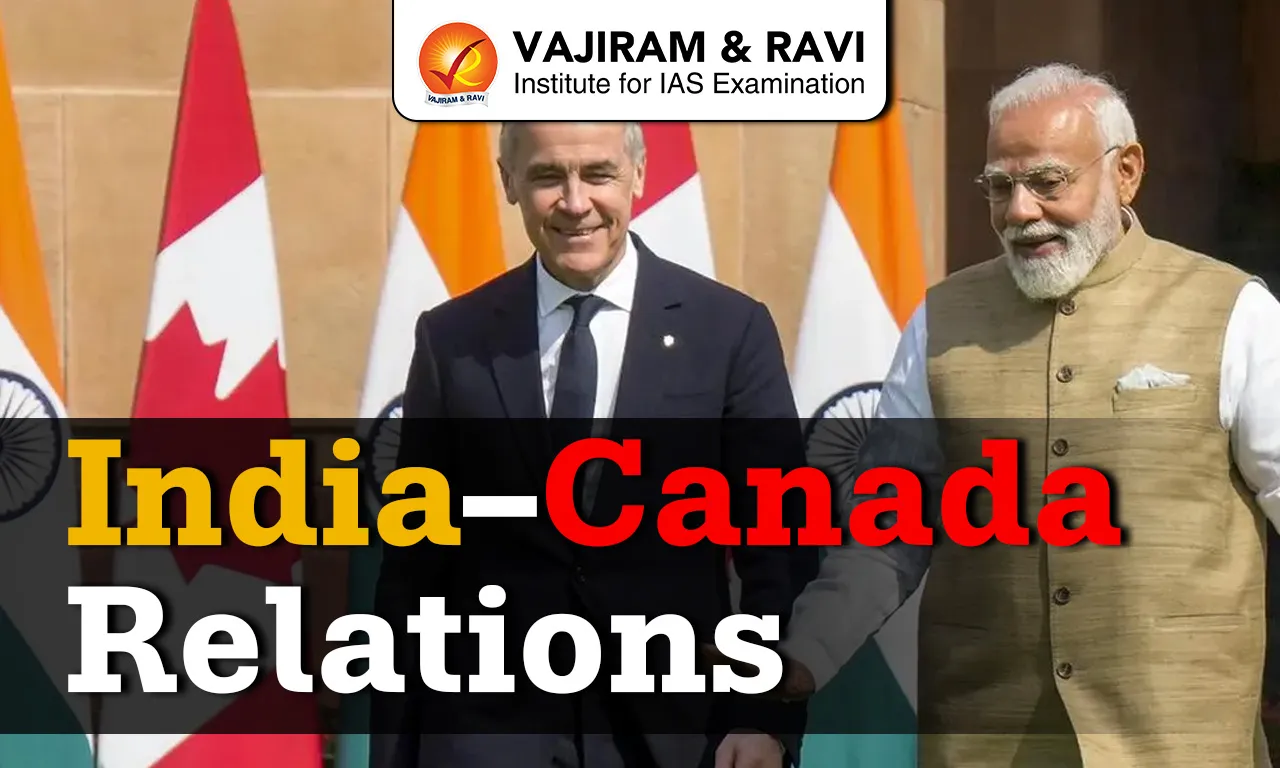
  • India and Canada have taken significant steps to reset strained bilateral relations during the recent visit of Canadian Prime Minister Mark Carney to India. 
  • Talks with the Indian PM focused on rebuilding strategic trust, enhancing economic ties, and strengthening cooperation in energy and security.
  • The visit marks the first full bilateral Canadian Prime Ministerial visit since Justin Trudeau’s 2018 trip and comes after relations deteriorated following the 2023 diplomatic dispute over the killing of Hardeep Singh Nijjar.
  • Leaders also discussed escalating conflict in West Asia. India emphasised peace and stability, diplomacy and dialogue, however, no joint position was announced.

Major Outcomes of the Visit

  • Long-term uranium supply:
    •  Agreement:
      • India and Canada signed a $1.9 billion uranium supply agreement for 10,000 tonnes (2027–2035).
      • Canadian company Cameco will supply uranium for Indian nuclear power plants.
      • This will support India’s civil nuclear energy programme and clean energy transition, and is intended to ensure reliable baseload power through nuclear energy.
    • Significance:
      • Enhances India’s energy security.
      • Strengthens civil nuclear cooperation.
      • Helps achieve climate goals and net-zero targets.
      • Builds on earlier uranium supply agreement (2015–2020).
  • Comprehensive Economic Partnership Agreement (CEPA):
    • Trade expansion goals: Terms of Reference for CEPA negotiations finalised, targeting to boost bilateral trade by 2030 [from $8.66 billion (2024–25) to $50 billion].
    • Key areas of cooperation: Clean energy, critical minerals, agricultural value chains, advanced manufacturing, and technology cooperation.
    • Significance:
      • Reduces trade dependence on the U.S.
      • Diversifies global economic partnerships.
      • Revives suspended trade negotiations.
  • Strategic energy partnership:
    • India and Canada agreed to cooperate in uranium supplies, renewable energy, LPG sector, nuclear technology, Small Modular Reactors (SMRs), and advanced reactors.
    • This reflects a shift towards clean energy cooperation and energy transition.
  • Multilateral cooperation:
    • Canada agreed to join the International Solar Alliance, and Global Biofuel Alliance.
    • Significance: This will strengthen India’s climate diplomacy, and expands India's role in global renewable governance.
  • Security and strategic cooperation:
    • Both sides agreed to strengthen cooperation in counterterrorism, violent extremism, organised crime, and intelligence sharing.
    • They agreed to convene the Joint Working Group on Counterterrorism. Key focus - Addressing concerns over Khalistani extremism, and combating transnational repression and foreign interference.

Strategic Significance for India

  • Economic importance: Access to critical minerals, energy resources, and advanced technologies.
  • Energy security: Reliable uranium supply for nuclear energy expansion.
  • Climate goals: Nuclear and renewable cooperation supports low-carbon growth.
  • Indo-Pacific strategy: Strengthens ties with a key G7 partner.

India-Canada Relations

  • Canada and India share over 75 years of diplomatic relations, which were formally designated as a “Strategic Partnership” in 2018.
  • India is Canada’s largest source country for most immigration categories, with over 1.8 million (including over 425,000 Indian students) people of Indian origin—nearly 4% of its population—significantly influencing the nation's culture, economy, and politics.
  • Key exports from India to Canada ($4.22 billion) include drugs & pharmaceuticals, iron & steel, seafood, cotton garments, electronic goods and chemicals among others. 
  • Key imports of India from Canada ($4.44 billion) include pulses, pearls & semiprecious stones, coal, fertilizer, paper and petroleum crude.

Challenges in India-Canada Relations

  • Trust deficit:
    • Nijjar killing controversy, and diplomatic tensions since 2023. 
    • Canadian agencies reportedly claim involvement of Indian consular officials in the killing of Hardeep Singh Nijjar, which India strongly denies.
    • This had earlier led to diplomatic expulsions, suspension of trade negotiations, strategic mistrust, and remains a major obstacle to trust-building.
  • Khalistan issue: India's concerns over safe havens for separatist groups in Canada. Canada's concerns about transnational repression.
  • Trade barriers: Long-pending CEPA negotiations due to regulatory differences.
  • Implementation risks: Earlier uranium agreements did not fully deliver. Need for reliable supply commitments.

Way Forward

  • Institutional dialogue: Regular political and diplomatic engagement, strengthening counterterrorism mechanisms.
  • Early conclusion of CEPA: Fast-track negotiations by addressing regulatory barriers.
  • Confidence-Building Measures: Transparent investigation mechanisms, intelligence cooperation.
  • Expanding energy cooperation: Uranium supply stability, SMR development, renewable partnerships.
  • Diaspora engagement: Address concerns related to extremism while protecting democratic freedoms.

Conclusion

  • The 2026 India–Canada agreements mark a cautious but significant attempt to rebuild strategic trust after years of diplomatic friction. 
  • It signals a pragmatic shift toward economic and energy cooperation. However, the unresolved Nijjar controversy and mutual security concerns continue to pose risks. 
  • Sustained dialogue and institutional cooperation will be crucial to transforming the relationship into a stable strategic partnership.

Source: TH | IE

India–Canada Relations FAQs

Q1: What is the significance of the uranium supply agreement between India and Canada?

Ans: The long-term uranium supply agreement strengthens India’s energy security and helps rebuild strategic trust in India–Canada relations.

Q2: What is the strategic importance of the proposed India–Canada CEPA?

Ans: CEPA aims to diversify trade partnerships and expand bilateral trade to $50 billion by 2030, enhancing economic resilience for both countries.

Q3: How civil nuclear cooperation contributes to India’s clean energy transition?

Ans: It provides reliable low-carbon baseload power essential for achieving India’s climate and energy security goals.

Q4: How persistent political differences continue to shape India–Canada relations despite economic cooperation?

Ans: Issues such as Khalistani extremism and the Nijjar case continue to create trust deficits.

Q5: What is the role of minilateral climate initiatives in strengthening India’s global leadership?

Ans: Initiatives like the International Solar Alliance and Global Biofuel Alliance enhance India’s leadership in global renewable energy governance.

Nucleic Acid Test (NAT) for Blood Transfusion – Explained

Nucleic Acid Test

Nucleic Acid Test Latest News

  • The Supreme Court has agreed to examine whether the Nucleic Acid Test (NAT) should be made compulsory in blood banks to ensure safer blood transfusion practices. 

Background of the Case

  • The matter came before a Bench of the Chief Justice of India and two other judges after a petition was filed by an NGO seeking mandatory implementation of NAT across blood banks in India. 
  • The petitioner argued that the right to safe blood transfusion forms part of the fundamental right to life under Article 21 of the Constitution
  • The plea emphasised that NAT is a safer and more sensitive testing mechanism compared to existing screening methods and is necessary to prevent transfusion-transmitted infections.
  • The Court has asked the petitioner to submit additional data on cost-effectiveness, State-level implementation, and feasibility before taking a final view. 

What is the Nucleic Acid Test (NAT)

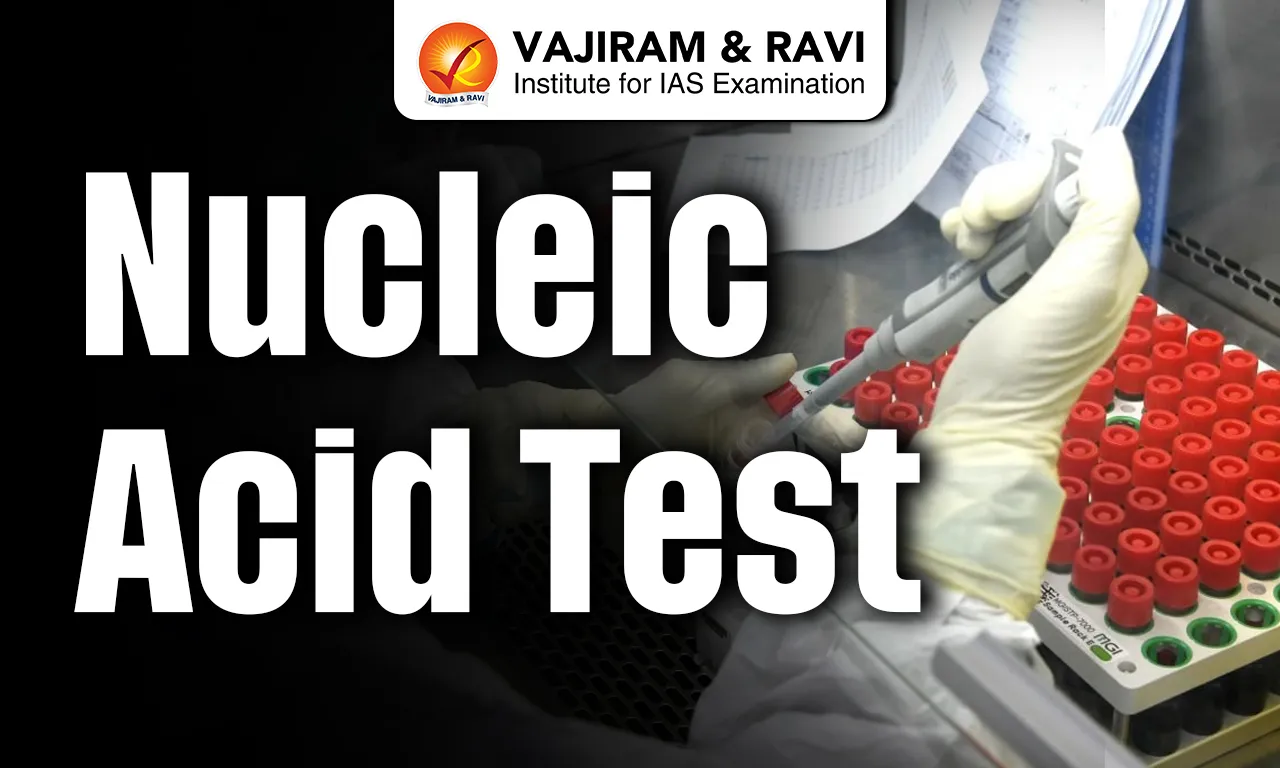
  • Nucleic Acid Test (NAT) is a highly sensitive molecular diagnostic technique that detects the genetic material (DNA or RNA) of viruses in donated blood. 
  • It is capable of identifying infections such as Human Immunodeficiency Virus (HIV), Hepatitis B, and Hepatitis C.
  • Unlike traditional serological tests, NAT reduces the “window period”, the time between infection and detectability, thereby enhancing blood safety.
  • Currently, many blood banks in India primarily use Enzyme-Linked Immunosorbent Assay (ELISA) tests, which are less expensive but comparatively less sensitive during early infection stages.

Constitutional Dimension and Right to Life

  • The petitioner has argued that access to safe and infection-free blood is an integral component of the right to life under Article 21. 
  • The Supreme Court has previously interpreted Article 21 expansively to include the right to health, medical care, and dignity. 
  • In this context, ensuring safe blood transfusion aligns with the constitutional obligation of the State to protect public health.
  • The Court’s decision to examine the issue indicates recognition of the broader public health and human rights implications.

Cost and Feasibility Concerns

  • During the hearing, the Bench raised questions regarding the financial feasibility of making NAT mandatory across all States. 
  • The Court asked whether economically weaker States, already struggling with budgetary constraints, would be able to afford NAT in government blood banks and hospitals. 
  • While the petitioner argued that the costs of NAT are comparatively low, the Court highlighted that additional financial burdens could affect States with limited fiscal capacity.
  • The Bench has directed the petitioner to file an affidavit detailing:
    • Whether State hospitals currently use NAT
    • In how many hospitals is it implemented
    • The States where it is operational 
  • This indicates that the Court is adopting a data-driven approach before considering mandatory nationwide implementation.

Public Health Context and Recent Incidents

  • The issue has gained urgency due to reported cases of children contracting HIV allegedly due to contaminated blood transfusions.
  • The petition referred to cases involving Thalassemia patients, who require frequent blood transfusions and are particularly vulnerable to infected blood. 
  • Thalassemia is an inherited blood disorder in which the body cannot produce adequate haemoglobin. India has a high burden of Thalassemia patients, increasing the demand for safe and regular blood transfusions. 
  • The case assumes greater significance against the backdrop of reported incidents in Madhya Pradesh and Jharkhand, where children were found HIV-positive following allegedly contaminated transfusions. 
  • Such incidents have been described as “preventable tragedies” in the petition. 
  • These events have reignited debate over the adequacy of existing blood screening mechanisms.

Policy and Regulatory Framework

  • Blood safety in India is regulated under the Drugs and Cosmetics Act, 1940, and supervised by the National Blood Transfusion Council (NBTC) and State Blood Transfusion Councils.
  • Currently, mandatory screening includes tests for HIV, Hepatitis B, Hepatitis C, malaria, and syphilis using serological methods. NAT is not uniformly mandated across all blood banks.
  • Introducing compulsory NAT would require:
    • Infrastructure upgrades
    • Skilled laboratory personnel
    • Increased financial allocation
    • Standardisation across public and private sectors
  • The decision, therefore, has implications for both health governance and fiscal policy.

Source: TH

Nucleic Acid Test FAQs

Q1: What is Nucleic Acid Test (NAT)?

Ans: NAT is a molecular test that detects viral genetic material such as HIV, Hepatitis B, and Hepatitis C in blood.

Q2: Why is NAT considered safer than ELISA?

Ans: NAT reduces the infection detection window period, identifying infections earlier than traditional serological tests.

Q3: Which constitutional provision is involved in this case?

Ans: The case invokes Article 21, which guarantees the right to life and includes the right to health.

Q4: Why are Thalassemia patients central to this issue?

Ans: Thalassemia patients require frequent transfusions and are highly vulnerable to infected blood.

Q5: What key concern did the Supreme Court raise?

Ans: The Court questioned the cost-effectiveness and feasibility of making NAT mandatory across all States.

Enquire Now