Tax Exemption on FII Investments in Government Bonds – Explained

FII Investments

FII Investments Latest News

  • The Union Government has exempted Foreign Institutional Investors (FIIs) from capital gains tax and interest income tax on investments in Indian government bonds to attract foreign capital inflows.

Foreign Investment in Government Bonds

  • Government bonds are debt securities issued by the Central Government to finance its expenditure and borrowing requirements. 
  • These securities are considered among the safest investment instruments because they carry sovereign backing.
  • Foreign investors participate in India's government bond market through regulated channels that allow overseas capital to invest in domestic debt instruments.

Routes for Foreign Investment

  • Foreign investors can invest in Indian government securities through two major routes:
  • General Route
    • Subject to investment limits and regulatory restrictions. 
    • Designed to manage foreign participation in domestic debt markets. 
  • Fully Accessible Route
    • Introduced by the Reserve Bank of India in 2020. 
    • Permits non-resident investors to invest in specified government securities without investment caps. 
    • Aims to integrate Indian debt markets with global financial markets. 
    • The inclusion of Indian government bonds in major global bond indices in recent years has further increased foreign investor interest.

Benefits of Foreign Investment in Government Bonds

  • Foreign investment in government securities offers several advantages:
    • Stable Source of Capital
      • Government bonds generally attract long-term institutional investors such as sovereign wealth funds, pension funds, and insurance companies, providing relatively stable capital inflows.
    • Support for Government Borrowing
      • Higher demand for government securities can lower borrowing costs and improve debt market liquidity.
    • Strengthening External Sector Stability
      • Large foreign inflows help finance the current account deficit and support the country's Balance of Payments (BoP) position.
    • Support for the Rupee
      • Increased foreign currency inflows improve dollar availability in the domestic market and can help reduce depreciation pressures on the rupee.

News Summary

  • The Central Government has promulgated an ordinance amending the Income Tax Act, 2025, to exempt Foreign Institutional Investors from:
    • Long-term capital gains tax on government bonds. 
    • Short-term capital gains tax on government bonds. 
    • Withholding tax on interest income earned from government securities. 
    • The changes will take retrospective effect from April 1, 2026.
  • Previously, foreign investors were required to pay:
    • 12.5% tax on long-term capital gains. 
    • 30% tax on short-term capital gains. 
    • Around 20% withholding tax on interest income from government bonds. 
    • The exemption also extends to the Bank for International Settlements (BIS), an international organisation of central banks.

Objective Behind the Decision

  • The measure has been introduced amid concerns regarding:
    • Slowing foreign capital inflows. 
    • Pressure on the Indian rupee. 
    • A widening Balance of Payments deficit. 
  • Economists estimate that India's BoP deficit could reach $50-60 billion in FY27. Such a deficit can exert downward pressure on the rupee and increase external sector vulnerabilities.
  • The government expects that tax-free returns on government securities will make Indian bonds more attractive relative to competing markets.

Expected Impact on Capital Inflows

  • According to estimates cited in the report, the removal of these taxes could result in substantial foreign investment inflows over the next few years.
  • Axis Bank economists estimate that the measure could attract approximately $45-50 billion of foreign investment into government bonds over two years.
  • At present, foreign investors hold around Rs. 3.75 lakh crore worth of government securities, representing only about 3.34% of the total eligible government bond market of Rs. 112.42 lakh crore.
  • This indicates significant room for expansion in foreign participation.

RBI Measures to Complement the Reform

  • Alongside the tax changes, the Reserve Bank of India has announced additional steps to encourage foreign investment. These include:
    • Expanding the Fully Accessible Route (FAR) to cover all new issuances of 15-year, 30-year, and 40-year government bonds. 
    • Removing restrictions related to short-term investment limits. 
    • Relaxing concentration limits and security-specific limits for foreign portfolio investors under the General Route. 
  • These reforms are intended to deepen India's bond market and improve its attractiveness to global investors.

Implications for the Rupee and Bond Market

  • The announcement had an immediate positive impact on government bond markets, with bond yields declining following the ordinance.
  • Economists believe that stronger foreign inflows could:
    • Help bridge India's external financing gap. 
    • Improve Balance of Payments stability. 
    • Strengthen foreign exchange reserves. 
    • Provide support to the rupee. 
  • With greater foreign participation, India's sovereign debt market could become more integrated with global financial markets.

Source: TH | IE

FII Investments FAQs

Q1: What is the Fully Accessible Route (FAR)?

Ans: FAR allows foreign investors to invest in specified Indian government securities without investment limits.

Q2: Which taxes have been removed for FIIs investing in government bonds?

Ans: Long-term capital gains tax, short-term capital gains tax, and withholding tax on interest income.

Q3: Why is the government encouraging foreign investment in bonds?

Ans: To attract capital inflows, support the rupee, and improve Balance of Payments stability.

Q4: What is withholding tax?

Ans: It is a tax deducted at source from income payments such as interest earned on bonds.

Q5: What is the estimated foreign inflow from the new tax exemption?

Ans: Economists estimate inflows of about $45-50 billion over the next two years.

Monetary Policy Committee (MPC) – RBI Holds Rates Amid West Asia Crisis

Monetary Policy Committee (MPC)

Monetary Policy Committee (MPC) Latest News

  • The Reserve Bank of India (RBI), through its Monetary Policy Committee (MPC), has kept the repo rate unchanged at 5.25% despite rising inflationary pressures stemming from the West Asia conflict, elevated crude oil prices, and global economic uncertainties. 
  • Simultaneously, the RBI has revised growth and inflation projections and introduced measures to attract foreign capital inflows.

Reasons for Keeping Rates Unchanged

  • The MPC adopted a cautious "wait-and-watch" approach amid increasing uncertainty in the global economy.
  • Key reasons:
    • Escalating tensions involving the US, Israel, and Iran have increased risks of higher energy prices, supply-chain disruptions, financial market volatility, and global trade uncertainty.
    • India is also facing capital outflows, pressure on the rupee, and stress on foreign exchange reserves.
  • Implications of status quo:
    • Repo Rate remains at 5.25%, the rate at which RBI lends to commercial banks.
    • Lending and deposit rates are likely to remain stable.
    • EMIs on home, vehicle, personal and business loans are expected to remain unchanged.
    • Businesses gain a predictable borrowing environment for investment planning.
    • Borrowers receive relief from any immediate increase in financing costs.

Growth Outlook Weakens

    • RBI revises GDP growth forecast for FY27 from 6.9% to 6.7%. This marks a cumulative reduction of about 100 basis points from earlier expectations.
  • Factors behind lower growth:
    • Elevated crude oil prices.
    • Disruptions in global supply chains.
    • Geopolitical instability in West Asia.
    • Financial market volatility.
    • Weather-related disturbances affecting economic activity.
  • RBI's assessment: While domestic demand remains resilient and manufacturing and services continue to expand, external shocks are expected to moderate overall economic growth.

Inflation Risks Intensify

  • The Consumer Price Index (CPI) inflation forecast for FY27 has been raised from 4.6% to 5.1%. The revised estimate exceeds the RBI's medium-term inflation target of 4%.
  • Drivers of inflation:
    • Rising fuel prices: Retail fuel prices have already increased by around ₹7.5 per litre. Higher crude oil prices may lead to further revisions.
    • Direct impact on inflation: Fuel price increases could add approximately 35 basis points (bps) to headline CPI inflation.
    • Indirect inflationary effects: Transportation and logistics costs may increase. Additional impact estimated at 10–15 bps.
    • Food inflation risks: Heatwave conditions may affect agricultural output and food prices.
    • Producer price pressures: The Wholesale Price Index (WPI) inflation rose sharply to 8.3%, increasing the likelihood of pass-through to consumers.
  • Future monetary policy: If geopolitical tensions persist and inflation expectations become entrenched, analysts believe the RBI may consider rate hikes later in the year.

RBI’s Measures to Attract Foreign Capital

  • To strengthen external financing conditions and support economic growth, the RBI announced several capital inflow-enhancing measures.
  • Concessional forex swap facility for PSUs:
    • Available until September 30, 2026, it is designed to encourage External Commercial Borrowings (ECBs) by Public Sector Undertakings (PSUs).
  • Significance:
    • Reduces hedging and borrowing costs.
    • Enables PSUs in sectors such as oil, power and infrastructure to access cheaper overseas funds.
    • Supports investment and infrastructure spending.
  • Incentives for FCNR(B) deposits:
    • The RBI will provide full hedging support for banks mobilising Foreign Currency Non-Resident (Bank) [FCNR(B)] deposits with maturities of 3–5 years.
  • FCNR(B) account:
    • Fixed deposit account maintained by Non-Resident Indians (NRIs) and Overseas Citizens of India (OCIs).
    • Deposits are held in foreign currencies such as USD, GBP, EUR and CAD.
    • Protects depositors from exchange-rate fluctuations.
  • Expected benefits: Banks can offer more attractive interest rates. Increase in stable foreign currency inflows. Improved foreign exchange liquidity. Strengthening of India's external sector.

Liberalisation of Foreign Investments

  • Expansion of Fully Accessible Route (FAR): The RBI expanded the universe of government securities eligible under the FAR.
  • Key changes:
    • Inclusion of all new 15-year, 30-year, and 40-year government securities.
    • Removal of restrictions on short-term investments, concentration limits, and individual security exposure for Foreign Institutional Investors (FIIs).
  • Significance: Enhances foreign participation in government bond markets. Supports government borrowing programmes. Deepens India's debt market.

Greater Access for Overseas Investors

  • Equity investments: Higher investment limits for NRIs and OCIs in listed equity instruments. Similar benefits extended to all Persons Resident Outside India (PROIs) without mandatory SEBI registration.
  • Export promotion: RBI proposes restoring the time limit for realisation of export proceeds to nine months, supporting trade and foreign exchange earnings.

RBI Governor’s Remarks on Indian Economy

  • Indian Rupee is not undervalued: 
    • According to the REER, the rupee may actually be overvalued, indicating RBI's preference for avoiding artificial exchange-rate management and maintaining market-based valuation.
    • REER (Real Effective Exchange Rate): Measures a currency's value against major trading partners' currencies after adjusting for inflation, indicating international competitiveness.
  • Competition for deposits is healthy: As long as competition remains transparent and fair, it can improve financial intermediation and benefit depositors through better returns.
  • Private capital expenditure (Capex) showing improvement: The investment-to-GDP ratio has been rising, suggesting strengthening business confidence. 
  • Plastic/polymer currency notes under consideration: The central bank is evaluating the costs, benefits, durability, and overall viability before taking a final decision.

Conclusion

  • While holding rates steady protects economic activity amid global uncertainty, upward revisions in inflation forecasts highlight growing price pressures. 
  • Measures to attract foreign capital seek to strengthen the Balance of Payments (BoP), stabilise the rupee, and improve foreign exchange liquidity in an environment marked by rising geopolitical and economic risks.
  • Going forward, sustaining growth while containing imported inflation and ensuring adequate foreign capital inflows will remain central to India's monetary and external sector strategy.

Source: IE | IE

Monetary Policy Committee (MPC) FAQs

Q1: Why did the RBI maintain the repo rate despite rising inflationary pressures?

Ans: To balance growth concerns and inflation risks arising from the West Asia conflict.

Q2: How can geopolitical conflicts in West Asia affect India's inflation and economic growth?

Ans: It can raise crude oil prices, disrupt supply chains, increase imported inflation, weaken external demand.

Q3: What is the significance of the RBI's concessional forex swap facility for PSUs?

Ans: The facility lowers hedging and borrowing costs for PSUs, encourages External Commercial Borrowings (ECBs), etc.

Q4: How do FCNR(B) deposits contribute to India's external sector stability?

Ans: FCNR(B) deposits attract foreign currency inflows from NRIs and OCIs, improve forex liquidity, strengthen the BoP, etc.

Q5: What is the importance of the Fully Accessible Route (FAR) in India's government securities market?

Ans: FAR allows unrestricted foreign investment in specified government securities, enhancing capital inflows, deepening bond markets, etc.

Delhi-NCR’s Clean Mobility Scheme: Replacing Old Trucks and Buses to Reduce Air Pollution

Delhi-NCR's Clean Mobility Scheme

Delhi-NCR's Clean Mobility Scheme Latest News

  • Recently, the Union Cabinet approved a two-year Clean Mobility Scheme for Delhi-NCR. The scheme will incentivise owners of older, more polluting trucks and buses to replace them with BS-VI or stricter emission-compliant vehicles. 
  • It is expected to benefit owners of around 2.07 lakh vehicles — 1.91 lakh trucks and 16,329 buses. Government vehicles are excluded.

Bharat Stage (BS) Emission Norms

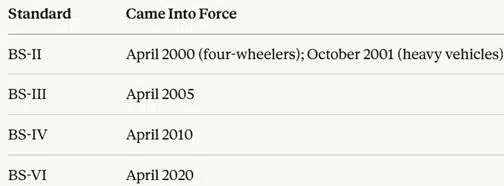
  • Bharat Stage (BS) standards are emission regulations set by the government to limit the amount of pollutants a vehicle's engine can release.

  • BS-VI is the current and strictest standard. It introduced tighter limits on pollutants, mandated cleaner fuels, and required advanced onboard diagnostic systems. 
  • India jumped directly from BS-IV to BS-VI in 2020, skipping BS-V entirely — a significant leap in emission control.

Why Old Trucks and Buses Are the Problem

  • Delhi-NCR has 2.98 crore registered vehicles, growing at 7% per year. The transport sector is one of the dominant sources of pollution — alongside dust, industrial emissions, and biomass burning.
  • But not all vehicles pollute equally. Old trucks and buses are disproportionately responsible for a large share of the damage.

The Numbers Tell the Story

  • Trucks and buses together account for 36% of PM2.5 emissions from the transport sector in Delhi-NCR.
    • PM2.5 refers to fine particulate matter — particles so tiny they penetrate deep into the lungs and enter the bloodstream, causing serious respiratory and cardiovascular disease.
  • A 2018 study by TERI found that the transport sector accounts for 40% of carbon monoxide and 63% of nitrogen oxide (NOx) emissions in Delhi-NCR.

Why Old Vehicles Are So Much Worse

  • A vehicle that is mechanically "fit" can still be dangerously polluting if it runs on an old BS standard. 
  • As engines age, parts wear out, combustion becomes incomplete, and emission controls degrade. 
  • Old vehicles also lack modern systems like diesel particulate filters and selective catalytic reduction that BS-VI vehicles use to clean exhaust.
  • The pollution gap between old and new vehicles is staggering:
    • A pre-BS norm heavy-duty vehicle pollutes 14 times more than a BS-VI vehicle.
    • A BS-IV vehicle emits 2.7 times more than a BS-VI vehicle.
    • A 15-year-old legacy commercial vehicle emits 11 times more PM and 6 times more NOx than a modern BS-VI vehicle.
    • An old BS-I heavy-duty truck emits up to 35 times more PM than a new BS-VI vehicle.

What the Scheme Proposes

  • The scheme incentivises vehicle owners to voluntarily phase out their older trucks and buses and replace them with cleaner alternatives.
  • The treatment differs by how old the vehicle is:
    • BS-III and older vehicles — Scrapping is mandatory.
    • BS-IV vehicles — Owners may either scrap them or sell them outside NCR, but only to areas not covered under the National Clean Air Programme (NCAP).
  • This ensures that older polluting vehicles are not simply relocated from Delhi to other vulnerable cities.

How This Fits Into India's Larger Clean Air Agenda

  • This scheme does not stand alone. Several earlier initiatives have worked towards cleaner transport in Delhi-NCR — the PM-eBus Sewa scheme for electric buses being a prominent example. 
  • The National Clean Air Programme (NCAP), launched in 2019, targets a 40% reduction in PM2.5 and PM10 concentrations by 2026 in 131 non-attainment cities — cities that consistently fail to meet air quality standards.
  • The Clean Mobility Scheme complements these by specifically addressing the legacy vehicle problem.

The Broader Pollution Context

  • Delhi-NCR's air pollution is driven by multiple sources — transport, construction dust, industries, and seasonal factors like crop stubble burning and winter weather conditions. 
  • Meteorology matters too. Cold, still winter air traps pollutants near the ground, which is why Delhi's pollution peaks in November and December.
  • The Commission for Air Quality Management (CAQM) — a statutory body set up specifically for Delhi-NCR air quality — has been monitoring these sources and directing action. 
  • In data submitted to the Supreme Court in December 2025, CAQM confirmed that of the 1.61 lakh buses in Delhi-NCR, only 34,449 are BS-VI compliant — the rest, over 1.26 lakh buses, fall in the pre-BS to BS-IV category. This is a massive backlog of dirty vehicles.

Source: IE

Delhi-NCR's Clean Mobility Scheme FAQs

Q1: What is Delhi-NCR's Clean Mobility Scheme?

Ans: Delhi-NCR's Clean Mobility Scheme is a government initiative that incentivises owners of older trucks and buses to replace them with cleaner BS-VI-compliant vehicles.

Q2: Why was Delhi-NCR's Clean Mobility Scheme introduced?

Ans: Delhi-NCR's Clean Mobility Scheme was introduced to reduce vehicular pollution, particularly PM2.5 and nitrogen oxide emissions from aging commercial vehicles.

Q3: Which vehicles are covered under Delhi-NCR's Clean Mobility Scheme?

Ans: Delhi-NCR's Clean Mobility Scheme targets approximately 2.07 lakh old trucks and buses operating across the National Capital Region.

Q4: How does Delhi-NCR's Clean Mobility Scheme treat older vehicles?

Ans: Under Delhi-NCR's Clean Mobility Scheme, BS-III and older vehicles must be scrapped, while BS-IV vehicles can be scrapped or sold outside eligible regions.

Q5: How does Delhi-NCR's Clean Mobility Scheme support clean air goals?

Ans: Delhi-NCR's Clean Mobility Scheme complements the National Clean Air Programme by reducing emissions from legacy vehicles and improving urban air quality.

Maulana Barkatullah: The Forgotten Freedom Fighter and the University Rename Row

Maulana Barkatullah

Maulana Barkatullah Latest News

  • The executive council of Barkatullah University in Bhopal has passed a proposal to rename it Vagdevi Bhojpal University. The university was named after Maulana Barkatullah Bhopali in 1988 — before that, it was simply called Bhopal University. 
  • The rename proposal has sparked debate about who Barkatullah was and whether erasing his name amounts to erasing an important chapter of India's freedom struggle.

Who Was Maulana Barkatullah

  • Maulana Barkatullah Bhopali was born on July 7, 1854, in Bhopal. He was a scholar, freedom fighter, and revolutionary who spent virtually his entire adult life outside India — working to end British rule from abroad.
  • He studied in Bombay and then London. He began teaching in Liverpool, where he came into contact with Indian revolutionaries. 
  • His writings and speeches drew the attention of British authorities, forcing him to leave for the United States in 1899.
  • From that point, he never stopped moving — Japan, England, the US, Germany, Russia, Afghanistan, Brussels, Switzerland, France. 
    • In US, he corresponded with the freedom fighter Maulana Hasrat Mohani (who coined the slogan Inquilab Zindabad).
  • Wherever he went, he built networks, wrote, spoke, and organised against British colonialism. 
  • He died in September 1927 in Sacramento, California, while attending a Ghadar Party event, with his lifelong associate Raja Mahendra Pratap by his side. He is buried there.

Core Beliefs of Barkatullah

  • Barkatullah was a committed anti-colonial thinker who held one conviction above all others: India could only be free if Hindus and Muslims fought together.
  • He saw the British policy of divide-and-rule as the primary obstacle to independence. 
  • He wrote about the suffering of ordinary Indians — both Hindu and Muslim — under colonial economic exploitation, noting that millions had died of starvation. 
  • His entire political career was built on the idea of composite nationalism — the belief that India's freedom was a shared cause that transcended religion.

The Kabul Government: India's First Government in Exile

  • The most significant chapter of Barkatullah's life came during World War I.
  • In December 1915, Barkatullah, along with Raja Mahendra Pratap (a Hindu prince) and Maulana Ubaidullah Sindhi (an Islamic scholar), established the Provisional Government of India in Kabul, Afghanistan. 
  • This was India's first government in exile — set up entirely outside British control.
  • Raja Mahendra Pratap became President. Maulana Barkatullah became Prime Minister — which is why he is sometimes called the "first Prime Minister of independent India".
  • This was not merely symbolic. It was a bold political act — Indians of different faiths forming a government and asserting sovereign authority at a time when India was still firmly under British rule. 
  • The Kabul government sought support from Afghanistan, Germany, and later Soviet Russia to challenge British power.

Meeting Lenin

  • Four years after the Kabul government was formed, its leaders travelled to Moscow to meet Vladimir Lenin, then head of Soviet Russia.
  • Barkatullah's statement in Russia captures his worldview clearly. He described himself as neither a communist nor a socialist, but said his goal was the expulsion of the British from Asia. 
  • He saw European colonialism — led by Britain — as the enemy, and found in the Soviets a natural ally against it.
  • After the British victory in WWI dealt a severe blow to the revolutionaries' plans, Barkatullah continued his work — travelling across Europe and keeping his cause alive until his death.

Why His Legacy Was Forgotten

  • Barkatullah spent most of his life abroad and died in the US in 1927 — twenty years before Independence. 
  • He was never part of the mainstream nationalist movement led by the Congress inside India. 
  • His revolutionary activities were conducted across multiple countries, leaving little visible trace on the Indian public consciousness.
  • He was formally recognised in 1988 when Bhopal University was renamed after him — a long-overdue acknowledgment of a son of the city who had given his life to its freedom.
  • Historians argue that the proposal to rename the university now would undo even that belated recognition. 
  • Historians said that instead of changing the university's name, more should be done to popularise the legacy of Barkatullah.
  • They note the irony that the central government has been actively working to popularise Raja Mahendra Pratap — Barkatullah's closest associate — while his name faces erasure.

Source: IE | TP

Maulana Barkatullah FAQs

Q1: Who was Maulana Barkatullah?

Ans: Maulana Barkatullah was a revolutionary freedom fighter from Bhopal who spent decades abroad building international support against British colonial rule.

Q2: Why is Maulana Barkatullah important in India's freedom struggle?

Ans: Maulana Barkatullah played a leading role in anti-colonial movements and served as Prime Minister of the Provisional Government of India in Kabul.

Q3: What was Maulana Barkatullah's vision for India?

Ans: Maulana Barkatullah strongly believed in Hindu-Muslim unity and promoted composite nationalism as the foundation of India's independence movement.

Q4: What was the Kabul Government associated with Maulana Barkatullah?

Ans: Maulana Barkatullah helped establish India's first government-in-exile in Kabul in 1915 to challenge British rule during World War I.

Q5: Why is Maulana Barkatullah in the news today?

Ans: Maulana Barkatullah is in the news because of a proposal to rename Barkatullah University, reigniting debate over his historical legacy and recognition.

Enquire Now