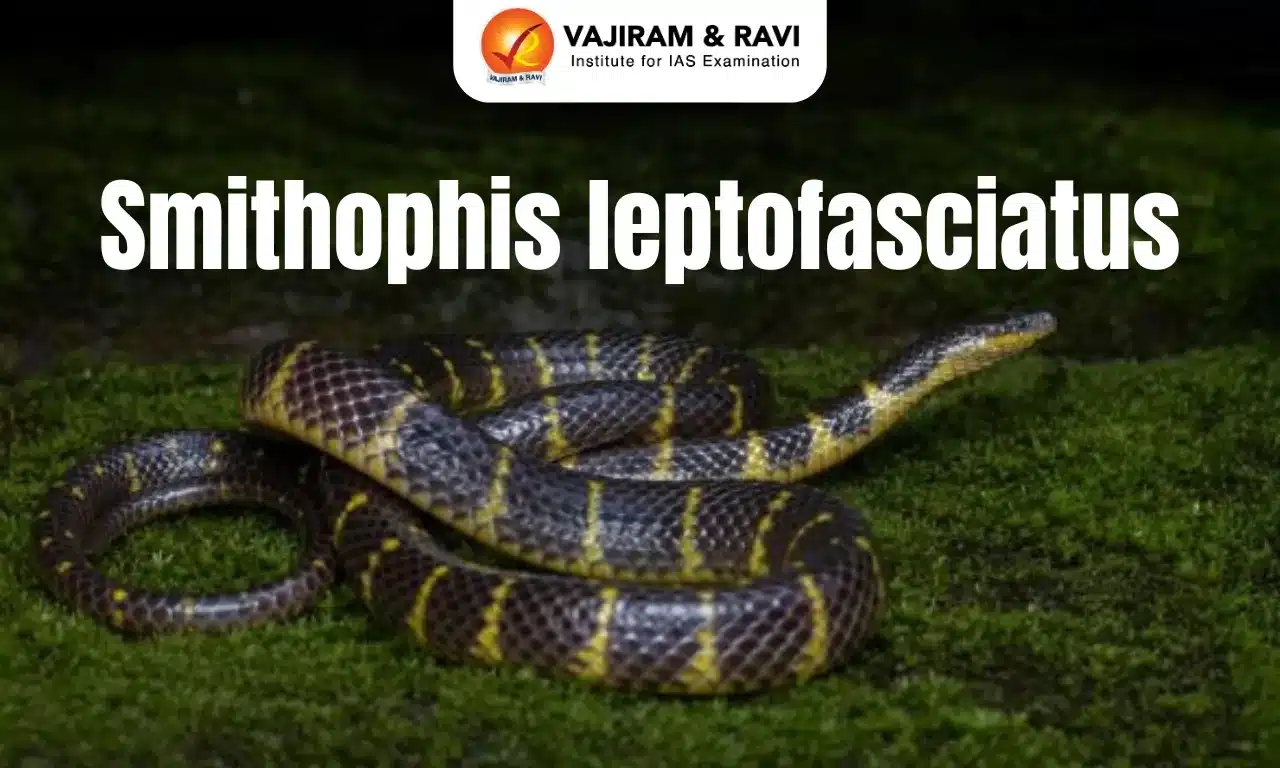
Smithophis leptofasciatus

Smithophis leptofasciatus

Smithophis leptofasciatus Latest News

A team of researchers from Mizoram University recently discovered a new species of rain snake named Smithophis leptofasciatus.

About Smithophis leptofasciatus

  • It is a new species of rain snake belonging to the genus Smithophis.
  • The species name leptofasciatus is derived from Greek and Latin, meaning "narrow-banded," referencing its distinctive dorsal markings.
  • It is commonly referred to as the narrow-banded rain snake.
  • It was discovered in the tropical montane forests of Mizoram.
  • The new species is distinguished by its narrow, incomplete creamish-white or yellowish-lime transverse bands on a shiny black body—features that set it apart from its close relatives.
  • It was found inhabiting humid, shaded microhabitats near small streams in montane forests between 900 and 1,200 meters above sea level. 
  • Its semi-aquatic, nocturnal lifestyle was revealed through field observations during the monsoon. 
  • This brings the total number of known Smithophis species to five, all discovered in northeastern India and its surrounding areas.
    • These snakes are commonly referred to as ‘rain snakes’ because they thrive in wet habitats, often found near streams and other water sources.

Source: HT

Smithophis leptofasciatus FAQs

Q1: What is Smithophis leptofasciatus?

Ans: It is a new species of rain snake belonging to the genus Smithophis.

Q2: Where was Smithophis leptofasciatus discovered?

Ans: Tropical montane forests of Mizoram.

Q3: What does the species name leptofasciatus refer to?

Ans: Its narrow-banded dorsal markings.
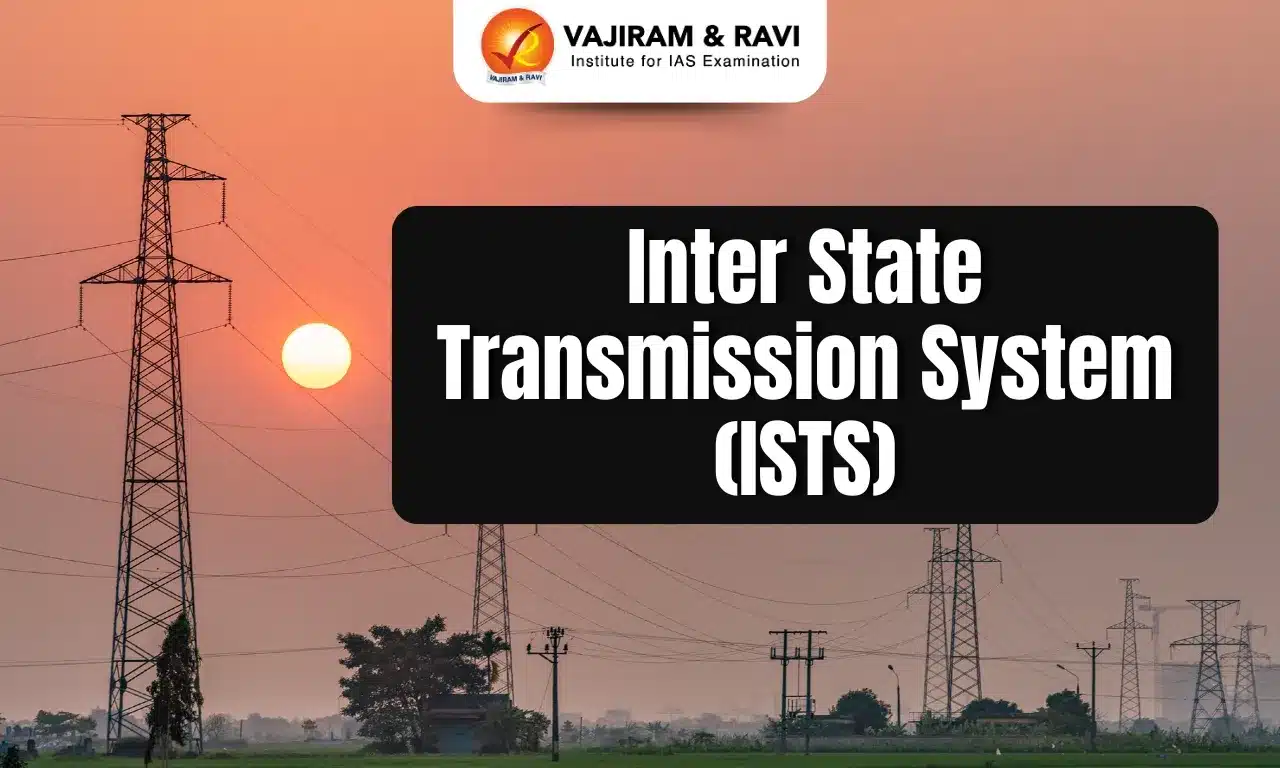
Inter State Transmission System (ISTS)

Inter State Transmission System

Inter State Transmission System Latest News

About 26 gigawatt of renewable energy (RE) projects are expected to be impacted with the end of waiver on inter-State transmission system (ISTS) charges provided for solar and wind projects, according to Crisil Ratings.

About Inter State Transmission System

  • It is a high-voltage power transmission network that enables electricity to flow seamlessly across state borders in India. 
  • It connects power-rich regions with energy-deficient areas
  • This ensures a balanced and efficient distribution of electricity.
  • It is managed by the Central Transmission Utility of India Limited (CTUIL), a 100% subsidiary of Power Grid Corporation of India Limited (POWERGRID) under the Ministry of Power.
  • ISTS operates at voltages above 132 kV and reduces transmission losses and enhances grid stability. 
  • This system allows solar and wind power to be transmitted nationwide and plays a crucial role in large-scale ISTS renewable energy projects.
  • ISTS eliminates state-wise transmission restrictions and creates a unified energy market where electricity can be supplied based on demand. 
  • Overcoming geographical constraints, ISTS makes the power sector more reliable and efficient.

Inter State Transmission System Working

  • Power Generation: Electricity is generated from various sources, including solar farms, wind parks, hydro plants, and thermal stations. 
  • Grid Connection: The generated power is transmitted to ISTS substations, which are high-voltage facilities managed by the Central Transmission Utility (CTU). These substations step up the voltage to reduce transmission losses.
  • High-Voltage Transmission: The electricity is transported through a network of 132 kV and above transmission lines that span multiple states, ensuring minimal energy loss over long distances.
  • Load Management: The Regional Load Dispatch Centers (RLDCs) and the National Load Dispatch Center (NLDC) monitor and regulate electricity flow, ensuring supply matches demand.
  • Distribution to Consumers: Power is stepped down at state-level substations and supplied to industries, businesses, and residential areas via the State Transmission Utility (STU) and local distribution networks.

Source: TH

Inter State Transmission System FAQs

Q1: What is the main purpose of the Inter State Transmission System (ISTS)?

Ans: To enable high-voltage power transmission across state borders.

Q2: Which organization manages the Inter State Transmission System in India?

Ans: It is managed by the Central Transmission Utility of India Limited (CTUIL), a 100% subsidiary of Power Grid Corporation of India Limited (POWERGRID).

Q3: What is one of the key benefits of Inter State Transmission System (ISTS)?

Ans: It helps reduce transmission losses and improves grid stability.

Legal Insanity

Legal Insanity

Legal Insanity Latest News

The Chhattisgarh High Court recently acquitted a man of double murder due to legal insanity, highlighting the importance of mental state in trials.

About Legal Insanity

  • It is a term used to describe a mental state that is severe enough to prevent a person from having legal capacity and excuses them from criminal responsibility. 
  • It is a recognised defence in criminal law.
  • It is based on the assumption that at the time of the crime, the defendant was suffering from severe mental illness and therefore, was incapable of appreciating the nature of the crime and differentiating right from wrong behavior, hence making them not legally accountable for the crime
  • The insanity defense is a legal concept, not a clinical one (medical one). This means that just suffering from a mental disorder is not sufficient to prove insanity.
  • To benefit from legal insanity, the accused must establish, often through psychiatric or psychological evaluations, that they were not in control of their reasoning faculties during the commission of the prohibited act.
  • The accused must present a prima facie case, supported by reasonable materials, to establish their legal insanity. 
  • This may involve presenting evidence of their conduct before, during, or immediately after the offence, along with relevant medical documentation. 
  • The objective is to convince the court that, due to mental incapacity, the accused should be exempt from full criminal responsibility.
  • There are different types of legal insanity, such as emotional insanity, which is when a person experiences a violent excitement of emotions or passions that creates complete derangement of intellect. 
  • Another type is temporary insanity, which only exists at the time of a criminal act.

Legal Insanity in Recent Judgments

  • The Supreme Court in Surendra Mishra vs. State of Jharkhand (AIR 2011 SC 627) emphasised that every person suffering from a mental disease is not automatically exempted from criminal liability. 
  • The accused bears the responsibility of proving legal insanity and the onus can be discharged by demonstrating their conduct with reference to their medical condition.

What is Medical Insanity?

  • It refers to a state of mental illness or psychological disorder that may require medical treatment. 
  • It is a medical diagnosis based on the individual’s mental health condition.
  • It primarily addresses the individual’s health and well-being, aiming to diagnose and treat mental illnesses for the person’s benefit.
  • It does not necessarily impact a person’s ability to make decisions in their daily life. A person with a mental illness may still have decision-making capacity.
  • It leads to medical treatment, therapy, and other interventions aimed at managing and improving the individual’s mental health.

Source: TH

Legal Insanity FAQs

Q1: What does the term "legal insanity" primarily refer to?

Ans: A mental state that excuses criminal responsibility.

Q2: What must the accused prove to claim the defence of legal insanity?

Ans: That they were incapable of knowing the nature of the act or distinguishing right from wrong at the time of the offence.

Q3: What kind of evidence is not sufficient on its own to establish legal insanity?

Ans: Diagnosis of a mental disorder.

Biochar

Biochar

Biochar Latest News

The Indian carbon market set to be launched in 2026, CO2 removal technologies such as biochar are expected to play a crucial role. 

About Biochar

  • Biochar is a type of charcoal rich in carbon and is produced from agricultural residue and organic municipal solid waste.
  • It offers a sustainable alternative to manage waste and capture carbon.
  • It is granular material obtained by heating crop residue at 400°C to 600°C in a kiln-shaped structure in the absence of oxygen.
  • Advantage of Biochar: It can hold carbon in the soil for 100-1,000 years due to its strong and stable characteristics, making it an effective long-term carbon sink.

Potential Applications of Biochar

  • Agriculture: Applying biochar can improve water retention, particularly in semi-dry and nutrient-depleted soils. This, in turn, can abate nitrous oxide emissions by 30-50%.
  • Biochar can also enhance soil organic carbon, helping restore degraded soils.
  • Industries: In carbon capture applications, modified biochar can adsorb CO₂ from industrial exhaust gases. However, its carbon removal efficiency is currently lower than that of conventional methods.
  • Construction sector: Biochar can be explored as a low-carbon alternative to building materials and makes building materials a stable carbon sink.
  • Wastewater Treatment: Biochar offers a low-cost and effective option to reduce pollution.

Source: TH

Biochar FAQs

Q1: What is the main source of biochar?

Ans: Crop straw and residues, animal manures, fruit pits, twigs, and leaf litter forestry wastes as well as food leftover and bagasse.

Q2: What are the advantages of biochar?

Ans: To provide a physical environment that supports an aerobic, healthy soil ecosystem and thus leads to improved plant health and vitality indirectly.

Sunflower Star Fish

Sunflower Star Fish

Sunflower Star Fish Latest News

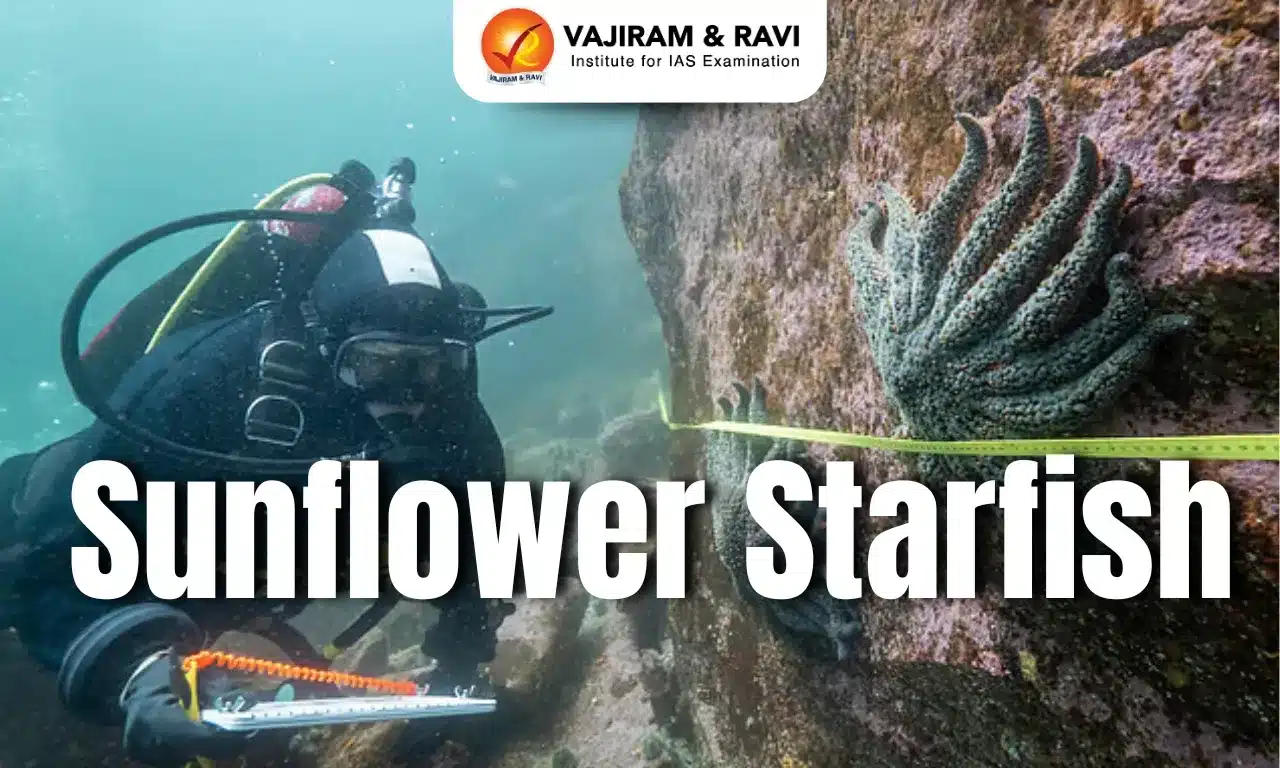
Recently, scientists have found the culprit of a mysterious disease which started killing off sunflower starfish in droves — more than 5 billion are estimated to have died since 2013 is a bacterium called Vibrio pectenicida.

About Sunflower Star Fish

  • The Sunflower Sea Star (Pycnopodia helianthoides) is among the largest and fastest sea stars in the world.
  • Habitat: It is commonly found on various substrates like mud, sand, gravel, boulders and rock. They are found from the intertidal coastal waters zone to 435 m, however, most are found no more than 120 m. 
  • Distribution: It lives along the vast majority of the Pacific coast of North America.

Features of Sunflower Sea Stars

  • It has a radially symmetrical body and has more arms than any other species, numbering between 15 and 24 (most sea stars have between 5 and 14).
  • Reproduction: There is no sexual dimorphism within these species. Fertilization is external.They breed by broadcast fertilization between March and July
  • They have the ability to regenerate its arms which may detach as a means of defense when handled excessively or attacked by a predator.
  • A whole new sea star may form if the detached arm has a portion of the central disk included.
  • Food Habits: These species are primarily carnivorous, feeding on mussels, sea urchins, fish, crustaceans etc.
  • Ecological importance: These are opportunistic hunters of a wide range of marine invertebrates, and in some areas are important predators that regulate surrounding ecosystems.
  • As a predator of sea urchins, which graze kelp, the species helps keep kelp forests healthy.

Source: IE

Sunflower Star Fish FAQs

Q1: What is the ecological role of the sunflower sea star?

Ans: Sunflower sea stars are important for maintaining a healthy marine ecosystem as they are natural predators of sea urchins.

Q2: Where are sunflower starfish found?

Ans: Sunflower sea stars are native to marine waters along the Pacific Coast, from northern Baja California to the central Aleutian Islands.

Teak Defoliator Moth

Teak Defoliator Moth

Teak Defoliator Moth Latest News

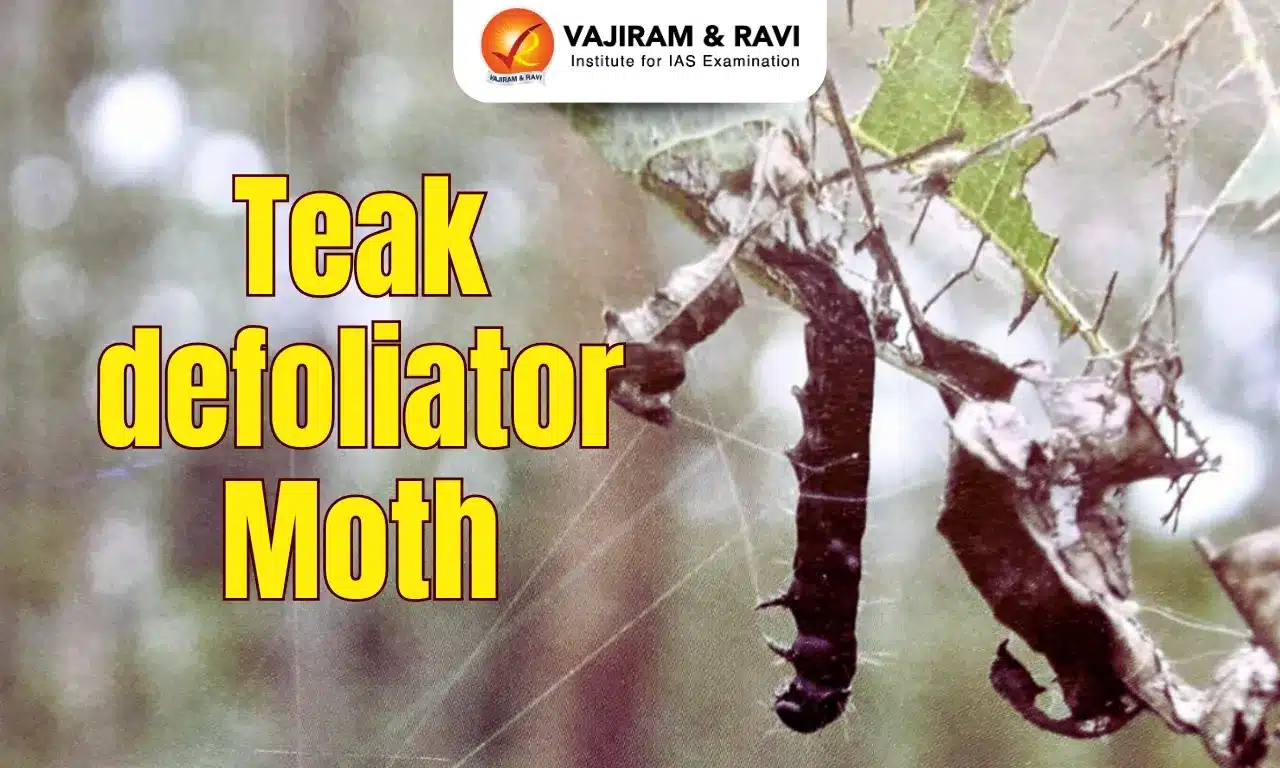
Recently, the Kerala Forest Research Institute has identified and mass-produced Hyblaea puera Nucleopolyhedrosis Virus (HpNPV) which offers eco-friendly alternative to chemical pesticides and prevents massive defoliation in teak caused by teak defoliator moth (Hyblaea puera).

About Teak Defoliator Moth

  • It is a moth and cryptic species and a well-known pest which affects teak trees.
  • It also attacks an alternative host plant, Avicennia marina, a prominent mangrove tree species abundant along the west coast of India, causing severe and extensive defoliation of Mangroves. 
  • The teak defoliator Hyblaea puera was first recognized as a pest of teak in 1898 in the Konni Forest Division in Kerala State of India.
  • Distribution: It is native to South Asia and South-east Asia and mainly occurs in forests across southern Asia from India, Sri Lanka and Bangladesh, through Thailand and the rest of south-east Asia to New Guinea, and north Queensland in Australia.
  • The outbreaks of this pest are a regular annual phenomenon in teak plantations. 
  • Impact: It causes significant economic losses on timber production from teak plantations during their seasonal outbreaks.

How does it Affect Teak Tree?

  • Larvae cause damage and attack commences with onset of monsoon rain.
  • When the larvae attack, the tree spends its energy regenerating leaves instead of growing.
  • Nature of damage: These moths defoliate trees and eat entire leaves and leave midrib.

What is Hyblaea Puera Nucleopolyhedrosis Virus?

  • It is a potential biocontrol agent of the teak defoliator Hyblaea puera.
  • It is considered to be the most promising biocontrol agent of this pest according to laboratory and field studies. 
  • It causes lethal infection in the pest larvae and prevents widespread defoliation of teak trees.
  • It multiplies at least a trillion times inside a single larva. When the body breaks open, it releases huge quantities of inoculum.
  • Even if the infection is sub-lethal, the virus stays in the insect, gets passed on to the next generation, and proves lethal then.

Source: TH

Teak Defoliator Moth FAQs

Q1: What is the major insect pest of teak?

Ans: Hyblaea puera

Q2: What are defoliators?

Ans: Insects that consume leaves or needles are classified as defoliators and are indicated by chewed, mined, or missing foliage.

District Flood Severity Index

District Flood Severity Index

District Flood Severity Index Latest News

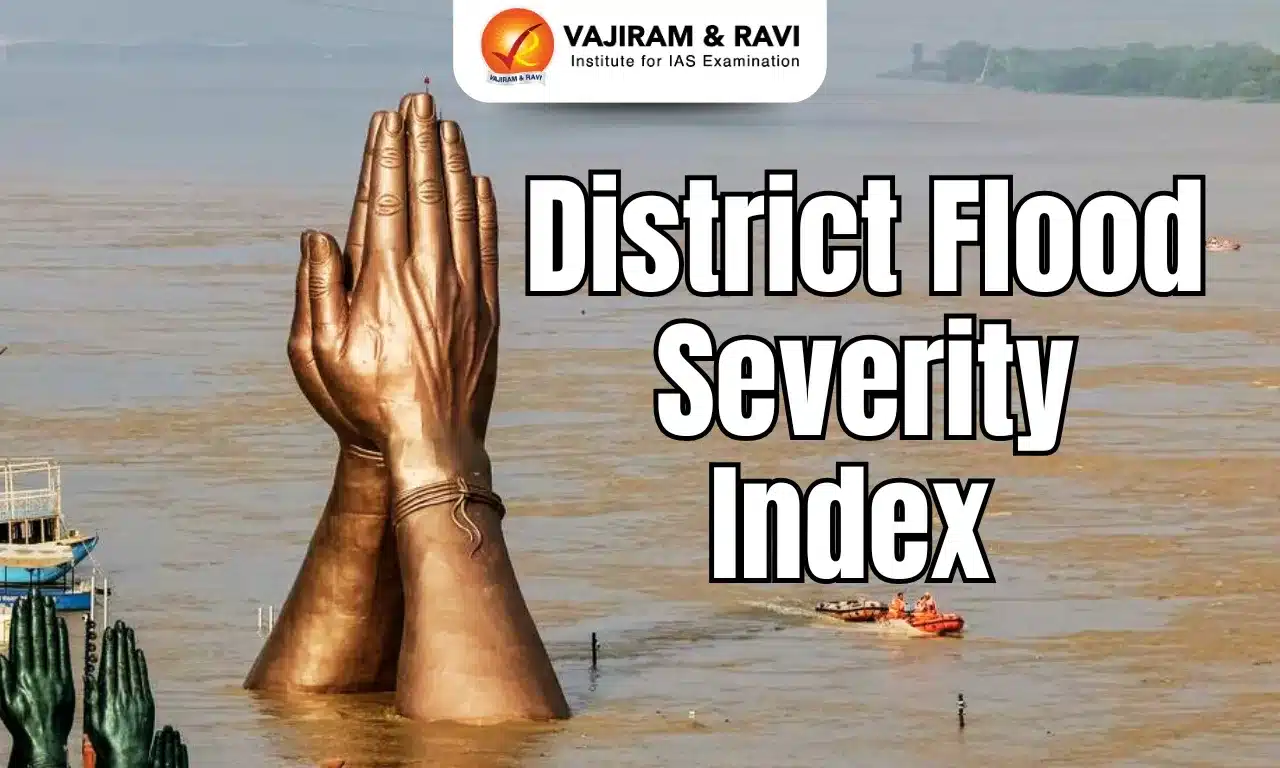
Researchers from IIT Delhi and IIT Gandhinagar have developed a District Flood Severity Index.

About District Flood Severity Index

  • It accounts for the historical severity of floods in India based on the number of people they have affected and the spread and duration of such floods.
  • Parameters used
    • It takes into account the mean duration in days of all flooding events in a district.
    • Percentage of area that is historically flooded
    • Total number of deaths, number of people injured
    • Population in the district.
  • It is developed using the India Flood Inventory with Impacts (IFI-Impacts) database containing data of variables representing the occurrence of floods and damage due to floods.
  • India Flood Inventory with Impacts contains death and damage statistics, and combines population and historically flooded area information sourced from a national hydrologic-hydrodynamic modeling system.
  • Since the district is the most relevant unit for planning and decision making, a DFSI would be of immense value for flood management.

Key Findings of District Flood Severity Index

  • Patna turns out to be number one on the index followed by many districts in the Indo-Gangetic Plain and in Assam.
  • Thiruvananthapuram is number one in terms of flooding events, it is absent in the top 30 districts in the flood severity index.
  • Dhemaji, Kamrup, and Nagaon districts in Assam are three of the five districts in India that have experienced over 178 flooding events, or more than three events per year on an average.
  • Urban flooding occurs partly because of hydrometeorological reasons and also due to unwise urban development.

Source: TH

District Flood Severity Index FAQs

Q1: What is the district level flood severity index?

Ans: It is developed using the India Flood Inventory with Impacts database containing data of variables representing the occurrence of floods and damage due to floods.

Q2: What are floods?

Ans: Floods are the most common form of natural disaster, occurring when a large amount of water submerges normally dry ground.

Indian Flapshell Turtle

Indian Flapshell Turtle

Indian Flapshell Turtle Latest News

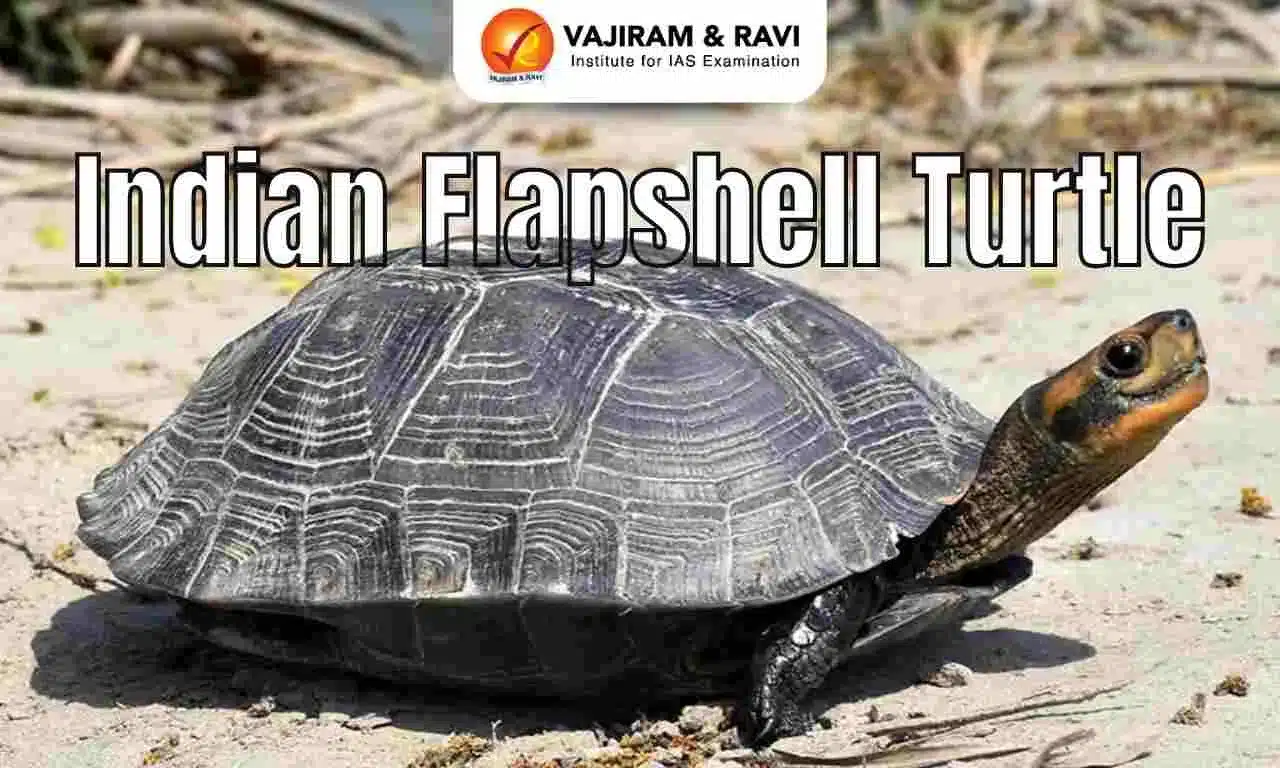
In a rare sighting, an albino Indian flapshell turtle with a striking yellow shell and skin was recently spotted in a freshwater lake at Chikodra village, Gujarat.

About Indian Flapshell Turtle

  • It is a freshwater turtle commonly found in tropical South Asian Countries.
  • Scientific Name: Lissemys punctata
  • Distribution: They are mainly found in Pakistan, India, Sri Lanka, Nepal, Bangladesh , and Myanmar.
  • Habitat
    • They live in the shallow, quiet, often stagnant waters of rivers, streams, marshes, ponds, lakes and irrigation canals, and tanks.
    • These turtles prefer waters with sand or mud bottoms because of their tendency to burrow.

Indian Flapshell Turtle Features

  • Its identifiers are the femoral flaps that extend from the shell and cover the limbs when the turtle withdraws into its shell. 
  • The oval soft shell of the flapshell turtle is an evolutionary connection to hardshell turtles. 
  • They can grow up to 370 mm in length and live for about 20 years.
  • They are omnivores.
  • They are generally solitary and active during the day. 
  • They are highly adaptable beings. They can survive in extreme droughts for about 120-160 days.

Indian Flapshell Turtle Conservation status

  • IUCN Red List: Vulnerable
  • CITES: Appendix I
  • Wildlife (Protection) Act, 1972: Schedule I

What is Albinism?

  • Albinism is a rare genetic condition that affects the level of melanin, or what pigments hair, skin, and eyes in mammals, birds, reptiles, amphibians, and fish. 
  • This is a mutation that is passed from parent to offspring. 
  • It is a recessive trait that occurs in every one out of 10,000 births. 
  • Both of the parents of the offspring must carry the gene in order for the animal to be albino. 
  • Some animals are full albino while others possess albino traits.
  • Partial albinism is known as leucism. Animals that are leucistic might have white fur, scales, or skin, but their eyes will not be pink or red.

Source: TOI

Indian Flapshell Turtle FAQs

Q1: What is the scientific name of the Indian Flapshell Turtle?

Ans: Lissemys punctata

Q2: What unique feature gives the Indian Flapshell Turtle its name?

Ans: Flaps of skin that cover the limbs when withdrawn into the shell.

Q3: What is the IUCN Red List status of the Indian Flapshell Turtle?

Ans: Vulnerable

Q4: What is the typical lifespan of the Indian Flapshell Turtle?

Ans: 20 years

PM Matru Vandana Yojana

PM Matru Vandana Yojana

Pradhan Mantri Matru Vandana Yojana Latest News

The Ministry of Women and Child Development has extended the special registration drive for the Pradhan Mantri Matru Vandana Yojana (PMMVY) till 15 August, 2025.

About Pradhan Mantri Matru Vandana Yojana

  • It is a centrally sponsored scheme under Mission Shakti’s sub-scheme 'Samarthya', providing direct financial assistance through the Direct Benefit Transfer (DBT) mode. 
  • It is designed to support pregnant women and lactating mothers.
  • The scheme is to provide maternity benefits to women belonging to socially and economically disadvantaged sections of society. 
  • It aims to improve health-seeking behaviour among pregnant women and lactating mothers and ensure better maternal and child health outcomes across the country.
  • Benefits:
    • Under PMMVY, a cash incentive of Rs 5,000 is provided in two installments directly to the bank/post office account of pregnant women and lactating mothers for the first child in the family.
    • The eligible beneficiaries also receive the remaining cash incentive as per approved norms towards Maternity Benefit under Janani Suraksha Yojana (JSY) after institutional delivery so that, on average, a beneficiary gets Rs 6,000. 
    • Cash incentive of Rs 6,000 is also provided under PMMVY to eligible beneficiaries for a second child subject to the second child being a girl.
    • In case of miscarriage/stillbirth, the beneficiary would be treated as a fresh beneficiary in the event of any future pregnancy.
  • The implementation of the Scheme is done by officials of States and UTs through their field functionaries using the new Pradhan Mantri Matru Vandana Yojana Software (PMMVYSoft) that was launched in March, 2023. 
  • Under PMMVYSoft, Aadhaar authentication through UIDAI is done digitally, and National Payment Corporations of India (NPCI) verification is ensured so that funds are directly transferred to their DBT-enabled Aadhaar-seeded bank or post office accounts. 
  • The criteria for determining socially and economically disadvantaged sections of society will be the following:
    • Women belonging to scheduled castes and scheduled tribes;
    • Women who are partially (40%) or fully disabled (Divyang Jan)
    • Women holder of BPL ration Card
    • Women beneficiaries under Pradhan Mantri Jan Aarogya Yojana (PMJAY) under Ayushman Bharat.
    • Women holding E-shram card
    • Women farmers who are beneficiaries under Kishan Samman Nidhi
    • Women holding MGNREGA Job Card
    • Women whose net family income is less than Rs. 8 Lakh per annum
    • Pregnant and Lactating AWWs/AWHs/ASHAs
    • Any other category as may be prescribed by the Central Government
    • Further, all pregnant women and lactating mothers in regular employment with the central Government or State Government or Public Sector Undertaking or those who are in receipt of similar benefits under any law for the time being in force shall not be entitled to benefits under PMMVY.

Source: PIB

Pradhan Mantri Matru Vandana Yojana FAQs

Q1: What is the primary objective of the Pradhan Mantri Matru Vandana Yojana (PMMVY)?

Ans: It aims to provide maternity benefits to women belonging to socially and economically disadvantaged sections of society.

Q2: What software platform is used for implementing and monitoring the Pradhan Mantri Matru Vandana Yojana ?

Ans: PMMVYSoft

Q3: What happens under Pradhan Mantri Matru Vandana Yojana (PMMVY) in case of miscarriage or stillbirth?

Ans: Woman is treated as a fresh beneficiary in the event of future pregnancy.

Yashoda AI

Yashoda AI

Yashoda AI Latest News

Recently, the Minister of State for Women and Child Development informed the Rajya Sabha about the Yashoda AI.

About Yashoda AI

  • It is an AI Literacy Program for Women titled as “Yashoda AI” since May 2025.
  • Objective: To equip women in the Country with AI literacy to enhance digital inclusion and empower them in areas of cyber security, digital privacy and safe online practices.
  • It is the initiative of the National Commission for Women (NCW) in collaboration with Future Shift Labs (FSL). 
  • The program aims to go beyond traditional learning by hosting in-depth discussions on critical issues such as AI-driven crimes, digital privacy, and practical safety strategies.
  • Under this program, about 2500 women from rural and semi-urban locations, including Members of Self-Help Groups (SHGs), Local elected representatives such as Sarpanchs, Pradhans, Parshads, Mayors, MLAs, ASHA workers  etc have been imparted training till date.

Key Facts about National Commission for Women

  • It was set up as a statutory body  in 1992 under the National Commission for Women Act, 1990.
  • Composition: The Commission shall consist of a Chairperson, 5 Members, and a Member-Secretary who are nominated by the Central Government.
  • Term: The Chairperson and every Member shall hold office for a period of three years.
  • Powers: The Commission, while investigating, shall have all the powers of a civil court in respect of the following matters
    • Summoning and enforcing the attendance of any person from any part of India and examining him/her on oath.
    • Requiring the discovery and production of any document.
    • Receiving evidence on affidavits.
    • Requisitioning any public record or copy thereof from any court or office.
    • Issuing commissions for the examination of witnesses and documents.

Source: PIB

Yashoda AI FAQs

Q1: Who launched the Yashoda AI?

Ans: National Commission for Women (NCW)

Q2: What is Artificial Intelligence (AI)?

Ans: It is an emerging technology that enables computers and machines to simulate human intelligence and problem-solving capabilities.

Enquire Now