Primary Amoebic Meningoencephalitis

Primary Amoebic Meningoencephalitis

Primary Amoebic Meningoencephalitis  Latest News

Recently, Kerala’s health department has sounded an alert in Kozhikode district after three back to back cases of the rare primary amoebic meningoencephalitis (PAM) were reported in the region.

About Primary Amoebic Meningoencephalitis

  • It is an infection of the brain and the membranes covering the brain.
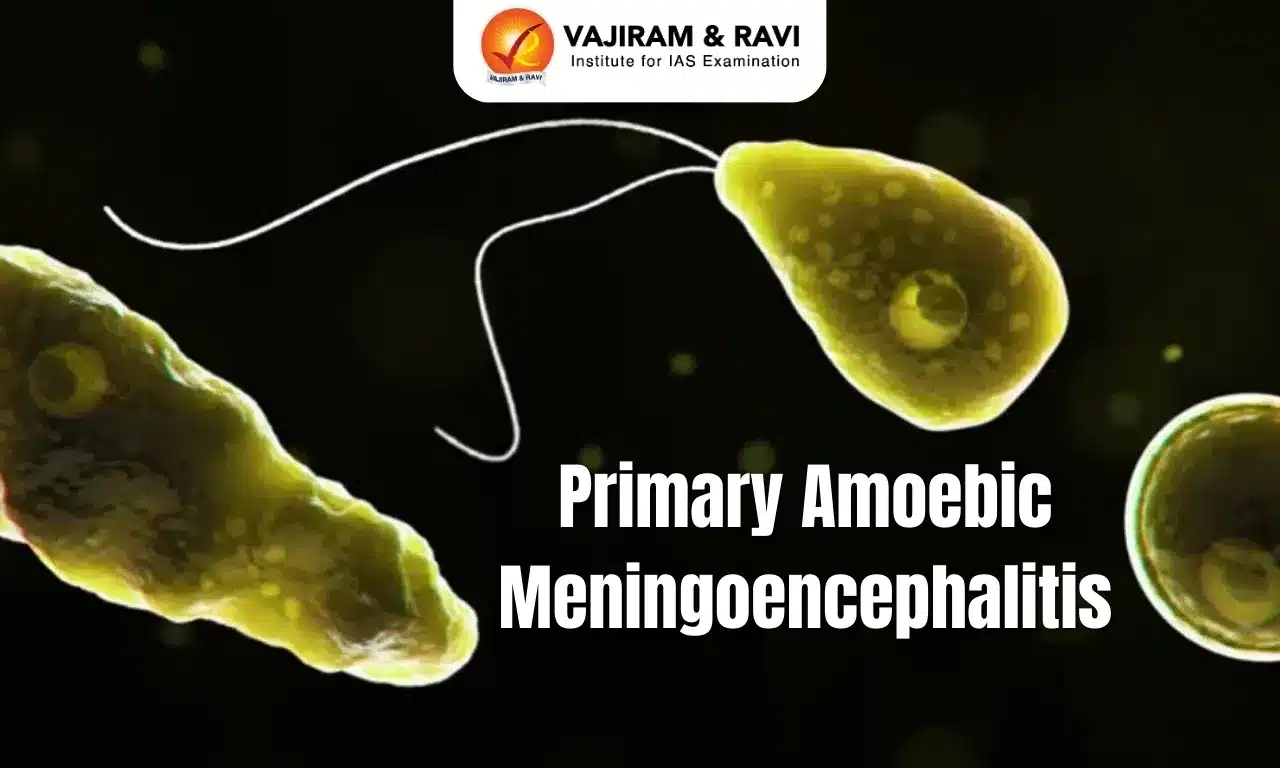
  • Cause: It is caused by Naegleria fowleri, known as the “brain eating amoeba”.
  • Naegleria fowleri is a free-living amoeba found in warm, fresh water and soil, and infects people when it enters the body through the nose.
  • This is a very rare, but serious disease with a mortality rate of more than 95%.
  • It affects mainly young, active people.
  • It is classified into two main types: Primary Amebic Meningoencephalitis (PAM) and Granulomatous Amebic Encephalitis (GAE). 
    • PAM is caused by Naegleria fowleri, while GAE is typically associated with Acanthamoeba species and Balamuthia mandrillaris.
    • PAM tends to progress rapidly and is often fatal within a few days, whereas GAE develops more slowly but is equally deadly if not treated promptly. 
  • Transmission: The amoeba that causes the infection occurs in shallow surface waters and incorrectly maintained swimming pools, hot tubs, and spas, particularly in warm climates. 
  • Infection occurs when infected water enters the nose. This can happen when diving, jumping, or swimming in freshwater. 
  • The amoeba then invades the brain and meninges through the nose. 
  • Symptoms: sore throat, headache and pain in the forehead, hallucinations, nausea and vomiting, high fever etc.
  • Treatment: Swift diagnosis and treatment with specific antibiotics may be useful, but recovery is rare.

Source: IE

Primary Amoebic Meningoencephalitis FAQs

Q1: Is brain eating amoeba curable?

Ans: There is currently no official cure for PAM; presently, the best cure is prevention.

Q2: What is amoeba?

Ans: It is a generic term used to refer to a group of single-celled organisms belonging to the biological kingdom Protista.

Almond Cultivation

Almond Cultivation

Almond Cultivation Latest News

The almond harvest in Kashmir marks an important seasonal and cultural event, and this year’s bumper crop has brought smiles to farmers’ faces.

About Almond Cultivation

  • Almonds are one of the major and oldest tree nut crops in the world.
  • There are two types of almonds available: Sweet almond and bitter almond.
  • Required Climatic Conditions for Almond
    • Climate: Colder regions' climate is suitable for almond farming.
    • Temperature: Temperature ranging between 7°C to 24°C is considered appropriate.
    • Soil: Deep, loamy, well drained soils are ideal for almond growing.
    • Rainfall: Average rainfall needed is 75 to 110 cm. 
    • Almond plants can grow easily at an altitude of 750 to 3200 meters above sea level.
  • Major Almond farming Countries: USA, Australia, Spain, Turkey
  • Major Almond farming states : In India Almond cultivation is mainly done in the hilly parts of colder regions, mainly in Jammu& Kashmir, Himachal Pradesh, Uttarakhand, Kerala and some hilly regions of Andhra Pradesh. 
  • Uses: Almonds are used for various purposes like in sweets, milk, nuts used in the food and used in producing oils.
  • Challenges: Erratic weather patterns, limited access to modern farming techniques, competition from lower-cost imports, shrinking farmlands, and a lack of policy support from authorities. 

Source: TH

Almond Cultivation FAQs

Q1: Where are the majority of almonds grown?

Ans: California

Q2: Where does India get almonds from?

Ans: The United States supplies a significant portion of India's almonds.

Mt Elbrus

Mt Elbrus

Mt Elbrus Latest News

Recently, a mountaineer of Arunachal Pradesh, climbed Mt Elbrus, the highest peak in Europe.

About Mt Elbrus

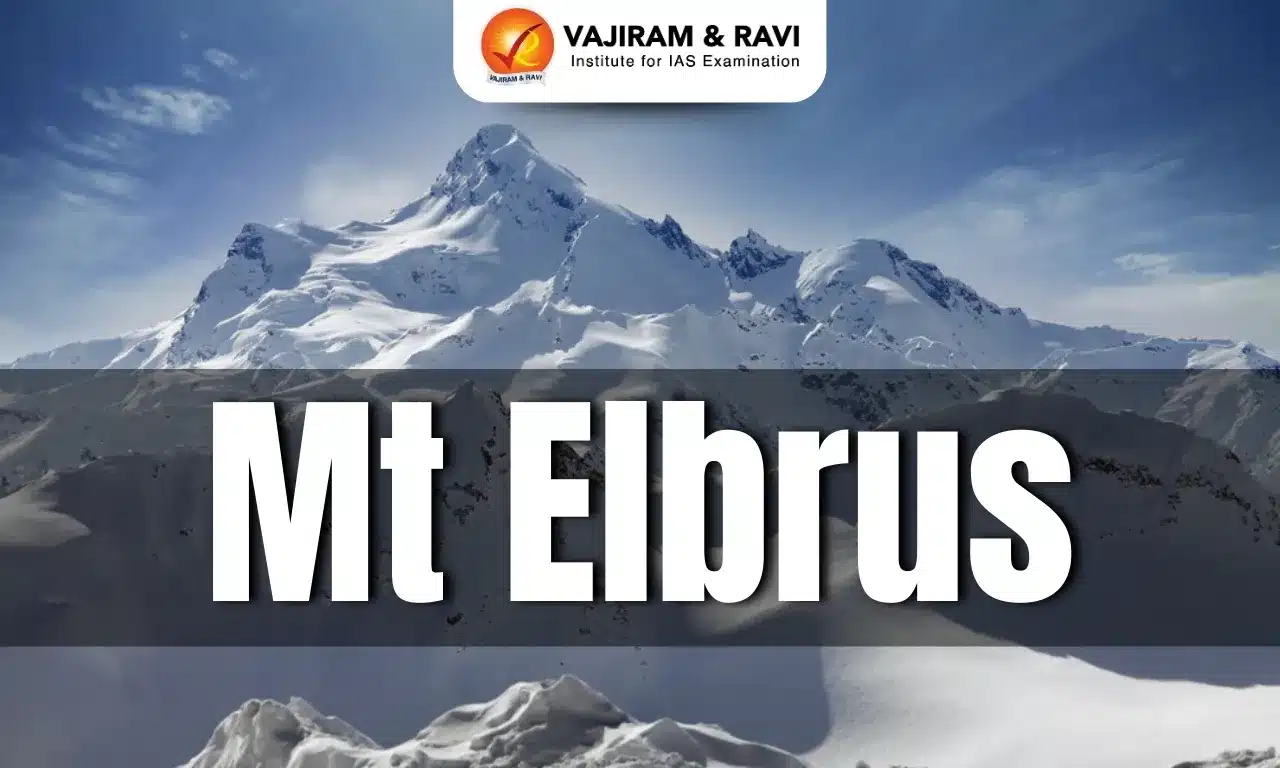
  • Location: Mount El’brus is located in southwest Russia and is part of the Caucasus Mountains.
  • Formation: It is believed that the Caucasus Mountains were formed due to the northward collision of the Arabian Plate with the Eurasian Plate. Geological studies have revealed that Mount Elbrus was formed over 2.5 million years ago and the volcano had been most active during the Holocene Epoch. 
  • It is the highest point in Russia as well as the highest point in all of Europe.
  • It has an elevation of 18,510 feet (5,642 meters). It makes up part of the Prielbrusye National Park.
  • It is one of the Seven Summits of the world, which are the tallest mountains on each of the seven continents.
  • Mount Elbrus is an inactive volcano that consists of two principal summits, both of which are dormant volcanic domes.
  • Climate: The climate of El’brus is generally cold. Even during summer, nighttime temperatures are around -8°C (18°F).
  • Major Glaciers: Bolshoi Azaou and Irik Glacier
  • Major Rivers: Many Russian rivers like the Baksan, Malka, and Kuban rivers originate from Bolshoi Azaou and Irik Glacier glaciers.

 Source: ET

Mt Elbrus FAQs

Q1: In which country is Mount Elbrus located?

Ans: Russia

Q2: Between which two seas is Mount Elbrus located?

Ans: Elbrus is situated in the northwest of the Caucasus, 100 kilometres from the Black Sea and 370 kilometres from the Caspian Sea,

Halman Apricot

Halman Apricot

Halman Apricot Latest News

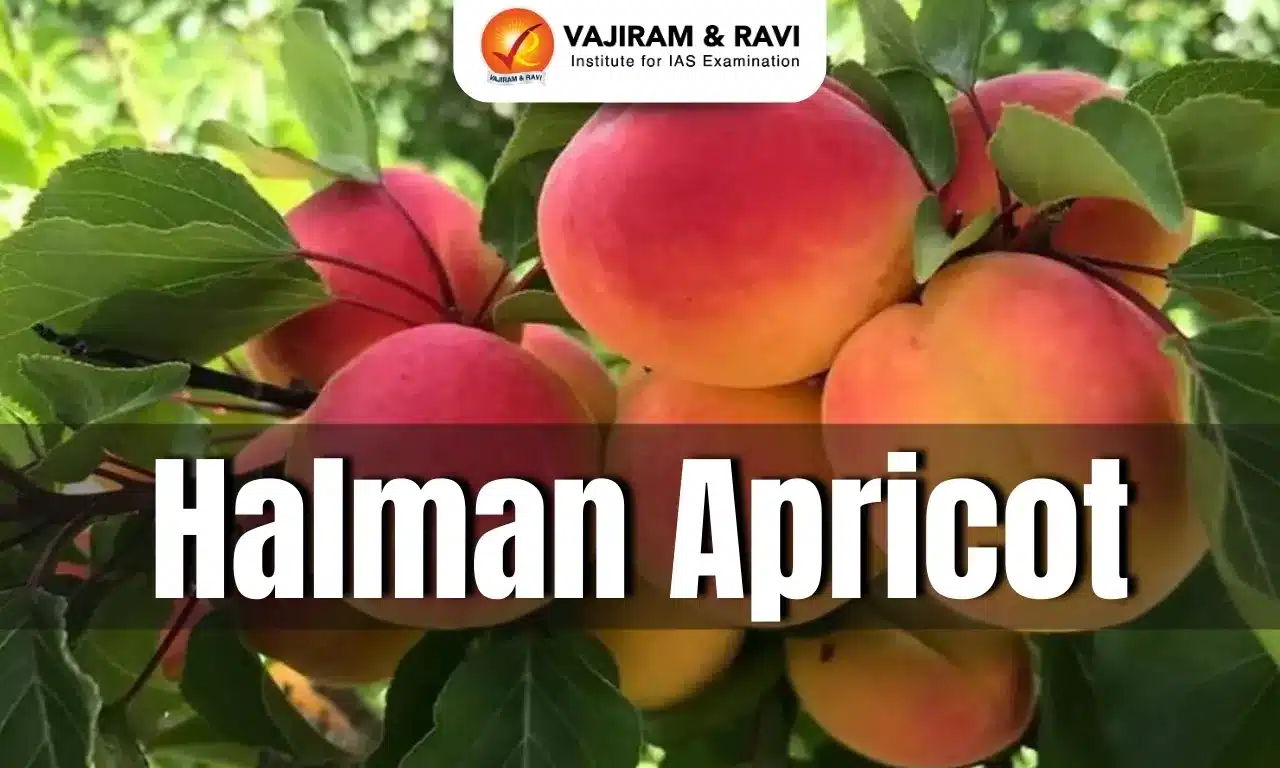
For the first time, a consignment of 1.5 metric tonnes of Halman apricots has been sent to Saudi Arabia, Kuwait and Qatar.

About Halman Apricot

  • It is an apricot (Prunus armeniaca L.) variety found in Ladakh.
  • It is one of the best and finest apricots in the world.
  • It was introduced to the region over a century ago from China or Central Asia.
  • It has a wide range of distribution in different parts of Ladakh with particularly abundant in the Sham (western) part of Ladakh including Dha-Hanu, Garkhon, Skurbuchan, Domkhar, Wanla, Khaltse, and Timosgang villages.
  • Renowned for its rich flavor and versatility, it is deeply embedded in Ladakhi cuisine, traditional medicine, and festive rituals, making it an indispensable part of Ladakh's agricultural heritage.
  • Halman serves as a good source of nutritive compounds. 
  • Nutritionally, it is a powerhouse of essential vitamins such as Vitamin C and Vitamin E and minerals like potassium, magnesium, and iron.
  • It also serves as a good source of dietary fiber and antioxidants.

Source: HBL

Halman Apricot FAQs

Q1: The Halman Apricot is primarily found in which region of India?

Ans: Ladakh

Q2: Halman Apricot is rich in which all vitamins?

Ans: It is a powerhouse of essential vitamins such as Vitamin C and Vitamin E.

Q3: Halman Apricot is rich in which all minerals?

Ans: Potassium, magnesium, and iron

Ravi River

Ravi River

Ravi River Latest News

Continuous heavy rainfall in the hilly regions has led to a significant rise in water levels in the Ravi River recently.

About Ravi River

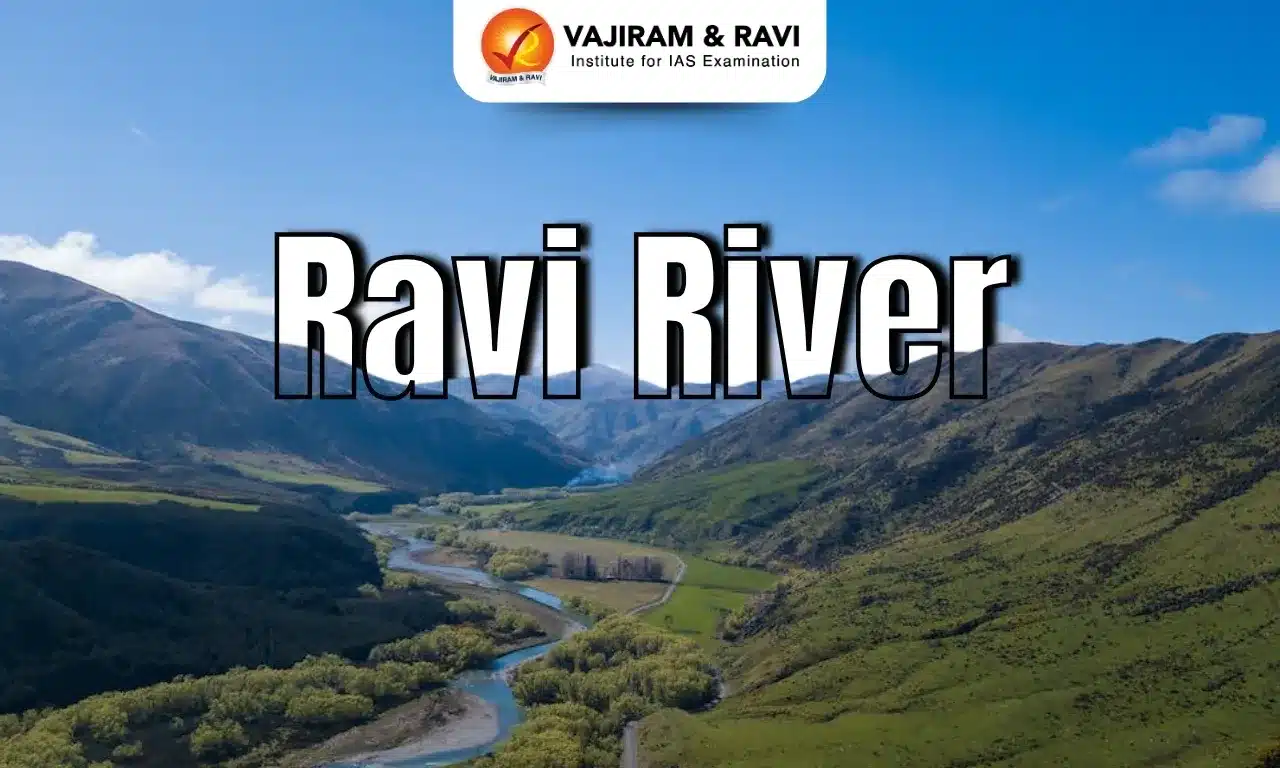
  • It is a river in northwestern India and northeastern Pakistan.
  • It is one of the five tributaries of the Indus River that give Punjab (meaning “Five Rivers”) its name.
  • Course:
    • It originates from the northern face of Rohtang Pass in Himachal Pradesh and flows through the junction formed by the BaraBang-Dhauladhar range of the Himalayas as two channels, namely Budhil and Tantgari.
    • After joining, it flows through Himachal Pradesh, mainly the Chamba district, where it receives many tributaries.
    • From there, it flows southwards through India, crossing through Punjab before crossing into Pakistan, where it finally merges with the Chenab River, a major tributary of the Indus River.
  • It is 720 km long.
  • The length of Ravi River in India is 320 km and has a catchment area of 14,442 sq.km
  • The hydrology of the Ravi is controlled by spring snowmelt and the South Asian monsoon that brings heavy rains from June to September. 
  • It has several tributaries, including the Siul, Baira, and Ujh rivers.
  • The Ravi River has several dams, primarily for hydropower generation and irrigation. 
  • The major ones include the Ranjit Sagar Dam (also known as Thein Dam) and the Chamera Dam complex (Chamera I, II, and III).
  • The Indus Water Treaty of 1960 between India and Pakistan allocated the Ravi River, along with the Beas and Sutlej rivers, to India.

Source: TOI

Ravi River FAQs

Q1: Where does the River Ravi originate from?

Ans: It originates from the northern face of Rohtang Pass in Himachal Pradesh.

Q2: The Ravi River is a tributary of which major river system?

Ans: Indus River

Q3: Which rivers does the Ravi ultimately merge with?

Ans: Chenab River

Q4: What is the total length of the Ravi River?

Ans: 720 km

Bering Strait

Bering Strait

Bering Strait Latest News

According to a recent study, mariners in the Bering Strait are following 2018 shipping guidelines, which suggest a quiet form of U.S.-Russia cooperation despite strained political relations.

About Bering Strait

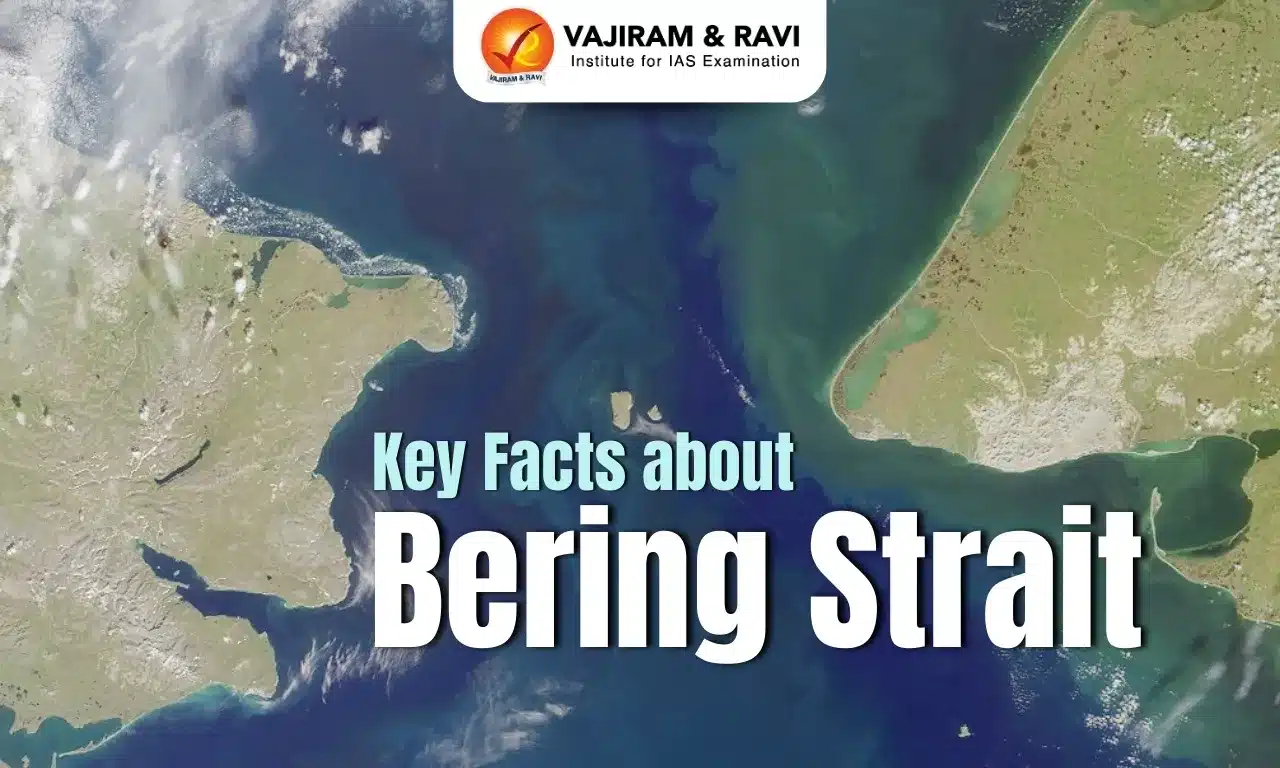
  • It is the northernmost part of the Pacific Ocean, separating the continents of Asia and North America, particularly Russia and the United States. 
  • This important waterway is just south of the Arctic Circle.
  • It connects the Bering Sea to the Chukchi Sea of the Arctic Ocean. 
  • At the strait’s narrowest point, Asia (Russia) and North America (the US) are just 85 km apart. 
  • The narrowest point is between Cape Prince of Wales in Alaska and Cape Dezhnev in Russia. 
  • The international boundary between the two countries passes through the Bering Sea and Strait.
  • It is relatively shallow, with an average depth of 50 m.
  • The Strait has numerous islands, including the Diomede Islands and St. Lawrence Islands. 
    • St. Lawrence Island is the US's sixth-largest Island.
    • The two Diomede Islands are located in the middle of the strait. 
    • The Big Diomede Island belongs to Russia, while the Little Diomede Island is on the US side.
    • The International Date Line runs between the two islands, leaving the American and Russian sides on different calendar days.

Source :MI

Bering Strait FAQs

Q1: The Bering Strait separates which two continents?

Ans: Asia and North America

Q2: The Bering Strait connects which two seas?

Ans: It connects the Bering Sea to the Chukchi Sea of the Arctic Ocean.

Q3: What is the approximate distance between Asia (Russia) and North America (USA) at the narrowest point of the Bering Strait?

Ans: 85 km

Q4: Which two capes mark the narrowest point of the Bering Strait?

Ans: Cape Prince of Wales in Alaska and Cape Dezhnev in Russia.

Jellyfish

Jellyfish

Jellyfish Latest News

Recently, one of the largest nuclear power plants in France was forced to temporarily shut down due to a slimy and spineless adversary: jellyfish.

About Jellyfish

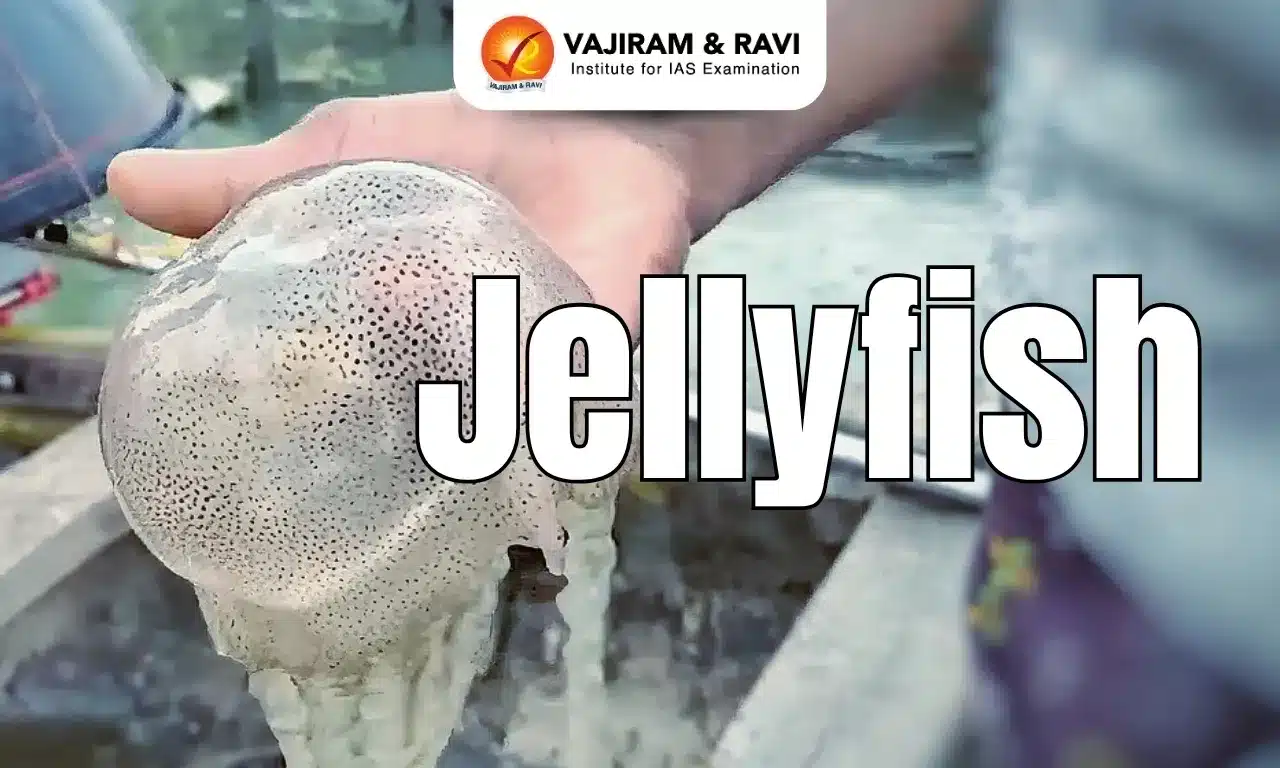
  • It is a resilient gelatinous zooplankton of the phylum Cnidaria.
  • It is a highly adaptable marine organism with simple anatomy, stinging tentacles and efficient jet propulsion.

Characteristics of Jellyfish

  • It is a simple invertebrate, members of the phylum Cnidaria, which includes creatures such as sea anemones, sea whips, and corals.
  • The body parts of a jellyfish radiate from a central axis. This “radial symmetry” allows jellyfish to detect and respond to food or danger from any direction.
  • They are pretty simple, lack brains, blood, or even hearts.
  • Anatomy: They are composed of three layers: an outer layer, called the epidermis; a middle layer made of a thick, elastic, jelly-like substance called mesoglea; and an inner layer, called the gastrodermis.
  • Jellyfish have the ability to sting with their tentacles.
  • Ecological Impact: These blooms disrupt marine ecosystems by reducing biodiversity, outcompeting native species and collapsing fish and invertebrate populations.

Reasons for Jellyfish’s Bloom

  • Global warming has led to higher ocean temperatures, which, in turn, has resulted in the surge of plankton — the primary food source of jellyfish. With an abundance of food available, jellyfish have been able to increase their population substantially.
  • Overfishing:  Recently various kinds of species, such as tuna and sea turtles, that prey on jellyfish have been removed from the ecosystem. These species also feed on plankton, and with their reduced population, jellyfish have more plankton to consume and thrive unchecked.
  • Plastic Pollution: Unlike other marine creatures, jellyfish can tolerate low oxygen levels in water, which is a consequence of pollution. This has also contributed to the increase in their population in recent years.

Source: IE

Jellyfish FAQs

Q1: Do jellyfish have eyes?

Ans: Jellyfish eyes range from primitive to more complex.

Q2: Is jellyfish harmful for humans?

Ans: Many types of jellyfish are fairly harmless to humans.

Q3: What is the biological name of jellyfish?

Ans: Scyphozoa

SWAYAM Portal

SWAYAM Portal

SWAYAM Portal Latest News

The Ministry of Education is offering free Artificial Intelligence (AI) courses on the Swayam Portal to help students stay updated with the rising demand for AI skills.

About SWAYAM Portal

  • SWAYAM (Study Webs of Active–Learning for Young Aspiring Minds) is India’s own MOOCs (Massive Open Online Course) platform of the Ministry of Education (MoE) initiative and was launched during 2017.
  • It seeks to bridge the digital divide for students who have hitherto remained untouched by the digital revolution and have not been able to join the mainstream of the knowledge economy.
  • It is an indigenously developed IT platform that facilitates hosting of all the courses taught in classrooms from Class 9 till post-graduation to be accessed by anyone, anywhere, at any time.
  • All the courses are interactive, prepared by the best teachers in the country, and are available, free of cost, to the residents in India.

What is offered in SWAYAM?

  • Courses that are taught in classrooms from 9th class till post-graduation.
  • The courses hosted on SWAYAM are in 4 quadrants:
    • video lecture
    • specially prepared reading material that can be downloaded/printed
    • self-assessment tests through tests and quizzes and
    • an online discussion forum for clearing the doubts.
  • Categories of courses include - Engineering, Science, Humanities, Management, Language, Mathematics, Arts and Recreation, Commerce, General, Library, Education.
  • Courses delivered through SWAYAM are available free of cost to the learners.
  • Students wanting certifications need to register and shall be offered a certificate on successful completion of the course, with a little fee.
  • At the end of each course, there will be an assessment of the student through a proctored examination, and the marks/grades secured in this exam could be transferred to the academic record of the students. 
  • UGC and AICTE have already issued the UGC (Credit Framework for online learning courses through SWAYAM) Regulation 2016 advising the Universities to identify courses where credits can be transferred on to the academic record of the students for courses done on SWAYAM.

National Coordinators of SWAYAM

  • AICTE (All India Council for Technical Education) for self-paced and international courses.
  • NPTEL (National Programme on Technology Enhanced Learning) for Engineering
  • UGC (University Grants Commission) for non technical post-graduation education
  • CEC (Consortium for Educational Communication) for under-graduate education
  • NCERT (National Council of Educational Research and Training) for school education
  • NIOS (National Institute of Open Schooling) for school education
  • IGNOU (Indira Gandhi National Open University) for out-of-school students
  • IIMB (Indian Institute of Management, Bangalore) for management studies
  • NITTTR (National Institute of Technical Teachers Training and Research) for Teacher Training programme
  • INI (Institutes of National Importance) for Non-Technical Courses

SWAYAM Plus Platform

  • It offers courses developed collaboratively with the industry.
  • This platform aims to enhance employability of both college students and lifelong learners.
  • It will offer programmes in sectors like Manufacturing, Energy, Computer Science and Engineering/IT/ITES, Management Studies, Healthcare, Hospitality and Tourism besides Indian Knowledge Systems.
  • It features innovative elements such as multilingual content (available in 12 major Indian languages of the country), AI-enabled guidance, credit recognition, and pathways to employment.
  • The Indian Institute of Technology Madras (IIT Madras) will be operating this Platform.

Source: NDTV

SWAYAM Portal FAQs

Q1: Which Ministry is responsible for the SWAYAM portal?

Ans: Ministry of Education

Q2: What type of platform is SWAYAM?

Ans: A Massive Open Online Course (MOOC) platform.

Q3: The SWAYAM platform provides courses from which level of study?

Ans: From Class 9 till Post-graduation.

Q4: What is the main aim of the SWAYAM portal?

Ans: To bridge the digital divide and provide quality education to all.

Dibru Saikhowa National Park

Dibru Saikhowa National Park

Dibru-Saikhowa National Park Latest News

A new study has identified at least two native plants Bombax ceiba and Lagerstroemia speciosa that have joined invasive species to alter the riverine ecosystem of eastern Assam’s Dibru-Saikhowa National Park.

About Dibru-Saikhowa National Park

  • Location: It is a national park located in Dibrugarh and Tinsukia districts, Assam, India.
  • It was designated a Biosphere Reserve by UNESCO in 1997.
  • Rivers: The park is bounded by the Brahmaputra and Lohit Rivers in the north and Dibru River in the south.
  • Vegetation: It mainly consists of moist mixed semi-evergreen forests, moist mixed deciduous forests, canebrakes and grasslands.
  • It is the largest salix swamp forest in north-eastern India, with a tropical monsoon climate with a hot and wet summer and cool and usually dry winter. 
  • Flora: It consists of Dillenia indica, Bischofia javanica, Bombax ceiba, Lagerstroemia parviflora, etc.
  • Fauna: Tiger, Elephant, Leopard, Jungle Cat, Bears, Small Indian Civet, Squirrels, Gangetic Dolphin, Slow Loris, Assamese Macague
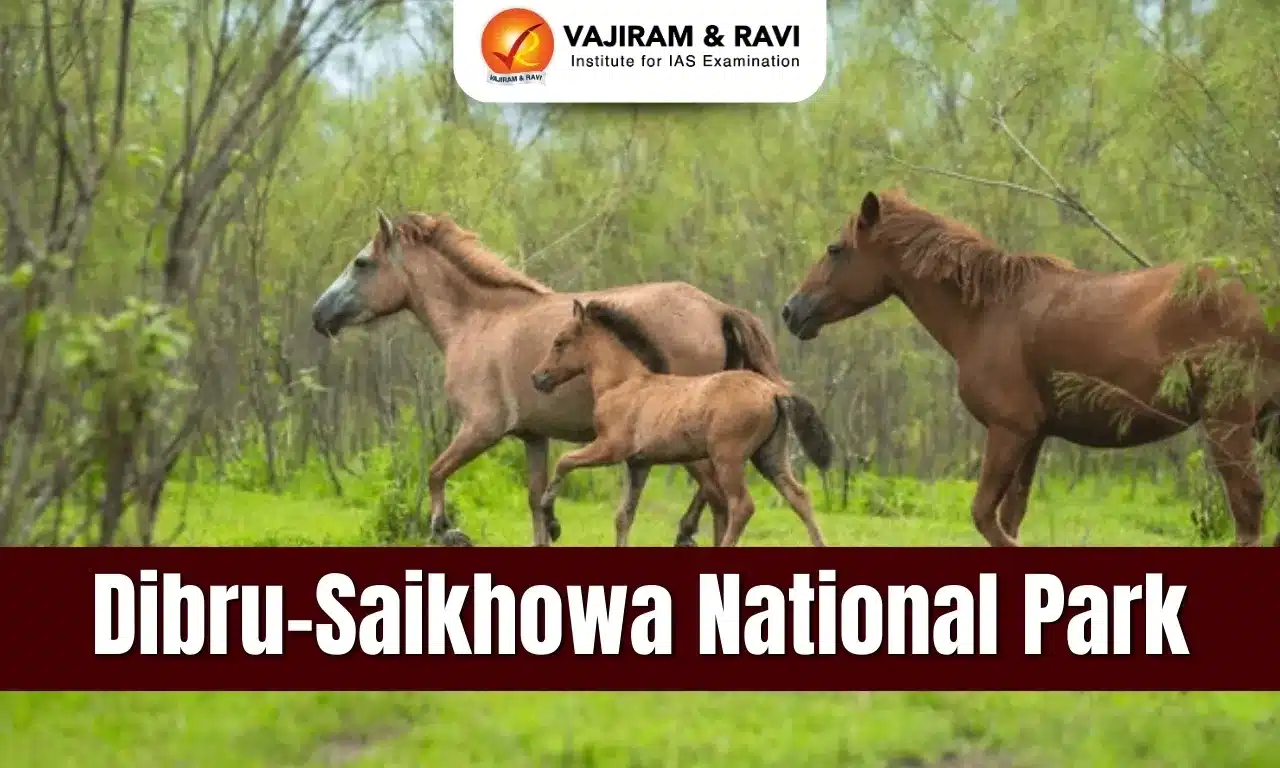
  • It is the only habitat of feral horses in India.
  • It is an identified Important Bird Area (IBA) having more than 382 species of Birds, some of which are Greater Adjutant Stork, Lesser Adjutant Stork, Greater Crested Grebe.

Source: TH

Dibru-Saikhowa National Park FAQs

Q1: Which bird is famous in Dibru-Saikhowa National Park?

Ans: White-winged wood duck

Q2: When was Dibru-Saikhowa National Park declared?

Ans: 1997

Ambergris

What is Ambergris?

Ambergris Latest News

The Ahmedabad Rural Special Operations Group (SOG) recently seized 2.97 kg of ambergris, commonly known as sperm whale vomit, worth nearly ₹2.97 crore in the international market and arrested two people.

About Ambergris

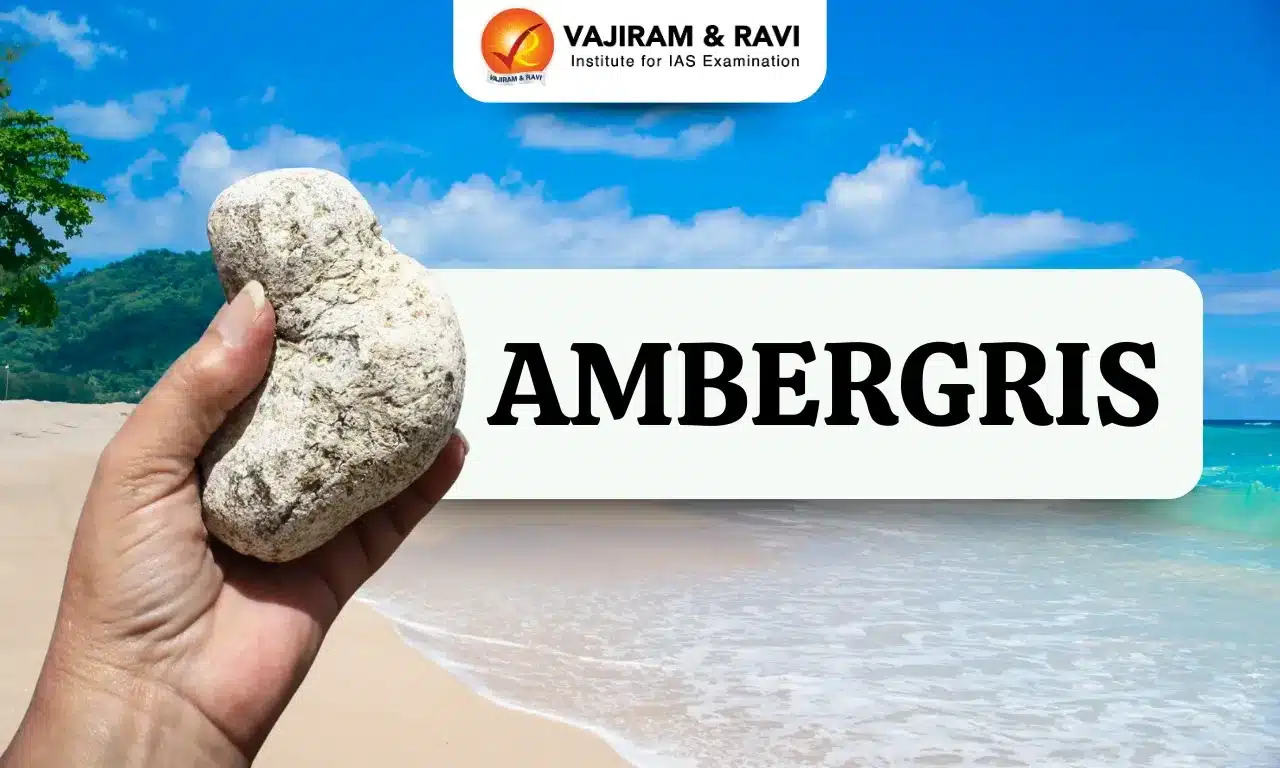
  • Ambergris, also known as ‘whale vomit’ is a solid, waxy substance produced in the digestive system of sperm whales (Physeter macrocephalus).
  • It is extremely valuable and has been called the ‘treasure of the sea’ and ‘floating gold’.
  • It is highly valued in the perfume industry as a fragrance enhancer. 
  • It is also used in traditional medicines and sometimes even as a spice in eastern cultures.
  • There is a ban on the possession and trade of ambergris in countries like the USA, Australia, and India.
  • In India, the sale and trade of ambergris are strictly prohibited under the Wildlife Protection Act, 1972.

Ambergris Formation

  • It is formed in the intestine of the whale to cover the indigestible objects from the animals on which it feeds (mostly the beaks of squid)
  • Once released, it initially floats on the ocean's surface and is black and sticky. 
  • Exposure to sun, air, and salt water oxidizes it, and eventually it becomes grey and waxy, often still embedded with small squid beaks. and losing its unpleasant odour.
  • Ambergris is found in lumps of various shapes and sizes, ranging from 15 grams up to 420 kilograms.

Source: TH

Ambergris FAQs

Q1: Ambergris, often called ‘floating gold’, is produced in the digestive system of which animal?

Ans: Sperm whale

Q2: What is the primary purpose of ambergris formation inside the sperm whale?

Ans: To cover indigestible objects like squid beaks.

Q3: What is the initial appearance of ambergris when released into the ocean?

Ans: Grey and waxy

Q4: In which industry is ambergris primarily used?

Ans: It is highly valued in the perfume industry as a fragrance enhancer.

Enquire Now