
Mela Patt Festival

Mela Patt Festival

Mela Patt Festival Latest News

Recently, in Jammu and Kashmir the annual three-day Mela Patt festival started in Doda district.

About Mela Patt Festival

  • It is dedicated to Lord Vasuki Nag, the presiding deity of Bhaderwah Valley.
  • History: The festival, rooted in the Nag culture, marks the historic meeting between Mughal Emperor Akbar and King Nag Pal of Bhaderwah.
  • The festival has been celebrated since the 16th century.
  • This festival was first celebrated by King Nag Pal when Bhaderwah was known as Bhadarkashi,
  •  It is observed every year on Nag Panchami, seven days after the conclusion of the Kailash Yatra, and is renowned for its inclusive nature.
  •  The unique ‘Dikko Dance,’ a traditional folk performance where men and women of all religions and backgrounds participate, serves as a symbol of peace, pride, and communal harmony.
  • Dhakku dance also known as traditional dance of Dogras has a respectable place in the folk dances of India.
  • Significance: The festival not only honors religious traditions but also showcases the proud historical legacy of Bhaderwah.
  • Mela Patt holds a special place in the cultural and religious fabric of the region.

Source: News On Air


Mela Patt Festival FAQs

Q1: Where is Mela Path festival celebrated?

Ans: Bhaderwah

Q2: What is the history of Mela Patt?

Ans: It was first celebrated by King Nag Pal when Bhaderwah was known as Bhadarkashi, Mela Patt holds a special place in the cultural and religious fabric of the region.

Purple Notice

Purple Notice

Purple Notice Latest News

Recently, the Enforcement Directorate has secured an Interpol Purple Notice on trade-based money laundering modus operandi.

About Purple Notice

  • It is one of eight types published by the Interpol organization.
  • Purpose: It provides member countries with information on modus operandi, objects, devices and concealment methods used by criminals.
  • Unlike notices that target specific individuals (such as Red Notices), Purple Notices focus on practices and tools that pose a threat to public safety.
  • Other notices of Interpol: Red, yellow, blue, Black, green, Orange, Silver Notice (pilot phase)

Key Facts about Interpol

  • The International Criminal Police Organisation (Interpol) was founded in 1923
  • Members: Interpol is an international police organisation made up of 196 member countries. 
  • It does not work under the UN. It has enjoyed a special role – that of Permanent Observer at the United Nations – since 1996.
  • Headquarter: Lyon, France.

Functions of Interpol

  • It is not a police force in the traditional sense—its agents are not able to arrest criminals.
  • It is more of an information-sharing network, providing a way for national police forces to co-operate effectively and 
  • tackle international crime ranging from human trafficking and terrorism to money laundering and illegal art dealing.
  • Sharing of information is done by issuing colour-coded notices in four languages – English, Spanish, French, and Arabic.
  • The organization operates centralized criminal databases that contain fingerprint records, DNA samples and stolen documents.

Source: TOI

Purple Notice FAQs

Q1: What is black notice?

Ans: A Black Notice is an INTERPOL alert issued to police worldwide to seek information about unidentified bodies.

Q2: What is a silver notice?

Ans: It was launched in 2025 Interpol which helps to trace and recover criminal assets, combat transnational organized crime, and enhance international police cooperation.

Mashco Piro Tribe

Key Facts about Mashco Piro Tribe

Mashco Piro Tribe Latest News

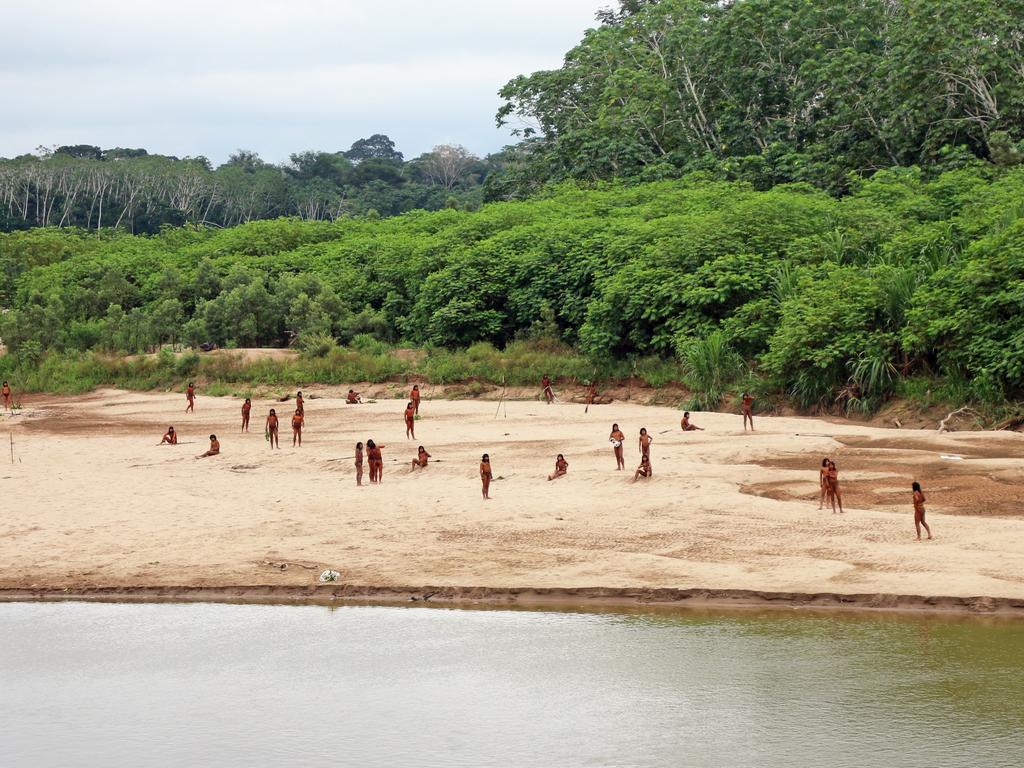
The Mashco Piro tribe, an uncontacted group in the Peruvian Amazon, has been sighted near a village, raising concerns about logging activities encroaching on their territory.

About Mashco Piro Tribe

  • The Mashco-Piro, or Mascho Piro, also known as the Cujareño people and Nomole, are an indigenous tribe of nomadic hunter-gatherers who inhabit the remote regions of the Amazon rainforest. 
  • They live deep in the rainforests of southeast Peru close to the border with Brazil and Bolivia.
  • They are believed to have fled into the recesses of the jungle during the Amazon Rubber Boom in the late 1800s, a time of enslavement and death for many tribes.
  • They live on the banks of the Las Piedras River in the Alto Purús National Park in huts constructed of palm leaf. In the rainy season, they retreat to huts in the rain forest.
  • Their movements across their territory are highly dynamic, dictated by dry and rainy seasons.
  • They speak a dialect of the Piro language.
  • Way of Life:
    • Members of the tribe wear very little clothing.
    • Men, women, and children alike wear only a yellowish-brown cloth above the waist and perhaps arm and leg bands of the same color.
    • They have medium stature and an athletic build.
    • All have straight black hair worn shoulder length or longer.
    • Men probably hunt with the weapons they have been seen carrying, such as bows and arrows, as well as spears. 
  • Peru’s government has forbidden all contact with the Mashco Piro, fearing the spread of a disease among the population to which it has no immunity.

Source: TOI

Mashco Piro Tribe FAQs

Q1: The Mashco Piro tribe is primarily found in which country?

Ans: Peru

Q2: The Mashco Piro primarily inhabit areas near which river?

Ans: Las Piedras River

Q3: Which national park is associated with the Mashco Piro tribe’s habitat?

Ans: Alto Purús National Park

Q4: Why has the Peruvian government forbidden all contact with the Mashco Piro tribe?

Ans: To avoid the spread of diseases to which they have no immunity.

Diatoms

Diatom

Diatoms Latest News

A team of Indian and international researchers discovered a new species of diatom, named Climaconeis heteropolaris.

About Diatoms

  • These are photosynthetic, single-celled organisms.
  • These are microscopic algae and serve as the base of the aquatic food chain. 
  • They are a major group of algae and form one of the most common forms of phytoplankton.
  • Habitat
    • They are found in almost all aquatic habitats, including lakes, ponds, streams, rivers, and the ocean. 
    • Most diatoms live as free-floating cells in the open water, but some live on the bottom (benthos), attached to surfaces such as plants or rocks, or in the bottom sediment. 
    • These surface-attached diatoms represent a significant part of the periphyton, which is a mixture of algae, cyanobacteria, microbes, and detritus that is attached to submerged surfaces.
  • Due to their sensitivity towards any water chemistry changes, they are excellent indicators of aquatic health.
  • Like other algae, diatoms have no leaves, stems, roots, or flowers, but the cell of every diatom contains chlorophyll, the substance that is responsible for the green color of leafy plants.
  • They are the only organism on the planet with cell walls composed of transparent, opaline silica.
  • Diatom cell walls are ornamented by intricate and striking patterns of silica.
  • Each species has a distinct pattern of tiny holes in the cell wall (frustule) through which they absorb nutrients and get rid of waste.
  • Diatoms can photosynthesize which means they can convert dissolved carbon dioxide in the water into oxygen that is essential for the survival of fish and other aquatic organisms. 
  • They also serve as a major source of atmospheric oxygen for the planet, and a key food source for higher organisms in the food chain, such as zooplankton, molluscs, and fish. 
  • Collectively, they are responsible for generating up to 50% of the oxygen produced globally each year.
  • Diatoms also play a crucial role in the nutrient cycling of marine and lake waters.

Source: TOI

Diatoms FAQs

Q1: What are diatoms?

Ans: Diatoms are photosynthetic, single-celled organisms.

Q2: In which type of habitats are diatoms commonly found?

Ans: They are found in almost all aquatic habitats, including lakes, ponds, streams, rivers, and the ocean.

Q3: What is the cell wall of diatoms made of?

Ans: They are the only organism on the planet with cell walls composed of transparent, opaline silica.

Q4: Do diatoms have leaves, stems, or roots like higher plants?

Ans: Like other algae, diatoms have no leaves, stems, roots, or flowers.

Conocarpus Tree

Conocarpus Tree

Conocarpus Tree Latest News

Recently, the government-appointed expert panel on environment has recommended the Supreme Court to ban a fast-growing exotic tree species called Conocarpus tree.

About Conocarpus Tree

  • It is a flowering plant belonging to the family of Combretaceae.
  • It is an invasive mangrove species.
  • Geographical Distribution of Conocarpus Tree
    • The plant species has two types, one which is native to the coastal areas of tropical America, ranging from Bermuda and the Bahamas to Brazil, and extending along the Pacific coasts and parts of West Africa;
    • Other found in arid coastal zones of Somalia and Yemen and across eastern and northern Africa and the Arabian Peninsula.
    • In India, the growth of the tree was found prevalent in Gujarat’s coastal and arid districts such as Kachchh.
  • This tree is famous for its dark green leaves color throughout the year and withstands harsh environmental conditions such as high and low temperatures.
  • It is very adaptive and could grow even in areas with extreme salinity.
  • It absorbs more water from soil than other species and is a threat to groundwater.
  • This species goes deep into the ground and grows too much to damage the communication cables, drainage lines and drinking water pipelines.
  • During flowering seasons, the tree releases pollen, which may aggravate respiratory conditions such as asthma, rhinitis, and other allergic reactions, particularly in children and the elderly.
  • It also poses a safety risk as its dry, brittle wood is highly flammable during the summer months.

Source: HT

Conocarpus Tree FAQs

Q1: What is the local name for Conocarpus?

Ans: Conocarpus erectus, commonly called buttonwood or button mangrove.

Q2: What is a Conocarpus tree?

Ans: It is one of two species in the genus Conocarpus, is a tree in the family Combretaceae native to coastal and riverine areas of Somalia, Djibouti, and Yemen.

Adi Vaani

Adi Vaani

Adi Vaani Latest News

The Ministry of Tribal Affairs, Government of India, is launching the Beta Version of “Adi Vaani” language translator.

About Adi Vaani

  • It is an AI-based translation tool that serves as the foundation for a future large language model dedicated to tribal languages.
  • It is India’s first AI-powered translator for tribal languages.
  • It is developed under the banner of Janjatiya Gaurav Varsh.
  • It is designed to bridge communication gaps between tribal and non-tribal communities, while safeguarding endangered tribal languages using advanced Artificial Intelligence (AI).
  • The project combines advanced AI technologies with community-driven approaches to protect, promote, and revitalize tribal languages and cultures across India.
  • It is developed by a national consortium of premier institutions led by IIT Delhi with BITS Pilani, IIIT Hyderabad, and IIIT Nava Raipur in collaboration with Tribal Research Institutes (TRIs) in Jharkhand, Odisha, Madhya Pradesh, Chhattisgarh, and Meghalaya,
  • The project aims to:
    • Enable real-time translation (text and speech) between Hindi/English and tribal languages.
    • Provide interactive language learning for students and early learners.
    • Digitally preserve folklore, oral traditions, and cultural heritage.
    • Support digital literacy, healthcare communication, and civic inclusion in tribal communities.
    • Awareness of the government. schemes and important speeches
  • Scope & Languages: In its Beta launch, Adi Vaani supports Santali (Odisha), Bhili (Madhya Pradesh), Mundari (Jharkhand), Gondi (Chhattisgarh)

Methodology & Features of Adi Vani

  • AI Language Models: Refined deployment of models such as No Language Left Behind (NLLB) and IndicTrans2 for low-resource tribal languages.
  • Community Participation: TRIs, experts, and communities are involved in data collection, validation, and iterative development.

Functional Toolkit of Adi Vani

  • Text-to-Text, Text-to-Speech, Speech-to-Text, Speech-to-Speech translations.
  • Optical Character Recognition (OCR) for digitizing manuscripts and primers.
  • Bilingual dictionaries and curated repositories.
  • Subtitles for Prime Minister’s speeches, health advisories (e.g., Sickle Cell Disease awareness), and information on government schemes and initiatives in tribal languages.

Source: PIB

Adi Vaani FAQs

Q1: What is optical character recognition used for?

Ans: Optical character recognition (OCR) is a technology that changes printed documents into digital image files.

Q2: What is the no language left behind model?

Ans: It is a first-of-its-kind, AI breakthrough project that open-sources models capable of delivering evaluated, high-quality translations directly between 200 languages.

Enquire Now