Moran Community

Moran community

Moran Community Latest News

The Moran community in Assam has ramped up the pressure in their demand for Scheduled Tribe status.

About Moran Community

  • The Moran is a lesser known community of Assam and mainly concentrated in the Tinsukia district and also residing in Arunachal Pradesh.
  • It is said that prior to the advent of the Ahoms, the Morans had their own independent kingdom at Bengmara, which is the present day Tinsukia.
  • Language: They had a common dialect of their own which was derived from the Bodo group of Tibeto-Burman linguistic family.  Later they started using Assamese.

Religious Affiliation of Moran Community

  • Morans are Vaishnava by religion and belong to the Moamoria Sect.
  • They were introduced to Vaishnavism by Sri Aniruddha Deva, disciple of Sri Sankara Deva.
  • Prior to their conversion to Vaishnavism were the followers of Shakta faith affiliated to the Kechaikhati Than, a shrine where the mother goddess is worshipped.
  • Festivals: They celebrate Gasar Talar Bihu (Bihu dance performed under a tree) is very popular among the Moran tribe and Kheri is also celebrated.

Source: IE

Moran Community FAQs

Q1: What is the religion of the Moran people?

Ans: Morans are Vaishnava by religion and belong to the Moamoria Sect.

Q2: What is the concept of Vaishnavism?

Ans: Vaishnavism, one of the major forms of modern Hinduism, characterized by devotion to the god Vishnu and his incarnations (avatars).
Strategic Lawsuits Against Public Participation (SLAPP)

Strategic Lawsuits Against Public Participation

Strategic Lawsuits Against Public Participation Latest News

Over a year before a civil court imposed an ex-parte injunction on journalists from publishing or circulating allegedly unverified and defamatory material against Adani Enterprises, the Supreme Court had been worried about courts recognising ‘SLAPP’ suits across jurisdictions.

About Strategic Lawsuits Against Public Participation

  • SLAPPs are meritless suits solely used to drag the opposing party through protracted litigation to dry up their resources. 
  • These lawsuits are typically filed by influential and wealthy individuals or businesses against people who criticise them, conduct investigations, communicate, or express opinions on matters of public interest.   
  • SLAPPs often target journalists and the media, as well as NGOs, academics, researchers, writers, artists, and human rights defenders-in general people who engage in public discourse and demand accountability.   
  • SLAPPs shut down critical speech by intimidating critics and draining their resources, undermining their active public engagement. 
  • Moreover, one core characteristic of this kind of action is the disparity of power and resources between the plaintiff and the defendant.
  • Often based upon ambiguous and elastic law provisions, SLAPPs use several strategies to exhaust resources and morale, generally including exorbitant claims for damages and allegations designed to smear, harass and overwhelm activists and/or civil society organisations.
  • Many nations (the USA, Canada, UK, and others) have enacted anti-SLAPP laws granting early dismissal of frivolous suits and fee-shifting to protect public participation. 
  • India has no such statute, so courts must rely on existing civil procedure rules and constitutional guarantees.
  • The Supreme Court of India warns against 'SLAPP' suits, emphasizes the protection of journalistic expression in defamation cases.

Source: TH

Strategic Lawsuits Against Public Participation FAQs

Q1: What is the primary purpose of a SLAPP lawsuit?

Ans: To intimidate and silence critics through prolonged litigation.

Q2: Which groups are often the targets of SLAPPs?

Ans: Journalists, NGOs, academics, and activists.

Q3: What is a core characteristic of SLAPP suits?

Ans: Disparity of power and resources between plaintiff and defendants.

Q4: What common strategy is used in SLAPP suits to exhaust opponents?

Ans: Exorbitant claims for damages and smear allegations.

Reinforcement Learning (RL)

Reinforcement Learning

Reinforcement Learning Latest News

In a paper published recently, the DeepSeek-AI team reported that their model, called just R1, could develop new forms of reasoning using reinforcement learning, a method of trial and error guided only by rewards for correct answers.

About Reinforcement Learning 

  • It is defined as a sub-field of machine learning (ML) that enables AI-based systems to take actions in a dynamic environment through trial and error methods to maximize the collective rewards based on the feedback generated for respective actions. 
  • In RL, an autonomous agent learns to perform a task by trial and error in the absence of any guidance from a human user.
  • RL algorithms use a reward-and-punishment paradigm as they process data.
  • RL is based on the hypothesis that all goals can be described by the maximization of expected cumulative reward. 
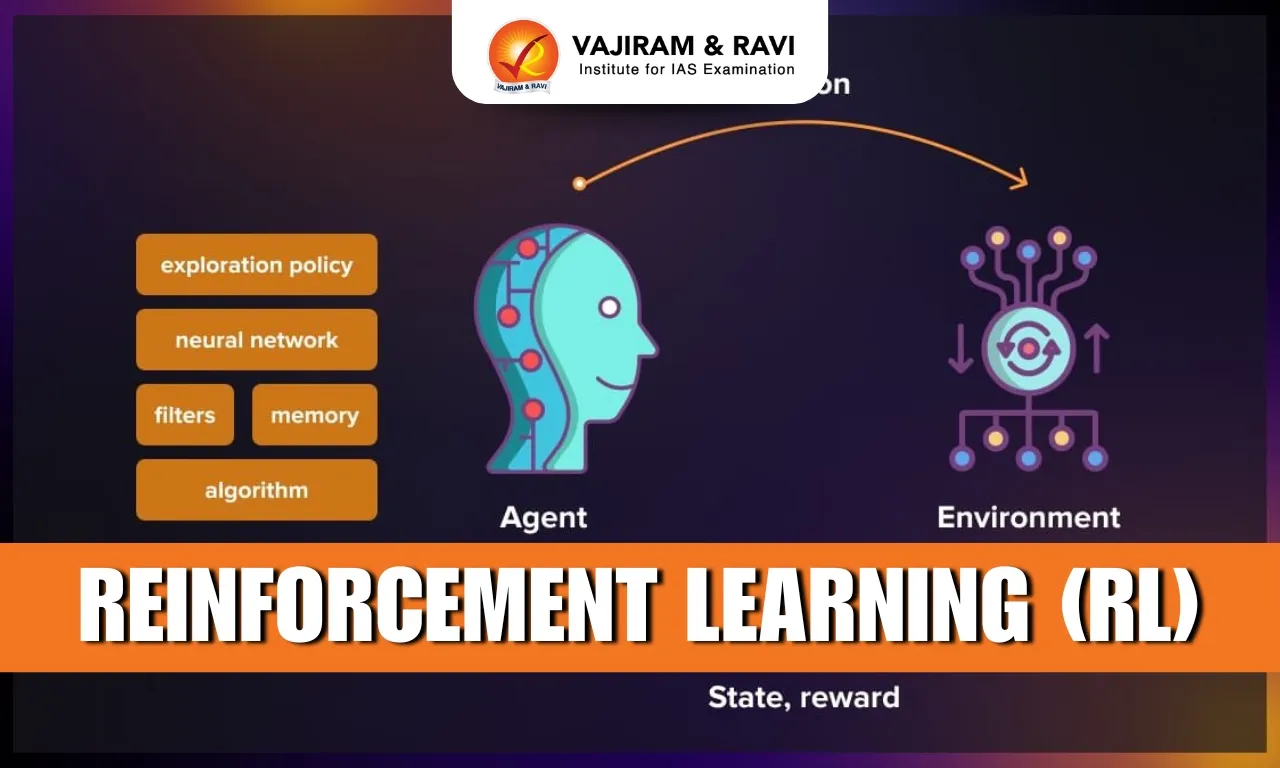
  • The RL agent learns about a problem by interacting with its environment. The environment provides information on its current state. 
  • The agent then uses that information to determine which actions(s) to take. 
  • If that action obtains a reward signal from the surrounding environment, the agent is encouraged to take that action again when in a similar future state. 
  • This process repeats for every new state thereafter. 
  • Over time, the agent learns from rewards and punishments to take actions within the environment that meet a specified goal.
  • The learning process in RL is driven by a feedback loop that consists of four key elements:
    • Agent: The learner and decision-maker in the system.
    • Environment: The external world the agent interacts with.
    • Actions: The choices the agent can make at each step.
    • Rewards: The feedback the agent receives after taking an action, indicating the desirability of the outcome.
  • It particularly addresses sequential decision-making problems in uncertain environments and shows promise in artificial intelligence development.

Source: TH

Reinforcement Learning FAQs

Q1: What is Reinforcement Learning (RL) a sub-field of?

Ans: Machine Learning

Q2: How does an Reinforcement Learning (RL) agent learn to perform a task?

Ans: By trial and error without human guidance.

Q3: Which paradigm forms the basis of Reinforcement Learning (RL) algorithms?

Ans: RL algorithms use a reward-and-punishment paradigm as they process data.

Q4: What is the fundamental hypothesis of Reinforcement Learning?

Ans: All goals can be described by maximizing expected cumulative reward.

NE-SPARKS Programme

NE-SPARKS Programme

NE-SPARKS Programme Latest News

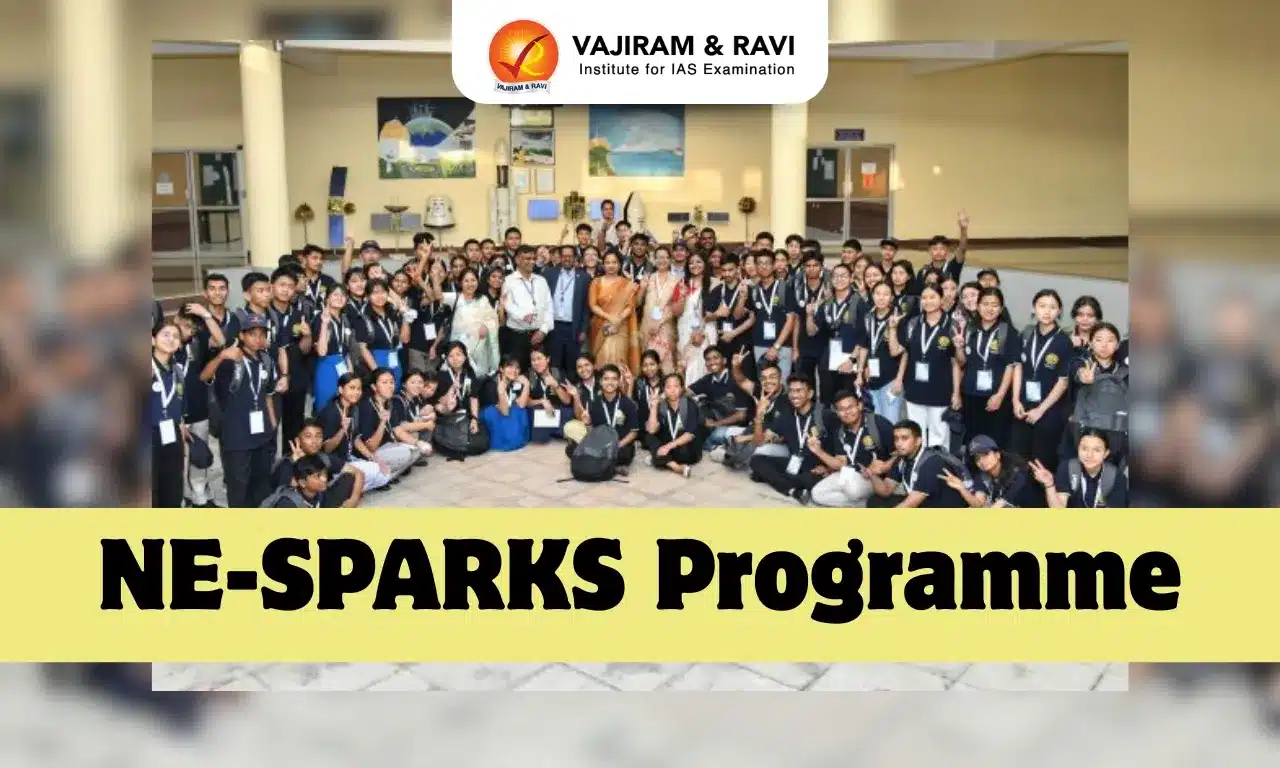
Recently, the union Minister of Development of North Eastern Region and Communications virtually interacted with school students from the North Eastern states who visited ISRO under NE-SPARKS program.

About NE-SPARKS Programme

  • The 'North East Students' Programme for Awareness, Reach, and Knowledge on Space' (NE-SPARKS), is a flagship initiative supported by the Ministry of Development of North-East Region (MDoNER ) in collaboration with 8 North Eastern States.
  • It is a pioneering initiative aimed at igniting curiosity and fostering awareness about space science and technology among students from the North Eastern Region (NER) of India.
  • This programme exposes Northeastern students to ISRO's cutting-edge space technology, with the goal of sparking interest in Science, Technology, Engineering, and Mathematics (STEM) fields.
  • It seeks to bridge geographical and informational gaps by providing students with an immersive experience of India's advancements in space research and exploration through visits to ISRO Centre in Bengaluru.
  • The programme envisages exposure visits for 800 meritorious science students (100 from each state of NER) to premier ISRO Centres at Bengaluru.
  • Funding: The program is funded by the MDoNER and the state Govt. in 60:40 ratio respectively.

Source: PIB

NE-SPARKS Programme FAQs

Q1: What is Indian Space Research Organisation (ISRO)?

Ans: The Indian Space Research Organisation (ISRO) is the space agency of India, responsible for the planning and execution of space-related activities in the country.

Q2: What does Yuvika stand for?

Ans: The "YUva VIgyani KAryakram (YUVIKA)" is an initiative designed to spark curiosity and awareness among school students, especially those from rural areas.

FAO’s Technical Cooperation Programme

FAO’s Technical Cooperation Programme

FAO’s Technical Cooperation Programme Latest News

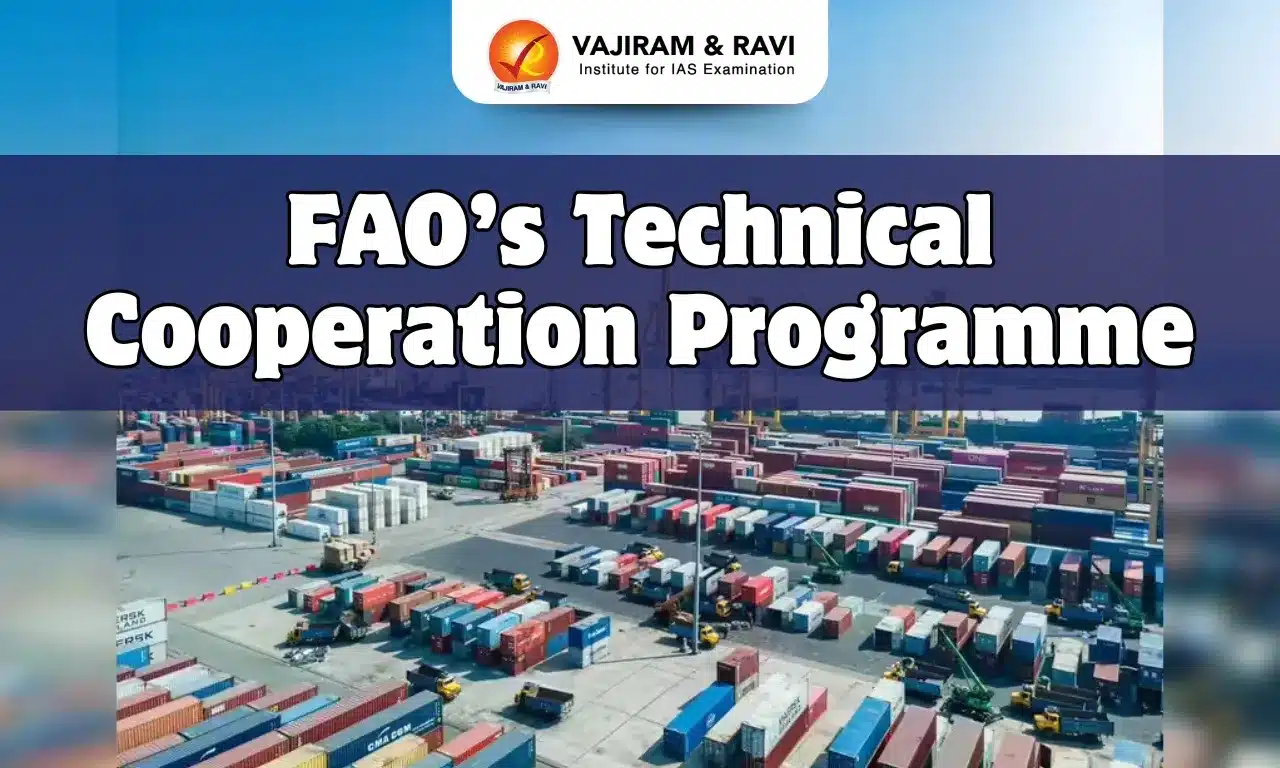
Recently, the Ministry of Fisheries, Animal Husbandry and Dairying has signed a Technical Cooperation Programme (TCP) agreement with the Food and Agriculture Organization (FAO) to strengthen Blue Port infrastructure in India.

About FAO’s Technical Cooperation Programme

  • It was created to enable FAO to make its know-how and technical expertise available to member countries upon request.
  • Purpose: To help countries improve their population’s food security and alleviate poverty with lasting impact.
  • Goal: To assist in solving technical problems in crop production, livestock, fisheries and aquaculture, forestry, nutrition, food safety, rural development and other areas identified in the Country Programming Framework (CPF).
  • Funding: The Technical Cooperation Programme is part of FAO’s Regular Programme budget. This means that TCP funds come directly from the dues paid by FAO members.
  • The FAO’s TCP programme on ‘Strengthening of Blue Ports’ intends:
    • To assist the GoI to strengthen the fishing ports' technical capacities to address the main environmental, social and economic challenges that affect the aquatic value chain. 
    • Two pilot fishing ports Vanakbara (Diu) and Jakhau in Gujarat, will benefit from this TCP that will provide them with specific strategic and operational tools to identify and formulate investment projects.

 Key Facts about Blue Ports framework

  • Under framework, the DoF is leading the development of Smart and Integrated Fishing Harbours that combine technological innovation with environmental stewardship.  
  • Three pilot harbours namely Vanakbara (Diu), Karaikal (Puducherry), and Jakhau (Gujarat) have been approved.
  • These modern harbours aim to revolutionize post-harvest fisheries infrastructure by  Ensuring safer, cleaner, and more efficient operations for India’s fishing communities. 
  • It is supported under the Pradhan Mantri Matsya Sampada Yojana and it involves
    • Integrates smart technologies: Such as IoT devices, sensor networks, satellite communication, and data analytics to streamline harbour operations and enable real-time decision-making. 
    • Eco-friendly features: Rainwater harvesting, energy-efficient lighting, electric-powered equipment, and robust waste management systems etc.

Source: PIB

FAO’s Technical Cooperation Programme FAQs

Q1: What is the technical cooperation program FAO?

Ans: It was created in 1976, and allows FAO to draw from its own regular programme resources and respond to countries' most pressing needs for technical assistance.

Q2: What is the Food and Agriculture Organisation (FAO)?

Ans: It is a specialized agency of the United Nations (UN) that leads international efforts to defeat hunger.

Fentanyl

Fentanyl

Fentanyl Latest News

The United States recently revoked and denied visas to “certain business executives and corporate leadership” from India for their alleged involvement in trafficking fentanyl precursor chemicals.

About Fentanyl

  • It is a potent synthetic opioid like morphine or heroin.
  • It is both a prescribed drug and a drug that is at times made and used illegally. 
  • It is made entirely in laboratories, with no natural ingredients. 
  • It was developed as a prescription medicine for treating severe pain, such as pain after surgery. 
  • When used as prescribed, it is also very effective in treating cancer pain or other types of severe chronic pain that don’t respond to other pain medicines.
  • It is also used with other medicines just before or during an operation to help the anesthetic (numbing medicine) work better.
  • It is approximately 100 times more potent than morphine and 50 times more potent than heroin as an analgesic.
  • It acts in the central nervous system (CNS) or brain to relieve pain. 
  • Some of its side effects are also caused by actions in the CNS, such as drowsiness or dizziness.
  • Fentanyl is addictive. Like other opioids, repeated use causes changes in brain activity that cause people to continue using it even when they experience harmful effects. 
  • Fentanyl is cheap for drug dealers to make into a street drug, compared to other opioids, but it is more powerful. 
  • Because only a few grains is enough to kill, fentanyl is causing high rates of overdose and overdose deaths.

What are Opioids?

  • The term “opioids” includes compounds that are extracted from the poppy plant (Papaver somniferum) as well as semisynthetic and synthetic compounds with similar properties that can interact with opioid receptors in the brain.
  • Opioids are commonly used for the treatment of pain and include medicines such as morphine, fentanyl, and tramadol.
  • Their non-medical use, prolonged use, misuse, and use without medical supervision can lead to opioid dependence and other health problems.
  • Due to their pharmacological effects, opioids can cause breathing difficulties, and opioid overdose can lead to death.
  • Apart from fentanyl, other well-known opioids include oxycodone, morphine, codeine, and heroin.

Source: NIE

Fentanyl FAQs

Q1: What type of drug is fentanyl?

Ans: Fentanyl is a potent synthetic opioid analgesic.

Q2: For what medical purpose was fentanyl originally developed?

Ans: It was developed as a prescription medicine for treating severe pain, such as pain after surgery.

Q3: How many times more potent is fentanyl compared to morphine?

Ans: It is approximately 100 times more potent than morphine.

Q4: Which system of the body does fentanyl primarily act upon?

Ans: It acts in the central nervous system (CNS) or brain to relieve pain.

Petroleum and Natural Gas Regulatory Board (PNGRB)

Petroleum and Natural Gas Regulatory Board

Petroleum and Natural Gas Regulatory Board Latest News

The Petroleum and Natural Gas Regulatory Board (PNGRB) recently invited stakeholder and consumer comments on an LPG interoperability framework that would allow households to draw refills from distributors of other PSU oil companies, similar to mobile number portability.

About Petroleum and Natural Gas Regulatory Board

  • It is a statutory body established under the Petroleum and Natural Gas Regulatory Board Act 2006.
  • Objective: To protect the interests of consumers and entities engaged in specified activities relating to petroleum, petroleum products, and natural gas and to promote competitive markets and for matters connected therewith or incidental thereto.
  • It has also been mandated to regulate the refining, processing, storage, transportation, distribution, marketing, and sale of petroleum, petroleum products, and natural gas, excluding the production of crude oil and natural gas, so as to ensure an uninterrupted and adequate supply of petroleum, petroleum products, and natural gas in all parts of the country.
  • PNGRB authorises the CGD networks, natural gas and petroleum product pipelines, determines tariffs, lays down the technical and safety standards, etc.
  • Nodal Ministry: Ministry of Petroleum and Natural Gas.
  • The Board has its seat in Delhi.
  • The Board consists of 1 Chairperson, 3 members, and 1 Member (Legal).

Petroleum and Natural Gas Regulatory Board Powers

  • The Board shall have jurisdiction to 
    • Adjudicate upon and decide any dispute or matter arising amongst entities or between an entity and any other person on issues relating to refining, processing, storage, transportation, distribution, marketing, and sale of petroleum, petroleum products, and natural gas, unless the parties have agreed for arbitration;
    • Receive any complaint from any person and conduct any inquiry and investigation connected with the activities relating to petroleum, petroleum products, and natural gas on contravention of-
      • Retail service obligations;
      • Marketing service obligations;
      • Display of retail price at retail outlets;
      • Terms and conditions subject to which a pipeline has been declared as a common carrier or contract carrier or access for other entities was allowed to a city or local natural gas distribution network, or authorisation has been granted to an entity for laying, building, expanding, or operating a pipeline as a common carrier or contract carrier, or authorisation has been granted to an entity for laying, building, expanding or operating a city or local natural gas distribution network;
      • Any other provision of this Act or the rules or the regulations or orders made thereunder.
  • While deciding on a complaint, the Board may pass such orders and issue such directions as it deems fit or refer the matter for investigation.
  • Decisions of the Board are binding on parties of dispute. The Board’s orders are enforceable, as the powers vested are the same as in a civil court.
  • The Board has powers to review its own decisions by way of a Review petition. The decision can be challenged by way of an appeal in the Appellate Tribunal.

Source: TH

Petroleum and Natural Gas Regulatory Board FAQs

Q1: Under which Act was the Petroleum and Natural Gas Regulatory Board (PNGRB) established?

Ans: Petroleum and Natural Gas Regulatory Board Act, 2006

Q2: What is the primary objective of Petroleum and Natural Gas Regulatory Board (PNGRB)?

Ans: To protect consumer interests and promote competitive markets.

Q3: Where is the headquarters of Petroleum and Natural Gas Regulatory Board (PNGRB) located?

Ans: How many members does Petroleum and Natural Gas Regulatory Board (PNGRB) have, including the Chairperson?

Machu Picchu

Machu Picchu

Machu Picchu Latest News

Recently, many tourists were stranded near Peru’s ancient Inca citadel of Machu Picchu after a passenger train service was suspended due to a protest.

About Machu Picchu

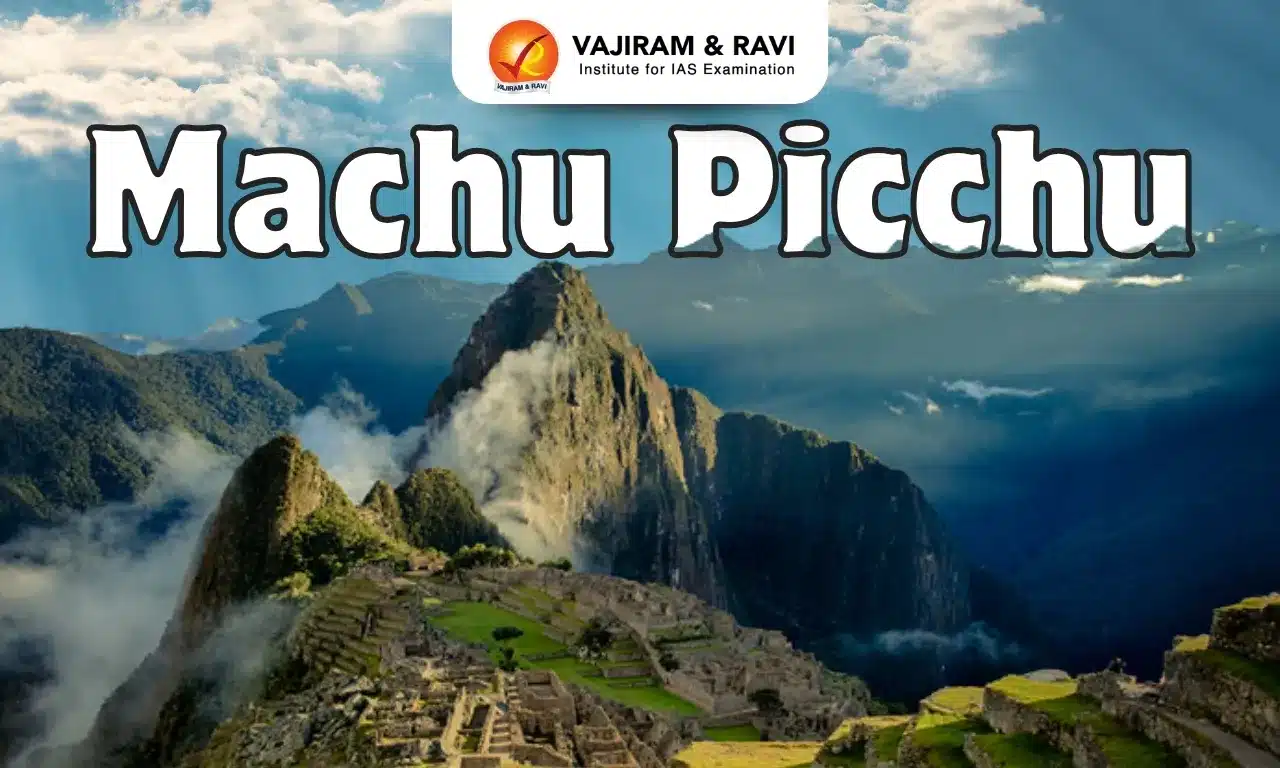
  • It is a 15th-century Inca site of Peru.
  • Location: It is located 80 km northwest of Cuzco, Peru, in the Cordillera de Vilcabamba of the Andes Mountains.
  • It is saddled between two peaks-Machu Picchu (“Old Peak”) and Huayna Picchu (“New Peak”)—at an elevation of 7,710 feet.
  • It is believed to have been built by Pachacuti Inca Yupanqui, the ninth ruler of the Inca, in the mid-1400s. 
  • Monuments: This citadel is made up of temples, palaces, terraces, monuments, complexes and walls; in addition to water channels, built with large blocks of stone, without any amalgam, proof of the great wisdom of the Inca civilization.
  • Machu Picchu was rediscovered in 1911 by the American explorer  Hiram Bingham.
  • It was designated a UNESCO World Heritage site in 1983.

Key Facts about Inca Civilization

  • Time Line: It flourished in ancient Peru between c. 1400 and 1533 CE.
  • It is the largest empire ever seen in the Americas and the largest in the world at that time.
  • Society: Inca society was highly stratified. The emperor ruled with the aid of an aristocratic bureaucracy.
  • Architecture and Technology: Inca technology and architecture were highly developed.
  • Religious belief: The Inca religion combined features of animism, fetishism, and the worship of nature gods.

Source:  DD News

Machu Picchu FAQs

Q1: In which country is Machu Picchu is located?

Ans: Peru

Q2: Who built Machu Picchu?

Ans: Pachacuti Inca Yupanqui, the ninth emperor of the Inca Empire.

Periyar Tiger Reserve (PTR)

Periyar Tiger Reserve

Periyar Tiger Reserve Latest News

A recent report from the State Finance Inspection wing, operating under the Finance department, has exposed significant financial irregularities at the Periyar Tiger Reserve.

About Periyar Tiger Reserve

  • Location: It is named after the Periyar River, is located in the Idukki district of Kerala.
  • It is set high at Cardamom Hills and Pandalam Hills of the Western Ghats, adjacent to the border with Tamil Nadu.
  • It surrounds the Periyar Lake, which was created in 1895 by building a dam across the Periyar River.
  • Terrain: The terrain is hilly and undulating with a maximum altitude of 2016 m. The highest peak is Kottamala (2016 m).
  • Rivers: Two major rivers namely Periyar and Pamba drain the area.
  • Dams: Mullaperiyar Dam is located within the PTR. 
  • Tribes: It is home to many tribal communities, including the Mannans and the Palians.
  • Vegetation: It comprises tropical evergreen forests, semi- evergreen forests, moist deciduous forests, transitional fringe evergreen forests, grasslands, and eucalyptus plantations.

Flora and Fauna of Periyar Tiger Reserve

  • Important flora includes teak, mangoes, rosewood, jamun, jacarandas, terminalias, tamarind, royal ponciana, bamboo, etc.
  • Fauna includes Elephants, Wild Pigs, Sambar, Gaur, Mouse Deer, Dole or Barking Deer, Indian Wild Dog, and Tiger.
  • The major four species of primates are also found at Periyar – the rare lion-tailed macaque, the Nilgiri Langur, Gee’s Golden Langur, Common Langur, and Bonnet Macaque.
  • It is also being considered as the habitat of the elusive Nilgiri Tahr.

Source: TH

Periyar Tiger Reserve FAQs

Q1: Where is the Periyar Tiger Reserve situated?

Ans: Periyar Tiger Reserve is located in the Idukki district of central Kerala.

Q2: Which river flows through Periyar Tiger Reserve?

Ans: Periyar and Pamba Rivers

Q3: The Periyar Tiger Reserve lies within which hill ranges of the Western Ghats?

Ans: Nallamala Hills and Shevaroy Hills

Q4: Which tribal communities are native to the PTR area?

Ans: Mannans and Palians

Q5: What is the name of the highest peak in Periyar Tiger Reserve?

Ans: Kottamala

National Maritime Heritage Complex (NMHC)

National Maritime Heritage Complex

National Maritime Heritage Complex Latest News

The Prime Minister will review the progress of the National Maritime Heritage Complex (NMHC) at Lothal in the Ahmedabad district during his one-day visit to the state, officials said recently.

About National Maritime Heritage Complex 

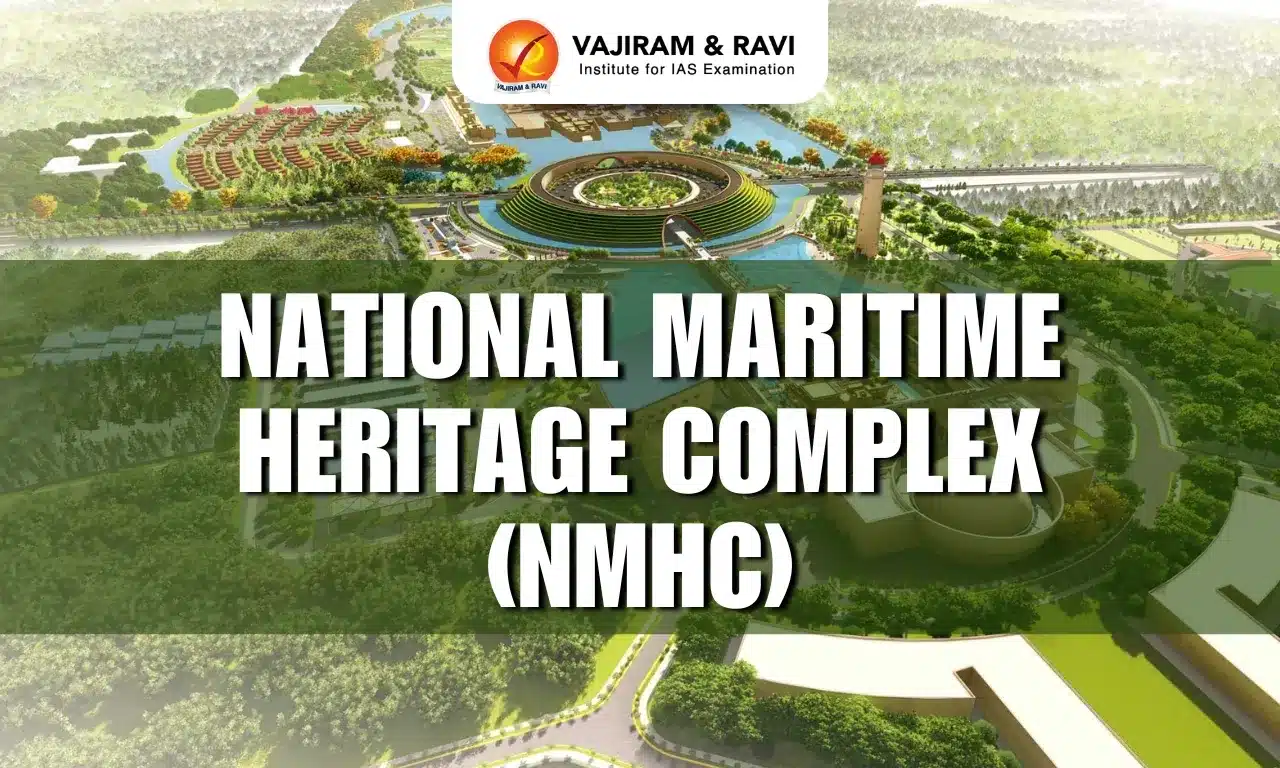
  • It is a flagship project of the Govt of India to piece together the entire 5000 years of India’s maritime history and showcase it under one roof.
  • The Ministry of Ports, Shipping, and Waterways, under its SagarMala Programme, is developing the NMHC at Lothal, Gujarat.
    • The location–‘Lothal’–is significant since it is one of the prominent cities of the ancient Indus Valley Civilization (IVC) dating back to 2400 BC, located 76 km from Ahmedabad in Gujarat. 
    • It is the only port town of the IVC.
    • Archaeological excavations have discovered the oldest man-made dockyard, over 5000 years old, in Lothal.
  • The NMHC is envisioned to be one of the largest maritime complexes in the world.
  • It will be a one of its kind, digitally enhanced, experiential museum with the aim of attracting tourists and historians from all over the world, who will get to see and learn about the rich and diverse maritime history of India.
  • The Ministry of Ports, Shipping, and Waterways has appointed the Indian Ports Association as the nodal agency, while Indian Port Rail Corporation Ltd. (IPRCL) is the executing agency of the project. 
  • It is being developed in an area of about 400 acres with an estimated cost of Rs. 4500 crore.
  • Funding
    • The NMHC project shall be funded by the Ministry of Shipping and Ministry of Culture through National Culture Fund by way of grant. 
    • In the future, other Central Line Ministries, Coastal States & UTs, other government institutions, private organizations, and the public shall be approached for contributions either from their CSR funds or otherwise to the bank account of IPRCL-NMHC vertical.
  • NMHC is planned to be developed in various phases.
    • Phase 1A will have an NMHC museum with six galleries, which also includes an Indian Navy & Coast Guard gallery envisaged to be one of the largest in the country.
    • Phase 1B will have NMHC museum with 8 more galleries, Lighthouse museum which is planned to be the world’s tallest, and the Bagicha complex (with a car parking facility for about 1500 cars, a food hall, a medical centre, etc.).
    • Phase 2 will have coastal states’ pavilions, a hospitality zone, a recreation of real-time Lothal City, Maritime Institute and hostel and four theme-based parks. 
    • Phases 1A and 1B of the project are to be developed in EPC mode, and Phase 2 of the project will be developed through land subleasing/PPP to establish NMHC as a world-class heritage museum. 
  • A separate society will be set up for the development of future phases, to be governed by a Governing Council headed by the Minister of Ports, Shipping, and Waterways.
    • This society will manage the implementation and operation of the NMHC.

Source: WEEK

National Maritime Heritage Complex FAQs

Q1: Where is the National Maritime Heritage Complex (NMHC) being developed?

Ans: Lothal, Gujarat

Q2: Which ministry is developing the the National Maritime Heritage Complex (NMHC)?

Ans: Ministry of Ports, Shipping, and Waterways

Q3: Why is Lothal considered significant for the National Maritime Heritage Complex (NMHC) project?

Ans: It was the only port town of the Indus Valley Civilization.

Q4: Which agency has been appointed as the nodal agency for National Maritime Heritage Complex (NMHC)?

Ans: ndian Ports Association (IPA)

Enquire Now