Naying Hydroelectric Project

Naying Hydroelcetric Project

Naying Hydroelectric Project Latest News

An environmental public hearing for the 1000MW Naying hydroelectric project is scheduled for November 12.

About Naying Hydroelectric Project

  • It is a proposed 1,000 MW hydropower project planned on the Siyom (Yomgo) river/basin in Arunachal Pradesh.
  • It will be implemented by the North Eastern Electric Power Corporation (NEEPCO). 
  • The project includes the construction of a concrete dam, an underground powerhouse, and tunnels, with work expected to begin around 2028 and commissioning planned for 2032. 
  • Once operational, it is expected to generate 4,966.77 GWh of electricity annually.

Key Facts about Siyom River

  • It is a right-bank tributary of the Brahmaputra River.
  • It flows in the Arunachal Pradesh state.
  • The Mouling National Park is located on the east bank of the river.
  • The Siyom has a length of about 170 km.

Source: TOI

Naying Hydroelectric Project FAQs

Q1: On which river is the Naying Hydroelectric Project proposed?

Ans: Siyom (Yomgo)

Q2: What is the planned capacity of the Naying Hydroelectric Project?

Ans: 1,000 MW

Q3: What type of hydropower structures will the Naying project include?

Ans: Concrete dam, underground powerhouse, and tunnels

Q4: Which national park is located near the Siyom River?

Ans: Mouling National Park

Q5: The Siyom River is a tributary of which major river?

Ans: Brahmaputra

Live Cases Dashboard of the Legal Information Management and Briefing System (LIMBS)

Live Cases Dashboard of the Legal Information Management and Briefing System

Live Cases Dashboard of the Legal Information Management and Briefing System (LIMBS) Latest News

Union Minister of State for Law and Justice recently  inaugurated the Live Cases Dashboard of Legal Information Management and Briefing System (LIMBS) in New Delhi.

About Live Cases Dashboard of the Legal Information Management and Briefing System

  • It is designed to provide real-time data visualisation of court cases and offer an overview of upcoming hearings to enable proactive decision-making and better inter-ministerial coordination.
  • It provides details of all cases scheduled to be heard in the next seven days in the Supreme Court, High Courts, or any other courts involving various ministries of the Government of India.

Key Facts about Legal Information Management and Briefing System

  • It is a web-based application for monitoring of all court cases where the Union of India is one of the parties. 
  • LIMBS came into existence for all ministries/departments/autonomous organizations/CPSUs in 2016, and an advanced version in January 2020.
  • Since then the application is seamlessly working under the supervision of the Department of Legal Affairs, Ministry of Law and Justice (as Nodal Ministry).
  • It is an innovative and easy-to-access online tool which is available 24x7 to all the stakeholders, viz., government officials, department users, nodal officers, higher officials of ministries, advocates, arbitrators, and claimants of ministries to upload the latest information.
  • It is a dashboard-based system for the user Ministries/Departments on which they can see their legal matters at a glance.

Source: DDN

Live Cases Dashboard of the Legal Information Management and Briefing System (LIMBS) FAQs

Q1: What is the main objective of the Live Cases Dashboard under Legal Information Management and Briefing System (LIMBS)?

Ans: To provide real-time data visualisation of court cases involving government ministries.

Q2: Which Ministry supervises the Legal Information Management and Briefing System (LIMBS)?

Ans: Ministry of Law and Justice

Q3: When did the LIMBS platform first come into existence?

Ans: LIMBS came into existence for all ministries/departments/autonomous organizations/CPSUs in 2016, and an advanced version in January 2020.

Astra Mark 2 Missile

Astra Mark 2 Missile

Astra Mark 2 Missile Latest News

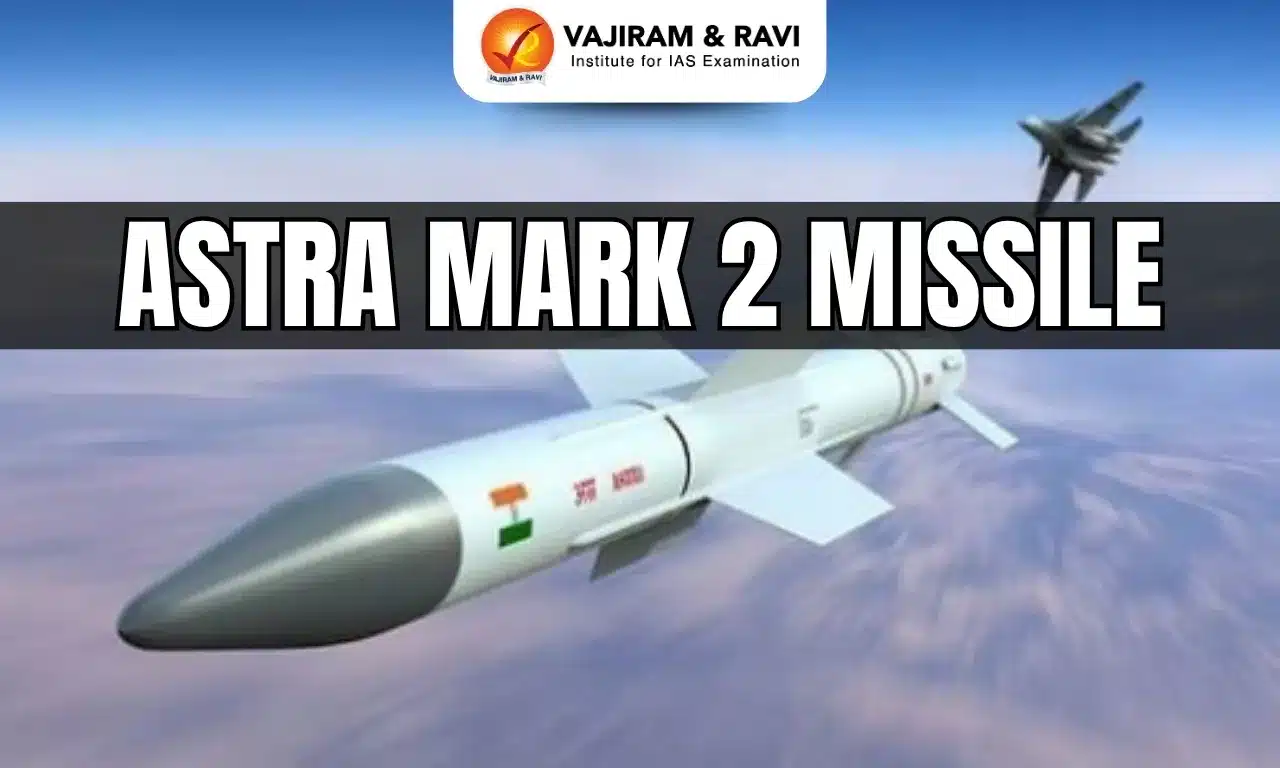
The Defence Research and Development Organisation (DRDO) recently announced its intention to extend the range of its Astra Mark 2 air-to-air missile to more than 200 kilometres.

About Astra Mark 2 Missile

  • It is a Beyond Visual Range (BVR) air-to-air missile.
  • It is being developed by the Defence Research and Development Organisation (DRDO).
  • In addition to various laboratories of DRDO, more than 50 public and private industries, including Hindustan Aeronautics Limited, have contributed towards successful realisation of the weapon system. 
  • The Astra Mark-1 air-to-air missile with a strike range of around 90-100 kms is already in the Indian Air Force and is already integrated with the LCA Tejas and the Su-30 MKI fighter jets.
  • The Astra Mark 2 would give the Indian Air Force an edge over the adversaries in air-to-air combat and can also be offered as an export product to friendly foreign countries.

Astra Mark 2 Missile Features

  • While Astra Mark-1 is a single pulse, smokeless solid-fueled motor, the Astra Mark-2 is going to be a dual pulse missile, giving it a higher range. 
  • Astra Mk-1 is 3.6 m (12 ft) long with a diameter of 178 mm (7.0 in) and weighs 154 kg with a maximum range of 110 km. Astra Mark 2 will be a bigger missile with a diameter of 190 mm and weigh close to 175 kg.
  • It can go up to a distance of 150 to 180 km and can travel at around Mach 4.5.
  • It is equipped with a indigenous Radio Frequency (RF) Seeker from Su-30 Mk-I.

Astra Mark 2 Missile FAQs

Q1: What type of missile is the Astra Mark 2?

Ans: It is a Beyond Visual Range (BVR) air-to-air missile.

Q2: Who is developing the Astra Mark 2 missile?

Ans: Defence Research and Development Organisation (DRDO)

Q3: Which fighter jets have already been integrated with Astra Mark 1 missiles?

Ans: Tejas and Su-30 MKI

Impatiens Rajibiana

Impatiens Rajibiana

Impatiens Rajibiana Latest News

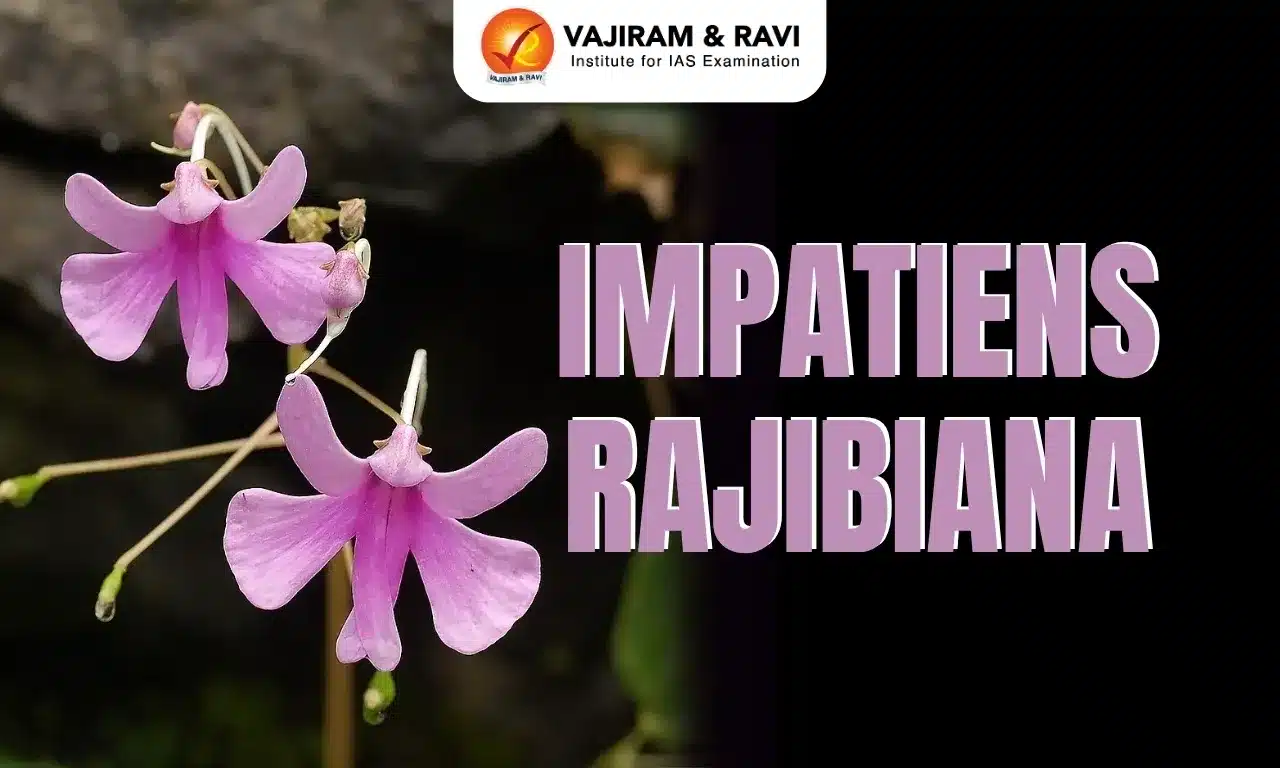
A team of the Botanical Survey of India recently discovered 'Impatiens rajibiana', a new species of balsam flower.

About Impatiens Rajibiana

  • It is a new species of balsam flower.
  • It was discovered in the natural forests of Shergaon in the West Kameng district of Arunachal Pradesh.
  • The plant was discovered growing in moist, shaded forest areas of Shergaon at an elevation of over 2,000 meters. 
  • It belongs to the family Balsaminaceae, commonly known as balsams.
    • Many balsam species are endemic, occurring only in the region and often in limited numbers. 
    • India currently has around 230 known balsam species, including well-known varieties like Impatiens balsamina (garden balsam or touch-me-not).
    • Between 2013 and 2017, over 16 new species were discovered in Arunachal Pradesh alone, including Impatiens godfreyi and Impatiens sashinborthakurii.

Source: PTI

Impatiens Rajibiana FAQs

Q1: Impatiens rajibiana is a newly discovered species of which type of plant?

Ans: Balsam flower

Q2: Where was Impatiens rajibiana discovered?

Ans: Shergaon, West Kameng district, Arunachal Pradesh

Q3: Impatiens rajibiana was found growing under what kind of conditions?

Ans: Moist and shaded forest areas

Crew Escape System

Crew Escape System

Crew Escape System Latest News

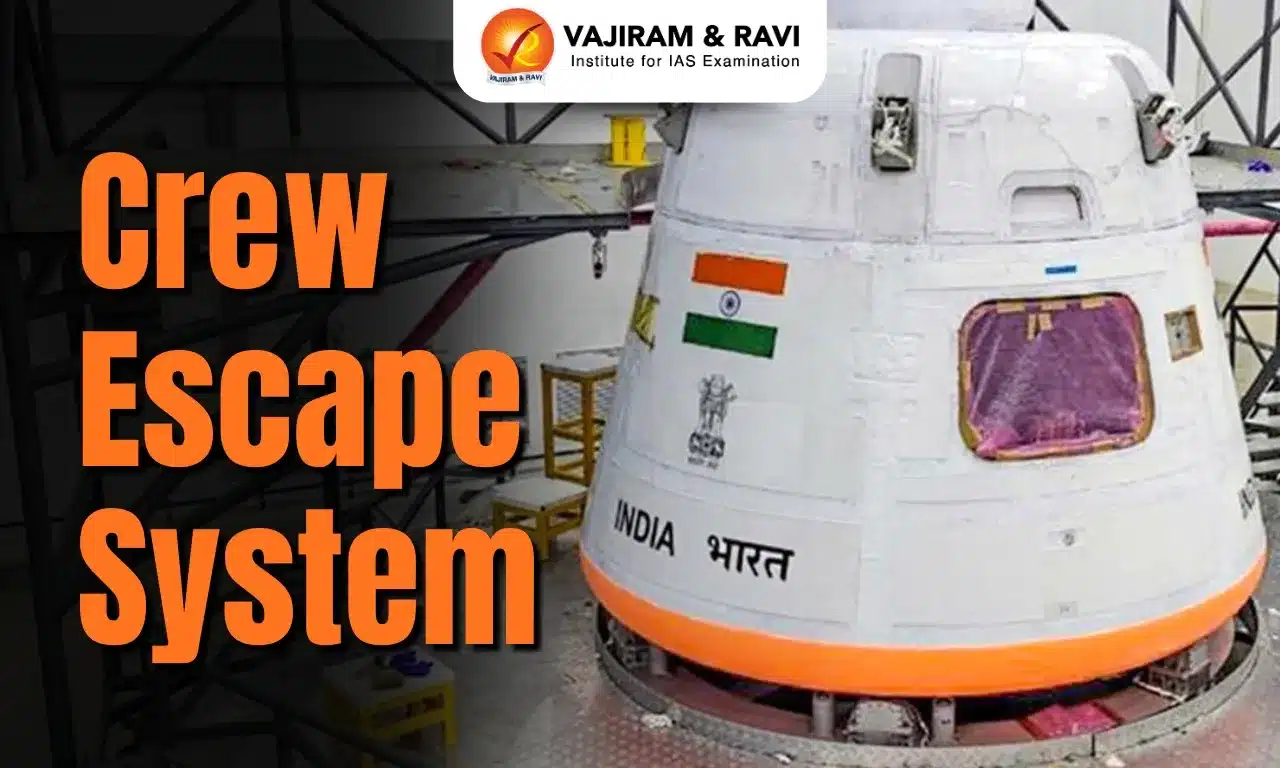
ISRO has developed a cost-effective, single-stage Test vehicle powered by the Vikas engine to validate the crew escape system (CES).

About Crew Escape System

  • It is an emergency escape measure designed to quickly pull the crew module along with the astronauts to a safe distance from the launch vehicle in the event of a launch abort. 
  • The CES is classified into two types based on the way it extracts the crew module:
    • Puller type: It is used in Gaganyaan, where the CES pulls the crew module away from the launch vehicle;
    • Pusher type: It is used in vehicles like SpaceX’s Falcon 9, where the crew module is pushed away using compact, high-thrust liquid-fuel engines.
  • The U.S.’s Saturn V, Russia’s Soyuz, and China’s Long March vehicles also use puller-type CES designs.

Working of Crew Escape System

  • Once the CES has moved the crew module a safe distance away from the failing vehicle, the module will be released and decelerated by a multistage parachute system.
  • It will reduce the module’s velocity in steps, ensuring it splashes down safely in the sea without exceeding the crew’s physiological limits upon impact.
  • Typically, the crew will remain inside the module until splashdown.
  • The Integrated Vehicle Health Management system (IVHM), which is a network of sensors, electronics, and software, will aid in taking a decision to activate the CES when a contingency arises.
    • It will monitor all vital parameters of vehicle systems and crew health in real time.
    • Based on the synthesised information and the flight regime, it will ensure prompt anomaly detection, minimise false alarms, and activate the CES early enough to protect the crew.

Source: TH

Crew Escape System FAQs

Q1: What is the primary purpose of the Crew Escape System (CES)?

Ans: To ensure the safe escape of astronauts during critical phases of flight.

Q2: During which phase of flight is the Crew Escape System (CES) most crucial?

Ans: Launch phase.

Sudden Infant Death Syndrome

Sudden Infant Death Syndrome

Sudden Infant Death Syndrome Latest News

Sudden Infant Death Syndrome (SIDS) is a leading cause of infant mortality globally and October is marked as Sudden Infant Death Syndrome month.

About Sudden Infant Death Syndrome

  • It is the term used to describe the sudden and unexpected death of an infant that is less than one year old, for which no cause can be found even after an investigation.
  • It is sometimes known as ‘cot death’ or ‘crib death’, even though cots and cribs are not the cause of these deaths.
  • The most SIDS deaths occur during the first six months of a baby’s life.
  • It occurs slightly more in baby boys and happens when the baby is asleep.

Risk Factors for SIDS

  • Premature birth or low birth weight;
  • A family history as babies who have had a sibling who died of SIDS are at a higher risk; Exposure to smoking/secondhand smoke during or after pregnancy;
  • Unsafe sleeping positions or environments and poor prenatal care.

Possible Causes of Sudden Infant Death Syndrome

  • Problems of under-development of the part of the brain that helps control breathing and waking during sleep.
  • It may also be a genetic vulnerability or a vulnerability to environmental stresses.
  • Vaccines do not cause SIDS.

Source: TH

Sudden Infant Death Syndrome FAQs

Q1: What is Sudden Infant Death Syndrome (SIDS)?

Ans: The sudden and unexplained death of an infant under one year.

Q2: What is the primary way to reduce the risk of SIDS?

Ans: Ensuring a safe sleep environment.

Mission Drishti

Mission Drishti

Mission Drishti Latest News

Space-tech start-up GalaxEye will launch the world's first multi-sensor Earth observation (EO) satellite 'Mission Drishti' in the first quarter of next year.

About Mission Drishti

  • It is the world's first multi-sensor Earth observation (EO) satellite.
  • It is India's largest privately built satellite and also the highest-resolution satellite developed in the country.
  • It is planned by Bengaluru based space startup – GalaxEye

Key Features of Mission Drishti

  • It is carrying synthetic aperture radar (SAR) and high-resolution optical payloads, will make available Earth observation data through any weather and at any time of the day.
  • It is envisioned to deploy 8-12 satellites by 2029.
  • It is engineered as a remote-sensing Earth observation system, optimised for spatial, spectral and temporal resolutions to capture high-precision imagery.
  • The satellite weighs 160 kg and offers 1.5 metre resolution.
  • It has successfully undergone stringent structural tests at ISRO’s U R Rao Satellite Centre, demonstrating its resilience to the extreme environment of space.
  • Range of applications: It will enable governments, defence agencies and industries to perform advanced geospatial analysis across a wide range of applications, including;
  • Border surveillance, disaster management, defence, infrastructure monitoring, agriculture financial and insurance assessment etc.

 Source: TH

Mission Drishti FAQs

Q1: Who developed Mission Drishti?

Ans: GalaxEye Space, a Bengaluru-based private space startup.

Q2: What are the potential applications of Mission Drishti?

Ans: It will enable governments, defence agencies and industries to perform advanced geospatial analysis.

Fare se Fursat Fixed Airfare Scheme

Fare se Fursat Fixed Airfare Scheme

Fare se Fursat Fixed Airfare Scheme Latest News

Recently, the Minister of Civil Aviation inaugurated the ‘Fare Se Fursat’ Fixed Airfare Scheme.

About Fare se Fursat Fixed Airfare Scheme

  • It is aimed at giving passengers freedom from the stress of fluctuating airfares and promoting ease of flying in the country. 
  • Objective: To address this long-standing challenge by introducing transparency and stability in pricing.
  • It is an initiative by India’s government-owned regional carrier, Alliance Air which offers a single, fixed fare that remains constant regardless of the booking date, even on the day of departure. 
    • Alliance Air operates short and medium-route flights, primarily connecting tier 2 and tier 3 cities under the union government’s Ude Desh ka Aam Nagrik (UDAN) scheme.
  • Pilot Phase: The initiative will be implemented on a pilot basis from October 13 to December 31, 2025 across select routes.
  • The initiative is also expected to encourage first-time flyers from smaller towns to opt for air travel, and make air travel available, accessible and affordable.
  • Advantages: The static fare system eliminates uncertainty and stress associated with fluctuating airfares, ensuring predictability of costs, even for last-minute bookings.

Source: PIB

Fare se Fursat Fixed Airfare Scheme FAQs

Q1: What is the main objective of the Fare Se Fursat Fixed Airfare Scheme?

Ans: To make air travel more affordable and predictable.

Q2: Which airline has introduced the Fare Se Fursat Fixed Airfare Scheme?

Ans: Alliance Air.

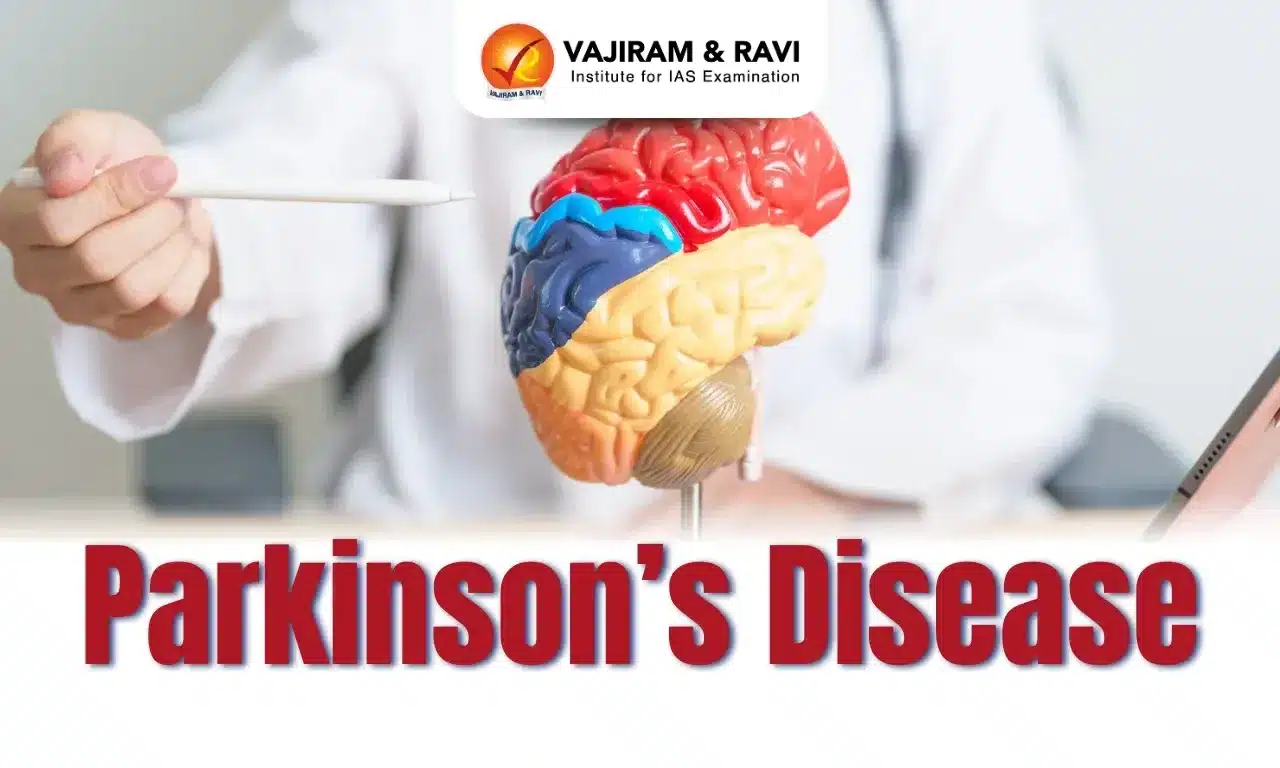
Parkinson’s Disease

Parkinson’s Disease (PD)

Parkinson's Disease Latest News

A condition that compels people to move their legs could indicate they have a greater chance of developing Parkinson's disease.

About Parkinson's Disease

  • It is a progressive neurodegenerative disorder that primarily affects movement.
  • It causes nerve cells (neurons) in parts of the brain to weaken, become damaged, and die, leading to symptoms that include problems with movement, tremor, stiffness, and impaired balance. 
  • As symptoms progress, people with PD may have difficulty walking, talking, or completing other simple tasks. 
  • Although many brain areas are affected in Parkinson’s disease, the most common symptoms result from the loss of neurons in an area near the base of the brain called the substantia nigra. 
    • The neurons in this area produce dopamine.
    • Dopamine is the chemical messenger that transmits signals in the brain to produce smooth, purposeful movement. 
    • Most people with PD have lost 60 to 80% or more of the dopamine-producing cells in the substantia nigra by the time symptoms appear. 
    • Lack of dopamine causes the slowed movements and tremors symptoms of Parkinson’s disease.
  • Who does it affect?
    • The disease usually occurs in older people, but younger people can also be affected. 
    • Men are affected more often than women.
    • The cause of PD is unknown but people with a family history of the disease have a higher risk. 
    • Exposure to air pollution, pesticides, and solvents may increase risk.
    • People with PD often develop a “parkinsonian gait.” 
      • This includes a tendency to lean forward, taking small, quick steps as if hurrying (called festination), and reduced swinging in one or both arms. 
      • They may have trouble initiating movement (called “start hesitation”) and stop suddenly as they walk, freezing in place.
  • Diagnosis: Currently, no blood laboratory or radiological tests are available to diagnose Parkinson’s disease. 
  • Treatment: There’s no cure for this disease, but treatments can help significantly improve your symptoms.

Source: SA

Parkinson's Disease FAQs

Q1: What type of disorder is Parkinson’s disease?

Ans: Progressive neurodegenerative disorder.

Q2: Which part of the brain is primarily affected in Parkinson’s disease?

Ans: Substantia nigra

Q3: Which group is more likely to develop Parkinson’s disease?

Ans: Men, particularly older adults.

Q4: What causes the tremors and slow movement in Parkinson’s disease?

Ans: Loss of dopamine-producing neurons

Rhodamine-B

Rhodamine B

Rhodamine B Latest News

Recently, scientists at Raman Research Institute (RRI) have developed a powerful and cost-effective technique that uses the coffee-stain effect to identify harmful dyes such as Rhodamine B.

About Rhodamine B

  • It is a synthetic dye known for its bright pink colour.
  • Characteristics:
    • It is a water-soluble chemical compound.
    • It appears green in powder form; it turns vivid fluorescent pink when it comes in contact with water.

Applications of Rhodamine B

  • It is commonly used in industries such as textiles, paper, and leather.
  • Its application extends to scientific research due to its fluorescent properties.

Impacts of Rhodamine B on Human Health

  • It can cause DNA damage, leading to mutations and potentially triggering cancerous growths.
  • Animal research has demonstrated tumor development in organs like the liver and bladder following prolonged exposure to the dye.
  • In sensitive individuals, they can lead to allergic reactions such as itching, redness, and skin thickening.
  • Long-term exposure to synthetic dyes like Rhodamine B can result in chronic allergic reactions and permanent skin pigmentation changes.
  • The chemical is toxic for humans and can cause oxidative stress on cells and tissues if ingested.

Source: DD News

Rhodamine B FAQs

Q1: Why is Rhodamine B considered a concern for public health?

Ans: It is considered a potential health hazard due to its possible carcinogenic, skin-irritating, and toxic properties.

Q2: What is Rhodamine B used for?

Ans: It is mainly used as colourants in the textile, plastic, and cosmetic industries.

Enquire Now