Samriddh Gram Phygital Services Pilot Project

Samriddh Gram Phygital Services Pilot Project

Samriddh Gram Phygital Services Pilot Project Latest News

Recently, the Telecom Centres of Excellence (TCoE) has signed agreements with leading implementation partners to roll out the Samriddh Gram Phygital Services Pilot  project.

About Samriddh Gram Phygital Services Pilot Project

  • It is aimed at transforming rural India through a seamless integration of physical and digital services.
  • It is envisaged as a pioneering phygital (physical + digital) Services model integrating on-ground presence with robust digital infrastructure to empower rural citizens.
  • It leverages BharatNet connectivity to deliver essential services seamlessly and sustainably.

Features of Samriddh Gram Phygital Services Pilot Project

  • Under this initiative three villages have been identified namely, Ari & Umri in Madhya Pradesh, Narakoduru in Andhra Pradesh, and Chaurawala in Uttar Pradesh.
  • Each village will host a Samriddhi Kendra which will serve as an integrated digital service hub.
  • The Samriddhi Kendras will deliver a comprehensive suite of services:
    • Education & Skilling: Smart classrooms, AR/VR-based learning, and digital skilling aligned with government schemes/initiatives.
    • Agriculture: IoT-based soil testing, drone support, and smart irrigation systems.
    • Healthcare:  Teleconsultations, Health ATMs, and emergency care.
    • e-Governance: Assisted access to citizen services, documentation, and grievance redressal.
    • E-Commerce: Integration with ONDC and digital marketplaces for local entrepreneurship.
    • Financial Inclusion: Digital banking and payments
    • Connectivity Backbone: Strengthened BharatNet FTTH with a Village Area Network and public Wi-Fi hotspots.

Source: PIB

Samriddh Gram Phygital Services Pilot Project FAQs

Q1: What is the primary objective of the Samriddh Gram Phygital Services Pilot Project?

Ans: To deliver citizen-centric services through phygital infrastructure

Q2: Where is the Samriddh Gram Phygital Services Pilot Project being implemented?

Ans: Rural areas of India

CLAMP Portal

CLAMP Portal

CLAMP Portal Latest News

Recently, the Union Minister of Coal and Mines launched two digital platforms the KOYLA SHAKTI Dashboard and the CLAMP Portal

About CLAMP Portal 

  • The Coal Land Acquisition, Management, and Payment (CLAMP) portal is a unified digital solution for the coal sector.
  • It is aimed at streamlining land acquisition, compensation, and rehabilitation & resettlement (R&R) processes in the coal sector.
  • It serves as a centralized repository of land records, the portal ensures data integration, enhances accountability, and minimizes procedural delays.
  • Initiative of: Ministry of Coal
  • Advantages: CLAMP portal enhances transparency, efficiency, and inter-agency coordination in land management practices across coal PSUs.

Key Facts about Koyla Shakti Dashboard

  • It is a digital platform that integrates the entire coal value chain from mine to market on a unified interface.
  • The platform facilitates real-time coordination among coal companies, railways, ports, and end users, thereby enhancing operational efficiency and ensuring seamless coal logistics.
  • The platform acts as a comprehensive decision-support system, ensuring:
  • Seamless coordination among coal companies, railways, ports, and end users.
  • Transparency and accountability through data-driven monitoring.
  • Faster, smarter decision-making enabled by live analytics and digital dashboards.

Source: PIB

CLAMP Portal FAQs

Q1: What is the primary use of coal in India?

Ans: Power generation

Q2: Which type of coal is considered the highest quality?

Ans: Anthracite
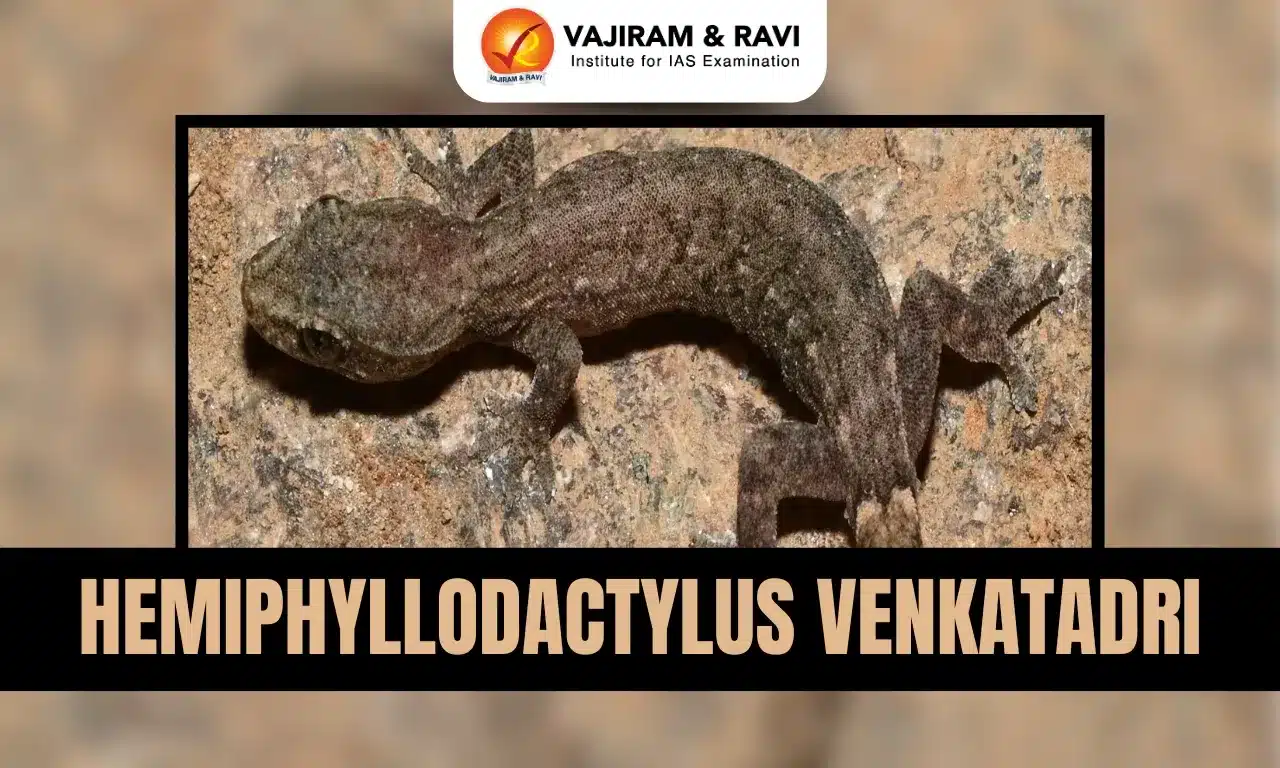
Hemiphyllodactylus Venkatadri

Hemiphyllodactylus Venkatadri

Hemiphyllodactylus Venkatadri Latest News

Recently, scientists from the Zoological Survey of India (ZSI) have discovered a new species of slender gecko and named it as Hemiphyllodactylus Venkatadri.

About Hemiphyllodactylus Venkatadri

  • It is a new species of slender Gecko belonging to the genus Hemiphyllodactylus.
  • It was discovered from Tirumala hill ranges within the Seshachalam biosphere reserve in Andhra Pradesh.
  • It derives its name from the sacred Venkatadri Hills.
  • It is the second slender gecko species recorded from Andhra Pradesh, after Hemiphyllodactylus arakuensis. 

Features of Hemiphyllodactylus Venkatadri

  • Venkatadri slender geckos are considered “small,” reaching just over 2 inches in length.
  • Their limbs are short, and they have “spurs” at the base of their tails.

Key Facts about Seshachalam Biosphere Reserve

  • It is also known as Tirupati-Kadapa hills are one of the major landscapes of Eastern Ghats of Southern Andhra Pradesh.
  • It was designated Biosphere Reserve in 2010. 
  • These ranges have typical gorges and gaps due to faulting and stream erosion resulting in discontinuous ranges.
  • The highest hill peak is Tellaralla penta.
  • It comprises famous sacred shrines collectively called as Tirumala hills are the abode of Lord Venkateswara or Balaji.

Source: TOI

Hemiphyllodactylus Venkatadri FAQs

Q1: What type of species is Hemiphyllodactylus Venkatadri?

Ans: Gecko

Q2: What is a Biosphere Reserve?

Ans: A designated ecosystem that conserves biodiversity and promotes sustainable development.

Transit Oriented Development

Transit Oriented Development

Transit Oriented Development Latest News

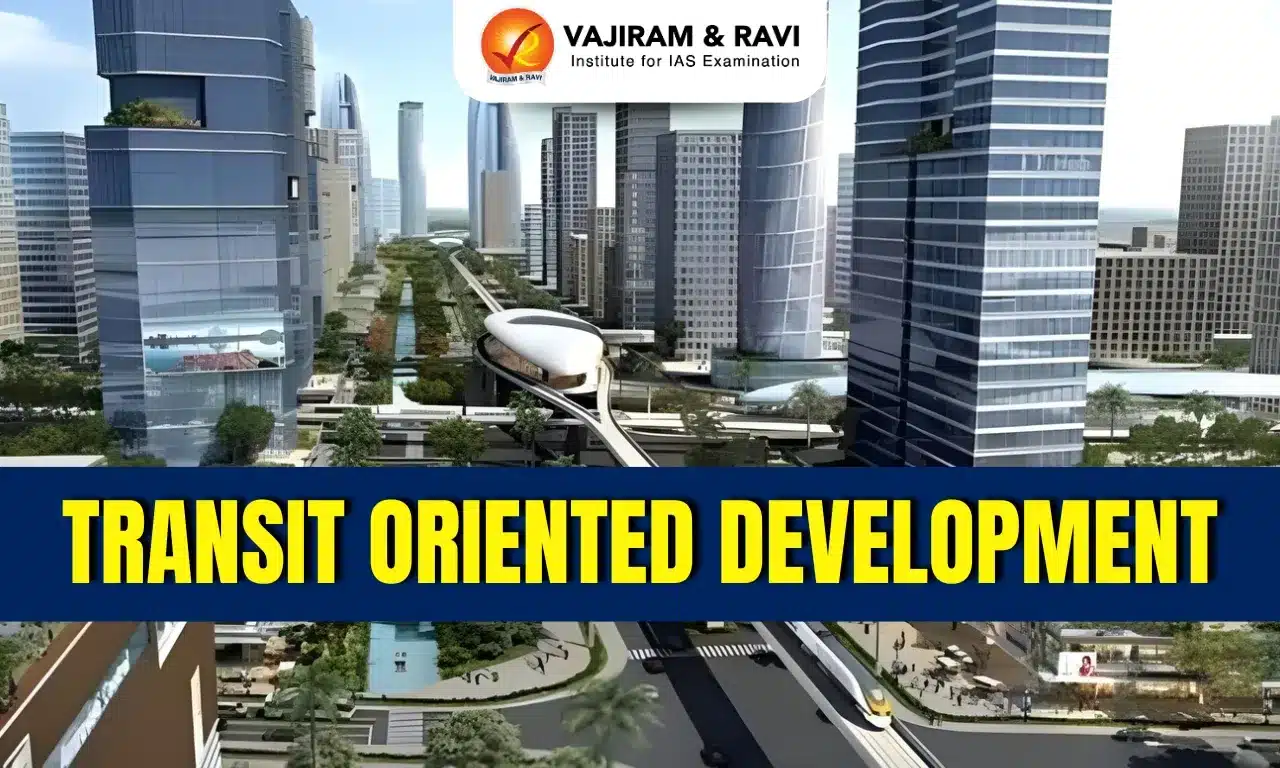
Delhi Development Authority’s (DDA’s) East Delhi hub is set to roll out India’ first transit-oriented development (TOD) project.

About Transit Oriented Development

  • It is an urban development strategy which aims to create the maximum possible numbers of houses, shops, offices and recreational spaces near public transport facilities.
  • The TOD approach puts public transportation at the centre of the urban development plan.
  • Objectives: To minimise use of personal vehicles, make commutes shorter, and reduce the cost of transport and exposure to pollutants.

Principles of Transit Oriented Development

  • Transit Hub: Neighbourhoods built around a TOD strategy are built around at least one major transit node such as a metro station or other rail systems, preferably combined with other modes of public transport such as a bus station and/ or an airport.
  • Multi-modal integration: Transfers between different modes of transport, such as switching from a metro to a city bus, should be a seamless process.
  • TOD hubs should also have open public spaces such as transit plazas and parks to increase street activity and foster a sense of community.
  • Pedestrian Friendly: These localities must also be friendly to pedestrians and cyclists, since one of the major thrusts of this approach is to take vehicles off the road.
  • Dense Mixed Use: TOD localities should be mixed-use, so that people can live, work, and relax within a small radius.

Advantages of Transit Oriented Development

  • To transportation agencies, it offers an additional source of non-ticket revenue.
  • For land-owning agencies and governments it appears as a mode of value-capture financing, which allows them to fund public projects through potential increases in land values resulting from these projects.

Source: IE

Transit Oriented Development FAQs

Q1: What is the primary goal of Transit-Oriented Development (TOD)?

Ans: To integrate land use and transportation planning

Q2: What is the benefit of Transit-Oriented Development (TOD)?

Ans: Reduced traffic congestion

Model Youth Gram Sabha

Model Youth Gram Sabha

Model Youth Gram Sabha Latest News

The Ministry of Panchayati Raj in collaboration with the Ministry of Education (Department of School Education and Literacy) and the Ministry of Tribal Affairs, will jointly launch the Model Youth Gram Sabha (MYGS) in New Delhi. 

About Model Youth Gram Sabha

  • It is a simulated forum for School Children to participate in mock Gram Sabha sessions.
  • It is a pioneering initiative to strengthen Janbhagidari and promote participatory local governance by engaging students in simulated Gram Sabha sessions.
  • It is an initiative based on the Model UN – an educational simulation of the United Nations – in schools across the country
  • Initiative of: It is an initiative of the Ministry of Panchayati Raj, in collaboration with the Ministry of Education and the Ministry of Tribal Affairs. 
  • Implementation: It will be rolled out across more than 1,000 schools nationwide, including Jawahar Navodaya Vidyalayas, Eklavya Model Residential Schools (EMRSs), and State Government Schools.

Key Features of Model Youth Gram Sabha

  • Students from classes 9-12 will play the roles of sarpanch, ward members, and village-level officials, including village secretary, Anganwadi worker etc.
  • They will hold mock meetings of the Gram Sabha, discuss various issues, and prepare the village budget and development plans.
  • The Panchayati Raj Ministry will also provide a support of Rs 20,000 to each school for holding the mock Gram Sabha

Source: PIB

Model Youth Gram Sabha FAQs

Q1: What is the Model Youth Gram Sabha?

Ans: A platform for youth to participate in local governance

Q2: What is the expected outcome of the Model Youth Gram Sabha?

Ans: Increased youth participation in local governance.

AmazonFACE Project

AmazonFACE Project

AmazonFACE Project Latest News

Scientists in Brazil have launched the AmazonFACE Project near Manaus, the largest city in the Amazon.

About AmazonFACE Project

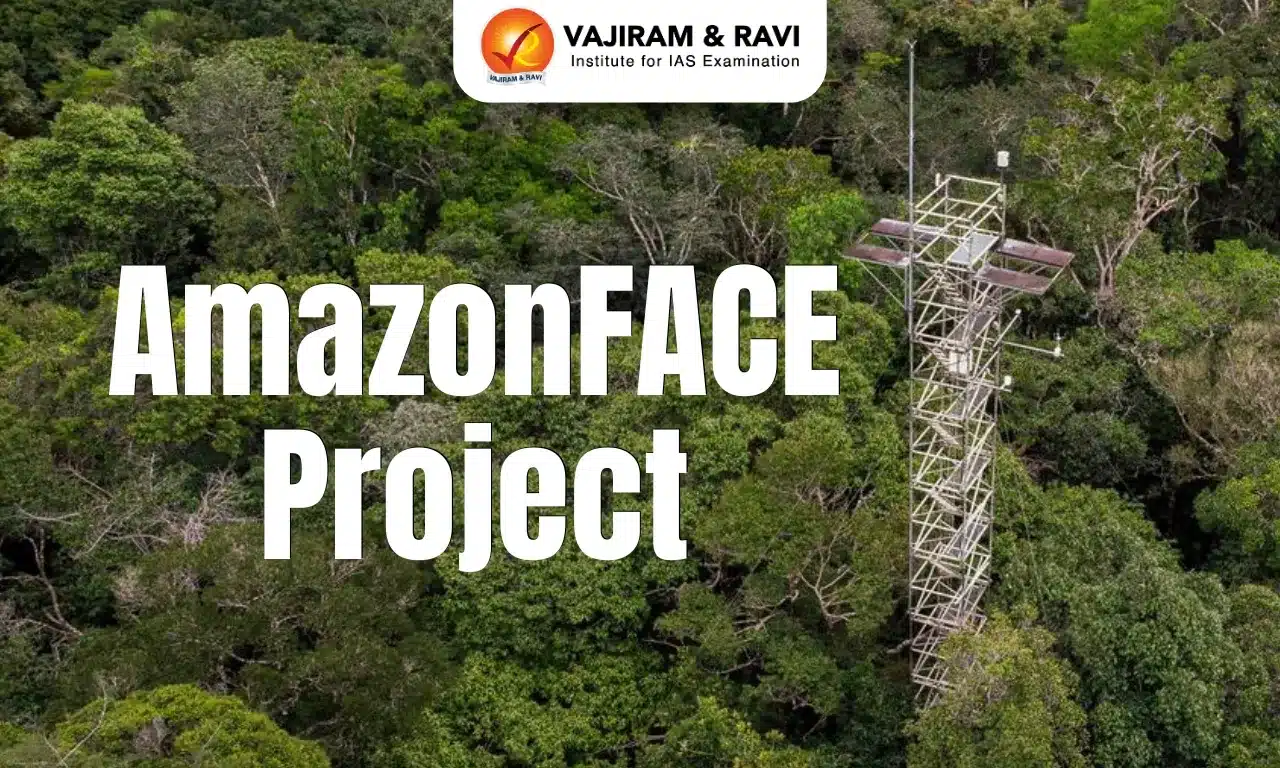
  • It is a field experiment that exposes mature tropical trees to projected future CO2 concentrations in an old-growth Amazon forest stand located near Manaus, Brazil. 
  • This is the first experiment in a natural forest of this size in the tropics.
  • Technology: The project uses Free-Air CO2 Enrichment (FACE) technology to increase understanding of the functioning of the world's largest tropical forest in light of climate change.
  • Supported by: The project is supported by Brazil’s federal government and the United Kingdom.

Working of  AmazonFACE Project

  • Six rings of steel towers loom above the jungle canopy, each surrounding groups of 50 to 70 mature trees.
  • Scientists will fumigate trees in three of the rings with carbon dioxide at levels simulating climate forecasts for coming decades, while the rest serve as control samples.
  • Sensors record the forest’s response to changing conditions like absorption of carbon dioxide, oxygen and water vapor release in response to rain, storms and sunshine every 10 minutes,

Source: DD News

AmazonFACE Project FAQs

Q1: What does AmazonFACE stand for?

Ans: Amazon Free-Air CO2 Enrichment

Q2: What is the primary objective of the AmazonFACE Project?

Ans: To investigate the effects of increased CO2 on Amazonian forests

Indi and Puliyankudi Limes

Indi and Puliyankudi Limes

Indi and Puliyankudi Limes Latest News

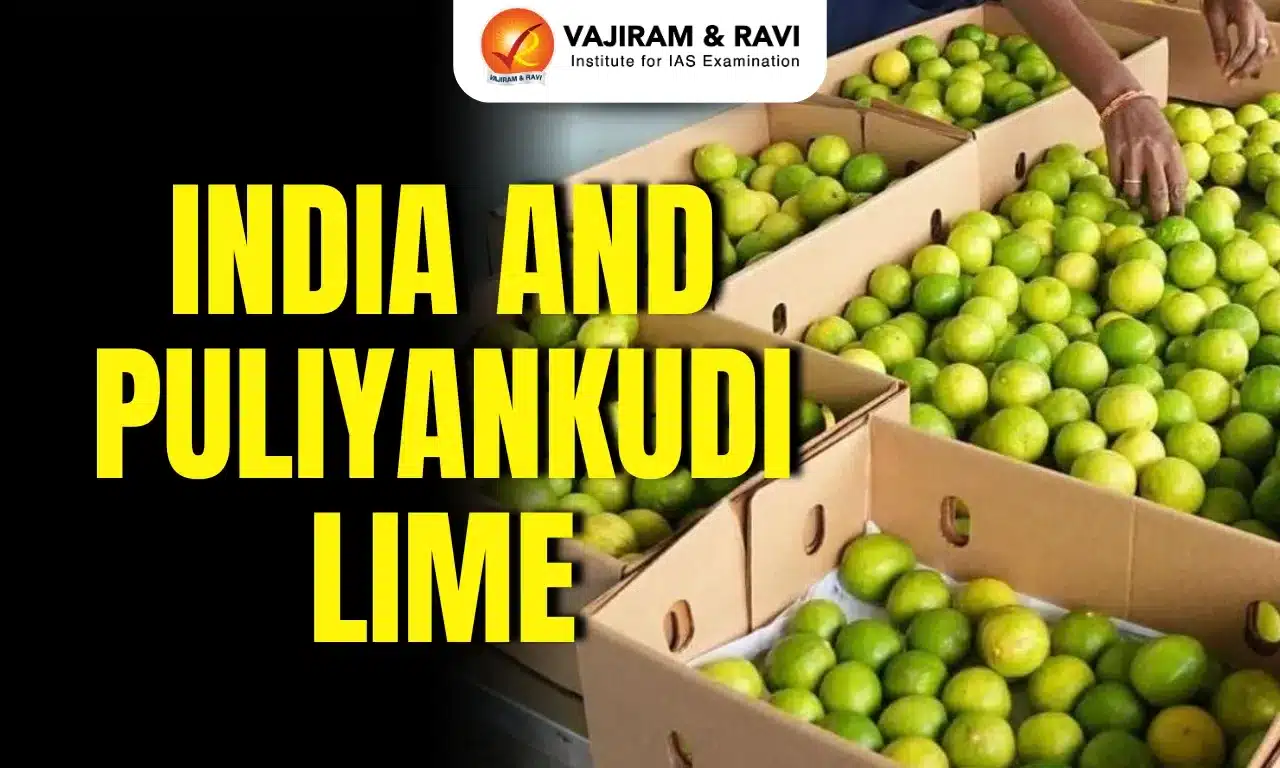
Recently, The Agricultural and Processed Food Products Export Development Authority (APEDA) has facilitated the first-ever air shipment of GI-tagged Indi Lime and Puliyankudi Lime to the United Kingdom.

About Indi Limes

  • Indi Lime is cultivated primarily in Vijayapura district of Karnataka.
  • It has received the Geographical Indication (GI) tag.
  • Features: It is known for its superior quality, zesty aroma, high juice yield and balanced acidity.
  • It has distinctive flavour and geographical uniqueness make it a hallmark of the region’s agricultural excellence.
  • Uses:  Along with its culinary applications, the lime is also valued in traditional medicine and cultural practices.

About Puliyankudi Lime

  • It is extensive lime cultivated in Puliyankudi, often referred to as the “Lemon City of Tamil Nadu,”
  • Features of Puliyankudi Lime: The Puliyankudi Lime, particularly the Kadayam variety, is characterised by its thin peel, strong acidity, high ascorbic acid content (34.3 mg/100g) and juice percentage of around 55%. 
  • It is rich in vitamin C and antioxidants.
  • Health Benefits: It supports immunity and digestion while offering exceptional flavour and quality.
  • It has officially received the Geographical Indication (GI) tag in April 2025.

Key Facts about Agricultural and Processed Food Products Export Development Authority

  • It was established by the Government of India under the Agricultural and Processed Food Products Export Development Authority Act passed by the Parliament in December, 1985.
  • Objective: To develop and promote the export of scheduled products.
  • Nodal Ministry: It works under the Ministry of Commerce and Industry.
  • Headquarters: New Delhi

Source: PIB

Indi and Puliyankudi Limes FAQs

Q1: What is the purpose of a Geographical Indication (GI) tag?

Ans: To identify the geographical origin of a product

Q2: What is the primary function of Vitamin C in the human body?

Ans: To support immune function and collagen production

Atlas Moth

Atlas Moth

Atlas Moth Latest News

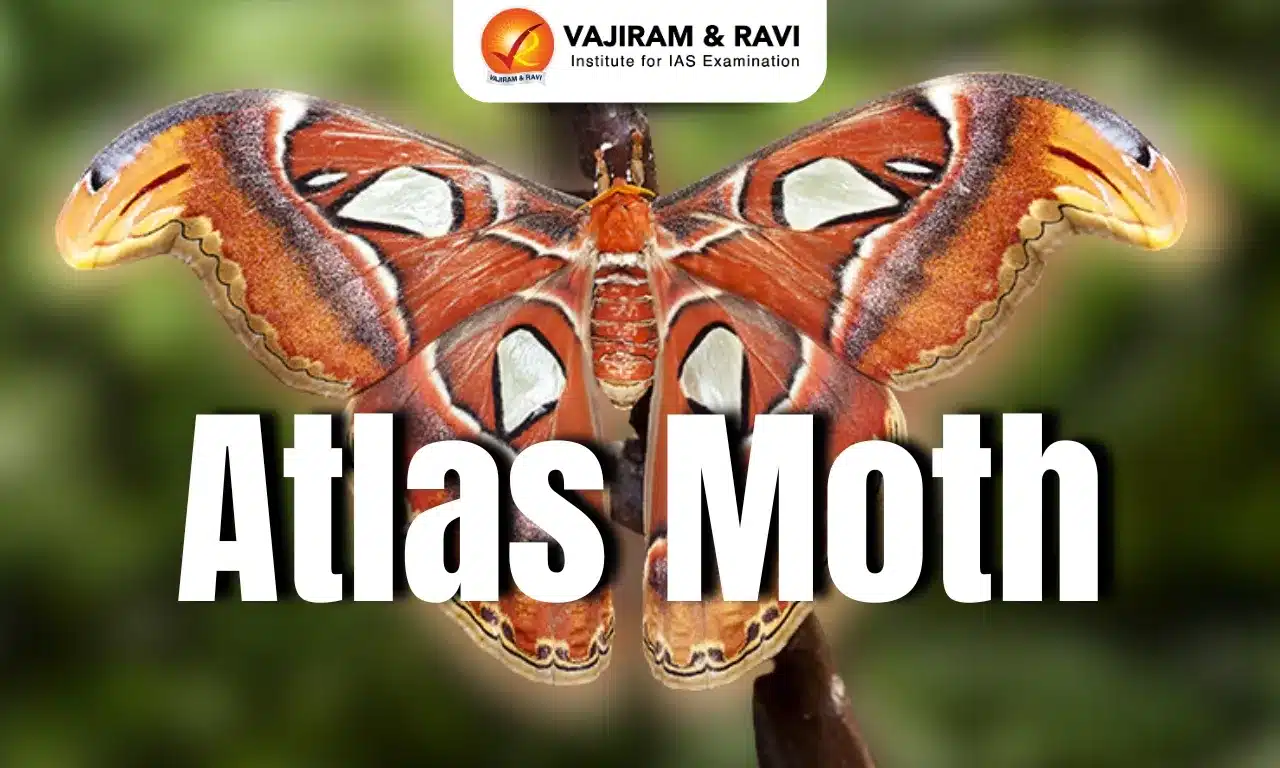
An 'Atlas Moth' (Attacus atlas), recognised as the world's largest moth, has been recently discovered in Guddehalli in Karwar of Karnataka's Davangare district.

About Atlas Moth

  • It is a massive saturniid moth native to tropical and subtropical rainforest regions of Southeast Asia. 
  • Scientific Name: Attacus atlas
  • Distribution: It is widely distributed in Southeast Asia, including in Nepal, northeastern India, Bangladesh, Bhutan, southeastern China, Laos, Cambodia, Vietnam, and Taiwan.
  • Habitat
    • It is primarily found in tropical and subtropical rainforests.
    • They are cultivated in some areas for their silk called fagara, which is rough and woolly.

Atlas Moth Features

  • It is one of the largest moths in the world, with a wingspan of over 9.8 inches.
  • Their wingspans are also amongst the largest, reaching over 25 cm (10 in).
  • Females are slightly larger than males.
  • The wings of an atlas moth are a beautiful mix of brown, orange, white, and pink colors. 
  • They have clear, triangle-shaped "windows" on each wing. These windows look like they are made of glass. 
  • Like other moths in the family Saturniidae, adults do not have working mouthparts and only live for a few days to a week.
  • Atlas moths lives only 14-18 days.

Source: ETVB

Atlas Moth FAQs

Q1: What is the scientific name of the Atlas Moth?

Ans: Attacus atlas

Q2: In which type of habitat is the Atlas Moth commonly found?

Ans: Tropical and subtropical rainforests

Q3: What is the approximate wingspan of the Atlas Moth in inches?

Ans: 10 inches

East Asia Summit

East Asia Summit

East Asia Summit Latest News

Recently, the 20th East Asia Summit has adopted the Kuala Lumpur Declaration.

About East Asia Summit

  • It was established in 2005 with the convening of the 1st Summit in Kuala Lumpur, Malaysia. 
  • Member countries: ASEAN Member States (Brunei, Cambodia, Indonesia, Laos, Malaysia, Myanmar, Philippines, Singapore, Thailand, and Vietnam), Australia, China, India, Japan, New Zealand, and the Republic of Korea, United States and Russia.
  • To become a member of the EAS, countries must;
    • Sign the ASEAN Treaty of Amity and Cooperation (TAC)
    • Be a formal dialogue partner of ASEAN
    • Have substantive cooperative relations with ASEAN
  • Six priority areas of regional cooperation within the framework of the EAS
    • Environment and Energy,
    • Education,
    • Finance,
    • Global Health Issues and Pandemic Diseases,
    • Natural Disaster Management, and
    • ASEAN Connectivity.

Source: News On Air

East Asia Summit FAQs

Q1: What is the primary objective of the East Asia Summit (EAS)?

Ans: To foster dialogue and cooperation on strategic, political, and economic issues

Q2: What was the primary focus of the 20th East Asia Summit?

Ans: Multilateralism and collective action for global peace and progress

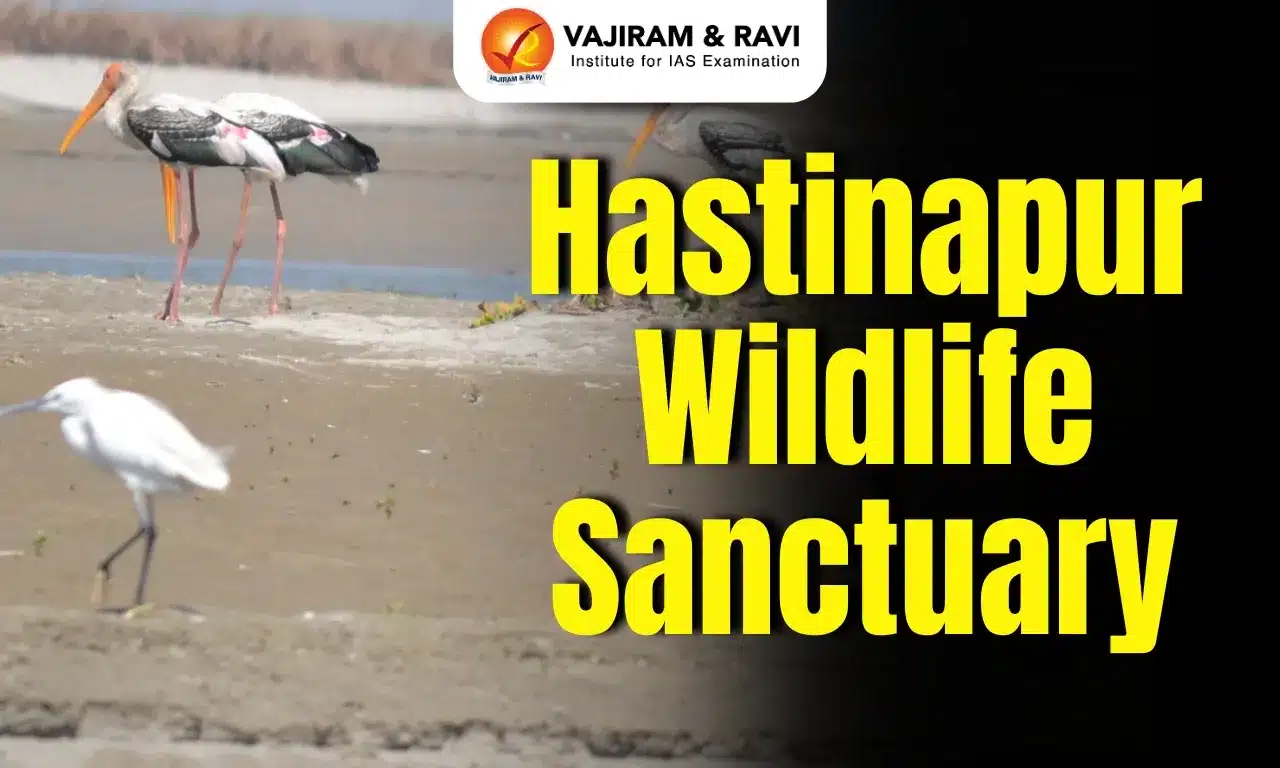
Hastinapur Wildlife Sanctuary

Hastinapur Wildlife Sanctuary

Hastinapur Wildlife Sanctuary Latest News

A forest department team has recently arrested four members of a gang allegedly involved in the illegal felling of khair trees in the Hastinapur Wildlife Sanctuary area.

About Hastinapur Wildlife Sanctuary

  • It is located in the Meerut District of Uttar Pradesh.
  • Established in 1986, it lies alongside the northern tip of the River Ganga, flowing through the districts of Muzaffarnagar and Bijnor.
  • It is situated near the mediaeval town of Hastinapur, which is of cultural importance. 
  • It is spread across an area of 2073 sq.km.
  • It is made up of a variety of environments, including marshes, grasslands, woodlands, and riverine ecosystems. 
  • The Ganges River and its tributaries flow through the sanctuary, contributing to its rich biodiversity.
  • Vegetation: The vegetation can be classified into tall wet grasslands, dry short grasslands, scrubs, and plantations.
  • Flora: Dominated by Sal (Shorea robusta), Sheesham (Dalbergia sissoo), Khair (Acacia catechu), and Jamun (Syzygium cumini) trees.
  • Fauna
    • It is home to the state animal, the Swamp Deer (Barasingha), as well as Hog Deer, Cheetal, Sambar, and the State Bird, the Saaras (Crane). 
    • It is a part of the “Asia Flyway” project, and many migratory birds, both local and foreign, flock in numbers near the numerous water bodies present in the region.
    • Under Crocodile Breeding Projects, baby crocodiles are released in the Ganga River near Hastinapur.
    • Under the aegis of the World Wide Fund (WWF), the Turtle Rehabilitation Program also has its centre near the Hastinapur Sanctuary.

Source: TP

Hastinapur Wildlife Sanctuary FAQs

Q1: In which state is the Hastinapur Wildlife Sanctuary located?

Ans: Uttar Pradesh

Q2: Uttar Pradesh

Ans: The Hastinapur Wildlife Sanctuary lies along which major river?

Q3: The Hastinapur Wildlife Sanctuary lies along which major river?

Ans: What is the total area of the Hastinapur Wildlife Sanctuary?

Enquire Now