Air-Sol Moyenne Portée-Renove (ASMPA-R)

Air-Sol Moyenne Portée-Renove (ASMPA-R)

Air-Sol Moyenne Portée-Renove (ASMPA-R) Latest News

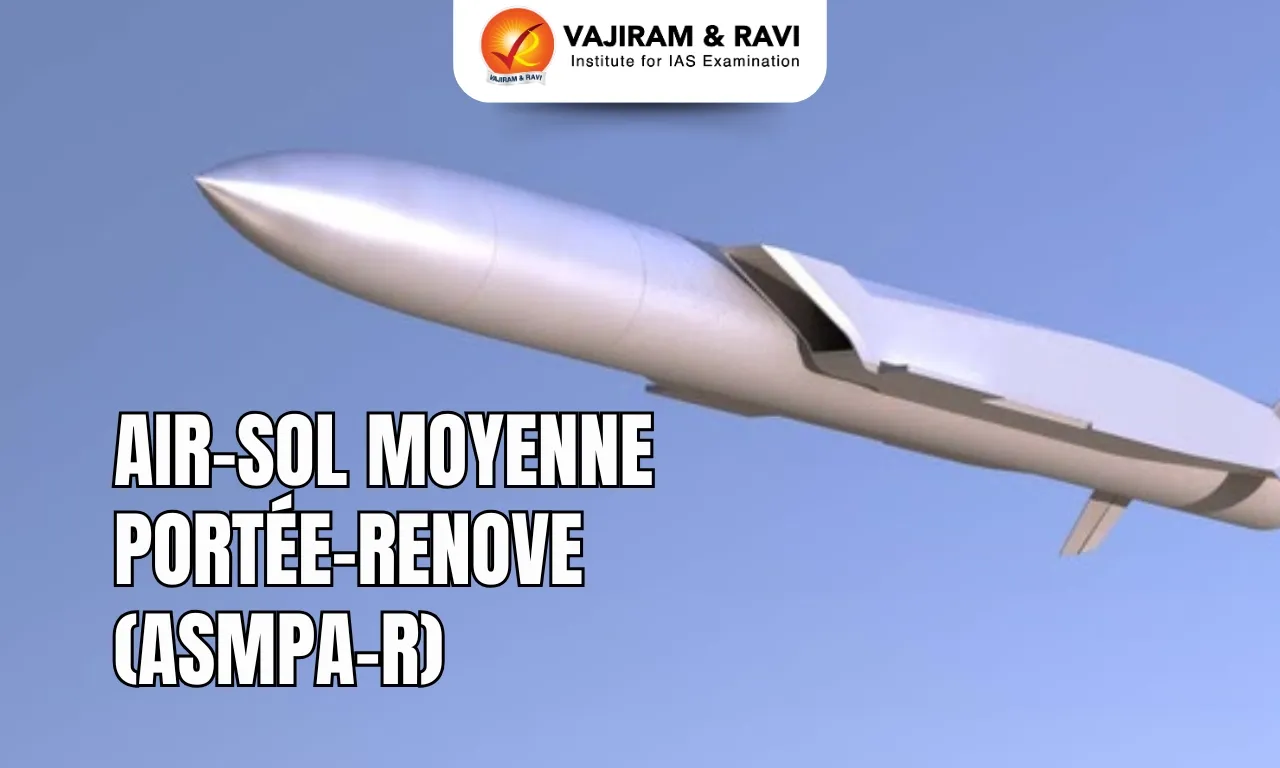
For the first time, France recently published images of its latest-generation nuclear-capable supersonic air-to-surface cruise missile, the Air-Sol Moyenne Portée-Renove (ASMPA-R).

About Air-Sol Moyenne Portée-Renove (ASMPA-R)

  • It is the newest version of the ASMP family of medium‐range, supersonic, nuclear‐capable cruise missiles.
  • It was developed by France.
  • It is integral to France’s nuclear deterrence, forming a key part of the air-based component of its nuclear triad.

Air-Sol Moyenne Portée-Renove (ASMPA-R) Features

  • It retains a ramjet architecture, with dual air intakes along the body, enabling sustained supersonic flight at speeds around Mach 3.
  • It has a range of roughly 600 kilometres.
  • The warhead is understood to be the Tête Nucléaire Aéroportée (TNA) design.
  • TNA is a so-called ‘dial-a-yield’ design with reported yield settings ranging from a minimum of 100 kilotons to a maximum of 300 kilotons.

Source: ET


Air-Sol Moyenne Portée-Renove (ASMPA-R) FAQs

Q1: The Air-Sol Moyenne Portée-Renove (ASMPA-R) missile was developed by which country?

Ans: France

Q2: What is the approximate range of the Air-Sol Moyenne Portée-Renove (ASMPA-R) missile?

Ans: 600 km

Q3: What feature helps the Air-Sol Moyenne Portée-Renove (ASMPA-R) maintain stable supersonic performance?

Ans: It retains a ramjet architecture, with dual air intakes along the body, enabling sustained supersonic flight.

Tungsten

Tungsten

Tungsten Latest News

Recently, the Hindustan Zinc Ltd (HZL) has received the licence to explore and mine a tungsten block in Andhra Pradesh. 

About Tungsten

  • It is a chemical element with the symbol W, and atomic number 74.
  • It is a naturally occurring element and classified as a transition metal.
  • Major producers: China (major global producer), Vietnam, Russia, and North Korea.
  • It has been classified as a Critical Mineral by the Government of India.

Occurrence of Tungsten

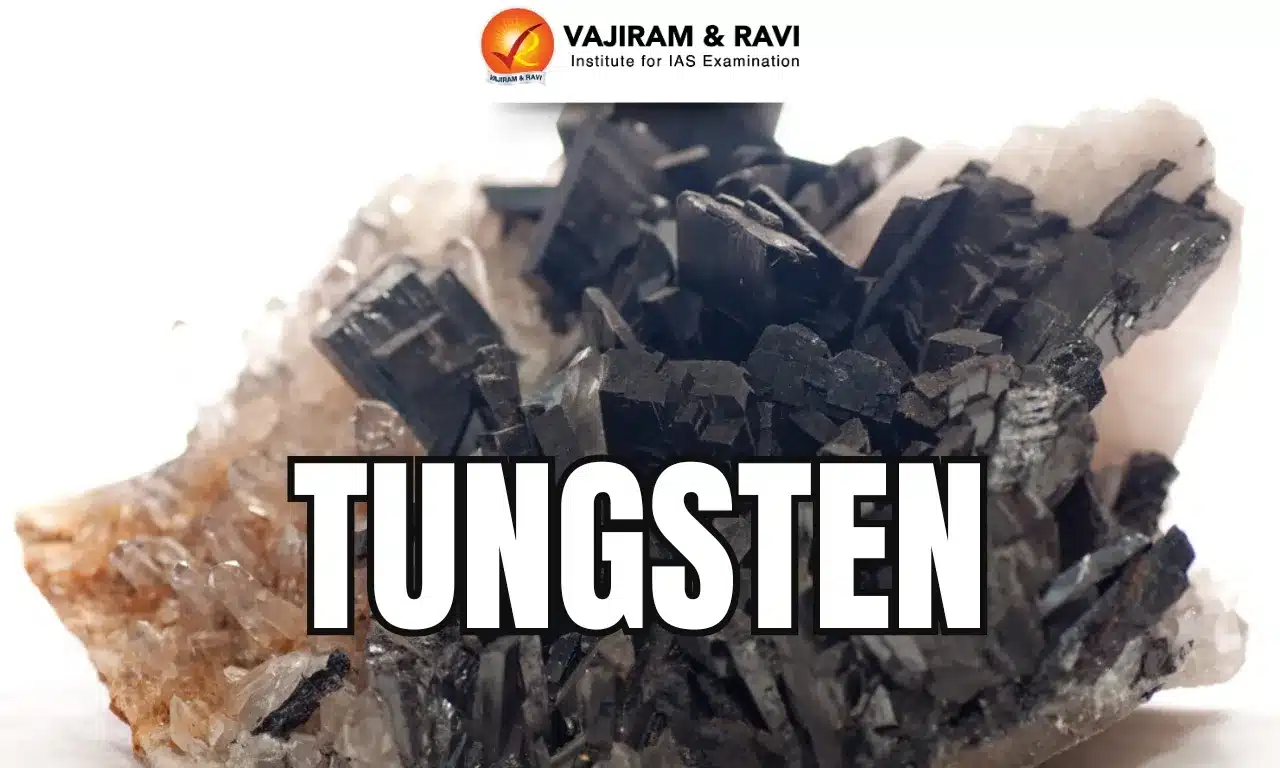
  • It occurs in rocks and minerals combined with other chemicals, but never as a pure metal.
  • It is found in nature in mineral forms like wolframite and scheelite.

Properties of Tungsten

  • It has the highest melting point of all metals at 3410 °C.
  • It has the lowest vapor pressure of all metals with 4.27 Pa at 3410 °C.
  • It has the highest tensile strength of all metals over 1650 °C.
  • Tungsten is a solid at room temperature.
  • Tungsten alloys tend to be strong and flexible, resist wear, and conduct electricity well.

Uses of Tungsten

  • Tungsten is used in products such as x-ray tubes, light bulbs, high-speed tools, and welding electrodes.
  • It is also used as a catalyst to speed up chemical reactions.
  • Tungsten carbide is immensely hard and is very important to the metal-working, mining and petroleum industries.
  • Other tungsten compounds are used in ceramic pigments, as fire retardant coatings for fabrics, and as color-resistant dyes for fabrics.

Source: TH

Tungsten FAQs

Q1: Which mineral is a major source of Tungsten?

Ans: Wolframite and Scheelite

Q2: What is the melting point of Tungsten?

Ans: 3410°C

Exercise Garuda 2025

Exercise Garuda 2025

Exercise Garuda 2025 Latest News

The Indian Air Force (IAF) is participating in the 8th edition of the air exercise 'Garuda 25' with the French Air and Space Force (FASF) at Mont-de-Marsan, France.

About Exercise Garuda 2025

  • It is a bilateral air exercise conducted between India and France.
  • Aim: It aims to refine tactics and procedures in a realistic operational environment, enabling mutual learning and fostering interoperability between the IAF and the FASF.
  • The Indian Air Force will be participating with Su-30MKl fighter aircraft, C-17 Globemaster III, IL-78.
  • During the exercise, the IAF's Su-30MKI aircraft will operate alongside the French multirole fighters in complex simulated air combat scenarios, focusing on     air-to-air combat, air defence, and joint strike operations.
  • Significance: It also provides an opportunity for professional interaction, exchange of operational knowledge, and sharing of best practices between the two Air Forces.

Other Exercise Conducted with France

  • Exercise Varuna:  Naval
  • Exercise Desert Knight-21: Air exercise
  • Exercise Shakti: Army exercise

Source: PIB

Exercise Garuda 2025 FAQs

Q1: Which aircraft is the IAF using for participating in Exercise Garuda 25?

Ans: Su-30MKI

Q2: Exercise Garuda 2025 is a bilateral air exercise between India and which country?

Ans: France

Greenland

Greenland

Greenland Latest News

Recently, Greenland's Parliament has adopted legislation limiting foreigners' right to own property on the island.

About Greenland

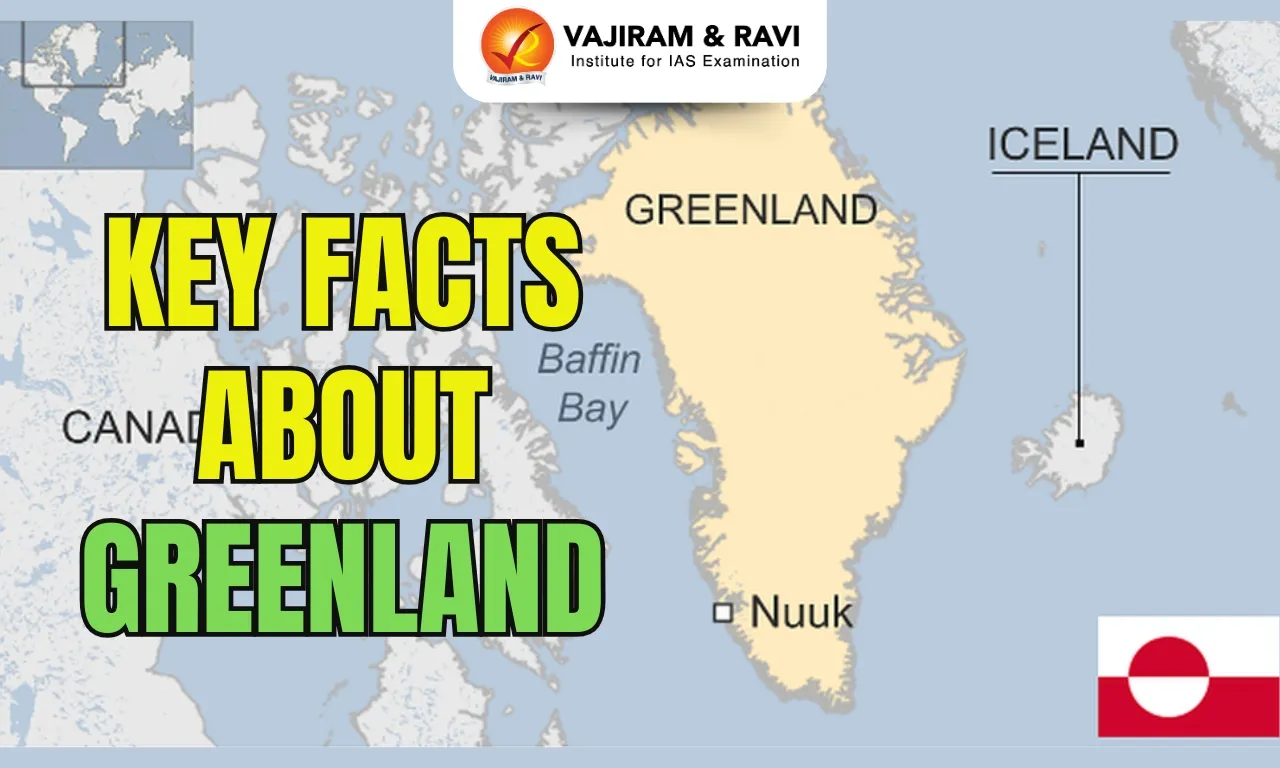
  • It is the world’s largest (non-continent) island located between the continents of North America and Europe in the North Atlantic Ocean.
  • It is geographically considered a part of the North American continent.
  • It was once a Danish colony and is now an autonomous province of Denmark.
  • Borders of Greenland: It is surrounded by the Arctic Ocean to the north; by the Greenland Sea to the east; by the North Atlantic Ocean to the southeast; Davis Strait to the southwest and Baffin Bay to the west.
  • Capital: Nuuk

Geographical Features of Greenland

  • Climate: Greenland is in the polar zone, where winter temperatures reach as low as -50°C and summer temperatures rarely exceed 10–15°C.
  • Highest Point: Gunnbjorn’s Fjeld
  • Natural Resources: It mainly consists of Coal, iron ore, lead, zinc, molybdenum, diamonds, gold, platinum, niobium.

Source: TH

Greenland FAQs

Q1: What is the capital of Greenland?

Ans: Nuuk

Q2: Which country has administrative control over Greenland?

Ans: Denmark

Territorial Army

Territorial Army

Territorial Army Latest News

The Army is planning to induct women soldiers in its Territorial Army (TA) battalions.

About Territorial Army

  • The Indian Territorial Army (TA) is a part-time voluntary military force that supports and augments the regular Indian Army.
  • It is a second line of defence after the regular Indian Army; it is not a profession, occupation or a source of employment. 
  • It is only meant for those people who are already in mainstay civilian professions; gainful employment or self-employment in a civil profession is a prerequisite for joining the TA.
  • Motto: Savdhani Va Shoorta (Vigilance and Valour).

History of Territorial Army

  • It was raised by the Britishers in 1920 through Indian Territorial Act of 1920 
  • it was organized into two wings namely – ‘The Auxiliary Force’ for Europeans & Anglo-Indians and ‘The Indian Territorial Force’ for Indian Volunteers.
  • After Independence Territorial Army Act was passed in 1948 and the Territorial Army was formally inaugurated by the first Indian Governor General Shri C Rajagopalachari on 09 Oct 1949.

Eligibility to Join Territorial Army

  • Nationality: Citizens of India. (Men & Women).
  • Age: 18 to 42 years
  • Educational Qualifications: Graduate from any recognized university
  • Employment: Gainfully Employed
  • Serving member of the Regular Army/ Navy/ Air Force/ Police/ GREF/ Para Military and like forces are not eligible

Role of Territorial Army

  • It includes “relieving the Regular Army from static duties”, while also providing assistance to civil authorities in times of natural calamities and tragedies.
  • They also help civil administration with providing essential services in areas where state machinery is stretched or there are security threats.
  • Volunteers of the TA usually serve in uniform for a few days every year, so that they can bear arms for national defence in times of dire need or national emergencies.

Source: IE

Territorial Army FAQs

Q1: What is the primary function of the Territorial Army?

Ans: Relieving the Regular Indian Army from static duties.

Q2: When was the Territorial Army formally inaugurated?

Ans: October 9, 1949

Ashtamudi Lake

Ashtamudi Lake

Ashtamudi Lake Latest News

Researchers aims to unravel mechanisms driving unique cooperation between wild dolphins and traditional fishers in Ashtamudi Lake.

About Ashtamudi Lake

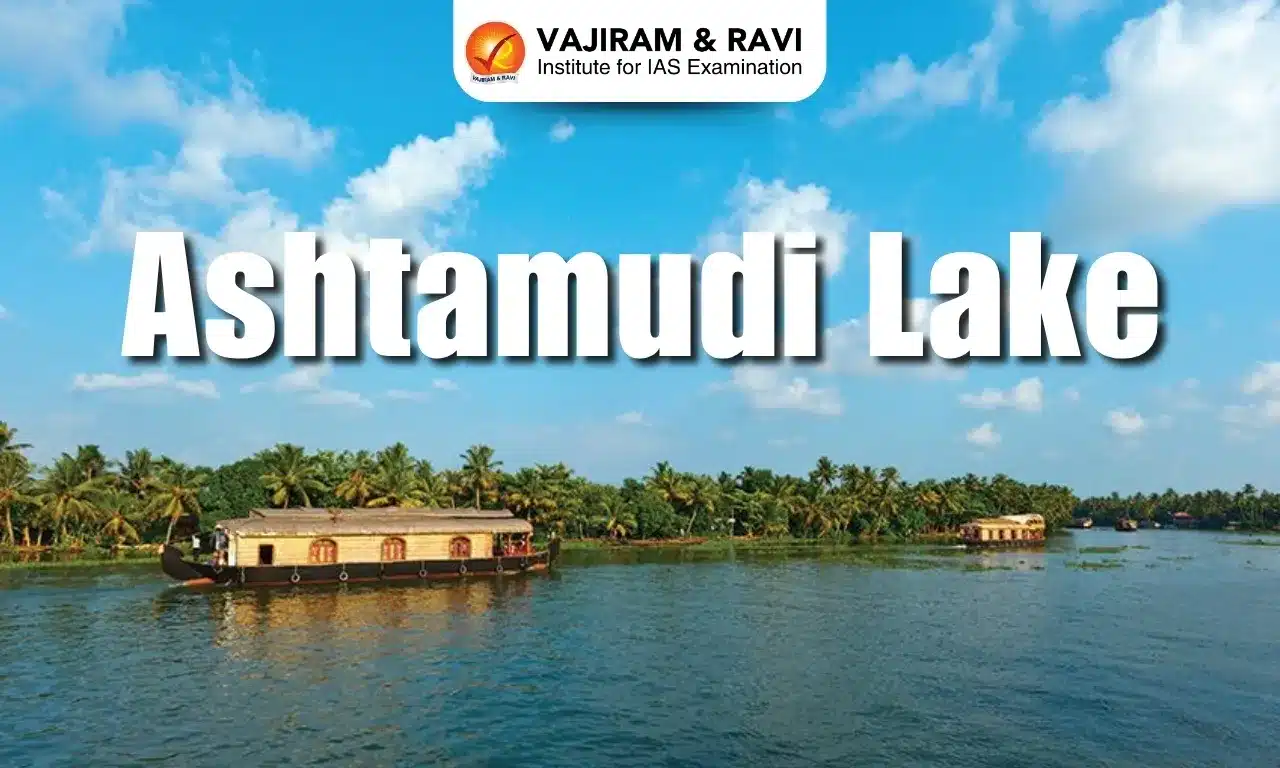
  • It is a freshwater lake located in the Kollam District of Kerala.
  • It is the second largest lake in Kerala, after Vembanad Lake.
  • It covers an area of around 61.4 sq.km. The lake runs over a length of 16 kilometres.
  • It is often referred to as the gateway to the backwaters of Kerala and is famous for its houseboat cruises.
  • The word ‘Ashtamudi’ means Eight braids in Malayalam, which can be explained by the palm-shaped topography of the lake with multiple branches.
  • The lake is fed by several rivers, including the Kallada River, and eventually drains into the Arabian Sea. 
  • It was designated as a Ramsar site in 2002.
  • The historical significance of Ashtamudi Lake dates back to the 14th century, when the lake surroundings were the important port connecting the ancient city of Quilon to the rest of the world.
  • Historical records of the Moroccan explorer Ibn Battuta highlight Quilon City, on the banks of Ashtamudi Lake, as one of the major trading centers in the ancient period.
  • The Ashtamudi region is also known for its traditional coir industry.
  • Biodiversity
    • The wetland supports 57 species of birds (6 migratory and 51 resident species) and 97 species of fish (42 typically marine, 3 estuarine, 9 estuarine-riverine, and 15 marine-estuarine).
    • The lake supports several endangered and endemic species, such as the pearl spot fish, the mangrove crab, the otter, the water snake, the kingfisher, the egret, the heron, and the cormorant.

Source: TH

Ashtamudi Lake FAQs

Q1: Ashtamudi Lake is located in which state?

Ans: Kerala.

Q2: Which river is one of the primary feeders of Ashtamudi Lake?

Ans: Kallada River.

Q3: Ashtamudi Lake drains into which water body?

Ans: Arabian Sea.

Q4: Which traditional industry is prominent in the Ashtamudi region?

Ans: Traditional coir industry.

Vrindavani Vastra

Vrindavani Vastra

Vrindavani Vastra Latest News

The Assam Chief Minister recently left for London to initiate the process of bringing back the revered Vrindavani Vastra from the British Museum.

About Vrindavani Vastra

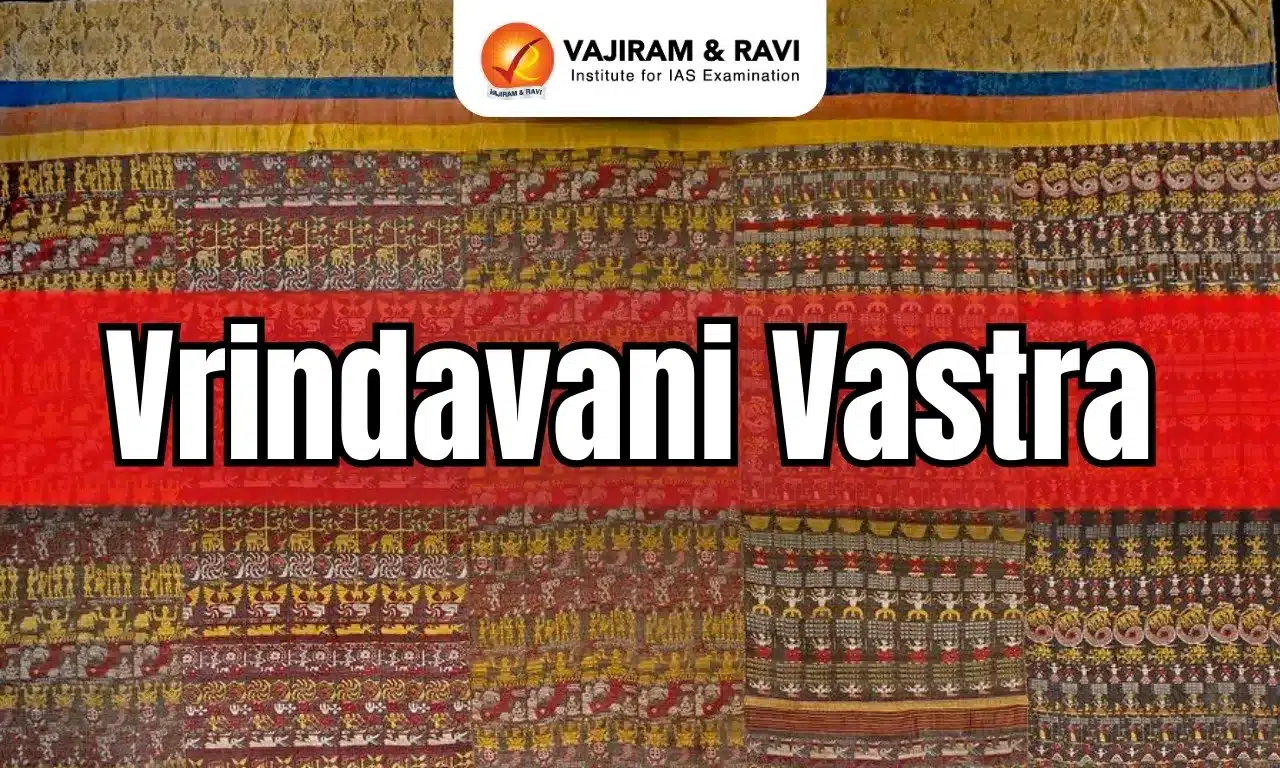
  • It is a 400-year-old traditional textile from Assam, woven with the theme of Krishna’s various exploits.
  • The childhood stories of Lord Krishna in Vrindavan, his divine pastimes, and various events are woven with thread on this cloth.
  • It was made of woven silk using the complex ‘lampas’ technique. This technique requires two weavers working simultaneously. 
  • The designs were woven with a large variety of colored threads, like red, white, black, yellow, green, etc.
  • It was created under the guidance of Srimanta Sankardeva, at the request of Koch king Nara Narayan, who ruled over parts of modern-day Assam and West Bengal.
    • Notably, Nara Nararan had sheltered Sankardeva after the Vaishnav saint was targeted by the Ahom kingdom on the instigation of Brahmin priests in the state.
  • The textile serves as a testament to Assamese weaving, incorporating elements from various artistic traditions, and travelled from Assam to Tibet before being acquired by the British Museum in 1904.
  • The exhibit, acquired by the British Museum, is nine and a half metres long and is made up of several pieces of silk drapes and originally featured 15 separate pieces that were later assembled.
  • A masterpiece of sacred art, the Vrindavani Vastra is a central part of Assamese Vaishnavism.

Source: TH

Vrindavani Vastra FAQs

Q1: Vrindavani Vastra is traditionally associated with which Indian state?

Ans: Assam

Q2: Vrindavani Vastra is approximately how old?

Ans: 400 years

Q3: Vrindavani Vastra was woven using which complex weaving technique?

Ans: It was made of woven silk using the complex ‘lampas’ technique.

Q4: Vrindavani Vastra was produced at the request of which ruler?

Ans: It was created under the guidance of Srimanta Sankardeva, at the request of Koch king Nara Narayan.

Marburg Virus Disease

Marburg Virus Disease

Marburg Virus Disease Latest News

Recently, the World Health Organization (WHO) said that Ethiopia has reported its first-ever outbreak of Marburg virus disease.

About Marburg Virus Disease

  • It is a severe and often fatal hemorrhagic fever caused by the Marburg virus.
  • History and Origin: It was first identified in 1967 in the German city of Marburg.
  • Cause: Marburg virus (MARV) and Ravn virus (RAVV) of the species Orthomarburgvirus marburgense are the causative agents of Marburg virus disease (MVD). 
    • Rousettus aegyptiacus, a fruit bat of the Pteropodidae family, is considered the natural host of Marburg virus. 

Transmission of Marburg Virus Disease

  • It initially transmitted from fruit bats (Rousettus aegyptiacus) to humans.
  • It spread to other humans through direct contact with bodily fluids of infected individuals or contaminated surfaces.
  • Geographical spread: Most outbreaks have occurred in sub-Saharan Africa, including countries like Tanzania, Uganda, Angola, Ghana, Kenya, and Zimbabwe.

Symptoms of Marburg Virus Disease

  • Early signs: High fever, severe headache, and malaise.
  • Advanced stage:  It includes severe bleeding, liver failure, multi-organ dysfunction, shock, and death within 8-9 days of symptom onset.
  • Treatment: No specific treatment exists. Supportive care includes rehydration, electrolyte replacement, and symptom management, improving survival chances.

Source: DD News

Virus Disease FAQs

Q1: What is the primary mode of transmission of Marburg Virus Disease?

Ans: Direct contact with infected bodily fluids

Q2: What is a virus?

Ans: A small infectious agent that replicates inside host cells.

Checkered Keelback

Checkered Keelback

Checkered Keelback Latest News

A team from the Assam State Zoo and Botanical Garden recently recorded the first case of albinism in the checkered keelback (Fowlea piscator), also called the Asian water snake, in Assam.

About Checkered Keelback

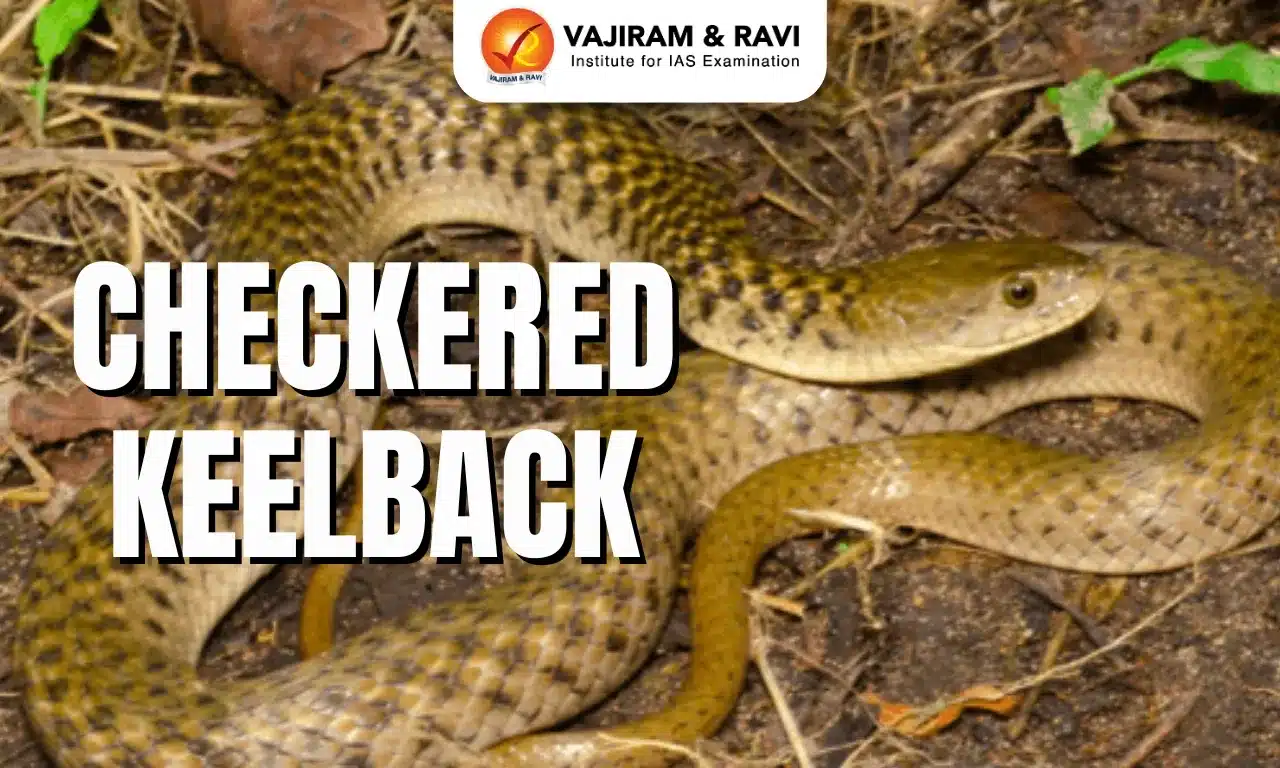
  • The Checkered keelback, also known commonly as the Asiatic water snake,  is a medium-sized nonvenomous snake native to Asia.
  • Scientific Name: Fowlea piscator
  • Distribution
    • It is typically found in the Indian subcontinent, including India, Bangladesh, Nepal, and Sri Lanka. 
    • It is found in almost all parts of India, including Uttar Pradesh, Maharashtra, Andhra Pradesh, Karnataka, Tamil Nadu, and Kerala.
  • Habitat: Freshwater habitats such as ponds, marshes, and rice fields.
  • Features:
    • It has a slender and elongated body, making it agile and fast. 
    • The average length is around 3-4 feet, and it weighs between 200-500 grams. 
    • Its body is stout and covered with keeled scales on the upper side. 
    • Its colour is olive-brown, olive-green or yellow, usually with black patches
    • Sometimes it is found in red too. 
    • Its underside is off-white or light yellow. 
    • Its head pointed and slightly broader than the neck. 
    • Its diet mainly consists of fish, frogs, and small reptiles.
  • IUCN Ref List: Least Concern

Source: TH

Checkered Keelback FAQs

Q1: What is Checkered Keelback?

Ans: It is a medium-sized nonvenomous snake.

Q2: The Checkered Keelback is native to which region?

Ans: Asia

Q3: What is the IUCN Red List status of the Checkered Keelback?

Ans: Least Concern

Maram Naga Tribe

Key Facts about Maram Naga Tribe

Maram Naga Tribe Latest News

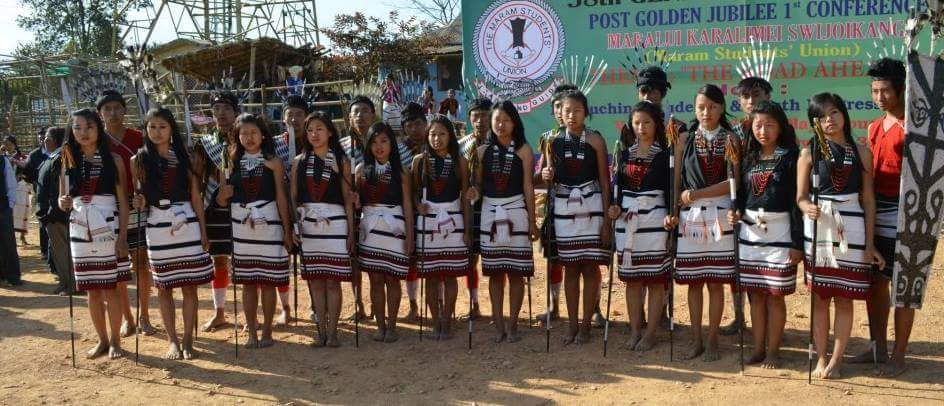
Centre recently sanctioned Rs 9 crore under Jan Man Scheme for Maram Naga tribe development, welfare projects, and cultural preservation in Manipur.

About Maram Naga Tribe

  • The Maram Naga tribe belongs to the Naga ethnic group, inhabiting the Northeastern part of India as well as the Western part of Myanmar.
  • The Maram habitat falls under the Senapati district of Manipur
  • The Marams are surrounded by other Naga tribes in all directions. 
  • They are considered to be a part of the Tibeto-Burman family of the Mongoloid race. 
  • Language
    • Linguistically, they belong to the sub-family of the Sino-Tibetan family.
    • The people speak the Maram language. There are some variations in the way the dialect is spoken, corresponding with geographical location.
    • They use Roman script in writing their language.
  • Occupation
    • Agriculture is the main occupation of the people. 
    • Shifting cultivation is the main cultivation practiced by them. They are also involved in wet cultivation. 
    • Hunting is the secondary occupation of Maram tribes.
  • Beliefs
    • Maram tribes are the worshippers of supernatural benevolent and malevolent beings. 
    • The two major festivals of the Marams are Punghi (celebrated in July) and Kanghi (in December). 
    • The tribe also celebrates a unique festival called Mangkang around April every year, dedicated to the women folks.

Source: NEN


Maram Naga Tribe FAQs

Q1: The Maram Naga tribe primarily inhabits which Indian state?

Ans: Manipur

Q2: The Maram Naga tribe is considered a part of which racial group?

Ans: They are considered to be a part of the Tibeto-Burman family of the Mongoloid race.

Q3: What is the main occupation of the Maram Naga tribe?

Ans: Agriculture

Q4: The Maram Naga tribe belongs to which linguistic sub-family?

Ans: Linguistically, they belong to the sub-family of the Sino-Tibetan family.

Enquire Now