Interstellar Objects

Interstellar Objects

Interstellar Objects Latest News

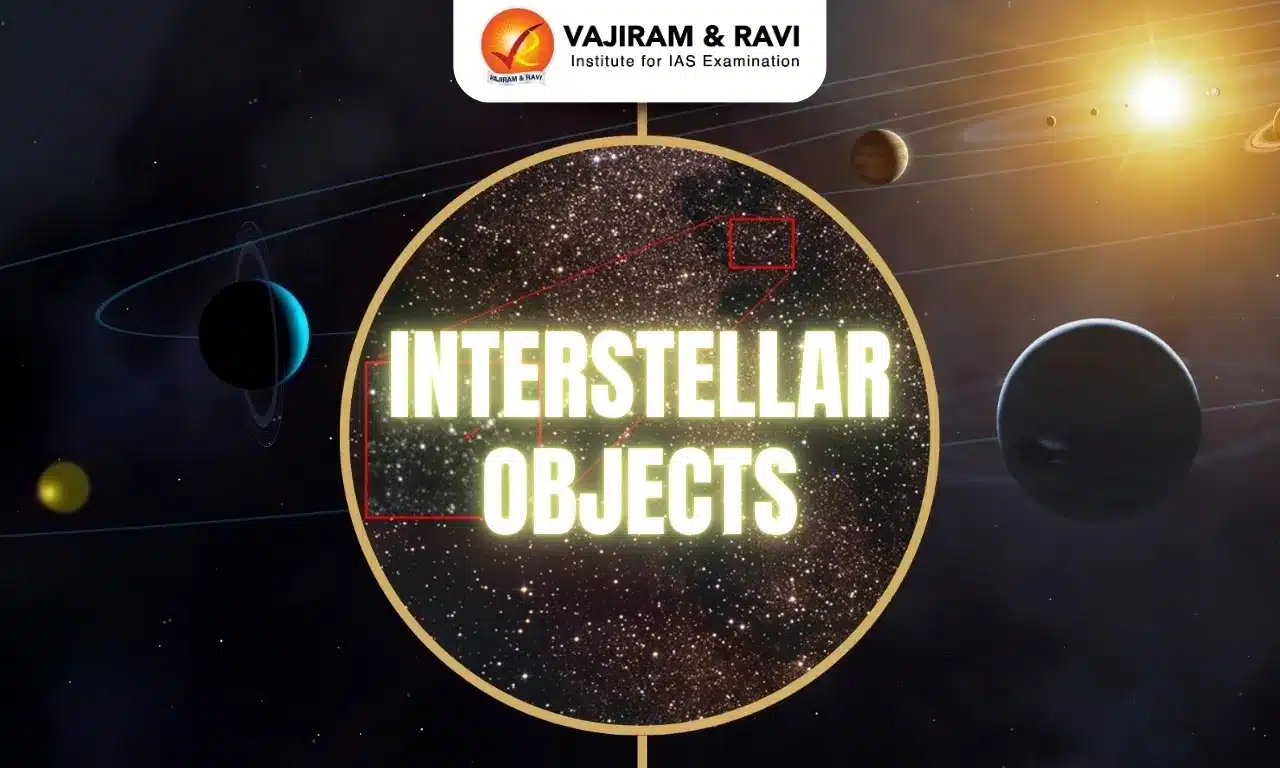
Recently, the National Aeronautics and Space Administration (NASA) released new images of Comet 3I/Atlas, an interstellar object that astronomers have determined is billions of years old.

About Interstellar Objects

  • Interstellar objects are celestial bodies that originate outside the solar system, and travel through it.
  • These objects are not gravitationally bound to a star.
  • They can come from other solar systems and be thrown into interstellar space (the area between the stars) due to collisions or be slingshotted by a planet’s or star’s gravity.
    • 1I/ʻOumuamua(2017), 2I/Borisov (2019) and Comet 3I/Atlas are the recently known interstellar objects.

Characteristics of Interstellar Objects

  • Origin: They originate from outside our solar system, often from other star systems or the interstellar medium.
  • Hyperbolic Orbit: They basically move in an open-ended hyperbolic orbit, where there is a perihelion point but no aphelion.
  • Speed: These objects move at such great speeds that the Sun’s gravitational pull is not able to slow them down enough during their outbound leg.

Significance of Interstellar Objects

  • Insights into other star systems: Interstellar objects can provide clues about the formation and evolution of other star systems.
  • Understanding planetary formation: They can help us understand how planets form and evolve in different environments.

Source: IE

Interstellar Objects FAQs

Q1: What are interstellar objects?

Ans: Objects that originate from outside our Solar System

Q2: Why are interstellar objects significant?

Ans: They offer insights into planetary formation and organic chemistry.

Pharmacogenomics

Pharmacogenomics

Pharmacogenomics Latest News

Pharmacogenomics transforms drug therapy from a one-size-fits-all approach to precision medicine, tailoring treatments to individual genetic profiles.

About Pharmacogenomics

  • It is the study of how an individual's genetic inheritance affects the body's response to drugs.
  • Origin of the Word: The term comes from the words pharmacology and genomics and is thus the intersection of pharmaceuticals and genetics.
  • It is part of the growing medical areas of genomic medicine and precision medicine (also called personalized medicine).
  • This is a treatment that’s personalized based on your genes, environment and lifestyle.
  • Pharmacogenomics is currently used in
    • Oncology: Tailoring cancer therapies based on tumour genetics and patient DNA.
    • Cardiology: Adjusting blood thinner dosages based on genetic variants.
    • Psychiatry: Selecting the right antidepressant with minimal side effects.
    • Infectious Diseases: Predicting patient response to antiviral treatments.

Importance of Pharmacogenomics

  • Improving safety: It improves drug safety, enhances therapeutic outcomes, and reduces healthcare costs associated with adverse drug reactions.
  • Targeted drug development: Some conditions are caused by specific changes in a gene. Pharmacogenomics can help researchers discover new medications that directly target the gene change.

Source: TH

Pharmacogenomics FAQs

Q1: What is Pharmacogenomics?

Ans: It is the study of genetic variations and their impact on drug responses.

Q2: What is the primary goal of Pharmacogenomics?

Ans: Its goal is to personalize medicine based on genetic profiles.

Joint Crediting Mechanism

Joint Crediting Mechanism

Joint Crediting Mechanism Latest News

Recently, the Union Minister for Environment, Forest and Climate Change participated in the 11th Joint Crediting Mechanism (JCM) Partner Countries’ Meeting.

About Joint Crediting Mechanism

  • It was first proposed by the Government of Japan and was officially launched in 2013.
  • Aim: It is a Japanese initiative that aims to facilitate diffusion of leading decarbonizing technologies and infrastructure through investment by Japanese entities and contributes to sustainable development of partner countries.
  • It’s a bilateral mechanism which is being implemented in accordance with Article 6 of the Paris Agreement.
    • The JCM contributes to the achievement of both countries’ NDC (Nationally Determined Contribution) by evaluating Japan’s contributions in a quantitative manner and acquiring the part of credit.
  • It operates under the United Nations Framework Convention on Climate Change (UNFCCC).
  • It complements other existing mechanisms, such as the Clean Development Mechanism (CDM) and Joint Implementation (JI).
  • India is one of the 31 partner countries of the Joint Crediting Mechanism.
  • Focus Area of Joint Crediting Mechanism
    • This mechanism focuses on priority sectors which includes renewable energy with storage, sustainable aviation fuel, compressed biogas, green hydrogen and green ammonia, and in hard-to-abate sectors.

Source: PIB

Joint Crediting Mechanism FAQs

Q1: What is the primary purpose of Joint Crediting Mechanism (JCM)?

Ans: To promote sustainable development through cooperation.

Q2: What is the primary objective of the UNFCCC?

Ans: To stabilize atmospheric concentrations of greenhouse gases

Indian Pond Heron

Indian Pond Heron

Indian Pond Heron Latest News

Recent citizen-science data from Visakhapatnam suggests that pond herons and cattle egrets may be undertaking regular seasonal journeys along the East coast, reviving a 30-year-old mystery from Chennai.

About Indian Pond Heron

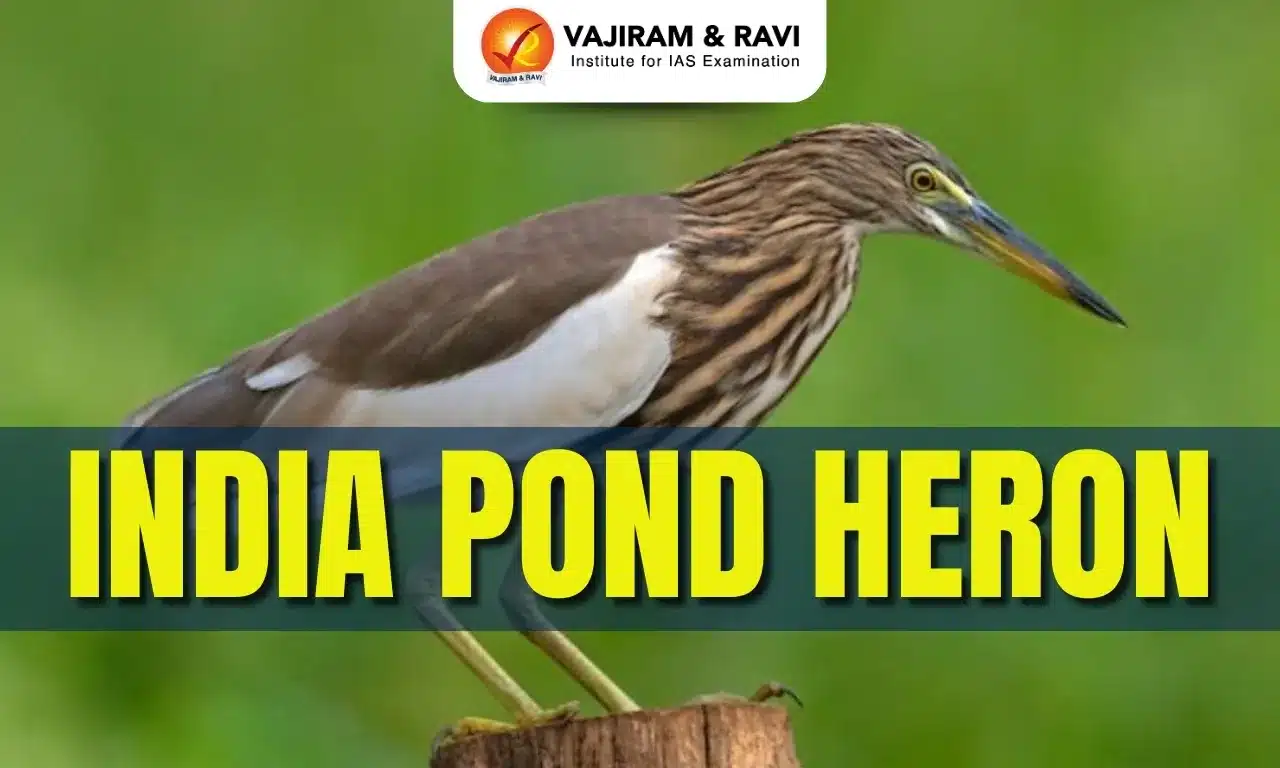
  • Indian Pond Heron or paddybird (Ardeola grayii) is a small heron of Old World origins belonging to the family Ardeidae.
  • It acquires maroon hair like plumes on back and a long occipital crest during breeding season.
  • Appearance
    • They appear stocky with a short neck, short thick bill and buff-brown back. 
    • During the breeding season, its plumage exhibits shades of chestnut, while in non-breeding periods, it adopts a more subdued appearance with greyish-brown feathers.
  • Habitat: It prefers many types of shallow aquatic habitats, fresh of salt, natural or human made.
  • Distribution:  It is mainly found in Iran and east to Pakistan, India, Burma, Bangladesh and Sri Lanka. 
  • Behavior
    • They are semi-colonial breeders and sometimes form communal roosts, often in avenue trees over busy urban areas.
    • They are known for their solitary and secretive nature,
    • They are often seen standing motionless at the water’s edge, patiently waiting to ambush their prey. 
  • Diet: The primary food of these birds includes crustaceans, aquatic insects, fishes, tadpoles and sometimes leeches.

Conservation Status of Indian Pond Heron

  • IUCN Red List: Least Concern.
  • Wild Life (Protection) Act, 1972: Schedule IV.

Source: TH

Indian Pond Heron FAQs

Q1: What is the primary habitat of the Indian Pond Heron?

Ans: Wetlands

Q2: What is the conservation status of the Indian Pond Heron?

Ans: Least Concern

Doctrine of Clean Hands

Doctrine of Clean Hands

Doctrine of Clean Hands Latest News

The Division Bench of the Delhi High Court recently ruled that the principle of “clean hands” cannot be invoked to deny relief to a petitioner who has successfully proved cruelty, merely based on unsubstantiated counter-allegations by the respondent.

About Doctrine of Clean Hands

  • The Doctrine of Clean Hands emphasises that those seeking justice must not engage in dishonest practices, ensuring that litigants approach the court with full transparency and integrity.
  • It is an equitable principle that prevents a party from receiving relief or asserting a defense if they have acted unfairly or in bad faith concerning the very matter before the court. 
  • Essentially, a party seeking an equitable remedy must themselves have "clean hands" regarding the dispute to be granted relief.
  • Simply put, the doctrine requires that “He who seeks equity must do equity.”
  • The doctrine has its roots in the English Court of Chancery, which administered equity.

Clean Hands Doctrine in Indian Jurisprudence

  • In Indian jurisprudence, the Supreme Court of India has consistently emphasized that litigants must approach the court with “clean hands,” meaning full and honest disclosure of all material facts relevant to the case. 
  • It would be trite that suppression of material facts implies disclosure of those facts which are essential to the decision-making process.
  • If such material facts are suppressed, the Courts have held that the same amounts to fraud on the court, misrepresentation, or abuse of process of law. 
  • Such conduct disentitles the litigant to any relief, whether interim or final, and may attract exemplary costs, dismissal of proceedings, or even contempt actions. 
  • The court has described this as a fundamental requirement for invoking equitable jurisdiction, particularly in writ petitions under Article 226 or special leave petitions under Article 136.

Source: LAWT

Doctrine of Clean Hands FAQs

Q1: Which principle is closely associated with the Doctrine of Clean Hands?

Ans: He who seeks equity must do equity.

Q2: The Doctrine of Clean Hands prevents relief to a person who has acted how?

Ans: In bad faith or dishonestly in relation to the dispute.

Q3: In Indian jurisprudence, suppression of material facts may amount to what?

Ans: Fraud on the court, misrepresentation, or abuse of process of law.

Inland Waterways Authority of India

Inland Waterways Authority of India

Inland Waterways Authority of India Latest News

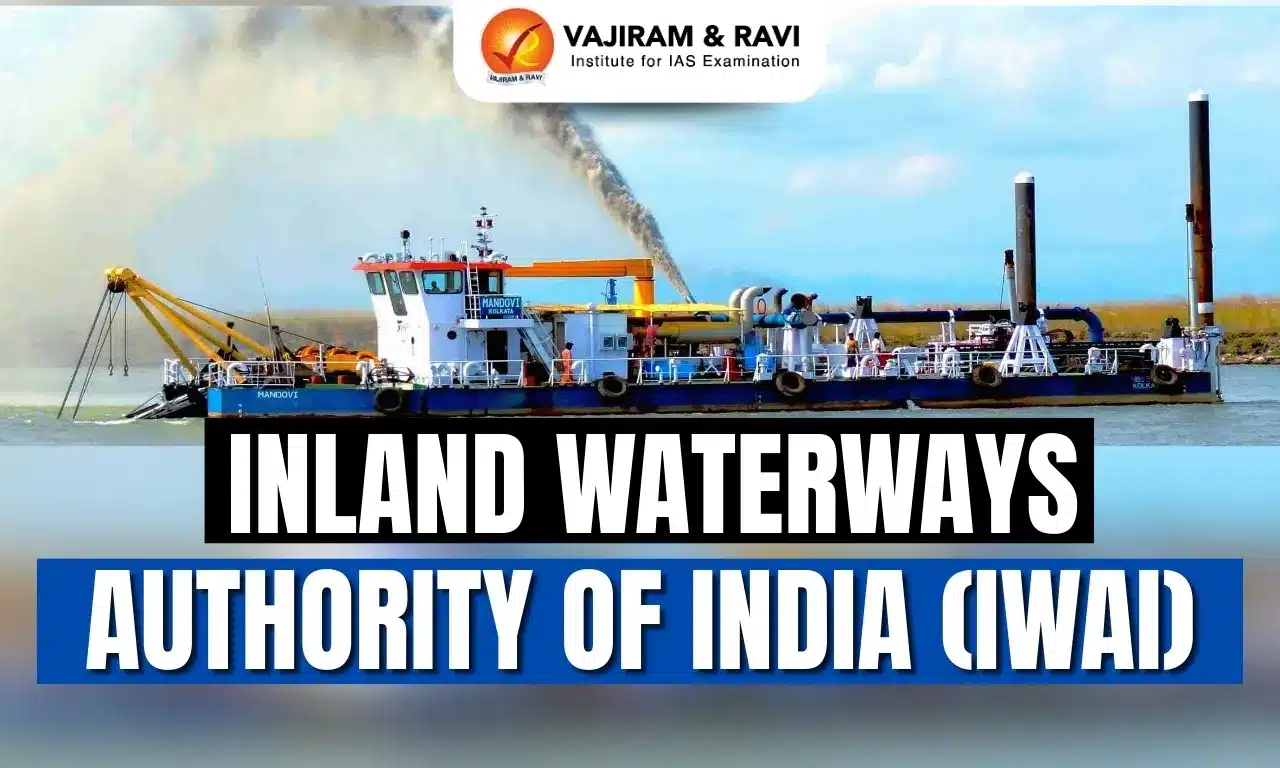
The Inland Waterways Authority of India (IWAI) recently signed a series of major agreements valued at about ₹3,000 crore to boost cargo movement, passenger transport and river-based tourism in the Northeast.

About Inland Waterways Authority of India

  • It is a statutory body established under the Inland Waterways Authority of India Act (IWAI), 1985.
  • It came into existence on 27th October 1986 for the development and regulation of inland waterways for shipping and navigation. 
  • Nodal Ministry: Ministry of Ports, Shipping, and Waterways
  • The Authority primarily undertakes projects for development and maintenance of inland water transport (IWT) infrastructure on national waterways through grants received from the Ministry of Ports, Shipping and Waterways.
  • It also takes up techno-economic feasibility studies and prepares proposals for the declaration of other waterways as National Waterways. 
  • It also advises the Central Government on matters related to IWT and assists States in the development of the IWT sector.
  • Headquarters: Noida, Uttar Pradesh
  • The Authority also has its regional offices at Patna, Kolkata, Guwahati, and Kochi and sub-offices at Allahabad, Varanasi, Farakka, Sahibganj, Haldia, Swroopganj, Hemnagar, Dibrugarh, Dhubri, Silchar, Kollam, Bhubaneshwar, and Vijayawada.

Source: DDN

Inland Waterways Authority of India FAQs

Q1: The Inland Waterways Authority of India (IWAI) was established under which Act?

Ans: Inland Waterways Authority of India Act, 1985

Q2: Inland Waterways Authority of India (IWAI) functions under which nodal ministry?

Ans: Ministry of Ports, Shipping and Waterways

Q3: Where is the headquarters of Inland Waterways Authority of India (IWAI) located?

Ans: Noida, Uttar Pradesh

Q4: What is the primary function of Inland Waterways Authority of India (IWAI)?

Ans: IWAI primarily undertakes projects for development and maintenance of inland water transport (IWT) infrastructure on national waterways.

Enceladus

Enceladus

Enceladus Latest News 

Scientists analyzing NASA Cassini data recently identified previously unknown organic compounds in ice particles emitted from Saturn's moon Enceladus.

About Enceladus

  • It is the second nearest of the major regular moons of Saturn and the brightest of all its moons. 
  • It is Saturn's sixth-largest moon. 
  • It was discovered in 1789 by the English astronomer William Herschel and named for one of the Giants (Gigantes) of Greek mythology.
  • It measures about 500 km in diameter.
  • It orbits Saturn in a prograde, nearly circular path at a mean distance of 238,020 km.
  • Enceladus is tidally locked with Saturn, keeping the same face toward the planet. 
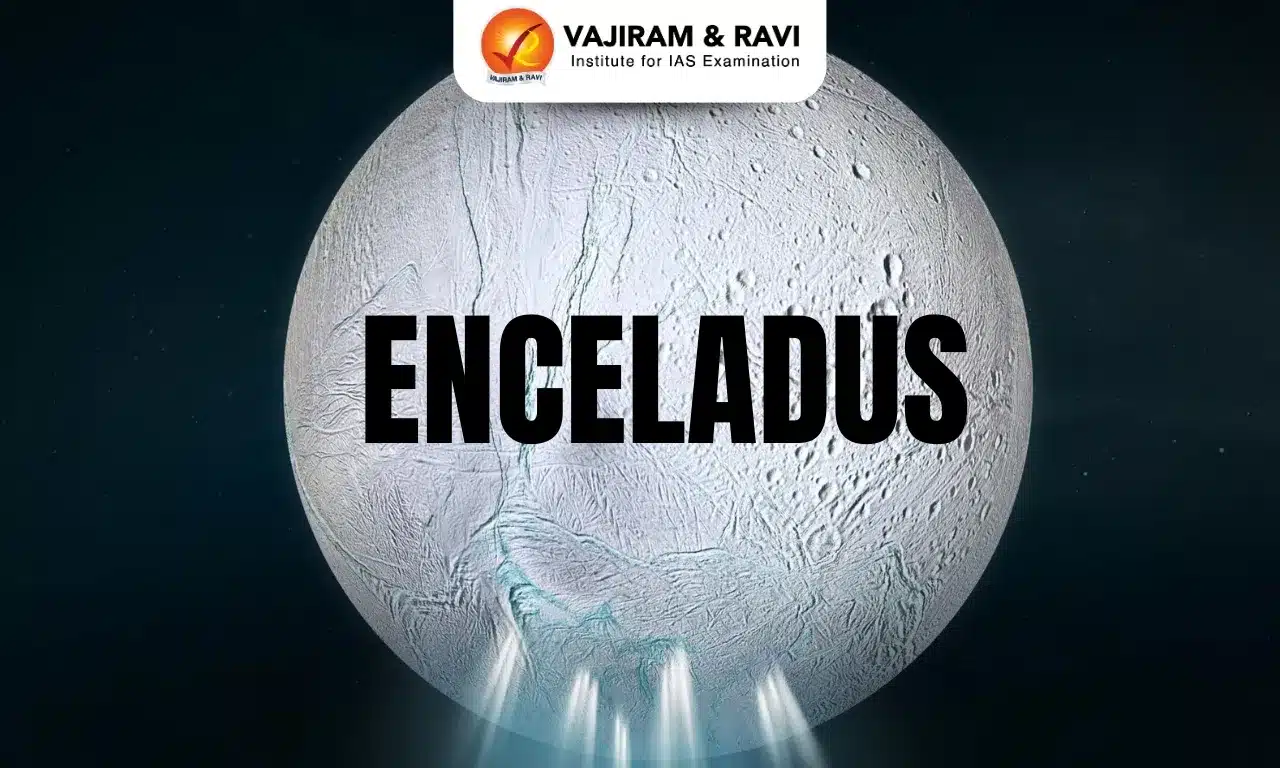
  • It continually spews out a concoction of water and simple organic chemicals into space.
  • Its surface, which reflects essentially all of the light that strikes it (compared with about 7 percent for Earth’s Moon), is basically smooth but includes cratered and grooved plains. 
  • The surface is almost pure water ice, with trace amounts of carbon dioxide, ammonia, and light hydrocarbons.
  • Because Enceladus is coated in clean, highly reflective ice, it has the brightest surface of any object in our solar system.
  • Like other icy moons that orbit gas giants, it's thought that Enceladus maintains a liquid subsurface ocean through tidal heating. 
  • It is one of the most promising potential sites in the solar system for hosting life.
  • Scientists believe Enceladus possesses the chemical ingredients needed for life and has hydrothermal vents releasing hot, mineral-rich water into its ocean, the same type of environment that may have spawned Earth’s first living organisms.

Key Facts about Cassini Spacecraft

  • It is a joint project of NASA, the European Space Agency, and the Italian space agency (ASI).
  • Cassini was a sophisticated robotic spacecraft sent to study Saturn and its complex system of rings and moons in unprecedented detail.
  • It was launched on October 15, 1997. It was one of the largest interplanetary spacecraft.
  • The mission consisted of NASA’s Cassini orbiter, which was the first space probe to orbit Saturn, and the ESA’s Huygens probe, which landed on Titan, Saturn’s largest moon.

Source: SD

Enceladus FAQs

Q1: Enceladus is a moon of which planet?

Ans: Saturn

Q2: Who discovered Enceladus in 1789?

Ans: It was discovered in 1789 by the English astronomer William Herschel.

Q3: What is the approximate diameter of Enceladus?

Ans: 500 km

Q4: What primarily makes Enceladus the brightest object in the Solar System?

Ans: Surface of clean, reflective water ice.

Key Facts about Seychelles

Key Facts about Seychelles

Seychelles Latest News

Recently, Seychelles was included as the sixth member of the Colombo Security Conclave (CSC).

About Seychelles

  • Location: It is an archipelagic island country located in the western Indian Ocean.
  • It is located to the northeast of Madagascar and east of mainland Africa. 
  • Other major islands near Seychelles include Comoros and Mauritius to the south, and Maldives to the east.
  • It consists of an archipelago of 115 islands (only 8 are permanently inhabited).

Geographical Features of Seychelles

  • It is composed of two main island groups: the Mahé group which are mountainous granitic islands and a second group are coralline islands. 
  • Mahe Group is volcanic with a narrow coastal strip and rocky, hilly interior; others are relatively flat coral atolls, or elevated reefs; sits atop the submarine Mascarene Plateau.
  • Highest Point: The highest point in Seychelles is Morne Seychellois.
  • Climate: The climate is tropical oceanic, with little temperature variation during the year.
  • Capital City: Victoria

What is the Colombo Security Conclave?

  • It is a regional security grouping comprising India, Bangladesh, Sri Lanka, Maldives, Mauritius, and Seychelles.
  • Objective: To promote regional security by addressing transnational threats and challenges of common concern to the member states.
  • CSC brings together National Security Advisors (NSAs) and Deputy NSAs of the member countries.
  • Secretariat: Colombo, Sri Lanka

Source: ET

Seychelles FAQs

Q1: Where is Seychelles located?

Ans: Indian Ocean

Q2: What is the capital of Seychelles?

Ans: Victoria

Bhoramdeo Wildlife Sanctuary

Bhoramdeo Wildlife Sanctuary

Bhoramdev Wildlife Sanctuary Latest News

Poachers have killed two bison recently at the Chilfi East Range of the Bhoramdev Sanctuary at Kawardha in Chhattisgarh.

About Bhoramdev Wildlife Sanctuary

  • Bhoramdev Wildlife Sanctuary, also known as Bhoramdeo Wildlife Sanctuary, is located in the Kawardha district of Chhattisgarh.
  • It was notified in the year 2001. 
  • It is part of the larger Maikal range of the Satpura hills, which is known for its unique ecosystem. 
  • It is part of the Kanha-Achanakmar Corridor, which connects Kanha National Park in Madhya Pradesh with Achanakmar Wildlife Sanctuary in Chhattisgarh. 
  • Named after the famous Bhoramdeo Temple situated nearby, the sanctuary covers an area of approximately 352 sq.km.
    • Bhoramdeo Temple, an ancient temple complex dating back to the 7th to 11th centuries, was built by the Nagvanshi dynasty. 
    • The temple is dedicated to Lord Shiva and is often referred to as the “Khajuraho of Chhattisgarh,”.
  • The sanctuary’s terrain is characterized by undulating hills, dense forests, and numerous streams.
  • The region surrounding Bhoramdev Wildlife Sanctuary is inhabited by various tribal communities, including the Baiga, Gond, and Kanwar tribes.
  • Rivers: This wildlife sanctuary is the origin of the Fen and Sankari rivers.
  • Vegetation: The sanctuary’s diverse ecosystem includes tropical moist and dry deciduous forests. 
  • Flora: Lush forests of Saaj, Sal, Tendu, and Nilgiri trees.
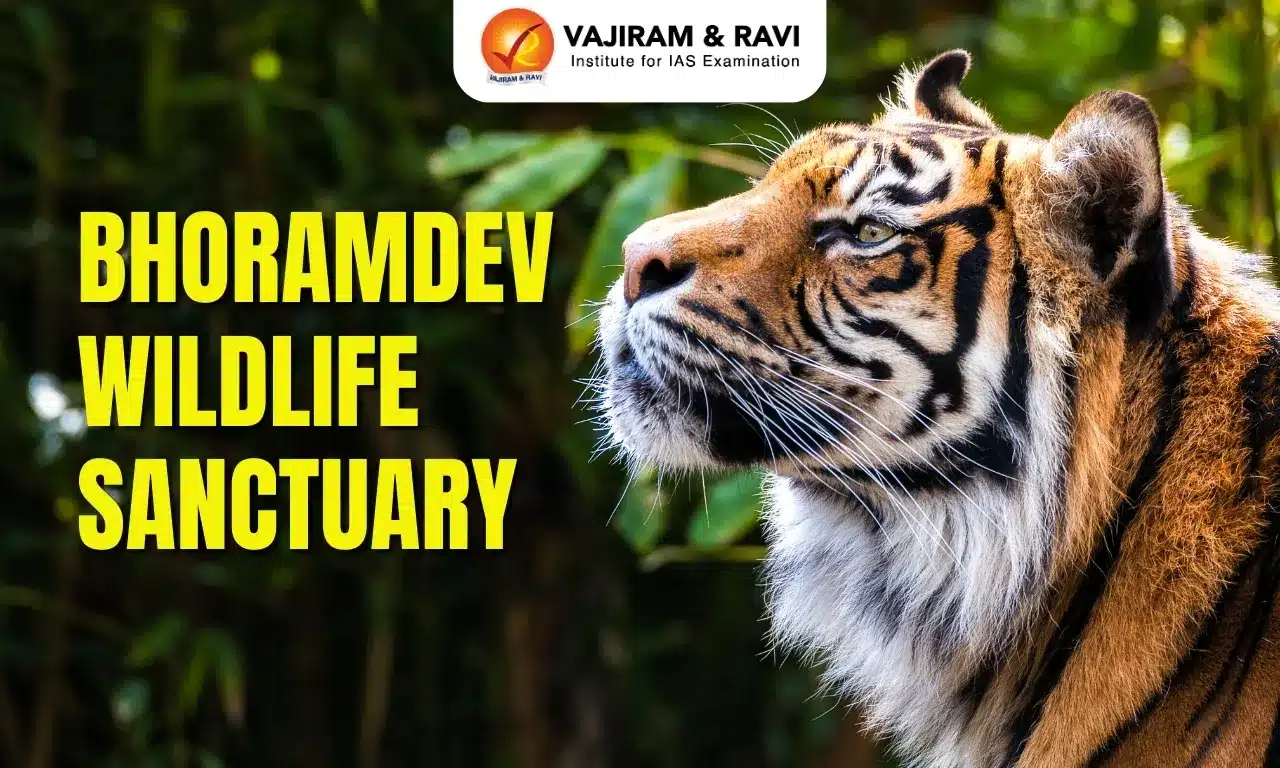
  • Fauna: It is home to a variety of wildlife, including tigers, leopards, sloth bears, and various species of deer and birds.

Source: ETVB

Bhoramdev Wildlife Sanctuary FAQs

Q1: Bhoramdev Wildlife Sanctuary is located in which state of India?

Ans: Chhattisgarh

Q2: Bhoramdev Wildlife Sanctuary is part of which major hill range?

Ans: It is part of the larger Maikal range of the Satpura hills.

Q3: Bhoramdev Wildlife Sanctuary derives its name from which nearby famous temple?

Ans: Bhoramdeo Temple

Q4: Which tribal communities predominantly inhabit the region around the Bhoramdev Wildlife Sanctuary?

Ans: Baiga, Gond, and Kanwar tribes.

Sagar Kavach

Sagar Kavach

Sagar Kavach Latest News

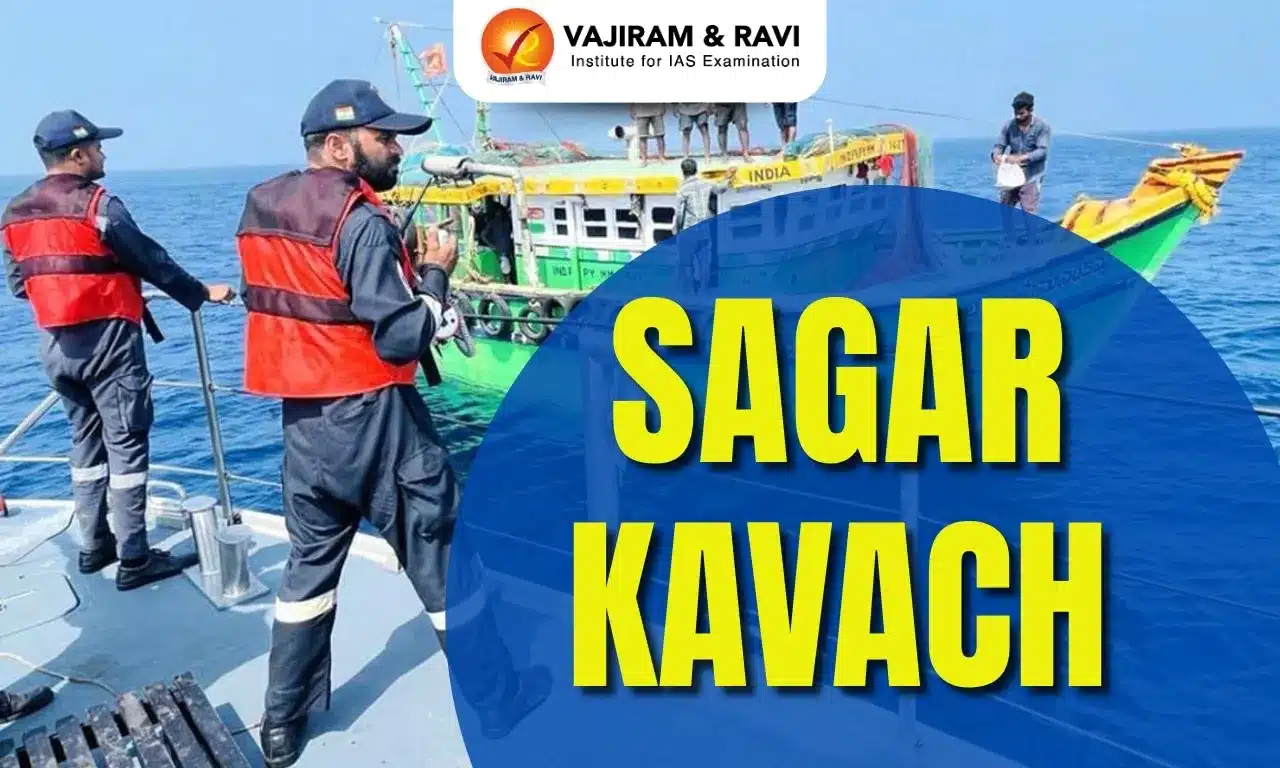
The Indian Coast Guard (ICG) successfully conducted the comprehensive Coastal Security Exercise Sagar Kavach-02/25 along the Maharashtra and Goa coastline recently.

About Sagar Kavach

  • It is a biannual coastal security drill led by the Indian Coast Guard (ICG) that tests and improves coastal security mechanisms against asymmetric threats. 
  • A wide range of central and state agencies, including the Indian Navy, State Police, Marine Police, Fisheries, Customs, etc., are part of this exercise. 
  • The exercise aims to assess the preparedness of all participating agencies in handling coastal security emergencies, preventing attacks on vital coastal installations, and further strengthening the multi-layered Coastal Security Network. 
  • During the exercise, security forces are split into a "Red team" that simulates infiltrators and a "Blue Team" that detects and neutralises them, assessing inter-agency coordination and response times.
  • The key activities of the Sagar Kavach drill generally include heightened surveillance, boat patrols, vehicle checks, and simulated attacks on vital installations to strengthen the country's coastal security framework. 
  • Recognizing the pivotal role of fishermen in coastal security, the exercise emphasizes the need for their active involvement.
  • Fishermen are urged to promptly report any unknown vessels operating in proximity to the coast to the ICG.

Source: ANI

Sagar Kavach FAQs

Q1: Sagar Kavach is a coastal security exercise led by which organization?

Ans: Indian Coast Guard

Q2: How frequently is the Sagar Kavach coastal security drill conducted?

Ans: Biannually

Q3: What is one of the primary objectives of the Sagar Kavach exercise?

Ans: The exercise aims to assess the preparedness of all participating agencies in handling coastal security emergencies.

Enquire Now