Arunachalesvara Temple

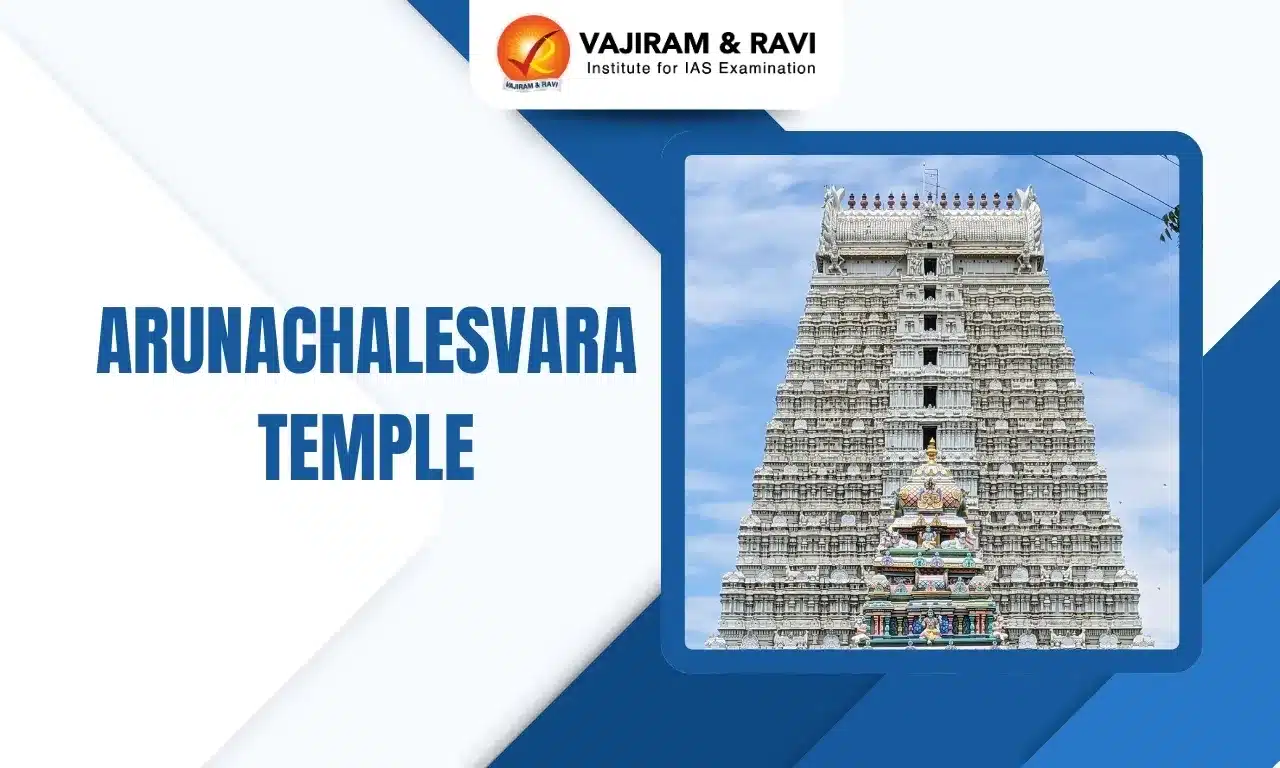
Arunachalesvara Temple

Arunachalesvara Temple Latest News

Encroachments around Arunachaleswarar Temple in Tiruvannamalai town were demolished recently to provide more road space for pilgrims during the Karthigai Deepam festival.

About Arunachalesvara Temple

  • It is a Hindu temple located at the base of Arunachala Hill in Tiruvannamalai in Tamil Nadu.
  • It is dedicated to Lord Arunachalesvara, a form of Lord Shiva.
  • The temple’s origin dates back thousands of years, with references in ancient scriptures and Tamil Saiva texts. 
  • The current structure, however, was built during the period of the early Chola kings (9th century AD), expanded during the period of the later Cholas, Hoysala (Bhosala) kings, and Vijayanagarar Nayakar kings, 

Arunachalesvara Temple Architecture

  • The temple is a fine example of South Indian (Dravidian) architecture and sculpture.
  • Spread out over 25 acres, the temple complex is among the largest in the country, housing four gateways, or gopurams. 
  • The Rajagopuram, located on the eastern side at a height of 217 feet, is regarded as among the tallest temple towers in the country built by the Nayaka kings. 
  • There are nine lofty gopurams, intricately carved with mythological figures and deities.
  • It has a massive thousand-pillar hall built by the ancient kings.

Source: TH

Arunachalesvara Temple FAQs

Q1: The Arunachalesvara Temple is located in which Indian state?

Ans: Tamil Nadu

Q2: The Arunachalesvara Temple is situated at the base of which hill?

Ans: It is located at the base of Arunachala Hill.

Q3: The current structural form of the Arunachalesvara Temple was mainly developed during which dynasty?

Ans: The current structure, however, was built during the period of the early Chola kings (9th century AD).

Vitamin B12

Vitamin B12

Vitamin B12 Latest News

Vitamin B12 deficiency often first appears as skin changes like hyperpigmentation, dryness, or paleness, indicating poor oxygen and nutrient delivery to skin cells.

About Vitamin B12

  • It is a water-soluble vitamin. 
  • It is also called cobalamin.
  • It is a vitamin the body uses to make and support healthy nerve cells. 
  • It's also used to make healthy red blood cells and the genetic material inside cells called DNA
  • Your body cannot produce B12 on its own, so it must be obtained through foods high in vitamin B12 or supplements. 
  • It is naturally found in animal foods such as fish, meat, poultry, eggs, milk, and milk products. 
  • It is not present in plant foods unless fortified.
  • The body stores vitamin B12 in the liver. 
  • The body can store vitamin B12 for 2 to 5 years, and it can get rid of any excess or unwanted vitamin B12 in the urine.
  • Vitamin B12 Deficiency:
    • People who follow a vegetarian or vegan diet can sometimes have low levels of Vitamin B12. This is because plant foods don't have vitamin B-12.
    • Older adults and people who have had stomach surgery also are at risk because they may not absorb the vitamin as well.
    • People with digestive conditions such as celiac disease and Crohn's disease also are at risk of low vitamin B-12 levels.
    • People with very low vitamin B-12 levels can have symptoms such as fatigue, muscle weakness, stomach problems, nerve damage, vision problems, and mood changes. 
    • They also may have low iron, called anemia, or low blood counts.

Source: TOI

Vitamin B12 FAQs

Q1: Is Vitamin B12 water-soluble?

Ans: Yes, Vitamin B12 is a water-soluble vitamin.

Q2: The body obtains Vitamin B12 primarily from which source?

Ans: It is naturally found in animal foods such as fish, meat, poultry, eggs, milk, and milk products.

Q3: Where is Vitamin B12 stored in the human body?

Ans: Vitamin B12 is primarily stored in the liver.

Q4: Vitamin B12 is essential for the formation of what?

Ans: Healthy nerve cells and red blood cells.

Aloe Vera

Aloe Vera

Aloe Vera Latest News

Computer simulations suggest that common plant molecules from Aloe vera might block enzymes tied to Alzheimer’s disease.

About Aloe Vera

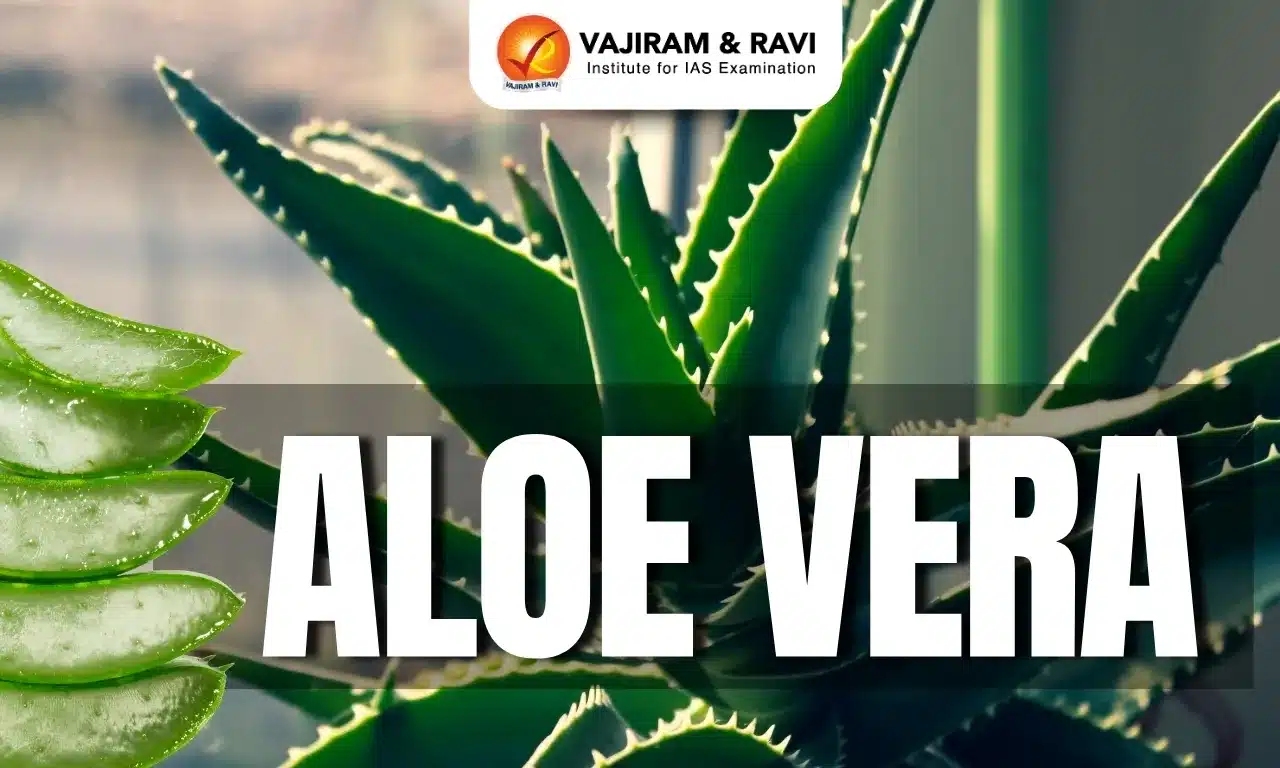
  • It is a succulent plant belonging to the Aloaceae family, known for its medicinal and therapeutic properties.
  • Scientific Name: Aloe barbadensis Mill
  • Distribution:
    • It is native to the arid, desert regions of the Arabian Peninsula, particularly in Oman, Yemen, and Saudi Arabia. 
    • It thrives in hot, dry climates with well-drained, sandy, or rocky soils. 
    • Today, aloe vera is widely cultivated in various warm regions around the world, including parts of North Africa, the Canary Islands, India, and the southwestern United States.
  • It is a thick, short-stemmed plant that stores water in its leaves. 
  • It is known for its thick, pointed, and fleshy green leaves. 
  • Each leaf contains a slimy tissue that stores water, making the leaves thick. 
  • This water-filled tissue is the “gel” that people associate with aloe vera products.
  • The gel contains beneficial bioactive compounds, including vitamins, minerals, and antioxidants.
  • Uses:
    • Aloe vera is known for its antibacterial, antiviral, and antiseptic properties. 
    • It is best known for treating skin injuries.
    • Aloe vera inhibits the growth of different types of bacteria, with the most studied being Staphlococcus aureus and Pseudomonas aeruginosa.
    • Aloe vera is used in arid regions for erosion control due to its shallow root system and ability to stabilize soil.

Source: SCTD

Aloe vera FAQ's

Q1: Aloe vera is native to which geographical region?

Ans: Arabian Peninsula

Q2: Aloe vera thrives best in which type of environment?

Ans: Hot, dry climates with well-drained soils.

Q3: The “gel” used in Aloe vera products is found in which part of the plant?

Ans: Water-filled leaf tissue.

Q4: Aloe vera is best known for treating which problem?

Ans: It is best known for treating skin injuries.

Grey Seal

Grey Seal

Grey Seal Latest News

Recently, researchers found that seal milk comprises 332 different kinds of oligosaccharides

About Grey Seal

  • It is a large seal of the family Phocidae.
  • It is also known as the Atlantic seal and the horsehead seal.
  • It is found on both shores of the North Atlantic Ocean. 
  • Distribution: They are found across the North Atlantic Ocean in coastal areas from mid-Atlantic to the Baltic Sea.
  • Habitat: These seals spend the majority of their lives in coastal waters; when on land, they occur on rocky coasts, islands, and sandbars, as well as on ice shelves and icebergs.
  • Conservation Status: IUCN: Least Concern

Characteristics of Grey Seals

  • Appearance: Males can reach 10 feet long and females are smaller in size. Its pups have white fur known as lanugo. This white fur helps absorb sunlight and trap heat to keep the pups warm. 
  • Gray seals are diurnal animals, being active during the day and sleeping at night. 
  • It shows a ‘bottling’ behavior i.e when the seal is in a vertical position in the water with only its head up above the surface.
  • Diet: Gray seals are carnivores (piscivores). They feed on a wide variety of fish, mostly benthic or demersal species.
  • Life Span: Their lifespan ranges from 25 to 35 years.

Source: IE

Grey Seal FAQs

Q1: Where is the Grey Seal found?

Ans: North Atlantic Ocean

Q2: What is the conservation status of the Grey Seal?

Ans: Least Concern

Tex-RAMPS Scheme

Tex-RAMPS Scheme

Tex-RAMPS Scheme Latest News

Recently, the Government of India has approved the Textiles Focused Research, Assessment, Monitoring, Planning and Start-up (Tex-RAMPS) Scheme.

About Tex-RAMPS Scheme

  • It will be implemented as a Central Sector Scheme, fully funded by the Ministry of Textiles.
  • Total outlay: ₹305 crore for the period FY 2025-26 to FY 2030-31.
  • It is designed to address critical gaps in research, data systems, and innovation support and capacity development.

Components of Tex-RAMPS Scheme

  • Research & Innovation: It promotes advanced research in smart textiles, sustainability, process efficiency, and emerging technologies to boost India’s innovation capacity.
  • Data, Analytics & Diagnostics: It creates robust data systems including employment assessments, supply chain mapping, and the India-Size study to facilitate evidence-based policymaking.
  • Integrated Textiles Statistical System (ITSS): A real-time, integrated data and analytics platform to support structured monitoring and strategic decision-making.
  • Capacity Development & Knowledge Ecosystem: It strengthens State-level planning, dissemination of best practices, capacity building workshops, and organisation of sectoral events.
  • Start-up & Innovation Support: It supports incubators, hackathons, and academia-industry collaborations to nurture high-value textile start-ups and entrepreneurship.

Source: PIB

Tex-RAMPS Scheme FAQs

Q1: What is the primary objective of the Tex-RAMPS Scheme?

Ans: To boost research and innovation in the textile sector

Q2: What is the duration of the Tex-RAMPS Scheme?

Ans: 2025-2031

International Institute for Democracy and Electoral Assistance

International Institute for Democracy and Electoral Assistance

International Institute for Democracy and Electoral Assistance Latest News

Chief Election Commissioner of India is set to assume the role of the Chairperson of the International Institute for Democracy and Electoral Assistance (International IDEA) for the year 2026.

About International Institute for Democracy and Electoral Assistance

  • It is an inter-governmental organisation established in 1995.
  • It works to strengthen democratic institutions and electoral processes worldwide.
    • International IDEA has been granted UN observer status.
  • Objective:  The objectives of the Institute are to support stronger democratic institutions and processes, and more sustainable, effective and legitimate democracy.
  • Member countries: It currently has 35 member countries, with the United States and Japan as observers. India is a founding member of International IDEA
  • Governance: The Institute's governance consists of a Council of Member States, a Steering Committee, a Finance and Audit Committee, a Board of Advisers and a Secretariat, led by the Secretary-General.
    • Each year, the Council elects a Chair and two Vice Chairs among its Member States. 
  • Core Functions: Its working modalities include four elements: knowledge production, capacity development, advocacy as well as convening of dialogues.
  • It focuses on six workstreams namely:
    • Electoral Processes
    • Constitution-Building 
    • Democracy Assessment
    • Political Participation and Representation
    • Climate Change and Democracy
    • Digitalization and Democracy
  • Secretariat: Stockholm, Sweden

Source: TH

International Institute for Democracy and Electoral Assistance FAQs

Q1: Where is the headquarters of International IDEA located?

Ans: Stockholm, Sweden

Q2: What is the primary objective of International IDEA?

Ans: To support sustainable democracy worldwide

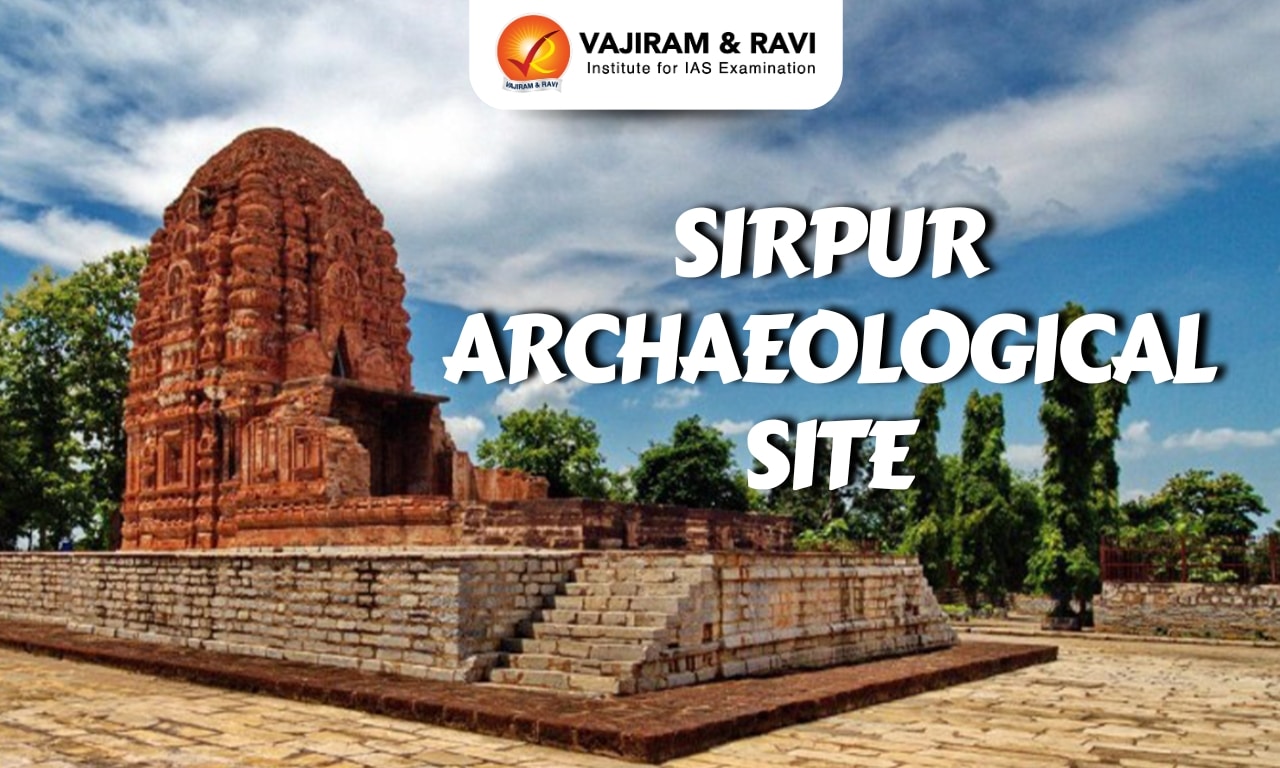
Sirpur Archaeological Site

Sirpur Archaeological Site

Sirpur Archaeological Site Latest News

The government is planning to prepare Chhattisgarh’s 5th Century Sirpur archaeological site for UNESCO tag.

About Sirpur Archaeological Site

  • Location: It is located in Mahasamund district of Chhattisgarh.
  • It is a 5th–12th Century archaeological site located on the banks of the Mahanadi.
  • It was the flourishing capital of Dakshina Kosala under the Panduvanshi and later Somavamshi kings.
  • It is a multi-religious urban centre first discovered in 1882 by Alexander Cunningham in 1871.

Key Features of Sirpur Archaeological Site

  • Excavations revealed 22 Shiva temples, five Vishnu temples, 10 Buddhist viharas and three Jain viharas.
  • Notable Structures
    • Lakshmana Temple (dedicated to Vishnu): It is one of India’s finest brick temples which was built around the 7th Century.
    • Surang Tila complex: It is built on a high terrace and has multiple shrines in the panchayatana style (one main shrine surrounded by four subsidiary ones).
    • Tivaradeva Mahavihara: It houses a significant Buddha statue.
  • It was a major Buddhist centre with large viharas, meditation halls and excavated stupas.
  • It also has a 6th Century market complex, showing Sirpur was both a religious and commercial hub.

Source: IE

Sirpur Archaeological Site FAQs

Q1: Where is the Sirpur Archaeological Site located?

Ans: Mahasamund district, Chhattisgarh

Q2: On which river the Sirpur Archaeological Site located?

Ans: Mahanadi

Etalin Hydroelectric Project

Etalin Hydroelectric Project

Etalin Hydroelectric Project Latest News

The Project Affected Peoples Forum (PAPF) of Arunachal Pradesh recently urged NHPC Ltd to reinstate every local worker previously engaged in the Etalin Hydroelectric Project (HEP), following the Centre’s decision to transfer the project from SJVN Limited to NHPC.

About Etalin Hydroelectric Project

  • It is a 3,097 MW hydropower project planned on Dri and Talo rivers (tributaries of the Dibang river) in Arunachal Pradesh’s Dibang Valley.
  • It is one of the largest hydropower projects proposed in the country in terms of installed capacity.
  • EHEP is proposed to be developed as a combination of two run-of-the-river schemes.
  • The project is being executed by NHPC Limited (formerly known as the National Hydroelectric Power Corporation).
  • The project will feature two concrete gravity dams, one on the Dri River and another on the Talo (Tangon) River, with an underground powerhouse near their confluence close to Etalin village.
  • The project is expected to generate 12,752 GWh of electricity.
  • The project area falls under the “richest bio-geographical province of the Himalayan zone” and “one of the mega biodiversity hotspots of the world”.
  • The project area is dominated by indigenous populations belonging to Idu-Mishmi tribes.

Source: NEN

Etalin Hydroelectric Project FAQs

Q1: The Etalin Hydroelectric Project is planned on which rivers?

Ans: It is planned on Dri and Talo rivers (tributaries of the Dibang river).

Q2: The Etalin Hydroelectric Project is located in which Indian state?

Ans: Arunachal Pradesh

Q3: What is the total planned installed capacity of the Etalin Hydroelectric Project?

Ans: 3,097 MW

Q4: Which indigenous community primarily inhabits the Etalin project area?

Ans: The project area is dominated by indigenous populations belonging to Idu-Mishmi tribes.

Vikram-I Rocket

Vikram-I Rocket

Vikram-I Rocket Latest News

Recently, the Prime Minister of India unveiled Skyroot Aerospace’s first orbital rocket, Vikram-I.

About Vikram-I Rocket

  • It is developed by Skyroot Aerospace.
  • It is India’s new private orbital-class launch vehicle named after the notable space pioneer Vikram Sarabhai. 

Features of Vikram-I Rocket

  • Thrust: It produces 1,200 kN of thrust using an all-carbon composite structure for enhanced lightweight strength and efficiency.
  • Design: The design emphasises simplicity, reliability, and the ability to launch within 24 hours from any location.
  • Stages: It has four stages and the first three stages are solid-fuelled, providing robust initial thrust, topped by a hypergolic liquid upper stage for precise orbital adjustments.
    • Stage 4 uses a cluster of four Raman engines. These are hypergolic engines, (meaning they ignite instantly when two chemicals, MMH fuel and NTO oxidiser, come into contact.
  • It is built to target the small-satellite segment and is capable of placing multiple satellites into orbit in a single mission.
  • Payload Capacity: It can deploy up to 350 kg into low Earth orbit (LEO) and 260 kg into a sun-synchronous orbit (SSO).
  • Innovation: Other key innovations include 3D-printed engines, ultra-low-shock pneumatic separation systems, and advanced avionics for real-time guidance.

Source: India Today

Vikram-I Rocket FAQs

Q1: Who developed Vikram-I Rocket?

Ans: Skyroot Aerospace

Q2: Who is known as the Father of the Indian Space Program?

Ans: Vikram Sarabhai

Chanakya Defence Dialogue

Chanakya Defence Dialogue

Chanakya Defence Dialogue 2025 Latest News

The President of India recently inaugurated the third edition of the Indian Army’s seminar, Chanakya Defence Dialogue-2025, in New Delhi.

About Chanakya Defence Dialogue 2025 (CDD 2025)

  • CDD is an annual platform that encourages discussion on contemporary security issues, technological advancements in defense, and strategic partnerships.
  • It is organised by the Indian Army, in collaboration with the Centre for Land Warfare Studies (CLAWS).
  • It is the third edition of the dialogue.
  • Venue: New Delhi
  • Scheduled as a two-day conference, the gathering will feature military leaders, global strategic experts, diplomats, industry leaders, and young scholars. 
  • The 'Chanakya Defence Dialogue', named after the ancient Indian strategist Chanakya,  aims to create a comprehensive platform for strategic deliberation on India’s future security architecture. 
  • It examines India’s security challenges and technological frontiers in an increasingly contested global landscape.
  • The dialogue’s outcomes are expected to inform future military policies and enhance cooperative security arrangements, potentially influencing regional peace and stability.

Source: TH

Chanakya Defence Dialogue 2025 FAQs

Q1: Which organisation collaborates with the Indian Army to organise Chanakya Defence Dialogue 2025?

Ans: Centre for Land Warfare Studies (CLAWS)

Q2: Where is Chanakya Defence Dialogue 2025 being held?

Ans: New Delhi

Q3: The Chanakya Defence Dialogue 2025 is which edition of the event?

Ans: It is the third edition of the dialogue.

Q4: What is the primary aim of the Chanakya Defence Dialogue?

Ans: Create a platform for strategic deliberations on India’s security architecture.

Enquire Now