Carbon-based Filter for PFAS Removal from Groundwater

Carbon-based Filter for PFAS Removal from Groundwater

Carbon-based Filter for PFAS Removal from Groundwater Latest News

A recent field-based study demonstrates that a specially engineered carbon material can be injected underground to trap and remove PFAS (Per- and Polyfluoroalkyl Substances) from contaminated groundwater, offering a cost-effective, long-term remediation solution for polluted sites.

What are Per- and Polyfluoroalkyl Substances (PFAS)?

  • Per- and Polyfluoroalkyl Substances (PFAS) are a large family of over 4,700 synthetic chemicals, widely known as “Forever Chemicals” due to their extreme environmental persistence.
  • PFAS have been mass-produced since the 1950s and are extensively used in non-stick cookware, water-resistant clothing, food packaging, cosmetics, firefighting foams, metal coatings, and industrial lubricants.
  • The carbon–fluorine (C–F) bond, one of the strongest covalent bonds in chemistry, makes PFAS highly resistant to degradation, leading to widespread groundwater contamination, especially near military, industrial, and municipal sites.

What is Carbon-Based PFAS Remediation?

  • Carbon-based PFAS remediation is a novel in-situ groundwater treatment approach demonstrated in a 2025 field study published in the Journal of Hazardous Materials.
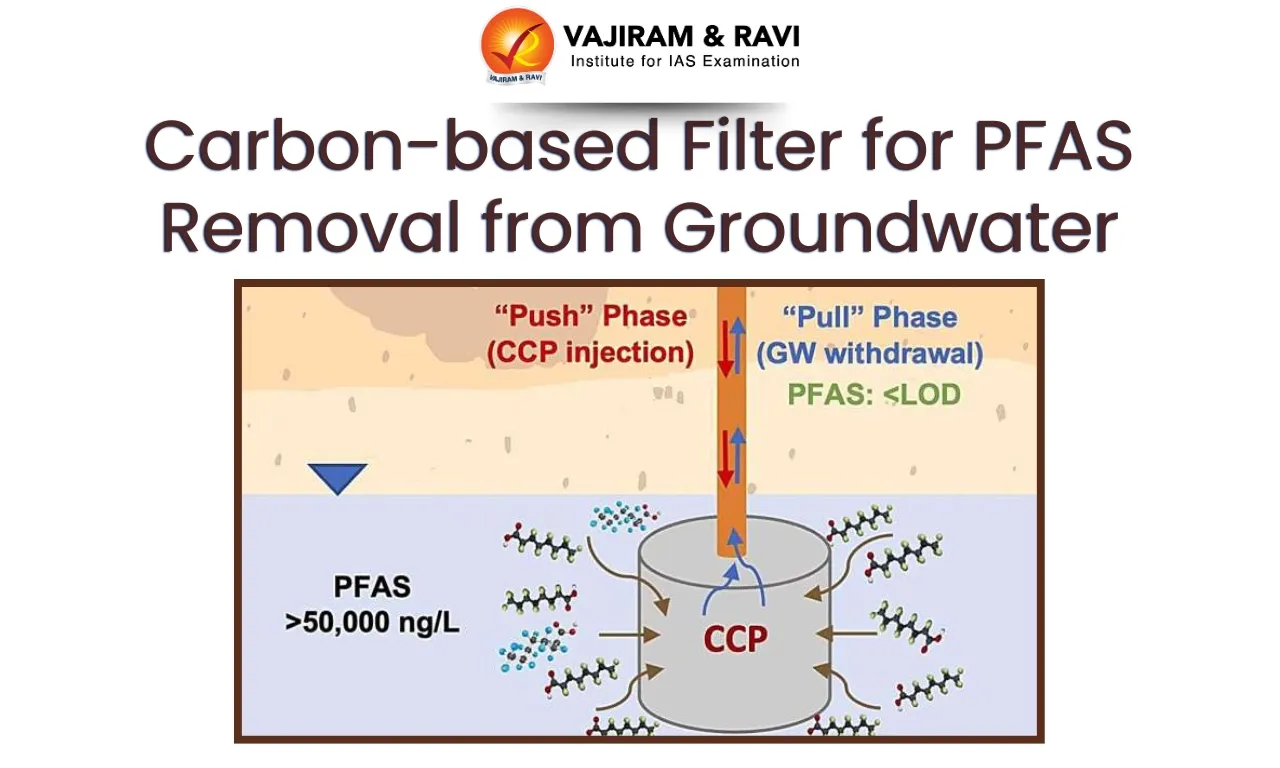
  • The study evaluated a specially engineered ultra-fine carbon material, known as Colloidal Carbon Product (CCP), designed to adsorb and immobilise PFAS in groundwater.
  • The technology uses a “push–pull” testing method, where CCP is injected underground to form an in-situ permeable treatment zone, and groundwater is later extracted to measure PFAS reduction.
  • Unlike surface treatment methods, this approach is non-invasive, subsurface-based, and suitable for long-term remediation.
  • Field trials at a S. Navy training site showed PFAS levels dropped by up to four orders of magnitude, from over 50,000 ng/L to below detection limits within 10 months, including effective removal of both long-chain and short-chain PFAS.

Source: PHY

Carbon-based Filter for PFAS Removal from Groundwater FAQs

Q1: Why are PFAS called “Forever Chemicals”?

Ans: PFAS are called Forever Chemicals because their carbon–fluorine bonds resist natural chemical, biological, and photolytic degradation, allowing them to persist in the environment for decades.

Q2: How are humans commonly exposed to PFAS?

Ans: Humans are primarily exposed through consumption of PFAS-contaminated drinking water or food, use of PFAS-containing consumer products, and inhalation of contaminated air, especially near industrial sites.

Q3: What are the major health impacts of PFAS exposure?

Ans: PFAS exposure is associated with hormonal disruption, reduced fertility, developmental problems in children, elevated cholesterol levels, and an increased risk of certain cancers.


Altermagnetism in RuO₂

Altermagnetism in RuO₂

Altermagnetism in RuO₂ Latest News

Recently, the Japanese researchers have experimentally confirmed ruthenium dioxide as an altermagnet, a third fundamental magnetic class distinct from ferromagnets and antiferromagnets.

About Altermagnetism and RuO₂ Discovery

  • Altermagnetism is now recognised as the third fundamental class of magnetism, distinct from ferromagnetism and antiferromagnetism.
  • In altermagnetic materials, magnetic moments alternate, but their arrangement follows complex symmetry operations such as rotation and reflection, rather than simple up–down cancellation.
  • This leads to a net-zero external magnetic field, similar to antiferromagnets, but with internal electronic spin splitting comparable to ferromagnets.
  • Ruthenium dioxide (RuO₂) thin films have been experimentally demonstrated to exhibit true altermagnetism, resolving long-standing global inconsistencies.
  • The discovery was made by a joint research team from National Institute for Materials Science (Japan), University of Tokyo, Kyoto Institute of Technology, and Tohoku University, and published in Nature Communications.
  • The team fabricated single-orientation (single-variant) RuO₂ thin films on sapphire substrates, ensuring uniform crystallographic orientation, which was crucial for conclusive verification.
  • Using X-ray Magnetic Linear Dichroism (XMLD), researchers confirmed spin arrangements where net magnetisation cancels (no N–S poles).
  • The study also observed spin-split magnetoresistance, electrically verifying the spin-splitting electronic structure, a key signature of altermagnetism.
  • The experimental results were found to be consistent with first-principles calculations of magneto-crystalline anisotropy, strengthening theoretical validation.

Source: PHY

Altermagnetism in RuO₂ FAQs

Q1: Why is altermagnetism called the third class of magnetism?

Ans: Because it combines zero net magnetization with spin-split electronic behavior, unlike ferromagnets or antiferromagnets alone.

Q2: Why is RuO₂ important for memory technologies?

Ans: RuO₂ thin films enable error-resistant, dense, and fast memory devices with electrical readout capability.

Q3: What experimental technique confirmed altermagnetism in RuO₂?

Ans: X-ray magnetic linear dichroism, supported by first-principles calculations.

Exercise “Desert Cyclone II”

Exercise “Desert Cyclone II”

Exercise “Desert Cyclone II” Latest News

The Ministry of Defence informed that an Indian Army contingent has departed for the United Arab Emirates (U.A.E.) to participate in the second edition of the Joint Military Exercise Desert Cyclone II, scheduled to be conducted at Abu Dhabi from 18–30 December 2025.

About Exercise Desert Cyclone II

  • Desert Cyclone II is the second edition of the India–U.A.E. Joint Military Exercise, following the inaugural edition held in 2024.
  • The Indian contingent comprises 45 personnel, primarily drawn from a Mechanised Infantry Regiment battalion of the Indian Army.
  • The A.E. Land Forces are represented by a contingent of similar strength from the 53 Mechanised Infantry Battalion.
  • The core objective of the exercise is to enhance interoperability and strengthen defence cooperation between the Indian Army and the U.A.E. Land Forces.
  • The exercise focuses on sub-conventional operations in urban environments under a United Nations mandate, preparing forces for peacekeeping, counter-terrorism, and stability operations.
  • Joint training includes fighting in built-up areas, heliborne operations, and detailed joint mission planning.
  • A key feature is the integration of Unmanned Aerial Systems (UAS) and counter-UAS techniques for conducting urban military operations.
  • The conduct of Desert Cyclone II reflects deepening military diplomacy, shared strategic interests, and growing operational synergy between India and the U.A.E.

Key Facts about India–U.A.E. Defence Relations

  • India and the U.A.E. established diplomatic relations in 1972.
  • The A.E. opened its Embassy in New Delhi in 1972, while India opened its Embassy in Abu Dhabi in 1973.
  • The first-ever India–U.A.E. Joint Air Forces exercise was conducted in September 2008 at the Al-Dhafra Air Base, Abu Dhabi.
  • India has been a regular participant in the biennial International Defence Exhibition (IDEX) held in Abu Dhabi.
  • In 2025, Indian Navy ships INS Visakhapatnam and INS Trikand participated in the bilateral naval exercise “Zayed Talwar”, aimed at enhancing naval interoperability and synergy.

Source: TH

Exercise Desert Cyclone II FAQs

Q1: When was Desert Cyclone II conducted?

Ans: It was conducted in Abu Dhabi from 18 to 30 December 2025.

Q2: Which units participated in the exercise?

Ans: The exercise involved Indian Army Mechanised Infantry and the 53 Mechanised Infantry Battalion of the U.A.E. Land Forces.

Q3: What type of operations were emphasised?

Ans: The focus was on sub-conventional operations, urban warfare, and UN-mandated peacekeeping scenarios.

Battle of Adwa

Battle of Adwa

Battle of Adwa Latest News

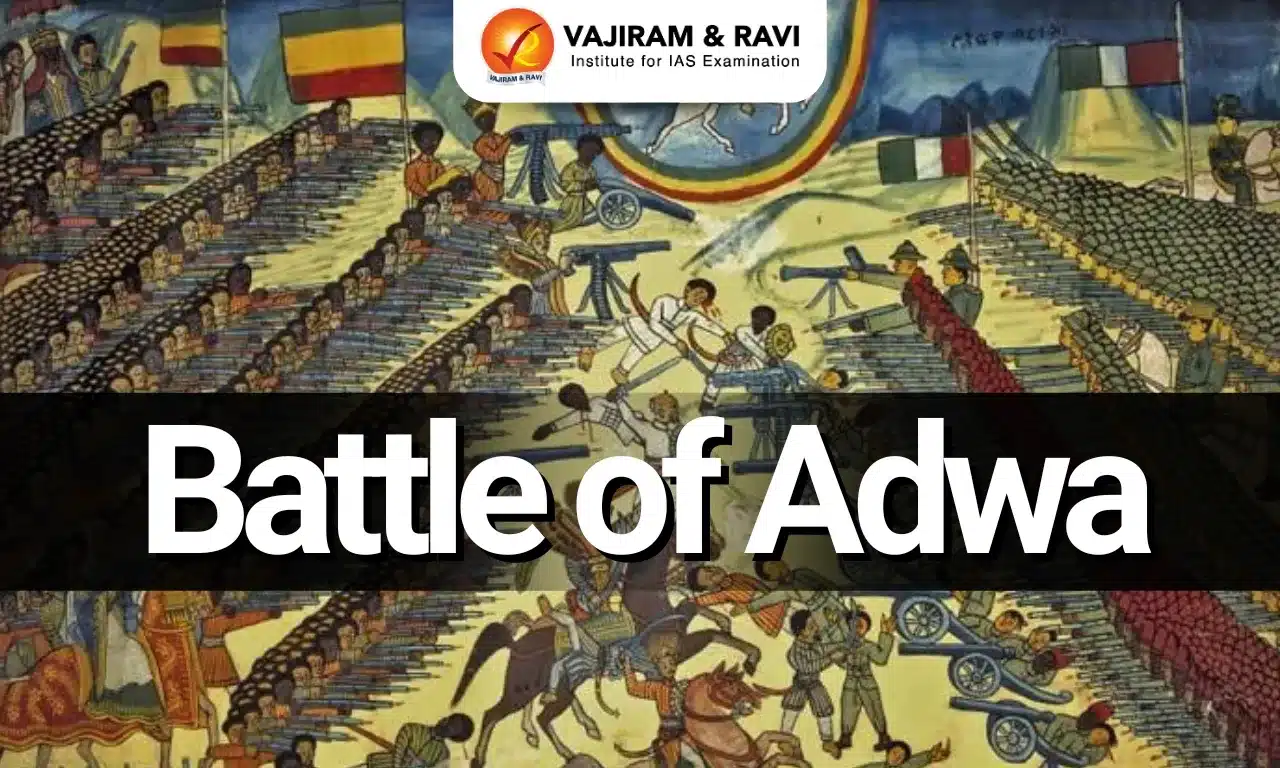
The Indian Prime Minister recently laid a wreath at the Adwa Victory Monument in Addis Ababa, paying tribute to Ethiopia’s historic victory in the 1896 Battle of Adwa.

About Battle of Adwa

  • It was fought by the Ethiopian Empire, which was then known as Abyssinia, and Italy on March 1, 1896, near Adwa, Ethiopia, as the concluding battle of the First Italo-Ethiopian War (1895–1896).
  • The conflict stemmed from Italy's ambitions to establish an empire in Africa, which was part of the broader "scramble for Africa" among European powers.
  • This battle saw the Ethiopian Empire, led by Emperor Menelik II, successfully defeat an invading Italian force. 
  • The Ethiopian army, numbering around 100,000, faced off against approximately 17,000 Italian troops, resulting in a decisive victory for the Ethiopians and securing their sovereignty. 
  • The victory had further significance for being the first crushing defeat of a European power by African forces during the colonial era.
  • Ethiopian victory secured independence until Italian dictator Benito Mussolini again attempted to conquer the nation when he invaded it in 1935, initiating what would be known as the Second Italo-Ethiopian War.
    • Ethiopia initially resisted the Italians alone except with the help of anti-fascist volunteers from the United States and other nations. 
    • By 1940, however, when Italy declared war on Great Britain, its forces joined the Ethiopians in forcing them out of Ethiopia in 1941.

Source: DDN

Battle of Adwa FAQs

Q1: The Battle of Adwa was fought in which year?

Ans: 1896

Q2: The Battle of Adwa marked the conclusion of which war?

Ans: First Italo-Ethiopian War.

Q3: Which empire successfully defeated Italy at the Battle of Adwa?

Ans: Ethiopian Empire (Abyssinia)

Q4: Who was the Ethiopian ruler that led the forces during the Battle of Adwa?

Ans: Emperor Menelik II

Q5: Why was Battle of Adwa historically significant?

Ans: It marked the first major defeat of a European power by African forces in the colonial era.

India Coast Guard Ship (ICGS) Sarthak

India Coast Guard Ship (ICGS) Sarthak

ICGS Sarthak Latest News

The Indian Coast Guard (ICG) Ship Sarthak, an Offshore Patrol Vessel, recently made a port call at Chabahar, Iran.

About ICGS Sarthak

  • It is the fourth in the series of five Offshore Patrol Vessels (OPVs) being built by Goa Shipyard for the Indian Coast Guard (ICG).
    • These OPVs are multi-mission platforms capable of undertaking concurrent operations. 
  • ICGS Sarthak was commissioned on October 28, 2021.
  • The 105-meter-long ship displacing 2450 tons is propelled by two 9100-kilowatt diesel engines designed to attain a maximum speed of 26 knots. 
  • The ship is fitted with state-of-the-art equipment machinery, sensors, and weapons and has an Integrated Bridge System, and Integrated Machinery Control System.
    • That enables it to function as a command platform and undertake mandated Coast Guard charter of duties, including search and rescue, combating maritime crimes, and preserving and protecting the marine environment.
  • It will be based at Porbandar, Gujrat, and operate on India’s western seaboard under the operational and administrative control of the commander, Coast Guard Region. 
  • It has a complement of 11 officers and 110 men.

Source: NOA

India Coast Guard Ship (ICGS) Sarthak FAQs

Q1: ICGS Sarthak belongs to which category of vessels of the Indian Coast Guard?

Ans: Offshore Patrol Vessel (OPV)

Q2: Which shipyard constructed ICGS Sarthak?

Ans: Goa Shipyard Limited

Q3: When was ICGS Sarthak commissioned into the Indian Coast Guard?

Ans: October 28, 2021

Q4: ICGS Sarthak will be based at which port?

Ans: It will be based at Porbandar, Gujrat.

Annatto

Annatto

Annatto Latest News

As informed by the Council of Scientific and Industrial Research (CSIR), the CSIR–Central Food Technological Research Institute (CSIR–CFTRI), Mysuru had undertaken four Grant-in-Aid projects related to the study and development of annatto.

About Annatto

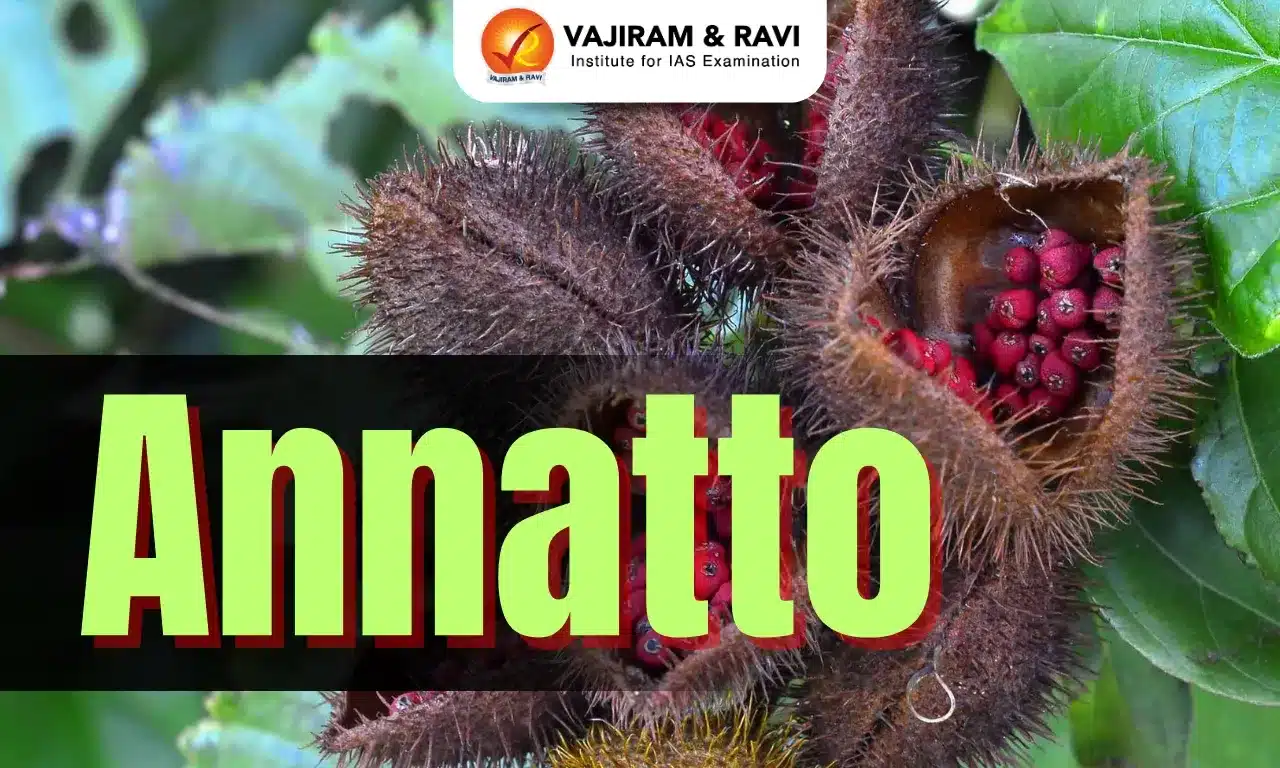
  • It is a natural food colouring and flavoring agent obtained from the seeds of the achiote tree (Bixa orellana), native to the tropical regions of the Americas.
  • About 70% of natural food colors come from annatto. 
  • It adds a yellow-orange color to foods like cheese, butter, yogurt, sausage, smoked fish, ice cream, and baked goods.
    • The bold color comes from carotenoids, which are plant pigments that are found in the coating of the seed.
  • It is most often ground up into a powder or paste form for use. 
  • Its color can also be extracted from the seed and then added to foods as a dye.
  • Some also use annatto to boost the flavor of certain dishes. 
  • It has a mild, peppery flavor when used in large amounts as well as a nutty and floral scent.
  • It is safe for most people when used in normal food amounts. However, it might cause allergic reactions in some sensitive people.

Annatto Benefits

  • It has been linked to various benefits, including reduced inflammation, improved eye and heart health, and anticancer properties.
  • It is rich in several key antimicrobial compounds, which can limit the growth of bacteria, fungi, and parasites.
  • It is rich in antioxidants, or compounds that help neutralize the effects of harmful free radicals that can build up and cause damage to cells.
  • It is high in tocotrienol, a form of vitamin E that some studies show could help with keeping bones strong and healthy.
  • Annatto seeds are sometimes also ground up and applied topically to help enhance the health of your skin.

Source: PIB

Annatto FAQs

Q1: What is Annatto?

Ans: Annatto is a natural food colouring and flavouring agent.

Q2: From which plant is Annatto derived?

Ans: It is obtained from the seeds of the achiote tree (Bixa orellana), native to the tropical regions of the Americas.

Q3: Which pigments are responsible for the colour of Annatto?

Ans: The color comes from carotenoids, which are plant pigments that are found in the coating of the seed.

Q4: What health benefits are associated with Annatto?

Ans: Annatto is linked to antioxidant, antimicrobial, anti-inflammatory properties and may support eye, heart, bone, and skin health.

BharatNet Project

BharatNet Project

BharatNet Project Latest News

The Minister of State for Communications and Rural Development, in a written reply to a question in the Lok Sabha recently, said that BharatNet is being implemented in a phased manner to provide broadband connectivity to all Gram Panchayats (GPs).

About BharatNet Project

  • It is an ambitious project of the Government of India aimed at providing broadband connectivity to all Gram Panchayats (GPs) in the country. 
  • The project was approved in 2011
  • It is one of the biggest rural telecom projects in the world.
  • The primary objective is to provide unrestricted access to broadband connectivity to all the telecom service providers. 
    • This enables access providers like mobile operators, Internet Service Providers (ISPs), Cable TV operators, and content providers to launch various services such as e-health, e-education, and e-governance in rural and remote India. 
  • The project initially aimed to connect approximately 2.5 lakh Gram Panchayats across the country.
  • The project is being executed by a Special Purpose Vehicle (SPV), namely Bharat Broadband Network Limited (BBNL), which was incorporated in 2012 under Indian Companies Act 1956. 
  • In 2016, the Telecom Commission approved implementing the project in three phases.
    • Phase I: 
      • Focused on laying optical fibre cables to connect 1 lakh Gram Panchayats by utilising existing infrastructure. 
      • This phase was completed in December 2017.
    • Phase II (ongoing): 
      • Expanded coverage to an additional 1.5 lakh Gram Panchayats using optical fibre, radio, and satellite technologies
      • This phase incorporated collaborative efforts with state governments and private entities.
    • Phase III (ongoing): 
      • Aims at future-proofing the network by integrating 5G technologies, increasing bandwidth capacity, and ensuring robust last-mile connectivity. 
      • The Amended BharatNet Program (ABP) approved in August 2023 can be considered part of this evolution.

What is the Amended BharatNet Program (ABP)?

  • Approved in August 2023, the ABP is a design improvement aiming for 
    • Optical Fibre (OF) connectivity to 2.64 lakh GPs in ring topology (a network design where connected devices form a circular data channel) 
    • OF connectivity to the remaining non-GP villages on demand. 
  • It includes features like IP-MPLS (Internet Protocol Multi-Protocol Label Switching) network with routers at Blocks and GPs, operation and maintenance for 10 years, power backup, and Remote Fibre Monitoring System (RFMS).

Source: PIB

BharatNet Project FAQs

Q1: What is the BharatNet Project?

Ans: It is a Government of India initiative to provide broadband connectivity to all Gram Panchayats.

Q2: When was the BharatNet Project approved?

Ans: The project was approved in 2011.

Q3: Which government body executes the BharatNet Project?

Ans: It is executed by Bharat Broadband Network Limited (BBNL).

Q4: What is the main objective of BharatNet?

Ans: To provide unrestricted broadband access to telecom service providers.

INS Hansa

INS Hansa

INS Hansa Latest News

Recently, the Indian Navy commissioned its second MH-60R helicopter squadron, INAS 335, also known as the ‘Ospreys’, at INS Hansa, Vasco da Gama, Goa.

About INS Hansa

  • INS Hansa is an Indian Naval Air Station located near Dabolim, Goa.
  • It is the largest naval airbase in India and houses some of the Indian Navy’s premier air squadrons.
  • The base includes a civil enclave, which functions as Dabolim Airport, handling domestic and international flights round-the-clock.
  • The station was originally commissioned on 5 September 1961 at Sulur near Coimbatore, Tamil Nadu, and was initially co-located with the Indian Air Force’s Sulur Air Force Station.
  • Following the liberation of Goa, the Navy took over Dabolim airfield in April 1962, and INS Hansa was relocated to Dabolim in June 1964.
  • INS Hansa has earlier witnessed key capability additions, including the commissioning of the second P-8I maritime patrol aircraft squadron in 2022, strengthening shore-based fixed-wing naval operations.
  • The Navy is also progressing the acquisition of 15 MQ-9B Sea Guardian remotely piloted aircraft, which will enable persistent maritime surveillance and enhanced Maritime Domain Awareness (MDA).
  • Although formally commissioned at Goa, the MH-60R helicopters have already demonstrated operational effectiveness in Operation Sindoor, TROPEX-25, and the Tri-Services Exercise 2025.

About MH-60R Seahawk Helicopter

  • INAS 335 is the second Indian Naval Air Squadron to operate the MH-60R Seahawk helicopters, following the commissioning of the first squadron at Kochi, Kerala, in March 2024.
  • The MH-60R is an all-weather, day-and-night capable, multi-role helicopter designed to operate from ships and shore bases.
  • It is optimised for Anti-Submarine Warfare (ASW), enabling detection, tracking, and engagement of enemy submarines.
  • The helicopter performs Anti-Surface Warfare (ASuW) roles against enemy surface vessels.
  • It is equipped for Search and Rescue (SAR) and Medical Evacuation (MEDEVAC) missions during peacetime and combat operations.
  • The platform supports Vertical Replenishment (VERTREP), improving logistics sustainment of naval task forces at sea.
  • The induction of INAS 335 substantially augments integral naval aviation capability on the western seaboard, a region of high strategic and commercial importance.

Source: TH

INS Hansa FAQs

Q1: What is INAS 335 and why is it important?

Ans: INAS 335, also known as the Ospreys, is the second Indian Naval Air Squadron equipped with MH-60R helicopters, and it significantly enhances India’s maritime combat, surveillance, and rescue capabilities.

Q2: What roles can the MH-60R helicopter perform?

Ans: The MH-60R can conduct ASW, ASuW, SAR, MEDEVAC, and VERTREP operations, making it a versatile multi-mission platform.

Q3: Why is INS Hansa strategically significant?

Ans: INS Hansa is India’s largest naval airbase, strategically located on the western coast, enabling rapid air-sea integration and power projection in the Indian Ocean Region.

Kavach System

Kavach System

Kavach System Latest News

Recently, the Union Railway Minister, in a written reply during the Winter Session of Parliament, informed the Lok Sabha that the indigenously developed Kavach system has been fully commissioned on over 2,000 km of the Indian Rail network, with the rollout progressing at a very fast pace.

About Kavach System

  • Kavach is an indigenously developed Automatic Train Protection (ATP) system designed to enhance railway operational safety.
  • It has been developed by the Research Design and Standards Organisation (RDSO) under Indian Railways (IR) in collaboration with Medha Servo Drives Pvt Ltd, HBL Power Systems Ltd, and Kernex Microsystems.
  • Kavach is a highly complex digital safety ecosystem consisting of five major integrated components, including continuous Optical Fibre Cable (OFC) laid along tracks and telecom towers for uninterrupted communication.
  • The system uses a combination of electronic devices and Radio Frequency Identification (RFID) installed in locomotives, signalling systems, and railway tracks, which communicate using ultra-high radio frequencies.
  • Based on pre-programmed safety logic, Kavach can alert loco pilots, automatically apply brakes, and prevent unsafe train movements.
  • Field trials have been ongoing since 2016 on passenger trains before large-scale deployment.
  • As of December 2025, Indian Railways has:
    • Laid 7,129 km of Optical Fibre Cable (OFC)
    • Installed 860 telecom towers
    • Connected 767 railway stations to data centres
      Deployed trackside equipment along 3,413 km
    • Equipped 4,154 locomotives with Kavach
    • Around 40,000 technicians and operators have been trained, highlighting the technological sophistication of the system.
    • Consequential railway accidents have reduced by nearly 90%, declining from 135 incidents in 2014 to about 11 currently, indicating tangible safety outcomes.

Source: TH

Kavach System FAQs

Q1: Is Kavach an indigenous system?

Ans: Yes, it is a fully indigenous ATP system developed by RDSO and Indian industry partners.

Q2: Which safety risks does Kavach primarily address?

Ans: It targets SPAD, overspeeding, collisions, and human error.

Q3: Does Kavach replace the loco pilot?

Ans: No, it assists the loco pilot and intervenes only when safety is compromised.

Q4: Is Kavach operational nationwide?

Ans: No, it is being phased and prioritised on high-density and high-risk routes, with over 2,000 km commissioned so far.

Animal Husbandry Infrastructure Development Fund

Animal Husbandry Infrastructure Development Fund

Animal Husbandry Infrastructure Development Fund (AHIDF) Latest News

In response to a question asked in the Rajya Sabha, the Minister of Fisheries, Animal Husbandry, and Dairying responded that the amount of loan sanctioned under the Animal Husbandry Infrastructure Development Fund (AHIDF) is ₹ 10,320 Crores.

About Animal Husbandry Infrastructure Development Fund (AHIDF)

  • It is a ₹15,000 crores central sector scheme under the prime minister’s “Atma Nirbhar Bharat Abhiyan” stimulus package.
  • It is aimed at boosting investments in animal husbandry infrastructure.
  • Implementing Agency: Department of Animal Husbandry and Dairying, Ministry of Fisheries, Animal Husbandry, and Dairying.
  • Objectives: 
    • To expand milk and meat processing capacity and help small rural producers connect with organised markets. 
    • To ensure that livestock farmers get better prices for their milk, meat, and other animal products. 
    • To make good-quality milk and meat products that can be easily available for people across the country. 
    • To meet the growing demand for protein-rich food and help reduce malnutrition, especially among children. 
    • To encourage entrepreneurship and create more job opportunities in the livestock sector. 
    • To promote exports and increase the export contribution in the milk and meat sector.
    • To make available quality concentrated animals feed.
  • The scheme will incentivize investments for 
    • Dairy processing and value addition infrastructure.
    • Meat processing and value addition infrastructure.
    • Animal Feed Plant.
    • Breed multiplication farm.
    • Animal Waste to Wealth Management (Agri-waste management).
    • Veterinary vaccine and drug production facilities.
  • The eligible beneficiaries under the Scheme would be:
    • Farmer Producer Organization (FPO)
    • Private companies
    • Individual entrepreneurs
    • Section 8 companies
    • Micro, Small, and Medium Enterprises (MSMEs)

Animal Husbandry Infrastructure Development Fund (AHIDF) Benefits

  • The beneficiaries are to contribute a minimum of 10% margin money as investment. The balance 90% would be the loan component to be made available by scheduled banks.
  • The Government of India will provide 3% interest subvention to eligible beneficiaries.
  • Repayment Period: Maximum of 8 years, including a moratorium period of 2 years.
  • From the Credit Guarantee Fund, Credit guarantee would be provided to those sanctioned projects which are covered under MSME-defined ceilings. Guarantee coverage would be up to 25% of the credit facility of the borrower. 
    • Credit Guarantee Fund: Set up and managed by NABARD, the limit of the fund is Rs.750 crore.

Source: PIB

Animal Husbandry Infrastructure Development Fund (AHIDF) FAQs

Q1: What is the Animal Husbandry Infrastructure Development Fund (AHIDF)?

Ans: A ₹15,000 crore central sector scheme to boost investment in animal husbandry infrastructure.

Q2: What is the primary objective of Animal Husbandry Infrastructure Development Fund (AHIDF)?

Ans: To expand milk and meat processing capacity and connect rural producers with organised markets.

Q3: Which types of infrastructure are eligible for incentives under Animal Husbandry Infrastructure Development Fund (AHIDF)?

Ans: Dairy processing, meat processing, animal feed plants, breed multiplication farms, animal waste management, and veterinary vaccine/drug facilities.

Q4: Who are the eligible beneficiaries under Animal Husbandry Infrastructure Development Fund (AHIDF)?

Ans: FPOs, private companies, individual entrepreneurs, MSMEs, and Section 8 companies.

Q5: What percentage of the project cost is provided as a bank loan under AHIDF?

Ans: Up to 90%.

Enquire Now