SabhaSaar Initiative

SabhaSaar Initiative

SabhaSaar Initiative Latest News

Recently, the Union Minister informed the Rajya Sabha about the SabhaSaar initiative.

About SabhaSaar Initiative

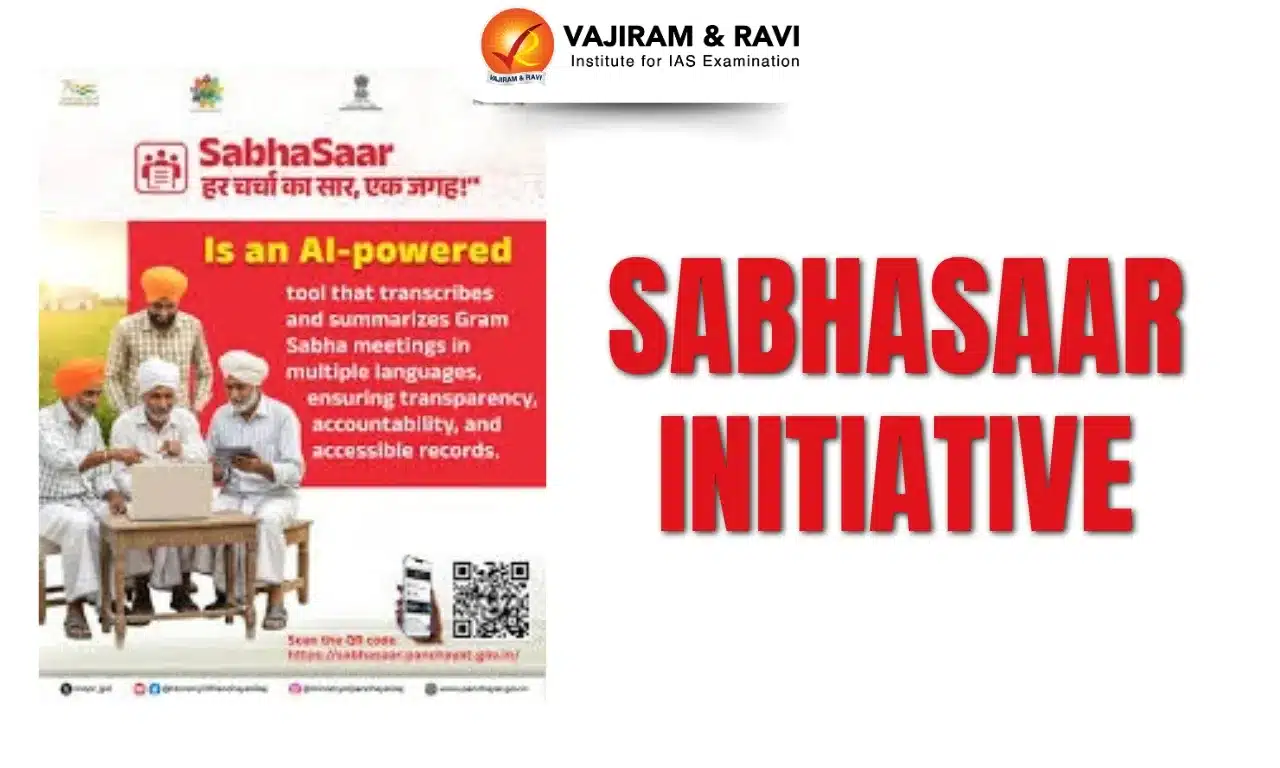
  • It is an AI-enabled voice-to-text meeting summarisation tool.
  • It is launched by the Ministry of Panchayati Raj.
  • SabhaSaar has been made available to all States/UTs, and Gram Panchayats are progressively adopting it for routine Gram Sabha and Panchayat meetings.
  • The AI model used in SabhaSaar operates on AI and cloud infrastructure provisioned through the India AI Compute Portal under the India AI Mission of MeitY. 

Features of SabhaSaar Initiative

  • It leverages the power of AI to generate structured minutes of meetings from gram sabha videos and audio recordings.
  • It will bring uniformity in minutes of the gram sabha meetings across the country.
  • Panchayat officials can use their e-GramSwaraj login credentials to upload video/audio recordings on ‘SabhaSaar’.
  • It is built on Bhashini, an AI-powered language translation platform launched by the government to bridge literacy, language, and digital divides.
  • The tool generates transcription from a video or audio, translates it into a chosen output language and prepares a summary.
  • It enables transcription in all major Indian languages like Hindi, Bengali, Tamil, Telugu, Marathi and Gujarati, in addition to English.
  • Significance: It is ideal for panchayats, administrative bodies, and rural development projects as it streamlines documentation and empowers stakeholders with instant access to meeting insights.

Source: PIB

SabhaSaar Initiative FAQs

Q1: What is SabhaSaar?

Ans: An AI-powered tool for Gram Sabha meetings

Q2: What is the primary purpose of SabhaSaar?

Ans: To enhance transparency and accountability in Gram Sabhas

Development Communication and Information Dissemination Scheme

Development Communication and Information Dissemination Scheme

Development Communication and Information Dissemination Scheme Latest News

Recently, the Minister of State for Information and Broadcasting informed the Lok Sabha about the Development Communication and Information Dissemination Scheme.

About Development Communication and Information Dissemination Scheme

  • It is a Central Sector Scheme of the Ministry of Information and Broadcasting.
  • It supports the information dissemination and citizen outreach of Government programmes/ schemes/initiatives.
  • It emphasizes on reaching out to the rural, tribal, remote and urban populations across the country.
  • Implementation: The scheme is implemented by the Ministry of Information and Broadcasting through its media units - Central Bureau of Communication (CBC), Press Information Bureau (PIB), and New Media Wing (NMW).
    • CBC carries out a number of public multimedia campaigns for information dissemination about the various schemes of the Government like Swacch Bharat Mission, Pradhan Mantri Awas Yojana- Rural & Urban, Jal Jeevan Mission etc.

What is the Central Bureau of Communication (CBC)?

  • It is a unit of the Ministry of Information and Broadcasting.
  • Mandate: It has a mandate of providing 360 degrees communication solutions to Ministries, Departments, Public Sector Undertakings (PSUs), and autonomous bodies.
  • Background: It was set up on 8th December 2017 by the integration of the erstwhile Directorate of Advertising and Visual Publicity (DAVP), Directorate of Field Publicity (DFP), and Song & Drama Division (S&DD).
  • Function: It is engaged in the process of educating people, both rural and urban, about the Government’s policies and programmes to evoke their participation in developmental activities.

Source: PIB

Development Communication and Information Dissemination Scheme FAQs

Q1: What is the primary objective of the Development Communication and Information Dissemination Scheme?

Ans: To disseminate information about government schemes

Q2: Which ministry is responsible for implementing the Development Communication and Information Dissemination Scheme?

Ans: Ministry of Information and Broadcasting

Freshwater Sponge

Freshwater Sponge

Freshwater Sponge Latest News

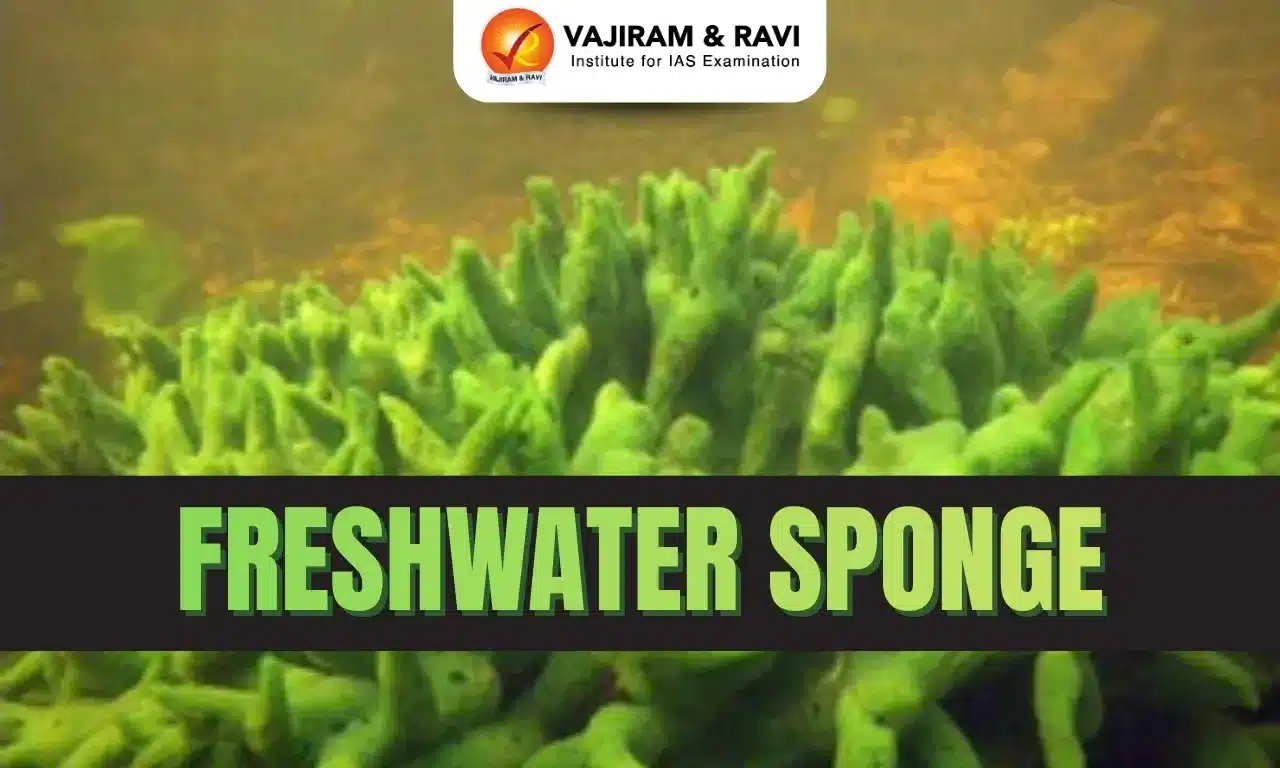
Recently, scientists from Bose Institute studied freshwater sponges from the Sundarban delta and identified their potential to act as bioindicators of toxic metal pollution.

About Freshwater Sponge

  • Freshwater sponges are the earliest multicellular eukaryotes.
  • They filter large volumes of water and are vital for ecosystem health.
  • Habitat: They grow on sturdy submerged objects in clean streams, lakes, and rivers.
  • Sponges are filter feeders. They obtain food from the flow of water through their bodies and from symbiotic algae. 
  • Appearance: Many freshwater sponges appear green because they contain algae, which live on sponges in a symbiotic relationship.
  •  Reproduction: They can reproduce sexually, or asexually.
    • When a small piece is broken off and grows into new sponges.
    • The sponge forms gemmules—tiny reproductive spheres that can overwinter and later hatch and form new sponges.
  • Ecological Role: They act both as bioindicators and absorbents of toxic metals like arsenic, lead, and cadmium and can be a promising solution for bioremediation.
  • They are effective bio indicators for monitoring water quality and pollution levels in estuarine and freshwater ecosystems.

Source: PIB

Freshwater Sponge FAQs

Q1: What is the habitat of Freshwater Sponge?

Ans: Freshwater lakes and rivers

Q2: Which phylum do Freshwater Sponges belong to?

Ans: Porifera

Kheoni Wildlife Sanctuary

Kheoni Wildlife Sanctuary

Kheoni Wildlife Sanctuary Latest News

Recently, the forest department officially recorded sightings of two Wild Dogs (Dholes) in Kheoni wildlife sanctuary.

About Kheoni Wildlife Sanctuary

  • Location: It is located in the state of Madhya Pradesh.
  • It is joined through the Ratapani Tiger Reserve corridors with.
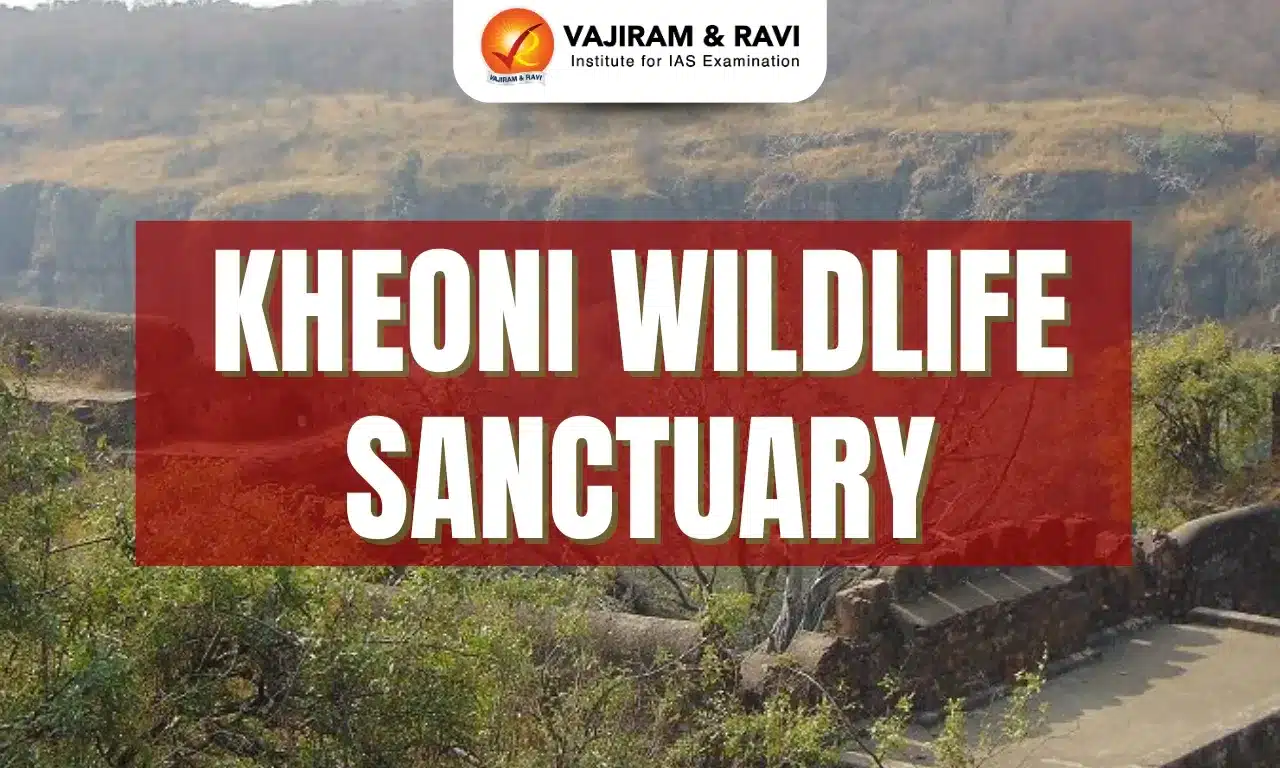
  • Vegetation: The sanctuary’s habitat consists of dry deciduous forests.
  • Fauna: Its wildlife includes jackals, palm civets, Leopards, Sloth bears, Hyenas, Nilgai, and many bird species.
  • Flora: Teak, Tendu, Bamboo, Kusum, Kanak Champa, Ber, Karanj, Kaim, Kadamb etc.

Key Facts about Dhole

  • It is a wild canid carnivorous species.
  • Other Names: Indian wild dog, whistling dog, red wolf, red dog and mountain wolf.
  • Habitat:  Dholes are animals that inhabit dense jungles, steppes, mountains, scrub forests, and pine forests.

Distribution of Asiatic Wild Dog

  • They are found throughout Central, Eastern Asia and Southeastern Asia. 
  • In India, the Western and Eastern Ghats is a stronghold region for dholes.

Conservation status of Asiatic Wild Dog

  • IUCN Red List: Endangered
  • CITES: Appendix II
  • Wildlife Protection Act 1972: Schedule II.

Source: TOI

Kheoni Wildlife Sanctuary FAQs

Q1: Where is Kheoni Wildlife Sanctuary located?

Ans: Madhya Pradesh

Q2: What is the primary habitat of Kheoni Wildlife Sanctuary?

Ans: Tropical dry deciduous forest

National Council of Science Museums (NCSM)

National Council of Science Museums (NCSM)

National Council of Science Museums Latest News

The National Council of Science Museums (NCSM) recently received two prestigious PRSI National Awards 2025 from the Public Relations Society of India (PRSI).

About National Council of Science Museums

  • It is an autonomous society under the Ministry of Culture, Government of India.
  • It was formed on April 4, 1978.
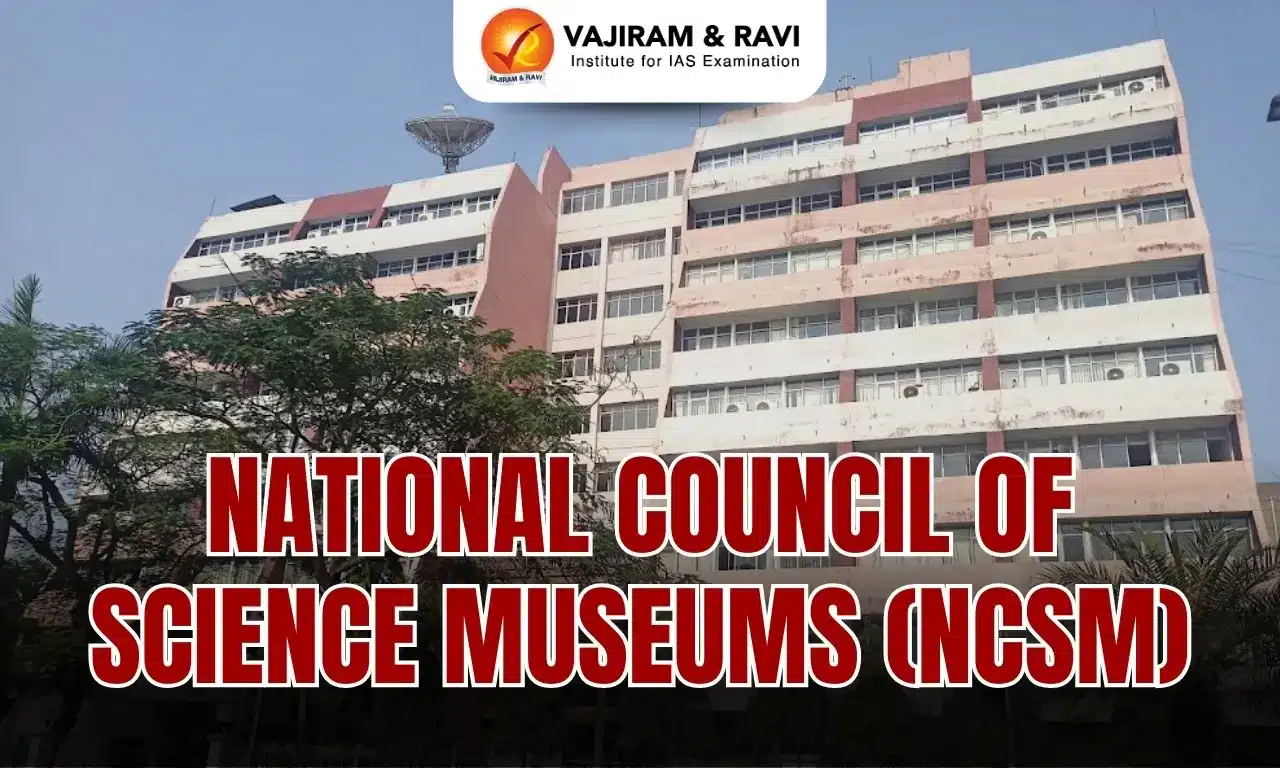
  • NCSM, with its headquarters in Kolkata, has its own network of 26 science museums/centres spread across the country and a Central Research & Training Laboratory (CRTL) in Kolkata. 
  • CRTL is the Council’s central hub for professional training, research, and development. 
  • National-Level Centres of NCSM:
    • Science City, Kolkata
    • Birla Industrial and Technological Museum (BITM), Kolkata 
    • Nehru Science Centre, Mumbai
    • Visvesvaraya Industrial and Technological Museum (VITM), Bangalore 
    • National Science Centre, Delhi
    • National Science Centre, Guwahati 
  • Except for Science City, Kolkata, all have regional and sub-regional/district science centres called Satellite Units (SUs).
  • In addition, NCSM develops Science Centres/museums for different States and Union Territories.
  • NCSM has also developed several centres and galleries for different Govt. organisations such as ONGC, BEL, ICAR, etc.
  • It has also collaborated internationally for the development of Museum/Science Centres or for galleries such as the Rajiv Gandhi Science Centre, Mauritius; ‘India’ gallery on Buddhism at the ‘International Buddhist Museum’, Kandy, Sri Lanka; etc.
  • It also strives to communicate science to empower people through its Mobile Science Exhibitions, Lectures and Demonstrations, Training and Workshops, Publications, etc. 
  • Today, NCSM forms the largest network of science centres and museums in the world under a single administrative umbrella.

Source: PIB

National Council of Science Museums (NCSM) FAQs

Q1: What is the National Council of Science Museums (NCSM)?

Ans: It is an autonomous society under the Ministry of Culture, Government of India.

Q2: Where is the headquarters of the National Council of Science Museums (NCSM) located?

Ans: Kolkata

Q3: How many science museums/centres are currently operated by National Council of Science Museums (NCSM) across India?

Ans: 26

Q4: What makes National Council of Science Museums (NCSM) unique globally?

Ans: It forms the largest network of science centres and museums under a single administrative body.

Three New Moth Species

Three New Moth Species

Three New Moth Species Latest News

Researchers recently identified three previously unknown species of moths that had remained hidden in the high-altitude landscapes of the Himalayas.

About Three New Moth Species

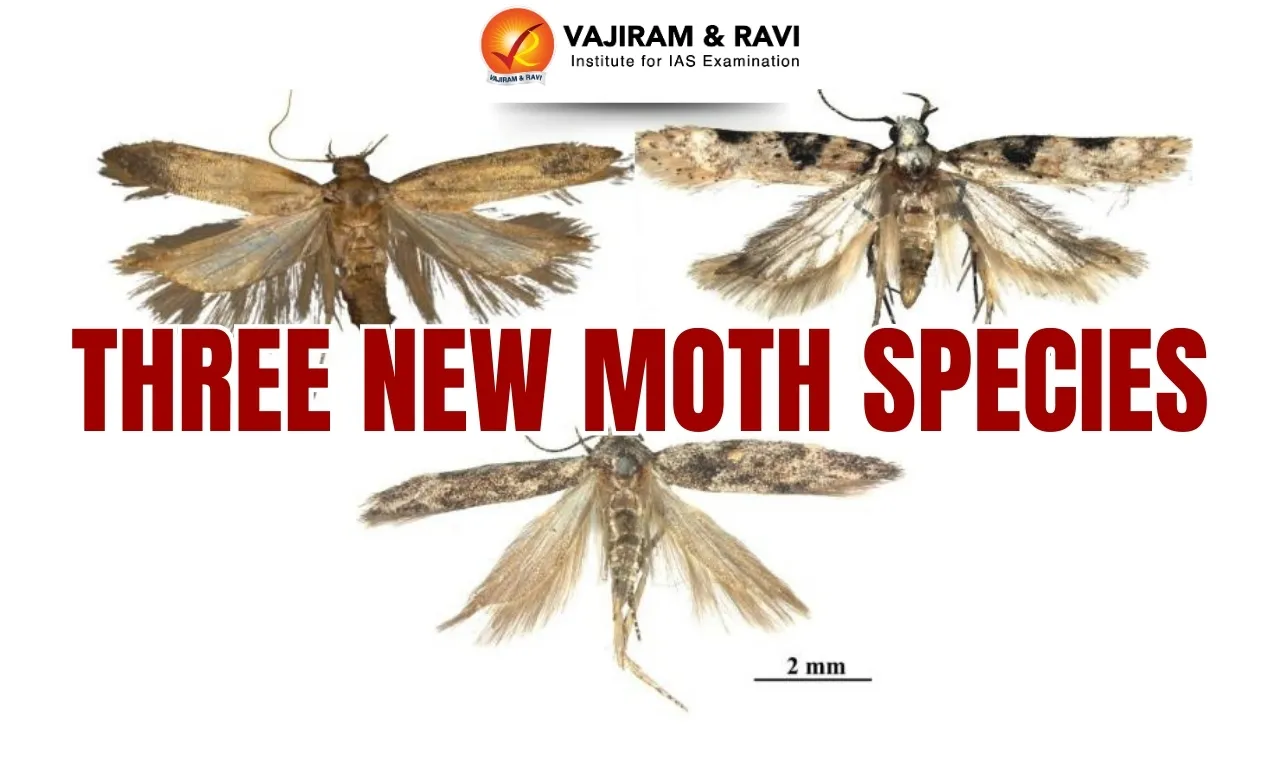
  • The three species are Gelechia bilobuncusa, Gelechia adi, and Istrianis ladakhensis.
  • They were discovered in the high-altitude landscapes of the Himalayas. 
  • Gelechia bilobuncusa:
    • It was found in Himachal Pradesh. 
    • Its name is a scientific nod to the unique bilobed shape of its uncus, a part of the male genitalia. 
    • It is characterised by pale brown wings with irregularly scattered black scales.
  • Gelechia adi:
    • It was discovered in the Ramsing area of Arunachal Pradesh.
    • It is named in honour of the local Adi tribe inhabiting the Upper Siang district. 
    • It is visually distinct, featuring ivory-white forewings interrupted by a dramatic black streak across the base and triangular spots.
  • Istrianis ladakhensis:
    • It is named after its type locality in Ladakh. 
    • This moth is adapted to the high-altitude environment, sporting light brown wings mottled with dark grey, white, and orange scales, distinguishing it from its closest relatives in the genus.

What are Moths?

  • Moths are insects that belong to the order Lepidoptera, which they share with butterflies.
  • There are around 160,000 known species of moths, far outnumbering butterfly species.
  • Highly adapted, they live in all but polar habitats. 
  • Moths vary greatly in size, ranging in wingspan from about 4 mm (0.16 inch) to nearly 30 cm (about 1 foot).
  • They often have duller colors compared to butterflies, which helps with camouflage. Some, like the luna moth or atlas moth, are vividly colored.
  • Moth antennae are often feathery, unlike the thin and clubbed antennae of butterflies.
  • Most moths are active at night, but some are diurnal.
  • The larvae and adults of most moth species are plant eaters.

Source: RM

Three New Moth Species FAQs

Q1: Gelechia bilobuncusa was discovered in which Indian state?

Ans: Himachal Pradesh

Q2: Gelechia adi is named in honour of which indigenous group?

Ans: It is named in honour of the local Adi tribe inhabiting the Upper Siang district of Arunachal Pradesh

Q3: What is the wing coloration of Istrianis ladakhensis?

Ans: It has light brown wings mottled with dark grey, white, and orange scales.

Q4: What type of environment is Istrianis ladakhensis adapted to?

Ans: It is adapted to high-altitude Himalayan environments.

Hormuz Island

Hormuz Island

Hormuz Island Latest News

A breathtaking natural phenomenon recently turned Iran's Hormuz Island into a global talking point, as its coastlines transformed into a surreal blood-red landscape overnight.

About Hormuz Island

  • It is a hilly island of Iran on the Strait of Hormuz, between the Persian Gulf and the Gulf of Oman, 8 km off the coast.
  • It covers an area of 41.9 sq. km. 
  • It is known for its unique scenery and colorful soil, which has earned it the nickname, “Rainbow Island”.
  • It is covered by sedimentary rock and volcanic ash.
  • Because of the lack of precipitation, the soil and water on the island are salty
  • The landscape of Hormuz Island is mostly red in color. This is due to a high concentration of iron oxide, especially a mineral called hematite
  • Whenever waves from the ocean hit the sands of Hormuz Island, those waves turn pink. 
  • But although the island is well-known for its red landscape, it is also known for various other colors.
  • Colors to be seen in the island’s sand and soil include red, gold, silver, and white. 
  • It is mostly barren. Hormuz village is the only permanent settlement. 
  • Fishing is the main source of income on the island.
  • People native to the island belong to an ethnic group known as the Bandari.

Source: NDTV

Hormuz Island FAQs

Q1: Where is Hormuz Island located?

Ans: It is located in Iran, on the Strait of Hormuz between the Persian Gulf and the Gulf of Oman.

Q2: Why is Hormuz Island referred to as the “Rainbow Island”?

Ans: Because of its colorful soil and sands, which display shades like red, gold, silver, and white.

Q3: Which mineral is primarily responsible for the red color of Hormuz Island’s landscape?

Ans: Hematite (iron oxide).

Q4: Which ethnic group is native to Hormuz Island?

Ans: The Bandari people.

Regional Rural Banks (RRBs)

Regional Rural Banks (RRBs)

Regional Rural Banks (RRBs) Latest News

The Finance Ministry recently unveiled a new logo for Regional Rural Banks (RRBs) to signify a single and unified brand identity.

About Regional Rural Banks (RRBs)

  • RRBs were established in India to promote financial inclusion in rural areas. 
  • They are formed in collaboration by the Central Government, State Governments, and Sponsoring Commercial Banks to give loans to rural areas.
  • Their mission is to fulfill the credit needs of the relatively unserved sections in rural areas: small and marginal farmers, agricultural labourers, and socio-economically weaker sections.
  • Origin:
    • It was established under the Regional Rural Banks Act, 1976, on the recommendation of the Narasimham Committee on Rural Credit (1975). 
    • Rathama Grameen Bank was the first RRB bank and was established on 2nd October 1975.
  • RRBs were configured as hybrid microbanking institutions, combining the local orientation and small-scale lending culture of the cooperatives with the business culture of commercial banks.
  • The RRBs mobilize financial resources from rural/semi-urban areas and grant loans and advances mostly to small and marginal farmers, agricultural labourers, artisans, and small entrepreneurs. 
  • RRBs perform various functions in the following heads:
    • Providing banking facilities to rural and semi-urban areas.
    • Carrying out government operations like the disbursement of wages of MGNREGA workers, distribution of pension, etc.
    • Providing Para-Banking facilities like locker facilities, debit and credit cards, mobile banking, internet banking, UPI, etc.
  • The RBI has set a Priority Sector Lending (PSL) target of 75% of total outstanding advances for RRBs as against 40% for Scheduled Commercial Banks. 
  • Ownership: Sponsored by the Commercial Banks, the equity of RRBs is held by the central government, concerned state government, and the sponsor bank in the proportion of 50:15:35. 
  • The area of operation of RRBs is limited to the area as notified by the Government of India, covering one or more districts in the State. 
  • Regulation: Regional Rural Banks are regulated by the RBI and supervised by the National Bank for Agriculture and Rural Development (NABARD).
  • Sources of Funds: It comprises owned funds, deposits, borrowings from NABARD, sponsor banks and other sources, including SIDBI and the National Housing Bank.
  • Management: The Board of Directors manages these banks, overall affairs, which consists of one Chairman, three Directors as nominated by the Central Government, a maximum of two Directors as nominated by the concerned State Government, and a maximum of three Directors as nominated by the sponsor bank.
  • At present, 28 RRBs operate across the country with a vast network of over 22 thousand branches in more than 700 districts.

Source: TH

Regional Rural Banks (RRBs) FAQs

Q1: Why were Regional Rural Banks (RRBs) established in India?

Ans: To promote financial inclusion and provide credit to rural and underserved sections of society.

Q2: On whose recommendation were Regional Rural Banks (RRBs) established?

Ans: The Narasimham Committee on Rural Credit (1975).

Q3: Which was the first Regional Rural Bank in India?

Ans: Prathama Grameen Bank (established on 2nd October 1975).

Q4: What is the main mission of RRBs?

Ans: To meet the credit needs of small and marginal farmers, agricultural labourers, and socio-economically weaker sections in rural areas.

Q5: Who owns the equity of Regional Rural Banks (RRBs) and in what ratio?

Ans: Central Government (50%), State Government (15%), and Sponsor Bank (35%).

White Spot Disease

White Spot Disease

White Spot Disease Latest News

Recently, the Minister of Fisheries, Animal Husbandry and Dairying, Government of India informed the Rajya  Sabha about the white spot disease.

About White Spot Disease

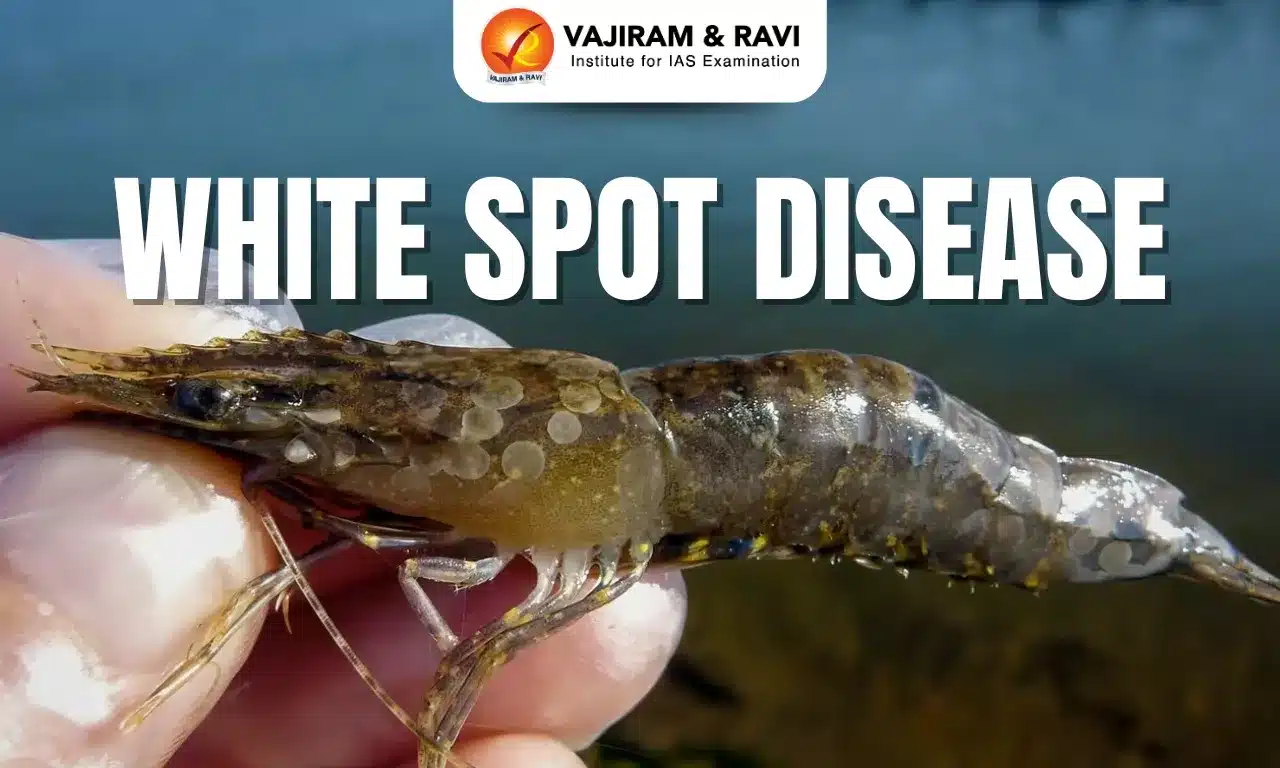
  • It is a highly contagious viral infection that affects crustaceans such as prawns, yabbies and crabs.
  • Causative Agent:  It is caused by a virus called as White Spot Syndrome Virus (WSSV). This is a double stranded DNA virus of the genus Whispovirus and family Nimaviridae.
  • Host range: All decapod crustaceans (order Decapoda), including prawns, lobsters and crabs from marine, brackish or freshwater environments, are considered susceptible to infection.
  • Symptoms: The affected shrimp exhibit anorexia, lethargy, reddish discoloration and presence of circular white spots on the carapace and other exoskeletal parts.
  • Transmission: It can be transmitted both horizontally as well as vertically.
    • Vertical transmission: It occurs from infected brood stock to postlarvae.
    • Horizontal transmission: It is through carrier animals or through cannibalism of infected organisms.
  • It has been officially reported from Bangladesh, Burma (Myanmar), Cambodia, China, Hong Kong, India, Indonesia, Iran, Japan, Malaysia, the Philippines, the Republic of Korea, Singapore, Thailand and Vietnam.

Source: PIB

White Spot Disease FAQs

Q1: What is the primary symptom of White Spot Disease?

Ans: hite spots on the skin and gills on species.

Q2: Which fishes are susceptible to White Spot Disease?

Ans: Both Freshwater fish and Marine fish

Telecom Technology Development Fund (TTDF) Scheme

Telecom Technology Development Fund (TTDF) scheme

Telecom Technology Development Fund (TTDF) Scheme Latest News

The Minister of State for Communications and Rural Development recently said that as of 10.12.2025, 136 projects amounting to Rs 542.22 crores have been approved under the Telecom Technology Development Fund (TTDF) Scheme to different IITs, NITs, MSMEs, startups, and research institutions.

About Telecom Technology Development Fund (TTDF) Scheme

  • It is a flagship scheme of the Department of Telecommunications (DoT) launched in 2022.
  • It aims to fund research and development (R&D) in rural-specific communication technology applications.
  • It encourages collaboration among academia, startups, research institutes, and industry stakeholders to drive innovation.
  • The scheme provides milestone-based financial assistance to eligible entities, ensuring ease of compliance and adequate funding.
  • It supports the development of state-of-the-art telecom solutions in key sectors such as education, agriculture, health, and water management. 
  • Funding under the scheme is provided through the Digital Bharat Nidhi (formerly known as the Universal Service Obligation Fund (USOF)).
    • It facilitates the development, pilot testing, and adoption of new telecom technologies, particularly for deployment in rural and remote areas.
  • Eligibility Criteria for TTDF:
    • Domestic Company(ies) with a focus on telecom R&D, Use case development.
    • Startups/MSMEs
    • Academic institutions.
    • R&D institutions, Section 8 companies/societies, Central & State government entities/PSUs/Autonomous Bodies/SPVs/Limited liability partnerships- with a focus on telecom R&D.
    • Collaborative consortium of the above entities.
    • For Pilots: The above entities may partner, inter alia, with PSUs, TSPs, Central/State Government entities, government autonomous bodies, SPVs, etc.
    • For Pilot application: Minimum Technology Readiness Level (TRL) 7 is required.
  • Some exclusions also exist:
    • Domestic companies receiving grants must maintain their ‘Domestic Company’ status for at least two years after project completion.
    • If a foreign investor or foreign Successor-in-Interest acquires a majority stake in the company within two years post-project, they must repay double the grant amount.
    • Expenditures on items like land and buildings are not eligible under the fund.
    • Preference is given to projects with minimum TTRLs, so very early-stage or theoretical research without clear application may be excluded.

Source: PIB

Telecom Technology Development Fund (TTDF) Scheme FAQs

Q1: When was the Telecom Technology Development Fund (TTDF) Scheme launched?

Ans: It was launched in 2022.

Q2: What is the primary objective of the Telecom Technology Development Fund (TTDF) Scheme?

Ans: To fund R&D in rural-specific communication technology applications.

Q3: Through which fund is Telecom Technology Development Fund (TTDF) Scheme financially supported?

Ans: Digital Bharat Nidhi (formerly Universal Service Obligation Fund).

Q4: Are expenditures on land and buildings eligible under Telecom Technology Development Fund (TTDF) Scheme?

Ans: No, they are not eligible.

Enquire Now