Export Preparedness Index 2024

Export Preparedness Index 2024

Export Preparedness Index 2024 Latest News

Recently, NITI Aayog released the Export Preparedness Index (EPI) 2024.

About Export Preparedness Index 2024

  • It is a comprehensive assessment of export readiness across India’s States and Union Territories (UTs).
  • It recognises the diversity of subnational economic structures and their critical role in advancing India’s global trade ambitions.
  • The first edition of the EPI was published in August 2020 and this is the 4th edition.
  • Framework and Coverage: It is structured around four pillars, further disaggregated into 13 sub-pillars and 70 indicators. Four Pillars are:
    • Export Infrastructure (20% Weightage)
    • Business Ecosystem (40% Weightage)
    • Policy and Governance (20% Weightage)
    • Export Performance (20% Weightage)
  • Classification of States and Union Territories: States and UTs have been categorised into Large States & Small States, North East States and Union Territories.
  • Within each category, they are further classified as
    • Leaders: States/UTs demonstrating relatively high export preparedness
    • Challengers: States/UTs with moderate preparedness and scope for improvement
    • Aspirers: States/UTs at early stages of export ecosystem development
  • Under EPI 2024, the following States and UTs have emerged as leading performers in their respective categories:
    • Leading Performers – Export Preparedness Index (EPI) 2024
      • Large States: Maharashtra, Tamil Nadu, Gujarat,Uttar Pradesh, Andhra Pradesh
      • Small States, North Eastern States & Union Territories: Uttarakhand, Jammu and Kashmir, Nagaland, Dadra and Nagar Haveli & Daman and Diu, Goa

Source: PIB

Export Preparedness Index 2024 FAQs

Q1: Which state topped the Export Preparedness Index 2024 in the large states category?

Ans: Maharashtra

Q2: How many pillars is the Export Preparedness Index 2024 structured around?

Ans: 4

Huntington’s Disease (HD)

Huntington’s Disease

Huntington's Disease Latest News

Huntington's disease (HD) has long been impossible to cure, but new research is finally giving fresh hope.

About Huntington's Disease

  • It is a rare hereditary disorder in which brain cells, or neurons, in certain areas of your brain start to break down. 
    • The destruction of nerve cells happens in the basal ganglia, or the region of your brain that regulates your body’s movements.
    • It also affects the brain cortex (surface of your brain) that regulates your thinking, decision-making, and memory.
  • As the neurons degenerate, the disease can lead to emotional disturbances, loss of intellectual abilities, and uncontrolled movements.
  • What causes HD?
    • A genetic mutation of the HTT gene causes HD. If one of your parents has HD, you have a 50% chance of also developing it.
    • The HTT gene makes a protein called huntingtin. This protein helps your nerve cells (neurons) function.
    • If you have HD, your DNA doesn’t have all the information needed to make the huntingtin protein.
    • As a result, these proteins grow in an abnormal shape and destroy (instead of help) your neurons.
    • Your neurons die because of this genetic mutation.
  • How common is HD?
    • HD affects an estimated 3 to 7 out of every 100,000 people, most often people of European ancestry (biological family comes from European descent).
    • There are two main types of HD:
    • Adult-onset: This is the most common type. Symptoms usually start after age 30.
    • Early-onset (juvenile Huntington’s disease): This rare type affects children and teenagers. Symptoms appear before age 20.
  • Symptoms:
    • Common symptoms include uncontrollable dance-like movements (chorea) and abnormal body postures, as well as problems with behavior, emotion, thinking, and personality.
    • Other symptoms may include tremor (unintentional back-and-forth movement in the person’s muscles) and unusual eye movements. The eye movements can happen early in the disease.
    • These symptoms get worse over time.
    • As HD progresses, you will need constant assistance and supervision because of the debilitating nature of the disease.
    • People usually die from the disease within 15 to 20 years of developing symptoms.
  • Treatment: There is no treatment that can stop or reverse HD, but health care providers can offer medications to help with certain symptoms.

Source: SA

Huntington's Disease FAQs

Q1: What is Huntington’s disease (HD)?

Ans: It is a rare hereditary disorder in which certain brain cells gradually break down.

Q2: Which part of the brain is primarily affected in Huntington’s disease?

Ans: The basal ganglia, which regulate body movements, are primarily affected.

Q3: What are the major effects of neuron degeneration in Huntington’s disease?

Ans: Neuron degeneration leads to emotional disturbances, loss of intellectual abilities, and uncontrolled movements.

Q4: What causes Huntington’s disease?

Ans: Huntington’s disease is caused by a genetic mutation in the HTT gene.

Q5: Is there a cure or Huntington’s disease?

Ans: No, there is currently no treatment that can stop or reverse Huntington’s disease, though medications can help manage symptoms.

Henley Passport Index

Henley Passport Index

Henley Passport Index Latest News

The 2026 Henley Passport Index has shown significant shifts in global travel mobility, with Asia continuing to dominate the top ranks.

About Henley Passport Index

  • It is a popular ranking of global passports that measures passport strength by the number of destinations that holders can visit without a prior visa.
  • The index ranks countries based on statistics provided by the International Air Transport Association (IATA).
  • It started in 2006 as the Henley & Partners Visa Restrictions Index (HVRI).
  • The index includes 199 different passports and 227 different travel destinations.
  • Significance: The stronger the passport, the more countries its holders can enter without a prior visa — a privilege that reflects diplomatic ties, economic influence, and international trust.

Key Highlights of Henley Passport Index 2026

  • India’s passport also saw improvement, climbing five spots to 80th position
  • The top three passports in the world come from Asia. Singapore ranks first, while Japan and South Korea are tied for second place.
  • Afghanistan is at the bottom of the list, ranked 101st, with visa-free access to 24 destinations.

Source: ET

Henley Passport Index FAQs

Q1: What is India's rank in the Henley Passport Index 2026?

Ans: 80th

Q2: What is the Henley Passport Index?

Ans: A ranking of passports by visa-free access

Miyawaki Method

Miyawaki Method

Miyawaki Method Latest News

The Miyawaki method can be used in cities where green space has thinned out over decades.

About Miyawaki Method

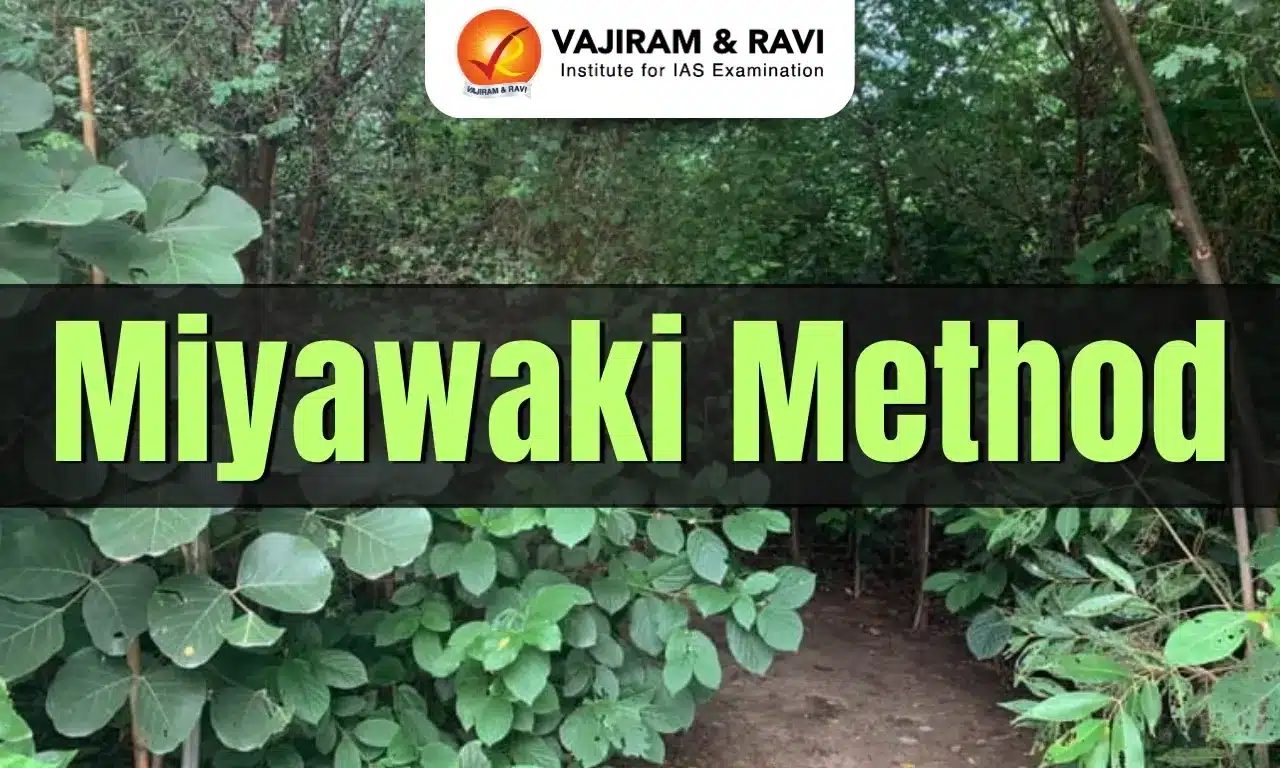
  • This method of afforestation was developed by renowned Japanese botanist Akira Miyawaki in the 1970s.
  • It is a revolutionary method for creating dense forests in limited spaces.
  • It is often referred to as the ‘pot plantation method’, it involves planting trees and shrubs close to one another to accelerate their growth.  
  • The competition for sunlight encourages trees to grow more vertically and less laterally.
  • It emphasises planting only plant species native to the local area. This fosters a more resilient and naturally balanced ecosystem.
  • Plants grow 10 times faster with this technique, making it a practical solution for urban areas.
  • They are much denser and house much more biodiversity — just like ancient, primordial forests. 
  • For the first two to three years, the forest requires regular watering, weeding, and monitoring. 
  • After this period, the forest becomes self-sustaining and requires minimal intervention
  • Advantages:
    • It improves soil quality, enhances biodiversity, and accelerates forest development.
    • Trees planted using the Miyawaki technique absorb more carbon, grow faster, and support richer biodiversity compared to traditional forests.
    • In urban settings, this technique has transformed polluted, barren lands into green ecosystems.
    • It has successfully managed industrial waste, reduced dust and foul odours, and curbed air and water pollution.
    • Additionally, it prevents soil erosion and promotes ecological balance, making it an effective tool for environmental restoration.

Source: TOI

Miyawaki Method FAQs

Q1: Who developed the Miyawaki Method of afforestation?

Ans: The Miyawaki Method was developed by Japanese botanist Akira Miyawaki in the 1970s.

Q2: What is the primary objective of the Miyawaki Method?

Ans: The primary objective is to create dense forests in limited spaces.

Q3: How does close planting affect tree growth in the Miyawaki Method?

Ans: Competition for sunlight encourages trees to grow vertically rather than laterally.

Q4: Why is the Miyawaki Method suitable for urban areas?

Ans: It requires limited space and enables rapid forest growth.

NPS Vatsalya Scheme

NPS Vatsalya Scheme

NPS Vatsalya Scheme Latest News

Recently, the Pension Fund Regulatory and Development Authority (PFRDA) has issued the NPS Vatsalya Scheme Guidelines 2025.

About NPS Vatsalya Scheme

  • It is a contributory savings and long term financial security scheme designed exclusively for minors.

Key Features of NPS Vatsalya Scheme

  • Eligibility: It is open to all Indian citizens, including NRI/OCI, below 18 years of age.
  • Account Operation: Account opened in the name of the minor and operated by the guardian
  • Contribution: Minimum initial and annual contribution ₹250 and no maximum limit on contribution
    • The contribution can also be gifted by relatives and friends. 
  • Pension Fund Selection: Guardian can choose any one Pension Fund registered with PFRDA 
  • Partial Withdrawal Provisions: It is allowed after completion of three years from account opening
    • Up to 25% of own contributions (excluding returns) is permitted for education, medical treatment and specified disabilities
    • It is allowed twice before 18 years and twice between 18-21 years, subject to conditions. 

Source: PIB

NPS Vatsalya Scheme FAQs

Q1: Who is eligible to open an NPS Vatsalya account?

Ans: Minor Indian citizens below 18 years

Q2: What happens to the NPS Vatsalya account when the child turns 18?

Ans: It is converted to a regular NPS account

Gharials

Gharials

Gharial Latest News

Despite significant existential threats, a comprehensive survey across the Ganga River basin recently revealed a population of 3,037 gharials (Gavialis gangeticus), the critically endangered fish-eating crocodile, inhabiting 13 of the surveyed rivers.

About Gharial

  • It is a freshwater crocodile belonging to the Crocodylia Order and Crocodylidae Family.
  • Scientific Name: Gavialis gangeticus
  • The name ‘gharial’ comes from the Hindi word ghara, meaning pot or vessel, referring to the bulbous snout tip of adult males, which resembles an inverted pot.

Gharial Distribution 

  • Its range spanned the rivers of Bangladesh, Bhutan, India, Myanmar, Nepal, and Pakistan.
  • Their major population occurs in three tributaries of the Ganga River: the Chambal and Girwa Rivers in India and the Rapti-Naryani River in Nepal.
  • The Gharial reserves of India are located in three States: Uttar Pradesh, Madhya Pradesh, and Rajasthan.

Gharial Features

  • It is one of the largest crocodilian species, with males reaching 16 to 20 feet (5 to 6 meters) in length. Females typically grow to lengths of 11.5 to 15 feet (3.5 to 4.5 meters).
  • They have thick skin covered with smooth epidermal scales that do not overlap. 
  • The snout of the gharial is uniquely the thinnest and most elongated among all the crocodilians.
  • In addition, the adult males sport a large bulb at the tip of their snout, called the ‘ghara’. 
  • It is also the most aquatic of all crocodilians, for it never moves far from the water.  Individuals typically only leave the water to bask and nest on sandbanks.
  • Reproduction: They mate during November–January and lay eggs March–May.

Gharial Conservation Status

It is classified as 'Critically endangered' under the IUCN Red List.

Source: NIE

Gharial FAQs

Q1: What is Gharial?

Ans: It is a freshwater crocodile belonging to the Crocodylia Order and Crocodylidae Family.

Q2: Which physical feature gives the gharial its name?

Ans: The bulbous structure called the ‘ghara’ at the tip of the snout of adult males gives the gharial its name.

Q3: What was the historical distribution range of the gharial?

Ans: Historically, gharials were found in rivers of Bangladesh, Bhutan, India, Myanmar, Nepal, and Pakistan.

Q4: Where does the major population of gharials occur today?

Ans: The major population occurs in the Chambal and Girwa Rivers in India and the Rapti–Naryani River in Nepal.

Q5: What is the conservation status of the gharial according to the IUCN Red List?

Ans: The gharial is listed as Critically Endangered on the IUCN Red List.

Asola Bhatti Wildlife Sanctuary

Asola Bhatti Wildlife Sanctuary

Asola-Bhatti Wildlife Sanctuary Latest News

The Delhi government recently said that over 6,500 monkeys rescued by civic bodies from residential and commercial areas across the city have been shifted to Asola-Bhatti Wildlife Sanctuary in the last five years.

About Asola-Bhatti Wildlife Sanctuary

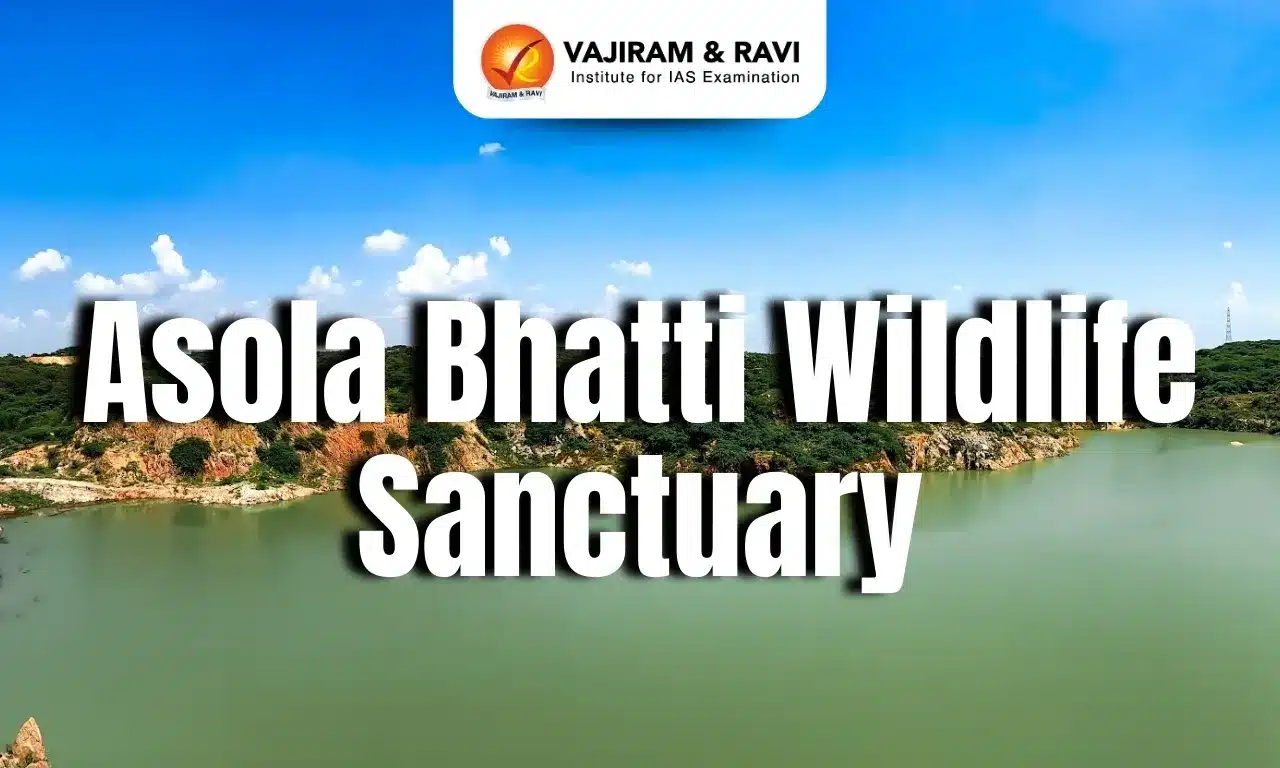
  • Asola-Bhatti Wildlife Sanctuary, covering 32.71 sq.km. of area on the Southern Delhi Ridge of the Aravalli hill range on the Delhi-Haryana border, lies in Southern Delhi as well as the northern parts of Faridabad and Gurugram districts of Haryana state.
  • It is part of the Northern Aravalli Leopard Wildlife Corridor. 
  • In Delhi, Sanctuary passes through historical sites such as Chattarpur Temple, Tughlakabad, Surajkund, Anangpur Dam, and Adilabad Ruins.
  • Flora
    • The semi-arid forest vegetation of the Aravali region provides homes to certain plant species. 
    • It includes dhak (flame of the forest), babool (Acacia), khejri, and various shrubs and grasses that are well-adapted to dry conditions.
  • Fauna
    • It is home to a wide variety of animals, including the Indian leopard, jackal, Indian blue bull, sambar deer, wild boar, and mongoose. 
    • It is also a birdwatcher’s paradise, with over 200 species of birds spotted here, including the Indian peafowl, crested serpent-eagle, and Indian roller.
    • Reptiles such as the monitor lizard, Indian cobra, and Russell’s viper can also be found here.

Source: WEEK

Asola-Bhatti Wildlife Sanctuary FAQs

Q1: Where is the Asola-Bhatti Wildlife Sanctuary located?

Ans: It is located on the Southern Delhi Ridge of the Aravalli hill range along the Delhi–Haryana border.

Q2: What is the total area of the Asola-Bhatti Wildlife Sanctuary?

Ans: The sanctuary covers an area of 32.71 square kilometres.

Q3: Which major hill range is the Asola-Bhatti Wildlife Sanctuary a part of?

Ans: It is part of the Aravalli hill range

Q4: Which plant species are commonly found in the sanctuary?

Ans: Common plant species include dhak (flame of the forest), babool (Acacia), khejri, and various shrubs and grasses.

Molecular Cloud

Molecular Cloud

Molecular Cloud Latest News

Recently, astronomers studied the L328 molecular cloud, located around 700 light years away, to map the magnetic fields at multiple scales.

About Molecular Cloud

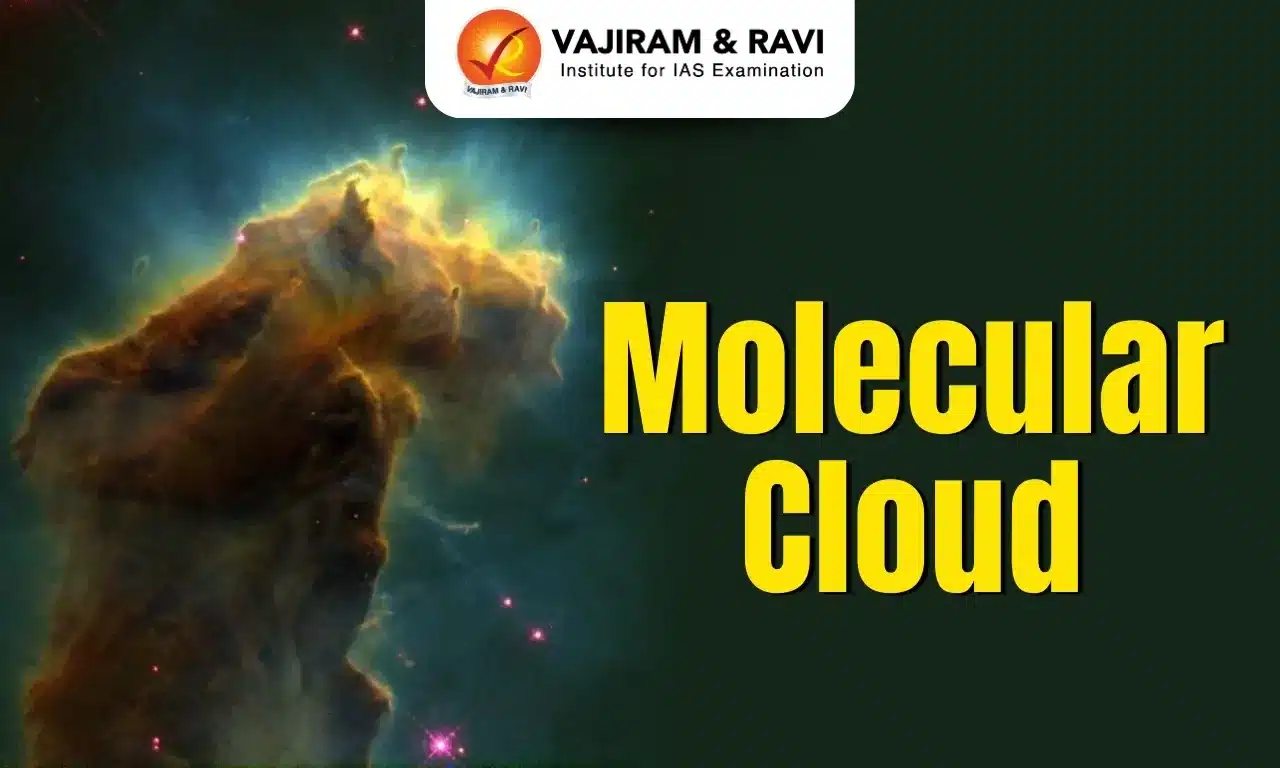
  • It is an interstellar cloud of gas and dust in which molecules can form, the most common of which is hydrogen (H2).

Properties of Molecular Cloud

  • These are characterized by their low temperatures (below 40 K, colder than liquid nitrogen) and relatively high densities (103–104 particles per cubic cm).
  • Size: The size of these clouds can be from a few light years up to 600 light years. Their total mass can reach several million solar masses.
  • Molecular clouds with dimensions of more than about 15 light years are also called giant molecular clouds.
  • The complex interplay between three key forces, namely gravity, magnetic fields, and turbulence, determines how these clouds collapse to form stars.
  • The central regions of these clouds are completely hidden from view by dust
  • They are the raw material of stars and planets. These clouds do not last for a very long time.
  • After the new stars are born, their solar winds blow away the remaining gas and dust. 

Significance of Molecular Cloud

  • Molecular clouds are so important because they are the raw material of stars and planets. 
  • It is thought to be the birthplace of stars and planetary systems through processes of contraction, condensation, and accretion.

Source: PIB

Molecular Cloud FAQs

Q1: What is the primary component of molecular clouds?

Ans: Molecular hydrogen

Q2: What is a molecular cloud?

Ans: A region of space with cold, dense molecular gas and dust

Havana Syndrome

Havana Syndrome

Havana Syndrome Latest News

Recently, a covertly acquired device by the Pentagon that emits pulsed radio waves is under US testing, reopening questions around Havana Syndrome.

About Havana Syndrome

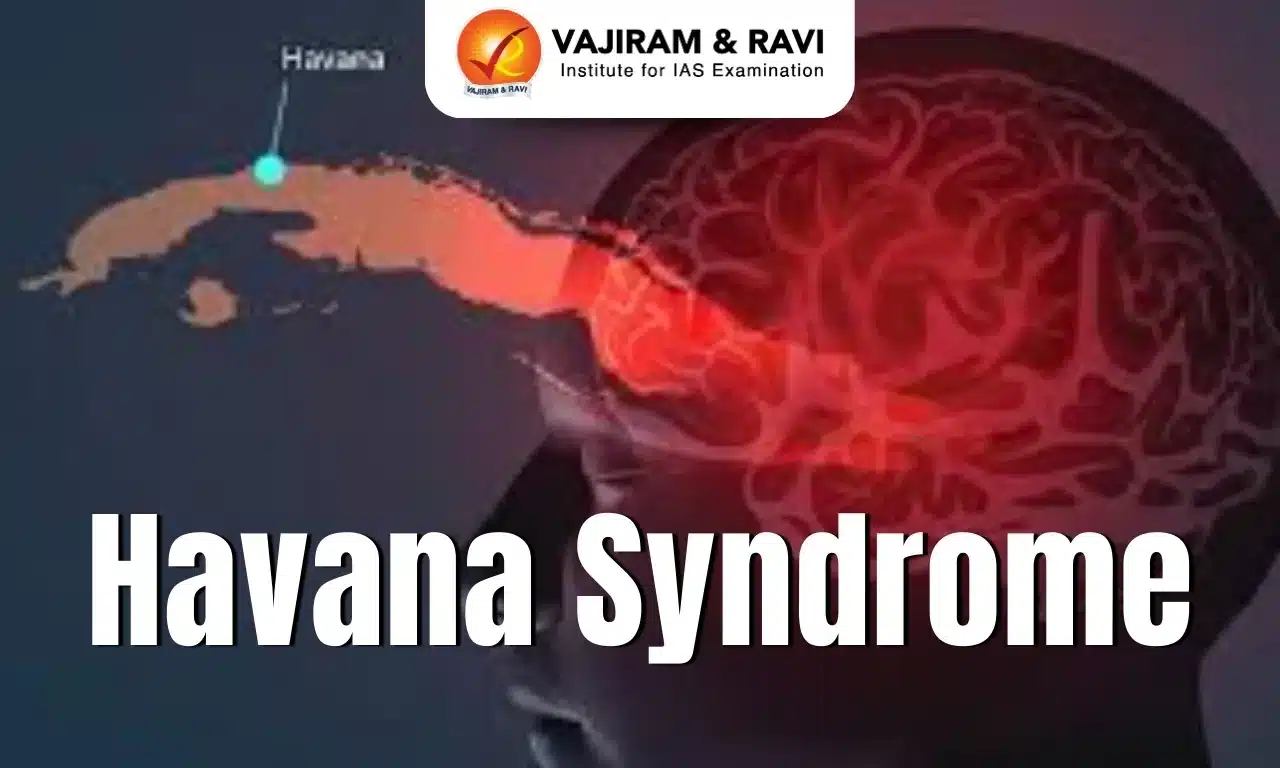
  • It refers to a set of mental health symptoms that are said to be experienced by United States intelligence and embassy officials in various countries.
  • It does not mean a unique medical condition, but rather a set of symptoms that are usually experienced together whose origins may be difficult to confirm.
  • Symptoms: Such as hearing certain sounds without any outside noise, nausea, vertigo and headaches, memory loss and balance issues.

Origin of Havana Syndrome

  • It first emerged in late 2016 when US diplomats stationed in Havana, Cuba.
  • This was about a year after the US opened its embassy in the capital city of Havana after ties between the two countries were normalised in 2015.
  • Some US intelligence officials and members of the staff at the embassy began experiencing sudden bursts of pressure in their brains followed by persistent headaches, feelings of disorientation and insomnia.
  • In India, the first such case was reported in 2021, when a US intelligence officer travelling to New Delhi with CIA director William Burns reported symptoms of Havana Syndrome.
  • No one is entirely sure about the causes of this syndrome.

Source: BS

Havana Syndrome FAQs

Q1: Where was Havana Syndrome first reported?

Ans: Havana, Cuba

Q2: What are some common symptoms of Havana Syndrome?

Ans: Dizziness, nausea, and hearing loss

Enquire Now