Engineering Export Promotion Council of India (EEPC India)

Engineering Export Promotion Council of India

Engineering Export Promotion Council of India (EEPC India) Latest News

The Engineering Export Promotion Council of India (EEPC) recently demanded lowering of income tax for non-corporate manufacturing MSMEs in the Union Budget and expediting payment of GST refunds.

About Engineering Export Promotion Council of India (EEPC India)

  • It is the premier trade and investment promotion organization in India, catering to the Indian engineering sector. 
  • Sponsored by the Ministry of Commerce & Industry, it actively contributes to the policies of the Government of India as an advisory body and acts as an interface between the engineering industry and the government. 
  • Set up in 1955, EEPC India now has a membership base of over 13,000, out of whom 60% are SMEs.
  • EEPC India facilitates sourcing from India and encourages MSMEs to raise their standard at par with international best practices. 
  • It also encourages MSMEs to integrate their business with the global value chain.
  • Motto: Engineering the Future
  • It serves as the reference point for the Indian engineering industry and the international business community in its efforts towards establishing India as a major engineering hub in the future.
  • EEPC India publishes several reports/studies to make its members aware of international trends and opportunities in order to enhance their global footprint.
  • EEPC India is regarded as the Model Export Promotion Council in India by the Ministry of Commerce and Industry.

Source: TH

Engineering Export Promotion Council of India (EEPC India) FAQs

Q1: What is the Engineering Export Promotion Council of India (EEPC India)?

Ans: EEPC India is the premier trade and investment promotion organisation for the Indian engineering sector.

Q2: Which Ministry sponsors Engineering Export Promotion Council of India (EEPC India)?

Ans: EEPC India is sponsored by the Ministry of Commerce & Industry.

Q3: What role does Engineering Export Promotion Council of India (EEPC India) play in government policymaking?

Ans: It contributes to government policies as an advisory body and acts as an interface between the engineering industry and the government.

Q4: When was Engineering Export Promotion Council of India (EEPC India) established?

Ans: Engineering Export Promotion Council of India (EEPC India)
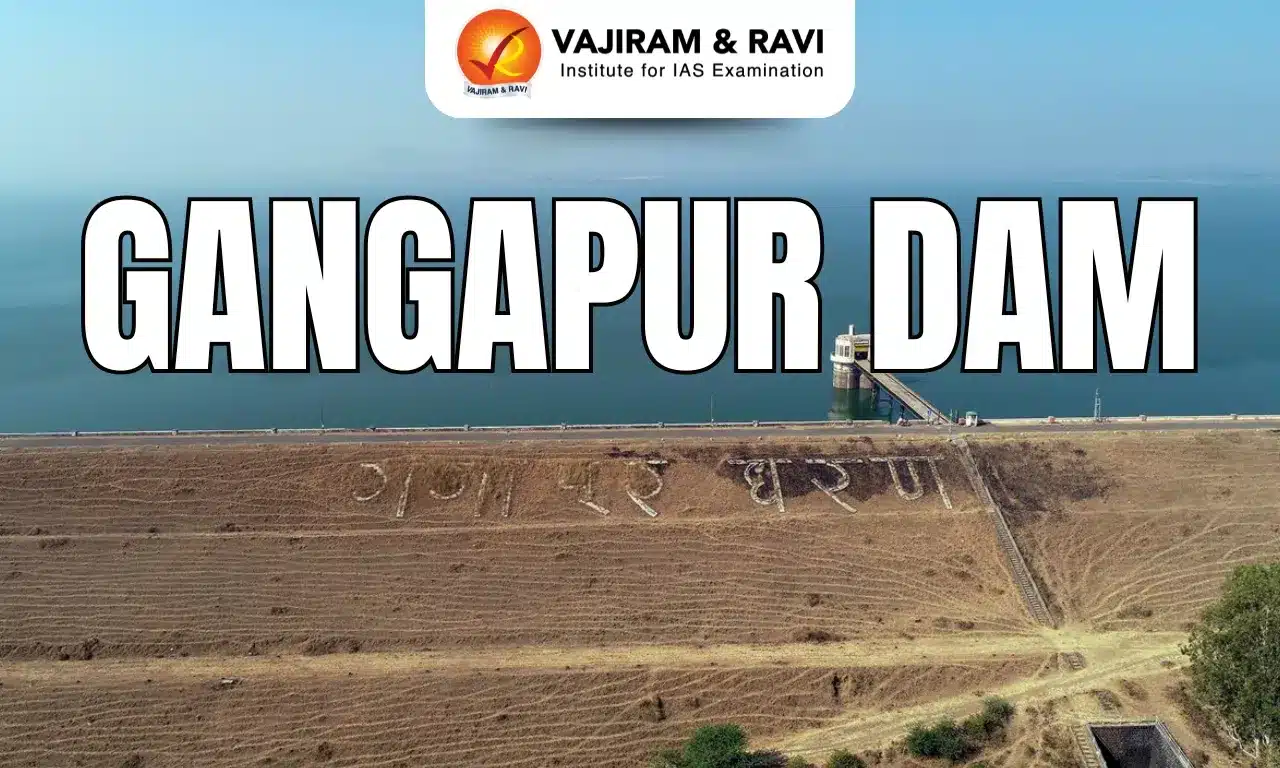
Gangapur Dam

Gangapur Dam

Gangapur Dam Latest News

The air show, featuring the Indian Air Force’s Suryakiran aerobatic team, took place over the Gangapur dam in the Nashik district recently.

About Gangapur Dam

  • It is an earthfill dam on the River Godavari, near Nashik, Maharashtra.
  • It is the longest earthen reservoir of Asia, with a length of 9.8 kilometers and a height of 36.6 meters. 
  • The dam has a unique design, with a curved shape and a spillway in the middle. 
  • It was built in 1965 as part of the Godavari Marathwada Irrigation Development Project. 
  • The dam was constructed to provide irrigation and drinking water to the drought-prone areas of Nashik, Ahmednagar, and Aurangabad districts. 
  • The dam has a storage capacity of 215.88 million cubic meters and a catchment area of 2,122 sq.km. 
  • The dam also has an upstream dam called Kashypi Dam, which regulates the water flow and prevents flooding.
  • The dam also has two canals; the left bank canal is 64 km long, and the right bank canal is 30 km.
  • The area around the dam features beautiful gardens and is home to numerous migratory birds, adding to its scenic beauty.

Source: TH

Gangapur Dam FAQs

Q1: Gangapur Dam is located on which river?

Ans: Godavari

Q2: Gangapur Dam is situated which state?

Ans: It is located near Nashik, Maharashtra.

Q3: Gangapur Dam is best described as which type of dam?

Ans: It is an earthfill dam.

Q4: Gangapur Dam was constructed as part of which project?

Ans: Godavari Marathwada Irrigation Development Project

Phulkari

Phulkari

Phulkari Latest News

Over 40 rare pre-Partition textiles at an exhibition trace how phulkari functioned within women’s lives, and their everyday worlds.

About Phulkari

  • Phulkari, meaning "flower work," is a traditional embroidery from undivided Punjab, including present-day Pakistan and Haryana. 
  • The term first appeared in 18th-century Punjabi literature and may be linked to the Iranian art of gulkari.
  • Historically, phulkari chaddars were an essential part of a girl's marriage trousseau, crafted by mothers and grandmothers from the girl's birth. 
  • Girls learned to embroider early, with the number of phulkaris reflecting the family's status and marking cultural milestones.

Phulkari Features

  • It is a form of counted-thread embroidery recognised by its neat, regular patterns of geometric and natural motifs.
  • Phulkari embroidery uses khaddar, a handspun and handwoven cotton fabric, traditionally dyed in madder brown, rust red, indigo, or green.
  • Colourful silk threads are used to create flower patterns on the fabric.
  • The mix of colourful silk threads creates a beautiful and exciting design. 
  • The floral imagery used in phulkari includes marigolds, jasmines, lotuses, and Tree of Life motifs. 
  • Modern motifs such as trains, trucks, and cars have also found their way into phulkari patterns. 
  • Phulkari’s product range includes embroidered chaddars, dupattas, and stoles, traditionally worn by brides or for ceremonies.

Source: TH

Phulkari FAQs

Q1: What is Phulkari?

Ans: It is a traditional embroidery from undivided Punjab, including present-day Pakistan and Haryana.

Q2: What does the term “Phulkari” literally mean?

Ans: “Flower work”.

Q3: Which Iranian art form is Phulkari believed to be linked with?

Ans: Gulkari.

Q4: What role did Phulkari chaddars play in traditional Punjabi marriages?

Ans: They were an essential part of a girl’s marriage trousseau.

Ammonia

Ammonia

Ammonia Latest News

Officials explained that ammonia spikes in the Yamuna are a chronic winter issue, generally occurring between 15 and 22 times a year.

About Ammonia

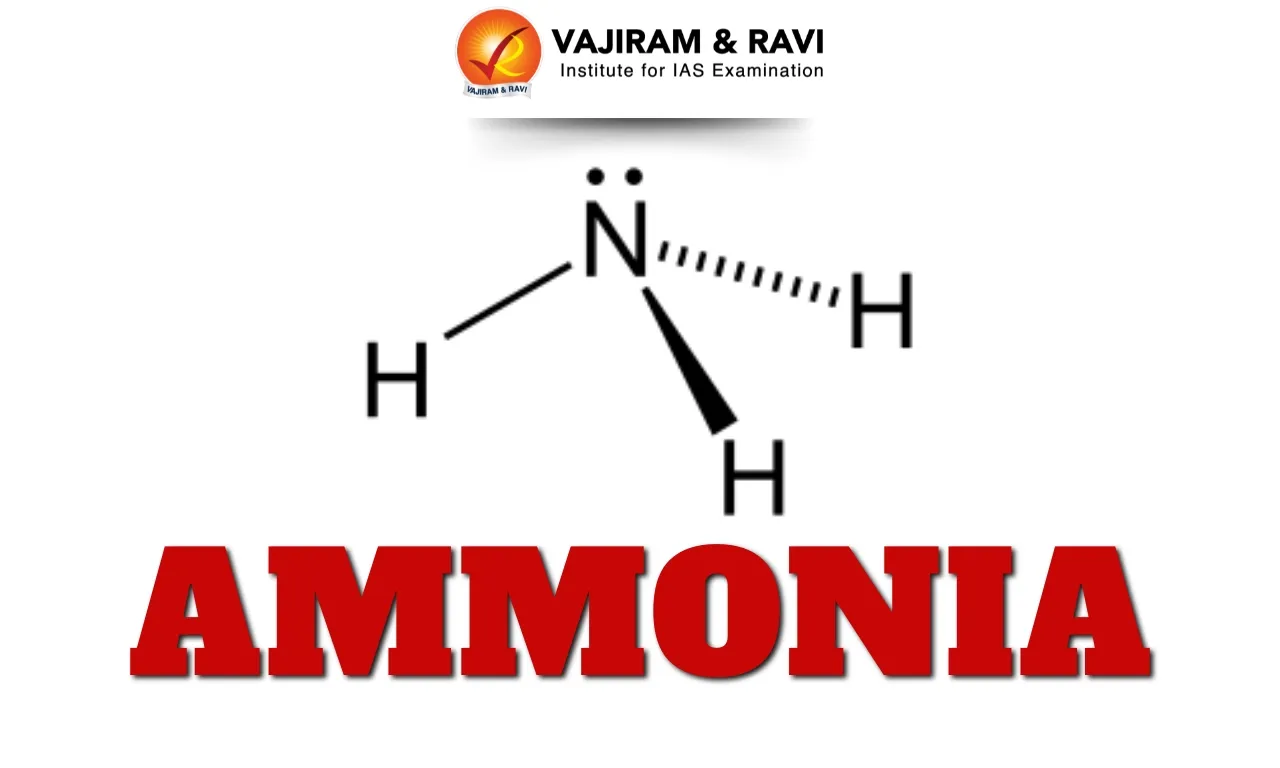
  • It is a colorless, pungent gas composed of nitrogen and hydrogen with the formula NH3.
  • It is the simplest stable compound of these elements and serves as a starting material for the production of many commercially important nitrogen compounds.
  • It exists naturally in humans and in the environment. 
    • In the environment, ammonia is part of the nitrogen cycle and is produced in soil from bacterial processes. 
    • Ammonia is also produced naturally from decomposition of organic matter, including plants and animals.
  • Industrial production: Manufactured mainly by the Haber–Bosch process (from nitrogen and hydrogen).
  • Ammonia gas can be dissolved in water. This kind of ammonia is called liquid ammonia or aqueous ammonia. Once exposed to open air, liquid ammonia quickly turns into a gas.
  • Uses:
    • The major use of ammonia is as a fertilizer
      • Ammonia is a basic building block for ammonium nitrate fertilizer, which releases nitrogen, an essential nutrient for growing plants.
      • About 90 percent of ammonia produced worldwide is used in fertilizer.
    • Additional uses include as a refrigerant, stabilizer, neutralizer, and purifier — particularly in food transport and water treatment applications. 
    • It can also be used in the manufacture of plastics, explosives, fabrics, dyes, and pharmaceuticals.
  • Exposure to high levels of ammonia in air may be irritating to a person’s skin, eyes, throat, and lungs and cause coughing and burns.
  • To prevent the release of toxic fumes, ammonia should not be mixed with other chemicals (especially chlorine bleach).

Source: HT

Ammonia FAQs

Q1: What is ammonia?

Ans: Ammonia is a colourless, pungent gas composed of nitrogen and hydrogen.

Q2: What is the chemical formula of ammonia?

Ans: The chemical formula of ammonia is NH₃.

Q3: Does ammonia occur naturally in the human body and environment?

Ans: Yes, ammonia exists naturally in humans and in the environment.

Q4: How is ammonia produced naturally in the environment?

Ans: It is produced through bacterial processes in soil and by the decomposition of organic matter from plants and animals.

Q5: Which industrial process is mainly used to manufacture ammonia?

Ans: Ammonia is mainly manufactured using the Haber–Bosch process.

Lambadi Tribe

Lambadi Tribe

Lambadi Tribe Latest News

The Supreme Court is once again being asked to rule on long-standing controversy of Parliament’s decision on Scheduled Tribe status to Lambadi community in Telangana.

About Lambadi Tribe

  • They are found in Telangana, Andhra Pradesh and Karnataka states in South India.
  • They are also known as Sugali or Banjara.
  • Language: They speak Gor Boli also called Lambadi which belongs to the Indo-Aryan Group of Languages. Lambadi has no script.
  • Belief System: The majority of Banjara in India are Hindu; some have combined Hindu practices with their own animistic beliefs.

Culture of Lambadi Tribe

  • Banjara people celebrate the festival of Teej during Shravanam (in the month of august).
  • In this festival young unmarried Banjara girls pray for a good groom.
  • Fire dance and Chari are the traditional dance forms of the banjara people.
  • Tattoos are very common in their community.
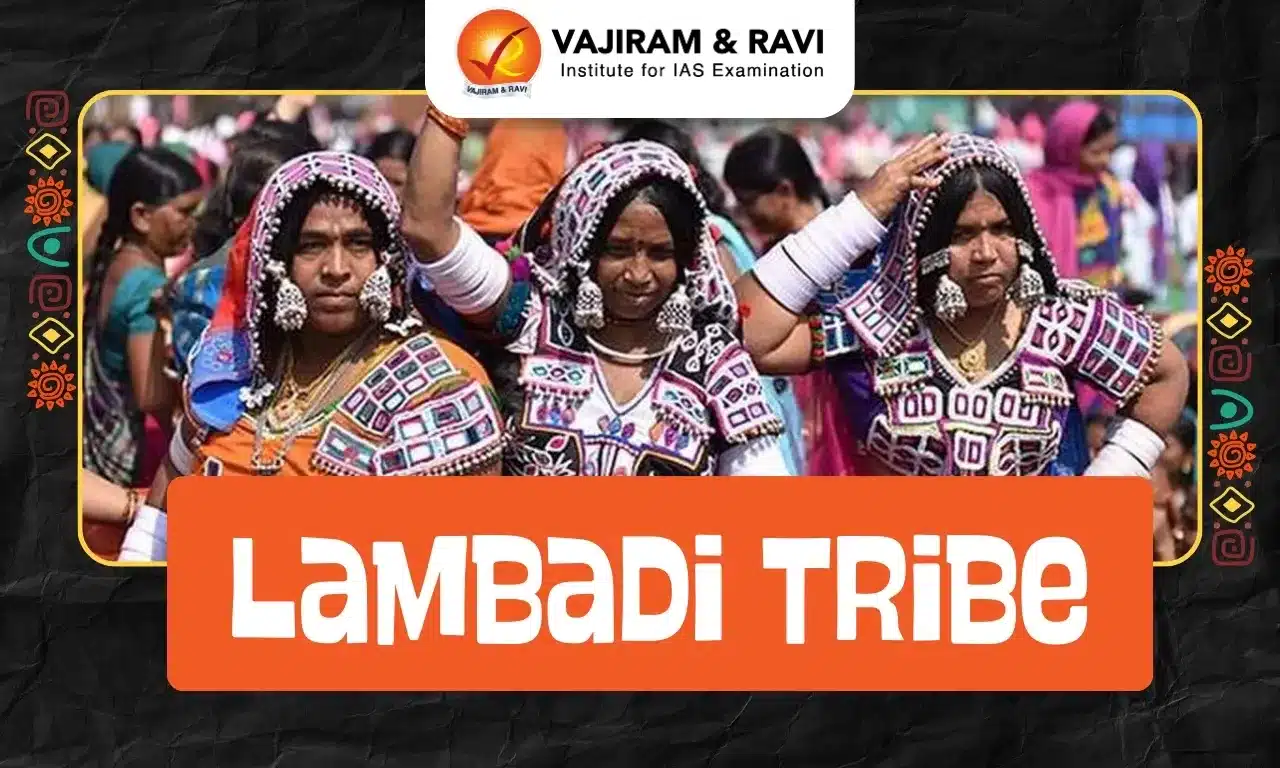
  • Women, Lambadi / Gor women (Thandri) wear a very colourful red style dress and lots of jewellery. The clothes they wear are decorated with pieces of mirror and cowl. we wear ivory bangles and ornaments.

Source: DTE

Lambadi Tribe FAQs

Q1: Where is the Lambadi tribe primarily found?

Ans: South India

Q2: What is another name for the Lambadi tribe?

Ans: Banjara

Liberalised Remittances Scheme (LRS)

Liberalised Remittances Scheme (LRS)

Liberalised Remittances Scheme (LRS) Latest News

Analysis of data on the outward remittances under the RBI’s Liberalised Remittances Scheme (LRS) shows that the amount of money sent or spent abroad by Indians fell to a two-year low of $1.94 billion in November 2025, pulled down in large part by a sharp dip in the amount spent on foreign studies.

About Liberalised Remittances Scheme (LRS)

  • It is part of the Foreign Exchange Management Act (FEMA) 1999, which lays down the guidelines for outward remittance from India. 
  • Under LRS, all resident individuals, including minors, are allowed to freely remit up to USD $250,000 per financial year (April–March). 
    • This can be for any permissible current or capital account transaction, or a combination of both.
    • Any remittance exceeding this limit requires prior permission from the RBI.
  • The scheme was introduced on February 4, 2004.
  • Who can remit funds under LRS?
    • Only individual Indian residents, including minors, are permitted to remit funds under LRS.
    • Corporates, partnership firms, Hindu Undivided Family (HUF), trusts, etc., are excluded from its ambit. 
  • Frequency of Remittances:
    • There is no restriction on the frequency or number of transactions during a financial year. 
    • However, the total amount of foreign exchange remitted through all sources in India under LRS during the current FY should be within the LRS limit as specified by the RBI, i.e., USD $250,000.
  • Types of transactions permitted:
    • Opening of a foreign currency account abroad with a bank;
    • Acquisition of immovable property abroad, overseas direct investment (ODI), and overseas portfolio investment (OPI);
    • Extending loans, including loans in Indian Rupees to non-resident Indians (NRIs) who are relatives as defined in the Companies Act, 2013;
    • Private visits abroad (excluding Nepal and Bhutan); 
    • Maintenance of relatives abroad;
    • Medical treatment abroad;
    • Pursuing studies abroad;
    • Any other current account transaction that does not fall under the definition of current account (FEMA 199);
  • Types of transactions not permitted: 
    • Remittance for purposes specifically prohibited, such as buying lottery tickets or restricted items.
    • Sending money from India for margins or margin calls to overseas exchanges or parties.
    • Remittance for buying Foreign Currency Convertible Bonds (FCCBs) issued by Indian companies in the overseas secondary market.
    • Sending money for trading in foreign exchange abroad.
    • Sending money to individuals and entities identified as posing a significant risk of terrorism.
    • Sending money to countries identified as “non-cooperative countries and territories” by the Financial Action Task Force (FATF).
  • Tax Imposed on LRS:
    • Tax Collected at Source (TCS) applies to LRS transactions exceeding INR 7 lakh in a financial year.
      • Current TCS rates are 20% for general remittances and may vary based on the purpose and the total amount remitted.
    • Any profit made from abroad investments under LRS is subject to tax in India depending on the holding period.

Source: TH

Liberalised Remittances Scheme (LRS) FAQs

Q1: What is the Liberalised Remittances Scheme (LRS)?

Ans: LRS is a scheme under the Foreign Exchange Management Act (FEMA), 1999 that provides guidelines for outward remittances from India.

Q2: When was the Liberalised Remittances Scheme introduced?

Ans: The scheme was introduced on February 4, 2004.

Q3: Who is eligible to remit funds under Liberalised Remittances Scheme (LRS)?

Ans: Only resident individual Indians, including minors, are eligible to remit funds under LRS.

Q4: Which entities are not permitted to remit funds under Liberalised Remittances Scheme (LRS)?

Ans: Corporates, partnership firms, Hindu Undivided Families (HUFs), trusts, and similar entities are excluded.

Q5: What is the maximum amount that can be remitted under Liberalised Remittances Scheme (LRS) in a financial year?

Ans: Up to USD 250,000 per financial year (April–March).

Indira Gandhi Peace Prize

Indira Gandhi Peace Prize

Indira Gandhi Peace Prize Latest News

Recently, Mozambican rights activist and humanitarian Graca Machel has been selected for the Indira Gandhi Prize for Peace, Disarmament and Development for 2025.

About Indira Gandhi Peace Prize

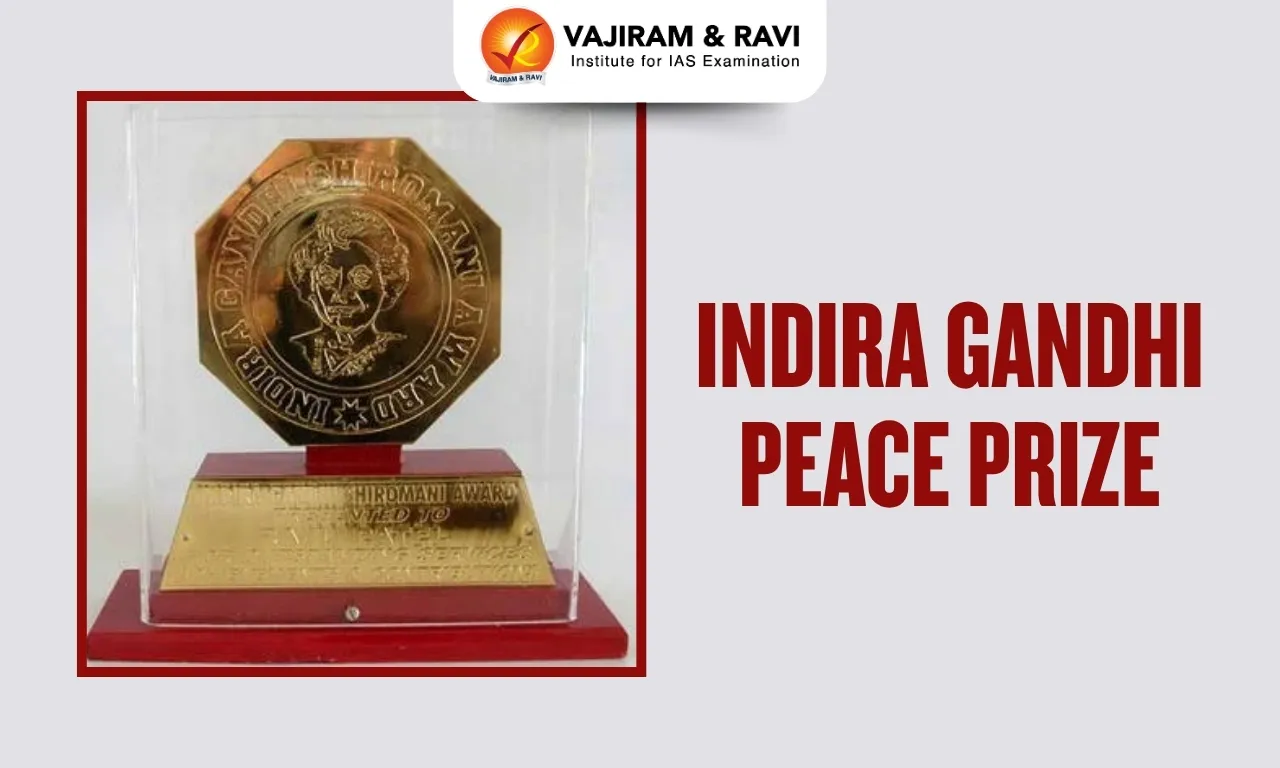
  • It was instituted in the memory of the former Prime Minister Indira Gandhi by a trust in her name in 1986.
  • It is also known as the Indira Gandhi Prize for Peace, Disarmament, and Development,
  • It consists of a monetary award of 25 lakh rupees along with a citation.
  • It is awarded annually by the Indira Gandhi Memorial Trust  to a person or organization without any distinction of nationality, race or religion, in recognition of creative efforts towards:
    • Promoting international peace and disarmament, racial equality, and goodwill and harmony among nations;
    • Securing economic co-operation and promoting a new international economic order;
    • Accelerating the all-round advancement of developing nations;
    • Ensuring that the discoveries of science and modern knowledge are used for the larger good of the human race; and
    • Enlarging the scope of freedom and enriching the human spirit.

Source:  TH

Indira Gandhi Peace Prize FAQs

Q1: Who was awarded the Indira Gandhi Peace Prize for 2025?

Ans: Graca Machel

Q2: What is the Indira Gandhi Peace Prize awarded for?

Ans: Promoting international peace, disarmament, and development

Pangolakha Wildlife Sanctuary

Pangalokha Wildlife Sanctuary

Pangolakha Wildlife Sanctuary Latest News

Recently, a forest fire continued to rage inside Sikkim's Pangolakha Wildlife Sanctuary along the Indo-China border at an altitude of 13,000 feet.

About Pangolakha Wildlife Sanctuary

  • Location: It is located in the state of Sikkim.
  • It is connected to the forests of Bhutan and Neora Valley National Park in West Bengal.
  • The Pangolakha Range, extending below the Chola Range, separates Sikkim from Bhutan.
  • Vegetation: It has typical alpine-temperate-subtropic vegetation.
  • Lakes: It features high-altitude lakes, including Lake Tsongmo which is a biodiversity hotspot for migratory birds.
  • Rivers: Important Rivers like Rangpo and Jaldhaka originate from nearby lakes within the sanctuary.
  • Flora: Rhododendron, Silver Fir, Juniper forest and associated ground flora, moss-filled oak forests.
  • Fauna: Tiger, Leopard , Takin, Red Panda, Musk Deer etc.

Source: TH

Pangolakha Wildlife Sanctuary FAQs

Q1: Where is Pangolakha Wildlife Sanctuary located?

Ans: Sikkim

Q2: Which mountain pass is near Pangolakha Wildlife Sanctuary?

Ans: Nathula Pass

Indo-Pacific Oceans Initiative (IPOI)

Indo-Pacific Oceans Initiative (IPOI)

Indo Pacific Oceans Initiative Latest News

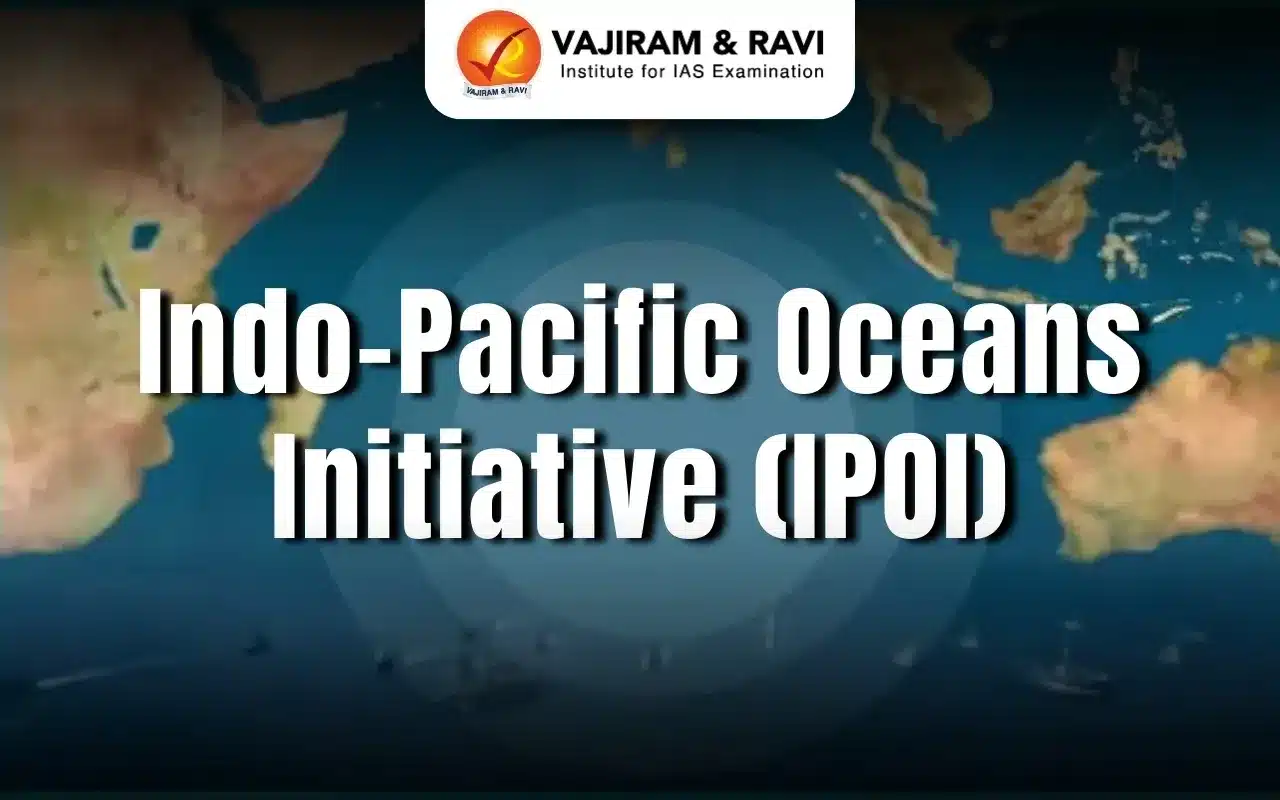
Recently, India has welcomed Spain joining the Indo-Pacific Oceans Initiative (IPOI).

About Indo Pacific Oceans Initiative

  • It was launched by India in November 2019 at the ASEAN-led East Asia Summit (EAS) in Bangkok.
  • Objective: To promote cooperation for a free and open Indo-Pacific and the rules-based regional order.
  • It is a non-treaty-based voluntary arrangement.
  • It aims to achieve greater cohesion and integration through common understanding and actions related to shared interests. 
  • It leans heavily on the EAS mechanism, which includes ASEAN member states and its eight dialogue partners.
  • It has outlined seven pillars, and it was indicated that one or two countries could take the lead for a pillar with others joining in voluntarily.
  • The seven IPOI pillars are:
    • Maritime Security: The United Kingdom (UK) and India
    • Maritime Ecology: Australia and Thailand
    • Maritime Resources: France and Indonesia
    • Capacity Building and Resource Sharing: Germany
    • Disaster Risk Reduction and Management: India and Bangladesh
    • Science, Technology, and Academic Cooperation: Italy and Singapore
    • Trade, Connectivity, and Maritime Transport: Japan and the United States (US).

Source: News On Air

Indo Pacific Oceans Initiative FAQs

Q1: Which country launched the Indo-Pacific Oceans Initiative?

Ans: India

Q2: What is one of the key areas of focus for IPOI?

Ans: Maritime security

Red-Eared Slider Turtle

Red-Eared Slider Turtle

Red-Eared Slider Turtle Latest News

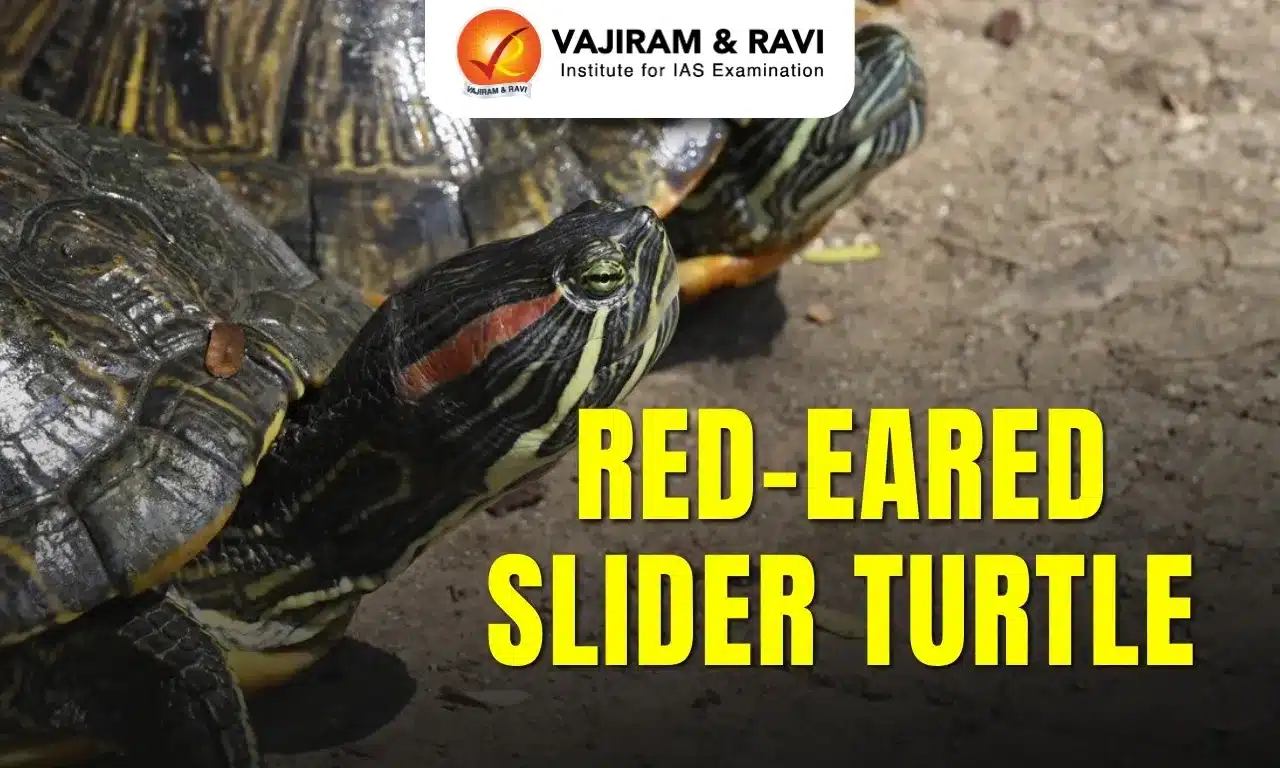
Red-eared slider turtle, an invasive turtle species that got circulated across countries through pet trade poses a threat to water bodies in Coimbatore.

About Red-Eared Slider Turtle

  • It is one of the world’s most widely introduced freshwater turtles.
  • Habitat:   It is predominantly aquatic, becoming terrestrial only when expanding its range.
  • Distribution: It now has an established distribution across all continents except Antarctica.
  • Appearance: It is known for its distinct red stripes behind each ear.

Characteristics of Red-Eared Slider Turtle

  • It is highly adaptable and can survive under sub-optimal temperature conditions.
  • Its flexibility allows it to thrive in non-native environments.
  • These species exhibit aggressive hunting behaviour during certain periods.
  • One such phase is during pregnancy, when the turtle requires excess food and easily preys on native aquatic species.
  • Life Span: In the wild, red sliders can live from 20 to 50 years.
  • Conservation Status: IUCN: Least Concerned

Issues of Red-Eared Sliders Turtle

  • They breed quickly and expand unchecked due to the absence of natural predators.
  • The species competes directly with India’s native turtles for basking sites, nesting grounds and food.
  • It shows aggressive behaviour and higher consumption patterns also affect fish population, disturbing freshwater ecosystems

Source: TH

Red-Eared Slider Turtle FAQs

Q1: What is the scientific name of the Red-Eared Slider Turtle?

Ans: Trachemys scripta elegans

Q2: Where is the Red-Eared Slider Turtle native to?

Ans: North America

Enquire Now