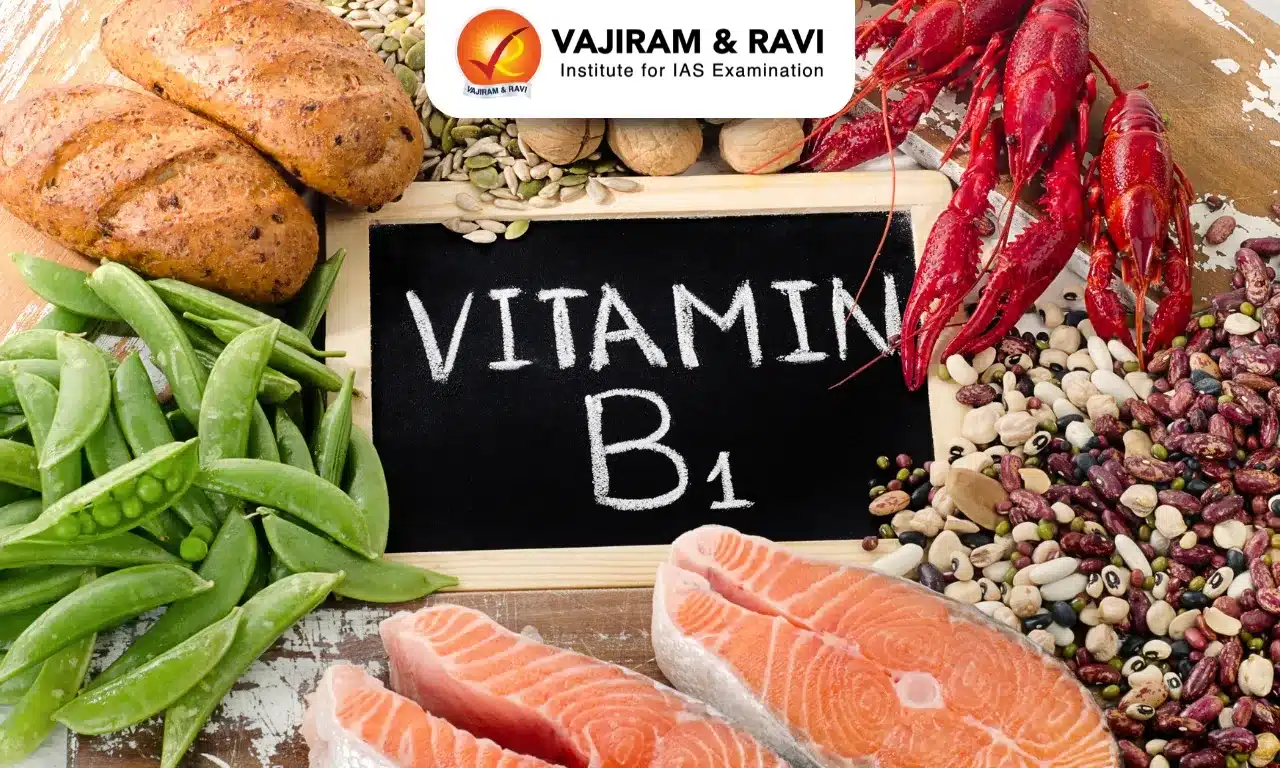
Vitamin B1

Vitamin B1

Vitamin B1 Latest News

Analysis of bowel habits in over 268,000 people reveals how thiamine-related genes influence gut motility, linking constipation and diarrhea to shared biology and suggesting new IBS treatments.

About Vitamin B1

  • Also known as thiamine or thiamin, vitamin B1 is a water-soluble vitamin, as are all vitamins of the B complex. 
  • Benefits:
    • Thiamine helps convert carbohydrates into energy, allowing our cells to function optimally. 
    • It is also involved in supporting the nervous system, promoting healthy brain function, and aiding in the metabolism of proteins and fats.
    • Vitamin B1 helps prevent complications in the:
      • nervous system
      • brain
      • muscles
      • heart
      • stomach
      • intestines
    • It is also involved in the flow of electrolytes into and out of muscle and nerve cells.
  • Thiamine occurs naturally in specific diets, is added to food products, and is available in dietary supplements. 
  • Brown rice, whole grains, pork, poultry, soybeans, nuts, peas, dried beans, and fortified or enriched grain products such as bread, cereals, and infant formulas are rich sources of thiamine.
  • Humans need a continuous supply of vitamin B1 because the body does not store it in significant amounts. It should be part of someone’s daily diet.
  • Vitamin B1 Deficiency:
    • A deficiency in thiamine can lead to a condition known as beriberi, which can cause symptoms like weakness, fatigue, nerve problems, and heart issues.
    • Wernicke-Korsakoff syndrome: This severe form of thiamine deficiency is often associated with alcohol abuse and can lead to symptoms such as:  
      • Confusion and memory loss.  
      • Difficulty with balance and coordination.  
      • Visual disturbances, including double vision or eye muscle weakness. 

Source: NM

Vitamin B1 FAQs

Q1: What is Vitamin B1 also known as?

Ans: Vitamin B1 is also known as thiamine or thiamin.

Q2: Is Vitamin B1 water-soluble or fat-soluble?

Ans: Vitamin B1 is a water-soluble vitamin.

Q3: What is the primary role of thiamine in the body?

Ans: Thiamine helps convert carbohydrates into energy for proper cellular function.

Q4: Which foods are rich sources of Vitamin B1?

Ans: Brown rice, whole grains, pork, poultry, soybeans, nuts, peas, dried beans, and fortified cereals and breads.

Q5: What disease is caused by Vitamin B1 deficiency?

Ans: Thiamine deficiency can cause beriberi.

Tailings

Tailings

Tailings Latest News

The central government recently announced the country’s first tailings policy, setting guidelines for exploration of critical minerals from primary as well as the secondary sources like mine dumps and tailings of existing mines.

About Tailings

  • Tailings are the leftover materials from the processing of mined ore. 
  • They consist of finely ground rock, unrecoverable or uneconomic metals, chemicals, organic matter, and effluent from the extraction process. 
  • They usually take the form of a liquid slurry made of fine mineral particles, created as mined ore is crushed, ground, and processed. 
  • Effective tailings management is integral to the safe and sustainable production of metals and minerals.
  • Tailings can be stored in a variety of ways; which way depends on numerous factors, for instance, the local topography, how much rainfall an area gets, whether there is regular or irregular seismic activity recorded, the type of mineral being mined, and how close the mine is to populated areas. 
  • There is no one-size-fits-all solution; each tailings facility (also commonly known as a tailings storage facility) is unique.
  • Dams, embankments, and other types of surface impoundments are by far the most common storage methods used today.

India's First Tailings Policy for Critical Minerals

  • It sets guidelines for exploration of critical minerals from primary as well as secondary sources like mine dumps and tailings of existing mines.
  • The new policy is developed on the idea that a few commodities currently mined in India as primary ore may have scope for recovery of companion metals or elements from the tailings, anode slimes, pot linings, and slags. 
    • For example, a copper mine may have Selenium, Tellurium, Molybdenum, Cobalt, Rhenium, Gold, and Silver as companion elements.
    • Similarly, Zinc is found along with Germanium, Silver, Cadmium, and Indium.
  • Critical minerals, including lithium, cobalt, nickel, rare earth elements (REE), etc., are vital for solar panels, wind turbines, batteries and are essential for India’s economic growth.

Source: BS

Tailings FAQs

Q1: What are tailings?

Ans: Tailings are the leftover materials produced after processing mined ore.

Q2: What do tailings mainly consist of?

Ans: They consist of finely ground rock, unrecoverable or uneconomic metals, chemicals, organic matter, and effluent from the extraction process.

Q3: In what physical form are tailings usually found?

Ans: Tailings usually take the form of a liquid slurry.

Q4: What is a tailings storage facility (TSF)?

Ans: It is a specially designed facility used to store tailings safely.

Q5: What are the most commonly used methods for storing tailings today?

Ans: Dams, embankments, and other surface impoundments are the most common storage methods.

ASC Arjun

ASC Arjun

ASC Arjun Latest News

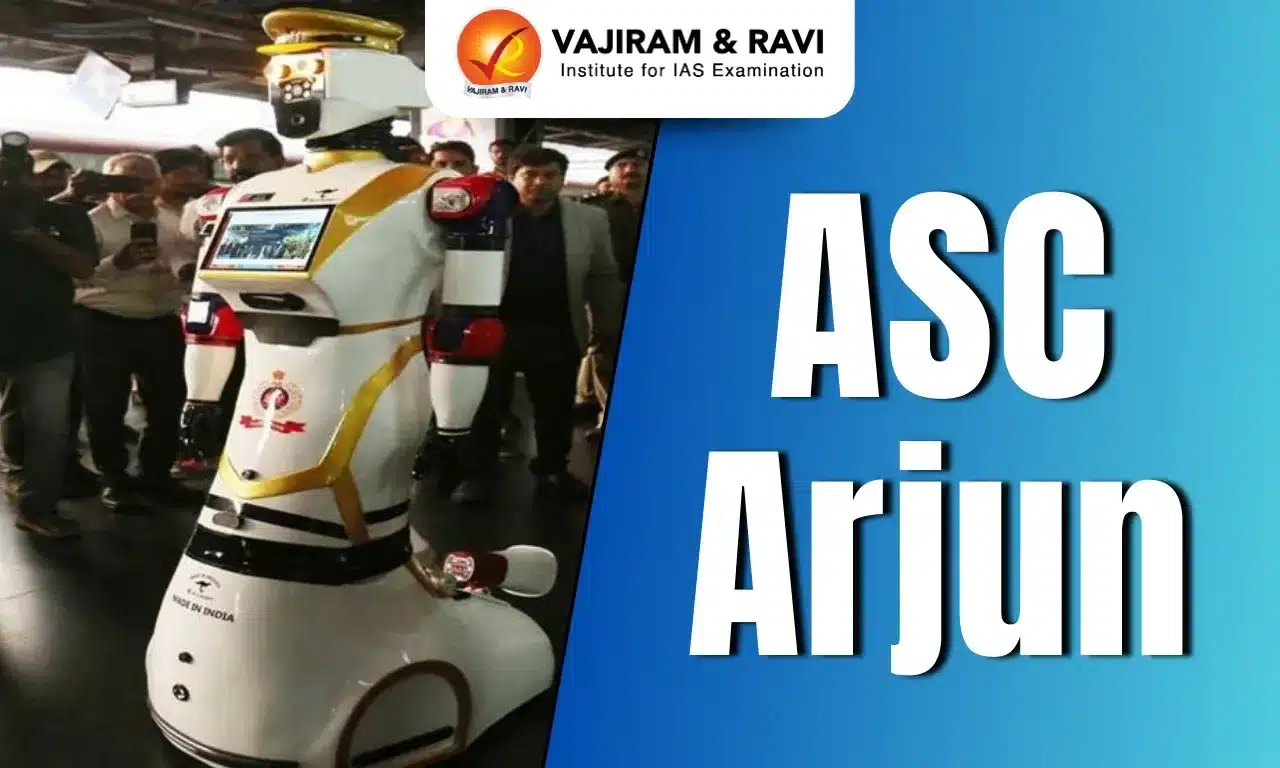
Recently, the Indian Railways has introduced a humanoid robot named “ASC ARJUN” at Visakhapatnam Railway Station.

About ASC Arjun

  • It is a humanoid robot introduced by the Indian Railways.
  • The robot will operate alongside Railway Protection Force (RPF) personnel to assist in station operations, particularly during periods of heavy passenger movement. 
  • It is designed and developed entirely in Visakhapatnam using home-grown technology.

Features of ASC Arjun

  • It is equipped with a Face Recognition System (FRS) for intrusion detection, AI-based crowd monitoring and real-time alert generation for RPF control rooms.
  • It can also make automated public announcements in English, Hindi and Telugu to assist passengers and promote safety awareness.
  • It also features semi-autonomous navigation with obstacle-avoidance capability,
  • It can patrol station platforms round the clock, supporting surveillance and optimising manpower deployment.
  • It is also fitted with fire and smoke detection systems to aid timely response during emergencies.
  • It has been designed for passenger interaction, offering gestures such as a ‘Namaste’ for passengers and salutes for RPF personnel, along with an interface to provide information and assistance.

Source: PIB

ASC Arjun FAQs

Q1: What is ASC Arjun?

Ans: It is a humanoid robot introduced by the Indian Railways.

Q2: Which technology is used in Face Recognition System?

Ans: It uses artificial intelligence, machine learning, and computer vision.

Asiatic Wild Dog

Asiatic Wild Dog

Asiatic Wild Dog Latest News

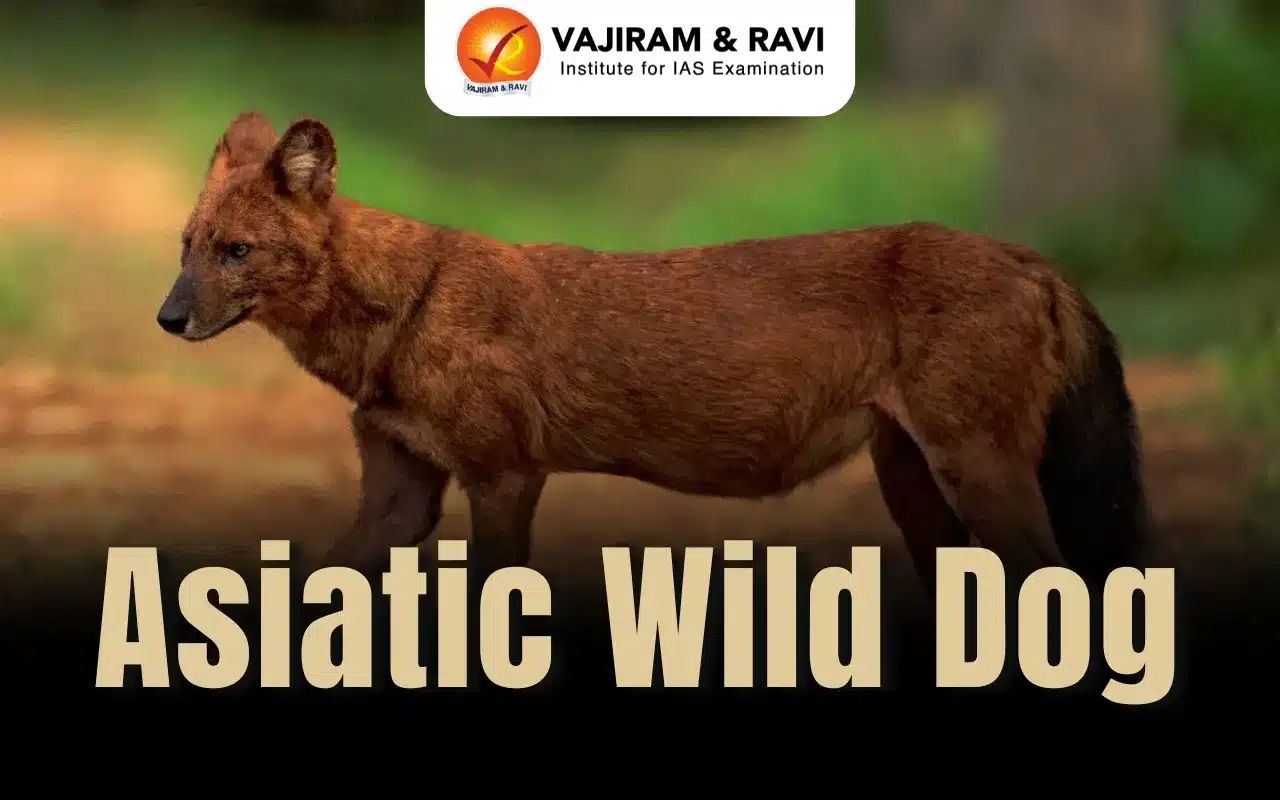
A rare Asiatic Wild Dog 'Dhole', has been seen for the first time in Ratapani Tiger Reserve in Madhya Pradesh recently.

About Asiatic Wild Dog

  • The Asiatic wild dog, also called Dhole, is a wild Asian carnivore of the dog family (Canidae).
  • Scientific Name: Cuon alpinus
  • Other Names: Indian wild dog, whistling dog, red wolf, red dog, and mountain wolf.

Asiatic Wild Dog Habitat and Distribution

  • They are found throughout Central, Eastern and Southeastern Asia. 
  • In India, they are found in three clusters across India, namely the Western and Eastern Ghats, the central Indian landscape, and Northeast India. 
  • The Western and Eastern Ghats are stronghold regions for dholes.
  • They inhabit dense jungles, steppes, mountains, scrub forests, and pine forests.

Asiatic Wild Dog Features

  • It is a sleek, reddish-brown, medium-sized dog.
  • It measures up to around 20 inches with a bushy black tail, which adds up to a foot and a half. 
  • Males are generally more muscular than females.
  • Their broad head and exceptionally sharp jaws give them an iconic facial appearance, which makes their body look more aligned. 
  • This species tends to live in groups with numbers ranging from 2-25 individuals. 
  • They are fast runners, excellent swimmers, and impressive jumpers.
  • They are great communicators and use an eerie whistle to communicate with each other. 
  •  

Asiatic Wild Dog Conservation Status

It is classified as 'Endangered' under the IUCN Red List.

Source: ETVB

Asiatic Wild Dog FAQs

Q1: What is the Asiatic wild dog commonly known as?

Ans: The Asiatic wild dog is commonly known as the dhole.

Q2: In which regions of Asia is the Asiatic wild dog found?

Ans: It is found across Central, Eastern, and Southeastern Asia.

Q3: What are the main distribution clusters of dholes in India?

Ans: The Western and Eastern Ghats, the central Indian landscape, and Northeast India.

Q4: What is the general appearance of the Asiatic wild dog?

Ans: It is a sleek, reddish-brown, medium-sized dog.

Q5: What is the IUCN Red List status of the Asiatic wild dog?

Ans: The Asiatic wild dog is listed as Endangered on the IUCN Red List.

Gandak River

Gandak River

Gandak River Latest News

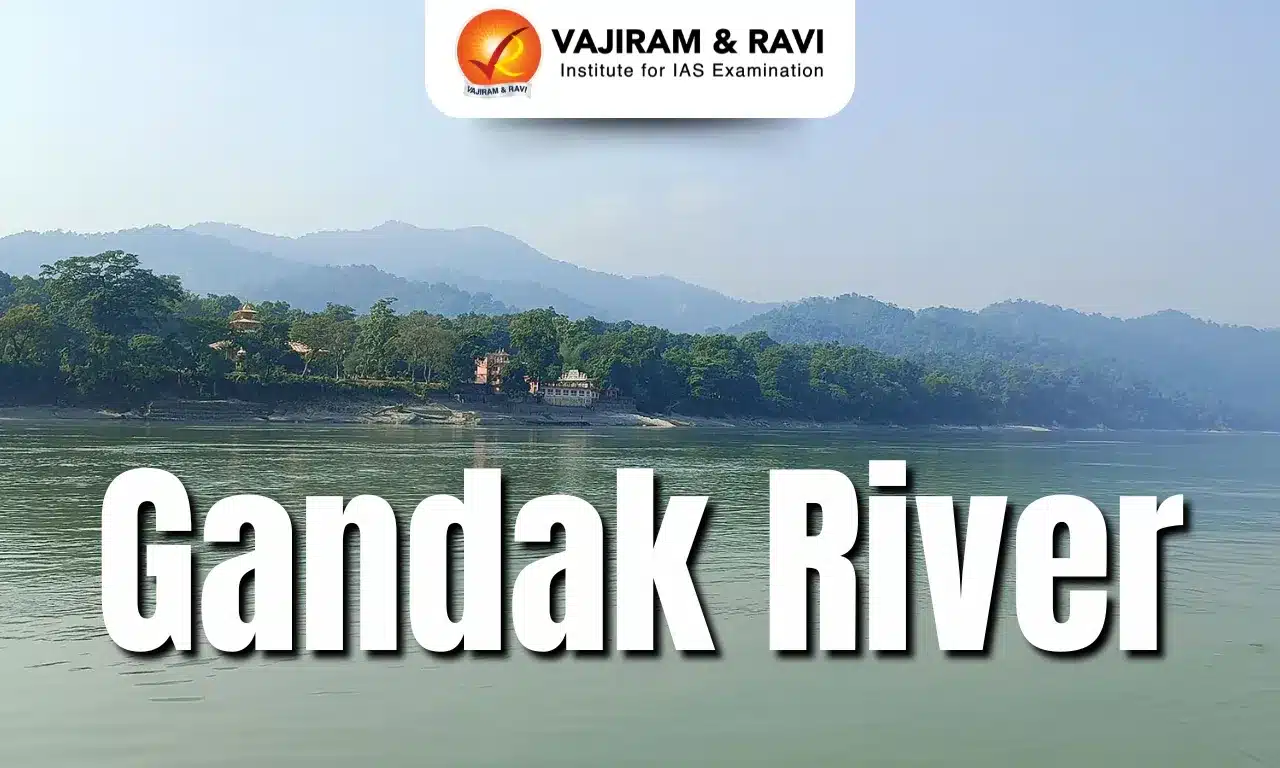
The Gandak River has emerged as the second major river after the Chambal with the highest number of gharials, also known as fish-eating crocodiles.

About Gandak River

  • The Gandak River, also known as the Narayani and Gandaki, is one of the major rivers in Nepal and a left-bank tributary of the Ganges in India.
  • It is mentioned in the ancient Sanskrit epic Mahabharata.
  • Course:
    • It originates at an altitude of 7620 m above msl to the north of Dhaulagiri Mountain in Tibet near the Nepal border. 
    • After flowing through Tibet, it crosses Nepal, where it is also known as Narayani, to enter the Indian Territory. 
    • The river enters India from Valmikinagar in the West Champaran district of Bihar. The entry point of the river is at the Indo–Nepal border and is known as Triveni.
    • In India, it flows southeast, across the upper Gangetic plain in eastern Uttar Pradesh and northwestern Bihar. 
    • Gandak joins Ganga near Patna in Vaishali district of Bihar.
  • The total length of the river is 700 km. In India, it covers a course of more than 300 km.
  • It is bounded on the north by the Himalayas, south by the River Ganga, east by the Burhi Gandak Basin and on the west by the Ghagra Basin.
  • There are about 1,710 glaciers and over 300 lakes in the upper catchment of Gandaki.
  • Due to the steep slope and loose soil in the upper catchment, Gandak carries a lot of silt and other deposits to the Indian side, resulting in a continuous shifting course of the river.
  • While flowing through the Nepal Himalayas, it forms the Kali Gandaki gorge, one of the deepest river gorges in the world.
  • Two important protected areas, Chitwan National Park in Nepal and the adjacent Valmiki Tiger reserve in India, have been established in the basin.
  • Major Tributaries: Daraudi, Seti, Madi, Marsyandi, and Budhi Gandaki.

Key Facts about Gharial

  • It is a freshwater crocodile.
  • Scientific Name: Gavialis gangeticus
  • The name ‘gharial’ comes from the Hindi word ghara, meaning pot or vessel, referring to the bulbous snout tip of adult males, which resembles an inverted pot.
  • Distribution: 
    • Historically, the gharial's range spanned rivers of Bangladesh, Bhutan, India, Myanmar, Nepal and Pakistan. 
    • Today, only fragmented populations remain in Nepal and northern India.
    • The Gharial reserves of India are located in three States: Uttar Pradesh, Madhya Pradesh, and Rajasthan.
    • In India, the National Chambal Sanctuary holds about 90% of the surviving gharials. 
  • Features:
    • It is one of the largest crocodilian species, with males reaching 16 to 20 feet (5 to 6 meters) in length. 
    • Females typically grow to lengths of 11.5 to 15 feet (3.5 to 4.5 meters).
    • They have thick skin covered with smooth epidermal scales that do not overlap. 
    • The snout of the gharial is uniquely the thinnest and most elongated among all the crocodilians.
    • In addition, the adult males sport a large bulb at the tip of their snout, called the ‘ghara’. 
    • It is also the most aquatic of all crocodilians, for it never moves far from the water.  Individuals typically only leave the water to bask and nest on sandbanks.
    • Reproduction: They mate during November–January and lay eggs March–May.
  • Conservation Status:
    • IUCN Red List: Critically Endangered

Source: TOI

Gandak River FAQs

Q1: What is the Gandak River also known as?

Ans: The Gandak River is also known as the Narayani and Gandaki.

Q2: Which major river system does the Gandak belong to in India?

Ans: It is a left-bank tributary of the Ganga River.

Q3: Where does the Gandak River originate?

Ans: It originates north of the Dhaulagiri Mountain in Tibet at an altitude of about 7,620 metres above mean sea level.

Q4: Which Indian states does the Gandak River flow through?

Ans: It flows through eastern Uttar Pradesh and Bihar.

Q5: Which famous gorge is formed by the Gandak River in the Himalayas?

Ans: It forms the Kali Gandaki Gorge, one of the deepest river gorges in the world.

Pandoh Dam

Pandoh Dam

Pandoh Dam Latest News

The release of silt-laden water from Pandoh Dam into the Sutlej river, instead of the Beas, by Bhakra Beas Management Board (BBMB) has drawn the ire of the Punjab Government.

About Pandoh Dam

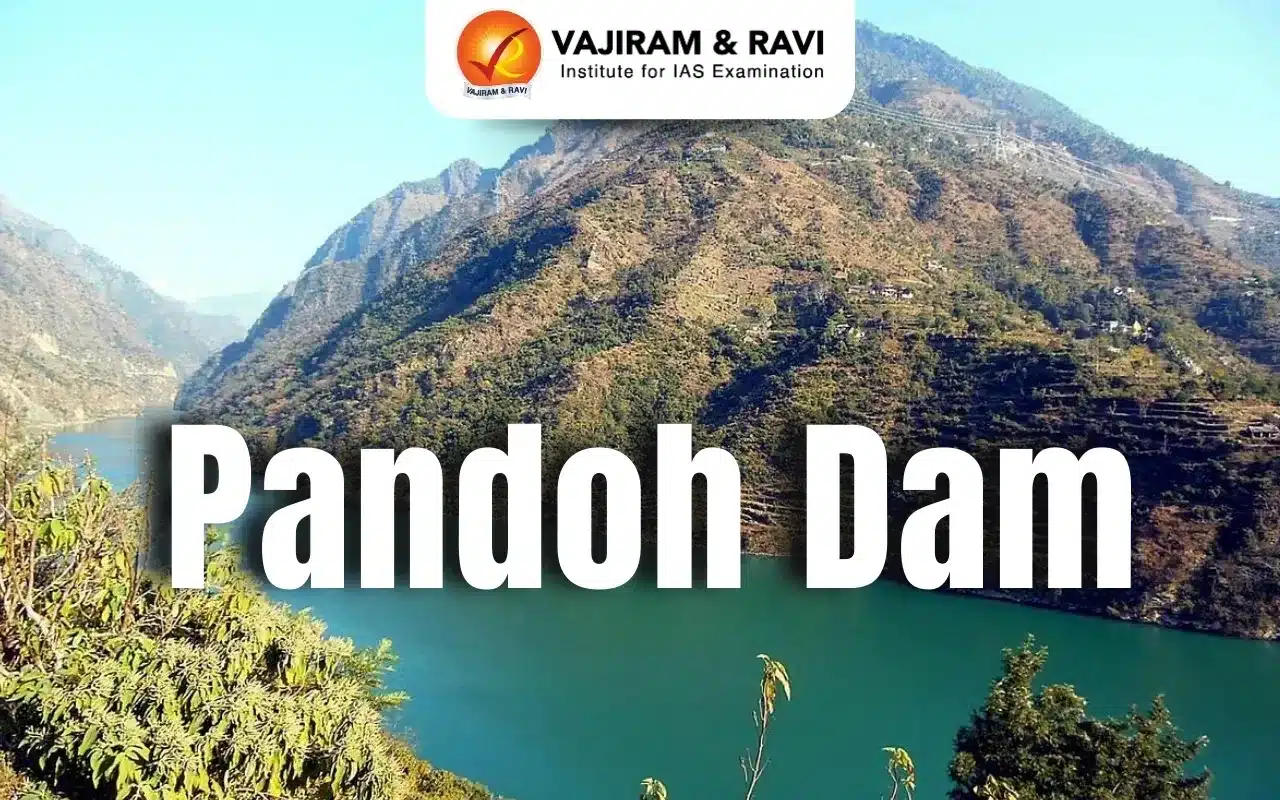
  • It is an embankment dam constructed on the Beas River in the Mandi district of Himachal Pradesh.
  • It is located at a distance of 10 km from Manali.
  • Under the Beas Project, the dam was completed in the year 1977, and it was built with the primary purpose of hydroelectric power generation. 
  • It is a concrete gravity dam, around 76 meters high and about 492 meters long.
  • Being a part of a run-of-the-river power design, this dam diverts the water of the Beas River through 38 km long canals and tunnels to generate power at the Dehar Power House before being discharged into the Sutlej River. 
    • The powerhouse has an installed capacity of 990 MW.
  • The dam has also created the Pandoh Lake, a popular tourist spot located 19 km upstream from the town of Mandi.
  • The dam is under the Bhakra Beas Management Board.
  • The road that goes over the dam is NH 21.

Source: TRIBI

Pandoh Dam FAQs

Q1: Where is Pandoh Dam located?

Ans: It is constructed on the Beas River in the Mandi district of Himachal Pradesh.

Q2: What type of dam is Pandoh Dam?

Ans: Pandoh Dam is a concrete gravity dam.

Q3: When was Pandoh Dam completed?

Ans: The dam was completed in the year 1977.

Q4: What is the primary purpose of Pandoh Dam?

Ans: Its primary purpose is hydroelectric power generation.

Q5: At which powerhouse is electricity generated from Pandoh Dam waters?

Ans: Electricity is generated at the Dehar Power House.

PLI Scheme for White Goods

PLI Scheme for White Goods

PLI Scheme for White Goods Latest News

Recently, five companies have been selected under the PLI Scheme for white goods.

About PLI Scheme for White Goods

  • It aims to create a robust domestic component ecosystem for the Air Conditioners and LED Lights industry and position India as an integral part of the global supply chains.
  • Objectives: It proposes a financial incentive to boost domestic manufacturing and attract large investments in the White Goods manufacturing value chain.
    • Its prime objectives include removing sectoral disabilities, creating economies of scale, enhancing exports, creating a robust component ecosystem and employment generation.
  • Incentives: The scheme will extend an incentive of 4-6% on incremental turnover over base year (2019-20) of goods sold in India and exported to global markets, to eligible companies for a period of 5 years.
  • Eligibility
    • Applicants can be any company that should be incorporated in India under the provisions of the Company Act, 2013.
    • Eligibility shall be subject to the achievement of thresholds of net incremental sales of Eligible Products for the respective financial year over the base year and cumulative incremental investment in the preceding financial year.
    • Any entity availing benefits under any other PLI Scheme of Govt. of India will not be eligible under this scheme for the same products.
  • Duration: It is to be implemented over FY 2021-22 to FY 2028-29
  • Nodal Ministry: The scheme was notified by the Department for Promotion of Industry and Internal Trade (DPIIT), Ministry of Commerce and Industry.

Source: PIB

PLI Scheme for White Goods FAQs

Q1: What is the objective of PLI Scheme for White Goods?

Ans: Boost domestic manufacturing

Q2: Which products are covered under PLI Scheme for White Goods?

Ans: Air conditioners and LED lights

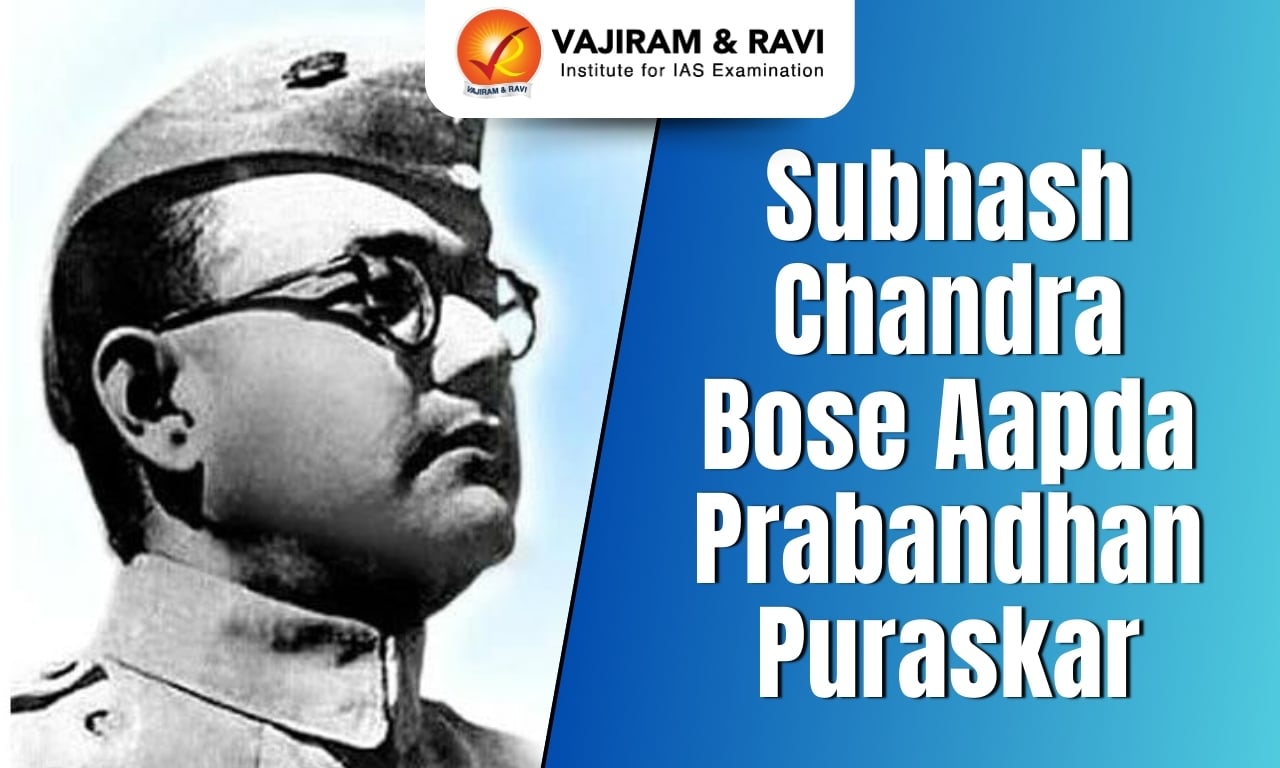
Subhash Chandra Bose Aapda Prabandhan Puraskar

Subhash Chandra Bose Aapda Prabandhan Puraskar

Subhash Chandra Bose Aapda Prabandhan Puraskar Latest News

Recently, the Sikkim State Disaster Management Authority (SSDMA), in the Institutional Category, and Lieutenant Colonel Seeta Ashok Shelke, in the individual Category, have been selected for the Subhash Chandra Bose Aapda Prabandhan Puraskar 2026.

About Subhash Chandra Bose Aapda Prabandhan Puraskar

  • It is an annual award instituted to recognize and honour the invaluable contribution and selfless service rendered by individuals and organizations in India in the field of disaster management.
  • The award is announced every year on the 23rd January, the birth anniversary of Netaji Subhash Chandra Bose.
  • Eligibility
    • Only Indian nationals and Indian institutions are eligible to apply for the award.
    • Institutions, voluntary organisations, corporate entities, academic/research institutions, response/ uniformed forces or any other institution may apply as an institution for the award.
    • The candidate for the award must have worked in the area of Disaster Management like Prevention, Mitigation, Preparedness, Rescue, Response, Relief, Rehabilitation, Research/ Innovations or Early Warning related work in India.
  • Selection Process: A Screening Committee may be constituted by Member secretary/ member, NDMA to screen all the applications received.
  • Award
    • In case the winner is an institution, it shall receive a certificate and a cash prize of Rs.51 lakhs. This cash prize shall be utilized by the winning institution for Disaster Management related activities only.
    • In case of the winner being an individual, winner shall receive a certificate and a cash prize of Rs.5.00 lakhs.

Source: PIB

Subhash Chandra Bose Aapda Prabandhan Puraskar FAQs

Q1: What is the award amount given to institutions under Subhash Chandra Bose Aapda Prabandhan Puraskar?

Ans: ₹51 lakh

Q2: Who is eligible for the Subhash Chandra Bose Aapda Prabandhan Puraskar?

Ans: Both Indian individuals and institutions

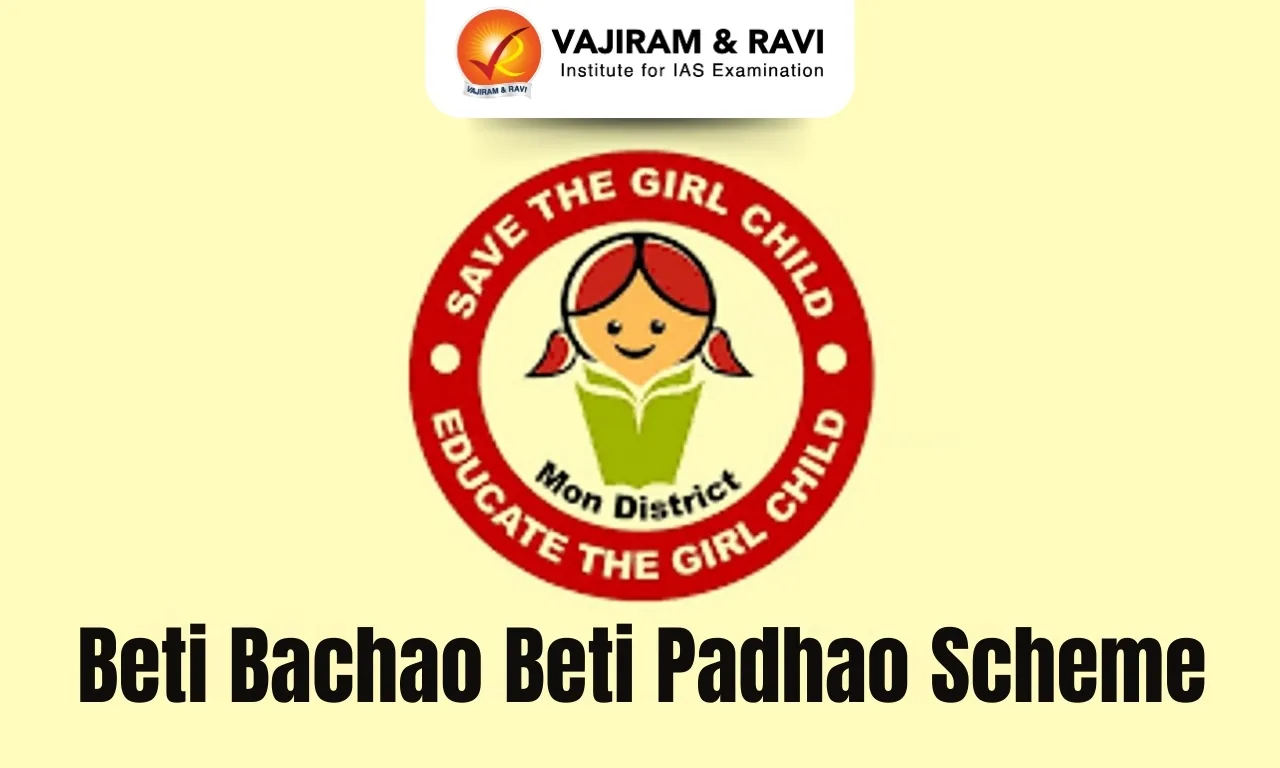
Beti Bachao Beti Padhao Scheme

Beti Bachao Beti Padhao Scheme

Beti Bachao Beti Padhao Scheme Latest News

Recently, the Beti Bachao Beti Padhao campaign completed 11 years. 

About Beti Bachao Beti Padhao Scheme

  • Beti Bachao Beti Padhao (BBBP) initiative, meaning “Save the Girl Child, Educate the Girl Child,”
  • It is a flagship initiative of the Government of India launched in 2015.
  • It is a Centrally Sponsored Scheme and is component of SAMBAL sub-scheme under Mission Shakti.
  • Aim: It aims to address the declining child sex ratio, prevent gender-based discrimination, and promote education and empowerment of girls across the country.
  • Objectives of Beti Bachao Beti Padhao Scheme
    • Prevent Gender-Based Discrimination: Combat societal norms and practices that lead to discrimination against the girl child.​
    • Improve Child Sex Ratio (CSR): Address the declining number of girls per 1,000 boys by curbing practices like female foeticide.​
    • Promote Education for Girls: Ensure access to quality education for girls, thereby empowering them to lead independent lives.​
    • Enhance Participation of Girls: Encourage the active participation of girls in various spheres, including sports, arts, and leadership roles.​
    • Strengthen Existing Schemes: Integrate and reinforce existing government schemes aimed at the welfare of the girl child.
  • It was initiated as a tri-ministerial effort of Ministries of Women and Child Development, Health & Family Welfare and Ministry Of Education.
    • From 2021-22, the Ministry of Skill Development and Entrepreneurship and Ministry of Minority Affairs have also been added as partners.

Source: News On Air

Beti Bachao Beti Padhao Scheme FAQs

Q1: When was the Beti Bachao Beti Padhao Scheme launched?

Ans: 2015

Q2: What is the main focus of Beti Bachao Beti Padhao?

Ans: It is aimed at addressing gender imbalance, empowering girls, and driving societal transformation.

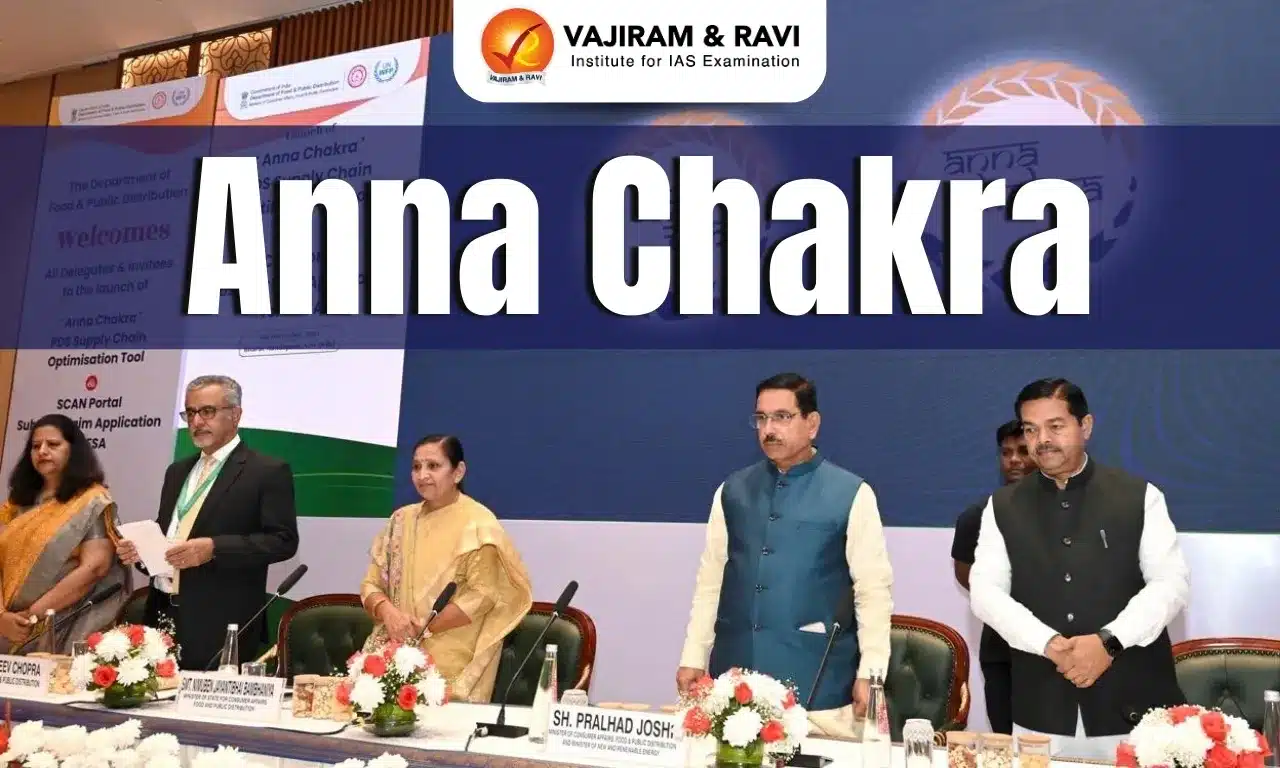
Anna Chakra

Anna Chakra

Anna Chakra Latest News

Recently, the Department of Food and Public Distribution (DFPD) has achieved a remarkable milestone by being named as finalist for the 2026 Franz Edelman Award for its Anna Chakra initiative.

About Anna Chakra

  • It is a supply chain optimization tool under the Public Distribution System (PDS).
  • It is an operations research–based decision support system designed to optimise state-specific food grain logistics under India’s Public Distribution System (PDS).
  • The initiative was developed through a Government–UN–Academia partnership, involving:
    • The Department of Food and Public Distribution,
    • The United Nations World Food Programme (WFP) in India, and
    • Indian Institute of Technology (IIT) Delhi.
  • It leverages advanced algorithms to identify optimal routes and ensure seamless movement of food grains across supply chain nodes. 
  • It is integrated with the PM Gati Shakti platform and FOIS (Freight Operations Information System) portal of the Railways through Unified Logistics Interface Platform (ULIP).

What is the Franz Edelman Award?

  • It recognizes the world’s most impactful, high-value applications of advanced analytics.
  • It is widely regarded as the “Nobel Prize of Operations Research and Analytics”.
  • It recognizes and rewards outstanding examples of operations research, management science, and advanced analytics practice in the world.
  • Award: Winner gets a $10,000 prize. 

Source: PIB

Anna-Chakra FAQs

Q1: What is the main objective of the Anna Chakra?

Ans: Its main objective is to ensure food security and reduce hunger by distributing essential commodities at affordable prices.

Q2: What is Anna Darpan?

Ans: The ANNADARPAN SMART is a non-invasive digital image processing technology based system for quality inspection of rice.

Enquire Now