Sejjil Missile

Sejjil Missile

Sejjil Missile Latest News

Iran has reportedly used one of its most advanced ballistic missiles, the Sejjil, during the ongoing conflict in the Middle East.

About Sejjil Missile

  • It is a two-stage, solid-fuel medium-range ballistic missile (MRBM) developed by Iran.
  • Iran started working on the Sejjil system in the early 1990s. It was first tested in 2008.
  • Because of its high-altitude manoeuvring ability, it has been nicknamed the "dancing missile", a reference to its capability to evade missile defence systems.
  • The weapon is also known by several other names, including Sajjil, Ashoura, and Ashura.

Sejjil Missile Features

  • The missile is around 18 metres long, has a diameter of about 1.25 metres.
  • It weighs roughly 23,600 kilograms.
  • Its solid-fuel design offers a strategic advantage, allowing it to be prepared and launched more quickly than older liquid-fuel systems like the Shahab series.
  • It has an estimated range of about 2,000 kilometres and a payload capacity of roughly 700 kilograms.
  • It is designed to carry both conventional explosive payloads and nuclear warheads.

Source: ET

Sejjil Missile FAQs

Q1: What type of missile is the Sejjil Missile?

Ans: It is a two-stage, solid-fuel medium-range ballistic missile (MRBM).

Q2: Which country developed the Sejjil Missile?

Ans: Iran.

Q3: Why is the Sejjil Missile nicknamed the “dancing missile”?

Ans: Because of its high-altitude manoeuvring ability that helps it evade missile defence systems.

Q4: What is the estimated range of the Sejjil Missile?

Ans: About 2,000 kilometres.
Hutchinson-Gilford Progeria Syndrome (HGPS)

Hutchinson-Gilford Progeria Syndrome

Hutchinson-Gilford Progeria Syndrome (HGPS) Latest News

U.S.-based Sentynl Therapeutics (part of Zydus Lifesciences) recently signed a deal with South Korea's PRG S&T to develop Progerinin, a pill aimed at treating Hutchinson-Gilford progeria syndrome (HGPS).

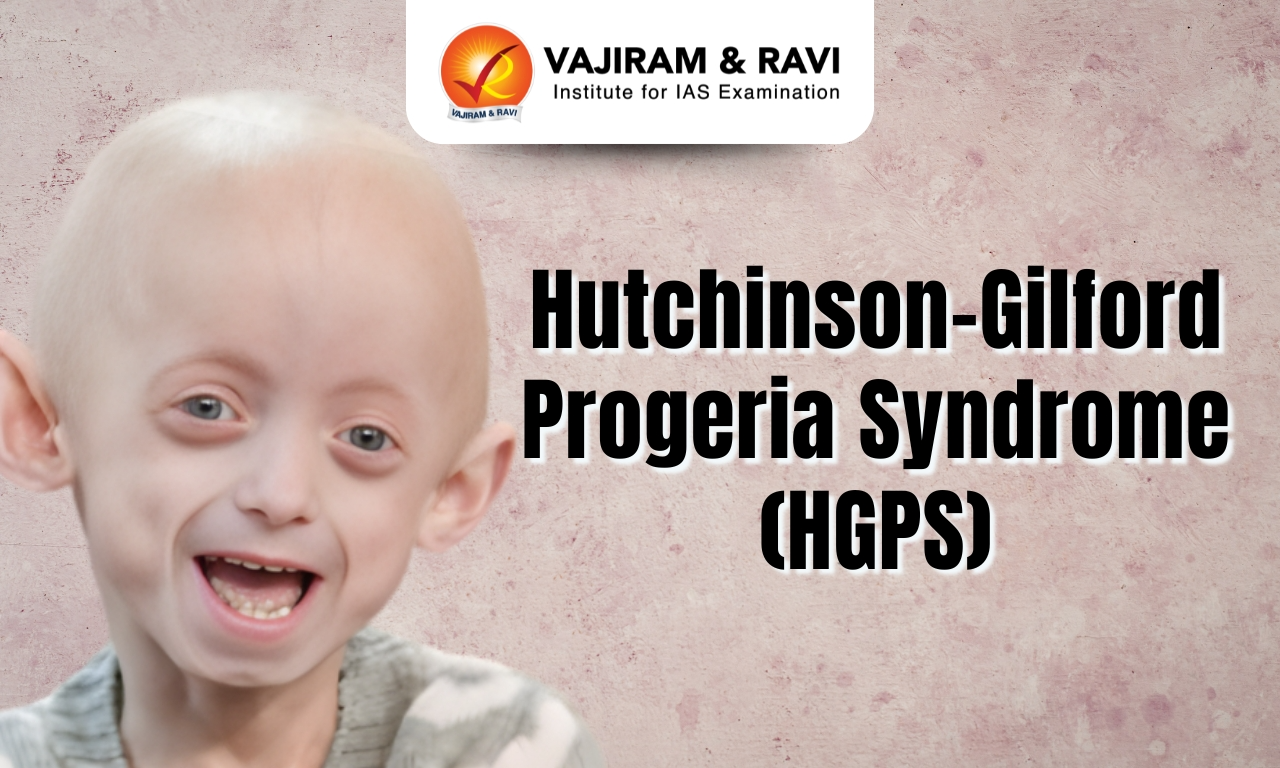
About Hutchinson-Gilford Progeria Syndrome (HGPS)

  • Progeria, also known as HGPS, is an extremely rare genetic disease that causes rapid aging in children.
  • Progeria is extremely rare. It occurs in 1 in every 4 million live births worldwide.
  • What Causes Progeria?
    • A genetic mutation in the LMNA gene causes progeria.  The LMNA gene is responsible for making a protein called lamin A.
    • Lamin A is an important part of the structural scaffolding that holds the nucleus of each cell in your body together.
    • A tiny mutation in the LMNA gene causes it to create an irregular form of the lamin A protein called progerin. 
    • Progerin takes the place of the lamin A and makes the nuclei of your cells unstable, slowly damaging them. 
    • This leads to the early death of every cell in your body, which causes the process of premature aging.
    • Almost all cases of progeria occur as a new, spontaneous mutation in the LMNA gene. This means there’s no biological family history of the disease.
  • Newborns with the disorder appear to be healthy at birth but usually start to show signs of premature aging during their first one to two years of life. 
  • Their growth rate slows and they don’t gain weight as expected. 
  • This condition does not affect intellectual development or the development of motor skills such as sitting, standing, and walking. 
  • However, their rapid aging causes distinct physical characteristics, including:
    • Hair loss (baldness).
    • Prominent eyes.
    • Aged, wrinkled skin.
    • A thin, beaked nose.
    • Disproportionately small face compared to head size.
    • Loss of fat under the skin.
  • Progeria is always fatal. The average age of death is 14.5 years, although some adults with progeria will live into their early 20s.
  • Death most often occurs as a result of complications of severe atherosclerosis. 
    • Atherosclerosis occurs when plaque builds up within the walls of your arteries. This makes them less elastic and, therefore, stiffer.
    • This condition greatly increases the chances of having a heart attack or stroke at a young age.

Source: NB

Hutchinson-Gilford Progeria Syndrome FAQs

Q1: What is Hutchinson-Gilford Progeria Syndrome (HGPS)?

Ans: It is an extremely rare genetic disease that causes rapid aging in children.

Q2: How common is Progeria worldwide?

Ans: It occurs in about 1 in every 4 million live births.

Q3: Which gene mutation causes Progeria?

Ans: A mutation in the LMNA gene.

Q4: What are some physical characteristics of children with Progeria?

Ans: Hair loss, prominent eyes, wrinkled skin, thin beaked nose, and loss of fat under the skin.

Q5: What is the most common cause of death in Progeria patients?

Ans: Complications from Atherosclerosis which increases the risk of heart attacks or strokes at a young age.

Butis bargabhimae

Butis bargabhimae

Butis bargabhimae Latest News

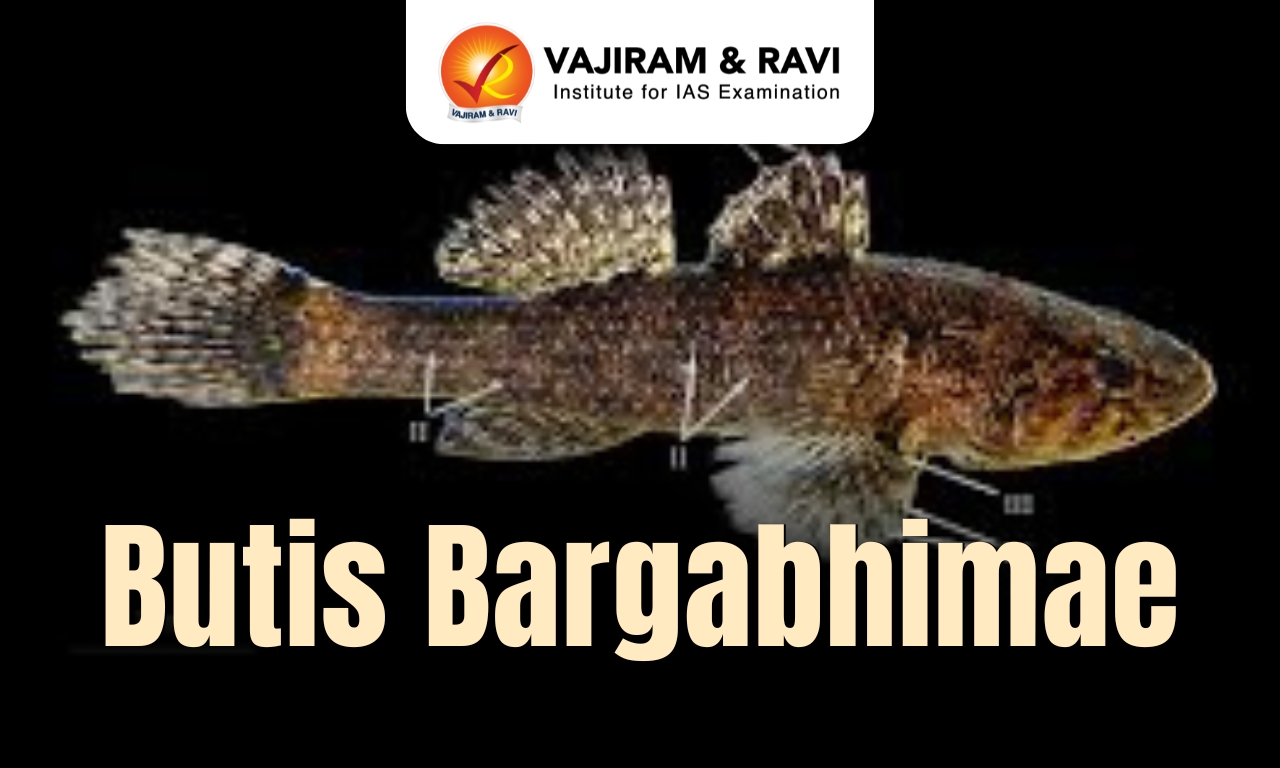
Scientists in West Bengal recently identified a new species of estuarine fish named Butis bargabhimae.

About Butis bargabhimae

  • It is a new species of estuarine fish.
  • It was found in the Rupnarayan River (tributary of the Hooghly River) near Tamluk, West Bengal.
  • It belongs to the butid family, a group of fish commonly known as gudgeon goby that typically live in the brackish waters where rivers meet the sea.
  • While most of its cousins have smooth areas around their eyes, this new fish features unique scales between its eyes (known as interorbital scales) and additional auxiliary scales across its body. 
  • It also sports distinctive light and dark bands on its pectoral fins, which are missing in similar species.
  • The species name, bargabhimae, is a tribute to the Hindu deity Bargabhima, a significant cultural and religious figure in the Tamluk area of West Bengal.

Source: RM

Butis bargabhimae FAQs

Q1: What is Butis bargabhimae?

Ans: It is a newly discovered species of estuarine fish.

Q2: Where was Butis bargabhimae discovered?

Ans: It was discovered in the Rupnarayan River (tributary of the Hooghly River) near Tamluk, West Bengal.

Q3: To which family does Butis bargabhimae belong?

Ans: The Butid family, commonly known as gudgeon gobies.

Q4: In what type of habitat do most fishes of the Butid family live?

Ans: In brackish waters where rivers meet the sea.

Petroglyphs

Petroglyphs

Petroglyphs Latest News

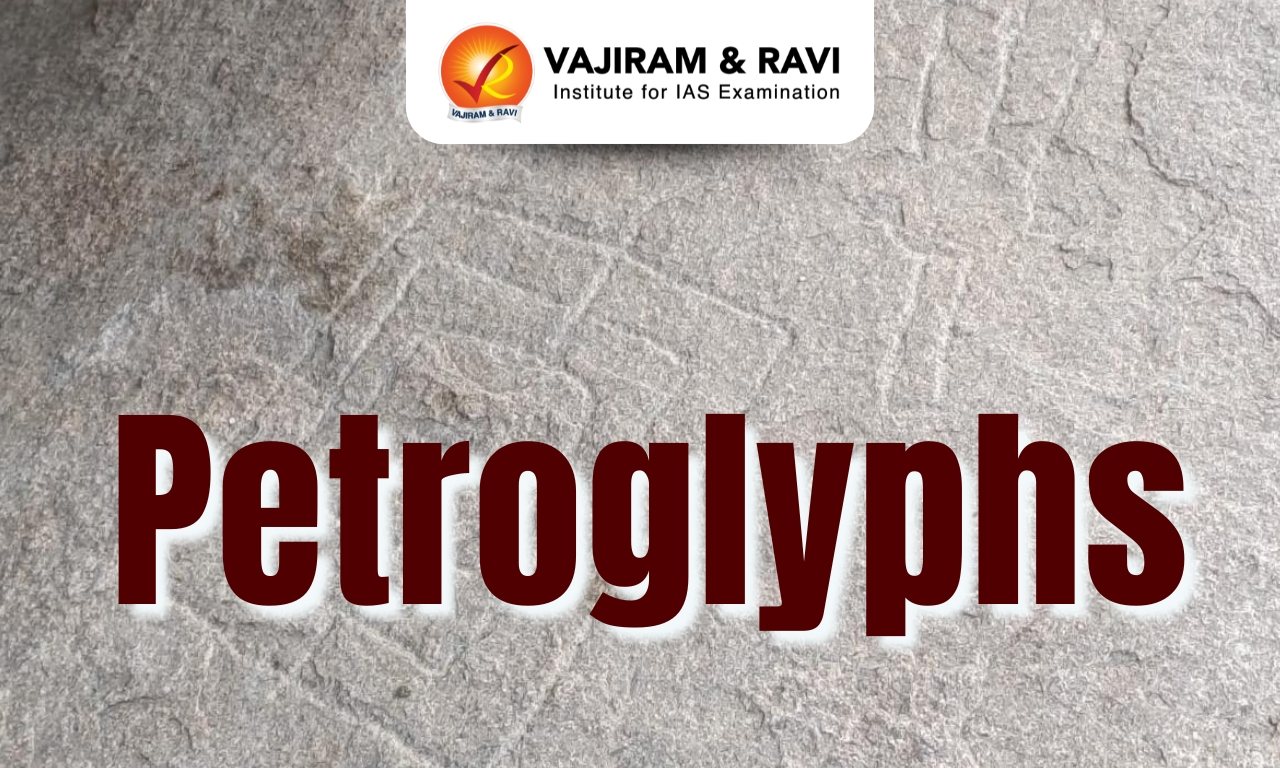
Researchers recently found two ancient rock carvings (petroglyphs) on a flat rock inside a rock shelter on a hill behind Beerappa Temple in Manchirevula, Telangana.

About Petroglyphs

  • Petroglyphs (also known as rock engravings) are symbolic images sculpted or engraved on the surface of rocks by removing material from its surface layer with instruments of superior hardness.
  • The techniques used to create these images include pecking, incising, abrading, sculpting, polishing, drilling, and scratching
  • These processes remove part of the rock and therefore are different from images simply painted or drawn on rock, which are called petrographs.
  • The word ‘’petroglyph’’ is derived from two Greek words, ‘’petros’’ meaning "stone," and ‘’glyphein’’ meaning "to carve."
  • Petroglyphs took two primary forms, as images either appear as scratches or deeper visible indentations on rock. 
  • Petroglyphs are typically associated with prehistoric populations and can be found on every continent throughout the world, except Antarctica.
  • However, they are especially concentrated in Africa, South America, North America (mainly in the southwestern United States), Siberia, Australia, and Europe (Scandinavia, Spanish Galicia, Ireland and Italy).
  • Example of Petroglyph Site in India: Edakkal Caves in Wayanad, Kerala.

Significance of Petroglyphs

  • They are among the earliest forms of art to have existed and are therefore considered the foundation of art. 
  • Ancient peoples also used petroglyphs as a form of communication or writing. 
  • For example, some petroglyphs clearly indicated the borders between tribal lands, and others were astronomical markers and maps
  • Additionally, some petroglyphs served as musical instruments and were known as "rock gongs.”

Source: DC

Petroglyphs FAQs

Q1: What are petroglyphs?

Ans: Petroglyphs are symbolic images carved or engraved on rock surfaces by removing part of the rock layer.

Q2: How are petroglyphs created?

Ans: By removing material from rock surfaces using harder instruments.

Q3: How are petroglyphs different from petrographs?

Ans: Petroglyphs are carved into rocks, while petrographs are painted or drawn on rock surfaces.

Q4: On which continents are petroglyphs found?

Ans: Petroglyphs can be found on every continent throughout the world, except Antarctica.

Force Majeure

Force Majeure

Force Majeure Latest News

Several Gulf energy producers recently declared force majeure on oil and gas shipments after disruptions to shipping through the Strait of Hormuz.

About Force Majeure

  • The concept of force majeure refers to an extraordinary event rendering the legal obligations between two or more contractually bound parties impossible to fulfill.
  • The phrase comes from French and literally means “superior force’’.
  • It is related to the concept of an act of God, an event for which no party can be held accountable. This type of event must be entirely beyond the parties’ reasonable control.
  • As a precautionary measure against breach of contract, many commercial agreements contain force majeure contract clauses enumerating a list of major events that could result in non-performance of contractual duties.
  • Force majeure does not encompass events that are predictable, preventable, or controllable, or that result from the negligence or malfeasance of one or more parties.
  • Force majeure incidents typically include wars, natural disasters (e.g., earthquakes), terrorist attacks, epidemics, and civil unrest, such as riots.
  • When a force majeure clause is triggered, any party affected by the event must notify the other party or parties to the contract. 
    • The affected parties will describe the start date and circumstances of the incident and cite the specific section in the contract that allows them to declare a force majeure incident. 
    • The contracting parties must also prove their reasonable efforts to mitigate the circumstances that have rendered the fulfillment of their duties impracticable.
    • Such events may result in the parties delaying their obligations for a period of time, revising the contract terms, or agreeing on the contract’s cancellation.
  • The application of force majeure can vary across legal systems, with some jurisdictions requiring a more stringent definition than others.
  • In India, the doctrine of force majeure is governed by section 56 of the Indian Contract Act, 1872 (“Indian Contract Act”). 
    • It provides that a contract becomes void if an act to be performed under the contract becomes impossible after the contract is made, or, by reason of some event, which the promisor could not prevent, the act to be performed becomes unlawful.
  • Force majeure conflicts with the concept of “pacta sunt servanda,” a principle in international law that agreements must be kept and not wriggled out of.

Source: ALJ

Force Majeure FAQs

Q1: What does the term “force majeure” refer to in contract law?

Ans: It refers to an extraordinary event that makes it impossible for parties to fulfill their contractual obligations.

Q2: What type of events are generally covered under force majeure?

Ans: Events beyond the reasonable control of the contracting parties.

Q3: Why do many commercial agreements include force majeure clauses?

Ans: To protect parties from liability for non-performance due to extraordinary events.

Q4: What possible outcomes may result from a force majeure event?

Ans: Delay of obligations, revision of contract terms, or cancellation of the contract.

Sahitya Akademi Award

Sahitya Akademi Award

Sahitya Akademi Award Latest News

Recently, the Sahitya Akademi has announced its annual Sahitya Akademi Awards in 24 Indian languages recognised by it.

About Sahitya Akademi Award

  • It is awarded for the most outstanding books of literary merit published in any of the major Indian languages recognised by the Akademi.
  • Languages Recognised: Along with the 22 languages enumerated in the Constitution of India, the Sahitya Akademi has recognised English and Rajasthani as languages in which its programme may be implemented. 
  • Award: The authors and poets will receive a plaque, a shawl and an amount of ₹1 lakh in an award.

Key Facts about the Sahitya Akademi

  • It was formally inaugurated by the Government of India on 12 March 1954.
  • It was registered as a society under the Societies Registration Act, 1860.
  • It is the central institution for literary dialogue, publication and promotion in the country and the only institution that undertakes literary activities in 24 Indian languages, including English.
  • Nodal Ministry: Ministry of Culture.
  • Head office: New Delhi

Source: PIB

Sahitya Akademi Award FAQs

Q1: What is the Sahitya Akademi Award given for?

Ans: Excellence in literature

Q2: Which languages are eligible for the Sahitya Akademi Award?

Ans: 24 languages

Kanha Tiger Reserve

Kanha Tiger Reserve (KTR)

Kanha Tiger Reserve Latest News

Recently, the Kaziranga National Park and Tiger Reserve has cleared all formalities to translocate about 50 wild Asiatic water buffaloes from the park to the Kanha Tiger Reserve in Madhya Pradesh in a phase-wise manner.

About Kanha Tiger Reserve

  • Location: It is located in the “Maikal” ranges of the Satpuras in the state of Madhya Pradesh.
  • Corridor: It has an active corridor between Kanha and Pench Tiger Reserves. Kanha is also connected with the Achanakmar Tiger Reserve of Chhattisgarh State. 
  • Terrain: It is characterized mainly by forested shallow undulations, hills with varying degrees of slopes, plateaus, and valleys.
  • Tribal Communities: The region is known for some of the ancient tribal communities, like the Gond and Baiga still inhabit the region. 
  • It is also the first tiger reserve in India to officially introduce a mascot, “Bhoorsingh the Barasingha”. 
  • Vegetation: It primarily consists of a moist Sal and moist mixed deciduous forest.
  • Flora: Bamboo, Tendu, Sal, Jamun, Arjun, and Lendia flourish.
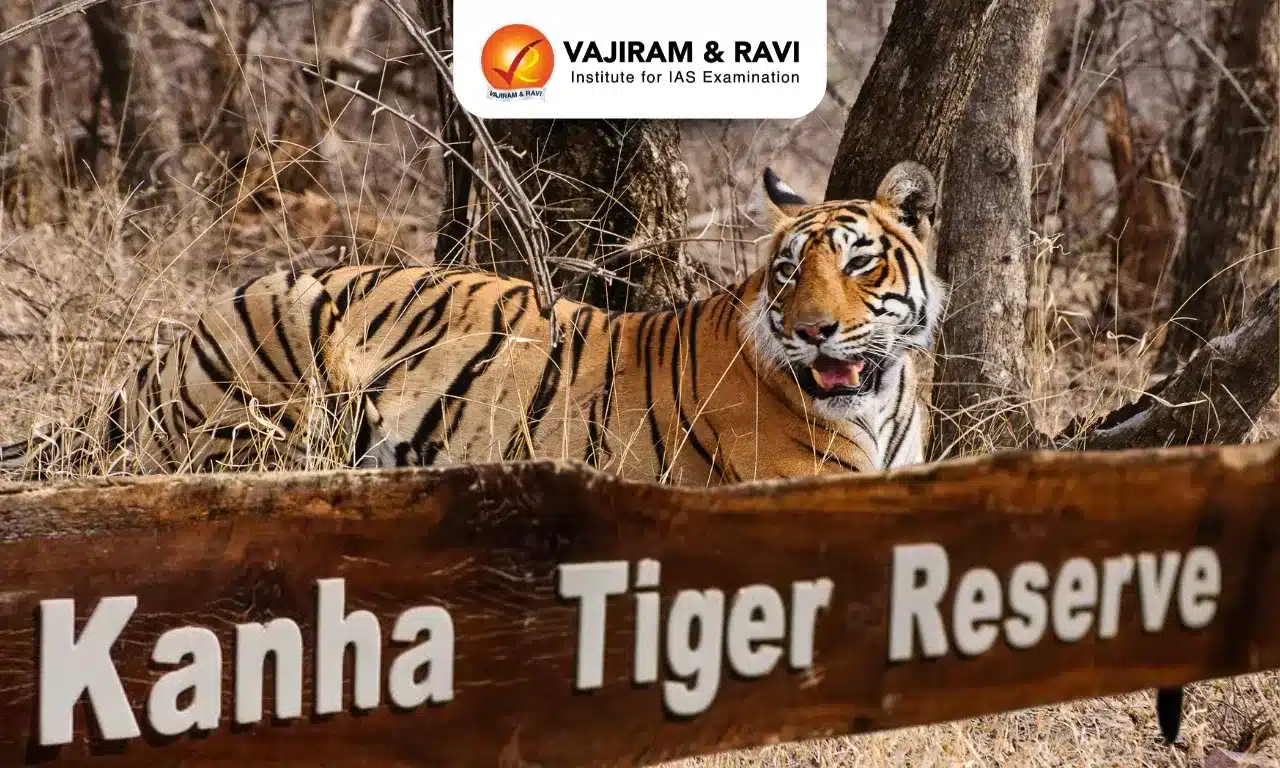
  • Fauna: The Park has a significant population of Royal Bengal Tigers, leopards, sloth bears, and Indian wild dogs.

Source: AT

Kanha Tiger Reserve FAQs

Q1: Where is Kanha Tiger Reserve located?

Ans: Madhya Pradesh

Q2: What is Kanha Tiger Reserve known for?

Ans: Tiger conservation

Foot and Mouth Disease

Foot and Mouth Disease

Foot and Mouth Disease Latest News

Recently, the Government of Gujarat has launched an intensive statewide vaccination campaign to control the spread of Foot and Mouth Disease (FMD).

About Foot and Mouth Disease

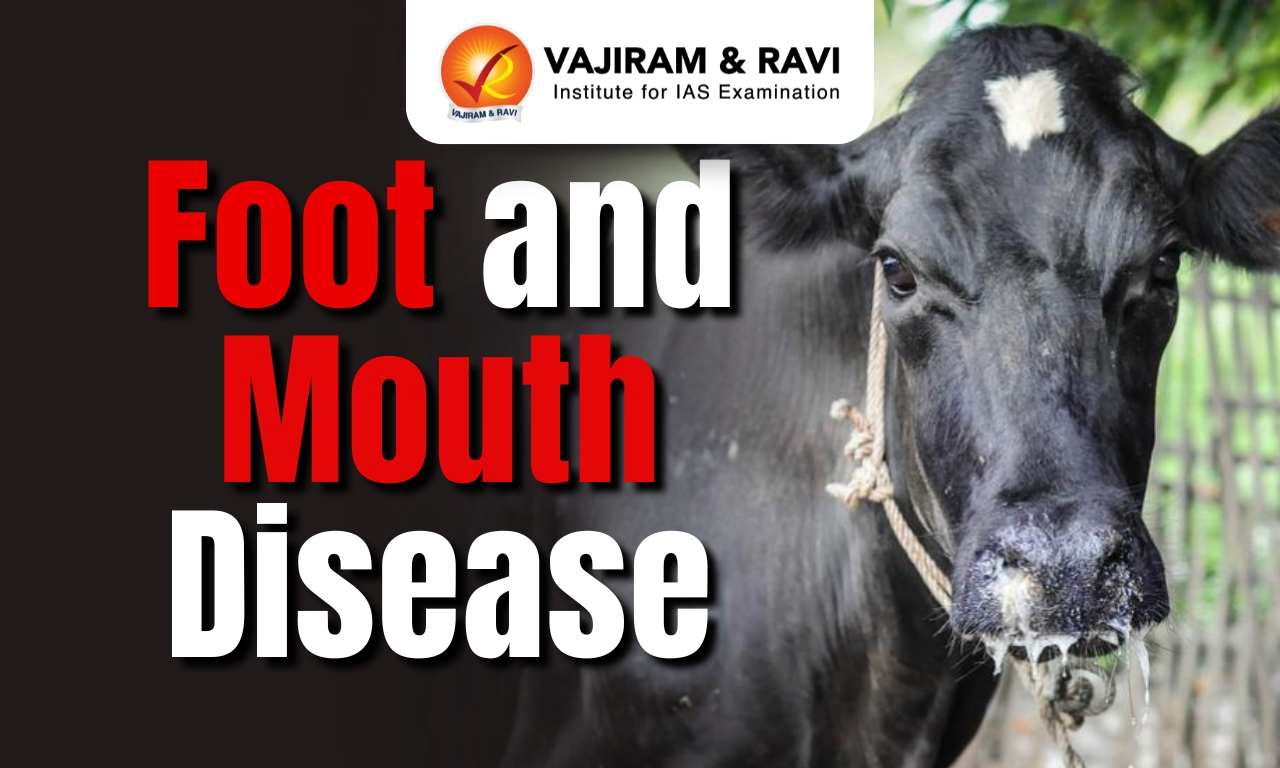
  • It is a highly contagious viral infection that affects cloven-hoofed animals such as cattle, buffaloes, sheep and goats.
  • Cause: It is caused by an Aphthovirus of the family Picornaviridae.
  • Symptoms
    • FMD is characterised by fever and blister-like sores on the tongue and lips, in the mouth, on the teats and between the hooves.
    • The disease causes severe production losses, and, while the majority of affected animals recover, the disease often leaves them weakened and debilitated. 
    • The disease is rarely fatal in adult animals, but there is often high mortality in young animals due to myocarditis.
  • It is a transboundary animal disease (TAD) that deeply affects the production of livestock and disrupts regional and international trade in animals and animal products.
  • Intensively reared animals are more susceptible to the disease than traditional breeds.
  • Transmission: It is transmitted through
    • Infected animals newly introduced into a herd (carrying virus in their saliva, milk, semen, etc.); 
    • Contaminated pens/buildings or contaminated animal transport vehicles; 
    • Contaminated materials such as hay, feed, water, milk or biologics; 
    • Contaminated clothing, footwear, or equipment; 
    • Virus-infected meat or other contaminated animal products (if fed to animals when raw or improperly cooked); 
  • Treatment: Vaccination is the only effective preventive measure against FMD.

Source: DD News

Foot and Mouth Disease FAQs

Q1: What is Foot and Mouth Disease (FMD)?

Ans: A viral disease affecting livestock

Q2: Which animals are primarily affected by FMD?

Ans: Cattle, pigs, sheep, goats

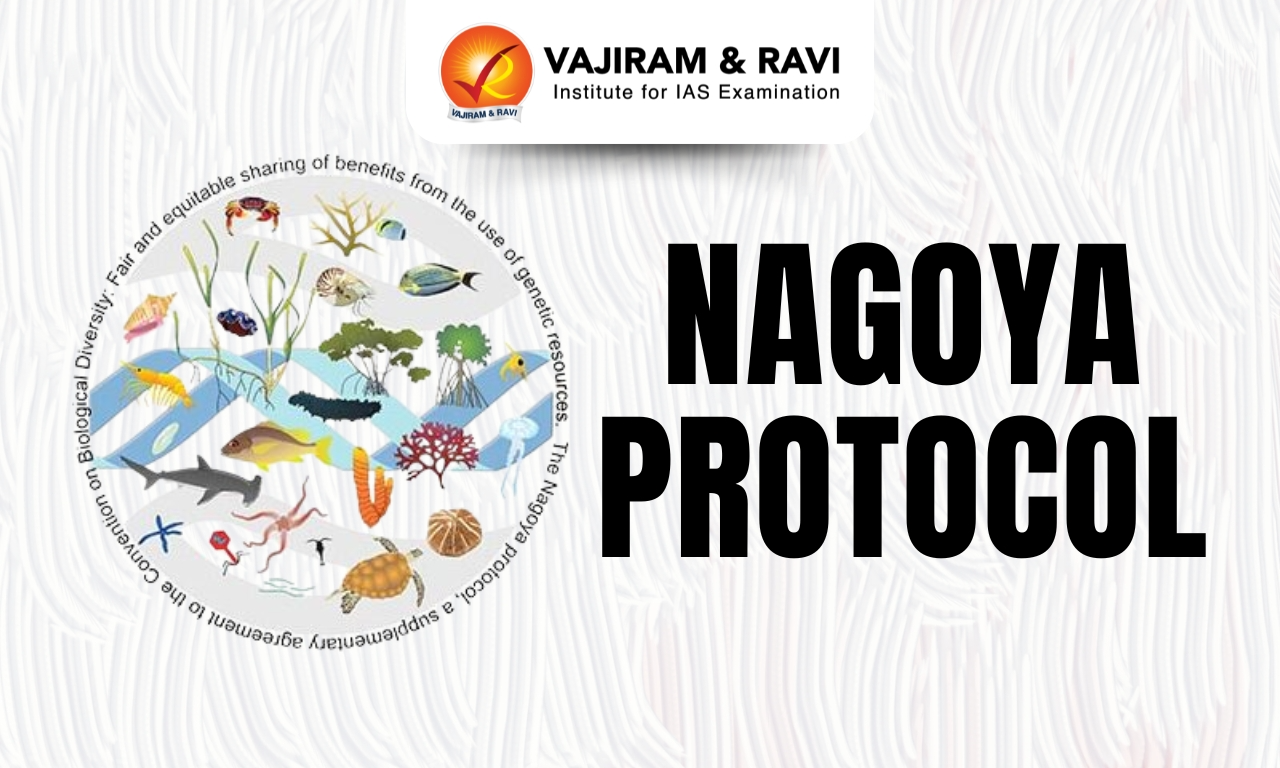
Nagoya Protocol

Nagoya Protocol

Nagoya Protocol Latest News

The Ministry of Environment, Forest and Climate Change has submitted India’s First National Report on the implementation of the Nagoya Protocol on Access Benefit Sharing to the Secretariat of the Convention on Biological Diversity. 

About Nagoya Protocol

  • The Nagoya Protocol on Access to Genetic Resources and the Fair and Equitable Sharing of Benefits Arising from their Utilization (ABS) to the Convention on Biological Diversity is a supplementary agreement to the Convention on Biological Diversity.
  • It was adopted on 29 October 2010 in Nagoya, Japan and entered into force on 12 October 2014, 90 days after the deposit of the fiftieth instrument of ratification.
  • It provides a transparent legal framework for the effective implementation of the fair and equitable sharing of benefits arising out of the utilization of genetic resources.
  • India ratified it in 2012.
  • What does it cover?
    • It applies to genetic resources that are covered by the CBD, and to the benefits arising from their utilization. 
    • It covers traditional knowledge (TK) associated with genetic resources that are covered by the CBD and the benefits arising from its utilization.

Key Facts about Convention on Biological Diversity (CBD)

  • It is the most comprehensive binding international agreement in the field of nature conservation and the sustainable use of natural resources.
  • It was opened for signing at the UN Conference on Environment and Development in Rio de Janeiro in 1992. 
  • It has three overarching objectives
    • Conservation of biological diversity (genetic diversity, species diversity, and habitat diversity)
    • Sustainable use of biological diversity
    • Fair and equitable sharing of the benefits arising out of the utilisation of genetic resources.

Source: PIB

Nagoya Protocol FAQs

Q1: What is the main objective of the Nagoya Protocol?

Ans: Fair and equitable sharing of genetic resources

Q2: Under which convention is the Nagoya Protocol adopted?

Ans: Convention on Biological Diversity (CBD)

Vela carli

Vela carli

Vela carli Latest News

Recently, researchers discovered from the forests of the Silent Valley National Park that a crab belongs to the species Vela carli and is both male and female at the same time.

About Vela carli

  • Vela carli is an endemic freshwater crab found only in the forests and streams of the Central Western Ghats.
  • It belongs to the family Gecarcinucidae.
  • It is for the first instance it showed gynandromorphy (a rare condition in which individuals exhibit both male and female characteristics)
  • The bodies of the crabs displayed male reproductive structures, while other parts showcased female features, including gonopores
  • It is rare in crustaceans and has never before been reported in the freshwater crab family Gecarcinucidae.

Key Facts about Silent Valley National Park

  • Location: It is located in the State of Kerala.
  • It constitutes the centerpiece of the Nilgiri Biosphere Reserve, sanctified as a World Heritage Site by UNESCO in 2012.
  • River: It is nourished by the Kunthipuzha River.
  • Vegetation: It has four types of vegetation “West Coast tropical evergreen forest, southern sub-tropical broad-leaved hill forest, montane wet temperature forest, and grasslands.
  • Flora: The flora of the valley includes about 1000 species of flowering plants, 107 species of orchids, 100 ferns and fern allies, 200 liverworts, 75 lichens, and about 200 algae.
  • Fauna:  It is famous for its population of lion-tailed macaques, Nilgiri langur, Malabar giant squirrel, Indian elephant, tiger, leopard, and gaur (Indian bison).

Source: TH

Vela carli FAQs

Q1: What type of crab is Vela Carli?

Ans: Freshwater crab

Q2: Where was recently Vela Carli crab found?

Ans: Western Ghats

Enquire Now