Neodymium-Iron-Boron Magnet

Neodymium-Iron-Boron Magnet

Neodymium-Iron-Boron Magnet Latest News

Recently, a Pilot Plant for the manufacture of Nd-Fe-B (Neodymium-Iron-Boron) rare earth permanent magnets was established at the International Advanced Research Centre for Powder Metallurgy and New Materials (ARCI), Hyderabad.

About Neodymium-Iron-Boron Magnet

  • The NdFeB magnet is the strongest permanent magnet in the world.
  • It is a tetragonal crystal formed of neodymium, iron, and boron.
  • It is made mainly from a combination of Neodymium, Iron, Boron, Cobalt and varying levels of Dysprosium and Praseodymium.
  • Neodymium Magnets can be divided into three types: 
    • Sintered NdFeB magnets: It has the largest output and the most widely used in the NdFeB family.
    • Bonded NdFeB magnets: This has the advantages of low cost, high dimensional accuracy, a large degree of freedom of shape, good mechanical strength, light specific gravity, etc., and has been widely used in the market. 
    • Hot-pressed NdFeB magnets: They can achieve magnetic properties similar to sintered NdFeB without adding heavy rare earth elements. 
      • They have the advantages of high density, , and high coercivity, but the mechanical properties are not good. high orientation, good corrosion resistance
    • Due to different production processes, they have big differences in product magnetic properties, post-processing, and applications.
  • Applications: It is widely used in electronic products, such as hard drives, mobile phones, earphones, and battery-powered tools.

Source: PIB

Neodymium-Iron-Boron Magnet FAQs

Q1: What is a Neodymium-Iron-Boron (NdFeB) magnet?

Ans: A type of ferromagnetic material

Q2: What is a key characteristic of NdFeB magnets?

Ans: High magnetic strength
Chapchar Kut

Chapchar Kut

Chapchar Kut Latest News

Recently, Mizoram’s most important and largest spring festival Chapchar Kut concluded a week-long series of cultural festivities.

About Chapchar Kut

  • It is a spring festival celebrated in the state of Mizoram.
  • Background: It is estimated to have started in 1450–1700 A.D. in a village called Suaipui.
  • It is celebrated during March after completion of their most arduous task of jhum operation i.e., jungle-clearing (clearing of the remnants of burning).
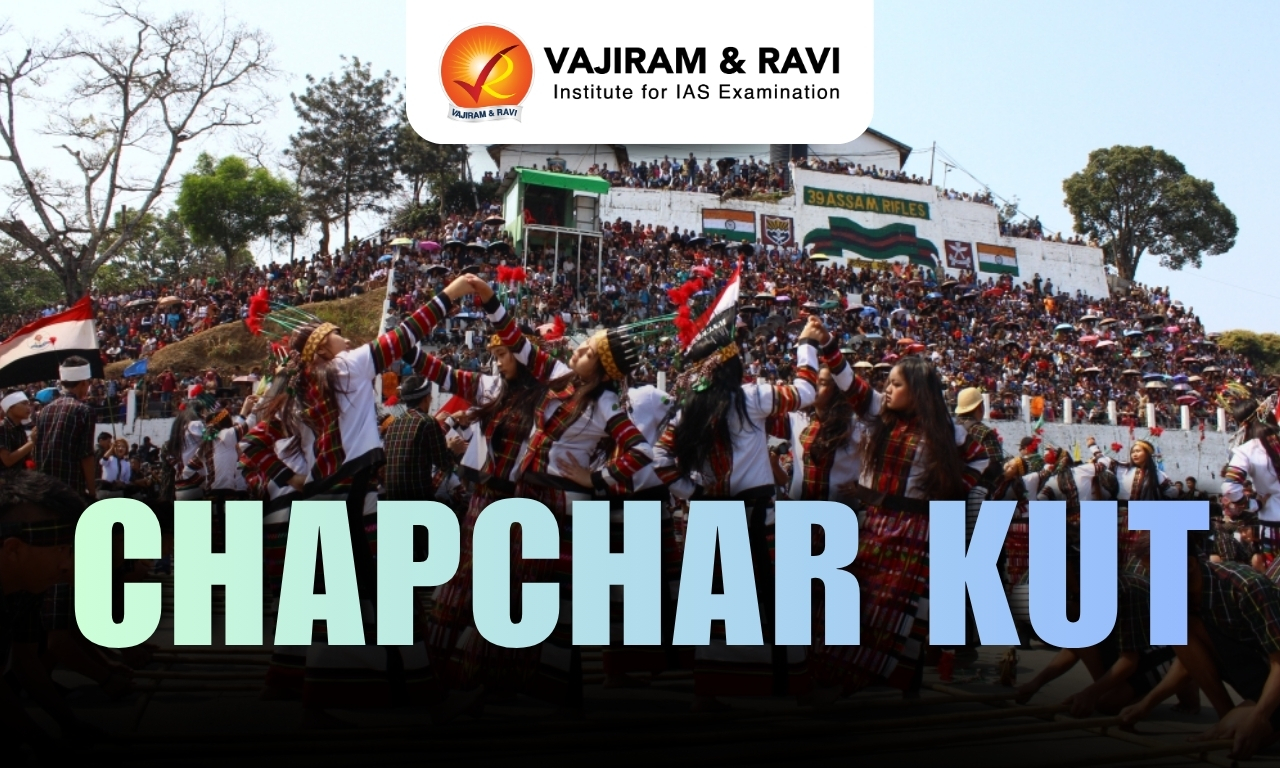
  • During this festival, both the men and women get dressed in their traditional attire with distinguished headgears and traditional jewelry 
  • All the people gather for a huge community fest to sing and dance to the tune of flute, cymbals, drums and gongs.
  • One of the greatest highlights of Chapchar Kut is the popular bamboo dance called Cheraw
    • Bamboo dance features men tapping the bamboo sticks according to the rhythm of the dance and women adjust their dance moves with moving sticks.
    • Various movements made by the Cheraw dancers are inspired by nature. 
  • Other Festivals of Mizoram: Pawl Kut, Lyuva Khutla and Anthurium Festival

Source: News On Air

Chapchar Kut FAQs

Q1: In which state is Chapchar Kut primarily celebrated?

Ans: Mizoram

Q2: What is Chapchar Kut?

Ans: A festival in Mizoram

South Sudan

South Sudan

South Sudan Latest News

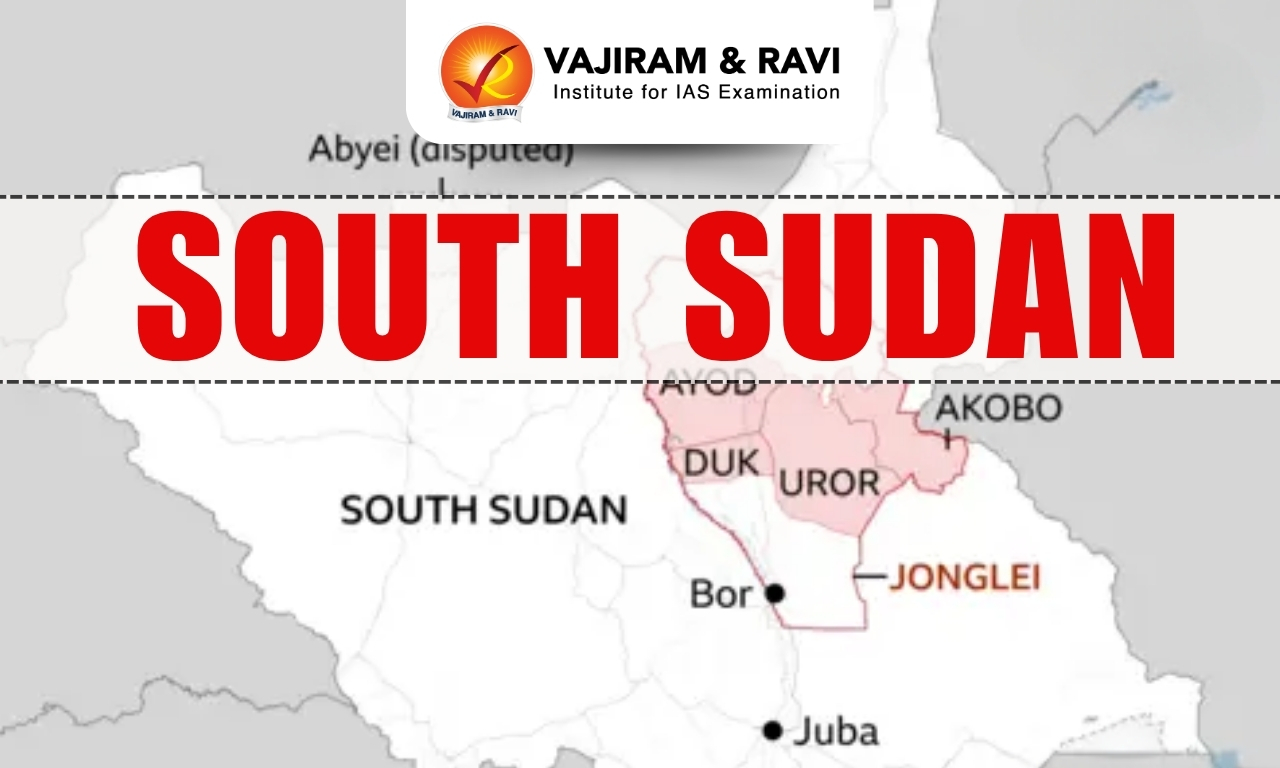
Recently, Akobo has become the latest flashpoint as fighting between the government and opposition has brought South Sudan back to the brink of all-out civil war.

About South Sudan

  • Location: It is a landlocked country located in East-Central Africa.
  • Bordering countries: It is bordered by 6 countries namely; are Sudan to the north, Ethiopia to the east, Kenya to the southeast, Uganda to the south,  Democratic Republic of the Congo to the southwest, and Central African Republic to the west.
  • Capital City: Juba

Geographical Features of South Sudan

  • Terrain:  It mainly consists of grasslands, wooded and grassy savannahs, floodplains, and wetlands.
  • One of the most interesting landforms is the Al Sudd region which is a large swampy land located in the central region of South Sudan.
  • Climate: Tropical, hot and humid.
  • Rivers: The Nile River (longest river in the world ) is the most important geographic feature of South Sudan.
  • Highest Peak: Mount Kinyeti 3,187 m tall
  • Natural Resources: It consists of oil reserves gold, diamonds, hardwoods, limestone, iron ore, copper, chromium ore, zinc, tungsten, mica, and silver.

Source: TH

South Sudan FAQs

Q1: What is the capital of South Sudan?

Ans: Juba

Q2: What is a major economic activity in South Sudan?

Ans: Oil production

National Productivity Council

National Productivity Council

National Productivity Council Latest News

Recently, the National Productivity Council (NPC) has signed an agreement with the Ministry of Environment, Forest and Climate Change (MoEF&CC) to function as the Environment Audit Designated Agency (EADA).

About National Productivity Council

  • It was established in 1958 as an autonomous organization.
  • It works under the Department for Promotion of Industry & Internal Trade, Ministry of Commerce and Industry.
  • It is a multipartite, non-profit organization with equal representation from employers’ & workers’ organizations and the Government, apart from technical & professional institutions and other interests. 
  • Headquarters: New Delhi
  • It is a constituent of the Tokyo-based Asian Productivity Organisation (APO), an Inter-Governmental Body of which the Government of India is a founding member.
  • NPC has professionals from diverse fields to provide Consultancy, Capacity Building, and Project Monitoring Unit (PMU) services to various organisations, including Central Government Ministries and State Governments.

Objectives of National Productivity Council 

  • Increase awareness of productivity concepts and techniques
  • Strengthen microeconomic foundations of economic development
  • Function as a think tank for the Government
  • Provide premier productivity consultancy and training services
  • Enhance focus on productivity

Functions of National Productivity Council

  • Consultancy to organizations on productivity improvement
  • Training of personnel at different levels
  • Dissemination of productivity information through seminars, workshops, conferences, etc
  • Productivity Research and Database
  • Productivity Publications

Source: PIB

National Productivity Council FAQs

Q1: Where is the headquarters of the National Productivity Council located?

Ans: New Delhi

Q2: What is the primary objective of the National Productivity Council?

Ans: To increase awareness of productivity concepts and techniques

Navroz

Navroz

Navroz Latest News

The Prime Minister of India greeted people on the occasion of Parsi New Year, Navroz.

About Navroz

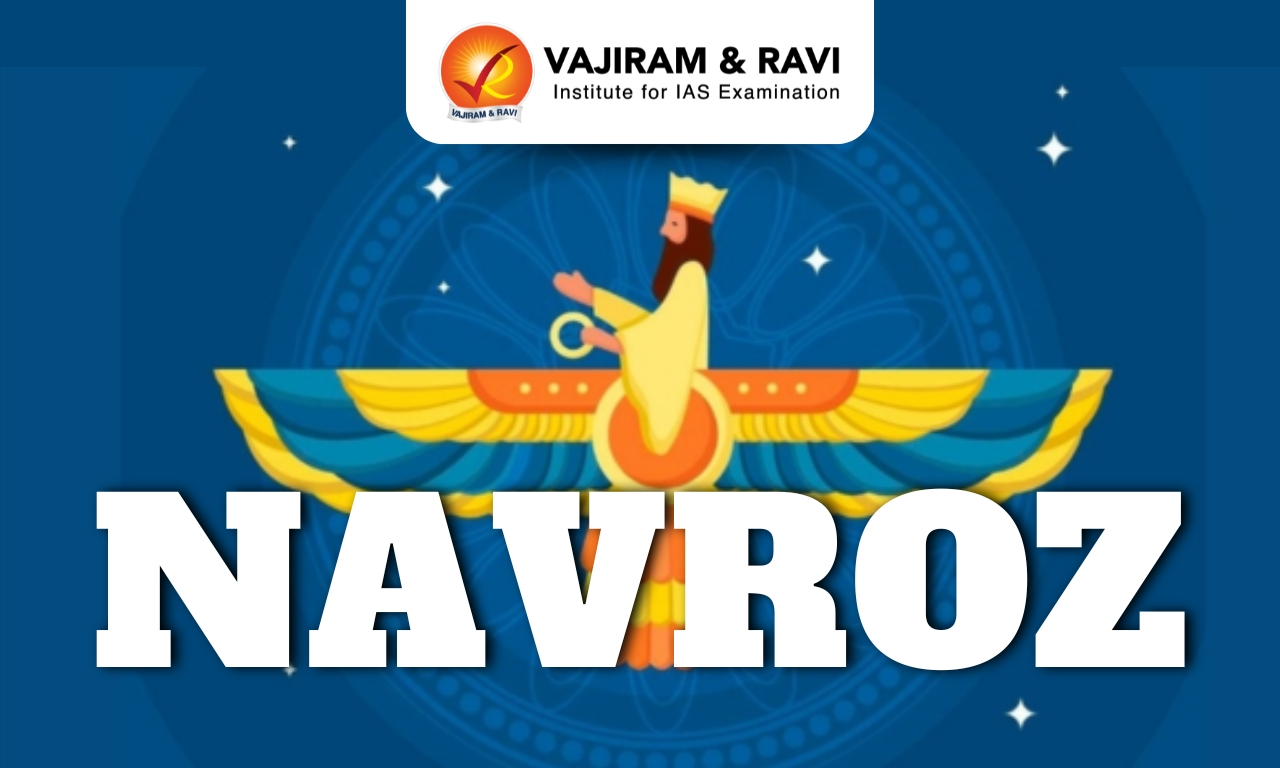
  • Navroz is an Iranian and Persian New year.
  • The word ‘nov’ means ‘new’ and roz means ‘day’. Therefore, the word translates to a new day.’ 
  • It marks the beginning of the spring season and is celebrated with great fervour by members of the Parsi community across the globe.
  • Historical Background
    • Nowruz’s origins can be traced back to the ancient Persian empire and the Zoroastrian calendar, where it marked one of the holiest days of the year.
    • The festival of Nowruz is named after the Persian king, Jamshed, who is credited for creating the Persian or the Shahenshahi calendar. 
    • It is said that the festival came to India courtesy of an 18th-century wealthy tradesman from Surat, Nusservanji Kohyaji, who often travelled to Iran and began celebrating Nowruz in India.
  • It is listed in the list of UNESCO Intangible Cultural Heritage of Humanity of India.

Source: News On Air

Navroz FAQs

Q1: What is Navroz?

Ans: A Persian New Year festival

Q2: What is the significance of Navroz?

Ans: New year celebration

Diego Garcia

Diego Garcia Island

Diego Garcia Latest News

Iran recently fired two ballistic missiles toward the joint U.S.-U.K. military base at Diego Garcia in the Indian Ocean.

About Diego Garcia

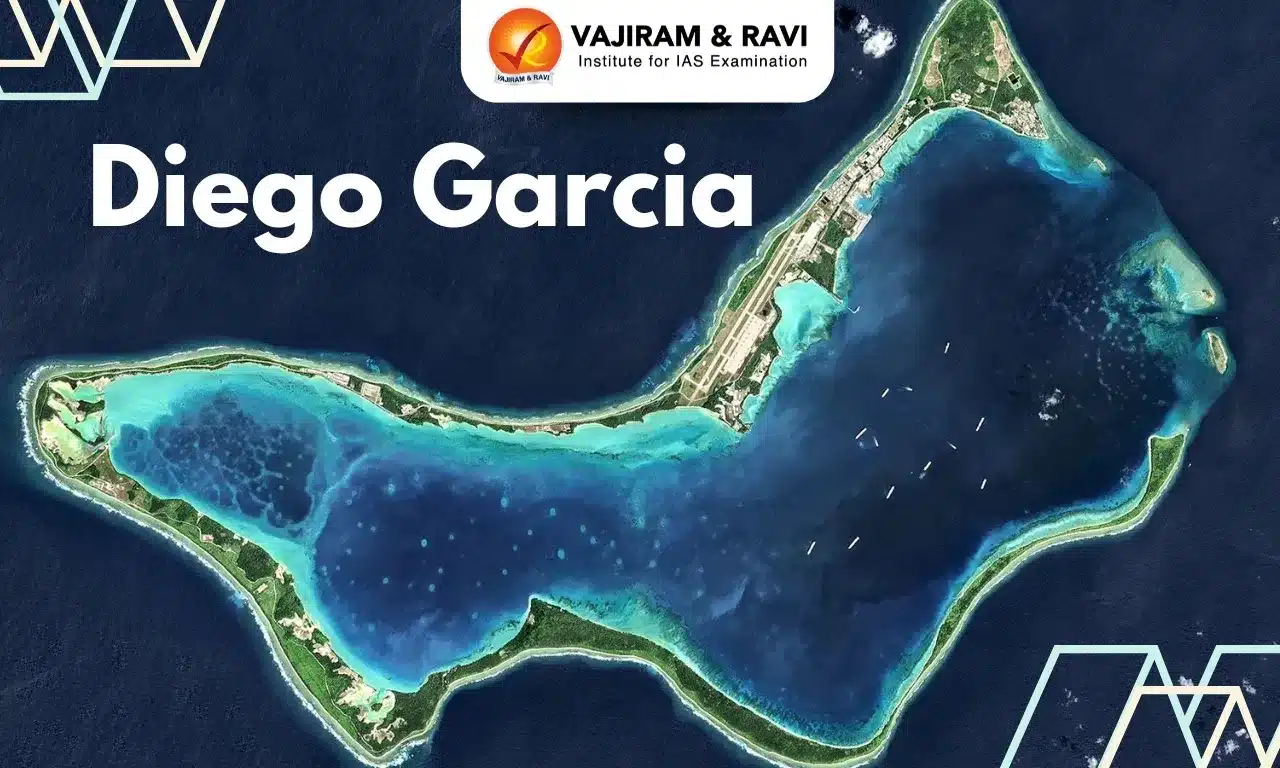
  • Location: It is a coral atoll located in the central Indian Ocean.
  • It is the largest and southernmost member of the Chagos Archipelago.
  • It is part of the British Indian Ocean Territory (BIOT) and accounts for more than half the land area.
  • It was discovered by the Portuguese in the early 16th century, it was for most of its history a dependency of Mauritius. 
  • In 1965 it was separated from Mauritius as part of the newly created BIOT. 
  • In 1966, the UK leased Diego Garcia to the US to create an air and naval base. For constructing the defence installation, the inhabitants of the island were forcibly removed.
  • Diego Garcia is the United States’ major geostrategic and logistics support base in the Indian Ocean. 
  • A non-binding 2019 UN General Assembly vote demanded that Britain end its “colonial administration” of the Chagos Archipelago and that it be returned to Mauritius.

Source: TH

Diego Garcia FAQs

Q1: Where is Diego Garcia located?

Ans: Indian Ocean

Q2: What is Diego Garcia known for?

Ans: Military base

Caspian Sea

Key Facts about Caspian Sea

Caspian Sea Latest News

Recently, the Israeli military confirmed that its fighter jets carried out strikes on several Iranian naval vessels in the Caspian Sea.

About Caspian Sea

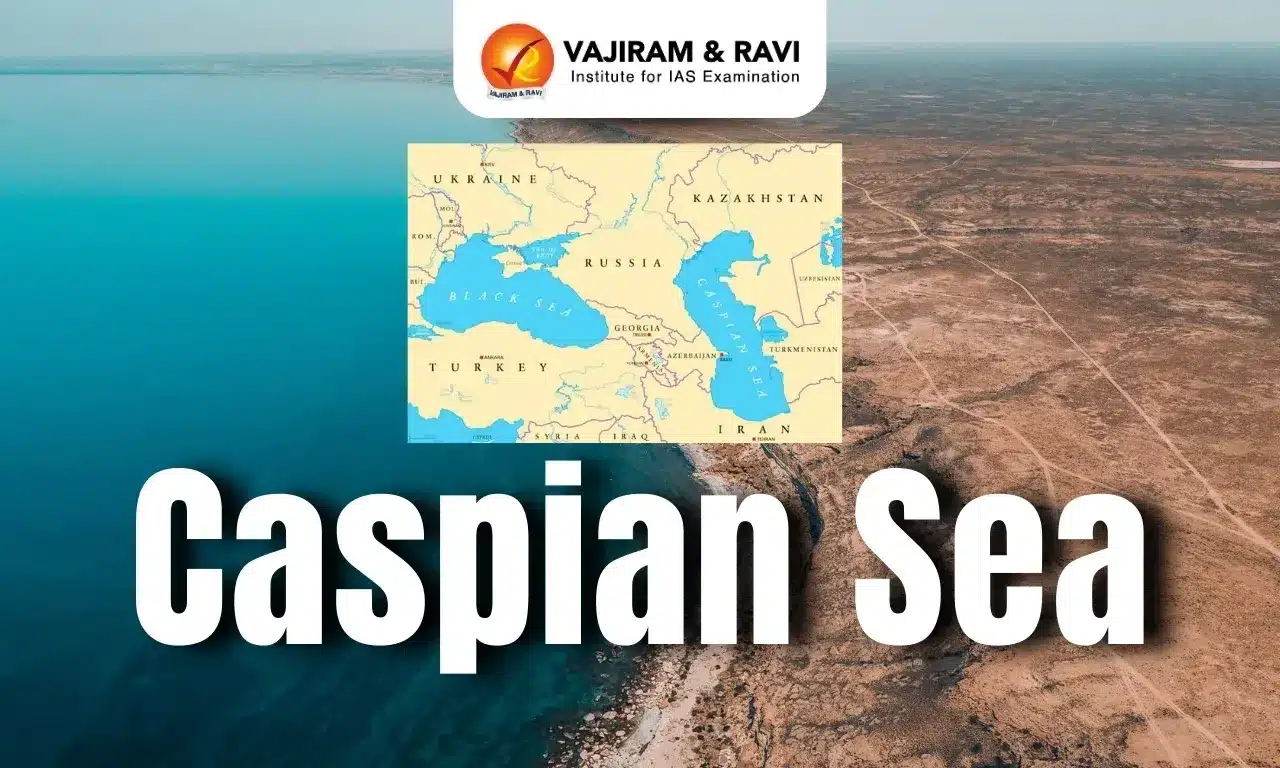
  • It is the world’s largest water body that is enclosed or bordered by land on all sides. 
  • It is located between Asia and Europe.
  • The sea’s name derives from the ancient Kaspi peoples, who once lived in Transcaucasia to the west.
  • It is an endorheic basin (drainage basin without an outflow).
  • Bordering countries: It is bordered by Russia and Azerbaijan on the west, Kazakhstan and Turkmenistan on the north and east, and Iran on the south. 
  • The composition of the water of the Caspian Sea also varies from almost fresh in the northern parts of the lake to saltier southwards. 
  • Three major rivers—the Volga, the Ural, and the Terek—empty into the Caspian from the north. 
  • Cities on Caspian: Baku, the capital of Azerbaijan, is the largest city on the Caspian. Another important city along the Caspian is Iran’s Nowshahr.
  • Islands: The largest are Chechen, Tyuleny, Morskoy, Kulaly, Zhiloy, and Ogurchin.
  • Resources: It is also known for its abundance of energy resources (oil and natural gas reserves in offshore fields and onshore on the coast of the sea).

Source: ET

Caspian Sea FAQs

Q1: What is the Caspian Sea a major source of?

Ans: Oil and gas

Q2: Which countries border the Caspian Sea?

Ans: Russia, Iran, Azerbaijan, Kazakhstan, Turkmenistan

Prosopis Juliflora

Prosopis Juliflora

Prosopis Juliflora Latest News

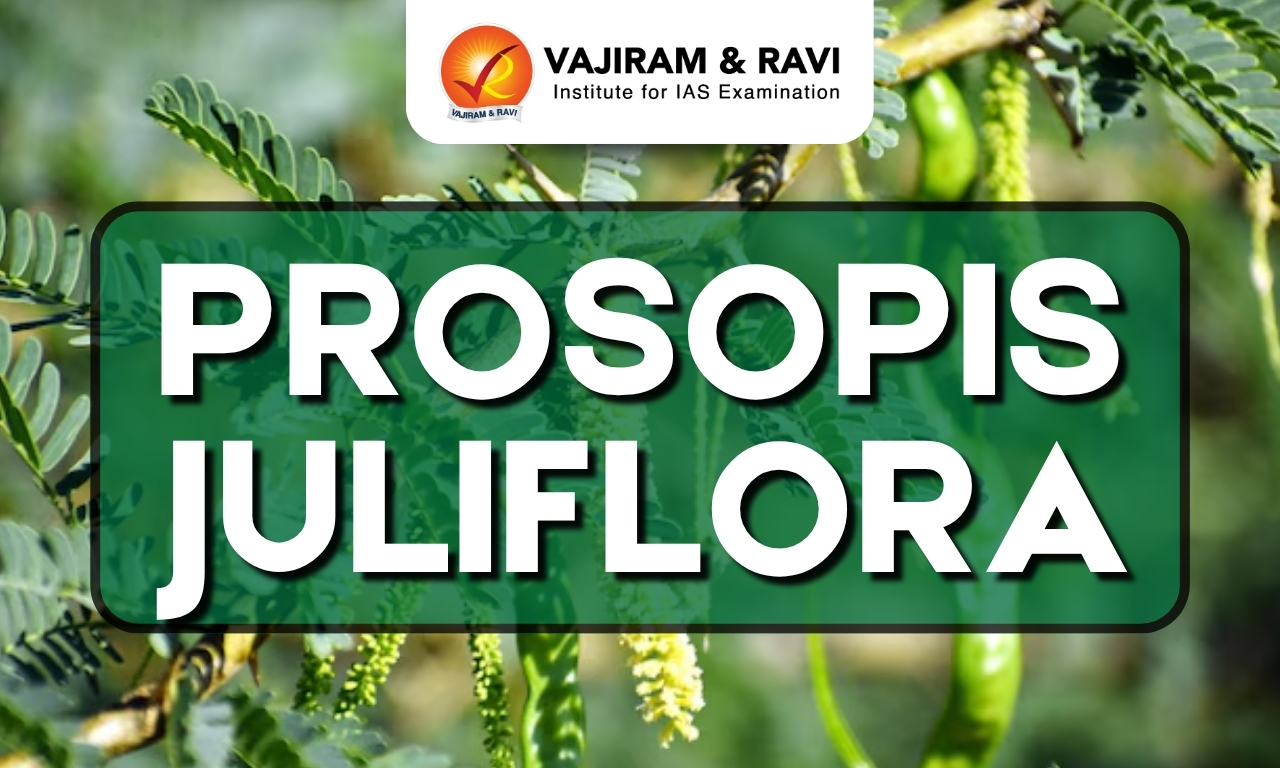
Recently, the Madras High Court issued a set of 34 directions for the eradication of the exotic and invasive species prosopis juliflora from Tamil Nadu. 

About Prosopis Juliflora

  • It is a shrub or small tree in the family Fabaceae, a kind of mesquite.
  • It is native to Mexico, South America and the Caribbean.
  • It is one of the most invasive species in arid and semi-arid areas. 
  • It was brought to Delhi by the British in the 1920s, when the national capital was being built.
  • Other names: In India it is known locally by many names such as Bellary jaali, seemai karuvelam, seemai jaali, gando baval, vilayati kikar.

Characteristics of Prosopis Juliflora

  • Adaptability: It has a very wide ecological adaptability which can grow on soils from sand dune to clay soil, and from saline to alkaline soil type.
  • Rainfall: It can grow below 200 to above 1500 m above sea level, and with a mean annual rainfall ranging from 50 to 1500 mm
  • It is considered an invasive plant.
  • It is characterized by vigorous growth which helps them to outcompete indigenous plant species.

Impacts of Prosopis Juliflora on Environment

  • This tree absorbs more than four litres of water to obtain one kilogram of biomass.
  • It cannot even shelter birds as it produces less oxygen and more carbon dioxide.
  • It can also turn the groundwater poisonous.
  • It causes land erosion due to the loss of the grasslands that are habitats for native plants and animals.

Source: TH

Prosopis Juliflora FAQs

Q1: What is the origin of Prosopis Juliflora?

Ans: South America

Q2: Why is Prosopis Juliflora considered an invasive species?

Ans: It outcompetes native vegetation

Lipulekh Pass

Lipulekh Pass

Lipulekh Pass Latest News

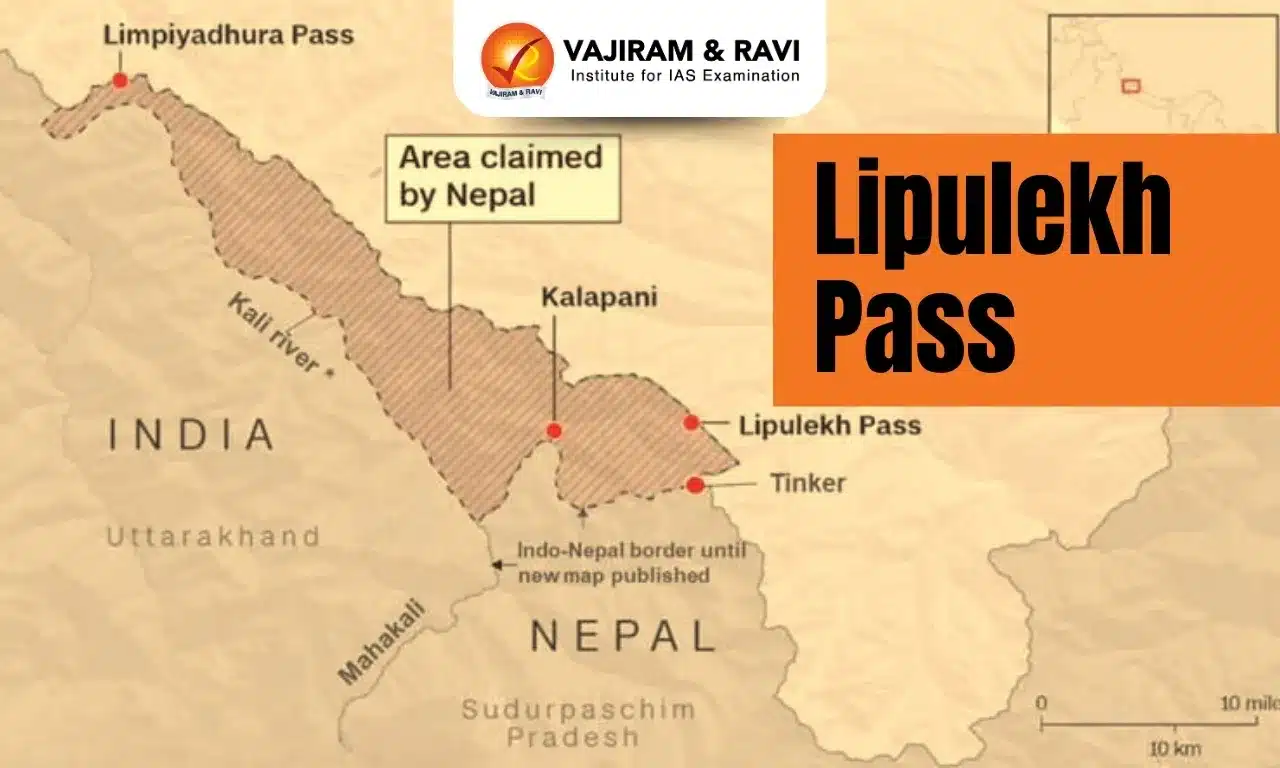
The historic cross-border trade between India and China through the Lipulekh Pass in Uttarakhand’s Pithoragarh district is set to resume this June.

About Lipulekh Pass

  • Location: It is a high-altitude mountain pass located in the Kumaon region of Uttarakhand, near the trijunction of India, Nepal, and China.
  • It links the Indian state of Uttarakhand with the Tibet region of China.
  • Altitude: It lies at an altitude of approximately 5,334 meters (17,500 feet).
  • Its elevation and strategic location make it a gateway to the higher reaches of the Himalayas.
  • It is the first Indian border post opened for trade with China in 1992.
  • Other passes: This was followed by the opening of Shipki La Pass, Himachal Pradesh in 1994 and Nathu La Pass, Sikkim in 2006.

Significance of Lipulekh Pass

  • Ancient Trade Route: Lipulekh Pass has been utilized for centuries as a trade route, connecting the Indian subcontinent with the Tibetan plateau.
  • Religious Significance: It is a key corridor for the Kailash Mansarovar Yatra and plays an important role in connecting border communities, especially tribal groups such as the Bhotiyas who depend on cross-border trade.

Source: NIE

Lipulekh Pass FAQs

Q1: Where is Lipulekh Pass located?

Ans: Near the trijunction of India, Nepal, and China.

Q2: What is the significance of Lipulekh Pass?

Ans: Pilgrim route to Kailash-Mansarovar

Pobitora Wildlife Sanctuary

Pobitora Wildlife Sanctuary

Pobitora Wildlife Sanctuary Latest News

The National Board for Wildlife (NBWL) has approved a proposal from the Assam Government to rationalise the boundary of Pobitora Wildlife Sanctuary (PWS).

About Pobitora Wildlife Sanctuary

  • Location: It is located in the state of Assam.
  • This wildlife sanctuary was established in 1998.
  • The sanctuary consists of the Rajamayong Reserve Forest and Pobitora Reserve Forest.
  • The region was once part of the vast floodplains of the Brahmaputra River and was known for its rich flora and fauna. 
  • The Government of India included Pobitora Wildlife Sanctuary with the association of a rhino breeding program named “Indian Rhino Vision 2020”.
  • Vegetation: The landscape is dominated by alluvial grasslands and dense patches of tall elephant grass.
  • Flora: 
    • 72% of Pabitora consists of the wet savannah of Arundo donax, Erianthus ravennae, Phragmites karka, Imperata cylindrica, and Saccharum spp.
    • Water hyacinth (Eichornia crassipes) is a major problem, especially to waterfowl, as it forms thick mats on the water surface.
  • Fauna
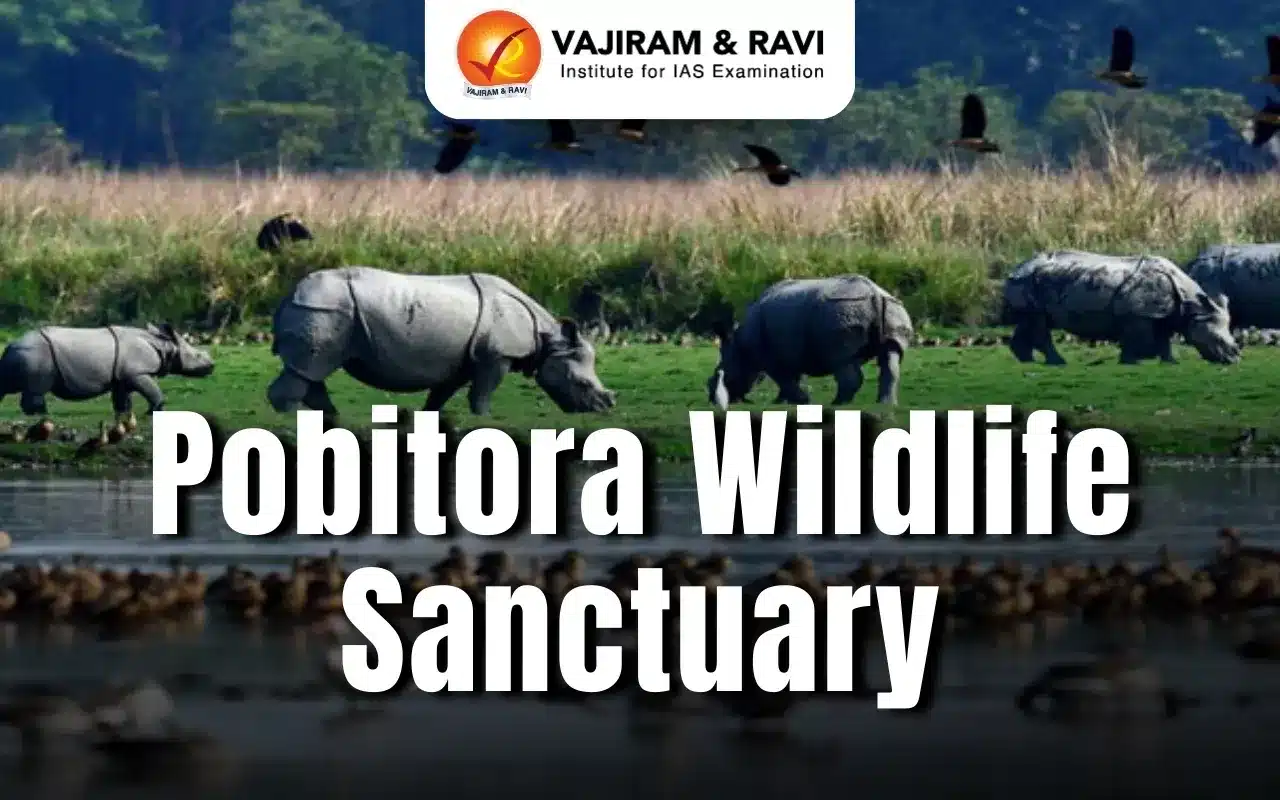
    • It is known for holding the highest density of Greater One Horned Rhinoceros in the country.
    • Besides rhinoceros, the other animals are leopard, wild boar, Barking deer, wild buffalo, etc. 

Source: NIE

Pobitora Wildlife Sanctuary FAQs

Q1: Where is Pobitora Wildlife Sanctuary located?

Ans: Assam

Q2: What is Pobitora Wildlife Sanctuary famous for?

Ans: Rhino sanctuary

Enquire Now