Global Terrorism Index

Global Terrorism Index

Global Terrorism Index Latest News

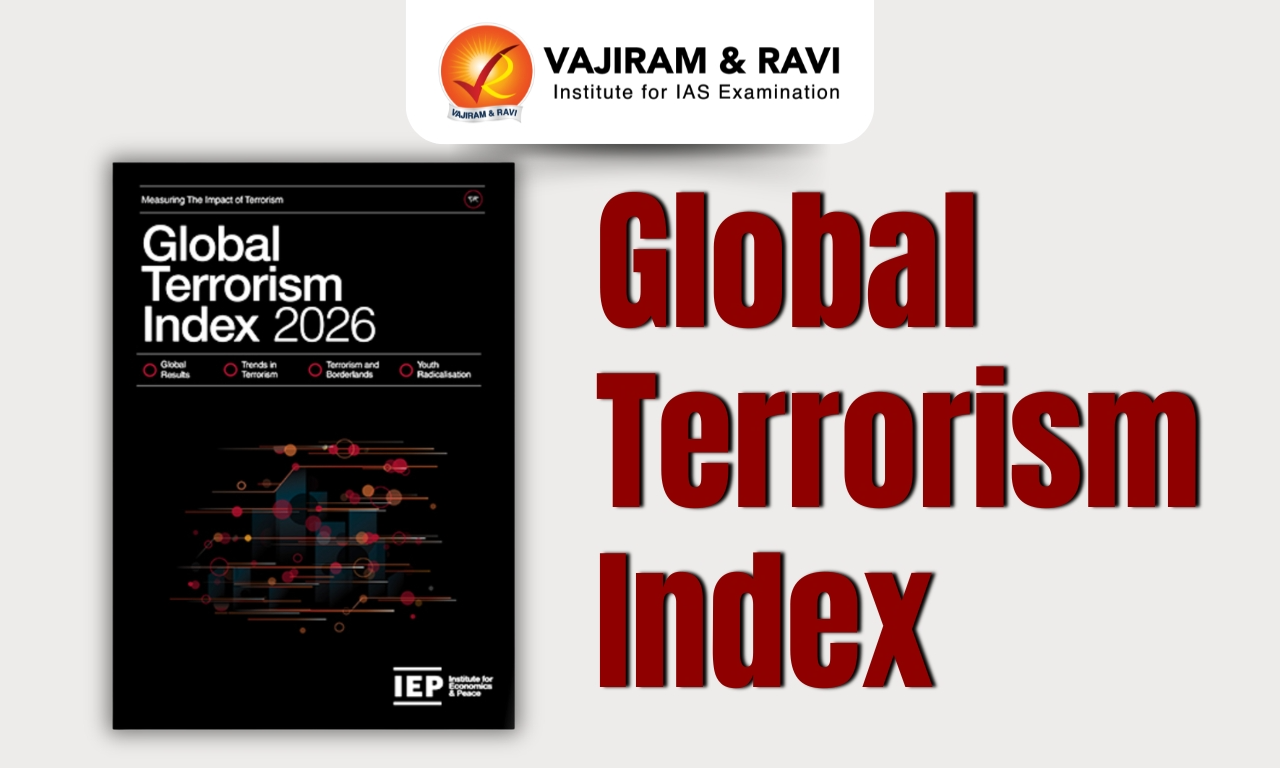
Recently, the Global Terrorism Index, 2026 was published by the Institute for Economics and Peace (IEP).

About Global Terrorism Index

  • It is  published by the Institute for Economics and Peace (IEP), a Sydney-based independent, non-profit think tank.
  • It is a comprehensive study analysing the impact of terrorism for 163 countries covering 99.7 per cent of the world’s population.
  • Methodology
    • The GTI scores each country on a scale from 0 to 10; where 0 represents no impact from terrorism and 10 represents the highest measurable impact of terrorism.
    • This produces a composite score so as to provide an ordinal ranking of countries on the impact of terrorism.

Key Highlights of Global Terrorism Index 2026

  • Deaths from terrorism fell by 28 per cent and incidents decreased by 22 per cent
  • Six of the ten countries most impacted by terrorism are in sub-Saharan Africa, maintaining its position as the epicenter.
  • For the first time, Pakistan leads the Index as the country most impacted by terrorism.
  • India is placed 13th on the list.
  • Deadliest terror outfits (2025): IS, Jamaat Nusrat Al-Islam wal Muslimeen (JNIM), Tehrik-e-Taliban Pakistan (TTP), and alShabaab. 

Source: LM

Global Terrorism Index FAQs

Q1: Which region is the epicentre of terrorism according to the Global Terrorism Index 2026?

Ans: Sub-Saharan Africa

Q2: What is India's ranking in the Global Terrorism Index 2026?

Ans: 13th

Credit Guarantee Scheme for Microfinance Institutions-2.0

Credit Guarantee Scheme for Microfinance Institutions-2.0

Credit Guarantee Scheme for Microfinance Institutions-2.0 Latest News

Recently, the Government of India has introduced Credit Guarantee Scheme for Microfinance Institutions-2.0 (CGSMFI-2.0).

About Credit Guarantee Scheme for Microfinance Institutions-2.0

  • It aims to provide guarantee cover to Banks/ FIs through National Credit Guarantee Trustee Company Limited (NCGTC).
  • It provides guarantee against expected losses on the financial assistance extended by them to Non-Banking Financial Company-Microfinance Institutions (NBFC-MFIs) and MFIs for on lending to small borrowers.

Features of the scheme

  • Eligible borrowers: Existing or new small borrowers within the regulatory definition of micro finance as prescribed by RBI from time to time.
  • Guarantee coverage: 80% of amount in default for small, 75% for medium and 70% for large NBFC-MFIs/ MFIs.
  • Guarantee Fee: 0.50% p.a., on sanctioned amount (1st year) & outstanding amount (thereafter).
  • Valid till 30.06.2026 or loans till Rs. 20,000 crores are guaranteed, whichever is earlier.

Impact of the scheme

  • The scheme will facilitate increased credit flow to the MFI sector.
  • It is estimated that the scheme will facilitate on-lending by NBFC-MFIs/ MFIs to approximately 36 lakh small borrowers.

Source: PIB

Credit Guarantee Scheme for Microfinance Institutions-2.0 FAQs

Q1: What is the primary objective of the Credit Guarantee Scheme for Microfinance Institutions-2.0?

Ans: To guarantee loans extended to microfinance institutions by banks and financial institutions

Q2: What is the guarantee coverage for small NBFC-MFIs/MFIs under the scheme?

Ans: 80%

Actinidia Indica

Actinidia indica

Actinidia Indica Latest News

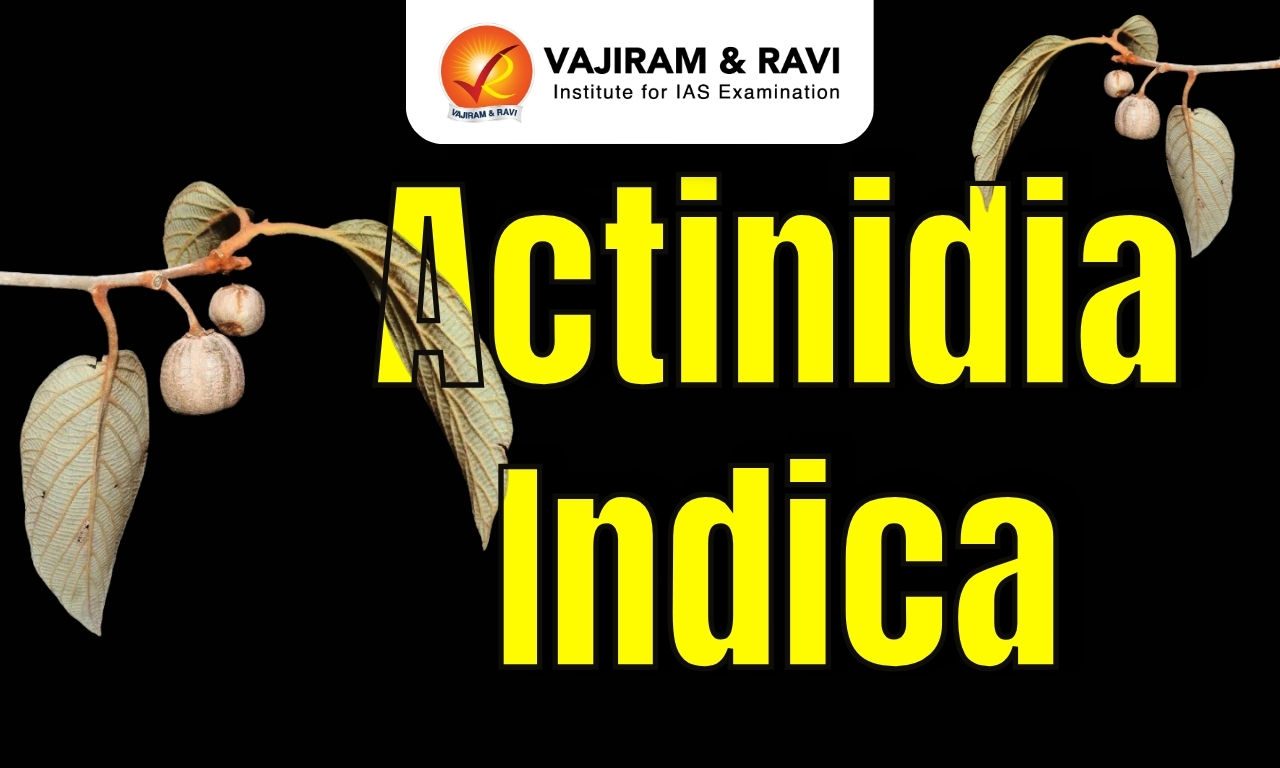
Scientists from the Botanical Survey of India (BSI) have identified a new species of wild kiwi, Actinidia indica (Actinidiaceae), in Arunachal Pradesh.

About Actinidia Indica

  • It is a new species of wild kiwi.
  • The species has been recorded only from a narrow stretch near Ziro Valley at an elevation of around 1,725 metres.
  • Habitat: It thrives in a biologically rich transition zone between temperate and subtropical forests. 

Features of Actinidia Indica

  • Actinidia indica is a perennial climbing shrub reaching 2–4 meters in height.
  • It features densely hairy young branches, large ovate leaves, and white to creamy flowers measuring 4–6 cm.
  • The plant bears globose, olive-green fruits of 2.5–4 cm with a distinctive reticulate lenticel pattern, a key identifying trait.
  • The discovery increases the global count of Actinidia species to 56, only a few of which occur in India.

Source: NET

Actinidia Indica FAQs

Q1: What is Actinidia Indica commonly known as?

Ans: Kiwi

Q2: What is a characteristic of Actinidia Indica?

Ans: It is a evergreen climber

INS Taragiri

INS Taragiri

INS Taragiri Latest News

The Indian Navy is preparing to commission its latest stealth Frigate, Taragiri (F41), on 03 Apr 2026.

About INS Taragiri

  • It is the fourth ship of Nilgiri Class (Project 17A) built by Mazagon Dock Shipbuilding Ltd (MDL).
  • It is a reincarnation of the erstwhile INS Taragiri, a Leander-class frigate that was part of the Indian Naval fleet.
  • It is designed by the Warship Design Bureau (WDB).

Features of INS Taragiri

  • It is fitted with an advanced weapon and sensor suite compared to the P17 (Shivalik) class.
  • It is designed for ‘High-Speed – High Endurance’ versatility and multi-dimensional maritime operations.
  • The ship’s weapon suite is featuring supersonic Surface-to-Surface Missiles, Medium Range Surface-to-Air Missiles, and a specialised Anti-Submarine Warfare suite. 
  • Propulsion: It is configured with Combined Diesel or Gas (CODOG) propulsion plants, comprising a diesel engine and a gas turbine that drive a Controllable Pitch Propeller (CPP) on each shaft, and state-of-the-art Integrated Platform Management System (IPMS).
  • Weapon suit: The potent weapon and sensors suite comprises BrahMos SSM, MFSTAR and MRSAM complex, 76mm SRGM, and a combination of 30 mm and 12.7 mm close-in weapon systems, along with rockets and torpedoes for anti-submarine warfare.

Source: PIB

INS Taragiri FAQs

Q1: What is the propulsion system used by INS Taragiri?

Ans: Combined Diesel or Gas (CODOG)

Q2: What is the name of the class of frigates that INS Taragiri belongs to?

Ans: Nilgiri-class

Shaheen Falcon

Shaheen Falcon

Shaheen Falcon Latest News

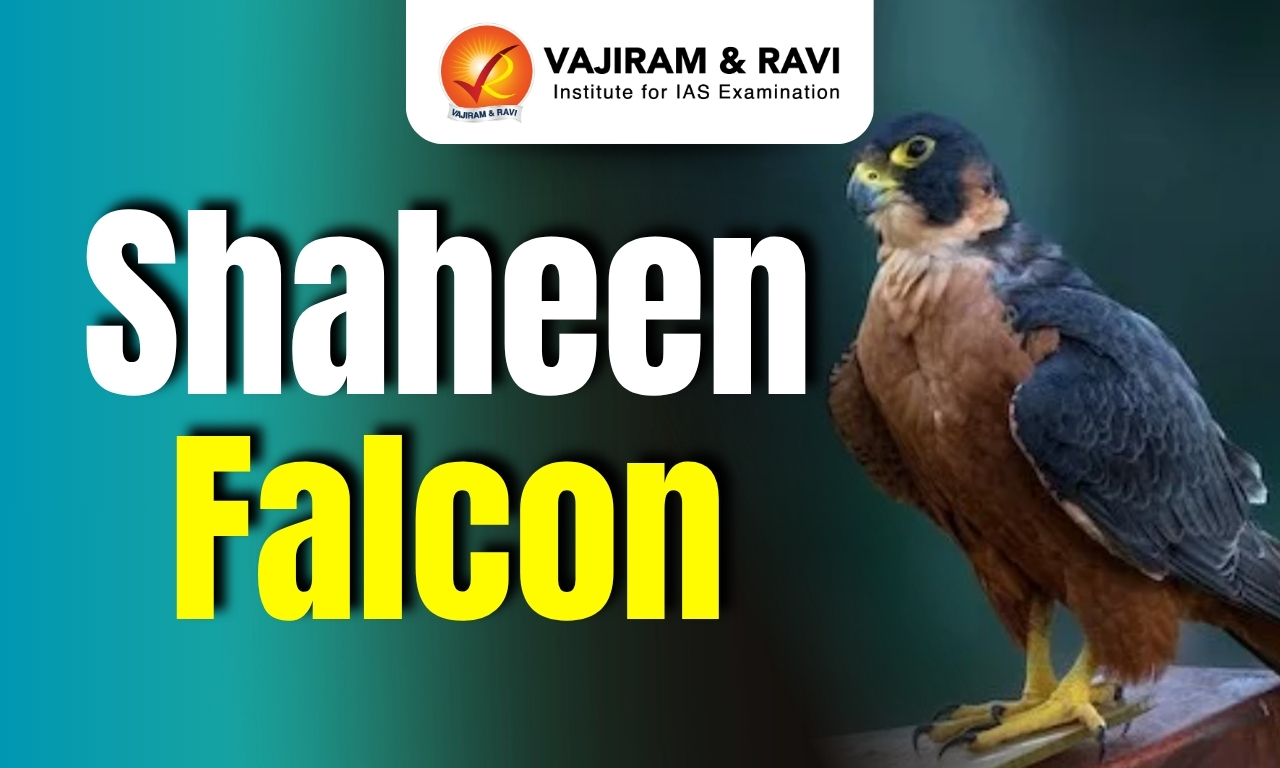
Recently, a pair of Shaheen falcons found nesting in a multi-storey residential complex under construction in Kochi. 

About Shaheen Falcon

  • The Shaheen falcon (Falco peregrinus peregrinator) is a non-migratory subspecies of the Peregrine falcon.
  • Appearance
    • The face is characterised by a dark vertical stripe from the eye to the side of the face, which often gives the bird a severe appearance. 
    • The bird has a muscular body — with the female being larger than the male. 
  • Habitat: It is found on rocky and hilly regions on cliffs and rock pinnacles.
  • Distribution: This small but powerful-looking falcon is found mainly in the Indian subcontinent. 
  • These birds have also been reported from the Andaman and Nicobar Islands in the Bay of Bengal. 
  • Food Habits: It eats chiefly birds; occasionally mammals, including bats, rats, rabbits and voles; also insects, reptiles and exceptionally fish. 
  • Peregrines are masters of the stoop (their hunting dives that can even exceed 300 kilometres per hour).
  • Their bodies are shaped to generate high speeds and turn into a weapon when they go into hunt mode. 
  •  

Source: TH

Shaheen Falcon FAQs

Q1: What is the Shaheen Falcon known for?

Ans: Its speed during dives.

Q2: Where is the Shaheen Falcon primarily found?

Ans: Indian subcontinent and surrounding regions.

World Water Day

World Water Day

World Water Day Latest News

Recently, the Prime Minister of India conveyed his greetings to the people on the occasion of World Water Day.

About World Water Day

  • World Water Day has been held on March 22 every year since 1993.
  • It is an annual United Nations Observance focusing on the importance of fresh water.  
  • History
    • The idea of World Water Day was first introduced in 1992 during the United Nations Conference on Environment and Development held in Rio de Janeiro.
    • Following the conference, the United Nations declared March 22 as the official day to focus on water-related issues worldwide.
  • A core focus of World Water Day is to support the achievement of Sustainable Development Goal 6: water and sanitation for all by 2030.  
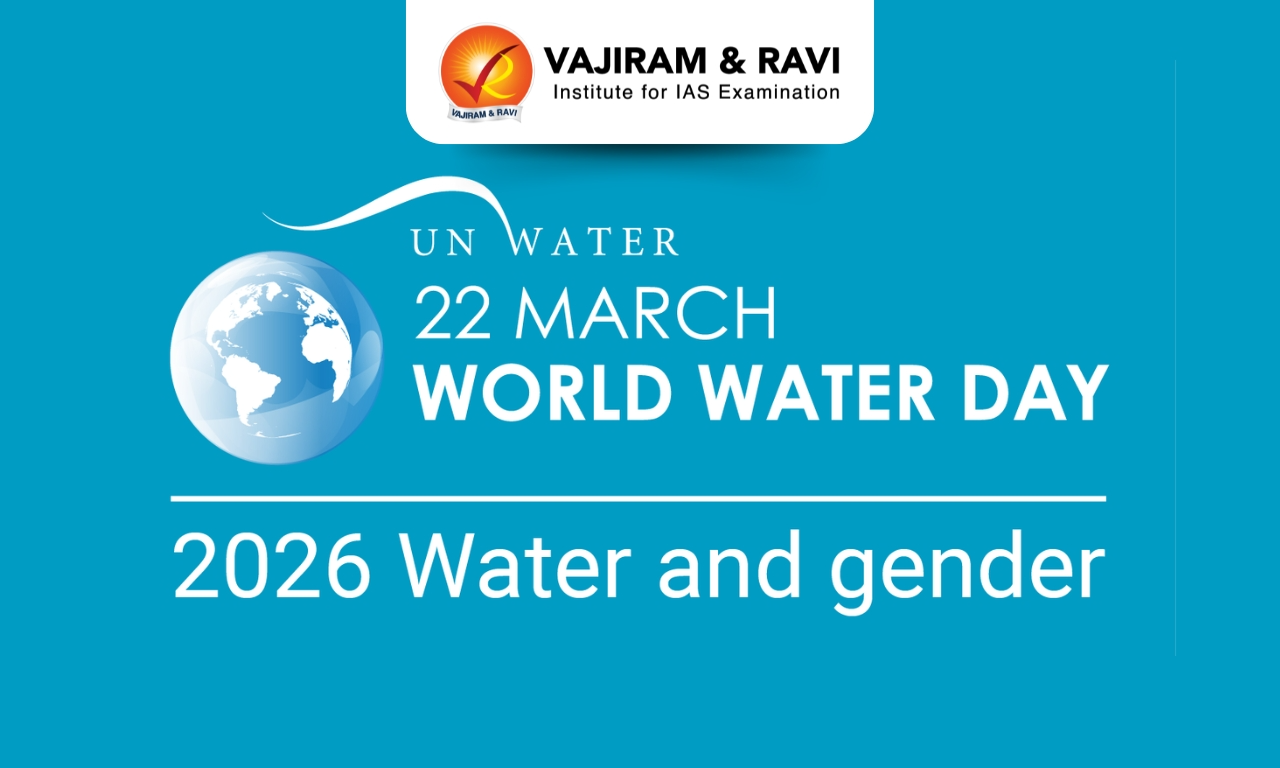
  • Theme (2026): Water and Gender.
    • This theme highlights the important role of women and girls in water management.
  • Significance of the World Water Day: World Water Day raises awareness about serious water challenges such as water scarcity, pollution, and lack of sanitation facilities.

Source: TH

World Water Day FAQs

Q1: When is World Water Day celebrated?

Ans: March 22

Q2: Why is World Water Day celebrated?

Ans: To advocate for sustainable water management

Enquire Now