Kalai-II Hydroelectric Project

Kalai-II Hydroelectric Project

Kalai-II Hydroelectric Project Latest News

The Cabinet Committee on Economic Affairs recently approved an investment of ₹14,105.83 crore for the construction of the Kalai-II Hydro Electric Project on the Lohit River in Anjaw District.

About Kalai-II Hydroelectric Project

  • It is a hydropower project planned on the Lohit River (a tributary of the Brahmaputra River) in the Anjaw District of Arunachal Pradesh.
  • It is a run-of-river with pondage project. 
  • The project involves construction of a concrete gravity dam, upstream & downstream coffer dam, diversion tunnel, intake tunnel, pressure Shafts, underground Powerhouse complex, surge chamber, and Tail Race Tunnel, etc. 
  • The project has an installed capacity of 1,200 megawatt (MW) comprising six units of 190 MW and one unit of 60 MW.
  • It is projected to generate 4,852.95 million units annually..
  • The project will be implemented through a joint venture company between THDC India Limited (formerly Tehri Hydro Development Corporation Limited) and the government of Arunachal Pradesh. 
  • The Government of India will provide Rs 5.99 billion as budgetary support for roads, bridges and associated transmission infrastructure, along with central financial assistance of Rs 7.5 billion towards the state’s equity share.

Source: NE

Kalai-II Hydroelectric Project FAQs

Q1: Where is the Kalai-II Hydroelectric Project located?

Ans: It is planned on the Lohit River (a tributary of the Brahmaputra River) in the Anjaw District of Arunachal Pradesh.

Q2: What type of hydropower project is Kalai-II?

Ans: It is a run-of-river project with pondage.

Q3: What is the installed capacity of the Kalai-II Hydroelectric Project ?

Ans: The installed capacity is 1,200 MW.

Q4: Which organization is implementing the Kalai-II Hydroelectric Project ?

Ans: It will be implemented by a joint venture involving THDC India Limited and the Government of Arunachal Pradesh.

Punatsangchhu-I Hydroelectric Project

Punatsangchhu-I Hydroelectric Project

Punatsangchhu-I Hydroelectric Project Latest News

Work on Bhutan's 1,200 MW Punatsangchhu-I hydropower project has resumed recently after a seven-year suspension, with India's Power Minister attending a key concrete pouring ceremony marking the restart of dam construction.

About Punatsangchhu-I Hydroelectric Project

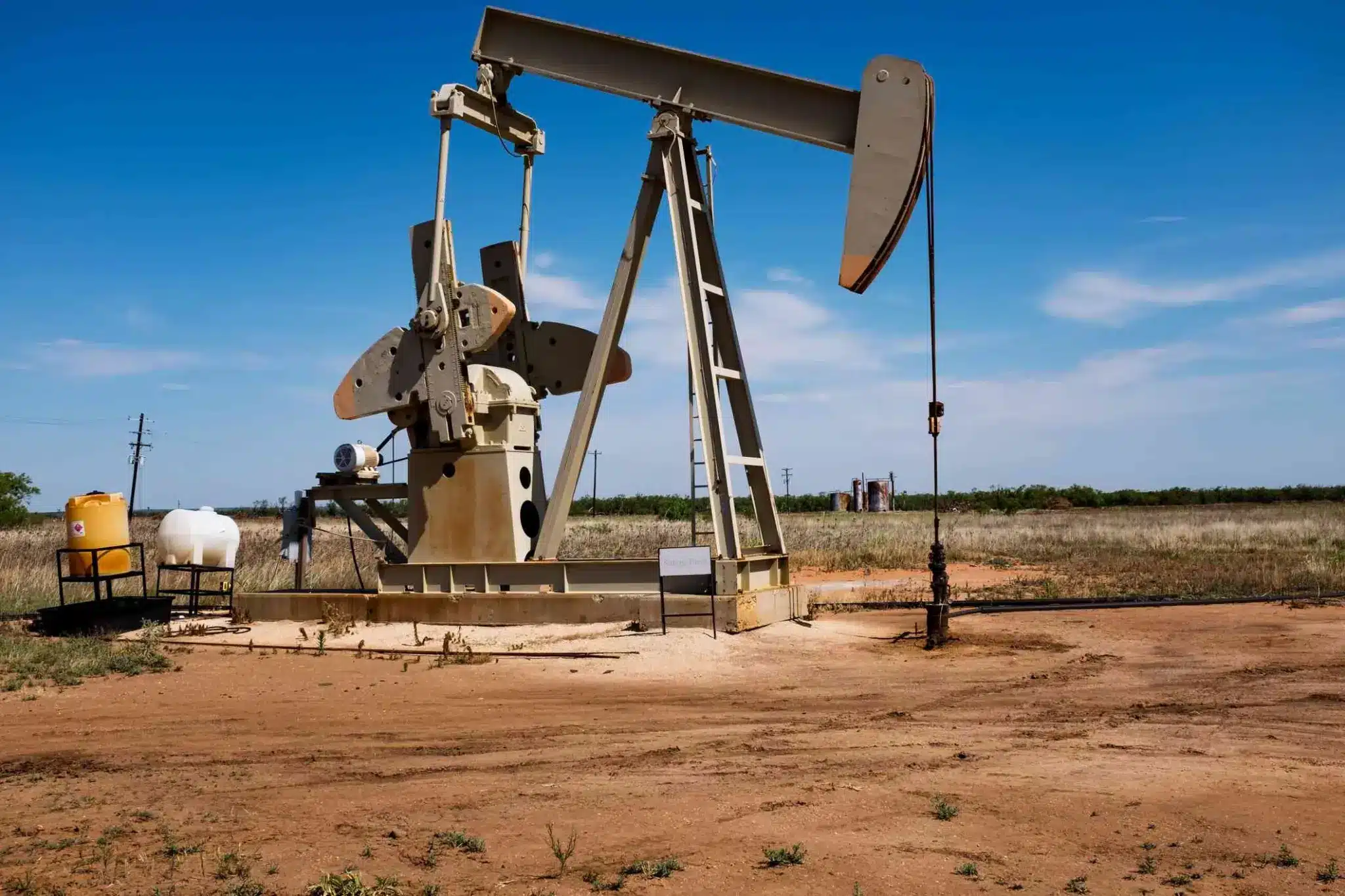
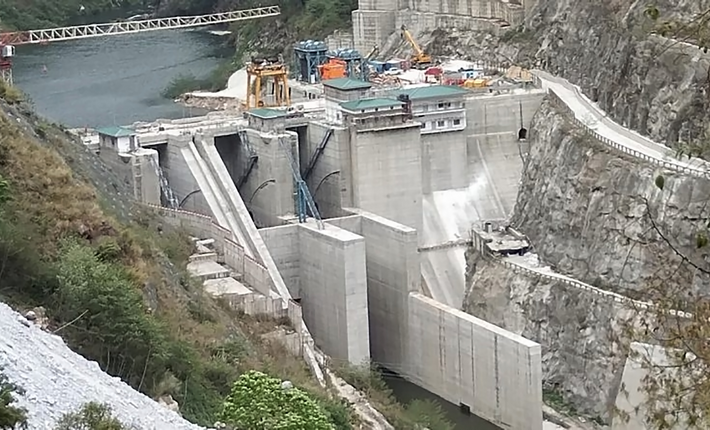
  • It is a 1200 MW run-of-the-river scheme located on the left bank of the Punatsangchhu River in the Southern Himalayas, about 80 km east of Bhutan’s capital Thimphu.
  • The project’s concrete dam is 130 m in height by 239 m in length. 
  • The facility includes an underground powerhouse that will generate 1200 MW power via six 200 MW turbines.
  • It is presently the largest hydropower project under construction in Bhutan.
  • The project is being implemented by the Punatsangchhu-I Hydroelectric Project Authority (PHPA), an autonomous body of the Royal Government of Bhutan and the Government of India. 
  • It is funded by the Government of India (GoI): 40% Grant and 60% Loan at 10% annual interest, repayable in 12 equated annual installments commencing one year after the mean date of operation.
  • All the surplus power from the project will be exported to India.

Source: NDTV

Punatsangchhu-I Hydroelectric Project FAQs

Q1: Where is the Punatsangchhu-I Hydroelectric Project located?

Ans: It is located on the left bank of the Punatsangchhu River in Bhutan.

Q2: What is the installed capacity of the Punatsangchhu-I Hydroelectric Project?

Ans: The installed capacity is 1200 MW.

Q3: How is the Punatsangchhu-I Hydroelectric Project funded?

Ans: It is funded by the Government of India with 40% grant and 60% loan.

Hib Disease

What is Hib Disease

Hib Disease Latest News

Hib, a once-controlled but deadly bacterial infection, is resurging in the US as childhood vaccination rates decline.

About Hib Disease

  • It is a serious illness caused by the bacteria Haemophilus influenzae type b. 
  • Babies and children younger than 5 years old are most at risk for Hib disease, but it can also affect adults with certain medical conditions.
  • Hib bacteria can cause mild illness, such as ear infections or bronchitis, or severe illness, such as infections of the bloodstream, joints, and the linings of the brain and spinal cord. 
  • Contrary to what the name Haemophilus influenzae suggests, the bacterium does not cause influenza.

Hib Disease Transmission

Hib is spread through respiratory droplets, mostly coughing and sneezing, and through lengthy contact with an infected person. 

Hib Disease Symptoms

  • H. influenzae can cause many different types of infections. 
  • Symptoms depend on the part of the body that's infected. 
  • Serious infections can result in long-term health problems and death.

Hib Disease Prevention and Treatment

  • Treatment usually includes the use of antibiotics to fight the infection. However, H. influenzae can be resistant to antibiotics. 
  • Depending on the severity of your condition, you may need additional treatment in the hospital. 
  • Effective vaccine against Haemophilus influenzae type b is available.

Source: TN

Hib Disease FAQs

Q1: What is Hib disease?

Ans: Hib disease is a serious illness caused by the bacterium Haemophilus influenzae type b.

Q2: Which age group is most at risk of Hib disease?

Ans: Babies and children below 5 years are most at risk.

Q3: How is Hib disease transmitted?

Ans: It spreads through respiratory droplets like coughing and sneezing, and through prolonged close contact with an infected person.

Q4: What is the primary treatment for Hib disease?

Ans: Treatment mainly involves antibiotics.

Q5: Is there a vaccine available for Hib disease?

Ans: Yes, an effective vaccine against Haemophilus influenzae type b is available.

Windfall Tax

What is the Windfall Tax?

Windfall Tax Latest News

The government recently hiked export duty, or windfall tax, on diesel to Rs 55.5 per litre and on aviation fuel ATF to Rs 42 a litre.

About Windfall Tax

  • A windfall tax is a higher tax levied by the government on specific industries when the industry experiences unexpected and above-average profits due to various global and geopolitical events outside the control of the industry.
  • As the name suggests, “windfall” refers to a dramatic and unanticipated increase in profits. On the other hand, “tax” implies an imposition levied on this dramatic income growth. 
  • The government imposes this tax when it notices a sudden rise in an industry’s revenue.
  • The increase in profits is not attributed to any expansion or investment strategy of a business but to a favourable external factor for which the business is not responsible.
  • It is levied on industries or businesses that make disproportionate profits during unexpected situations like commodity shortages, wars, pandemics, changes in government policy, etc. 
  • The most common industries that fall target to windfall gains tax include oil, gas, and mining.
  • Some individual taxes—such as inheritance tax or taxes on lottery or game-show winnings—can also be construed as a windfall tax.
  • Objective:
    • The primary objective of windfall taxes is to appropriate a portion of these extraordinary profits, which are perceived to exceed normal returns, for the public good. 
    • Governments assert that these profits are not solely due to the taxed entity’s efforts but also due to external factors, justifying the redistribution of such gains to benefit society as a whole.
    • It is also used as a supplementary revenue stream for the government.

Source: DH

Windfall Tax FAQs

Q1: What is a windfall tax?

Ans: A windfall tax is a higher tax levied on industries that earn unexpected and above-average profits.

Q2: When does the government impose a windfall tax?

Ans: It is imposed when there is a sudden rise in an industry’s revenue due to external factors.

Q3: What kind of events can lead to windfall profits?

Ans: Events like wars, pandemics, commodity shortages, and policy changes can lead to such profits.

Q4: On which sectors is windfall tax commonly imposed?

Ans: It is commonly imposed on oil, gas, and mining industries.

Q5: What is the primary objective of a windfall tax?

Ans: To redistribute extraordinary profits for the public good.

Chagos Islands

Chagos Islands

Chagos Islands Latest News

Recently, Britain’s government said that it had put on hold its deal ​to cede sovereignty of the Chagos Islands.

About Chagos Islands

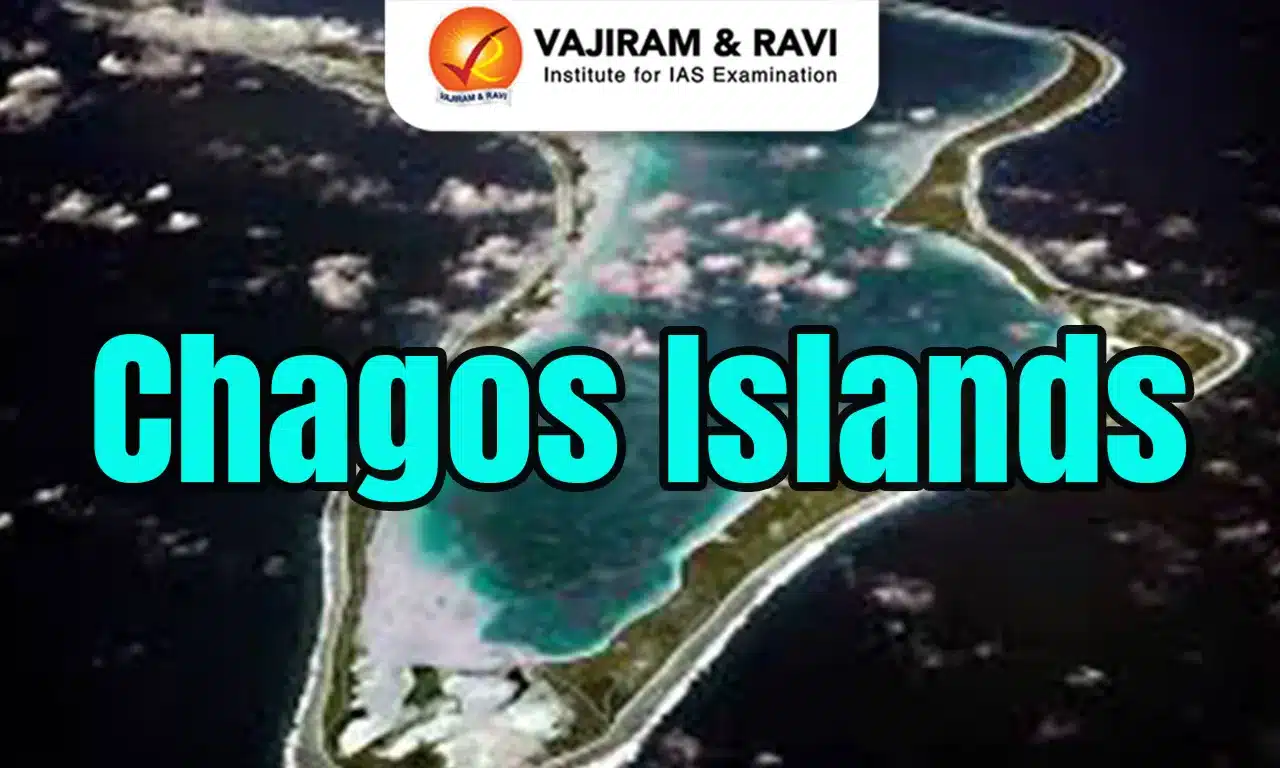
  • Location: It is an island group located in the central Indian Ocean.
  • It is about 1,000 miles (1,600 km) south of the southern tip of the Indian subcontinent.
  • It is an overseas territory of the United Kingdom that was established on November 8, 1965.
    • The principal islands in the archipelago include the Diego Garcia atoll, Danger Island, Egmont Islands, Eagle Islands, Nelsons Island, Peros Banhos atoll, Three Brothers Islands, and the Solomon Islands. 
    • Diego Garcia  is the largest and the most southerly island of the Chagos Archipelago.
  • Terrain: The islands feature flat and low terrain, and most areas of the islands do not exceed more than 2 m in elevation. 
  • There are no rivers and lakes on the islands. 
  • Climate:  It experiences a tropical marine climate with high temperatures and elevated humidity levels. 
  • The island’s climate is heavily moderated by the trade winds which blow over the islands.

Source: TH

Chagos Islands FAQs

Q1: What is the largest island in the Chagos Archipelago?

Ans: Diego Garcia

Q2: What is a major issue related to the Chagos Islands?

Ans: Sovereignty dispute

Sulphur

Sulphur

Sulphur Latest News

The West Asia conflict disrupts supply chains, deeper shocks emerge and Sulphur may not grab headlines like oil, but it quietly powers industry and agriculture.

About Sulphur

  • Sulphur (identified by the letter S) is a non-metallic chemical element.
  • It can be found as a pure element or as sulphate or sulphide minerals. 
  • It occurs naturally in the environment and is believed to be the thirteenth most abundant element in the earth’s crust.
  • Properties
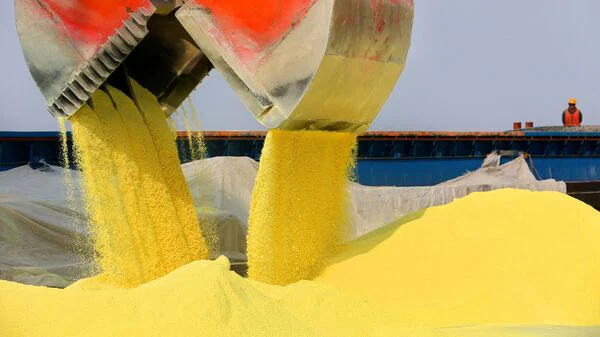
    • In its pure form, sulfur is a tasteless, odorless, brittle solid with a pale yellow color.
    • It’s a poor conductor of electricity that doesn't dissolve in water.
    • It combines directly with almost all the elements with the exception of gold, platinum and the noble gases.
  • In India it is mainly found in Puga Valley (Jammu & Kashmir), Barren Island of Bay of Bengal, Andhra Pradesh Kerala and Himachal Pradesh

Uses of Sulphur

  • Sulphur is an essential raw material for many chemical industries and is essentially used for the production of sulphuric acid.
    • Sulphuric acid is a strong mineral acid which is used in ore processing, fertilizer manufacturing, oil refining, waste water processing and chemical synthesis. 
  • The powdered form of sulphur produced by sublimation process is generally used in rubber vulcanisation, agricultural dusts, pharmaceutical products and stock feeds.
  • Sulphur is used as a light-generating medium in the rare lighting fixtures known as “sulphur lamps”.
  • Sulphur compounds are also used in detergents, fungicides, dyestuffs and agrichemicals.

Source: IE

Sulphur FAQs

Q1: What is the color of pure Sulphur?

Ans: Yellow

Q2: What is the atomic number of Sulphur?

Ans: 16

Indus River Dolphin

Indus River Dolphin

Indus River Dolphin Latest News

Recently, it was observed that conservation reserves, citizen science, and habitat protection gives the Indus River dolphin a fighting chance in India.

About Indus River Dolphin

  • The Indus River dolphin (Platanista minor) is one of the rarest mammals.
  • Appearance
    • It has the long, pointed nose characteristic of all river dolphins.
    • The teeth are visible in both the upper and lower jaws even when the mouth is closed. 
  • Distribution: It presently only occurs in the Indus River system, along with a remnant population in the Beas River.
  • Features of Indus River Dolphin
    • It is functionally blind. It has extremely reduced eyes without lenses.
    • Instead of vision, it relies entirely on echolocation to navigate, hunt and avoid obstacles in the highly turbid waters.
    • It has a remarkable trait of swimming predominantly on its side.
    • This allows it to use its long, sensitive snout to probe the riverbed for prey. Side-swimming is extremely rare among cetaceans and is a signature feature of this species.
    • It lives largely solitary or in very small groups (typically mother-calf pairs).
    • Diet: These are carnivores (piscivores). They feed on a variety of fish and crustaceans, including prawns, carp, catfish, and gobies.
  • Threats: Water pollution, poaching, fragmentation of habitat due to barrages
  • Conservation Status
    • IUCN Red List: Endangered
    • Wildlife Protection Act 1972: Schedule I

Source: DTE

Indus River Dolphin FAQs

Q1: What is the conservation status of the Indus River Dolphin?

Ans: Endangered

Q2: What is the scientific name of the Indus River Dolphin?

Ans: Platanista minor

Export Inspection Council

Export Inspection Council

Export Inspection Council Latest News

Recently, India said that the requirement for a certificate of inspection from Export Inspection Council (EIC) for rice exports is limited to the EU, UK, Iceland, Liechtenstein, Norway and Switzerland.

About Export Inspection Council

  • It was set up by the Government of India under Section 3 of the Export (Quality Control and Inspection) Act, 1963.
  • It ensures sound development of export trade of India through quality control and inspection and matters connected therewith.
  • It is the official export –certification body of India which ensures quality and safety of products exported from India.
  • It is headed by a Chairman. The Executive Head of the Council is the Director of Inspection & Quality Control who is responsible for day to day functioning of the Council.
  • Functions
    • It ensures that products notified under the Export (Quality Control and Inspection) Act 1963 are meeting the requirements of the importing countries in respect of their quality and safety.
    • It provides mandatory certification for various Food items namely fish & fishery products, dairy product, honey, egg products, meat and meat products, poultry meat products, animal casing, Gelatine, Ossein and crushed bones and feed additive and pre-mixtures while other food and non-food products are certified on voluntary basis.
  • The Export Inspection Agencies (EIAs) located at Mumbai, Kolkata, Kochi, Delhi and Chennai with a network of 30 sub offices backed by the state of art, NABL accredited laboratories at various places.
  • Headquarter: Delhi
  • Nodal Ministry: Ministry of Commerce and Industry.

Source: ET

Export Inspection Council FAQs

Q1: Where is the headquarters of EIC located?

Ans: Delhi

Q2: What is one of the main objectives of EIC?

Ans: To promote exports by ensuring quality

Lanjia Saora Tribe

Lanjia Saora Tribe

Lanjia Saora Tribe Latest News

It is observed that among the younger members of the Lanjia Saora Tribe community, tradition is being reinterpreted and negotiating modernity on its own terms.

About Lanjia Saora Tribe

  • Saora is one of the ancient tribes of Odisha and categorized as a particularly vulnerable tribal group.
  • Other names: Savaras, Sabaras, Saura, Sora, etc.
  • A small number of people are also found in the states of Andhra Pradesh, Jharkhand, Madhya Pradesh, and Assam.
  • Language: They have their own native language called Sora, which is a Munda language, and they are one of the very few tribes of India that have a script for the language, Sorang Sompeng.
  • They show their racial affinity to the Proto Australoid physical characters.
  • Settlement: They are living in mud-and-thatch homes scattered across undulating terrain,
  • Economy: The community sustains itself through shifting cultivation, foraging, and small-scale farming.
  • Belief System
    • Religion: Saoras follow an ingrained and intricate religion, having faith in and worshipping a number of gods and spirits, who they believe are the supreme controllers of their regular lives.
    • They have unique art practices, religious customs, as well as a dying tattooing tradition called ‘Tantangbo’.
    • Their belief system is closely tied to nature, with rituals, music, and dance forming an integral part of everyday life.
    • Among the most distinctive visual traditions are their large metal earrings — thick, circular ornaments that are not merely worn but fixed into stretched earlobes, often over years.
    • Village guardian deities like Kitungsum are installed at the entrance of the settlement.

Source: TH

Lanjia Saora Tribe FAQs

Q1: What is the language spoken by the Lanjia Saora Tribe?

Ans: Sora

Q2: What is unique about the Lanjia Saora Tribe's art?

Ans: They create intricate wall paintings called 'Idital'

Enquire Now