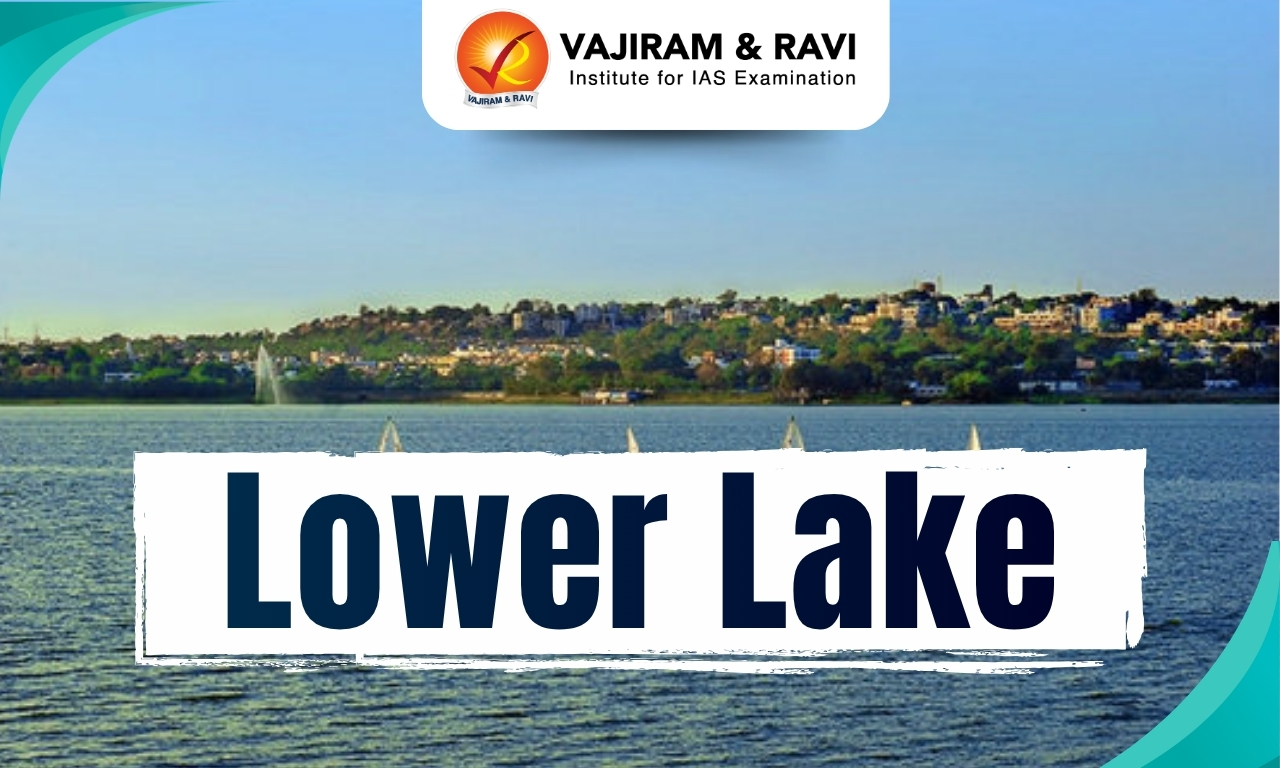
Lower Lake

Lower Lake

Lower Lake Latest News

The central bench of National Green Tribunal (NGT) in its order directed the MP Pollution Control Board (MPPCB) to inspect the Lower Lake and present a detailed report with photographs with latitude and longitude details in support of its findings.

About Lower Lake

  • Lower Lake, also known as Chhota Talaab, is a man-made lake located in the city of Bhopal, Madhya Pradesh.
  • It was built in 1794 by Chote Khan, a minister of Nawab Hayat Muhammad Khan Bahadur, to beautify the city. Several earlier wells were merged in this lake. 
  • Chota Talaab, along with the nearby Upper Lake/Bada Talaab, constitutes Bhoj Wetland, which is now a Ramsar site.
    • The Lower Lake is positioned to the east of the Upper Lake. The two lakes are separated by an overbridge called Pul Pukhta or Lower Lake Bridge.
    • The two lakes are constructed in a terraced way; the lowest level of the Upper Lake is just underneath the highest stage of the Lower Lake.
    • Supplying water to almost 40% of the residents in Bhopal, these lakes play a vital role in serving the city.
  • The Lower Lake has an area of 1.29 sq. km and a catchment area of 9.6 sq. km.
  • The Lower Lake does not have any sparkling water supply. The lake receives subsurface seepage from the Upper Lake. 
  • It drains into the Patra rivulet, which joins the Halali River, a small tributary of the Betwa River.

Source: TOI

Lower Lake FAQs

Q1: Where is Lower Lake located?

Ans: It is located in the city of Bhopal, Madhya Pradesh.

Q2: When was Lower Lake built?

Ans: 1794

Q3: Who built Lower Lake?

Ans: It was built by Chote Khan, a minister of Nawab Hayat Muhammad Khan Bahadur

Q4: Which lake lies near Lower Lake and forms a wetland with it?

Ans: Upper Lake, Bhopal

Q5: What is the combined name of Lower Lake and Upper Lake?

Ans: Bhoj Wetland, now a Ramsar site.
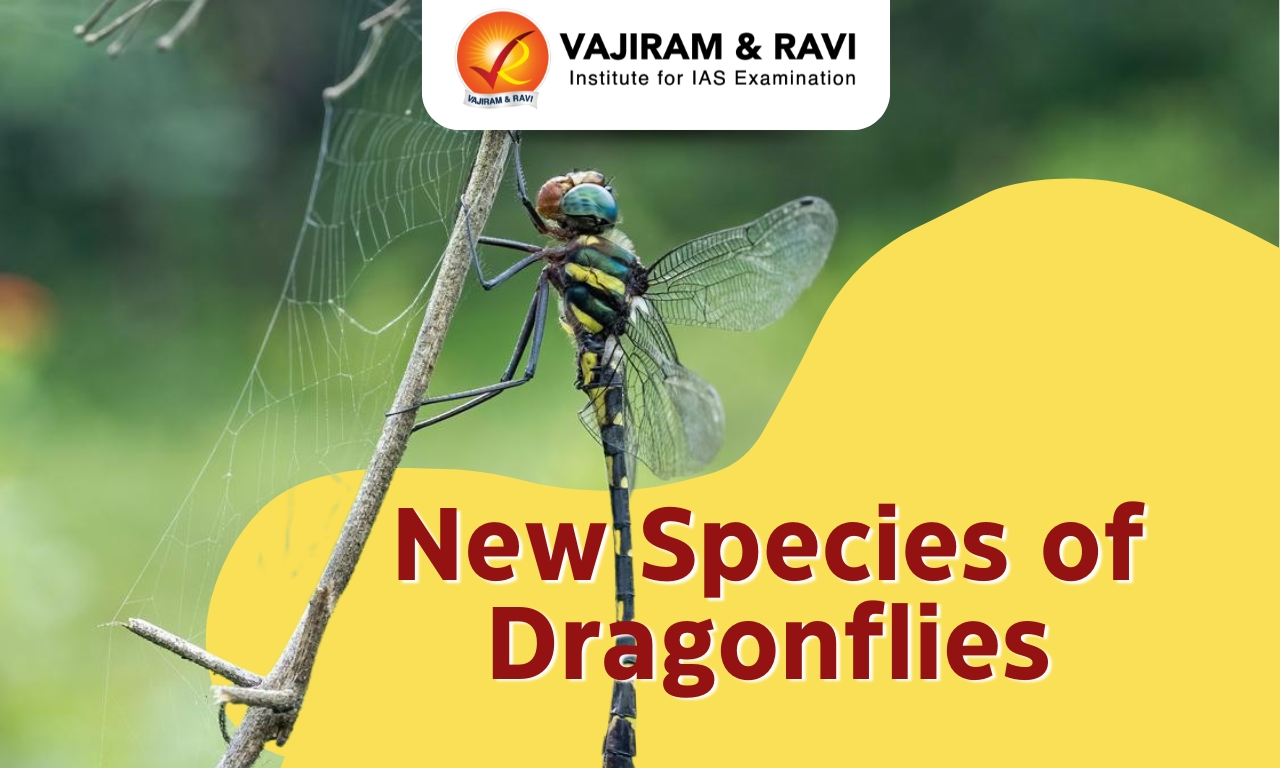
New Species of Dragonflies

New Species of Dragonflies

New Species of Dragonflies Latest News

Scientists recently discovered three new species of dragonflies in Northeast India, including one from a forest trail in Assam and two from a remote valley in Arunachal Pradesh.

About New Species of Dragonflies

  • Two of the newly described species—the Clouded Boghawker (Sarasaeschna nuboides) and the Siang Boghawker (Sarasaeschna sigotaayo)—were observed around a small, shallow forest pond in Arunachal Pradesh’s Siang Valley, where dragonflies were seen flying rapidly and perching close to water.
  • The third species, the Long-tailed Boghawker (Sarasaeschna dosdewaensis), was discovered in Assam’s Karimganj district, an area increasingly recognised as an odonate diversity hotspot.

Key Facts about Dragonflies

  • Dragonflies are insects in the order Odonata. 
  • Insects in this group are characterized by large multifaceted eyes, two pairs of wings, and an elongated body. 
  • Their eyes provide them with excellent vision due to their very unique structure. 
  • Dragonfly eyes have up to 30,000 “facets” and are arranged in a way that gives them almost 360-degree vision. This gives them a huge advantage when hunting for food.
  • Dragonflies are among the fastest insects known and are voracious predators of flying insects such as mosquitoes and flies.
  • Dragonflies predate dinosaurs by over 100 million years. 
  • They are most commonly found near freshwater habitats throughout most of the world.
  • Damselflies are a close relative of the dragonfly and may easily be confused with the dragonfly. You can tell them apart in a couple of ways. 
    • Damselflies are smaller and more delicate than dragonflies, and when they are at rest, damselflies hold their wings straight up and together above their body while the wings of dragonflies remain horizontal while at rest.

Source: EM

New Species of Dragonflies FAQs

Q1: Where was the Long-tailed Boghawker (Sarasaeschna dosdewaensis) discovered?

Ans: Karimganj district, Assam

Q2: Which two newly described dragonfly species were observed in Arunachal Pradesh’s Siang Valley?

Ans: Clouded Boghawker (Sarasaeschna nuboides) and Siang Boghawker (Sarasaeschna sigotaayo)

Q3: Dragonflies belong to which order of insects?

Ans: Odonata

Q4: What are the key physical characteristics of dragonflies?

Ans: Large multifaceted eyes, two pairs of wings, and an elongated body.

Tuvalu Island

Tuvalu

Tuvalu Latest News

As the Pacific island nation of Tuvalu battles rising sea levels that threaten to put large parts of the island entirely underwater by the end of this century, its citizens are making efforts to safeguard their future while preparing for the worst impacts of climate change.

About Tuvalu

  • Tuvalu, formerly known as the Ellice Islands, is a Polynesian island country in the west-central Pacific Ocean. 
  • It is the 4th smallest country in the world with 26 sq.km. of land.
  • It sits about halfway between Australia and Hawaii. 
  • Its neighbours include Kiribati, to the north, and Fiji, to the south. 
  • It comprises nine islands (four reef islands and five coral atolls). 
  • All islands are low-lying, with no point on Tuvalu being higher than 4.5 m above sea level. Thus, the islands are threatened by any future sea level rise.
  • Nanumanga, Niutao, and Niulakita are the three main islands that make up Tuvalu. 
  • The Funafuti atoll is the capital of Tuvalu and is also the most populous among all the 9 atolls.
  • There are no rivers. Tuvalu’s climate is hot and rainy.
  • With the exception of tiny Vatican City, Tuvalu has the fewest inhabitants of any other independent nation.
  • Languages: Most people speak a language called Tuvaluan. English is widely used.
  • Currency: Tuvalu dollar (equivalent to the Australian dollar)
  • Political System:
    • Tuvalu became independent from the United Kingdom in October 1978
    • It operates as a parliamentary democracy under a constitutional monarchy.
    • It is part of the Commonwealth Realm, with King Charles III recognized as King of Tuvalu. He is represented by a Governor-General, who is appointed upon the advice of the Prime Minister.
    • There are no political parties: the prime minister is chosen by and from the legislature.
  • Economy:
    • Most people are subsistence farmers and are aided by remittances from relatives working overseas.
    • A small quantity of copra is produced for export, the sale of stamps accounts for modest earnings, and fees are collected from foreign fishing fleets, but the country depends heavily on foreign aid.
    • It imports most of its food, fuel, and manufactured goods.

Source: UN

Tuvalu FAQs

Q1: Where is Tuvalu located?

Ans: In the west-central Pacific Ocean

Q2: Which countries are nearest to Tuvalu?

Ans: Kiribati (north) and Fiji (south)

Q3: Which atoll is the capital of Tuvalu?

Ans: Funafuti

Q4: What is the currency of Tuvalu?

Ans: Tuvalu dollar (equivalent to the Australian dollar)

Q5: rom which country did Tuvalu gain independence?

Ans: United Kingdom

Lower Arun Hydroelectric Project

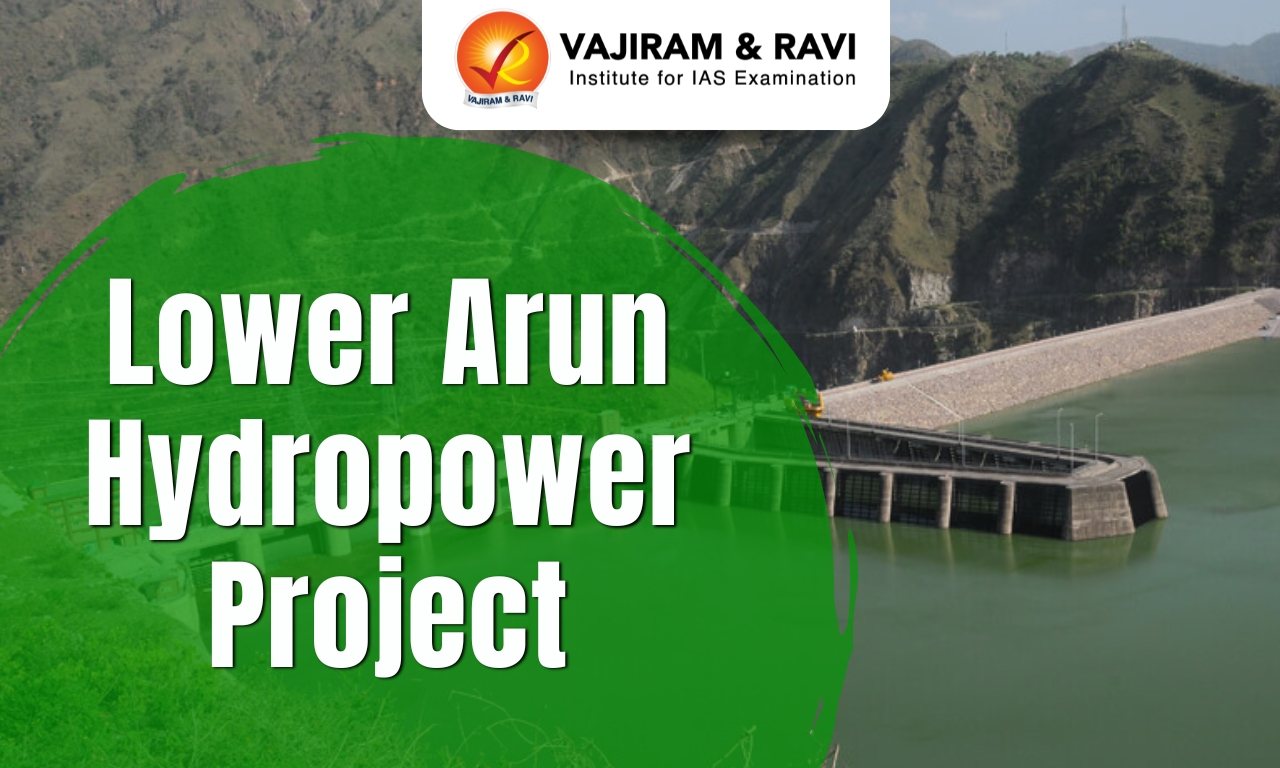
Lower Arun Hydropower Project

Lower Arun Hydropower Project Latest News

Patel Engineering recently won a Rs 1,593.08 crore contract for the Lower Arun Hydroelectric Project in Nepal.

About Lower Arun Hydropower Project

  • It is a 679 MW run-of-river project planned on the Arun River (a tributary of the Koshi River) in the Sankhuwasabha and Bhojpur districts of Eastern Nepal.
  • The project will be built under the build, own, operate, and transfer (BOOT) model.
  • The project is being developed by Investment Board Nepal and SJVN (a Central Public Sector Enterprise under the Ministry of Power, Government of India).
  • This is the second project awarded to SJVN in Nepal, the first one being the 900 MW Arun 3 Hydro Electric Project in Sankhuwasabha District.
  • The project will not have any reservoir or dam and will be a tailrace development of the Arun-3 hydro project, which will mean water re-enters the river for the Lower Arun project.
  • On completion the Project will generate 2970 million units of electricity per annum.

Key facts about Arun-3 Hydropower Project

  • It is a 900 MW run-of-the-river hydropower project being developed on the Arun River in Sankhuwasabha District in Nepal
  • It will include the construction of a 70 m-tall and 466 m-long concrete gravity dam.
  • Once completed, it will be the biggest hydroelectric facility in Nepal. It will produce 4,018.87 million units of electricity a year.
  • SJVN Arun-III Power Development Company (SAPDC), a wholly owned subsidiary of India’s Satluj Jal Vidyut Nigam (SJVN), is developing the project on a build-own-operate-transfer (BOOT) basis.
    • SJVN is a joint venture between the Government of India and the Government of Himachal Pradesh.
  • SAPDC will operate the facility for a period of 25 years, excluding the construction period of five years, before transferring the ownership to the Nepal government.
  • The project will provide surplus power to India, strengthening economic linkages with Nepal. 
    • The power from the project shall be exported from Dhalkebar in Nepal to Muzaffarpur in India.

Source: DEVD

Lower Arun Hydropower Project FAQs

Q1: What is the capacity of the Lower Arun Hydropower Project?

Ans: 679 MW

Q2: The Arun River is a tributary of which river?

Ans: Koshi River

Q3: In which country is the Lower Arun Hydropower Project located?

Ans: Nepal

Q4: What type of hydropower project is the Lower Arun project?

Ans: Run-of-river project.

Srivilliputhur- Meghamalai Tiger Reserve

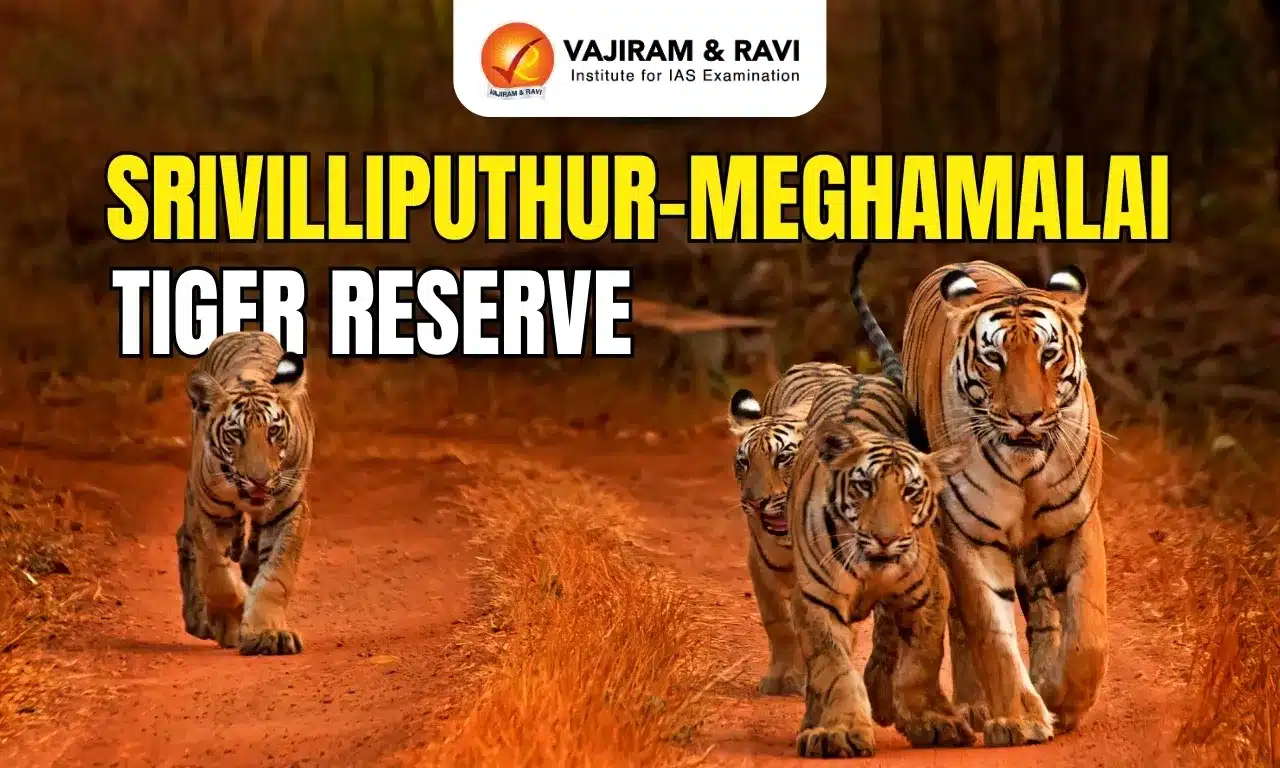
Srivilliputhur Megamalai Tiger Reserve

Srivilliputhur- Meghamalai Tiger Reserve Latest News

Recently, the Election authorities set up a special polling station for just five voters inside the Srivilliputhur- Meghamalai Tiger Reserve under the Andipatti Assembly constituency, Tamil Nadu.

About Srivilliputhur- Meghamalai Tiger Reserve

  • Location: It is located in the state of Tamil Nadu.
  • It lies in the ecologically sensitive Western Ghats region.
  • It was formed in February 2021 by combining Grizzled Squirrel Wildlife Sanctuary and Megamalai Wildlife Sanctuary.
  • It will function as a connecting link between Kerala’s Periyar Tiger Reserve and Tamil Nadu’s Southern Kalakkad-Mundanthurai Tiger Reserve.
  • Rivers: The Srivilliputhu Megamalai Tiger Reserve (SMTR) area primarily relies on three perennial rivers: Vaigai, Suruliyaru, and Shanmuganathi.
  • Vegetation: It’s a blend of tropical evergreen and semi-evergreen forests, dry deciduous and moist mixed deciduous woods, and grasslands.
  • Fauna:
    • Mammals: Elephants, Tiger, Leopard, Nilgiri Tahr, Gaur, Spotted Deer, Barking Deer, Sambar Deer, Wild Boar, Porcupine, Nilgiri Langur, Lion-Tailed Macaque etc.
    • Birds: Red-Whiskered Bulbul, Common Iora, White-Browed Wagtail, Grey Wagtail, Pied Bush Chat etc.
    • Reptiles: Wood Snake, Monitor Lizard, Chameleon, etc.

Srivilliputhur- Meghamalai Tiger Reserve FAQs

Q1: Which two protected areas were combined to form SMTR?

Ans: Srivilliputhur Grizzled Squirrel WLS & Megamalai WLS

Q2: Which two tiger reserves does SMTR connect as a corridor?

Ans: Periyar TR (Kerala) & Kalakkad-Mundanthurai TR (TN)

Sustainable Aviation Fuel

Sustainable Aviation Fuel

Sustainable Aviation Fuel Latest News

The Government has notified an amendment to the Aviation Turbine Fuel (ATF) (Regulation of Marketing) Order, 2001 to bring Aviation Turbine Fuel blended with Sustainable Aviation Fuel (SAF) under the ambit of the ATF Control Order.

About Sustainable Aviation Fuel

  • It consists of specially processed aviation grade hydrocarbons that are chemically similar to ATF and fully compatible with aircraft engines.
  • SAF does not alter the fundamental nature, safety, or performance of aviation fuel.
  • Source: It is a biofuel, also known as bio-jet fuel produced from sustainable feedstocks.
  • It has chemistry similar to conventional aviation turbine fuel (ATF) or jet fuel, which is derived from crude oil.
  • This means that existing aircraft engines can easily use the SAF-ATF blend.
  • It is made from renewable biomass and waste resources have the potential to deliver the performance of petroleum-based jet fuel. 
  • Production
    • It can be produced from a number of sources (feedstock) including waste oil and fats, green and municipal waste and non-food crops.
    • It can also be produced synthetically via a process that captures carbon directly from the air.

Source: PIB 

Sustainable Aviation Fuel FAQs

Q1: What is Sustainable Aviation Fuel (SAF)?

Ans: Aviation fuel made from sustainable feedstocks like used cooking oil, agricultural waste, algae

Q2: Which airport in India is setting up the first SAF production facility?

Ans: Panipat Refinery

Kendu Leaf

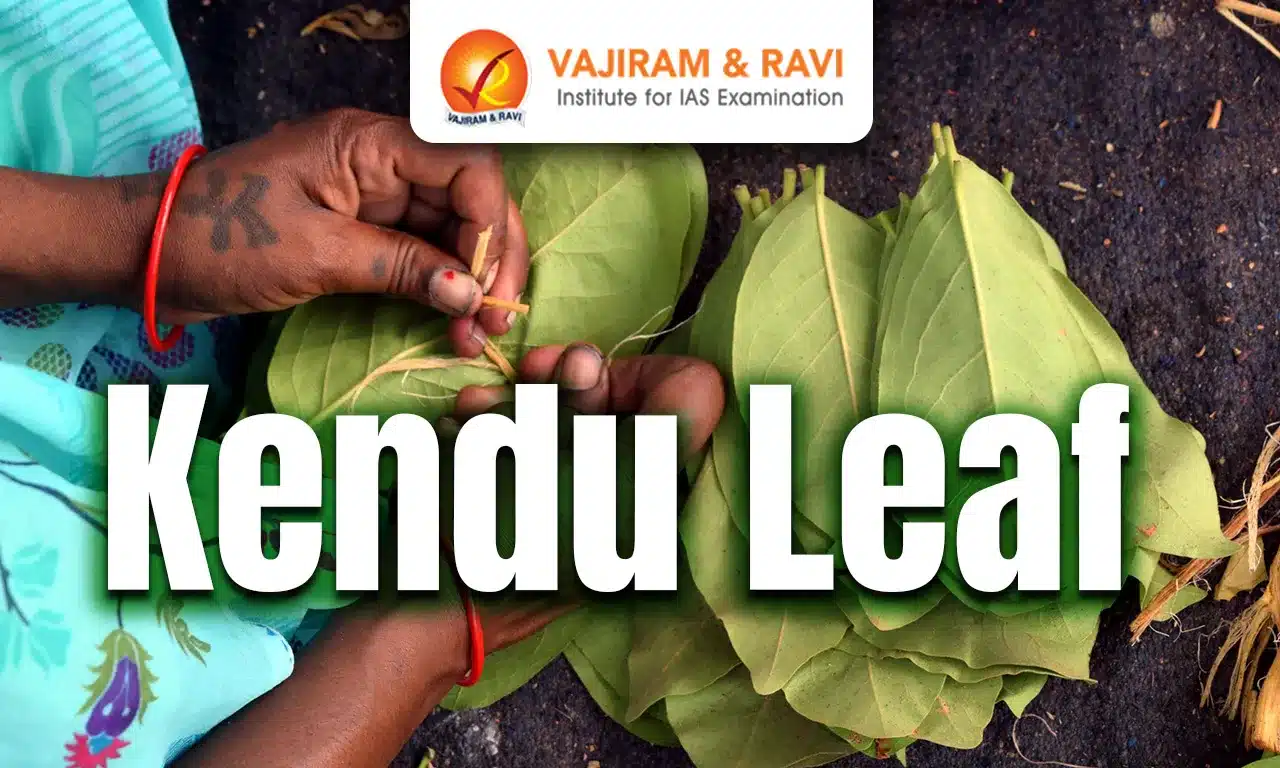
Kendu Leaf

Kendu Leaf Latest News

Recently, it was observed that tribal communities in Odisha’s Koraput fight for their legal rights over kendu leaves for a third consecutive year.

About Kendu Leaf

  • Kendu leaf (Tendu Leaf, Diospyros Melanoxylon ) is also called “Green Gold of Odisha”.
  • It is a nationalized product like Bamboo and Sal seed. Kendu leaf is one of the most important non-wood forest products of Odisha.
  • Characteristics:
    • It has a matching aroma with tobacco.
    • It is hygroscopic in nature which helps drying leaves to withstand crack.
  • Primary use: Used to roll tobacco into bidis (local cigarettes); also holds medicinal value.
  • Key Producer States: Madhya Pradesh, Chhattisgarh, Odisha, Jharkhand, Andhra Pradesh, Maharashtra, Gujarat.
  • Odisha is the third-largest producer after MP and Chhattisgarh.
  • The uniqueness of Odisha Kendu leaves is its processed form. No state produces processed kendu leaves except Odisha.
  • Legal Status: Kendu Leaf is covered under Minor Forest Produce (MFP) as per Forest Rights Act (FRA), 2006.  

Source: DTE

Kendu Leaf FAQs

Q1: What is the scientific name of Kendu tree?

Ans: Diospyros melanoxylon

Q2: Kendu leaf is primarily used for making which product?

Ans: Bidi (Indian cigarette)

NAMASTE Scheme

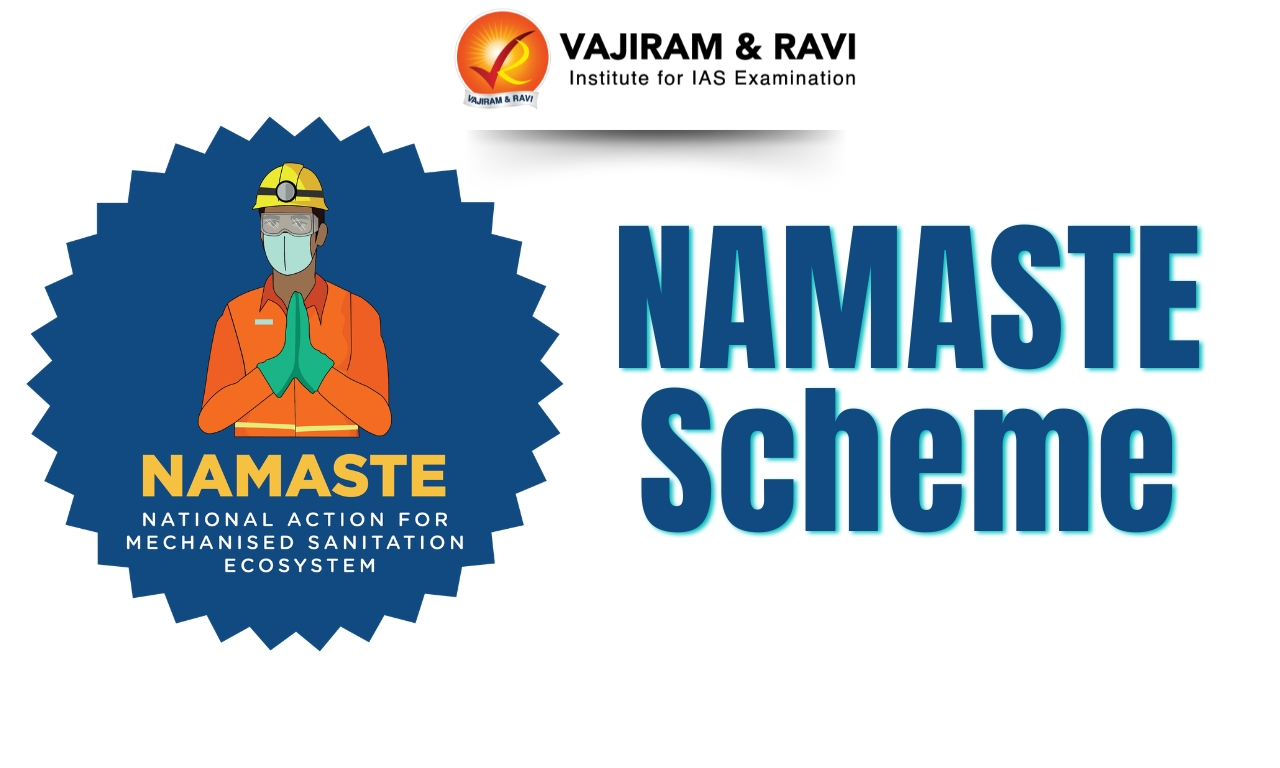
NAMASTE Scheme

NAMASTE Scheme Latest News

Recently, the Union Minister for Social Justice and Empowerment said that the NAMASTE Scheme has demonstrated measurable impact through targeted interventions and a focused approach to eliminate hazardous manual cleaning practices.

About NAMASTE Scheme

  • The National Action for Mechanised Sanitation Ecosystem (NAMASTE) Scheme is a critical initiative addressing the dire challenges faced by Sewer and Septic Tank Sanitation Workers (SSWs) in India.
  • It aims to transform their occupational safety, health, and dignity through systemic interventions.
  • Ministries involved: It is jointly being implemented by the Ministry of Social Justice and Empowerment (MoSJE) and the Ministry of Housing and Urban Affairs (MoHUA).
  • Implementing agency: It is implemented by the National Safai Karmacharis Finance Development Corporation (NSKFDC) under the Ministry of Social Justice and Empowerment (MoSJE)
  • Duration: It would be implemented for three years from FY 2023-24 to FY 2025-26.
  • The scheme targets
    • Zero fatalities in sanitation work,
    • Eliminates direct contact with human faecal matter,
    • Ensures all cleaning is done with safety devices by skilled workers,
    • Strengthens Emergency Response Sanitation Units (ERSUs), and empowers workers through Self-Help Groups (SHGs) and entrepreneurship.
  • Source: PIB

NAMASTE Scheme FAQs

Q1: What is the full form of NAMASTE Scheme?

Ans: National Action for Mechanized Sanitation Ecosystem

Q2: NAMASTE Scheme was launched by which ministries jointly?

Ans: Ministry of Social Justice & Empowerment (MoSJE) & Ministry of Housing and Urban Affairs (MoHUA)

Egypt

Egypt

Egypt Latest News

Recently, India and Egypt advanced their defence cooperation at the 11th Joint Defence Committee (JDC) meeting held in Cairo.

About Egypt

  • It is a transcontinental country that stretches from the northeast corner of Africa to the southwest corner of Asia.
  • The Sinai Peninsula of Egypt acts as the land bridge between these two continents.
  • Bordering Countries: It has land borders with Sudan (south), Libya (west), Israel and the Gaza Strip (northeast).
  • Water Bodies: It has a coastline on the Mediterranean Sea (North) while the Red Sea and Gulf of Aqaba border it to the east.
  • Capital City:  Cairo

Geographical Features of Egypt

  • Climate: It has a tropical climate and has high temperatures throughout the year. 
  • Terrain: Its topography is marked by a striking contrast between its arid desert regions and the fertile Nile River Valley.
  • The majority of the country, approximately two-thirds, is covered by the vast Western Desert.
  • Rivers: The Nile River, the longest river in the world, flows from south to north through Egypt.
  • Highest Peak: Egypt's highest point Mount Catherine reaching 2,642 meters (8,668 feet) above sea level, 
  • Natural Resources: Egypt's natural resources include petroleum, natural gas, phosphates, and iron ore.

Source: TH

Egypt FAQs

Q1: What dam on the Nile River is crucial for Egypt’s electricity and irrigation?

Ans: Aswan High Dam

Q2: Which ancient wonder of the world is located in Egypt?

Ans: Great Pyramid of Giza

Honey Badger

Honey Badger

Honey Badger Latest News

The Dewas forest department recently confirmed the presence of the elusive honey badger (Ratel) within the Kheoni wildlife sanctuary.

About Honey Badger

  • The honey badger, or ratel, is a small mammal that is very strong and tough. 
  • It is a member of the weasel family, which includes skunks. 
  • Scientific Name: Mellivora capensis.

Honey Badger Habitat and Distribution

  • The honey badger has a wide, extensive historical distribution range, which extends through most of sub-Saharan Africa. 
  • It occurs from the Western Cape to southern Morocco and southwestern Algeria. 
  • In addition, it also occurs in Arabia, Iran, and western Asia, as well as the Indian peninsula. 
  • They live mainly in dry areas but are also found in forests and grasslands.
  • They live in holes, which they dig with their strong front legs.

Honey Badger Features

  • Adult honey badgers have a shoulder height of up to 12 inches (30 centimeters). 
  • Their bodies are between 24 and 30 inches (61 and 76 centimeters) long, with tails of about 8 to 12 inches (20 to 30 centimeters). 
  • The males are much larger than the females. 
  • Their skin is thick, tough and loose, allowing the honey badger to twist and escape from the grip of their attacker.
  • Their ears are poorly developed.
  • Their upper parts are white, and the lower parts are black.
  • They are nocturnal
  • Honey badgers have powerful 1.5-inch-long (4 cm) claws and teeth that are strong enough to crack a tortoise shell, making these small mammals a formidable opponent. 
  • Honey badgers have glands that give off a bad smell. They use this smell to defend themselves against larger animals.
  • Honey badgers are omnivores, feasting on a wide range of food, including birds, reptiles, rodents, berries, roots, and fruits. 
  • They are ferocious hunters, known to take on powerful animals that's more than many times their size.

Honey Badger Conservation Status 

It is classified as 'Least Concern' under the IUCN Red List.

Key Facts about Kheoni Wildlife Sanctuary

  • It is located in the Dewas district of Madhya Pradesh. 
  • It is spread over an area of 132 sq.km.
  • It is connected to Ratapani Tiger Reserve through corridors. 
  • Flora: The dry deciduous forest consists of teak, tendu, and bamboo.
  • Fauna: Its wildlife includes jackals, palm civets, Leopards, Sloth bears, Hyenas, Nilgai, and many bird species.

Source: TOI

Honey Badger FAQs

Q1: What is the scientific name of the honey badger?

Ans: Mellivora capensis

Q2: Where is the honey badger primarily found?

Ans: Sub-Saharan Africa

Q3: Does the honey badger occur outside Africa?

Ans: Yes, in Arabia, Iran, western Asia, and the Indian peninsula.

Q4: What is special about the skin of a honey badger?

Ans: It is thick, tough, and loose.

Q5: What is the conservation status of the honey badger according to the IUCN?

Ans: Least Concern

Enquire Now