About Platelets
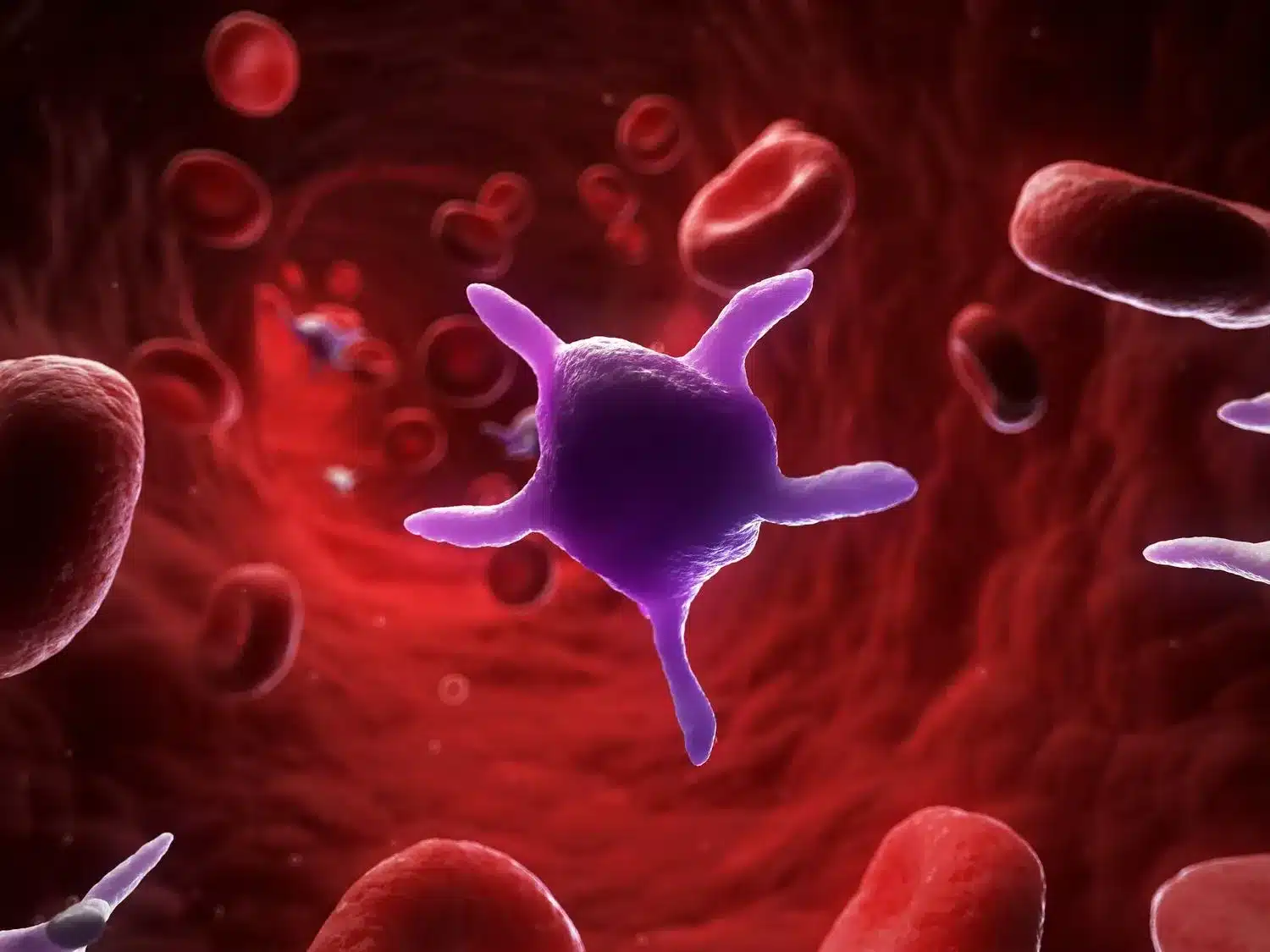
- Platelets, or thrombocytes, are small, colorless cell fragmentsin our blood that help with clotting.
- Platelets are your body’s natural bandage to stop bleeding.
- Where are platelets made?
- Platelets form in the soft tissue of your bones (bone marrow). The largest cells in your bone marrow (megakaryocytes) make platelets.
- They form in the shape of a plate, which is where they get their name.
- They are smaller than red or white blood cells.
- How do platelets control bleeding?
- If one of your blood vessels gets damaged, it sends out signals to the platelets.
- The platelets then rush to the site of damage and form a plug (clot) to fix the damage.
- The process of spreadingacross the surface of a damaged blood vessel to stop bleeding is called adhesion.
- This is because when platelets get to the site of the injury, they grow sticky tentacles that help them stick (adhere) to one another.
- They also send out chemical signals to attract more platelets.
- The additional platelets pile onto the clot in a process called aggregation.
- What is a healthy platelet count?
- A normal platelet count ranges from 150,000 to 450,000 platelets per microliter of blood.
- Having more than 450,000 platelets is a condition called thrombocytosis; having less than 150,000 is known as thrombocytopenia.
- Symptoms of low platelets include bruising easily and unusual bleeding, such as excessive bleeding from a small cut or blood in urine or stool.
- Platelets can be essential to surviving surgeries such as organ transplant, as well as fighting cancer, chronic diseases, and traumatic injuries.
- Donor platelets are given to patients who don’t have enough of their own, or when a person’s platelets aren’t working correctly.
Q1: What is bone marrow?
Bone marrow is a spongy substance found in the center of the bones. It manufactures bone marrow stem cells and other substances, which in turn produce blood cells. Each type of blood cell made by the bone marrow has an important job. Red blood cells carry oxygen to tissues in the body. Platelets stop bleeding by helping blood clot. White blood cells fight infections.
Source: Synthetic platelets stanch bleeding, promote healing in animal models


 Last updated on Oct, 2026
→ UPSC 2027 Notification will be released on 13 January 2027 at upsconline.nic.in.
→ Check Nobel Prize 2026 Winners List here.
→ Download PIB PRiSM Monthly Magazine 2026 here.
→ Check UPSC Monthly Current Affairs Magazine The Recitals here.
→ Check out the latest UPSC Syllabus here.
→ Download UPSC Model Answers for Mains 2026
→ UPSC Mains Question Paper 2026 is out now for Essay & GS Paper 1, 2, 3 & 4.
→ UPSC Calendar 2027 has been released.
→ Enroll in Vajiram & Ravi’s UPSC Mains Test Series 2027 for structured answer writing practice, expert evaluation, and exam-oriented feedback.
→ Join Vajiram & Ravi’s UPSC Mentorship Program 2027 for personalized guidance, strategy planning, and one-to-one support from experienced mentors.
→ Go through the UPSC Mains Previous Year Papers to enhance your preparation.
→ UPSC has released UPSC Toppers List 2025 with the Civil Services final result on its official website.
→ Also check Best UPSC Coaching in India