About Central Bank Digital Currency (CBDC):
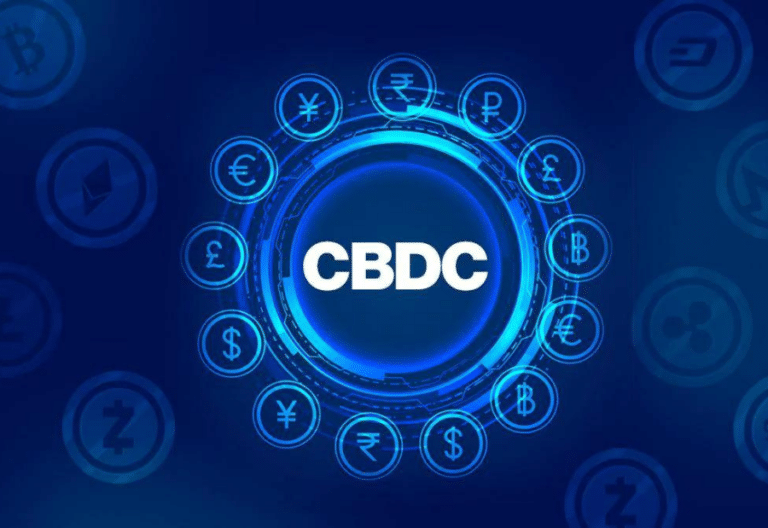
- CBDCs are a form of digital currency issued by a country’s central bank.
- Examples of central banks include the Reserve Bank of India (RBI), the US Federal Reserve System, the Bank of Japan.
- CBDCs are similar to stablecoins, except that their value is fixed by the central bank and equivalent to the country’s fiat currency.
- Advantages:
- It provides businesses and consumers with privacy, transferability, convenience, accessibility, and financial security.
- It also decreases the cost of maintenance that a complex financial system requires.
- It reduces cross-border transaction costs.
- It would also reduce the risks associated with using digital currencies, or cryptocurrencies, in their current form. CBDCs, backed by a government and controlled by a central bank, would give households, consumers, and businesses a secure means of exchanging digital currency.
What are Stablecoins?
- They are cryptocurrencies whose value is pegged or tied to that of another currency, commodity, or financial instrument.
- Stablecoins aim to provide an alternative to the high volatility of the most popular cryptocurrencies, including Bitcoin (BTC).
- Unlike cryptocurrencies like Bitcoin, stablecoins’ prices remain steady in accordance with whichever fiat currency backs them.
- E.g., USDC stablecoin is backed by dollar-denominated assets.
Q1) What are Cryptocurrencies?
A cryptocurrency is a digital or virtual currency secured by cryptography, which makes it nearly impossible to counterfeit or double-spend. Many cryptocurrencies are decentralized networks based on blockchain technology—a distributed ledger enforced by a disparate network of computers.
Source: RBI’s Shankar urges increased adoption of CBDC for efficient cross-border payment





 Last updated on March, 2026
→ UPSC Final Result 2025 is now out.
→ UPSC has released UPSC Toppers List 2025 with the Civil Services final result on its official website.
→ Anuj Agnihotri secured AIR 1 in the UPSC Civil Services Examination 2025.
→ UPSC Marksheet 2025 is now out.
→ UPSC Notification 2026 & UPSC IFoS Notification 2026 is now out on the official website at upsconline.nic.in.
→ UPSC Calendar 2026 has been released.
→ Check out the latest UPSC Syllabus 2026 here.
→ UPSC Prelims 2026 will be conducted on 24th May, 2026 & UPSC Mains 2026 will be conducted on 21st August 2026.
→ The UPSC Selection Process is of 3 stages-Prelims, Mains and Interview.
→ Prepare effectively with Vajiram & Ravi’s UPSC Prelims Test Series 2026 featuring full-length mock tests, detailed solutions, and performance analysis.
→ Enroll in Vajiram & Ravi’s UPSC Mains Test Series 2026 for structured answer writing practice, expert evaluation, and exam-oriented feedback.
→ Join Vajiram & Ravi’s Best UPSC Mentorship Program for personalized guidance, strategy planning, and one-to-one support from experienced mentors.
→ Shakti Dubey secures AIR 1 in UPSC CSE Exam 2024.
→ Also check Best UPSC Coaching in India