Why in News?
- In 2015, the United Kingdom became the first country to regulate mitochondrial replacement therapy (MRT).
About Mitochondrial Replacement Therapy (MRT):
- What is it? It is a new form of reproductive in-vitro fertilization (IVF) which works on the principle of replacing a women’s abnormal mitochondrial DNA (mt-DNA) with the donor’s healthy one.
- Why is MRT done?
- People have two types of DNA in their cells, nuclear DNA, which is inherited from both parents and mitochondrial DNA (mtDNA), which is inherited only from the mother.
- MRT is designed to prevent women who are carriers of mitochondrial diseases from passing on these heritable genetic diseases to their children.
- How is MRT carried out?
- MRT involves using an egg from an egg donor who doesn’t have mutations.
- The nucleus of the egg is removed and replaced with the nuclear DNA from the woman who has mitochondrial DNA mutations.
- The egg is then fertilized with the father’s sperm in the embryology lab.
- If it grows into an embryo for transfer during IVF treatment, the embryo would be free of mitochondrial disease.
What is in-vitro fertilization (IVF)?
- It is a type of assisted reproductive technology (ART) where sperm and an egg are fertilized outside of the human body.
- IVF is a complex process that involves retrieving eggs from ovaries and manually combining them with sperm in a lab for fertilization.
- Several days after fertilization, the fertilized egg (now called an embryo) is placed inside a uterus. Pregnancy occurs when this embryo implants itself into the uterine wall.
What is Mitochondria?
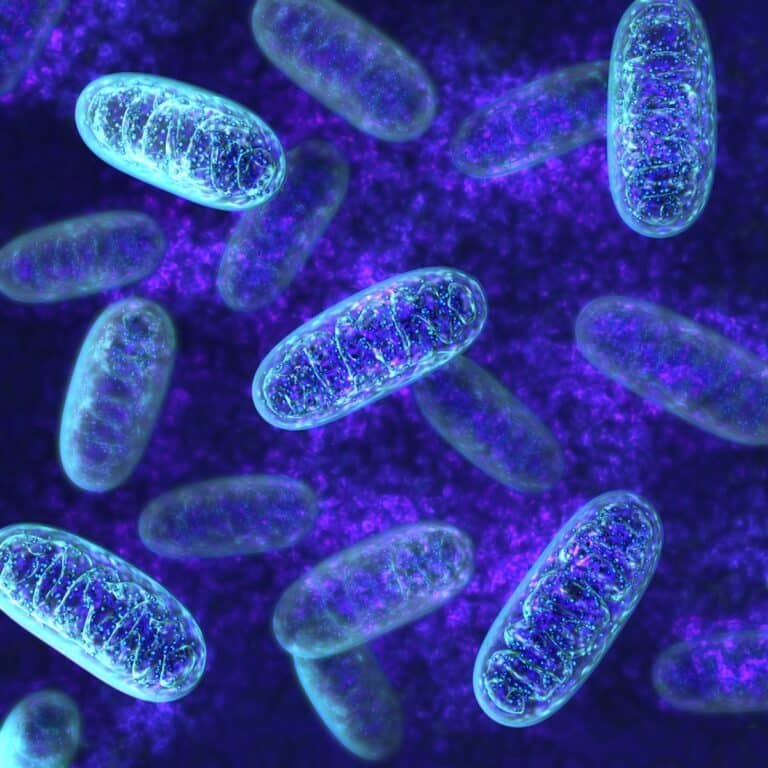
- Mitochondria are membrane-bound cell organelles that generate most of the chemical energy needed to power the cell’s biochemical reactions.
- Mitochondria are often referred to as the powerhouses of the cell.
- Chemical energy produced by the mitochondria is stored in a small molecule called adenosine triphosphate (ATP). ATP is the chemical energy “currency” of the cell that powers the cell’s metabolic activities.
- Generally, mitochondria, and therefore mitochondrial DNA, are inherited only from the mother.
Q1) What is mitochondrial DNA (mt-DNA)?
Mitochondrial DNA is the circular chromosome found inside the cellular organelles called mitochondria. Located in the cytoplasm, mitochondria are the site of the cell’s energy production and other metabolic functions. Offspring inherit mitochondria — and as a result mitochondrial DNA — from their mother.
Source: U.K. sees success in mitochondrial replacement therapy






 Last updated on March, 2026
→ UPSC Final Result 2025 is now out.
→ UPSC has released UPSC Toppers List 2025 with the Civil Services final result on its official website.
→ Anuj Agnihotri secured AIR 1 in the UPSC Civil Services Examination 2025.
→ UPSC Marksheet 2025 is now out.
→ UPSC Notification 2026 & UPSC IFoS Notification 2026 is now out on the official website at upsconline.nic.in.
→ UPSC Calendar 2026 has been released.
→ Check out the latest UPSC Syllabus 2026 here.
→ UPSC Prelims 2026 will be conducted on 24th May, 2026 & UPSC Mains 2026 will be conducted on 21st August 2026.
→ The UPSC Selection Process is of 3 stages-Prelims, Mains and Interview.
→ Prepare effectively with Vajiram & Ravi’s UPSC Prelims Test Series 2026 featuring full-length mock tests, detailed solutions, and performance analysis.
→ Enroll in Vajiram & Ravi’s UPSC Mains Test Series 2026 for structured answer writing practice, expert evaluation, and exam-oriented feedback.
→ Join Vajiram & Ravi’s Best UPSC Mentorship Program for personalized guidance, strategy planning, and one-to-one support from experienced mentors.
→ Shakti Dubey secures AIR 1 in UPSC CSE Exam 2024.
→ Also check Best UPSC Coaching in India