About Incident Response System
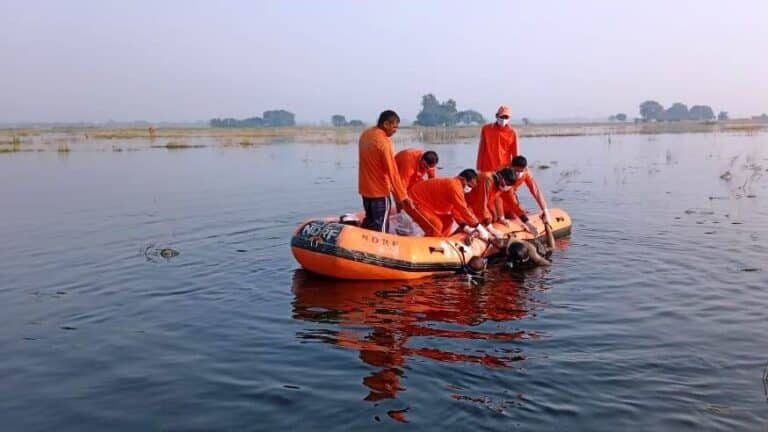
- IRS is a combination of facilities, equipment, personnel, procedure and communications operating within a common organizational structure, with responsibility for the management of assigned resources to effectively accomplish stated objectives pertaining to an incident.\
- Functions:
- In line with administrative structure and DM Act 2005, Responsible Officer (RO) is designated at the State and District level as overall in charge of the incident response management.
- RO may delegate responsibilities to the Incident Commander (IC), who in turn will lead/manage the incident through Incident Response Teams (IRTs).
- IRS functions through Incident Response Teams (IRTs) in the field. An IRT is a team comprising all positions of IRS organization; headed by Incident Commander (IC).
- On receipt of Early Warning, RO activates IRTs. In case of a disaster without any warning, local IRT will respond and contact RO for further support, if required.
- IRTs pre-designated at all levels, i.e. State, District, Sub-Division and Tehsil/Block.
- IRT’s lowest administrative unit (Sub-Division / Tehsil / Block) will be the ‘first responder’.
- If the incident becomes complex and beyond the control of local IRT, higher level IRT will be informed / take over the response management. In such cases the lower level IRT will merge with the higher level IRT.
- When lower level of IRT merges with a higher level, IC of lower level may play the role of Deputy IC or Operations Sections Chief (OSC) or any other duty that the IC of higher authority assigns.
Key Facts about National Disaster Management Authority (NDMA):
- Parent body: Ministry of Home Affairs.
- Primary Objective: To coordinate response to natural or man-made disasters and for capacity-building in disaster resiliency and crisis response.
- It is responsible for framing policies, laying down guidelines and best-practices and coordinating with the State Disaster Management Authorities (SDMAs) to ensure a holistic and distributed approach to disaster management.
- Origin: NDMA was established through the Disaster Management Act enacted by the Government of India in 2005.
- Organisation setup:
- The Prime Minister is the ex-officio chairperson of the NDMA, who chairs a 9-member board.
- The remainder of the board consists of members nominated based on their expertise in areas such as, planning, infrastructure management, communications, meteorology etc.
Q1) What is the Disaster Management Act, 2005?
This Act lays down institutional and coordination mechanisms for effective disaster management at the national, state, and district levels. The Act provides for the establishment of the National Disaster Management Authority, and of the National Executive Committee as an advisory committee to assist the National Authority. The National Authority shall set out and approve policies, plans and guidelines for disaster management prepared by various departments of the Government of India to ensure timely and effective response to disasters.
Source: Many states, UTs yet to implement key disaster response tool: NDMA





 Last updated on March, 2026
→ UPSC Final Result 2025 is now out.
→ UPSC has released UPSC Toppers List 2025 with the Civil Services final result on its official website.
→ Anuj Agnihotri secured AIR 1 in the UPSC Civil Services Examination 2025.
→ UPSC Marksheet 2025 is now out.
→ UPSC Notification 2026 & UPSC IFoS Notification 2026 is now out on the official website at upsconline.nic.in.
→ UPSC Calendar 2026 has been released.
→ Check out the latest UPSC Syllabus 2026 here.
→ UPSC Prelims 2026 will be conducted on 24th May, 2026 & UPSC Mains 2026 will be conducted on 21st August 2026.
→ The UPSC Selection Process is of 3 stages-Prelims, Mains and Interview.
→ Prepare effectively with Vajiram & Ravi’s UPSC Prelims Test Series 2026 featuring full-length mock tests, detailed solutions, and performance analysis.
→ Enroll in Vajiram & Ravi’s UPSC Mains Test Series 2026 for structured answer writing practice, expert evaluation, and exam-oriented feedback.
→ Join Vajiram & Ravi’s Best UPSC Mentorship Program for personalized guidance, strategy planning, and one-to-one support from experienced mentors.
→ Shakti Dubey secures AIR 1 in UPSC CSE Exam 2024.
→ Also check Best UPSC Coaching in India