About Ureilite:
- ‘Ureilites’ are a rare class of primitive meteorites that constitute just a tiny fraction of meteorites on Earth.
- It is named after the locality where the first specimen was discovered, the Novo Urei village in Russia.
- Composition:
- They consist of silicate rock, mostly olivine and pyroxene, interspersed with less than 10% of carbon (diamond or graphite), metal sulphides and a few fine-grained silicates.
- They contain elongated cavities generally stretched in the same direction.
- Lack of Chondrules: Unlike many other stony meteorites, ureilites do not contain chondrules, which are small, spherical grains that formed in the early solar system.
- Primitive Nature: Ureilites are considered primitive meteorites because their composition closely resembles the material from which the solar system formed.
Key Facts about Dhala Crater:
- It is the oldest and the largest impact crater in India.
- It is estimated to have formed some 2500 million years ago.
- Named after the village Dhala, the crater is an eroded leftover of the original impact structure.
- Location: It is located in Shivpuri district in Madhya Pradesh.
- Size: It is a massive 11 km in diameter, making it the largest in Asia.
What’s the difference between a meteor, a meteoroid, and a meteorite?
- Meteoroids: They are objects in space that range in size from dust grains to small asteroids.
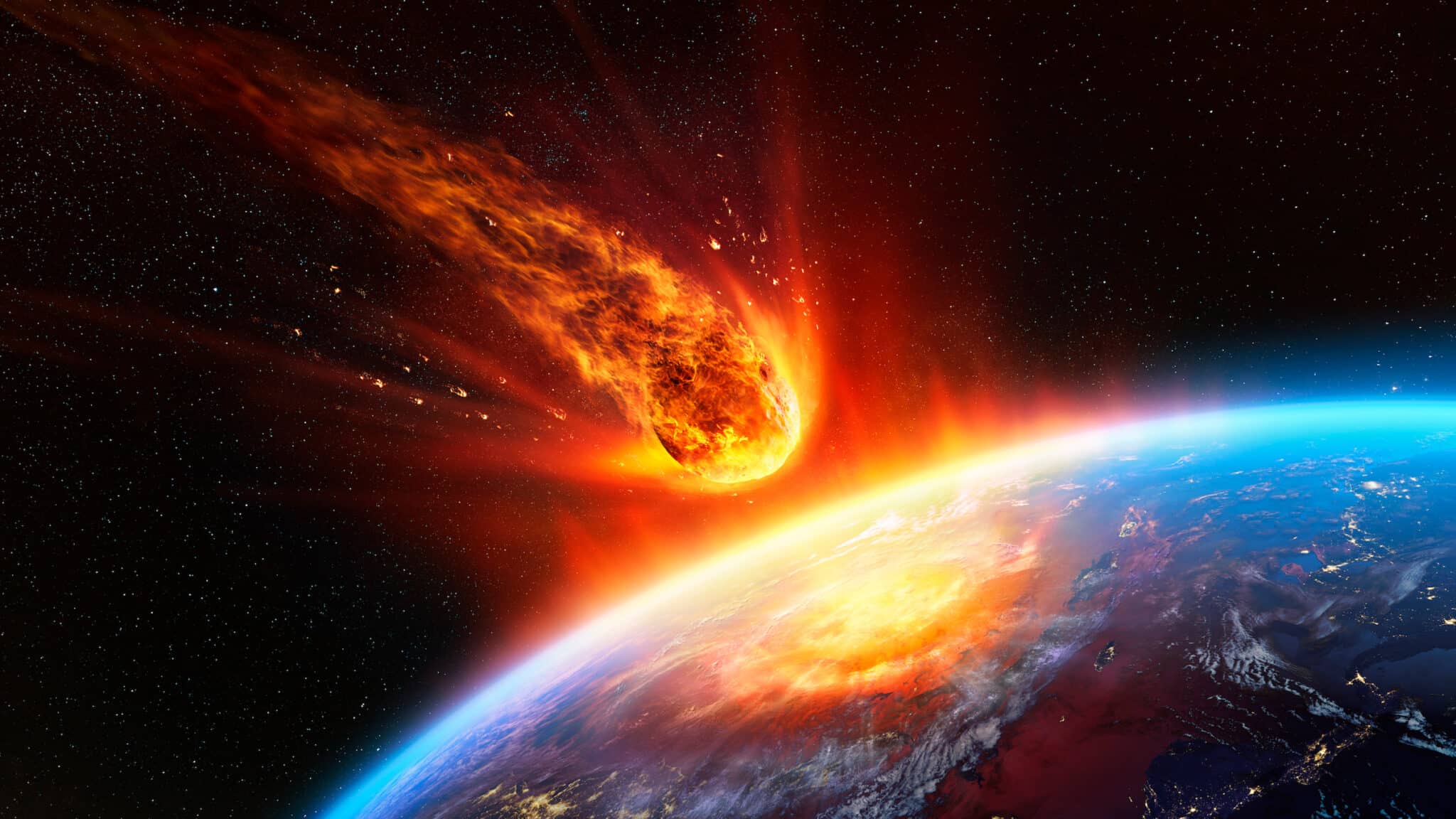
- Meteors: When meteoroids enter Earth’s atmosphere (or that of another planet, like Mars) at high speed and burn up, the fireballs or “shooting stars” are called meteors.
- Meteorite: When a meteoroid survives a trip through the atmosphere and hits the ground, it’s called a meteorite.
Q) What is an impact crater?
An impact crater is a bowl-shaped depression or cavity formed on the surface of a celestial body, such as a planet, moon, asteroid, or comet, as a result of the high-velocity impact of a meteoroid or other celestial object. Impact craters are some of the most common geological features found on many solid bodies in the solar system, and they offer valuable insights into the history and geology of those bodies.
Source: Meteorite created Madhya Pradesh’s famous Dhala impact crater, new study reveals


 Last updated on Oct, 2026
→ UPSC 2027 Notification will be released on 13 January 2027 at upsconline.nic.in.
→ Check Nobel Prize 2026 Winners List here.
→ Download PIB PRiSM Monthly Magazine 2026 here.
→ Check UPSC Monthly Current Affairs Magazine The Recitals here.
→ Check out the latest UPSC Syllabus here.
→ Download UPSC Model Answers for Mains 2026
→ UPSC Mains Question Paper 2026 is out now for Essay & GS Paper 1, 2, 3 & 4.
→ UPSC Calendar 2027 has been released.
→ Enroll in Vajiram & Ravi’s UPSC Mains Test Series 2027 for structured answer writing practice, expert evaluation, and exam-oriented feedback.
→ Join Vajiram & Ravi’s UPSC Mentorship Program 2027 for personalized guidance, strategy planning, and one-to-one support from experienced mentors.
→ Go through the UPSC Mains Previous Year Papers to enhance your preparation.
→ UPSC has released UPSC Toppers List 2025 with the Civil Services final result on its official website.
→ Also check Best UPSC Coaching in India