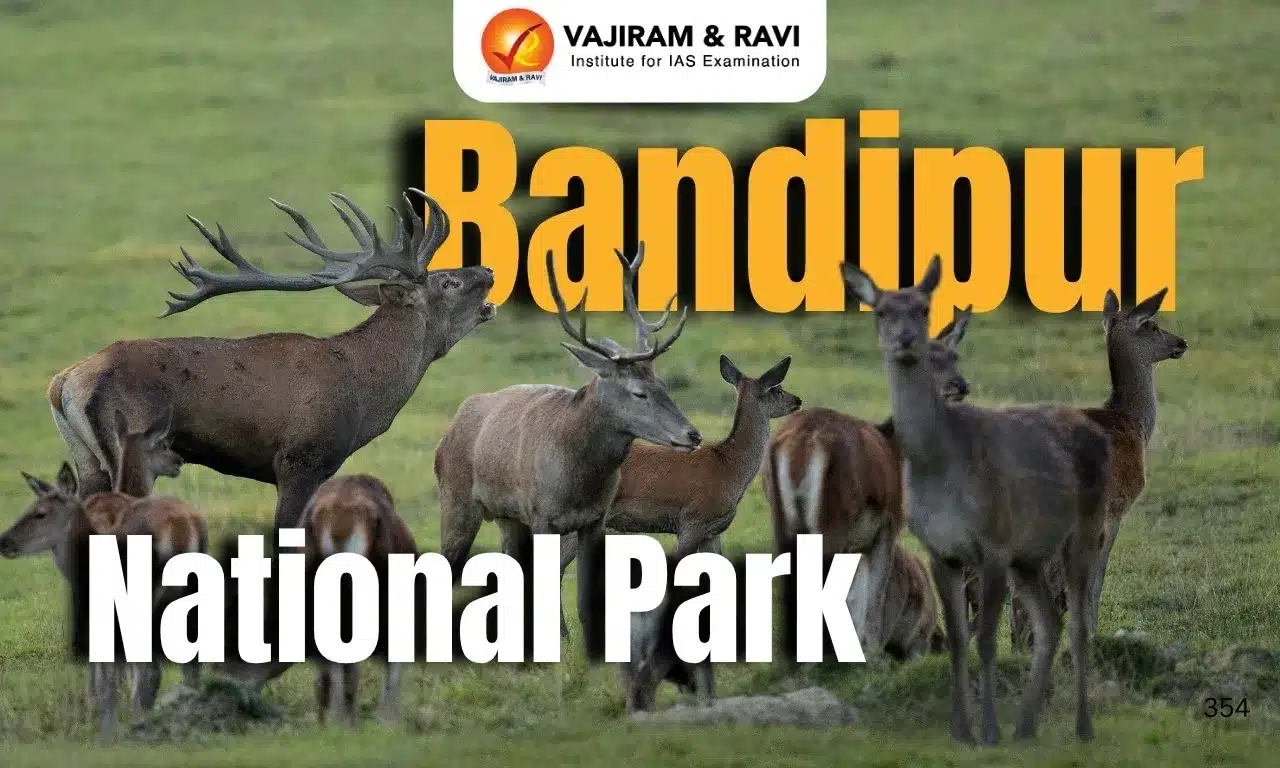
Bandipur National Park is situated in Karnataka between earthen and western ghats of India. According to the Tiger Census 2018, Karnataka ranks second in the country for tiger population, followed by Madhya Pradesh. Bandipur Tiger Reserve is also part of the Nilgiri Biosphere Reserve promotes a rich diversity of flora and fauna, providing habitat to various unique species.
Bandipur Tiger Reserve
Bandipur Tiger Reserve is one of the country's oldest and most renowned national parks and tiger reserves. As a part of the larger Nilgiri Biosphere Reserve, it plays an important role in wildlife conservation. The primary goal of Bandipur Tiger Reserve is to safeguard and preserve the endangered Bengal tiger while maintaining the rich biodiversity of that region.
Bandipur National Park History
Bandipur National Park was a hunting ground for the Maharaja of Mysore later became the most prominent wildlife reserves which is known for its rich biodiversity and was entitled as a Bandipur Tiger Reserve under Project Tiger in 1974. Bandipur is home to the largest population of wild elephants in South India and a significant number of tigers. Located along the Mysore-Ooty highway, the park attracts many visitors each year. Spanning across Karnataka and Tamil Nadu, its Tamil Nadu region is called Mudumalai Tiger Reserve.


Bandipur National Park Flora
Bandipur National Park includes the Flora having a variety of trees such as teak, rosewood, sandalwood, Indian kino tree, Indian laurel, clumping bamboo, and giant clumping bamboo. The Bandipur Tiger Reserve is also home to flowering and fruit-bearing trees like axle wood, black cutch, indigo berry, golden shower tree, black myrobalan, flame of the forest, kadam tree, and Indian gooseberry. Adding to the list, tamarind, mango, and several other native tree species exist in the rich ecosystem of Bandipur Tiger Reserve.
Bandipur National Park Fauna
Bandipur National Park is known for elephants and tigers. Other notable animals in the Bandipur Tiger Reserve include the bonnet macaque, dhole, civet, jungle cat, Indian palm civet, giant flying squirrel, striped hyena, rusty-spotted cat, Nilgiri tahr, leopard, Hanuman langur, four-horned antelope, and Indian hare.
Some commonly spotted birds include peafowl, junglefowl, drongos, red-headed vultures, flowerpeckers, Indian rollers, crested serpent eagles, bee-eaters, hawk eagles, kingfishers, and ospreys. The bird breeding season usually begins just before the monsoon. The Bandipur Tiger Reserve is also home to a variety of reptiles, including the Indian rock python, Indian pond terrapin, flying lizard, mugger crocodile, monitor lizard, and rat snake.
Bandipur Tiger Reserve Interesting Facts
- Bandipur National Park is a home for over 200 species of birds. Common sightings include the Malabar pied hornbill, Indian roller, jungle fowl, and crested serpent eagle.
- With an estimated population of over 2,500 Asiatic elephants, Bandipur is one of the world's largest habitats for the elephants. The best time to witness large herds of Asian elephants is during the monsoon season (June to September).
- The Bandipur National Park ecotourism activities operate primarily in two parts—Bandipur (54 sq. km) and GS Betta (28 sq. km).
- Bandipur serves as a vital research center for scientists and conservationists. Studies conducted here have significantly contributed to wildlife conservation and the management of national parks across India.
- Bandipur Tiger Reserve is one of the world’s eight "hottest biodiversity hotspots". The park's eastern areas consist of scrub jungles with scattered bushes and grasslands, while the northwestern section is characterized by tropical mixed deciduous forests.
- Bandipur has earned a reputation as one of India’s best-managed national parks. Over the past 50 years, the park has made remarkable progress in wildlife preservation, receiving multiple awards for its effective management and conservation strategies.

 Last updated on Sep, 2026
→ UPSC 2027 Notification will be released on 13 January 2027 at upsconline.nic.in.
→ Asian Games 2026 are being held in Aichi-Nagoya, Japan, from 19 September to 4 October.
→ Check out the latest UPSC Syllabus here.
→ Download UPSC Model Answers for Mains 2026
→ UPSC Mains Question Paper 2026 is out now for Essay & GS Paper 1, 2, 3 & 4.
→ UPSC Calendar 2027 has been released.
→ Enroll in Vajiram & Ravi’s UPSC Mains Test Series 2027 for structured answer writing practice, expert evaluation, and exam-oriented feedback.
→ Join Vajiram & Ravi’s UPSC Mentorship Program 2027 for personalized guidance, strategy planning, and one-to-one support from experienced mentors.
→ Go through the UPSC Mains Previous Year Papers to enhance your preparation.
→ UPSC has released UPSC Toppers List 2025 with the Civil Services final result on its official website.
→ Also check Best UPSC Coaching in India
Bandipur National Park FAQs
Q1. Which is Bandipur National Park situated?+
Q2. Which city is near Bandipur National Park?+
Q3. Which is the best time to visit Bandipur National Park?+
Q4. What is Bandipur famous for?+
Q5. How many tigers are in Bandipur Tiger Reserve?+
Tags: bandipur national park