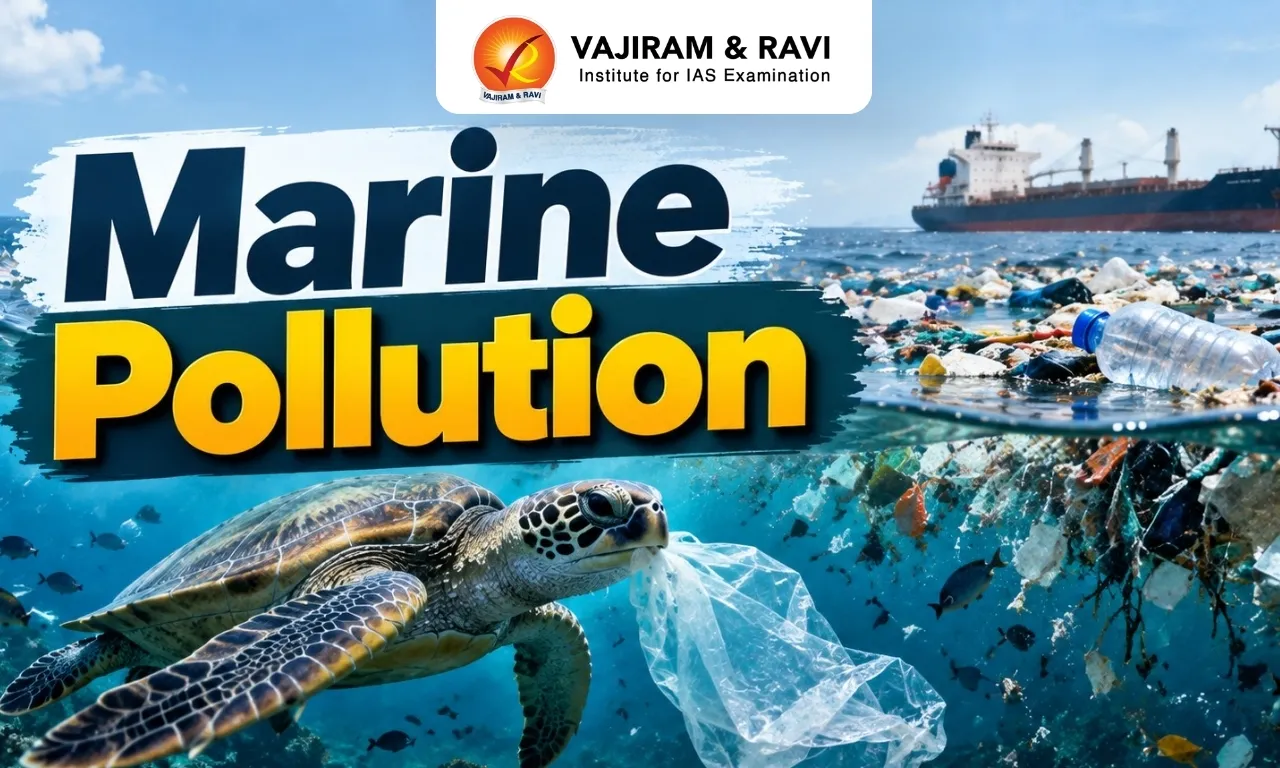
Marine pollution is the contamination of oceans and seas by harmful substances such as industrial runoff, plastic waste, chemicals, and oil, threatening marine ecosystems and biodiversity. India addresses it through measures such as the Plastic Waste Management Rules and Marine Spatial Planning.
Globally, SDG 14, the G20 Action Plan, GOPAAP, GloLitter Project, and UN Decade of Ocean Science promote marine pollution reduction and sustainable ocean management. International conventions including UNCLOS, MARPOL, and the Basel Convention provide frameworks for regulating and preventing marine pollution.
Marine Pollution Definition
Marine pollution is defined by the 1982 UN Convention on the Law of the Sea as "the introduction by man, directly or indirectly, of substances or energy into the marine environment which results or is likely to result in such deleterious effects as harm to living resources and marine life.”
Marine Pollution Types
The types of marine pollution can be classified based on the nature and characteristics of the pollutants entering marine ecosystems. Major types include organic, inorganic, suspended particulate, chemical, radioactive, and noise pollution, each arising from different pollutants and affecting marine ecosystems in distinct ways.
- Organic Pollution: It refers to the contamination of water bodies with biodegradable organic matter and persistent pollutants, leading to oxygen depletion and long-term ecological harm.
- Biodegradable Organic Matter: Organic waste from sewage and agricultural runoff breaks down in the water. As they decompose, they consume dissolved oxygen, potentially causing hypoxic or anoxic conditions.
- Persistent Organic Pollutants (POPs): These are toxic chemicals that remain in the environment for long periods, such as the pesticide DDT, polychlorinated biphenyls (PCBs), and dioxins.
- Inorganic Pollution: It refers to the contamination of water bodies with non-organic substances like heavy metals and nutrients, which can disrupt ecosystems and harm marine life.
- Heavy Metals: Mining, industrial emissions, and waste leaching introduce heavy metals like arsenic, cadmium, lead, and mercury into the ocean, which then accumulate in marine life.
- Nutrients: Nitrogen and phosphorus compounds from fertilisers and wastewater contribute to nutrient pollution, or eutrophication, leading to excessive algae growth.
- Suspended Particulate Pollution: It consists of tiny solid or liquid particles like dust, pollen, and smoke, impacting health and the environment.
- Sediment Runoff: Soil erosion increases sediments in water, reducing light penetration and harming photosynthetic organisms while disrupting the habitat of coral reefs.
- Plastic Particles: Microplastics and nanoplastics, from degraded larger plastics, are common in the marine environment and can cause physical and chemical harm when ingested by marine life.
- Chemical Pollution: It is the release of harmful chemicals like pesticides, herbicides, and industrial toxins into the environment, damaging ecosystems.
- Pesticides and Herbicides: These chemicals enter the ocean via agricultural runoff, disrupting endocrine systems in marine species, impairing physiological functions, and causing long-term ecological damage.
- Oil and Hydrocarbons: Oil spills and leaks release toxins (e.g., benzene, toluene, and xylene) that coat marine organisms, block light and oxygen, and alter the chemical makeup of water and sediments.
- Radioactive Pollution: Contamination from radioactive isotopes such as Cesium-137, Iodine-131, and Strontium-90 originates from nuclear waste, accidents, and testing. These isotopes emit radiation, leading to genetic mutations, cancer, and ecological disruptions in marine organisms.
- Noise Pollution: Sound waves from industrial activities, military exercises, and shipping can disrupt marine animals' communication, orientation, and migration, especially those that rely on echolocation.


Marine Pollution Indicators
Marine pollution impacts aquatic life through high Biochemical Oxygen Demand (BOD), Chemical Oxygen Demand (COD), biological magnification, eutrophication, and hypoxia, all of which harm ecosystems by depleting oxygen and disrupting marine biodiversity.
Biochemical Oxygen Demand (BOD)
Biochemical Oxygen Demand (BOD) is a measure of the amount of dissolved oxygen required by microorganisms to break down organic matter in water under aerobic conditions. Higher BOD levels indicate more organic pollution, leading to lower dissolved oxygen levels, which can harm aquatic life.
Chemical Oxygen Demand (COD)
Chemical Oxygen Demand (COD) measures the amount of oxygen needed to oxidise both soluble and particulate organic matter in water. It serves as a crucial water quality indicator, much like Biological Oxygen Demand (BOD), to evaluate the potential impact of discharged wastewater on the environment.
- Higher COD values indicate a greater presence of oxidizable organic materials, which can deplete dissolved oxygen (DO) levels in the water.
- Lower DO levels can result in anaerobic conditions, negatively affecting aquatic life.
Dead Zones
Dead zones are low-oxygen areas in oceans and lakes where most organisms cannot survive. It results from both natural causes like coastal upwelling and human activities. Human factors, such as fertiliser use and runoff from urban areas, cause nutrient-rich water, leading to eutrophication. This triggers rapid phytoplankton growth, known as algal blooms.
Hypoxia
Hypoxia occurs when tissues and cells do not receive sufficient oxygen to function properly. The breakdown of biomass by bacteria depletes oxygen in the water, leading to hypoxic conditions.
Biological Magnification
Biological magnification is the process where pollutants increase in concentration as they move up the food chain. Pollutants like DDT, which are fat-soluble and long-lasting, accumulate in organisms over time.
- Water-soluble pollutants are usually excreted, while fat-soluble ones persist, leading to higher concentrations in top predators.
Eutrophication
Eutrophication is caused by excessive nutrients, like nitrates and phosphates, entering water bodies from sources including domestic waste and agricultural runoff. These nutrients promote rapid plant growth, especially algae, which can result in algal blooms or the spread of invasive species like water hyacinth.
- As these plants die, bacteria break them down, consuming large amounts of oxygen and depleting the water. This oxygen depletion can result in the death of fish and other aquatic organisms.
- Water bodies with high nutrient levels undergoing this process are considered eutrophic.
Marine Pollution Causes
Marine pollution originates from diverse land- and sea-based activities, with pollutants entering marine environments through discharge, runoff, leaching, dumping, and other pathways.
- Sewage and Domestic Waste: Untreated sewage introduces organic matter, nutrients, pathogens, and other contaminants into marine waters.
- Agricultural Runoff: Fertilisers, pesticides, herbicides, and agricultural waste enter seas through runoff and leaching, causing eutrophication and contamination.
- Industrial Effluents: Industries such as textiles, tanneries, plastics, paper, paints, and fertilisers discharge pollutants into coastal waters.
- Heavy Metals: Industrial and domestic wastes introduce mercury, cadmium, lead, copper, iron, manganese, and zinc, which can accumulate in marine organisms.
- Mining and Sedimentation: Mining spoils, effluents, soil erosion, and unscientific agricultural and forestry practices increase sedimentation and turbidity.
- Plastic and Solid Waste: Improper disposal and dumping introduce persistent marine debris, harming marine ecosystems.
- Other Activities: Thermal discharges, deep-sea mining, radioactive dumping, and underwater noise also contribute to marine pollution.
Oil Pollution and its Causes
Oil pollution occurs when crude oil, petroleum products, or oily wastes enter marine environments through accidental spills, operational discharges, and petroleum activities.
- Shipping Accidents: Collisions, fires, and explosions can release oil from ships, bunkers, and cargo tanks.
- Ship Operations: Bilge discharge and tank washing release oily residues into marine waters.
- Fuel Transfer: Spills can occur during fuel or oil transfer between vessels.
- Equipment Failures: Malfunctioning equipment and incorrectly operated valves can cause oil leakage.
- Oil Transportation: Heavy maritime transport of crude oil increases the risk of accidental spills.
- Refinery Wastes: Petroleum wastes and refinery discharges contaminate coastal waters.
- Natural Seepage: Oil naturally enters marine environments through seepage from the ocean floor.
Marine Pollution Sources
Marine pollution has its sources in both land and ocean. Roughly 80% of marine pollution comes from land-based activities and is transported into the oceans by winds, rivers, and runoff.
- Agricultural Runoff: Excess fertilisers, herbicides, and pesticides wash into streams, adding excessive quantities of nitrogen and phosphorus that cause toxic algal blooms and oxygen-depleted dead zones.
- Plastic Waste: Bags, bottles, microplastics, and abandoned packaging pollute city drains and waterways for hundreds of years, damaging marine life.
- Sewage and Wastewater: Untreated or inadequately treated urban discharge introduces dangerous bacteria, nutrients, and diseases to coastal waters.
- Toxic chemicals and heavy metals released by factories accumulate and biomagnify in the marine food chain.
- Oil Spills: Accidental discharges from tankers, offshore drilling rigs, and pipelines coat the water's surface, preventing light and oxygen exchange.
- Ocean Dumping: The direct and illicit disposal of building debris, mining waste, and dredging materials harms benthic habitats.
- Discarded Fishing Gear: Once lost or abandoned, nets and lines become "ghost gear," capturing and killing fish, turtles, and marine mammals.
- Airborne Pollutants: These include industrial emissions, car exhaust, and heavy metals, which pass through the atmosphere and settle immediately on the sea surface.
Marine Pollution Impacts
Marine pollution has wide-ranging ecological, biological, and socio-economic impacts, affecting water quality, marine organisms, biodiversity, food chains, coastal habitats, fisheries, and coastal livelihoods.
- Oxygen Depletion and Eutrophication: Nutrient pollution from sewage and agricultural runoff promotes excessive algal growth. As algae decompose, oxygen levels decline, creating hypoxic or dead zones where marine life cannot survive.
- Marine Toxicity and Bioaccumulation: Heavy metals, pesticides, petroleum contaminants, and other toxic substances can accumulate in marine organisms and cause reproductive failure, growth defects, physiological damage, and increased mortality.
- 2017 Chennai Oil Spill: The oil spill along Chennai’s coast significantly affected marine life, including fish, turtles, and seabirds.
- 2011 Mumbai Oil Spill: Contamination of fish and shellfish disrupted the local fishing industry.
- Disruption of Food Chains: Pollution harms plankton, microorganisms, fish, and other marine organisms, causing cascading effects across higher trophic levels and disrupting marine food webs.
- Habitat Destruction and Biodiversity Loss: Pollution, sedimentation, oil contamination, and reduced water quality degrade critical marine and coastal habitats, including coral reefs, mangroves, and seagrass ecosystems.
- India’s coastline includes important marine ecosystems such as the Sundarbans mangroves, coral reefs in the Gulf of Mannar, and the Andaman and Nicobar Islands.
- Reproductive and Physiological Impacts: Toxic chemicals and other pollutants can interfere with the growth, reproduction, and physiological functioning of marine organisms, contributing to population decline and reduced ecosystem resilience.
- Changes in Marine Environmental Conditions: Thermal pollution increases ocean-water temperature, while pollution-related pressures can contribute to changes in ocean acidity and water quality, affecting marine organisms and ecosystems.
- Economic and Livelihood Impacts: Marine pollution damages fisheries, contaminates seafood and coastal areas, affects tourism, and imposes economic costs on coastal communities.
- 2010 Arabian Sea Oil Spill near Mumbai: The spill led to the temporary closure of several popular beaches, affecting tourism revenue.
Marine Pollution Global Initiatives
Global efforts to combat marine pollution combine international commitments, collaborative programmes, scientific cooperation, and legally binding conventions. These efforts focus on reducing marine litter, controlling land- and sea-based pollution, improving ocean knowledge, and promoting sustainable ocean management.
- Sustainable Development Goal 14 (SDG 14): Target 14.1 focuses on preventing and significantly reducing marine pollution, particularly pollution originating from land-based activities.
- G20 Action Plan on Marine Litter: Promotes international cooperation to reduce marine litter and strengthen sustainable waste-management practices.
- GloLitter Partnerships Project: A partnership involving the Government of Norway, International Maritime Organisation (IMO), and Food and Agriculture Organisation (FAO) to reduce sea-based marine plastic litter.
- Global Ocean Pollution Assessment and Action Plan (GOPAAP): Aims to contribute towards a pollution-free ocean by 2050 through global pollution assessment, identification of data gaps, evaluation of solutions, and stakeholder engagement.
- UN Decade of Ocean Science for Sustainable Development (2021–2030): Promotes international scientific cooperation and ocean research to strengthen knowledge and support sustainable ocean development. India contributes through collaborative centres and international research efforts.
- International Conventions for Marine Pollution: International conventions such as UNCLOS, MARPOL, and the Basel Convention provide legal and institutional frameworks for preventing and controlling marine pollution.
- United Nations Convention on the Law of the Sea (UNCLOS) 1982: Mandated signatory countries, including India, to implement measures aimed at preventing, reducing, and controlling marine pollution.
- International Convention for the Prevention of Pollution from Ships (MARPOL) (1973): The main international convention covering the prevention of pollution of the marine environment by ships from operational or accidental causes
- Basel Convention (1989): It is the most comprehensive global environmental agreement that regulates the transboundary movements of hazardous wastes and other wastes.
Marine Pollution Initiatives in India
Marine pollution in India is addressed through measures focusing on plastic waste management, sustainable use of ocean space, marine litter research, oil-spill preparedness, and coastal clean-up.
- Plastic Waste Management (Amendment) Rules, 2022: Introduces Extended Producer Responsibility (EPR) for plastic packaging, making producers accountable for collection and recycling.
- Marine Spatial Planning: Through collaborations with the India-Norway Ocean Dialogue, India is developing Marine Spatial Planning frameworks to manage ocean space sustainably.
- Puducherry and Lakshadweep are being developed as pilot areas for sustainable ocean-resource management.
- Marine Plastics/Litter Prevention and Management: The Ministry of Earth Sciences is collaborating with CEFAS, UK, and Japanese institutions on assessing the impact of microplastics on marine organisms in coastal and estuarine habitats.
- National Oil Spill Disaster Contingency Plan (NOS-DCP): Launched in 1996 to strengthen India’s preparedness and response to oil spills. Major ports are required to maintain basic response equipment such as inflatable booms and oil skimmers. The plan was revised in 2015 to align with international standards.
- National Centre for Coastal Research (NCCR): Undertakes beach-litter quantification studies and coastal clean-up campaigns, supporting assessment and management of marine litter.
Marine Pollution Prevention Strategies
Marine pollution threatens marine ecosystems, biodiversity, and coastal livelihoods. Addressing it requires source reduction, effective waste management, pollution control, monitoring, and community participation.
- Pollution Source Reduction: Promote cleaner production, reduce excessive fertiliser use, and minimise agricultural runoff entering marine ecosystems.
- Plastic Waste Management: Reduce single-use plastics, strengthen collection, recycling and scientific disposal, and implement Extended Producer Responsibility (EPR).
- Wastewater and Chemical Pollution Control: Expand wastewater treatment, manage agricultural runoff, and enforce standards for industrial effluents to prevent toxic pollutants from reaching marine waters.
- Marine Clean-up and Restoration: Conduct coastal clean-up programmes, remove marine debris and ghost fishing gear, and restore degraded coastal and marine ecosystems.
- Ecosystem and Climate Protection: Reduce greenhouse gas emissions and conserve blue-carbon ecosystems such as mangroves, seagrass beds, and salt marshes to enhance marine resilience.
- Monitoring and Enforcement: Strengthen pollution monitoring, identify hotspots, improve early detection, enforce environmental standards, and ensure compliance with pollution-control regulations.
Marine Pollution UPSC PYQs
Q1. What is oil pollution? What are its impacts on the marine ecosystem? In what way is oil pollution particularly harmful for a country like India? (UPSC Mains 2023)
Q2. What are the consequences of spreading ‘Dead Zones’ on marine ecosystems? ( UPSC Mains 2018)
Q3. How do ocean currents and water masses differ in their impacts on marine life and the coastal environment? Give suitable examples. ( UPSC Mains 2018)

 Last updated on Sep, 2026
→ UPSC 2027 Notification will be released on 13 January 2027 at upsconline.nic.in.
→ Asian Games 2026 are being held in Aichi-Nagoya, Japan, from 19 September to 4 October.
→ Check out the latest UPSC Syllabus here.
→ Download UPSC Model Answers for Mains 2026
→ UPSC Mains Question Paper 2026 is out now for Essay & GS Paper 1, 2, 3 & 4.
→ UPSC Calendar 2027 has been released.
→ Enroll in Vajiram & Ravi’s UPSC Mains Test Series 2027 for structured answer writing practice, expert evaluation, and exam-oriented feedback.
→ Join Vajiram & Ravi’s UPSC Mentorship Program 2027 for personalized guidance, strategy planning, and one-to-one support from experienced mentors.
→ Go through the UPSC Mains Previous Year Papers to enhance your preparation.
→ UPSC has released UPSC Toppers List 2025 with the Civil Services final result on its official website.
→ Also check Best UPSC Coaching in India
Marine Pollution FAQs
Q1. What is marine pollution?+
Q2. What are marine pollutants?+
Q3. What are the 7 major sources of water pollution?+
Q4. Who is affected by marine pollution?+
Q5. Why is marine pollution important?+
Tags: marine pollution quest UPSC Environment and Ecology Notes