




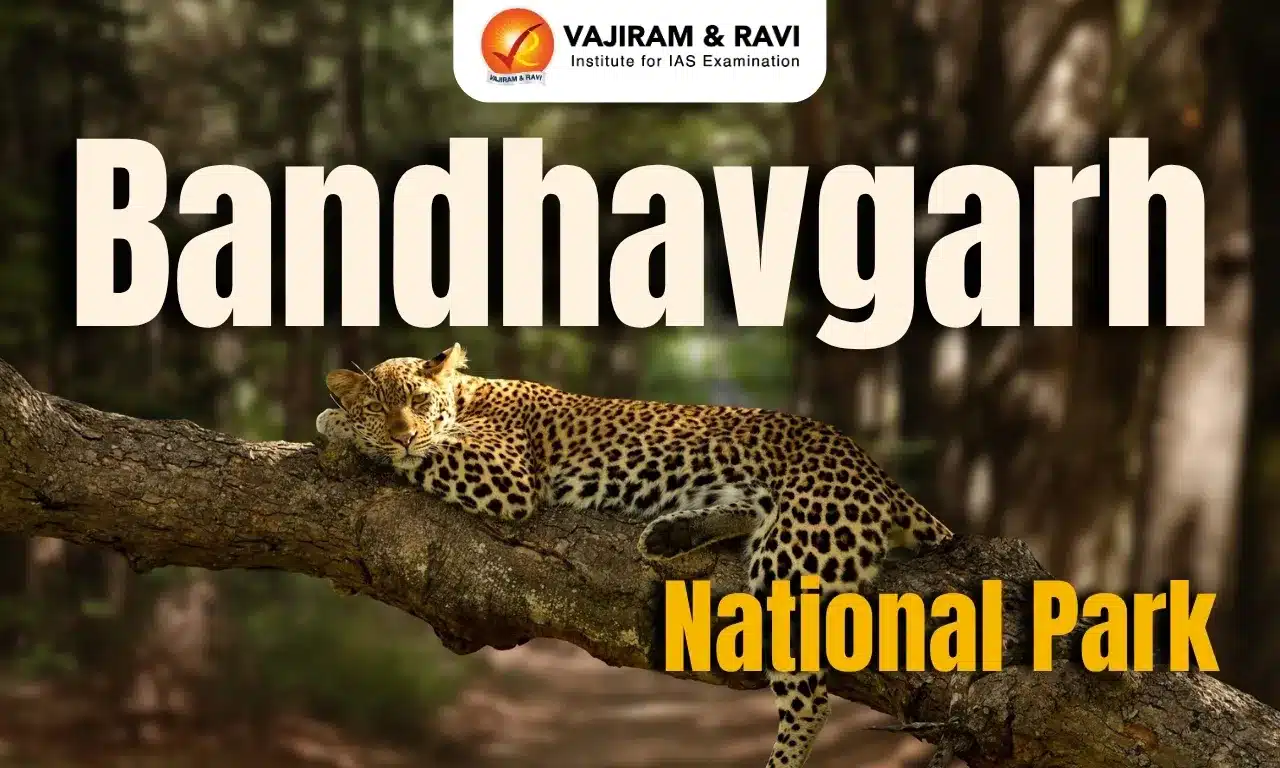
Bandhavgarh National Park is located in Umaria district of Madhya Pradesh which is part of the Vindhya Hills spanning an area of 1,536 sq. km. Originally established as a national park in 1968, later became Bandhavgarh Tiger Reserve in 1993 under Project Tiger to conserve the Bengal tiger population. The park is renowned for the ancient Bandhavgarh Fort, which is believed to be over 2,000 years old, adding historical and cultural significance to the region. Bandhavgarh National Park reserve lies between Kanha Tiger Reserve to the south and Sanjay National Park to the northeast, forming an essential wildlife corridor that supports species migration and conservation efforts.
Bandhavgarh Tiger Reserve
Bandhavgarh Tiger Reserve is one of India's most renowned national parks, known for its dense tiger population. It holds one of the highest tiger populations in the country, with approximately one tiger per 8 square kilometers. The reserve is also famous for the presence of white tigers. In 1951, Maharaja Martand Singh of Rewa captured the first recorded white tiger, named Mohan, in the Bandhavgarh region.
Bandhavgarh National Park History
Bandhavgarh is a historically significant location, with its name derived from two Sanskrit words—Bandhav (meaning brother) and Garh (meaning fort). The region has been ruled by several dynasties over the centuries, including the Sengars, Kalchuris, and Baghels. For a long time, the Maharajas of Rewa used Bandhavgarh as their hunting ground until 1968, when they handed it over to the state government. Following this, the area was established as Bandhavgarh National Park. Later, in 1993, Bandhavgarh National Park was recognized as a Bandhavgarh Tiger Reserve under Project Tiger, strengthening conservation efforts.





Bandhavgarh National Park Flora
- Bandhavgarh National Park features various forest types, including moist deciduous, dry deciduous, and scrub forests, spread across hilly terrain.
- It is home to important trees like Sal, Tendu, Saja, Dhawada, Kadam, Arjun, Jamun, Mahua, and Amla.
- Several plant species found here are rare and contribute to the park’s ecological significance.
- The region also consists of medicinal plants like Aloe Vera, Brahmi, Arjuna, and Ashwagandha, used by local communities.
- The flora plays an important role in maintaining biodiversity and supporting the wildlife population.
Bandhavgarh National Park Fauna
- Bandhavgarh National Park is a home to a variety of mammals, including tigers, leopards, sloth bears, wild dogs, hyenas, and several deer species like Nilgai and Chinkara.
- It also provides habitat to numerous bird species such as Plum-headed Parakeet, Indian Grey Hornbill, Rock Pigeon, and Alexandrine Parakeet, making it a great spot for birdwatching.
- Reptiles like Indian Rock Python, Spectacled Cobra, Monitor Lizard, and various keelback species also exist in the park’s ecosystem.
- Bandhavgarh Tiger Reserve has one of the highest tiger densities in India, with approximately one tiger in every 8 km².
- The park is historically significant for white tigers, with Maharaja Martand Singh capturing the first one in 1951. It also successfully reintroduced Gaurs after they went extinct locally due to disease.
Bandhavgarh Tiger Reserve Interesting Facts
- The name "Bandhavgarh" is derived from "Bandhav" (brother) and "Garh" (fort), referring to the ancient fort linked to Lord Rama and Lakshmana.
- Situated in the Vindhya Hills of Umaria district, Madhya Pradesh, the reserve spans dense forests, meadows, and cliffs.
- Bandhavgarh has the highest density of Bengal tigers in the world, making it one of India's top tiger-spotting destinations.
- Bandhavgarh Tiger Reserve is a home to a variety of wildlife, including leopards, wild dogs, sloth bears, wild boars, and over 250 species of birds like the Asian Paradise Flycatcher and Black Naped Monarch.
- The Bandhavgarh Fort inside the reserve features sculptures of the nine avatars of Vishnu, showcasing its mythological and historical relevance.
- Over 100 species of butterflies and a diverse range of reptiles, including pythons and cobras, can be found in the reserve.
- Bandhavgarh engages local communities to promote eco-tourism, benefiting both conservation and livelihoods.
- The ideal time to explore the Bandhavgarh Tiger Reserve is February to June, when wildlife sightings are at their peak.

 Last updated on March, 2026
→ UPSC Final Result 2025 is now out.
→ UPSC has released UPSC Toppers List 2025 with the Civil Services final result on its official website.
→ Anuj Agnihotri secured AIR 1 in the UPSC Civil Services Examination 2025.
→ UPSC Marksheet 2025 is now out.
→ UPSC Notification 2026 & UPSC IFoS Notification 2026 is now out on the official website at upsconline.nic.in.
→ UPSC Calendar 2026 has been released.
→ Check out the latest UPSC Syllabus 2026 here.
→ UPSC Prelims 2026 will be conducted on 24th May, 2026 & UPSC Mains 2026 will be conducted on 21st August 2026.
→ The UPSC Selection Process is of 3 stages-Prelims, Mains and Interview.
→ Prepare effectively with Vajiram & Ravi’s UPSC Prelims Test Series 2026 featuring full-length mock tests, detailed solutions, and performance analysis.
→ Enroll in Vajiram & Ravi’s UPSC Mains Test Series 2026 for structured answer writing practice, expert evaluation, and exam-oriented feedback.
→ Join Vajiram & Ravi’s Best UPSC Mentorship Program for personalized guidance, strategy planning, and one-to-one support from experienced mentors.
→ Shakti Dubey secures AIR 1 in UPSC CSE Exam 2024.
→ Also check Best UPSC Coaching in India
Bandhavgarh National Park FAQs
Q1. What is the best time to visit Bandhavgarh?+
Q2. In which state is Bandhavgarh National Park located?+
Q3. Which safari is best in Bandhavgarh?+
Q4. Which gate is best for tiger sighting in Bandhavgarh?+
Tags: bandhavgarh national prk