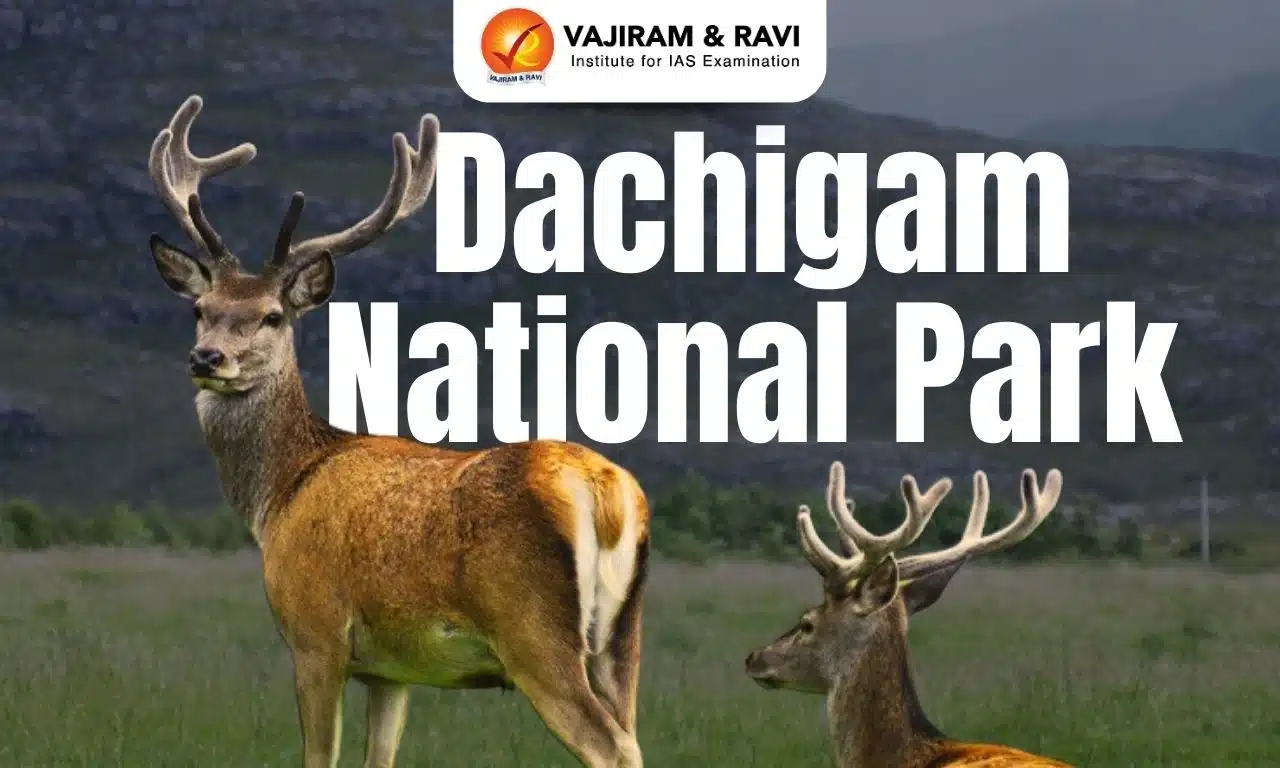
Dachigam National Park is located in the union territory of Jammu and Kashmir which is one of the renowned wildlife sanctuaries in northern India. The name "Dachigam" means "ten villages," depicting the collaboration of ten villages to establish the park. The primary conservation goal of this Dachigam National Park is to protect the endangered Hangul, also known as the Kashmir stag, which is found only in this region. Dachigam serves as the last shelter for this species, and various conservation efforts have been undertaken to ensure its survival.
Dachigam National Park
Dachigam National Park is located 22 km from Srinagar, was established in 1981 and lies in the high-altitude subtropical zone of Jammu and Kashmir. The park covers an area of 141 square kilometers and has an average elevation of 2,990 meters above sea level. It is home to a diverse range of flora, including deodar, pine, oak, and Himalayan moist temperate evergreen and deciduous trees, along with various shrubs.
Dachigam National Park Flora
The slopes of Dachigam National Park are covered in thick forests, mostly made up of broad-leaved trees mixed with conifers. Among them there are alpine pastures, meadows, waterfalls, and patches of scrub vegetation, creating a beautiful landscape. Deep gullies, known locally as "Nars," cut through the mountains, carrying water down the rugged terrain. Even during the harsh winter months, the grasslands and meadows bloom with colorful flowers, adding life to the scenery. Marsar Lake is a high-altitude waterbody that serves as the source of the Dagwan River. Flowing through the lower part of the park, this river is not only an essential water source but also famous for its abundant trout population.


Dachigam National Park Fauna
The most iconic mammal found in Dachigam National Park is the Hangul, also known as the Kashmir stag. This endangered species is the main focus of conservation efforts in the park. Other wildlife includes the Himalayan black bear, Himalayan brown bear, Kashmir grey langur, and the elusive musk deer, all of which contribute to the Dachigam National Park rich ecosystem.
Dachigam National Park Interesting Facts
- Dachigam National Park is located in the Zabarwan Range of the western Himalayas, Dachigam National Park was declared a Wildlife Sanctuary in 1951.
- The Dachigam National Park spans 141 sq. km and sits at an average elevation of 2,990 meters above sea level.
- It is divided into two sections: Lower Dachigam and Upper Dachigam.
- The park is known for its Himalayan moist temperate evergreen forest, along with moist deciduous trees, shrubs, deodar, pine, and oak trees.
- Coniferous trees with broad leaves dominate the mountainsides.
- From spring to autumn, Himalayan black bears are commonly seen in the lower regions before hibernating in winter.
- Long-tailed marmots are most visible in summer in the upper reaches, while mouse hares remain active year-round.
- The park is crucial for maintaining the water supply to Srinagar, as it covers nearly half of the Dal Lake catchment area.
- Other wildlife includes the leopard, snow leopard, jungle cat, musk deer, serow, red fox, and brown bear.
- Bird species found here include koklass pheasants, monals, bulbuls, minivets, barred vultures, and golden eagles.
- The Marsar Lake, surrounded by 4,000-meter-high ridges, feeds the Daghwan stream, providing fresh water to the park.

 Last updated on Oct, 2026
→ UPSC 2027 Notification will be released on 13 January 2027 at upsconline.nic.in.
→ Check Nobel Prize 2026 Winners List here.
→ Download PIB PRiSM Monthly Magazine 2026 here.
→ Check UPSC Monthly Current Affairs Magazine The Recitals here.
→ Check out the latest UPSC Syllabus here.
→ Download UPSC Model Answers for Mains 2026
→ UPSC Mains Question Paper 2026 is out now for Essay & GS Paper 1, 2, 3 & 4.
→ UPSC Calendar 2027 has been released.
→ Enroll in Vajiram & Ravi’s UPSC Mains Test Series 2027 for structured answer writing practice, expert evaluation, and exam-oriented feedback.
→ Join Vajiram & Ravi’s UPSC Mentorship Program 2027 for personalized guidance, strategy planning, and one-to-one support from experienced mentors.
→ Go through the UPSC Mains Previous Year Papers to enhance your preparation.
→ UPSC has released UPSC Toppers List 2025 with the Civil Services final result on its official website.
→ Also check Best UPSC Coaching in India
Dachigam National Park FAQs
Q1. What is Dachigam National Park famous for?+
Q2. Which animal is found in Dachigam National Park?+
Q3. Which lake is in Dachigam National Park?+
Q4. Which is the smallest National Park in Jammu and Kashmir?+
Q5. Why is Bhitarkanika famous?+
Tags: Dachigam National Park