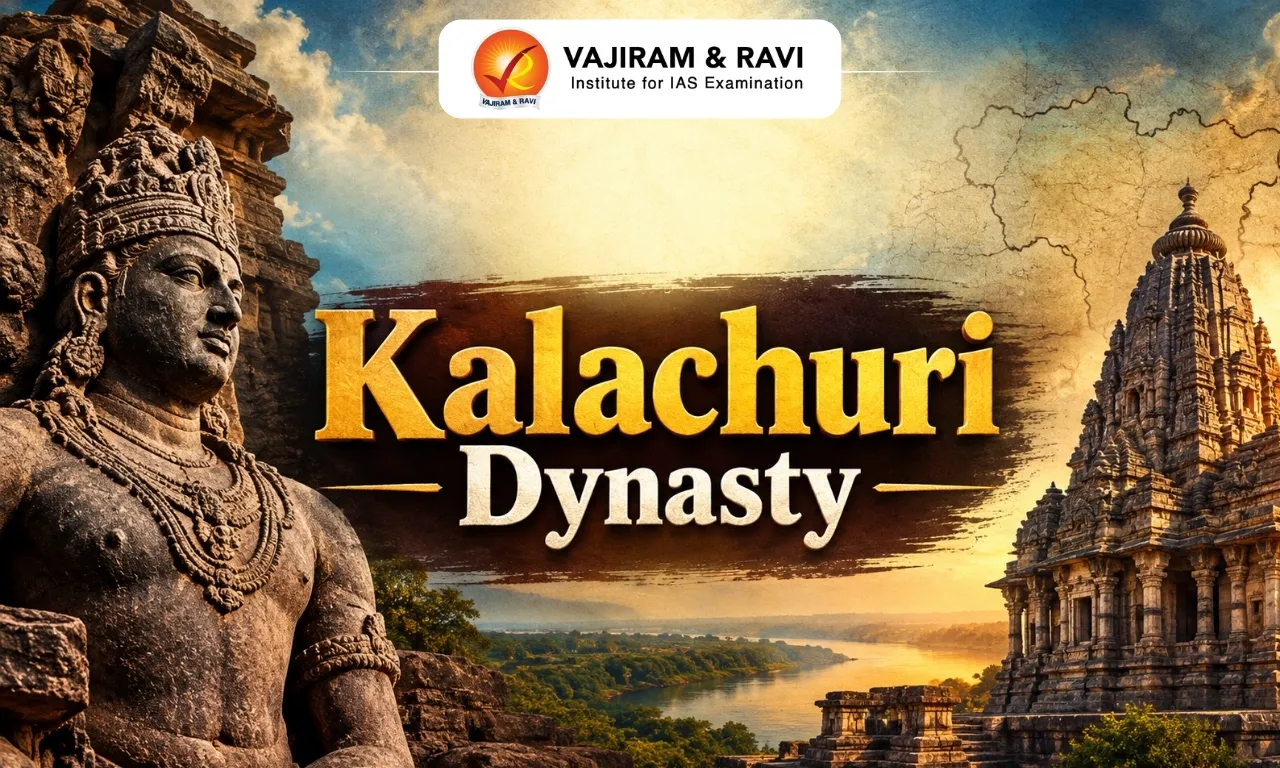
The Kalachuri Dynasty was a group of medieval Indian ruling houses that controlled parts of Central India and the Deccan at different times. The most prominent branch for the history of Central India was the Kalachuris of Tripuri, also known as the Kalachuris of Chedi or Dahala.
The Kalachuris are particularly remembered for their military campaigns, political relations with the Pratiharas, Paramaras, Chandelas and Chalukyas, religious patronage, inscriptions, sculpture and temple architecture. The Kalachuris are also mentioned in ancient books such as the Puranas and epics, where they are associated with the famous Haihaya clan, lending them historical and mythological significance.
Kalachuri Dynasty Origin
The Kalachuri Dynasty began in early medieval India and is thought to have descended from the old Haihaya clan, which is recorded in Puranic traditions. It traces its earliest historical roots to the Kalachuris of Mahishmati in the 6th century CE.
- Mythological Origin: According to Puranic legends and epics, the Kalachuris descended from the famous Haihaya (or Heheya) Kshatriya lineage. As a result, the founding members are commonly referred to as the Haihayas.
- Early History (Mahishmati Branch): The earliest known historical family governed from approximately 550 to 620 CE, with their capital in Mahishmati (modern Maheshwar on the Narmada River).
- Multiple Branches: The Kalachuris established several branches, including Tripuri, Ratanpur, and Deccan (Kalyani), showing a vast origin.
Kalachuri Dynasty Time Period
The Kalachuri dynasty comprised several distinct royal houses that ruled parts of India from the 6th to 13th centuries CE. Major branches and time periods include:
- Mahishmati: c. 550–620 CE, central/western India.
- Tripuri (Chedi): c. 7th/8th–early 13th century, Central India.
- Ratnapura: c. 11th–13th century, Chhattisgarh.
- Kalyani: 12th century, Karnataka/Deccan.
- Sarayupara: c. 7th–11th century, Uttar Pradesh.
Kalachuri Dynasty Founder
Kokalla I (Kokkalla I) is generally regarded as the founder or first major historical ruler of the Kalachuris of Tripuri. Because numerous branches of the Kalachuris ruled different regions of medieval India, the founder is determined by the branch:
- Kalachuris of Tripuri (Chedi): Founded by Kokalla I in the ninth century and based in modern-day Jabalpur, Madhya Pradesh.
- Kalachuris of Mahishmati (Early Kalachuris): Krishnaraja founded them in the sixth century (about 550 CE).
- Kalachuris of Kalyani (Karnataka): Established by Bijjala II (or Bijjala) in the 12th century (1156 CE) after defeating the Western Chalukyas.
- Kalachuris of Ratnapura (Chhattisgarh): Kalingaraja established an autonomous branch in circa 1000 CE, descended from the Tripuri royal family.
Kalachuri Dynasty Capital
The main capital of the Kalachuri dynasty of Tripuri (the most prominent branch of the Kalachuri dynasty) was Tripuri, located at present-day Tewar near Jabalpur in Madhya Pradesh. Capitals of the other Kalachuri branches include the following:
- Early Kalachuris (Mahishmati branch): Mahishmati, located in the Narmada River valley, functioned as the early capital in the sixth and seventh centuries.
- Kalachuris of Ratnapura (Chhattisgarh branch): Ruled from Tummana (Tuman) before transferring the capital to Ratnapura (present Ratanpur).
- Kalachuris of Kalyani (Southern Branch): Ruled from Kalyani (modern Basavakalyan, Karnataka).
Major Branches of the Kalachuri Dynasty
The Kalachuri dynasty fractured into several major regional branches across central, western, and southern India following the decline of larger empires. Major branches included:
- Kalachuris of Mahishmati
- Kalachuris of Tripuri
- Kalachuris of Chhattisgarh (Ratnapura)
- Kalachuris of Kalyani
Kalachuris of Mahishmati (Early Kalachuris)
The Kalachuris of Mahishmati, also known as the Early Kalachuris, emerged in the 6th century CE under Krishnaraja, their earliest known ruler. Their capital was Mahishmati, and their influence extended across parts of present-day Maharashtra, Madhya Pradesh, and Gujarat. The dynasty declined after the rise of the Chalukyas of Vatapi.
Kalachuris of Tripuri (Later Kalachuris of Chedi)
The Kalachuris of Tripuri, also called the Later Kalachuris or Kalachuris of Chedi, were the most prominent Kalachuri branch. Their core territory was Dahala-mandala, with Tripuri (modern Tewar near Jabalpur) as their capital. Vamaraja-deva is generally regarded as the founder, while Kokalla I later consolidated the dynasty's power.
Kalachuris of Ratanpur (Ratnapura)
The Kalachuris of Ratanpur, or Ratnapura Kalachuris, emerged as a branch of the Tripuri dynasty and ruled Dakshina Kosala, broadly corresponding to present-day Chhattisgarh. Kalinga-raja is traditionally regarded as the founder of this branch. Its important centres included Tummana and Ratanpur, which later became its principal capital.
Kalachuris of Kalyani (Southern Kalachuris)
The Kalachuris of Kalyani, also known as the Southern or Karnataka Kalachuris, rose to prominence in the Deccan during the 12th century. Under Bijjala II, they challenged and temporarily displaced the Kalyani Chalukyas, ruling parts of present-day northern Karnataka and Maharashtra. Their short rule was also associated with the growth of the Lingayat/Virashaiva movement.
Kalachuris of Sarayupara
The Kalachuris of Sarayupara were a smaller regional branch that established itself north of the Sarayu River, in the region corresponding broadly to present-day eastern Uttar Pradesh. They emerged during the early mediaeval period and are sometimes associated with the Kalachuri ruler Shankaragana of Sarayupura. Unlike the Tripuri branch, they remained a comparatively localised power.


Kalachuriy Dynasty Rulers
The Kalachuri Dynasty achieved its political and military zenith under a succession of powerful monarchs, primarily from the Tripuri (Chedi) line. These monarchs extended the kingdom, forged strategic alliances, produced coinage, and supported art and literature, establishing the dynasty as a dominant force in Central India.
Rulers of Kalachuris of Mahishmati
In modern-day Gujarat, Madhya Pradesh, and Maharashtra, the early Kalachuris, also known as the Kalachuris of Mahishmati, first emerged. Kalachuri dynasty was headed by prominent kings like Buddharaja, Shankaragana, and Krishnaraja. The early Kalachuris struggled to thrive under the neighbouring dominance of the Chalukyas of Badami and the Maitrakas of Valabhi.
- Krishnaraja: Considered the founder of the dynasty's power. He issued distinctive silver coins known as Krishnaraja Rupaka, which were widely circulated.
- Shankaragana (Shankaragana I): The second king and son of Krishnaraja. He expanded the kingdom and took control of Ujjain around 597 CE
- Buddharaja: As per the Mahakuta Pillar inscription, Buddharaja lost the first battle to Mangalesha of the Chalukya dynasty. He was also defeated by Pulakesin II.
- Though weakened after Buddharaja’s defeats, the Kalachuris endured and maintained matrimonial alliances with both the Eastern and Western Chalukyas.
Rulers of Kalachuris of Tripuri (Kalachuris of Chedi)
The Kalachuri rulers of Tripuri established a powerful kingdom in Central India, with rulers such as Kokalla I, Yuvaraja I, and Gangeyadeva expanding territories and strengthening the dynasty’s political influence.
- Kokalla I: He was the first important king of this branch of Kalachuris, whose reign began around 845 C.E. He defeated the Pratihara emperor Bhoja I. He also defeated the Rashtrakuta king Krishna II.
- He was succeeded by his eldest son, Shankaragana, and later by Balaharsh and Yuvaraja I.
- Yuvaraja I: Rashtrakuta king Krishna III briefly defeated him, but Yuvaraja I soon regained the lost territory. He was succeeded by Laksmanaraja, Yuvaraja II, and Kokalla II.
- Gangeyadeva: The Kalachuris of Tripuri became an important political power during his reign. He took the title of Vikramaditya.
- By defeating the king of South Koshala, Mahashivagupta Yayati, he took the title of Trikalingadhipati (Lord of Trikalinga).
- He captured Benaras by defeating Mahipala I of the Pala Dynasty.
- By allying with the Paramaras and Cholas, he tried to defeat the Chalukyan king Jayasimha but was unsuccessful.
- He was later defeated by the Paramaras and the Chandella king of Bundelkhand.
Rulers of Kalachuris of Ratnapura
The Ratanpur Kalachuris were founded by Kokalla I’s son. At the beginning, it was subordinate to the Kalachuris of Chedi. They gained independence under Jajjaladeva I in the 12th century.
- Kalingaraja (c. 1000–1020 CE): He established the branch in South Kosala (Chhattisgarh) and made Tummana his capital.
- Ratnadeva I (Ratnaraja) (c. 1045–1065 CE): He founded the city of Ratnapura (Ratanpur) and shifted the capital there from Tummana.
- Jajalladeva I (c. 1090–1120 CE): He made the Ratanpur kingdom fully independent and powerful, defeating neighbouring rulers and issuing gold/copper coins.
- Pratapamalla (c. 1188–1217 CE): He was the last major well-documented early ruler before an historical gap ("Dark Age") leading to later medieval chiefs and the split into Ratanpur and Raipur branches.
Rulers of Kalachuris of Kalyani (1156-1181 CE)
The 12th-century Kalachuris of Kalyani ruled Maharashtra and Karnataka for 25 years, leaving a lasting impact.
- Bijjala II (1156–1167 CE): The most prominent ruler, Bijjala II served as a feudatory and viceroy of the Western Chalukyas before declaring independence by wresting power from King Taila III.
- Sangama (1175–1181 CE): Brother or successor who followed Someshvara, marking the final phase of independent Kalachuri rule before the Chalukyas reclaimed their territories.
Kalachuri Dynasty Administration
The Kalachuri Dynasty developed a centralised yet locally supported administrative system that enabled rulers to govern extensive territories. The king, ministers, provincial officials, feudatories and village institutions shared administrative responsibilities.
- Central Authority of the King: The king was the supreme authority over administration, military and justice. Titles such as Maharajadhiraja reflected his sovereignty, prestige and political power.
- Provincial Administration: The kingdom was divided into administrative units such as mandalas and bhuktis. Officials or trusted nobles implemented royal orders, maintained administration and collected revenue.
- Feudal System (Samanta System): Samantas, or subordinate chiefs, governed smaller territories, paid tribute and supplied troops during wars. This arrangement expanded royal control but sometimes encouraged local autonomy and rebellions.
- District and Village Administration: Provinces were further divided into smaller units and villages. Local headmen and councils managed agriculture, irrigation, revenue collection, village affairs and minor disputes.
- Judicial System: The king was the highest judicial authority. Local institutions handled ordinary disputes, while important cases reached the royal court. Decisions followed religious texts, customs and established practices.
Kalachuri Dynasty Society
The society during the Kalachuri dynasty was structured around traditional North Indian social norms, religious reforms, and a rigid caste framework.
- Varna System: Society followed the traditional four-tiered Varna system.
- Privileged Classes: Brahmins and Kshatriyas held the top posts and received major social and economic benefits. Brahmins got royal land grants, whereas Kshatriyas comprised the ruling and military elite.
- Lower Strata: Vaishyas (merchants and farmers) and Shudras (labourers and service providers) were at the bottom of the social order, but trade organisations still wielded power locally.
Kalachuris Religion
The Kalachuris of Chedi patronised Brahmanical religion, especially Shaivism, worshipped Vishnu and Shiva and issued land grants for religious institutions.
- Shaivism: The Kalachuri kings were staunch worshippers of Shiva. Inscriptions from their central Indian capital at Tripuri mention prominent Shaiva ascetics acting as royal preceptors (spiritual guides) to the kings.
- The Lingayat Movement: The southern branch of the Kalachuris (the Kalachuris of Kalyani), during the time of King Bijjala, coincided with the rise of the revolutionary Virashaiva (Lingayat) movement in Karnataka. Led by philosophers like Basavanna, this movement worshipped Shiva while rejecting traditional caste hierarchies.
- Religious Tolerance: While Shaivism was the state faith, the dynasty also extended royal support and land grants to other faiths, including Vaishnavism (worship of Vishnu), Jainism, and Buddhism.
Kalachuris Economy
The Kalachuri economy was primarily agrarian, supported by land revenue, trade, natural resources, irrigation, and markets. Effective economic administration helped sustain the army, administration, temples, and public works.
- Revenue System: Land revenue was the main source of income. Taxes were also collected from agriculture, trade, commerce, forests, and mineral resources, supporting administration, armies, and public works.
- Economic Administration: The rulers encouraged agriculture by supporting irrigation systems and promoted trade by controlling important routes and markets. Gold, silver, and copper coins facilitated economic transactions.
- Record Keeping: Economic decisions, land grants, tax arrangements, and administrative orders were recorded through stone inscriptions and copper-plate grants, providing valuable evidence about the period.
- Agriculture and Trade: Fertile lands, irrigation facilities, and strategic trade routes strengthened the economy. Agricultural production formed its foundation, while commerce and markets supplemented state revenues and regional prosperity.
Kalachuri Dynasty Art and Architecture
The Kalachuris made their contributions to the field of art and architecture. They are credited with having excavated many caves, for example, caves no. 6 and 7 of the Buddhist caves at Aurangabad and some caves of Elephanta, Ellora and Jogeshwari, all in Maharashtra.
- The Kalachuris of Mahishmati or the early Kalachuris seem to have controlled the Konkan coast, and therefore, some of the monuments on Elephanta Island can be attributed to them.
- A few Ellora Caves share architectural similarities with the Elephanta Caves, which were patronised by the early Kalachuris.
- During the Kalachuris of Chedi, along with Shaivism and Vaishnavism, Devi worship was also prevalent.
- The dedicated temples to the Chausath Yoginis were built at Khajuraho, Bheraghat, Shahdol, etc.
- They also built temples at Chandrehe, Amarkantak, Sohagpur, etc.
Karna Temple (Madhya Pradesh)
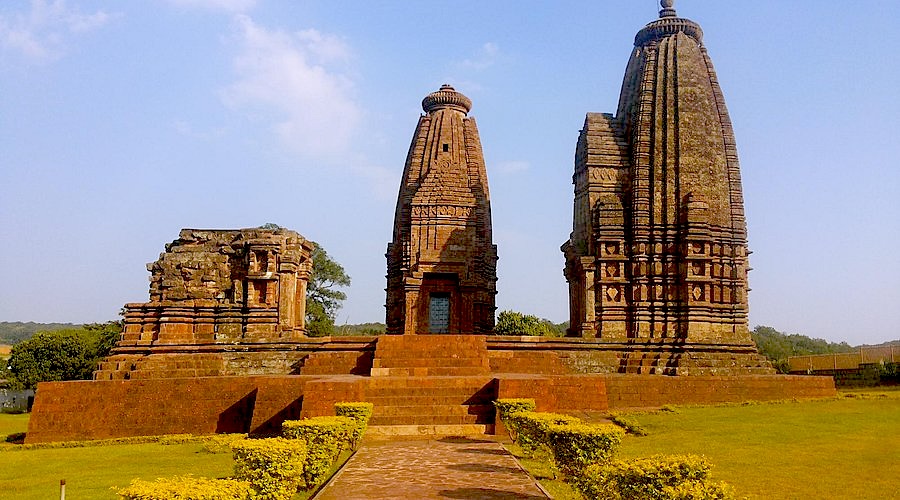
The Karna Temple, also known as the Karn Mandir or Trimukhi Temple, is the largest and most prominent structure in the Kalachuri Temple Complex located in Amarkantak, Anuppur district, Madhya Pradesh. It was built by the Kalachuri King Lakshmikarna. It has three temples that are built on a raised platform.
Chausath Yogini Temple, Bhedaghat (Madhya Pradesh)
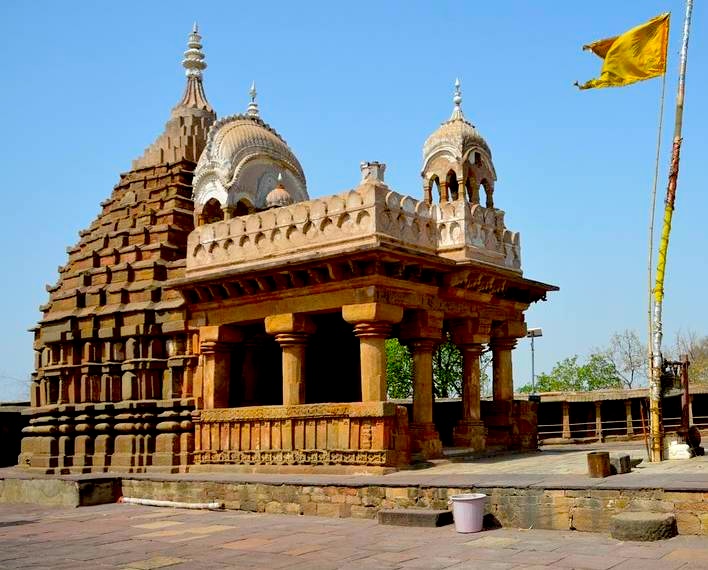
The Chausath Yogini Temple in Bhedaghat, Madhya Pradesh, is a 10th-century circular stone shrine built by the Yuvaraja II of the Kalchuri dynasty. Though named "Chausath" (meaning 64), the complex uniquely features 81 peripheral shrines, a layout considered a royal signature of its patrons. The Bhedaghat temple is dedicated to Goddess Durga.
Kalachuri Dynasty Literature
Literature developed primarily in two branches: the Kalachuris of Tripuri (Central India, 8th-13th centuries) and the Kalachuris of Kalyani (Southern India/Karnataka, 12th century).
Literature Under the Kalachuris of Kalyani
The rule of the Kalyani Kalachuris, though short (c. 1156–1181 CE), is widely celebrated by historians as one of the most vibrant peaks of medieval Kannada literature.
- Vachana Sahitya: The development of Vachanas, or spontaneous, rhythmic, epigrammatic, and sarcastic prose-poems written in plain Kannada, was a defining feature of this age. They addressed social issues, gender equality, and their strong devotion to Shiva.
- Key Vachanakaras (Poet-Saints)
- Basavanna (Basava): He was the prime minister of Kalachuri King Bijjala II. He established the Anubhava Mantapa ("Hall of Spiritual Experience") and composed lengthy, extremely philosophical Vachanas invoking Shiva as Kudalasangamadeva.
- Allama Prabhu: He was a prominent mystic and poet, presiding over the Anubhava Mantapa. His Vachanas were distinguished by their enigmatic, allegorical, and deeply spiritual language (Bedagina Vachanas).
- Akka Mahadevi: One of the most prominent female poets of medieval India, known for her intense, rebellious, and highly emotional devotional poetry dedicated to Chennamallikarjuna.
Literature Under the Kalachuris of Tripuri
The Kalachuri monarchs of Tripuri (near present Jabalpur, Madhya Pradesh) were enthusiastic supporters of traditional Sanskrit literature. Their royal courts hosted some well-known early medieval Indian poets and thinkers.
- Rajashekhara: He was closely associated with the courts of the Gurjara-Pratiharas and the Kalachuri King Yuvarajadeva I. He composed monumental works including Kavyamimamsa, Karpuramanjari, and Viddhasalabhanjika.
- Kanakamera: A renowned Jain philosopher and poet who received King Karna's patronage and wrote the famed Apabhramsha book “Karakandu Chariu”.
Kalachuri Dynasty Decline
The Kalachuris finally experienced demise as a result of a confluence of internal strife, foreign invasions, and shifting political conditions, just like many other medieval Indian dynasties.
- Their lands were progressively diminished by the emergence of new powers like the Hoysalas in the south and the Delhi Sultanate in the north.
- The Chedi branch lasted longer before the Marathas eventually overthrew them in the 18th century. In the thirteenth century, the Hoysalas and Yadavas absorbed the Kalyani branch, which had ended much earlier.
Kalachuri Dynasty UPSC PYQs
Q1: With reference to Chausath Yogini Temple situated near Morena, consider the following statements: (UPSC Prelims 2021)
- It is a circular temple built during the reign of the Kachchhapaghata Dynasty.
- It is the only circular temple built in India
- It was meant to promote the Vaishnava cult in the region.
- Its design has given rise to a popular belief that it was the inspiration behind the Indian Parliament building.
Which of the statements given above are correct?
(a) 1 and 2
(b) 2 and 3 only
(c) 1 and 4
(d) 2, 3 and 4
Ans: (c)

 Last updated on Oct, 2026
→ UPSC 2027 Notification will be released on 13 January 2027 at upsconline.nic.in.
→ Asian Games 2026 are being held in Aichi-Nagoya, Japan, from 19 September to 4 October.
→ Check Nobel Prize 2026 Winners List here.
→ Download PIB PRiSM Monthly Magazine 2026 here.
→ Check UPSC Monthly Current Affairs Magazine The Recitals here.
→ Check out the latest UPSC Syllabus here.
→ Download UPSC Model Answers for Mains 2026
→ UPSC Mains Question Paper 2026 is out now for Essay & GS Paper 1, 2, 3 & 4.
→ UPSC Calendar 2027 has been released.
→ Enroll in Vajiram & Ravi’s UPSC Mains Test Series 2027 for structured answer writing practice, expert evaluation, and exam-oriented feedback.
→ Join Vajiram & Ravi’s UPSC Mentorship Program 2027 for personalized guidance, strategy planning, and one-to-one support from experienced mentors.
→ Go through the UPSC Mains Previous Year Papers to enhance your preparation.
→ UPSC has released UPSC Toppers List 2025 with the Civil Services final result on its official website.
→ Also check Best UPSC Coaching in India
Kalachuri Dynasty FAQs
Q1. Who was the real founder of the Kalachuri dynasty?+
Q2. Who defeated the Kalachuris?+
Q3. What was the capital of the Kalachuri dynasty?+
Q4. Are Kalachuris Rajputs?+
Q5. What was the Kalachuris' religion?+
Tags: kalachuri dynasty quest UPSC Medieval History Notes