




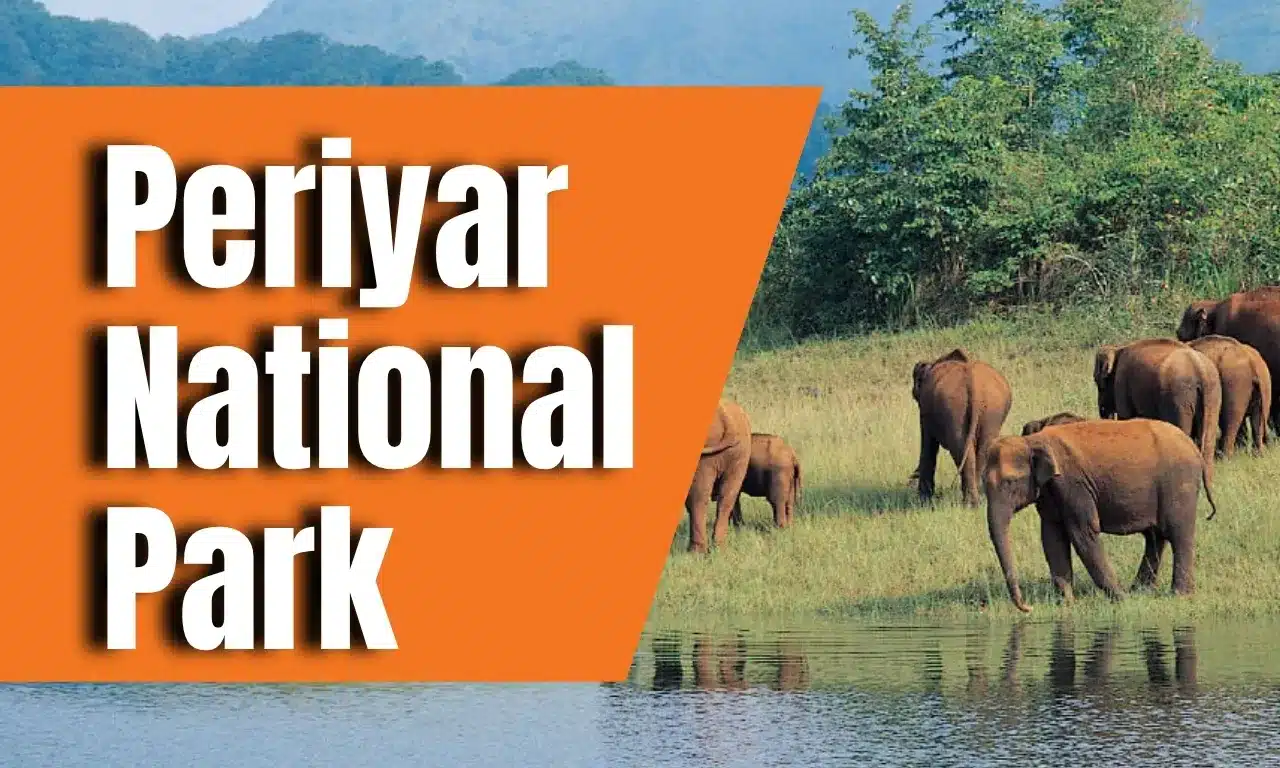
Periyar National Park is located in the Idukki and Pathanamthitta districts of Kerala which is a renowned protected wildlife reserve in the Southern Western Ghats. It is located within the Pandalam Hills and Cardamom Hills, the park is bisected by two major rivers, the Periyar and the Pamba, which play a crucial role in sustaining its rich biodiversity. Spanning an area of 925 km², the park's core zone of 305 km² was declared a Periyar National Park in 1982. Recognized as both an Elephant Reserve and a Periyar Tiger Reserve, Periyar is serving as home to a diverse range of rare and endangered flora and fauna.
Periyar Tiger Reserve
The Periyar Tiger Reserve provides shelters to a diverse range of species, including tigers, elephants, leopards, and various species of birds. A major attraction within the reserve is Periyar Lake, known for its scenic beauty and ecological importance. Recognized by UNESCO as part of its World Network of Biosphere Reserves, the Periyar Biosphere Reserve plays an important role in conservation efforts. However, it faces challenges such as human-wildlife conflict, poaching, and habitat destruction. Various measures are being implemented to address these threats and safeguard the rich biodiversity of the region.
Periyar National Park History
Periyar National Park was established following the construction of the Mullaperiyar Dam in 1895, which led to the creation of an artificial lake and a local water reservoir. During the 18th and 19th centuries, the reserve served as a royal hunting ground, with the Edapalayam Lake Palace hosting regal visitors.
By 1899, the forested areas surrounding Periyar Lake were designated as the Periyar Lake Reserve to prevent deforestation and wildlife hunting. In 1934, the region was renamed Periyar Nellikkampatty Game Sanctuary by S. C. H. Robinson, the first game warden. Later, it was declared as a wildlife sanctuary in 1966. Periyar was included in the Central Government’s Project Tiger in 1978 and attained national park status in 1982. Project Elephant was launched in 1992.
In 1996, the India Eco-Development Project was introduced to protect the ecosystem. By 2001, the reserve was divided into Periyar East and Periyar West for better conservation management.





Periyar National Park Flora
Periyar National Park holds a rich variety of flora, comprising tropical evergreen, semi-evergreen, and moist deciduous forests. The park is home to diverse tree species, including Teak, Banyan, Sacred Fig, Royal Poinciana, Kino, Rosewood, Sandalwood, Jacarandas, Mangoes, Jamun, Tamarind, and Bamboos. Other than these, the vibrant Gloriosa Lily adds to the park’s botanical diversity.
Periyar National Park Fauna
Periyar National Park is home to a diverse range of wildlife, including predators, herbivores, primates, birds, and reptiles. There are around 40 tigers, along with wild pigs, sambar, gaurs, mouse deer, barking deer, Indian wild dogs, and the elusive Nilgiri Tahr. Among the primates, the park shelters the rare lion-tailed macaque, Nilgiri langur, Gee’s golden langur, common langur, and bonnet macaque.
Other than these species, Periyar National Park also includes species like the Nilgiri wood pigeon, blue-winged parakeet, Nilgiri flycatcher, white-bellied blue flycatcher, Malabar grey hornbill, racket-tailed drongos, kingfishers, darters, cormorants, great hornbill, Brahminy kite, and Nilgiri thrush. The park is also home to a variety of reptiles, such as striped coral snakes, monitor lizards, pythons, king cobras, and Malabar pit vipers.
Periyar Tiger Reserve Interesting Facts
- The Periyar Tiger Reserve ecosystem contributes an estimated ₹17.6 billion annually in economic benefits, translating to approximately ₹1.9 lakh per hectare.
- The protection of the gene pool alone is valued at ₹7.86 billion each year.
- The park supplies water worth ₹4.05 billion annually to several Tamil Nadu districts.
- Wildlife conservation efforts within the park contribute ₹3.55 billion per year, while water purification services for nearby towns are valued at ₹483 million.
- Recreational activities such as boating, trekking, camping, and safaris generate ₹425 million annually.
- Local communities benefit from ₹25 million worth of employment opportunities linked to the sanctuary.

 Last updated on March, 2026
→ UPSC Final Result 2025 is now out.
→ UPSC has released UPSC Toppers List 2025 with the Civil Services final result on its official website.
→ Anuj Agnihotri secured AIR 1 in the UPSC Civil Services Examination 2025.
→ UPSC Marksheet 2025 is now out.
→ UPSC Notification 2026 & UPSC IFoS Notification 2026 is now out on the official website at upsconline.nic.in.
→ UPSC Calendar 2026 has been released.
→ Check out the latest UPSC Syllabus 2026 here.
→ UPSC Prelims 2026 will be conducted on 24th May, 2026 & UPSC Mains 2026 will be conducted on 21st August 2026.
→ The UPSC Selection Process is of 3 stages-Prelims, Mains and Interview.
→ Prepare effectively with Vajiram & Ravi’s UPSC Prelims Test Series 2026 featuring full-length mock tests, detailed solutions, and performance analysis.
→ Enroll in Vajiram & Ravi’s UPSC Mains Test Series 2026 for structured answer writing practice, expert evaluation, and exam-oriented feedback.
→ Join Vajiram & Ravi’s Best UPSC Mentorship Program for personalized guidance, strategy planning, and one-to-one support from experienced mentors.
→ Shakti Dubey secures AIR 1 in UPSC CSE Exam 2024.
→ Also check Best UPSC Coaching in India
Periyar National Park FAQs
Q1. What is Periyar National Park famous for?+
Q2. Which animal is mostly found in Periyar National Park? +
Q3. Why is Thekkady famous?+
Q4. How many tigers are in Periyar?+
Q5. Is elephant found in Periyar?+
Tags: periyar tiger reserve