Vajiram & Ravi provides Daily articles for 3 January 2025, tailored for aspirants. We cover all relevant news and events crucial for the exam, ensuring you stay updated & well-prepared.
About Genetic Engineering Appraisal Committee (GEAC):
It is the statutory committee constituted under the “Rules for the Manufacture, Use/Import/Export and Storage of Hazardous Micro Organisms/Genetically Engineered Organisms or Cells (Rules, 1989)” framed under the Environment (Protection) Act, 1986.
It was earlier called the Genetic Engineering Approval Committee, which was changed to Genetic Engineering Appraisal Committee in the year 2010.
It functions in the Ministry of Environment, Forest, and Climate Change (MoEF&CC).
The functions of GEAC as prescribed in the Rules 1989 are as follows:
To appraise activities involving large-scale use of hazardous microorganisms and recombinants in research and industrial production from the environmental angle.
To appraise proposals relating to the release of genetically engineered organisms and products into the environment, including experimental field trials.
The committee or any persons authorized by it has powers to take punitive action under the Environment Protection Act.
It keeps a check on the use, import, and export of genetically modified (GM) organisms and crops.
Clearance of GEAC is mandatory for the environmental releaseof GM crops.
Composition:
GEAC is chaired by the Special Secretary/Additional Secretary of MoEF&CC and co-chaired by a representative from the Department of Biotechnology (DBT).
Presently, it has 24 members and meets every month. The members comprise experts from other ministries as well as institutions such as the ICAR, ICMR, CCMB, and so on.
New Rules Governing the Selection of Experts:
Under the new rules, an “expert member” ought to be disclosing their “interest” that could conflict with their duties.
The expert is also expected to take all steps necessary to ensure that any conflict of interest not affect any decision of the GEAC.
An expert member with any direct or indirect association with a matter being discussed in a meeting of the committee is obliged to disclose this prior to the meeting.
Unless specifically requested by the committee, the expert is expected to recuse their selves from the meeting.
All selected members would also have to fill out a form detailing their professional affiliations to a decade prior to joining the committee.
Q1: What is genetic modification (GM) of crops and how is it done?
GM is a technology that involves inserting DNA into the genome of an organism. To produce a GM plant, new DNA is transferred into plant cells. Usually, the cells are then grown in tissue culture where they develop into plants. The seeds produced by these plants will inherit the new DNA.
Source: TH
It is a new programme launched by Immigration, Refugees and Citizenship Canada (IRCC) in December 2024.
It aims to address labour shortages and promote development in smaller rural communities by attracting individuals willing to settle long-term in these areas.
Eligibility
Education Level: Applicants can include those with 10+2, graduation, or secondary school qualifications.
Studies: Students who have completed at least 18 months of study in one of the designated communities are eligible to apply for PR directly. Those who studied outside these communities can also apply but must meet additional conditions.
Job Offer: Applicants need a job offer letter from a registered or designated employer in the community. This job offer can be in any category, including non-skilled roles. The offer must be submitted to the community, which will then issue a certificate supporting the PR application.
Work Experience: Relevant work experience is typically required, though this condition may be waived for international graduates who meet certain criteria.
Language Proficiency: Applicants must meet the Canadian Language Benchmark (CLB) requirements based on the job’s NOC TEER (National Occupational Classification Training, Education, Experience, and Responsibilities) level: TEER 0-1: CLB 6,TEER 2-3: CLB 5 and TEER 4-5: CLB 4
Financial Proof: Applicants must demonstrate they have at least half of the low-income threshold for rural areas (as determined by Statistics Canada) to sustain themselves for one year.
Intent to Reside: Candidates must provide genuine proof of their intention to live in the designated rural community.
Q1: What is Brain Drain?
It refers to the international transfer of human capital resources and it is applied mainly to the migration of highly educated people from developing to developed countries.
Source:IE
Velvet ants are a group of parasitic wasps that are well known for a suite of defensive adaptations including bright coloration and a formidable sting.
Appearance: They’re wasps, some of which are wingless, and are named in part for their exteriors. Velvet ant is known for its distinct black and white markings.
Habitat: It is found in shrub desert in Brazil called the Caatinga.
Characteristics
It demonstrates remarkable mobility and covers significant distances in pursuit of hosts on the ground.
It is usually found throughout the day, peak activity typically coincides with the early morning and late afternoon, during periods of subdued sunlight.
It is recently found that the black parts on female velvet ants were actually ultrablack so that they absorbed nearly all visible light.
Why this finding is Unique?
Ultrablack pigmentation is rare in the animal kingdom.
In organisms that have it, it helps them hide from predators, regulate body temperature or even attract mates, as the contrast against brighter colors can be visually enticing.
Q1: What is a Parasite?
It is an organism that lives on or in another organism, the host, and gets its food from or at the expense of its host.
Source:IE
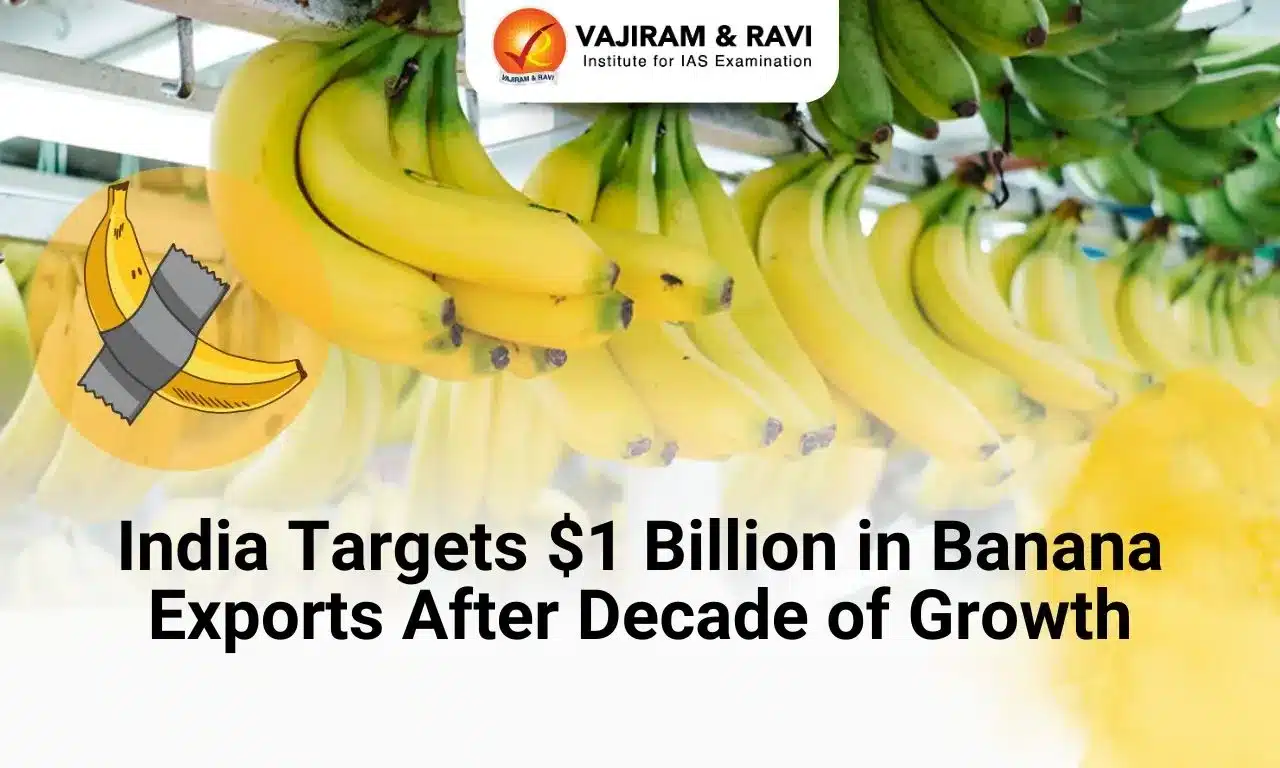
It is basically a tropical crop and the second most important fruit crop in India next to mango.
Required Climatic Condition
Temperature: It grows well in a temperature range of 15ºC – 35ºC with relative humidity of 75-85%.
It prefers tropical humid lowlands and is grown from the sea level to an elevation of 2000m.
Soil: Deep, rich loamy soil with pH between 6.5 -7.5 is most preferred for banana cultivation. Soil for banana should have good drainage, adequate fertility and moisture. Saline solid, calcareous soils are not suitable for banana cultivation.
In India this crop is being cultivated in climate ranging from humid tropical to dry mild subtropics through selection of appropriate varieties.
Varieties cultivated in India : Dwarf Cavendish, Robusta, Monthan, Poovan, Nendran, Red banana, Nyali, Safed Velchi, Basrai, Ardhapuri, Rasthali, Karpurvalli, Karthali and Grand Naine etc.
Major Producing states: Andhra Pradesh, Maharashtra, Gujarat, Karnataka, Kerala etc.
Q1: What is Agricultural and Processed Food Products Export Development Authority (APEDA)?
APEDA was established by the Government of India under the Agricultural and Processed Food Products Export Development Authority Act of 1985. It works under the Ministry of Commerce and Industry.
Source:DDNews
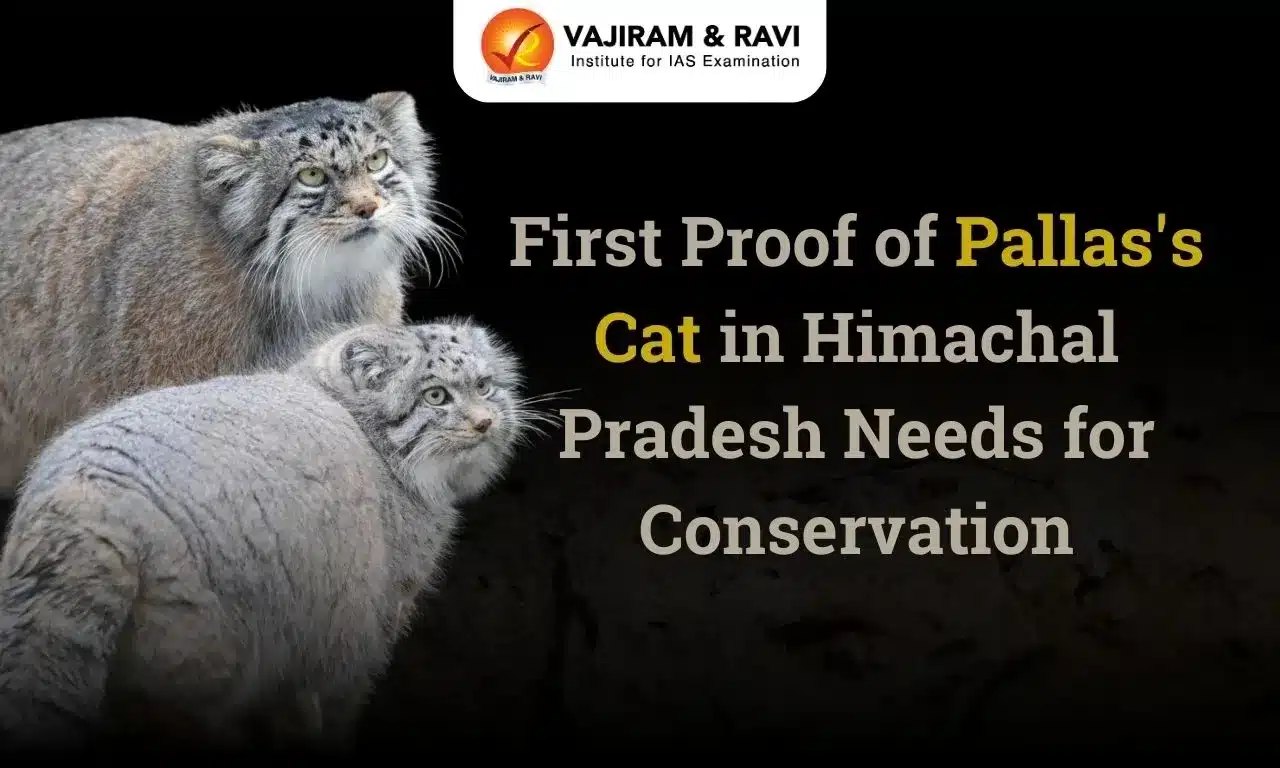
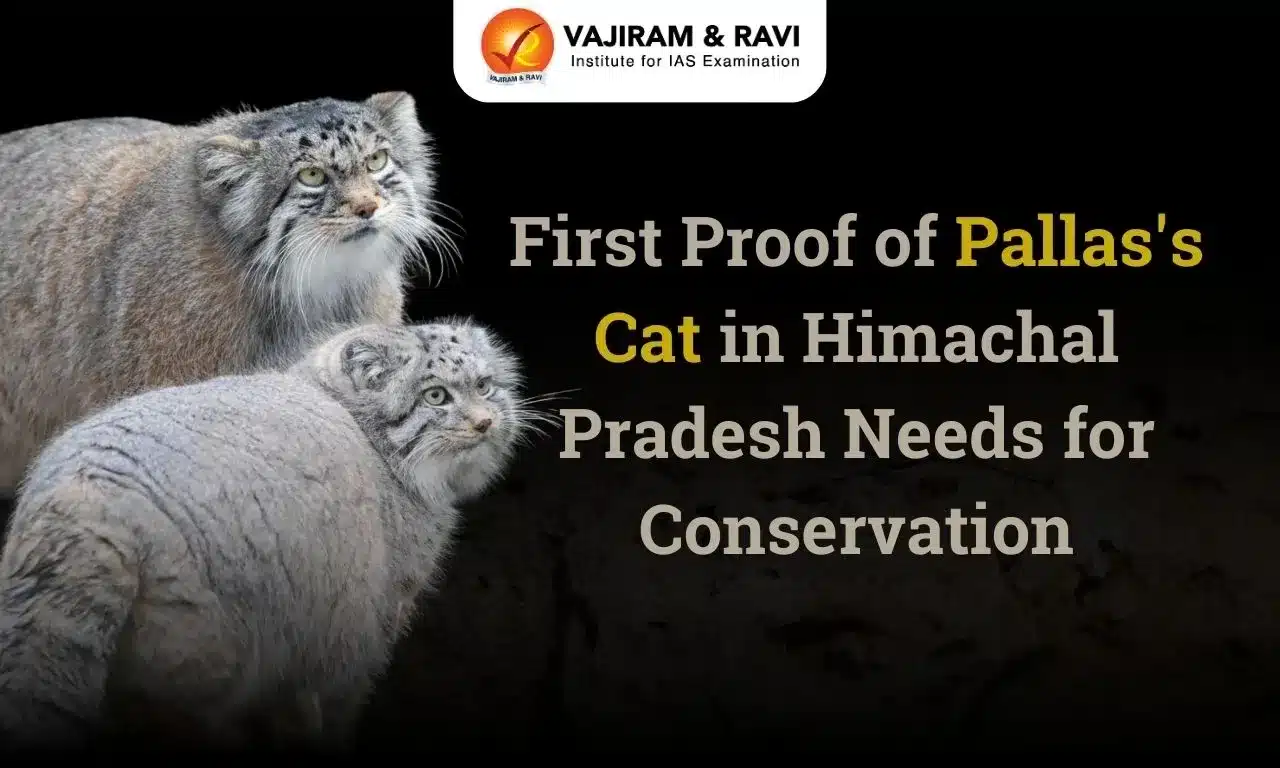
The Pallas’s cat, or manul (Otocolobus manul), is a small, long-haired cat (family Felidae).
It was named Pallas’s cat after Peter Simon Pallas, who first described it in 1776 based on specimens collected near Lake Baikal, Russia.
Distribution:
They are primarily found in Central Asia, with their range extending to western Iran, Mongolia, China, Russia (on the border of Mongolia and China), Kazakhstan, and Kyrgyzstan.
In these regions, these cats inhabit mountainous plains and semi-desert foothills.
Features:
It is a soft-furred animal about the size of a house cat and is pale silvery gray or light brown in colour.
Head and body length ranges from 45 to 60 centimetres (18 to 24 inches) with an additional 23–30 cm for the tail; weight ranges from 2.5 to 3.5 kilograms (5.5 to 7.7 pounds).
The Pallas’s cat is distinguished by abroad head with high-set eyes and low-set ears.
The end of its tail is ringed and tipped with black, and some individuals have vague, dark markings on the body.
The fur of the underparts is about twice as long as that of the upperparts and possibly represents an adaptation to the cat’s habitual lying and crouching on cold ground.
Conservation Status:
IUCN Red List: Least Concern
CITES: Appendix II
Q1: What is a snow leopard?
It is a large, long-haired Asian cat, classified as either Panthera uncia or Uncia uncia in the family Felidae. Snow leopards live across a vast area in northern and central Asia's high mountains, including the Himalayan region. In the Himalayas, they live in high alpine areas, mostly above the tree line and up to 18,000 feet in elevation. They are found in 12 countries, including China, Bhutan, Nepal, India, Pakistan, Russia, and Mongolia.
Source: TOI
The Central government on Thursday announced the formation of an expert panel to revise the constituents of the country’s Wholesale Price Index (WPI).
What is Inflation?
Inflation is basically the general rise in the price of goods and services and the decline in purchasing power of people.
This means that when inflation rises (without an equivalent rise in your income), you are able to buy lesser things than you could buy previously, or you have to pay more money for the same stuff now.
A “rising” inflation rate implies that the rate (at which the prices rise) itself is increasing.
In other words, imagine a scenario where the inflation rate was 1% in March, 2% in April and then 4% in May and 7% in June.
What is Wholesale Price Index?
Wholesale Price Index, or WPI, measures the changes in the prices of goods sold and traded in bulk by wholesale businesses to other businesses.
Wholesale market is only for goods, one cannot buy services on a wholesale basis.
It is used to track the supply and demand dynamics in industry, manufacturing and construction.
The index is released by the Economic Advisor in the Ministry of Commerce and Industry every month.
The quantum of rise in the WPI month-after-month is used to measure the level of wholesale inflation in the economy.
How is WPI calculated?
The index is based on the wholesale prices of number of relevant commodities available.
The commodities are chosen based on their significance in the region.
These represent different strata of the economy and are expected to provide a comprehensive WPI value.
Number of commodities: 697 items
Base year: 2011-12
Major Components of WPI
‘Primary articles’ (22.62%) is a major component of WPI, further subdivided into Food Articles and Non-Food Articles:
Non-Food Articles: Oil Seeds, Minerals and Crude Petroleum.
The next major basket in WPI is Fuel & Power (13.15%), which tracks price movements in Petrol, Diesel and LPG.
The biggest basket is Manufactured Goods (64.23%). It spans across a variety of manufactured products such as Textiles, Apparels, Paper, Chemicals, Plastic, Cement, Metals, and more.
Manufactured Goods basket also includes manufactured food products such as Sugar, Tobacco Products, Vegetable and Animal Oils, and Fats.
What are Headline and Core Inflation?
Headline inflation refers to the change in value of all goods in the basket.
Core inflation excludes food and fuel items from headline inflation.
Since the prices of fuel and food items tend to fluctuate and create ‘noise’ in inflation computation, core inflation is less volatile than headline inflation.
Headline inflation is more relevant for developing countries like India where fuel and food items account for 30-40% of the basket.
What is the Major Difference Between WPI and CPI?
While WPI keeps track of the wholesale price of goods, the CPI (Consumer Price Index) measures the average price that households pay for a basket of different goods and services.
Why Reserve Bank of India Adopted CPI over WPI?
On the recommendation of the Urjit Patel Committee (2014), the RBI adopted CPI as the key measure of inflation. Earlier, RBI had given more weightage to WPI as the key measure of inflation for all policy purposes.
CPI focuses on the change in the cost of living at the consumer’s end, whereas the WPI focuses on the inflation of the economy as a whole.
For common people, i.e. consumers, it is the CPI that is more relevant than the WPI. CPI also covers the service sector.
Through CPI, the RBI can increase the span of monetary control and monitor inflation better.
Therefore, the RBI linked CPI for fixing interest rates in India.
News Summary
The Union Government has announced the formation of an 18-member expert panel to revise the Wholesale Price Index (WPI) and consider transitioning to a Producers' Price Index (PPI).
This move reflects the structural changes in India’s economy since the WPI's current base year of 2011-12, with a new base year proposed as 2022-23.
The working group will be led by Ramesh Chand, a member of NITI Aayog.
Members include officials from various ministries (Statistics, Finance, Petroleum, and Agriculture), representatives from the Reserve Bank of India (RBI), and private sector economists.
The panel has been tasked to submit its final report by June 30, 2026, to the Office of the Economic Adviser in the Ministry of Commerce and Industry.
Key Objectives:
Enhance the reliability of indices to better reflect economic changes.
Address statistical and computational challenges in transitioning to PPI.
Significance of the Move:
This initiative marks a significant step in aligning India’s price measurement tools with global standards.
The shift from WPI to PPI aims to offer a more comprehensive reflection of price trends at the producer level, aiding policymakers and industries alike in economic planning.
Q1. What is the meaning of Stagflation?
Stagflation is the simultaneous appearance in an economy of slow growth, high unemployment, and rising prices.
Q2. What is the meaning of Deflation?
Deflation is a general decline in prices for goods and services, typically associated with a contraction in the supply of money and credit in the economy. During deflation, the purchasing power of currency rises over time.
It was established to revise the base year of the Wholesale Price Index (WPI) from 2011-12 to 2022-23.
Among its key mandates, the panel will:
Propose a revised commodity basket for the WPI and the Producer Price Index (PPI) with the base year 2022-23, considering structural changes in the economy.
Review the current system of price collection and recommend improvements.
It will also decide on the computational methodology to be adopted for WPI and PPI.
The panel will have economists in the government, rating agencies, asset management companies, banks, and representatives from the government and the Reserve Bank of India.
It has been asked to submit its final report to the Office of the Economic Adviser at the Department for Promotion of Industry and Internal Trade (DPIT) within 18 months.
Wholesale Price Index (WPI) vs. Producer Price Index (PPI):
WPI represents the price of goods at a wholesale stage, i.e. goods that are sold in bulk and traded between organisations instead of consumers.
It does not account for inflation at the level of the ordinary public because they do not buy products at wholesale prices.
WPI excludes the service sector, which covers about 55% of GDP.
WPI has an inbuilt bias due to double counting of the same product and doesn’t include exports and imports.
PPImeasures wholesale prices from the point of view of producers of goods and services by tracking prices at different stages of production.
PPI is different from WPI in the way that it measures the average change in prices received by producers and excludes indirect taxes.
It looks at inflation from the viewpoint of industry and business and measures price changes before consumers purchase final goods and services.
Weight of an item in WPI is based on net traded value, whereas in PPI weights are retrieved from Supply Use Tables.
PPI also includes services, while WPI only has goods.
PPI has replaced WPI in most countries as it is conceptually in line with the internationally agreed System of National Accounts (SNA) to compile measures of economic activity.
Q1: What is the Consumer Price Index (CPI)?
Consumer Price Index (CPI) inflation, tracks the change in retail prices of goods and services which households purchase for their daily consumption. CPI is calculated for a fixed basket of goods and services that may or may not be altered by the government from time to time. The change in the price index over a period of time is referred to as CPI-based inflation, or retail inflation. CPI is calculated as a percentage. It is a comparison of the general price level in the markets in a particular time period from a time frame in the past. This is known as the base year. CPI, therefore, is calculated by referring to a base year, which is a benchmark. Currently, the base year is 2012.
It is a new programme launched by Immigration, Refugees and Citizenship Canada (IRCC) in December 2024.
It aims to address labour shortages and promote development in smaller rural communities by attracting individuals willing to settle long-term in these areas.
Eligibility
Education Level: Applicants can include those with 10+2, graduation, or secondary school qualifications.
Studies: Students who have completed at least 18 months of study in one of the designated communities are eligible to apply for PR directly. Those who studied outside these communities can also apply but must meet additional conditions.
Job Offer: Applicants need a job offer letter from a registered or designated employer in the community. This job offer can be in any category, including non-skilled roles. The offer must be submitted to the community, which will then issue a certificate supporting the PR application.
Work Experience: Relevant work experience is typically required, though this condition may be waived for international graduates who meet certain criteria.
Language Proficiency: Applicants must meet the Canadian Language Benchmark (CLB) requirements based on the job’s NOC TEER (National Occupational Classification Training, Education, Experience, and Responsibilities) level: TEER 0-1: CLB 6,TEER 2-3: CLB 5 and TEER 4-5: CLB 4
Financial Proof: Applicants must demonstrate they have at least half of the low-income threshold for rural areas (as determined by Statistics Canada) to sustain themselves for one year.
Intent to Reside: Candidates must provide genuine proof of their intention to live in the designated rural community.
Q1: What is Brain Drain?
It refers to the international transfer of human capital resources and it is applied mainly to the migration of highly educated people from developing to developed countries.
The Pallas’s cat, or manul (Otocolobus manul), is a small, long-haired cat (family Felidae).
It was named Pallas’s cat after Peter Simon Pallas, who first described it in 1776 based on specimens collected near Lake Baikal, Russia.
Distribution:
They are primarily found in Central Asia, with their range extending to western Iran, Mongolia, China, Russia (on the border of Mongolia and China), Kazakhstan, and Kyrgyzstan.
In these regions, these cats inhabit mountainous plains and semi-desert foothills.
Features:
It is a soft-furred animal about the size of a house cat and is pale silvery gray or light brown in colour.
Head and body length ranges from 45 to 60 centimetres (18 to 24 inches) with an additional 23–30 cm for the tail; weight ranges from 2.5 to 3.5 kilograms (5.5 to 7.7 pounds).
The Pallas’s cat is distinguished by abroad head with high-set eyes and low-set ears.
The end of its tail is ringed and tipped with black, and some individuals have vague, dark markings on the body.
The fur of the underparts is about twice as long as that of the upperparts and possibly represents an adaptation to the cat’s habitual lying and crouching on cold ground.
Conservation Status:
IUCN Red List: Least Concern
CITES: Appendix II
Q1: What is a snow leopard?
It is a large, long-haired Asian cat, classified as either Panthera uncia or Uncia uncia in the family Felidae. Snow leopards live across a vast area in northern and central Asia's high mountains, including the Himalayan region. In the Himalayas, they live in high alpine areas, mostly above the tree line and up to 18,000 feet in elevation. They are found in 12 countries, including China, Bhutan, Nepal, India, Pakistan, Russia, and Mongolia.
National Sports Awards are given every year to recognize and reward excellence in sports.
‘Major Dhyan Chand Khel Ratna Award’
It is given for the spectacular and most outstanding performance in the field of sports by a sportsperson over the period of the previous four years.
Arjuna Award:
It is given for outstanding performance in Sports and Games’ is given for good performance over a period of the previous four years and for showing qualities of leadership, sportsmanship and a sense of discipline.
Arjuna Award (Lifetime)
It is given to honour and motivate those sportspersons who have contributed to sports by their performance and continue to contribute to promotion of sports even after their retirement from active sporting career.
‘Dronacharya Award
It is given for outstanding coaches in Sports and Games’ is given to coaches for doing outstanding and meritorious work on a consistent basis and for enabling sportspersons to excel in International events.
Maulana Abul Kalam Azad (MAKA) Trophy: It is awarded forthe overall top performing university in Khelo India University Games.
This year’s awards were decided by the Selection Committee headed by Justice (Retd.) V. Ramasubramanian, Supreme Court of India and consisting members from eminent sportspersons, persons having experience in sports journalism and sports administrators.
Q1: Who is Maulana Abul Kalam Azad?
He is the ologian who was one of the leaders of the Indian independence movement against British rule in the first half of the 20th century. He was highly respected throughout his life as a man of high moral integrity.
Incineration is the process of burning hazardous materials at temperatures high enough to destroy contaminants.
Incineration is conducted in an “incinerator,” which is a type of furnace designed for burning hazardous materials in a combustion chamber.
Many different types of hazardous materials can be treated by incineration, including soil, sludge, liquids, and gases.
Although it destroys many kinds of harmful chemicals, such as solvents, PCBs (polychlorinated biphenyls), and pesticides, incineration does not destroy metals, such as lead and chromium.
Waste incineration can be a form of waste-to-energy because the heat generated during combustion can be used to create electricity.
How Does It Work?
Hazardous materials must be excavated or pumped into containers before incineration.
They may require further preparation, such as grinding or removing large rocks and debris, or removing excess water.
The materials are then placed in the combustion chamber of an incinerator where they are heated to an extremely high temperature for a specified period of time.
The temperature and length of time depend on the types of wastes and contaminants present.
Air or pure oxygen may be added to the chamber to supply the oxygen needed for burning.
As the wastes heat up, the contaminants volatilize (change into gases), and most are destroyed.
Gases that are not destroyed pass through a secondary combustion chamber for further heating and destruction.
The resulting gases then pass through air pollution control equipment, which removes particulate matter (extremely small particles or liquid droplets) and “acid gases.”
Q1: What is combustion?
Combustion is a chemical process in which a substance reacts rapidly with oxygen and gives off heat. The original substance is called the fuel, and the source of oxygen is called the oxidizer.
Air India Expands Wi-Fi Services to Domestic Flights
Technologies Behind In-Flight Connectivity
How In-Flight Wi-Fi Works?
Costs and Challenges of Installing In-Flight Wi-Fi
Why in News?
Air India has become the first Indian airline to offer Wi-Fi internet connectivity on select domestic and international flights. Initially, the service will be free on select domestic flights during a limited introductory period, with plans to expand to other aircraft in the fleet.
Air India Expands Wi-Fi Services to Domestic Flights
Air India will now offer Wi-Fi connectivity on its Airbus A350, Boeing 787-9, and select Airbus A321neo aircraft.
These aircraft, including those inherited from Vistara after their merger in November 2024, are equipped with the necessary hardware to provide onboard internet.
Previously, Vistara offered this service on select international flights via Nelco and Panasonic Avionics Corporation, a collaboration now extended to Air India’s domestic flights.
Passengers can access Wi-Fi by enabling it on their devices, connecting to the 'Air India Wi-Fi' network, and entering their PNR and last name on the redirected portal.
This rollout, initially part of a pilot program on international flights, represents a significant step in Air India's ambition to enhance passenger experience and align with global standards.
Utilizes antennae, typically mounted on the aircraft’s belly, to connect with nearby ground towers.
Functions similarly to how devices access wireless internet on the ground.
Offers stable connectivity unless the aircraft flies over large water bodies, deserted land, or areas with sparse cellular towers.
Limited by the availability of ground towers.
Satellite-Based Connectivity
Internet is transmitted from ground stations to aircraft via satellites, using antennae on top of the aircraft.
Provides broader coverage, especially over regions without ground towers, such as oceans or remote areas.
Increasingly popular due to its wider and more reliable coverage.
How In-Flight Wi-Fi Works?
Signal Transmission Inside the Aircraft
Passengers’ devices connect to multiple Wi-Fi antennae located in the cabin.
Signals are sent from these antennae to an onboard server.
This process is common for both ATG and satellite-based systems.
Satellite-Based Connectivity Process
Signals from the onboard server are transmitted via an antenna on top of the aircraft to a satellite.
The satellite relays the signals to a ground station/teleport.
Response signals follow the reverse path back to the aircraft through the satellite.
Air-to-Ground (ATG) Connectivity Process
Signals from the onboard server are directly sent to ground cellular towers using an antenna beneath the aircraft.
Towers respond by transmitting signals back to the aircraft.
Speed Limitations and Future Developments
In-flight Wi-Fi is slower than ground internet, but advancements in technology are gradually improving its speed and reliability.
Costs and Challenges of Installing In-Flight Wi-Fi
Equipment Installation Costs
Airlines face high initial costs to install antennae on aircraft.
Retrofitting older planes can disrupt operations, making installation on new aircraft more practical.
Air India's $400-million retrofit programme presents an opportunity to equip older planes with Wi-Fi as part of the overhaul.
Existing Wi-Fi-Enabled Aircraft
Air India’s current Wi-Fi-enabled planes are newer models, already equipped with the necessary hardware, unlike its older legacy fleet.
Global Practices for Onboard Wi-Fi
Many airlines offer a small volume of free Wi-Fi before charging customers for data packs, which are often expensive.
Some provide free or unlimited Wi-Fi to loyalty programme members, as well as business and first-class passengers.
Air India’s Current Approach
Air India is offering free Wi-Fi for a limited introductory period but has not disclosed when charges will apply.
Future Revenue Potential
Growing demand for in-flight Internet positions it as a lucrative ancillary revenue stream.
Complimentary Wi-Fi for economy class passengers is unlikely to become a widespread practice in the near to medium term due to high installation costs.
Q.1. What technologies enable in-flight internet connectivity?
Two main technologies power in-flight Wi-Fi: Air-to-Ground (ATG) technology, which uses ground-based cellular towers, and satellite-based connectivity, which transmits signals via satellites for wider coverage, especially over remote areas.
Q.2. How does satellite-based connectivity differ from ATG technology?
Satellite-based connectivity uses an antenna on top of the aircraft to transmit signals to satellites, offering coverage in remote areas, whereas ATG technology connects to ground towers and is limited by tower availability.
It is basically a tropical crop and the second most important fruit crop in India next to mango.
Required Climatic Condition
Temperature: It grows well in a temperature range of 15ºC – 35ºC with relative humidity of 75-85%.
It prefers tropical humid lowlands and is grown from the sea level to an elevation of 2000m.
Soil: Deep, rich loamy soil with pH between 6.5 -7.5 is most preferred for banana cultivation. Soil for banana should have good drainage, adequate fertility and moisture. Saline solid, calcareous soils are not suitable for banana cultivation.
In India this crop is being cultivated in climate ranging from humid tropical to dry mild subtropics through selection of appropriate varieties.
Varieties cultivated in India : Dwarf Cavendish, Robusta, Monthan, Poovan, Nendran, Red banana, Nyali, Safed Velchi, Basrai, Ardhapuri, Rasthali, Karpurvalli, Karthali and Grand Naine etc.
Major Producing states: Andhra Pradesh, Maharashtra, Gujarat, Karnataka, Kerala etc.
Q1: What is Agricultural and Processed Food Products Export Development Authority (APEDA)?
APEDA was established by the Government of India under the Agricultural and Processed Food Products Export Development Authority Act of 1985. It works under the Ministry of Commerce and Industry.
The Union Ministry of Environment, Forest and Climate Change has amended the rules governing the selection of experts to the Genetic Engineering Appraisal Committee (GEAC).
About Genetically Modified (GM) Crops
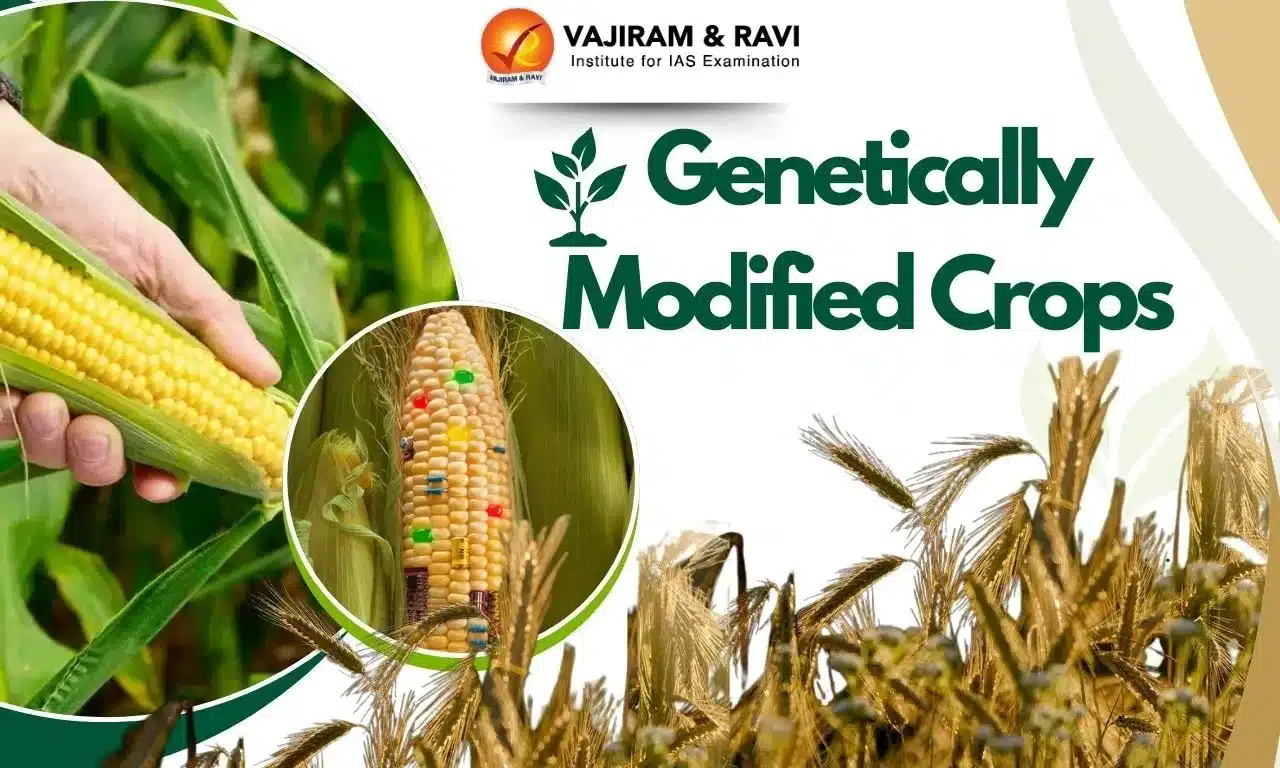
Genetically Modified (GM) crops are plants whose DNA has been altered through genetic engineering techniques to introduce desirable traits.
These traits may include resistance to pests, diseases, or environmental conditions, improved nutritional content, or increased yield.
Unlike traditional crossbreeding methods, genetic modification allows for the direct manipulation of a plant’s genetic material, often incorporating genes from different species to achieve specific results.
Benefits of GM Crops:
Increased Yield: GM crops can produce higher yields, contributing to food security.
Pest and Disease Resistance: Crops can be engineered to be resistant to specific pests and diseases, reducing the need for chemical pesticides.
Herbicide Tolerance: Some GM crops are designed to withstand certain herbicides, making weed control more effective.
Enhanced Nutritional Content: Crops can be modified to contain higher levels of essential nutrients, addressing malnutrition in developing countries.
Environmental Benefits: Reduced need for chemical inputs can lower the environmental impact of agriculture.
Concerns / Controversies w.r.t. GM Crops:
Environmental Impact: There is ongoing debate about the potential for GM crops to affect non-target species and lead to a reduction in biodiversity.
Health Concerns: While extensive research indicates that GM foods are safe to eat, public concern about potential long-term health effects persists.
Economic Issues: GM seeds are often patented, leading to concerns about corporate control over the food supply and the economic impact on small-scale farmers.
Ethical and Labeling Issues: There are ethical debates surrounding the manipulation of genetic material, and many advocate for clear labeling of GM products to inform consumer choice.
Regulations w.r.t. GM Crops in India
The adoption and regulation of GM crops vary globally. In some countries, GM crops are widely grown and consumed, while others have stringent regulations or outright bans.
In India, the Ministry of Environment, Forest, and Climate Change oversees all activities, operations, and products associated with genetically modified organisms.
These are regulated under the Environment (Protection) Act, 1986.
The Genetic Engineering Appraisal Committee (GEAC), part of MoEFCC, has the authority to review, monitor, and approve all GMO-related activities, including import, export, transportation, manufacture, use, and sale.
GEAC is a statutory body established under the Environment Act, 1986.
Additionally, GM foods must comply with the regulations set by the Food Safety and Standards Authority of India (FSSAI).
Currently, cotton is the only GM crop approved for commercial cultivation in India.
News Summary
The Union Ministry of Environment, Forest, and Climate Change has introduced new rules mandating experts on the Genetic Engineering Appraisal Committee (GEAC) to disclose any potential conflict of interest.
Disclosure of Conflicts:
Expert members must disclose any direct or indirect association with matters being discussed in GEAC meetings.
Experts are expected to recuse themselves from discussions unless specifically requested by the committee.
Background Checks:
Selected members must submit detailed forms listing their professional affiliations from the past decade.
Supreme Court Directive:
The amendments follow a Supreme Court directive from July 2023, which required the Centre to formulate a national policy on GM crops.
The court highlighted the need for a process to address conflicts of interest after allegations surfaced regarding links between committee members and biotech companies like Monsanto (now Bayer CropScience).
Context of GM Mustard:
The rules come in the wake of the Centre’s controversial 2022 decision granting conditional approval for GM mustard crops.
The Supreme Court delivered a split verdict on this decision, leaving the final resolution to a future bench.
Significance:
These measures aim to enhance the credibility of the GEAC by ensuring that decisions on GM crops are transparent, unbiased, and free from external influence.
This move addresses long-standing concerns over corporate affiliations influencing policy and regulatory decisions in India's GM crop sector.
Q1. What is glyphosate?
Glyphosate is a widely used herbicide that controls broadleaf weeds and grasses. The use of glyphosate involves health hazards and risk to human beings and animals”. It has, however, not banned and only “restricted” its use.
Q2. What is GM mustard hybrid DMH-11?
Dhara Mustard Hybrid-11, otherwise known as DMH - 11, is a genetically modified hybrid variety of the mustard species Brassica juncea. It was developed by Professor Deepak Pental from the University of Delhi, with the aim of reducing India's demand for edible oil imports.
Char Dham: Sacred Shrines of the Garhwal Himalayas
Char Dham All Weather Highway Development Project
Promoting Winter Char Dham Tourism
Various Concerns
Recommendations and Actions
Why in News?
The Uttarakhand government on December 8 inaugurated the winter Char Dham circuit, aimed at drawing tourists to the state in the off-season winter months.
Char Dham: Sacred Shrines of the Garhwal Himalayas
The Revered Char Dham Shrines
Located in Uttarakhand’s Garhwal Himalayas, the Char Dham comprises Gangotri, Yamunotri, Kedarnath, and Badrinath.
These shrines attract lakhs of pilgrims annually from May to November, contributing significantly to the state’s economy.
Winter Inaccessibility and Alternate Seats
Heavy snowfall during winter makes the shrines inaccessible, leading to their seasonal closure.
Deities are relocated to lower-altitude winter seats:
It is a highway expansion project to widen 889 km of hill roads to provide all-weather connectivity in the Char Dham circuit.
The project, envisaged in 2016, covers Uttarakhand’s four major shrines — Badrinath, Kedarnath, Gangotri and Yamunotri — in the upper Himalayas.
Promoting Winter Char Dham Tourism
Off-season tourism
Winter Char Dham attracts pilgrims during the off-season to boost tourism.
As of December 30, 15,314 pilgrims visited the winter shrines, with Omkareshwar Temple receiving the highest footfall (6,482), followed by Pandukeshwar (5,104), Mukhba (3,114), and Kharsali (614).
Changing Uttarakhand’s Image
Beyond a Summer Destination
The winter Char Dham aims to position Uttarakhand as a year-round destination.
Tourists are encouraged to explore lesser-known spots near the winter abodes of the Char Dham shrines.
‘Sun Tourism’ Initiative
Leveraging clear skies and fresh air during North India’s smog-filled winters, the state seeks to attract visitors.
The initiative is expected to boost the state’s economy and reinvigorate tourism in the off-season.
Economic Significance of Char Dham
The Char Dham generates over Rs 200 crore daily for Uttarakhand’s economy during the pilgrimage season.
Winter tourism is yet to see substantial growth, but officials are optimistic about increased footfall as the season progresses.
Various Concerns
Impact of Overcrowding and Commercialisation
Unchecked increase in pilgrimage numbers leads to overcrowding, environmental degradation, and the commercialisation of sacred sites.
Strain on local infrastructure and fragile ecosystems disrupts the sanctity of holy places.
Winter Wildlife Disturbance
Winter traffic affects rare and threatened wildlife like snow leopards and mountain sheep, as they descend to lower altitudes for food and water.
Shy animals face disruptions due to human presence in sensitive areas.
Harsh Terrain and Weather Risks
Safety, security, and public health are key concerns for pilgrims during harsh winter conditions in Uttarakhand’s mountainous regions.
Recommendations and Actions
Sustainable Yatra Management
A sustainable approach is needed to balance pilgrimage with environmental preservation.
Proper management can mitigate the negative impacts of increased footfall.
Carrying Capacity Assessment
The National Green Tribunal instructed the state to ascertain the Char Dham’s carrying capacity.
The Uttarakhand Pollution Control Board has engaged the Wildlife Institute of India to study and report on this within a year.
Q.1. What is the Winter Char Dham, and why is it significant?
The Winter Char Dham features lower-altitude shrines for Gangotri, Yamunotri, Kedarnath, and Badrinath during winter, promoting off-season tourism and boosting Uttarakhand's economy.
Q.2. What challenges does the Winter Char Dham face?
Key challenges include environmental degradation, wildlife disturbances, and safety concerns due to harsh terrain and weather, highlighting the need for sustainable management.
Velvet ants are a group of parasitic wasps that are well known for a suite of defensive adaptations including bright coloration and a formidable sting.
Appearance: They’re wasps, some of which are wingless, and are named in part for their exteriors. Velvet ant is known for its distinct black and white markings.
Habitat: It is found in shrub desert in Brazil called the Caatinga.
Characteristics
It demonstrates remarkable mobility and covers significant distances in pursuit of hosts on the ground.
It is usually found throughout the day, peak activity typically coincides with the early morning and late afternoon, during periods of subdued sunlight.
It is recently found that the black parts on female velvet ants were actually ultrablack so that they absorbed nearly all visible light.
Why this finding is Unique?
Ultrablack pigmentation is rare in the animal kingdom.
In organisms that have it, it helps them hide from predators, regulate body temperature or even attract mates, as the contrast against brighter colors can be visually enticing.
Q1: What is a Parasite?
It is an organism that lives on or in another organism, the host, and gets its food from or at the expense of its host.
About Genetic Engineering Appraisal Committee (GEAC):
It is the statutory committee constituted under the “Rules for the Manufacture, Use/Import/Export and Storage of Hazardous Micro Organisms/Genetically Engineered Organisms or Cells (Rules, 1989)” framed under the Environment (Protection) Act, 1986.
It was earlier called the Genetic Engineering Approval Committee, which was changed to Genetic Engineering Appraisal Committee in the year 2010.
It functions in the Ministry of Environment, Forest, and Climate Change (MoEF&CC).
The functions of GEAC as prescribed in the Rules 1989 are as follows:
To appraise activities involving large-scale use of hazardous microorganisms and recombinants in research and industrial production from the environmental angle.
To appraise proposals relating to the release of genetically engineered organisms and products into the environment, including experimental field trials.
The committee or any persons authorized by it has powers to take punitive action under the Environment Protection Act.
It keeps a check on the use, import, and export of genetically modified (GM) organisms and crops.
Clearance of GEAC is mandatory for the environmental releaseof GM crops.
Composition:
GEAC is chaired by the Special Secretary/Additional Secretary of MoEF&CC and co-chaired by a representative from the Department of Biotechnology (DBT).
Presently, it has 24 members and meets every month. The members comprise experts from other ministries as well as institutions such as the ICAR, ICMR, CCMB, and so on.
New Rules Governing the Selection of Experts:
Under the new rules, an “expert member” ought to be disclosing their “interest” that could conflict with their duties.
The expert is also expected to take all steps necessary to ensure that any conflict of interest not affect any decision of the GEAC.
An expert member with any direct or indirect association with a matter being discussed in a meeting of the committee is obliged to disclose this prior to the meeting.
Unless specifically requested by the committee, the expert is expected to recuse their selves from the meeting.
All selected members would also have to fill out a form detailing their professional affiliations to a decade prior to joining the committee.
Q1: What is genetic modification (GM) of crops and how is it done?
GM is a technology that involves inserting DNA into the genome of an organism. To produce a GM plant, new DNA is transferred into plant cells. Usually, the cells are then grown in tissue culture where they develop into plants. The seeds produced by these plants will inherit the new DNA.