Doctrine of Prospective Overruling

Doctrine of Prospective Overruling

Doctrine of Prospective Overruling Latest News

The Supreme Court in its recent Judgment, emphasised that the invocation of the Doctrine of Prospective Overruling or the Attribution of Prospectivity to a decision must not be resorted to in a routine manner without the Court satisfying itself that the circumstances demand such a solution.

About Doctrine of Prospective Overruling

  • It allows courts to apply legal decisions only to future cases, without affecting past actions or judgements made under the old law.
  • This doctrine ensures that individuals or entities who acted in reliance on a previous legal rule are not penalized when the law is reinterpreted or overruled. 
  • It contrasts with retrospective rulings, where the new interpretation of the law applies to both past and future cases. 
  • It is a deviation from the traditional Blackstonian view of law, viz., the duty of the Court was "not to pronounce a new rule but to maintain and expound the old one".
  • The doctrine was first recognized in American jurisprudence and has been adopted in countries like India and the UK. 
  • Its primary goal is to ensure fairness and avoid legal chaos by maintaining stability in past legal transactions while allowing the law to evolve.
  • Indian Jurisprudence on the Doctrine of Prospective Overruling:
    • The doctrine of prospective overruling was introduced into Indian jurisprudence by the Supreme Court in the landmark case of I.C. Golaknath vs. the State of Punjab (1967). 
    • This case marked a turning point in Indian constitutional law, as the Supreme Court explicitly recognised and applied the doctrine for the first time.
    • The whole purpose of the doctrine is to avoid reopening settled issues and also prevent multiplicity of proceedings; in effect, this means that all actions prior to the declaration do not stand invalidated.
    • All the subordinate courts are bound to apply the law to future cases only. 
    • There may also be instances where the Supreme Court may specify the date when the declaration shall come into effect, thereby not disturbing the decisions taken before such a date. 
    • All this happens during the process of invalidating a law or overruling a decision.

Source: VERDICTUM

Doctrine of Prospective Overruling FAQs

Q1: What is the Doctrine of prospective overruling?

Ans: It is a legal principle where a court's decision applies only to future cases and not to past or pending ones. 

Q2: In which landmark Indian case was the Doctrine of Prospective Overruling first introduced?

Ans: I.C. Golaknath v. State of Punjab

Q3: Which legal tradition contrasts with the idea of prospective overruling?

Ans: Blackstonian theory
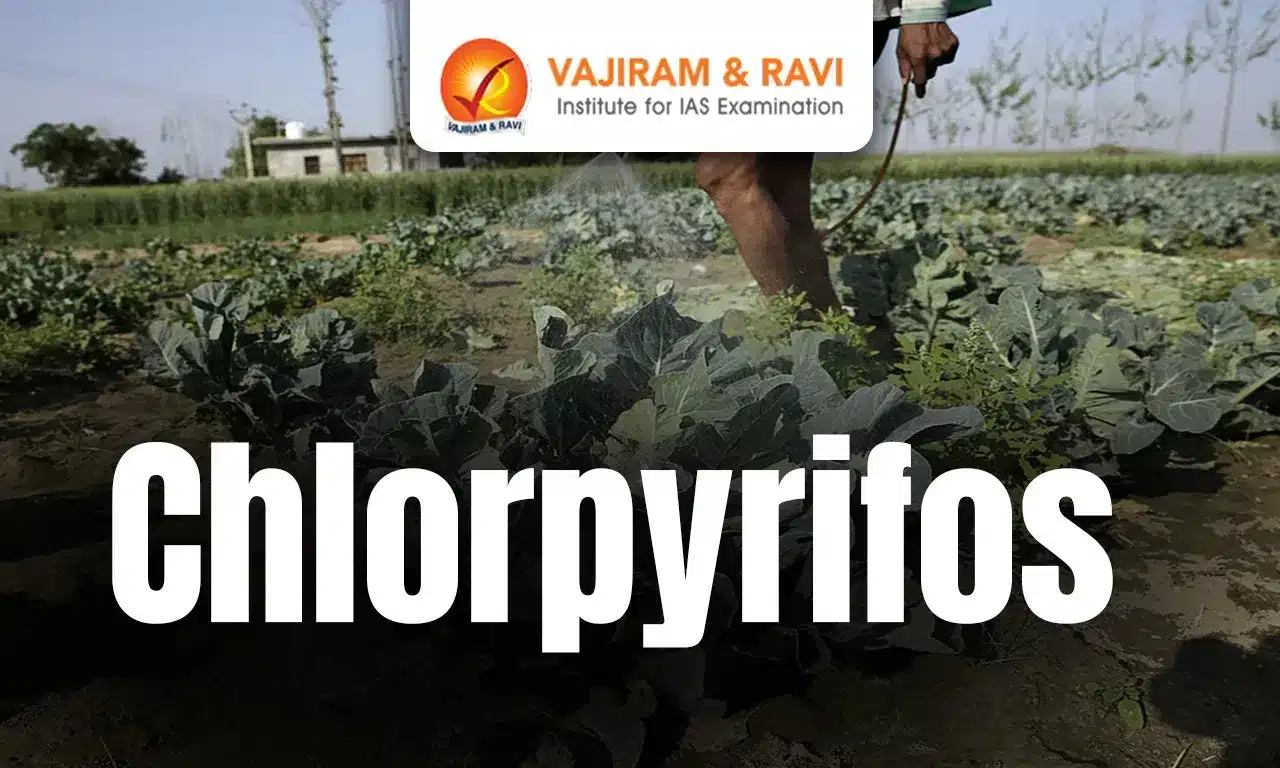
Chlorpyrifos

Chlorpyrifos

Chlorpyrifos Latest News

The 2025 COPs (Conferences of the Parties) of the Basel, Rotterdam, and Stockholm Conventions are being held in Geneva (April 28–May 9) to address hazardous chemicals like chlorpyrifos.

About Chlorpyrifos

  • Chlorpyrifos, a pesticide classified as ‘moderately hazardous’ by the World Health Organisation, is still approved for use in India on 18 crops, despite bans in over 40 countries.
  • It is linked to neurotoxicity, reproductive toxicity, irreversible brain damage in unborn children, and the ability to contaminate distant ecosystems due to its mobility.

Global and National Advocacy

  • Pesticide Action Network (PAN) India:
    • It advocates placing chlorpyrifos under Annex III of the Rotterdam Convention, requiring prior informed consent before trade.
    • It calls for its inclusion under Annex A of the Stockholm Convention, which demands a complete global ban, though exemptions are usually allowed.
    • It stresses that safer alternatives are already available, making a total ban both feasible and necessary.
  • Unauthorised Use in India: A 2022 report found the illegal use of chlorpyrifos and other agrochemicals like paraquat, raising serious regulatory and enforcement concerns.

What is CIBRC?

  • The Central Insecticides Board & Registration Committee (CIBRC) operates under the Directorate of Plant Protection, Quarantine & Storage, part of the Department of Agriculture & Farmers Welfare, Ministry of Agriculture & Farmers Welfare.
  • It was established in 1970 to ensure the safe regulation of insecticides across India, particularly focusing on minimising risks to human health, animal safety, and the environment.
  • Legal backing:
    • The Insecticides Act, 1968 forms the statutory basis for CIBRC. It came into effect from 1st August 1971 along with the notification of the Insecticides Rules, 1971.
    • The Act mandates the regulation of import, manufacture, sale, transport, and use of insecticides through a centralised registration process.

Source: DTE

Chlorpyrifos FAQs

Q1: What is Chlorpyrifos?

Ans: Chlorpyrifos is a broad-spectrum organophosphate insecticide used in agriculture to control pests like termites, beetles, and worms.

Q2: Under which law is pesticide regulation handled in India?

Ans: Pesticide use is governed by the Insecticides Act, 1968, and the Insecticides Rules, 1971.

INS Surat

INS Surat

INS Surat Latest News

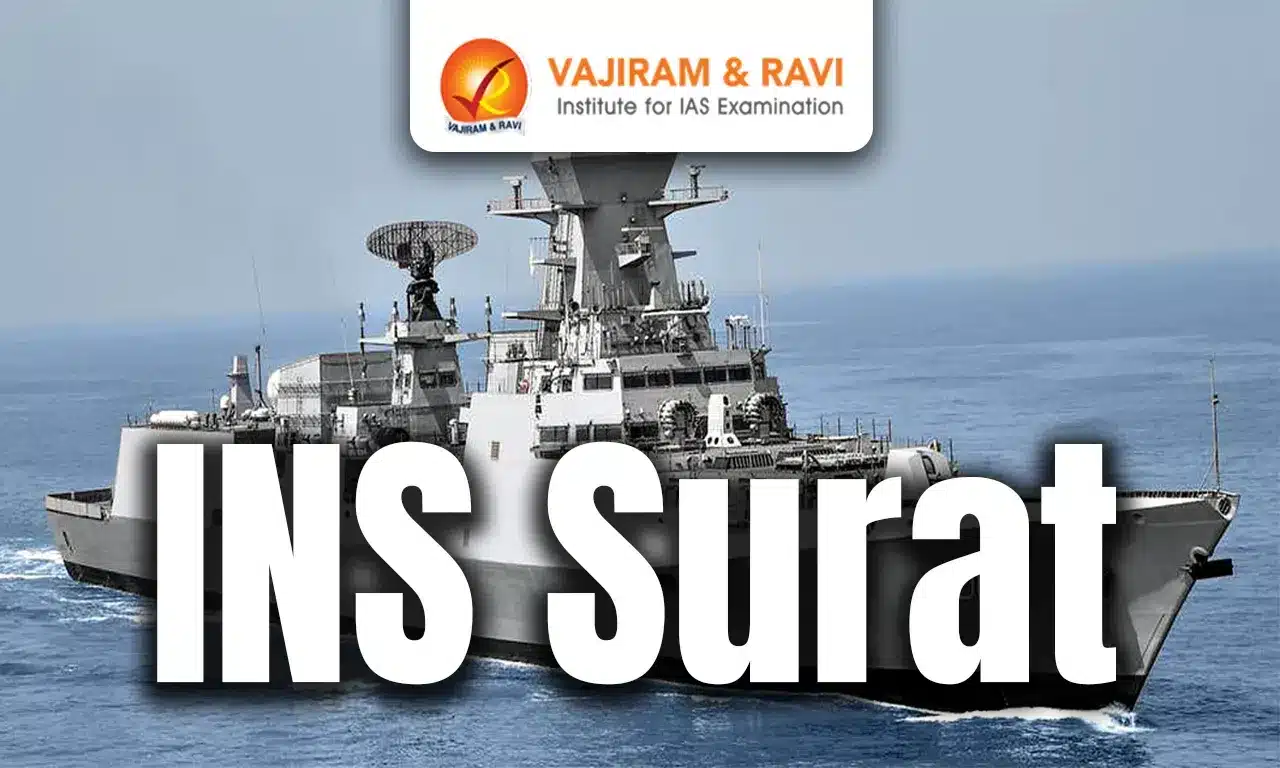
Indian Navy's guided missile destroyer INS Surat successfully test-fired a medium-range surface-to-air missile in the Arabian Sea recently.

About INS Surat

  • It is the fourth and final ship of the Project 15Bstealth guided missile destroyer class, popularly known as the Visakhapatnam class.
  • It ranks among the largest and most sophisticated destroyers in the world.
  • It has 75 percent Indigenous content and is equipped with state-of-the-art weapon-sensor packages and advanced network-centric capabilities.
  • It was designed by the Navy's Warship Design Bureau and built by Mazagon Dock Shipbuilders, Mumbai.
  • It was commissioned into the Indian Navy in January 2025.

INS Surat Features

  • It is the Indian Navy’s first Al (artificial intelligence)-enabled warship, which will utilise indigenously developed Al solutions to enhance its operational efficiency manifold.
  • With a displacement of 7,400 tonnes and an overall length of 164 metres, INS Surat is a potent and versatile platform equipped with state-of-the-art weapons and sensors, including surface-to-air missiles, anti-ship missiles, and torpedoes.
  • It is powered by a Combined Gas and Gas (COGAG) propulsion set comprising four gas turbines.
  • It has speeds in excess of 30 knots (56 km/h).

Source: TH

INS Surat FAQs

Q1: Which project is INS Surat under?

Ans: It is the fourth and final ship of the Project 15B stealth guided missile destroyer class.

Q2: Which is India's first AI enabled warship?

Ans: INS Surat

Q3: Which organization designed INS Surat?

Ans: Warship Design Bureau of the Indian Navy

SAARC Visa Exemption Scheme (SVES)

SAARC Visa Exemption Scheme (SVES)

SAARC Visa Exemption Scheme Latest News

The Indian government recently announced that Pakistani nationals will not be permitted to travel to India under the SAARC Visa Exemption Scheme (SVES).

About SAARC Visa Exemption Scheme

  • The SVES was launched in 1992.
  • Under the scheme, certain categories of dignitaries from SAARC countries are issued a special travel document. 
  • This special instrument exempts them from the need for visas and other travelling documents to travel among these countries.
  • Currently, the list includes 24 categories of entitled persons, which include dignitaries, judges of higher courts, parliamentarians, senior officials, businessmen, journalists, sportspersons, etc.
  • Visa stickers are issued by the respective member states to the entitled categories of that particular country. 
  • The validity of the visa sticker is generally for one year.
  • The implementation is reviewed regularly by the immigration authorities of SAAR member states.

What is SAARC?

  • The South Asian Association for Regional Cooperation (SAARC) was established on December 8, 1985.
  •  SAARC is an economic and political regional organisation of countries in South Asia.
  • The Secretariat of the Association was set up in Kathmandu, Nepal, in January 1987.
  • SAARC has eight member countries — Afghanistan, Bangladesh, Bhutan, India, Maldives, Nepal, Pakistan and Sri Lanka.
  • SAARC aims to accelerate the process of economic and social development in its member states through increased intra-regional cooperation.

Source: TH

SAARC Visa Exemption Scheme FAQs

Q1: How many countries are included in SAARC?

Ans: SAARC has eight member countries — Afghanistan, Bangladesh, Bhutan, India, Maldives, Nepal, Pakistan and Sri Lanka.

Q2: Where is the Secretariat of SAARC located?

Ans: Kathmandu, Nepal

Q3: When was the SAARC Visa Exemption Scheme (SVES) launched?

Ans: 1992

Sea of Marmara

Sea of Marmara

Sea of Marmara Latest News

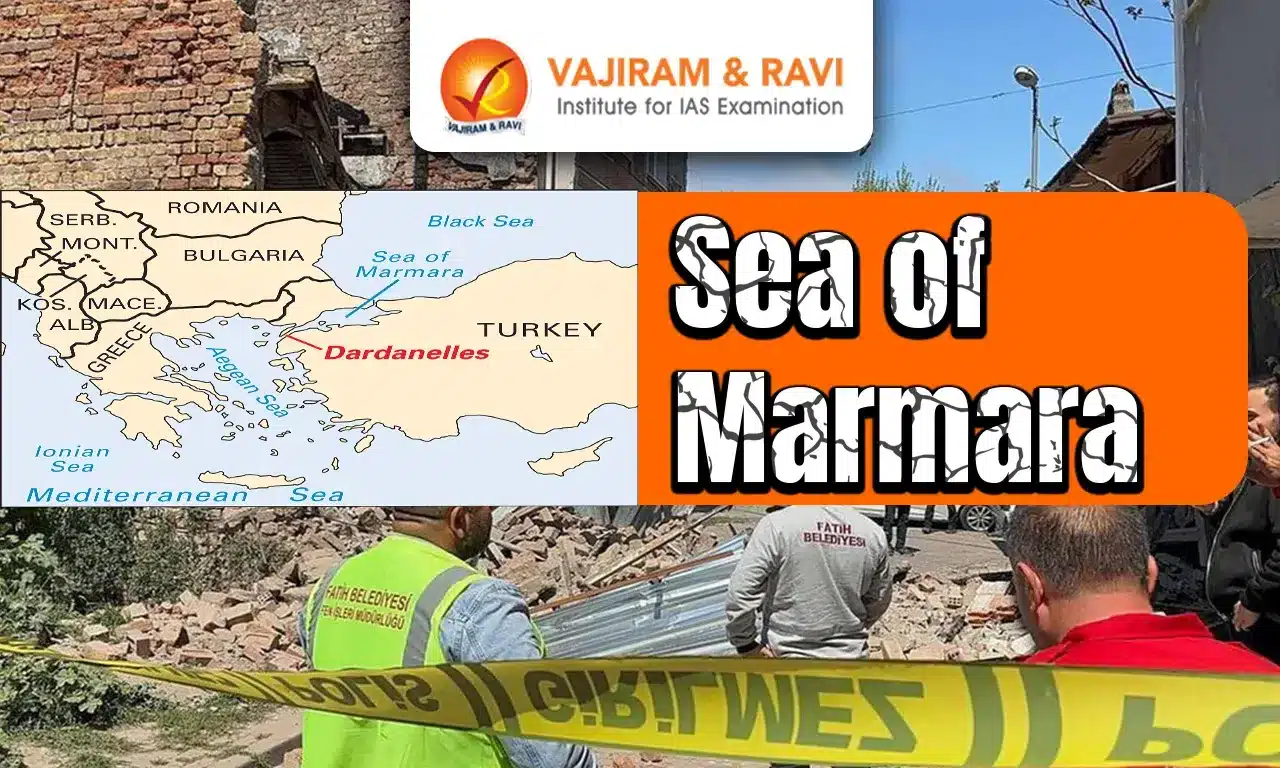
A 6.2 magnitude earthquake whose epicenter was in the Sea of Marmara hit Istanbul recently.

About Sea of Marmara

  • It is a small inland sea that is completely bordered by the transcontinental nation of Turkey.
  • It covers an area of 11,350 sq.km. 
  • It is about 280 km long and has a maximum width of 80 km at its widest point.
  • It separates the Asian and European parts of Turkey.
  • In the northeast, it is connected to the Black Sea via the Bosphorus Strait, whereas in the southwest, it is linked with the Aegean Sea via the Dardanelles Strait.
  • It serves as a transitional zone between the Black Sea and the Mediterranean Sea. 
  • Salinity
    • Cold, fresh Black Sea water entering through the Bosporus meets warm and salty water of Mediterranean Sea origin flowing in through the Dardanelles Strait. 
    • This creates the situation where fresher water is located near the surface and much saltier water near the bottom.
  • Climate: The sea has a humid subtropical climate with hot summers and coldand wet winters.
  • Earthquakes: The North Anatolian Fault, which runs beneath the sea, has caused several massive earthquakes in the region.
  • Major Islands:
    • Marmara Island, Prince Islands, Avşa, Imrali, Ekinlik, and Paşalimani Islands.
    • Marmara Island is Turkey’s second-largest island as well as the largest island in the Marmara Sea. It is also a rich source of marble. 
  • Some of the important coastal towns and cities that are located along the Sea of Marmara include Istanbul, Izmit, Balikesir, Yalova, Tekirdag, Bursa, and Çanakkale.

Source: ET

Sea of Marmara FAQs

Q1: What connects Black Sea to Sea of Marmara?

Ans: The Bosporus Strait connects the Black Sea to the Sea of Marmara.

Q2: Which country is the Sea of Marmara in?

Ans: The Sea of Marmara is entirely within the country of Turkey. 

Q3: Which major fault line lies beneath the Sea of Marmara?

Ans: North Anatolian Fault

Human Gene Therapy Trial for Haemophilia

Human Gene Therapy Trial for Haemophilia

Human Gene Therapy Trial for Haemophilia Latest News

BRIC-inStem, Bengaluru, has successfully conducted India’s first-in-human gene therapy trial for Haemophilia in collaboration with CMC Vellore.

About Gene Therapy

  • Gene therapy is a biomedical technique that involves modifying or replacing faulty genes in a person’s cells to treat or prevent diseases.
  • The primary objective is to introduce a functional gene to compensate for a mutated or disease-causing gene.
  • Gene therapy approaches include:
    • Replacing a mutated gene with a healthy copy.
    • Inactivating a malfunctioning gene.
    • Introducing a completely new gene into the body.
  • Unlike conventional medicines, gene therapy targets the root genetic causes inside cells, rather than just addressing symptoms.
  • Current clinical trials focus on both inherited and acquired disorders, using methods such as:
    • Ex vivo modification of hematopoietic stem cells and T-lymphocytes.
    • In vivo gene delivery or use of gene-editing reagents directly into the patient’s body.

About Haemophilia

  • Haemophilia is a rare genetic bleeding disorder where blood clotting is impaired due to mutations in genes encoding clotting proteins.
  • These genes are located on the X chromosome, making males more susceptible.
  • It affects about 1 in 10,000 people, with India having a significant patient load.

About BRIC-inStem

  • BRIC-inStem, part of the Biotechnology Research and Innovation Council (BRIC), integrates 14 autonomous research institutions under one national umbrella.
  • It has pioneered translational and regenerative research, including:
    • Gene therapy
    • Anti-viral germicidal masks (developed during COVID-19)
    • ‘Kisan Kavach’ pesticide shield for farmers
  • Biosafety Level III Lab at BRIC-inStem is essential for studying high-risk pathogens under the One Health Mission.

Source: PIB

Human Gene Therapy Trial for Haemophilia FAQs

Q1: What is gene therapy in the context of Haemophilia?

Ans: Gene therapy involves delivering a functional copy of the faulty gene responsible for Haemophilia to the patient’s liver cells to enable the production of clotting factors.

Q2: Which clotting factor is deficient in Haemophilia A?

Ans: Factor VIII is deficient in Haemophilia A, while Factor IX is deficient in Haemophilia B.

Measles-Rubella

Measles-Rubella

Measles-Rubella Latest News

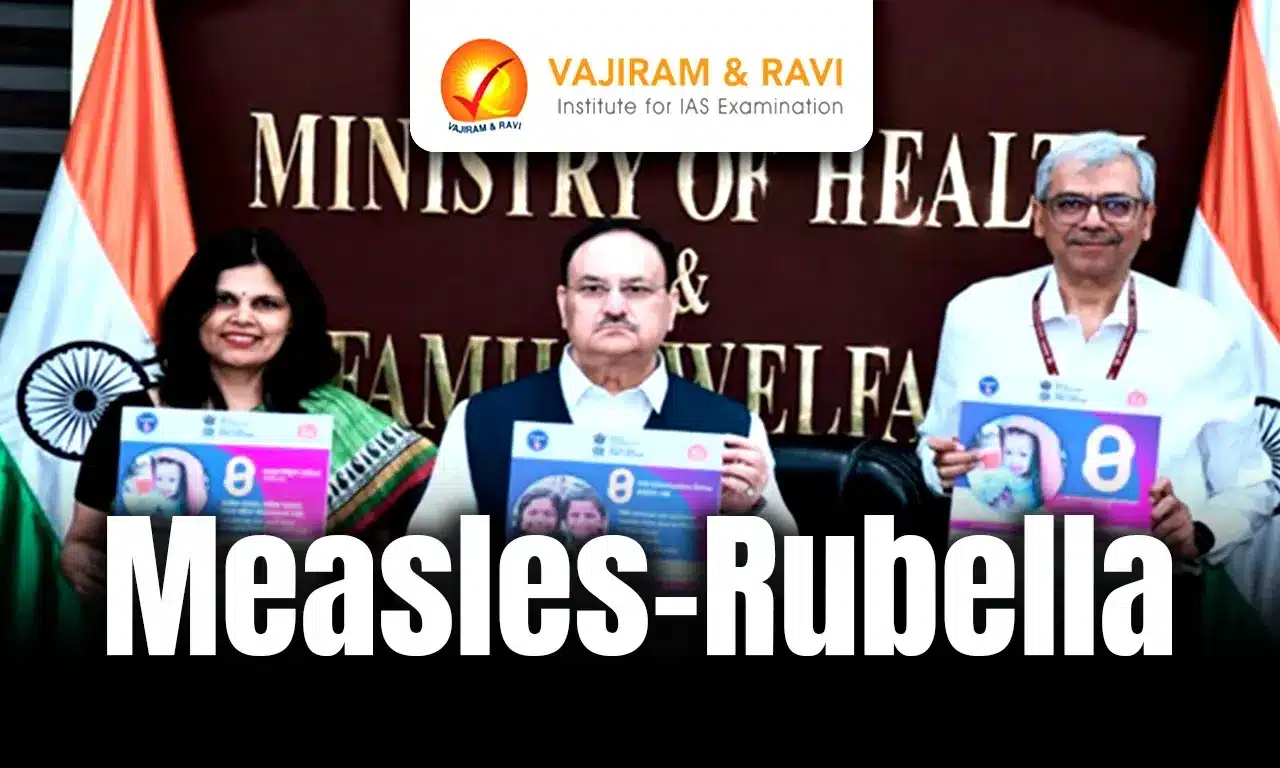
The Measles-Rubella (M-R) Elimination Campaign 2025–26 aims to achieve 100% immunisation coverage by administering two doses of the M-R vaccine to all eligible children.

About Measles

  • Measles is a highly contagious viral disease that primarily affects young children and can lead to serious complications or death, especially in malnourished children or those with weakened immunity.
  • It is caused by an enveloped, single-stranded RNA virus, classified under the genus Morbillivirus in the Paramyxoviridae family, with only one serotype.
  • Common complications include blindnessencephalitissevere diarrhoeaear infections, and pneumonia.
  • It spreads through respiratory droplets and remains one of the leading causes of vaccine-preventable deaths globally.

About Rubella

  • Also known as German Measles, Rubella is a mild viral infection that predominantly affects children and young adults.
  • It is caused by the Rubella virus, an enveloped, single-stranded RNA virus, different from the measles virus.
  • Rubella is less infectious and milder than measles, but it poses a major risk during pregnancy.
  • Infection in pregnant women may lead to Congenital Rubella Syndrome (CRS), which causes irreversible birth defects like deafness, heart defects, and intellectual disabilities.
  • Rubella and measles may have similar rash symptoms, but they are caused by different viruses.

Source: PIB

Measles-Rubella FAQs

Q1: What is the Measles-Rubella (MR) vaccination campaign?

Ans: The MR campaign is a public health initiative launched by the Government of India to eliminate measles and control rubella by vaccinating children aged 9 months to 15 years.

Q2: What type of vaccine is used in the MR campaign?

Ans: A live attenuated combined vaccine is used, which protects against both measles and rubella viruses.

Next Generation Offshore Patrol Vessel (NGOPVs)

Next Generation Offshore Patrol Vessel (NGOPVs)

Next Generation Offshore Patrol Vessel (NGOPVs) Latest News

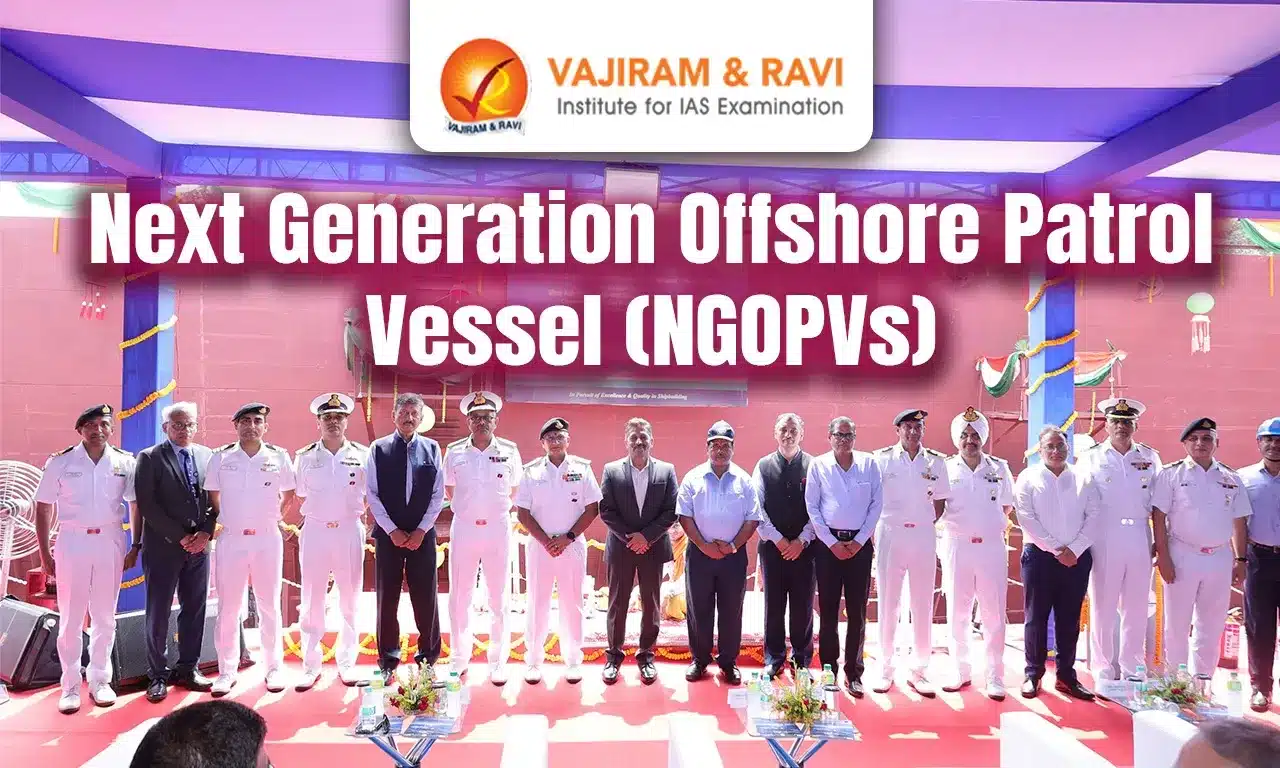
The keel laying ceremony of Yard 3040, the fourth Next Generation Offshore Patrol Vessel (NGOPV) being built by Garden Reach Shipbuilders & Engineers Ltd (GRSE), Kolkata, was held recently.

About Next Generation Offshore Patrol Vessels (NGOPVs)

  • The Next Generation Offshore Patrol Vessels (NGOPVs) have an approximate displacement of 3000 tonnes.
  • They are designed for multi-role maritime operations, including:
    • Coastal defence and surveillance
    • Search and rescue (SAR) missions
    • Protection of offshore assets such as oil rigs and platforms
    • Anti-piracy operations in India's Exclusive Economic Zone (EEZ) and beyond
  • These vessels will be equipped with modern sensors and armaments, enhancing the Indian Navy’s maritime domain awareness and low-intensity maritime conflict capabilities.

Project Background

  • The construction of the NGOPVs is part of a contract signed on 30 March 2023 for the indigenous design and development of 11 patrol vessels.
  • These contracts were awarded to: Goa Shipyard Ltd (GSL) – the Lead Shipyard (7vessels) and Garden Reach Shipbuilders & Engineers Ltd (GRSE) – the Follow Shipyard (4vessels)
  • The project reflects India’s commitment to self-reliance in defence manufacturing under the national initiatives of ‘Aatmanirbhar Bharat’ and ‘Make in India’. 

Source: PIB

Next Generation Offshore Patrol Vessel (NGOPVs) FAQs

Q1: What are Next Generation Offshore Patrol Vessels (NGOPVs)?

Ans: NGOPVs are multi-role naval ships designed for maritime surveillance, anti-piracy, pollution control, and EEZ patrol duties.

Q2: Which Indian organisation is responsible for building NGOPVs?

Ans: Goa Shipyard Limited (GSL) and Garden Reach Shipbuilders & Engineers (GRSE) are developing these for the Indian Navy.

New Method to Estimate Helium Abundance in the Sun

New Method to Estimate Helium Abundance in the Sun

New Method to Estimate Helium Abundance in the Sun Latest News

Indian scientists from the Indian Institute of Astrophysics (IIA) have successfully developed a novel method to accurately estimate the abundance of Helium in the Sun’s photosphere using indirect spectral analysis.

Background 

  • Helium is the second most abundant element in the Sun, but direct detection in the Sun’s photosphere is extremely difficult due to the absence of Helium spectral lines in the visible range.
  • Traditionally, Helium abundance was estimated indirectly using:
    • Solar wind or corona data,
    • Extrapolation from hotter stars,
    • Helioseismology (solar interior vibrations).
  • These methods were not based on direct photospheric observations and hence lacked precision.

What is the New Method?

  • Scientists used spectral lines of neutral Magnesium (Mg I) and neutral Carbon (C I), along with molecular lines of MgH, CH, and C₂, observed in the Sun’s photosphere.
  • This method is based on the principle that the relative abundance of Helium affects the availability of Hydrogen, which in turn influences the formation and strength of molecular lines (e.g., CH and MgH).
  • The researchers matched the atomic and molecular abundances of Magnesium and Carbon for different Helium-to-Hydrogen (He/H) ratios.
  • The technique confirmed that only at a He/H ratio of ~0.1 do the atomic and molecular line abundances agree, validating the assumed solar value.

About Helium

  • Helium (He) is a noble gas with a closed-shell electronic configuration, making it stable and chemically inert.
  • Discovered in 1868 by Jules Janssen and Norman Lockyer via a yellow spectral line during a solar eclipse
  • Named after the Greek word ‘Helios’, meaning Sun.
  • Largest global reserves: United States, Algeria, and Russia.
  • India’s Rajmahal Volcanic Basin (Jharkhand) is a significant helium reservoir trapped for billions of years.

Source: PIB

New Method to Estimate Helium Abundance in the Sun FAQs

Q1: What is the primary source of helium in the Sun?

Ans: Helium in the Sun is primarily produced through nuclear fusion of hydrogen atoms in its core.

Q2: What is the approximate composition of the Sun by mass?

Ans: The Sun is composed of about 71% hydrogen, 27% helium, and 2% heavier elements.

Tamil Nadu Bans Egg Mayonnaise: Here’s Why It Matters

Tamil Nadu Bans Egg Mayonnaise: Here’s Why It Matters

What’s in Today’s Article?

  • Egg Mayonnaise Ban Tamil Nadu Latest News
  • Mayonnaise
  • Raw Eggs Can Be Dangerous
  • Impact on the Food Industry
  • Egg Mayonnaise Ban Tamil Nadu FAQs

Egg Mayonnaise Ban Tamil Nadu Latest News

  • The Tamil Nadu government has imposed a one-year ban, effective from April 8, on the manufacture, storage, distribution, and sale of mayonnaise made with raw eggs, citing public health concerns.

Mayonnaise

  • Mayonnaise is a semi-solid emulsion made from egg yolk, vegetable oil, vinegar, and seasonings. 
  • It is traditionally prepared using three basic ingredients: oil, egg yolk, and an acid like lemon juice or vinegar.

How It’s Made

  • Egg yolks and seasonings are mixed with oil to form a thick, pale yellow sauce. 
  • An acid is then added. The protein in the egg acts as an emulsifier, helping blend the oil and water content into a stable mixture.

Origin and Global Use

  • Though its origins are traced to France or Spain, mayonnaise is now widely used in fast food globally. 
  • It serves as a popular spread in sandwiches and burgers and accompanies various foods like shawarmas and momos.

Raw Eggs Can Be Dangerous

  • Raw eggs can carry harmful pathogens that are normally destroyed during cooking. 
  • In mayonnaise, which is often made using raw eggs, these pathogens remain active, posing health risks.

Risk in Indian Conditions

  • The Tamil Nadu government noted that raw egg-based mayonnaise is a high-risk food, especially in India’s hot and humid climate. 
  • Improper preparation and storage increase the likelihood of contamination by bacteria like Salmonella and E. coli.

About Salmonella and E. Coli

  • Salmonella bacteria thrive in warm, moist conditions and are a major cause of foodborne illness globally. 
  • Symptoms include diarrhoea, vomiting, and stomach cramps.
  • E. coli bacteria, while mostly harmless, have certain strains that can cause serious infections in the gut, urinary tract, and other areas.

Vulnerable Groups

  • Children, the elderly, and immunocompromised individuals are especially at risk of severe illness from these bacteria.

Expert Opinion

  • Experts support the ban, stating that although mayonnaise is energy-dense, using raw eggs can expose consumers to Salmonella, making the government’s decision a wise public health measure.

Impact on the Food Industry

  • Mayonnaise has become a common ingredient in urban Indian fast food. 
  • The ban in Tamil Nadu will likely push food businesses to use eggless or pasteurised-egg alternatives, at least until a detailed risk assessment is completed. 
  • Fortunately, the Indian market is already dominated by eggless mayonnaise.

Not an Isolated Move

  • Tamil Nadu is not the first state to impose such a ban—Telangana enforced a similar one-year ban on egg-based mayonnaise in November. 
  • TN’s decision aligns with earlier bans on gutka and paan masala, which were also deemed hazardous to health.

Broader Public Health Trend

  • This move is part of a growing trend of public health interventions. 
  • For instance, Punjab recently banned the sale of caffeinated energy drinks to children and near schools due to potential health risks.
  • A scientific study is underway there to evaluate its effects on minors.

Egg Mayonnaise Ban Tamil Nadu FAQs

Q1. Why did Tamil Nadu ban egg mayonnaise?

Ans. Due to health risks from raw eggs in hot, humid Indian climate.

Q2. What bacteria are involved?

Ans. Salmonella and E. coli, both cause severe foodborne illness.

Q3. Who is most vulnerable?

Ans. Children, elderly, and immunocompromised individuals face the highest risk.

Q4. Will the food industry adapt?

Ans. Yes, many businesses will shift to eggless or pasteurised alternatives.

Q5. Is this a unique move?

Ans. No, Telangana had already imposed a similar ban earlier.

Source: IE | ToI | IT

Pakistan Suspends 1972 Simla Agreement: Strategic Implications for Indo-Pak Relations

Pakistan Suspends 1972 Simla Agreement: Strategic Implications for Indo-Pak Relations

What’s in Today’s Article?

  • Simla Agreement Latest News
  • Introduction
  • Understanding the Simla Agreement
  • Key Provisions and Outcomes
  • Why Pakistan Suspended the Agreement
  • Potential Impact on the Line of Control
  • India’s Stance and Future Outlook
  • Conclusion
  • Simla Agreement FAQs

Simla Agreement Latest News

  • Pakistan has suspended the 1972 Simla Agreement as a reaction against stringent measures taken by India amid nationwide grief over the terrorist attack in Pahalgam.

Introduction

  • In a significant move with wide-ranging geopolitical implications, Pakistan announced the suspension of the 1972 Simla Agreement
  • This decision, coming amid heightened tensions following a terrorist attack in Pahalgam, marks a potential turning point in India-Pakistan relations. 
  • The Simla Agreement, long seen as the cornerstone of bilateral diplomacy between the two nations, was designed to ensure peaceful conflict resolution and maintain the status quo along the Line of Control (LoC). 
  • Pakistan's unilateral withdrawal from the pact signals a departure from this framework and may reopen old hostilities.

Understanding the Simla Agreement

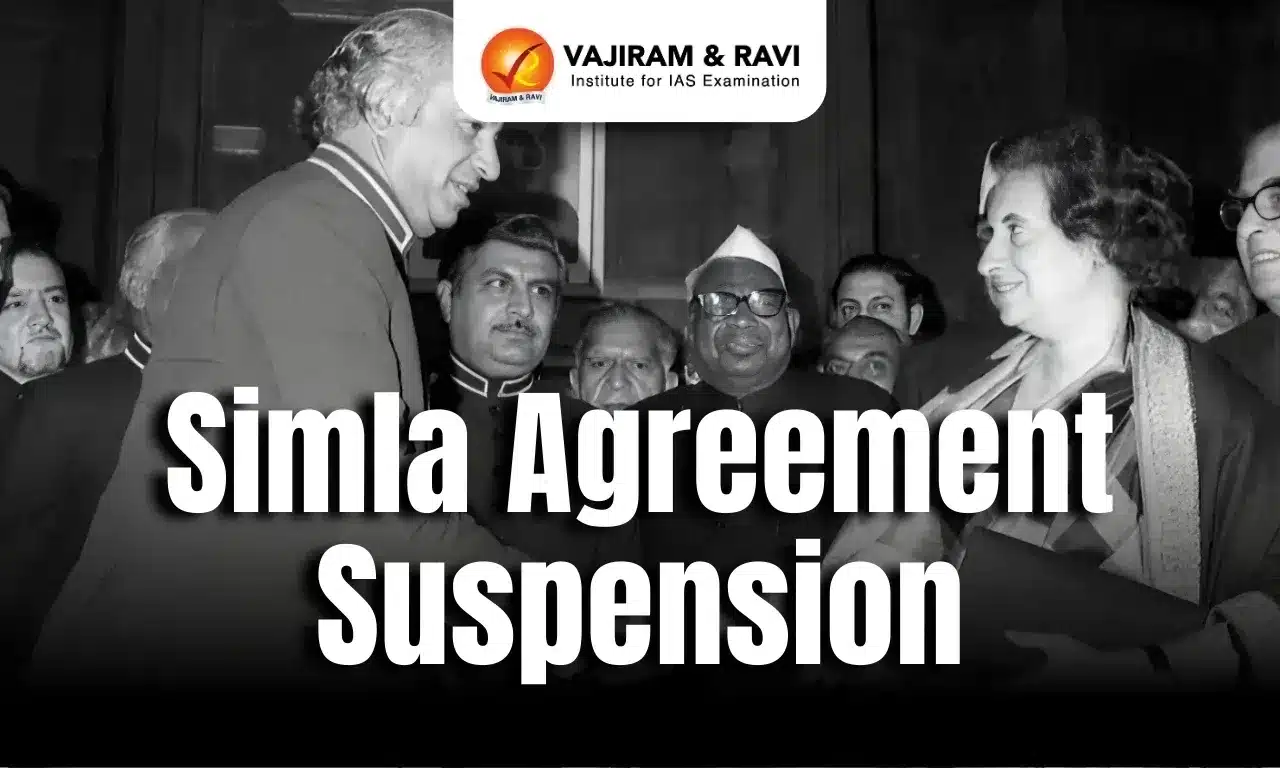
  • Signed on July 2, 1972, by Indian Prime Minister Indira Gandhi and Pakistani President Zulfikar Ali Bhutto, the Simla Agreement was a diplomatic response to the 1971 Indo-Pak war, which led to the creation of Bangladesh
  • The treaty aimed to restore peace and normalise bilateral relations, establishing key principles for future engagement:
    • Peaceful Coexistence: Both nations committed to resolving conflicts bilaterally and refraining from third-party mediation.
    • Respect for Sovereignty: Each side was to respect the territorial integrity and political independence of the other.
    • Non-Interference: The agreement explicitly prohibited any interference in each other’s internal affairs.
    • Bilateral Negotiation Framework: Issues such as Kashmir were to be resolved without international intervention.

Key Provisions and Outcomes

  • Line of Control (LoC):
    • The ceasefire line from the 1971 war was converted into the LoC, a de facto boundary in Jammu and Kashmir. Both nations agreed not to alter this line unilaterally.
  • Return of Captured Territory:
    • India returned over 13,000 sq. km of Pakistani territory captured during the war, reinforcing its commitment to peace, though strategic areas like Turtuk and Chalunka were retained.
  • Recognition of Bangladesh:
    • While not part of the agreement directly, it paved the way for Pakistan’s eventual diplomatic recognition of Bangladesh.
  • UN Charter Alignment:
    • The agreement reaffirmed both countries’ adherence to the principles of the UN Charter, including peaceful coexistence and abstaining from use of force.

Why Pakistan Suspended the Agreement

  • Pakistan's decision appears to be a reaction to India's domestic measures, particularly those concerning Jammu and Kashmir, such as the abrogation of Article 370 in 2019. 
  • With bilateral engagement stalled and tensions escalating, Islamabad has opted for a symbolic but potentially destabilising move.
  • This suspension allows Pakistan to:
    • Distance itself from the bilateral framework, possibly to seek third-party intervention.
    • Reclaim diplomatic leverage by internationalising the Kashmir issue through forums like the UN or OIC.
    • Signal strategic recalibration, especially amidst domestic political and security pressures.

Potential Impact on the Line of Control

  • The LoC has historically been volatile, marked by frequent ceasefire violations and infiltration attempts. 
  • The Simla Agreement, by codifying mutual respect for the LoC, provided a framework to de-escalate tensions. With that framework now in question:
    • Ceasefire Stability May Erode: Without a binding commitment, the risk of increased skirmishes and military escalation grows.
    • Loss of Diplomatic Buffer: The absence of a shared agreement removes a key diplomatic restraint, potentially inviting brinkmanship.
    • Greater Global Involvement: Pakistan may use the suspension to justify third-party mediation, a stance India opposes.

India’s Stance and Future Outlook

  • As of now, India has not issued an official response. Historically, India has emphasised bilateralism, rejecting foreign intervention in its disputes with Pakistan. 
  • The suspension of the Simla Agreement could further shrink the space for any meaningful dialogue, at least in the near term.
  • Going forward, the situation could evolve in two ways:
    • Escalation: Without the agreement, LoC violations and political provocations could increase, particularly during sensitive periods like elections or terror attacks.
    • Diplomatic Re-engagement: Pressure from global powers may push both sides to re-establish a formal mechanism for engagement, possibly under a new framework.

Conclusion

  • Pakistan's suspension of the 1972 Simla Agreement represents a significant strategic pivot. 
  • It removes a key pillar of bilateral engagement, increases the risk of conflict along the LoC, and may revive global involvement in South Asia’s most contentious dispute, Kashmir. 
  • While the long-term impact remains to be seen, the move undeniably weakens a foundational peace structure built over decades.

Simla Agreement FAQs

Q1. What was the Simla Agreement?

Ans. A 1972 peace treaty between India and Pakistan to resolve conflicts through bilateral dialogue and uphold peace along the LoC.

Q2. Why did Pakistan suspend the Simla Agreement in 2025?

Ans. In protest against India’s actions in Kashmir and to move away from the bilateral framework it mandated.

Q3. What does the agreement say about the Line of Control?

Ans. It converted the 1971 ceasefire line into the LoC and prohibited unilateral changes to its status.

Q4. What are the implications of the suspension?

Ans. It may increase LoC tensions, invite third-party intervention, and strain regional stability.

Q5. Has India responded to the suspension?

Ans. As of now, India has not issued an official statement.


Source: TOI

WHO’s New Global Pandemic Treaty: A Milestone for Future Preparedness

WHO's New Global Pandemic Treaty: A Milestone for Future Preparedness

What’s in Today’s Article?

  • Global Pandemic Treaty Latest News
  • Need For a Global Pandemic Treaty
  • Key Provisions of the Pandemic Treaty
  • Criticism of the Global Pandemic Treaty
  • Global Pandemic Treaty FAQs

Global Pandemic Treaty Latest News

  • After over three years of negotiations, WHO member states (excluding the United States) have agreed on a draft of a legally binding treaty aimed at improving global preparedness and response to future pandemics. 
  • This treaty, set to be ratified at the World Health Assembly in May, marks only the second legally binding accord in WHO’s history—the first being the 2003 tobacco control treaty.

Need For a Global Pandemic Treaty

  • Unequal Vaccine Distribution During COVID-19
    • When the Omicron variant surged in late 2021, vaccine-producing countries hoarded doses, leaving low-income nations with limited or no access. 
    • This highlighted deep global inequities in pandemic response.
  • Preventable Loss of Lives
    • A 2022 study in Nature estimated that over one million lives could have been saved with fairer vaccine distribution. 
    • By that time, COVID-19 had already taken more than seven million lives globally.
  • Systemic Failures in Global Response
    • A 2021 report by the Independent Panel for Pandemic Preparedness and Response blamed poor strategic choices, inequality, and lack of coordination for turning the pandemic into a major humanitarian disaster.
  • A Call for Coordinated Global Action
    • In response to these failures, WHO member states began negotiating a pandemic treaty in December 2021. 
    • After 13 rounds of talks over nearly three-and-a-half years, a draft agreement was reached to ensure better preparedness, equity, and coordination in future pandemics.

Key Provisions of the Pandemic Treaty

  • Pathogen Access and Benefit Sharing
    • The treaty introduces a system where pharmaceutical companies gain access to scientific data—like pathogen samples and genomic sequences—in exchange for a commitment to equitably share the resulting vaccines, drugs, and diagnostics during a pandemic.
  • Production Allocation to WHO
    • Manufacturers participating in the agreement must allocate:
      • 10% of their pandemic-related products (vaccines, therapeutics, diagnostics) to WHO free of charge, and
      • An additional 10% at affordable prices.
  • Technology and Knowledge Sharing
    • Member states are expected to encourage or incentivize the transfer of technology and know-how, enabling developing countries to manufacture their own medical tools during pandemics.
  • Conditions on Publicly Funded Research
    • Countries must create policies that require any publicly funded research—whether at universities or private companies—to ensure equitable and timely access to resulting treatments or diagnostics during health emergencies.
  • Government Intervention for Public Benefit
    • The treaty empowers governments to intervene when life-saving medicines, developed using public funds, are unaffordable or inaccessible, ensuring availability for citizens and vulnerable populations worldwide.

Criticism of the Global Pandemic Treaty

  • Limited Authority of the WHO
    • While the treaty is considered a major step forward, it does not grant the WHO any legal power over individual countries.
    • Clause 24 explicitly states that the WHO cannot direct or change any national laws or policies. 
      • It also cannot enforce travel bans, lockdowns, vaccine mandates, or any public health measures.
  • No Enforcement Mechanism
    • The WHO has no power to ensure compliance. In a future crisis, countries could again prioritize national interests—such as hoarding vaccines—without facing consequences. 
    • This weakens the treaty’s enforceability.
  • Concerns from the Pharmaceutical Industry
    • Pharma leaders argue that unclear rules around intellectual property and benefit-sharing may discourage investment in high-risk pandemic research.
    • They emphasized the need for legal certainty to maintain innovation and public-private partnerships in future health emergencies.
  • Lack of Clarity in Key Provisions
    • The “pathogen access and benefit sharing” system—central to the treaty—lacks detailed implementation guidelines, raising concerns about its practicality and effectiveness.
  • Absence of the United States
    • The U.S., a major player in vaccine and drug production, withdrew from negotiations after Donald Trump’s return to power. 
    • Its absence significantly weakens the treaty’s impact.
    • Experts described the lack of U.S. participation as a “gaping hole” in global pandemic preparedness efforts.

Global Pandemic Treaty FAQs

Q1. What is the global pandemic treaty?

Ans. A legally binding WHO accord to improve pandemic preparedness and equitable access.

Q2. Why was the treaty needed?

Ans. To address COVID-19-era vaccine hoarding and global health inequality.

Q3. What are key treaty provisions?

Ans. Fair vaccine sharing, tech transfer, and publicly funded research access.

Q4. Does WHO have enforcement power?

Ans. No, the treaty gives no legal authority over national governments.

Q5. Why is US absence significant?

Ans. The US dominates vaccine production; its absence weakens treaty impact.


Source: IE | WHO | BBC

Enquire Now