Foreign Ministers of India, List from 1946 to 2025, Tenure

Foreign Ministers of India

The Ministry of External Affairs (MEA) is headed by the Minister of External Affairs, who is also a member of the Union Cabinet. While the minister sets the direction, the day-to-day administration is overseen by the Foreign Secretary, a senior officer from the Indian Foreign Service. The MEA manages India’s representation in the United Nations and other international bodies, oversees embassies and commissions around the world, and advises other ministries and state governments on matters related to foreign affairs.

Foreign Ministers of India

The Foreign Minister of India holds one of the most important portfolios in the Union Cabinet. This role is central to shaping India’s foreign policy and maintaining diplomatic relations with the rest of the world. The position is usually allocated to a senior or highly experienced member of the cabinet.

The Foreign Minister represents India on the global stage, attending international summits, negotiating treaties, and fostering bilateral ties. So far, 29 individuals have held this post. Notably, Indira Gandhi was the First Woman Foreign Minister of India, from 6 September 1967 to 13 February 1969.

Foreign Ministers of India History

The Ministry of External Affairs (MEA) was originally known as the Ministry of External Affairs and Commonwealth Relations when it was established in 1948. First Prime Minister of India, Jawaharlal Nehru, personally handled this portfolio until his death in 1964.

Over time, the Ministry’s responsibilities expanded beyond diplomatic relations. It took charge of the Protection of Pilgrims Act, 1887, the Indian Pilgrim Shipping Rules 1933, and the Mohammedan Pilgrims Act, 1896. It was also responsible for the administration of Naga Hill’s Tuensang Area.

Today, the Ministry of External Affairs remains the central authority for managing India’s foreign relations and diplomatic missions worldwide.

List of Foreign Ministers of India

Here’s the List of Foreign Ministers of India from 1964 to the present.

List of Foreign Minister of India
Foreign Minister Tenure Prime Minister

1. Jawahar Lal Nehru

2 Sept. 1946 to 27 May 1964

Himself

2. Gulzarilal Nanda

27 May 1964 to 9 June 1964

Himself (acting)

3. Lal Bahadur Shastri

9 June 1964 to 17 July 1964

Himself

4. Swaran Singh

18 July 1964 to 14 Nov. 1966

Lal Bahadur Shastri, Indira Gandhi

5. M. C. Chagla

14 Nov. 1966 to 5 Sept. 1967

Indira Gandhi

6. Indira Gandhi

6 Sept. 1967 to 13 Feb. 1969

Indira Gandhi

7. Dinesh Singh

14 Feb. 1969 to 27 June 1970

Indira Gandhi

Swaran Singh  (reappointed)

27 June 1970 to 10 Oct. 1974

Indira Gandhi

8. Yashwantrao Chavan

10 Oct. 1974 to 24 March 1977

Indira Gandhi

9.Atal Bihari Vajpayee  (Janata Party )

26 March 1977 28 to July 1979

Morarji Desai

10. Shyam Nandan Prasad Mishra (Janata Party (Secular))

28 July 1979 to 13 January 1980


Charan Singh

11. P. V. Narasimha Rao

14 Jan. 1980 to 19 July 1984

Indira Gandhi

Indira Gandhi (reappointed)

19 July 1984 to 31 Oct. 1984

Herself

12. Rajiv Gandhi

31 Oct. 1984 to 24 Sept. 1985

Himself

13. Bali Ram Bhagat

25 Sept. 1985 to 12 May 1986

Rajiv Gandhi

14. P. Shiv Shankar

12 May 1986 to 22 Oct. 1986

Rajiv Gandhi

15.N. D. Tiwari

22 Oct. 1986 to 25 July 1987

Rajiv Gandhi

Rajiv Gandhi (Repeated)

25 July 1987 to 25 June 1988

Himself

P. V. Narasimha Rao (reappointed)

25 June 1988 to 2 Dec. 1989

Rajiv Gandhi

16. V. P. Singh (Janta Dal)

2 Dec. 1989 to 5 Dec. 1989

Himself

17. I. K. Gujral  (Janata Dal (National Front))

5 Dec. 1989 to 10 Nov. 1990

V. P. Singh

18. Vidya Charan Shukla (Samajwadi Janata Party)

21 Nov. 1990 to 20 Feb. 1991

Chandra Shekhar


19. Madhavsinh Solanki

21 June 1991 to 31 March 1992

P. V. Narasimha Rao

P. V. Narasimha Rao (reappointed))

31 March 1992 to 18 January 1993

Himself

Dinesh Singh (reappointed)

18 January 1993 to 10 February 1995

P. V. Narasimha Rao

20. Pranab Mukherjee

10 February 1995 to 16 May 1996

P. V. Narasimha Rao

21. Sikander Bakht

21 May 1996 to 1 June 1996

Atal Bihari Vajpayee

I. K. Gujral (Janata Dal )

1 June 1996 to 18 March 1998

H. D. Deve Gowda & I. K. Gujral

Atal Bihari Vajpayee (reappointed)

19 March 1998 to 5 December 1998

Atal Bihari Vajpayee

22. Jaswant Singh

5 Dec. 1998 to 23 June 2002

Atal Bihari Vajpayee

23.Yashwant Sinha

1 July 2002 to 22 May 2004

Atal Bihari Vajpayee

24. Natwar Singh

22 May 2004 TO 6 Nov. 2005

Manmohan Singh

25. Manmohan Singh

6 Nov. 2005 to 24 Oct. 2006

himself

Pranab Mukherjee (reappointed)

24 Oct. 2006 to 22 May 2009

Manmohan Singh

26. S. M. Krishna

22 May 2009 to 26 Oct. 2012

Manmohan Singh

27. Salman Khurshid

28 Oct. 2012 to 26 May 2014

Manmohan Singh

28. Sushma Swaraj

26 May 2014 to 30 May 2019

Narendra Modi

29. Subrahmanyam Jaishankar

30 May 2019 -- Incumbent

Narendra Modi

First Foreign Minister of India

  • Jawaharlal Nehru served as First Foreign Minister of India from 1947 to 1964, while also being the First Prime Minister of India.
  • He was a central figure in India’s independence movement and deeply committed to non-alignment and peaceful diplomacy.
  • Born in 1889 in Allahabad, he studied in England at Harrow and Trinity College, Cambridge, before returning to India in 1912.
  • Nehru joined the Indian National Congress and quickly rose to prominence, facing multiple imprisonments during the struggle for freedom.
  • After independence, he led the formation of modern India's foreign policy and laid the foundation for its global diplomatic presence.
Also Check Related Post
Vice Presidents of India Education Ministers of India
Foreign Ministers of India Finance Ministers of India
Cabinet Ministers of India Prime Ministers of India
Deputy Prime Minister of India Presidents of India
Ministry of External Affairs

Foreign Ministers of India FAQs

Q1: Who is the current Foreign Minister of India (2025)?

Ans: Dr. Subrahmanyam Jaishankar is the Current External Affairs Minister of India, serving since May 2019.

Q2: Who was the first Foreign Minister of India?

Ans: Jawaharlal Nehru was the first Foreign Minister of India, holding the position from 1947 to 1964.

Q3: Who was the first woman Foreign Minister of India?

Ans: Indira Gandhi became the first woman to hold the post in 1967, while serving as Prime Minister.

Q4: Who served the longest tenure as Foreign Minister of India?

Ans: Jawaharlal Nehru served the longest, from 1947 until his death in 1964.

Q5: Has any Prime Minister served as Foreign Minister?

Ans: Yes, several Prime Ministers including Nehru and Indira Gandhi also held the Foreign Ministry portfolio.

UPSC Daily Quiz 2 August 2025

UPSC Daily Quiz

The Daily UPSC Quiz by Vajiram & Ravi is a thoughtfully curated initiative designed to support UPSC aspirants in strengthening their current affairs knowledge and core conceptual understanding. Aligned with the UPSC Syllabus 2025, this daily quiz serves as a revision resource, helping candidates assess their preparation, revise key topics, and stay updated with relevant issues. Whether you are preparing for Prelims or sharpening your revision for Mains, consistent practice with these Daily UPSC Quiz can significantly enhance accuracy, speed, and confidence in solving exam-level questions.

[WpProQuiz 34]


UPSC Daily Quiz FAQs

Q1: What is the Daily UPSC Quiz?

Ans: The Daily UPSC Quiz is a set of practice questions based on current affairs, static subjects, and PYQs that help aspirants enhance retention and test conceptual clarity regularly.

Q2: How is the Daily Quiz useful for UPSC preparation?

Ans: Daily quizzes support learning, help in revision, improve time management, and boost accuracy for both UPSC Prelims and Mains through consistent practice.

Q3: Are the quiz questions based on the UPSC syllabus?

Ans: Yes, all questions are aligned with the UPSC Syllabus 2025, covering key areas like Polity, Economy, Environment, History, Geography, and Current Affairs.

Q4: Are solutions and explanations provided with the quiz?

Ans: Yes, each quiz includes detailed explanations and source references to enhance conceptual understanding and enable self-assessment.

Q5: Is the Daily UPSC Quiz suitable for both Prelims and Mains?

Ans: Primarily focused on Prelims (MCQ format), but it also indirectly helps in Mains by strengthening subject knowledge and factual clarity.

Article 251 of Indian Constitution, Interpretation, Significance

Article 251 of Indian Constitution

Article 251 of the Constitution of India manages the conflicts that come in between the laws made by the Parliament under Article 249 and 250 and the ones created by the state legislature. When such conflicts come up, the laws made by the Parliament have more power and the state laws become invalid. Article 251 makes that the government functions properly under every circumstance including the emergency. In this article, we are going to cover Article 251, its interpretation and significance. 

Article 251 of the Constitution of India

The Constitution of India states the following about Article 251:

Inconsistency between laws made by Parliament under articles 249 and 250 and laws made by the Legislatures of States

Nothing in articles 249 and 250 shall restrict the power of the Legislature of a State to make any law which under this Constitution it has power to make, but if any provision of a law made by the legislature of a State is repugnant to any provision of a law made by Parliament which Parliament has under either of the said articles power to make, the law made by Parliament, whether passed before or after the law made by the legislature of the State, shall prevail, and the law made by the Legislature of the State shall to the extent of the repugnancy, but so long only as the law made by Parliament continues to have effect, be inoperative.

Note: "The information is referred from the official website of the Indian Code and is for reference only. Original laws and orders remain untouched.

Article 251 of Indian Constitution Interpretation 

Article 251 of the Constitution of India deals with the problems that arise in between the parliamentary laws made under Article 249, 250 and the state legislatures on the same subjects. The decisions of the Parliament prevail over others when conflict arises, making sure there is uniformity in legislative matters of national importance. 

Article 251 is important especially during emergencies. It helps in establishing a consistent and effective legal framework in India and prioritises national interest to balance and establish the autonomy of state legislature with the need of a unified legal system, smooth and effective governance. 

Article 251 of Constitution of India Significance

Article 251 of the Constitution of India is important due to the following reasons: 

  • Addresses inconsistencies between Parliamentary laws made under Articles 249 and 250 and existing State laws.
  • Ensures that Union laws override State laws in matters of national interest or during emergencies.
  • Promotes coherence and consistency in legislation, particularly on subjects from the Union List.
  • Plays a vital role when Parliament enacts laws using special powers during national or state emergencies.
  • Provides a mechanism to harmonize state autonomy with national priorities.
  • Enhances the efficiency of governance by empowering the Centre to act decisively in exceptional situations.
Also Check Related Post
Article 295 of Indian Constitution Article 194 of Indian Constitution
Article 39 of Indian Constitution Article 191 of Indian Constitution
Article 20 of Indian Constitution Article 16 of Indian Constitution
Article 67 of Indian Constitution Article 40 of Indian Constitution
Article 78 of Indian Constitution

Article 251 of Indian Constitution FAQs

Q1: What is Article 251 of the Constitution of India?

Ans: Article 251 states that if a State law conflicts with a Parliamentary law made under Articles 249 or 250, the Parliamentary law prevails.

Q2: What is Article 250 and 251?

Ans: Article 250 allows Parliament to legislate on State List subjects during a national emergency; Article 251 ensures such laws override conflicting State laws.

Q3: What is the Article 251 and 252?

Ans: Article 251 deals with resolving conflicts between Parliamentary and State laws during emergencies; Article 252 allows Parliament to legislate for two or more States with their consent.

Q4: What is Article 249 of the Constitution of India?

Ans: Article 249 empowers Parliament to legislate on State List subjects in national interest if the Rajya Sabha passes a resolution with a two-thirds majority.

Q5: Which constitutional articles cover the National Emergency in India?

Ans: Articles 352 to 360 cover the provisions related to emergencies, with Article 352 specifically dealing with National Emergency.

Article 97 of Indian Constitution, Interpretation, Significance

Article 97 of Indian Constitution

Article 97 of the Constitution of India covers the salaries and allowances of Chairman as well as Deputy Chairman of Council of States and the Speaker and Deputy Speaker of the House of People. The Constitution of India was adopted on 26th November, 1949 and provides a framework of governance of the nation. In this article, we will cover all about Article 97 of the Indian Constitution, its interpretation and significance. 

Article 97 of the Indian Constitution Interpretation

Article 97 of the Constitution states - “There shall be paid to the Chairman and the Deputy Chairman of the Council of States, and to the Speaker and the Deputy Speaker of the House of the People, such salaries and allowances as may be respectively fixed by Parliament by law and, until provision in that behalf is so made, such salaries and allowances as are specified in the Second Schedule.” 

Article 97 of the Indian Constitution says that the salaries and allowances of the Chairman and Deputy Chairman of the Rajya Sabha and the Speaker and Deputy Speaker of the Lok Sabha can only be determined by the Parliament through legislation. The salaries and allowances mentioned in the second schedule will be implemented unless no other laws says so.  

Article 97 of the Constitution of India Significance

Article 97 of the Constitution of India is important for the following reasons: 

  • Provides the salaries and allowances of the Speaker and Deputy Speaker of the Lok Sabha, and Chairman and Deputy Chairman of Rajya Sabha. 
  • Make sure that the officers holding a constitutional position get a fair remuneration for their roles and responsibilities. 
  • Only the Parliament has the authority to determine or revise the salaries through the process of legislation. 
  • The process helps in maintaining independence and dignity of high offices. 
  • These roles are important in conducting the business of Parliament, and Article 97 supports their efficient functioning by securing their financial status.
Also Check Related Post
Article 295 of Indian Constitution Article 194 of Indian Constitution
Article 39 of Indian Constitution Article 191 of Indian Constitution
Article 20 of Indian Constitution Article 16 of Indian Constitution
Article 67 of Indian Constitution Article 40 of Indian Constitution
Article 78 of Indian Constitution

Article 97 of Indian Constitution FAQs

Q1: What is Article 97 of the Constitution of India?

Ans: It provides for the salaries and allowances of the Speaker and Deputy Speaker of the Lok Sabha, and the Chairman and Deputy Chairman of the Rajya Sabha.

Q2: What is Entry 97 of the Indian Constitution?

Ans: Entry 97 of the Union List gives Parliament residuary powers to legislate on matters not enumerated in the State or Concurrent Lists.

Q3: What is the 97th Amendment Bill of the Indian Constitution?

Ans: The 97th Amendment added Part IXB, granting constitutional status to cooperative societies and recognizing the right to form them as a fundamental right.

Q4: What is Article 98 of the Constitution of India?

Ans: It deals with the secretarial staff of Parliament and empowers each House to regulate recruitment and conditions of service.

Q5: Who decides the salary of Lok Sabha members?

Ans: The salary and allowances of Lok Sabha members are decided by Parliament through legislation.

Article 224 of Indian Constitution, Interpretation, Importance

Article 224 of Indian Constitution

Article 224 of the Constitution of India deals with the temporary appointment of additional and acting judges by the President of India for not more than 2 years in the High Court in order to help with the high workload and manage pending cases. In this article, we are going to cover all about Article 224, its interpretation and its significance.

Article 224 of the Constitution of India

The Constitution of India states the following about Article 224: 

Appointment of additional and acting Judges

  • If by reason of any temporary increase in the business of High Court or by reason of arrears of work therein, it appears to the President that the number of the Judges of that Court should be for the time being increased,the President may, in consultation with the National Judicial Appointments Commission, appoint duly qualified persons to be additional Judges of the Court for such period not exceeding two years as he may specify .
  • When any Judge of a High Court other than the Chief Justice is by reason of absence or for any other reason unable to perform the duties of his office or is appointed to act temporarily as Chief Justice, the President may, in consultation with the National Judicial Appointments Commission, appoint a duly qualified person to act as a Judge of that Court until the permanent Judge has resumed his duties.
  • No person appointed as an additional or acting Judge of a High Court shall hold office after attaining the age of sixty-two years.

Note: "The information above has been sourced from the official website, i.e., Indian Code. While the content has been presented here for reference, no modifications have been made to the original laws and orders." 

Article 224 of the Constitution of India Interpretation  

Article 224 of the Constitution of India talks about appointing a temporary High Court Judge by the President of India after consulting with the Chief Justice of India. This is done in order to downsize the workload of the pending cases. These temporary judges appointments are only for some time and cannot be exceeded for more than 2 years. The goal of introducing article 224 is to help the judiciary in delivering justice on time. 

Article 224 of Indian Constitution Landmark Cases

Article 224 of the Indian Constitution,  provides for the appointment of temporary or additional judges in High Courts to manage rising caseloads, has been discussed in several landmark judgments:

  1. S.P. Gupta v. Union of India (1981) – Known as the “Judges Transfer Case,” it emphasized judicial independence and addressed the appointment and transfer of judges, indirectly reflecting the intent behind Article 224 regarding fair and transparent judicial appointments.

  2. All India Judges Association v. Union of India (1992) – This case focused on improving the service conditions of judges and enhancing judicial efficiency. It relates to Article 224 as it highlights the need for timely justice, which the Article supports by permitting temporary judge appointments to handle heavy case backlogs.

  3. Supreme Court Advocates-on-Record Association v. Union of India (1993) – This judgment introduced the Collegium System for judicial appointments, reinforcing the importance of autonomy in the judiciary. While primarily about appointment mechanisms, it aligns with the objectives of Article 224 concerning temporary judicial postings.

Article 224 of Constitution of India Importance

Article 224 of the Constitution of India is important due to the following reasons: 

  • The High Court gets overloaded with cases and hence in order to help sort them, the President of India appoints temporary judges for not more than 2 years in order to assist in delivering justice on time. 
  • This helps in managing the large number of cases efficiently while balancing and maintaining proper legal standards. 
  • The swift handling of cases helps in ensuring that people continue to have trust in fair and quick decision making.
Also Check Related Post
Article 295 of Indian Constitution Article 194 of Indian Constitution
Article 39 of Indian Constitution Article 191 of Indian Constitution
Article 20 of Indian Constitution Article 16 of Indian Constitution
Article 67 of Indian Constitution Article 40 of Indian Constitution
Article 78 of Indian Constitution

Article 224 of Indian Constitution FAQs

Q1: What is Article 224 of the Constitution?

Ans: Article 224 provides for the appointment of additional and acting judges in High Courts to manage the increased workload.

Q2: What is Article 244 of the Indian Constitution?

Ans: Article 244 deals with the administration of Scheduled Areas and Tribal Areas under the Fifth and Sixth Schedules.

Q3: What is Article 224 and 224-A?

Ans: Article 224 allows temporary appointment of additional judges, while Article 224-A permits retired High Court judges to be reappointed for specific cases.

Q4: Why are temporary judges appointed in the High Court?

Ans: Temporary judges are appointed to handle the increased volume of cases and ensure timely delivery of justice.

Q5: What is Article 225 of the Indian Constitution?

Ans: Article 225 preserves the original jurisdiction of High Courts as it existed before the Constitution, subject to parliamentary laws.

Finance Ministers of India, List from 1947 to 2025, Tenure

Finance Ministers of India

The Ministry of Finance, known in Hindi as Vitta Mantralaya, functions as the central authority for managing public finances and acts as the national treasury. Its core responsibilities include the formulation and implementation of tax policies, financial laws, and economic regulations. The Ministry supervises financial institutions, manages currency and capital markets, and oversees both central and state government finances. 

A key function of the Finance Ministers of India is the preparation and presentation of the Union Budget. It also serves as the cadre-controlling authority for major civil services such as the Indian Revenue Service, Indian Audit and Accounts Service, Indian Economic Service, and Indian Civil Accounts Service. It also administers the Indian Cost and Management Accounts Service, which plays a significant role in the country's commercial governance.

Finance Minister of India

Nirmala Sitharaman currently holds the position of Finance Minister of India, having taken charge of the Ministry of Finance and Corporate Affairs on May 31, 2019. She holds the distinction of being the country’s first woman to serve as a full-time Finance Minister. Her first Budget speech in Parliament was delivered on July 5, 2019. Between 2019 and 2024, she has tabled six Union Budgets, including the Interim Budget 2024. With the presentation of the Budget in February 2024, she became the First Finance Minister in India to present seven consecutive Union Budgets.

List of Finance Ministers of India

Sir Ramasamy Chetty Kandasamy Shanmukham Chetty, born on 17 October 1892, served as the independent First Finance Minister of India. He had the historic responsibility of presenting the nation’s first-ever Budget, which he delivered on 26 November 1947. His tenure marked the beginning of India's financial planning in the post-colonial era.

List of Finance Ministers of India

SNo

Name

Term of office

Political Party

Prime Minister

1.

Liaquat Ali Khan

29 October 1946

14 August 1947

All-India Muslim League

Jawaharlal Nehru
(Vice President of the interim Govt.)

2.

R. K. Shanmukham Chetty

15 August 1947

17 August 1948

Indian National Congress

Jawaharlal Nehru


3.

John Mathai


22 September 1948

26 January 1950

26 January 1950

6 May 1950

6 May 1950

1 June 1950

4.

C. D. Deshmukh

1 June 1950

13 May 1952

13 May 1952

1 August 1956

5. 

Jawaharlal Nehru

1 August 1956

30 August 1956

6.


T. T. Krishnamachari


30 August 1956

17 April 1957

17 April 1957

14 February 1958

7.

Jawaharlal Nehru

14 February 1958

22 March 1958

8.


Morarji Desai


22 March 1958

10 April 1962

10 April 1962

31 August 1963

9.

T. T. Krishnamachari

31 August 1963

31 December 1965

Jawaharlal Nehru
Lal Bahadur Shastri

10.


Sachindra Chaudhuri


1 January 1966

11 January 1966

Lal Bahadur Shastri
Indira Gandhi


11 January 1966

24 January 1966

24 January 1966

13 March 1967

11.

Morarji Desai

13 March 1967

16 July 1969

Indira Gandhi

12.

Indira Gandhi

16 July 1969

27 June 1970

13.


Yashwantrao B. Chavan


27 June 1970

18 March 1971

18 March 1971

10 October 1974

14.

Chidambaram Subramaniam

10 October 1974

24 March 1977

15.

Haribhai M. Patel

26 March 1977

24 January 1979

Janata Party

Morarji Desai

16.

Charan Singh

24 January 1979

16 July 1979

17.

Hemvati Nandan Bahuguna

28 July 1979

19 October 1979

Janata Party (Secular)

Charan Singh

18.

R. Venkataraman

14 January 1980

15 January 1982

Indian National Congress

Indira Gandhi


19.


Pranab Mukherjee

15 January 1982

31 October 1984

31 October 1984

31 December 1984

20.


V. P. Singh


31 December 1984

14 January 1985

Rajiv Gandhi

14 January 1985

30 March 1985

30 March 1985

25 September 1985

25 September 1985

24 January 1987

21.

Rajiv Gandhi

24 January 1987

25 July 1987

22.

N. D. Tiwari

25 July 1987

25 June 1988

23.

Shankarrao B. Chavan

25 June 1988

2 December 1989

24.

Madhu Dandavate

5 December 1989

10 November 1990

Janata Dal

(National Front)

V. P. Singh

25.

Yashwant Sinha

21 November 1990

21 June 1991

Samajwadi Janata Party
(National Front)

Chandra Shekhar

26.

Manmohan Singh

21 June 1991

16 May 1996

Indian National Congress

P. V. Narasimha Rao

27.

Jaswant Singh

16 May 1996

1 June 1996

Bharatiya Janata Party

Atal Bihari Vajpayee

28.

P. Chidambaram

1 June 1996

21 April 1997

Tamil Maanila Congress
(United Front)

H. D. Deve Gowda

29.

I.K. Gujral

21 April 1997

1 May 1997

Janata Dal
(United Front)

I. K. Gujral

30.

P. Chidambaram

1 May 1997

19 March 1998

Tamil Maanila Congress

(United Front)

31.


Yashwant Sinha


19 March 1998

13 October 1999

Bharatiya Janata Party

(National Democratic Alliance)

Atal Bihari Vajpayee

13 October 1999

1 July 2002

32.

Jaswant Singh

1 July 2002

22 May 2004

33.

P. Chidambaram

23 May 2004

30 November 2008

Indian National Congress
(United Progressive Alliance)

Manmohan Singh

34.

Manmohan Singh

30 November 2008

24 January 2009

35.


Pranab Mukherjee


24 January 2009

22 May 2009

23 May 2009

26 June 2012

36.

Manmohan Singh

26 June 2012

31 July 2012

37.

P. Chidambaram

31 July 2012

26 May 2014

38.

Arun Jaitley

26 May 2014

30 May 2019

Bharatiya Janata Party

(National Democratic Alliance)

Narendra Modi

39. 


Nirmala Sitharaman

31 May 2019

Present

Bharatiya Janata Party

(National Democratic Alliance)

Narendra Modi

First Finance Minister of India

K. Shanmukham Chetty served as First Finance Minister of India from 1947 to 1948. He delivered the First Union Budget of India, which projected total expenditure at Rs. 171.15 crore and a fiscal deficit of Rs. 24.59 crore. A prominent figure in India’s early political and economic landscape, Chetty was not only an economist and lawyer but also held the position of President of the Central Legislative Assembly from 1933 to 1935. His contributions laid the groundwork for India's post-independence fiscal policy.

Female Finance Minister of India

Nirmala Sitharaman holds the position of first full-time Female Finance Minister of India, a role that entrusts her with key responsibilities, including the presentation of the Union Budget. However, she is not the first woman to present a Union Budget. That milestone was achieved by Prime Minister Indira Gandhi, who assumed charge of the Finance Ministry following Morarji Desai’s resignation in July 1969. Gandhi went on to present the Union Budget for the financial year 1970-71.

Finance Ministers of India Roles and Responsibility

  • Holds a senior position in the Union Cabinet and leads the government’s fiscal policy and economic planning.
  • Prepares and presents the annual Union Budget in Parliament, detailing projected expenditures and revenue for the upcoming financial year.
  • Oversees the country’s public financial management system, ensuring effective financial control, transparency, and accountability.
  • Supervises the formulation and implementation of tax policies, including direct taxes, indirect taxes, tariffs, and other government duties.
  • Guides resource allocation across sectors in line with national development goals and financial priorities.
  • Manages government revenues and expenditures, aligning them with long-term financial and economic objectives.
  • Supports economic stability through policy decisions that influence inflation, growth, investment, and employment.
Also Check Related Post
Vice Presidents of India Education Ministers of India
Foreign Ministers of India Finance Ministers of India
Cabinet Ministers of India Prime Ministers of India
Deputy Prime Minister of India Presidents of India
Ministry of External Affairs

Finance Ministers of India FAQs

Q1: Who is the current Finance Minister of India (2025)?

Ans: As of 2025, Nirmala Sitharaman is the Finance Minister of India.

Q2: Who was the first Finance Minister of India?

Ans: R. K. Shanmukham Chetty was the first Finance Minister, presenting India’s first Union Budget in 1947.

Q3: How many Finance Ministers has India had?

Ans: India has had over 30 Finance Ministers since independence, including interim and full-term appointments.

Q4: Who presented the first Union Budget of India?

Ans: R. K. Shanmukham Chetty presented the first Union Budget of independent India on November 26, 1947.

Q5: Who was the longest-serving Finance Minister of India?

Ans: Morarji Desai served the longest, holding the Finance Ministry portfolio across multiple terms totaling over 7 years.

Human Outer Planet Exploration

Human Outer Planet Exploration

Human Outer Planet Exploration Latest News

Bengaluru-based space tech company Protoplanet, along with the Indian Space Research Organisation (ISRO), has developed the analogue station, called the Human Outer Planet Exploration (HOPE) station in Ladakh’s Tso Kar region. 

About Human Outer Planet Exploration

  • HOPE is an analogue site, closely mimicking the geological and environmental conditions found on the Moon and Mars.
  • It is developed by Bengaluru-based space tech company Protoplanet, along with the Indian Space Research Organisation (ISRO), has developed the analogue station.
  • It is developed with the aim of conducting “critical research for future crewed interplanetary journeys”.
  • The site at Tso Kar, located at an altitude of over 14,500 feet, was chosen because of its terrain and environment, which closely mimics conditions on the Moon and Mars
  • An analogue research station is a site with conditions closest to a planet or planetary body with regard to the topography, environment, etc.
  • These stations usually act as testing grounds for relevant technologies, help advance technology readiness levels (TRL) and engineering integration, and facilitate human studies, crew training and research around geological, geomorphological, habitability, and life detection.
  • Currently, there are 33 analogue research stations in the world. Some of the prominent ones are the BIOS-3 in Russia, HERA at the US’ Johnson Space Centre, SHEE in Europe, and the Mars Desert Research Station (MDRS) in the US’ Utah.
  • Significance to India: The station marks a significant step towards India’s human space exploration ambitions, helping scientists and researchers understand the physiological and psychological aspects of long-duration space travel.

Source: TH

Human Outer Planet Exploration FAQs

Q1: What is an analog site?

Ans: Analogue sites are places on Earth with assumed, past or present, geological, environmental or biological conditions of a celestial body.

Q2: Who is the father of the Indian Space Research Organization?

Ans: Vikram Ambalal Sarabhai

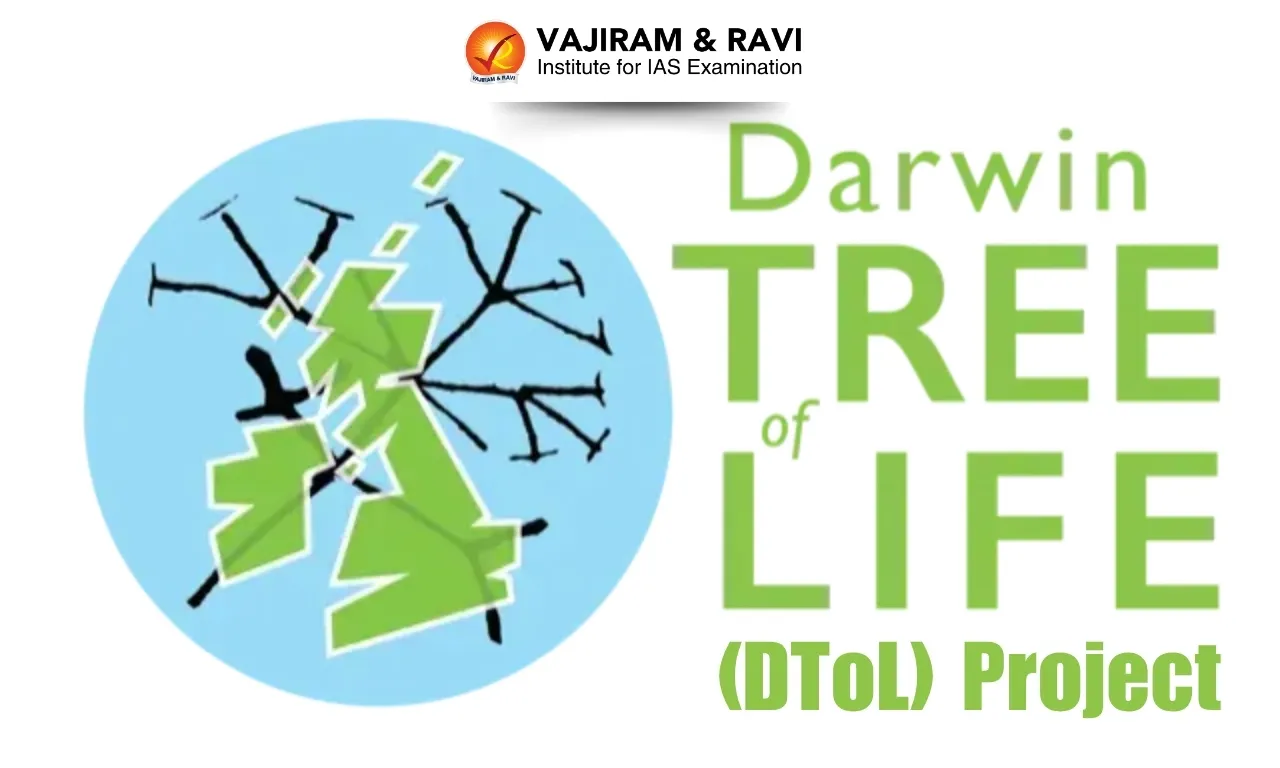
Darwin Tree of Life (DToL) Project

Darwin Tree of Life (DToL) Project

Darwin Tree of Life (DToL) Project Latest News

The first phase of the Darwin Tree of Life (DToL) project is almost complete. 

About Darwin Tree of Life (DToL) Project

  • It aims to sequence the genomes of 70,000 species of eukaryotic organisms in Britain and Ireland. 
  • It is one of several initiatives across the globe working towards the ultimate goal of sequencing all complex life on Earth, in a venture known as the Earth BioGenome Project.
  • It will carefully collect representatives of each species, and use advanced DNA sequencing technologies to generate high quality genome sequences.
  • It also uses cutting edge computational tools to understand how the DNA sequence translates into the diversity of life.
  • It is a collaborative project between ten biodiversity, genomics and analysis partners.

What are Eukaryotes?

  • Eukaryotic cells are found in multi-cellular organisms such as protists, plants, animals, and fungi. They are more complex as compared to prokaryotic cells.
  • These are any cell or organism that possesses a clearly defined nucleus.
  • The eukaryotic cell has a nuclear membrane that surrounds the nucleus, in which the well-defined chromosomes are located.
  • Eukaryotic cells also contain organelles, including mitochondria (cellular energy exchangers), a Golgi apparatus.
  • Reproduction: Eukaryotes can reproduce asexually through mitosis and sexually through meiosis and gamete fusion.

Darwin Tree of Life (DToL) Project FAQs

Q1: What is the Darwin Tree of Life project?

Ans: The Darwin Tree of Life Project is a collaboration by scientific partners to produce high-quality reference genomes for all known species of animals, plants, fungi and protists in Britain and Ireland.

Q2: What is genome?

Ans: A genome is the complete set of genetic information in an organism. It provides all of the information the organism requires to function. In living organisms, the genome is stored in long molecules of DNA called chromosomes.

Indo-Burma Ramsar Regional Initiative (IBRRI)

Indo-Burma Ramsar Regional Initiative

Indo-Burma Ramsar Regional Initiative (IBRRI) Latest News

Recently, the Ramsar COP15 concluded with a side event of Indo-Burma Ramsar Regional Initiative (IBRRI) for wetland conservation and restoration.

About Indo-Burma Ramsar Regional Initiative (IBRRI)

  • It was jointly developed by the Ramsar National Focal Points (NFPs) Cambodia, Lao People’s Democratic Republic (PDR), Myanmar, Thailand and Viet Nam, and IUCN’s Asia Regional Office.
  • It is supported by IUCN’s BRIDGE (Building River Dialogue and Governance) project.
  • It aims to support the coordinated implementation of the objectives of the Strategic Plan of the Ramsar Convention.
  • To ensure oversight and transparency in the management of the IBRRI, the initiative has established a governance structure with representatives from both government and non‐governmental organisations:
    • Steering Committee: It includes representatives from Ramsar Administrative Authorities from the five countries.  
    • Secretariat: It is hosted by the IUCN Asia Regional Office in Bangkok.
    • Stakeholder Committee provides technical and strategic guidance as a platform for inclusive, transparent and multi-stakeholder engagement in IBBRI activities. 
  • The IBRRI officially launched its Strategic Plan 2025–2030 during a side event at the 15th Meeting of the Conference of the Contracting Parties to the Ramsar Convention.
  • The Plan sets out a collaborative, transboundary framework to halt and reverse the loss of wetlands across its Member States.

Source: IUCN

Indo-Burma Ramsar Regional Initiative (IBRRI) FAQs

Q1: What is the Ramsar Regional Initiative for Central Asia?

Ans: RRI-CA aims to promote stronger cooperation and synergies between the members to the RRI-CA to effectively implement the Ramsar Convention and its Strategic Plan 2016-2024 at the national and regional levels.

Q2: What is the Indo-Burma Ramsar Regional Initiative?

Ans: Its aim is to support the effective implementation of the Ramsar Convention in the Indo-Burma Region, focusing on five objectives for sustainable regional wetlands, with climate change as a crosscutting issue.

Liver Cirrhosis

Liver Cirrhosis

Liver Cirrhosis Latest News

A team of scientists from Institute of Liver and Biliary Sciences (ILBS) New Delhi, and National Institute of Pharmaceutical Education and Research (NIPER) Guwahati found a new approach to treat liver cirrhosis.

About Liver Cirrhosis

  • Cirrhosis is advanced scarring of the liver caused by many diseases and conditions.
  • At this stage, a significant amount of healthy liver tissue has turned to scar tissue. Scarring comes from long-term inflammation in liver
  • It is accompanied by distortion of both blood and lymphatic vessels in the liver and intestine.
  • Causes: Some of the common causative factors include alcohol, NASH (Non-alcoholic Steato-Hepatitis) and hepatitis B and C viral infections.
  • Cirrhosis often has no symptoms until liver damage is serious. When symptoms do happen, they may include: extreme tiredness, easily bleeding or bruising, loss of appetite, swelling in the legs, feet or ankles, called edema etc.
  • Treatment of liver cirrhosis: Cirrhosis can be treated if diagnosed early. Both hepatitis B and C can be Abstinence from alcohol can also improve liver disease to some extent controlled or cured with medication.

Source: PIB

Liver Cirrhosis FAQs

Q1: Can a liver recover from cirrhosis?

Ans: The damage done by cirrhosis typically cannot be undone. But if caught early enough and depending on the cause, there is a chance of slowing it with treatment.

Q2: What is the main function of the liver?

Ans: All the blood leaving the stomach and intestines passes through the liver. The liver processes this blood and breaks down, balances, and creates the nutrients and also metabolizes drugs into forms that are easier to use for the rest of the body or that are nontoxic.

Oreshnik Missile

Oreshnik Missile

Oreshnik Missile Latest News

Russian President Vladimir Putin recently announced that Russia has begun production of its latest hypersonic missile, the Oreshnik, and reaffirmed plans to deploy it in Belarus before the end of 2025.

About Oreshnik Missile

  • It is a Russian intermediate-range hypersonic ballistic missile.
  • This high-velocity missile, named after the Russian word for “hazel tree,” was first launched operationally on November 21, 2024, in a precision strike targeting the Pivdenmash defence-industrial facility in Dnipro, Ukraine.
  • Its hypersonic speed, mid-flight manoeuvrability, and multiple warheads make it particularly hard to intercept, even with advanced missile defence systems.

Oreshnik Missile Features

  • It is a mobile, solid-fueled missile.
  • It is capable of reaching speeds of Mach 10—ten times the speed of sound.
  • The system is reportedly capable of carrying multiple independently targetable re-entry vehicles (MIRVs), allowing a single missile to strike several distinct targets simultaneously with either conventional or nuclear warheads.
  • It has a reported range of approximately 5,000 kilometers (3,100 miles).

Source: IT

Oreshnik Missile FAQs

Q1: What type of missile is the Oreshnik?

Ans: Intermediate-range hypersonic ballistic missile.

Q2: What is the reported speed capability of the Oreshnik missile?

Ans: It is capable of reaching speeds of Mach 10—ten times the speed of sound.

Q3: Which country developed the Oreshnik missile?

Ans: Russia

Bluebird Satellite

Bluebird Satellite

Bluebird Satellite Latest News

The ISRO is hoping to launch the Block 2 BlueBird communications satellite, developed by the U.S.-based AST SpaceMobile, in three to four months from now.

About Bluebird Satellite

  • It is an advanced American communications satellite.
  • It was developed by the U.S.-based AST SpaceMobile.
  • The Bluebird satellite boasts revolutionary technology that will enable individuals to make calls using smartphones from space. 
  • With an innovative antenna spanning 64 square meters and a weight of approximately 6,000 kilograms, the satellite will operate in low Earth orbit, facilitating direct satellite-to-smartphone connections. 
  • This capability will allow users to make calls and access broadband internet from space without relying on traditional ground-based towers.
  • The BlueBird satellites' beams are designed to support a capacity of up to 40 MHz, enabling peak data transmission speeds of up to 120 Mbps.
  • After launch, the BlueBird satellites are planned to offer non-continuous cellular broadband service across the United States and in select markets globally.

Source: TH

Bluebird Satellite FAQs

Q1: Who developed the Bluebird satellite?

Ans: It was developed by the U.S.-based AST SpaceMobile.

Q2: What is the primary purpose of the Bluebird satellite?

Ans: Direct smartphone communication from space.

Q3: What is the approximate weight of the Bluebird satellite?

Ans: 6,000 kg

Q4: In which type of Earth orbit will the Bluebird satellite operate?

Ans: Low Earth Orbit (LEO)

INS Satpura

INS Satpura

INS Satpura Latest News

Indian naval ship Satpura recently arrived in Singapore to participate in a bilateral maritime exercise.

About INS Satpura

  • It is an indigenous Shivalik-class stealth multi-role frigate.
  • Built by Mumbai’s Mazagaon Docks Ltd, INS Satpura was delivered to the Indian Navy on 9th July 2011 and was officially commissioned on 20th August 2011
  • It is the second ship under the Project 17 program.
  • It is a frontline warship of the Eastern Fleet of the Indian Navy based at Visakhapatnam.

INS Satpura Features

  • It has a length of 142.5 m, a beam of 16.9 m and a draught of 4.5 m. 
  • Powered by two French Pielstick diesel engines and two General Electric LM-2500 gas turbines, the multi-role frigate is capable of cruising at a maximum speed of 32 knots. 
  • Moreover, INS Satpura displaces about 4,900 tonnes at normal load and 6,200 tonnes at full load.
  • The vessel has the capacity to accommodate around 257 people, including 35 officers.

Source: HT

INS Satpura FAQs

Q1: INS Satpura is classified as which type of Indian Navy vessel?

Ans: Stealth multi-role frigate

Q2: Under which naval project was INS Satpura built?

Ans: Project 17

Q3: What is the maximum speed of INS Satpura?

Ans: 32 knots

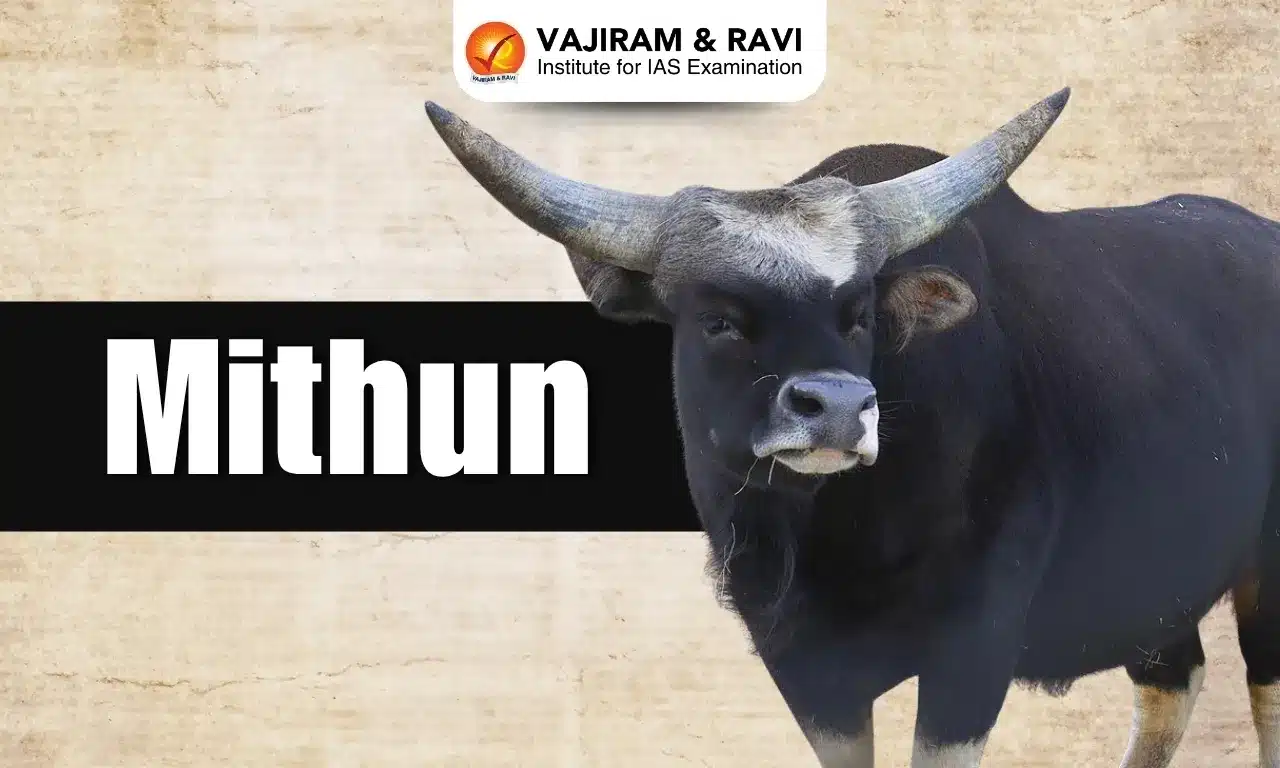
Mithun

Mithun

Mithun Latest News

Scientists and tribal farmers from the Northeast have jointly raised a request to the Central government to include Mithun (Bos frontalis) under key central sector schemes such as the National Livestock Mission (NLM).

About Mithun

  • The Mithun, or gayal (Bos frontalis), is a heavily built, semi-domesticated bovine species.
  • Mithun is believed to have originated more than 8000 years ago and is considered to be a descendent of wild Indian gaur, or bison.
  • It is known as the ‘cattle of the mountain’.
  • Distribution:
  • The highest concentration of mithuns in the world is spread over the North Eastern (NE) region of India, with Arunachal Pradesh having the highest population.
  • It is also found in parts of Southeast Asia, viz., Bangladesh, Myanmar, and Bhutan.
  • The geographic zone is covered with tropical evergreen rain forests. 
  • It is the state animal of Arunachal Pradesh and Nagaland.
  • The ‘Soulung’ festival is observed annually by the Adi tribes of Arunachal Pradesh to commemorate the birth and arrival of Mithun on this earth.

Mithun Features

  • Mithun appears somewhat similar to that of the Guar (Indian bison) but is smaller in size.
  • Like Guars, they are strongly built, large-sized fleshy animals with an average weight of 400-650 kg.
  • The characteristic feature of Mithun lies in the head, which has a well-developed, broad frontal bone with a flat-shaped face, and from the front view, it appears like an inverted triangle from where two horns emerge from the lateral sides.
  • Horn colour varies from whitish yellow to salty black in most animals.
  • The skin color of the head and body is blackish-brown in both sexes, and the forehead is creamy white or yellowish in color.
  • They move in small groups with one or two males and several females and calves.

Mithun Conservation Status

  • IUCN Red List: Vulnerable
  • CITES: Appendix I

Source: ITNE

Mithun FAQ's

Q1: What is the scientific name of the Mithun?

Ans: Bos frontalis

Q2: In which Indian state is the population of Mithuns the highest?

Ans: Arunachal Pradesh

Q3: What is the conservation status of Mithun on the IUCN Red List?

Ans: Vulnerable

Daily Editorial Analysis 2 August 2025

Daily Editorial Analysis

What Has Been Missed is India’s Digital Sovereignty

Context

  • The India-United Kingdom Free Trade Agreement (FTA), officially referred to as the Comprehensive Economic and Trade Agreement (CETA), has been hailed as a model for future trade negotiations.
  • While the government has emphasised that no sensitive sectors, such as agriculture and labour-intensive manufacturing, were compromised, a critical area has been notably ignored in both official commentary and media scrutiny, India’s digital sector.
  • Given the pervasive and strategic importance of digital infrastructure to national growth, this oversight raises serious concerns about the long-term consequences of the FTA on India's digital sovereignty.

Troubling Concessions in the India-UK FTA

  • India’s Strategic Reversal on Source Code Disclosure

    • One of the most controversial concessions in the FTA involves India’s abandonment of its sovereign right to demand ex ante access to source code from foreign digital service providers.
    • This move represents a dramatic reversal from India’s previous consistent stance at international forums like the World Trade Organization (WTO).
    • Traditionally, India upheld the right of regulators to inspect software source code pre-emptively to ensure compliance, security, and public safety, especially given the increasing integration of software into critical sectors like telecom, health, and artificial intelligence.
    • Remarkably, even the United States, a pioneer in imposing source code disclosure bans in trade agreements, has recently softened its stance, acknowledging domestic needs for regulation and law enforcement.
  • Open Government Data: Misinterpreted and Misused

    • Another alarming concession is India’s agreement to provide non-discriminatory access to its 'Open Government Data' to U.K. entities.
    • Historically, this term referred to transparency and the sharing of public statistics.
    • However, in the digital era, data has transformed into a vital economic and strategic resource, especially with the advent of artificial intelligence.
    • Data-driven patterns and algorithms are now the bedrock of technological innovation and global competitiveness.
    • By opening government-held data to foreign players, India risks forfeiting its competitive edge in building indigenous AI technologies and jeopardizes national security.
    • Even if the provision is currently non-binding, it sets a dangerous precedent that undermines the conceptualization of data as a sovereign asset.

A Troubling Precedent in Data Policy

  • Though India appears to have maintained its positions on contentious issues like the free flow of data and data localisation, the inclusion of a clause to consult the U.K. if India provides similar concessions to other nations signals a softening of its stance.
  • This clause introduces uncertainty and weakens India’s negotiating power in future trade agreements.
  • The risks here extend beyond commerce to touch upon national autonomy in rule-making for digital ecosystems.
  • The U.S., once the strongest advocate of unrestricted data flows, has already backtracked, recognising the need for digital protectionism in the face of geopolitical and technological shifts.
  • India's concessions, in contrast, reveal a lack of strategic foresight, undermining its ability to influence or resist emerging global digital norms driven by Western Big Tech interests.

The Lack of a Political Constituency for Digital Sovereignty

  • Unlike agriculture and manufacturing, the digital sector lacks a clear and vocal political constituency in India.
  • This absence has allowed sweeping concessions to be made without public debate or political resistance.
  • Yet, digital sovereignty is arguably even more crucial in the long run, as it shapes the infrastructure for economic independence and innovation in the 21st century.
  • Just as the subcontinent was once exploited during the industrial revolution, it now faces the risk of becoming digitally colonised, serving as a data mine for global powers while lacking the tools to harness this resource for its own development.

The Path Forward: Formulating a Digital Sovereignty Strategy

  • To safeguard its digital future, India must urgently develop a robust digital sovereignty and digital industrialisation policy.
  • Such a framework should define the nation’s strategic priorities and provide a blueprint for trade negotiations involving digital sectors.
  • These talks must be informed not only by commercial considerations but also by expert insights into technology, regulation, and geopolitics.
  • Digital sovereignty experts should be included in negotiation teams and have direct access to senior political leadership to ensure long-term national interests are adequately represented and protected.

Conclusion

  • The India-U.K. FTA marks a troubling moment in India's digital journey, not for what it includes about traditional trade, but for what it silently concedes in the digital realm.
  • The agreement represents a deviation from India’s previously consistent positions on digital rights, source code disclosure, and data sovereignty.
  • If left unaddressed, these concessions could severely limit India's ability to assert control over its digital ecosystem.
  • India must act quickly, not only to mitigate the damage but to chart a proactive course toward becoming a digital superpower rather than a passive consumer in a global digital order crafted by others.

What Has Been Missed is India’s Digital Sovereignty FAQs

Q1. What major sector has been overlooked in discussions on the India-U.K. FTA?
Ans. The digital sector has been largely overlooked in discussions on the India-U.K. FTA.

Q2. Why is the source code disclosure concession significant?
Ans. It is significant because it limits India’s regulatory ability to inspect software used in critical infrastructure.

Q3. How has the meaning of 'Open Government Data' changed in the digital era?
Ans. It now represents a valuable national resource, essential for AI development and digital innovation.

Q4. What risk does India face by allowing foreign access to its government-held data?
Ans. India risks losing its competitive advantage in AI and compromising national security.

Q5. What is urgently needed to protect India's digital future?
Ans. India urgently needs a clear digital sovereignty and digital industrialization policy to guide future trade negotiations.

Source: The Hindu


The Fact is Mangroves Drive Business

Context

  • As the world contends with intensifying climate change, from rising sea levels to extreme weather events, blue carbon ecosystems like mangroves are emerging as critical assets in the fight for ecological and economic resilience.
  • Despite their immense value in carbon sequestration, biodiversity support, and community livelihoods, mangroves are still largely invisible in financial balance sheets and underrepresented in policy frameworks.
  • To shift this paradigm, the Mangrove Coalition proposes a multi-pronged approach that harnesses technological innovation, community engagement, and inclusive monitoring practices.

Necessary Steps Towards Unlocking the Full Potential of Mangroves

  • Mapping Natural Capital with Technology

    • Advances in satellite imagery, drone surveillance, and geospatial Artificial Intelligence have made it possible to map mangrove cover with unprecedented precision.
    • This data is essential for evaluating the true worth of mangroves in economic and ecological terms, which in turn informs policy decisions and restoration initiatives.
    • The valuation of mangrove services provides compelling evidence of their importance. For instance, in India, the economic value of mangroves ranges from ₹3,535 million in Pichavaram (Tamil Nadu) to ₹664 billion in the Sundarbans (West Bengal).
    • The carbon sequestration capability of the Sundarbans alone is valued at ₹462 million annually.
    • These figures underscore the need to integrate mangrove ecosystems into mainstream economic planning.
  • Inclusion of Local Communities

    • Technology alone is insufficient without the inclusion of local communities who possess deep, generational knowledge of these ecosystems.
    • Their dependence on mangroves for livelihoods necessitates that they be not only included in conservation dialogues but also equitably benefit from restoration and valuation efforts.
    • Local stewardship ensures that conservation is rooted in lived experience and shared benefit.
    • Among coastal communities, particularly fisherfolk, mangroves are valued as critical nurseries for juvenile fish.
    • Healthy mangroves correlate directly with sustainable fish stocks, thus influencing food security and income stability.
    • In urban settings like Mumbai and Chennai, mangroves suffer from pollution and neglect. Degraded ecosystems fail to support biodiversity and threaten both livelihoods and cultural ties.
    • However, community empowerment can reverse this trajectory.
    • When people experience the tangible benefits of mangrove health, such as better air quality, improved fish yields, and flood protection, they become invested stewards of their environment.

Citizen Science and Platforms for Engagement

  • Training community members to monitor environmental indicators not only supplements formal scientific assessments but also democratizes conservation.
  • When individuals can interpret and track the health of mangroves and associated wetlands, they contribute to data-driven decision-making and build a culture of stewardship.
  • Effective mangrove health tools should encompass a range of ecological and social indicators: changes in mangrove cover, quality and timing of freshwater flows, species diversity (including avian, molluscan, and fish populations), and community reliance on ecosystem services.
  • These holistic assessments reveal patterns and inform targeted management responses.
  • Platforms such as Mangrove Mitras (Friends of Mangroves) serve as engagement hubs that connect urban residents with local ecosystems.
  • Through immersive experiences, such platforms can reignite a sense of wonder and responsibility, bridging the gap between people, wetlands, rivers, and mangroves.

Conclusion

  • The stewardship of mangroves should not be confined to top-down mandates. Rather, it must be a collaborative effort where the health of mangrove ecosystems and the well-being of communities are seen as mutually reinforcing goals.
  • Policymakers and businesses must shift their perspective to view mangroves not merely as biodiversity reserves, but as vital components of climate infrastructure.
  • Protecting and restoring these ecosystems requires an active coalition, one that unites science, local knowledge, and economic pragmatism.
  • By embracing technology, empowering communities, and nurturing inclusive engagement, we can secure the future of mangroves and chart a path toward sustainable, climate-resilient growth.

The Fact is Mangroves Drive Business FAQs

Q1. Why are mangroves considered important for climate resilience?
Ans. Mangroves are important for climate resilience because they absorb carbon, reduce the impact of storms, and protect coastlines from erosion.

Q2. How can technology help in mangrove conservation?
Ans.
Technology such as satellite imagery and AI helps map mangrove areas accurately and assess their ecological and economic value.

Q3. What role do communities play in conserving mangroves?
Ans. Communities help conserve mangroves by using traditional knowledge, participating in restoration efforts, and benefiting from sustainable livelihoods.

Q4. What is citizen science in the context of mangroves?
Ans. Citizen science involves training people to monitor mangrove health and contribute to conservation through data collection and observation.

Q5. How can engagement platforms support mangrove protection?
Ans. Engagement platforms like Mangrove Mitras connect citizens to mangrove ecosystems and encourage public involvement in their care.

Source: The Hindu


India’s Indigenous Democratic Traditions - Revisiting the Chola-Era Electoral Legacy

Context:

  • Prime Minister Narendra Modi’s speech at Gangaikonda Cholapuram on July 27, 2025, highlighted India’s indigenous democratic traditions, predating the Magna Carta.
  • This article re-examines ancient electoral practices, particularly those under the Chola dynasty, and their relevance to modern democratic discourse.

Ancient Democratic Roots - Reclaiming India’s Indigenous Democratic Heritage:

  • Democracy in India is not a colonial import but has deep civilizational roots.
  • For example, India’s democratic spirit did not begin in 1947, 1935, or even 1919. However, the contributions of British parliamentary traditions or the American Bill of Rights cannot be denied.
  • Vaishali - a republic in the 5th century BCE, and village assemblies were early forms of participatory governance.
  • Kautilya's Arthashastra references samghas — local governance structures.

The Uthiramerur Inscriptions - A Codified Democratic Framework:

  • Chola-era electoral system (c. 920 AD): Inscriptions in Vaikuntaperumal Temple, Uthiramerur (Tamil Nadu), during Parantaka Chola's reign, details an elaborate self-governance system.
  • Highlights include -
    • Ward Constitution
    • Eligibility and disqualification norms
    • Committee formation and functions
    • Right to recall elected members.

The Kudavolai System - Ancient Electoral Mechanism:

  • The electoral process used in Uthiramerur was called the kudavolai system, or “ballot pot”.
  • Under this system, names of eligible candidates were inscribed on palm leaves and drawn from a pot by a neutral child.
  • The selected members served for fixed one-year terms, after which the process was repeated.
  • This system ensured transparency, impartiality, and civic participation.

Real Marvel of the Voting Method:

  • Strict moral and administrative standards: The comprehensive model code of conduct governed who could contest, how they could be removed, and what moral standards were expected.
  • For example:
    • Eligibility of candidates -
      • Age between 35–70 years.
      • Must own tax-paying land and reside on it.
      • Must be educated in sacred or administrative texts.
    • Disqualification -
      • Debt defaulters, alcoholics, morally tainted, or corrupt individuals barred.
      • Even close relatives of such individuals were disqualified.
      • Offenders could be barred for generations.

Comparisons and Contemporary Relevance:

  • Contrast with modern-day politics: Unlike today’s convicted politicians who often return to power, Chola-era governance enforced lifetime or generational bans on the corrupt.
  • India’s electoral legacy reflects values of -
    • Transparency
    • Accountability
    • Ethical leadership
    • Citizen participation.

Modern Relevance of India’s Indigenous Democratic Traditions:

  • Reasserts that democracy in India is homegrown, not imposed.
  • Serves as a counter-narrative to global democratic erosion, highlighting India’s resilience and originality.

Conclusion:

  • India's democratic traditions have a rich, indigenous, and institutionally codified history.
  • Far from being a colonial transplant, democracy in India is civilizationally rooted, evident in the administrative practices of the Chola period and beyond.
  • Recognizing and reclaiming this legacy is essential for building a more ethical, participatory, and accountable polity in contemporary times.

India’s Indigenous Democratic Traditions FAQs

Q1. What do the Uthiramerur inscriptions reveal about Chola-era democracy?

Ans. They show a structured, participatory electoral system with eligibility, disqualification, and accountability norms.

Q2. How did the Kudavolai system ensure transparency in elections?

Ans. By using palm-leaf ballots drawn publicly by a neutral child, it ensured fairness and impartiality.

Q3. What moral standards were set for candidates during the Chola period?

Ans. Candidates had to be ethical, debt-free, and morally upright, with disqualifications extending to close relatives.

Q4. Why did PM Modi highlight ancient Indian democracy in his speech?

Ans. To emphasize India’s indigenous democratic roots amid global democratic erosion.

Q5. Does India’s democratic legacy predate colonial rule?

Ans. Yes, traditions from Vaishali to Chola-era elections prove democracy in India is homegrown.

Source: IE

Daily Editorial Analysis 1 August 2025 FAQs

Q1: What is editorial analysis?

Ans: Editorial analysis is the critical examination and interpretation of newspaper editorials to extract key insights, arguments, and perspectives relevant to UPSC preparation.

Q2: What is an editorial analyst?

Ans: An editorial analyst is someone who studies and breaks down editorials to highlight their relevance, structure, and usefulness for competitive exams like the UPSC.

Q3: What is an editorial for UPSC?

Ans: For UPSC, an editorial refers to opinion-based articles in reputed newspapers that provide analysis on current affairs, governance, policy, and socio-economic issues.

Q4: What are the sources of UPSC Editorial Analysis?

Ans: Key sources include editorials from The Hindu and Indian Express.

Q5: Can Editorial Analysis help in Mains Answer Writing?

Ans: Yes, editorial analysis enhances content quality, analytical depth, and structure in Mains answer writing.


Nahargarh Wildlife Sanctuary

Nahargarh Wildlife Sanctuary

Nahargarh Wildlife Sanctuary Latest News

The Rajasthan Forest Department recently altered the boundaries of Nahargarh Wildlife Sanctuary (NWS), reportedly benefiting luxury hotels and commercial establishments within the sanctuary and its Eco Sensitive Zone (ESZ).

About Nahargarh Wildlife Sanctuary

  • It is located just 20 kilometres from Jaipur, Rajasthan.
  • It encompasses a large area of 720 hectares and is situated under the Aravalli range.
  • The sanctuary is named after Nahargarh Fort, a historic fort built in the 18th century by Maharaja Sawai Jai Singh II, the founder of Jaipur. 
  • Nahargarh Biological Park, a part of the Nahargarh sanctuary, is famous for the lion safaris.
  • Flora: The vegetation comprises dry deciduous forests, scrublands, and grasslands.
  • Fauna
    • Common species include leopards, wild boars, deer, lions, tigers, sloth bears, and several small mammals.
    • It’s a haven for bird watchers, with a variety of species, including peacocks, owls, and eagles.
    • In addition to mammals and birds, the sanctuary is home to reptiles like Indian rock pythons, monitor lizards, and amphibians like frogs and toads.

Source: TOI

Nahargarh Wildlife Sanctuary FAQs

Q1: Nahargarh Wildlife Sanctuary is located in which Indian state?

Ans: Rajasthan

Q2: The Nahargarh Wildlife Sanctuary is situated under which mountain range?

Ans: Aravalli Range

Q3: What is the approximate area covered by the Nahargarh Wildlife Sanctuary?

Ans: 720 hectares

Q4: What type of forest vegetation is mainly found in Nahargarh Wildlife Sanctuary?

Ans: Dry deciduous forests

Digital Firms Raise Alarm Over Mobile Number Validation Rules in India

Digital Firms

Digital Firms Latest News

  • Digital firms have raised concerns over India's draft Telecom Cyber Security Rules, 2025, citing jurisdictional overreach and high compliance costs due to proposed mobile number validation requirements.

Introduction

  • India’s digital economy may soon face new compliance burdens due to a draft rule under the Telecommunications (Telecom Cyber Security) Amendment Rules, 2025
  • Proposed by the Department of Telecommunications (DoT), the new framework mandates mobile number validation to ensure subscribers are legitimate users. 
  • While intended to strengthen cyber security, the rule has sparked serious concerns among tech companies about its legal scope, cost implications, and regulatory overreach.

Scope of the Draft Telecom Cyber Security Rules, 2025

  • The draft rule introduces the concept of a Telecommunication Identifier User Entity (TIUE), defined broadly as any person or entity (excluding licensed telecom operators) that uses telecom identifiers like mobile numbers for delivering services or identifying users. 
  • This wide definition has triggered alarm among digital firms, as it could include virtually every online platform, from fintech and social media to e-commerce and ride-hailing services.
  • The proposed framework enables telecom operators to charge up to Rs 3 per validation request, providing confirmation of the subscriber’s legal identity linked to a mobile number.

Industry Concerns on Jurisdiction and Regulatory Overreach

  • The Internet and Mobile Association of India (IAMAI), representing global players like Google, Apple, and Amazon, has called the move a case of legislative overreach
  • In its submission to the DoT, IAMAI argued that the draft rules extend telecom-style regulation to entities that neither provide telecom services nor control telecom infrastructure.
  • The association warned that this expansion of regulatory authority could have widespread consequences for digital service providers, especially in sectors such as:
    • Fintech and digital payments
    • Mobility and e-commerce platforms
    • OTT content providers and social media
    • Micro, Small and Medium Enterprises (MSMEs)
  • IAMAI emphasised that such rules were not envisioned under the Telecommunications Act, 2023, making their extension to unrelated sectors legally questionable.

Financial Burden and Operational Disruption

  • Although Rs 3 per mobile verification may seem nominal, IAMAI warned that it would add up quickly for platforms handling millions of users
  • For startups and MSMEs, these recurring costs could reshape business models or compel platforms to pass the burden onto consumers via price hikes or service restrictions.
  • CUTS International, a policy think tank, echoed these concerns. 
  • It noted in its regulatory impact assessment that the net benefit of the draft rules could be negative, especially when alternative cybersecurity initiatives are already underway. 
  • CUTS advised the government to focus on streamlining existing cyber safety frameworks rather than introducing fragmented and potentially burdensome mechanisms.

Potential for Mandatory Enforcement in Specific Sectors

  • While the DoT has hinted that the validation framework may remain optional for private entities, the draft language leaves room for later mandatory adoption
  • Experts pointed out that the vagueness around implementation adds to business uncertainty.
  • Legal analysts questioned whether the DoT even had the authority to mandate such rules across non-telecom sectors, suggesting that the proposal may violate the separation of regulatory domains.

The Broader Debate on Digital Regulation in India

  • This controversy comes amid a larger push by the Indian government to tighten digital security through legislation. Recent moves like:
    • The Digital Personal Data Protection Act, 2023
    • The Digital India Act (in draft stage)
    • Expanded roles for CERT-In and the MeitY
  • reflect an assertive approach to securing India’s growing digital landscape. 
  • However, concerns about regulatory overlap, business costs, and innovation slowdowns are increasingly surfacing.
  • As India aims to be a global digital innovation hub, the challenge lies in balancing national security objectives with ease of doing business, especially for small tech enterprises and startups.

Source : TH

Digital Firms FAQs

Q1: What is the purpose of the draft Telecom Cyber Security Rules, 2025?

Ans: The rules aim to validate mobile numbers' lawful ownership to enhance telecom cybersecurity.

Q2: Who would be affected by the new mobile validation rules?

Ans: Any digital platform using mobile numbers for user services, including fintech and e-commerce, may fall under its scope.

Q3: What is the main concern raised by digital companies?

Ans: Firms argue that the rules represent jurisdictional overreach and could significantly increase operational costs.

Q4: Will the validation framework be mandatory for private platforms?

Ans: While optional for now, the draft allows future enforcement in specific sectors.

Q5: How much would telecom operators charge per mobile number validation?

Ans: The proposed charge is up to ₹3 per validation request.

Red Panda

Red Panda

Red Panda Latest News

Recently, under a conservation programme at the Himalayan Zoological Park near Sikkim’s capital, Gangtok red panda cubs were born after a 7 years gap.

About Red Panda

  • It is also known as the lesser panda which is primarily a herbivorous, shy, solitary and arboreal animal.
  • It uses its long, bushy tails for balance and to cover them in winter, presumably for warmth. 
  • It is considered an indicator species for ecological change. 
  • Appearance: It is the size of a house cat, the red panda is famous for its cute face and adorable defense stance.
  • Distribution: It is mainly found in the mountainous forests of Bhutan, China, India, Myanmar, and Nepal.
  • Conservation status
    • IUCN Red list: Endangered
    • CITES: Appendix I
    • Wildlife Protection Act 1972: Schedule I
  • Threats: The loss of nesting trees and bamboo in the Eastern Himalayas which is causing a decline in red panda populations across much of their range.

What are Indicator Species?

  • Indicator species are a species, or group of species, that reflect the biotic or abiotic state of an environment.
  • They reveal the possible evidence and impact of environmental change, and indicate the diversity of other species, taxa, or entire communities within an area. 
  • Indicator species can provide an early warning of environmental changes.
  • They can be used to assess the health of an environment or ecosystem – they are often termed ‘bioindicators’.
  • They can be a useful management tool.

Source: TH

Red Panda FAQs

Q1: Can red pandas live in India?

Ans: The red panda is a small arboreal mammal found in the forests of India, Nepal, Bhutan, and the northern mountains of Myanmar and southern China.

Q2: What is the IUCN status of red panda?

Ans: It is listed as Endangered in the IUCN red list of Threatened Species.

India’s Economic Growth vs Trump’s “Dead Economy” Remark: The Reality Check

India's Economic Growth

India's Economic Growth Latest News

  • U.S. President Donald Trump's remarks calling India a “dead economy” and announcing a 25% tariff, along with penalties for India’s military and energy purchases from Russia, have ignited a political exchange in India.
  • Opposition leaders agreed with Trump’s criticism, blaming the government for “killing” India’s economy. 
  • On the other hand, the govt defended India’s economic performance, highlighting its rise from the “fragile five” to one of the world’s top five economies. 

Data Contradicts Trump’s Dead Economy Remark on India

  • Contrary to U.S. President Donald Trump’s claim of India being a “dead economy,” data from the International Monetary Fund (IMF) over the past 30 years presents a starkly different picture. 
  • From 1995 to 2025, India’s GDP has grown nearly 12 times, ranking it among the fastest-growing major economies, second only to China. 
  • In comparison, the U.S. economy has grown fourfold, while key allies like the United Kingdom and Germany have expanded by less than three times and less than two times, respectively. 
  • Notably, Japan’s GDP in 2025 is lower than its 1995 level, reflecting economic stagnation. 
  • The data underscores that India and even Russia, despite facing challenges, have exhibited robust economic growth, debunking the narrative of them being “dead” economies.

India Among Few Economies Growing Faster Than the U.S.

  • When comparing economic growth relative to the U.S., only three countries—China, India, and Russia—have expanded their share of the global economy over the past 30 years. 
  • India, which was less than 5% the size of the U.S. economy in 1995, has grown to nearly 14% by 2025. 
  • In contrast, America's traditional allies and trade partners, including the United Kingdom, Germany, and Japan, have all seen their economies shrink in size relative to the U.S. 
  • This highlights India’s impressive economic ascent, defying claims of being a “dead” economy.

India’s Economic Growth Masks Deep-Rooted Structural Challenges

  • While India is far from being a “dead” economy, its robust GDP growth conceals several persistent structural issues. 
  • Since 2011-12, India’s growth rate has slowed, failing to replicate the 8-9% surge seen before the 2008 global financial crisis, with recent years hovering around 6%. 
  • Unlike China’s rapid expansion, India’s GDP has grown at a much slower pace
  • In global trade, India holds a modest 1.8% share in goods exports and 4.5% in services. 
  • The economy remains protectionist in sectors like agriculture, which is plagued by distress and subsistence-level farming due to the failure of manufacturing to absorb surplus rural labour. 
  • Manufacturing growth has lagged behind agriculture since 2019-20. 
  • Additionally, economic growth has been highly unequal, with 24% of the population still below the poverty line and alarming rises in income inequality. 
  • Human development indicators, particularly in health, education, and employment quality, remain poor. 
  • High-skilled unemployment and low female workforce participation further highlight deep-rooted socio-economic challenges that need urgent attention.

Source: IE

India's Economic Growth FAQs

Q1: How has India’s economy performed over the past 30 years?

Ans: India’s GDP has expanded nearly 12 times, ranking as one of the fastest-growing major economies globally.

Q2: Which countries have grown faster than the U.S. since 1995?

Ans: Only China, India, and Russia have increased their global economic share relative to the U.S.

Q3: What are the key structural challenges in India’s economy?

Ans: Sluggish manufacturing growth, rural distress, widening inequality, high-skilled unemployment, and poor human development indicators.

Q4: How does India’s trade performance compare globally?

Ans: India holds just 1.8% share in global goods exports and 4.5% in services, highlighting competitiveness issues.

Q5: Is India’s economic growth inclusive and equitable?

Ans: No, growth has been skewed, with rising poverty, inequality, and low-quality employment, especially for women and youth.

India’s Apparel Exporters Seek Government Relief as U.S. Tariffs Hurt Competitiveness

Indian Apparel Export

Indian Apparel Exporters Latest News

  • Domestic apparel exporters have raised serious concerns over the United States’ decision to impose a 25 per cent tariff on Indian textile and apparel products.
  • This rate is significantly higher than that imposed on key competitors like Bangladesh (20%), Vietnam (20%), Indonesia (19%), and Cambodia (19%)
  • The new tariffs, set to take effect from August 7, have left Indian exporters at a severe disadvantage in their largest export market.

Indian Apparel Exporters Seek Urgent Government Support

  • With the U.S. imposing a steep 25% tariff on Indian apparel, Indian textile and apparel exporters have raised alarm over their diminishing competitiveness in the U.S. market. 
  • The new tariffs are expected to severely impact India’s export margins, forcing manufacturers to sell below cost to sustain operations and avoid mass layoffs. 
  • Industry experts have called for immediate government intervention to offset this setback. 
  • They warned that the duty disadvantage will further compound existing challenges faced by Indian exporters. 
  • They urged the government to ensure easier access to raw materials and support measures to mitigate the adverse impact of these tariffs on India’s textile and apparel sector.

India’s Apparel Market Share in U.S. on the Rise Despite Challenges

  • While China remains the largest exporter of textiles and apparel to the U.S., its market share has declined from 27.4% in 2020 to 21.9% in 2024. 
  • In contrast, India’s share in the U.S. garment import market has grown from 4.5% to 5.8% during the same period
  • The U.S. is a crucial market for India’s Ready-Made Garments (RMG), accounting for 33% of India’s total garment exports in 2024
  • India currently ranks as the fourth-largest RMG exporter to the U.S. Among India’s top exports to the U.S. are cotton T-shirts (9.71% share), women’s or girls’ cotton dresses (6.52%), and babies’ cotton garments (5.46%). 
  • These products command a significant share in the U.S.’s total imports of these items globally, reflecting India’s steadily growing footprint in a competitive market.

Government Measures to Boost Textile Exports

  • India's textile and handicrafts exports grew by 5% in FY25, reaching $37.7 billion compared to $35.8 billion in the previous fiscal year, according to the Ministry of Textiles. 
  • To further strengthen the sector, the government is implementing the Scheme for Integrated Textile Park (SITP) to develop world-class infrastructure in textile hubs across the country. 
  • Additionally, the government has finalized the establishment of seven PM Mega Integrated Textile Region and Apparel (PM-MITRA) parks in Tamil Nadu, Telangana, Gujarat, Karnataka, Madhya Pradesh, Uttar Pradesh, and Maharashtra. 
  • These parks, with a total outlay of ₹4,445 crore, aim to enhance India's textile manufacturing ecosystem over the next seven years, up to 2027-28.

India-U.S. Trade Talks Stalled Over Agriculture and GM Crop Imports

  • India-U.S. trade negotiations are facing a deadlock over sensitive sectors like agriculture and automobiles, with discussions expected to resume after mid-August. 
  • A major sticking point is the U.S. demand for India to allow imports of genetically modified (GM) agricultural products such as corn and soya, which India is unlikely to accept. 
  • Agriculture has long been a contentious issue in bilateral trade relations, with the United States Trade Representative (USTR) previously criticizing restrictions on GM products by other countries as discriminatory. 
  • This ongoing impasse continues to hinder progress on a broader trade agreement.

Source: IE

Indian Apparel Export FAQs

Q1: Why are Indian apparel exporters seeking government support?

Ans: Due to the U.S. imposing a 25% tariff, making Indian products costlier than competitors like Bangladesh and Vietnam.

Q2: How has India’s apparel market share in the U.S. changed?

Ans: India’s share rose from 4.5% in 2020 to 5.8% in 2024, despite global challenges.

Q3: What government initiatives aim to support India’s textile sector?

Ans: Schemes like SITP and PM-MITRA parks are enhancing infrastructure and boosting India’s textile manufacturing competitiveness.

Q4: What is hindering India-U.S. trade negotiations currently?

Ans: Talks are stalled over U.S. demands for India to accept genetically modified (GM) agricultural product imports.

Q5: What products form the bulk of India’s garment exports to the U.S.?

Ans: Cotton T-shirts, women’s cotton dresses, and babies’ garments are India’s top export items to the U.S. market.

Enquire Now