NISHTHA Scheme, Objectives, Teachers’ Training Programme

NISHTHA Scheme

The NISHTHA Scheme is a capacity building teacher training programme which is currently known to be the largest one worldwide. Launched in 2019-20 by Department of School Education and Literacy under the Ministry of Education, this scheme comes under the Samagra Shiksha Yojana, a centrally sponsored scheme. The aim of the scheme is to improve teachers' learning outcomes at elementary level through an integrated teacher training program. 

What is the NISHTHA Scheme?

The National Initiative for School Heads and Teachers Holistic Advancement (NISHTHA) is a skill and knowledge improving program for teachers and principals in India. 

  • The program was launched in 2019 by the Ministry of Education. 
  • The goal is to improve the quality of elementary school education and provide the teachers with the necessary training in child development, pedagogy and ICT. 
  • The scheme will be implemented in all states and UTs all over India.
  • The programme has been applauded to improve the education quality of India.

Objectives of the NISHTHA Scheme

The NISHTHA Scheme aims to empower and inspire teachers to promote critical thinking among students through a comprehensive capacity-building training program. The scheme equips teachers with essential skills and knowledge through:

  • 18 activity-based training modules, fostering hands-on learning.
  • Collaboration across multiple departments, ensuring holistic development.
  • Integration of ICT in teaching, learning, and assessment, modernizing education methods.
  • Art-based pedagogy, encouraging creativity and innovation among students.
  • Development of social-personal skills and creating a safe, healthy school environment.
  • Emphasis on school security and safety measures.
  • Inclusive education, focusing on health, well-being, and equal opportunities.
  • Cultivating school leadership qualities among educators.
  • Awareness about new educational initiatives for teachers and administrators.

The NISHTHA Integrated Teacher Training Program targets approximately 42 lakh participants, including:

  • Teachers and Principals
  • Faculty members of SCERTs (State Councils of Educational Research and Training)
  • Faculty members of DIETs (District Institutes of Education and Training)
  • Block and Cluster Resource Coordinators across all States and UTs

Additionally, the program provides resources like:

  • Test Series
  • Previous Year Papers
  • Practice Modules
  • Pro Live Tests
  • Unlimited Test Re-Attempts

This initiative aims to revolutionize elementary education by enhancing the capacity and expertise of educators nationwide. 

NISHTHA Scheme Implementation Process

The training process will be conducted by Key Resource persons and state resource persons selected by the states. The selected people will be trained by 120 National resource person under the nCERT and NIEPA. The states will be given the liberty to contextualise the training modules and use their own materials and resource persons. The program also includes some distinguished features like activity based modules with in-built continuous feedback, online monitoring support system and impact analysis. 

NISHTHA Scheme Expected Outcomes

Some of the expected outcomes of the NISHTHA Scheme are: 

  • The scheme will help improve student learning outcome.
  • Teachers will be trained to become more responsive and aware about the students social, psychological and emotional needs. 
  • Learning environment would improve by promoting a supportive and enriching inclusive education. 
  • Teachers will be trained in using art as a pedagogy hence leading to improved students’ innovation and creativity. 
  • Regular teacher training would lead to improvement in students personal social skills

Significance of NISHTHA Scheme

The NISHTHA Scheme is important for the Indian education system for many reasons:

  • To improve the quality of school education through a comprehensive Integrated Teacher Training Program.
  • To build and strengthen the competencies of elementary school teachers and principals.
  • To familiarize teachers and principals with the latest initiatives in school education.
  • To revitalize the teaching profession by addressing challenges faced by uninspired and demoralized educators, incorporating innovative teaching methods.
  • To empower and motivate teachers and school leaders to cultivate critical thinking skills in their students. 

NISHTHA Scheme FAQs

Q1: What is the Nishtha scheme?

Ans: The Nishtha scheme is an integrated teacher training program aimed at improving the quality of school education by enhancing the skills and knowledge of teachers and principals.

Q2: Who launched the Nishtha program?

Ans: The Nishtha program was launched by the Ministry of Education, Government of India.

Q3: What is the full form of Diksha and Nishtha?

Ans: Diksha: Digital Infrastructure for Knowledge Sharing; Nishtha: National Initiative for School Heads' and Teachers' Holistic Advancement.

Q4: When was Nishtha launched?

Ans: Nishtha was launched on August 21, 2019.

Q5: What is Diksha and Nishtha?

Ans: Diksha is a digital platform for educational resources, while Nishtha is a training program for teachers and school leaders to improve teaching quality.
Rashtriya Uchchatar Shiksha Abhiyan (RUSA), Objectives, Features

rashtriya uchchatar shiksha abhiyan (rusa)

Rashtriya Uchchatar Shikha Abhiyan was launched in 2013 as a central sponsor scheme with an aim to provide funding to state higher educational institutions. This funding will be used by universities and college institutions for creating better access, equity and excellence. 

Rashtriya Uchchatar Shiksha Abhiyan Overview

Rashtriya Uchchatar Shiksha Abhiyan, a centrally sponsored scheme funded through the Ministry of Education is the ratio 60:40. Funding to states will be allocated based on a thorough evaluation of State Higher Education Plans, which outline each state’s strategy for addressing challenges related to equity, access, and excellence in higher education 

Scheme  Rashtriya Uchchatar Shiksha Abhiyan
Funding Ministry  Ministry of Education
Target Group State Colleges and Universities
Year of Implementation 2013

Rashtriya Uchchatar Shiksha Abhiyan Features

RUSA has the launched to fulfill the following features: 

  • Improve the quality of state universities and colleges by verifying that the prescribed rules and regulations are followed and accreditation is adopted as a mandatory quality assurance framework. 
  • Improving the governance and planning for state universities that promotes autonomy and facilitates a structure for planning and monitoring at state level. 
  • Monitor that all the prescribed reforms and measures are being followed in terms of affiliation, academic and examination systems. 
  • Quality check on faculty employment in colleges and universities and regular capacity building workshops at all levels of employment. 
  • Creating an environment that promotes research and development and innovation. 
  • Targeting regional imbalance by setting up colleges and universities in underserved areas. 
  • Ensuring education is accessible by socially and educationally backward classes, SC/STs, promote inclusion of women and minorities and differently abled persons. 

Rashtriya Uchchatar Shiksha Abhiyan Objectives

RUSA has the objective of fulfilling the following targets: 

  • Rashtriya Uchchatar Shiksha Abhiyan has the target to reach out to underserved, remote and rural areas. The goal is to make higher education accessible to tier-2 cities and areas with low GER.
  • The scheme will be implementing recommendations of NEP and suggest some changes that can be implemented in the current education system in order to promote equity and inclusion in higher education. 
  • Employment will be enhanced through vocational training and skill upgradation,
  • The scheme will support the state government to implement and promote gender inclusion and equity initiatives. 
  • Funding will be utilised towards creation of new model degree colleges. 
  • Grant facilities will be provided for strengthening both accredited and non-accredited universities. 
  • State universities will be provided funding and support to promote research and development. 

Rashtriya Uchchatar Shiksha Abhiyan FAQs

Q1: What is RUSA?

Ans: RUSA is a centrally sponsored scheme aimed at improving the quality and accessibility of higher education in India.

Q2: Who is the implementing agency of Rashtriya Uchchatar Shiksha Abhiyan?

Ans: The Ministry of Education, Government of India, is the implementing agency for RUSA.

Q3: What is PM-USHA?

Ans: PM-USHA is a scheme focused on enhancing equity, access, and quality in higher education across the country.

Q4: Who is the target group for the PM-USHA scheme?

Ans: The target group for PM-USHA includes state governments, universities, and colleges aiming to improve higher education standards.

Q5: What is the objective of RUSA?

Ans: The objective of RUSA is to improve the overall quality, equity, and access of higher education in India by addressing gaps in infrastructure, faculty, and governance.

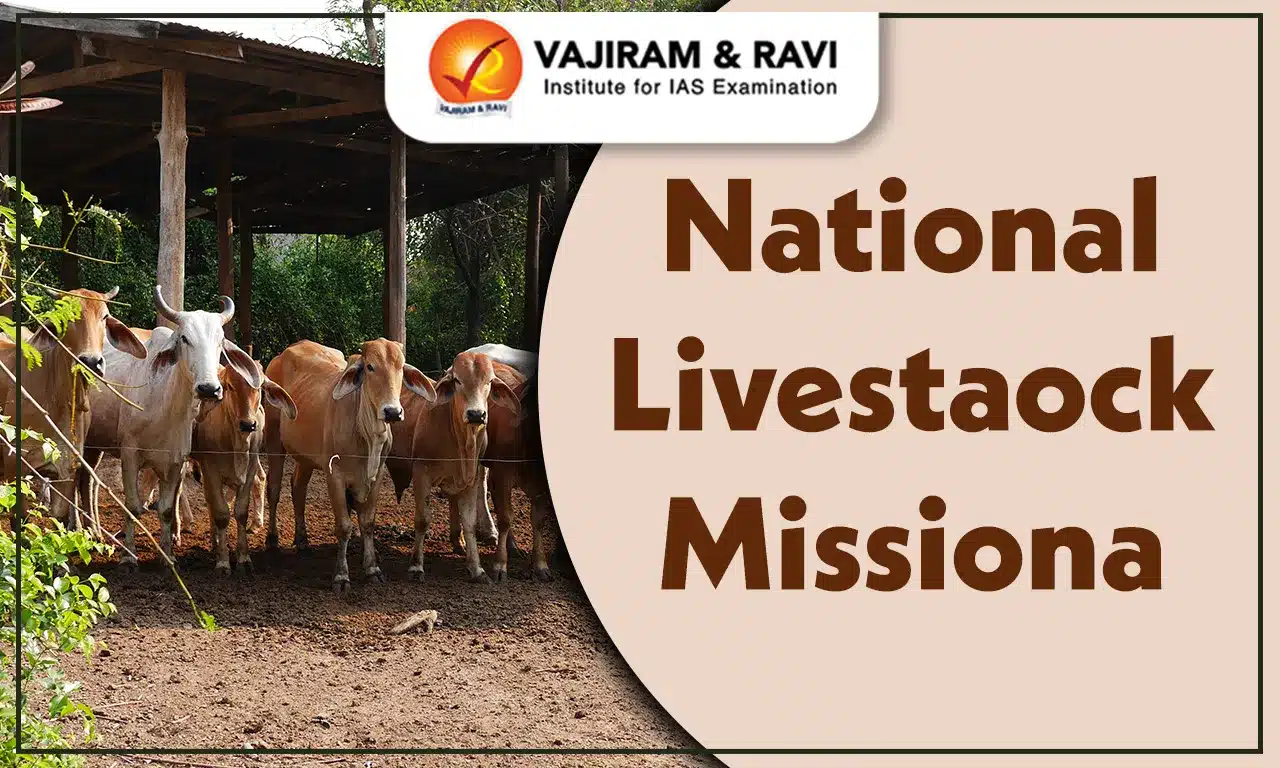
National Livestock Mission, Objectives, Portal, Scheme

National Livestock Mission

National Livestock Mission is a scheme that promotes sustainable development, supports rural livelihoods and strengthens India’s agriculture economy. Launched in 2014, the scheme was realigned in the financial year 2021-22 and implemented by the Department of Animal Husbandry and Dairying under the Ministry of Fisheries, Animal Husbandry and Dairying. In this article, we are going to look into the objectives, features and significance of the scheme. 

National Livestock Mission Overview 

National Livestock Mission (NLM) was launched as a centrally sponsored scheme in 2014 by the Government of India. The scheme promotes sustainable and holistic development of the livestock sector and focuses on enhancing productivity and addressing the challenges in feed, breeding and health. 

National Livestock Mission - Overview

Launch Year

2014, re-aligned in 2021-22

Objectives

Improve quantity and quality of livestock production systems

Ministry

Ministry of Fisheries, Animal Husbandry and Dairying

Total Sub-Missions

Three (2021)

Key Activities

  • Breed improvement initiatives
  • Strengthening fodder seed chains
  • Research and development in livestock sectors
  • Livestock insurance promotion
  • Skill development and technology transfer

Institutional Structure

  • Empowered Committee (EC): Oversees the mission's implementation.
  • Project Approval Committee (PAC): Reviews project proposals.
  • State-Level Executive Committee (SLEC) : Implements at the state level

Funding

Financial outlay of ₹2300 crore (re-aligned mission).

Target Beneficiaries

Farmers, entrepreneurs, cooperative societies, and organizations involved in livestock production and related sectors.

National Livestock Mission Objectives 

The National Livestock Mission addresses the challenges existing in the livestock sector and promote rural development by the following Objectives: 

  • Implementing breed improvement programs by improving per-animal productivity. 
  • Improve productivity and sustainability by encouraging research in critical areas like poultry, goats, sheep, feed and fodder. 
  • Provides better support to farmers by strengthening the capacity of state functionaries and livestock owners through improved extension services. 
  • Ensure better livestock health by strengthening disease surveillance and prevention. 
  • Provide skill based training by promoting technologies and reducing production costs and improving efficiency. 
  • Create employment opportunities through livestock-based enterprises in small poultry and fodder sectors. 

National Livestock Mission Portal

The National Livestock Mission Portal, ‘Udyami Mitra’, is an online platform designed to simplify the process of accessing the scheme's benefits. Available at ‘nlm.udyamimitra.in’, it allows beneficiaries to:

  • Submit their applications
  • Undergo screening by State Implementing Agencies (SIAs)
  • Secure loan sanctioning from lenders
  • Receive subsidy approvals from relevant authorities

The portal serves as a comprehensive, one-stop solution for beneficiaries to apply for subsidies, track their applications, and stay updated on their status.

Sub-Missions in the National Livestock Scheme

The National Livestock Mission comprises three sub-missions having 10 activities after realignment to address specific needs within the livestock sector. Each sub-mission has a unique focus and objectives.

  1. Sub-Mission on Breed Improvement of Livestock and Poultry
  2. Sub-Mission of Feed & Fodder
  3. Sub-Mission on Innovation and Extension.

National Livestock Mission Features

The mission includes several key features aimed at achieving its objectives effectively:

  • Increased Production: Focuses on improving animal breeds to boost the production of meat, milk, eggs, and wool.
  • Fodder and Feed Development: Enhances the supply of quality feed by strengthening the fodder seed chain and promoting fodder processing units to meet demand.
  • Risk Management: Supports livestock insurance to protect farmers from unexpected losses.
  • Financial Assistance: Provides subsidies to establish livestock units, benefiting both individual entrepreneurs and groups like Farmer Producer Organizations (FPOs) and Self-Help Groups (SHGs).
  • Centralized Implementation: Operates nationwide with an online application process via platforms like Udyami Mitra, ensuring transparency and efficient project approval and funding.

Additional Activities in National Livestock Mission

The Union Cabinet approved modifications to the National Livestock Mission, adding new initiatives such as:

  • Entrepreneurship for Horse, Donkey, Mule, and Camel: 50% capital subsidy (up to ₹50 lakhs) for individuals, FPOs, SHGs, JLGs, FCOs, and Section 8 companies, including support for breed conservation of horses, donkeys, and camels.
  • Fodder Seed Processing Infrastructure: 50% capital subsidy (up to ₹50 lakhs) for setting up fodder processing units, grading plants, and seed storage godowns.
  • Fodder Cultivation Support: Assistance for expanding fodder cultivation on non-forest, waste, rangeland, non-arable, and degraded forest lands.
  • Livestock Insurance: A simplified insurance program with a reduced beneficiary premium share of 15%, with the Centre and State sharing the premium (60:40, or 90:10 for some states).

In summary, the National Livestock Mission is vital in fostering sustainable growth in the livestock sector by improving productivity, supporting rural employment, and providing essential financial assistance.

National Livestock Mission FAQs

Q1: What is the National Livestock Mission?

Ans: The National Livestock Mission (NLM) aims to improve livestock productivity and promote sustainable development in the livestock sector through various interventions.

Q2: What is the National Livestock Scheme UPSC?

Ans: The National Livestock Scheme under the NLM focuses on enhancing livestock health, improving breeding techniques, and promoting fodder and feed development.

Q3: When was the NLM scheme launched?

Ans: The National Livestock Mission was launched in 2014 by the Ministry of Agriculture & Farmers' Welfare.

Q4: What is the role of livestock in UPSC?

Ans: Livestock plays a crucial role in UPSC preparation as it is often included in the General Studies syllabus under topics related to agriculture, rural development, and sustainable growth.

Q5: What is the 21st Livestock Census?

Ans: The 21st Livestock Census is a nationwide survey conducted to gather detailed data on the livestock population in India, highlighting trends in animal husbandry and livestock-related activities.

Retail Direct Scheme, Objectives, Features, Eligibility

Retail Direct Scheme

Retail Direct Scheme launched by Reserve Bank of India has been initiated to motivate individual investors to invest in government securities directly. The scheme was launched on 12th July 2021 and allowed the individual investors to directly open their accounts with the central government in order to gain access to directly invest in government securities eliminating all the intermediaries. 

Retail Direct Scheme Overview

Retail Direct Scheme launched by RBI motivates the retail investors to open retail gilt accounts directly with the central bank. The scheme aims to increase access for the retail investors to invest more in the government securities through primary and secondary markets. 

Retail Direct Scheme democratizes the ownership of government debt securities.

The government securities under the retail direct scheme include securities issued in the form of stock by credit under section 3(iii) of Government Securities Act 2006. These securities include: 

  • Government of India Treasury Bills ; (Central Government issues both treasury bills and bonds or dated securities).
  • Government of India dated securities;
  • Sovereign Gold Bonds (SGB);
  • State Development Loans – SDLs (bonds and dated securities issued by the State Government). 

What are Government Securities?

Government securities, also known as G-secs are tradable instruments issued by the central or state government that carry no risk. 

Short term government securities can mature within an year and long term securities have a maturity period of more than one year. 

What is a Gilt Account?

A gilt account has a similar functionality like a bank account but with the only special purpose of holding government securities. Instead of holding money, this account consists of treasury bills and government securities. 

Retail Direct Scheme Objectives

The Retail Direct Scheme by RBI aims to provide the following facilities in the government securities market through online portal: 

  • To open a retail direct gilt account. 
  • Access the allotment of government securities at primary stage. 
  • Access to RBI’s electric order matching system NDS-OM, for trading in government securities in secondary markets. 

Retail Direct Scheme Eligibility Criteria

Investors can register for the Retail Direct Scheme by RBI if they fulfill the following conditions: 

  • A Rupee savings bank account maintained in India;
  • A Permanent Account Number (PAN) issued by the Income Tax Department;
  • Any Officially Valid Document (OVD) for KYC purpose;
  • A valid email id; and
  • A registered mobile number. 

Non- resident investors can also invest in government securities under the Foreign Exchange Management Act, 1999. The RDG account can be opened by an individual alone or also as a joint account with another investor who qualifies the eligibility criteria.

Importance of Retail Direct Scheme 

The Retail Direct scheme has the potential to revolutionize the Indian Investment market through tapping into the savings of its citizens. 

  • The scheme makes government securities investment more accessible for investors, eventually leading to improved participation in G-secs and ease of accessibility. 
  • The feature of relaxation in mandatory hold to maturity provision also makes it more accessible for people to invest in this scheme.

Retail Direct Scheme FAQs

Q1: What is the retail direct scheme?

Ans: The Retail Direct Scheme enables individual investors to directly purchase government securities online via the RBI Retail Direct portal.

Q2: What is retail direct and NDS-OM?

Ans: Retail Direct provides direct access to government securities for individuals, while NDS-OM (Negotiated Dealing System-Order Matching) is the RBI's platform for trading these securities.

Q3: Who launched the RBI Retail Direct scheme recently?

Ans: The Reserve Bank of India launched the Retail Direct Scheme.

Q4: What is the new RBI scheme in 2024?

Ans: The new RBI scheme in 2024 includes updates and enhancements to the Retail Direct Scheme to encourage individual participation in government securities.

Q5: What is the minimum amount for the RBI Retail Direct scheme?

Ans: The minimum amount for investment in the RBI Retail Direct Scheme is ₹10,000.

Revamped Distribution Sector Scheme, Objectives, Features

Revamped Distribution Sector Scheme

The Revamped Distribution Sector Scheme is an initiative by the Central Government aiming at improving the power distribution sector that ensures efficient, reliable and affordable electricity supply. The scheme will address the challenges faced by the distribution companies and improve their operational efficiency and financial sustainability. 

Revamped Distribution Sector Scheme Objectives 

Revamped Distribution Sector Scheme is focused on transforming the power distribution sector. The objective of the scheme includes: 

  1. Guiding and helping DISCOMs to improve their functioning by adopting modern technologies. 
  2. Ensuring long-term financial health of DISCOMs by bridging the revenue-expenditure gap.
  3. Ensuring affordable high-quality power supply for all consumers including those in remote areas.

Revamped Distribution Sector Scheme Targets

The scheme has specific targets to be achieved by FY 2024-25:

  • Reduction of AT&C (Aggregate Technical and Commercial) losses to 12-15% on a pan-India basis.
  • Reduction of the ACS-ARR gap (Average Cost of Supply minus Average Revenue Realized) to zero.

The RDSS boasts a significant budget allocation of ₹3,03,758 crore for five years, from FY 2021-22 to FY 2025-26, including ₹97,631 crore as Government Budgetary Support (GBS). This funding underscores the government’s commitment to reforming the power distribution sector and building a robust energy ecosystem.

Revamped Distribution Sector Scheme Features

The Revamped Distribution Sector Scheme is structured into two primary features that address both infrastructure and capacity-building needs:

1. Part A: Infrastructure and Smart Metering

This focuses on upgrading the distribution network and implementing advanced metering solutions.

  • Smart Metering: Deployment of prepaid smart meters and system metering to improve billing accuracy, reduce theft, and enable real-time monitoring.
  • Distribution Infrastructure: Modernization and augmentation of the existing infrastructure to handle growing demand and reduce technical losses.

2. Part B: Training and Capacity Building

  • Enhancing the skills of personnel involved in the distribution sector through targeted training programs.
  • Undertaking enabling and supporting activities to ensure the smooth implementation of the scheme.

Revamped Distribution Sector Scheme Significance

RDSS is expected to revolutionize the power distribution sector with its multi-pronged approach:

  • World’s Largest Smart Metering Program: Replacing 250 million traditional meters with smart meters will help reduce energy theft, enhance billing efficiency, and ensure a reliable power supply.
  • Data-Driven Decision-Making: Real-time collection and analysis of consumption data will improve demand forecasting and load management.
  • Energy Conservation: Smart meters incentivize consumers to adopt energy-saving practices, contributing to sustainable energy use.
  • Reduced Losses: Addressing AT&C losses through technological interventions and operational reforms will strengthen DISCOMs’ financial health.

Challenges involved in implementation of RDSS

RDSS comes with a number of challenges and problems that need to be addressed while planning the implementation of the scheme:

  1. Technology Implementation Issues:
    • The integration of Advanced Metering Infrastructure could face delays with legacy billing software of DISCOMs.
    • Data Acquisition Delays could become a problem due to interoperability issues between head-end systems.
  2. Manual Processes:
    • DISCOM industries are still dependent on manual connections and disconnection with undermine the automation goals of smart metering,
  3. Chip Shortages:
    • The production and deployment of smart meters is impacted by the shortage of global semiconductors.
  4. Cybersecurity and Data Privacy Issues:
    • Smart Metering infrastructure faces the issues of security of consumer data and potential vulnerabilities. 

Revamped Distribution Sector Scheme Way Forward

To realize the full potential of RDSS, it is crucial to consider certain suggestions while implementing the scheme:

  • The focus should be on high loss areas on priority while rolling out smart metering infrastructure in phases to maximise impact. 
  • The DISCOM personnel should undergo training programs to get acquitted with the necessary skills required for managing the advanced systems. 
  • Cybersecurity measures should be implemented to ensure safety of data and consumer privacy.
  • To ensure seamless integration with modern technologies like AMI by upgrading legacy systems. 

The Revamped Distribution Sector Scheme has the potential of modernising India’s power sector by addressing systemic inefficiencies and leveraging advanced technologies. This will create a financially sustainable and operational efficient distribution network with the potential to transform the way electricity is distributed and consumed, helping bring in a new era of reliability, efficiency and sustainability for India’s power sector.

Revamped Distribution Sector Scheme FAQs

Q1: What is the revamped distribution sector scheme?

Ans: The RDSS aims to improve the operational efficiency and financial sustainability of DISCOMs by modernizing distribution infrastructure and reducing losses.

Q2: What is the RDSS scheme in 2024?

Ans: In 2024, the RDSS focuses on deploying smart meters, reducing AT&C losses, and achieving financial sustainability in the power distribution sector.

Q3: What is the progress of RDSS scheme?

Ans: The RDSS has achieved significant milestones, including widespread deployment of smart meters and reduced AT&C losses in target areas.

Q4: Which schemes are subsumed under RDSS?

Ans: RDSS subsumes the Integrated Power Development Scheme (IPDS) and Deen Dayal Upadhyaya Gram Jyoti Yojana (DDUGJY).

Q5: What are the objectives of RDSS project?

Ans: The objectives are to reduce AT&C losses to 12-15%, achieve zero ACS-ARR gap, and ensure quality, reliable, and affordable power supply.

Difference Between Kumbh and Mahakumbh

Difference Between Kumbh and Mahakumbh

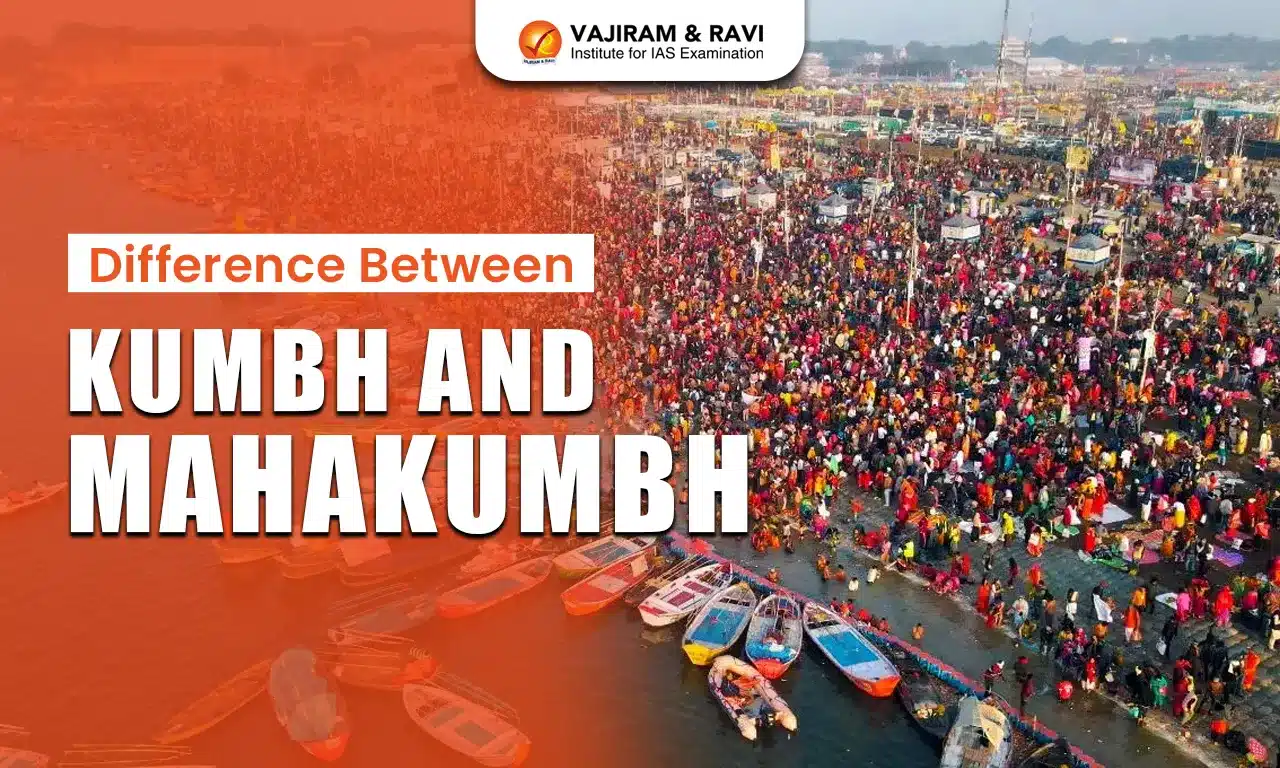
Kumbh and Mahakumbh, both are counted as the spiritual events of India celebrated with a lot of devotion. As a hindu festival, this event is celebrated with a lot of cultural and religious values. While kumbha and mahakumbh both share a similar value, both are different to each other in many ways. Kumbh mela is celebrated every 4th year and Mahakumbh is celebrated every 144 years, marking it to be a very rare event to occur. In this article we will learn in detail about Kumbh mela and mahakumbh mela and their key differences. 

Kumbh Mela 

Kumbh Mela, known to be a hindu pilgrimage, is held every fourth year at specific locations in India which are considered to be sacred in nature. These states are Haridwar, Prayagraj, Nashik and Ujjain. Every hosting state is known to represent a specific astrological alignment of planets and stars. Kumbh Mela is known to be associated with the mythological tale of Samudra Manthan written in the Hindu scriptures. It is believed that there was a fight going on in between the gods and demons over the pot of amrit, the drops of this amrit fell in these four locations and from there on these places are considered for hosting the kumbh mela every 4th year. In order to mark this event, devotees perform the following activities: 

  • Taking a dip in the sacred rivers as a way to cleanse their sins
  • Sadhu and saints perform grand religious processions.
  • Cultural performances and spiritual practices performed. 

The kumbh mela was recognised by UNESCO in 2017 as part of the Representative List of Intangible Cultural Heritage of Humanity. 

Types of Kumbh Mela 

The Kumbh Mela is of four different types:

Type

Frequency

Locations

Significance

Kumbh Mela

Every 4 years

Rotates among the four sacred sites

Frequent gathering for spiritual purification.

Ardh Kumbh Mela

Every 6 years

Haridwar and Prayagraj

A smaller-scale event between Purna Kumbh Melas.

Purna Kumbh Mela

Every 12 years

All four sacred sites (Prayagraj, Haridwar, Nashik, Ujjain)

Major event with millions for sacred rituals.

Maha Kumbh Mela

Once every 144 years (after 12 Purna Kumbh Melas)

Exclusively at Prayagraj

The rarest and most spiritually significant gathering.

Mahakumbh Mela

Mahakumbh is considered to be an extraordinary event that takes place once in 144 years at Prayagraj. The event is believed to be an ultimate spiritual experience for hindus. The event is a once in a life-time opportunity for the attendees and considered to mark the completion of 12 cycles of 12-year kumbh mela. The Mahakumbh mela has the following features: 

  • The event spans for several months longer than the Kumbh Mela. 
  • Includes the Shahi Snan. 

The last mahakumbh mela was held in 2013 at Prayagraj and now the maha kumbh mela is being held at Prayagraj in 2025. 

  • ngs of saints, including the revered Akharas.
  • Enhanced rituals and ceremonies, including the Shahi Snan (royal bath).

Key Difference Between Kumbh and Mahakumbh Mela

Following are the key differences in between Kumbh and Mahakumbh Mela: 

Kumbh vs Maha Kumbh Mela

Aspect

Maha Kumbh 

Kumbh Mela

Frequency

Once every 144 years

Every 3 years

Timings

January 13 to February 26, 2025

Ujjain Simhastha Kumbh in 2028

Duration

Typically lasts around 45 days

Varies by astrological calculations

Location

Prayagraj (Ganga, Yamuna, Saraswati confluence)

Haridwar (Ganges), Ujjain (Shipra), Nashik (Godavari), Prayagraj (Ganges-Yamuna-Saraswati)

Significance

Considered the most sacred; powerful purification and salvation

Major religious festival in Hinduism

Scale

One of the largest religious gatherings in the world

Fewer participants due to more frequent occurrence

Also Check
Difference Between Cabinet and Council of Ministers Difference between National Anthem and National Song
Difference Between GMT and IST Difference Between Citizenship and Nationality
Difference Between District Collector and District Magistrate Difference Between Kumbh and Mahakumbh
Difference Between Fundamental Rights and Fundamental Duties Differences Between Censure and No-Confidence Motion
Differences Between Absolute Poverty and Relative Poverty Difference Between Wildlife Sanctuary and National Park

Kumbh and Mahakumbh Mela Differences FAQs

Q1: What is the difference between Mahakumbh and Kumbh?

Ans: Mahakumbh is held every 144 years at Prayagraj, while Kumbh occurs every 12 years at four locations.

Q2: Is 2025 Kumbh or Mahakumbh?

Ans: 2025 is a Mahakumbh, held in Prayagraj after 144 years.

Q3: Why Kumbh every 12 years?

Ans: Kumbh is held every 12 years based on the astrological alignment of Jupiter, Sun, and Moon.

Q4: Which Kumbh Mela is after 144 years?

Ans: The Mahakumbh is held once every 144 years in Prayagraj.

Q5: Why is this Mahakumbh so special?

Ans: It is a once-in-a-lifetime event held after 144 years, attracting millions of devotees for spiritual cleansing.

Sagarmala Project, History, Objectives, Components, Importance

Sagarmala Project

The Sagarmala Project is an initiative launched by the Government of India to improve the port connectivity and reform the logistics sector. The project aims to harness the potential of India’s vast coastline and waterways that would revolutionise logistics efficiency. The vision of Sagarmala Project is to reduce the logistics costs for both the domestic and EXIM Cargo while managing the optimal infrastructure investment. In this article we are going to discuss the key objectives, components and importance of the Sagarmala Project. 

Sagarmala Project Overview

The Sagarmala Project was launched in 2015 by the Government of India as an infrastructure initiative that aims to revolutionise India’s coastal infrastructure, improving port connectivity and boosting maritime trade. The project creates an integrated network of ports, waterways and infrastructure that supports India in becoming a global maritime hub. 

Some of the recent developments of Sagarmala Project includes: 

  • Launching the Sagarmala Project in Andhra Pradesh: The Ministry of Ports, Shipping and Waterways announced the identifications of 100 Sagarmala Projects in Andhra Pradesh in January 2024. This project will strengthen port infrastructure, storage and logistics and improve the economic growth in the state. 
  • By 2023, the Sagarmala Project completed 1,537 projects. This achievement underscored the government’s commitment to improve port infrastructure and coastal connectivity. 
  • The Sagarmala Project aims to complete projects worth Rs. 2 trillion by 2024. 

The Sagarmala Project continues to drive significant advancements in India's maritime infrastructure, fostering economic growth and regional development.

Sagarmala Project Objective

The Sagarmala Project has the objective of improving the infrastructure and growth of ports in India, thus enhancing the connectivity and commercial exchange along the coastline. This project is expected to boost the Indian Economy and productivity by strengthening the domestic and international trade relations. 

The scheme aims to increase the private sector participation and reduce the logistics costs at Indian ports. The project will create an industrial ecosystem near ports and reduce the logistic costs and improve the manufacturing clusters in nearby proximity in these hubs. This could optimize the transportation connectivity in between roads, inland waterways, railways and air transport. 

Sagarmala Project Components

The Sagarmala program consists of several key components aimed at transforming India's maritime sector:

  1. Port Modernization & New Port Development
    This focuses on upgrading existing ports and constructing new ones to enhance capacity and efficiency. It involves addressing bottlenecks and introducing modernization, mechanization, and computerization in port operations.
  2. Port Connectivity Enhancement
    This component aims to improve connectivity between ports and the hinterland, optimizing both time and cost of cargo transportation. It includes the development of multi-modal logistics solutions, such as inland waterways and coastal shipping, to ensure seamless movement of goods.
  3. Port-linked Industrialization
    The initiative encourages the creation of industrial clusters near ports, promoting economic growth and reducing logistics costs. These clusters attract industries that benefit from efficient transportation and proximity to ports.
  4. Coastal Community Development
    This focuses on the sustainable development of coastal communities by providing skill development and livelihood generation opportunities. It includes initiatives supporting fisheries, coastal tourism, and enhancing the well-being of the local population.
  5. Coastal Shipping & Inland Waterways Transport
    This component promotes the use of coastal and inland waterways for cargo transportation, reducing dependence on road and rail networks. It is an environmentally friendly mode of transport that helps alleviate congestion on roads and railways.

Sagarmala Project Importance 

India's vast 7,500 km coastline underscores the critical importance of port connectivity in driving economic growth and development across the country. The Sagarmala project is designed to foster nationwide economic progress, aligning with the government's vision of ‘Sabka Sath, Sabka Vikas, Sabka Vishwas, Sabka Prayas.’ This initiative is crucial to realizing the goal of an Atmanirbhar Bharat, a self-reliant India.

Port development is particularly significant given that 95% of India’s merchandise trade by volume is handled through seaports, highlighting the vital role these ports play in the nation's economic framework.

Sagarmala Project FAQs

Q1: What is the Sagarmala Project?

Ans: The Sagarmala Project aimed at enhancing port connectivity, modernizing ports, and boosting maritime trade and logistics.

Q2: What is the difference between Bharatmala and Sagarmala?

Ans: Bharatmala focuses on enhancing national highway connectivity, while Sagarmala aims to develop port infrastructure and improve maritime trade and connectivity.

Q3: What are the 6 mega ports under Sagarmala?

Ans: The six mega ports under Sagarmala are Mumbai, Kolkata, Chennai, Visakhapatnam, Cochin, and Jawaharlal Nehru Port.

Q4: What is the importance of Sagarmala?

Ans: Sagarmala is crucial for boosting India's economic growth by improving port infrastructure, reducing logistics costs, and enhancing connectivity for trade and industrial development.

Q5: How many states are there in Sagarmala Project?

Ans: The Sagarmala Project involves the development of ports and infrastructure across 13 coastal states and Union Territories of India.

National Tourism Day 2025, History, Significance, Theme

National Tourism Day 2025

National Tourism Day 2025 celebrated every year on 25th January aims to promote the rich, vibrant and diverse culture of India in the tourism sector. This day is celebrated with the purpose of highlighting the importance of tourism and its role in shaping the Indian Economy, its reputation around the globe and cultural exchange. This article will look into the importance, origin, history, theme of National Tourism Day 2025 and its role in promoting the tourism sector of India. 

National Tourism Day 2025 Overview 

National Tourism Day, observed on 25th January every year, aims to spread awareness about the importance of the tourism sector in contributing to the growth of the country in terms of finance as well as culture and diversity. The day acts as a reminder for the government, citizens of the country and people in general about the importance of the tourism industry and ways to improve the functioning. 

National Tourism Day 2025

Section

Details

Event Name

National Tourism Day 2025

Date of Observance

January 25, 2025

Theme

The theme for National Tourism Day 2025 is yet to be announced.

Objective

  • Promote tourism as a key contributor to the economy
  • Highlight the role of tourism in sustainable development
  • Encourage domestic and international tourism

Significance

  • Celebrates India’s rich cultural and natural heritage.
  • Increases awareness about the importance of tourism in economic growth.
  • Supports the development of local communities through tourism.

Key Activities

  • Tourism promotions and campaigns.
  • Cultural programs and performances showcasing India’s diversity.
  • Webinars, exhibitions, and discussions on sustainable tourism.
  • Participation by local tourism boards and stakeholders.

Government Initiatives

  • Promotion of tourism circuits (e.g., heritage, spiritual, adventure, and eco-tourism).
  • Highlighting tourism-friendly policies and incentives.
  • Launch of tourism campaigns by the Ministry of Tourism.

Impact on Local Economy

  • Boosts local businesses such as hospitality, transport, and handicrafts.
  • Creates job opportunities in rural and urban areas.
  • Contributes to regional development.

Government Ministry Involved

Ministry of Tourism, Government of India

Global Recognition

  • The United Nations World Tourism Organization (UNWTO) also celebrates World Tourism Day on September 27 each year, aligning with global tourism trends.

National Tourism Day Origin 

National Tourism Day origin can be traced back to the 1948 post-independence India era. The Ministry of Tourism took the initiative of promoting the tourism sector in order to improve economic growth and cultural diplomacy. Events like “Incredible India” have been promoted so as to showcase the Indian Heritage and beauty globally. The tourism campaigns have evolved over the years. They started in the 1950-60s with a focus on international marketing and infrastructure development. With changing times the national tourism day has evolved as a day focusing on broadcasting new initiatives, policy improvements and celebrating the achievements of the sector. 

National Tourism Day 2025 Theme

The theme for National Tourism Day 2025 is "Tourism for Inclusive Growth," highlighting the importance of tourism in inducing economic growth while also ensuring that the benefits reach all sections of society in India. The focus is on empowering local communities through job creation and promoting sustainable practices and promoting sustainable tourism, diverse Indian cultural heritage and digital transformation. 

National Tourism Day Celebrations 

National Tourism Day is celebrated due to the following reasons: 

  1. The goal is to promote Indian culture, historical and natural treasures as global tourist destinations. 
  2. The Indian Tourism Industry has the potential to contribute to the GDP and employment of the country. 
  3. Tourism day is celebrated to spread awareness about the importance of adopting sustainable tourism practices in travel and hospitality. 
  4. The day aims to foster cultural exchange by creating opportunities of understanding Indian diversity. 
  5. The Ministry of Tourism takes up initiatives for protecting and conserving cultural and historical landmarks. 

Tourism Sector in India

The Indian Tourism Industry is one of the most important contributors to the Indian Economy with many growth opportunities. India being the fifth largest economy in terms of tourism and travel market globally is also expected to become the third highest domestic travel market by 2027.

Indian Tourism sector Highlights

Tourism statistics of India as last updated on August 2024

  • Foreign Tourist Arrivals: 6.36 Lakh
  • Foreign Exchange Earnings: 20,006 Crore
  • Indian Nationals’ Departures: 27.01 Lakh 

Key Statistics of Indian Tourism as of August 2024

Key Aspect

August 2024

January–August 2024

Foreign Tourist Arrivals (FTAs)

6.36 lakh (-4.2% from Aug 2023, -20.5% from Aug 2019)

61.91 lakh (+3.7% from Jan–Aug 2023, -10.5% from Jan–Aug 2019)

Top Source Countries for FTAs

Bangladesh (15.59%), USA (14.95%), UK (10.33%)

Bangladesh (20.77%), USA (17.41%), UK (10.08%)

Foreign Exchange Earnings (FEEs)

₹20,006 crore (+7.06% from Aug 2023)

₹1,71,287 crore (+15.64% from Jan–Aug 2023)

FEEs (in USD)

$2.385 billion (+5.69% from Aug 2023)

$20.555 billion (+14.15% from Jan–Aug 2023)

Indian Nationals Departures (INDs)

27.01 lakh (+6.55% from Aug 2023, +14.86% from Aug 2019)

200.63 lakh (+9.41% from Jan–Aug 2023, +12.01% from Jan–Aug 2019)

Top Destinations for INDs

UAE (26.3%), Saudi Arabia (11.99%), USA (7.96%)

UAE (24.45%), Saudi Arabia (10.88%), USA (7.58%)

Purpose of FTAs

Leisure & Recreation (44.77%), Indian Diaspora (26.73%)

Leisure & Recreation (41.72%), Indian Diaspora (27.67%)

Purpose of INDs

Leisure & Recreation (42.1%), Indian Diaspora (35.1%)

Leisure & Recreation (45.0%), Indian Diaspora (33.0%)

Top 5 States for Tourism in India

S.No

State

Key Highlights

1

Tamil Nadu

Among the top states with significant tourist footfall.

2

Uttar Pradesh

Renowned for cultural and heritage tourism.

3

Andhra Pradesh

Popular for its religious and coastal attractions.

4

Karnataka

Known for historical, wildlife, and natural sites.

5

Maharashtra

A combination of urban tourism and cultural heritage.

Forms of Tourism in India 

India provides a broad platform for various types of Tourism in India: 

  1. Cultural Tourism that includes heritage sites exploration like forts of Rajasthan and temples of Tamil Nadu. 
  2. States like Jim Corbett act as a huge attraction for eco-tourism. 
  3. The Himalayas, Uttarakhand trekking and river rafting activities in Rishikesh promote adventure tourism. 
  4. Affordable healthcare facilities in cities like jalandhar for medical tourism. 
  5. States like Varanasi, Amritsar, and Haridwar promote spiritual tourism. 
  6. The biryani of hyderabad, and chaat of Delhi is famous for attracting culinary tourism. 

Government Initiatives to promote Tourism in India

The Government of India, through the Ministry of Tourism, has undertaken several initiatives to boost and modernize the tourism sector, focusing on infrastructure development, service enhancement, and attracting tourists. Key initiatives include:

  • Swadesh Darshan and Swadesh Darshan 2.0: Infrastructure projects under the Swadesh Darshan Scheme and its revamped version, SD2.0, emphasize creating sustainable and responsible tourism destinations, alongside PRASHAD and other schemes for pilgrimage and spiritual tourism.
  • Dekho Apna Desh: Encourages domestic tourism by promoting India's rich cultural and natural heritage to its citizens.
  • Support for Fairs and Festivals: Financial aid for organizing tourism-related events under the DPPH Scheme fosters regional tourism.
  • Niche Tourism Promotion: Focus on wellness, culinary, rural, and eco-tourism to diversify tourism offerings.
  • e-Visa Facility: Simplified travel with e-Visas for nationals of 167 countries across seven categories, with reduced fees for easier access.
  • GST Reduction: Lower GST rates for hotel tariffs (12% for ₹1,001–₹7,500 and 18% above ₹7,501) enhance India's competitiveness.
  • Air Connectivity via RCS-UDAN: Improved air routes through 53 operationalized tourism routes enhance access to key destinations.
  • Incredible India Tourist Facilitator Certification Program: Online training for guides and facilitators creates skilled professionals in tourism.
  • Capacity Building for Service Providers (CBSP): Training programs upgrade skills in tourism and hospitality services.
  • NIDHI and NIDHI+: Digitalization initiatives for hospitality and tourism sectors improve ease of doing business and sectoral growth.

These efforts collectively aim to make India a global leader in tourism while ensuring sustainable growth and local community benefits.

SAKSHAM Scheme, Features, Eligibility, Benefits, Significance

SAKSHAM Scheme

The SAKSHAM Scheme launched by the Ministry of Human Resource Development aims to help differently able students aspiring to pursue higher education especially in the technical fields. The scheme will provide financial support to all students pursuing undergraduate degrees and diploma courses under the administration of All India Council for Technical Education. 

SAKSHAM Scheme Overview

SAKSHAM Scheme is a representative of the government's commitment towards inclusivity and empowerment. The scheme provides scholarships to physically differently-abled students who will be pursuing technical degree or diploma courses from recognised universities and institutions. The goal is to create an environment that provides and promotes growth of technical education among specially abled populations. 

SAKSHAM Scheme Features

In order to help and support the differently-abled students, SAKSHAM scheme offers the following features:

  1. The students selected under the programme will be provided financial coverage for tuition fee, study material and other related expenses. 
  2. Students are provided with the option to renew the scholarship, enough to support them throughout the duration of the programme.
  3. The scheme has been launched in alignment with the requirements of the job market and aims to train the students according to market requirements to increase their efficiency. 
  4. The scheme is applicable throughout India and fosters an inclusive environment. 

SAKSHAM Scheme Eligibility Criteria

Following are the guidelines one has to fulfill in order to be eligible to apply for the SAKSHAM Scheme: 

  • The student has to be a citizen of India. 
  • The student must have a minimum of 40% disability, certified by a competent medical authority.
  • Enrollment in a recognized institution for a technical degree or diploma course is mandatory.

SAKSHAM Scheme Benefits

SAKSHAM Scheme offers the following benefits to its applicants:

  • SAKSHAM Scheme will help provide the disabled students an opportunity to study by reducing their financial burdens.
  • The scheme would provide better employment opportunities to students by equipping them with the right skills and knowledge.
  • The scheme supports the disabled students so that they can feel more confident and an inclusive part of society. 

Significance of SAKSHAM Scheme

The scheme has the following importance: 

  • Promoting Inclusive Education: The SAKSHAM Scheme ensures equal access to technical education for differently-abled individuals, breaking barriers and fostering inclusivity.
  • Empowering Differently-Abled Students: It equips students to overcome limitations, gain specialized skills, and lead fulfilling lives while contributing to society.
  • Bridging Socioeconomic Gaps: By offering financial support, the scheme addresses disparities, enabling students from diverse backgrounds to pursue quality education.
  • Fostering Skill Development: It emphasizes technical education, enhancing employability and enriching industries with a skilled, diverse workforce.
  • Encouraging Workforce Diversity: The scheme nurtures a workforce that brings unique perspectives, driving innovation and progress across sectors.
  • Challenging Stereotypes: Highlighting the achievements of differently-abled individuals, the program reshapes societal perceptions and promotes inclusivity.
  • Building an Inclusive Society: The scheme sparks societal change by fostering acceptance and creating equal opportunities for all.
  • Strengthening India's Human Capital: It taps into the potential of differently-abled individuals, adding value and innovation to various industries.
  • Reflecting Government Commitment: The initiative underscores the government’s dedication to inclusivity and the empowerment of marginalized communities.
  • Inspiring Future Generations: Success stories of beneficiaries motivate others to dream big and overcome challenges, inspiring a more inclusive mindset.

In essence, the SAKSHAM Scheme goes beyond financial aid, driving a transformative journey toward empowerment, inclusivity, and societal progress. It shapes a brighter, equitable future by unlocking the potential of differently-abled individuals.

SAKSHAM Scheme FAQs

Q1: What is the Saksham scheme?

Ans: The Saksham Scheme provides financial assistance and support to differently-abled students for pursuing technical education.

Q2: Who launched the Saksham scheme?

Ans: The Saksham Scheme was launched by the All India Council for Technical Education (AICTE) under the Ministry of Education.

Q3: What is the Saksham scholarship for UPSC?

Ans: The Saksham Scholarship for UPSC offers financial assistance to aspirants from economically weaker sections to prepare for UPSC exams.

Q4: Who is eligible for the Saksham Scholarship Scheme?

Ans: Differently-abled students with a minimum of 40% disability and enrolled in technical degree or diploma courses are eligible.

Q5: Who is eligible for the Saksham Yuva Scheme?

Ans: Unemployed youth registered with Employment Exchanges in Haryana and meeting specific educational and age criteria are eligible for the Saksham Yuva Scheme.

Bharatmala Pariyojana Scheme, Features, Highlights, UPSC Notes

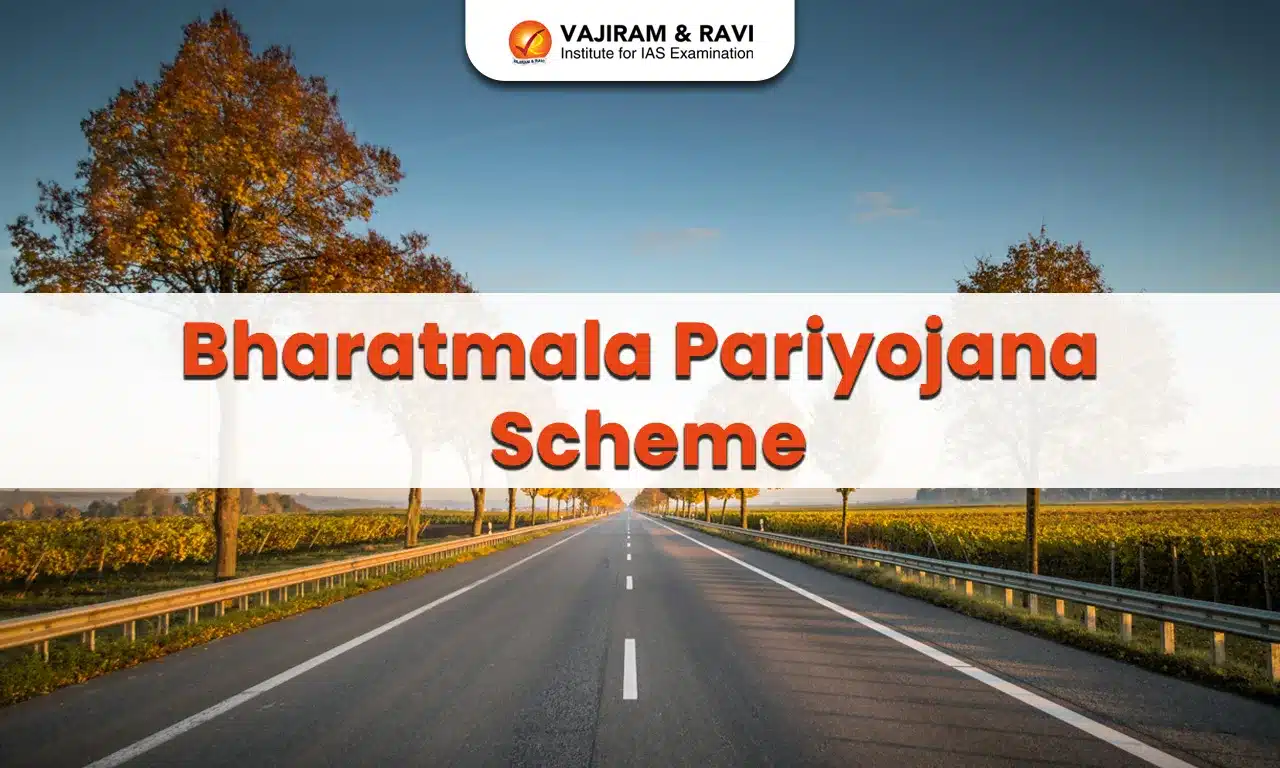
Bharatmala Pariyojana Scheme

Bharatmala Pariyojana scheme was launched by the Government of India to bridge the gap in infrastructural development and improve the effectiveness of road traffic movement throughout India. The scheme is implemented by the Ministry of Road, Transport and Highways of India and aims to develop 24800 km of roads, to be constructed in a phased manner. The funding of the scheme will be managed through the cess collected on petrol and diesel vehicles as well as the tax collected on toll booths along with the financial budget supported by the government. 

Bharat Pariyojana Scheme Features

Following are the features of Bharatmala Pariyojana Scheme: 

  • Economic Corridor- According to the road Construction Project, the government aims to build around 9000 km of Economic Corridors. 
  • Feeder Route- Feeder Route also known as Inter Corridor Category covers an area of 6000 km of road. 
  • National Corridor Efficiency Improvement- 5000 km of roads would be built under the National corridor for better inter-connectivity between roads and interconnect 550 districts. 
  • International connectivity and border roads- 2000 km of roads will interconnect the cities and remote areas located in border regions.
  • Coastal and Port Connectivity- It has been mandatory to connect the areas around the shorelines and important ports. 
  • Green Field Expressway- The construction and development of Greenfield expressway will help in better traffic and freight management. 
  • NHDP Works- Maintenance and construction of new roads for about 10,000 km will be managed in this last segment. 

The Bharatmala Project focuses on improving the efficiency of the National Corridors, including the Golden Quadrilateral and the North-South and East-West Corridors, by addressing choke points through the construction of elevated corridors, bypasses, ring roads, lane expansions, and logistics parks.

The project also includes constructing strategically significant Border Roads along international boundaries and International Connectivity Roads to boost trade with neighboring countries like Myanmar, Bangladesh, Bhutan, and Nepal.

Under the program, approximately 26,200 km of Economic Corridors with heavy freight traffic have been identified for development. These corridors will be enhanced end-to-end to ensure seamless travel, uniform standards, and efficient transportation. Feeder Corridors are also planned to address infrastructure gaps and asymmetries.

All Bharatmala projects will undergo technical, financial, and economic appraisal by an empowered Project Appraisal & Technical Scrutiny Committee established under the National Highways Authority of India (NHAI) and the Ministry of Road Transport and Highways (MoRTH).

Bharatmala Pariyojana Highlights

The Bharatmala Pariyojana scheme aims to improve the road conditions all over the country to improve traffic conditions and improve road trade transportation. Following are the key highlights of Bharat Pariyojana Scheme: 

  • The scheme's primary objective has been to improve the quality of roads that eventually leads to better connectivity and development throughout the country. 
  • Conduction of new roads along shorelines, ports, inter inter-connecting border areas is one of the key focus of the scheme. 
  • The goal is to complete the roads construction process within a time frame of five years. 
  • The project has been divided under various segments including eastern segment, coastal and port connectivity, border connectivity etc. 

Bharatmala Pariyojana Finance Route

The government plans to fund the Bharatmala project through four key channels:

  • Market borrowings
  • Central Road Fund
  • Monetizing government-owned road assets
  • Budgetary allocations

A total of ₹2 lakh crore will be raised through market borrowings, while ₹1 lakh crore will come from the Central Road Fund and toll collections by NHAI.

This initiative aims to boost economic growth by expanding the number of corridors from 6 to 50. The Central Government, through the Bharatmala Project, seeks to enhance trade, upgrade the National Highways, and strengthen the country's road network.

Bharatmala Pariyojana FAQs

Q1: What is Bharatmala Pariyojana scheme?

Ans: Bharatmala Pariyojana is a government initiative to develop and upgrade India's national highways and road infrastructure to enhance connectivity and economic growth.

Q2: Who started the Bharatmala project?

Ans: The Bharatmala project was launched by the Government of India under the leadership of Prime Minister Narendra Modi.

Q3: What is the difference between Sagarmala and Bharatmala?

Ans: Sagarmala focuses on port-led development and coastal connectivity, while Bharatmala emphasizes road network development, including highways and economic corridors.

Q4: What is the Bharatmala Pariyojana 2024?

Ans: Bharatmala Pariyojana 2024 refers to the ongoing efforts to expand and modernize road networks under the second phase of the Bharatmala project.

Q5: What is Bharatmala 2 project?

Ans: Bharatmala Phase 2 is the continuation of the initial project, focusing on developing additional economic corridors, border roads, and connectivity improvements.

National Voters Day 2025, History, Significance, Theme, Celebrations

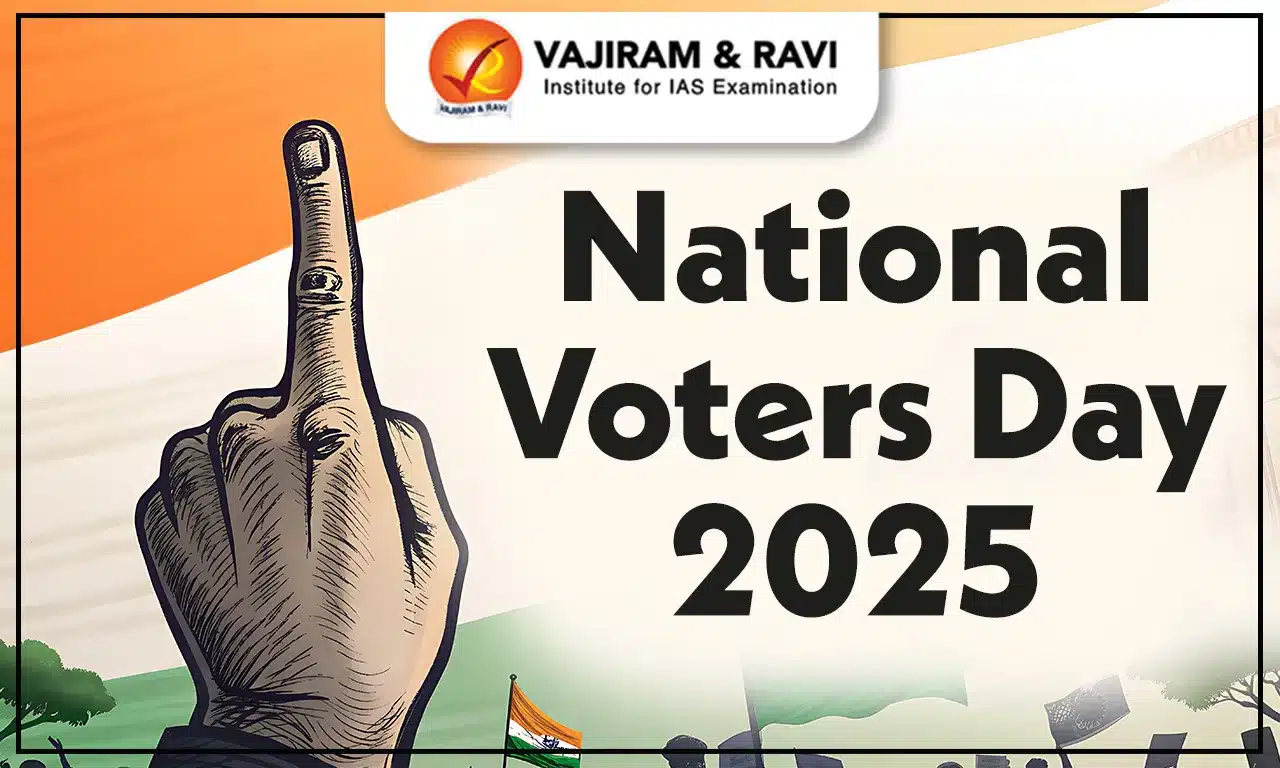
National Voters Day 2025

National Voters Day is observed on 25 January every year in order to motivate the youth to take part in the voting electoral process. This year celebrates the 14th National Voters day and promotes the knowledge that right to vote is a basic right with the goal of facilitating, encouraging, and ensuring maximum enrolment of new voters. The day has been celebrated since 2011 as a mark of foundation of the Election Commission of India; 25th January 1950. In this article we are going to look into the history, importance, rights of National Voters Day. 

National Voters Day 2025 Overview

National Voters Day 2025 honours the foundation of the Election Commission of India in 1950. The aim is to spread awareness about the importance of voting in a democratic country and promote active engagement in the election process. It reminds everyone about the importance of individual vote and its impact on the future of the country and the importance of voting ethically and consciously. 

National Voters Day History 

25th January is the foundation day of the Election Commission of India (ECI) which came into existence in 1950. This day was first celebrated in 2011 to encourage young voters to take part in the electoral process. No doubt it is the day to celebrate the right to vote and also the democracy of India. The Election Commission's main objective is to increase the enrolment of voters, especially the eligible ones.

Let us tell you that earlier the eligibility age of the voter was 21 years but in 1988 it was lowered to 18 years. The Sixty-First Amendment Bill of 1998 lowered the voter's eligibility age in India.

National Voters’ Day Significance 

Being a democratic country, every Indian citizen has a right to vote. Citizen’s of India have a right to choose their own leader based on their personal choice. People can choose the candidate who they believe can solve their problems, and bring changes in the society. National Voters’ Day is significant due to the fact that it aims to promote this thought among the youth and citizens of the country. It is the chosen leader who would represent the people collectively in work towards the betterment of society including electricity connectivity, constructions of roads and building a network in between the people and the leaders. Therefore, it is very necessary to encourage youth to participate in building a strong network for the upcoming generation. 

National Voters Day 2025 Theme

The National Voters’ Day 2025 theme is “Nothing Like Voting. I Vote for Sure.” The theme aims to carry forward the theme from last year, acknowledging the importance of voting as a fundamental right and responsibility. The goal is to motivate the citizens of the country to participate actively in the electoral process.

Year

National Voters' Day Theme

2024

Nothing Like Voting, I Vote for Sure

2023

Nothing Like Voting, I Vote for Sure

2022

Making Elections Inclusive, Accessible and Participative

2021

Making Our Voters Empowered, Vigilant, Safe and Informed

2020

Electoral Literacy for Stronger Democracy

2019

No Voter to be Left Behind

2018

Assessable Elections

2017

Empowering Young and Future Voters

2016

Inclusive and Qualitative Participation

2015

Easy Registration, Easy Correction

National Voters’ Day 2025 Celebrations

National Voters’ Day 2025 is celebrates due to the following reasons: 

  • Purpose of National Voters' Day: Celebrates the progress of India's voting system and promotes initiatives to boost voter participation.
  • Democratic Reminder: Highlights the importance of voting as a democratic duty and its role in shaping the nation's future.
  • Civic Engagement: Encourages informed voting through various initiatives and events, reinforcing civic responsibility.
  • Best Electoral Practices Awards 2025: The Hon’ble President will honor State and District officers for exemplary performance in election management in 2023.
  • Award Categories: Includes IT innovations, security management, accessible elections, electoral rolls, election management, and voter awareness.
  • Recognition of Stakeholders: Awards also acknowledge government departments and media organizations for their contributions to voter outreach and awareness.

National Voters’ Day 2025 FAQs

Q1: When is National Voters Day celebrated?

Ans: National Voters Day is celebrated on 25th January every year.

Q2: What is the theme of National Voters Day 2025?

Ans: The theme for National Voters Day 2025 is “Nothing Like Voting. I Vote for Sure.”

Q3: What is the Objective of National Voters Day?

Ans: Its objective is to encourage voter participation and awareness, especially among first-time and young voters.

Q4: Why is National Voters Day celebrated?

Ans: It is celebrated to promote electoral participation, strengthen democracy, and highlight the importance of voting.

Q5: When was National Voters Day first celebrated?

Ans: National Voters Day was first celebrated in 2011.

National Women’s Day, History, Celebrations, Significance

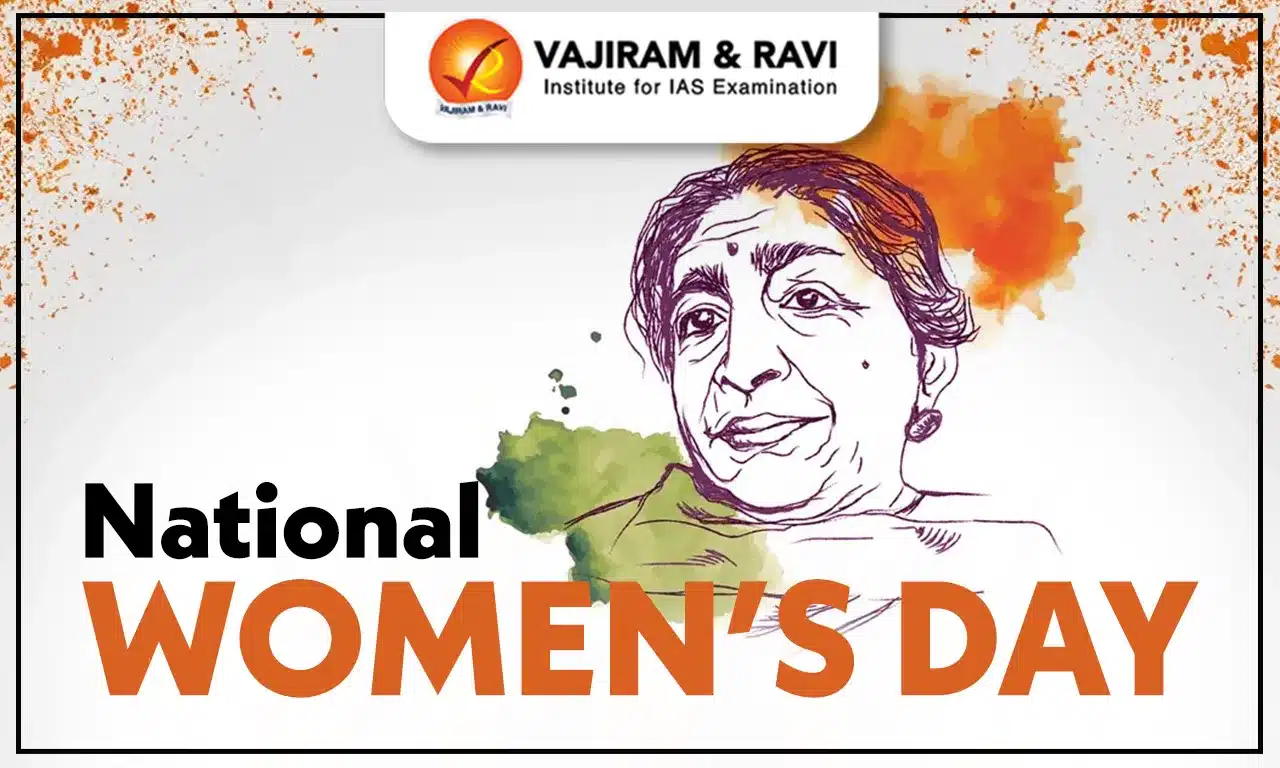
National Women’s Day

National Women’s Day is celebrated in India every year on 13th February 2025. The day celebrates the birth anniversary of Sarojini Naidu, the nightingale of India and hence is also known as the National Day for women. In this article, we are going to look into the history, importance and celebrations of National Women’s Day 2025. 

About Sarojini Naidu

Sarojini Naidu, remembered as the Nightingale of India, is one of the most remembered political activist and celebrated poet of India. Naidu was born in Hyderabad on 13th February 1879 and her literary works have always reflected India’s cultural heritage and the struggle of Indian Independence and the fight against women empowerment.

Deeply inspired by the nationalistic spirit and the growing demand for independence from British rule, Naidu actively participated in key movements like the Non-Cooperation Movement and the Salt Satyagraha. Her unwavering commitment to India’s freedom and her advocacy for women’s rights continue to inspire generations.

In honor of her contributions, especially as a champion for women’s empowerment, the Government of India celebrates her birth anniversary every year as National Women’s Day on 13th February.

Difference between National Women’s Day and International Women’s Day 

National Women’s Day is celebrated in India on 13 February every year and International Women’s Day is celebrated on 8 March every year. Following are the major differences between the two: 

National Women’s Day (India)

International Women’s Day


Date

13 February

8 March

Origin

As far as the history of National Women’s Day is concerned, it was started to mark the birth anniversary of Sarojini Naidu.

Grew out of the Labour Movement in the early 20th century to achieve universal suffrage and other women’s rights.

Scope

Observed only in India.

Observed worldwide.

Objective

Though it also serves as a platform to celebrate the contributions of Indian women in various fields and raise awareness about issues they face, it mainly marks the birth anniversary of Sarojini Naidu.

To celebrate the achievements of women and raise awareness about persisting challenges faced by women

National Women’s Day Celebrations

National Women’s Day in India is celebrated with a variety of events and initiatives across the country, organized by government bodies, educational institutions, NGOs, corporate entities, and local communities. These celebrations honor the legacy of Sarojini Naidu while fostering dialogue and action toward gender equality and women’s empowerment.

Here’s an overview of how National Women’s Day is marked:

  • Government Initiatives: Awards are presented to women achievers across fields like education, healthcare, social work, and governance, acknowledging their contributions to society.
  • Cultural Programs: Exhibitions, performances, and events highlight the achievements of women in arts, literature, and traditional crafts.
  • Educational Programs: Schools, colleges, and universities organize lectures, panel discussions, essay competitions, and debates on topics like gender equality and women’s empowerment.
  • Civil Society Campaigns: NGOs and women’s groups conduct awareness drives on issues such as domestic violence, women’s rights, and gender-based discrimination.
  • Corporate Initiatives: Many organizations host events for their female employees, engage in CSR activities, and support projects aimed at women’s empowerment.
  • Community Gatherings: Informal meet-ups and celebrations provide a platform for women to share experiences, celebrate milestones, and build support networks.

These activities collectively aim to honor the contributions of women and inspire collective efforts to create a more equitable society.

National Women’s day Significance

National Women’s Day is significant due to it marking the birth anniversary of Sarojini Naidu. Apart from this the day has relevance due to several factors: 

  • Reflects India’s journey towards gender equality and women empowerment. 
  • The day highlights and honours the contributions made by women of India in the field of social reforms and politics, science and arts that has helped in shaping the destiny of the country. 
  • The day brings forward the awareness and problems associated with gender bias. 
  • The day addresses the existing gender disparities and various other day to day challenges faced by women that hinders their growth.

In essence, National Women’s Day, or the National Day of Women in India, goes beyond commemorating the birth anniversary of Sarojini Naidu. It is a tribute to all Indian women, recognizing their contributions, sacrifices, and achievements. 

National Women’s Day FAQs

Q1: Which day is celebrated on 13 February?

Ans: National Women’s Day in India is celebrated on 13 February.

Q2: What is National International Women's Day?

Ans: International Women's Day, celebrated on 8 March, is a global day honoring women's achievements and advocating for gender equality.
Q3: Why is 8 March Women’s Day?

Ans: 8 March is celebrated as Women’s Day to honor the historic struggles for women’s rights and equality, dating back to early 20th-century movements.

Q4: Why is National Women’s Day celebrated?

Ans: National Women’s Day is celebrated to honor the contributions of Sarojini Naidu and recognize the achievements and empowerment of Indian women.

Q5: What is the theme for Women’s Day 2025?

Ans: The theme for Women’s Day 2025 has not been announced yet.

SERB-POWER Scheme, Objectives, Components, Eligibility

SERB-POWER Scheme

SERB-POWER Scheme was launched by the Department of Science and Technology to support the women in India in science, technology and research. The scheme aims to reduce the funding gap between men and women in scientific and engineering research across science and technology programmes in Indian institutions and research and development labs. This will also lead to a more inclusive working environment for women in the science field and create diversity in the research field. 

SERB-POWER Scheme Overview

SERB-POWER Scheme addresses the problems of gender gap in science, engineering and research and development. Launched online, this programme motivates women to participate more in this field. The scheme provides the following two components: Research Grants and Fellowships. The goal is to inspire women to opt for a career in the science and research field and create a more inclusive environment. Women will be considered to become a part of decision making bodies and promote their leadership roles in these institutions.

SERB-POWER Objectives

The objectives of SERB-POWER Scheme are: 

  • Encourage women to participate more in Research and Development projects. 
  • Spread awareness about the important role of women in science and technology fields.
  • Supporting women in advancing their career in science and technology. 
  • Create gender equality for inclusive environment. 

SERB-POWER Scheme Components

The SERB – POWER Scheme has two key components:

1. SERB-POWER Fellowship

  • Eligibility: Women researchers aged 35 to 55 years.
  • Awards: Up to 25 fellowships are granted annually, with a maximum of 75 active fellowships at any time.
  • Benefits:
    • ₹15,000 monthly fellowship in addition to regular income.
    • ₹10 lakh annual research grant.
    • ₹90,000 annual overhead.
  • Duration: 3 years, offered only once in a researcher's career.

2. SERB-POWER Research Grants

  • Funding Categories (up to 50 grants):
    • Level I: ₹60 lakhs for 3 years for researchers from IITs, IISERs, IISc, NITs, central universities, and national labs.
    • Level II: ₹30 lakhs for 3 years for researchers from state universities/colleges and private institutions.
  • Regulations: Grants adhere to SERB-Core Research Grant guidelines.

SERB-POWER Eligibility Criteria

To avail the benefits of the SERB-POWER scheme, the following criteria must be met:

Eligibility for SERB-POWER Research Grants

  • Open to women scientists and faculty members who are Indian citizens.
  • Applicants must hold regular, full-time employment in a recognized academic or research institution in India.
  • A Ph.D. degree in Science or Engineering is mandatory.
  • Candidates must be aged up to 55 years as of the application deadline.

Eligibility for SERB-POWER Fellowship

  • Open to women scientists who are Indian citizens.
  • Applicants must possess a Ph.D. degree in Science or Engineering.
  • The fellowship is for women currently not employed but seeking to return to mainstream science.
  • Candidates must be aged up to 55 years as of the application deadline.

SERB-POWER Importance

SERB-POWER Scheme has the following importance: 

  • The SERB-POWER program aims to foster a gender-balanced and supportive work environment, making a significant contribution to empowering women in science.
  • The scheme seeks to increase the participation of women in research projects and related activities, thereby enhancing the representation of women researchers in India.
  • It also provides opportunities for women scientists to develop leadership skills, collaborate with decision-making groups, and take on key decision-making roles confidently. 

SERB-POWER Scheme FAQs

Q1: What is the SERB-POWER scheme?

Ans: The SERB-POWER scheme is a program designed to support and empower women researchers in science through fellowships and research grants.

Q2: Who is eligible for SERB-POWER Fellowship?

Ans: Indian women scientists aged up to 55 years with a Ph.D. in Science or Engineering, desirous of returning to mainstream research, are eligible.

Q3: What is the full form of SERB scheme?

Ans: The full form of SERB is "Science and Engineering Research Board."

Q4: Is SERB a part of DST?

Ans: Yes, SERB operates under the Department of Science and Technology (DST), Government of India.

Q5: What is the difference between DST and SERB?

Ans: DST is a government department responsible for promoting science and technology, while SERB is a statutory body under DST focused on funding and supporting research and innovation.

Difference Between GMT and IST

Difference Between GMT and IST

GMT is the Greenwich Mean Time which is the unified time zone adopted by most of the English countries which are measured in London at midnight, whereas IST is the Indian Standard Time which is 5 hours 30 minutes ahead of GMT. This time standard is essential for various activities, including legal, social, and business purposes. There are numerous time zones across the globe, with each country or region selecting the time zone that best fits their geographical position and needs. 

Understanding the Difference Between GMT and IST is crucial for UPSC aspirants, as it is a significant topic in the Geography section. This topic features majorly in both the Mains General Studies Paper-1 and the UPSC Prelims Syllabus 2025.

Difference Between GMT and IST

A time zone is a region on Earth where a consistent standard time is followed. While countries have the freedom to choose a time zone within their borders, two time zones are renowned worldwide: Indian Standard Time (IST) and Greenwich Mean Time (GMT).

Difference Between GMT and IST
GMT (Greenwich Mean Time) IST (Indian Standard Time)

The Greenwich Mean Time was created by the Royal Observatory in 1675 for assistance navigators at sea.

The Indian Standard Time was established as the official time zone of India upon its independence on August 15th, 1947

When calculating GMT it is considered equivalent to UT1 (the modern form of mean solar time at 0° longitude), but this meaning can differ from UTC by up to 0.9 seconds.

The IST is calculated on the basis of a clock tower in Mirzapur (with coordinates 25.15° North Latitude and 82.58° East longitude).

Because of Earth’s uneven angular velocity in its elliptical orbit, GMT is rarely the exact moment the Sun crosses the Greenwich meridian

The Time and Frequency Standards Laboratory at the National Physical Laboratory in New Delhi generates official time signals for both commercial and official purposes. These signals are derived from atomic clocks and are synchronised with the global network of clocks.

Time zones are determined by a combination of legal, political, and geographical factors, meaning they do not always align perfectly with meridian lines. This also applies to Greenwich Mean Time (GMT), as discrepancies arise between the legal and geographical definitions of GMT.

India's single time zone, IST, doesn’t suit its vast geography. The country’s east-west stretch of 2,933 kilometres causes the sun to rise and set nearly two hours earlier in the east than in the west. To address this, the government has recently considered introducing multiple time zones.

The term Greenwich Mean Time is used commonly in the United Kingdom and in the Commonwealth of Nations such as Australia, New Zealand and many other countries of the Eastern Hemisphere

Indian Standard Time is used in India and Sri Lanka but it takes references from the UTC (Universal Time Coordinate). The UTC has been developed as a successor to the Greenwich Mean Time

Facts About Indian Standard Time

  1. The Council of Scientific & Industrial Research - National Physical Laboratory (CSIR-NPL), which is responsible for maintaining Indian Standard Time (IST), has put forward a proposal suggesting the adoption of two time zones in India. 
  2. The proposal includes IST I (UTC+5:30) for the entire country and IST II (UTC+6:30) specifically for the North-Eastern regions. 
  3. This recommendation comes in response to the early sunrise in the easternmost parts of India, where the country’s wide longitudinal span results in significant daylight hours being lost. 
  4. The Indian government has not supported this proposal, mentioning potential challenges and complexities involved in implementing two separate time zones.

Time Zones Importance in Geography

Time zones are essential in geography as they help synchronize human activities with Earth’s rotation and the position of the Sun. The Earth is divided into 24 time zones, each generally 15° of longitude apart, allowing for a consistent system of measuring time worldwide.

Understanding Time Zones is crucial in studying global communication, transportation, trade, and daily life patterns. It also explains regional differences in sunrise, sunset, and work hours. Time zones help avoid confusion and maintain coordination in international relations and travel schedules. They also play a role in political boundaries and economic planning.

Difference Between GMT and IST Map

Greenwich Mean Time (GMT) is the mean solar time at the Prime Meridian (0° longitude), located in Greenwich, England. It serves as the global reference point for timekeeping. In contrast, Indian Standard Time (IST) is based on 82.5° E longitude, which passes near Mirzapur, Uttar Pradesh. IST is GMT +5:30 hours, meaning India is five and a half hours ahead of GMT. Difference Between GMT and IST Map illustrating this difference would show the Prime Meridian (0°) passing through Greenwich and the IST meridian (82.5°E) passing through India.

Also Check
Difference Between Cabinet and Council of Ministers Difference between National Anthem and National Song
Difference Between GMT and IST Difference Between Citizenship and Nationality
Difference Between District Collector and District Magistrate Difference Between Kumbh and Mahakumbh
Difference Between Fundamental Rights and Fundamental Duties Differences Between Censure and No-Confidence Motion
Differences Between Absolute Poverty and Relative Poverty Difference Between Wildlife Sanctuary and National Park

Difference Between GMT and IMT FAQs

Q1: What is the time difference between GMT and IST?

Ans: The Indian Standard Time (IST) is ahead of the Greenwich Mean Time (GMT) by 5 hours 30 mins.

Q2: What are the countries in the IST time zone?

Ans: IST (Indian Standard Time) zone are followed in India and Sri Lanka.

Q3: What is the Standard Meridian of India?

Ans: The 82.5 degree longitude is considered as the standard meridian of India.

Q4: Which states cross the Indian Standard Time line?

Ans: The Indian Standard Time line passes through the states of Uttar Pradesh, Madhya Pradesh, Chhattisgarh, Orissa and Andhra Pradesh.

Q5: How to convert GMT to IST?

Ans: To convert GMT to IST, add 5 hours and 30 minutes. For example, 12:00 GMT becomes 17:30 IST (Indian Standard Time).

Evolution of Criminal Laws in India

Evolution of Criminal Laws in India

India’s criminal justice system is on the brink of a significant transformation with the enactment of new criminal laws that are set to replace the longstanding Indian Penal Code (IPC), the Code of Criminal Procedure (CrPC), and the Indian Evidence Act. This change is not abrupt but the culmination of a legal evolution that has spanned centuries, reflecting the nation’s dynamic governance, societal shifts, and legal philosophies. 

The Evolution of Criminal Laws in India

Ancient Foundations

In ancient India, the Dharma Shastras and Arthashastra laid the groundwork for justice and morality, prescribing punishments and administrative justice principles that would influence the subcontinent’s legal landscape for millennia.

Medieval Synthesis

The medieval period saw the integration of Islamic legal principles from the Sharia with the existing Hindu laws, creating a unique legal system that catered to a diverse population.

Colonial Codification

The British era introduced the Regulating Act of 1773, which established a structured legal system under English law. The IPC (1860) and CrPC (1898) were monumental in codifying criminal laws, setting a precedent for legal procedures that would last well into the modern era.

Post-Independence Reforms

Post-independence, the Constitution of India (1950) fortified fundamental rights and principles of criminal justice. Subsequent amendments and new legislations like the Narcotic Drugs and Psychotropic Substances Act (1985) and the Prevention of Corruption Act (1988) addressed contemporary societal challenges.

Modern Amendments

Recent reforms, such as the Criminal Law (Amendment) Act, 2013, and the Juvenile Justice (Care and Protection of Children) Act, 2015, have further refined the legal system, responding to societal demands for justice in cases of sexual offenses and juvenile crimes.

The New Era of Criminal Laws

The Bharatiya Nyaya Sanhita

This comprehensive act is set to replace the IPC, introducing renumbered sections and updated definitions to align with modern legal requirements.

The Bharatiya Nagarik Suraksha Sanhita

As the successor to the CrPC, this act expands the authority of magistrates and streamlines procedures to enhance the efficiency of law enforcement and judicial processes.

The Bharatiya Sakshya Act

Replacing the Indian Evidence Act, this legislation modernizes the rules of evidence, accommodating technological advancements and contemporary investigative methods.

The enactment of these new laws marks a pivotal moment in India’s legal history, promising a more equitable and just legal order. As the nation prepares for this transition, the legal community and the public anticipate a criminal justice system that upholds the dignity of the individual and the rule of law.

This blog provides a glimpse into the rich tapestry of India’s legal history and the significant strides taken towards a progressive criminal justice system. The new laws are not just a change in text but a reflection of India’s evolving legal consciousness, striving to meet the needs of its people in the 21st century.

Electoral Bonds: Supreme Court’s Verdict

Electoral Bonds

In a landmark judgment, the Supreme Court of India has declared the electoral bonds scheme as unconstitutional and violative of the right to information under Article 19(1)(a) of the Constitution. The court has also struck down the amendments made to the Companies Act, the Income Tax Act, and the Representation of Peoples Act that enabled the scheme. The court has directed the State Bank of India (SBI) to furnish the details of electoral bonds encashed by the political parties to the Election Commission of India (ECI) by March 31, 2024. The ECI will publish such details on its website for public scrutiny.

What are Electoral Bonds?

Electoral bonds are a form of anonymous donations to political parties that were introduced by the Finance Bill 2017 and notified on January 29, 2018. The scheme allows any individual or entity to purchase electoral bonds from SBI in denominations of Rs 1,000, Rs 10,000, Rs 1 lakh, Rs 10 lakh, and Rs 1 crore and donate them to any registered political party. The name of the donor is kept confidential and the bonds are valid for 15 calendar days from the date of issue. The political parties have to create a specific account which is verified by the ECI to receive the electoral bonds. Only those parties that secured not less than 1% of votes polled in the last general election to the House of the People or the Legislative Assembly of the State are eligible to receive electoral bonds.

Why are Electoral Bonds Unconstitutional?

The court has held that the scheme is unconstitutional because:

  • It violates the right to information: The scheme hides the source of funding of political parties from the public, which is a fundamental right under Article 19(1)(a). The scheme also enables black money, foreign funding, and corporate influence in politics, which harm the public interest and the sovereignty of the nation.
  • It violates the principle of equality: The scheme discriminates between different political parties based on their vote share, giving an unfair advantage to the ruling party and the major opposition parties, while excluding the smaller and regional parties. The scheme also creates a disparity between the donors and the voters, as the former can sway the policies and decisions of the political parties, while the latter are kept in the dark.
  • It violates the constitutional scheme of electoral reforms: The scheme goes against the constitutional aim of curbing corruption and criminalization of politics. The scheme is also contrary to the recommendations of various committees and commissions that have called for more transparency and disclosure in political funding. The scheme is also in conflict with the Representation of Peoples Act, 1951, that requires the political parties to disclose their contributions and expenditure.

What are the Implications of the Judgment?

The judgment has significant implications for the future of electoral politics and democracy in India. Some of the possible implications are:

  • It will enhance the transparency and accountability of political funding: The judgment will ensure that the public will have access to the information about the source and amount of funding received by the political parties through electoral bonds. This will enable the public to scrutinize and hold the political parties accountable for their performance and conduct.
  • It will reduce the influence of money and corporate power in politics: The judgment will curb the influence of money and corporate power in politics, as the donors will no longer be able to hide their identity and agenda behind the veil of anonymity. This will prevent the political parties from being influenced by the vested interests of the donors and ensure that they serve the public interest and the common good.
  • It will level the playing field for all political parties: The judgment will level the playing field for all political parties, as they will no longer be discriminated against based on their vote share or popularity. This will enable the smaller and regional parties to compete with the ruling party and the major opposition parties on an equal footing and offer a genuine choice to the voters.

The Supreme Court's judgment on electoral bonds is a historic and landmark verdict that upholds the constitutional rights and values of the citizens and the democracy. The judgment strikes down the electoral bonds scheme as unconstitutional and violative of the right to information, the principle of equality, and the constitutional scheme of electoral reforms. The judgment also directs the SBI to furnish the details of electoral bonds encashed by the political parties to the ECI, which will publish them on its website by March 31, 2024. This decision will enhance the transparency and accountability of political funding, reduce the influence of money and corporate power in politics, and level the playing field for all political parties.

Appointment of Election Commissioner

Appointment of Election Commissioner

India’s robust democracy is once again at the forefront with the recent appointment of new Election Commissioners. The Election Commission of India (ECI), a constitutional authority responsible for administering electoral processes, has welcomed Shri Gyanesh Kumar and Dr. Sukhbir Singh Sandhu to its esteemed panel. Their appointments come at a crucial time as the nation prepares for upcoming elections, ensuring the ECI remains fully equipped to oversee the democratic process.

Constitutional Framework for Appointment

The appointment of Election Commissioners is governed by Article 324 of the Indian Constitution, which vests the power of superintendence, direction, and control of elections in the ECI. The Chief Election Commissioner (CEC) and Election Commissioners (ECs) are appointed by the President of India. Historically, this process has been under the exclusive purview of the executive, but recent developments have sought to make the process more inclusive and transparent.

The Appointment Process

The Chief Election Commissioner and Other Election Commissioners (Appointment, Conditions of Service and Term of Office) Bill, 2023, outlines the current procedure for appointments. 

  • The President appoints the CEC and ECs based on the recommendations of a Selection Committee, which includes the Prime Minister, a Union Cabinet Minister, and the Leader of the Opposition or leader of the largest opposition party in the Lok Sabha. 
  • A Search Committee, headed by the Law Minister, proposes a panel of names to the Selection Committee, ensuring a thorough and rigorous selection process.

Qualifications for Appointment

While there are no specific qualifications prescribed by the Constitution for the appointment of Election Commissioners, conventionally, senior civil servants of the rank of Cabinet Secretary or equivalent are appointed to these positions. This practice ensures that individuals with significant administrative experience and a deep understanding of the electoral process are at the helm of the ECI. 

Eligibility and Salary:

  • Eligibility for these posts includes holding (or having held) a position equivalent to the Secretary to the central government.
  • The salary and conditions of service for the CEC and ECs will be equivalent to that of the Cabinet Secretary. Previously, it was equivalent to the salary of a Supreme Court Judge.

Roles and Functions

The role of the Election Commissioner is pivotal in upholding the sanctity of elections.

The main functions of the Election Commissioner in India are:

  • To supervise, direct, control and conduct all elections to Parliament and State Legislatures as also to the office of the President and Vice- President of India.
  • To set down general rules for election.
  • To determine constituencies and to prepare electoral rolls.
  • To give credit to political parties.
  • To grant recognition to political parties.
  • To allot symbols to the recognised political parties and candidates of election.
  • To fix dates for the election.
  • To appoint a polling officer for the constituency.
  • And ensures the adherence to the Model Code of Conduct, among other responsibilities. 

The addition of Shri Gyanesh Kumar and Dr. Sukhbir Singh Sandhu to the ECI is a testament to India’s commitment to a free and fair electoral process. Their expertise and experience are expected to contribute significantly to the Commission’s critical role in strengthening India’s democratic fabric. As the nation watches, the ECI continues to navigate the complexities of electoral management with integrity and dedication. 

PM Vishwakarma Scheme Eligibility, Objective, Benefits

PM Vishwakarma Scheme Eligibility

The PM Vishwakarma Scheme was launched on September 17, 2023 by the Prime Minister of India in order to support artisans and craftsmen practicing traditional trades. It is a central sector scheme and has had a huge response with about two million applications being filled on the ‘pm vishwakarma.gov.in. The Ministry of Micro, Small and Medium Enterprises (MSME) is the implementing ministry of this scheme.

PM Vishwakarma Scheme Overview 

The PM Vishwakarma Scheme launched in 2023 aims to support traditional artisans and craftsmen, also known as “Vishwakarmas”, who are engaged in handicrafts and other small-scale industrial activities. 

PM Vishwakarma Scheme Overview

Launch Date

September 17, 2023

Ministry

Ministry of Micro, Small, and Medium Enterprises (MoMSME)

Duration

2023-2028

Financial Outlay

₹13,000 crore

Target Beneficiaries

Artisans in 18 traditional trades (e.g., carpentry, blacksmithing, pottery, weaving)

Key Components

  1. Recognition (Certificate & ID)
  2. Skill Training
  3. Toolkit Incentive
  4. Credit Support
  5. Digital Transaction Incentives
  6. Marketing Support

Credit Support

Collateral-free loans up to ₹3 lakh at 5% interest

Eligibility

Aged 18+, engaged in traditional trade, no similar loans in the past 5 years

Official Website

pmvishwakarma.gov.in

PM Vishwakarma Scheme Objectives 

The PM Vishwakarma Scheme honors traditional artisans by giving them the position of “Vishwakarma” making them eligible for many benefits. The Objectives of PM Vishwakarma are: 

  • Artisans are offered collateral-free loans with reduced borrowing costs due to interest subsidies. 
  • The scheme aims to provide basic and advanced skills to artisans, helping them improve the skills through training programmes.
  • Providing tools and technology to artisans in order to improve productivity and quality of work and products. 
  • Teaching the use of digital payment methods and also offering incentives. 
  • Showcase brands and the access to new markets for business expansion. 
  • Provide economic opportunities by integrating traditional artisans into formal economy and global supply chains.

PM Vishwakarma Yojana Details

Below are the key details of the PM Vishwakarma Yojana:

PM Vishwakarma Yojana Details

Enrolment Process

Enrolment through Common Service Centres (CSCs) using Aadhaar-based biometric authentication on the PM Vishwakarma portal.

Target Groups

Artisans and craftspeople engaged in 18 trades : Carpenter, Boat Maker, Armourer, Blacksmith, Hammer and Tool Kit Maker, Locksmith, Goldsmith, Potter, Sculptor, Stone Breaker, Cobbler, Mason, Basket/Mat/Broom Maker, Doll & Toy Maker, Barber, Garland Maker, Washerman, Tailor, Fishing Net Maker.

Key Benefits Offered

  1. Recognition : PM Vishwakarma certificate and ID card.
  2. Skill Upgradation : Basic (5-7 days) and Advanced (15+ days) Training with Rs. 500 stipend/day.
  3. Toolkit Incentive : Up to Rs. 15,000 in e-vouchers for Basic Skill Training.
  4. Credit Support : Collateral-free loans up to Rs. 3 lakh in two tranches with 5% interest rate and 8% government subvention.
  5. Digital Transaction Incentive : Re. 1 per digital transaction (up to 100 transactions/month).
  6. Marketing Support : Quality certification, branding, e-commerce onboarding, and other marketing activities.
  7. Udyam Assist Platform : Enrolment in formal MSME ecosystem.

Loan Details

  • Loan Amount : Up to Rs. 3 lakh in two tranches (Rs. 1 lakh and Rs. 2 lakh).
  • Interest Rate : 5% with 8% subvention from the Government of India.
  • Tenure : First tranche (Rs. 1 lakh) - 18 months; Second tranche (Rs. 2 lakh) - 30 months.
  • Eligibility for 2nd Tranche : Beneficiaries must have completed Basic Training, maintained a standard loan account, and adopted digital transactions.

Digital Transaction Incentive

Re. 1 per digital transaction, up to a maximum of 100 transactions per month.

Marketing Support

Includes quality certification, branding, promotion on e-commerce platforms like GeM, advertising, and publicity.

PM Vishwakarma Scheme Eligibility

The eligibility criteria for the PM Vishwakarma Scheme are as follows: 

  • The applicant has to be minimum 18 years of age during the time of registration. 
  • The applicant should be enrolled in at least one out of the 18 specified trades within the unorganised sector. 
  • The artisan should be dependent on using hands and tools while working in the unorganised sector. 
  • Applicants who have already applied for schemes like PM-SVANidhi are not eligible to apply for this scheme. One can only reapply after replaying the loan. 
  • Only one member from a family is eligible to apply for the scheme. 
  • Government employees and their families are not eligible to apply for the scheme.

PM Vishwakarma Yojana Benefits 

PM Vishwakarma Yojana offers the following benefits: 

  • Providing the sources and skills to the artisans in order to help improve their trade practices. 
  • Ensuring artisans economic stability by giving them access to credit and modern tools to improve productivity and increased income. 
  • Maintaining the preservation of cultural heritage by promoting recognition and respect of traditional crafts. 
  • Giving sustainable livelihoods to artisans through financial assistance and skill development. 

PM Vishwakarma Scheme FAQs

Q1: What is PM Vishwakarma Yojana?

Ans: PM Vishwakarma Yojana is a government initiative to support artisans and craftspeople in the unorganized sector by providing financial assistance and skill development.

Q2: What is the primary objective of the PM Vishwakarma scheme?

Ans: The primary objective is to promote self-reliance among artisans and enhance the quality, scale, and reach of their products.

Q3: What is the PM Vishwakarma Scheme 2024?

Ans: PM Vishwakarma Scheme 2024 aims to empower traditional craftsmen and artisans through financial aid, skill training, and market linkages.

Q4: What is the scheme of Vishwakarma government?

Ans: The Vishwakarma scheme focuses on enhancing the livelihood of artisans and craftsmen in the unorganized sector through credit support and capacity building.

Q5: What are the 18 trades of PM Vishwakarma Yojana?

Ans: The 18 trades include carpentry, blacksmithing, goldsmithing, pottery, tailoring, cobbling, and others traditionally practiced by artisans.

Project Elephant – 30 Years of Project Elephant in India

Project Elephant

Project Elephant was launched by the Government of India's Ministry of Environment and Forests in February 1992. It's a scheme aimed at supporting states in managing their wild Asian elephant populations through financial and technical assistance.

Recent News:

  • The government has notified the Captive Elephant (Transfer or Transport) Rules, 2024, easing conditions for elephant transfers.
  • Captive elephants are under strict regulations, considering their historical roles and significance.
  • Translocation of captive elephants is permitted for special purposes like education and scientific research, subject to wildlife protection regulations.

Asian Elephants

India boasts the largest and most stable population of Asian elephants, with over 60% of all wild Asian elephants calling it home. The most recent elephant census conducted in 2017 recorded a total of 29,964 elephants.

Additionally, India houses 31 elephant reserves, including recent additions like the Dandeli Elephant Reserve in Karnataka, the Singphan Elephant Reserve in Nagaland, and the Lemru Elephant Reserve in Chhattisgarh. This expansion has led to approximately 76,508 square kilometres of elephant reserves spread across 14 states in India.

According to the 2017 Elephant Census, Karnataka holds the highest number of elephants, with 6,049 individuals, followed by Assam with 5,719, and Kerala with 3,054.

Species of Asian Elephants

Asian elephants are categorised into three subspecies: the Indian, Sumatran, and Sri Lankan.

  • As the largest terrestrial mammal in Asia, Asian elephants inhabit grasslands and forests across 13 countries in South and Southeast Asia, adapting to various environments from dry to wet.
  • Compared to African savannah elephants, Asian elephant herds are notably smaller in size.
  • Within elephant herds, the largest and oldest female, known as the matriarch, assumes leadership and decision-making responsibilities.
  • Asian elephants have the longest known gestational period among mammals, lasting up to 680 days (22 months).
  • Female elephants typically give birth to calves every four years between the ages of 14 and 45. This interval increases to five years by age 52 and six years by age 60.
  • Throughout Asia, elephants hold significant cultural importance and have a long history of close association with humans, evolving into symbolic figures in various cultures.

Protection Status of Asian Elephants

  • IUCN Red List: Endangered.
  • Wildlife (Protection) Act, 1972: Schedule I.
  • CITES: Appendix I

Objectives of Project Elephant Simplified

  • Conservation Planning: Create and promote smart plans to protect elephants using science.
  • Combat Illegal Trade: Stop the illegal buying and selling of elephant tusks and shield elephants from hunters and poachers.
  • Prevent Deaths: Develop ways to stop unnatural causes of elephant deaths in India.
  • Restore Habitats: Bring back the natural homes of elephants and the paths they travel.
  • Reduce Conflict: Lower fights between people and elephants in areas where they both live.
  • Limit Human Activities: Cut down on people and their animals moving into places where elephants live.
  • Support Research: Encourage studies on elephant protection and spread awareness about them.
  • Healthcare: Make sure domestic elephants get the right care to stay healthy and help them breed properly.
  • Community Development: Help communities living near elephants to grow in a way that's good for both people and elephants.

Threats to Elephants

The threats to elephants in India are numerous and have significant impacts on their populations and habitats. Here are the primary threats:

  • Habitat Loss and Fragmentation: The expansion of human settlements and economic development has led to a significant loss and fragmentation of elephant habitats. This not only reduces the space available for elephants but also disrupts their migratory patterns.
  • Human-Elephant Conflict: As habitats shrink, elephants often raid plantations and crop fields in search of food, leading to conflicts with humans. These conflicts can result in the death and injury of both humans and elephants.
  • Poaching: Elephants are targeted by poachers for their ivory, meat, and other body parts. Poaching has led to a skewed male-female ratio in many areas, especially since only male Asian elephants have tusks.
  • Other Challenges: Elephants also face accidental deaths due to train collisions, electrocutions, harm from crude bombs intended for other animals, and falls into pits or trenches.

Efforts to mitigate these threats include habitat conservation, reducing human-elephant conflict, and stricter enforcement against poaching. Conservation organizations and the government are working together to ensure the survival of these majestic creatures.

Measures Taken for Conservation

The Indian government has implemented several measures for elephant conservation and protection, focusing on both the animals and their habitats:

  • Project Elephant: Launched in 1992, this initiative aims to conserve elephant populations and their habitats, reduce human-elephant conflicts, and improve the welfare of captive elephants.
  • Habitat Restoration: Efforts are made to restore elephant habitats and corridors to ensure safe migration routes for elephants across different states.
  • Anti-Poaching Measures: Establishment of anti-poaching squads, increased patrolling, and rewards for information on poachers are some of the steps taken to combat illegal hunting.
  • Conflict Mitigation: The government promotes eco-development, public education, and awareness programs to mitigate human-elephant conflicts. Deployment of anti-depredation squads and scientific management of elephant populations are also part of these efforts.
  • Legal Protection: Elephants are protected under Schedule I of the Indian Wildlife (Protection) Act, 1972, which prohibits their hunting and trading.
  • Ex-Gratia Payments: Compensation is provided to families affected by human-elephant conflicts, which helps in fostering coexistence.
  • Disease Prevention: Measures are taken for the detection and prevention of diseases in wild elephants to maintain their health and well-being.

These measures reflect the government’s commitment to preserving the elephant population and ensuring their survival for future generations.

Project Elephant remains crucial for safeguarding India's elephant population. With concerted efforts and regulatory measures, conservation initiatives aim to mitigate threats and ensure the well-being of these majestic animals.

Pradhan Mantri Garib Kalyan Rojgar Yojana Scheme

Pradhan Mantri Garib Kalyan Rojgar Yojana Scheme

Pradhan Mantri Garib Kalyan Rojgar Yojana scheme was launched in 2016 by the Government of India to provide help and support to the economically weaker sections of society during times of emergencies and crisis. This scheme focuses on elevating the financial burden faced by vulnerable families and individuals along with maintaining their well being. 

Pradhan Mantri Garib Kalyan Yojana Overview

Pradhan Mantri Garib Kalyan Yojana has been launched by the Government of India to help and provide support to the economically weaker sections of the society during their challenging times. This scheme focuses on aiding the problems and hardships faced by the economically weaker citizens of India by offering various welfare benefits. The scheme provides relief measures like free grains, cash transfers, insurance and various other services. Through these provisions, the well being of people will be ensured in times of crisis and unforeseen circumstances. 

PM Garib Kalyan Yojana Highlights
Scheme PMGKY
Full-Form PM Garib Kalyan Yojana
Date of Launch 17th December 2016
Concerned Ministry Ministry of Finance

Pradhan Mantri Garib Kalyan Yojana Objectives

The Pradhan Mantri Garib Kalyan Yojana has the following objectives: 

  • The scheme curbs the problems of income equality and black money. 
  • To meet its primary objective, the PMGKY provided a one-time opportunity for tax evaders to declare their unaccounted wealth voluntarily, subject to a tax rate of 49.9% on the disclosed amount, without incurring penalties or facing prosecution.
  • In 2020, the scheme was extended in response to the economic challenges posed by the COVID-19 pandemic. This extension aimed to support the poor and vulnerable by generating funds to aid those severely affected by the economic downturn. 

Pradhan Mantri Garib Kalyan Yojana Eligibility Criteria

The eligibility criteria to apply for Pradhan Mantri Garib Kalyan Yojana is: 

  • All Below Poverty Line (BPL) families.
  • Families identified under the Antyodaya Anna Yojana (AAY) by States/UTs based on criteria set by the central government.
  • State Governments/Union Territory Administrations identify Priority Households (PHH) based on criteria prepared by States/UTs. 

Pradhan Mantri Garib Kalyan Yojana Features

Key features of the PM Garib Kalyan Yojana (PMGKY) include:

  • Provision of 5 kg of free wheat/rice per person and 1 kg of free whole chana per family each month to over 80 crore beneficiaries.
  • Free LPG cylinders for Below Poverty Line (BPL) families for three months, as announced by the Finance Minister.
  • Individuals declaring untaxed income under PMGKY must pay 50% of the disclosed amount, ensuring confidentiality for undeclared wealth in cash or deposits.
  • Employment opportunities for the poor, with Rs. 50,000 crore allocated to support livelihoods.
  • Rs. 50 lakh insurance coverage for frontline workers, benefiting up to 22 lakh health professionals.
  • A mandatory investment of 25% of disclosed income in the PMGKY scheme, refundable after four years without interest.

Pradhan Mantri Garib Kalyan Yojana Scheme Benefits

Pradhan Mantri Garib Kalyan Yojana Scheme has the following benefits: 

  • The scheme will provide direct financial support to the poorest sections of society that will help create a more inclusive society. 
  • The provision of free food ensures that there are no hungry stomachs, malnutrition is controlled, leading to improvement in public health. 
  • The insurance and pension scheme will help in ensuring future security of vulnerable sections of society like farmers, migrant workers and daily wage workers. 
  • The Health Insurance cover provided under the Ayushman Bharat scheme will promote better access to essential healthcare services to economically weaker sections of society. 
  • LPG Cylinders are provided to women to ensure the socio-economic status of women and participate more actively in economic times. 
  • The scheme promotes the idea of maintaining socio-economic stability by providing monetary assistance to the economically weaker groups especially during times of distress like COVID-19.

Pradhan Mantri Garib Kalyan Yojana FAQs

Q1: What is PM Garib Kalyan Rojgar Yojana?

Ans: It is an employment scheme aimed at providing livelihood opportunities to migrant workers and rural populations affected by the COVID-19 pandemic.

Q2: When was Pradhan Mantri Garib Kalyan Yojana launched?

Ans: It was launched on 26th March 2020 in response to the COVID-19 crisis.

Q3: Which Ministry launched Garib Kalyan Yojana?

Ans: The scheme was launched by the Ministry of Finance.

Q4: What is the objective of PM Garib Kalyan Yojana?

Ans: The objective is to provide financial aid, food security, and employment opportunities to vulnerable sections of society during emergencies.

Q5: Who are eligible to apply for Garib Kalyan Yojana?

Ans: Individuals with undeclared income or black money and those who wish to disclose it under the scheme are eligible, along with poor and vulnerable groups for its various welfare provisions.

National Youth Day 2025, History, Theme, Significance

National Youth Day 2025

National Youth Day, also celebrated as Rashtriya Yuva Diwas, is observed on 12th January every year to mark the birth anniversary of one of the most well known philosopher and spiritual leader Swami Vivekananda. The day emphasises on remembering the ideals and contributions Swami Vivekananda made towards the nation and empowering the youth of the country. National Youth Day 2025 reflects on the teachings of Swami Vivekananda and his impact on the youth of the country. 

National Youth Day 2025 Overview 

Celebrated on January 12 every year, National Youth Day marks the birth anniversary of Swami Vivekanada. Celebrated nationally all over India, the aim of this day celebration is to empower the youth toward leadership, nation building and empowerment. The government and the institutions celebrate this day by organising events that spread awareness about the man. 

National Youth Day 2025 Highlights
Also Known As Rashtriya Yuva Diwas
Date January 12, 2025
Purpose Celebrates the birth anniversary of Swami Vivekananda, a prominent spiritual leader and reformer.
First Celebrated 1985
Theme for 2025 To be announced
Observed By Indian government and Ramakrishna Mission centers worldwide
Activities Motivational speeches, Cultural programs, Educational activities, Meditation sessions
Related Events National Youth Festival (January 12-16) featuring arts, exhibitions, and seminars.

Rashtriya Yuva Diwas History

The Indian government declared National Youth Day in 1984 to honor the birth anniversary of Swami Vivekananda. First observed in 1985, this day is celebrated annually as a tribute to his life, works, and his enduring vision for the youth of India.

Swami Vivekananda firmly believed that youth are the backbone of a nation, capable of driving social, political, and spiritual transformation. His teachings have inspired generations of leaders and thinkers and continue to ignite the aspirations of millions of young minds in India and beyond.

Swami Vivekananda Birth Anniversary

Born on January 12, 1863 in Kolkata, Swami Vivekananda’s birth anniversary is celebrated in the form of National Youth Day. A social reformer, spiritual leader, philosopher and motivational speaker Swami Vivekanada has inspired countless individuals and hence this day is remembered for spreading the message of harmony, universal brotherhood and self-improvement. 

Swami Vivekananda Biography 

Born in a well-educated Bengali Family, Swami Vivekananda was a bright student himself and a deep thinker as well. This quest for spirituality guided him to Sri Ramakrishna Paramahamsa, who became his guru and guided him on the path of spirituality. Swami Vivekananda, gave the famous speech at the World Parliament of Religions in Chicago in 1893 and later founded the Ramakrishna Mission that focused on health care, social reforms and education. 
Swami Vivekananda Biography 
Birth Name Narendranath Datta
Born January 12, 1863, in Kolkata (Calcutta), India
Died July 4, 1902, at Belur Math, India
Profession Hindu monk, philosopher, author, religious teacher
Key Influence Chief disciple of Sri Ramakrishna
Major Contributions
  • Introduced Vedanta and Yoga to the Western world
  • Founded the Ramakrishna Mission and Ramakrishna Math
  • Promoted interfaith awareness and social reform
Education Studied at Ishwar Chandra Vidyasagar’s Institution and Presidency College, Calcutta
Known for Famous speech in World Parliament of Religions in Chicago in 1893
Philosophy Emphasized self-perfection, service to humanity, and the unity of all religions
Famous Quotes “Arise, awake, and stop not until the goal is achieved.”

National Youth Day 2025 Theme

The theme of National Youth Day 2025 is “Youth Empowerment for Nation Building." This theme has the goal of empowering the young people to recognise their capabilities and responsibilities towards nation-building. 

National Youth Day 2025 Significance

In today’s rapidly evolving world, National Youth Day 2025 underscores the important role of youth in addressing pressing social, economic, and environmental challenges. This day celebrates the spirit of empowerment, education, responsibility, and innovation:

  • Empowerment: Encourages youth to unlock their potential and strive for self-improvement.
  • Education: Highlights education as a cornerstone for personal and societal progress.
  • Social Responsibility: Instills a sense of duty toward resolving societal issues.
  • Cultural Integration: Promotes unity through shared values and mutual respect.
  • Innovation: Sparks entrepreneurship and creativity among young minds.

This day is an opportunity to honor the legacy of Swami Vivekananda, whose teachings inspire millions to excel and contribute to national development. Let us draw from his vision to shape a brighter, more inclusive future.

National Youth Day 2025 FAQs

Q1: What is the theme of Youth Day in 2024?

Ans: The theme for Youth Day 2024 was "Empowering Youth for a Sustainable Future."

Q2: What is the theme of National Youth Day 2025?

Ans: The official theme for National Youth Day 2025 is Youth Empowerment for Nation Building.

Q3: What is the theme of Rashtriya Yuva Mahotsav 2024?

Ans: The theme for Rashtriya Yuva Mahotsav 2024 was "Youth Power: Harnessing the Potential for Nation Building."

Q4: Who is the founder of National Youth Day?

Ans: National Youth Day was established by the Government of India in 1984 to honor Swami Vivekananda.

Q5: What is the slogan of National Youth Day 2024?

Ans: The slogan for National Youth Day 2024 was "Arise, Awake, and Realize the Power You Hold."

World Hindi Day 2025, History, Theme, Significance

World Hindi Day 2025

World Hindi Day celebrated every year on 10 January highlights the importance of Hindi Language all over the world. The day was first commemorated in 2006 as the anniversary of the first world Hindi Conference held in 1975 in Nagpur, India. The goal is to promote Hindi as a global language and encourage its use all over the world among various spheres. In this article, we are going to look into the theme, history and significance of World Hindi Day. 

World Hindi Day 2025 Overview

Celebrated every year on 10 January, World Hindi Day promotes Hindi language as an international language and recognises its linguistic and cultural importance all over the globe. The day has been chosen as the first World Hindi Conference was held on 10 January, 1975 in Nagpur, India. The celebrations are conducted with an aim to spread awareness about Hindi language, its uses on international platform and strengthen the ties among Hindi-speaking communities worldwide. 

World Hindi Day 2025
Feature Details
Date January 10
First Observed 2006
Historical Significance Marks the first World Hindi Conference in Nagpur (1975).
Host Country for 2025 Yet to be announced
Theme for 2025 Yet to be announced
Associated Events Cultural programs, seminars, essay competitions, and recognition of Hindi scholars worldwide.

World Hindi Day Celebrations

World Hindi Day is celebrated on a global level all over the world with an aim to interconnect the Hindi speaking community and spread more awareness about the language. The day is celebrated for the following reasons: 

  • Advocate for the promotion of Hindi on international platforms.
  • Celebrate the language's rich literary and cultural legacy.
  • Encourage global academic institutions to include Hindi as a language of study.
  • Recognize and honor efforts to elevate Hindi as a medium for global diplomacy and communication.

World Hindi Day 2025 Theme

The theme for World Hindi Day 2025 is Hindi: A Global Voice of Unity and Cultural Pride. The aim of this theme is to focus on Hindi Language to foster international and linguistic exchanges. The theme is expected to emphasize the promotion of Hindi in the digital era, showcasing how technology and the internet have expanded its reach to global audiences. 

World Hindi Day 2025 Host Country

Every year a country hosts a conference to celebrate World Hindi Day. The aim of this conference is to bring together scholars and writers to the status of Hindi at a global level. First such conference was held in 1975 in Nagpur. The host country for World Hindi Day 2025 is yet to be announced. 

Difference in between World Hindi Day and National Hindi Day 

World Hindi Day is observed on 10 January every year while National Hindi Day is celebrated on 14 September as a day that marked the adoption of Hindi as the official language of India in 1949. Here are major differences in between World Hindi Day and National Hindi Day: 

Aspect World Hindi Day National Hindi Day
Date January 10 September 14
Focus Promotes Hindi globally Celebrates Hindi as India’s official language
First Observed 2006 1953
Significance Highlights international importance Recognizes its role in Indian governance

World Hindi Day 2025 Significance

World Hindi Day 2025 offers a platform to celebrate the global influence of Hindi and its role in promoting cultural and linguistic unity. Through various events and discussions, it underscores the importance of Hindi in today’s interconnected world. World Hindi is important for the following reasons: 

  1. The day highlights Hindi language all over the world with an international appeal.
  2. The day aims to promote strong connections among the Hindi speaking communities all over the world.
  3. Goal is to integrate Hindi Language into technology and all digital platforms. 
  4. The day reminds us of the rich heritage and cultural importance of Hindi Language.

World Hindi Day 2025 FAQs

Q1: Why is World Hindi Day celebrated?

Ans: To promote the global use of Hindi and celebrate its cultural and linguistic significance.

Q2: What is the theme of World Hindi Day 2024?

Ans: "Hindi for Global Communication and Cultural Connection."

Q3: When was Hindi introduced in UPSC?

Ans: Hindi was introduced as a medium in UPSC exams in 1977.

Q4: What is the theme of World Hindi Day 2025?

Ans: Hindi: A Global Voice of Unity and Cultural Pride is the theme of World Hindi Day 2025.

Q5: Which country hosted World Hindi Day?

Ans: Various countries have hosted World Hindi Conferences; however, India celebrates World Hindi Day domestically.

Netaji Subhash Chandra Bose Jayanti, Parakram Diwas

Netaji Subhash Chandra Bose Jayanti

Netaji Subhash Chandra Bose Jayanti is celebrated on the occasion of Netaji’s birthday. Born on 23rd January 1897 in Orissa, the day is also known as Parakram Diwas.To commemorate the spirit and selfless service of Netaji Subhas Chandra Bose, the Government of India has declared his birthday, January 23rd, as "Parakram Diwas." The day aims to spread awareness and inspire the people of India, especially the youth, to exhibit courage in the face of challenges, just as Netaji did, and to foster a deep sense of national pride.

Netaji Subhash Chandra Bose Jayanti

Netaji Subhash Chandra Bose Jayanti also known as Parakram Diwas is celebrated on 23rd January every year. Remembered for his famous slogan “ Tum Mujhe Khoon Do, Main Tumhe Azadi Dunga,” Netaji qualified the Indian Civil Services Examination in 1919 but later resigned. Apart from being a strong political leader, he was inspired by the teachings of Vivekananda and was a spiritual guru. He started the independence movement journey in 1921 by starting Swarajya Newspaper in Allahabad, Uttar Pradesh. He was awarded the Bharat Ratna Award in 1992 but it was later withdrawn due to the controversy about his death. 

Netaji Subhash Chandra Bose Biography 

Subhas Chandra Bose was born on January 23, 1897, in Cuttack, Orissa.

  • In 1920, he passed the civil services examination but resigned from his position in April 1921 after hearing of the nationalist unrest in India.
  • Bose became a prominent leader in the Indian independence movement, joining the Indian National Congress to fight against British colonial rule.
  • He was elected president of the Indian National Congress for two consecutive terms but resigned due to ideological differences with Mahatma Gandhi.
  • In 1939, he founded the Forward Bloc to unite all anti-British forces in India.
  • During World War II, Bose fled India and sought alliances in the Soviet Union, Germany, and Japan to combat British rule.
  • With Japanese support, he reorganized the Indian National Army (INA), consisting of Indian prisoners-of-war and plantation workers, to fight against the British.
  • He established the Azad Hind Government in exile, with assistance from Japan, and led the INA in battles at Imphal and Burma.

Netaji Subhash Chandra Bose Political Life and Career 

Subhas Chandra Bose joined the Indian National Congress in 1921 and was elected President of the All India Youth Congress in 1923. He actively participated in the Salt Satyagraha in 1930 and, during the 1930s, worked closely with Jawaharlal Nehru and M.N. Roy. Bose opposed the Motilal Nehru Report, which sought dominion status for India, advocating instead for complete independence. He also disagreed with the suspension of the Civil Disobedience Movement and the signing of the Gandhi-Irwin Pact in 1931. In 1938, he won the INC presidency at the Haripura session, and in 1939, he triumphed again at Tripuri, defeating Mahatma Gandhi’s candidate, Pattabhi Sitarammayya. However, due to ideological differences with Gandhi, he resigned from the INC, with Rajendra Prasad taking his place. On May 3, 1939, Bose founded the "Forward Bloc" in Makur, Unnao, Uttar Pradesh, to consolidate the political left and gain significant support in Bengal.

Netaji Subhash Chandra Bose in Armed Forces

In 1934, Subhas Chandra Bose arrived in Japanese-controlled Singapore and issued his iconic "Delhi Chalo" call. On October 21, 1943, he proclaimed the formation of the Azad Hind Government and the Indian National Army (INA), which he took leadership of that same year. The INA was initially founded under the leadership of Mohan Singh and Japanese Major Fujiwara, composed primarily of Indian prisoners of war captured by Japan in the Malayan campaign and at Singapore. The INA established regiments like the Rani Jhansi Regiment, playing a crucial role in Bose’s vision for an independent India. Bose’s leadership led to the creation of the Provisional Government of Free India in Singapore, aligning with the INA. His death in 1945, allegedly due to a plane crash in Taiwan, marked the end of INA’s active operations. However, the subsequent court-martials of INA soldiers upon their return to India sparked widespread national resistance. Bose's life exemplifies courage, patriotism, leadership, perseverance, and sacrifice for the motherland.

Netaji Subhash Chandra Bose FAQs

Q1: Who gave the title of Netaji to Subhas Chandra Bose in UPSC?

Ans: The title "Netaji" was given to Subhas Chandra Bose by the Indian soldiers of the Indian National Army (INA).

Q2: Why is 23rd January famous?

Ans: 23rd January is famous as the birth anniversary of Subhas Chandra Bose, celebrated as "Parakram Diwas."

Q3: What was the role of Subhas Chandra Bose in the national movement in UPSC?

Ans: Subhas Chandra Bose played a key role in the Indian independence movement by leading the Indian National Army (INA) and forming the Azad Hind Government in exile.

Q4: What is the importance of 23rd January?

Ans: 23rd January is significant as it marks the birth anniversary of Subhas Chandra Bose, a prominent freedom fighter, and is observed as "Parakram Diwas" to honor his contributions.

Q5: When was Bose born?

Ans: Subhas Chandra Bose was born on January 23, 1897, in Cuttack, Orissa.

Pradhan Mantri Gram Sadak Yojana, Objectives, Eligibility

Pradhan Mantri Kaushal Sadak Yojana

Pradhan Mantri Gram Sadak Yojana is a flagship scheme that aims to provide an all-weather road connectivity to unconnected rural habitations. Launched in 2000, PMGSY is a strategic project for poverty reduction. Implemented by the Ministry of Rural Development, the program connects habitations with all-weather roads. The scheme has been implemented in three phases since its launch. This article is going to look into the objectives, eligibility, and significance related to the scheme. 

Pradhan Mantri Gram Sadak Yojana Overview

Pradhan Mantri Gram Sadak Yojana was launched in 2000 as a central sector scheme with an objective to develop all-weather roads that interconnect rural areas. This scheme can help in improving the socio-economic conditions of the rural population by: 

  • The better interconnectivity of roads will improve access for markets, healthcare, education and other basic amenities. 
  • The funding will be provided by the central and state government in a 60:40 ratio as recommended by the 14th Finance Commission. 
  • This will reduce the urban-rural divide in the country and provide access to basic amenities in rural areas. 

Pradhan Mantri Gram Sadak Yojana Objectives

The objective of Pradhan Mantri Gram Sadak Yojana is to improve the current rural road conditions by upgrading the existing ‘Through Routes and Major Rural Links’ that will interconnect the habitations to the following: 

  • Gramin Agricultural Markets
  • Higher secondary Schools
  • Hospitals 

Pradhan Mantri Gram Sadak Yojana Implementation Process

The Pradhan Mantri Gram Sadak Yojana is implemented by the following agencies: 

  • State Governments / UT Administrations will designate Executing Agencies to implement the programme.
  • At the District level, the programme will be planned, coordinated, and implemented through Programme Implementation Units (PIUs).
  • PIUs will be manned by competent technical personnel.
  • State Governments will establish suitable linkages with District Rural Development Agencies (DRDAs).
  • Funds will be released to DRDAs. 

PMGSY Scheme Eligibility Criteria

The eligibility criteria under the PMGSY scheme were primarily based on population size and connectivity status. In plain areas, habitations with a population of 500 or more were eligible, provided they were unconnected. For regions in North-Eastern states, Himalayan states, and Himalayan Union Territories, the threshold was reduced to a population of 250 or more, as per the 2001 Census.

The scheme focused on building roads in the core network to ensure connectivity. Special provisions were made for Tribal (Schedule V) areas and selected Tribal and Backward Districts, identified by the Ministry of Home Affairs and the Planning Commission. In these regions, unconnected habitations with a population of 250 or more were eligible for connectivity.

Additional relaxation was extended to Left Wing Extremism-affected blocks, where habitations with a population of 100 or more, as per the 2001 Census, qualified for inclusion in the scheme.

Pradhan Mantri Gram Sadak Yojana Phases

Pradhan Mantri Gram Sadak Yojana is divided into three phases: 

PMGSY Phase I


Launched in December 2000, the first phase of the Pradhan Mantri Gram Sadak Yojana (PMGSY) was a 100% centrally sponsored scheme aimed at providing all-weather road connectivity to unconnected habitations. Eligibility was determined by population size, with thresholds of 500+ in plain areas and 250+ in North-Eastern, hill, tribal, and desert regions, based on the 2001 Census. The scheme targeted socio-economic development by connecting 1,35,436 habitations and upgrading 3.68 lakh km of rural roads, including farm-to-market routes and 40% renewal of rural roads funded by states.

PMGSY Phase II


Approved in May 2013 during the 12th Five Year Plan, Phase II focused on upgrading existing roads to enhance village connectivity. The scheme targeted the improvement of 50,000 km of roads, with cost-sharing between the Centre and states at a 75:25 ratio. In hill states, desert areas, Schedule V regions, and Naxal-affected districts, the Centre contributed 90% of the costs. The extension of PMGSY-I and II, approved by the Cabinet Committee on Economic Affairs, allowed road and bridge works to continue until September 2022.

PMGSY Phase III


In July 2019, the Cabinet approved PMGSY Phase III, aiming to consolidate 1,25,000 km of road networks connecting settlements to higher secondary schools, hospitals, and Gramin agricultural markets (GrAMs). The scheme, operational from 2019-20 to 2024-25, emphasizes rural infrastructure enhancement and socio-economic development. Cost-sharing for most states is set at a 60:40 ratio, while North-Eastern and Himalayan states follow a 90:10 ratio. This phase prioritizes improving rural connectivity and fostering economic growth through better infrastructure. 

Pradhan Mantri Gram Sadak Yojana Significance

The PMGSY scheme is significant for the following reasons: 

  • Boosting Socio-Economic Access: Rural road connectivity significantly enhances access to social and economic services, leading to increased farm incomes, employment opportunities, and effective poverty alleviation.
  • Addressing Gaps in Rural Infrastructure: Historically, rural road development was the responsibility of state governments. However, limited funds and diverted planning priorities led to neglect. The MGSY scheme bridges this gap, ensuring development reaches even the most remote areas.
  • Improving Access to Essential Services: Enhanced connectivity enables rural populations to access employment, healthcare, education, and government welfare programs. Reliable roads facilitate faster transportation of agricultural produce to markets, especially for perishable goods, and attract industries to rural regions.
  • Encouraging Rural Service Delivery: Improved infrastructure motivates government personnel, such as health workers, teachers, and agricultural extension workers, to serve rural communities more effectively, fostering prosperity and sustainable employment.

By focusing on rural road connectivity, the PMGSY scheme aims to drive inclusive development, improve livelihoods, and empower rural communities, laying a strong foundation for sustainable growth in India.

Pradhan Mantri Gram Sadak Yojana FAQs

Q1: When was PMGSY launched?

Ans: PMGSY was launched in December 2000.

Q2: Which ministry launched the Pradhan Mantri Gram Sadak Yojana?

Ans: The Ministry of Rural Development.

Q3: What is the objective of PMGSY?

Ans: To provide all-weather road connectivity to unconnected rural habitations.

Q4: What is the full form of PMGSY?

Ans: Pradhan Mantri Gram Sadak Yojana.

Q5: Who implements the PM Gram Sadak Yojana?

Ans: It is implemented by state governments through their respective rural development departments or agencies.

World Meditation Day 2024, Benefits, Importance, Theme

World Meditation Day

World Meditation Day is celebrated every year on December 21. The day aims to spread awareness about the importance and benefits of meditation while encouraging people to meditate. Meditation is a well known technique that can help one relax and align one’s mind, body and soul. It is the only one to bring balance in the body and improve our mental and physical health. On World Meditation Day, this article is going to look in to the history, importance and activities of World Meditation Day 2024. 

What is Meditation?

Meditation is a practice that is very ancient in nature and includes focusing our attention on quieting our mind. There are multiple ways to practice meditation techniques. However, the main goal remains managing our mental and emotional being. Meditation is the only way that can help us connect with our inner selves, channelise our thoughts and manage our emotions. Meditation can be practiced for several reasons: 

  • Reducing stress and anxiety
  • Improving focus and concentration
  • Boosting mood and well-being
  • Promoting better sleep

World Meditation Day Origin

On December 6, 2024, the United Nations General Assembly (UNGA) officially declared December 21 as World Meditation Day through a unanimously adopted resolution.

India, along with Liechtenstein, Sri Lanka, Nepal, Mexico, and Andorra, played a leading role as part of the core group that guided the adoption of the resolution titled World Meditation Day in the 193-member UNGA.

The resolution acknowledges meditation’s significance in enhancing mental well-being, fostering peace, and supporting sustainable development. India’s efforts in promoting meditation and its deep connection with yoga as tools for personal and spiritual growth were pivotal in shaping this decision.

Why was December 21 chosen?

  • Winter Solstice: In Indian tradition, it signifies the start of Uttarayana, a sacred period for introspection and inner growth.
  • Complementary Date: It occurs six months after June 21, which is celebrated as the International Day of Yoga, coinciding with the Summer Solstice. 

India’s Role in World Meditation Day

  • India has been playing an important role in supporting the World Meditation Day initiative as it is an important part of India’s cultural and spiritual culture.
  • The adoption of World Meditation Day aligns with India’s global leadership in promoting yoga, building on the success of the International Day of Yoga, celebrated annually on June 21 since 2014.
  • Ambassador Parvathaneni Harish, India’s Permanent Representative to the UN, highlighted that the resolution reflects the spirit of Vasudhaiva Kutumbakam ("the world is one family"), emphasizing universal well-being and harmony.

World Meditation Day Importance

World Meditation Day emphasizes the significance of meditation in promoting mental well-being, inner peace, and holistic health. It recognizes meditation as a powerful tool for reducing stress, improving emotional resilience, and fostering personal growth. Observing this day encourages individuals to prioritize mindfulness, enhances global awareness about mental health, and supports sustainable development by fostering a culture of peace and harmony across societies. 

World Meditation Day FAQs

Q1: What day is World Meditation Day?

Ans: World Meditation Day is observed on December 21.

Q2: What is the theme of World Meditation Day 2024?

Ans: The theme of World Meditation Day 2024 is "Harmony Within, Peace Around."

Q3: Who gave meditation to the world?

Ans: Meditation has ancient roots and is attributed to early spiritual traditions, notably from India, including yoga and Buddhist practices.

Q4: Which is the most powerful meditation in the world?

Ans: The effectiveness of meditation varies, but practices like mindfulness meditation and transcendental meditation are widely considered powerful.

Q5: Who is the father of meditation?

Ans: Siddhartha Gautama (Buddha) is often regarded as a central figure in popularizing meditation through his teachings.

National Girl Child Day, History, Importance, Theme, Schemes

National Girl Child Day

National Girl Child Day is observed on 24 January every year, with an aim to spread awareness about the challenges faced by girls in Indian Society. The day highlights the prevailing problems of gender inequalities, stereotypes, discrimination and violence against girls in society. By celebrating this day, the government aims to empower girl childs and the message of importance of providing equal opportunities to girls in the education, nutrition and healthcare field. 

National Girl Child Day Objectives

The objective of celebrating National Girl Child Day is: 

  1. The day was chosen to promote gender equality and address the challenges associated with gender stereotypes related to girls. 
  2. The goal is to spread the knowledge and awareness about girl education and empower girls with the chance to realise their own potential. 
  3. Focus is also on protecting girl’s rights and safeguarding them against malnutrition, gender violence and early child marriages. 

National Girl Child History 

National Girl Child Day was implemented for the first time by the Ministry of Women and Child Development in 2008 also marks the launch date of Beti Bachao Beti Padhao by the Prime Minister on 22 January 2015. The National Girl Child Day initiative is taken up by three ministries including Ministry of Women and child development ,Ministry of Health and Family Welfare and Ministry of Education. The goal is to focus on the issue of declining child sex ratio. 

National Girl Child Day Importance

National Girl Child Day is significant due to the following reasons: 

  • Enhanced Awareness: Efforts to raise awareness about the importance of girls’ education, empowerment, and safety have led to positive outcomes such as a rise in female employment, reduced school dropout rates among girls, and an improving sex ratio.
  • Improved Education Access: More girls now have access to education, with increasing participation in higher education contributing to higher literacy rates among females.
  • Reduction in Child Marriages: Legal measures and awareness campaigns have significantly reduced the prevalence of child marriages, ensuring better opportunities for girls.
  • Empowerment and Independence: Girls are increasingly empowered to chase their dreams, make informed decisions, and actively contribute to societal growth.

Schemes for the Girl Child in India

Beti Bachao, Beti Padhao Scheme

  • Launch Date: January 22, 2015, by the Prime Minister.
  • Objective: Address the declining Child Sex Ratio (CSR) and promote women’s empowerment.
  • Implementation by:
    • Ministry of Women and Child Development (MW&CD)
    • Ministry of Health & Family Welfare (MH&FW)
    • Ministry of Education

Main Objectives:

  1. Prevent gender-biased sex-selective elimination.
  2. Ensure the survival, protection, and education of the girl child.
  3. Promote her participation and safeguard her rights.

Key Interventions:

  1. Guddi-Gudda Boards: Display gender-wise birth statistics to promote awareness (e.g., Jalgaon district, Maharashtra).
  2. Breaking Gender Stereotypes: Celebrate the girl child through initiatives like plantation drives, special days, and campaigns like Selfie with Daughters (e.g., Jind district, Haryana).

Sukanya Samriddhi Yojana (SSY)

Launched as part of the Beti Bachao Beti Padhao campaign, this is a small deposit scheme for girl children with the following benefits:

Benefits:

  • Attractive Interest Rate: 8.40% per annum (as of October 2019).
  • Triple Tax Benefits:
    • No tax on deposits, interest earned, or maturity withdrawals under Section 80C of the IT Act.

Eligibility Criteria:

  • Who Can Apply: Parents or guardians of up to two daughters aged below 10.
  • Exceptions for twins or triplets from the second birth.
  • Account Limit: One account per girl child.

Deposit Details:

  • Minimum deposit: Rs. 250; further deposits in multiples of Rs. 150.
  • Maximum annual deposit: Rs. 1,50,000.

Account Maturity:

  • Tenure: 15 years from the account's opening date.
  • Closure: At 21 years or upon the girl’s marriage (whichever is earlier).

This holistic initiative ensures financial security and educational opportunities for girls while promoting societal awareness of their rights and importance.

National Girl Child day FAQs

Q1: What is special on 24 January?

Ans: National Girl Child Day is celebrated in India on 24 January to promote awareness about the rights and well-being of the girl child.

Q2: What is the slogan of National Girl Child Day?

Ans: The slogan of National Girl Child Day varies each year; a commonly associated phrase is "Empowering Girls for a Brighter Tomorrow."

Q3: What is the theme of Girl Child Day 2025?

Ans: The theme of Girl Child Day 2025 has not been announced yet.

Q4: Which day is Girls’ Day in 2024?

Ans: Girls' Day is observed on 11 October 2024 as the International Day of the Girl Child.

Q5: Is today National Girl Child Day?

Ans: No, today is not National Girl Child Day; it is celebrated on 24 January.

Pradhan Mantri Kaushal Vikas Yojana, Objectives, Eligibility

Pradhan Mantri Kaushal Vikas Yojana

The Pradhan Mantri Kaushal Vikas Yojana is a skill development program initiated by the Government of India. Launched in 2015 with a goal of upskilling and reskilling at least 10 million youth in India across different sectors the scheme is being implemented by the National Skill Development Corporations in partnership with multiple stakeholders. 

Pradhan Mantri Kaushal Vikas Yojana Overview

Pradhan Mantri Kaushal Vikas Yojana is a skill development programme launched by government of India in 2015 that aims to empower the youth of India to engage in industry relevant skill training and secure a better livelihood. 

Pradhan Mantri Kaushal Vikas Yojana History 

The Pradhan Mantri Kaushal Vikas Yojana was launched in July 2015 as Pradhan Mantri Kaushal Vikas Yojana 1.0. The aim of this scheme was to train about 50 million youth by the year 2020 and provide notification and monetary rewards to Indian youth. 

Pradhan Mantri Kaushal Vikas Yojana 2.0

Started in 2016 after the successful implementation of PMKVY 1.0. Phase of the scheme also includes government initiatives like Make in India, Digital India and Swachh Bharat. This phase focuses on training and certifying 10 million youth by 2020 and target skill training expansion for school dropouts and provide financial aid to support greenfield projects. The scheme improves internship opportunities and offers training for trainers. 

Pradhan Mantri Kaushal Vikas Yojana 3.0

The Pradhan Mantri Kaushal Vikas Yojana 3.0 will train and certify 15-20 million youth by 2022 while including new age and high-end skills like BI, robotics, 3D printing etc. the kaushal daksh portal will build the database for skilled workers and strengthening of kaushal kendras infrastructure. This phase will provide short term training courses and invest in innovation and research in skill development. 

Pradhan Mantri Kaushal Vikas Yojana Objectives

Pradhan Mantri Kaushal Vikas Yojana is a skill certification scheme that encourages the country’s youth to participate in industry training that helps in their skill development. 

  • The scheme could provide a stable employment for the people who usually dropout and are looking for training. 
  • All the skills already learned by individuals will be certified under Recognition of Prior Learning Programmes by Pradhan Mantri Kaushal Vikas Yojana. 
  • The scheme will train around 20 million youth to provide them the opportunity of earning a living. 
  • Anyone in the age group between 15 to 29 will be eligible to apply for the scheme with a special focus on colleges, school dropouts and unemployed people. 

Pradhan Mantri Kaushal Vikas Yojana Eligibility Criteria

Following is the eligibility criteria to enrol under PM Kaushal Yojana:

  • Age Limit: Candidates aged 14 to 35 years are generally eligible for PMKVY training programs.
  • Nationality: Applicants must be Indian citizens to qualify for the scheme.
  • Educational Qualifications: PMKVY caters to individuals from diverse educational backgrounds, including those without formal education.
  • Employment Status: Priority is given to unemployed or underemployed individuals to enhance their employability.
  • Aadhar Card: An Aadhar card is often a mandatory requirement for applying to PMKVY programs.

Features of Pradhan Mantri Kaushal Vikas Yojana

Following are the features of Pradhan Mantri Kaushal Vikas Yojana: 

  • Industry experts are consulted regularly in order to ensure that updated skill training is provided according to industry demands. 
  • Short term training courses make it easy for people to acquire new skills within a short period of time. 
  • Recognition to Prior Learning is also acknowledged through certification without undergoing the same training. 
  • The scheme also aims to provide placement assistance for all the candidates trained in a certain skill. 

Pradhan Mantri Kaushal Vikas Yojana Benefits

Following are the benefits of enrolling in the Pradhan Mantri Kaushal Vikas Yojana: 

  • The training includes both theoretical and technical knowledge. 
  • Individual skills will be evaluated and certification will be issued accordingly. 
  • The Rozgar Melas will help in providing exposure to the youth.
  • Providing placement opportunities after skill training remains a priority.
  • The training will be supervised by higher authorities and training will be monitored. 

Pradhan Mantri Kaushal Vikas Yojana Implementation Process

  • The scheme will involve a participation of various stakeholders in order to provide training to children.
  • Training partners can register themselves on the SMART website in order to affiliate for skill training. 
  • Sector skill councils will be responsible on the ground level for overlooking the skill execution.
  • The National Skill Development Corporation will be responsible for putting the training plan into action.

Pradhan Mantri Kaushal Vikas Yojana FAQs

Q1: What is PM Kaushal Yojana?

Ans: PM Kaushal Yojana, or PMKVY, is a skill development scheme that provides free training to enhance employability for Indian youth.

Q2: How to Apply for PM Kaushal Yojana?

Ans: You can apply through the official PMKVY portal or visit a nearby training center approved under the scheme.

Q3: What is Pradhan Mantri Kaushal Vikas Yojana?

Ans: Pradhan Mantri Kaushal Vikas Yojana (PMKVY) is a flagship skill training program by the Government of India aimed at empowering youth with industry-relevant skills.

Q4: When was Pradhan Mantri Kaushal Vikas Scheme launched?

Ans: PMKVY was launched on July 15, 2015.

Q5: Who implements PM Kaushal Yojana?

Ans: PMKVY is implemented by the National Skill Development Corporation (NSDC) under the Ministry of Skill Development and Entrepreneurship (MSDE)

Pradhan Mantri Van Dhan Yojana, Objectives, Features

Pradhan Mantri Van Dhan Yojana

Pradhan Mantri Van Dhan Yojana was launched by the Ministry of Tribal Affairs in collaboration with the Tribal Cooperative Marketing Development Federation of India in 2018 with the main objective of raising tribal revenue by improving the productivity of tribal commodities. The scheme will ensure a sustainable livelihood for tribal communities and provide them with the required financial aid, training and marketing support for their forest produce. 

Pradhan Mantri Van Dhan Yojana Overview

Pradhan Mantri Van Dhan Yojana is a flagship scheme by the Ministry of Tribal Affairs, Government of India. The scheme will support tribal communities by promoting value-addition to their non-timber forest produce and establishing Van Dhan Vikas Kendras. 

PM Van Dhan Yojana Highlights
Scheme  PM Van Dhan Yojana
Year of Launch 2018
Ministry Responsible Ministry of Tribal Affairs
Objective of Scheme Improve the productivity of tribal commodities by raising tribal revenue

Pradhan Mantri Van Dhan Yojana Objectives

The objective of Pradhan Mantri Van Dhan Yojana is to improve the economic status of tribal commodities and products by promoting the development of tribal entrepreneurship and hence provide employment opportunities within tribal populations through Van Dhan Kendras. 

  • Through skill development and capacity building opportunities, Van Dhan Yojana will be able to improve the livelihoods and income of tribal communities. 
  • The scheme will establish and operate Van Dhan Kendras by promoting entrepreneurship among tribal communities. 
  • The scheme will help in improving the market value of products created by market gatherers and establish processing and packaging facilities.
  • This process will help in sustainable utilization of forest resources by providing support to tribal communities in collection, processing and marketing of NTFPs. 

Pradhan Mantri Van Dhan Yojana Features 

Pradhan Mantri Van Dhan Yojana has the following features: 

  • Value Addition and Income Improvement: PMVDY focuses on processing, packaging, and branding of forest produce to increase tribal gatherers' income.
  • Setting up of Van Dhan Vikas Kendras (VDVKs): Self-Help Groups (SHGs) are organized into clusters, receiving technical support and training for effective business management.
  • Cluster-Based Approach: Groups of 10-15 SHGs form Van Dhan Vikas Samuhs (VDVS) to collectively handle value addition and marketing of non-timber forest products (NTFPs).
  • Skill Development and Capacity Building: Tribal gatherers are trained in collection, processing, and marketing of NTFPs to improve their skills and efficiency.
  • Infrastructure and Equipment Support: Financial assistance is provided for infrastructure setup, equipment procurement, and meeting working capital needs.
  • Convergence with Government Initiatives: The scheme aligns with other government programs to leverage resources and expertise for the overall development of tribal communities.

Components of the Pradhan Mantri Van Dhan Yojana

Tribal Self-Help Groups: Grassroots-level self-help groups ensure community involvement, supported by technical expertise, skill enhancement, and financial aid to establish processing units and value-addition infrastructure.

Van Dhan Clusters:

  • Geographic clusters of tribal gatherers and artisans focused on skill development and infrastructure.
  • Promote value addition to forest produce and market tribal products.
  • Serve as platforms for sustainable entrepreneurship and improved livelihoods for tribal communities.

Van Dhan Kendras:

  • Primary centers for processing and value addition located in tribal areas.
  • Act as aggregation hubs for forest produce collected by tribal gatherers.
  • Provide facilities for grading, packaging, and processing to boost market value.

Van Dhan Vikas Kendras:

  • Larger regional hubs supporting multiple Van Dhan Kendras.
  • Facilitate scaling up of value addition, branding, and marketing of tribal products.
  • Aim to establish a sustainable framework for tribal entrepreneurship and economic growth.

Van Dhan Mission Directorate:

  • Apex body overseeing the implementation of the Van Dhan Yojana.
  • Provides strategic direction, policy support, and monitoring.
  • Coordinates efforts among central and state governments, tribal organizations, and NGOs.

Pradhan Mantri Van Dhan Yojana Importance

Pradhan Mantri Van Dhan Yojana is important in the following ways: 

  • Socio-Economic Upliftment: PMVDY plays a pivotal role in enhancing the socio-economic well-being of tribal communities by enabling them to derive sustainable benefits from forest resources.
  • Curbing Rural Migration: The scheme helps reduce rural-to-urban migration by creating sustainable livelihood opportunities within tribal habitats.
  • Empowerment through Livelihoods: PMVDY empowers tribal communities by offering sustainable alternatives to traditional forest-based activities, fostering self-reliance.
  • Entrepreneurship and Market Access: The program encourages value addition and entrepreneurship among tribal gatherers, increasing their incomes and providing better access to markets.
  • Sustainable Forest Management: PMVDY emphasizes scientific methods for collecting, processing, and marketing non-timber forest products (NTFPs), ensuring both sustainable use and conservation of forest resources.
  • Inclusive Development: The scheme prioritizes the socio-economic development of tribal communities, integrating them into the broader framework of the nation’s economic growth.

PMVDY Implementation

The Pradhan Mantri Van Dhan Yojana (PMVDY) is implemented by the Ministry of Tribal Affairs (MoTA) in partnership with State Tribal Development Cooperative Corporations and other state-level agencies. The scheme emphasizes leveraging existing infrastructure while ensuring active participation of tribal communities in decision-making and operations.

Implementation Phases:

  1. Phase I (2016-2019): Focused on establishing Van Dhan Clusters and Van Dhan Kendras to initiate the value addition process.
  2. Phase II (2019-2024): Aims to strengthen existing clusters and Kendras while enhancing the marketing and branding of forest produce.

Key Implementation Steps:

  • Community Identification: Recognizing tribal communities reliant on forest produce for their livelihoods.
  • Organization into SHGs: Forming Self-Help Groups (SHGs) to foster collective effort and entrepreneurship.
  • Formation of Clusters: Creating Van Dhan Clusters to streamline activities and resources.
  • Setting Up Kendras: Establishing Van Dhan Kendras as centers for value addition, packaging, and processing.
  • Support Provision: Offering financial assistance, skill development training, and marketing support to SHGs.
  • Monitoring and Evaluation: Regular assessment of progress and outcomes to ensure effectiveness and sustainability.

This structured approach ensures the empowerment of tribal communities and promotes sustainable utilization of forest resources.

Pradhan Mantri Van Dhan Yojana FAQs

Q1: What is PM Van Dhan Yojana?

Ans: PM Van Dhan Yojana is a government initiative aimed at empowering tribal communities by promoting value addition and marketing of Non-Timber Forest Products (NTFPs).

Q2: Who implements Van Dhan Yojana?

Ans: The scheme is implemented by the Ministry of Tribal Affairs (MoTA) in collaboration with state-level agencies.

Q3: When was PM Van Dhan Yojana launched?

Ans: PM Van Dhan Yojana was launched on April 14, 2018.

Q4: What is the objective of PM Van Dhan Yojana?

Ans: The objective is to enhance tribal livelihoods by providing sustainable income opportunities through value addition, skill development, and better market access for NTFPs.

Q5: What is the full form of PMVDY?

Ans: The full form of PMVDY is Pradhan Mantri Van Dhan Yojana.

Vision of a Tobacco-Free India – Strengthening Control Measures

Vision of a Tobacco-Free India

Vision of a Tobacco-Free India Latest News

  • According to 2017 estimates, the annual economic costs of all tobacco products for the population aged 35 years and above in India were estimated at ₹1,773.4 billion (1.04% of GDP).
  • This is in addition to ₹566.7 billion (0.33% of GDP) in annual healthcare costs attributable to second-hand smoking.
  • These costs include direct medical and non-medical expenditures, morbidity and mortality losses. 
  • As tobacco use in India causes enormous health and economic burden, there is an urgent need to review and strengthen India’s tobacco control framework to realise the vision of a tobacco-free India.

Gaps in Existing Legislation

  • COTPA, 2003: 
    • Though the Cigarettes and Other Tobacco Products Act (COTPA), 2003, is a stringent Act, its implementation is poor in several Indian States. 
    • The legislation also has various other shortcomings that require urgent attention.
  • Inadequate coverage of Smokeless Tobacco (SLT):
    • Though SLT is cheaper, culturally accepted, and less stigmatized, it is more carcinogenic than smoked tobacco.
    • Although laws like the Food Safety and Standards (Prohibition and Restriction on Sales) Regulations, 2011, contribute to its control, they are relatively weak and poorly enforced. 
  • Surrogate and indirect advertising:
    • Surrogate ads (especially for SLT) build brand recognition. Movies, OTT, and social media promote tobacco indirectly.
    • Though direct tobacco advertisements are banned in India, companies use similar packaging for mouth fresheners to build brand recognition and promote tobacco through classical conditioning.
    • Hence, strict bans need to be implemented on both surrogate advertisements and indirect promotion in the media.
  • Weak fiscal measures:
    • There are no direct provisions in COTPA for fiscal measures to curb tobacco use. 
    • Raising excise taxes is the most effective way to reduce consumption, yet India’s tobacco taxation remains inadequate and uneven
    • For example, the tax burden on bidis (the most consumed smoked product) is just 22%, and about 50% on cigarettes—far below the WHO’s recommended 75%.
    • Since the GST rollout in 2017, minor tax hikes raised overall tobacco taxes by just 4%. 
    • Rising incomes and low taxation made tobacco more affordable in India, also resulting in missed revenue and health opportunities.
  • Ineffective warning labels:
    • Although tobacco warning labels are updated every two years, there is limited evidence on their effectiveness in preventing tobacco use.
    • Unlike many European countries that use packaging to educate users about a range of tobacco-related harms, India’s warnings rely mainly on fear-based messaging (oral cancer, early death).
    • COTPA rules (mandates 85% health warnings on tobacco packs) should mandate regular evaluation of tobacco warning labels. 
    • India should also adopt plain packaging to further reduce the appeal and use of tobacco.
  • Poor implementation of e-cigarette ban:
    • Though India is one of the few countries to ban e-cigarettes, poor implementation of the Prohibition of Electronic Cigarettes Act (PECA) 2019 has also resulted in an increasing threat of e-cigarettes to public health in India.
    • For example, e-cigarettes are accessible online, making them more accessible to adolescents. 

Need for a Holistic Approach

  • Limitations of current National Tobacco Control Programme (NTCP):
    • The NTCP focuses on awareness and COTPA enforcement.
    • It ignores social determinants like poverty, unemployment, stress, etc.
    • As compared to a large user base, cessation clinics have limited reach.
  • Weaknesses in ToFEI (Tobacco Free Education Institute):
    • It currently promotes awareness in schools through posters and biannual activities, but lacks the scientific rigour needed for effective tobacco control. 
    • In contrast, the U.S.’s national public health agency, the Centres for Disease Control and Prevention (CDC) recommends comprehensive school-based strategies in the U.S., including 
      • Enforcing tobacco-free policies, 
      • Integrating prevention education from kindergarten to grade 12, 
      • Training teachers, involving families, supporting cessation for students and staff, and 
      • Regularly evaluating programmes.

Towards Better Regulation and Control

  • Challenge faced by public health researchers: The tobacco industry has access to its real-time sales data to adapt sales strategies while public health researchers are unaware of the most recent trends in tobacco consumption.
  • Policy recommendations:
    • Adopt ‘Tobacco Endgame’ strategy through multi-ministry (Education, Finance, Health, Law, Social Justice, Commerce, Information & Broadcasting, Consumer Affairs) collaboration.
    • Greater investment in research institutions not only for developing and implementing control measures but also for producing regularly updated, robust data.
    • Independent oversight body to monitor and expose industry interference.
    • Stronger use of demand-side (tax, awareness, cessation) and supply-side (regulation, enforcement) measures.

Conclusion

  • India needs a comprehensive, multipronged strategy to reduce tobacco burden.
  • Combining stringent laws, higher taxation, effective awareness, social support, school-based interventions, and independent oversight is crucial.
  • Sustained collaboration between policymakers, researchers, and implementers is essential to realise the vision of a tobacco-free India.

Source: TH

Vision of a Tobacco-Free India FAQs

Q1: What is the economic burden of tobacco use in India?

Ans: ₹1,773.4 billion (1.04% of GDP) plus ₹566.7 billion (0.33% of GDP) in second-hand smoke costs (2017).

Q2: What are the key shortcomings of COTPA, 2003?

Ans: Poor enforcement, weak SLT regulation, surrogate ads, low taxation, and ineffective warning labels.

Q3: Why has taxation been underutilized in India’s tobacco control?

Ans: Taxes on bidis (22%) and cigarettes (50%) are far below the WHO norm of 75%, keeping tobacco affordable.

Q4: Why is a biomedical approach alone inadequate to control tobacco use?

Ans: Social determinants like poverty, stress, and unemployment drive tobacco use beyond medical factors.

Q5: What measures are needed to achieve the ‘Tobacco Endgame’ in India?

Ans: Higher taxes, plain packaging, strict ad/e-cigarette bans, school awareness, research, and independent oversight.

World Social Justice Day 2025, Theme, History, Significance

World Social Justice Day

World Day of Social Justice is observed worldwide on 20th February every year. The day aims to highlight the importance of creating equality based societies targeting the injustices and the labor insecurity causing threats to social welfare. 

World Social Justice Day 2025 Theme

The theme for World Social Justice Day 2025 is “ Empowering Inclusion: Bridging Gaps for Social Justice.” emphasizing the significance of inclusive policies and social protection in managing systematic inequality. . The theme for World Day of Social Theme is announced every year by the United Nations with an aim to highlight the partnership and contribution on addressing world challenges. 
World Day of Social Justice 2025 History 

The World Day of Social Justice was announced as a day of significance by the United Nations General Assembly on 26 November 2007. 20th February was chosen as the day to celebrate this day. On 10 June 2008, the ILO Declaration for Social Justice was unanimously adopted for a Fair Globalisation. 

In 1995, the World Summit for Social Development took place in Copenhagen, Denmark, where over 100 political leaders committed to fighting poverty, ensuring full employment, and creating stable, safe societies. They also agreed that people should be the focus of development plans.

In February 2005, UN member states reviewed the Copenhagen Declaration and discussed ways to further advance social development. On November 26, 2007, the UN General Assembly declared February 20 as World Day of Social Justice, first observed in 2009.

The World Summit emphasized that social development should focus on justice, solidarity, harmony, and equality both within and between nations. Social justice, equality, and fairness are essential values for all societies. Governments are responsible for creating frameworks that promote social justice at national, regional, and global levels, ensuring equal job opportunities, fair income distribution, and access to resources for all.

World Day of Social Justice 2025 Significance 

World Day of Social Justice 2025 is significant due to the following reasons: 

  • Fundamental Principle: The observance of World Day of Social Justice is based on the idea that prioritizing social justice should be a core aim of both national and international policies.
  • UN Perspective: The United Nations (UN) highlights the importance of advancing decent work and promoting a fair globalization agenda. Advocates stress that essential rights, employment opportunities, social protections, and constructive social dialogue among governments, employers, and workers are necessary to place social justice at the forefront.
  • Ongoing Challenges: Despite efforts, the UN acknowledges the persistence of injustices, widespread labour insecurity, rising inequality, and weakened social agreements, all of which have been exacerbated by global crises.
  • Link to Peace and Security: Social development and social justice are essential for maintaining peace and security within and among nations. However, these goals cannot be achieved without ensuring peace, security, and the protection of human rights and fundamental freedoms.
  • Impact of Globalization: While globalization and interconnectedness offer new opportunities through trade, investment, capital flows, and technological advancements, including information technology, major challenges remain. These include financial crises, insecurity, poverty, exclusion, and inequality within and between societies, as well as barriers to further integration and full realization of potential.

World Day of Social Justice FAQs

Q1: What is the 2025 theme for World Day of Social Justice?

Ans: The theme for the 2025 World Day of Social Justice is “ Empowering Inclusion: Bridging Gaps for Social Justice.”

Q2: Who started World Day of Social Justice?

Ans: The United Nations General Assembly established the World Day of Social Justice, first observed on February 20, 2009.

Q3: What is the theme of Social Justice Day 2025?

Ans: The theme for the 2025 World Day of Social Justice is “ Empowering Inclusion: Bridging Gaps for Social Justice.”

Q4: What is the importance of 20 February?

Ans: February 20 is observed as the World Day of Social Justice, promoting efforts to tackle issues such as poverty, exclusion, and human rights.

Q5: Why is World Day of Social Justice celebrated?

Ans: It is celebrated to promote social justice, including efforts to tackle issues such as poverty, exclusion, gender inequality, unemployment, human rights, and social protections.

PRASAD Scheme, History, Objectives, Components, Importance

PRASAD Scheme

The PRASAD Scheme that is Pilgrimage Rejuvenation and Spirituality Augmentation Drive was launched by the Ministry of Tourism in 2014 as an initiative that aimed at transforming the cultural preservation and spiritual travelling across identified pilgrimage destinations. With the foundation stone being laid for the Bhadrachalam Group of Temples and Ramappa Temple in Telengana under the PRASAD scheme, this article will look into the features, objectives and importance of this scheme that adopts an holistic approach to implement this scheme.

PRASAD Scheme Overview

The PRASAD Scheme launched by the Ministry of Tourism stands for Pilgrimage Rejuvenation and Spiritual Augmentation Drive. The scheme shares the goal of developing and revitalising the key pilgrimage destinations all over the country and improving the infrastructure and connectivity at these sites. This initiative will help in preserving the cultural heritage and promote spiritual tourism in India. 

PRASAD Scheme History 

Launched by the Ministry of Tourism in 2014-15, the PRASAD Scheme was envisioned to promote the holistic development of pilgrimage destinations across India. In October 2017, the scheme evolved into the National Mission on Pilgrimage Rejuvenation and Spiritual Heritage Augmentation Drive (PRASHAD). This transformation integrated heritage development, previously managed under the HRIDAY scheme by the Ministry of Housing and Urban Development, into PRASAD, creating a unified approach to pilgrimage and heritage rejuvenation.

Implementation

The implementation of PRASHAD projects is managed by designated agencies operating under the respective State and Union Territory Governments. This collaborative framework ensures efficient execution and sustainable development of pilgrimage destinations.

Funding Mechanism

PRASHAD operates on a 100% public funding model for eligible project components. Additionally, the scheme incorporates voluntary contributions through Corporate Social Responsibility (CSR) initiatives and Public-Private Partnerships (PPP). This innovative funding strategy not only enhances project sustainability but also encourages collective participation and responsibility.
PRASAD Scheme Objectives

The PRASAD Scheme has the following Objectives: 

  • Upgrading and maintaining the strength of the infrastructure of pilgrimage destinations that includes the roads, water supply, sanitation and waste management system. 
  • Improving the travel conditions for the travellers by improving the connectivity through road, rail and airways. 
  • Starting conservation projects that help in preserving and conserving the pilgrimage sites of cultural and spiritual significance. 
  • The scheme advocates the cultural, religious and spiritual significance of pilgrimage sites attracting domestic and international tourists.
  • Creating opportunities for the local communities through skill development and livelihood generation programmes that relate with pilgrimage tourism. 
  • Adopting sustainable development practices that promote eco-friendly tourism. 

PRASAD Scheme Components

Key Components of the PRASAD Scheme

The PRASAD Scheme incorporates a holistic approach, addressing multiple aspects to enhance pilgrimage tourism and its sustainable development:

  1. Infrastructure Development
    A primary focus is on improving essential infrastructure at pilgrimage sites, including:
    • Upgrading roads
    • Ensuring reliable water supply and sanitation facilities
    • Implementing effective solid waste management systems
  2. Connectivity Enhancement
    Recognizing the critical role of connectivity in facilitating pilgrim travel, the scheme aims to:
    • Improve rail and air connectivity
    • Strengthen public transportation networks
  3. Pilgrim Experience Augmentation
    At its core, the PRASAD Scheme strives to elevate the pilgrim experience through:
    • Tourist-friendly accommodations
    • Clean and hygienic dining options
    • Enhanced signage and wayfinding systems
  4. Cultural Heritage Preservation
    Preserving the rich cultural heritage of pilgrimage sites is a key objective, achieved by:
    • Undertaking restoration and conservation initiatives
    • Promoting responsible tourism practices to safeguard heritage
  5. Spiritual Tourism Promotion
    The scheme seeks to position pilgrimage sites as attractive destinations for spiritual tourism by:
    • Educating visitors on the cultural and religious significance of sites
    • Launching promotional campaigns to highlight unique spiritual experiences
    • Collaborating with the travel industry to develop tailored pilgrimage tourism packages
  6. Local Community Empowerment
    Empowering local communities is integral to the scheme, with initiatives to:
    • Create livelihood opportunities through tourism-related activities
    • Provide skill development training for local residents
    • Engage communities in decision-making and promote sustainable tourism practices
  7. Sustainable Development
    Sustainability is a cornerstone of the scheme, with efforts to:
    • Minimize the environmental impact of tourism projects
    • Promote eco-friendly practices and adopt sustainable technologies
    • Encourage community-based tourism models to ensure equitable benefits for local populations

Through this multi-faceted approach, the PRASAD Scheme aims to foster the development of pilgrimage destinations as centers of cultural, spiritual, and sustainable tourism.

PRASAD Scheme Importance

The PRASAD Scheme is important for the following reasons- 

  • This scheme has the vision to transform the pilgrimage sites into cultural hubs that offers the travellers an immersive experience in the historical and traditional significance of the place. 
  • PRASAD Scheme has the power to economically empower the places of pilgrimage sites. The increase in the number of travellers could increase the employment opportunities for localities and foster a synergy between heritage preservation and community livelihoods.

PRASAD Scheme FAQs

Q1: What is the PRASAD Scheme in UPSC?

Ans: A government initiative for the integrated development of pilgrimage and heritage tourism.

Q2: What is the PRASAD Scheme?

Ans: The Pilgrimage Rejuvenation and Spiritual Heritage Augmentation Drive aimed at enhancing pilgrimage destinations across India.

Q3: How many cities are under the PRASAD Scheme?

Ans: As of now, 41 cities in 25 states have been identified under the scheme.

Q4: What is the PRASAD Scheme Temple?

Ans: It refers to temples or pilgrimage sites developed under the PRASAD Scheme for spiritual and cultural tourism.

Q5: What is the purpose of PRASAD?

Ans: To promote tourism, preserve cultural heritage, and enhance infrastructure at pilgrimage destinations.

Uses of Wastewater Surveillance for Public Health and Environment

Wastewater Surveillance Uses

Wastewater Surveillance Uses Latest News

  • The Indian Council of Medical Research (ICMR) will launch wastewater surveillance for 10 viruses across 50 cities in the next six months. 
  • Currently operational in five cities, the initiative aims to detect early signs of virus spread and growth trends, enabling timely public health interventions.

About Wastewater

  • Wastewater is any water that has been affected by human use. 
  • It comes from a variety of sources, including households (think sinks, showers, and toilets), industries, and agricultural processes. 
  • Essentially, it’s the used water that needs to be cleaned before it can be safely released back into the environment or reused.

ICMR’s Plan for Expanded Wastewater Surveillance

  • Over the next six months, the Indian Council of Medical Research (ICMR) will scale up wastewater and environmental surveillance (WES) across India to detect early rises in virus load within communities. 
  • At present, COVID-19 and polio are under watch, but the system will now monitor pathogens linked to fever, diarrhoea, acute encephalitis syndrome, and respiratory distress
  • ICMR is also setting up surveillance for Avian Influenza Virus (AIV) by testing surface water and wastewater in outbreak-prone regions, creating an early warning system. 
  • This will complement India’s existing surveillance networks for Influenza-Like Illness (ILI) and Severe Acute Respiratory Illness (SARI) under ICMR and the Integrated Disease Surveillance Programme (IDSP).

Importance of Wastewater Surveillance

  • The ICMR highlights that India, like many countries, faces rising emergence and re-emergence of pathogens due to population growth, urbanisation, environmental changes, and human-animal interactions. 
  • In this context, Wastewater-Based Epidemiology (WBE) has emerged as a vital tool for early detection of disease outbreaks, especially after COVID-19. 
  • WBE provides real-time, community-level insights into infection trends, including among asymptomatic and pre-symptomatic individuals, enabling timely public health interventions. 
  • It is a cost-effective, non-invasive method that covers large populations, helps identify transmission hotspots, and supports efficient resource allocation for containment. 
  • By detecting pathogens such as viruses and bacteria in human waste, WBE strengthens global health security by predicting and mitigating future pandemics before clinical cases appear.

Working of Wastewater Surveillance

  • According to the U.S. Centers for Disease Control and Prevention (CDC), people infected with viruses or bacteria, even if asymptomatic, shed traces of pathogens through daily activities like using the toilet, showering, or washing clothes. 
  • These fragments travel through the sewage system, where wastewater samples are collected before treatment and sent to laboratories for testing. 
  • Within five to seven days, labs can detect infections circulating in the community. 
  • Public health officials then use this data to track disease trends and guide interventions such as prevention measures, increased testing, or vaccination drives.

Wider Applications of Wastewater Surveillance

  • Beyond disease detection, wastewater surveillance also helps identify land-based sources of pollution, contributing valuable data for protecting freshwater and marine ecosystems and maintaining essential ecosystem services
  • The United Nations Environment Programme (UNEP) notes that this approach strengthens both health systems and environmental management, though greater efforts are needed to expand and standardise such practices for effective water quality monitoring. 
  • The World Health Organization (WHO) is similarly working to build global capacity for wastewater and environmental surveillance, highlighting its dual role in public health protection and environmental sustainability.

Source: TH | UNEP

Wastewater Surveillance Uses FAQs

Q1: What is wastewater surveillance?

Ans: It involves testing sewage for pathogens like viruses and bacteria to detect community-level infection trends and guide timely interventions.

Q2: Why is wastewater surveillance important?

Ans: It offers early outbreak detection, covers large populations, and enables cost-effective, non-invasive public health monitoring.

Q3: How does wastewater surveillance work?

Ans: Pathogen traces shed in human waste travel through sewage; samples are collected, tested in labs, and results guide health responses.

Q4: What are wider applications of wastewater surveillance?

Ans: It helps monitor pollution, protect ecosystems, manage water quality, and support both public health and environmental sustainability.
Q5: Which agencies support wastewater surveillance globally?

Ans: The WHO and UNEP promote it as part of global health security and environmental protection, while ICMR leads India’s initiative.
National Broadband Mission 2.0, Objectives, Features

National Broadband Mission 2.0

National broadband Mission 2.0 is a scheme launched by the Government of India focused on providing high-speed, affordable broadband access all over India. The scheme was launched for the first time in December 2019 in order to overcome the gap of digital divide across the country. Due to the successful implementation of National Broadband Mission 1.0, the government has now launched National Broadband Mission 2.0 that aligns with the vision of Digital India and accelerates digital infrastructure and provides affordable broadband access. In this article we are going to look into the National Broadband Mission, its objectives, and significance. 

National Broadband Mission 2.0 

The National Broadband Mission 2.0 vision document has been launched by the Government of India marking an important step in improving the digital connectivity all over India. The scheme has been launched after the successful completion of NBS 1.0 with the goal of extending broadband services to the remaining 1,70,000 villages, with a focus on remote and economically underserved areas. NBS 2.0 will strengthen and expand broadband infrastructure, making sure about creating a more inclusive and widespread digital access. 

National Broadband Mission Overview 

National Broadband mission launched by the Government of India aims at improving the digital connectivity in India especially focusing on rural and underserved areas. A part of the National Communications Policy 2018, the initiative aims to provide universal and equal access to broadband services. 

National Broadband Mission - Overview
Launch Date December 2019
Supervision Ministry of Communications
NBM 1.0 2019-2024
Objective Enhance digital connectivity across India (Laying 30 lakh km of optical fiber cable, increasing tower density from 0.42 to 1.0 towers per thousand by 2024)
Universal Access Target Connect all villages by 2022
NBM 2.0 January 2025
Affordability Goal Provide affordable broadband services to bridge socio-economic divides
Quality of Service Aim for high-speed internet access (up to 100 Mbps)
Broadband Readiness Index (BRI) Develop a framework to measure digital infrastructure availability across states
Digital Fiber Map Create a comprehensive map of the digital communications network
Collaboration Foster partnerships between government, private sector, and civil society

National Broadband Mission 2.0 Objectives 

Launched in 2019, the National Broadband Mission aims at enhancing broadband connectivity across the country. Upgraded in 2025, National Broadband Mission 2.0 aims to improve the growth of digital infrastructure. The objectives of National Broadband Mission 2.0 are- 

  • The goal is to connect the remaining 1.7 lakh villages in India. 
  • Expand the Optical Fiber Cable (OFC) connectivity to 2.70 lakh villages by 2030. 
  • National Broadband Mission 2.0 aims to achieve minimum fixed broadband download speed of 100 Mbps all over India. 
  • NBM 2.0 will provide affordable broadband services in order to overcome socio-economic divide. 
  • The scheme will lay groundwork for 5G networks rollout and prepare for eventual deployment of 6G Technologies. 

National Broadband Mission 2.0 Features

The first phase of the National Broadband Mission (NBM 1.0) focused on building a solid digital infrastructure, including fiber-optic networks and expanding telecom towers. It successfully increased the number of telecom towers to 8.17 lakh and broadband subscribers to 941 million.

NBM 2.0 builds on these achievements with key goals: 

  • Aims to provide high-speed internet to both urban and rural areas through digital networks. 
  • Will provide environmental sustainability by providing 30% of mobile towers powered by sustainable energy courses by 2030. 
  • Leveraging infrastructure like Optical Ground Wire (OPGW) from the power sector to improve connectivity especially during emergencies. 
  • Ensuring that 90% of institutes like schools, primary healthcare centres and anganwadi centres have broadband access by 2030.

National Broadband Mission 2.0 FAQs

Q1: What is the aim of the National Broadband Mission?

Ans: The aim of the National Broadband Mission is to enhance digital connectivity by providing broadband access to rural and remote areas across India.

Q2: Who is the CEO of National Broadband?

Ans: The CEO of the National Broadband Mission is V. V. R. S. S. Chaitanya.

Q3: What is the Rashtriya Broadband Abhiyan?

Ans: The Rashtriya Broadband Abhiyan is an initiative by the Indian government to provide broadband connectivity to every village in India, ensuring universal access.

Q4: What does the National Broadband Network do?

Ans: The National Broadband Network provides nationwide high-speed internet infrastructure that offers internet access to individuals and organizations, especially in underserved regions.

Q5: What is the role of broadband?

Ans: Broadband enables high-speed internet access, facilitating communication, education, entertainment, business, and overall economic growth.

Africa’s Distorted Map Representation and the Push for Equal Earth Projection

Africa Map Distortion

Africa Map Distortion Latest News

  • The African Union (AU) has endorsed the Correct the Map campaign, calling for the replacement of the Mercator projection with alternatives like the Equal Earth map
  • The Mercator projection, still widely used in schools and media, distorts geography by shrinking Africa and inflating Europe, North America, and Greenland
  • The AU argues this has perpetuated symbolic marginalisation for centuries and believes adopting a fairer projection will restore geographical accuracy and dignity.

Why the Mercator Map Faces Criticism

  • The Mercator projection, created in 1569 to aid navigation, allowed sailors to follow straight rhumb lines across seas, revolutionising European exploration and colonial expansion. 
    • A rhumb line (also called a loxodrome) is a line on the Earth’s surface that crosses all meridians at the same angle.
    • It represents a constant compass direction (e.g., always going northwest at 45°). On a globe, this path is a spiraling curve toward the poles.
    • On the Mercator map projection, rhumb lines appear as straight lines, which is why the Mercator map was so useful for sailors in the Age of Exploration.
  • However, this convenience came at the cost of distorting scale: landmasses near the poles appear much larger, while those near the equator are shrunk. 
  • For instance, Africa (30 million sq. km) is shown as nearly the same size as Greenland, which is actually 14 times smaller. 
  • Similarly, Europe appears comparable to Africa, despite being only one-third its size. 
  • Over centuries, the Mercator map became the default in classrooms, offices, and digital platforms, reinforcing a Eurocentric view of the world
  • Critics argue that these distortions have subtly shaped perceptions of power and importance, diminishing Africa, South America, and Asia while inflating Europe, Russia, and North America.

Why Maps Are Distorted

  • All world maps are distorted because it is mathematically impossible to flatten the Earth’s spherical surface onto a rectangle without compromising area, shape, distance, or direction
  • The Mercator projection, for instance, preserves local shapes and angles but greatly enlarges landmasses near the poles, making Europe and Greenland look much bigger while shrinking Africa and South America. 
  • In contrast, the Equal Earth projection maintains the relative sizes of continents and countries more accurately, but introduces curved or stretched shapes. 
    • Equal Earth projection was introduced in 2018 by cartographers Bojan Šavrič, Tom Patterson, and Bernhard Jenny.
    • It minimises distortion of landmass sizes; Africa and other equatorial regions shown proportionally.
  • The orthographic projection offers a realistic view of Earth as seen from space, yet shows only one hemisphere at a time and compresses areas at the edges. 
  • Each projection, therefore, reflects a trade-off between accuracy and usability, with political as well as technical implications.

Impact of Map Distortion on Africa

  • The Mercator projection has long reinforced Africa’s marginalisation by shrinking its size, creating the perception that the continent is less significant. 
  • This distortion, embedded in textbooks, policymaking, and popular culture, suggested—whether intentionally or not—that Africa was small, conquerable, and irrelevant. 
  • Critics called the map a “political tool” that aided colonial domination, while it falsely depicted Africa as marginal. 

The Road Ahead for Correcting the Map

  • The Equal Earth projection, developed in 2018, is the leading alternative to the Mercator map as it preserves relative areas, though continents appear stretched or curved. 
  • Other options include the Gall-Peters projection, which also preserves area but elongates landmasses vertically, and creative efforts like Stuart McArthur’s 1979 “Universal Corrective Map” that inverted the world to place Australia on top. 
  • The African Union’s endorsement of the Correct the Map campaign marks the strongest institutional push yet, with support also coming from the World Bank, National Geographic, NASA, and petitions to the UN for adoption. 
  • However, replacing the Mercator projection will be challenging since it is deeply entrenched in schools, textbooks, digital platforms, and institutional use.
  • It would require significant curricular revisions and interface redesigns to shift global cartographic norms.

Source: TH | IE

Africa Map Distortion FAQs

Q1: Why is the Mercator map criticised for Africa’s portrayal?

Ans: It shrinks Africa while inflating Europe and Greenland, reinforcing perceptions of Africa as less significant in global imagination.

Q2: What is the Equal Earth projection?

Ans: Introduced in 2018, it preserves relative sizes of continents, ensuring Africa and equatorial regions are shown proportionally, though shapes appear stretched.

Q3: How has Mercator distortion impacted Africa?

Ans: It perpetuated symbolic marginalisation, influencing textbooks, policymaking, and public perception by making Africa appear small and less important.

Q4: What alternatives exist to Mercator?

Ans: Equal Earth, Gall-Peters, and creative maps like McArthur’s Universal Corrective Map provide fairer, area-preserving alternatives to Mercator.

Q5: Why is replacing Mercator challenging?

Ans: It is deeply entrenched in schools, media, and digital platforms, requiring curricular revisions, redesigns, and institutional shifts.

Operation Green Scheme, Objectives, Features, Benefits

Operation Green Scheme

Operation Green Scheme was launched by the Government of India in 2018. The scheme focuses on the short term and long term interventions of Tomato, Onion and Potato value chain.

Through this initiative the aim is to boost the production and supply of fruits, vegetables and other perishable agricultural commodities. The scheme is implemented in two parts, one under Atmanirbhar Bharat Package and another under Operation Flood for development of farmer production organisations, agri-logistics, processing facilities and professional management. 

Operation Green Scheme Overview

Launched in 2018, the Operation Green Scheme aims to boost the production, supply and marketing of horticulture produce in the country. The scheme is being implemented by the Ministry of Agriculture and Farmers Welfare and funded by the National Agrcicultural Cooperative Marketing Federation of India (NAFED). 

Operation Green Scheme Highlights
Scheme Details
Launch Year 2018
Significance Improvement in production and supply of Tomato, Onion and Potatoes
Scheme Implementation by Ministry of Agriculture and Farmers Welfare
Funding National Agriculture Cooperative Marketing Federation of India

Operation Green Scheme Objectives

The main goal of Operation Green Scheme is the stabilisation of the prices of tomato, onion and potato by promotion of agro-logistics, processing facilities and professional management. The scheme is expected to double farmer’s income by interlinking farmer-producer organisations with retail markets. Operation Green would be helpful in reducing post-harvest losses and create a robust value chain for Tomato, Onion and Potato crop. Following are the objectives of Operation Green scheme: 

  • Operation Green Scheme would help in the production and marketing of the crops leading to better prices for tomatoes, onions and potatoes. 
  • The prices of these crops can be stabilised for both the farmers and the consumers by planning the production and introducing a variety of crops for both consumption and processing. 
  • Construction of infrastructure, introductions of suitable transportation and storage systems and connecting production clusters to consumption centers would help in reducing the food wastage. 
  • Improve the supply chain connection for Tomato, Onion and Potato by interconnecting processing facilities to production clusters. 
  • Collection of data to analyse the demand, supply and prices of crops. 

Operation Green Scheme Features

Launched in the Budget 2018-19, Operation Greens focuses on stabilizing prices and improving the supply chain for tomato, onion, and potato (TOP) crops. With a budget allocation of ₹500 crore, the scheme aims to address short-term price fluctuations and promote long-term value chain development. Features of Operation Green Scheme are:

  • Implement price stabilization measures in the short term and develop integrated value chains for long-term benefits.
  • Food processors, Farmer Producer Organizations (FPOs/FPCs), cooperative societies, individual farmers, licensed commission agents, exporters, state marketing/cooperative federations, and retailers involved in processing or marketing of fruits and vegetables.
  • Subsidy Provisions: 50% subsidy on transportation of eligible crops from surplus production clusters to consumption centers and 50% subsidy for hiring appropriate storage facilities for eligible crops (up to three months).
  • Pattern of Assistance: 50% subsidy of the eligible project cost, capped at ₹50 crore per project and for FPO(s) as Project Implementation Agencies (PIAs), a higher grant-in-aid of 70% of the project cost is provided, subject to the same cap of ₹50 crore.
  • Demand-Driven Funding: The scheme allocates funds based on applications received, with no predefined crop-wise or state-wise allocation.

This initiative is implemented by the Ministry of Food Processing Industries (MoFPI) to enhance market infrastructure, stabilize prices, and support the development of sustainable supply chains for key perishable crops. 

Operation Green Scheme Benefits

The Operation Greens Scheme focuses on stabilizing the prices of tomatoes, onions, and potatoes (TOP), ensuring fair returns for farmers while minimizing price fluctuations for consumers. It aims to reduce post-harvest losses through improved storage and transportation infrastructure, promote value addition, and strengthen market linkages to enhance the agricultural value chain.

Benefits for Farmers

  • Reduction in Post-Harvest Losses: Provides robust infrastructure and enhanced storage facilities to minimize wastage.
  • Fair Price Realization: Prevents distress sales by linking farmers and FPOs with platforms like e-NAM, ensuring fair pricing.
  • Price Stabilization: Uses a market intelligence network for real-time demand and supply data to aid decision-making and stabilize market prices.

Benefits for Food Processors

  • Capacity Building: Facilitates efficient linkage of farmers and FPOs with TOP value chain production clusters, boosting food processing capacity.
  • Market Intelligence: Enables processors to utilize real-time demand and supply data for better production planning and market alignment.

This integrated approach supports the development of a sustainable and resilient agricultural ecosystem.

Strategies Implemented under Operation Greens Scheme

The strategies under the Operation Greens Scheme focus on creating integrated value chains, reducing post-harvest losses, and encouraging processing and value addition for Tomato, Onion, and Potato (TOP) crops. Price stabilization measures involve direct procurement from farmers during peak periods and ensuring supply during lean seasons. Infrastructure development, including cold storage and agri-processing units, is also a key priority.

Short-Term: Price Stabilization Measures

  • Nodal Agency: The National Agricultural Cooperative Marketing Federation of India (NAFED) is the designated agency for implementing price stabilization initiatives.
  • Subsidy Support: The Ministry of Food Processing Industries provides a 50% subsidy for:
    • Transportation of TOP crops from production clusters to storage facilities.
    • Hiring of appropriate storage facilities for TOP crops.

Long-Term: Integrated Value Chain Development

The scheme emphasizes sustainable growth through integrated initiatives, such as:

  • Capacity Building: Strengthening Farmer Producer Organizations (FPOs) and their consortiums.
  • Production Quality: Enhancing the quality and quantity of TOP crop production.
  • Post-Harvest Facilities: Establishing processing units to reduce losses and improve value addition.
  • Agri-Logistics: Developing efficient logistics for better supply chain management.
  • Market Development: Identifying and enhancing marketing and consumption points.
  • Digital Platforms: Creating an e-platform for effective demand-supply management of TOP crops.

By addressing both immediate price stability and long-term agricultural development, these strategies aim to ensure sustainable growth and resilience in the TOP crop sector.

Operation Green Scheme FAQs

Q1: What is the operation green scheme?

Ans: Operation Green is a government initiative to stabilize prices of Tomato, Onion, and Potato (TOP) crops, reduce post-harvest losses, and enhance value chain development.

Q2: What are the 22 crops in Operation Green?

Ans: Operation Green was expanded to include 22 perishable crops such as fruits, vegetables, and spices under the "TOP to Total" initiative.

Q3: What is the nodal agency of Operation Green?

Ans: The National Agricultural Cooperative Marketing Federation of India (NAFED) is the nodal agency for implementing price stabilization measures under Operation Green.

Q4: What is Operation Green scheme for?

Ans: Operation Green aims to stabilize prices, prevent distress sales, improve storage, processing, and infrastructure for agricultural produce, primarily focusing on Tomato, Onion, and Potato.

Q5: Who launched Operation Green?

Ans: Operation Green was launched by the Ministry of Food Processing Industries in the Union Budget 2018-19.

ICMR Introduces ‘CEREBO’ to Diagnose Brain Injury

Brain Injury

Brain Injury Latest News

  • ICMR has launched CEREBO, an indigenous portable device for rapid, radiation-free diagnosis of traumatic brain injuries, aiming to improve emergency and rural healthcare access.

Introduction

  • India records one of the world’s highest incidences of head injuries, with more than 100,000 deaths annually and over a million serious injuries. 
  • Timely diagnosis of traumatic brain injuries (TBI) is critical, as nearly half of the fatalities occur within the first two hours. 
  • However, advanced diagnostic tools like CT (Computed Tomography) and MRI (Magnetic Resonance Imaging) remain inaccessible in many rural and emergency settings. 
  • Addressing this gap, the Indian Council of Medical Research (ICMR) has introduced CEREBO, an indigenous, portable, and non-invasive diagnostic tool that can revolutionise TBI care in India.

About the CEREBO Device

  • CEREBO is a handheld diagnostic device developed using near-infrared spectroscopy combined with machine learning algorithms. It is:
    • Radiation-free and safe for infants and pregnant women.
    • User-friendly, operable by paramedical staff or unskilled personnel after just 30 minutes of training.
    • Efficient, capable of detecting intracranial bleeding and oedema in under a minute.
    • Cost-effective, eliminating the need for expensive imaging infrastructure.
  • The device provides colour-coded results that enable quick triage and decision-making in critical situations.

Development and Collaboration

  • CEREBO is a product of collaboration between ICMR, the Medical Device and Diagnostics Mission Secretariat (MDMS), AIIMS Bhopal, NIMHANS Bengaluru, and Bioscan Research. It has undergone:
    • Clinical validation and regulatory approvals.
    • Multi-centre performance trials supported by ICMR’s mPRiDE scheme.
    • Feasibility studies at trauma and neurosurgical centres to test diagnostic accuracy and integration in emergency care pathways.
  • This groundwork ensures that CEREBO is ready for widespread deployment in hospitals, ambulances, rural clinics, and disaster response units.

Significance for Healthcare

  • CEREBO addresses multiple challenges in brain injury diagnosis:
    • Accessibility Gap - Rural and semi-urban regions often lack CT/MRI facilities, delaying critical care.
    • Affordability - CT and MRI scans are expensive and require trained personnel; CEREBO reduces costs significantly.
    • Speed and Precision - Immediate diagnosis improves survival rates and reduces disability.
    • Emergency Deployment - Designed for ambulances and trauma centres, the tool strengthens India’s disaster and military healthcare response.
  • By offering an indigenous alternative, India also reduces dependence on imported diagnostic equipment.

Public Health Impact

  • According to the Indian Head Injury Foundation, nearly 50% of TBI-related deaths happen within two hours of injury. 
  • Often, secondary brain damage caused by bleeding and swelling progresses during this window. Early detection through CEREBO can:
    • Reduce mortality rates.
    • Improve recovery outcomes.
    • Lower the long-term disability burden on patients and families.
  • The device also aligns with India’s goal of affordable healthcare access and complements emergency medical services in high-risk areas like highways, rural belts, and conflict-prone regions.

Future Outlook

  • ICMR is seeking support from State governments to integrate CEREBO into tertiary care systems. The aim is to:
    • Accelerate access to CT/MRI scans where needed.
    • Optimise patient triage in overcrowded trauma wards.
    • Reduce overall imaging costs.
    • Scale up adoption in military, emergency, and global healthcare systems.
  • If widely adopted, CEREBO could serve as a global model for low-cost TBI diagnosis, particularly in developing countries facing similar healthcare challenges.

Source : TH

Brain Injury FAQs

Q1: What is CEREBO?

Ans: CEREBO is a portable, non-invasive, radiation-free device developed by ICMR to detect traumatic brain injuries.

Q2: How does CEREBO benefit patients?

Ans: It enables rapid detection of intracranial bleeding and edema, improving survival and recovery rates.

Q3: Where can CEREBO be deployed?

Ans: It can be used in ambulances, trauma centres, rural clinics, and disaster response units.

Q4: Who developed CEREBO?

Ans: CEREBO was developed by ICMR in collaboration with AIIMS Bhopal, NIMHANS Bengaluru, Bioscan Research, and MDMS.

Q5: Why is CEREBO significant for India?

Ans: It addresses the lack of CT/MRI facilities in rural areas, reduces costs, and enhances early diagnosis of brain injuries.

World Wetlands Day 2025, Theme, Significance, Types

World Wetlands Day

World Wetlands day 2025 is celebrated every year on 2nd February all over the world. The day was chosen as World Wetlands Day officially on 30 August, 2021 under the resolution 75/317 adopted at the UN General Assembly. The goal is to spread awareness about the importance of wetlands for humanity and the whole planet. In this article, we are going to look into the significance, objective, theme and all about wetlands in India. 

World Wetlands Day 2025 Overview 

World Wetlands Day aims to spread awareness about the wetlands and their role in balancing the ecosystem on the planet. These are areas that are covered by water, either seasonally or permanently. 

Day

World Wetlands Day 2025

Celebrated on

2nd February 2025

Theme

Protecting Wetlands for our common future

Objective

Spread awareness about the importance of Wetlands in balancing the ecosystem

World Wetland Day 2025 Theme

World Wetland Day 2025 theme is “Protecting Wetlands for our Common Future”. The theme this year syncs with the 15th Meeting of the Conference of the Contracting Parties to the Convention on Wetlands. COP aims to bring representatives from contracting parties together every three years to deliberate on conservation and sustainability of wetlands and set up a work program for the next three years. 

World Wetlands Day 2025 Significance

World Wetlands Day 2025 is important due to the following reasons: 

  • Commemorates the Ramsar Convention: Observed annually on February 2nd, this day marks the adoption of the Convention on Wetlands in 1971 in Ramsar, Iran, near the Caspian Sea.
  • Encourages Sustainable Practices: The day emphasizes adopting sustainable methods to reduce waste and pollution, protecting the delicate ecosystems of wetlands.
  • Raises Awareness: It highlights the importance of wetlands and underscores the need to conserve these vital ecosystems for the benefit of future generations. 

Wetlands- Types and Categories 

Wetlands are the areas that are covered by water mostly, that can be either seasonally and permanently. These wetlands can be divided into three categories: 

  • Human-made Wetlands: These include rice paddies, salt pans, fish ponds, reservoirs etc. 
  • Inland Wetlands: includes swamps, peatlands, rivers, lakes and marshes. 
  • Coastal Wetlands: Includes coral reefs, lagoons, saltwater marshes and estuaries etc. 

Ramsar Sites in India Declaration Criteria

All the wetlands protected under Ramsar Convention are known as Ramsar Sites. Ramsar Sites are categorised under a high degree of protection. Currently there are 80 wetlands in India. 

To get a Ramsar Site designation, a site should be able to fulfil at least one of the nine specific criteria given under the Ramsar Convention. The nine criteria that determine a Ramsar Site are: 

  • The site provides critical support to vulnerable, endangered, or critically endangered species, as well as threatened ecological communities.
  • It represents a unique, rare, or exemplary example of a natural or near-natural wetland type within its biogeographic region.
  • It hosts plant and/or animal populations vital for maintaining the biological diversity of its biogeographic region.
  • The site regularly supports at least 1% of the population of a specific species or subspecies of waterbird.
  • It serves as a habitat for plant and animal species at critical stages of their life cycles or as a refuge during adverse conditions.
  • The site consistently supports 20,000 or more waterbirds.
  • It plays a crucial role in sustaining indigenous fish species, subspecies, or populations, contributing significantly to wetland benefits, ecological interactions, and global biodiversity.
  • The wetland acts as a vital source of food, spawning ground, nursery, or migration route essential for fish stocks both within and beyond the site.
  • It supports at least 1% of the population of a specific wetland-dependent non-avian species or subspecies.

Ramsar Sites Importance

  • Once a place comes under the Ramsar Convention, countries start focusing on conservation and wisely using the wetland. 
  • The places under Ramsar Convention attract international attention and awareness hence a better contribution towards conservation efforts. 
  • The site becomes a part of a protected wetland global network promoting knowledge sharing and international cooperation.

Ramsar Sites in India

  • Tamil Nadu(16) has the maximum number of Ramsar Sites in India followed by Uttar Pradesh (10). 
  • Ramsar Site in India having the largest area is Aghanashini Estuary, Karnataka. 
  • Keoladeo National Park and Chilika Lake were the first Ramsar Sites in India.
  • There are more than 2500 Ramsar Sites around the globe. 
  • The United Kingdom has the maximum number of Ramsar Sites (175) followed by Mexico (142).

Latest declared Ramsar Sites in India 

The most recently wetland Ramsar sites in India are: 

  • Ankasamudra Bird Conservation Reserve (Karnataka): Located near Ankasamudra village in Bellary district, this man-made village irrigation tank is home to an impressive array of biodiversity, including 210 plant species, 8 mammal species, 25 reptile species, 240 bird species, 41 fish species, 3 frog species, 27 butterfly species, and 32 flying insect species.
  • Aghanashini Estuary (Karnataka): Situated where the Aghanashini River meets the Arabian Sea, this site features estuarine and shallow marine waters, rocky and pebble shores, intertidal mudflats, aquaculture ponds, and rice fields. It supports 80 fish species, 115 bird species, 45 mangrove and mangrove-associated species, and provides livelihood to 6,000 households.
  • Magadi Kere Conservation Reserve (Karnataka): Located in Gadag district, this site is the largest wintering ground for the Bar-headed goose in southern India and is recognized as an Important Bird Area.
  • Karaivetti Bird Sanctuary (Tamil Nadu): Situated in Ariyalur district, this sanctuary supports over 500 species of flora and fauna. It lies within the Central Asian Flyway, making it an essential breeding and foraging ground for water bird species.
  • Longwood Shola Reserve Forest (Tamil Nadu): Located in the Nilgiris district, this reserve is home to over 700 species of flora and fauna, including 177 bird species, 14 of which are endemic to the Western Ghats. The site is also notable for its rich herpetofauna diversity. 

World Wetland Day FAQs

Q1: What is the purpose of celebrating World Wetlands Day?

Ans: To raise awareness about the importance of wetlands and promote their conservation.

Q2: What are the objectives of wetlands?

Ans: To support biodiversity, regulate water cycles, control floods, and sustain livelihoods.

Q3: What is the message of World Wetlands Day?

Ans: To emphasize the need to protect wetlands for environmental balance and our future.

Q4: What is the theme of World Wetlands Day 2025?

Ans: Protecting Wetlands for our Common Future

Q5: Which country has the highest Ramsar sites?

Ans: The United Kingdom has the highest number of Ramsar sites.

National Farmers Day 2024, History, Significance, Theme

National Farmers Day 2024

Farmers' Day also known to be Kisan Diwas, is observed on 23 December every year. The day celebrates the contributions of farmers and celebrates the birth anniversary of Chaudhary Charan Singh, the fifth Prime Minister of India. Known as the “Champion of India’s Farmers”, Chaudhary Charan Singh addressed the welfare rights of Indian Farmers significantly impacting the nation’s agricultural policies. Farmers Day 2024 recognises the important role of farmers in maintaining the Indian Economy and promoting awareness about their contributions and problems faced by them. 

National Farmers Day Overview

National Farmers Day being observed on 23 December 2024, aims to spread awareness about the contributions of farmers and also honors the birth anniversary of Chaudhary Charan Singh. The day will focus on bringing attention to people about the important role of agriculture in Indian economy and also the farmer-centric policies and sustainable agriculture practices. 

Kisan Diwas 2024 Highlights

Event

Details

Date

December 23, 2024

Significance

Birth anniversary of Chaudhary Charan Singh

Observed As

National Farmers’ Day in India

Organized By

Ministry of Agriculture and Farmers’ Welfare

Farmer’s Day History 

Farmer’s Day was celebrated for the first time in 2001 as an initiative taken up by the Government of India as an honor to Chaudhary Charan Sign, who played an important role in framing the government policies related to agriculture and empowering farmers. Chaudhary Charan Singh is known to have introduced several policies that addressed rural India’s challenges and the ways to adopt to improve farmer’s lives and ensure the implementation of sustainable agricultural practices. This way he wanted to foster a self-reliant agrarian economy. 

National Farmers Day Importance

Farmer’s Day is celebrated as a significant contribution of farmers in providing food to the nation and sustainably balancing the economy. The day significantly highlights the following: 

  • The significance of agricultural practices in contributing to India’s GDP and employment. 
  • The need of policies in promoting farmers’ welfare and sustainable farming practices.
  • Highlighting the issues like climate change, financial constraints and adoption of technology in agriculture. 

Chaudhary Charan Singh

Chaudhary Charan Singh (1902–1987), widely recognized as the Champion of Farmers’ Rights, was a distinguished Indian leader dedicated to improving the lives of farmers and rural communities. Born into a middle-class peasant family in Noorpur, Meerut district, Uttar Pradesh, he excelled academically, earning degrees in science, law, and post-graduation from Agra University.

Early Life & Education

  • Graduated in science (1923) and completed post-graduation (1925) from Agra University.
  • Trained as a lawyer, practicing in Ghaziabad before moving to Meerut in 1929.

Political Career

  • First elected to the U.P. Legislative Assembly in 1937 from Chhaprauli constituency, representing it in multiple terms (1946, 1952, 1962, and 1967).
  • Served as Parliamentary Secretary under Pandit Govind Ballabh Pant, contributing to departments like Revenue, Medical, Public Health, and Justice.
  • Held key ministerial roles in Uttar Pradesh, including Revenue, Agriculture, Home, and Transport.
  • As Chief Minister, he introduced the Land Holding Act of 1960, standardizing land ceiling limits for equitable land distribution.

Key Contributions

  • Land Reforms: Championed fair agricultural land distribution, transforming rural economies.
  • Debt Redemption Bill (1939): Alleviated rural farmers' financial burdens through innovative policies.
  • Advocated anti-corruption measures and administrative efficiency, earning a reputation for his uncompromising work ethic.

Legacy

  • Revered as a "Kisan Leader" for his relentless dedication to farmers’ welfare.
  • His birth anniversary, celebrated as Kisan Diwas, honors his lasting contributions to Indian agriculture and rural development.
  • Remembered as a gifted parliamentarian, a hard taskmaster, and a visionary leader committed to justice and equality for rural India.

Farmers’ Day Celebrations

Farmers’ Day is celebrated throughout India by organising events and initiatives that spread awareness about farmers’ welfare and agricultural advancements. Following are the ways Kisan Diwas is celebrated: 

  • Agricultural challenges and policy discussions are conducted through seminars and workshops. 
  • Farmers are awarded throughout India for their exceptional contributions in the field of agriculture. 
  • Workshops are conducted to educate farmers about modern farming practices and government schemes and policies. 
  • Birth anniversary of Chaudhary Charan Singh is celebrated by honoring his achievements through speeches and performances. 

National Farmers Day FAQs

Q1: What is the theme of Farmers Day 2024?

Ans: The theme is "Empowering Farmers through Sustainable Innovations."

Q2: Who is the father of Farmers Day?

Ans: Chaudhary Charan Singh is regarded as the father of Farmers Day.

Q3: Why is Farmers Day celebrated?

Ans: It is celebrated to honor the contributions of farmers and the legacy of Chaudhary Charan Singh in improving agriculture and rural development.

Q4: Is October 12th a Farmers Day?

Ans: No, Farmers Day in India is observed on December 23rd.

Q5: Who is called the father of National Farmers Day?

Ans: Chaudhary Charan Singh is known as the father of National Farmers Day in India.

PM-DAKSH Scheme, Objectives, Eligibility, Features

PM-DAKSH Scheme

PM-DAKSH (Pradhan Mantri Dakshta aur Kushalta Sampann Hitgrahi) Portal and Mobile App has been launched by the Ministry of Social Justice and Empowerment. The step has been taken to make skill development schemes accessible to backward classes and Scheduled castes and safai karamcharis.

PM-DAKSH Scheme Overview

PM-DAKSH scheme has be implemented in the year 2020-21. The aim is to provide skill development training to the eligible target groups. Training will be provided from short term training programme, upskill/reskilling, entrepreneurship development programme and long-term training programme. 

These skill training programmes will be provided by government training institutes, sector skill sectors constituted under Skill development and entrepreneurship Ministry. 

Scheme

PM-DAKSH Scheme

Implementing Ministry 

Ministry of Social Justice and Empowerment

Year of Implementation

2020-21

Objective of Scheme

To provide skill training to target groups. 

PM-DAKSH Eligibility Group

The following group of people are eligible to apply for PM-DAKSH Scheme: 

  1. Marginalised persons of SC and OBC.
  2. Economically Backward Classes
  3. Denotified Tribes
  4. Transgenders
  5. Sanitation workers including waste pickers, manual scavengers etc. 

PM-DAKSH Implementation Agency 

PM-DAKSH Scheme is implemented through the following three corporations under the ministry of: 

  • National Scheduled Castes Finance and Development Corporation (NSFDC),
  • National Backward Classes Finance & Development Corporation (NBCFDC),
  • National Safai Karamcharis Finance and Development Corporation (NSKFDC).

PM-DAKSH Scheme Importance

PM-DAKSH Scheme has the following advantages and importance for the targetted groups: 

  1. Skill training will help the marginalised groups to improve their competencies eventually leading to improved economic and living conditions. 
  2. The scheme could help local artisans get equipped with changing technology and resources that could help them adapt to the changing market demands and improve their business. 
  3. PM DAKSH Scheme would provide the youth with a larger base of career opportunities in terms of vocational fields and industries. 

PM-DAKSH FAQs

Q1: What is the PM-DAKSH Scheme?

Ans: PM-DAKSH is a government initiative aimed at providing skill development training to marginalized groups such as SCs, OBCs, EBCs, and Safai Karamcharis.

Q2: What is the objective of the PM-DAKSH Scheme?

Ans: The objective of PM-DAKSH is to enhance the employability and entrepreneurial skills of marginalized groups through training and skill development.

Q3: Who is the implementing agency of the PM-DAKSH Scheme?

Ans: The Ministry of Social Justice and Empowerment is the implementing agency for the PM-DAKSH Scheme.

Q4: Who is eligible for PM-DAKSH Scheme?

Ans: Eligibility includes individuals from Scheduled Castes (SCs), Other Backward Classes (OBCs), Economically Backward Classes (EBCs), and Safai Karamcharis.

Q5: When was PM-DAKSH implemented?

Ans: PM-DAKSH was implemented in the financial year 2020-21.

Makar Sankranti 2025, History, Significance, Date

Makar Sankranti 2025

Makar Sankranti 2025 Celebrations

On the day of Makar Sankranti, the sun starts its journey towards northward and transitions into the capricorn zodiac sign, marking the commencement of Uttarayan. Considered to be a significantly auspicious period in hindu tradition, this day is a symbol of prosperity, spiritual awakening and growth. According to Indian traditions, the sun transitioning into a northward movement is marked to bring prosperity and good fortune. While many states celebrate it as the beginning of harvest season, many states celebrate it in a manner that the devotees take dips in the holy rivers as a way of cleansing their souls and starting anew.

Makar Sankranti History 

Makar Sankranti, an auspicious hindu festival is related with the birth of Narashansa, the first preceptor of righteousness in Kaliyuga. Marking the victory of good over evil, the day is celebrated with a belief that Lord Vishnu defeated Lord Sankarasura on Makar Sankranti day. 

The other legendary story associated with Makar Sankranti is from Mahabharata, where Bhishma Pitamah was lying on a bed of arrows and was blessed with a boon to decide his time of death. At that time, Bhishma Pitamah, chose the day of Uttarayan to depart from his physical body. Hence the day is celebrated not only as a harvest festival but also the day of spiritual fulfillment. 

Makar Sankranti Celebration in States

Makar Sankranti is celebrated all over India, in a different manner. Here are the names of Makar Sankranti festival and how it is celebrated in different states:

State Name of Festival Celebration Details
Andhra Pradesh Makar Sankranti A four-day celebration with cultural activities and rituals related to harvest.
Assam Bhogali Bihu Celebrated with feasting, bonfires, and community events as part of the harvest festival.
Punjab Lohri (Eve) Lohri is celebrated the night before, with bonfires and dancing, marking the harvest.
Delhi Sukarat Known as Sukarat, celebrated with community meals and local customs in Delhi and Haryana.
Gujarat Uttarayan Famous for kite flying, the festival is marked by vibrant outdoor celebrations.
Madhya Pradesh Makar Sankranti Exchanging sweets and engaging in local cultural programs to mark the festival.
Maharashtra Makar Sankranti Celebrated with kite flying, bonfires, and exchanging tilgul (sesame sweets).
Odisha Makar Sankranti Lighting bonfires, enjoying community feasts, and following local customs.
Tamil Nadu Pongal Celebrated for four days, marking the harvest season with feasts and rituals.
Jharkhand, Bihar, and Uttar Pradesh Khichdi Parwa People take a holy dip in the Ganges, eat Khichdi, and offer prayers.
West Bengal Sankranti/Paush Parbon Celebrated for three days, starting with the festival, with various cultural events.

Makar Sankranti Astronomical Significance

Astronomically, Makar Sankranti holds great significance as it marks the Sun's transition into Capricorn, signaling the start of Uttarayan—the six-month northward journey of the Sun. From this day, days become longer and nights shorter, marking the end of the cold winter season.

This alignment of the Sun with Capricorn is also associated with spiritual awakening. It is believed that engaging in religious and spiritual practices during this time is especially fruitful, as the environment is infused with heightened energy and positivity.

Makar Sankranti Cultural Significance

Makar Sankranti is not only a religious festival but also one that brings together the communities and promotes social welfare. Makar Sankranti festival is culturally significant for the following reasons: 

  • People take a dip in holy rivers like Ganga, Yamuna as it is believed to clean their souls and shower blessings.
  • People offer donations in the form of food, clothes and money to the needy ones. 
  • Traditional dishes like khichdi, rice are prepared showcasing the culinary heritage of India. 
  • In Gujarat, kites are flown as a symbol of freedom and joy.

Makar Sankranti FAQs

Q1: Is Makar Sankranti on 14th or 15th?

Ans: Makar Sankranti 2025 falls on January 14th.

Q2: Which state has the best Makar Sankranti?

Ans: Andhra Pradesh's "Pongal" and Gujarat's kite festival are renowned for vibrant Makar Sankranti celebrations.

Q3: What is the difference between Makar Sankranti and Lohri?

Ans: Lohri, celebrated in Punjab, marks the harvest of rabi crops, while Makar Sankranti signifies the Sun’s transition into Capricorn.

Q4: What are the three days of Sankranti 2025?

Ans: Bhogi (Jan 14), Sankranti (Jan 15), and Kanuma (Jan 16) are the three days of the festival.

Q5: Why is the Makar Sankranti date changing?

Ans: The date shifts gradually due to the Earth's axial precession and its impact on the solar calendar.

Women Freedom Fighters of India, List, Names, Contributions

Women Freedom Fighters of India

Women Freedom Fighters of India: The role of women in the Indian freedom struggle cannot be undermined. Many courageous women came forward and raised their voices against the injustices being done by the British. Women came onto the streets to hold demonstrations and raised their voices on the radio and held lectures in villages to educate the masses. This article is going to cover the women freedom fighters who dedicated their lives to our nation. These are the women who fought with bravery and ignored all their pain all for the sake of winning India’s freedom.

List of Women Freedom Fighters of India

Here is a list of our Women Freedom Fighters who fought for their nation: 

Rani Lakshmi Bai of Jhansi

Led the 1857 Revolt in Jhansi, symbolizing resistance against British rule.

Sarojini Naidu

The first woman President of the Indian National Congress 

Madam Bhikaji Cama

Unfurled the first Indian flag at an international platform in Germany in 1907.

Begum Hazrat Mahal

Played a pivotal role in the 1857 Revolt, leading the rebellion in Awadh (Lucknow)

Annie Besant

A prominent leader of the Home Rule Movement and the first woman President of the Indian National Congress.

Aruna Asaf Ali

Known as the "Grand Old Lady of the Independence Movement," she hoisted the Indian flag during the 1942 Quit India Movement.

Usha Mehta

Organized the underground radio station during the Quit India Movement in 1942.

Kasturba Gandhi

Actively supported Mahatma Gandhi in the Indian independence struggle through non-violent protests.

Kamala Nehru

Participated in the Non-Cooperation Movement and supported nationalist activities alongside her husband, Jawaharlal Nehru.

Vijaya Lakshmi Pandit

The first woman to become President of the United Nations General Assembly in 1953.

1. Rani Lakshmi Bai of Jhansi

  • Remembering 19 November 1828-1858
  • Rani Lakshmi Bhai of Jhansi is remembered as an important figure from the revolt of 1857. 
  • She fought against the British who wanted to annex Jhansi. She is remembered as a courageous queen who showed signs of patriotism, self-respect and perseverance and courage till her very last breath. 

2. Sarojini Naidu

  • Remembering 13 February 1879- 2 March 1949
  • Known as the ‘Nightingale of India’.
  • Was elected as the President of Indian National Congress in 1925.
  • Important figure from Khilafat (Indian Disobedience) Movement and Quit India Movement. 

3. Madam Bhikaji Cama

  • Remembering 24 September 1861- 13 August 1936. 
  • She unfurled the first Indian National Flag at the International Socialist Conference in Germany in 1907.

4. Begum Hazrat Mahal (1820–1879)

  • Also known as the Begum of Awadh, Begum Hazrat Mahal played an important role in India’s First War of Independence
  • She joined forces with leaders like Nana Saheb and Tantia Tope during the revolt. In 1984, the Government of India honored her legacy by issuing a stamp in her memory.

5. Annie Besant (October 1, 1847 – September 20, 1933)

  • Having an Irish origin and becoming a prominent member of the Theosophical Society, Annie Besant became deeply involved in Indian politics and education.
  • She was the first woman to serve as President of the Indian National Congress. In 1916, she launched the Indian Home Rule Movement and founded the newspaper New India. 
  • Besant also contributed to the education sector by establishing schools and colleges, including the Central Hindu College High School in Banaras (1913).

6. Aruna Asaf Ali (July 16, 1909 – July 29, 1996)

  • Aruna Asaf Ali was a key Congress Party member and an active participant in India's independence movement. She took part in public marches during the Salt Satyagraha and edited In-Qilab, a monthly journal of the Indian National Congress. Known as the Grand Old Lady of the Independence Movement, she famously hoisted the Indian National Congress flag in Bombay during the Quit India Movement.

7. Usha Mehta (March 25, 1920 – August 11, 2000)

  • Usha Mehta was a prominent freedom fighter, best known for broadcasting Congress Radio, an underground radio station during the Quit India Movement.
  • She played a crucial role in spreading the message of India's fight for independence.

8. Kasturba Gandhi (April 11, 1869 – February 22, 1944)

  • Kasturba Gandhi was an influential leader in the Women's Satyagraha movement and actively participated in the Champaran Satyagraha with indigo workers. 
  • She also contributed to the No Tax Campaign in Bihar and was part of the Rajkot Satyagraha, advocating for India's freedom.

9. Kamala Nehru (1899–1936)

  • The wife of Jawaharlal Nehru, Kamala Nehru was deeply involved in India's freedom movement. 
  • She organized parades, led protests against liquor and foreign cloth shops, and played a key role in the No Tax Campaign in the United Provinces, contributing significantly to the movement's success.

10. Vijaya Lakshmi Pandit (August 18, 1900 – December 1, 1990)

  • Daughter of Motilal Nehru, Vijaya Lakshmi Pandit was an important leader in the Indian National Congress. 
  • She joined the Non-Cooperation Movement to oppose British rule and was arrested during both the Quit India Movement (1942) and earlier in 1940. After India’s independence, she represented the nation at various international conferences.

Women Freedom Fighters FAQs

Q1: Who is the youngest female freedom fighter in India?

Ans: Kanaklata Barua, who joined the Quit India Movement at age 17.

Q2: What are the 10 female freedom fighters?

Ans: Rani Lakshmibai, Sarojini Naidu, Kasturba Gandhi, Annie Besant, Begum Hazrat Mahal, Madam Bhikaji Cama, Kamaladevi Chattopadhyay, Usha Mehta, Aruna Asaf Ali, and Vijayalakshmi Pandit.

Q3: Who was the first woman freedom fighter?

Ans: Rani Lakshmibai of Jhansi.

Q4: Who are the top 10 freedom fighters?

Ans: Mahatma Gandhi, Subhas Chandra Bose, Bhagat Singh, Jawaharlal Nehru, Sardar Patel, Rani Lakshmibai, Lala Lajpat Rai, Bal Gangadhar Tilak, Chandra Shekhar Azad, and Mangal Pandey.

Q5: Who are the great leaders of India (female)?

Ans: Indira Gandhi, Sarojini Naidu, Rani Lakshmibai, Aruna Asaf Ali, Vijayalakshmi Pandit, and Kalpana Chawla.

International Anti-Corruption Day 2024, Theme, History

International Anti-Corruption Day 2024

International Anti-Corruption Day 2024 observed on 9 December, aims to spread awareness about the corruption practices. Introduced by the United Nations, this day is focused on highlighting the need for collective action from governments and private sectors to eliminate corruption. This article is going to look into more details about International Anti-Corruption Day 2024 as well as anti-corruption practices adopted in India. 

International Anti-Corruption Day 2024

International Anti-Corruption Day 2024 plans to gain public trust so as to collectively work towards eradicating corruption from the government and private sector. In 2024, goal is to involve the youth and call for worldwide integrity. 

International Anti-Corruption Day 2024 Overview

Date

December 9, 2024

Established by

United Nations General Assembly in 2003 through Resolution 58/4

Theme

“Uniting with Youth Against Corruption: Shaping Tomorrow’s Integrity”

Anti-Corruption Campaign

#UnitedAgainstCorruption

Anti-Corruption Campaign Timeline

December 2024 to December 2025

Key Event

Conference of the States Parties to the United Nations Convention against Corruption (CoSP11) 2025, Doha, Qatar

International Anti-Corruption Day 2024 Theme

International Anti-Corruption Day 2024 theme is “Uniting with Youth Against Corruption: Shaping Tomorrow’s Integrity.” The theme aims to involve the youth in anti-corruption efforts. Under this theme, the youth will be targeted to educate them about corruption and its impacts and motivate them to take action. 

History of International Anti-Corruption Day

The Anti-corruption treaty was signed by 140 countries and brought into force on 14th December 2005 after the united nations general assembly adopted the United Nations Convention Against Corruption in October 2003. 

Over the years, the day has gained importance due to increasing need of spreading awareness about the issue and sharing anti-corruption policies in order to strengthen international cooperation. 

Corruption Perceptions Index

Corruption Perception Index is published annually by Transparency International. On a scale of 0 to 100, this index helps policymakers find flaws in the system and ways to rectify it. In 2023, India’s Global Corruption Perception Index was ranked 93 out of 180 countries. This highlights India’s need for implementing stronger policies and laws to fight corruption and improve accountability among the people. 

Anti-Corruption Laws and Policies in India

Let's have a look at all the major anti-corruption laws and practices adopted by India to fight corruption. These practices have been taken up to strengthen the accountability and governance in the country. 

Anti-Corruption Laws in India

  • Prevention of Corruption Act, 1988: Defines corruption and penalties for offenses committed by public servants and bribe givers. 
  • Bharatiya Nyaya Sanhita, 2023: Replaces the Indian Penal Code, 1860 and modernises various provisions and reforms related to corruption and bribery. 
  • Lokpal and Lokayuktas Act, 2013: Addresses the grievances related to corruption and ensures public accountability. 
  • WhistleBlowers Protection Act, 2014: promotes transparency by safeguarding the reporters who inform about corrupt practices.
  • Legal Measures include: 
  • Prevention of Money Laundering Act, 2002
  • Benami Transactions Act, 1988
  • Black Money and Imposition of Tax 2015

Anti-Corruption Policies for Enforcement Mechanisms

Following Ministries implement the anti-corruption measures in order to control the malpractices: 

Central Vigilance Commission(CVC): Supervises anti-corruption measures and investigations in order to promote more transparency in government departments. 

Central Bureau of Investigation: Involves high end cases related to corruption issues. 

State Anti- Corruption Bureaus: Investigates state level cases, promoting accountability and transparency among state government officials. 

International Anti-Corruption Day 2024 Significance

International Anti-Corruption Day 2024 is a significant day which aims to bring transparency against the fight for corruption: 

  • Empower Youth: Acknowledges the role of youth required to build a corruption free future. 
  • Global Solidarity: interconnects nations to fight against the common issues of corruption and its malpractices. 
  • Legal Reforms: urges governments across all nations to adopt more stricter laws and policies to fight against corruption.
  • Improves Governance Systems: Brings more transparency and holds the government accountable to tackle the issues related to corruption. 

International Anti-Corruption Day 2024 urges and motivates the youth to fight against corruption and promote accountability and transparency among the government and the citizens.

International Anti-Corruption Day 2024 FAQs

Q1: Who organizes International Anti-Corruption Day?

Ans: The United Nations Office on Drugs and Crime (UNODC) organizes International Anti-Corruption Day.

Q2: Is India a member of the UN Convention against Corruption?

Ans: Yes, India ratified the United Nations Convention against Corruption (UNCAC) on May 9, 2011.

Q3: Which human body organizes International Anti-Corruption Day?

Ans: International Anti-Corruption Day is organized by the United Nations Office on Drugs and Crime.

Q4: What is the International Anti-Corruption Day pledge?

Ans: The International Anti-Corruption Day pledge involves committing to uphold integrity, reject corruption, and actively participate in promoting transparency and accountability.

Q5: What is the slogan for corruption?

Ans: A common anti-corruption slogan is "Your NO Counts," emphasizing individual responsibility in combating corruption.

World Cancer Day 2025, History, Theme, Significance

World Cancer Day

World Cancer Day 2025 is observed every year on 4th February as a way to bring together the world to increase awareness about cancer and support in its treatment, diagnosis and prevention. The day is organised by the Union for International Cancer Control (UICC) to support the goals of the 2008 World Cancer Declaration. The goal of celebrating this day is to reduce cancer-related illness and mortality. The day also aims to unite the over all world community to eliminate the injustices of cancer-related sufferings. The day was initiated by the United Nations and aims to dispel myths, raise awareness and reduce stigma surrounding cancer. In this article, we are going to look into the importance of celebrating World Cancer Day. 

World Cancer Day 2025 

World Cancer Day is coordinated by the International Union Against Cancer to raise global cancer awareness. UICC collaborates with the WHO and other international organisations to run the World Cancer Campaign throughout the whole year, using World Cancer Day as a platform to introduce new themes and release key publications. The campaign aims to raise awareness by framing partnerships with healthcare and cancer institutions, promoting educational initiatives and public service announcements. 

In recognition of World Cancer Day, many healthcare organisations and cancer centres provide educational materials and resources on cancer prevention through their websites. Various regions mark the occasion with awareness events such as parades, fundraising walks, banquets, concerts, and auctions. Additionally, some countries air special television and radio programs focused on cancer awareness during this period. 

World Cancer Day 2025 History 

World Cancer Day was recognised on February 4,2000 during the World Cancer Summit for the New Millennium in Paris. On this occasion, UNESCO’s then Director-General, Kichirō Matsuura, and French President Jacques Chirac signed the Charter of Paris Against Cancer. This charter aimed to advance cancer research, enhance prevention efforts, and improve patient care. It also included a provision that designated the anniversary of its signing as World Cancer Day, marking a global commitment to the fight against cancer. 

World Cancer Day 2025 Theme

World Cancer Day is celebrated every year on February 4 to support the goals of reducing illness and death caused by cancer worldwide. Every year the day highlights different themes that highlight the important issues surrounding cancer detection, prevention, treatment and patient support. World Cancer Day 2025 Theme is “United by Unique,” emphasising people-centred care.This three-year campaign, running from 2025 to 2027, emphasises the significance of customised care, understanding that each person’s cancer experience is unique.

It advocates for a major transformation in cancer care and global health systems towards a people-centred approach.The following table highlights the World Cancer Day Theme year-wise 

Year World Cancer Day Theme
2020 “I Am and I Will”
2021 “I Am and I Will”
2022 “Close the Care Gap”
2023 “Close the Care Gap”
2024 “Together, We Challenge Those in Power”
2025 “United by Unique”

World Cancer Day Significance 

World Cancer Day and the World Cancer Campaign play a crucial role in highlighting the need for cancer treatment and prevention, particularly in economically developing countries, where over 70% of cancer-related deaths occur. For example, on World Cancer Day 2007, a global initiative was launched to strengthen cancer care resources in Nicaragua, addressing the critical shortage of treatment facilities in the region.

World Cancer Day FAQs

Q1: Why is Cancer Day celebrated?

Ans: To raise awareness about cancer prevention, detection, and treatment.

Q2: Why is World Cancer Day on Feb 4th?

Ans: It marks the signing of the Charter of Paris Against Cancer on February 4, 2000.

Q3: What is the theme of World Cancer Day 2025?

Ans: The theme of World Cancer Day 2025 is “United by Unique.”

Q4: What day is Cancer Awareness Day?

Ans: World Cancer Day is observed on February 4th, while National Cancer Awareness Day (India) is on November 7th.

Q5: What is the symbol of Cancer Day?

Ans: The lavender ribbon represents all types of cancer awareness.

Human Metapneumovirus (HMPV), Full Form, Symptoms, Treatment

Human Metapneumovirus HMPV

HMPV Virus has surged in China. After COVID-19, human metapneumovirus (HMPV) has sparked a health crisis alarm and causes flu-like symptoms along with respiratory issues especially in children and vulnerable groups like elders and people with weak immune systems. 

HMPV Virus Overview

Discovered in 2001, Human Metapneumovirus (HMPV) is part of the Pneumoviridae family, which also includes the respiratory syncytial virus (RSV), as per the US Centers for Disease Control and Prevention (CDC). It typically causes respiratory infections, ranging from mild upper respiratory symptoms to more severe lower respiratory illnesses, resembling the common cold or flu.

HMPV affects individuals of all age groups, but young children, the elderly, and those with weakened immune systems are particularly vulnerable according to CDC.

HPMV Virus Symptoms 

Symptoms associated with HPMV include: 

  • Cough and stuffy nose
  • Sore Throat
  • Fever
  • Shortness in breath and Wheezing 
  • Bronchitis 
  • Pneumonia 
  • Asthma Exacerbations

How does HPMV Virus Spread?

HPMV Virus can spread in the following ways: 

  • Coughing and sneezing droplets 
  • Physical contact through touch or shaking of hands 
  • Touching of mouth, nose or eyes 
  • Contaminated surfaces 

HPMV Virus Prevention and Treatment 

Currently there is no specific vaccine or antiviral drug to treat HPMV Vaccine.To minimize the risk of HMPV and other respiratory illnesses, the following precautions are advised:

  • Wash your hands thoroughly with soap and water for at least 20 seconds.
  • Avoid touching your face with unwashed hands.
  • Wear masks in crowded areas, especially during outbreaks.
  • Stay home when unwell to prevent spreading the virus.
  • Regularly disinfect frequently touched surfaces. 

HPMV Virus FAQs

Q1: What is HMPV virus?

Ans: Human Metapneumovirus (HMPV) is a respiratory virus that causes upper and lower respiratory tract infections.

Q2: What are hMPV virus symptoms?

Ans: Symptoms include cough, fever, nasal congestion, sore throat, wheezing, and difficulty breathing, resembling a cold or flu.

Q3: Is human metapneumovirus highly contagious?

Ans: Yes, HMPV is highly contagious and spreads through respiratory droplets, close contact, or contaminated surfaces.

Q4: Who is at risk by this HMPV virus?

Ans: Young children, the elderly, and individuals with weakened immune systems are most at risk.

Q5: Which vaccine to get for HMPV virus?

Ans: Currently, there is no vaccine available for HMPV; preventive measures focus on hygiene and infection control.

Human Rights Day 2024, Theme, History, Significance

Human Rights Day 2024

Human Rights Day 2024 celebrated every year on 10th December is dedicated to promote protection of fundamental rights and freedom of all individuals. The Universal Declaration of Human Rights was adopted on this day in 1948. This article is going to discuss the theme, significance and the various human rights . 

Human Rights Day 2024 Overview

Human Rights Day 2024 aims to spread awareness about human rights education among the youth and the significance of promoting the values of equality, justice and dignity from an early age. The day reaffirms the importance of committing towards safeguarding human dignity for the nation and its citizens. 

Human Rights Day 2024 Overview

Date

10 December 2024

Purpose

Promote and protect human rights and freedoms worldwide

Historical Significance

Commemorates the adoption of the Universal Declaration of Human Rights (UDHR) in 1948

UN Resolution

Resolution 423 (V)

First Human Rights Day

10 December 1950

Theme for 2024

‘Our Rights, Our Future, Right Now’

Human Rights in UDHR

30 Human Rights

Global Body

United Nations Human Rights Council (UNHRC)

National Organisation

National Human Rights Commission (NHRC)

Human Rights Day Origin 

Human Rights Day's origin can be traced back to the aftermath of World War II when a drafting committee was appointed under the chairmanship of Eleanor Roosevelt to ensure such wars and atrocities would not occur again. This led to the adoption of Universal declaration of Human Rights on 10th December 1948 eventually being formally established in 1950 by resolution of United Nations General Assembly. 

Since the formal establishment of the day, every year the day aims to spread awareness about the significance of human rights and address the ongoing challenges like discrimination and oppression worldwide. 

Human Rights Day 2024 Theme

Human Rights Day 2024 Theme is “ Our Rights, Our Future, Right Now”. This theme highlights the importance of immediate attention required towards human rights education. This year the goal is to present the impact of human rights through practical examples and reasonable solutions. The focus will be on breaking down misconceptions and strengthening the global human rights movements. 

Universal Declaration of Human Rights

Adopted by the UN General Assembly on December 10, 1948, the Universal Declaration of Human Rights (UDHR) is a landmark document comprising 30 articles that define the fundamental rights and freedoms entitled to every individual. It represents the first universally acknowledged framework for the protection and promotion of human rights globally.

Human Rights declared by UDHR

There are 30 Human Rights put forward by the Universal Declaration of Human Rights to provide a framework for dignity and freedom. The list of these human rights is as follows: 

  1. Right to freedom and equality (Article 1)
  2. Freedom from discrimination (Article 2)
  3. Right to life, liberty, and security (Article 3)
  4. Freedom from slavery (Article 4)
  5. Freedom from torture or cruel treatment (Article 5)
  6. Right to recognition before the law (Article 6)
  7. Equal protection under the law (Article 7)
  8. Right to an effective legal remedy (Article 8)
  9. Freedom from arbitrary arrest or detention (Article 9)
  10. Right to a fair and public trial (Article 10)
  11. Presumption of innocence (Article 11)
  12. Right to privacy and protection from attacks (Article 12)
  13. Freedom of movement and residence (Article 13)
  14. Right to seek asylum (Article 14)
  15. Right to a nationality (Article 15)
  16. Right to marriage and family (Article 16)
  17. Right to own property (Article 17)
  18. Freedom of thought, conscience, and religion (Article 18)
  19. Freedom of opinion and expression (Article 19)
  20. Freedom of peaceful assembly and association (Article 20)
  21. Right to participate in government (Article 21)
  22. Right to social security (Article 22)
  23. Right to work and fair employment (Article 23)
  24. Right to rest and leisure (Article 24)
  25. Right to an adequate standard of living (Article 25)
  26. Right to education (Article 26)
  27. Right to cultural participation and protection of intellectual property (Article 27)
  28. Right to a social and international order for rights realization (Article 28)
  29. Duties to the community (Article 29)
  30. Protection against acts that destroy rights (Article 30) 

United Nations Human Rights Council (UNHRC)

United Nations Human Rights Council is an intergovernmental body under the United Nations responsible for protecting human rights across the globe. It replaced the UN Commission on Human Rights in 2006. UNHRC has an important role in shaping international human rights law and ensuring that these laws are being followed by all the governments across all nations. The organisation includes 47 member states elected by the UN General Assembly and holds regular meetings to review the reported issues and provide suggestions and recommendations. 

National Human Rights Commission

National Human rIGHTS Commission of India is a statutory body established in 1993 under the Indian Constitution with respect to the Protection of Human Rights Act, 1993. The commission aims to protect and promote human rights of India. All the complaints relating to human rights violations are handled by the commission including providing resolutions and suggestions. 

Human Rights Day 2024 FAQs

Q1: What is the theme for Human Rights Day 2024?

Ans: The theme for Human Rights Day 2024 is "Our Rights, Our Future, Right Now," emphasizing the immediate impact of human rights on individuals' lives and the importance of addressing current global challenges.

Q2: Who is considered the father of Human Rights Day?

Ans: Eleanor Roosevelt is often referred to as the "Mother of Human Rights" for her pivotal role in drafting the Universal Declaration of Human Rights, which led to the establishment of Human Rights Day.

Q3: Which day is celebrated as Human Rights Day in India?

Ans: India observes Human Rights Day on December 10, aligning with the global celebration of the adoption of the Universal Declaration of Human Rights.

Q4: What are the 7 main human rights?

Ans: The seven fundamental human rights include: the right to life and liberty, freedom from slavery and torture, freedom of opinion and expression, the right to work and education, and the right to participate in government.

Q5: Which year is known as the International Year of Human Rights?

Ans: The year 1968 was designated as the International Year for Human Rights, marking the 20th anniversary of the Universal Declaration of Human Rights.

Nai Roshni Scheme, Objectives, Eligibility, Importance

Nai Roshni Scheme

Nai Roshni is a central sector scheme that aims to empower minority women in the age group between 18 to 65 years old. This leadership development program will be initiated in collaboration with NGOs and other civil societies nationwide. The scheme is operated by The Ministry of Minority Affairs Government of India. 

Nai Roshni Scheme Overview

The Nai Roshni scheme was launched in 2012-13. The goal of this scheme has been to promote equality among minorities by providing them the skills essential for operating a bank and offices. This also helps grow the economy and eliminate poverty. Empowering minority women would help them get into the workforce and take up leadership roles. The scheme collaborates with the public and private NGOs, societies and offices all over India. The skills covered are health, education, legal rights, social changes and digital skills etc. 

Nai Roshni Scheme Origin 

The status of women in India, particularly those from disadvantaged backgrounds, remains challenging. Discrimination against girls often begins even before birth and extends into unequal access to resources such as food, education, and healthcare.

In rural areas, women frequently bear a dual burden, managing household responsibilities like cooking and childcare while also engaging in agricultural labor. In contrast, men typically focus on income-generating activities. Women from minority communities face additional marginalization, often excluded from decision-making within their families and communities.

Empowering women is essential not only to promote equity but also to combat poverty, foster economic growth, and strengthen civil society. Women and children are the most affected in impoverished households. The Sachar Committee Report underscored the particularly disadvantaged position of Muslim women, highlighting the intersecting challenges faced by India's largest minority group.

To address these issues, the Ministry of Minority Affairs launched the "Nai Roshni – The Scheme for Leadership Development of Minority Women" in 2011-12, with implementation beginning in 2012-13. Drawing on the initial experience, the scheme was refined to enhance its reach and effectiveness. The Standing Finance Committee approved its appraisal on March 6, 2013, and it was subsequently implemented during the 12th Five-Year Plan.

The scheme continued under the 14th Finance Commission, spanning the years 2017-18 to 2019-20, with further details outlined in subsequent guidelines. This initiative aims to empower minority women, equipping them with leadership skills to address the systemic challenges they face.

Nai Roshni Scheme Objectives

The objectives of Nai Roshni Scheme are: 

  1. The primary goal of scheme is to promote minority women leadership in India. 
  2. The scheme stands against gender inequality in Indian Society. 
  3. Encourage women to stand for their rights and raise their voice against exploitation. 
  4. Help minority women develop skills to become empowered and independent. 
  5. Make indian society more inclusive by increasing women participation

Nai Roshni Scheme Eligibility Criteria

Following is the eligibility criteria to be a part of Nai Roshni Scheme: 

  1. Labor-Intensive Approach: The scheme's nurturing and support services, require a labor-intensive approach, involving constant engagement and facilitator availability within target communities.
  2. Regular Community Engagement: Implementing organizations are expected to visit villages or localities regularly, offering support to women who have undergone leadership development training to help them apply the tools and techniques effectively.
  3. Field-Intensive Activities: These activities are best suited for highly motivated, community-based organizations with relevant experience, skilled personnel, and resources to conduct training within women's residential areas.
  4. Residential Training Capability: Organizations should also be equipped to arrange residential training programs, either at government institutions or their own facilities.
  5. Eligible Organizations for Grants-in-Aid:
    1. Registered societies
    2. Public trusts
    3. Nonprofit companies
    4. Recognized universities and institutions of higher learning
    5. Government training institutes
    6. Women's cooperative societies
    7. State channelizing agencies
    8. NGOs meeting the defined eligibility criteria

This structured approach ensures the effective delivery of the scheme and maximizes its impact within the target communities.

Activities Conducted under Nai Roshni Scheme

Following are some of the activities conducted under the Nai Roshni Scheme: 

  1. Leadership Training: Equipping minority women with leadership skills to actively participate in decision-making processes.
  2. Life Skills Education: Enhancing self-confidence, communication, and decision-making abilities through life skills training.
  3. Rights and Entitlements Awareness: Educating women about their legal rights and government schemes to help them access entitlements and benefits.
  4. Financial and Digital Literacy: Promoting economic independence by providing financial management and digital skills training.
  5. Community Mobilization: Encouraging active participation and collective action to address shared community challenges.
  6. Skill Development: Offering vocational training to improve employability and create income-generating opportunities.
  7. Support for Self-Help Groups: Facilitating the formation and strengthening of women's self-help groups for mutual support and empowerment.
  8. Sanitation Awareness: Promoting hygiene and sanitation practices under the Swachh Bharat Abhiyan initiative.
  9. Health and Nutrition: Focusing on the health and nutritional well-being of minority women and their families.

Nai Roshni Scheme Importance

The Nai Roshni is a scheme targeting gender equality that makes it an important scheme due to the following reasons: 

  • The scheme can help in eradicating poverty, social inclusion and financial development. 
  • Nai Roshni Scheme visions to help minority group women come out of the cycle of poverty. 
  • The scheme is the route to empower women and take up leadership roles in the workforce.
  • Women will be easily able to blend in the service sector and contribute towards creating a better life. 

Nai Roshni Scheme FAQs

Q1: What is the Nai Roshni scheme?

Ans: It is a leadership development program for minority women to empower them through education, skill development, and awareness of rights.

Q2: What is Roshni scheme related to?

Ans: It is associated with leadership and capacity-building training for minority women under the Ministry of Minority Affairs.

Q3: What is the eligibility for Nai Roshni scheme?

Ans: Minority women aged 18-65 years from economically weaker sections are eligible for the scheme.

Q4: What is Roshni scheme for tribals?

Ans: It is a separate initiative focused on skill development and employment opportunities for youth in tribal areas.

Q5: When was the Nai Manzil scheme launched?

Ans: The Nai Manzil scheme was launched on August 8, 2015.

Setu Bharatam Project, Objectives, Importance, History

Setu Bharatam Project

Setu Bharatam Project was launched by the Government of India in order to make all National Highways free of railway crossings. The goal is to eliminate the railway level crossings on national highways by building road over-bridges or road-under bridges. The government is expected to build 208 such bridges, while 1500 such already existing bridges are expected to be widened, repaired and replaced under the Setu Bharatam scheme. The project will be handled by the Ministry of Road Transport and Highways (MoRTH).

Setu Bharatam Project Overview

The Setu Bharatam Project is an ambitious project launched to ensure safe and easy travel across national highways. The project includes building bridges, flyovers and underpasses and reconstruction and repair of the existing roads and passes that are causing risk to road commuters. The roads and bridges will be built on critical junctions in order to make all highway roads free of railway crossings. The project will increase road safety by releasing the need of vehicles to stop at railway crossings. 

Highlights of Setu Bharatam Project
Date of Launch 4th March 2016
Launched By PM Narendra Modi
Nodal Ministry Ministry of Road Transport and Highways (MoRTH)
Targeted Completion Date 2019
Budget Allocated Rs 50,000 crore
Number of New Bridges (Greenfield) 208
Number of Bridges to be Rehabilitated (Brownfield) 1500
Number of States to be Benefitted 19

Setu Bharatam Project History 

  • The Setu Bharatam Project was launched in 2016 by the Ministry of Road Transport and Highways.
  • The project was a part of the government's initiative to upgrade and modernize road infrastructure.
  • It aimed at improving safety and efficiency on national highways, particularly addressing level crossings.
  • Level crossings were identified as a major risk for accidents and traffic congestion.
  • The scheme focuses on constructing railway overbridges and underpasses to eliminate level crossings.
  • It ensures uninterrupted and safer travel on national highways.
  • Setu Bharatam project supported the government's vision of sustainable development and strengthened transportation infrastructure.

Setu Bharatam Project Objectives

The Setu Bharatam Pariyojana has the following Objectives:

  • Reduces fatalities caused by accidents at level railway crossings.
  • Alleviates traffic congestion by constructing road overbridges and underpasses.
  • Shortens travel time on national highways.
  • Enhances logistical efficiency, improving the ease of doing business.
  • Boosts capital investment in infrastructure development.
  • Creates direct and indirect employment opportunities through infrastructure projects.
  • Stimulates economic activity in industries like construction, iron, and steel. 

Setu Bharatam Project Importance

The Setu Bharatam Project is important for India for the following reasons: 

  • The Setu Bharatam Project aims to improve the logistical efficiency of the nation’s National Highways. It is expected to boost India’s ranking on the Logistics Performance Index and the Ease of Doing Business Index.
  • Indian Railways currently has an estimated 31,846 level crossings, including 18,316 manned and 13,530 unmanned crossings. The project specifically targets the elimination of 208 level crossings located on national highways, addressing a critical safety concern. By removing these crossings, the initiative aims to prevent avoidable accidents, saving countless lives lost at both manned and unmanned railway crossings.
  • Additionally, the Setu Bharatam Project will significantly increase capital expenditure in the 'Road and Highways' sector, driving economic growth. The improved logistical efficiency will benefit industries in the affected states, reducing costs through enhanced fuel efficiency and reduced travel time.
  • The project is also expected to increase the average speed on national highways by alleviating long traffic congestions and enhancing the efficiency of railway routes by enabling safe, high-speed crossings.

Setu Bharatam Project – State-wise details of the RoBs identified

Here is the list detailing the number of new Road Over Bridges (RoBs) and Road Under Bridges (RUBs) planned for construction under the Setu Bharatam program:

S.No. State No. of ROBs/RuBs identified under the Setu Bharatam Scheme
1 Andhra Pradesh 33
2 West Bengal 22
3 Bihar 20
4 Karnataka 17
5 Assam 12
6 Maharashtra 12
7 Jharkhand 11
8 Haryana 10
9 Punjab 10
10 Rajasthan 9
11 Tamil Nadu 9
12 Uttar Pradesh 9
13 Gujarat 8
14 Madhya Pradesh 6
15 Chhattisgarh 5
16 Himachal Pradesh 5
17 Kerala 4
18 Odisha 4
19 Uttarakhand 2
Total 208

Setu Bharatam Project FAQs

Q1: What is the aim of Setu Bharatam project?

Ans: To eliminate level crossings on national highways by constructing Road Over Bridges (RoBs) and Road Under Bridges (RUBs) for safer and efficient transportation.

Q2: What is the Setu Bandhan scheme?

Ans: It is a bridge construction initiative under a broader infrastructure development program to enhance connectivity and safety.

Q3: Which ministry is responsible for Setu Bharatam scheme?

Ans: The Ministry of Road Transport and Highways is responsible for the Setu Bharatam scheme.

Q4: What is Project Setu?

Ans: It is an infrastructure initiative aimed at improving road safety and logistics by constructing bridges and eliminating level crossings on highways.

Q5: When was Setu Bharatam project launched?

Ans: The Setu Bharatam project was launched in 2016.

Dr. Manmohan Singh, Early Life, Contributions, Awards, Death

Dr. Manmohan Singh

Dr. Manmohan Singh, the man known to be the architect of opening the Indian Economy to the world, passed away on 26th December 2024. An economist, Politician and a diligent thinker, Dr. Manmohan Singh served as the thirteenth Prime Minister of India from 2004 to 2014. He was a part of the United Progressive Alliance and served as their prime minister for two consecutive terms. The third longest serving Prime Minister of India after Jawaharlal Nehru and Indira Gandhi, his economic policies introduced by him as the finance minister of India in 1991 brought in a new era of liberalisation policies and economic reforms. His policies helped in reframing the economic graph of the country. This article is going to look into the early life, career and achievements of Dr. Manmohan Singh life.

Manmohan Singh Early Life

Born on 26 September 1932 in Gah Village of Punjab, Manmohan Singh’s family belonged to the sikh community. Before the partition of India, he completed his schooling in urdu medium. After moving to Amritsar post partition, he continued his education at Hindu College, Amritsar and Punjab University. He gained his triplos in Economics from St. Johns College, Cambridge. 

After completing his education, Manmohan Singh started of his career as a teacher at Punjab University following which he earned a Doctorate in Philosophy from Oxford University in 1962. 

Dr. Manmohan Singh Beginning of Political Career

Early Career

He began his career as a Senior Lecturer in Economics at Punjab University (1957-1959) and later served as a Reader in the Economics Department of Panjab University starting in 1959. From 1963 to 1965, he worked as a Lecturer before joining the United Nations Conference on Trade and Development (UNCTAD) from 1966 to 1969. At UNCTAD, established in 1964, he contributed to ensuring equitable growth participation for developing nations. His expertise led to his appointment as an advisor to the Ministry of Foreign Trade while concurrently serving as a Professor of International Trade at the University of Delhi.

In 1972, he joined the Ministry of Finance as Chief Economic Advisor and later became Secretary of the Finance Ministry in 1976. His proficiency in economics facilitated his rise, and he joined the Planning Commission, responsible for India's Five-Year Plans, where he served until 1982. That year, he was appointed Governor of the Reserve Bank of India, a position he held until 1985.

In 1985, he returned to the Planning Commission as Deputy Chairman, serving until 1987. Subsequently, he joined the South Commission, a Geneva-based economic policy think tank, where he worked until November 1990. Upon returning to India, he advised Prime Minister Chandra Shekhar on Economic Affairs and was appointed Chairman of the University Grants Commission (UGC) in 1991.

Political Career

His career took a pivotal turn when Prime Minister P.V. Narasimha Rao invited him to join the cabinet as Finance Minister in 1991. This marked a transformative moment for both his career and India's economic history. His visionary leadership and reforms rescued India from the brink of economic collapse, leaving an indelible legacy on the nation's economic trajectory. 

Dr. Manmohan Singh as the Finance Minister of India

In 1991, India faced its most severe economic crisis since Independence. The Gulf War of 1990-1991 led to soaring oil prices and a decline in remittances from Indian workers abroad. The fiscal deficit stood at approximately 8% of GDP, while a balance of payments crisis loomed. The Current Account Deficit was around 3.5% of GDP, and foreign exchange reserves plummeted to just $1 billion.

To address the crisis, the International Monetary Fund (IMF) agreed to extend financial assistance to India, contingent on significant economic reforms. This prompted the Indian government to adopt transformative measures, including dismantling the Licence Raj and initiating liberalization.

Liberalization Measures

  • Under the leadership of Manmohan Singh, the government undertook sweeping reforms to deregulate the economy. Import taxes were reduced, and the Indian rupee was devalued to make exports more competitive. Transitioning from a socialist to a capitalist model, policies were introduced to ease licensing norms, lower tariffs and taxes, and eliminate barriers to international trade and investment.
  • Public monopolies were curtailed, allowing private enterprises to thrive. The cap on foreign direct investment (FDI) was raised from 40% to 51%, and industrial licensing was abolished for most sectors, except for products like tobacco, alcohol, hazardous chemicals, explosives, and pharmaceuticals.
  • Privatization of public sector enterprises and the relaxation of FDI restrictions spurred unprecedented economic growth. India's growth rate surged from 3% in the pre-liberalization era to 8-9% post-liberalization.
  • While the reforms propelled India into a period of substantial economic growth, the Narasimha Rao government was voted out in 1996, partly due to underperformance in critical sectors. Nevertheless, Manmohan Singh earned widespread acclaim for steering India towards a market economy, with P. Chidambaram praising his transformative vision.

Dr. Manmohan Singh as a Member of Rajya Sabha

Manmohan Singh was elected to the Rajya Sabha from Assam for five consecutive terms: 1991, 1995, 2001, 2007, and 2013. He served as the Leader of the Opposition in the Rajya Sabha from 1998 to 2004 during the Bharatiya Janata Party's tenure in power. Although he contested the Lok Sabha elections from South Delhi in 1999, he lost the seat.

Dr. Manmohan’s Tenure as Prime Minister of India

After the 2004 general elections, the Indian National Congress (INC) formed the United Progressive Alliance (UPA) with its allies. Sonia Gandhi surprised many by choosing Manmohan Singh as the Prime Minister due to his reputation for economic expertise and an unblemished political record. His first term as Prime Minister began on May 22, 2004.

Economic Policies

  • Economic Growth: Singh collaborated with Finance Minister P. Chidambaram to sustain high growth rates. In 2007, India achieved a 9% growth rate, becoming the world’s second-fastest-growing economy.
  • National Employment Guarantee Act: The Mahatma Gandhi National Rural Employment Guarantee Act (2005) provided 100 days of guaranteed employment per household, enhancing rural income security.
  • Reforms: Singh's government advanced infrastructure projects like the Golden Quadrilateral, modernized highways, and implemented pro-industry and farmer-friendly policies. It also introduced Value Added Tax (VAT) in 2005 to replace the Sales Tax.

Healthcare and Education

  • National Rural Health Mission (NRHM): Launched in 2005 to provide accessible healthcare to rural populations.
  • Right to Education Act (RTE): Passed in 2009, the RTE guaranteed free and compulsory education for children aged 6 to 14, making education a fundamental right.
  • Educational Initiatives: Singh’s government established eight new IITs and promoted elementary education through the Sarva Shiksha Abhiyan.

National Security and Governance

  • National Investigation Agency (NIA): Established in 2008 to counter terrorism after the Mumbai attacks.
  • Unique Identification Authority of India (UIDAI): Introduced Aadhaar, a 12-digit biometric-based identity system, for enhancing national security and e-governance.
  • Right to Information Act (RTI): The act was passed in 2005 with an aim to ensure government accountability and transparency. 

Manmohan Singh’s Foreign Policy 

Dr. Manmohan Singh focused his foreign policy strategy on economic cooperation, promoting peace, stability and autonomy along with upholding non-alignment policy principles. 

  • Relations with the USA: Singh spearheaded the Indo-US Civil Nuclear Deal in 2008, granting India access to nuclear technology without signing the Non-Proliferation Treaty.
  • Relations with China: Bilateral trade grew significantly, and the Nathula Pass reopened. Singh’s ten-pronged strategy strengthened ties across various sectors.
  • Global Relations: Singh strengthened ties with Japan, Israel, European nations, and African countries while maintaining stable relations with Russia.

Second Term as Prime Minister

After the UPA secured a majority in the 2009 general elections, Dr. Manmoan Singh became the second Prime Minister, after Jawaharlal Nehru, to serve for two consecutive terms. His second term saw controversies like the coal allocation and 2G spectrum cases, but his economic and social initiatives left a lasting impact. Dr. Singh resigned after the 2014 general elections.

Dr. Manmohan Singh Awards and Honours

  • Doctor of Civil Law Degrees (2006): University of Oxford and University of Cambridge.
  • Doctor of Letters (2008): Banaras Hindu University.
  • Honorary Doctorate: Moscow State Institute of International Relations.
  • Dr. Manmohan Singh Scholarship: Instituted by St. John’s College, Cambridge.
  • Indira Gandhi Prize for Peace, Disarmament, and Development (2017).

Manmohan Singh FAQs

Q1: What is Manmohan Singh famous for?

Ans: Manmohan Singh is famous for spearheading India’s economic liberalization in 1991 and serving as the 13th Prime Minister of India.

Q2: Who is the father of Indian economy UPSC?

Ans: The father of the Indian economy is regarded as Mokshagundam Visvesvaraya.

Q3: Did Manmohan Singh win any election?

Ans: No, Manmohan Singh never won a Lok Sabha election but served as a Rajya Sabha member from Assam for five terms.

Q4: Who is the father of new economic policy?

Ans: Manmohan Singh is known as the father of India’s New Economic Policy, introduced in 1991.

Q5: Who is the father of liberalisation in India?

Ans: Manmohan Singh is considered the father of liberalization in India for implementing the 1991 economic reforms.

International Civil Aviation Day 2024, Theme, History, Significance

International Civil Aviation Day 2024

International Civil Aviation Day 2024 is observed every year on December 7 to acknowledge the role of aviation in promoting global connectivity leading to economic growth. The year 2024 marks the 80th anniversary of the signing of the Convention on International Civil Aviation in Chicago, which is known for laying down the foundation of modern civil aviation. This article is going to highlight the important theme and significance of International Civil Aviation Day 2024!

International Civil Aviation Day 2024 Overview

International Civil Aviation Day is celebrated every year as a significant day that has allowed people and cultures to interconnect as well as reflect on the role of aviation organisations in ensuring safe air travel worldwide. 

International Civil Aviation Day 2024 Overview

Date

December 7, 2024

Significance

Commemorates the 80th anniversary of the signing of the Chicago Convention (1944)

History

Adopted in 1996 through UN Resolution A/RES/51/33

First Celebrated

1994 (ICAO’s 50th anniversary)

Foundation Event

Signing of the Chicago Convention in 1944

Purpose

To emphasize the importance of civil aviation in global connectivity and the role of aviation organizations in ensuring safety and sustainability

Organizer

International Civil Aviation Organization (ICAO)

Theme 

Safe Skies. Sustainable Future: Together for the next 80 years

International Civil Aviation Day Theme 2024

International Civil Aviation Day 2024 theme is “Safe Skies. Sustainable Future: Together for the next 80 years.” The International Civil Aviation Day theme is announced every fifth year on the anniversary of ICAO while reaffirming its commitment to reducing aviation carbon footprints. 

History of International Civil Aviation Day 2024

Established in 1994, International Civil Aviation day commemorates the 50th anniversary of ICAO. The day was officially recognised by the United Nations in 1996 with the objective of spreading awareness about the significance of International Civil Aviation on socio-economic development. 

The formation of ICAO took place by signing of 52 countries including India back on 7 December 1944. Also known as the Chicago Convention, the International Convention of civil Aviation became a specialised agency of the United Nations.

International Civil Aviation Organisation 

With an aim to supervise the implementation of International Standards, rules and regulations of civil aviation, International Civil Aviation Organisation has its headquarters in Montreal, Canada and has 193 member states as of 2024. Functions of International Civil Aviation Organisations include- 

  • Ensuring aviation safety, security and efficiency by setting up global standards
  • Ensuring implementations of sustainability initiatives like CORSIA (Carbon Offsetting and Reduction Scheme for International Aviation)
  • Improve air navigation system and airport infrastructure by improving cooperation among nations. 
  • Conducting workshops and capacity building in developing countries to meet global aviation standards. 

Importance of Civil Aviation 

Civil Aviation plays a significant role in interconnecting the world and boosting trade and tourism and cultural exchange. Civil Aviation plays an important role in promoting economic development in nations. Contributions of Civil Aviation include:

  1. Generating about USD 2.7 trillion annually for global GDP including generation of 65 million jobs worldwide.
  2. Promote cultural exchange of ideas, cooperation and a deeper sense of interconnection among nations. 
  3. Enhancing regional growth, supply chains and global access to goods and services. 
  4. Improved engineering and operations that ensure safer, efficient and sustainable air travel. 

Civil Aviation in India

In 1911, Civil Aviation was introduced in India with the first commercial flight launched from Allahabad carrying mail. The Indian Government aims to launch at least 190-200 airports in all over India by 2040. 

Regulatory Framework for Civil Aviation in India 

  • The Ministry of Civil Aviation has an important role in shaping the policies for growth and regulations of civil aviation in India. The ministry is responsible for managing airport infrastructure, air traffic services and compliance with international standards provided by the International Civil Aviation Organisation. 
  • The Directorate General of Civil Aviation is responsible for managing and maintaining civil aviation safety and aligning with global aviation norms. Its roles and responsibilities include policy formulations, licensing of pilots and crews and enforcing safety standards and certifying aircraft for operation. 

International Civil Aviation Day 2024 FAQs

Q1: Is India a member of the ICAO?

Ans: Yes, India is a founding member of the International Civil Aviation Organization (ICAO) and has been actively involved since its inception in 1944.

Q2: Why is International Civil Aviation Day important?

Ans: International Civil Aviation Day raises global awareness about the significance of international civil aviation in the social and economic development of states.

Q3: What is the International Day on 7 December?

Ans: December 7 is observed as International Civil Aviation Day, celebrating the role of civil aviation in global connectivity and development.

Q4: What is the Delhi Declaration on Civil Aviation?

Ans: The Delhi Declaration on Civil Aviation refers to a policy statement or agreement related to civil aviation.

Q5: Where is the headquarters of ICAO?

Ans: The headquarters of the International Civil Aviation Organization (ICAO) is located in Montreal, Quebec, Canada.

UDID Project, Features, Benefits, Objectives, UPSC Notes

UDID Project

UDID Project Full Form is Unique Disability Identification Portal Project. Launched in 2016 by the Department of Empowerment of Persons with Disabilities under the Ministry of Social Justice and Empowerment the project will focus on allotting Unique Disability Identity Cards to all physically disabled people of the country. Under the project, a national database for persons with disabilities will be created and the project will be implemented under Swavalamban Yojana. This is a mandatory project to be implemented by all states and Union Territories. States will be required to grant Disability Certificates through online modes using UDID Portal. 

UDID Project Overview

The UDID Project has been launched by the Ministry of Social Justice and Empowerment under which a platform for the disabled people will be created and they will be provided with unique disability ID Cards. All the states and Union Territories are expected to issue this disability certificate only through the online portal. Till present, the states would issue the certificates and the database would remain within the state database however with the implementation of this project there would be a uniformity in storing the data and issuing the certificate according to the guidelines approved by the government.

UDID Project Objectives

The UDID Project (Unique Disability Identity Card Project) aims to establish a national database for Persons with Disabilities (PwDs) to streamline disability certification and provide a standardized Unique Disability Identity Card. Its key objectives include:

  • Identifying all Persons with Disabilities (PwDs) across India.
  • Issuing uniform and unique Disability Identity Cards through the UDID Portal.
  • Creating a centralized and comprehensive database for PwDs.
  • Including both previously documented disabilities, as per the Rights of Persons with Disabilities Act, 2016, and newly recognized disabilities, ensuring disability certificates are issued to all.
  • Enhancing the delivery of benefits to PwDs, such as pensions, skill training, scholarships, educational support, rehabilitation, and concessions in public services like buses and railways.
  • Ensuring benefits reach the rightful beneficiaries at every administrative level, from national to local.
  • Establishing a uniform and seamless system to issue ID cards containing disability details and beneficiary identification for efficient service delivery.

UDID Project Features

The Unique Disability ID (UDID) Project, launched by the Government of India, aims to create a centralized national database for Persons with Disabilities (PwDs) and provide each individual with a Unique Disability Identity Card. The project seeks to streamline access to benefits, services, and resources for PwDs. Key features of the UDID Project include:

  1. National Database Creation: A comprehensive database capturing essential demographic and disability-specific details of PwDs across the country.
  2. Unique Disability ID Card: A standardized ID card issued to each PwD, simplifying access to government benefits, schemes, and services.
  3. Standardized Certification Process: Ensures uniform and consistent evaluation and certification of disabilities nationwide.
  4. Online Application and Tracking: An easy-to-use online portal allows PwDs to apply for the ID card and track their application status, ensuring efficient processing and verification.
  5. Interoperability: The UDID card integrates seamlessly with other government systems and databases, enabling accurate and efficient delivery of services and benefits.
  6. Simplified Access to Entitlements: The ID card acts as a single reference point for disability-related information, streamlining access to scholarships, pensions, grants, and other entitlements.
  7. Elimination of Duplication: A centralized database reduces duplication and fraud in disability certifications and benefit claims.

The UDID Project is a transformative step towards empowering PwDs and ensuring equitable access to their rights and entitlements

Disabilities included in the UDID Project

With the passage of the new Right to Persons with Disabilities Act of 2016, the number of scheduled disabilities has increased to 21 from 7. 

Among those, the following kinds of disabilities are included in the UDID Project:

  • Cerebral Palsy
  • Low Vision
  • Blindness
  • Leprosy - Cured
  • Locomotor impairment
  • Mental Illness
  • Mental Retardation
  • Hearing Impairment

UDID Projects Benefits

The UDID Card simplifies access to government schemes, scholarships, and grants by acting as a single reference for all disability-related information.

  • It consolidates all necessary details about Persons with Disabilities (PwDs) under the UDID Project, eliminating the need for duplicate documents.
  • The UDID Project ensures easier access to benefits and programs tailored for PwDs, streamlining processes for greater convenience.
  • The card serves as a unique and unified record for PwDs across India, removing the need for separate records in different states.
  • Its centralized database allows data to be accessed and updated from anywhere in the country, saving both time and cost.
  • The project enhances transparency in implementing schemes and programs for PwDs, preventing misuse of power and reducing corruption.
  • The financial and health progress of beneficiaries can be effectively tracked through the UDID card at every level of implementation, from the National to Local levels.

UDID Project FAQs

Q1: What is UDID portal?

Ans: The UDID portal is an online platform for managing the issuance of Unique Disability Identity (UDID) cards and maintaining a centralized database of Persons with Disabilities (PwDs).

Q2: Which ministry is responsible for UDID card?

Ans: The Ministry of Social Justice and Empowerment is responsible for the UDID card.

Q3: What is the UDID project?

Ans: The UDID project is an initiative to create a national database of PwDs and issue unique disability identity cards to streamline access to benefits and services.

Q4: What is the process of UDID?

Ans: PwDs can apply for a UDID card through the online portal by submitting required documents, undergoing disability assessment, and receiving the card after verification.

Q5: What are the benefits of UDID?

Ans: The UDID card simplifies access to schemes, ensures transparency, prevents duplication, tracks beneficiary progress, and provides a unified national record for PwDs.

International Development Week 2025, Dates, History, Theme

International Development Week 2025

International Development Week is celebrated annually highlighting the significance of world development and international cooperation. The week spreads awareness of international problems like inequality, climate change, sustainable development and poverty. The International Development Week was introduced for the first time by Canada in 1991 and since then the week has been celebrated by various countries around the globe in order to discuss and work on the global challenges and share solutions. In this article, we are going to learn all about International Development Week 2025!

International Development Week 2025 Overview

International Development Week 2025 is celebrated every year from 2 February to 8th February to encourage discussions about policies and strategies in order to improve the world through collaborations and motivate the people to take up activities and initiatives towards international development goals. 

International Development Week 2025 Overview

Dates

February 2 to February 8, 2025

History

First Celebrated by Canada in 1991

Theme

  • Cooperation for a sustainable future: Marking 35 years of IDW
  • Building a Better World Together (Canada)

Objectives

  • Inform, inspire, and involve Canadians in international development efforts
  • Promote the UN Sustainable Development Goals (SDGs)

Significance

Celebrates Canadian contributions to eradicating poverty and fostering global cooperation

Participants

Global Affairs Canada, Civil society organizations, Educational institutions, Non-governmental organizations (NGOs), General public

International Development Week 2025 Dates 

International Development Week 2025 is celebrated from February 2 to February 8, 2025, in the first full week of February every year. The week includes conducting several activities like campaigns, seminars and discussions on various topics. During this week, global organisations, educational institutions, and government agencies conduct programs to educate people about international development efforts. The main aim is to bring attention to global challenges and find sustainable solutions.

International Development Week 2025 Theme

Each year, International Development Week highlights a specific theme addressing pressing global challenges. In 2025, the global theme is “Cooperation for a Sustainable Future: Celebrating 35 Years of IDW.” Meanwhile, Canada will commemorate the week under the theme “Building a Better World Together.” Governments, NGOs, and international organizations will align their efforts with these themes to foster meaningful discussions and drive impactful strategies for global development.

First International Development Week

The first International Development Week was celebrated in 1991 in Canada to spread awareness about global poverty and promote the significance of international development. The week was initiated by the Canadian International Development Agency (CIDA) highlighting Canada’s contributions towards International Development and Canadians discussing global issues. 

International Development Week Celebration

International Development Week raises awareness about global issues and promotes participation in development efforts. The week highlights the importance of long-term solutions targeting global problems like health crisis, environmental degradation and poverty. The goal is to motivate students, researchers and policymakers to participate in global development by educating individuals about international development efforts and how they contribute.

International Development Association (IDA)


Established in 1960 as part of the World Bank Group, the International Development Association (IDA) focuses on reducing poverty in the world’s poorest countries. It provides concessional loans and grants, often at zero or low interest, with extended repayment periods. Many countries also receive non-repayable grants. Since its inception, IDA has improved millions of lives through initiatives like hiring teachers and enhancing healthcare in developing nations.

Significance of International Development Week 2025


International Development Week 2025 plays a vital role in shaping global policies and fostering collaboration. Here's why it matters:

  • It offers a platform to address pressing issues like poverty, inequality, and climate change.
  • The week aligns with the UN's Sustainable Development Goals, promoting peace and prosperity.
  • It helps governments and policymakers evaluate their development strategies.
  • IDW fosters cooperation and strengthens diplomatic relations between nations.

In essence, International Development Week 2025 underscores the importance of addressing global challenges and enhancing international cooperation for a sustainable future.

International Development Week FAQs

Q1: What is the purpose of International Development Week?

Ans: To raise awareness and foster dialogue about global development challenges and solutions.

Q2: What is the purpose of international development?

Ans: To reduce poverty, promote equality, and improve living standards worldwide.

Q3: What is an international development program?

Ans: A program designed to address global challenges through projects and initiatives in areas like health, education, and infrastructure.

Q4: What are the objectives of the International Development Association?

Ans: To provide concessional loans and grants to the poorest countries, reducing poverty and fostering sustainable development.

Q5: What is the role of the International Development Organization?

Ans: To facilitate global collaboration in addressing poverty, inequality, and sustainable development challenges.

Grid Connected Rooftop Solar Scheme, Objectives, Advantages

Grid Connected Rooftop Solar Scheme

Grid Connected Rooftop Solar Scheme was launched with an aim of controlling pollution, reducing the use of natural nonrenewable resources such as coal and petroleum, coal combustion etc. Rooftop Solar Scheme explores the ways that can be adopted to generate electricity using sunlight. Installing solar panels on residential or institutional rooftops can give the advantage of generating electricity at a lower cost as well as contributing to a cleaner environment. In this article, we are going to look into the benefits of Grid Connected Rooftop Solar Scheme.

Solar Rooftop System

Solar Rooftop System is the mechanism of installing solar panels on the roofs of buildings including residential, industrial, commercial and institutional. The solar panels are of two types: Solar Rooftop Systems with battery storage and another is the grid-connected solar rooftop system. 

  • Under the solar rooftop system a battery storage facility is used.
  • The Grid Connected Solar Rooftop System is also known as SPV System. In this system, the DC power is generated by the SPV panel and transformed to AC power using a power conversion unit and fed into the grid via 33kV/11kV three phase liners. The performance of this installation is also dependent on the institution installing this system, commercial establishment, house building and the regulatory environment. The power generated during the day is effectively utilized to operate captive loads, with any surplus energy sent to the grid. In cases where solar energy is insufficient due to cloud cover, the grid supplies the necessary power to sustain the captive loads.

Grid Connected Rooftop Solar Programme Objectives

The objectives of Grid Connected Rooftop Solar Programme include:

  • Goal is to produce 40,000 MW of total capacity by 2022.
  • The scheme has received a central funding of Rs. 11,814. 
  • Phase II offers central financial support of up to 40% for roofs up to 3kW and 20% for the ones with capacity range between 3 to 10kW. 
  • This phase will increase distribution company involvement (DISCOMs).

Grid- Connected Rooftop Solar System Advantages

Advantages of Rooftop Solar System Scheme are:

  • Decreases the cost of electricity bills for consumers.
  • Installation on the rooftop makes it feasible without the requirement of any new space.
  • The scheme has a short gestation period.
  • Reduces the transmission and distribution lines as well as losses.
  • Leads to carbon emission reduction in addition to providing long term energy and environment security.
  • There is a reduction in system congestion and an increase in tail end line voltage. 

Grid Connected Rooftop Solar Scheme Implementation 

The Ministry of New and Renewable Energy is responsible for implementing the Grid Connected Rooftop Solar Scheme . The Ministry of New and Renewable Energy, led by a Union Cabinet Minister, is responsible for fostering research, innovation, intellectual property rights, and global collaboration in clean energy sectors such as solar, wind, hydropower, and biogas. Its primary goal is to promote and deploy clean, renewable energy to supplement India’s energy demands.

The ministry aims to reduce dependence on oil-based transportation, increase the share of clean energy in the energy mix, and support energy needs for cooking, heating, and other activities. By ensuring energy is cost-effective, convenient, and safe, the ministry also works to improve energy equity across the country. 

Challenges associated with Solar Rooftop System installation

The challenges associated with implementing the Grid Connected Rooftop Solar Scheme are:

  • The primary challenge with this system is the inconsistent power supply, as it relies on factors like sunlight intensity and availability. Solar cells cannot generate electricity at night, even though off-grid locations often require alternative energy sources during these hours. 
  • While energy storage offers a potential solution, current storage technologies are still in their early stages and remain prohibitively expensive.

Grid Connected Rooftop Solar Scheme FAQs

Q1: What is a grid-connected solar rooftop?

Ans: A system where solar panels installed on rooftops generate electricity and are connected directly to the power grid.

Q2: What is a grid-connected solar PV system?

Ans: A solar photovoltaic system that generates electricity and feeds the surplus power directly into the grid while drawing power when needed.

Q3: What is the rooftop solar scheme?

Ans: A government initiative to promote solar energy adoption by providing financial incentives for installing solar panels on rooftops.

Q4: What is a grid-connected solar rooftop system?

Ans: A solar power setup on rooftops that operates in synchronization with the grid, enabling both power generation and energy exchange.

Q5: What is the Surya Rashmi scheme?

Ans: A scheme aimed at promoting solar energy installations, particularly in rural and off-grid areas, through subsidies and awareness programs.

Rashtriya Gokul Mission

Rashtriya Gokul Mission

What is the Rashtriya Gokul Mission?

The Department of Animal Husbandry and Dairying is implementing RGM for development and conservation of indigenous bovine breeds since December 2014.

  • The scheme is important for enhancing milk production and productivity of bovines to meet the growing demand of milk and making dairying more remunerative for the rural farmers of the country.
  • Objectives
    • To enhance productivity of bovines and increasing milk production in a sustainable manner using advance technologies.
    • To propagate use of high genetic merit bulls for breeding purposes.
    • To enhance Artificial insemination coverage through strengthening breeding network and delivery of Artificial insemination services at farmers doorstep.
    • To promote indigenous cattle & buffalo rearing and conservation in a scientific and holistic manner.
  • Funding Pattern: All the components of Scheme will be implemented on 100% grant-in-aid basis except the components of:
    • accelerated breed improvement programme under the component subsidy of Rs 5000 per IVF pregnancy will be made available to participating farmers as GoI share;
    • promoting sex sorted semen under the component subsidy upto 50% of the cost of sex sorted semen will be made available to participating farmers and
    • establishment of breed multiplication farm under the component subsidy upto 50% of the capital cost maximum upto Rs.2.00 crore of the project will be made available to entrepreneur.


Q1) How many Gokul grams are there in India?

The Department of Animal Husbandry & Dairying, under Rashtriya Gokul Mission has released funds for setting up of 16 “Gokul Grams” with the aim of conservation and development of indigenous bovine breeds in a scientific and holistic manner

Source: Rashtriya Gokul Mission envisages development and conservation of indigenous bovine breeds

18th Pravasi Bharatiya Divas: Honoring the Indian Diaspora’s Global Contributions

18th Pravasi Bharatiya Divas

What’s in today’s article?

  • Why in News?
  • What is Pravasi Bharatiya Diwas? 
  • Indian Diaspora: Key Statistics and Influence
  • How does the government categorise overseas Indians?
  • Key highlights of the 18th Pravasi Bharatiya Divas
  • Prime Minister Modi’s Message at the 18th Pravasi Bharatiya Divas Convention

Why in News?

Prime Minister Narendra Modi inaugurated the 18th Pravasi Bharatiya Divas convention. This significant event, celebrated once every two years, honoured the contributions of the Indian diaspora to their homeland. 

The theme for this year was the “Diaspora’s contribution to a Viksit Bharat”.

What is Pravasi Bharatiya Diwas (PBD)?

  • About
    • The PBD is observed on January 9 to strengthen the engagement of the Indian community overseas with the India government and reconnect them with their roots. 
      • January 9 was chosen as the day to celebrate PBD as it was on this day, in 1915, that Mahatma Gandhi had returned to India from South Africa.
    • It also marks the contribution of the Indians living abroad in the development of the land of their ancestors.
    • PBD conventions were being held every year since 2003. 
    • Since 2015, its format has been revised. PBD is now celebrated once in every two years.
  • Background
    • A High-Level Committee on Indian Diaspora, headed by LM Singhvi, had recommended in January 2002 that the government must renew and strengthen linkages of overseas Indians to their place of origin, and with each other.
    • The decision to celebrate PBD was taken by the former Indian Prime Minister, late Shri Atal Bihari Vajpayee in 2003.
    • The 1st PBD was celebrated on 9th January, 2003 in New Delhi. 
    • It is organized by the Ministry of External Affairs, Government of India, in partnership with the Confederation of Indian Industry (CII) and other stakeholders.
  • Pravasi Bharatiya Samman Award
    • During the Convention, Pravasi Bharatiya Samman Award (PBSA) is conferred on the selected overseas Indians.
    • This award is given for the significant contributions by overseas Indians to various fields both in India and abroad.
      • It is the highest honour conferred on a Non-Resident Indian, Person of Indian Origin; or an organisation or institution established and run by Non-Resident Indians or Persons of Indian Origin.
    • PBSA is conferred by the President of India.

Indian Diaspora: Key Statistics and Influence

  • Population:
    • USA: 54 lakh
    • UAE: 35 lakh
    • Canada: 28 lakh
    • Saudi Arabia: 24 lakh
  • Economic Contribution: The diaspora remitted $125 billion to India in 2023.
  • Political and Diplomatic Influence:
    • Indian diaspora plays a crucial role in strengthening bilateral ties.
    • Members are increasingly active in politics in countries like the US and Canada.
      • The "Howdy Modi" event in Texas (2019) showcased the influence of the diaspora, with PM Modi and then US President Donald Trump addressing one of the largest gatherings of Overseas Indians.

How does the government categorise overseas Indians?

  • Overseas Indians are classified into the following categories:
    • Non-Resident Indians (NRIs) - Indian citizens residing in foreign countries.
    • Overseas Citizens of India (OCI) - Foreign nationals of Indian origin registered under Section 7A of the Citizenship Act, 1955. Eligibility criteria include:
      • Eligible to be Indian citizens on January 26, 1950, or were Indian citizens after this date.
      • Belonged to territories that became part of India after August 15, 1947.
      • Minor children of eligible individuals, except those from Pakistan or Bangladesh.
  • The Persons of Indian Origin (PIO) category was abolished in 2015 and merged with the OCI category.
  • According to the Ministry of External Affairs, more than 3.5 crore Overseas Indians (that is, Non-Resident Indians or NRIs and Persons of Indian Origin or PIOs) are based abroad.

Key highlights of the 18th Pravasi Bharatiya Divas

  • Chief guest
    • This year’s chief guest Christine Carla Kangaloo, President of the Republic of Trinidad & Tobago, virtually addressed the convention.
  • Pravasi Bharatiya Samman Awards (PBSA) 2025
    • Global Representation: 27 individuals and organisations from 24 countries, including Malawi, Fiji, Spain, Romania, the US, and the UK.
    • Notable Awardees:
      • Lekh Raj Juneja (Japan): Awarded in the ‘Science & Technology’ category. Former pharma CEO in Japan; now heads a snack company.
      • Robert Masih Nahar (Spain): Honoured in the ‘Community Service’ category. First person of Indian origin in the Spanish Senate (2017). Promoted cricket in Catalonia, earning the title “godfather of local cricket”.
      • Syed Anwar Khursheed (Saudi Arabia): Recognised in the ‘Medical Services’ category. Royal protocol physician for the Saudi royal family.

Prime Minister Modi’s Message at the 18th Pravasi Bharatiya Divas Convention

  • Call for Global Peace: From Yuddha to Buddha
    • PM Modi emphasized that the future lies in peace, symbolized by Lord Buddha, not in war.
    • Cited Emperor Ashoka’s transformation at Dhauli in Odisha as an inspiration for India’s advocacy for peace.
  • India’s Expanding Global Role
    • Highlighted India’s achievements and its growing influence on the global stage.
    • India represents the Global South and advocates initiatives like making the African Union a permanent G20 member.
    • Stressed the principle of ‘humanity first’ in India’s international engagements.
  • Spotlight on Historical Diaspora Journeys
    • Example of Mandvi to Muscat: Exhibition on Gujaratis who migrated to Oman 250 years ago.
    • Proposed creating a database on Girmitiyas (indentured laborers) to study their migration, challenges, and achievements.
    • Suggested research, studies, and regular conferences to explore their legacy.
  • Vision for a Developed India by 2047
    • Acknowledged the contributions of the Indian diaspora toward making India a developed nation by its 100th year of independence.
    • Encouraged collaborative efforts to celebrate and protect the diaspora’s role in India’s progress.

Q.1. What is the Pravasi Bharatiya Divas (PBD)?

The PBD, celebrated biennially on January 9, honors the Indian diaspora’s contributions. It reconnects overseas Indians with their roots and commemorates Mahatma Gandhi’s return to India in 1915.

Q.2. Why is the Indian diaspora important globally?

The Indian diaspora strengthens bilateral ties, contributes $125 billion in remittances, and actively participates in global politics. Events like “Howdy Modi” exemplify their influence on diplomacy and cultural connections.

Source: IE | TH | IE | IE

Enquire Now