
In Situ Conservation, Meaning, Method, Advantages, Challenges

In Situ Conservation

In- situ conversation helps protect biodiversity by safeguarding species in their natural habitats. In this process, instead of relocating plants and animals, ecosystems continue to function in their original settings, thereby supporting the survival of species along with their complex ecological interactions. By maintaining ecosystem integrity, preserving genetic diversity and promoting sustainable resource use, in-situ conservation contributes not only to the health of nature but also to human beings well-being. In this article, we are going to cover all about in-situ conservation, its advantages, types as well as challenges. 

In-Situ Conservation

  • In-situ Conservation is the process of protection and maintenance of ecosystems and natural habitats so that species survive and thrive in their native environment. 
  • It focuses on preserving entire ecosystems instead of isolated species. 
  • Focus is on maintaining the natural processes and interactions important for ecosystem resilience. 
  • It can be species- centered like protecting specific endangered species or ecosystem based like conserving whole habitats. 
  • In-situ Conservation Methods
  • The in-situ conservation method works by establishing the protected areas and providing a safe habitat for wildlife as well as help balance human requirements with conservation goals. 

In-Situ Conservation Methods

The main approach to in-situ conservation is the establishment of protected areas, which provide safe habitats for wildlife and help balance human needs with conservation goals.

1. National Parks

  • Legal Basis: Established under the Wildlife (Protection) Act, 1972.
  • Objective: To conserve biodiversity, ecosystems, and landscapes in their entirety and natural state. Unlike wildlife sanctuaries, no grazing, hunting, forestry, or private land ownership is permitted within their boundaries.
  • Features:
    • Strictly regulated zones where human activities are highly restricted.
    • Used for research, education, and eco-tourism with strict management.
    • Serve as hotspots for flagship species such as tigers, elephants, rhinos, and lions.
  • Example: Jim Corbett National Park in Uttarakhand, the first National Park in India (1936), known for tiger conservation.

2. Wildlife Sanctuaries

  • Legal Basis: Also created under the Wildlife (Protection) Act, 1972.
  • Objective: To conserve specific wildlife species and their habitats, while permitting limited human activity.
  • Features:
    • More flexible than national parks. Certain activities like grazing, firewood collection, or minor forest produce collection may be permitted by state authorities if they do not disturb wildlife.
    • Focus on protecting species under threat, e.g., bird nesting grounds, tiger habitats, or elephant corridors.
  • Example: Bharatpur Bird Sanctuary (Keoladeo National Park), Rajasthan, famous for migratory birds such as Siberian cranes.

3. Biosphere Reserves

  • Biosphere reserves are large areas of land or coastal ecosystems recognized under UNESCO’s Man and Biosphere (MAB) Programme (1971).
  • Objective: To promote both conservation and sustainable development by balancing ecological needs with human use.
  • Structure:
    • Core Zone: Strictly protected, no human activity allowed.
    • Buffer Zone: Limited research, tourism, and education activities.
    • Transition Zone: Sustainable human activities like agriculture, settlements, and resource use.
  • Example: Nilgiri Biosphere Reserve, spread across Tamil Nadu, Kerala, and Karnataka, known for rich biodiversity including elephants and tigers.

4. Conservation Reserves

  • Legal Basis: Established under the Wildlife (Protection) Amendment Act, 2002.
  • Objective: To protect landscapes, seascapes, and habitats situated adjacent to national parks and sanctuaries, acting as a buffer and ecological corridor.
  • Features:
    • Owned and managed by state governments.
    • Protects transitional areas that connect major protected habitats, ensuring species migration and gene flow.
  • Example: Trikuta Hills Conservation Reserve in Jammu & Kashmir.

5. Community Reserves

  • Legal Basis: Also created under the 2002 amendment to the Wildlife Protection Act.
  • Objective: To encourage local community participation in biodiversity conservation while improving socio-economic conditions.
  • Features:
    • Managed jointly by local communities and governments.
    • Serve as models of co-existence, where conservation and human needs are balanced.
    • Empower local communities with rights and responsibilities in conservation.
  • Example: Kadalundi-Vallikkunnu Community Reserve in Kerala, known for migratory birds.

6. Sacred Groves

  • These are ancient patches of forests or natural vegetation conserved by local communities due to religious and cultural beliefs.
  • Objective: To preserve biodiversity through traditional practices without formal government enforcement.
  • Features:
    • Believed to be the abode of deities or ancestral spirits.
    • Hunting, tree cutting, or destructive activities are strictly prohibited by cultural taboos.
    • Often act as mini gene banks, conserving rare and endemic species.
  • Example: Khasi Sacred Groves in Meghalaya, protected for centuries due to tribal beliefs.

7. Coastal and Marine Protected Areas

  • Coastal and Marine Protected areas are special zones covering intertidal, subtidal, and offshore areas with associated ecosystems such as coral reefs, mangroves, lagoons, and seagrass beds.
  • Objective: To conserve and protect fragile marine biodiversity from overfishing, industrial pollution, and habitat destruction.
  • Features:
    • Often part of global initiatives like IUCN’s protected area framework.
    • Provide breeding and nursery grounds for marine species, essential for fisheries.
    • Help mitigate coastal erosion and act as carbon sinks.
  • Example: Gulf of Mannar Marine National Park, Tamil Nadu, home to coral reefs, sea turtles, dugongs, and diverse marine life.

In Situ Conservation Advantages 

In- Situ conservation has the following advantages: 

  1. Preservation of Ecosystems: In-situ conservation protects entire ecosystems, not just individual species. By conserving species in their natural habitats, it makes sure that the delicate balance of biodiversity that are plants, animals, soil, water, and microorganisms remains intact.
  2. Maintenance of Genetic Diversity: Since species continue to survive and reproduce in their natural surroundings, their natural genetic variation is preserved. This genetic diversity helps species adapt to environmental changes, diseases, or natural calamities, thereby ensuring long-term survival.
  3. Ecosystem Integrity: By protecting species within their habitats, the natural processes such as pollination, seed dispersal, predator-prey relationships, nutrient cycling, and soil formation remain undisturbed. This maintains the overall integrity and resilience of ecosystems.
  4. Balanced Approach to Conservation: In-situ conservation does not exclude humans entirely but often allows sustainable use of resources by local communities. For example, controlled collection of forest produce or community-managed reserves enables people to benefit while also participating in conservation efforts.
  5. Cultural and Heritage Value: Many in-situ practices are deeply connected with cultural traditions, such as sacred groves, which communities protect due to religious beliefs. These practices preserve not only biodiversity but also the cultural and spiritual heritage of local populations.
  6. Cost-Effectiveness: Compared to ex-situ methods like zoos, botanical gardens, or seed banks, in-situ conservation is more cost-effective in the long run. It does not require artificial habitats or extensive maintenance, as species are conserved within their natural ecosystems.
  7. Opportunities for Education and Research: Protected areas serve as natural laboratories for scientists, conservationists, and students. They provide valuable opportunities for ecological studies, biodiversity monitoring, and environmental education, while also spreading awareness among the general public about the importance of conservation.

In-Situ Conservation Challenges

  1. Human-Wildlife Conflicts: The close proximity of human settlements to protected areas often leads to conflicts, such as wild animals raiding crops, attacking livestock, or threatening human lives.
  2. Habitat Loss and Fragmentation: Expanding urbanization, deforestation, agricultural expansion, and infrastructure development reduce the size of natural habitats. This fragmentation isolates wildlife populations, disrupts migration routes, and weakens species’ chances of survival.
  3. Resource Constraints: Effective conservation requires adequate funding, trained personnel, and proper infrastructure. However, many protected areas face shortages of financial resources, lack of scientific monitoring, and insufficient staff, making conservation efforts less effective.
  4. Illegal Activities: Poaching of animals for trade, illegal logging, encroachment on forest lands, and smuggling of forest produce remain major threats. Weak law enforcement and corruption further aggravate these challenges, making it difficult to safeguard biodiversity.
  5. Impact of Climate Change: Rising temperatures, altered rainfall patterns, and extreme weather events affect habitats and food availability. Species may be forced to migrate to new regions, but protected areas may not always provide suitable conditions for them, making conservation efforts less effective.
  6. Invasive Alien Species: Non-native species, introduced either accidentally or deliberately, can disrupt ecosystems by competing with native species, spreading diseases, or preying on indigenous fauna and flora. For example, invasive plants like Lantana camara often outcompete native vegetation in forests.

In Situ Conservation FAQs

Q1: What is In-situ conservation?

Ans: In-situ conservation is the protection of species within their natural habitats to maintain ecosystems and biodiversity.

Q2: What is an example of in situ conservation?

Ans: National Parks, such as Jim Corbett National Park, are examples of in-situ conservation.

Q3: Is zoo In-situ conservation?

Ans: No, a zoo is an example of ex-situ conservation, not in-situ.

Q4: What is ex-situ conservation?

Ans: Ex-situ conservation involves protecting species outside their natural habitats, such as in zoos, botanical gardens, or seed banks.

Q5: What are biosphere reserves?

Ans: Biosphere Reserves are protected areas that conserve biodiversity while promoting sustainable use under UNESCO’s Man and Biosphere Programme.


Alternative Dispute Resolution, Definition, Types, Importance

Alternative Dispute Resolution

Alternative Dispute Resolution is the process and mechanism used to settle disputes outside the traditional court system. It provides parties with a flexible, confidential and quicker method of dispute resolution. The primary ADR techniques include arbitration, mediation and conciliation. These methods help in reducing the mountain burden on the Indian judiciary, save costs for litigants and provide settlements that help preserve relationships between parties. In this article, we are going to cover all about Alternative Dispute Resolution, its importance, types and advantages. 

Alternative Dispute Resolution Importance in India

The Courts in India are mostly overburdened with millions of pending cases and a lot of them are the ones that can be resolved outside of formal litigation. 

  • Alternative Dispute Resolution provides speedier justice and reduces the average time taken to resolve civil and commercial disputes. 
  • This alternative mechanism provides cost-effectiveness, especially relevant for businesses and individuals who cannot afford long litigation processes. 
  • Alternative Dispute Resolution is conducted privately and confidentially unlike the open court trials. 
  • This process promotes amicable settlements that are crucial for maintaining business and personal relationships. 
  • Hence, ADR is a complementary mechanism to the existing judicial process, making justice delivery more accessible and efficient.  

Alternative Dispute Resolution Types in India 

The process of alternative dispute resolution in India is of three types: 

1. Arbitration ADR

Arbitration is a process where disputing parties agree to submit their case to a neutral third party (arbitrator or arbitral tribunal), whose decision (called an arbitral award) is final and binding.

  • Governing Law: Arbitration and Conciliation Act, 1996 (amended in 2015, 2019, and 2021).
  • Features:
    • Requires a prior arbitration agreement.
    • Arbitrator’s award is enforceable like a court decree.
    • Limited scope for appeal/review.
  • Advantages:
    • Speedy resolution compared to litigation.
    • Confidential proceedings.
    • Parties can appoint arbitrators with subject-matter expertise.
    • Flexibility in procedures.
  • Disadvantages:
    • High cost if professional arbitrators are appointed.
    • Limited right of appeal (risk of unjust decisions being final).
    • Risk of stronger party imposing arbitration clauses on weaker parties.

2. Mediation ADR

Mediation is a voluntary, party-centric process where a neutral mediator facilitates communication and negotiation between disputing parties. Unlike arbitration, the mediator does not impose a decision but helps parties reach a mutually acceptable solution.

  • Features:
    • Entirely voluntary; either party may withdraw.
    • The mediator only facilitates, cannot impose a solution.
    • Outcome is based on mutual consent.
  • When Useful:
    • When parties wish to preserve business or personal relationships.
    • When disputes are more about communication gaps or emotions than legal rights.
  • Advantages:
    • Quick, cost-effective, flexible process.
    • Maintains goodwill between parties.
    • Creative solutions possible beyond legal remedies.
  • Disadvantages:
    • Non-binding unless parties sign a settlement agreement.
    • No legal authority to enforce outcomes.
    • May fail if parties are unwilling to cooperate.

3. Conciliation ADR

Conciliation is similar to mediation but involves a more proactive role of the conciliator, who may suggest or propose solutions. It is usually facilitated by a neutral expert or government officer.

  • Governing Law: Part III of the Arbitration and Conciliation Act, 1996.
  • Features:
    • No prior agreement required.
    • Conciliator actively proposes solutions.
    • Settlement becomes binding only if parties accept it.
  • Advantages:
    • Flexible, confidential, less formal.
    • Cost-effective and quicker than litigation or arbitration.
    • Encourages amicable settlements.
  • Disadvantages:
    • Non-binding unless voluntarily accepted.
    • Depends heavily on parties’ willingness to cooperate.

ADR Mechanisms Comparisons 

Here is a comparison in between the three types of Alternative Dispute Resolutions in India: 

Feature Arbitration Conciliation Mediation

Neutral Third Party

Arbitrator

Conciliator

Mediator

Prior Agreement Required

Yes

No

No

Nature of Process

Adversarial

Non-Adversarial

Non-Adversarial

Decision/Outcome

Binding Award

Non-Binding

Non-Binding

Appeal/Review Rights

Very Limited

None

Limited (court settlement possible)

Alternative Dispute Resolution in India Advantages 

Opting for an Alternative dispute mechanism has the following advantages: 

  • ADR helps clear out court blockages and reduce judicial burden. 
  • Instead of years, disputes can be easily resolved in a short frame of time. 
  • ADR is a cost effective process that helps lower expenses. 
  • The process provides flexibility to parties to decide the procedures, rules and even experts. 
  • Processes like arbitration and mediation have international acceptance that are recognised under treaties. 

Alternative Dispute Resolution Disadvantages in India

Despite its advantages, ADR also has a few disadvantages as well: 

ADR offers limited scope for complex issues that specifically require judicial interpretation. 

Processes like mediation and conciliation are non-binding in nature and totally depend on voluntary compliance. 

There are chances that sometimes stronger parties dominate weaker ones in Alternative dispute resolution proceedings. 

There are enforcement challenges especially in cross-border disputes without treaties. 

Hiring senior arbitrators can be very expensive as litigation. 

Alternative Dispute Resolution in India Recent Developments

There have been some developments in the ADR process in India over the years: 

  • Lok Adalats: Set up under the Legal Services Authorities Act, 1987 to provide speedy justice for small disputes. Awards are binding and enforceable.
  • Mediation Bill, 2023: Passed by Parliament to institutionalize mediation in India, making pre-litigation mediation compulsory for civil and commercial disputes (with certain exceptions).
  • International Commercial Arbitration: India is increasingly promoting itself as an arbitration hub to attract global business disputes.

Alternative Dispute Resolution FAQs

Q1: What is the meaning of alternative dispute resolution?

Ans: ADR is a mechanism of settling disputes outside the traditional court system through methods like arbitration, mediation, and conciliation.

Q2: What are the 3 types of ADR?

Ans: The three main types are arbitration, mediation, and conciliation.

Q3: What are the 5 steps of ADR?

Ans: The five steps are initiation of process, selection of neutral third party, presentation of issues, negotiation/facilitation, and settlement or award.

Q4: What do you mean by arbitration?

Ans: Arbitration is a process where a neutral arbitrator delivers a binding decision after hearing both parties.

Q5: What is the meaning of mediation?

Ans: Mediation is a voluntary process where a neutral mediator facilitates dialogue to help disputing parties reach a mutually acceptable settlement.

UPSC Daily Quiz 28 August 2025

UPSC Daily Quiz

The Daily UPSC Quiz by Vajiram & Ravi is a thoughtfully curated initiative designed to support UPSC aspirants in strengthening their current affairs knowledge and core conceptual understanding. Aligned with the UPSC Syllabus 2025, this daily quiz serves as a revision resource, helping candidates assess their preparation, revise key topics, and stay updated with relevant issues. Whether you are preparing for Prelims or sharpening your revision for Mains, consistent practice with these Daily UPSC Quiz can significantly enhance accuracy, speed, and confidence in solving exam-level questions

[WpProQuiz 55]  

UPSC Daily Quiz FAQs

Q1: What is the Daily UPSC Quiz?

Ans: The Daily UPSC Quiz is a set of practice questions based on current affairs, static subjects, and PYQs that help aspirants enhance retention and test conceptual clarity regularly.

Q2: How is the Daily Quiz useful for UPSC preparation?

Ans: Daily quizzes support learning, help in revision, improve time management, and boost accuracy for both UPSC Prelims and Mains through consistent practice.

Q3: Are the quiz questions based on the UPSC syllabus?

Ans: Yes, all questions are aligned with the UPSC Syllabus 2025, covering key areas like Polity, Economy, Environment, History, Geography, and Current Affairs.

Q4: Are solutions and explanations provided with the quiz?

Ans: Yes, each quiz includes detailed explanations and source references to enhance conceptual understanding and enable self-assessment.

Q5: Is the Daily UPSC Quiz suitable for both Prelims and Mains?

Ans: Primarily focused on Prelims (MCQ format), but it also indirectly helps in Mains by strengthening subject knowledge and factual clarity.

Capital Market, Types, Example, Instruments, History, Functions

Indian Capital

The capital market is an important part of the financial system that provides a platform for the trading of long-term securities like stocks, bonds, debentures and other financial instruments. It provides a mechanism for businesses, industries and governments to raise long term funds for their development needs, while giving investors gaining opportunities to grow their wealth. In this article, we are going to cover capital markets, its types, its historical background and evolution as well as its functions. 

Capital Markets

The Capital market provides the opportunity for transfer of funds from savers and households to entities that require capital, making sure that resources are channelled into productive investments. By allowing this flow, the capital market plays an important role in fostering economic growth, industrial development and financial stability. 

Capital Markets Types

The Capital Markets have various segments that manage specific financial instruments and investment purposes. Here is a table representing the different types of capital markets: 

Capital Market Type Description Examples

Commodities Market

Market for trading physical goods and raw materials

Multi Commodity Exchange (MCX), NCDEX

Debt Market

Market for debt instruments, providing fixed returns

Government Bonds, Corporate Bonds, Debentures

Derivatives Market

Market for trading contracts derived from underlying assets

Futures, Options, Swaps

Equity Market

Market for buying and selling company ownership shares

NSE, BSE

Foreign Exchange Market

Market for trading global currencies

Forex Market, Interbank Market

Money Market

Market for short-term borrowing and lending

Treasury Bills, Certificates of Deposit

Mortgage Market

Market for mortgage-related securities

Mortgage-Backed Securities (MBS)

Primary Market

Market where new securities are issued

IPOs, Rights Issues

Secondary Market

Market for trading existing securities

Stock Exchanges, OTC Markets

Capital Market in India

The Capital Markets in India have evolved into dynamic and regulated systems all over the world. The capital market of India can be divided into two components: 

  1. Primary Market- In this market, new securities are issued by companies and governments to raise fresh capital. This includes IPOs, right issues, private placements.
  2. Secondary Market- In this market, existing securities are traded among investors and facilitated by major stock exchanges like the NSE and BSE. 

Key institutions supporting India’s capital market include:

  • Stock Exchanges – NSE and BSE provide electronic platforms for trading.
  • Depositories – NSDL and CDSL manage the dematerialized form of securities.
  • Regulatory Authority – The Securities and Exchange Board of India (SEBI), established in 1988 and given statutory powers in 1992, regulates, develops, and safeguards the capital market.

Capital Market Instruments 

The Capital Markets in India consist of many instruments that cater to different investment needs: 

Instrument Meaning

Bonds

Fixed-income securities issued by governments and corporations.

Debentures

Long-term instruments with fixed interest returns.

Equity Shares

Represent ownership in companies, offering dividends and voting rights.

Mutual Funds

Pooled funds invested in diversified securities.

ETFs

Exchange-traded investment baskets that mirror indices.

Preference Shares

Provide fixed dividends and priority in liquidation.

Commercial Paper

Short-term corporate borrowing instruments.

Derivatives

Risk management tools like futures, options, and swaps.

REITs and InvITs

Investment in real estate and infrastructure projects.

Treasury Bills

Short-term government securities.

Capital Market of India Historical Background

The origin of capital markets in India can be traced back on the following lines: 

  • 1875 –  The Bombay Stock Exchange (BSE) was established. This was India’s first stock exchange. 
  • 1988- SEBI was created as a regulatory body. 
  • 1992- NSE was launched and SEBI got statutory empowered by introduction of electronic trading. 
  • 1996- The Depositories Act was enacted. This led to the creation of NSDL and CDSL and helped in dematerialisation. 
  • 2000s onwards- Trading reforms were liberalised, online trading was introduced and foreign institutional investors were integrated. 
  • These reforms have made India’s capital market modern, transparent, and globally competitive.

Capital Market Functions 

The capital market performs many important l functions in an economy:

  1. Capital Mobilization: Facilitates raising of long-term funds for governments and businesses.
  2. Investment Opportunities: Provides avenues for investors to diversify and earn returns.
  3. Liquidity Provision:  Ensures securities can be easily bought and sold.
  4. Price Determination:  Market forces establish fair and transparent security prices.
  5. Risk Management : Derivatives and other instruments help hedge against uncertainties.
  6. Efficient Allocation of Resources:  Directs savings into productive enterprises.
  7. Wealth Generation : Provides opportunities for individuals and institutions to accumulate wealth.
  8. Corporate Governance : Showcases transparency and accountability in listed companies.

Capital Market FAQs

Q1: What do you mean by capital market?

Ans: The capital market is a financial market where long-term securities like stocks and bonds are bought and sold.

Q2: What are the 5 types of capital markets?

Ans: The five types are primary market, secondary market, debt market, equity market, and derivatives market.

Q3: Which is an example of a capital market?

Ans: The Bombay Stock Exchange (BSE) is an example of a capital market.

Q4: What is a primary market?

Ans: The primary market is where new securities are issued and sold to investors for the first time.

Q5: What is a secondary market?

Ans: The secondary market is where already issued securities are traded among investors.

Cotton Production in India, Types, Distribution, Importance

Cotton Production in India

Cotton production in India contributes highly to the Indian Economy. Cotton is the most important cash crop in India acting as the backbone of the textile industry and an important contributor to the agricultural economy. Its cultivation is spread across different agro-ecological zones, in varied climatic conditions and fertile soils. In this article, we are going to cover cotton production in India, its types, its production and distribution and the importance of cotton production.

Cotton Production in India

There are four types of cotton commercially grown in India. These include: 

  • Gossypium arboreum – Asian Cotton
  • Gossypium herbaceum – Asian Cotton
  • Gossypium barbadense – Egyptian Cotton (fine quality)
  • Gossypium hirsutum – American Upland Cotton (dominant variety in India) 

It is the most important fibre crop and has many by-products. The seeds are used in the vanaspati industry for oil extraction and serve as fodder for milch cattle.

Cotton Types

There are many types of cotton grown in India and these classifications are based on fibre length, strength and quality:

  1. Long-Staple Cotton
    • Fibre length: 24–27 mm
    • Fine, lustrous fibre used for superior-quality cloth, fetching the highest prices.
    • Accounts for nearly 50% of total production in India.
    • Major states: Punjab, Haryana, Maharashtra, Tamil Nadu, Madhya Pradesh, Gujarat, and Andhra Pradesh.
  2. Medium-Staple Cotton
    • Fibre length: 20–24 mm
    • Accounts for about 44% of total production.
    • Primary producers: Rajasthan, Punjab, Tamil Nadu, Madhya Pradesh, Uttar Pradesh, Karnataka, and Maharashtra.
  3. Short-Staple Cotton
    • Fibre length: Less than 20 mm
    • Inferior quality, used for coarse cloth and fetches low market prices.
    • It makes up only 6% of total production, grown in Uttar Pradesh, Andhra Pradesh, Rajasthan, Haryana, and Punjab.

Cotton Cultivation Growing Requirements 

Cotton requires the following conditions for its growth:

  • Climate: Cotton is a tropical and subtropical crop that requires warm conditions and the ideal temperature ranges in between 21°C to 30°C. It needs 210 frost-free days annually, as frost is highly damaging.
  • Rainfall: The crop requires 50–100 cm of rainfall, ideally well-distributed. Initial rainfall aids seed germination, while dry, sunny conditions during ripening are crucial to avoid pest attacks.
  • Soil: Cotton grows best in deep black soils (regur) of the Deccan Plateau, Malwa Plateau, and Gujarat. It also grows well in the alluvial soils of North India and red and lateritic soils in the South. However, it depletes soil fertility rapidly.
  • Labour Requirement: Since cotton picking is not mechanized in India, large numbers of cheap and efficient labourers are essential. The picking season typically extends over three months.

Cotton Growing Season in India

Cotton is a Kharif crop that requires 6–8 months to mature. The sowing and harvesting time vary across regions:

Region Sowing Time Harvesting Time Notes

Punjab & Haryana

April–May

December–January

Early sowing prevents frost damage.

Peninsular India

Up to October

January–May

No risk of frost damage.

Tamil Nadu (Kharif)

October

April–May

Benefits from retreating monsoon rains.

Tamil Nadu (Rabi)

January

August–September

Dry picking period ensures good fibre quality.

Cotton Cultivation Distribution 

Cotton is cultivated in three different agro-ecological zones in India: 

  • Northern Zone: Punjab, Haryana, and Rajasthan
  • Central Zone: Gujarat, Maharashtra, and Madhya Pradesh
  • Southern Zone: Andhra Pradesh, Tamil Nadu, and Karnataka
  • Gujarat is the leading producer due to favourable black soil and rainfall.
  • Telangana ranks second, followed by Maharashtra.
  • India also exports inferior-quality cotton while importing superior long-staple cotton from the USA, Russia, Sudan, and Kenya.

Cotton Production in India

  • During 2020–21, India produced 371 lakh bales, marking a threefold increase in two decades due to genetically modified (GM) seeds and better technologies.
  • India has the largest area under cotton cultivation globally but lags in productivity, which remains about one-third of that in other major cotton-producing countries.
  • Factors affecting productivity include pest infestations, dependence on rainfed agriculture, and poor soil fertility.

Cotton Growth Unfavourable Factors

Cotton cannot grow in the following conditions: 

  • Temperatures below 20°C and frost conditions are highly detrimental.
  • Excessive rainfall during boll-opening damages fibres and promotes pests.
  • About 65% of cotton area is rainfed, making it vulnerable to erratic rainfall.
  • Severe pest and disease attacks, particularly by bollworms, reduce yields significantly.

Bt Cotton in India 

  • Introduced in 2002, Bt cotton hybrids dominate Indian fields, covering over 95% of total cotton area.
  • Bt cotton carries a gene from Bacillus thuringiensis that produces a toxin effective against bollworms.
  • While initially boosting yields, Bt cotton has faced challenges:
    • Limited effectiveness, as cotton is susceptible to over 100 different pests.
    • Declining productivity due to the emergence of secondary pests.
    • Risk of bollworms developing resistance, as witnessed in China.
  • Maharashtra has the largest Bt cotton area, followed by Andhra Pradesh, Gujarat, and Madhya Pradesh.

Cotton Production in India Importance 

Cotton Production in India has the following importance: 

  • Cotton is an important cash crop that helps sustain millions of farmers. 
  • The crop provides the primary raw material for India’s textile industry. 
  • India is the largest cotton producer in the world and also an important exporter. 
  • The cotton production helps create employment opportunities by supporting jobs in farming, textile manufacturing and trade. 
  • Deeply rooted in India’s history, symbolizing traditional crafts and clothing.

Cotton Production in India FAQs

Q1: Which state is the largest producer of cotton in India?

Ans: Gujarat is the largest producer of cotton in India.

Q2: Which country is no. 1 in cotton production?

Ans: India is the world’s largest producer of cotton.

Q3: What is the rank of India in cotton production 2025?

Ans: India ranks first in global cotton production in 2025.

Q4: What are the benefits of Bt Cotton?

Ans: Bt cotton reduces crop loss from bollworms, lowers pesticide use, and increases yields.

Q5: What is the ideal temperature for growing cotton in India?

Ans: The ideal temperature range for cotton cultivation is 21°C to 30°C.

Cloning, Meaning, Types, Examples, Advantages, Disadvantages

Cloning

Cloning is the process of producing genetically identical copies of organisms, cells and molecules. It is a new highly important technique in modern biotechnology, genetics and medicine. Dolly, the sheep’s birth in 1996, was the first mammal to be cloned from an adult somatic cell. This process brought global attention to the possibilities and dilemmas of cloning. While cloning has high potential in scientific research, agriculture, and regenerative medicine, it also raises profound ethical, social, and ecological questions, particularly when extended to humans and higher animals. In this article, we are going to cover cloning, its types, advantages as well as disadvantages. 

Cloning  

  • Cloning refers to the process of creating an exact genetic replica of another entity. The process can be used for: 
    • Organisms (animals, plants as well as humans)
    • Cells (somatic and stem cells)
    • Molecules such as DNA (sequencing or genetic engineering)
  • In molecular biology, fragments of DNA are inserted into carrier molecules called vectors, which can replicate within bacteria or host cells, producing many identical copies and each copy is called a clone.
  • Reproductive cloning is the process of creating individuals with identical nuclear DNA. However, true genetic identity also requires similarity in mitochondrial DNA, which often varies. Importantly, cloned organisms are not always physically or behaviorally identical due to environmental and developmental influences. 

Cloning Types 

There are four types of cloning techniques: 

  • Reproductive Cloning 
    • Reproductive cloning is the process of producing a genetically identical organism and can be used in the application of agriculture and species conservation. 
    • Example: Dolly the sheep (1996)
  • Therapeutic Cloning
    • Therapeutic cloning means being focused on generating stem cells to develop tissues and organs for transplantation. This technique has the potential to treat degenerative diseases. 
    • Example: Parkinson’s disease, diabetes and organ failure
  • Gene or molecular cloning 
    • Molecular cloning is the technique  that involves copying specific DNA sequences and genes and is used in genetic engineering, drug development and biotechnology. 
  • Embryo Cloning
    • Embryo cloning also known as artificial twinning is the process that mimics natural twinning by splitting a fertilised embryo into two or more identical embryos. This technique is used in the process of animal breeding and early research. 

Cloning Technique Advantages 

Practicing the cloning technique has the following advantages: 

  • The process allows rapid multiplication of desired genes, organisms or traits. 
  • The process facilitates DNA sequencing and large-scale protein production for pharmaceuticals. 
  • Supports gene therapy, providing potential cures for genetic diseases like cystic fibrosis, hemophilia and cancer. 
  • Improves agriculture output by transferring genes that are beneficial for the growth process like nitrogen fixing bacteria genes into crops. 
  • Promotes species conservation through reproduction of endangered animals. 
  • Provides stem cells for regenerative medicines and tissue replacement. 

Cloning Process Disadvantages 

The cloning technique has the following disadvantages: 

  • There is a high failure rate as over 90% of attempts fail, making the success rate low. 
  • There are many health issues found in clones like premature aging, genetic defects, immune deficiencies. For example, Dolly suffered from arthritis and died at a young age. 
  • Human cloning attracts a lot of questions of identity, morality and religious objections to “playing God”. 
  • Excessive cloning reduces genetic variability and increases vulnerability to diseases. 
  • Cloning requires advanced infrastructure and technology, expertise and is economically unsustainable to scale. 
  • Large- scale animal cloning can disrupt ecological balance. 
  • Human clones face identity crisis and psychological stress. 

Human Cloning and the Ethical Dilemma

The debate over human cloning is one of the most controversial issues in bioethics.

  • Scientific Concerns: There are extremely high failure rates and deformities in animal clones which suggest impracticality and risks for humans.
  • Philosophical and Religious Concerns: Cloning violates natural laws, interferes with divine will, and reduces humans to objects of design.
  • International Consensus: Most scientific bodies, religious institutions, and governments oppose reproductive human cloning, while therapeutic cloning for medical research is cautiously accepted under regulation.

Cloning Examples 

Some of the examples of cloning include: 

  • Dolly the Sheep (1996): First mammal cloned from an adult somatic cell using Somatic Cell Nuclear Transfer (SCNT).
  • Cc the Cat (2001): First cloned pet, though with different fur patterns from the donor cat.
  • Snuppy the Dog (2005): First cloned dog, marking a breakthrough in pet cloning.
  • Zhong Zhong and Hua Hua (2018): First cloned macaque monkeys, important for human disease research.
  • Retro the Monkey (2024): Latest cloned primate, showcasing advancements in cloning technology.

Cloning FAQs

Q1: What do you mean by cloning?

Ans: Cloning is the process of producing genetically identical copies of an organism, cell, or DNA

Q2: What are the three types of cloning?

Ans: The three main types are reproductive cloning, therapeutic cloning, and gene (molecular) cloning.

Q3: What is the process of cloning?

Ans: Cloning is usually done through Somatic Cell Nuclear Transfer (SCNT), where a nucleus from a somatic cell is inserted into an enucleated egg cell.

Q4: What are the 7 steps of cloning?

Ans: Isolation of donor cells → Removal of nucleus → Extraction of egg cell → Removal of egg nucleus → Insertion of donor nucleus → Embryo development → Implantation in surrogate.

Q5: What are 5 advantages of cloning?

Ans: Cloning helps in species conservation, regenerative medicine, agriculture improvements, genetic research, and therapeutic treatments.

Punatsangchhu-II Hydroelectric Project

Punatsangchhu-II Hydroelectric Project

Punatsangchhu-II Hydroelectric Project Latest News

The 1020 MW Punatsangchhu-II Hydroelectric Project in Bhutan has been successfully completed with the synchronisation of its last and final unit, Unit 6 (170 MW), with the power grid, the Embassy of India in Thimphu said recently.

About Punatsangchhu-II Hydroelectric Project

  • It is a 1 GW run-of-the-river hydroelectric power generating facility located in the Wangdue Phodrang district of Bhutan.
  • It is located on the right bank of the Punatsangchhu River.
  • The project is being developed by the Punatsangchhu II Hydroelectric Project Authority, under an Inter-Government Agreement (IGA) between the Royal Government of Bhutan and the Government of India.
  • It is funded by the Government of India (GoI): 30% grant and 70% loan at 10% annual interest, repayable in 30 equated semi-annual installments commencing one year after the mean date of operation. 
  • With the completion of the Punatsangchhu-II project, Bhutan's installed power generation capacity has increased by about 40 percent to over 3500 MW.

Punatsangchhu-II Hydroelectric Project Features

  • The project involves the construction of a 91 m-high and 223.8 m-long concrete gravity dam, along with an 877.46 m-long and 12 m-diameter diversion tunnel with a discharge capacity of 1118 cubic metres per second.
  • The project also involves a 168.75 m-long and 22 m-high upper cofferdam and a 102.02 m-long and 13.5 m-tall downstream cofferdam.
  • The main dam will have seven sluice gates measuring 8m-wide and 13.20 m- high each.
  • It will comprise an underground powerhouse measuring 240.7 m-long, 23 m-wide and 51 m-high. The powerhouse will be equipped with six Francis turbines of 170MW capacity each. 
  • The turbines will operate at a water head of approximately 236m.

Source: TRIB

Punatsangchhu-II Hydroelectric Project FAQs

Q1: The Punatsangchhu-II Hydroelectric Project is located in which country?

Ans: Bhutan

Q2: What is the installed capacity of Punatsangchhu-II Hydroelectric Project?

Ans: How is the Punatsangchhu-II project funded by the Government of India?

Q3: Punatsangchhu-II project is funded by the Government of India (GoI): 30% grant and 70% loan at 10% annual interest

Ans: What type of dam is constructed under the Punatsangchhu-II project?

Gorumara National Park

Gorumara National Park

Gorumara National Park Latest News

The population of one-horned rhinos has risen at the Gorumara National Park in Jalpaiguri with the birth of two rhinos recently.

About Gorumara National Park

  • It is located in the Jalpaiguri district of West Bengal. 
  • It was declared a national park in 1992 and covers an area of approx 79.45 sq.km.
  • It is situated on the bank of the Murti and Raidak rivers  in the Terai region of Dooars on the foothills of the Eastern Himalayas. 
  • The park is known for its rich diversity of flora and fauna and is home to many endangered species, especially the one-horned rhinoceros.
  • Flora:
    • Typical flora include: Sal forests with Common Teak, Rain Tree (Shirish or Albizia lebbeck), and Silk Cotton (Shimul or Bombax malabaricum) trees, Bamboo groves, Terai grassland vegetation, and tropical riverine reeds
    • It is also home to numerous tropical orchids.
  • Fauna: It is home to many animals such as Indian rhinoceros, Asian elephant, Indian bison, leopard, sambar deer, barking deer, spotted deer, wild boar, and many species of birds, including peafowl, red jungle fowl, and the Indian hornbill. 

Key Facts about Greater One-Horned Rhino

  • The greater one-horned rhino, also known as the Indian rhinoceros, is the largest of the three Asian rhinos and, together with African white rhinos, is the largest of all rhino species.
  • Scientific Name: Rhinoceros unicornis
  • Distribution:
    • It can be found in India and Nepal, particularly in the foothills of the Himalayas.
    • In the past, Greater one-horned rhinos roamed freely in the floodplains and forests alongside the Brahmaputra, Ganges, and Indus River valley.
    • Kaziranga National Park in Assam, India, contains the largest population (2,401).
  • Habitat: Greater one-horned rhinos are semi-aquatic and often take up residence in swamps, forests, riversides, and anywhere that is near nutritious mineral licks.
  • Features:
    • The largest of the Asian rhinos, male Indian rhinos weigh approximately 2,200 kg (nearly 4,840 pounds) and range in height from 170 to 186 cm (67 to 73 inches) and are 368 to 380 cm (145 to 150 inches) long. 
    • It is identified by a single black horn about 8-25 inches long and a grey-brown hide with skin folds, which gives it an armor-plated appearance.
    • The species is solitary, except for females with small calves. Males maintain loosely defended territories.
    • The rhino is primarily a grazer. Its diet consists almost entirely of grasses, but it also eats leaves, branches, fruit, and aquatic plants.
  • Conservation Status:
    • IUCN Red List: Vulnerable.

Source: TELE

Gorumara National Park FAQs

Q1: Gorumara National Park located is located in which state?

Ans: West Bengal

Q2: Gorumara National Park is situated in which geographical region?

Ans: Dooars Terai Region, Eastern Himalayas

Q3: The Gorumara National Park is located on the banks of which rivers?

Ans: Murti and Raidak

Pong Dam

Pong Dam

Pong Dam Latest News

The water level breached the danger mark at Pong Dam recently.

About Pong Dam

  • The Pong Dam, also known as the Beas Dam, is an earth-fill embankment dam constructed on the river Beas in the wetland of Shivalik hills in the Kangra district of Himachal Pradesh.
  • The purpose of the dam is water storage for irrigation and hydroelectric power generation.
  • The construction of the dam began in the year 1961 and was completed in 1974, and at that time it was known as the tallest of its type in the country.
  • The raised water level thus invariably created an artificial lake called the Maharana Pratap Sagar, after the great ruler of Mewar.
  • It was declared a bird sanctuary in 1983 due to its waterfowl diversity. 
  • Over time, the reservoir emerged as a sanctuary for migratory birds, leading to its designation as a Ramsar Wetland Site in 2002.
  • It is home to several species of avifauna, some of which include Barheaded Geese, Red-neck Grebe, northern lapwing, common teal, spot-billed duck, Eurasian coot, black stork, egrests, etc.
  • It is the most important fish reservoir in the foothills of the Himalayas in Himachal Pradesh.

Pong Dam Features of Dam

  • The Pong Dam is a 133 m tall and 1,951 m long earth-fill embankment dam with a gravel shell. 
  • It is 13.72 m wide at its crest, which sits at an elevation of about 435.86 m above sea level.
  • The base of the Pong Dam is about 610 m wide and has a total volume of 35,500,000 metre cube.

Source: TRIB

Pong Dam FAQs

Q1: Pong Dam is constructed on which river?

Ans: It is constructed on the river Beas.

Q2: Pong Dam is located in which state?

Ans: Himachal Pradesh

Q3: What is the name of the artificial lake created by Pong Dam?

Ans: The lake is called the Maharana Pratap Sagar, after the great ruler of Mewar.

Glanders

Glanders

Glanders Latest News

Recently, the Department of Animal Husbandry & Dairying (DAHD) under the Ministry of Fisheries, Animal Husbandry & Dairying  has issued the Revised National Action Plan on Glanders. 

About Glanders

  • It is caused by the bacterium Burkholderia mallei.
  • It primarily affects equines such as horses, mules, and donkeys, and poses risks to other animals as well as humans.
  • Signs: The disease causes nodules and ulcerations in the respiratory tract and lungs in animals. A skin form, known as ‘farcy’, also occurs.
  • Glanders is commonly contracted via the following routes:
    • Ingestion of food or water contaminated with nasal discharge from infected (carrier) animals
    • Contact with contaminated harness components
    • Ingestion of infected horse meat
  • Glanders has traditionally been clinically categorized into nasal, pulmonary and cutaneous forms based on the most commonly affected organ systems in equines.
  • It remains sporadically reported in a number of Asian, African, Middle Eastern, and South American countries.
  • Glanders is an WOAH-listed disease as described in the Terrestrial Animal Health Code of the World Organisation for Animal Health (WOAH). As indicated in the WOAH Terrestrial Animal Health Code any occurrence of glanders must be notified to the WOAH.
  • The disease is notifiable under the Prevention and Control of Infectious and Contagious Diseases in Animals (PCICDA) Act, 2009.  

Source: PIB

Glanders FAQs

Q1: What is the disease called glanders?

Ans: Glanders is an infectious and life-threatening disease that mainly affects horses, donkeys or mules caused by the bacterium Burkholderia mallei.

Q2: What is another name for glanders?

Ans: Glanders has also been known by other names viz., equinia, malleus, droes and farcy.

Project Aarohan

Project Aarohan

Project Aarohan Latest News

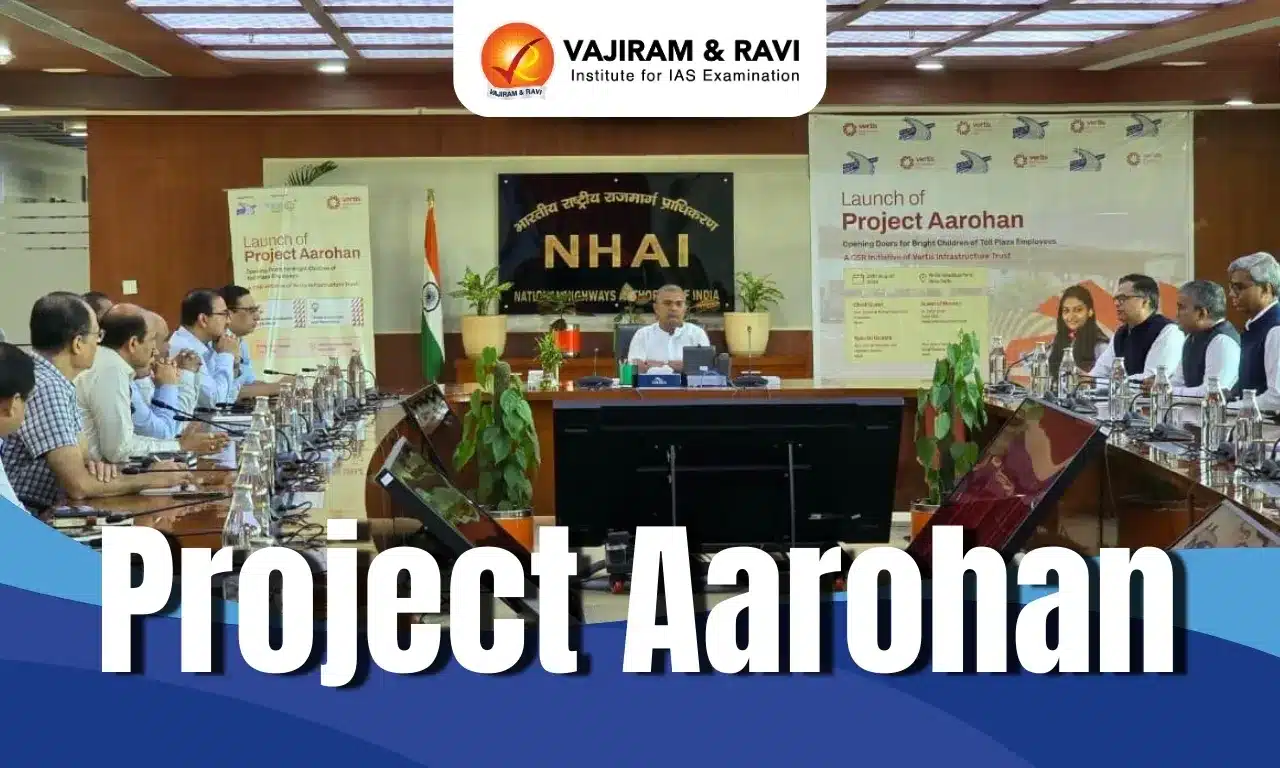
Recently, the National Highway Authority of India launched Project Aarohan.

About Project Aarohan

  • It has an objective to support the educational aspirations of the children of toll plaza employees.
  • It was launched by the National Highway Authority of India.
  • The nationwide project will reach a community of toll‑plaza personnel that are deployed at a vast network of toll plazas on National Highways.
  • The initiative aims to address financial barriers, bridge socio-economic divides and provide equal access to quality education for students from economically weaker sections, including girls from low-income households, first-generation learners and those from Economically Weaker Sections/Scheduled Castes/Scheduled Tribes/Other Backward Classes and minority communities.
  • The program combines financial aid with structured mentorship, skill-building workshops, and career guidance to holistically prepare students for higher education, employment and entrepreneurship.
  • It will be implemented by SMEC Trust’s Bharat Cares,

Funding for Project Aarohan

  • The first phase of ‘Project Aarohan’ will have a fund allocation of Rs. 1 Crore and will span from July 2025 to March 2026.
  • The project aims to cover 500 students from Class 11 to the final year graduation, each receiving an annual scholarship of Rs.12,000 during FY 2025–26.
  • Additionally, 50 bright students aspiring for postgraduate and higher studies will be supported with scholarships of Rs. 50,000 each.

Source: PIB

Project Aarohan FAQs

Q1: What is National Highways Authority of India (NHAI)?

Ans: It is a statutory body under the administrative control of the Ministry of Road Transport and Highways entrusted with developing, maintaining, and managing National Highways.

Q2: What are the two major projects developed by NHAI?

Ans: Two major projects developed by NHAI are the National Highways Development Project (NHDP) and the Bharatmala Pariyojana.

Matsya Shakti Project

Matsya Shakti’ project

Matsya Shakti Project Latest News

The ‘Matsya Shakti’ project will be launched by the Union Minister of State for Fisheries, Animal Husbandry & Dairying.

About Matsya Shakti Project

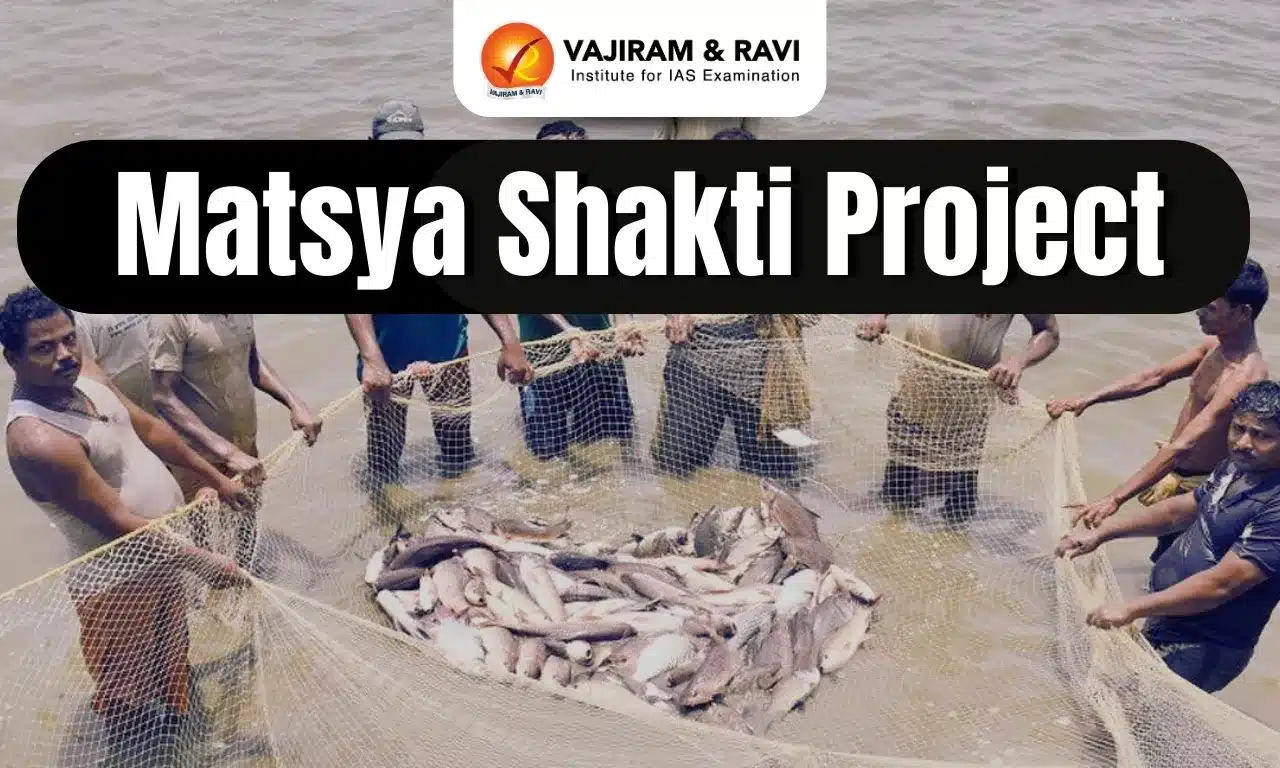
  • It is designed to empower minority fishing communities.
  • It aims to equip participants with comprehensive skills for improved livelihoods and community welfare.
  • The initiative will be implemented by the Vizhinjam Regional Centre of the ICAR–Central Marine Fisheries Research Institute (CMFRI), under the Ministry of Agriculture and Farmers’ Welfare.
  • It is conceived under the Pradhan Mantri Virasat Ka Samvardhan (PM VIKAS) scheme.

Features of Matsya Shakti Project

  • The project seeks to enhance the socio-economic well-being of minority fisherfolk families in the district.
  • It promises a year-long, phased training programme for members of the community, focusing on sustainable livelihood practices and modern skill development.
  • Through hands-on training in areas such as integrated aquaculture, seed production, and advanced fisheries technologies.

Key Facts about Pradhan Mantri Virasat Ka Samvardhan (PM VIKAS) scheme 

  • The PM VIKAS Scheme launched under the Ministry of Minority Affairs is a central sector scheme.
  • It provides skill development, leadership training and entrepreneurship to minorities and artisan communities all over India.
  • The scheme is divided into four components and is expected to benefit around 9 lakh candidates during the 15th Finance Commission Cycle (2025-26).
  • The PM VIKAS Scheme also consolidates five already existing schemes: Seekho aur Kamao, USTTAD (Upgrading the Skills and Training in Traditional Arts/Crafts for Development), Hamari Dharohar, Nai Roshni Nai Manzil 
  • The merging of the scheme provides financial support to minorities and artisans while also integrating Skill India Mission and also working with other ministries like Women and Child Development, Panchayati Raj, Tourism and Education for the overall development in minority concentrated areas.

Source: PIB

Matsya Shakti Project FAQs

Q1: What do you mean by entrepreneurship?

Ans: Entrepreneurship is the skill and willingness to create, organise, and manage a business venture, navigating its uncertainties to generate profit.

Q2: What is the Usttad scheme?

Ans: The USTTAD scheme promotes and preserves traditional arts and crafts practised by minority communities.

Exercise Bright Star

Exercise Bright Star

Exercise Bright Star Latest News

Personnel from the Armed Forces & Headquarters Integrated Defence Staff are set to participate in the Multilateral Exercise ‘BRIGHT STAR 2025’.

About Exercise Bright Star

  • It is a multilateral exercise hosted by Egypt in conjunction with the US since 1980.
  • It is amongst the largest Tri-Service multilateral exercises in the region. 
  • The exercise is held biennially, with the last edition having taken place in 2023, which witnessed the participation of a host of nations including India along with troops.
  • The upcoming edition will feature a comprehensive spectrum of military activities, including:
    • Live Firing by the three Services showcasing the operational capabilities of the Indian Army, Indian Navy and Indian Air Force.
    • Command Post Exercise to enhance joint planning, decision-making and operational coordination.
    • Short Training Exercises by all three Services focusing on varied aspects of modern warfare.
    • Subject Matter Expert Interactions on multiple domains of contemporary military operations.
  • Significance: Participation of the Indian Armed Forces in this exercise underscores India’s commitment to regional peace, stability, and security while enhancing Jointness, interoperability and cooperation with friendly foreign countries.

Source: PIB

Exercise Bright Star FAQs

Q1: What is the name of the military exercise between India and Egypt?

Ans: Cyclone 2025

Q2: Which country is hosting exercise Bright Star 25?

Ans: Egypt

Sukhdev Thapar, Early Life, Revolutionary Activities, Lahore Conspiracy Cas

Sukhdev Thapar

Sukhdev Thapar was a revolutionary and a prominent figure in India’s struggle for independence. Born in Ludhiana, Punjab, he became actively involved in the freedom movement at a young age. As a dedicated member of the Hindustan Socialist Republican Association (HSRA), Sukhdev worked closely with Bhagat Singh and Rajguru, planning and executing several revolutionary activities against British rule. He was deeply committed to inspiring Indian youth to rise against colonial oppression and often organized study circles to spread nationalist ideas.

Along with Bhagat Singh and Rajguru, he was sentenced to death in the Lahore Conspiracy Case and was executed by the British on 23 March 1931. His sacrifice, remembered as Shaheed Diwas, continues to inspire generations of Indians in their pursuit of justice and freedom.

Sukhdev Thapar Early Life

Sukhdev Thapar was born on 15 May 1907 in the Naughara locality of Old Ludhiana, Punjab, then under British India. His parents were Ramlal Thapar and Ralli Devi. Following the untimely demise of his father during his childhood, he was brought up by his uncle, Lala Achintram. He hailed from a Hindu Punjabi Khatri family.

Sukhdev Thapar Revolutionary Activities

Sukhdev played an active and influential role in India’s freedom struggle. He became a member of two prominent revolutionary organisations, the Hindustan Socialist Republican Association (HSRA) and the Naujawan Bharat Sabha both committed to liberating the nation from British colonial rule through revolutionary means.

He was instrumental in initiating several nationalist activities in Punjab and other regions of northern India, and also served as the leader of the HSRA in Punjab. Sukhdev participated in a number of significant events during the movement, including the historic hunger strike undertaken by revolutionaries in prison in 1929.

Role in Saunder’s Assassination

Sukhdev was closely associated with the significant event of the assassination of British police officer J.P. Saunders on 17 December 1928. The act, carried out by Bhagat Singh and Rajguru, was intended as retribution for the death of Lala Lajpat Rai, who had suffered injuries sustained during a protest against colonial rule.

Lahore Conspiracy Case

Sukhdev was a principal accused in the Lahore Conspiracy Case, 1929, officially recorded as Crown versus Sukhdev and others. The British authorities charged him with involvement in planning the Central Legislative Assembly bomb attack in Delhi on 8 April 1929. Following his arrest, along with his companions, he was tried, found guilty, and sentenced to death.

Execution and Secret Cremation

Sukhdev, Bhagat Singh, and Rajguru were hanged in Lahore Central Jail on 23 March 1931, despite widespread appeals for clemency. The colonial government feared mass unrest, so after the execution, their bodies were smuggled out of the jail and secretly cremated near the banks of the Sutlej River under heavy police guard. Even this attempt at concealment failed to silence the people; news of the execution spread quickly, sparking grief and anger across the country. Their martyrdom transformed them into enduring symbols of courage and resistance, inspiring generations to join the struggle for independence.

Reactions to the Hanging

The execution of Bhagat Singh, Rajguru, and Sukhdev sent shockwaves across India. News of their hanging spread quickly, leaving people heartbroken and furious. The timing was significant, it coincided with the Indian National Congress session in Karachi, where leaders and citizens gathered in mourning and outrage. Demonstrations broke out in several cities, with processions, strikes, and black flags symbolizing the nation’s grief.

Even Dr. B.R. Ambedkar strongly condemned the British action, calling it a calculated move to appease public opinion in Britain and to satisfy demands within the British Parliament. To many Indians, the decision exposed the colonial government’s arrogance and cruelty, but it also turned the three martyrs into immortal symbols of courage and sacrifice in the freedom struggle.

Sukhdev Thapar Legacy

Sukhdev Thapar is remembered as one of the most courageous revolutionaries of India’s freedom struggle. His commitment to the cause of independence has earned him a place among the nation’s greatest heroes.

To honor his sacrifice, the National Martyrs Memorial was established at Hussainiwala in Punjab, the very site where Sukhdev, along with Bhagat Singh and Rajguru, was cremated after their execution in 1931. This memorial stands as a symbol of their valor and continues to inspire generations. Every year on 23 March, Shaheed Diwas (Martyrs’ Day) is observed across the country to pay tribute to these revolutionaries who gave their lives for India’s freedom.

In recognition of his legacy, several institutions and landmarks have been named after Sukhdev. The Shaheed Sukhdev College of Business Studies (SSCBS) in Delhi, founded in 1987, stands as a prestigious academic institution dedicated to his memory. Additionally, the Amar Shaheed Sukhdev Thapar Inter-State Bus Terminal in Ludhiana ensures that his name remains deeply rooted in the daily lives of the people.

Through these memorials, institutions, and annual commemorations, Sukhdev’s ideals of courage, patriotism, and sacrifice continue to live on in the collective memory of the nation.

Sukhdev Thapar FAQs

Q1: Who was Sukhdev Thapar?

Ans: Sukhdev Thapar was a revolutionary freedom fighter, member of HSRA, and close associate of Bhagat Singh and Rajguru.

Q2: When was Sukhdev Thapar born?

Ans: He was born on 15 May 1907 in Ludhiana, Punjab.

Q3: Which organization was Sukhdev associated with?

Ans: He was an active member of the Hindustan Socialist Republican Association (HSRA).

Q4: What was Sukhdev’s role in the Lahore Conspiracy Case?

Ans: He played a crucial role in planning and execution, leading to his arrest.

Q5: With whom was Sukhdev executed?

Ans: He was hanged along with Bhagat Singh and Rajguru on 23 March 1931.

Daily Editorial Analysis 28 August 2025

Daily Editorial Analysis

The ASI is Facing a Credibility Crisis

Context

  • Archaeology, as a scientific discipline, aims to reconstruct the past through material evidence and objective analysis.
  • Yet in India, it has often become a contested field, where historical narratives are shaped as much by politics as by empirical findings.
  • The recent controversy surrounding the Archaeological Survey of India (ASI) and the Keeladi excavations highlights not only the struggle between scientific inquiry and political agendas, but also the institutional limitations of the ASI in sustaining credibility and scholarly integrity.

The Keeladi Excavations: A Challenge to Established Narratives

  • The Objective of Keeladi Excavations

    • The Keeladi excavations in Tamil Nadu, initiated in 2014, quickly emerged as one of the most significant archaeological projects in India.
    • With over 7,500 artefacts unearthed in its early phases, the findings pointed to the existence of a literate, urban, and secular society in South India during the Early Historic Period.
    • By potentially bridging the historical gap between the Iron Age (12th–6th century BCE) and the Early Historic period (6th–4th century BCE), Keeladi questioned the prevailing narrative of India’s second urbanisation being centred solely around the Gangetic plains.
  • The Politicisation of Keeladi

    • The project’s trajectory, however, was disrupted when its lead archaeologist, K. Amarnath Ramakrishna, was abruptly transferred in 2017.
    • The ASI simultaneously dismissed the site’s significance and halted further excavation, fuelling suspicion that institutional decisions were motivated by political sensitivities rather than scientific considerations.
    • This intervention provoked both scholarly criticism and political confrontation between the Tamil Nadu and Union governments.
  • Intervention of Madras High Court

    • The Madras High Court eventually transferred the project to the Tamil Nadu State Department of Archaeology, which expanded the scope of discovery by unearthing over 18,000 artefacts.
    • The handling of Keeladi underscores a central issue: archaeology in India is not merely about uncovering the past, but about negotiating which versions of the past are permitted recognition.
    • By downplaying Keeladi’s implications for Dravidian antiquity, the ASI demonstrated how state institutions can constrain alternative historical narratives, even in the face of rigorous scientific evidence such as stratigraphic sequencing and Accelerator Mass Spectrometry dating.

Challenges Faced by the ASI

  • Methodological Inconsistency and Selective Rigor

    • The Union government has argued that isolated findings cannot substantiate sweeping historical revisions without broader validation.
    • While such caution ostensibly reflects methodological rigour, the ASI’s track record reveals glaring inconsistency.
    • At Adichanallur, one of the earliest archaeological sites in Tamil Nadu, the rediscovery of Iron Age artefacts in 2004 was met with prolonged neglect.
    • Despite evidence suggesting a 3,000-year-old civilisation, the ASI delayed publication of results for over 15 years, requiring court intervention.
  • Selective Caution

    • This selective embrace of caution or speculation suggests that the ASI’s commitment to rigour is often subordinate to ideological or political considerations.
    • On one hand, findings that complicate dominant narratives (such as Keeladi’s evidence of Dravidian urbanism) are dismissed as inconclusive; on the other hand, sites that reinforce mytho-historical or nationalist narratives are promoted with little hesitation.
    • Such double standards weaken the ASI’s credibility and reveal what scholars describe as methodological nationalism, an approach that privileges a singular, state-sanctioned vision of India’s past.

Institutional and Structural Weaknesses

  • Scholars such as Avikunthak, Verma, Menon, and Chakrabarti have long criticised the agency for arbitrary personnel decisions, reliance on outdated methods like the Wheeler system, and absence of comprehensive research frameworks.
  • These factors contribute to the production of fragmented, poorly contextualised data, rather than coherent historical interpretations.
  • Equally troubling is the ASI’s insularity.
  • Unlike global counterparts such as the Deutsches Archäologisches Institut in Germany or the Institut National de Recherches Archéologiques Préventives in France, the ASI rarely publishes findings in peer-reviewed academic journals.
  • Instead, it circulates knowledge internally through monographs and bulletins, limiting scholarly scrutiny and international engagement.
  • This lack of transparency fuels suspicion, stifles debate, and prevents Indian archaeology from contributing fully to global scholarship.

The Way Forward: Toward Reform and Renewal

  • To restore its credibility, the ASI must undergo comprehensive reform.
  • First, structural changes are needed to reduce bureaucratic interference and ensure financial and intellectual autonomy.
  • Second, methodological innovation must replace outdated excavation techniques, accompanied by robust peer review and international collaboration.
  • Third, transparency in publishing findings should become a priority, enabling global scrutiny and engagement.
  • Finally, archaeology in India must embrace a plural epistemic framework, one that acknowledges the diversity of the subcontinent’s past rather than subsuming it into a monolithic national narrative.

Conclusion

  • The controversies surrounding the ASI and the Keeladi excavations are symptomatic of larger tensions within Indian archaeology.
  • Unless the ASI reorients itself toward openness, rigour, and inclusivity, it risks further eroding its legitimacy and credibility as the custodian of India’s archaeological heritage.
  • At stake is not just the fate of individual excavation sites, but the very possibility of reconstructing India’s past in all its complexity and plurality.

The ASI is Facing a Credibility Crisis FAQs 

Q1. What did the Keeladi excavations reveal about ancient Tamil society?
Ans. The Keeladi excavations revealed evidence of a literate, urban, and secular society that bridged the gap between the Iron Age and the Early Historic period.

Q2. Why was archaeologist K. Amarnath Ramakrishna’s transfer controversial?
Ans. His transfer was controversial because many believed it was an attempt to suppress Keeladi’s findings that challenged dominant historical narratives.

Q3. How has the ASI shown inconsistency in its treatment of excavations?
Ans. The ASI delayed publishing results from sites like Adichanallur but readily promoted speculative claims about the Saraswati River and the Mahabharata period.

Q4. What structural problems weaken the ASI’s credibility?
Ans. The ASI faces issues such as outdated excavation methods, lack of transparency, bureaucratic interference, and limited publication in peer-reviewed platforms.

Q5. What reforms are suggested to improve the ASI’s functioning?
Ans. Reforms include ensuring autonomy, adopting modern methods, promoting transparency, fostering international collaboration, and embracing India’s plural historical past.

Source: The Hindu


Integrated Air Defence Weapon System (IADWS) - India’s Maiden Test of Indigenous Air Defence System

Context:

  • The Defence Research and Development Organisation (DRDO) conducted the maiden flight test of the Integrated Air Defence Weapon System (IADWS) off the coast of Odisha.
  • This marks a significant step in India’s quest for self-reliance (Atmanirbhar Bharat) in advanced defence technology.

Key Features of IADWS:

  • Three-layered defence structure:

    • Quick Reaction Surface-to-Air Missile (QR-SAM): Range 30 km.
    • Very Short Range Air Defence System (VSHORADS): Range up to 6 km.
    • Directed Energy Weapon (DEW): High-power laser with range 2–4 km.
  • Operational mechanism:

    • Controlled by a Centralised Command and Control Centre, developed by DRDL (Defence Research and Development Laboratory).
  • Maiden flight test:

    • Successfully neutralised three different aerial targets (UAVs and drones) in flight tests.

DRDO’s Technological Evolution:

  • The IADWS missile defence system incorporates multiple technologies that the DRDO has developed over time, in different labs.
  • For example, India began this technological synergising with the Integrated Guided Missile Development Programme (IGMDP) that was set up in 1983 by A P J Abdul Kalam.
  • The IGMDP’s “missile cluster”, which is mainly located in Hyderabad, includes 5 specialised labs:
    • ASL (Advanced Systems Laboratory): Developed Agni and Prithvi ballistic missiles, which were developed into a highly advanced -
      • Anti-ballistic missile (ABM) shield,
      • Anti-satellite (ASAT) missile system, and
      • Multi independently targetable re-entry vehicle (MIRV)
    • DRDL (Defence Research and Development Laboratory): Developed tactical missiles like Trishul, Akash, Nag.
    • Research Centre Imarat (RCI): Specialises in navigation, guidance, homing, command and control, high-temperature materials.
    • Terminal Ballistic Research Laboratory: Specialises in warhead design.
    • Young Scientists Laboratory: Works in the field of emerging tech (AI, quantum computing).
  • Public-private synergy: Transfer of DRDO technology to the private sector, for example, Carborundum Universal Limited (CUMI) licensed for manufacturing ceramic radomes (critical for missiles and aircraft under extreme heat).

Global Collaborations and Strategic Partnerships:

  • Lessons from Israel:

    • Israel’s multi-layered air defence: Iron Dome (up to 160 km); David’s Sling (300 km); Arrow-3 (2,400 km); US-supplied THAAD (200 km).
      • The technology challenge involves integrating the individual elements of the missile shield.
      • Israel demonstrates integration of radar, interceptor missiles, and command systems.
    • Cost-effectiveness: The Tamir (missile, that is the primary component of Iron Dome) initially cost about $1,00,000 each to produce, but the Israeli industry brought down the price to $40-$50,000.
  • India’s approach to joint development:

    • Collaboration principle: Share strengths, complement weaknesses.
    • For examples,
      • BrahMos with Russia: India developed navigation and mission control.
      • Long Range Surface-to-Air Missile (LR-SAM) like Barak 8 with Israel: India built the rear section and integration, Israel provided the seeker and front section.
    • Rule: India avoids collaborations for systems that already exist; prefers joint development of new technology.

Strategic Significance of IADWS for India:

  • Self-reliance: Advances Atmanirbhar Bharat in defence.
  • Synergised R&D: Integrates multiple labs’ expertise into battlefield-ready systems.
  • Geopolitical leverage: Enhances India’s ability to deter combined threats from Pakistan and China.
  • Industrial growth: Public-private partnerships (PPP) foster indigenous defence manufacturing.
  • Future scope: Scope for international collaboration in advanced air defence systems.

Conclusion:

  • The successful test of the IADWS signals India’s steady progress towards building a multi-layered, indigenously developed air defence architecture that reduces external dependence.
  • Going forward, synergising public-private capacities with selective global collaborations can enable India to evolve into a major hub for advanced defence technologies and strengthen its strategic autonomy.

Integrated Air Defence Weapon System (IADWS) FAQs

Q1. What are the key features of the IADWS recently tested by DRDO?

Ans. The IADWS is a three-layered air defence system, controlled through a centralised Command and Control Centre.

Q2. How does the IGMDP illustrate India’s path towards missile self-reliance?

Ans. The IGMDP fostered the development of Agni, Prithvi, Akash, Nag, MIRV, ASAT and ABM capabilities, laying the foundation for India’s indigenous missile strength.

Q3. What is the significance of PPP in India’s defence technology ecosystem?

Ans. Public-private collaboration enables technology transfer, facilitating indigenous production of critical components such as ceramic radomes.

Q4. In what ways can international collaboration enhance India’s air defence capabilities?

Ans. Partnerships, such as with Israel in LR-SAM or Russia in BrahMos, allow India to co-develop systems suited to its operational needs without dependence on existing foreign models.

Q5. What is the strategic significance of the maiden test of IADWS for India’s security environment?

Ans. The successful IADWS test strengthens India’s layered air defence against combined threats from Pakistan and China, and enhances Atmanirbhar Bharat in defence.

Source: IE

Daily Editorial Analysis 28 August 2025 FAQs

Q1: What is editorial analysis?

Ans: Editorial analysis is the critical examination and interpretation of newspaper editorials to extract key insights, arguments, and perspectives relevant to UPSC preparation.

Q2: What is an editorial analyst?

Ans: An editorial analyst is someone who studies and breaks down editorials to highlight their relevance, structure, and usefulness for competitive exams like the UPSC.

Q3: What is an editorial for UPSC?

Ans: For UPSC, an editorial refers to opinion-based articles in reputed newspapers that provide analysis on current affairs, governance, policy, and socio-economic issues.

Q4: What are the sources of UPSC Editorial Analysis?

Ans: Key sources include editorials from The Hindu and Indian Express.

Q5: Can Editorial Analysis help in Mains Answer Writing?

Ans: Yes, editorial analysis enhances content quality, analytical depth, and structure in Mains answer writing.

H-1B Visa Debate 2025: US Criticism, Indian Impact & Trump’s Proposed Reforms

H-1B Visa Debate

H-1B Visa Debate 2025 Latest News

  • Recently, US Commerce Secretary Howard Lutnick labelled the H-1B visa program a “scam,” arguing it allows foreign workers to take jobs that should go to Americans. 
  • His remarks align with the Trump administration’s stance who oppose the program for allegedly undercutting domestic workers.
  • However, the H-1B continues to have strong supporters, including Elon Musk and Vivek Ramaswamy, who highlight its role in bringing global talent to the US. 
  • The program remains particularly significant for Indians, who accounted for over 72% of approved H-1B petitions in 2023.

Overview of the H-1B Visa Program

  • The H-1B is a temporary, non-immigrant visa that enables US employers to hire foreign workers in specialized fields like technology, engineering, and finance. 
  • Launched in 1990, it allows US employers to hire skilled foreign professionals in jobs requiring at least a bachelor’s degree. 
  • It was designed to help businesses access skills unavailable in the domestic workforce by permitting temporary employment of qualified immigrants. 
  • The visa can be granted for up to six years, after which holders must either leave the US for at least 12 months or obtain permanent residency (Green Card).

H-1B Visa Caps and Exemptions

  • Currently, there is an annual cap of 65,000 visas, with an additional 20,000 for individuals holding advanced degrees from US universities. 
  • However, not all petitions fall under this cap — exemptions apply for continuing employment, higher education institutions, and nonprofit or government research organisations. As a result, approvals far exceed the cap. 
  • In FY 2023, the US Citizenship and Immigration Services approved 118,948 initial employment petitions and 267,370 for continuing employment, totalling 3,86,318.

Immigration Politics and Criticism of H-1B Visas in the US

  • Immigration remains one of the most divisive issues in US politics, with concern over it rising sharply in recent years. 
  • Trump’s campaign rhetoric has often targeted immigration, blaming it for job losses, wage stagnation, inflation, and economic distress faced by the working class. 
  • While earlier criticism centred on low-skilled migrants, the H-1B visa program has now come under fire for allegedly displacing American workers from high-paying jobs
  • This narrative, often intertwined with racial undertones, frames immigration as a threat to American livelihoods and fuels political attacks on skilled migration programs like H-1B.

Indians as the Largest Beneficiaries of H-1B

  • Since 2015, Indians have consistently accounted for over 70% of all H-1B visa approvals, far outnumbering Chinese applicants, who remain around 12–13%. 
  • This dominance has made Indian professionals a focal point of criticism from nativist Republicans, who argue that the program allows Indians to take American jobs at lower wages.

Criticism of Wage Disparities

  • Opponents claim that US tech companies misuse the H-1B program to fill low-to-mid-level positions at salaries below what Americans would demand
  • Supporting this narrative, data show that nearly 70% of Indian H-1B approvals in FY 2023 were for salaries under $100,000, compared to the US median IT salary of $104,420. 
    • Only 5% were for salaries above $150,000.

Defence of the Program

  • Despite criticism, industry leaders emphasize that H-1B visas remain essential for addressing the US skills gap. 
  • They argue that wages are market-driven, and global competition for STEM talent is fierce. 
  • With China (3.57 million) and India (2.55 million) producing far more STEM graduates than the US (820,000), Indian and Chinese professionals continue to dominate the high-skilled workforce.

Trump’s Proposed Overhaul of H-1B

  • Although details remain unclear, Trump and his allies have hinted at a major restructuring of the H-1B visa system. 
  • A 2021 rule proposed under his administration offers insights into the possible direction of reforms.

Salary-Based Selection Rule

  • The 2021 proposal sought to prioritize H-1B petitions based on salary levels under the Occupational Employment Statistics (OES). 
  • Higher-paid applicants (Level 3 and 4) would be favored over lower-paid ones (Level 1 and 2). 
  • If implemented, such a change would heavily disadvantage early-career professionals, particularly international students who typically begin at Level 1 or 2 wage bands. 
  • This aligns with Trump’s narrative of prioritizing “higher-value” workers while curbing low-wage immigration.

The “Golden Card” Project

  • In parallel, Trump has floated the idea of a “Golden Card,” offering residency and citizenship to wealthy investors contributing $1 million to businesses or $800,000 to rural or distressed areas. 
  • The initiative has reportedly attracted 250,000 applicants, potentially generating up to $1.25 trillion in investments.

Source: IE | IE | ToI

H-1B Visa Debate 2025 FAQs

Q1: Why is the H-1B visa in the news in 2025?

Ans: US Commerce Secretary Howard Lutnick called the H-1B visa program a “scam,” echoing Trump-era criticisms that it undermines American workers.

Q2: What is the H-1B visa program?

Ans: Launched in 1990, the H-1B visa allows US employers to hire foreign professionals in specialised fields like technology, engineering, and finance for up to six years.

Q3: How many H-1B visas are issued annually?

Ans: The annual cap is 65,000 visas plus 20,000 for US advanced degree holders, but exemptions mean approvals often exceed 3.8 lakh annually.

Q4: Why are Indians central to the H-1B visa debate?

Ans: Indians account for over 70% of H-1B approvals since 2015, dominating the program and drawing criticism from US politicians concerned about job displacement.

Q5: What changes has Trump proposed for H-1B visas?

Ans: Trump suggested prioritising high-wage applicants through a salary-based selection rule, and floated a “Golden Card” residency program for wealthy investors.

Rare Quadruple Star System in Milky Way: Brown Dwarfs Orbiting Red Dwarfs Discovered

Quadruple Star System

Quadruple Star System Latest News

  • A team of international scientists has identified an extremely rare quadruple star system in the Milky Way, named UPM J1040−3551 AabBab. The system features a pair of cold brown dwarfs orbiting two young red dwarf stars — a configuration never observed before.
  • The study was published in the Monthly Notices of the Royal Astronomical Society (September issue).
  • Scientists say this discovery is significant as it provides fresh insights into brown dwarfs, celestial objects that are notoriously hard to detect and study, helping improve understanding of their properties and role in stellar evolution.

Young Red Dwarf Stars

  • Young red dwarf stars are small, relatively cool stars in the early stages of their long lifetimes. They are the most common type of stars in the Milky Way.
  • High radiation: They are characterized by strong magnetic activity, leading to intense ultraviolet (UV) radiation and violent superflares, which can pose significant challenges to planetary atmospheres and life.
  • Size & Temperature: They are smaller and cooler than our Sun, with surface temperatures ranging from about 2,500°C to 4,000°C.
  • Longevity: Red dwarfs burn hydrogen fuel very slowly, allowing them to live for tens to hundreds of billions of years, far longer than stars like the Sun.
  • Youth factor: When they are young, red dwarfs are more active, often emitting intense stellar flares and strong radiation.
  • Importance in astronomy: Studying young red dwarfs helps scientists understand stellar evolution, the habitability of surrounding exoplanets, and how such stars influence planetary atmospheres.
  • Proximity to Earth: The nearest star to our Sun, Proxima Centauri, is a red dwarf, highlighting the abundance and significance of these stars in our galactic neighbourhood. 

Brown Dwarfs: The “Failed Stars”

  • Brown dwarfs are unique celestial objects that form like stars from collapsing gas and dust but lack the mass to sustain hydrogen fusion, which powers normal stars. 
  • This limitation makes them faint and cooler, earning them the nickname “failed stars.” 
  • Despite this, they share characteristics with gas giants such as Jupiter and Saturn, having similar atmospheres filled with molecules like water vapor. 
  • Brown dwarfs can be massive—reaching up to 70 times the mass of Jupiter—yet remain distinct from true stars, occupying the gap between planets and stars in the cosmic family.

Why Brown Dwarfs Are Hard to Detect

  • Brown dwarfs are extremely cold and faint, making them difficult to observe directly. 
  • To study them, astronomers often track brown dwarfs that orbit brighter companion stars, since both objects are usually born together from the same material. 
  • By analysing the brighter stars, scientists can estimate the age, temperature, and composition of the dimmer brown dwarfs.
  • The recent discovery of the quadruple star system UPM J1040−3551 AabBab is remarkable because it contains two T-type brown dwarfs, each about the size of Jupiter, orbiting two young red dwarf stars
  • Such a configuration is exceptionally rare — the probability of a low-mass brown dwarf having a companion is less than 5%, making this finding a valuable opportunity to deepen our understanding of these elusive “failed stars.”

Importance of Studying Brown Dwarfs

  • Brown dwarfs help astronomers understand the processes behind star and planet formation, since they occupy the middle ground between the two. 
  • Mapping their abundance and distribution also provides crucial insights into how mass is spread across the universe
  • This is particularly significant because much of the universe’s mass remains unseen, existing as dark matter, and studying brown dwarfs offers valuable clues to this cosmic mystery.

Source: IE | ES

Quadruple Star System FAQs

Q1: What is UPM J1040−3551 AabBab?

Ans: It is a newly discovered rare quadruple star system in the Milky Way, featuring two brown dwarfs orbiting a pair of young red dwarf stars.

Q2: Why is this discovery significant?

Ans: The system’s unique configuration offers new insights into how stars and brown dwarfs form and evolve, helping astronomers study stellar and substellar properties.

Q3: What are young red dwarf stars?

Ans: They are small, cool, long-lived stars with surface temperatures of 2,500–4,000°C. Young ones emit strong UV radiation and stellar flares, impacting nearby planets.

Q4: Why are brown dwarfs called “failed stars”?

Ans: Brown dwarfs form like stars but lack sufficient mass to sustain hydrogen fusion, leaving them faint and cool, resembling massive gas giants.

Q5: Why are brown dwarfs hard to detect?

Ans: Their faintness makes them difficult to observe, so astronomers study them in binary or multiple systems with brighter stars that reveal their properties.

US Tariffs on Indian Exports: Challenges and Opportunities

US Tariffs

US Tariffs Latest News

  • The US has imposed steep 50% tariffs on Indian exports since August 27, hitting key sectors like textiles, gems, and jewellery, and prompting calls for trade diversification.

Introduction

  • India is facing a significant external trade challenge as the United States has imposed steep 50% tariffs on Indian goods exports
  • This development comes at a time when India’s export sector has grown increasingly reliant on the American market, which has remained the country’s largest trading partner for four consecutive years. 
  • The tariffs have not only raised questions about India’s dependence on the US but have also triggered renewed debates on trade diversification, reforms, and the possibility of joining multilateral trade blocs.

Impact of US Tariffs on Indian Exports

  • The 50% tariff makes India’s labour-intensive and low-margin exports, such as textiles, gems, jewellery, shrimps, furniture, and carpets, uncompetitive in the American market. 
  • Many small and medium exporters, particularly in hubs like Tirupur, Surat, and Noida, have already halted production due to falling demand and shrinking cost competitiveness.
  • Although exports to the US account for less than 2% of India’s GDP, the employment impact is disproportionately large, given that the affected sectors are among the most labour-intensive. 
  • Competitors such as Vietnam, Bangladesh, and Cambodia are poised to benefit from India’s losses, as they currently face lower US tariffs.

India’s Overdependence on the US Market

  • The latest tariff action has exposed the risks of India’s growing reliance on a single export destination. 
  • As of 2024, the US accounted for 18% of India’s exports, up from 11% in 2010. By contrast, China consciously reduced its dependence on the US by diversifying its export basket, with its share of exports to the US falling from 20% to 14% in the same period.
  • This concentration has given the US significant leverage over India’s trade policy. 
  • Until now, Indian exporters enjoyed relatively smooth access to the US market, with average tariffs of just 4% and minimal non-tariff barriers. 
  • That comfort discouraged India from aggressively pursuing alternative export destinations or multilateral trade agreements.

Policy Space for Reform and Diversification

  • The crisis has forced policymakers to reconsider three long-pending issues:
    • Reducing dependence on the US market by aggressively pursuing trade with other regions, including Africa, Latin America, and Southeast Asia.
    • Exploring multilateral trade deals, such as the Comprehensive and Progressive Agreement for Trans-Pacific Partnership (CPTPP), where key members like Japan, Australia, and ASEAN nations are supportive of India’s entry.
    • Reframing India-US trade negotiations by highlighting the broader economic relationship. While the US claims a goods trade deficit, it actually enjoys a $40 billion overall surplus with India when revenues from digital services, education, financial activities, royalties, and defence are considered.

Domestic Measures to Cushion the Impact

  • In the short term, exporters have demanded that the government facilitate domestic procurement by large buyers such as the Indian Railways and public sector undertakings. 
  • The Centre is also considering a relief package with cheaper credit, though the effectiveness of such measures remains uncertain without clarity on how long the tariffs will persist.

Positive Outcomes and Opportunities

  • Trade Reform Momentum: The tariffs could accelerate much-needed reforms in India’s trade structure, such as lowering tariffs on intermediate goods to make domestic industries more competitive.
  • Multilateral Leverage: India is better placed today to negotiate multilateral deals than during the RCEP talks, thanks to its greater willingness to adopt a “structured and balanced” approach to market access.
  • Diversification Push: With the US market becoming riskier, India is likely to expand its trade footprint in Europe, Africa, and Latin America, while also strengthening its presence in digital services and high-value manufacturing.

Source: IE

US Tariffs FAQs

Q1: What is the recent US tariff decision against India?

Ans: The US has imposed a steep 50% tariff on Indian goods exports, effective August 27, 2025.

Q2: Which Indian sectors are most affected by the tariffs?

Ans: Labour-intensive sectors like textiles, gems, jewellery, shrimps, carpets, and furniture are the hardest hit.

Q3: Why is India vulnerable to US tariff actions?

Ans: India relies heavily on the US market, which accounts for 18% of its exports, creating overdependence.

Q4: What options does India have to counterbalance the impact?

Ans: India can diversify exports, negotiate multilateral deals like CPTPP, and highlight the US’s overall trade surplus.

Q5: How could this tariff shock benefit India in the long run?

Ans: It could push India to reform its trade policy, diversify markets, and build resilience against external disruptions.

Guillain-Barre Syndrome

What is Guillain-Barre Syndrome?

Guillain-Barré Syndrome Latest News

Gaza has recently seen a surge in Guillain-Barre syndrome, which can cause full-body paralysis in extreme cases.

About Guillain-Barré Syndrome 

  • It is a rare autoimmune condition in which the body’s immune system attacks the peripheral nervous system. 
  • This is the part of the nervous system outside the brain and spinal cord. 
  • It controls muscle movement, pain signals, and temperature and touch sensations.
  • GBS is also called acute inflammatory demyelinating polyradiculoneuropathy (AIDP).
  • It can occur at any age, but it most commonly affects people between 30 and 50.

Guillain-Barré Syndrome Causes

  • The exact cause of the disease remains unclear, but it is often observed following a viral or bacterial infection, vaccination, or major surgery.
  • At such times, the immune system becomes hyperactive, leading to this rare condition.

Guillain-Barré Syndrome Symptoms

  • Patients often begin with an unknown fever, followed by weakness and other nervous system-related symptoms
  • It can increase in intensity over a period of hours, days, or weeks until certain muscles cannot be used at all. 
  • Some cases of GBS are very mild and only marked by brief weakness. Others cause nearly devastating paralysis, leaving the person unable to breathe on their own.

Guillain-Barré Syndrome Treatment

  • There's no known cure for GBS. 
  • Several treatment options can ease symptoms and help speed recovery. 
  • Most people recover completely from GBS, but some serious illnesses can be fatal. 
  • While recovery may take up to several years, most people are able to walk again six months after symptoms first began.

Source: AJ

Guillain-Barré Syndrome FAQs

Q1: Guillain-Barré Syndrome (GBS) primarily affects which part of the nervous system?

Ans: Peripheral nervous system which controls muscle movement, pain signals, and temperature and touch sensations.

Q2: Guillain-Barré Syndrome (GBS) most commonly affects people in which age group?

Ans: Is there a cure for Guillain-Barré Syndrome (GBS)?

PM Svanidhi Scheme

PM Svanidhi Scheme

PM SVANidhi Scheme Latest News

Recently, the Union Cabinet has approved the “Restructuring and extension of the lending period beyond 31.12.2024 of Prime Minister Street Vendor’s AtmaNirbhar Nidhi (PM SVANidhi) Scheme”.    

About PM SVANidhi Scheme

  • It was initially launched on 1st June 2020 to support street vendors who faced unprecedented hardships during the COVID-19 pandemic.
  • It is implemented jointly by the Ministry of Housing & Urban Affairs (MoHUA) and Department of Financial Services (DFS), with DFS being responsible for facilitating access to loan/ credit cards through banks/financial institutions and their ground level functionaries. 

Key Facts about the Restructured PM SVANidhi Scheme

  • The scheme’s coverage is being expanded beyond statutory towns to census towns, peri-urban areas etc.. 
  • The enhanced loan structure includes first tranche loans increased up to ₹15,000 (from ₹10,000) and second tranche loans increased up to ₹25,000 (from ₹20,000), while the third tranche remains unchanged at ₹50,000. 
  • The introduction of UPI-linked RUPAY Credit Card would provide immediate access of credit to the street vendors in order to meet any emergent business and personal requirements. 
  • In order to give boost to digital adoption, the street vendors can avail cashback incentives upto ₹1,600 on making retail & wholesale transactions. 
  • The scheme also focuses on building the capacity of the street vendors with a focus on entrepreneurship, financial literacy, digital skills, and marketing through convergence. 
  • Standard hygiene and food safety training would be conducted for street food vendors, in partnership with FSSAI. 
  • In order to ensure holistic welfare & development of the street vendors and their families, the ‘SVANidhi se Samriddhi’ component will be further strengthened, through monthly Lok Kalyan Melas.
  • Significance: It envisages the holistic development of street vendors by offering a reliable source of finance to support business expansion and opportunities for sustainable growth. This will not only empower street vendors but will also foster inclusive economic growth, socio-economic upliftment of street vendors and their families 

Source: PIB

PM SVANidhi Yojana FAQs

Q1: Which ministry launched PM SVANidhi Yojana?

Ans: Ministry of Housing and Urban Affairs

Q2: Which institution is the implementing agency of the PM SVANidhi Yojana?

Ans: Small Industries Development Bank of India (SIDBI)

Q3: What is the maximum initial loan amount provided under PM SVANidhi Yojana?

Ans: Rs. 10,000

Enquire Now