Panchsheel Agreement, Background, Five Principles, Objectives

Panchsheel Agreement

The Panchsheel Agreement refers to the Five Principles of Peaceful Coexistence that guide relations between sovereign states. These principles were formally articulated in 1954 during negotiations between India and China regarding trade and intercourse between the Tibet region of China and India. Panchsheel became a foundational concept in India’s foreign policy and later influenced global diplomatic norms, emphasising peace, sovereignty, and mutual respect.

The term Panchsheel is derived from Sanskrit, meaning five principles, and reflects India’s civilizational ethos of harmony, coexistence, and non-violence in international relations.

Panchsheel Agreement Historical Background

  • The Panchsheel Agreement was a five-point agreement between India and China, signed on 29 April 1954.
  • It laid down the Five Principles of Peaceful Coexistence to govern bilateral relations.
  • These principles aimed to establish a framework of lasting peace, cooperation, and stability between the two nations.
  • Popular slogans associated with the agreement were “Hindi-Chini Bhai Bhai” and “Asia for Asians,” reflecting the spirit of Asian solidarity.
  • Panchsheel was viewed as a major step toward normalizing India–China relations during the 1950s.
  • The concept of Panchsheel emerged in response to a global demand for new principles of international relations based on peace, harmony, and mutual respect.
  • Panchsheel became one of the Ten Principles of International Peace and Cooperation adopted in the Bandung Declaration (April 1955) by 29 Afro-Asian countries.
  • Its international relevance was reinforced when a resolution on peaceful coexistence, based on Panchsheel principles, was jointly presented by India, Yugoslavia, and Sweden and adopted by the UN General Assembly on 11 December 1957.

Five Principles of the Panchsheel Agreement

The Five Principles of the Panchsheel Agreement emphasize mutual respect for sovereignty and territorial integrity, non-aggression, and non-interference in internal affairs.

  • Mutual respect for sovereignty and territorial integrity: Each country acknowledges and respects the independence, borders, and territorial unity of the other.
  • Mutual non-aggression: Both states agree not to use force or military threats against one another under any circumstances.
  • Mutual non-interference in internal affairs: No state should вмеш in the domestic political, economic, or social matters of another sovereign state.
  • Equality and mutual benefit: Relations should be based on equality, fairness, and cooperation that benefits all parties involved.
  • Peaceful coexistence: States with different political, economic, and ideological systems can live together peacefully without conflict.

Panchsheel Agreement Objectives

  • To promote peaceful coexistence between India and China.
  • To ensure mutual respect for sovereignty and territorial integrity.
  • To prevent the use of force through mutual non-aggression.
  • To avoid interference in each other’s internal affairs.
  • To establish relations based on equality and mutual benefit.
  • To encourage dialogue and cooperation instead of conflict.
  • To create a moral and ethical framework for international relations.
  • To support peace, stability, and harmony at regional and global levels.

Panchsheel and India-China Relations

  • Foundation of relations (1954): Panchsheel provided the first formal diplomatic framework guiding India-China relations after independence and revolution.
  • Spirit of cooperation: The agreement fostered goodwill and optimism, reflected in the slogan “Hindi-Chini Bhai-Bhai.”
  • Tibet issue: Panchsheel facilitated India’s recognition of China’s sovereignty over Tibet to maintain peaceful ties.
  • Cold War context: It symbolized Asian solidarity and India’s non-aligned approach in a bipolar world.
  • 1962 war impact: The Sino-Indian War undermined Panchsheel, exposing violations of non-aggression and peaceful coexistence.
  • Post-war mistrust: The conflict led to long-term distrust and weakened the practical relevance of Panchsheel.
  • Diplomatic reference: Despite tensions, both countries continue to invoke Panchsheel in bilateral dialogues.
  • Border management: Its principles inform confidence-building measures and calls for peaceful dispute resolution.
  • Contemporary relevance: Panchsheel remains a normative guide, though strategic competition limits its practical application.

Role of Panchsheel in India’s Foreign Policy

  • Foundation of peaceful diplomacy: Panchsheel established peace, dialogue, and non-violence as core principles of India’s foreign policy.
  • Support to Non-Alignment: It reinforced India’s commitment to strategic autonomy and later became the philosophical basis of the Non-Aligned Movement.
  • Respect for sovereignty: Panchsheel guided India’s consistent emphasis on sovereignty and territorial integrity in international relations.
  • Opposition to power politics: The principles reflected India’s rejection of military alliances, coercion, and Cold War bloc politics.
  • Promotion of South-South cooperation: Panchsheel strengthened India’s leadership role among newly independent Asian and African nations.
  • Normative global influence: It enabled India to project itself as a responsible global actor advocating ethical and rule-based international conduct.

Global Influence of Panchsheel Principles

  • Bandung Conference, 1955: Panchsheel formed the ideological basis of the Ten Principles of International Peace and Cooperation adopted by 29 Afro-Asian countries, promoting sovereignty, equality, and peaceful coexistence among newly independent nations.
  • United Nations recognition (1957): A UN General Assembly resolution on peaceful coexistence, jointly sponsored by India, Yugoslavia, and Sweden, incorporated Panchsheel principles and was adopted in December 1957, giving them global legitimacy.
  • Foundation of the Non-Aligned Movement (NAM): Panchsheel was accepted as the philosophical core of NAM at the Belgrade Conference, 1961, influencing over 120 member countries to pursue strategic autonomy during the Cold War.
  • Support for decolonisation: Newly independent states in Asia, Africa, and Latin America used Panchsheel to assert sovereignty, oppose imperialism, and resist political or military intervention by major powers.
  • Contribution to international norms: The principles strengthened global acceptance of non-aggression, equality of states, and peaceful dispute settlement, aligning closely with the objectives of the UN Charter.

Criticism and Limitations of the Panchsheel Agreement

  • Panchsheel was overly idealistic, relying on moral principles and mutual trust while ignoring strategic realities and power politics.
  • The agreement lacked any enforcement or dispute-resolution mechanism, making it declaratory rather than legally binding.
  • Its credibility was seriously weakened by the 1962 Sino-Indian War, which violated the principles of non-aggression and peaceful coexistence.
  • The principles were vaguely defined, allowing selective interpretation by states according to national interests.
  • Panchsheel failed to address asymmetry in power and military capabilities, reducing its effectiveness in ensuring security.
  • It had limited deterrence value, as ethical norms alone could not prevent conflict without supporting diplomatic and security measures.

Panchsheel Agreement FAQs

Q1: What is the Panchsheel Agreement?

Ans: The Panchsheel Agreement is a five-point framework of peaceful coexistence signed between India and China on 29 April 1954 to guide their bilateral relations.

Q2: What are the five principles of Panchsheel?

Ans: The five principles are: mutual respect for sovereignty and territorial integrity, non-aggression, non-interference in internal affairs, equality and mutual benefit, and peaceful coexistence.

Q3: Why was Panchsheel important?

Ans: It established a normative framework for India’s foreign policy, promoted peace, and guided relations with China and other newly independent nations.

Q4: What slogans were associated with Panchsheel?

Ans: Popular slogans included “Hindi-Chini Bhai-Bhai” and “Asia for Asians,” reflecting goodwill and regional solidarity.

Q5: What is its international significance?

Ans: Panchsheel influenced the Bandung Conference (1955), the UN General Assembly resolution (1957) on peaceful coexistence, and became the philosophical basis of the Non-Aligned Movement (1961).

Charter Act of 1793, History, Provisions, Impact, Significance

Charter Act of 1793

The Charter Act of 1793 was a major law passed by the British Parliament to renew and regulate the East India Company’s role in India. It reaffirmed the Company’s trade rights, strengthened its administrative structure, and clarified that its political authority acted on behalf of the British Crown. This act consolidated British power in India, laying foundations for how the Company would govern Indian territories in the years ahead.

What Is the Charter Act of 1793?

The Charter Act of 1793 (also called the East India Company Act, 1793) extended the East India Company’s charter for another twenty years. It maintained the Company’s exclusive trade rights in India, reinforced its political role, and gave greater power to the Governor-General. At the same time, it strengthened British governmental oversight and confirmed that the Company governed Indian territories on behalf of the British Crown.

Charter Act of 1793 Historical Background

To understand why the Charter Act of 1793 was passed, we need to look at previous laws and political developments.

  • Regulating Act of 1773: This was the first major step by Parliament to regulate the East India Company. It created a Supreme Council in Bengal and established a Supreme Court in Calcutta. 
  • Pitt’s India Act of 1784: This act introduced a dual system of governance: the East India Company managed commerce, while the British government (through the Board of Control) overseen political matters. 
  • Amendment Act of 1786: In 1786, a supplementary act strengthened the Governor-General’s power. Lord Cornwallis, then Governor-General of Bengal, was given the authority to override his council in certain cases. 
  • By the early 1790s, the East India Company had grown powerful politically and financially, owning large territories in India and generating large revenues. British policymakers saw the need to renew its charter but also to impose more control, both to secure profits and maintain political stability.

Charter Act of 1793 Provisions

The Charter Act of 1793 introduced several important provisions. We can divide them into political, economic, administrative, and judicial categories.

Political Provisions:

  • The Act made it clear that the East India Company’s political role was on behalf of the British Crown, not for its own sovereignty. 
  • Royal approval was required for key appointments: the Governor-General, governors of presidencies (Madras, Bombay), and the Commander-in-Chief all needed the King’s sanction. 
  • When the Governor-General was present in Bombay or Madras, he outranked the governors of those presidencies.
  • In Bengal, if the Governor-General was absent, he could appoint a Vice-President from among the civilian council members.

Economic/ Trade Provisions:

  • The Company’s trade monopoly in India was renewed for another twenty years. 
  • The Company was required to pay a fixed sum of £500,000 (5 lakh pounds) annually to the British government from its Indian revenues, after covering its expenses. 
  • Salaries and pensions for the Board of Control (in London) and other officials involved in Indian governance were to be paid from Indian revenue. 
  • The Act allowed “privilege trade” (also called “country trade”): the Company could grant licences to individuals (including its own employees) to trade in India. This opened the door for private trade (for example, opium trade to China). 
  • Senior Company officials were not permitted to leave India without permission. If they did so without permission, it was treated as resignation. 
  • The Company’s dividends for its shareholders could be raised up to 10%.

Administrative Provisions:

  • The Governor-General was given expanded powers: he could override his Council in certain situations (a power previously given to Cornwallis in 1786, now extended to all future Governors-General). 
  • Control over the presidencies of Madras and Bombay was strengthened: the Governor-General had executive authority over them. 
  • The Board of Control (based in Britain) had its composition altered. It would now consist of a President and two junior members (not necessarily from the Privy Council). 

Also Read: Charter Act 1833

Judicial/ Legal Provisions:

  • The Act separated the revenue administration from judicial functions. This meant that district collectors or revenue officers no longer acted as judges in revenue courts (the “Maal Adalats” were abolished). 
  • It reaffirmed the existing higher courts: the Sadar Diwani Adalat (civil appeals) and the Sadar Nizamat Adalat (criminal appeals) in Calcutta remained, with the Governor-General and Council assisting, along with native law officers. 
  • Provincial appellate courts continued at Calcutta, Dacca, Murshidabad, and Patna to hear lower-level appeals. 

Charter Act of 1793 Governor-General

During the period of the Charter Act of 1793, John Shore was the Governor-General of Bengal, and his role reflected the new powers granted by the Act.

  • John Shore (Governor-General, 1793-1796): He was in office precisely when this Act came into force. He operated under the new framework, which gave him substantial power to override his Council when necessary.
  • Role under the Act: Under this Act, Shore’s authority was not just administrative but also executive: he could enforce decisions, manage presidencies, and act with greater autonomy because the Act recognized stronger central power. 
  • While the Act extended Cornwallis’s “override” power (first granted in 1786) to future Governors-General, Shore was the first to benefit from this in practice.

Also Read: Charter Act 1853

Charter Act of 1793 Impact

The Charter Act of 1793 created wide-ranging effects on administration, economy, politics, and judiciary by strengthening central authority and expanding Company control.

1. Administrative Impact

  • Increased power of the Governor-General weakened provincial autonomy.
  • Strengthened centralized decision-making across presidencies.
  • Separation of revenue and judicial functions improved administrative clarity.
  • Continued British dominance in senior offices without Indian participation.
  • Standardized administrative processes across territories.

2. Political Impact

  • Reaffirmed the Company’s rule as an extension of the British Crown.
  • Reduced independence of Madras and Bombay governments.
  • Governor-General gained overriding authority, reducing council resistance.
  • Strengthened British control over Indian territories.
  • Reinforced the dual-control structure created under Pitt’s India Act.

3. Economic Impact

  • Renewed East India Company’s trade monopoly for 20 years.
  • Increased financial burden on India due to salaries paid from Indian revenues.
  • Allowed licensed private trade, expanding commercial activities.
  • Permitted Company dividends up to 10 percent.
  • Supported revenue extraction to fund British administrative costs.

4. Judicial Impact

  • Abolished revenue courts (Maal Adalats), clarifying judicial functions.
  • Sustained higher courts like Sadar Diwani and Sadar Nizamat Adalats.
  • Encouraged professional judicial processes.
  • Reduced misuse of revenue powers by collectors.
  • Continued British dominance in judicial administration.

5. Social Impact

  • No policy introduced for education, social reform, or welfare.
  • Limited Indian participation maintained social distance between rulers and subjects.
  • Privilege trade indirectly affected local communities and artisans.
  • Increased central authority shaped social hierarchy under colonial rule.
  • Strengthened British socio-political dominance in Indian society.

Charter Act of 1793 Significance

The Charter Act of 1793 was not revolutionary, but it had deep and lasting significance in the evolution of British governance in India:

  1. Consolidation, not radical change: The Act reaffirmed existing structures rather than disrupt them, giving stability to the British administration. 
  2. Strengthened central power: More authority was given to the Governor-General, making administration more centralized. 
  3. Financial exploitation: By charging administrative salaries to Indian revenues, the Act deepened the economic burden on Indian territories. 
  4. Trade control: The renewal of the Company's monopoly ensured continued economic domination, but the allowance for “country trade” also opened new trade channels. 
  5. Judicial reform: Separating revenue collection from judicial duties meant more impartial justice and stronger legal institutions. 
  6. Political legitimacy: By affirming that the Company acted on behalf of the Crown, the Act clarified that British sovereignty over India was through the Crown, not just the Company. 
  7. Administrative continuity: It ensured continuity through reappointment of officials and stable governance for another two decades.

Charter Act of 1793 Drawbacks

Although the Charter Act of 1793 strengthened British control, it had several important limitations and negative consequences:

  1. No Indian representation: Indians had no real role in governance or high administration under this Act. 
  2. Economic burden on Indian revenue: Paying British officials from Indian revenues transferred the financial cost of administration to India. 
  3. Trade monopoly persisted: The continuation of the Company’s monopoly limited free trade and economic opportunities for others.
  4. Encouragement of “country trade”: The license trade (privilege trade) included opium trade with China, which had long-term negative effects.
  5. Centralization risk: Stronger power to the Governor-General meant less autonomy for local presidencies, reducing decentralization. 
  6. Administrative overreach: The Governor-General’s expanded powers could suppress dissent within his Council. 
  7. Senior official restrictions: Ban on leaving without permission curtailed freedom for Company officers and discouraged initiative. 
  8. Limited judicial reform: While there was separation of powers, only limited improvements were made; system still favored British officers.
  9. Salaries tied to Indian revenue: Paying the Board of Control from Indian income entrenched financial dependence.
  10. Short-term charter: Extending for only 20 years meant uncertainty, requiring further renewal and leaving room for future conflicts.

Charter Act of 1793 Impact on Later Charters (1813 & 1833)

The Charter Act of 1793 laid the foundation for future reforms by strengthening centralized authority, formalizing Crown supervision, and clarifying administrative powers. These features exposed governance gaps that later Acts addressed.

  • Continued monopoly led to demand for free trade, prompting the Charter Act of 1813.
  • Centralized administration highlighted the need for clearer legislative powers, shaping the Charter Act of 1833.
  • Increasing political control set the stage for complete restructuring under later Acts.
  • Financial dependence on Indian revenue pushed future reforms toward accountability.

Charter Act of 1793 UPSC

The Charter Act of 1793 was a careful balance of British expansion and control. It offered stability by renewing the East India Company’s charter, reaffirmed its trade monopoly, and strengthened central governance under the Governor-General. At the same time, it institutionalized financial burdens on Indian territories and limited meaningful participation by Indians. In effect, the Act advanced British imperial interests while laying down administrative and judicial structures that would influence the course of colonial governance for decades.

Charter Act of 1793 FAQs

Q1: What was the main purpose of the Charter Act of 1793?

Ans: Its main purpose was to renew the East India Company’s powers and continue its trade monopoly for 20 more years.

Q2: Did the Charter Act of 1793 change the administrative structure?

Ans: Yes, it strengthened the Governor-General’s authority and reduced the independence of provincial presidencies.

Q3: How did the Charter Act of 1793 affect trade?

Ans: It continued the Company’s trade monopoly but allowed licensed private “country trade,” including opium trade to China.

Q4: Which Governor-General worked under the Charter Act of 1793?

Ans: John Shore (1793-1796) was the Governor-General when the Act was implemented.

Q5: Did the Charter Act of 1793 include Indians in governance?

Ans: No, the Act did not provide Indians any meaningful role in high administration or decision-making.
Treaty of Salbai, Significance, Sequence of Events, Key Details

Treaty of Salbai

The Treaty of Salbai brought the First Anglo-Maratha War to an end on 17th May 1782. The war was going on between the Marathas and the British East India Company. Salbai is located in Gwalior district of Madhya Pradesh. In this article, we are going to cover the treaty of Salbai, the sequence of events and the importance of the treaty.

Treaty of Salbai

The Treaty of Salbai, which helped in bringing the First Anglo-Maratha War to an end, was concluded on 17 May 1782 between the Marathas and the British East India Company. Salbai lies in the Gwalior district of Madhya Pradesh. The treaty was signed between Warren Hastings and Mahadji Scindia.

Treaty of Salbai Sequence of Events

The First Anglo-Maratha War commenced in 1775 after the Treaty of Surat was signed between Raghunathrao, uncle of Peshwa Narayanrao, and the East India Company in Bombay. Raghunathrao harbored aspirations of becoming Peshwa and sought British support.

However, the Calcutta Council of the Company endorsed Narayanrao and his astute minister Nana Phadnavis. They concluded the Treaty of Purandar (1776), which annulled the Surat agreement. This new pact granted Salsette to the British while providing Raghunathrao with a pension.

Despite this, relations worsened when the Bombay Council sheltered Raghunathrao, and Nana Phadnavis allowed the French to use a port. Tensions escalated and culminated in the Battle of Wadgaon, where Mahadaji Shinde led the Marathas to victory over the British, compelling them to accept the Treaty of Wadgaon.

Further confrontations continued, and eventually, negotiations paved the way for the Treaty of Salbai, which formally ended hostilities. Under the agreement, Salsette and Broach (Bharuch) remained with the Company. The Marathas pledged to defeat Mysore’s Hyder Ali, reclaim their lost Carnatic territories, and prevent any French settlements in their domains.

The British, on their side, recognized Madhavrao II, Narayanrao’s son, as the legitimate Peshwa and granted a pension to Raghunathrao. They also accepted Mahadaji Shinde’s control of territories west of the Yamuna and returned to the Marathas all lands acquired after the Purandar Treaty.

Though the treaty ensured two decades of relative calm, the truce eventually collapsed, and the Second Anglo-Maratha War broke out in 1802.

Significance of the Treaty of Salbai 

The Treaty of Salbai had the following significance: 

  • Ended the First Anglo-Maratha War : It brought peace after seven years of conflict between the Marathas and the British East India Company.
  • Restored Balance of Power:  The treaty maintained a political balance, with neither side gaining a decisive upper hand.
  • Recognition of Madhavrao II: The British formally accepted Madhavrao II as the rightful Peshwa, strengthening Maratha legitimacy.
  • Maratha Unity Consolidated: Mahadaji Shinde’s leadership was acknowledged, and Maratha power was reaffirmed in northern India.
  • British Strategic Gains: The Company retained Salsette and Broach (Bharuch), expanding its foothold on the western coast.
  • Check on French Influence:  The Marathas agreed not to allow the French into their territories, which aligned with British strategic interests.
  • Temporary Peace: It secured nearly 20 years of relative peace (1782–1802), delaying further Anglo-Maratha conflict until the Second Anglo-Maratha War.
  • Impact on Mysore Relations: The Marathas were obliged to assist the British against Hyder Ali of Mysore, tilting the balance in southern India.

Treaty of Salbai FAQs

Q1: What were the points of the Treaty of Salbai?

Ans: The treaty ended the First Anglo-Maratha War, recognized Madhavrao II as Peshwa, confirmed British control over Salsette and Broach, restricted French influence, and secured peace for 20 years.

Q2: Which Peshwa signed the Treaty of Salbai?

Ans: Peshwa Madhavrao II was recognized under the Treaty of Salbai.

Q3: What was the Treaty of Salbai in 1802?

Ans: There was no Treaty of Salbai in 1802; the reference is to the Treaty of Bassein (1802).

Q4: Who was the Governor-General of India during the Treaty of Salbai?

Ans: Warren Hastings was the Governor-General of India when the Treaty of Salbai was signed in 1782.

Q5: Which Treaty was signed in 1802?

Ans: The Treaty of Bassein (1802) was signed between the British East India Company and Peshwa Baji Rao II.

Muhammad Ali Jinnah, Political Strategy, Key Contribution, Vision of Nationalism

Muhammad Ali Jinnah

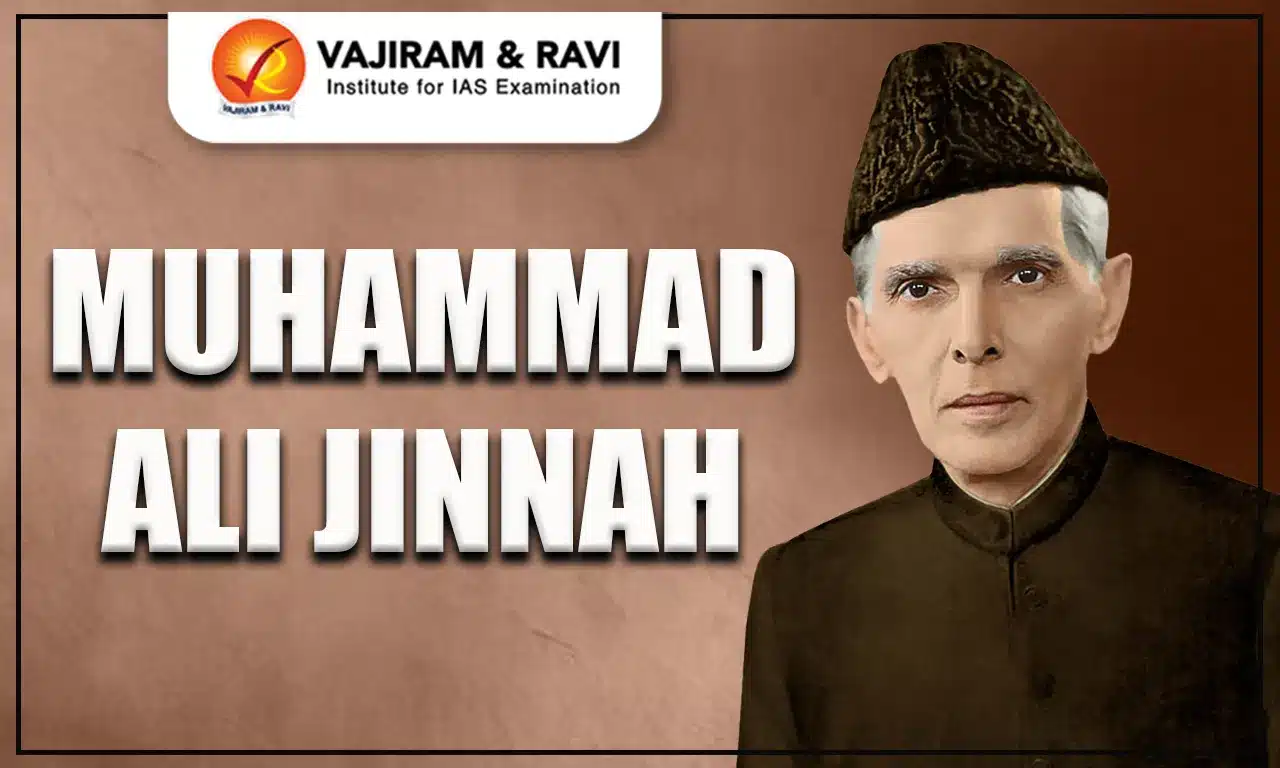
Muhammad Ali Jinnah, referred to as Quaid-e-Azam (Great Leader), was the architect of Pakistan and a defining figure in South Asian history. His vision, determination, and political strategy were central to the creation of a separate homeland for Muslims, earning him enduring respect across generations. Born on December 25, 1876, in Karachi (then part of British India, now Pakistan), his birthday is observed as a national holiday in Pakistan.

Trained as a barrister at London’s Lincoln’s Inn, Jinnah built a flourishing legal career at the Bombay High Court before dedicating himself fully to politics. Over time, his understanding of India’s political landscape and his commitment to safeguarding Muslim identity reshaped his path, marking the beginning of a transformative journey in public life.

Muhammad Ali Jinnah Political Strategy

  • Muhammad Ali Jinnah's political journey was marked by a gradual but decisive transformation in ideology and strategy. In his early years, he championed Hindu-Muslim unity as a member of the Indian National Congress (INC). 
  • His role in the 1916 Lucknow Pact between the INC and the All-India Muslim League reflected his belief that cooperation could secure India greater autonomy while safeguarding Muslim rights.
  • This stance shifted in the 1920s, when Jinnah grew disappointed with Gandhi’s Non-Cooperation Movement, which he considered disorderly and impractical. 
  • He distanced himself from the Congress, and the 1937 provincial elections further widened the divide when the Congress refused to share power with the Muslim League, increasing communal tensions.
  • By 1940, Jinnah had become the chief spokesperson for Muslim aspirations. At the Lahore Session of the Muslim League, he declared that Hindus and Muslims were two distinct nations and demanded a separate homeland. This vision resulted in the creation of Pakistan on August 14, 1947.
  • As First Governor-General of Pakistan, Muhammad Ali Jinnah guided the fledgling state through its earliest challenges, laying the foundations of governance and national identity. 
  • His leadership lasted only a year, as he succumbed to tuberculosis on September 11, 1948, but his legacy as the founder of Pakistan endures.

Muhammad Ali Jinnah Key Contribution

  • Muhammad Ali Jinnah strongly opposed the exploitative Salt Tax, calling it unjust and oppressive. His stance highlighted his concern for India’s economic hardships under colonial rule.
  • He played a central role in drafting the Lucknow Pact, which brought the Congress and Muslim League together. This pact symbolized Hindu-Muslim unity and aimed at securing political rights for both groups.
  • Through the All-India Home Rule League, Jinnah presented his famous 14 points, demanding constitutional reforms that ensured fair Muslim representation and safeguarded their interests in a united India.
  • Throughout his career, he consistently raised the issue of Muslim marginalization. He pushed for systemic changes to address economic inequality and provide opportunities for the upliftment of the community.

Muhammad Ali Jinnah Vision of Nationalism

  • Two-Nation Theory: At the core of Muhammad Ali Jinnah political thought was the Two-Nation Theory. He argued that Hindus and Muslims were not just communities within one nation but separate nations altogether, each with its own culture, religion, and political interests. For him, only a sovereign Muslim state could guarantee freedom from the dominance of a Hindu-majority India.
  • Inclusive Governance: Yet, Muhammad Ali Jinnah Vision of Nationalism was not narrow or exclusionary. He consistently spoke of equality, justice, and religious freedom as guiding principles of the new state. In his first address as Governor-General, he stressed that all citizens whether Hindu, Sikh, Christian, or Muslim would enjoy equal rights, laying the foundation for an inclusive national identity.

Muhammad Ali Jinnah Perspective on Muslim Minority

Muhammad Ali Jinnah strongly highlighted the economic backwardness of Indian Muslims, who were disadvantaged in trade, education, and employment compared to other communities. He consistently advocated measures to bridge this gap and envisioned policies that would promote economic progress for Muslims in a separate state.

Beyond economic concerns, Muhammad Ali Jinnah believed that only an independent nation could guarantee the cultural, political, and social rights of Muslims. According to him, such a state was essential for preserving their identity and ensuring their advancement without being overshadowed by the Hindu majority. This conviction became a core part of his demand for Pakistan, as he saw autonomy not only as a political necessity but also as a safeguard for Muslim dignity, security, and progress.

Muhammad Ali Jinnah FAQs

Q1: Was Muhammad Ali Jinnah a Hindu?

Ans: No. Muhammad Ali Jinnah was born into a Khoja Muslim family in Karachi in 1876. He practiced Islam and later became the key leader of the All-India Muslim League, advocating for a separate Muslim homeland, which eventually became Pakistan.

Q2: What is Muhammad Ali Jinnah known for?

Ans: He is best known as the founder of Pakistan. Jinnah played the central role in the creation of an independent Muslim state in 1947 and is often referred to as Quaid-e-Azam (Great Leader) in Pakistan.

Q3: Was Muhammad Ali Jinnah a Gujarati?

Ans: Yes. Jinnah’s family belonged to the Khoja community, which has roots in Gujarat. Though he was born in Karachi, his ancestral background traces back to Kathiawar, Gujarat.

Q4: Who is father of the nation of Pakistan?

Ans: Muhammad Ali Jinnah is honored as the Father of the Nation in Pakistan for his leadership in the Pakistan Movement and his role in achieving independence.

Q5: Which Hindu king ruled Pakistan?

Ans: Before the creation of Pakistan in 1947, the region was part of British India and earlier under various rulers.

Sir Syed Ahmed Khan, Biography, Career, Early Contributions

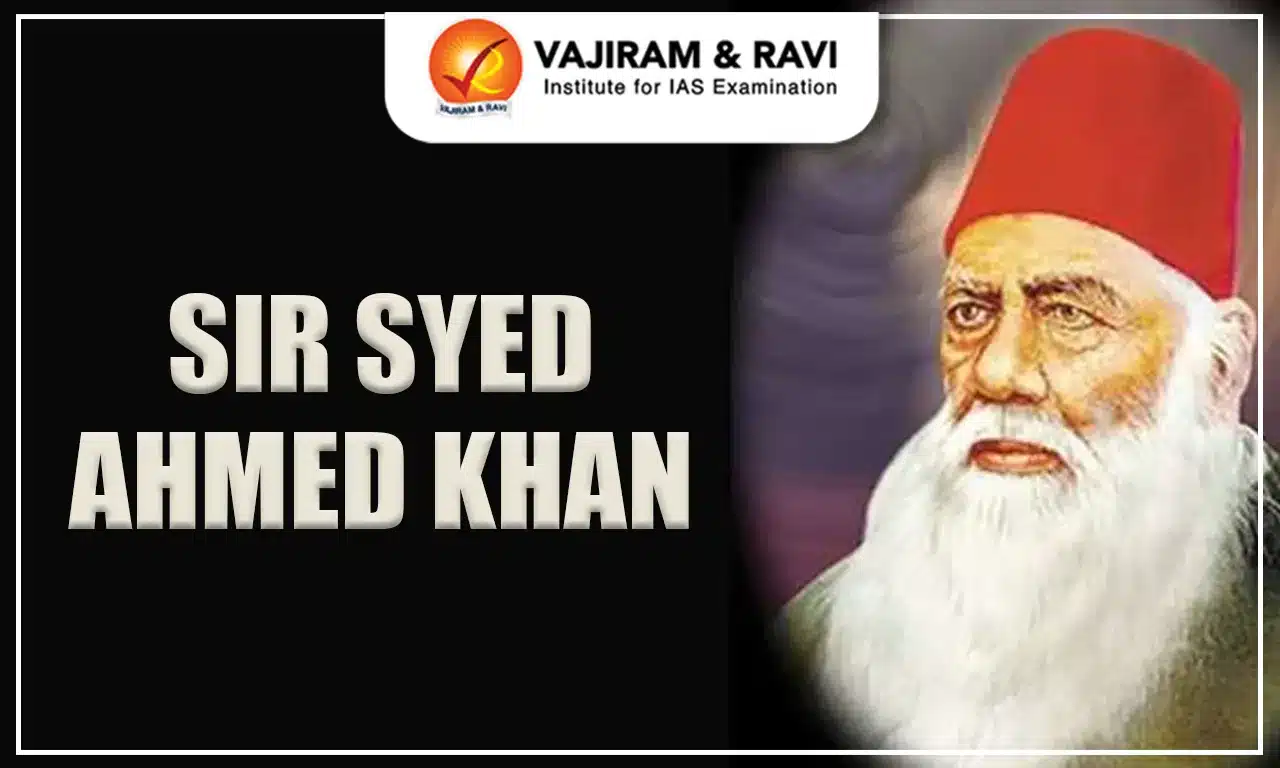
Sir Syed Ahmed Khan

Sir Syed Ahmed Khan was an influential reformer, thinker and educationist of 19th century India. He wrote the booklet ‘Asbab-e-Baghawat-e-Hind’ that talked about the ignorance and aggressive expansion policies at the causes of the revolt and emphasised the importance of modern scientific education for muslims to advance their conditions. He also emphasised on learning English and was against superstition and evil customs existing in society. In this article, we are going to cover Sir Syed Ahmed Khan’s biography, its career, education reforms and legacy in modern education. 

Sir Syed Ahmed Khan Biography

Sir Syed Ahmed Khad was born on 17 October 1817 in Delhi during the Mughal Empire and belonged to a family closely associated with the Mughal court, his maternal grandfather, Khwaja Fariduddin was a Wazir in Akbar Shah II’s court and while his paternal grandfather had an administrative position under Emperor Alamgir II. Sir Syed Ahmed Khan’s father, Syed Muhammad Muttaqi was a confidant of Akbar Shah II. Raised in the cultural richness of Mughal Delhi, Sir Syed received both traditional and rational education. He studied the Quran, Persian and Arabic along with mathematics, astronomy and medicine while developing a strong interest in literature, poetry and philosophy. 

Sir Syed Ahmed Khan’s Career and Early Contributions

Sir Syed Ahmed Khan joined East India Company in 1838 for service and also served as a jurist in the small causes court at Bijnor. His service came into highlight during the Revolt of 1857 and he remained loyal to the British and saved many European lives. The mutiny deeply affected him and he convinced himself that Indian Muslims needed modern education to progress. His book was called Asbab-e-Baghawat-e-Hind and it talked about how British policies were one of the reasons for the uprising. This made him a rational critic of colonial governance. 

Sir Syed Ahmed Khan Educational Reform and Aligarh Movement

After the revolt of 1857, Sir Syed Ahmed Khan changed his focus towards educational and social reforms. He believed that only modern education, blended along with western science and islamic learning could uplift Indian Muslims. In 1863, he founded the Victoria School at Ghazipur and in 1864 he established the Scientific Society to translate western works into Indian languages. His most important contribution was the establishment of Muhammadan Anglo-Oriental College in Aligarh in 1875 that later became Aligarh Muslim University in 1920. The university was an important centre point of the Aligarh Movement that modernised Muslim society through education, social reform and loyalty to the British Crown.

Sir Syed Ahmed Khan Religious and Intellectual Contributions

Sir Syed Ahmed Khan’s work reflects on the progressive and reformist interpretation of Islam. During his early years, he leaned towards orthodoxy and was influenced by sufi thought however, over the period of increased exposure to western ideas, he developed a rationalist approach. He pitched for the reinterpretation of the Quran in light of modern science and reason and also tried to reconcile islamic teachings with contemporary knowledge. His works like Tahdhib-ul-Akhlaq promoted ethical reforms and rational inquiry among Indian Muslims. 

Sir Syed Ahmed Khan Literary and Political Works 

Sir Syed Ahmed Khan’s texts were all written in Urdu covering topics from history to mechanics. He wrote books like Athar-ul-Sanadeed, a work about the monuments of Delhi, showing his interest in archaeology. During the time and after the revolt of 1857, he wrote influential books like Tarikh-i-Sarkashi-ye-Bijnor and Loyal Muhammadans of India bridging the gaps between Muslims and the British. His works covered topics like education, cooperation and modernisation as the pathways for Muslim Progress in India. 

Sir Syed Ahmed Khan Legacy in Modern Education 

Sir Syed Ahmed Khan is remembered as the architect of modern Muslim education in India. By setting up Aligarh Movement and establishment of MAO college, he shaped an educated class of Muslims who would engage with both British institutions as well as their own cultural traditions. Most of his students managed to occupy important administrative, academic and political positions in colonial India. He focused on scientific learning, rational interpretation of religion and education of women that left a lasting impact on Indian society. 

Sir Syed Ahmed Khan and Muslim Nationalism

Sir Syed Ahmed Khan preached Hindu-Muslim unity and emphasised separate political identities for Muslims, saying that their social and educational needs required distinct representation. He is also credited as an ideological precursor of the Two-Nation Theory that shaped the Pakistan Movement. His central legacy remains in the domain of education and reform. Sir Syed Ahmed Khan’s vision was to harmonize tradition with modernity, religion with science, and faith with reason. He laid the foundations of modern education for Muslims in India, creating a cultural and intellectual awakening that transformed society.

Sir Syed Ahmed Khan FAQs

Q1: What is Sir Syed Ahmed Khan famous for?

Ans: He is famous as a 19th-century Muslim reformer, educationist, and founder of the Aligarh Movement.

Q2: Who is the father of two nation theory?

Ans: Sir Syed Ahmed Khan is regarded as the father of the two-nation theory.

Q3: Who gave the title of Sir to Syed Ahmed Khan?

Ans: The British Crown knighted him with the title "Sir" in 1888.

Q4: Which college was founded by Sir Syed Ahmed Khan and when?

Ans: He founded the Muhammadan Anglo-Oriental College in Aligarh in 1875 (later Aligarh Muslim University in 1920).

Q5: What was the first book of Syed Ahmed Khan?

Ans: His first book was Asar-us-Sanadid (1847), on Delhi’s historical monuments.

Daily Editorial Analysis 2 September 2025

Daily Editorial Analysis

The Rise and Risks of Health Insurance in India 

Context

  • The idea of Universal Health Care (UHC) has long been central to the vision of human development in India.
  • The gap between aspiration and reality has led to increasing reliance on health insurance schemes as a perceived route to UHC.
  • Yet, this approach, dominated by the Pradhan Mantri Jan Arogya Yojana (PMJAY) and various State Health Insurance Programmes (SHIPs), raises significant concerns about equity, efficiency, and sustainability.

The Expansion of Health Insurance in India

  • In recent years, health insurance has emerged as the primary strategy for expanding access to health care in India.
  • PMJAY, launched in 2018 under Ayushman Bharat, and its state-level counterparts offer annual coverage of up to ₹5 lakh per household, focusing exclusively on in-patient hospitalisation.
  • By 2023–24, PMJAY covered nearly 58.8 crore individuals with an annual budget of ₹12,000 crore, while SHIPs together accounted for another ₹16,000 crore.
  • Despite forming only a fraction of India’s total health expenditure, these schemes have grown rapidly, with budgets expanding by up to 25% annually in some states.
  • While insurance has provided some relief to patients facing overcrowded or underperforming public facilities, its structural weaknesses threaten to deepen the fault lines of India’s health-care system.

Structural Weaknesses of the Insurance Model

  • The Idea of Profiteering

    • One of the most serious problems with insurance-led health care is the promotion of for-profit medicine.
    • Evidence shows that about two-thirds of the PMJAY budget flows to private hospitals, many of which operate with minimal regulation.
    • Instead of correcting the dominance of profit-seeking providers, health insurance reinforces it.
    • This commercialisation is particularly troubling because the pursuit of profit often conflicts with patient welfare and leads to unnecessary or inflated treatments.
  • Distortion of Health Priorities

    • Insurance schemes disproportionately channel resources toward hospitalisation and tertiary care, while neglecting primary and outpatient services.
    • For a country where many citizens still struggle with basic access to preventive and community-level care, this imbalance risks worsening inefficiency and inequity.
    • The inclusion of all elderly citizens in PMJAY, while seemingly progressive, could further skew expenditure toward costly hospital care at the expense of essential services.
  • Utilisation Challenges

    • Although official figures claim coverage for nearly 80% of the population, surveys show that only about one-third of insured patients successfully use their benefits.
    • Lack of awareness, bureaucratic hurdles, and discouragement by hospitals reduce the practical impact of insurance.
    • Consequently, out-of-pocket spending remains high, undermining the schemes’ core purpose of financial protection.

Some Other Problematic Aspects of Targeted Health Insurance

  • Inequities and Discrimination

    • Targeted health insurance also creates new forms of inequality.
    • Private hospitals often prefer uninsured patients who can be charged higher fees, while public hospitals favour insured patients who bring additional revenue.
    • This results in discriminatory treatment, with patients pressured to enrol on the spot or denied services altogether.
    • Even among the insured, marginalised groups face the greatest obstacles in accessing benefits, reproducing existing social disparities in health outcomes.
  • Administrative and Ethical Failures

    • The implementation of health insurance schemes has been plagued by financial and ethical challenges.
    • Hospitals frequently complain of delayed payments, with pending dues under PMJAY alone exceeding ₹12,000 crore, more than the scheme’s annual budget.
    • This has led many hospitals to suspend services or withdraw from the programme altogether.
    • Additionally, widespread fraud and corruption, from unnecessary procedures to outright denial of eligible treatments, compromise both patient safety and public trust.
    • Weak monitoring and the lack of transparent audit reports further exacerbate these problems, leaving irregularities unchecked.

The Deeper Crisis: Underinvestment in Public Health

  • Ultimately, the reliance on insurance schemes reflects a deeper structural problem: chronic underinvestment in India’s public health system.
  • At just 1.3% of GDP in 2022, India’s public health spending is among the lowest in the world, far below the global average of 6.1%.
  • No country has achieved genuine UHC without strong public health infrastructure, and India’s continued neglect of this sector undermines any insurance-led strategy.
  • Some states have taken steps to strengthen public services, with positive outcomes, but progress remains uneven and insufficient to meet national needs.

Conclusion

  • Health insurance, as currently implemented in India, functions more as a temporary painkiller than as a cure for the systemic ills of the health sector.
  • While schemes like PMJAY and SHIPs offer some relief to patients, they cannot substitute for a robust and accessible public health system.
  • The over-reliance on profit-driven private providers, the neglect of primary care, barriers to utilisation, and rampant inefficiencies all highlight the inadequacy of an insurance-centric approach.
  • For India to move meaningfully toward UHC, it must confront the underlying deficit in public health investment and reorient its strategy toward equitable, non-profit, and preventive care.

The Rise and Risks of Health Insurance in India FAQs

Q1. What was the Bhore Committee’s vision of Universal Health Care (UHC)?
Ans. The Bhore Committee envisioned UHC as access to quality health care for all citizens, irrespective of their ability to pay.

Q2. How does PMJAY primarily support patients?
Ans. PMJAY provides financial cover for hospitalisation by allowing patients to seek treatment from empanelled public and private hospitals.

Q3. Why is India’s reliance on health insurance problematic?
Ans. India’s reliance on health insurance is problematic because it promotes profit-driven private care, neglects primary services, and fails to reduce out-of-pocket spending effectively.

Q4. What is a major administrative issue faced by PMJAY?
Ans. A major issue is the long delay in payments to hospitals, with dues often exceeding the scheme’s annual budget.

Q5. What must India prioritise to achieve genuine UHC?
Ans. India must prioritise greater public investment in health infrastructure, especially in preventive and primary care, to achieve genuine UHC.

Source: The Hindu


Noise Pollution is Rising but Policy is Falling Silent 

Context

  • Urban noise pollution has emerged as one of the most underestimated public health and environmental challenges of our time.
  • Across Indian cities, sound levels consistently exceed permissible limits, especially in sensitive areas such as schools, hospitals, and residential neighbourhoods.
  • Far from being a mere inconvenience, this unchecked rise in decibel levels strikes at the heart of India’s constitutional promises of peace, dignity, and the right to life.
  • While regulatory frameworks exist, systemic apathy, institutional fragmentation, and cultural normalisation of noise have created a crisis that remains largely invisible and dangerously neglected.

Monitoring without Accountability

  • In 2011, the Central Pollution Control Board (CPCB) launched the National Ambient Noise Monitoring Network (NANMN) with the vision of creating a real-time noise monitoring system.
  • More than a decade later, however, the initiative remains a passive data repository rather than an engine for reform.
  • Sensor misplacement, often installed 25–30 feet high in contravention of CPCB guidelines, undermines the reliability of data, and even the limited data collected rarely translates into enforcement.
  • By contrast, Europe has used noise-induced health statistics to redesign zoning laws, impose speed regulations, and estimate an annual economic cost of €100 billion attributable to urban noise.
  • India, in comparison, has failed to translate monitoring into meaningful governance, leaving noise management politically and administratively inert.

Constitutional and Legal Neglect

  • The neglect of noise regulation is not simply environmental; it verges on constitutional dereliction.
  • Article 21 of the Indian Constitution guarantees the right to life with dignity, encompassing both mental and environmental well-being, while Article 48A mandates proactive environmental protection.
  • Yet, in so-called silence zones, hospitals and schools are routinely engulfed in noise that exceeds World Health Organization (WHO) safe limits of 50 dB(A) by day and 40 dB(A) by night.
  • In practice, Indian cities record levels as high as 65–70 dB(A).
  • The Supreme Court has reaffirmed that noise pollution constitutes a violation of fundamental rights, notably in its 2024 reference to the landmark Noise Pollution (V), In Re case.
  • However, enforcement of the Noise Pollution (Regulation and Control) Rules, 2000, remains largely symbolic.

Ecological Consequences, Civic Fatigue, and the Politics of Silence

  • Ecological Consequences

    • The costs of noise pollution extend beyond human well-being.
    • A 2025 study by the University of Auckland revealed that just one night of urban noise and artificial light disrupted the sleep and song patterns, reducing both vocal complexity and frequency.
    • This disruption in avian communication is not merely an ecological curiosity but a signal of a deeper environmental breakdown: biodiversity itself is being robbed of its voice.
    • Such disruptions foreshadow cascading ecological effects, from altered species interactions to diminished urban biodiversity.
  • Civic Fatigue and the Politics of Silence

    • Urban noise pollution is not only a technical issue but also a deeply political and cultural one.
    • Its invisibility as a pollutant, unlike smog or garbage, noise leaves no physical residue, contributes to civic fatigue and apathy.
    • Honking, drilling, and late-night construction have been normalised as unavoidable irritants. Public outrage is muted, and institutional coordination is lacking.
    • Municipal authorities, traffic police, and pollution control boards function in silos, with little inter-agency collaboration.
    • The absence of a national acoustic policy comparable to air quality standards perpetuates the problem.

Pathways to Reform

  • Decentralising noise monitoring: Local bodies must be empowered with real-time access to noise data and corresponding enforcement authority.
  • Linking data to enforcement: Monitoring systems must be coupled with penalties for violations, construction restrictions, and zoning compliance.
  • Institutionalising public awareness: Beyond symbolic events such as “No Honking Day,” long-term behavioural campaigns must be embedded in schools, driver training, and civic spaces.
  • Integrating acoustic resilience into urban planning: Cities must be designed not only for expansion and mobility but also for sonic civility, through zoning reforms, soundproofing infrastructure, and noise-sensitive construction guidelines.

Conclusion

  • Urban noise pollution in India represents a profound failure of governance, cultural awareness, and constitutional responsibility.
  • It silently erodes public health, disrupts ecological systems, and undermines civic dignity.
  • The crisis cannot be solved through technology or law alone; it demands a culture of sonic empathy that redefines silence as an active form of care.
  • Unless India adopts a rights-based framework that integrates data, enforcement, and civic education, its urban environments will remain smart only in name, while unliveable in sound.

Noise Pollution is Rising but Policy is Falling Silent FAQs

Q1. What makes urban noise pollution in India a public health crisis?
Ans. Urban noise pollution exceeds safe limits in most cities, disturbing mental health, sleep, and overall well-being, especially for vulnerable groups like children and the elderly.

Q2. Why has the National Ambient Noise Monitoring Network (NANMN) failed to deliver results?
Ans. The NANMN has become a passive data repository with poorly placed sensors and little connection between monitoring and enforcement.

Q3. How does noise pollution affect ecology?
Ans. Noise disrupts the communication, sleep, and song patterns of birds such as mynas, signaling a broader breakdown in ecological systems.

Q4. What constitutional rights are threatened by unchecked noise pollution?
Ans. Noise pollution undermines Article 21, which guarantees the right to life with dignity, and Article 48A, which mandates environmental protection.

Q5. What key reforms are suggested to tackle urban noise pollution?
Ans. The analysis suggests decentralising monitoring, linking data to enforcement, raising public awareness, and embedding acoustic resilience into urban planning.

Source: The Hindu

Daily Editorial Analysis 2 September 2025 FAQs

Q1: What is editorial analysis?

Ans: Editorial analysis is the critical examination and interpretation of newspaper editorials to extract key insights, arguments, and perspectives relevant to UPSC preparation.

Q2: What is an editorial analyst?

Ans: An editorial analyst is someone who studies and breaks down editorials to highlight their relevance, structure, and usefulness for competitive exams like the UPSC.

Q3: What is an editorial for UPSC?

Ans: For UPSC, an editorial refers to opinion-based articles in reputed newspapers that provide analysis on current affairs, governance, policy, and socio-economic issues.

Q4: What are the sources of UPSC Editorial Analysis?

Ans: Key sources include editorials from The Hindu and Indian Express.

Q5: Can Editorial Analysis help in Mains Answer Writing?

Ans: Yes, editorial analysis enhances content quality, analytical depth, and structure in Mains answer writing.

Mahadev Govind Ranade, Background, Ideology, Contribution

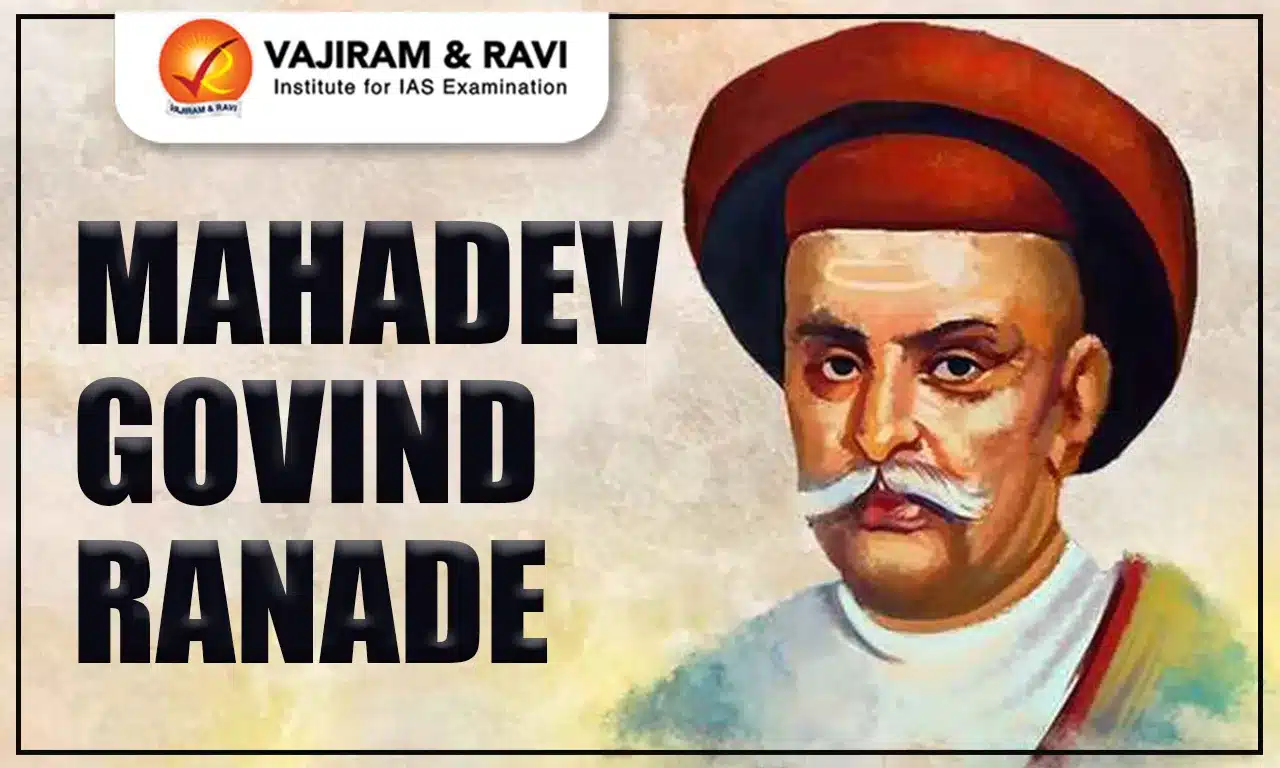
Mahadev Govind Ranade

Mahadev Govind Ranade, born in 1842 in Nashik, Maharashtra, was a renowned nationalist, jurist, scholar, and one of the leading social reformers of 19th-century India. Often remembered as the “Socrates of Maharashtra,” Ranade dedicated his life to promoting progressive ideas such as education, social justice, and economic reform. Deeply influenced by the reformist ideals of the Prarthana Samaj, Arya Samaj, and Brahmo Samaj, he worked tirelessly to challenge regressive practices and uplift Indian society. 

He co-founded the Deccan Educational Society, advocated the establishment of the Indian National Congress, and served with distinction as a judge of the Bombay High Court. His contributions to education, social reform, and nation-building make him an important figure for understanding India’s socio-political awakening under colonial rule.

Mahadev Govind Ranade Background

Mahadev Govind Ranade was born on January 18, 1842, into a middle-class Maharashtrian family in Niphad, Nashik. He began his education at a Marathi school in Kolhapur before moving to an English-medium institution. At the age of 14, he joined Elphinstone College in Bombay and later became part of the first batch of students at the University of Bombay. He earned his BA in 1862 and completed his LLB in 1866.

Ranade played a key role in introducing vernacular languages into the university curriculum. His judicial career began with his appointment as Presidency Magistrate of the Bombay Small Causes Court in 1871, and in 1893 he rose to the position of Judge at the Bombay High Court. Alongside his legal career, he also served as a history professor at Elphinstone College, where his deep interest in Maratha history led him to write the seminal work Rise of Maratha Power in 1900.

Beyond academics and law, Ranade was a reformer and a nationalist. He was instrumental in the founding of the Indian National Congress in 1885, contributing significantly to the political awakening of modern India.

Mahadev Govind Ranade Ideology

  • Mahadev Govind Ranade reformist ideas were shaped by Western thought and the colonial context.
  • He worked in spheres like religious reform, public education, and family reform, often criticizing traditional Indian customs.
  • He believed Hinduism was overly tied to rituals and duties, neglecting deeper spiritual values.
  • Sought to emphasize spiritual growth over ritual practices, drawing inspiration from reformed Christianity, which he saw as more spiritually centered.
  • Viewed many Indian practices as obstacles to progress and worked to reshape them in line with rational and ethical ideals.
  • Advocated indigenous products, balancing Western influence with a nationalist economic vision.

Mahadev Govind Ranade Contributions

  • Mahadev Govind Ranade believed Hinduism focused excessively on rituals and social duties. He sought to infuse it with spiritual values, inspired by his study of Western thought and reformed Christianity.
  • He worked actively for public education, especially advocating reforms within the Indian family system, including women’s education and widow remarriage.
  • Deeply shaped by colonial exposure, he often compared Indian customs with Western practices, favoring reform in line with modern rational ideals.
  • He envisioned an Indian society grounded in higher spiritual values rather than mechanical traditions.
  • Mahadev Govind Ranade strongly supported the Swadeshi movement, urging the use of indigenous products as a path to self-reliance.

Mahadev Govind Ranade on Women Empowerment

  • Mahadev Govind Ranade's reformist vision aimed to humanize and equalize Indian society, with women at the core of his efforts.
  • He actively opposed the purdah system, advocating for women’s dignity, mobility, and participation in public life.
  • In 1861, while still a teenager, Ranade co-founded the Widow Marriage Association to encourage Hindu widow remarriages.
  • This initiative directly questioned rigid Hindu customs that banned widow remarriage.
  • His association also acted as native collaborators (compradors) in supporting the colonial government’s legal project to pass widow remarriage laws.

Mahadev Govind Ranade FAQs

Q1: What is Ranade best known for?

Ans: Mahadev Govind Ranade is best known as a social reformer, judge, and one of the founding members of the Indian National Congress. He worked for widow remarriage, women’s education, removal of caste restrictions, and economic reforms.

Q2: Which book was written by M.G. Ranade?

Ans: His most notable work is Rise of the Maratha Power (1900), which studied the history and political influence of the Marathas. He also wrote extensively on economics, religion, and social reforms.

Q3: What is the caste of Ranade?

Ans: M.G. Ranade belonged to the Chitpavan Brahmin community of Maharashtra.

Q4: Which organization was founded by M.G. Ranade?

Ans: He co-founded the Indian National Social Conference (1887), which worked alongside the Indian National Congress to promote social reform.

Q5: Who is called Mahadev Govind Ranade?

Ans: Mahadev Govind Ranade (1842-1901) was a renowned Indian social reformer, scholar, historian, and judge of the Bombay High Court, often remembered as one of the leading figures of India’s 19th-century reform movement.

Multi-Lane Free Flow (MLFF) Tolling System

Multi-Lane Free Flow (MLFF) Tolling System

Multi-Lane Free Flow (MLFF) Tolling System Latest News

Recently, the Indian Highways Management Company Limited (IHMCL), a company promoted by NHAI has signed an agreement with ICICI Bank to implement country’s first comprehensive Multi-Lane Free Flow (MLFF) tolling system at Choryasi Fee Plaza in Gujarat on NH-48. 

About Multi-Lane Free Flow (MLFF) Tolling System

  • It is a barrier-less tolling system that enables transactions through reading of FASTag and Vehicle Registration Number (VRN) by High performance RFID Readers and ANPR Cameras.

Significance Multi-Lane Free Flow (MLFF) Tolling System

  • It enables seamless toll collection without stopping vehicles at fee plazas, reducing congestion and travel time leading to enhanced fuel efficiency and lowering emissions.
  • Implementation of MLFF will also contribute towards improving toll revenue collection and creating a smarter, faster and more efficient National Highway network across the country.

Key Facts about NHAI

  • It is India’s premier highway infrastructure creator entrusted with developing, maintaining, and managing National Highways.
  • It is a statutory body under the administrative control of the Ministry of Road Transport and Highways.
  • It was constituted under National Highways Authority of India Act, 1998 and made operational in February 1995.
  • Composition: It consists of a full time Chairman, and not more than five full time Members and four part time Members who are appointed by the Central Government.
  • The part time Members are the Secretary (RT&H), Secretary (Expenditure), Secretary (Planning) and DG (RD) & SS.

Source: PIB

Multi-Lane Free Flow (MLFF) Tolling System FAQs

Q1: What is the purpose of MLFF?

Ans: The Multi-Lane-Free-Flow (MLFF) system is an electronic tolling technology that enables smooth traffic flow.

Q2: What do you mean by RFID technology?

Ans: Radio Frequency Identification (RFID) technology uses radio waves to identify people or objects.

Mauritania

Mauritania

Mauritania Latest News

A migrant boat sank off Mauritania’s coast earlier recently, leaving at least 49 people dead and around 100 missing.

About Mauritania

  • It is a country in northwest Africa.
  • It occupies an area of 1,030,000 sq. km.
  • It is a country of the Sahel region (a belt across Africa between the arid Sahara to the north and the humid savannas to the south).
  • It borders four other nations: West Sahara, Senegal, Algeria, and Mali. The Atlantic Ocean lies to the west.
  • Approximately 90% of its landmass is located within the Sahara Desert.
  • The most prominent feature of this region is the Guelb er Richat, also known as the Eye of the Sahara, which is a deeply eroded dome consisting of a variety of intrusive and extrusive igneous rocks.
  • The Senegal River is the most important waterway in the country. 
  • People
    • Most of the people are Moors
    • These are the descendants of Arabs and Berbers (the original inhabitants of North Africa). 
  • Much of the population clings to the coastal cities or by the Senegal River in the south. 
  • Mauritania became independent from France in 1960.
  • In 1981, Mauritania became the last country in the world to outlaw slavery.
  • Capital: Nouakchott 
  • Language: 
    • The main language is Arabic. 
    • The Fulani, Soninke, Wolof, and French languages are also common. 
  • Islam is the national religion.
  • Economy:
    • Mauritania has an abundance of natural resources, including iron ore, gold, copper, gypsum, and phosphate. 
    • Extractive commodities make up 75 percent of Mauritania's total exports (exploration for oil is ongoing), with fishing making up another 20 percent.
    • The nation's coastal waters are said to be among the richest fishing areas in the world.

Source: TOI

Mauritania FAQs

Q1: Mauritania is located in which part of Africa?

Ans: Northwest Africa

Q2: Mauritania shares its borders which countries?

Ans: West Sahara, Senegal, Algeria, and Mali

Q3: Which natural feature of Mauritania is also known as the “Eye of the Sahara”?

Ans: Guelb er Richat

Q4: Mauritania gained independence from which colonial power in 1960?

Ans: France

Clopidogrel

Clopidogrel

Clopidogrel Latest News

Doctors now believe that clopidogrel, a well-known antiplatelet medication, could be more effective than aspirin for long-term prevention of heart attacks—especially in those at high risk. 

About Clopidogrel

  • Clopidogrel is a medication that belongs to the class of antiplatelet agents that prevent blood clots from forming. 
  • It is commonly prescribed to reduce the risk of heart attacks and strokes in people and those with peripheral arterial disease or unstable angina.
  • Clopidogrel works by blocking the action of platelets, which are blood cells that play a key role in forming blood clots, to reduce the risk of serious cardiovascular events.
  • Some of the common uses of Clopidogrel include:
    • Preventing heart attacks
    • Preventing strokes
    • Treating peripheral artery disease
    • Preventing blood clots after certain medical procedures
    • Preventing blood clots in patients with atrial fibrillation.
  • Clopidogrel is usually taken orally, with or without food. 
  • However, the dosage and frequency of the medication will depend on the individual's medical condition, age, and response to treatment.
  • Clopidogrel is typically taken once daily, preferably at the same time each day, to maintain consistent levels of the medication in the body.

Source: ITV

Clopidogrel FAQs

Q1: Clopidogrel belongs to which class of drugs?

Ans: Antiplatelet agents

Q2: What is the primary function of Clopidogrel?

Ans: Preventing blood clot formation.

Q3: Which cells does Clopidogrel primarily act upon?

Ans: Platelets

Q4: Clopidogrel is usually administered in which form?

Ans: Clopidogrel is usually taken orally, with or without food.

Air Quality Life Index (AQLI)

Air Quality Life Index

Air Quality Life Index Latest News

Air pollution has emerged as India’s most severe health threat, reducing the country’s average life expectancy by 3.5 years, according to the Air Quality Life Index (AQLI) 2025 report .

About Air Quality Life Index

  • It measures particulate air pollution's impact on life expectancy.
  • Developed by Michael Greenstone and Energy Policy Institute (EPIC) at the University of Chicago, the AQLI quantifies pollution's effects.
  • The AQLI combines research on long-term air pollution exposure with global particulate pollution measurements.
  • It provides insight into the true cost of air pollution on communities worldwide.

Highlights of the Air Quality Life Index 2025 Report

  • Air pollution has emerged as India’s most severe health threat, reducing the country’s average life expectancy by 3.5 years.
  • Toxic air robs Indians of nearly twice as many years as childhood and maternal malnutrition and more than five times the impact of unsafe water, sanitation, and handwashing.
  • All 1.4 billion Indians live in areas where pollution levels exceed the World Health Organization’s (WHO’s) safe limit of 5 µg/m³ for PM2.5. 
  • The northern belt is still the world’s most polluted zone, with 544.4 million people (38.9 percent of India’s population) living under severe air pollution.
  • Delhi-NCR is the worst hit, with residents facing a loss of 8.2 years in life expectancy (based on WHO’s standard). 
    • Bihar: 5.6 years lost 
    • Haryana: 5.3 years lost 
    • Uttar Pradesh: 5 years lost
  • Even by India’s weaker PM2.5 standard of 40 µg/m³, Delhi-NCR residents would still lose 4.74 years of life expectancy.
  • Shockingly, the report notes that 46 percent of Indians live in areas that exceed even India’s own PM2.5 standards.
  • If pollution levels were reduced to meet this national benchmark, Indians could gain an average of 1.5 years of life expectancy. 
  • Meeting WHO’s stricter 5 µg/m³ guideline could add up to 9.4 months even in cleaner regions.
  • The AQLI report underlines that South Asia is the most polluted region globally, with PM2.5 concentrations rising 2.8 percent in 2023 after a brief dip in 2022.
    • Air pollution:
      • Cuts 3 years off average life expectancy across the region.
      • Reduces life by more than 8 years in the most affected zones

Source: BS

Air Quality Life Index FAQs

Q1: The Air Quality Life Index (AQLI) was developed by which institution?

Ans: Energy Policy Institute at the University of Chicago (EPIC)

Q2: Who led the development of the Air Quality Life Index (AQLI)?

Ans: Michael Greenstone

Q3: According to the Air Quality Life Index (AQLI) 2025 Report, by how many years has India’s average life expectancy been reduced due to air pollution?

Ans: 3.5 years

Q4: Residents of Delhi-NCR are projected to lose how many years of life expectancy due to air pollution (based on WHO standards)?

Ans: 8.2 years

Q5: What percentage of Indians live in areas that exceed India’s own PM2.5 standards (40 µg/m³)?

Ans: 46%

Swarnamukhi River

Swarnamukhi River

Swarnamukhi River Latest News

The Tirupati Urban Development Authority (TUDA) recently announced Operation SWARNA, a massive plan to rescue the River Swarnamukhi from the clutches of land grabbers, revive its flow area and rejuvenate it to ensure sustenance.

About Swarnamukhi River

  • It is a river in Andhra Pradesh.
  • It is an east-flowing river basin having a small catchment area of 3,225 sq.km.
  • Course
    • It rises at an elevation of 300 m in the Eastern Ghat ranges near Pakala village in the Chittur district of Andhra Pradesh.
    • It runs generally in the northeastern direction passing through the famous Tirupati hills before joining into the Bay of Bengal. 
    • Its total length is 130 km. 
  • It flows through the sacred regions of Tirumala and Srikalahasti, where notable Hindu temples like the Srikalahasteeswara Temple are located.
  • Unlike larger river systems, the Swarnamukhi is independent, meaning it does not join or receive water from major river networks. Its flow is heavily dependent on rainfall, particularly in its upper catchment.
  • The average annual rainfall in the Swarnamukhi basin decreases from 1270 mm at the eastern extremity of the basin to 762 mm at the western extremity.
  • Its main tributary is the Kalyani River, across which the Kalyani Dam was constructed in 1977.

Source: TH

Swarnamukhi River FAQs

Q1: The Swarnamukhi River is located in which Indian state?

Ans: Andhra Pradesh

Q2: What is the total length of the Swarnamukhi River?

Ans: 130 km

Q3: The Swarnamukhi River originates from which mountain ranges?

Ans: Eastern Ghats

Q4: Into which water body does the Swarnamukhi River finally drain?

Ans: Bay of Bengal

Dr. Manmohan Singh, Early Life, Contributions, Awards, Death

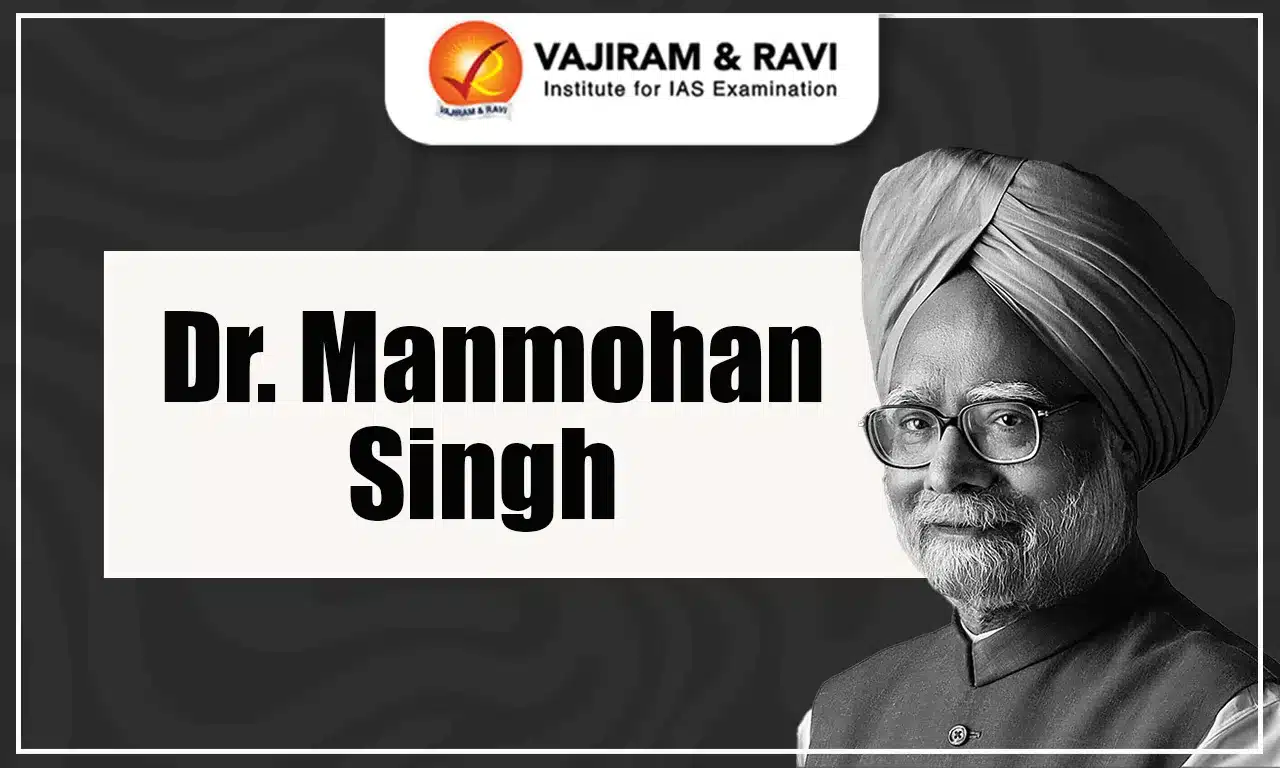
Dr. Manmohan Singh

Dr. Manmohan Singh, the man known to be the architect of opening the Indian Economy to the world, passed away on 26th December 2024. An economist, Politician and a diligent thinker, Dr. Manmohan Singh served as the thirteenth Prime Minister of India from 2004 to 2014. He was a part of the United Progressive Alliance and served as their prime minister for two consecutive terms. The third longest serving Prime Minister of India after Jawaharlal Nehru and Indira Gandhi, his economic policies introduced by him as the finance minister of India in 1991 brought in a new era of liberalisation policies and economic reforms. His policies helped in reframing the economic graph of the country. This article is going to look into the early life, career and achievements of Dr. Manmohan Singh life.

Manmohan Singh Early Life

Born on 26 September 1932 in Gah Village of Punjab, Manmohan Singh’s family belonged to the sikh community. Before the partition of India, he completed his schooling in urdu medium. After moving to Amritsar post partition, he continued his education at Hindu College, Amritsar and Punjab University. He gained his triplos in Economics from St. Johns College, Cambridge. 

After completing his education, Manmohan Singh started of his career as a teacher at Punjab University following which he earned a Doctorate in Philosophy from Oxford University in 1962. 

Dr. Manmohan Singh Beginning of Political Career

Early Career

He began his career as a Senior Lecturer in Economics at Punjab University (1957-1959) and later served as a Reader in the Economics Department of Panjab University starting in 1959. From 1963 to 1965, he worked as a Lecturer before joining the United Nations Conference on Trade and Development (UNCTAD) from 1966 to 1969. At UNCTAD, established in 1964, he contributed to ensuring equitable growth participation for developing nations. His expertise led to his appointment as an advisor to the Ministry of Foreign Trade while concurrently serving as a Professor of International Trade at the University of Delhi.

In 1972, he joined the Ministry of Finance as Chief Economic Advisor and later became Secretary of the Finance Ministry in 1976. His proficiency in economics facilitated his rise, and he joined the Planning Commission, responsible for India's Five-Year Plans, where he served until 1982. That year, he was appointed Governor of the Reserve Bank of India, a position he held until 1985.

In 1985, he returned to the Planning Commission as Deputy Chairman, serving until 1987. Subsequently, he joined the South Commission, a Geneva-based economic policy think tank, where he worked until November 1990. Upon returning to India, he advised Prime Minister Chandra Shekhar on Economic Affairs and was appointed Chairman of the University Grants Commission (UGC) in 1991.

Political Career

His career took a pivotal turn when Prime Minister P.V. Narasimha Rao invited him to join the cabinet as Finance Minister in 1991. This marked a transformative moment for both his career and India's economic history. His visionary leadership and reforms rescued India from the brink of economic collapse, leaving an indelible legacy on the nation's economic trajectory. 

Dr. Manmohan Singh as the Finance Minister of India

In 1991, India faced its most severe economic crisis since Independence. The Gulf War of 1990-1991 led to soaring oil prices and a decline in remittances from Indian workers abroad. The fiscal deficit stood at approximately 8% of GDP, while a balance of payments crisis loomed. The Current Account Deficit was around 3.5% of GDP, and foreign exchange reserves plummeted to just $1 billion.

To address the crisis, the International Monetary Fund (IMF) agreed to extend financial assistance to India, contingent on significant economic reforms. This prompted the Indian government to adopt transformative measures, including dismantling the Licence Raj and initiating liberalization.

Liberalization Measures

  • Under the leadership of Manmohan Singh, the government undertook sweeping reforms to deregulate the economy. Import taxes were reduced, and the Indian rupee was devalued to make exports more competitive. Transitioning from a socialist to a capitalist model, policies were introduced to ease licensing norms, lower tariffs and taxes, and eliminate barriers to international trade and investment.
  • Public monopolies were curtailed, allowing private enterprises to thrive. The cap on foreign direct investment (FDI) was raised from 40% to 51%, and industrial licensing was abolished for most sectors, except for products like tobacco, alcohol, hazardous chemicals, explosives, and pharmaceuticals.
  • Privatization of public sector enterprises and the relaxation of FDI restrictions spurred unprecedented economic growth. India's growth rate surged from 3% in the pre-liberalization era to 8-9% post-liberalization.
  • While the reforms propelled India into a period of substantial economic growth, the Narasimha Rao government was voted out in 1996, partly due to underperformance in critical sectors. Nevertheless, Manmohan Singh earned widespread acclaim for steering India towards a market economy, with P. Chidambaram praising his transformative vision.

Dr. Manmohan Singh as a Member of Rajya Sabha

Manmohan Singh was elected to the Rajya Sabha from Assam for five consecutive terms: 1991, 1995, 2001, 2007, and 2013. He served as the Leader of the Opposition in the Rajya Sabha from 1998 to 2004 during the Bharatiya Janata Party's tenure in power. Although he contested the Lok Sabha elections from South Delhi in 1999, he lost the seat.

Dr. Manmohan’s Tenure as Prime Minister of India

After the 2004 general elections, the Indian National Congress (INC) formed the United Progressive Alliance (UPA) with its allies. Sonia Gandhi surprised many by choosing Manmohan Singh as the Prime Minister due to his reputation for economic expertise and an unblemished political record. His first term as Prime Minister began on May 22, 2004.

Economic Policies

  • Economic Growth: Singh collaborated with Finance Minister P. Chidambaram to sustain high growth rates. In 2007, India achieved a 9% growth rate, becoming the world’s second-fastest-growing economy.
  • National Employment Guarantee Act: The Mahatma Gandhi National Rural Employment Guarantee Act (2005) provided 100 days of guaranteed employment per household, enhancing rural income security.
  • Reforms: Singh's government advanced infrastructure projects like the Golden Quadrilateral, modernized highways, and implemented pro-industry and farmer-friendly policies. It also introduced Value Added Tax (VAT) in 2005 to replace the Sales Tax.

Healthcare and Education

  • National Rural Health Mission (NRHM): Launched in 2005 to provide accessible healthcare to rural populations.
  • Right to Education Act (RTE): Passed in 2009, the RTE guaranteed free and compulsory education for children aged 6 to 14, making education a fundamental right.
  • Educational Initiatives: Singh’s government established eight new IITs and promoted elementary education through the Sarva Shiksha Abhiyan.

National Security and Governance

  • National Investigation Agency (NIA): Established in 2008 to counter terrorism after the Mumbai attacks.
  • Unique Identification Authority of India (UIDAI): Introduced Aadhaar, a 12-digit biometric-based identity system, for enhancing national security and e-governance.
  • Right to Information Act (RTI): The act was passed in 2005 with an aim to ensure government accountability and transparency. 

Manmohan Singh’s Foreign Policy 

Dr. Manmohan Singh focused his foreign policy strategy on economic cooperation, promoting peace, stability and autonomy along with upholding non-alignment policy principles. 

  • Relations with the USA: Singh spearheaded the Indo-US Civil Nuclear Deal in 2008, granting India access to nuclear technology without signing the Non-Proliferation Treaty.
  • Relations with China: Bilateral trade grew significantly, and the Nathula Pass reopened. Singh’s ten-pronged strategy strengthened ties across various sectors.
  • Global Relations: Singh strengthened ties with Japan, Israel, European nations, and African countries while maintaining stable relations with Russia.

Second Term as Prime Minister

After the UPA secured a majority in the 2009 general elections, Dr. Manmoan Singh became the second Prime Minister, after Jawaharlal Nehru, to serve for two consecutive terms. His second term saw controversies like the coal allocation and 2G spectrum cases, but his economic and social initiatives left a lasting impact. Dr. Singh resigned after the 2014 general elections.

Dr. Manmohan Singh Awards and Honours

  • Doctor of Civil Law Degrees (2006): University of Oxford and University of Cambridge.
  • Doctor of Letters (2008): Banaras Hindu University.
  • Honorary Doctorate: Moscow State Institute of International Relations.
  • Dr. Manmohan Singh Scholarship: Instituted by St. John’s College, Cambridge.
  • Indira Gandhi Prize for Peace, Disarmament, and Development (2017).

Manmohan Singh FAQs

Q1: What is Manmohan Singh famous for?

Ans: Manmohan Singh is famous for spearheading India’s economic liberalization in 1991 and serving as the 13th Prime Minister of India.

Q2: Who is the father of Indian economy UPSC?

Ans: The father of the Indian economy is regarded as Mokshagundam Visvesvaraya.

Q3: Did Manmohan Singh win any election?

Ans: No, Manmohan Singh never won a Lok Sabha election but served as a Rajya Sabha member from Assam for five terms.

Q4: Who is the father of new economic policy?

Ans: Manmohan Singh is known as the father of India’s New Economic Policy, introduced in 1991.

Q5: Who is the father of liberalisation in India?

Ans: Manmohan Singh is considered the father of liberalization in India for implementing the 1991 economic reforms.

UDID Project, Features, Benefits, Objectives, UPSC Notes

UDID Project

UDID Project Full Form is Unique Disability Identification Portal Project. Launched in 2016 by the Department of Empowerment of Persons with Disabilities under the Ministry of Social Justice and Empowerment the project will focus on allotting Unique Disability Identity Cards to all physically disabled people of the country. Under the project, a national database for persons with disabilities will be created and the project will be implemented under Swavalamban Yojana. This is a mandatory project to be implemented by all states and Union Territories. States will be required to grant Disability Certificates through online modes using UDID Portal. 

UDID Project Overview

The UDID Project has been launched by the Ministry of Social Justice and Empowerment under which a platform for the disabled people will be created and they will be provided with unique disability ID Cards. All the states and Union Territories are expected to issue this disability certificate only through the online portal. Till present, the states would issue the certificates and the database would remain within the state database however with the implementation of this project there would be a uniformity in storing the data and issuing the certificate according to the guidelines approved by the government.

UDID Project Objectives

The UDID Project (Unique Disability Identity Card Project) aims to establish a national database for Persons with Disabilities (PwDs) to streamline disability certification and provide a standardized Unique Disability Identity Card. Its key objectives include:

  • Identifying all Persons with Disabilities (PwDs) across India.
  • Issuing uniform and unique Disability Identity Cards through the UDID Portal.
  • Creating a centralized and comprehensive database for PwDs.
  • Including both previously documented disabilities, as per the Rights of Persons with Disabilities Act, 2016, and newly recognized disabilities, ensuring disability certificates are issued to all.
  • Enhancing the delivery of benefits to PwDs, such as pensions, skill training, scholarships, educational support, rehabilitation, and concessions in public services like buses and railways.
  • Ensuring benefits reach the rightful beneficiaries at every administrative level, from national to local.
  • Establishing a uniform and seamless system to issue ID cards containing disability details and beneficiary identification for efficient service delivery.

UDID Project Features

The Unique Disability ID (UDID) Project, launched by the Government of India, aims to create a centralized national database for Persons with Disabilities (PwDs) and provide each individual with a Unique Disability Identity Card. The project seeks to streamline access to benefits, services, and resources for PwDs. Key features of the UDID Project include:

  1. National Database Creation: A comprehensive database capturing essential demographic and disability-specific details of PwDs across the country.
  2. Unique Disability ID Card: A standardized ID card issued to each PwD, simplifying access to government benefits, schemes, and services.
  3. Standardized Certification Process: Ensures uniform and consistent evaluation and certification of disabilities nationwide.
  4. Online Application and Tracking: An easy-to-use online portal allows PwDs to apply for the ID card and track their application status, ensuring efficient processing and verification.
  5. Interoperability: The UDID card integrates seamlessly with other government systems and databases, enabling accurate and efficient delivery of services and benefits.
  6. Simplified Access to Entitlements: The ID card acts as a single reference point for disability-related information, streamlining access to scholarships, pensions, grants, and other entitlements.
  7. Elimination of Duplication: A centralized database reduces duplication and fraud in disability certifications and benefit claims.

The UDID Project is a transformative step towards empowering PwDs and ensuring equitable access to their rights and entitlements

Disabilities included in the UDID Project

With the passage of the new Right to Persons with Disabilities Act of 2016, the number of scheduled disabilities has increased to 21 from 7. 

Among those, the following kinds of disabilities are included in the UDID Project:

  • Cerebral Palsy
  • Low Vision
  • Blindness
  • Leprosy - Cured
  • Locomotor impairment
  • Mental Illness
  • Mental Retardation
  • Hearing Impairment

UDID Projects Benefits

The UDID Card simplifies access to government schemes, scholarships, and grants by acting as a single reference for all disability-related information.

  • It consolidates all necessary details about Persons with Disabilities (PwDs) under the UDID Project, eliminating the need for duplicate documents.
  • The UDID Project ensures easier access to benefits and programs tailored for PwDs, streamlining processes for greater convenience.
  • The card serves as a unique and unified record for PwDs across India, removing the need for separate records in different states.
  • Its centralized database allows data to be accessed and updated from anywhere in the country, saving both time and cost.
  • The project enhances transparency in implementing schemes and programs for PwDs, preventing misuse of power and reducing corruption.
  • The financial and health progress of beneficiaries can be effectively tracked through the UDID card at every level of implementation, from the National to Local levels.

UDID Project FAQs

Q1: What is UDID portal?

Ans: The UDID portal is an online platform for managing the issuance of Unique Disability Identity (UDID) cards and maintaining a centralized database of Persons with Disabilities (PwDs).

Q2: Which ministry is responsible for UDID card?

Ans: The Ministry of Social Justice and Empowerment is responsible for the UDID card.

Q3: What is the UDID project?

Ans: The UDID project is an initiative to create a national database of PwDs and issue unique disability identity cards to streamline access to benefits and services.

Q4: What is the process of UDID?

Ans: PwDs can apply for a UDID card through the online portal by submitting required documents, undergoing disability assessment, and receiving the card after verification.

Q5: What are the benefits of UDID?

Ans: The UDID card simplifies access to schemes, ensures transparency, prevents duplication, tracks beneficiary progress, and provides a unified national record for PwDs.

Killer whales

Killer Whales (Orcas)

Killer whales Latest News

A new study has found that killer whales may be exploring human behaviour by offering them whole prey and waiting for them to respond.

About Killer whales

  • It is also known as Orcas which is found across the world and it is the ocean’s top predator.
  • It is the largest member of the Delphinidae family, or dolphins and are the most widely distributed of all cetaceans.
  • Members of this family include all dolphin species, as well as other larger species, such as long-finned pilot whales and short-finned pilot whales, whose common names also contain “whale” instead of “dolphin”.
  • Behavior: Killer whales are highly social, and most live in social groups called pods (groups of maternally related individuals seen together more than half the time).
  • Killer whales rely on underwater sound to feed, communicate, and navigate.
  • Appearance: They are one of the most recognizable marine mammals, with their distinctive black and white bodies.
  • Habitat: Globally, killer whales occur in a wide range of habitats, in both open seas and coastal waters.
  • Threats: Killer whales are at high risk of becoming entangled in fishing gear. Also habitat loss is a major concern.
  • Conservation Status: IUCN: Data Deficient

Source: TH

Killer whales FAQs

Q1: Are killer whales aggressive to humans?

Ans: In the vast majority of encounters, killer whales have shown no aggression towards people.

Q2: What is special about killer whales?

Ans: They are highly intelligent and able to coordinate hunting tactics.

Bond Market in India – Rising Bond Yields Amid RBI Rate Cuts

Bond Market in India

Bond Market in India Latest News

  • India’s 10-year benchmark government bond yield has risen by about 26 basis points in the past month, despite the Reserve Bank of India (RBI) cutting the repo rate by 100 basis points over seven months. 
  • This divergence signals investor unease in the bond market in India over inflation, fiscal risks, and government borrowing requirements.

Bond Market in India

  • Meaning
    • The bond market in India is a structured space where governments, companies, and public sector organisations raise money by issuing bonds
    • The bond market is not just a place for investors to park their money—it plays a vital role in keeping the Indian economy running smoothly. 
  • Importance:
    • Funding the nation’s development: Example, when the government needs money to build roads, schools, hospitals, or even invest in green energy projects, it issues bonds. 
    • Fueling business growth: Corporate bonds allow businesses to raise money for expansion, new projects, or even to manage existing debt more efficiently.
    • Shaping interest rates: The bond market plays a key role in guiding interest rates. Bond yields—the returns investors expect—act as a benchmark for interest rates across the economy.
  • Types of bond markets in India:
    • Primary bond market: 
      • When a company or government needs funds, it issues bonds for the first time in this market. 
      • Investors purchase these fresh bonds directly from the issuer, providing immediate capital for the issuer’s projects. 
    • Secondary bond market:
      • It allows investors to buy and sell previously issued bonds among themselves. 
      • Prices in the secondary market fluctuate based on interest rates, issuer creditworthiness, and broader economic trends, offering both opportunities and risks for investors.
  • Key types of bonds one can invest in:
    • Government bond market: The government issues various types of bonds, such as -
      • Treasury Bills: Short-term securities with maturities up to one year, ideal for those seeking safety and quick returns.
      • G-Secs (Government Securities): Long-term bonds with maturities from 2 to 30 years, often used to fund major infrastructure projects.
      • State Development Loans (SDLs): Bonds issued by state governments for regional development.
    • Municipal bond market: State and local authorities issue municipal bonds to finance public infrastructure like water supply systems or urban transport. 
    • Corporate bond market: While these bonds carry higher risk compared to government bonds, they also offer higher coupon rates, providing an opportunity for greater returns.
  • Regulation: Government bonds are regulated by Reserve Bank of India (RBI) and Corporate bonds are regulated by Securities and Exchange Board of India (SEBI).

Key Developments in Bond Market in India

  • Bond market dynamics:
    • 10-year bond yield: Rose from around 6.34% to 6.60% despite rate cuts.
    • General expectation: Bond yields fall when repo rate is cut; current rise shows investor concerns.
    • Implication: Rising yields leads to falling bond prices, reflecting selling pressure.
  • RBI’s policy stance:
    • RBI adopted a hawkish stance on inflation despite lowering rates.
    • Monetary Policy Committee (MPC) kept key rates unchanged:
      • Repo Rate: 5.50%
      • Standing Deposit Facility (SDF): 5.25%
      • Marginal Standing Facility (MSF): 5.75%
    • Growth forecast: 6.5% for 2025–26.
    • Inflation forecast: Revised down to 3.1% for 2025–26, but projected to rise to 4.9% in Q1 of 2026–27.

Yield Curve and Market Interpretation

  • Steepening yield curve: Long-term yields rose more sharply than short-term yields.
  • Investor expectation: Higher future borrowing costs.
  • Mutual fund outlook: RBI prioritising inflation control over growth revival.

GST Reform and Fiscal Concerns

  • Proposal: Rationalisation of GST from 4 slabs (5%, 12%, 18%, 28%) to 2 slabs (5%, 18%), plus 40% for sin goods.
  • Market concern:
    • Possible revenue loss of ₹50,000–60,000 crore.
    • Risk of fiscal slippage and higher borrowing needs.
  • Effect: Increased government borrowing would result in higher bond supply and rising yields.

Possible Corrective Measures

  • Government borrowing strategy: Shift to short/medium-term borrowing.
  • RBI interventions:
    • Open Market Operations (OMOs): RBI buys long-term bonds to reduce supply and yields.
    • Operation Twist: Simultaneous buying of long-term bonds and selling of short-term ones.

Forward Outlook

  • No immediate rate cuts likely due to inflation trajectory.
  • If inflation eases further, RBI may adopt a growth-supportive stance.
  • This could revive long-duration bonds and ease yields in the medium term.

Conclusion

  • Going forward, the bond market in India will hinge on how effectively the RBI balances inflation management with the government’s fiscal consolidation efforts. 
  • Prudent borrowing strategies and timely policy interventions like OMOs or Operation Twist can stabilize yields and create space for growth-supportive measures once inflation risks ease.

Source: IE

Bond Market in India FAQs

Q1: Why have India’s 10-year government bond yields risen despite successive repo rate cuts by the RBI?

Ans: Yields rose due to investor concerns over inflation, fiscal slippage, and higher government borrowing, outweighing the impact of policy rate cuts.

Q2: What does the steepening of the yield curve indicate in the context of India’s bond market?

Ans: It signals expectations of higher future borrowing costs and a market perception that inflation control is being prioritised over growth.

Q3: How could the proposed GST slab rationalisation impact India’s fiscal position?

Ans: It may cause a revenue shortfall of ₹50,000–60,000 crore, raising risks of fiscal deficit slippage and higher borrowing.

Q4: What tools can the RBI use to manage bond yields apart from repo rate changes?

Ans: RBI can employ Open Market Operations (OMOs) and Operation Twist to stabilise yields by influencing long-term bond supply.

Q5: What dilemma does the RBI face in balancing inflation control and economic growth?

Ans: While controlling inflation requires a hawkish stance, prolonged tightness may constrain growth, forcing the RBI to weigh stability against revival.

Supreme Court Revisits RTE Exemption for Minority Institutions

RTE Exemption

RTE Exemption Latest News

  • The Supreme Court has referred the issue of RTE exemption for minority institutions to a larger Bench, questioning its 2014 ruling that granted them blanket exemption.

Introduction

  • The Right of Children to Free and Compulsory Education (RTE) Act, 2009, is a cornerstone of India’s commitment to universal elementary education. 
  • However, a contentious legal question persists: should minority educational institutions, protected under Article 30 of the Constitution, be exempt from the provisions of the RTE Act? 
  • This debate resurfaced after the Supreme Court, on September 1, 2025, referred the issue to a larger Bench, signalling that its 2014 ruling in the Pramati Educational and Cultural Trust v. Union of India case may require reconsideration.

Debate on RTE Exemption to Minority Institutions

  • The heart of the debate lies in balancing two constitutional guarantees, Article 21A, which ensures free and compulsory education for children aged 6 to 14, and Article 30(1), which grants minorities the right to establish and administer educational institutions of their choice.
  • The 2014 Constitution Bench had ruled that Section 12(1)(c) of the RTE Act, which mandates 25% reservation for children from disadvantaged groups in all private schools, would infringe upon the autonomy of minority institutions
  • This judgment effectively excluded all minority institutions, aided or unaided, from the purview of the RTE Act.
  • Critics argue that such blanket exemption dilutes inclusivity, fragments the common schooling system, and enables institutions to misuse minority status to avoid regulatory obligations. 
  • Proponents, however, stress that autonomy is essential for preserving the unique cultural and linguistic character of minority-run schools.

Background of the Case

  • The reference arose from appeals challenging the insistence of state education departments that teachers in minority institutions clear the Teacher Eligibility Test (TET), a minimum qualification prescribed under Section 23 of the RTE Act.
  • The two-judge Bench of the Supreme Court observed that the 2014 ruling had “unknowingly jeopardised the very foundation of universal elementary education.” 
  • The court noted that exempting minority institutions from the RTE framework weakens the vision of inclusivity, reinforcing divides instead of creating shared spaces for learning.

Supreme Court’s Observations and Summary

  • The Supreme Court, while referring the matter to a larger Bench, underlined several critical points:
    • Need for Reconsideration of 2014 Ruling: The Bench held serious doubts over the justification of granting blanket exemption, stating that applying the RTE Act “does not erode, let alone annihilate, the minority character” of institutions.
    • Social Inclusion and Section 12(1)(c): The judges emphasised that the 25% reservation under Section 12(1)(c) serves a vital purpose of social inclusion. 
      • Admitting disadvantaged children under a transparent, state-guided framework does not inherently compromise minority identity.
    • Financial Neutrality: The RTE Act includes reimbursement provisions for private schools implementing Section 12(1)(c), ensuring that the financial burden does not fall solely on institutions.
    • Inclusivity and Equality: The Bench highlighted that the larger purpose of the Act is to create integrated classrooms where children of different backgrounds learn together, aligning with the transformative goals of Article 21A.
    • Misuse of Minority Status: The court also flagged that some institutions have sought minority recognition primarily to bypass obligations under the RTE Act, creating “enclaves of privilege” at the cost of national development goals.
  • The matter will now be placed before the Chief Justice of India, who may constitute a larger Bench to examine whether minority institutions should continue to enjoy a blanket exemption from the RTE Act or whether a nuanced, fact-specific approach should be adopted.

Conclusion

  • The Supreme Court’s move to revisit the exemption of minority institutions from the RTE Act marks a crucial moment in India’s education and constitutional jurisprudence. 
  • It raises fundamental questions about equality, inclusivity, and autonomy. 
  • If the larger Bench revises the 2014 judgment, minority institutions may need to comply with provisions such as the 25% reservation under Section 12(1)(c), thereby reinforcing the idea of a common schooling system. 
  • Striking the right balance between minority rights and the universal right to education will be key to shaping the future of India’s education policy.

Source : TH | IE

RTE Exemption FAQs

Q1: What did the 2014 Supreme Court ruling on RTE and minority institutions state?

Ans: It held that the RTE Act violated Article 30 and granted minority institutions blanket exemption from its provisions.

Q2: Why has the Supreme Court referred the matter to a larger Bench in 2025?

Ans: The court observed that the 2014 ruling undermined inclusivity and may need reconsideration.

Q3: What is Section 12(1)(c) of the RTE Act?

Ans: It mandates 25% reservation in private schools for children from disadvantaged and weaker sections.

Q4: How does the Supreme Court view the impact of RTE on minority character?

Ans: The court held that applying the RTE Act does not erode the minority character of institutions.

Q5: What concerns has the court raised about minority status?

Ans: It noted that minority status is sometimes misused to evade obligations under the RTE Act.

India’s Cancer Map 2025: Regional Trends, Risk Factors, and Key Health Programmes

India’s Cancer Map

India’s Cancer Map Latest News

  • An analysis of data from 43 cancer registries shows India’s lifetime risk of developing cancer is 11%, with 15.6 lakh cases and 8.74 lakh deaths reported in 2024.
  • These population-based registries, covering 10–18% of the population across 23 states and Union Territories, track new cancer cases, deaths, and regional trends. 
  • Using 2015–19 data, researchers have identified critical patterns in cancer incidence, offering valuable insights for health policy and planning.

Key Trends in India’s Cancer Burden

  • An analysis of data from 43 cancer registries (2015–2019) recorded 7.08 lakh cancer cases and 2.06 lakh deaths. 
  • The study, conducted by researchers from leading institutions including AIIMS Delhi, Tata Memorial, and Adyar Cancer Institute, excluded 2020 data due to Covid’s impact on health systems.

Gender Disparities in Cancer Cases and Deaths

  • Women accounted for 51.1% of cancer cases but only 45% of deaths, largely because breast and cervical cancers — the most common among women — are more easily detectable and treatable. 
  • In contrast, cancers more common in men, like lung and gastric cancers, are harder to detect early and have poorer outcomes.

Rising Oral Cancer Cases

  • Oral cancer has now overtaken lung cancer as the most common cancer in men, despite declining tobacco use (34.6% to 28.6% between 2009–10 and 2016–17). 
  • This rise is attributed to the long latency of tobacco’s effects and additional risk factors such as alcohol consumption, which increases the risk of multiple cancers.

Northeast India: The Cancer Hotspot

  • The highest incidence rates were recorded in the Northeast, especially Mizoram (21.1% lifetime risk for men, 18.9% for women). 
  • Factors include higher tobacco use, risky dietary habits (fermented pork fat, smoked meats, spicy food, hot beverages), and greater prevalence of carcinogenic infections like HPV, Helicobacter pylori, and hepatitis.

Geographical Spread of Cancer in India

  • Cancer incidence shows strong regional variations. 
  • Breast cancer is highest in Hyderabad (54/100,000), while cervical cancer peaks in Aizawl (27.1). 
  • Lung cancer is most common among men in Srinagar (39.5) and among women in Aizawl (33.7), with high rates also in metro cities like Chennai, Delhi, Bengaluru, and Visakhapatnam. 
  • Oral cancer is most prevalent among men in Ahmedabad (33.6) and among women in East Khasi Hills (13.6), with high cases across western, central, and northern India. 
  • Prostate cancer is highest in Srinagar (12.7).

Policy and Healthcare Significance

  • Findings underline the need for targeted cancer care programs, from screening and awareness campaigns to early detection and treatment
  • In the Northeast, comprehensive approaches — including stronger healthcare infrastructure, community engagement, and lifestyle changes — are critical.

Prevention and Early Detection

  • With breast cancer alone contributing 30% of female cases, screening and awareness programs are essential. 
  • HPV vaccination and cervical cancer screening are vital given the high incidence of cervical cancer across registries. 
  • According to WHO, 30–50% of cancers are preventable through lifestyle changes and early detection, highlighting the importance of public health initiatives.

India’s Key Programmes to Fight Cancer

  • India has developed a multi-pronged strategy combining policy, infrastructure, financial aid, and research to combat the rising cancer burden.

National-Level Programmes

  • NPCDCS (National Programme for Prevention and Control of Cancer, Diabetes, Cardiovascular Diseases and Stroke): Focuses on oral, breast, and cervical cancer screening, early detection, awareness, and infrastructure strengthening.
  • Strengthening of Tertiary Care for Cancer Scheme: Establishment of 19 State Cancer Institutes (SCIs) and 20 Tertiary Cancer Centres (TCCCs) to decentralise advanced cancer treatment.
  • Ayushman Bharat Yojana (PM-JAY): Provides free treatment (chemotherapy, radiotherapy, surgery) for poor families, covering over 90% of registered cancer patients.
  • Health Minister’s Cancer Patient Fund (HMCPF): Financial aid up to ₹15 lakh per patient, ensuring affordable treatment at 27 Regional Cancer Centres.
  • National Cancer Grid (NCG): World’s largest cancer care network (287 centres) treating over 7.5 lakh new cancer patients annually, ensuring standardised, evidence-based care.

Budget & Infrastructure Support

  • Union Budget 2025-26: Allocated nearly ₹1 lakh crore for health, including Day Care Cancer Centres in all districts, and customs duty exemptions on 36 lifesaving drugs.

Research & Innovation

  • NexCAR19 CAR-T Cell Therapy (2024): India’s first indigenous gene therapy for blood cancers, developed by IIT Bombay, Tata Memorial, and ImmunoACT.
  • Quad Cancer Moonshot (2024): Collaboration with the US, Japan, and Australia to eliminate cervical cancer through HPV vaccination and screening.
  • ACTREC Expansion (2025): Enhancing cutting-edge cancer research, treatment, and education facilities.

Awareness & Lifestyle Interventions

  • Campaigns like Eat Right India, Fit India Movement, and Yoga programmes promote prevention through nutrition and fitness.
  • National Cancer Awareness Day and World Cancer Day are used for mass awareness campaigns.

Source: IE | IE | PIB

India’s Cancer Map FAQs

Q1: What does India’s cancer map reveal about overall risk?

Ans: The analysis shows a lifetime cancer risk of 11%, with 15.6 lakh cases and 8.74 lakh deaths reported across India in 2024.

Q2: Which cancers are most common in Indian women?

Ans: Breast and cervical cancers account for 40% of female cases, often detected earlier and with better treatment outcomes compared to male-dominant cancers like lung cancer.

Q3: Why is oral cancer rising among Indian men?

Ans: Despite declining tobacco use, oral cancer rates are increasing due to long latency of tobacco effects and other risks like alcohol consumption.

Q4: Why is Northeast India considered a cancer hotspot?

Ans: High tobacco use, unique diets, infections like HPV, and risky lifestyle factors make the Northeast region record India’s highest cancer incidence rates.

Q5: What programmes is India implementing to fight cancer?

Ans: Key initiatives include NPCDCS screening, Ayushman Bharat coverage, State Cancer Institutes, National Cancer Grid, NexCAR19 gene therapy, and HPV vaccination drives.

25th SCO Summit 2025: Key Outcomes, Documents Signed, and India’s Role

25th SCO Summit 2025

25th SCO Summit 2025 Latest News

  • PM Modi attended the 25th SCO Summit in Tianjin, China, where discussions focused on global governance reform, counter-terrorism, peace and security, economic cooperation, and sustainable development.
  • Established in 2001 by founding members China, Russia, Kazakhstan, Kyrgyzstan, Tajikistan and Uzbekistan, the Shanghai Cooperation Organization (SCO) now has 10 member states, two observer states and 15 dialogue partners from Asia, Europe and Africa. 
    • Laos was granted the partner status during 2025 summit.
  • In 2017, at Astana, India and Pakistan officially joined SCO as full members.

Key Documents Signed at the 2025 SCO Summit in Tianjin

  • At the 25th Meeting of the Council of Heads of State of the SCO in Tianjin, 20 significant documents were signed, shaping the future agenda of the grouping.

Strategic Declarations and Resolutions

  • Tianjin Declaration adopted as the central political outcome.
  • A Development Strategy for 2026–2035 was approved, outlining long-term priorities and direction for the SCO’s growth in the next decade.
  • Cooperation Programme (2026–2030) to counter extremist ideology within SCO space.
  • Roadmap for SCO Energy Cooperation until 2030.
  • SCO granted observer status within the Commonwealth of Independent States (CIS).
  • Cholpon Ata (Kyrgyz Republic) declared SCO tourist and cultural capital for 2025–2026.

Institutional Strengthening

  • Four new SCO centers were inaugurated with dedicated roles:
    • Countering security threats and challenges.
    • Tackling transnational organized crime.
    • Enhancing information and cybersecurity.
    • Strengthening anti-drug cooperation.
  • Decision taken to establish an SCO Development Bank, aimed at boosting infrastructure development, economic progress, and social cooperation among member states.

Expanded Cooperation Platforms

  • The summit announced initiatives to create new SCO platforms and centers in the fields of:
    • Energy and sustainable growth.
    • Green industry and climate-friendly practices.
    • Digital economy and cybersecurity.
    • Artificial intelligence, tech innovation, and higher education.
    • Vocational and technical education for workforce development.

Structural Reforms and Expansion

  • Major breakthrough in structural reforms: observer states and dialogue partners were merged into a single category of SCO partners.
  • Laos was granted partner status, expanding the SCO into a 27-nation family (10 members and 17 partners).

SCO Tianjin Declaration: Pahalgam Attack Mentioned

  • The declaration explicitly condemned the April 2025 Pahalgam terror attack in India, which killed 26 people.
  • Condolences were expressed to victims’ families, with a call to bring perpetrators and sponsors to justice.
  • Other incidents, such as the Jaffer Express hijacking (March) and Khuzdar school bus bombing (May) in Pakistan, were also condemned.

Departure from Defence Ministers’ Meet

  • At the SCO Defence Ministers’ meeting in Qingdao (June 2025), Pahalgam was omitted from the draft statement due to Pakistan’s opposition.
  • India’s Defence Minister Rajnath Singh refused to sign the statement then, insisting terrorism concerns must be included.
  • Three months later, the leaders’ summit corrected this omission, explicitly mentioning Pahalgam and cross-border terrorism.

Changing India-China Dynamics

  • Relations between India and China showed signs of thaw, with PM Modi’s first China visit in seven years to meet President Xi Jinping.
  • The Tianjin declaration is seen as a signal of Beijing’s willingness to strengthen ties with New Delhi amid US tariff pressures.
  • Despite the shift, the declaration did not name Pakistan for sponsoring terrorism.
  • For India, the mention of Pahalgam is progress, but trust-building with Beijing requires much more.

Key Highlights of PM Modi’s Speech at 2025 SCO Summit in Tianjin

  • In his address, PM Modi outlined India’s SCO vision under three pillars – Security, Connectivity and Opportunity
  • He stressed that peace and stability are essential for prosperity and called for firm, coordinated action against terrorism, radicalisation, and terror financing, while rejecting double standards. 
  • He thanked member states for their solidarity after the Pahalgam terror attack and urged accountability for countries supporting cross-border terrorism.
  • On connectivity, he reaffirmed India’s strong backing for projects like the Chabahar Port and the International North-South Transport Corridor, and highlighted opportunities in startups, innovation, youth empowerment, and cultural exchange
  • He also proposed establishing a Civilizational Dialogue Forum under SCO to deepen people-to-people ties.
  • Supporting SCO’s reform agenda, PM Modi welcomed new initiatives to counter organised crime, drug trafficking, and cyber threats.
  • He and urged a similar approach for reforming global institutions, including the United Nations, to make them more representative and effective.

Source: TH | IE |MEA

25th SCO Summit 2025 FAQs

Q1: What was the main focus of the 25th SCO Summit 2025?

Ans: The summit focused on global governance reform, counter-terrorism, economic cooperation, sustainable development, and expanding partnerships under a new 2026–2035 development strategy.

Q2: What key documents were signed at the SCO Summit in Tianjin?

Ans: Twenty major documents were signed, including the Tianjin Declaration, SCO 2035 Development Strategy, counter-extremism programme, and roadmap for energy cooperation.

Q3: What did the Tianjin Declaration say about terrorism?

Ans: It strongly condemned the Pahalgam terror attack, along with incidents in Pakistan, and called for bringing perpetrators and sponsors of terrorism to justice.

Q4: What were PM Modi’s priorities at the SCO Summit?

Ans: PM Modi outlined India’s vision of security, connectivity, and opportunity, stressing counter-terrorism, regional stability, connectivity projects, and a new Civilizational Dialogue Forum.

Q5: What institutional changes were announced at the SCO Summit?

Ans: Four new SCO centres were created for security, cyber threats, drugs, and crime, alongside a decision to establish an SCO Development Bank.

UPSC Daily Quiz 2 September 2025

UPSC Daily Quiz

The Daily UPSC Quiz by Vajiram & Ravi is a thoughtfully curated initiative designed to support UPSC aspirants in strengthening their current affairs knowledge and core conceptual understanding. Aligned with the UPSC Syllabus 2025, this daily quiz serves as a revision resource, helping candidates assess their preparation, revise key topics, and stay updated with relevant issues. Whether you are preparing for Prelims or sharpening your revision for Mains, consistent practice with these Daily UPSC Quiz can significantly enhance accuracy, speed, and confidence in solving exam-level questions

[WpProQuiz 59]

UPSC Daily Quiz FAQs

Q1: What is the Daily UPSC Quiz?

Ans: The Daily UPSC Quiz is a set of practice questions based on current affairs, static subjects, and PYQs that help aspirants enhance retention and test conceptual clarity regularly.

Q2: How is the Daily Quiz useful for UPSC preparation?

Ans: Daily quizzes support learning, help in revision, improve time management, and boost accuracy for both UPSC Prelims and Mains through consistent practice.

Q3: Are the quiz questions based on the UPSC syllabus?

Ans: Yes, all questions are aligned with the UPSC Syllabus 2025, covering key areas like Polity, Economy, Environment, History, Geography, and Current Affairs.

Q4: Are solutions and explanations provided with the quiz?

Ans: Yes, each quiz includes detailed explanations and source references to enhance conceptual understanding and enable self-assessment.

Q5: Is the Daily UPSC Quiz suitable for both Prelims and Mains?

Ans: Primarily focused on Prelims (MCQ format), but it also indirectly helps in Mains by strengthening subject knowledge and factual clarity.

Monetary Policy Committee (MPC)

Monetary Policy Committee (MPC)

Monetary Policy Committee Latest News

Reserve Bank of India (RBI) recently appointed Indranil Bhattacharyya, executive director, as a member of the Monetary Policy Committee (MPC).

About Monetary Policy Committee

  • Monetary policy refers to the use of monetary instruments under the control of the central bank to regulate magnitudes such as interest rates, money supply, and availability of credit with a view to achieving the ultimate objective of economic policy.
  • The RBI is vested with the responsibility of conducting monetary policy. This responsibility is explicitly mandated under the Reserve Bank of India Act, 1934.
  • The primary objective of monetary policy is to maintain price stability while keeping in mind the objective of growth. Price stability is a necessary precondition to sustainable growth.
  • In May 2016, the RBI Act, 1934, was amended to provide a statutory basis for the implementation of the flexible inflation targeting framework.
  • The amended RBI Act also provides for the inflation target to be set by the government of India, in consultation with the Reserve Bank, once in every five years.
  • The Monetary Policy Committee (MPC) constituted by the central government under Section 45ZB determines the policy interest rate required to achieve the inflation target.
  • Function: The MPC is entrusted with the task of fixing the benchmark policy rate (repo rate) required to contain inflation within the specified target level. 
  • The MPC replaced the previous arrangement of the Technical Advisory Committee.
  • Composition:
    • MPC will have six members: the RBI Governor (Chairperson), the RBI Deputy Governor in charge of monetary policy, one official nominated by the RBI Board, and the remaining three members would represent the Government of India.
    • The external members hold office for a period of four years.
  • The quorum for a meeting shall be four Members, at least one of whom shall be the Governor and, in his absence, the Deputy Governor, who is the Member of the MPC.
  • The MPC takes decisions based on a majority vote. In case of a tie, the RBI governor will have the second or casting vote.
  • The decision of the MPC would be binding on the RBI.
  • RBI’s Monetary Policy Department (MPD) assists the MPC in formulating the monetary policy.
  • The MPC is required to meet at least four times in a year.

Source: LM

Monetary Policy Committee FAQs

Q1: Who sets India’s inflation target?

Ans: Government of India in consultation with RBI

Q2: How many members are there in the Monetary Policy Committee (MPC)?

Ans: 6

Q3: Who chairs the Monetary Policy Committee?

Ans: RBI Governor

PRATUSH Telescope

PRATUSH Telescope

PRATUSH Telescope Latest News

Scientists at the Raman Research Institute have proposed a pioneering mission called PRATUSH designed to unlock the Cosmic Dawn.

About PRATUSH Telescope

  • Probing ReionizATion of the Universe using Signal from Hydrogen (PRATUSH) is a radio telescope to be sited on the moon’s far side.
  • It is built by the Raman Research Institute (RRI) in Bengaluru with active collaboration from the Indian Space Research Organisation (ISRO).
  • PRATUSH will carry a wideband frequency-independent antenna, operating over the frequency band 30-250 MHz, a self-calibratable analog receiver, and a digital correlator with high spectral resolution.
  • The observing strategy of PRATUSH will be to continually observe large sky regions, and recording spectra of the beam-averaged radio emission with a high spectral resolution of 100 kHz.
  • The nominal lifetime of the payload will be two years for achieving high signal-to-noise ratio with sufficient sky-coverage.
  • The preferred orbit for the payload will be a circumlunar orbit to enable a measurement of radio sky spectrum from the dark and far side of the Moon.
  • At the heart of PRATUSH’s innovative design lies an unexpectedly modest piece of technology: a compact single-board computer (SBC). Built initially around a Raspberry Pi, the SBC is serving as the master controller for the radiometer system.
  • The SBC coordinates PRATUSH’s entire operation:
    • Managing the antenna that collects cosmic signals
    • Overseeing the analog receiver that amplifies them
    • Controlling the Field Programmable Gate Array (FPGA) that converts these signals into digital fingerprints, mapping the brightness of the sky at different frequencies
    • Recording and storing high-speed data streams while also carrying out preliminary data processing and calibrations.

Source: PIB

PRATUSH Telescope FAQs

Q1: What is Pratush telescope?

Ans: PRATUSH is a future radiometer in lunar orbit that will reveal the Cosmic Dawn of our Universe.

Q2: Which organization developed the Pratush telescope?

Ans: PRATUSH (Probing ReionizATion of the Universe using Signal from Hydrogen) is being built by the Raman Research Institute (RRI) in Bengaluru.

Enquire Now