Fluvial Landforms, Types, Significance, Formation Process

Fluvial Landforms

Fluvial Landforms are shaped by the work of rivers and streams, including valleys, meanders, floodplains, deltas and levees. These landforms result from erosion, deposition and sediment transportation, playing an important role in landscape formation and sustaining ecosystems. In this article, we are going to cover the fluvial landforms, its types, significance, process and challenges. 

Fluvial Landforms

Fluvial landforms are natural features sculpted by rivers and streams through erosion, transport, and deposition of sediments. Examples include valleys, meanders, floodplains, deltas, and levees, each formed by the dynamic flow of running water.

  • Valleys: Created by continuous river erosion, forming V-shaped or U-shaped profiles.
  • Meanders: Curved bends in rivers due to lateral erosion and deposition.
  • Floodplains: Broad flat surfaces near rivers formed by sediment deposits during floods.
  • Deltas: Triangular landforms at river mouths, built by sediment deposition as water slows.
  • Levees: Raised embankments along riverbanks, built by sediment deposits from floods.
  • These features sustain agriculture, human settlement, and ecosystems, though vulnerable to natural and human-driven changes like erosion, floods, and development.

Fluvial Landforms Types 

Fluvial Landforms can be divided into eight types. These types include: 

  • Valleys
    Valleys are stretched depressions created by rivers as they cut through the land. Their shape and form depend on the nature of erosion and surrounding topography.
    • V-shaped Valleys: These valleys are formed by the vertical erosion of rivers, especially in their youthful stage. The river cuts deeply into the landscape, creating steep slopes and narrow bottoms, resulting in a characteristic “V” profile. 
    • U-shaped Valleys: These are wider and deeper than V-shaped valleys, with a flat valley floor, shaped by glacial erosion and later modified by rivers.
  • Meanders
    Meanders are sweeping curves or bends in a river that develop in its middle or mature stage. They occur due to the lateral erosion on the outer banks and deposition on the inner banks of a river channel. Oxbow lakes may form when a meander loop gets cut off from the main channel.
  • Floodplains
    Floodplains are broad, flat areas of land adjacent to rivers, created mainly through deposition during flood events. When rivers overflow their banks, they spread water and sediments across the surrounding land. 
  • Deltas
    Deltas are low-lying, triangular or fan-shaped landforms formed at the mouth of rivers where they enter larger bodies of water like seas or lakes. Examples include the Nile Delta and the Ganga-Brahmaputra Delta.
  • Levees
    Levees are natural embankments formed along the sides of a river channel. During floods, a river overflows its banks, depositing heavier sediments near the channel and finer materials further away. 
  • Braided Streams
    Braided streams consist of multiple shallow, interconnected channels separated by bars or islands of sediments. They usually develop in regions where rivers carry a heavy sediment load, and the flow is variable or fluctuating. 
  • Alluvial Fans
    Alluvial fans are fan- or cone-shaped deposits of sediments formed when rivers exit a narrow valley or canyon and spread onto a flatter plain. The sudden reduction in gradient causes the river to lose energy, depositing coarse sediments like gravel and sand at the mouth. 
  • Terraces
    River terraces are step-like landforms representing former riverbeds or floodplains at higher levels. They form due to alternating phases of erosion and deposition as the river cuts downwards into its valley. 

Fluvial Landforms Significance

Fluvial landforms are important for the environment due to their contribution in supporting ecosystem, agriculture and water supply. Fluvial landforms are important due to: 

  • Ecosystem Support

Fluvial landforms such as rivers, floodplains, and deltas serve as vital ecosystems, providing habitats for diverse species of plants, fish, birds, and mammals. They support both aquatic and terrestrial biodiversity, enabling food chains and maintaining ecological balance. 

  • Agricultural Land

Floodplains and deltas are among the most fertile regions in the world due to the nutrient-rich alluvial soils deposited by rivers during floods. This natural replenishment of soil fertility sustains agriculture, enabling high crop yields. 

  • Water Supply and Management

Rivers and their associated landforms provide freshwater resources crucial for human survival. They supply drinking water, support irrigation for agriculture, and serve industrial needs. 

  • Flood Control

Fluvial features like natural levees, floodplains, and river channels help in flood management by absorbing excess water during heavy rains. These natural buffers reduce the impact of flooding on human settlements, farmlands, and infrastructure, although excessive human interference can weaken these protective functions.

  • Geomorphological Studies

Fluvial landforms provide valuable insights into Earth’s geomorphological history. By studying valleys, terraces, and river deposits, scientists can reconstruct past climatic conditions, sediment transport processes, and landscape evolution. 

  • Transport and Navigation

Since ancient times, rivers have served as natural highways, facilitating transportation, commerce, and trade. Navigable rivers and their landforms support inland navigation systems, reducing transportation costs and linking hinterlands with coastal areas. 

  • Recreation and Tourism

Scenic fluvial landscapes such as meandering rivers, deep valleys, deltas, and waterfalls attract tourists worldwide. Activities like rafting, fishing, boating, and sightseeing generate revenue, provide recreational opportunities, and boost local economies. 

  • Climate Regulation

River systems contribute to regulating regional climates by redistributing water across landscapes. The ecosystems supported by rivers absorb carbon dioxide, mitigating global warming. 

Fluvial Landforms Formation Process

Fluvial Landforms are formed by many types of processes including: 

  • Erosion: Rivers erode the landscape through vertical (downcutting) and lateral (sideward) erosion, forming valleys, gorges, and meanders.
  • Transport: Eroded sediments are carried downstream by the river’s flow, influencing the creation of depositional features.
  • Deposition: As river velocity decreases, sediments are deposited, forming floodplains, levees, and deltas.
  • Meandering: Continuous erosion and deposition along riverbanks create bends, which over time evolve into sinuous meanders.
  • Terracing: Shifting river courses and alternating erosion-deposition cycles form step-like terraces that represent former river levels.
  • Alluvial Formation: Sediment buildup in low-gradient areas forms landforms like alluvial fans and deltas.
    Braiding: In sediment-heavy rivers, multiple interconnected channels form braided streams, separated by sandbars or islands.

Fluvial Landforms Challenges

The Fluvial Landforms have to face the following challenges: 

  • Urbanization and Deforestation: Encroachment along riverbanks and removal of vegetation disturb natural fluvial processes, increasing erosion and sedimentation.
  • River Modification: Construction of dams, levees, and canals alters natural flow patterns, disrupting sediment transport and aquatic ecosystems.
  • Climate Change: Altered rainfall patterns, glacial melt, and sea-level rise intensify flooding, erosion, and degradation of river landscapes.
  • Pollution and Water Quality: Industrial effluents, sewage, and agricultural runoff contaminate rivers, affecting sediment quality and ecological health.
  • Over-extraction of Water: Excessive withdrawal for irrigation, industries, and cities reduces river flow, leading to drying channels and disrupted fluvial dynamics.
  • Loss of Biodiversity: Alterations in river habitats threaten aquatic and terrestrial species, causing ecological imbalances.
  • Flooding and Natural Disasters: Increased flood events and glacial lake outburst floods (GLOFs) reshape landforms abruptly, posing hazards to populations.
  • Soil Erosion: Unsustainable farming and poor land-use practices accelerate soil erosion, weakening the stability of fluvial landforms.

Fluvial Landforms FAQs

Q1: What are fluvial landforms?

Ans: Fluvial landforms are physical features shaped by the action of rivers and streams through erosion, transportation, and deposition.

Q2: What are the 4 fluvial processes?

Ans: The four fluvial processes are erosion, transportation, deposition, and weathering.

Q3: What are the 4 types of landforms?

Ans: The four major landform types are mountains, plateaus, plains, and valleys.

Q4: What are levees?

Ans: Levees are raised embankments along riverbanks formed by sediment deposition during floods.

Q5: What are meanders?

Ans: Meanders are curved bends in a river channel created by lateral erosion and deposition.

Differentiated Banks, Types, Structure, Payments Banks, SFB, LAB

Differentiated Banks

Differentiated Banks in India, such as Payments Banks and Small Finance Banks (SFBs), represent a major shift in the country’s financial architecture. Unlike universal banks, these institutions are designed with specific objectives to serve niche customer segments, extend credit to underserved groups, and deepen financial inclusion. By offering customized banking solutions for low-income households, small businesses, and rural populations, differentiated banks have become vital instruments in bridging the gap between formal banking and the unbanked population.

Differentiated Banks

Differentiated Banks under the Indian Banking System are institutions created to serve specific segments of customers rather than the general public. The idea was introduced by the Reserve Bank of India (RBI) on the recommendations of the Nachiket Mor Committee (2013), whi ch emphasized the need for banks that could deliver specialized services and products modifies to particular sectors of the economy. These banks focus on financial inclusion by addressing the needs of groups often left out of the traditional banking framework, such as small businesses, low-income households, and rural populations.

Differentiated Banks Vs Universal Banks

Differentiated Banks stand apart from Universal Banks in terms of capital requirements, scope of activities, and area of operations. While Universal Banks are designed to provide a wide spectrum of financial services from retail banking and corporate loans to investment products, Differentiated Banks function as niche banks.

They focus on specific customer segments and align their operations with the unique needs of those groups. Instead of offering every financial product, these banks restrict themselves to a limited range of services that directly address their target market. For example, a Payments Bank is limited to small savings accounts and remittances, while a Small Finance Bank primarily caters to small borrowers and businesses.

Differentiated Banks Structure

Based on their conception and objectives, Differentiated Banks in India are classified into the following categories:

  • Payments Banks:
    • Established to promote financial inclusion by providing small savings accounts and payments/remittance services to low-income households, migrant workers, and small businesses.
    • They cannot issue credit or loans but play a crucial role in last-mile connectivity.
  • Small Finance Banks (SFBs)
    • Created to extend credit facilities to unserved and underserved sections such as small businesses, marginal farmers, and low-income households.
    • They can perform basic banking functions like accepting deposits and lending, but their focus is on priority sector lending.
  • Local Area Banks (LABs)
    • Introduced to provide efficient and localized financial intermediation in smaller areas.
    • They focus on credit and savings facilities within a limited geographical boundary.

Small Finance Banks (SFBs)

Small Finance Banks (SFBs) are a category of differentiated banks in India designed to provide a full range of basic banking services but within a limited operational area. In simple terms, they perform almost all functions of a commercial bank, yet their scale, reach, and focus remain narrower. They are:

  • Registered as public limited companies under the Companies Act, 2013.
  • Licensed under the Banking Regulation Act, 1949.
  • Regulated by the RBI Act, 1934.

Their primary role is to extend credit and financial services to underserved sections such as small businesses, marginal farmers, and low-income households.

Examples: Capital Small Finance Bank, Ujjivan Small Finance Bank, Equitas Small Finance Bank, AU Small Finance Bank, among others.

Small Finance Banks Features

  • Deposit Acceptance - SFBs can accept all types of deposits just like commercial banks, including savings, current, fixed, and recurring deposits.
  • Credit Services - They can extend loans using depositor’s money, but their lending is restricted to a smaller geographical area.
  • Additional Financial Services - They can engage in non-risk sharing activities such as distribution of mutual funds, insurance products, and pension schemes.
  • Target Customers - Their services are primarily directed towards small business units, marginal and small farmers, micro and small industries, and entities in the unorganized sector.
  • Operational Focus - Their main emphasis remains on deposit mobilization and lending.

Small Finance Banks Objectives

  • Expanding Financial Access - The primary aim is to extend banking facilities to rural and semi-urban areas, where penetration of commercial banks is limited.
  • Promoting Basic Banking Services - To provide essential banking functions such as deposit mobilization and credit facilities to underserved and unbanked segments of society.
  • Offering an Alternative Option - To act as an alternative to traditional institutions by catering to unserved and diverse customer groups, thereby strengthening the vision of financial inclusion.

Small Finance Banks Guidelines

  • Eligible Promoters - Resident individuals/professionals with at least 10 years of banking/finance experience, or companies owned and controlled by them.
  • Capital Requirement - Minimum paid-up equity capital of ₹100 crore at commencement, to be raised to ₹200 crore within five years.
  • Regulatory Norms - Subject to RBI’s prudential norms applicable to commercial banks, including CRR and SLR requirements.
  • Capital Adequacy - Must maintain a minimum CRAR of 15% of risk-weighted assets on a continuous basis.
  • Branch Distribution - At least 25% of branches in rural areas.
  • Business Activities - Restricted mainly to acceptance of deposits and lending to underserved segments.
  • Priority Sector Lending - 75% of total loans must be to priority sectors.
  • MSME Lending - 50% of total loans should be directed to the MSME sector.
  • Loan Size Restriction - At least 50% of loans and advances must be up to ₹25 lakh.

Payment Banks

Payment Banks are non-full service banks under the Indian Banking System. They provide a limited range of banking products, such as accepting demand deposits and facilitating fund transfers. What sets them apart is their wide network of access points, especially in remote and rural areas, through their own branches, Banking Correspondents (BCs), or third-party networks.

The main objective of establishing Payment Banks is to strengthen financial inclusion. They focus on:

  • Providing small savings accounts
  • Offering payments and remittance services to sections such as migrant workers, low-income households, small businesses, and other unorganized sector entities.

Examples

Some Payment Banks currently operating in India include:

  • India Post Payments Bank (IPPB)
  • Airtel Payments Bank
  • Paytm Payments Bank

Payment Banks Features

  • Payment Banks can accept demand deposits, but only up to ₹1 lakh per individual customer. This makes them suitable for small savers.
  • Unlike commercial banks, Payment Banks cannot provide loans or credit cards. They can only invest deposits in safe instruments like Government Securities (G-secs).
  • Their main focus is to provide fund transfer and remittance services, especially for migrant workers and low-income households who regularly send money home.
  • They are permitted to accept utility bill payments, mobile recharges, and similar services to improve convenience for customers.
  • While they can’t lend, they are allowed to sell financial products like mutual funds, insurance, and pension schemes.
  • Customers can use ATM and debit cards, but credit cards are not issued.
  • The primary beneficiaries are poor households, migrants, small businesses, and unorganized workers who need simple banking services.
  • They are not permitted to accept NRI deposits, focusing only on domestic customers.

Payment Banks Guidelines

  • Entities like Non-Bank Prepaid Payment Instrument (PPI) issuers, mobile telecom companies, and other similar firms can promote Payment Banks.
  • At least 40% of the equity capital must come from the promoter, and this stake has to be maintained for the first five years.
  • Payment Banks can accept demand deposits but only up to ₹2,00,000 per individual customer. This makes them suitable for low-value transactions and small savers.
  • These banks must comply with the same regulatory and supervisory frameworks applicable to Commercial Banks under the RBI.
  • Payment Banks must maintain a Cash Reserve Ratio (CRR) with RBI against their outside Demand and Time Liabilities.
  • At least 75% of their demand deposit balances must be invested in SLR-eligible Government Securities or Treasury Bills to ensure safety.
  • They can hold up to 25% of their deposits in current or fixed deposits with scheduled commercial banks for liquidity management.
  • Required to maintain a minimum leverage ratio of 3%, meaning their liabilities should not exceed 33 times their net worth.

Difference between Payment Banks and Small Finance Banks (SFBs)

While both Small Finance Banks (SFBs) and Payment Banks were conceptualized as part of India’s differentiated banking structure to promote financial inclusion, their objectives, scope of activities, and regulatory frameworks are quite different. SFBs operate almost like scaled-down commercial banks with the ability to lend, while Payment Banks focus mainly on accepting small deposits and facilitating remittances, without being allowed to issue loans.

Difference between Payment Banks and Small Finance Banks (SFBs)

Criteria

Small Finance Banks (SFBs)

Payment Banks

Registration and Licensing

Registered under the Companies Act, and licensed under the Banking Regulation Act, 1949

Registered under the Companies Act, 2013, and licensed under the Banking Regulation Act, 1949

Eligibility

Resident Indians, Private Companies, Societies, NBFCs, MFIs, Local Area Banks

Pre-paid Payment Instrument (PPI) Providers, Resident individuals, NBFCs, Telecom Companies, super-market chains, public sector entities, etc.

Minimum Capital Requirement

₹100 crore (to be increased to ₹200 crore within 5 years)

₹100 crore

FDI Allowed

Yes, up to 74%

Yes, up to 74%

Accept Deposits

Yes

Only Demand Deposits; No Fixed Deposits or NRI Deposits

Restrictions on Deposits

No restrictions

Up to ₹1 lakh per customer (later revised to ₹2 lakh by RBI)

Deposit Insurance

Available under DICGC

Available under DICGC

Can Lend Loans

Yes; at least 50% of loan portfolio should be loans up to ₹25 lakh

No

Cards Issued

Can issue both Debit and Credit Cards

Can issue only Debit Cards, not Credit Cards

CRR & SLR

Both CRR and SLR applicable

CRR applicable; must invest 75% of demand deposits in SLR-eligible G-Secs/T-Bills

BASEL Norms

Applicable; maintain 15% Capital Adequacy Ratio

Applicable; maintain 15% Capital Adequacy Ratio

Priority Sector Lending (PSL)

Mandatory; target 75% of Adjusted Net Bank Credit

Not applicable (since loans cannot be given)

Local Area Banks (LABs)

Local Area Banks (LABs) are small private-sector banks under the Indian Banking System that operate within a restricted geographical area, usually covering a few districts. Their role is to provide financial intermediation services at the local level, primarily targeting rural and semi-urban regions.

The main objective behind establishing LABs was to mobilize rural savings and channel them into productive investments within the same area, thereby promoting local development and financial inclusion. They bridge the gap between large commercial banks and rural cooperatives by offering efficient, low-cost banking services closer to underserved communities.

Examples of LABs in India include:

  • Coastal Local Area Bank Limited
  • Capital Local Area Bank Limited

Local Area Banks Guidelines

  • LABs must have a minimum paid-up capital of ₹5 crores.
  • Promoters can include private individuals, corporate entities, trusts, and societies, with at least ₹2 crores as their minimum contribution.
  • LABs are restricted to operating in a maximum of three geographically contiguous districts, ensuring they remain localized.
  • LABs must allocate 40% of their Net Bank Credit (NBC) towards priority sector lending, such as agriculture, small enterprises, and weaker sections.

Differentiated Banks Role in India

  • These banks extend formal financial services to underserved and unbanked sections, ensuring broader participation in the financial system.
  • By offering credit facilities to micro and small enterprises (MSEs), they stimulate grassroots economic activity, generating employment and supporting local wealth creation.
  • Easy access to deposits, remittance services, and savings accounts nurtures a habit of saving and investing among rural and low-income households.
  • Differentiated banks, especially Payment Banks, use mobile technology and digital platforms to deliver secure, convenient, and cost-effective services.
  • Their presence creates competition within the banking sector, compelling traditional banks to improve efficiency, expand outreach, and offer better products.

Differentiated Banks FAQs

Q1: What do you mean by differentiated banks?

Ans: Differentiated banks are specialized banks set up with specific objectives like small finance, payments, or regional needs, targeting particular sectors instead of universal banking.

Q2: What are the 4 types of banks?

Ans: The four types are commercial banks, cooperative banks, regional rural banks (RRBs), and differentiated banks, each serving distinct purposes in India’s financial system.

Q3: Who recommended differentiated banks in India?

Ans: The Nachiket Mor Committee (2013) recommended differentiated banks in India to expand financial inclusion through specialized institutions like payment banks and small finance banks.

Q4: Is Regional Rural Bank a differentiated bank?

Ans: Yes, Regional Rural Banks are considered differentiated banks as they primarily serve rural areas, focusing on agriculture, small industries, and weaker economic sections.

Q5: What is differentiated bank licensing policy of RBI?

Ans: The RBI’s differentiated bank licensing policy allows specialized banks like payment and small finance banks to operate with restricted objectives, enhancing inclusion and efficiency.

Glacial Landforms, Types, Formation Process, Importance, Impact

Glacial Landforms

Glacial landforms are physical geographical features that are shaped by the movement and melting of glaciers that transform landscapes through erosion, deposition and transportation of sediments. These landforms include valleys, cirques, moraines and fjords that help in giving clues about past climates and help in forming mountainous and polar terrains. In this article, we are going to cover glacial landforms, their formation, types and significance. 

Glacial Landforms

Glacial Landforms are very unique geographical features that are carved by glacial erosion, transportation and deposition. Huge ice sheets, that are impacted by gravity, help reshape landscapes and leave diverse formations that mirror their dynamic processes. Through plucking and abrasion, glaciers carve U-shaped valleys, cirques and aretes. Meltwater and debris deposition creates moraines, drumlins and eskers. These glacial formations are found in high-altitude mountains and polar areas, and these formations record historical climate shifts. Glacier formations act as natural reservoirs, supply freshwater, influence weather and sustain ecosystems. Protecting glacial features is important to understand Earth’s geological past and address climate impacts. 

Glacial Landforms Formation Process

The glacials follow the following process when it comes to formation: 

  • Snow Accumulation: In areas like high mountains and polar regions, layers of snow compress into ice. 
  • Glacial Movement: The floating of ice under the influence of gravity, reshapes the terrains via plucking and abrasion. 
  • Erosion: The rocks get uplifted due to plucking while the surfaces get scraped due to abrasion. These processes form striations and U-shaped valleys as well as polished rocks. 
  • Transportation: The glaciers lead to the movement of rocks and sediments over long distances. 
  • Deposition: The melting of glaciers lead to the deposition of materials and form marines, drumlins and eskers. 
  • Retreat: The ice glaciers that are receding leave kettle lakes, outwash plains and fjords, formed by ice and meltwater. 

Glacial Landforms Types

Glacial Landforms are of two types. The glacial formations are divided into: Erosional Landforms and Depositional Landforms

Erosional Glacial Landforms

The erosional glacial landforms can be sub-divided into the following types: 

  • Cirques: These are depressions that are in the shape of a bowl formed due to glacial erosion at the glacier head. 
  • Arêtes: This is formed in between two cirques like sharp, knife edge ridge or glacial valleys. 
  • U-shaped Valleys: These valleys are formed by glacier movement and reshape the river valleys into broad, flat bottomed valleys. 
  • Horns: These are formed around mountains in the form of a pyramid shaped peak formed by the multiple cirques erosion. 
  • Glacial Striations: The rocks embedded in glacial ice form scratches or grooves on bedrocks. 
  • Fjords: These are made by rising sea levels that form a U-shaped valley and leads to the formation of deep, narrow inlets. 

Depositional Landforms  

Depositional landforms can be sub-divided into the following types: 

  • Moraines: Deposits of rock debris left by glaciers, occurring along the sides (lateral), at the snout (terminal), or beneath the ice (ground).
  • Drumlins: Oval-shaped, elongated hills of glacial till that show the direction of ice movement.
  • Eskers: Sinuous ridges of sand and gravel laid down by meltwater streams flowing beneath glaciers.
  • Kettle Lakes: Hollow depressions formed by melting ice blocks, later filled with water to form lakes.
  • Outwash Plains: Wide, flat expanses of sediments spread by meltwater beyond a glacier’s front.
  • Erratics: Isolated, large boulders carried and deposited by glaciers, often resting far from their origin.

Glacial Landforms Importance

Glacial Landforms are important due to many reasons. These reasons include: 

  • Store freshwater and sustain rivers: Glaciers act as massive natural reservoirs, releasing meltwater seasonally, which feeds rivers and provides drinking water, irrigation, and hydropower.
  • Indicate past climatic conditions: Features like moraines, drumlins, and U-shaped valleys serve as natural records of glacial advances and retreats, offering insights into historical climate patterns.
  • Support ecosystems and biodiversity: Unique habitats such as kettle lakes, fjords, and outwash plains foster diverse species, including many cold-adapted and endemic organisms.
  • Enrich soils with minerals for agriculture: Glacial deposits carry finely ground rock flour and minerals that improve soil fertility, making certain regions highly productive for farming.
  • Promote tourism and recreation: Landscapes shaped by glaciers, like fjords, cirques, and snow-capped valleys, attract tourists for trekking, skiing, and sightseeing, boosting local economies.
  • Act as barriers against floods and hazards: Depositional features like moraines and outwash plains can reduce the impact of flooding, landslides, and avalanches by acting as natural buffers.
  • Aid scientific research on geomorphology and ice ages: Glacial landforms provide data for studying Earth’s surface processes, past ice ages, and ongoing climate change.
  • Hold cultural, ecological, and aesthetic value: Many communities consider glacial landscapes sacred, while their scenic beauty inspires art, literature, and cultural heritage.

Glacial Landforms Global Impacts

Glacial Landforms have the following impact on the environment: 

  • Regulate freshwater and river flows: Seasonal glacial melt sustains major rivers worldwide, ensuring water availability for billions of people in arid and semi-arid regions.
  • Contribute to sea-level rise through melting: Accelerated glacial retreat adds to rising sea levels, threatening coastal cities, islands, and ecosystems.
  • Create unique habitats fostering biodiversity: Features like fjords and kettle lakes harbor specialized aquatic and terrestrial ecosystems, often supporting rare and endemic life.
  • Enrich soils, boosting regional agriculture: Mineral-rich sediments left by glaciers improve soil fertility, enabling productive farming in areas like Northern Europe and the Indo-Gangetic plain.
  • Attract global tourism, supporting economies: Iconic glacial regions such as the Alps, Himalayas, and Patagonia draw millions of tourists annually, generating significant revenue.
  • Pose risks like GLOFs, avalanches, and landslides: Rapid melting or destabilization of glacial lakes increases risks of sudden floods and slope failures in mountain regions.
  • Influence climate via albedo effect and circulation: Glaciers reflect solar radiation, regulating Earth’s heat balance, while their melt affects ocean currents and global climate systems.
  • Record Earth’s geological and climatic history: Glacial striations, deposits, and erosional features act as archives of past ice ages, helping scientists reconstruct paleoclimates.
  • Shape hydrological cycles and sediment transport: Meltwater flows redistribute sediments, alter river courses, and impact downstream water systems across continents

Glacial Landforms FAQs

Q1: What are the landforms of glaciers?

Ans: Glacial landforms include cirques, arêtes, U-shaped valleys, horns, moraines, drumlins, eskers, fjords, and kettle lakes.

Q2: Where are some famous examples of glacial landforms?

Ans: Famous examples include the Fjords of Norway, Yosemite Valley in the USA, and the Alps’ Matterhorn peak.

Q3: What is an example of a glacial environment?

Ans: The Himalayas, the Alps, Antarctica, and Greenland are examples of glacial environments.

Q4: What is a moraine?

Ans: A moraine is an accumulation of rock debris and sediment deposited by a glacier along its edges, end, or base.

Q5: What is an arête?

Ans: An arête is a sharp, narrow ridge formed between two glacial valleys or cirques due to glacial erosion.

Metagenomics, Meaning, Significance, Limitations, Sequencing

Metagenomics

Metagenomics is considered to be a rapidly emerging groundbreaking field of genomics in recent years. This interesting genome sequencing approach ushered a new era of discoveries in microbial biology. Unlike the old genomics, metagenomics transcends boundaries by allowing scientists to explore the genetic complexities of all microbial communities more effectively and comprehensively.

Metagenomics 

Metagenomics means the study of genetic material of microbes in their natural habitat. The process involves directly extracting and sequencing DNA or RNA from environmental samples in order to build a genome dataset that represents the collective genetic content of the whole microbial community in a given environment. 

Metagenomics vs Traditional Genome Sequencing 

Traditional genome sequencing requires culturing or isolating microbial species individually before decoding their genomes and limiting the focus to single organisms. However, metagenomics studies the combined genetic material of whole microbial populations, considering microbes and hosts as interconnected entities within a community. 

Aerial Metagenomics 

Aerial metagenomics is a subcategory of metagenomics that analyzes the genetic composition of microbes that are collected from air samples. It provides insights into airborne microorganisms, their dynamics and other functional roles. 

Microbes 

Microbes also known as microorganisms are small life forms found everywhere like water, soil, air and inside living beings. Many microbes reside in the human gut system. 

Microbes Significance 

Microbes have the following significance: 

  • They drive biogeochemical cycles, make essential elements like oxygen, nitrogen, and sulfur biologically available.
  • They are important for metabolic pathways that provide humans with nutrients and vitamins.
  • Life-sustaining processes like fermentation and digestion rely on microbes.
  • They aid food digestion, infection prevention, and toxin removal.
  • They maintain ecological health by decomposing organic matter, detoxifying pollutants, and sustaining soil fertility.

Metagenomics Importance 

Metagenomics has the following importance: 

  • Microbes are important for sustaining life but still remain unstudied in their natural environment. 
  • Old research focuses on lab cultures and leaves large gaps in understanding. 
  • Metagenomics bridges the gap by analysing microbes in their real habitat and offers immense potential for breaking through microbiology and applied sciences. 

Metagenomics Applications

Metagenomics can be used in the following ways: 

Environmental

  • Helps improve biodiversity studies by mapping microbial diversity.

  • Gives deeper insights into nutrient cycling and biogeochemical processes.
  • Aids pollution monitoring and identifies microbes capable of degrading toxins, enabling bioremediation.

Healthcare

  • Advances understanding of human microbiomes and their role in health and disease.
  • Allows direct sequencing of patient samples without prior pathogen knowledge.
  • Helped quickly identify SARS-CoV-2 as the cause of COVID-19.
  • Improves infectious disease surveillance through microbial characterization.
  • Reveals antibiotic resistance genes and guides new drug discovery from microbial bioactive compounds.

Industrial

  • Identifies novel enzymes for industrial uses like waste treatment and biofuel production.
  • Supports the creation of bio-based chemicals and valuable microbial compounds.

Agricultural

  • Improves soil health assessment and nutrient cycling management.
  • Detects crop pathogens affecting yields.
  • Helps optimize fertilizer, pesticide, and chemical use by studying soil microbial communities.

Metagenomics Limitations

Metagenomics process has the following limitations when it comes to application: 

  • The absence of controlled lab culture settings makes studying microbial diversity challenging.
  • Being an emerging discipline, it can analyze only a fraction of microbial populations.

Despite its limitations, metagenomics promises to transform our understanding of microbial life. With applications in environmental science, healthcare, biotechnology, and agriculture, this evolving field of genome sequencing is poised to drive scientific and technological advancements in the years ahead.

Metagenomics FAQs

Q1: What is the concept of metagenomics?

Ans: Metagenomics is the study of the collective genetic material of microbial communities directly from their natural environments.

Q2: What is the difference between genomics and metagenomics?

Ans: Genomics studies the genome of a single organism, while metagenomics studies the combined genomes of entire microbial communities.

Q3: Who coined the term metagenomics?

Ans: The term metagenomics was coined by Jo Handelsman in 1998.

Q4: What are microbes?

Ans: Microbes are microscopic living organisms such as bacteria, fungi, viruses, archaea, and protozoa found in diverse environments.

Q5: What is the application of metagenomics?

Ans: Metagenomics is applied in healthcare, agriculture, industry, and environmental management for disease detection, drug discovery, soil health assessment, biofuel production, and pollution control.

Treaty of Tordesillas, Objectives, Significance, Key Details

Treaty of Tordesillas

Treaty of Tordesillas was signed between Spain and Portugal in order to solve the dispute over territories that were discovered newly or explored by Christopher Columbus along with others during the late 15th century navigators. In this article, we are going to cover the Treaty of Tordesillas, its objectives and significance. 

Treaty of Tordesillas 

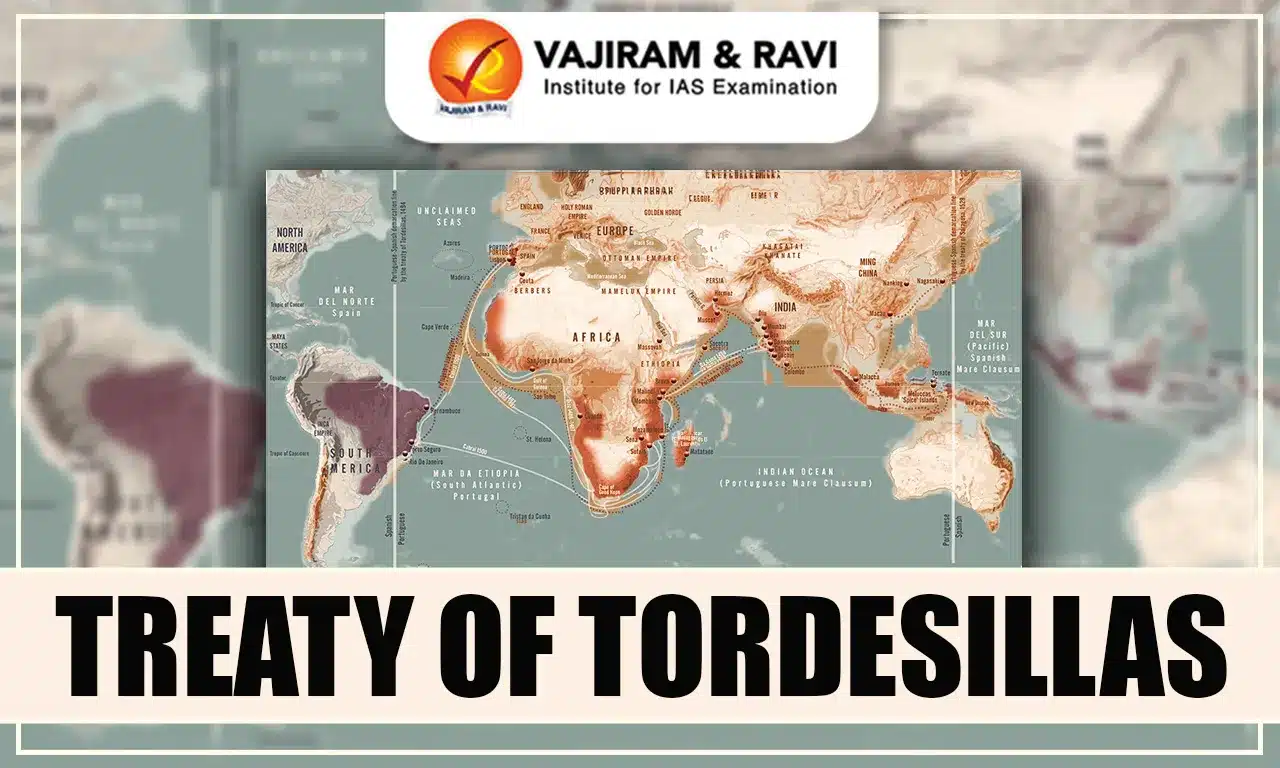
The Treaty of Tordesillas was signed in 1494. After 1493, after the news of Columbus’s voyages, Spain’s monarchs Ferinand and Isabella sought papal backing to secure their claims in the New World and block Portuguese or other rivals. To satisfy them, Pope Alexander VI, himself Spanish-born, issued bulls drawing a demarcation line from pole to pole, 100 leagues (about 320 miles) west of the Cape Verde Islands. Spain was granted exclusive rights to all new and undiscovered lands west of that line, while Portugal retained rights to explore eastward. Neither kingdom could seize territory already under a Christian ruler.

Other Atlantic-facing European powers rejected this papal division and the agreement based on it. Portugal’s King John II objected, claiming his nation’s rights in the New World and space for African voyages were too restricted. At Tordesillas in northwestern Spain, Portuguese and Spanish envoys renegotiated, shifting the line to 370 leagues (1,185 miles) west of Cape Verde, roughly 46°30′ W of Greenwich. Pope Julius II confirmed this adjustment in 1506. This new boundary later allowed Portugal to claim Brazil after Cabral’s discovery in 1500. Expansions deep into South America beyond that line would eventually secure Brazil’s vast territorial claims. 

Treaty of Tordesillas Objectives 

The treaty of tordesillas has the following objectives: 

  • To resolve disputes between Spain and Portugal over newly discovered lands by Columbus and other explorers.
  • To avoid conflict by dividing the non-European world into two zones of influence, one for Spain and one for Portugal.
  • To set up a demarcation line about 370 leagues west of the Cape Verde Islands, giving Spain rights to lands west of the line and Portugal rights to lands east of it.
  • To gain papal approval and legitimacy for overseas expansion.

Treaty of Tordesillas Significance 

The Treaty of Tordesillas was of the following importance: 

  • Peaceful division of territories: The treaty helped prevent immediate conflict between Spain and Portugal, the two major seafaring powers of the 15th century.
  • Birth of colonial empires: Allowed Spain to dominate much of the Americas, while Portugal secured Brazil, Africa, and Asia.
  • Global impact: Marked one of the first attempts at an international agreement to regulate colonization and exploration.
  • Religious sanction: Strengthened the role of the Pope in legitimizing European territorial claims.
  • Long-term consequences: Though ignored by other European powers later, it laid the foundation for Spain and Portugal’s early dominance in global exploration and colonization.

Treaty of Tordesillas FAQs

Q1: What is the Treaty of Tordesillas and why is it important?

Ans: The Treaty of Tordesillas (1494) was an agreement between Spain and Portugal dividing newly discovered lands outside Europe, shaping global colonial boundaries.

Q2: Who divided the Treaty of Tordesillas?

Ans: The division was agreed upon by Spain and Portugal.

Q3: Which pope created the Treaty of Tordesillas?

Ans: Pope Alexander VI issued the papal bull that laid the foundation for the treaty.

Q4: When was the Treaty of Tordesillas signed?

Ans: It was signed on 7 June 1494.

Q5: What was the objective of the Treaty of Tordesillas?

Ans: Its objective was to avoid conflict by dividing new lands between Spain and Portugal for exploration and colonization.

UPSC Daily Quiz 3 September 2025

UPSC Daily Quiz

The Daily UPSC Quiz by Vajiram & Ravi is a thoughtfully curated initiative designed to support UPSC aspirants in strengthening their current affairs knowledge and core conceptual understanding. Aligned with the UPSC Syllabus 2025, this daily quiz serves as a revision resource, helping candidates assess their preparation, revise key topics, and stay updated with relevant issues. Whether you are preparing for Prelims or sharpening your revision for Mains, consistent practice with these Daily UPSC Quiz can significantly enhance accuracy, speed, and confidence in solving exam-level questions

[WpProQuiz 60]

UPSC Daily Quiz FAQs

Q1: What is the Daily UPSC Quiz?

Ans: The Daily UPSC Quiz is a set of practice questions based on current affairs, static subjects, and PYQs that help aspirants enhance retention and test conceptual clarity regularly.

Q2: How is the Daily Quiz useful for UPSC preparation?

Ans: Daily quizzes support learning, help in revision, improve time management, and boost accuracy for both UPSC Prelims and Mains through consistent practice.

Q3: Are the quiz questions based on the UPSC syllabus?

Ans: Yes, all questions are aligned with the UPSC Syllabus 2025, covering key areas like Polity, Economy, Environment, History, Geography, and Current Affairs.

Q4: Are solutions and explanations provided with the quiz?

Ans: Yes, each quiz includes detailed explanations and source references to enhance conceptual understanding and enable self-assessment.

Q5: Is the Daily UPSC Quiz suitable for both Prelims and Mains?

Ans: Primarily focused on Prelims (MCQ format), but it also indirectly helps in Mains by strengthening subject knowledge and factual clarity.

Treaty of Alinagar, History, Significance, Battle of Plassey

Treaty of Alinagar

The Treaty of Alinagar (1757), signed between Robert Clive of the British East India Company and Nawab Siraj-ud-Daulah of Bengal, marked a turning point in colonial history. The Nawab agreed to recognize the provisions of Mughal Emperor Farrukhsiyar’s farman of 1717. All British goods passing through Bengal were exempted from duties. The Company was allowed to fortify Calcutta and mint its own coins there. This agreement restored British privileges in Bengal and directly covered the way for the Battle of Plassey (1757), where Siraj-ud-Daulah was defeated and killed by Clive and his allies.

The Treaty of Alinagar strengthened the East India Company’s position in Bengal and served as the immediate beginning to the Battle of Plassey. It marked the transition of the Company from a trading enterprise to a rising imperial power in India.

Treaty of Alinagar 

Despite his easy capture of Calcutta in 1756, Siraj-ud-Daulah’s position was far weaker than it seemed. He faced the looming threat of Afghan invasions under Ahmad Shah Abdali, who had already destabilized northern India. At the same time, the East India Company regrouped under Robert Clive, whose surprise attack in early 1757 forced the Nawab’s troops into retreat.

Under pressure from his ministers and wary of Abdali’s threat, Siraj reluctantly signed the Treaty of Alinagar on February 9, 1757. The treaty restored all the privileges of Farrukhsiyar’s 1717 farman, allowing the Company duty-free trade, fortification of Calcutta, and the right to mint coins.

The treaty, though preserving the Nawab’s nominal sovereignty, greatly strengthened the Company’s position in Bengal. It exposed the Nawab’s vulnerability and showcased the Company’s growing influence.

Treaty of Alinagar Significance

The Treaty of Alinagar marked the transition of the East India Company from a trading body to an emerging political force in Bengal. Though often overshadowed by the Battle of Plassey (June 23, 1757), it was this treaty that laid the groundwork for the Company’s eventual rise as the dominant colonial power in India.

Treaty of Alinagar History

The East India Company’s journey in India began in 1613, when it received a royal farman from Mughal Emperor Jahangir allowing trade. Over time, it established trading posts across the subcontinent.

The decline of the Mughal Empire after Aurangzeb’s death in 1707 created political instability and opportunities for the Company to expand its influence. A major turning point came in 1717, when Mughal Emperor Farrukhsiyar issued a farman granting the Company significant trade privileges. Though often called the Magna Carta of the Company, its misuse by officials led to corruption and strained relations with Bengal’s rulers.

Nawab Murshid Quli Khan resisted the Company’s attempts to extend duty-free privileges to its private trade, purchase villages, or mint coins, leading to recurring tensions. This highlighted the need for the Company to secure territorial control to safeguard its commercial interests.

The conflict peaked under Siraj-ud-Daulah, who opposed the Company’s unauthorized fortifications at Calcutta. In 1756, after the Company sheltered Krishna Ballabh inside Fort William against his orders, Siraj attacked, seizing Cossimbazar factory and then Calcutta on June 20, 1756. The city was renamed Alinagar, setting the stage for direct confrontation that culminated in the Treaty of Alinagar and later the Battle of Plassey (1757).

Treaty of Alinagar FAQs

Q1: What is the significance of the Treaty of Alinagar?

Ans: The Treaty of Alinagar (1757) reaffirmed Mughal privileges, restored British trading rights in Bengal, and set the stage for the decisive Battle of Plassey.

Q2: Which Treaty is related to the Battle of Plassey?

Ans: The Treaty of Alinagar is directly related to the Battle of Plassey, as it increased British influence in Bengal before Clive’s victory over Siraj-ud-Daulah.

Q3: Who renamed Calcutta as Alinagar?

Ans: Siraj-ud-Daulah, the Nawab of Bengal, renamed Calcutta as Alinagar in 1756 after capturing the British settlement, before later clashing with them at Plassey.

Q4: What was the first Treaty of Allahabad?

Ans: The first Treaty of Allahabad (1765) granted Diwani rights of Bengal, Bihar, and Orissa to the East India Company after the Battle of Buxar.

Q5: Who signed the Treaty of Alinagar with the Britishers?

Ans: Siraj-ud-Daulah, the Nawab of Bengal, signed the Treaty of Alinagar with the British East India Company in 1757 after seizing Calcutta.

Vikram 3201

Vikram 3201

Vikram 3201 Latest News

India unveiled its first fully indigenous 32-bit microprocessor, the Vikram 3201, at the Semicon India 2025 conference recently.

About Vikram 3201

  • It is India’s first fully indigenous 32-bit microprocessor.
  • Designed by the Vikram Sarabhai Space Center (VSSC), Vikram 3201 has been built by the Indian Space Research Organisation’s (ISRO) Semiconductor Laboratory (SCL) in Chandigarh.
  • Unlike processors in everyday devices like smartphones or laptops, this one is designed specifically for rockets and satellites.
  • It is an upgrade to Vikram 1601, a 16-bit processor that has powered ISRO’s launch vehicles since 2009.
  • The Vikram 3201 marks the first time India has indigenously designed and fabricated a processor of this scale and specification for launch vehicle avionics.

What will the Vikram 32-bit Processor do?

  • The chip's job is to handle navigation, control, and mission management in launch vehicles, performing the split-second calculations needed to keep rockets stable and on course. 
  • Because space environments are harsh, the chip is manufactured to military-grade standards and rigorously tested to ensure it can keep working in extreme heat, cold, vibration, and radiation.
  • The Vikram 3201 is built to withstand the extreme conditions of space missions, including temperatures from –55 degrees Celsius to +125 degrees Celsius.
  • Unlike its predecessor, the new chip supports 64-bit floating-point operations, Ada programming language compatibility, and features on-chip 1553B bus interfaces for reliable communication during missions.
  • It can handle substantial memory and execute complex instructions needed for launching satellites and space vehicles.

Source: BS

Vikram 3201 FAQs

Q1: What is Vikram 3201?

Ans: It is India’s first fully indigenous 32-bit microprocessor.

Q2: Who designed Vikram 3201?

Ans: Vikram Sarabhai Space Center (VSSC)

Q3: For what purpose is Vikram 3201 used?

Ans: It is designed specifically for rockets and satellites.

Equity Derivatives

Equity Derivatives

Equity Derivatives Latest News

SEBI has come out with a new framework for monitoring intraday positions in equity index derivatives, a move aimed at preventing risks caused by large exposures.

What are Derivatives?

  • Derivatives are financial contracts that derive value from an underlying asset. 
  • Derivatives allow traders to bid on the direction of the underlying asset’s price change without owning them. 
  • They allow investors to speculate on price movements, hedge against risks, or enhance portfolio returns.

About Equity Derivatives

  • Equity derivatives are financial instruments whose value is derived from the movements of a stock or a stock index. 
  • Equity derivatives serve various purposes for investors and traders, including risk management, speculation, and portfolio optimisation.

Equity Derivative Types

  • Futures Contracts: These obligate the buyer to purchase and the seller to sell an underlying equity asset at a predetermined price and future date.  Equity index futures, like the BSE S&P and Nifty IT, are popular examples.
  • Options: Equity options give the holder the right, but not the obligation, to buy (call option) or sell (put option) an underlying stock or index at a specified price before or on a specific expiration date.
  • Swaps: Equity swaps involve exchanging cash flows based on the return of an underlying equity asset. These can be used for hedging or investment purposes.
  • Forwards: Forwards are the same as futures, where the parties are obligated to perform the contract. But forwards are non-standardised, over-the-counter contracts that don’t trade on the stock exchanges.

Advantages of Equity Derivatives

  • Leverage: Equity derivatives typically require a smaller upfront investment compared to buying the underlying assets directly.This  allow investors to control a larger position in the underlying asset with a smaller investment, magnifying potential gains (but also losses).
  • Hedging against price volatility: They provide a means to protect against adverse price movements in the stock market, reducing the risk of financial losses.
  • Access to premium assets: By investing in these derivatives, investors can gain exposure to high-value, unaffordable or inaccessible assets.
  • Cost efficiency: Trading equity derivatives typically requires lower transaction costs than directly investing in the underlying assets, making it a cost-effective choice.
  • Arbitrage opportunities: They can be utilised to exploit price discrepancies between different markets, enabling investors to profit from market inefficiencies.
  • Portfolio diversification: Including these derivatives in an investment portfolio can diversify risk by adding different asset classes and strategies.
  • Flexibility: They offer various strategies and contract types, allowing investors to adapt their positions based on market conditions and investment objectives.
  • Liquidity: The derivatives market tends to have high liquidity, ensuring ease of buying and selling positions without significant market impact.
  • Risk management: They provide tools for managing risk exposure, allowing investors to mitigate losses and protect their portfolios.
  • Income generation: Through option writing or other derivative strategies, investors can generate income from their equity positions, enhancing overall returns.

Source: TH

Equity Derivatives FAQs

Q1: What is the key difference between futures and forwards?

Ans: Futures are traded on exchanges, while forwards are over-the-counter contracts.

Q2: Which type of equity derivative gives the holder the right, but not the obligation, to buy or sell an asset?

Ans: Options

Q3: What are the 4 types of derivatives?

Ans: Forwards, Futures, Options, and Swaps.

Wet and Dry Lease of Aircrafts

Wet and Dry Lease of Aircrafts

Wet and Dry Lease Latest News

Wet and dry (aircraft sans crew) leases are increasingly being adopted by airlines in order to overcome the shortage of new aircraft globally that has grown acute since the pandemic because of supply chain challenges.

About Wet and Dry Lease

  • In a wet lease, airlines acquire a fully operational aircraft along with a crew (pilots and cabin crew), maintenance personnel, and insurance (aircraft, crew, maintenance, and insurance). 
    • The lessee retains control over commercial operations (schedules, routes), while the lessor manages the operational aspects. 
    • This option is ideal for short-term exigencies such as seasonal spikes, route testing, or covering for grounded aircraft.
  • In a dry lease, the airline rents only the aircraft itself, without crew, maintenance, or insurance. 
    • The lessee assumes full responsibility for these operational components, employing their own crews, arranging maintenance in accordance with DGCA (Directorate General of Civil Aviation) regulations, and obtaining appropriate insurance coverage. 
    • Dry leases are well-suited for long-term fleet expansion or modernization strategies.
  • Aircraft leasing in India is governed by a robust legal framework, with the DGCA playing a pivotal role. 
  • Operations of an aircraft on wet lease are not encouraged by the DGCA, as the crew is often not approved by Indian authorities.

What is Damp Leasing?

  • The damp lease is a more limited variant of the wet lease. 
  • It is a leasing agreement under which an airline, the lessor, leases one of its aircraft, including flight crew and maintenance services, to another air operator. 
  • However, unlike wet leasing, damp leasing does not include cabin crew, who must be assigned by the lessee.
  • For this reason, a damp lease is referred to as a partial wet lease: the lessee is responsible for providing his own competent cabin crew.

Source: TH

Wet and Dry Lease FAQs

Q1: Which type of lease involves only the aircraft, leaving crew, maintenance, and insurance responsibilities to the lessee?

Ans: Dry lease

Q2: Wet leases are usually considered suitable for which situations?

Ans: Wet lease is ideal for short-term exigencies such as seasonal spikes, route testing, or covering for grounded aircraft.

Q3: What is a damp lease commonly referred to as?

Ans: Partial wet lease

Q4: Dry leases are best suited for which situations?

Ans: Dry leases are well-suited for long-term fleet expansion or modernization strategies.

BHARATI Initiative

BHARATI Initiative

BHARATI Initiative Latest News

Recently, the Agricultural and Processed Food Products Export Development Authority (APEDA) launched its new initiative BHARATI.

About BHARATI initiative

  • BHARATI, stands for Bharat’s Hub for Agritech, Resilience, Advancement and Incubation for Export Enablement.
  • It has been designed to empower 100 agri-food and agri-tech startups, accelerate their journey, promote innovation and create new export opportunities for young entrepreneurs.
  • It is conceived as APEDA’s vision to achieve $50 billion in agri-food exports for its Scheduled Products by 2030,
  • It is structured to complement and enhance industry and government-led incubation programmes in the agriculture, food and food processing sectors.
  • It seeks to drive innovation in high-value categories such as GI-tagged agri-products, organic foods, superfoods, novel processed Indian agri-foods, livestock products and AYUSH products.
  • The initiative also aims to attract startups working on advanced technologies such as AI-based quality control, blockchain-enabled traceability, IoT-enabled cold chains and agri-fintech, while addressing critical areas like innovative packaging, sustainability and sea protocols.
  • BHARATI seeks to resolve export challenges related to product development, value addition, quality assurance, perishability, wastage and logistics.
  • By fostering a collaborative ecosystem, the programme will connect agri-food innovators, tech-driven solution providers and SPS-TBT-focused startups to deliver scalable, cost-effective solutions that enhance India’s global competitiveness.
  • It will create globally competitive agri-products, fuel demand-driven backward integration for food innovation and boost global demand for Indian food, beverage and processed food products and services.
  • The initiative includes a nationwide awareness campaign to engage stakeholders and attract solution-oriented startups from across India, along with an application and selection process through the APEDA website to shortlist 100 startups for the export enablement programme.
  • Selected startups will undergo a three-month acceleration programme focusing on product development, export readiness, regulatory compliance, market access and collaborative solutions to address export challenges.
  • To strengthen this ecosystem, APEDA will partner with state agricultural boards, agricultural universities, premier institutions like IITs and NITs, industry bodies and existing accelerators to attract startups for agri-export enablement.
  • The pilot cohort will serve as a model for a scalable annual incubation programme, driving continuous innovation and long-term export growth.
  • Significance: The initiative marks a significant step to strengthen India’s agricultural and processed food exports.

Source: PIB

BHARATI Initiative FAQs

Q1: Where is the headquarter of APEDA?

Ans: New Delhi

Q2: What does agritech mean?

Ans: AgriTech is a term used for agricultural technology, which involves the use of technology to improve farming and agriculture across different value chains.

Gastrochilus Pechei

Gastrochilus Pechei

Gastrochilus pechei  Latest News

Recently, researchers discovered a new orchid plant in Vijoynagar, Arunachal Pradesh.

About Gastrochilus pechei 

  • It is a new orchid plant belonging to the Gastrochilus  genus.
  • Habitat: It flowers in September-October and thrives in moist, evergreen rainforest on small trees near riverbanks.
  • The Gastrochilus pechei was known to bloom only in Myanmar. 
  • Before the Vijoynagar find, 22 species of the Gastrochilus genus had been recorded from India. Of these, 15 are from Arunachal Pradesh.
  • Arunachal Pradesh is often referred to as the Orchid State of India, boasts approximately 60% of the country’s varieties.
  • First recorded in 1825, Gastrochilus is a monopodial orchid genus comprising 77 species widely distributed in tropical, subtropical, and temperate Asia.
  • This genus is characterised by a short axillary inflorescence, often with brightly coloured flowers, a distinct epichile on the front of the saccate hypochile, and two porate, globose pollinia that are borne on a slender stipe.

Source: TH

Gastrochilus Pechei FAQs

Q1: Which state is called the land of orchids?

Ans: Arunachal Pradesh

Q2: Which is the largest orchid in India?

Ans: Tiger Orchids

One in 100 Deaths by Suicide: WHO Report on Global Mental Health

WHO Report on Mental Health

WHO Report on Mental Health Latest News

  • According to new WHO data, suicide caused one in every 100 deaths worldwide in 2021, claiming 727,000 lives. For every death, over 20 attempts occurred. 
  • The reports — World Mental Health Today and Mental Health Atlas 2024 — also reveal that more than a billion people live with mental health disorders. 
  • Country-wise profiles will be released soon as part of the updated Mental Health Atlas, factoring in the pandemic’s impact.

Top Mental Health Disorders: WHO Insights

  • Mental health is an integral part of health; it is more than the absence of mental illnesses. 
  • It is the foundation for well-being and effective functioning of individuals. It includes mental well-being, prevention of mental disorders, treatment and rehabilitation.
  • Most Common Disorders - Anxiety and depressive disorders are the most prevalent, together making up over two-thirds of all mental health conditions in 2021.
  • Rising Global Prevalence - Between 2011 and 2021, mental disorders grew faster than population growth, raising the global age-standardized prevalence to 13.6%, a 0.9% increase in a decade.

Age-Related Trends

  • Young Adults (20–29 years): Largest increase in prevalence (+1.8%) since 2011.
  • Children (<10 years): Depressive disorders are rare.
  • Middle-Aged Adults (40–69 years): Depressive disorders surpass anxiety, peaking between 50–69 years.

Gender Differences

  • Males: More prone to attention-deficit/hyperactivity disorder (ADHD), autism spectrum disorders, and intellectual developmental disorders.
  • Females: More affected by anxiety, depression, and eating disorders.

Prospects for Reducing Suicide Rates by 2030

  • Suicide remains the leading cause of death among young people worldwide, but progress in reducing rates is insufficient to meet the UN’s target of a one-third reduction by 2030
  • Current trends indicate only a 12% reduction will be achieved.
  • Experts stress that sustained financing, strong leadership, and effective execution of prevention programs are crucial. 
  • Suicide is driven by multiple factors — including family history, vulnerable temperament, early trauma, stressful environments, isolation, stigma, and lack of accessible mental health services. 
  • Tackling these risks holistically is essential for meaningful progress.

Burden of Mental Health in India

  • WHO estimates that the burden of mental health problems in India is 2443 disability-adjusted life years (DALYs) per 10000 population; the age-adjusted suicide rate per 100 000 population is 21.1.
  • Economic loss: USD 1.03 trillion projected between 2012–2030 due to mental health conditions.

Policy and Legal Framework

  • National Mental Health Policy, 2014: Advocates a participatory and rights-based approach.
  • Mental Healthcare Act, 2017: Provides legal protections and aligns with UNCRPD principles.

Government Initiatives

  • National Mental Health Programme and Health and Wellness Centres provide care at the primary health level.
  • National Tele Mental Health Programme (Tele MANAS) A 24/7 national toll-free helpline providing accessible, free mental health support in various Indian languages. 
  • The District Mental Health Programme (DMHP) - A component of the National Mental Health Programme (NMHP) providing decentralized, community-based mental health services. 
  • Deaddiction centres and rehabilitation services further support treatment and recovery.

Challenges of Broad-Basing Mental Health Care in India

  • Limited Infrastructure and Custodial Approach
    • India’s mental health institutions alone are insufficient. 
    • Experts stress the need for psychiatric beds in general hospitals and tertiary care centres staffed with multidisciplinary teams. 
    • The focus must shift from custodial to therapeutic models, with larger hospitals acting as academic training hubs.
  • Poor Funding and Associated Conditions
    • Psychiatric hospitals often face underfunding, leading to poor living conditions, neglect, and abuse.
  • Scarcity of Trained Professionals
    • There is a severe shortage of psychiatrists, psychologists, counsellors, nurses, and social workers. 
    • Interior regions lack access to professionals and essential medicines, leaving families unable to afford long-distance travel for treatment.
  • Accessibility and Economic Burden
    • Even when families want to seek help, economic hardships—loss of wages and travel costs—become barriers. 
    • With 30 million Indians suffering from severe mental illnesses, the financial strain is immense as patients often become non-earning dependents.
  • Need for a Strong Chain of Care
    • Mental healthcare requires continuity of treatment, reliable availability of medicines, and systemic support. 
    • Building a robust chain of care across rural and urban India is essential for effective mental health management.

Source: IE | WHO | PAHO

WHO Report on Mental Health FAQs

Q1: What does the WHO report say about suicide?

Ans: The WHO states that suicide caused one in every 100 deaths globally in 2021, with 727,000 lives lost and more than 20 attempts per death.

Q2: What are the most common mental health disorders?

Ans: Anxiety and depression are the most prevalent, accounting for over two-thirds of global mental health cases in 2021, with rising prevalence in young adults.

Q3: Can suicide rates decline by 2030?

Ans: Current trends suggest only a 12% reduction by 2030, far below the UN goal of one-third reduction, without stronger prevention and funding efforts.

Q4: What is India’s mental health burden according to WHO?

Ans: WHO estimates 2,443 DALYs lost per 100,000 population and an age-adjusted suicide rate of 21.1 per 100,000, costing $1.03 trillion between 2012–2030.

Q5: What challenges limit mental health care in India?

Ans: India faces poor funding, limited psychiatric infrastructure, scarcity of professionals, and high economic barriers for families seeking treatment in rural areas.

RTE Act and Minority Schools: Supreme Court Questions Pramati Ruling

RTE Act and minority schools

RTE Act and Minority Schools Latest News

  • The Supreme Court has cast doubt on its 2014 Pramati Educational and Cultural Trust judgment, which had exempted minority educational institutions from the Right to Education (RTE) Act, 2009.
  • A two-judge Bench, while ruling on whether the Teacher Eligibility Test (TET) was mandatory for minority schools, referred the matter to a larger Bench for reconsideration.
  • The court noted that excluding minority schools from the RTE Act’s ambit may have compromised children’s fundamental right to quality education, raising concerns about equal access to standards of learning.

Supreme Court’s TET Ruling: Minority Schools and In-Service Teachers

  • The Supreme Court, while ruling in Anjuman Ishaat-e-Taleem Trust v. State of Maharashtra, addressed two key issues:
    • Minority schools & RTE Act: The Bench referred to a larger Bench the question of whether the RTE Act applies to minority schools, casting doubt on the 2014 Pramati judgment.
    • In-service teachers in non-minority schools: Teachers with less than 5 years of service left may continue without clearing the Teacher Eligibility Test (TET), but must pass it for promotions.
      • Teachers with more than 5 years left must clear TET within two years to remain eligible.
  • This nuanced order balanced continuity of service with the need to uphold minimum teacher qualification standards.

Supreme Court Flags Concerns Over Pramati Ruling

  • The Supreme Court criticised the 2014 Pramati judgment, calling it “legally suspect” and “disproportionate” for exempting all minority institutions from the RTE Act based largely on Section 12(1)(c), which mandates 25% reservation for disadvantaged children.
  • The Bench highlighted the conflict between Article 30(1) (minority institutions’ rights) and Article 21A (children’s fundamental right to education). 
  • It stressed that both rights “must co-exist mutually” instead of treating Article 30(1) as an absolute override, as the Pramati ruling had done.

2014 Pramati Ruling: Key Takeaways

  • The five-judge Bench examined:
    • 86th Amendment (2002): Introduced Article 21A, making education a fundamental right.
    • 93rd Amendment (2005): Introduced Article 15(5), allowing the state to provide special provisions for backward classes, SCs, and STs in all institutions except minority schools.
  • The Bench upheld both amendments, recognising education as a right and permitting state intervention for disadvantaged groups.
  • However, it ruled that the RTE Act was unconstitutional for minority schools (aided or unaided) protected under Article 30(1).

Rationale for Exemption

  • The Court reasoned that imposing Section 12(1)(c) — reserving 25% seats for disadvantaged children — could dilute the minority character of such schools
  • It emphasised that minority institutions have the fundamental right to establish and administer schools of their choice, and this must remain safeguarded.

Key Provisions and Spirit of the RTE Act

  • The Right to Education (RTE) Act guarantees free and compulsory education for children aged 6–14. It mandates:
    • Free education in government schools and proportionate free seats in aided schools.
    • 25% seat reservation in private unaided schools for disadvantaged children, with state reimbursement (Section 12(1)(c)).
    • Minimum standards for pupil-teacher ratios, trained teachers, infrastructure, and libraries.
    • A ban on corporal punishment and capitation fees, making all schools responsible for universal education.
  • According to experts, the Act is child-centric, not institution-centric, prioritising the fundamental right of every child over the administrative autonomy of schools.

Misuse of Pramati Exception and Renewed Judicial Push for Inclusion

  • A study by the National Commission for Protection of Child Rights showed that only 8.76% of students in minority schools were from disadvantaged groups, while 62.5% were non-minority. 
  • This indicates that many institutions claimed minority status without serving their communities, yet benefited from exemption to RTE mandates.
  • After the RTE Act (2010), private and minority groups challenged the 25% quota. 
  • While the 2012 ruling exempted unaided minority schools, the 2014 Pramati ruling extended this exemption to all minority schools, creating loopholes for elite private schools to adopt a minority label to avoid compliance.
  • Experts noted that such institutions ignored disadvantaged children, undermining the spirit of RTE. 
  • They emphasised that the latest SC ruling rightly realigns with children’s rights, ensuring that students in minority schools also benefit from norms on libraries, pupil-teacher ratios, and qualified teachers.

Source: IE | IE

RTE Act and Minority Schools FAQs

Q1: Why did the Supreme Court revisit the Pramati ruling?

Ans: The SC felt exempting minority schools from the RTE Act jeopardised children’s fundamental right to quality education under Article 21A.

Q2: What was the 2014 Pramati judgment?

Ans: The five-judge Bench ruled the RTE Act unconstitutional for minority schools, citing Article 30(1) rights, though it upheld education as a fundamental right.

Q3: What are the key provisions of the RTE Act?

Ans: The Act mandates free and compulsory education for ages 6–14, 25% seat reservation in private schools, pupil-teacher ratios, trained teachers, and bans on capitation fees.

Q4: How has the Pramati ruling been misused?

Ans: Studies showed many private schools sought minority status to evade RTE quotas, with only 8.76% of students from disadvantaged groups.

Q5: What is the significance of the new SC ruling?

Ans: The ruling realigns education policy with children’s rights, ensuring minority schools meet norms on teachers, infrastructure, and inclusion for disadvantaged children.

Supreme Court Directs DISCOMs to Clear Regulatory Assets

DISCOMs

DISCOMs Latest News

  • The Supreme Court has ordered DISCOMs and regulators to clear regulatory assets within fixed timelines, capping their creation to ensure financial discipline in the power sector.

Introduction

  • The Supreme Court has issued a landmark ruling directing State Electricity Regulatory Commissions (SERCs) and power distribution companies (DISCOMs) to clear their accumulated regulatory assets within four years
  • Any newly created assets must be liquidated within three years. The Court further advised capping regulatory assets at 3% of a DISCOM’s Annual Revenue Requirement (ARR), making transparency and financial discipline central to the ruling.
  • This judgment is a critical step toward addressing the long-standing issue of unrecovered costs in India’s electricity sector, which has placed enormous financial strain on DISCOMs, distorted tariff structures, and affected consumers in the long run.

Understanding Regulatory Assets

  • Regulatory assets represent the unrecovered revenue gap between the Average Cost of Supply (ACS) and the Annual Revenue Requirement (ARR) of a DISCOM.
    • Average Cost of Supply (ACS): The actual cost incurred by a DISCOM to supply a unit of electricity.
    • Annual Revenue Requirement (ARR): The revenue recovered from consumer tariffs and subsidies provided by state governments.
  • When ACS exceeds ARR, DISCOMs incur a loss on every unit sold. To avoid imposing sudden tariff hikes on consumers, regulators allow the revenue shortfall to be recorded as a deferred cost, termed a regulatory asset, recoverable in the future, usually with interest.
  • For example, if the ACS is Rs. 7.20 per unit and ARR is Rs. 7.00, the shortfall is Rs. 0.20 per unit. If 10 billion units are supplied, the revenue gap equals Rs. 2,000 crore. 
  • Instead of an immediate tariff shock, this gap becomes a regulatory asset.

Reasons for ACS-ARR Gap

  • The persistence of regulatory assets reflects structural weaknesses in India’s power sector:
    • Non-cost reflective tariffs - Tariffs often do not match actual supply costs due to political considerations.
    • Delayed subsidy payments - States frequently delay compensating DISCOMs for agricultural and low-income consumer subsidies.
    • Fuel price volatility - Sudden increases in coal or gas prices raise power purchase costs.
    • Operational inefficiencies - High transmission and distribution losses worsen the financial stress.
  • The problem is systemic, with states like Tamil Nadu reporting regulatory assets of Rs. 89,375 crore in FY 2021-22, and Delhi DISCOMs collectively holding over Rs. 66,000 crore.

Impact on Consumers and DISCOMs

  • Impact on Consumers
    • Initially, regulatory assets shield consumers from tariff shocks.
    • However, deferred recovery later leads to steeper tariff hikes, including carrying costs (interest).
    • For example, Delhi DISCOMs would need to recover Rs. 16,580 crore annually over four years, adding about Rs. 5.5 per unit to electricity costs.
  • Impact on DISCOMs
    • Persistent regulatory assets create cash flow crises, making it difficult to pay power generators on time.
    • DISCOMs often resort to borrowing, adding to their debt burden.
    • With finances tied up in unrecovered costs, investment in grid modernisation, renewable integration, and consumer services suffers.
    • This creates a vicious cycle of inefficiency and financial stress.

Measures to Bridge the Gap

  • To reduce dependency on regulatory assets, multiple reforms are necessary:
    • Cost-reflective tariffs - Align tariffs with actual supply costs while protecting vulnerable consumers with targeted subsidies.
    • Timely subsidy release - State governments must ensure punctual disbursement of subsidy payments.
    • Automatic fuel adjustment - Mechanisms like Fuel and Power Purchase Cost Adjustment (FPPCA) can help tariffs reflect market changes quickly.
    • Annual true-up exercises - Regular reconciliation of projected and actual costs prevents large backlogs.
    • Regulatory discipline - SERCs must enforce transparent accounting, cap regulatory assets, and set strict recovery timelines.

Global Best Practices

  • Regulated Asset Base (RAB) model: Allows utilities to recover investments through tariffs with assured returns, providing long-term revenue certainty.
  • UK’s RIIO framework (Revenue = Incentives + Innovation + Outputs): Links revenues to performance targets like reliability, service quality, and carbon reduction, incentivising efficiency.
  • Digital infrastructure: Smart grids and India Energy Stack can improve transparency in asset management and efficiency-based recovery.
  • These models suggest that regulatory assets should remain exceptional tools rather than recurring features.

Source: TH

DISCOMs FAQs

Q1: What are regulatory assets in the power sector?

Ans: They are unrecovered revenue gaps between the Average Cost of Supply and revenue collected, deferred for future recovery.

Q2: Why did the Supreme Court intervene in regulatory assets?

Ans: To ensure DISCOMs clear accumulated gaps within a timeline and prevent financial distress in the power sector.

Q3: How do regulatory assets affect consumers?

Ans: They delay tariff hikes initially but lead to steeper costs later, including carrying charges.

Q4: What reforms can reduce regulatory asset dependence?

Ans: Cost-reflective tariffs, timely subsidy release, automatic fuel adjustments, and annual true-ups.

Q5: What global models can India adopt for power sector reforms?

Ans: The UK’s RIIO framework and Regulated Asset Base (RAB) model linking revenues to efficiency and innovation.

Exercise MAITREE

Exercise MAITREE

Exercise MAITREE Latest News

Recently, the 14th edition of the Exercise MAITREE-XIV commenced with a grand opening ceremony at Joint Training Node (JTN), Umroi, Meghalaya.

About Exercise MAITREE  

  • It is the joint military exercise between India and Thailand.
  • Exercise MAITREE, instituted in 2006, is one of the important joint training exercises between India and Thailand.
  • The bilateral exercise is part of the ongoing military-to-military exchange programme between the two countries and aims to enhance cooperation, interoperability and mutual understanding between the Indian Army and Royal Thai Army.
  • The current edition further reinforces the bilateral defence cooperation and reflects the shared commitment of both Armies towards peace, stability and security in the region.
  • The 13th edition of the exercise was held at Fort Vachiraprakan in Tak Province, Thailand.
  • The Indian Army contingent is being represented by a Battalion of the Madras Regiment.
  • The joint exercise will focus on company level counter-terrorist operations in semi-urban terrain under Chapter VII of the United Nations Charter.
  • The programme includes tactical drills, joint planning, special arms skills, physical fitness and raiding operations. The exercise will culminate with a 48-hour validation exercise, simulating realistic operational scenarios.

Source: PIB

Exercise Maitree FAQs

Q1: Exercise Maitree is a joint military exercise between India and which country?

Ans: Thailand

Q2: The 14th edition of Exercise Maitree is scheduled to be held in which Indian state?

Ans: Meghalaya

Q3: What is the main focus of Exercise Maitree 2024?

Ans: Joint counter-terrorism operations in semi-urban terrain.

Coconut Development Board

Coconut Development Board

Coconut Development Board  Latest News

Recently, the Coconut Development Board (CDB) has celebrated World Coconut Day by launching its newly revised schemes.

About Coconut Development Board  

  • It is a statutory body established under the Ministry of Agriculture and Farmers Welfare, Government of India
  • It was established for the integrated development of coconut production and utilization in the country with focus on productivity increase and product diversification.
  • The board came into existence on 12th January 1981.
  • Regional offices: It has regional Offices at Bangalore in Karnataka, Chennai in Tamil Nadu, Guwahati in Assam and Patna in Bihar.
  • Headquarters: Kochi in Kerala

Functions of Coconut Development Board

  • Adopting measures for the development of the coconut industry, inter alia
  • Imparting technical advice to those engaged in coconut cultivation and industry
  • Providing financial and other assistance for the expansion of the area under coconut
  • Encouraging adoption of modern technologies for processing of coconut and its products
  • Adopting measures to get incentive prices for coconut and its products
  • Recommending measures for improving marketing of coconut and its products
  • Recommending measures for regulating imports and exports of coconut and its products
  • Fixing grades, specifications and standards for coconut and its products

Source: PIB

Coconut Development Board FAQs

Q1: What are Statutory bodies?

Ans: These are organizations or institutions created by an act of legislation or statute passed by the government.

Q2: Where is the headquarter of Coconut Development Board?

Ans: Kochi, Kerala

Foreigners Tribunal

Foreigners Tribunal

Foreigners Tribunal Latest News

The Union Ministry of Home Affairs (MHA) has given Foreigners Tribunals (FT), so far unique to Assam, the powers of a first class judicial magistrate.

About Foreigners Tribunal

  • These are quasi-judicial bodies formed through the Foreigners (Tribunals) Order of 1964 under Section 3 of the Foreigners’ Act of 1946, to let local authorities in a State refer a person suspected to be a foreigner to tribunals.
  • Are FTs meant only for Assam?
    • The Foreigners (Tribunals) Order, 1964, applies to the whole of India, yet FTs exist only in Assam as of now. 
    • In other states, if any illegal immigrant is found, he is produced before a local court and dealt with as per the Foreigners Act, 1946. 
    • Prior to the 2019 amendment to the Foreigners (Tribunals) Order, 1964, only the Centre was empowered to establish FTs in states, but after this amendment, the power has been granted to states as well.
  • Composition: Each FT is headed by a member drawn from judges, advocates, and civil servants with judicial experience.
  • Powers: According to the 1964 order, an FT has the powers of a civil court in certain matters, such as summoning and enforcing the attendance of any person and examining him or her on oath and requiring the production of any document.

Foreigners Tribunal Functioning

  • A tribunal is required to serve a notice in English or the official language of the State to a person alleged to be a foreigner within 10 days of receiving the reference from the authority concerned.
  • Such a person has 10 days to reply to the notice and another 10 days to produce evidence in support of his or her case.
  • An FT has to dispose of a case within 60 days of reference. 
  • If the person fails to provide any proof of citizenship, the FT can send him or her to a detention centre, now called transit camp, for deportation later.

Immigration and Foreigners Order, 2025:

  • The order is part of recently passed Immigration and Foreigners Act, 2025. This order replaces the Foreigners (Tribunal) Order, 1964.
  • It allows FTs to issue arrest warrants and detain individuals who can't prove they're not foreigners. This was previously done through executive orders.
  • It empowers FTs to issue arrest warrants if a person whose nationality is disputed fails to appear in person.
  • FTs “shall have the powers of a civil court while trying a suit under the Code of Civil Procedure, 1908 (5 of 1908), and the powers of a judicial magistrate of the first class under the Bharatiya Nagarik Suraksha Sahita, 2023, (46 of 2023) in matters including- 
    • summoning and enforcing the attendance of any person and examining him on oath;
    •  requiring the discovery and production of any document;
    • issuing commissions for the examination of any witness;
    • directing the proceedee to appear before it in person;
    • issuing a warrant of arrest against the proceedee, if he fails to appear before it.”

Source: TH

Foreigners Tribunal FAQs

Q1: Foreigners Tribunals (FTs) were constituted under which legal framework?

Ans: Foreigners Act, 1946

Q2: At present, Foreigners Tribunals exist only in which Indian state?

Ans: Assam

Q3: Who generally heads a Foreigners Tribunal?

Ans: Each FT is headed by a member drawn from judges, advocates, and civil servants with judicial experience.

Q4: Within how many days must a Foreigners Tribunal dispose of a case after receiving a reference?

Ans: 60 days

Jarosite

Jarosite

Jarosite  Latest News

Researchers confirmed the presence of jarosite in Matanomadh in Kutch, Gujarat similar to what was discovered on Mars a couple of decades ago.

About Jarosite 

  • Jarosite is a yellow-brown mineral composed of potassium, iron, and sulphate, commonly found in arid, saline environments.
  • Jarosite formation is a signal of extreme geochemical conditions and a clue to unlocking complex environmental and planetary processes.
  • On Earth, jarosite is formed when some minerals rich in oxygen, iron, sulphur and potassium react in the presence of water.
  • Jarosite formation is typically associated with volcanic activity.
  • In 2004, NASA’s Opportunity mission to Mars was the first to detect traces of jarosite at the Meridiani Planum landing site.
  • The discovery of jarosite on Mars was one of the strongest pieces of evidence of the presence of water on the planet at some point of time.
  • In Matanomadh, the mineral dating 55 million years old, corresponding with the Paleocene period in the geological timeline was found.
  • In India its presence has also been confirmed along Kerala’s Varkala cliffs.
  • Similar deposits have been found in Mexico, Canada, Japan, Spain, and in Utah and California in the US.
  • Significance of the discovery: It could help decode the palaeo-evolution of the Martian geology and the past chemical interactions on the planet.
  • Moreover, as sulphates such as jarosite could trap organic molecules and elements that support life within them, examining these samples in Kutch could open a window of opportunity for designing strategies for future Mars missions that will explore life on the red planet.

Source: IE

Jarosite FAQs

Q1: What is jarosite used for?

Ans: Jarosite precipitation is used in hydrometallurgy, especially the zinc industry, to control iron, sulfate and other impurities.

Q2: What is the significance of finding jarosite on Mars?

Ans: On Mars, Jarosite may represent the key to unlocking the geological history and environmental context of water on the red planet.

Enquire Now