Climate Change, Types, Evidences, Causes, Effects, Efforts to Mitigate

Climate Change

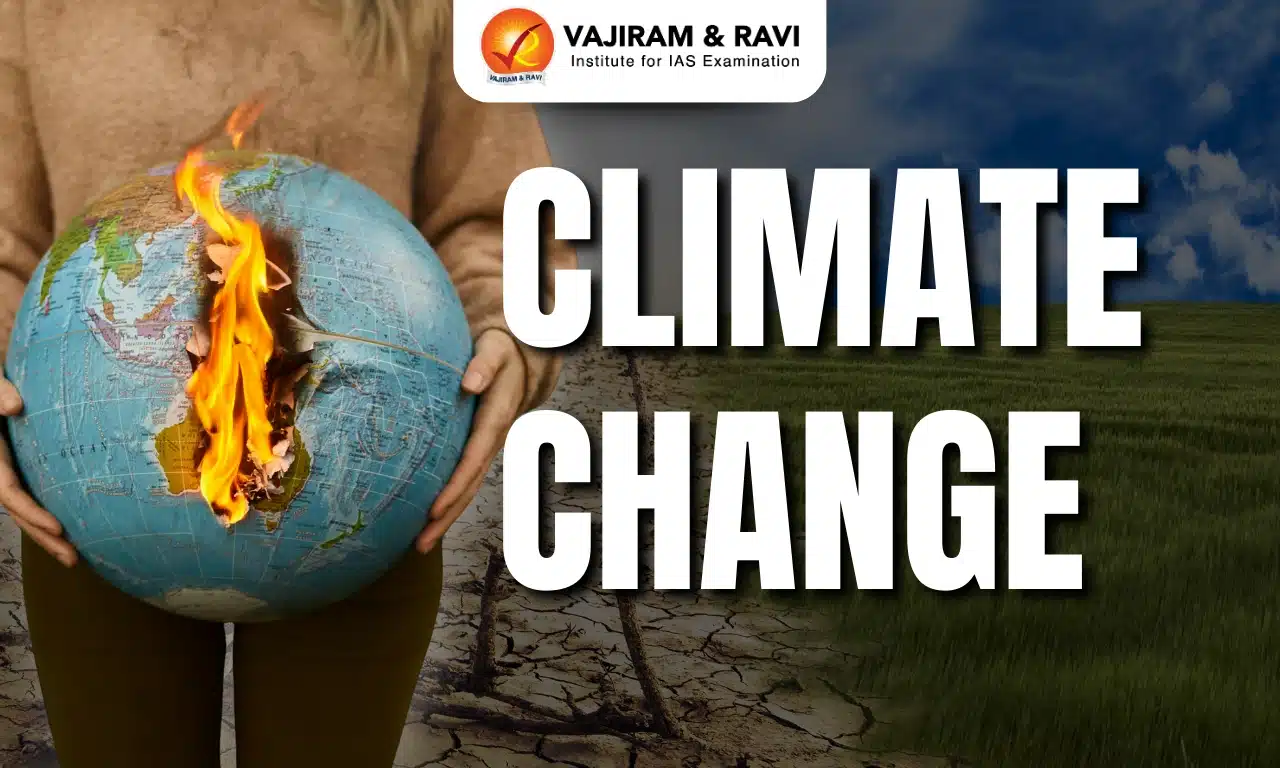
Climate Change is one of the defining challenges of the 21st century, reshaping ecosystems, weather patterns, and human societies across the globe. Its far-reaching consequences make it not just an environmental issue but also a socio-economic one, with implications for health, agriculture, livelihoods, and global security. Understanding Climate Change requires looking at the scientific evidence, identifying its root causes, and assessing its wide-ranging impacts. This article explores these dimensions in detail, with a particular focus on its effects in India and the world, while also examining related concepts such as climate forcings.

Climate Change

Climate Change refers to long-term shifts in climate patterns, including temperature, rainfall, and wind, that persist for decades or even longer. Throughout Earth’s history, the climate has naturally fluctuated, ranging from ice ages to extended warm periods. However, what makes the current trend different is its speed and cause. Since the mid-20th century, human activities, especially the burning of fossil fuels and large-scale deforestation, have become the primary drivers of global warming. Scientific evidence shows that today’s warming is happening at nearly ten times the pace of past natural warming cycles, making it one of the most critical challenges facing humanity.

Climate Change Types

Climate Change occurs in different forms across the globe, each carrying serious environmental and socio-economic consequences. The major Climate Change Types include:

  • Global Warming - This refers to the steady rise in Earth’s average surface temperature, mainly caused by human activities such as the burning of fossil fuels. The release of greenhouse gases like carbon dioxide (CO₂) and methane (CH₄) traps heat in the atmosphere, intensifying the warming effect.
  • Ocean Acidification - As oceans absorb excess CO₂ from the atmosphere, their pH levels drop, making them more acidic. This disrupts marine ecosystems, particularly affecting corals, shellfish, and other species that depend on calcium carbonate to build their shells and skeletons.
  • Extreme Weather Events - Climate change is linked to a higher frequency and severity of hurricanes, droughts, heatwaves, floods, and wildfires. These events not only harm ecosystems but also damage infrastructure, displace communities, and strain economies.
  • Changes in Precipitation Patterns - Shifts in rainfall distribution and intensity are becoming more evident. Some areas are experiencing heavier downpours and flooding, while others face prolonged dry spells and severe droughts, threatening agriculture and water resources.
  • Melting Polar Ice and Glaciers - Ice sheets in Greenland, Antarctica, and glaciers around the world are melting at unmatched rates. This contributes to global sea-level rise, endangering low-lying coastal regions and fragile ecosystems.

Climate Change Evidences

Advances in satellite monitoring and scientific technology have made it possible to study Earth’s climate on a global scale. The findings reveal unmistakable signs of Climate Change, which can be categorized into atmospheric, hydrospheric, and cryospheric evidence.

Atmospheric Evidences

  • Global Temperature Rise: Since 1900, the planet’s average surface air temperature has risen by about 0.8°C, with the sharpest increase occurring after the mid-1970s.
  • Increased Weather Extremities: More frequent and intense storms, heatwaves, and unpredictable rainfall patterns are being recorded worldwide.
  • Torrential Downpours: Heavy rainfall events have become more common, causing floods and soil erosion.
  • Acid Rain: Emissions of sulfur dioxide (SO₂) and nitrogen oxides (NOx) are leading to higher occurrences of acid rain, affecting crops, forests, and water bodies.
  • Air Quality: Rising concentrations of greenhouse gases and pollutants are contributing to smog, respiratory problems, and shifts in atmospheric composition.

Hydrospheric Evidences

  • Warming of Oceans: Oceans have absorbed much of the excess heat, with the top layers warming significantly.
  • Rising Sea Levels: Thermal expansion of seawater and melting glaciers are causing sea levels to rise, threatening coastal communities.
  • Ocean Salinity and Acidification: Excess CO₂ absorption is altering ocean chemistry and reducing salinity patterns, affecting marine biodiversity.
  • Changes in Major Current Systems: Disruptions in circulation patterns like the Gulf Stream are altering climate systems across continents.
  • Poleward Shifts of Species: Temperature-sensitive species of fish, mammals, and insects are moving toward the poles in search of suitable habitats.

Cryospheric Evidences

  • Shrinking Ice Sheets: The Arctic sea ice extent has been declining rapidly, particularly in summer months.
  • Decreased Snow Cover: Snow cover in the Northern Hemisphere has reduced, impacting water availability in snow-fed rivers.
  • Decreasing Glaciers: Glaciers across the Himalayas, Andes, and Alps are retreating, contributing to rising sea levels and water scarcity risks.

Climate Change Causes

Climate Change is driven by both natural factors and human activities. While natural forces have shaped Earth’s climate for millions of years, the rapid warming seen today is largely due to human intervention.

Natural Causes

  • Continental Drift: The movement of landmasses has altered Earth’s climate by changing the physical features of continents and the position of oceans. Shifts in land and sea positions modified ocean currents and wind patterns, leading to long-term climate variations.
  • Volcanic Activity: Volcanic eruptions release large amounts of sulfur dioxide (SO₂), dust, ash, and water vapor into the atmosphere. These particles can reach the upper atmosphere, partially blocking sunlight and cooling the Earth’s surface for years. SO₂ also reacts with water to form tiny droplets of sulfuric acid, contributing to acid rain.
  • Earth’s Tilt and Precession: Earth’s axis is tilted at 23.5°, which affects the intensity of seasons. A greater tilt produces hotter summers and colder winters, while a smaller tilt leads to milder seasonal variations. The Earth’s axis gradually shifts its orientation (a process called precession) at a rate of about half a degree per century, influencing long-term climate cycles.
  • Ocean Currents: Ocean currents redistribute heat across the globe, shaping regional climates. Heat escaping from oceans often takes the form of water vapor, Earth’s most abundant greenhouse gas, which directly affects global temperatures.

Human Causes

  • Industrial Revolution and Fossil Fuels: Since the Industrial Revolution, large-scale burning of coal, oil, and natural gas has significantly increased greenhouse gas emissions. This rise in carbon dioxide (CO₂), methane (CH₄), and nitrous oxide (N₂O) is the main driver of global warming.
  • Energy Sector Emissions: Power generation and industrial activity account for most of the emissions. Apart from greenhouse gases, the energy sector also releases nitrogen oxides (NOx) and carbon monoxide (CO), which, though not greenhouse gases, affect atmospheric chemical processes that control their formation or destruction.

Climate Change Effects

Climate Change is a global crisis, but its impacts are not uniform across regions. While the world at large is facing rising sea levels, biodiversity loss, and food insecurity, India’s vulnerabilities are amplified due to its reliance on monsoon-driven agriculture, long coastline, and dense population. The table below highlights the global impacts versus the specific challenges faced by India.

Climate Change Effects

Aspect

Global Effects

Effects on India

Agriculture

Reduced crop yields due to water stress, pests, and altered growth cycles

Rainfall-dependent farming hit by uncertain monsoons, droughts, floods, and desertification

Extreme Weather

More frequent storms, floods, droughts, and heatwaves worldwide

Increasing floods, cyclones, cold waves, and heatwaves causing heavy losses of life and property

Livestock

Decline in productivity due to rising temperatures and disease spread

Fodder shortages, water scarcity, and disease outbreaks affecting rural livelihoods

Water Resources

Shrinking rivers and lakes, warming oceans, and reduced freshwater

Melting Himalayan glaciers altering river flows, worsening water scarcity and quality

Sea-Level Rise

Projected rise of 30-100 cm by 2100, threatening coastal regions

Coastal flooding, salinization of arable land, and risks to marine food systems

Ecosystems & Biodiversity

Species extinction, habitat loss, and ocean acidification

Desertification, habitat shifts, and loss of biodiversity in forests, wetlands, and coastal areas

Human Health

More heat-related illnesses and vector-borne diseases; WHO projects 250,000 additional deaths/year (2030-2050)

Rising malaria, dengue, water-borne diseases, and heat stress cases in vulnerable populations

Efforts to Mitigate Climate Change

Addressing Climate Change requires a global response supported by international agreements, national policies, technological innovation, and public participation. While international bodies set the framework for cooperation, countries like India have also taken significant steps through policies, programs, and collaborations. The table below presents a clear comparison of International Efforts and India’s Initiatives.

Efforts to Mitigate Climate Change

Category

International Efforts

India’s Efforts

Organisations

UNFCCC - Negotiates climate agreements

IPCC - Provides scientific assessments

NAPCC - Eight missions for renewable energy, efficiency, resilience

Agreements

Paris Agreement (2015) - Limit warming <2°C

Kyoto Protocol (1997) - Binding emission cuts

INDCs - Reduce emission intensity by 33–35% of 2005 levels by 2030

Programs

REDD & REDD+ - Incentives for reducing deforestation

CDM - Projects in developing countries

SDG-13 - Climate action goal

National Solar Mission, Ethanol Blending Program, Energy Efficiency programs

Other Efforts

Technological advancements (renewables, CCS)

Public awareness campaigns (Earth Hour)

Afforestation & reforestation drives

National Electric Mobility Mission

International Cooperation

Global climate finance, technology sharing

Co-founder of International Solar Alliance (ISA), seeking climate finance

Way Forward

Deep decarbonisation, stronger monitoring systems, regional risk assessments

Climate-proofing development, scaling up green energy, securing funds & technology

Also Check Other Posts
Coastal Regulation Zone Global Plastic Treaty
Nitrogen Cycle Carbon Cycle

Climate Change FAQs

Q1: What is Climate Change?

Ans: Climate change is the long-term alteration of Earth’s climate patterns, mainly due to human activities like burning fossil fuels, deforestation, and industrial emissions.

Q2: What are the 7 effects of Climate Change?

Ans: Seven effects include rising temperatures, melting glaciers, sea-level rise, extreme weather, biodiversity loss, food insecurity, and health risks.

Q3: What will happen if we don't stop Climate Change by 2050?

Ans: By 2050, unchecked climate change could cause severe heatwaves, flooded coastal cities, mass extinctions, crop failures, and widespread displacement.

Q4: How is Climate Change caused?

Ans: It is caused by greenhouse gas emissions, deforestation, industrialization, and unsustainable energy use that trap heat and disrupt Earth’s natural climate balance.

Q5: Who is affected by Climate Change?

Ans: Everyone is affected, but vulnerable groups like farmers, coastal populations, the poor, and future generations face the greatest risks.
Distribution of Temperature, Significance, Impact, Challenge

Distribution of Temperature

The Distribution of Temperature on Earth is shaped by multiple factors such as latitude, altitude, ocean currents, and seasonal variations. Areas near the equator receive more direct solar radiation, while higher latitudes and altitudes experience cooler conditions. Ocean currents further regulate temperature by transporting heat across regions.

The concept of Heat Balance explains the equilibrium between incoming solar radiation and outgoing terrestrial radiation. When this balance is maintained, Earth’s climate remains stable. The heat budget, on the other hand, traces how energy is absorbed, reflected, and redistributed within the atmosphere, oceans, and land. This energy exchange is critical to understanding global climate patterns, atmospheric circulation, and weather dynamics.

Distribution of Temperature

The Distribution of Temperature on Earth is shaped by factors such as latitude, altitude, distance from oceans, and prevailing winds. Equatorial regions are warmer because they receive direct solar rays, while the poles remain colder due to the low angle of sunlight. Altitude also influences temperature, with higher elevations generally being cooler than areas at sea level. Proximity to oceans moderates temperatures, and winds help redistribute heat between regions.

The concept of heat balance describes the equilibrium between incoming solar radiation and outgoing terrestrial radiation. The Earth absorbs energy from the sun, which is then redistributed among the land, oceans, and atmosphere. Part of this energy is reflected back into space, while the rest is radiated as longwave heat.

The Heat Budget accounts for the total energy entering and leaving the Earth system. When the incoming energy exceeds outgoing energy, the planet warms (positive heat budget). When outgoing energy exceeds incoming energy, the planet cools (negative heat budget). Understanding these processes is crucial for studying climate dynamics, weather systems, and the impacts of climate change.

Distribution of Temperature Significance

  • The Distribution of Temperature controls atmospheric circulation and shapes weather and climate zones across the world.
  • Heat Balance maintains Earth’s energy equilibrium by regulating incoming solar radiation and outgoing heat, preventing extreme fluctuations.
  • Stable temperature distribution and heat budgets sustain ecosystems, biodiversity, agriculture, forests, and water resources.
  • Understanding these processes improves weather forecasting and helps in early warning for storms, droughts, and heatwaves.
  • Monitoring changes in heat balance and temperature patterns provides key insights into global warming and climate change.
  • These factors also influence human activities such as farming, energy use, water management, and urban planning, making them vital for sustainable development.

Distribution of Temperature Impact

  • Global warming results from imbalances in heat distribution caused by rising greenhouse gases, leading to higher global temperatures and frequent heatwaves.
  • Extreme weather events like storms, hurricanes, droughts, and floods intensify when temperature and heat balance shift, disrupting ecosystems and human life.
  • Melting polar ice and glaciers, driven by uneven heat distribution, cause sea-level rise and threaten coastal regions.
  • Disruptions in the heat budget affect ocean circulation, altering systems like El Niño and La Niña and disturbing marine ecosystems.
  • Biodiversity loss occurs as species are forced to shift habitats due to changing temperature patterns, leading to ecological imbalance.
  • Agriculture is affected as altered heat and temperature patterns disrupt crop cycles, yields, and water supply, putting food security at risk.
  • Human health faces risks such as heat stress, disease spread, and poor air quality due to temperature changes.
  • Energy demand fluctuates with rising heat, increasing the need for cooling or heating and pressuring energy resources.
  • In short, disruptions in temperature distribution and heat balance affect the climate, ecosystems, economies, and human well-being

Distribution of Temperature Challenges

  • Climate change disrupts the natural heat balance as rising greenhouse gases cause uneven temperature distribution and shifting seasonal patterns.
  • Land use changes like deforestation, urbanization, and intensive farming alter heat absorption and release, reshaping regional climates.
  • Ocean current disruptions, driven by climate change, affect heat transfer between equatorial and polar regions, disturbing global temperature distribution.
  • Polar amplification causes faster warming in polar regions than in the tropics, accelerating ice melt and sea-level rise.
  • Atmospheric pollution from aerosols and smoke modifies the heat budget by reflecting or absorbing radiation, creating local temperature anomalies.
  • El Niño and La Niña events shift global heat distribution, triggering extreme weather and disrupting climate stability.
  • Geographical and topographical factors such as mountains, oceans, and landmasses create regional variations in temperature distribution.
  • Data limitations and the complexity of climate processes make it difficult to build precise heat budget models and predict future changes.
Also Check Other Posts
Soils of India Forests in India
Dams in India Major Ports in India
Coastal States of India Natural Vegetation of India

Distribution of Temperature FAQs

Q1: What is the distribution of the atmosphere?

Ans: The atmosphere is distributed in layers, troposphere, stratosphere, mesosphere, thermosphere, and exosphere each with varying temperature, composition, and pressure.

Q2: Which is the main factor influencing the distribution of temperature?

Ans: Latitude is the main factor, as solar radiation varies with distance from the equator, strongly influencing global temperature distribution.

Q3: What is the mean temperature distribution?

Ans: Mean temperature distribution refers to the average temperature spread over a region or time, often shown using isotherms on maps.

Q4: What is the distribution of temperature on a map?

Ans: Temperature distribution on a map is shown using isotherms, lines connecting points of equal temperature across regions.

Q5: What is the seasonal distribution of temperature?

Ans: Seasonal distribution reflects temperature variations throughout the year, influenced by Earth’s tilt, revolution, and local geographical conditions.

Food Security in India, Needs, Measures to Ensure, Government Initiatives

Food Security in India

Food Security in India refers to both the availability of food and people’s access to it. It ensures that individuals have enough safe and nutritious food throughout the year to maintain a healthy life. In the context of India, Food Security in India is not just about production but also about equitable distribution, affordability, and nutritional quality.

As per the World Food Programme, around 195 million people in India remain undernourished, highlighting the scale of the issue. Nearly 43% of children suffer from chronic malnutrition, which impacts health, education, and future productivity. In the Global Food Security Index 2022, India ranked 68th out of 113 countries, reflecting the urgent need for systemic reforms to strengthen food security mechanisms.

Food Security in India Need

Food Security in India is a critical requirement for India due to its vast population and socio-economic realities. The country not only needs to ensure sufficient food production but also guarantee that food is accessible and affordable to all sections of society. The need arises from several pressing factors:

  • Rising Population - With more than 1.3 billion people, ensuring a consistent food supply is vital to meet growing demand.
  • Nutritional Security - A significant share of the population, including children, still suffers from malnutrition and undernourishment, making food security essential for improving health outcomes.
  • Agricultural Dependence - A large proportion of Indians depend on agriculture for livelihood. Stable food systems directly support rural incomes and economic stability.
  • Climate Vulnerability - Increasing climate uncertainties highlight the importance of resilient food systems that can withstand natural disasters and erratic weather.
  • Reducing Poverty and Inequality - Ensuring food availability at affordable prices plays a key role in lifting marginalized communities out of hunger and poverty.
  • National Stability - Food insecurity can lead to social unrest and economic instability, making it a core component of national security and development.

Measures to Ensure Food Security in India

Ensuring food security in India requires a multi-pronged approach that addresses production, distribution, and sustainability. Some of the key measures include:

  • Sustainable Agriculture Practices - Promoting organic farming, agroforestry, and integrated pest management helps restore soil fertility, reduce dependence on chemical inputs, and conserve water resources, ensuring long-term productivity.
  • Irrigation and Water Management - Expanding access to reliable irrigation systems, promoting efficient methods such as drip and sprinkler irrigation, and encouraging rainwater harvesting are essential to stabilize yields in water-scarce regions.
  • Research and Technology - Developing high-yielding, drought-resistant, and pest-tolerant crop varieties, alongside the adoption of modern tools like precision farming, remote sensing, and digital advisory platforms, can significantly boost farm efficiency and output.
  • Climate Change Adaptation - Crop Diversification, crop rotation, and agroecological methods make agriculture more resilient to climate shocks. Early warning systems and climate-resilient practices also help safeguard farmers from losses.
  • Storage and Cold Chain Infrastructure - Building modern warehouses, silos, and cold chain facilities reduces post-harvest losses, ensures better price realization for farmers, and keeps food supplies stable.
  • Strengthening Food Distribution Systems - Improving logistics, streamlining supply chains, and strengthening linkages between farmers and markets ensures timely, affordable, and equitable food access across the country.

 Food Security in India Government Initiatives

The Government of India has introduced several policies and schemes to tackle food insecurity and improve nutrition across the country. Some of the major initiatives include:

  • The National Food Security Act, 2013 - Provides subsidized food grains to nearly two-thirds of India’s population, making food accessible and affordable.
  • Public Distribution System (PDS) - Ensures the supply of essential food items such as rice, wheat, and sugar at subsidized rates to vulnerable sections of society.
  • Mid-Day Meal Scheme - Provides cooked meals to school children, improving nutritional intake and encouraging school attendance.
  • Integrated Child Development Services (ICDS) - Focuses on the health, nutrition, and development of children under six years of age, along with support for pregnant and lactating mothers.
  • National Nutrition Strategy - Aims to reduce malnutrition and improve the overall nutritional status of children, women, and adolescents.
  • Pradhan Mantri Krishi Sinchai Yojana (PMKSY) - Enhances irrigation efficiency and expands access to irrigation, reducing farmer’s dependence on monsoon rainfall.
  • Rastriya Krishi Vikas Yojana (RKVY) - Supports states in strengthening agriculture and allied sectors through need-based planning and funding.
  • National Mission for Sustainable Agriculture (NMSA) - Promotes climate-resilient agricultural practices and efficient use of natural resources to ensure long-term food security.

National Food Security Mission

In 2007, the National Development Council (NDC) passed a resolution to launch a dedicated mission for food security. The goal was to increase annual production by 10 million tonnes of rice, 8 million tonnes of wheat, and 2 million tonnes of pulses by the end of the Eleventh Five-Year Plan (2011-12).

Following this resolution, the National Food Security Mission (NFSM), a Centrally Sponsored Scheme, was rolled out in October 2007. The mission focused on improving productivity through better seeds, soil health management, and efficient farming practices.

The NFSM turned out to be highly successful, as it not only met but also surpassed its targets, achieving the planned increase in rice, wheat, and pulses production. This played a crucial role in strengthening India’s food security framework.

National Food Security Act (NFSA), 2013

The National Food Security Bill, passed in 2013 and later enacted as the National Food Security Act (NFSA), is a landmark step toward guaranteeing food as a legal right in India. The Act is designed to ensure access to adequate quantities of quality food at affordable prices for vulnerable sections of the population.

National Food Security Act Key Features

  • Targeted Coverage - The Act extends to nearly two-thirds of India’s population, covering priority households and families under the Antyodaya Anna Yojana (AAY).
  • Entitlements - Every eligible person is entitled to 5 kg of food grains per month at subsidized prices, while AAY households receive 35 kg per month. Additionally, nutritional support is assured for pregnant women, lactating mothers, and children through the ICDS and Mid-Day Meal Scheme.
  • Subsidized Prices - The Act fixes highly affordable prices: Rs. 3/kg for rice, Rs. 2/kg for wheat, and Rs. 1/kg for coarse grains.
  • Public Distribution System (PDS) Reforms - The NFSA stresses strengthening the PDS through digitization of records, doorstep delivery of food grains, and the introduction of grievance redressal mechanisms to improve transparency and efficiency.

Grievance Redressal - Dedicated channels are established at state and district levels to ensure beneficiaries can report denial of entitlements or irregularities.

Also Check Other Posts
Thermal Power Plants in India Unemployment Rate in India

Food Security in India FAQs

Q1: What is meant by food security?

Ans: Food Security in India means ensuring everyone has regular access to sufficient, safe, and nutritious food to lead an active, healthy life.

Q2: What are the 4 pillars of food security?

Ans: The four pillars are availability, access, utilization, and stability of food to meet nutritional needs consistently.

Q3: What is the food security Act in India?

Ans: The National Food Security Act (2013) provides subsidized food grains to about two-thirds of India’s population through the Public Distribution System.

Q4: Why is food security important in India?

Ans: Food Security reduces hunger, improves health, supports economic stability, and ensures vulnerable sections get adequate nutrition in a growing population.

Q5: What are the benefits of food security?

Ans: Food Security ensures better health, poverty reduction, social stability, economic growth, and resilience against crises like droughts, inflation, or pandemics.

Millets in India, Types, Map, Production, Distribution, Benefits

Millets in India

Millets in India are small-grained, hardy cereals that grow well in warm climates and are especially suited to regions with poor soil fertility and low rainfall. Known for their resilience, these crops require minimal external inputs, making them essential for dry-land farming systems in India. Beyond their adaptability, millets are highly valued for their nutritional richness, offering a sustainable alternative to staple grains like rice and wheat.

This article discusses the major Types of Millets cultivated in India, such as Jowar (Sorghum), Bajra (Pearl Millet), Ragi (Finger Millet), and Barley. It examines their growth requirements, patterns of production, and distribution across the country, highlighting their significance in food security and agricultural sustainability.

Millets in India

Millets are short-duration cereals, typically maturing within 3-4 months, and belong to the grass family. These small-grained crops thrive in warm climates and are highly resilient, making them suitable for cultivation in less fertile soils and drought-prone regions. With minimal or no requirement for purchased inputs, Millets form the backbone of dry-land agriculture.

Nutritionally, millets are rich in fibre, protein, and essential minerals, while being non-acid-forming and easy to digest. Their nutraceutical properties contribute to better health outcomes, particularly in preventing lifestyle-related diseases. Owing to their affordability and resilience, millets play a crucial role in ensuring food and nutritional security, especially for economically weaker sections of society.

Types of Millets in India

Millets in India are known for their short growing season, resilience to drought, and high nutritional value; they are often called “nutri-cereals.” Millets not only provide food security to millions in arid and semi-arid regions but also offer health benefits like better digestion, improved bone strength, and diabetes management. Below is a table outlining the major Types of Millets in India, their nutritional highlights, and regions of production.

Types of Millets in India

Millet

Nutritional Highlights

Major Producing States in India

Pearl Millet (Bajra)

Rich in iron, fibre, protein; highly energy-giving

Rajasthan, Maharashtra, Gujarat, Haryana, Uttar Pradesh

Finger Millet (Ragi)

High calcium, amino acids; supports bone health, diabetes management

Karnataka, Tamil Nadu, Uttarakhand, Andhra Pradesh, Maharashtra

Sorghum (Jowar)

Gluten-free, rich in antioxidants, protein, fibre

Maharashtra, Karnataka, Telangana, Madhya Pradesh

Foxtail Millet (Kangni/Rala)

High fibre, iron, magnesium; aids in digestion, controls blood sugar

Andhra Pradesh, Karnataka, Tamil Nadu, Telangana

Little Millet (Kutki)

Easily digestible, rich in B-vitamins and iron

Madhya Pradesh, Chhattisgarh, Tamil Nadu, Odisha

Barnyard Millet (Sanwa)

Rich in fibre, calcium, phosphorus; light on stomach, fasting food

Uttarakhand, Madhya Pradesh, Uttar Pradesh, Tamil Nadu

Kodo Millet (Kodo)

High protein, fibre, minerals; useful for weight and diabetes management

Madhya Pradesh, Chhattisgarh, Tamil Nadu, Karnataka

Proso Millet (Cheena)

Quick-growing, rich in protein, essential fatty acids

Madhya Pradesh, Uttar Pradesh, Bihar, Andhra Pradesh

Jowar (Sorghum)

Jowar is a highly nutritious millet, rich in protein, fibre, thiamine, riboflavin, folic acid, and carotene. Unlike other cereals, the proteins in sorghum are less digestible after cooking, which in some cases can be beneficial for people requiring slower digestion, such as diabetics. Because of its nutrient profile, Jowar is considered an important food grain for maintaining energy and overall health.

Conditions for Growth

Jowar is primarily a rainfed crop suited to dry farming regions. It is cultivated both as a Kharif crop (during the monsoon) and as a Rabi crop (during the winter). The crop does not thrive in areas receiving more than 100 cm of rainfall. Ideal soils for Jowar cultivation are clayey deep regur (black cotton soils) and alluvial soils. It can also be grown on gentle slopes up to an altitude of about 1,200 meters, making it a versatile crop in semi-arid regions.

Production and Distribution

India is one of the leading producers of Jowar. Maharashtra contributes about 38% of the country’s total production, followed by Karnataka with 20%. Other important states cultivating Jowar include Tamil Nadu, Rajasthan, Andhra Pradesh, and Uttar Pradesh.

Bajra (Bull Rush Millet)

Bajra is the second most important Millet in India and has been cultivated since prehistoric times in Africa and the Indian subcontinent. It is valued for its ability to grow under harsh conditions and is a staple in semi-arid regions. Bajra is rich in iron, fibre, protein, and essential amino acids, making it a vital food grain for combating malnutrition. Apart from human consumption, it also serves as an important fodder crop in drought-prone areas.

Conditions for Growth

Bajra is primarily a rainfed Kharif crop, suited to dry and warm climates. It grows well in regions with an annual rainfall of 40-50 cm, with an upper tolerance limit of around 100 cm. The crop thrives in poor, light sandy soils as well as in black and red soils. Bajra is often sown either as a pure crop or as a mixed crop along with cotton, jowar, and ragi. Its resilience to drought, low soil fertility, high temperatures, and even saline or low pH soils makes it highly adaptable.

Production and Distribution

India is one of the world’s leading producers of Bajra. The major producing states are:

  • Rajasthan (largest producer, contributing about 45.22% of India’s total output)
  • Uttar Pradesh (2nd)
  • Haryana (3rd)
  • Gujarat (4th)

These states dominate Bajra cultivation due to their arid to semi-arid conditions, where other cereals struggle to grow.

Ragi (Finger Millet)

Ragi, or finger millet, is one of the most nutrient-rich cereals cultivated in India. It is especially known as the richest natural source of calcium (300-350 mg per 100 grams), making it highly beneficial for bone health and preventing malnutrition. Apart from calcium, it also contains iron, dietary fibre, and essential amino acids. Its slow-digesting starch helps in controlling diabetes, and it is widely used in preparing traditional food items such as ragi mudde, dosa, porridge, and malted drinks.

Conditions for Growth

Ragi is a rainfed Kharif crop, sown between May and August and harvested between September and January. It thrives in warm climates and requires 50-100 cm of rainfall, making it highly suited to semi-arid and drier regions. The crop can be cultivated in a range of soils, including red soils, light black soils, sandy soils, and well-drained alluvial loams. It is particularly well adapted to areas where conditions are neither too wet nor too dry, and it avoids waterlogging.

Production and Distribution

Ragi is widely cultivated across Southern and Central India. The major producing states include:

  • Karnataka (largest producer, particularly in its drier regions)
  • Maharashtra
  • Uttarakhand
  • Tamil Nadu
  • Andhra Pradesh
  • Jharkhand
  • Odisha
  • Chhattisgarh
  • Gujarat

Barley

Barley is one of the world’s oldest cultivated grains, domesticated nearly 10,000 years ago and grown extensively across Eurasia. In India, it holds importance as both a food and industrial crop.

Barley is used as animal fodder, in the preparation of health foods, and as a raw material in breweries for making beer and whisky. Its high fibre content also makes it beneficial for digestion and overall health, and barley-based products are increasingly included in dietary supplements and wellness foods.

Conditions for Growth

Barley is largely a rabi crop in India, cultivated in the cooler seasons. It grows best in temperate climates, as it does not tolerate high heat or humidity. The crop requires 75-100 cm of rainfall and thrives in the Great Plains and valleys of the western Himalayas, where winters are suitable for its growth. Barley can also be cultivated at altitudes of up to 1,300 meters, particularly in states such as Uttarakhand.

Production and Distribution

Barley production in India has seen a gradual decline over time, much like other traditional cereals. However, it remains an important crop in several states. The leading barley-producing regions are:

  • Uttar Pradesh
  • Rajasthan
  • Punjab
  • Madhya Pradesh
  • Haryana
  • Bihar
  • Himachal Pradesh
  • West Bengal
  • Jammu and Kashmir

Millets in India Map

Millets are cultivated across diverse regions of India, with each type concentrated in specific states depending on climate and soil conditions. Maharashtra and Karnataka dominate in jowar production, Rajasthan leads in bajra, while Karnataka and Tamil Nadu are major ragi growers. A Millets in India Map highlights these regional patterns, showcasing how different states contribute to the overall millet production.


[my_image src="https://vajiramandravi.com/current-affairs/wp-content/uploads/2025/09/Millets-in-India-Map-1.jpg"]

Millets in India Production

Millets are cultivated extensively across the world, with major production concentrated in India, China, and several African countries. Millets in India are primarily grown in states such as Karnataka, Rajasthan, Maharashtra, and Tamil Nadu, where climatic conditions favor their growth. Their ability to thrive with minimal water and withstand poor soils makes them a vital crop for food security, especially in drought-prone and semi-arid regions.

Millets in India Benefits

  • Nutrient-Dense - Millets are packed with essential vitamins, minerals, protein, and dietary fibre, making them an excellent choice for balanced nutrition and overall health.
  • Drought-Resilient - These crops thrive in arid and semi-arid regions, requiring far less water than rice or wheat, which makes them vital for sustainable farming and climate-resilient agriculture.
  • Low Glycemic Index - Millets release sugar slowly into the bloodstream, helping regulate blood sugar levels. This makes them particularly beneficial for people with diabetes or those managing weight.
  • Culinary Versatility - From traditional porridges and rotis to modern snacks and health foods, millets can be adapted into a wide range of dishes, enriching diets with both taste and nutrition.
Also Check Other Posts
Soils of India Forests in India
Dams in India Major Ports in India
Coastal States of India Natural Vegetation of India

Millets in India FAQs

Q1: Which millet is grown most in India?

Ans: Pearl millet (Bajra) is the most widely grown millet in India, especially in Rajasthan, Maharashtra, Gujarat, and Uttar Pradesh.

Q2: Which is the king of millets?

Ans: Pearl millet, commonly called Bajra, is known as the "King of Millets" because of its high cultivation, nutritional value, and adaptability to dry regions.

Q3: Which is the best millet to eat in India?

Ans: Foxtail millet is considered the best for health due to its high fiber, protein, and low glycemic index, supporting weight loss and diabetes management.

Q4: What are the 7 types of millets?

Ans: The 7 types are pearl millet, finger millet, foxtail millet, proso millet, barnyard millet, little millet, and kodo millet.

Q5: Which crop is Queen of Millets?

Ans: Finger millet, known as Ragi, is called the "Queen of Millets" due to its rich calcium, iron content, and wide health benefits.

Tides, Classifications, Features, Importance, Key Details

Tides

Tides are rhythmic rise and fall of sea levels along coastlines, created due to gravitational forces exerted by the moon and to a lesser degree, sun, together with Earth’s rotation. Along with this, the moon has the strongest influence, drawing oceans towards it and creating bulges of water. These bulges in water correspond to high tides, while areas around its right angles experience low tides, as the water is pulled away. In this article, we are going to cover tides, their classifications, features and significance. 

Tides 

As the Earth rotates, different coastal locations move through these zones for high and low water levels, thus producing the tidal cycle. A normal cycle lasts for about 12 hours and 25 minutes, meaning most coasts experience two high tides and two low tides within 24 hours, also known as semi-diurnal tides. While in some places tides occur only once daily , some coasts show a mixed pattern, where two highs and lows occur but with varying intensities. Tides have predictable natural processes on Earth. Beyond being a striking oceanic rhythm, they have an important role in regulating coastal ecosystems, guiding marine lids and shaping landscapes and supporting human activities such as navigation, fishing and coastal settlement. 

Tides Classifications

Tides can be classified on the basis of their frequency, their link to the positions of the moon and sun and the extent of their range. Tides can be classified into forming:

  1. Based on Periodicity
  • Semi-diurnal Tides: These tides involve two high waters and two low waters each day, spaced roughly 12 hours and 25 minutes apart. This is the most common type worldwide, and is observed along the Atlantic coasts of North America and Europe.
  • Diurnal Tides: Here, the tidal rhythm consists of just one high tide and one low tide every 24 hours and 50 minutes. Such tides are less common but occur in places like the Gulf of Mexico and some areas in Southeast Asia.
  • Mixed Tides: This type is a blend, where there are two highs and two lows daily, but their heights are unequal. The Pacific coasts, particularly California, often witness mixed tidal cycles.
  1. Based on Gravitational Influence
  • Spring Tides: These occur during new moon and full moon phases, when the sun, moon, and Earth align in a straight line. The gravitational forces of the sun and moon combine, producing extremely high high tides and very low low tides, resulting in the greatest tidal range.
  • Neap Tides: These happen during the moon’s first and third quarters, when the sun and moon are positioned at right angles relative to Earth. Their gravitational pulls counteract each other, producing minimal differences between high and low water levels.
  1. Based on Tidal Range
  • Micro Tides: Found in areas with a very small tidal variation, usually less than 0.6 meters (2 feet). This is typical of regions like the Mediterranean and Caribbean Seas.
  • Meso Tides: Characterized by a moderate tidal difference, between 0.6 and 1.2 meters (2–4 feet). Many coastal areas across the world fall under this category.
  • Macro Tides: These involve very large tidal fluctuations, often exceeding 1.2 meters (4 feet). The Bay of Fundy in Canada is the most dramatic example, where tides can climb up to 15 meters (50 feet).

Tides Features

The features of tides help understand the causes, patterns and effects of coastal zones. These features include: 

  • Periodicity: Tides repeat in predictable cycles and their timing is governed by the Earth’s rotation with the gravitational positioning of the moon and sun. The three rhythms are semi-diurnal, diurnal, and mixed.
  • Tidal Range: This is the vertical gap between high tide and low tide levels and ranges vary geographically, from very small in enclosed seas like the Mediterranean to extreme in regions like the Bay of Fundy.
  • Spring and Neap Patterns: The tidal range fluctuates depending on the moon’s phase. Alignments of the sun, moon, and Earth bring about spring tides with maximum ranges, while right-angle positions lead to neap tides with minimum variation.
  • Gravitational Bulges: The moon’s pull draws ocean water outward, creating bulges. As Earth rotates, coastlines pass through these bulges, producing highs and lows.
  • Tidal Bore: A dramatic event where incoming tides force a wall-like wave to rush upstream through rivers or estuaries. Seen in places like the Qiantang River in China and the Bay of Fundy, tidal bores can be both destructive and awe-inspiring.
  • Tidal Currents: Tides also generate horizontal water movements known as tidal currents. These flows are particularly significant in bays and estuaries, influencing sediment movement, marine transport, and ecosystem dynamics.
  • Marine Life Influence: Intertidal areas, alternately submerged and exposed, provide unique habitats for species specially adapted to these conditions. Many marine organisms, from crabs to mollusks, rely on tidal rhythms for feeding and breeding.
  • Coastal Erosion and Sediment Transport: The constant movement of tidal waters causes both erosion of shorelines and deposition of sediments, gradually reshaping beaches, estuaries, and deltas.
  • Human Activities: Navigation, shipping schedules, fishing patterns, and coastal planning are heavily influenced by tidal knowledge. Ports often depend on tidal phases for safe operations.

Tides Importance  

Tides are just oceanic oscillations but fundamental to ecological balance, human livelihoods and planetary processes: 

  1. Regulating Coastal Ecosystems: The rise and fall of waters bring nutrients and oxygen into intertidal zones, sustaining diverse life forms such as crabs, mollusks, seaweed, and migratory birds. These ecosystems support high biodiversity and act as nurseries for marine species.
  2. Supporting Marine Productivity: By circulating nutrients and promoting upwelling, tides fuel the growth of plankton, which forms the base of marine food webs. This underpins the health of global fisheries.
  3. Guiding Marine Life: Many animals synchronize their life cycles with tides. Sea turtles, for instance, time nesting to particular tidal phases, while fishes and crabs use tides to feed and migrate.
  4. Source of Renewable Energy: Tidal power harnesses the motion of water to generate electricity. It offers a clean, predictable, and sustainable energy alternative, particularly valuable for coastal communities.
  5. Navigation and Shipping: Harbors and shipping routes are deeply affected by tides. Ships must plan entries and departures according to tidal depth, making tidal charts critical for global trade.
  6. Shaping Landforms: Tidal action is central to the erosion of cliffs, the deposition of sandbars, and the formation of estuaries and deltas. These features, in turn, provide habitats and buffer coastal areas from storms.
  7. Influence on Climate and Weather: Tidal currents help in the transfer of heat between the ocean and atmosphere. They play a role in local climate regulation and can amplify storm surges, worsening coastal flooding during cyclones.
  8. Impact on Fisheries: Since fish often follow tidal rhythms, tides dictate the timing and success of fishing activities. Juvenile fish also find shelter in tidal nurseries like estuaries, sustaining fish populations.
  9. Recreational and Commercial Activities: Swimming, surfing, boating, and beach tourism depend on tidal conditions. Shellfish harvesting and water sports also rely on understanding tidal patterns.
  10. Tidal Bores: These powerful waves influence river dynamics, sediment flow, and ecosystems, creating both challenges and opportunities for local communities.
  11. Indicator of Climate Change: Monitoring tides is crucial to tracking sea level rise and predicting coastal impacts of climate change, such as more frequent flooding and accelerated shoreline erosion.

Tides FAQs

Q1: What do you mean by tides?

Ans: Tides are the periodic rise and fall of ocean water levels caused mainly by the gravitational pull of the moon and the sun along with Earth’s rotation.

Q2: What are the 4 types of tides?

Ans: The four main types of tides are semi-diurnal, diurnal, mixed, and based on position—spring and neap tides.

Q3: What is the importance of tides?

Ans: Tides are important for coastal ecosystems, navigation, fishing, tidal energy generation, and shaping coastal landforms.

Q4: What are neap tides?

Ans: Neap tides occur during the first and third quarters of the moon when the sun and moon pull at right angles, resulting in the smallest tidal range.

Q5: What are meso tides?

Ans: Meso tides are tides with a moderate tidal range, generally between 0.6 meters and 1.2 meters, found in many coastal regions worldwide.

Non-Governmental Organizations, Types, Characteristics, Roles

Non-Governmental Organizations

Non-Governmental Organizations (NGOs) are voluntary, non-profit groups that function independently of government control. They work across various fields such as social welfare, environmental protection, education, healthcare, and human rights. By filling critical gaps where government initiatives or private enterprises may fall short, NGOs play an important role in promoting inclusive development and empowering marginalized communities. Their work extends from grassroots activism to global advocacy, making them key drivers of change in both local and international contexts.

Non-Governmental Organizations (NGOs)

Non-Governmental Organizations (NGOs) play a vital part in tackling social challenges, delivering essential services, and pushing for policy changes that improve the well-being of people and communities. They function independently of the government and are usually guided by a clear mission to drive social progress. NGOs work across multiple fields, such as healthcare, education, human rights, environmental protection, and poverty reduction and operate at local, national, as well as global levels.

NGO Meaning

An NGO, or non-governmental organization, is a non-profit body that functions without direct government authority. Its primary focus is on serving society by working in areas such as health, education, environment, human rights, and other community-driven causes.

Non-Governmental Organizations Types

NGOs can be grouped in several ways depending on their reach, funding style, and the kind of work they carry out:

  • Operational NGOs: These organizations are action-oriented and focus on delivering services directly to the people who need them. Their work may involve running health camps, setting up schools, or providing emergency support during natural disasters.
  • Advocacy NGOs: Instead of direct service delivery, these NGOs concentrate on shaping public opinion and influencing policy decisions. They campaign on issues like climate change, poverty reduction, or human rights to bring long-term structural change.
  • Community-Based Organizations (CBOs): These groups operate at the grassroots level, serving a particular locality or community. By working closely with local people, they aim to empower communities and improve everyday living conditions.
  • International NGOs (INGOs): With a wider scope, these organizations function across countries and address problems that go beyond national borders. Their work often includes tackling global challenges such as environmental protection, refugee support, and international development.
  • Hybrid NGOs: Some organizations adopt a mixed approach, engaging in both direct service delivery and advocacy. They not only provide essential resources but also push for policy reforms to create lasting impact.

Non-Governmental Organizations Characteristics

  • Non-Profit Nature: The core principle of NGOs is to serve society instead of making money. Any funds left after expenses are directed back into their projects and programs to expand their impact.
  • Voluntary Participation: These organizations thrive on the commitment of people who choose to contribute their time, skills, and energy. Staff members and volunteers are usually motivated by a genuine belief in the cause they support.
  • Independence: NGOs function without being controlled by the government, which allows them the freedom to set their own priorities. However, they may still accept financial assistance from governments or international institutions to sustain their work.
  • Diverse Structures: The size and scope of NGOs differ widely. Some focus on solving issues at the community level, while others operate globally with large-scale initiatives and resources.

Non-Governmental Organizations Roles and Functions

Non-Governmental Organizations play an important part in driving social change and filling gaps in development. Their contributions can be understood through the following roles:

Service Delivery: A large number of NGOs provide essential services such as medical care, education, and welfare programs. This support is especially critical in areas where government facilities are limited or unavailable.

Advocacy and Policy Influence: Many organizations work to shape laws, government policies, and public opinion. They champion causes like gender equality, environmental conservation, and social justice, often pushing for systemic reforms.

Community Empowerment: At the local level, NGOs equip communities with the tools, knowledge, and training needed to improve their own quality of life. This focus on self-reliance helps create sustainable change.

Humanitarian Assistance: In times of crisis, whether natural disasters, wars, or displacement, NGOs are often among the first to respond. They provide urgent aid such as shelter, clean water, and food to vulnerable groups.

Research and Awareness: Some NGOs concentrate on studying pressing social and environmental issues. Their research not only builds awareness but also offers evidence-based recommendations that guide policies and public discussions.

Non-Governmental Organizations Impact

The influence of NGOs can be seen across many sectors, with their initiatives improving the lives of millions of people worldwide. Some of the most significant areas of impact are:

  • Improvement in Health: NGOs have played a major role in strengthening public health, especially in remote and underserved regions. Through health camps, vaccination drives, and awareness campaigns on disease prevention, they have helped lower mortality rates and improve community well-being.
  • Enhancing Education: Access to education has been one of the biggest contributions of NGOs. They focus on reaching marginalized groups such as girls, differently-abled children, and those in conflict-affected areas by building schools, distributing learning material, and running alternative education programs.
  • Economic Empowerment: Many NGOs support vulnerable communities by offering vocational training, financial literacy workshops, and microfinance opportunities. These efforts enable individuals to set up small businesses, gain access to credit, and improve their standard of living.
  • Environmental Conservation: Environmental NGOs actively work on preserving ecosystems and promoting sustainable practices. From protecting forests and wildlife to addressing climate change and promoting eco-friendly farming, their initiatives safeguard natural resources for future generations.
  • Human Rights Protection: Protecting rights and freedoms is another crucial area of NGO work. They fight against exploitation such as child labor, human trafficking, and gender-based discrimination, while also offering legal aid and advocating for accountability in cases of human rights violations.

Non-Governmental Organizations Funding

NGOs sustain their work through a variety of funding channels, each contributing to their ability to operate effectively:

  • Donations: A major share of NGO funding comes from contributions by individuals, corporate entities, and philanthropists. These donations may be tied to specific initiatives or directed toward the organization’s overall functioning.
  • Grants: National governments, international organizations such as the United Nations, and private foundations often provide grants to support projects in fields like education, health, and environmental protection.
  • Membership Fees: In the case of smaller or community-focused groups, members may pay a fee to participate in activities or access services. This creates a sense of ownership and accountability within the community.
  • Fundraising Events: Charity events, auctions, cultural programs, and marathons are common strategies NGOs use to raise awareness while also generating funds.

Non-Governmental Organizations Challenges

Even though NGOs make a remarkable contribution to society, their journey is not without obstacles. Some of the major challenges include:

  • Financial Instability: Securing steady funding is one of the toughest hurdles for NGOs. Without reliable financial support, it becomes difficult to plan long-term projects or ensure sustainability.
  • Regulatory and Legal Barriers: In many countries, NGOs must navigate strict laws and regulations. These may include restrictions on foreign funding, complex registration processes, or compliance requirements that slow down their work.
  • Dependency on External Support: Heavy reliance on international donors can sometimes limit an NGO’s independence. It may also weaken local participation, as projects risk being shaped more by donor priorities than community needs.
  • Political Interference: Organizations that operate in politically sensitive areas often encounter resistance from governments or political groups. When their activities challenge state policies or expose wrongdoing, they may face opposition or restrictions.
  • Effectiveness and Accountability: Critics often raise concerns about the efficiency and transparency of NGOs. Ensuring proper use of funds, maintaining credibility, and demonstrating measurable impact remain constant challenges.

Non-Governmental Organizations and Role of Technology

Technology has transformed how NGOs function, making their work more efficient and far-reaching. Some of the key ways it supports them include:

  • Enhancing Communication: Digital platforms allow NGOs to stay connected with donors, volunteers, and the communities they serve. Social media, in particular, has become a powerful tool for spreading awareness and mobilizing support.
  • Improving Service Delivery: From mobile apps to telemedicine, technology helps extend healthcare, education, and social services to areas that are otherwise hard to reach. This widens the impact of their initiatives.
  • Data Collection and Monitoring: Digital tools make it easier for NGOs to gather data, measure outcomes, and monitor projects in real time. This not only improves accountability but also helps in refining strategies for better results.

NGOs and Governments Collaboration

Although NGOs are independent bodies, they frequently work in partnership with governments to strengthen their impact. Some key areas of collaboration include:

  • Public-Private Partnerships: Many NGOs join hands with government agencies to run programs in healthcare, education, and social welfare. These partnerships allow resources and expertise to be pooled for greater outreach.
  • Policy Advocacy: NGOs often engage with governments to push for reforms and policies that reflect their mission. Whether it’s tackling poverty, advancing human rights, or improving public health, their advocacy helps shape inclusive policy frameworks.

Disaster Relief: In times of natural calamities, NGOs and governments usually coordinate efforts to deliver emergency aid, rehabilitation, and long-term recovery support. This collaboration ensures that relief reaches affected populations quickly and effectively.

Non-Governmental Organizations FAQs

Q1: What is a non-governmental organization?

Ans: A non-governmental organization (NGO) is a non-profit, voluntary group that addresses social, environmental, or humanitarian issues, independent of government control.

Q2: What is the top 5 NGO in the world?

Ans: Top 5 globally: BRAC, Médecins Sans Frontières (MSF), The Red Cross, World Wildlife Fund (WWF), and Oxfam International.

Q3: Which is the top 5 NGO in India?

Ans: Top 5 Indian NGOs: Smile Foundation, Goonj, HelpAge India, Pratham Education Foundation, and Teach For India.

Q4: What is an example of NGO?

Ans: There are various NGOs, working in education, healthcare, livelihood, and women empowerment across India.

Q5: How many types of NGOs are there?

Ans: NGOs are broadly classified into operational NGOs, advocacy NGOs, and further divided as community-based, national, and international organizations.

Particularly Vulnerable Tribal Groups

Particularly Vulnerable Tribal Groups

Particularly Vulnerable Tribal Groups Latest News

The Ministry of Tribal Affairs requested the Registrar General and Census Commissioner of India (RGI) to consider enumerating particularly vulnerable tribal groups (PVTGs) separately in the upcoming Census.

About Particularly Vulnerable Tribal Groups

  • PVTGs are a sub-category of Scheduled Tribes (STs) and are more vulnerable among the tribal groups in India.
  • The criteria for identifying Particularly Vulnerable Tribal Groups are:
    • A declining or stagnant population,
    • Geographical isolation,
    • Use of pre-agrarian practices (such as hunting and gathering),
    • Economic backwardness and relatively low literacy
  • This category was created based on the recommendations of the Dhebar Commission (1960-61) — led by former Member of Parliament U N Dhebar.
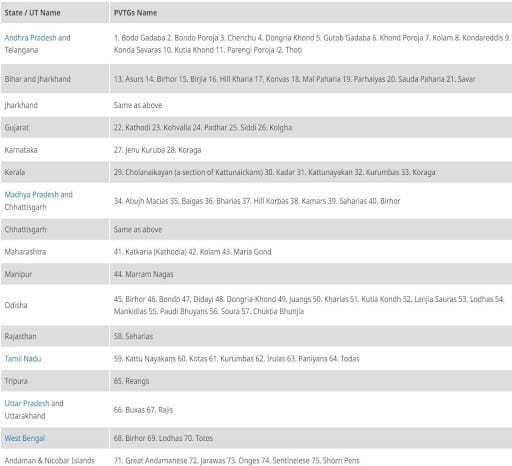
  • At present there are 75 tribal groups considered as PVTGs and they are currently spread across 18 states, and the Union Territory of Andaman and Nicobar Islands.
  • As per the recent survey, there were an estimated 47.5 lakh PVTGs across India. Madhya Pradesh had the highest estimated population of PVTGs, followed by Maharashtra with an estimated population of 6.7 lakh, and Andhra Pradesh.
  • Livelihoods: PVTGs depend on various livelihoods such as food gathering, Non Timber Forest Produce (NTFP), hunting, livestock rearing, shifting cultivation and artisan works.
  • Welfare scheme for PVTGs
    • PM JANMAN scheme: Under this the government rolled out the Rs 24,104 crore with an aim to improve the socio-economic status, health, education, livelihoods and amenities for PVTGs in more than 200 districts.

Source: IE

Particularly Vulnerable Tribal Groups FAQs

Q1: Which is the largest tribe in India?

Ans: Bhil is the largest tribal group in India as per 2011 Census.

Q2: What is the definition of ‘tribe’ in India?

Ans: A tribe is a collection of families bearing a common name, speaking a common dialect, and occupying or professing to occupy a common territory.

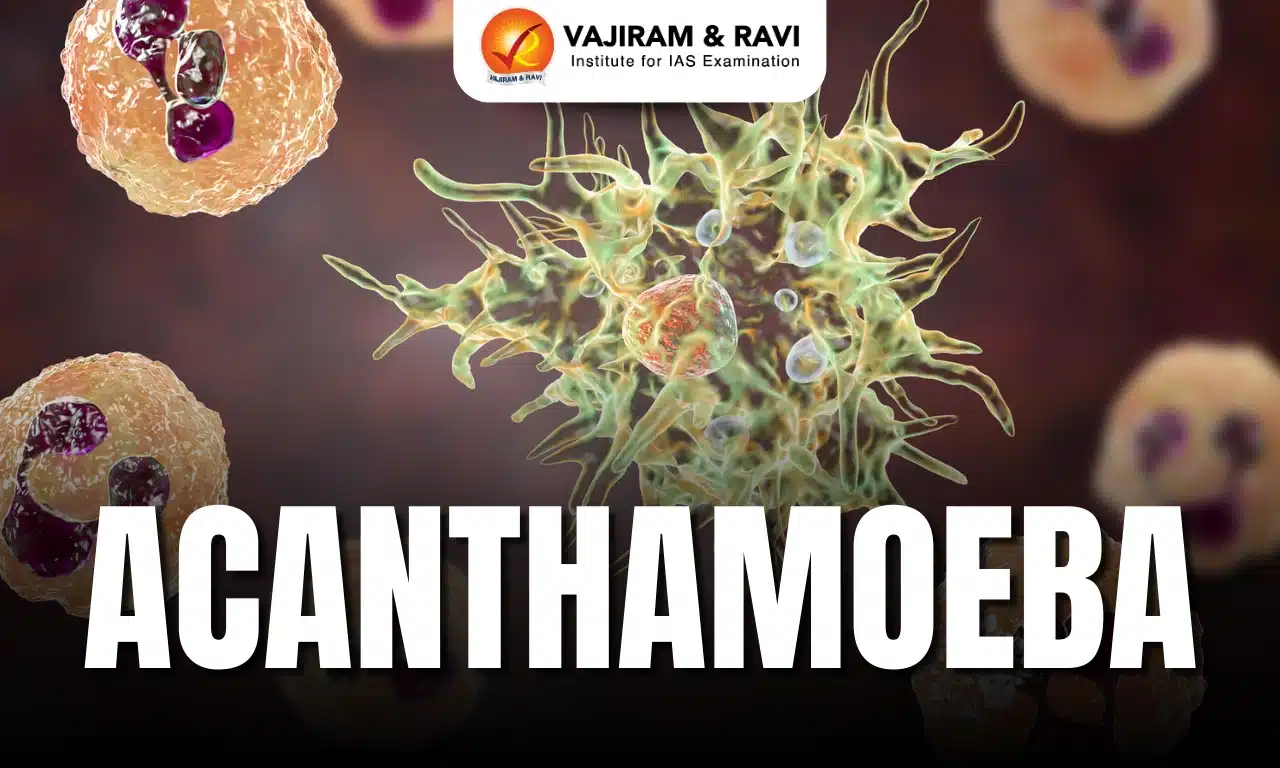
Acanthamoeba

Acanthamoeba

Acanthamoeba Latest News

Recently, it is revealed that Acanthamoeba is more widespread in Kerala’s waterbodies than thought earlier.

About Acanthamoeba

  • It is a free-living ameba, a kind of one-celled organism that lives in water, soil, and dust.
  • It can also be found in swimming pools, hot tubs, drinking water systems, humidifiers, and in heating, ventilation, and air conditioning (HVAC) systems.
  • It can cause serious infections of the brain, skin, eyes, and sinuses. 
  • It can infect parts of the body through cuts or skin wounds or from being inhaled into the lungs or nostrils. It can get into the eyes through contact lens use.

Types of Infections Caused by Acanthamoeba

  • Granulomatous amebic encephalitis (GAE), which affects the brain and is almost always fatal
  • Cutaneous acanthamoebiasis, a skin infection
  • Acanthamoeba rhinosinusitis, an infection of the nasal cavity and sinuses
  • Acanthamoeba keratitis: It is an eye infection that typically occurs in healthy people and can cause permanent vision loss.

Source: TH

Acanthamoeba FAQs

Q1: What disease does Acanthamoeba cause?

Ans: Acanthamoeba keratitis

Q2: Is Acanthamoeba a protozoa?

Ans: Acanthamoeba is an opportunistic protozoan that is widely distributed in the environment.

Debrigarh Wildlife Sanctuary

Debrigarh Wildlife Sanctuary

Debrigarh Wildlife Sanctuary Latest News

Odisha’s Debrigarh Wildlife Sanctuary is all set to be declared India’s newest tiger reserve.

About Debrigarh Wildlife Sanctuary

  • It is situated in the Bargarh district of Odisha.
  • It is located near Hirakud Dam (the longest dam in India and the longest earthen dam in the world) on the Mahanadi River.
  • It was declared a wildlife sanctuary in 1985.
  • It finds a special mention because of noted freedom fighter Veer Surendra Sai. 
  • During his rebellion against the British, his base at Barapathara was located within the sanctuary.
  • Vegetation: Most of the plant sanctuary is covered with mixed and dry deciduous forest. 
  • Flora: Major trees found here are Sal, Asana, Bija, Aanla, Dhaura, etc.
  • Fauna: 
    • Indian leopards, sloth bears, chousingha (four-horned antelope), sambar deer, gaurs (Indian bison), wild boars, and Indian wild dogs etc.
    • It is one of the most flocked wintering grounds of migratory birds that visit the sanctuary from far off places.
    • Some of the most prominent among them are the crested serpent eagle, Flower Peckers, red vented bulbul, tree pie, drongo and white eye oriental.

Source: DH

Debrigarh Wildlife Sanctuary FAQs

Q1: In which Indian state is the Debrigarh Wildlife Sanctuary located?

Ans: Odisha

Q2: Debrigarh Wildlife Sanctuary is located near which major dam?

Ans: Hirakud Dam on the Mahanadi River.

Q3: What is the total area covered by Debrigarh Wildlife Sanctuary?

Ans: 347 sq.km

Q4: Which Indian freedom fighter is historically associated with the Debrigarh region?

Ans: Veer Surendra Sai

Q5: What type of vegetation is predominantly found in Debrigarh Wildlife Sanctuary?

Ans: Mixed and dry deciduous forest

National Institutional Ranking Framework

National Institutional Ranking Framework

National Institutional Ranking Framework Latest News

Recently, the union Minister of Education released the National Institutional Ranking Framework (NIRF) 2025.

About National Institutional Ranking Framework

  • It was started by the Union Ministry of Human Resource Development (now Ministry of Education) in 2015.
  • This framework outlines a methodology to rank institutions across the country
  • Parameters of National Institutional Ranking Framework
    • Teaching, learning and resources;
    • Research and professional practice;
    • Graduation outcomes;
    • Outreach and inclusivity; and peer perception.

Key Highlights of National Institutional Ranking Framework 2025

  • This year’s rankings have been released across 17 categories – overall, SDGs institutes, universities, colleges, research institutions, engineering, management, pharmacy, medical, dental, law, architecture and planning, agriculture and allied sectors, open universities, skill universities, and state public universities.
  • Indian Institute of Technology Madras retains its 1st position in Overall Category for the seventh consecutive year.
  • Indian Institute of Science, Bengaluru tops the Universities Category for tenth consecutive.
  • IIM Ahmedabad tops in Management subject retaining its first position for sixth consecutive year.
  • All India Institute of Medical Sciences (AIIMS), New Delhi occupies the top slot in Medical for the eighth consecutive year
  • IIT Roorkee retained its 1st position in Architecture and Planning for the fifth consecutive year.
  • National Law School of India University, Bengaluru retains its first position in Law.
  • Jamia Hamdard, New Delhi tops the ranking in Pharmacy for the second consecutive year. 

Source: TH

National Institutional Ranking Framework FAQs

Q1: When was the National Institutional Ranking Framework (NIRF) launched?

Ans: It was launched in 2015 by the Ministry of Education.

Q2: Which institute secured the 1st rank in the Overall category of NIRF 2024?

Ans: IIT Madras

Q3: Which institute topped the University category in the NIRF 2024 rankings?

Ans: Indian Institute of Science, Bengaluru

UPSC Daily Quiz 5 September 2025

UPSC Daily Quiz

The Daily UPSC Quiz by Vajiram & Ravi is a thoughtfully curated initiative designed to support UPSC aspirants in strengthening their current affairs knowledge and core conceptual understanding. Aligned with the UPSC Syllabus 2025, this daily quiz serves as a revision resource, helping candidates assess their preparation, revise key topics, and stay updated with relevant issues. Whether you are preparing for Prelims or sharpening your revision for Mains, consistent practice with these Daily UPSC Quiz can significantly enhance accuracy, speed, and confidence in solving exam-level questions.

[WpProQuiz 63]  

UPSC Daily Quiz FAQs

Q1: What is the Daily UPSC Quiz?

Ans: The Daily UPSC Quiz is a set of practice questions based on current affairs, static subjects, and PYQs that help aspirants enhance retention and test conceptual clarity regularly.

Q2: How is the Daily Quiz useful for UPSC preparation?

Ans: Daily quizzes support learning, help in revision, improve time management, and boost accuracy for both UPSC Prelims and Mains through consistent practice.

Q3: Are the quiz questions based on the UPSC syllabus?

Ans: Yes, all questions are aligned with the UPSC Syllabus 2025, covering key areas like Polity, Economy, Environment, History, Geography, and Current Affairs.

Q4: Are solutions and explanations provided with the quiz?

Ans: Yes, each quiz includes detailed explanations and source references to enhance conceptual understanding and enable self-assessment.

Q5: Is the Daily UPSC Quiz suitable for both Prelims and Mains?

Ans: Primarily focused on Prelims (MCQ format), but it also indirectly helps in Mains by strengthening subject knowledge and factual clarity.

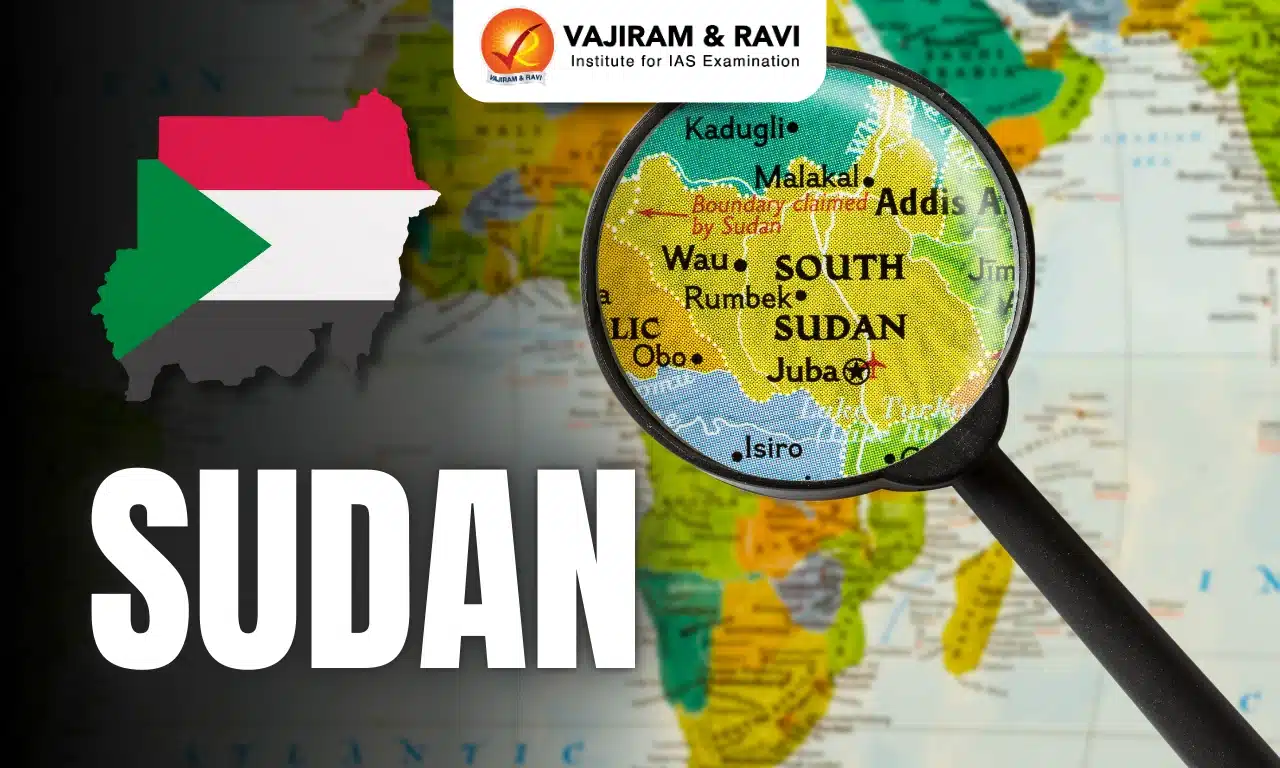
Key Facts about Sudan

Sudan

Sudan Latest News

Recently, a landslide buried a remote mountain village in the Darfur region of Sudan.

About Sudan

  • It is the third largest country in Africa.
  • Bordering Countries: South Sudan, Ethiopia, Eritrea, Egypt, Libya, Chad, and Central African Republic.
  • It borders the Sahara on the north and extends southward to the forests of West Africa and the Congo River basin.
  • It also has a significant coastline along the Red Sea.
  • Relief: It is mainly composed of vast plains and plateaus that are drained by the Nile River and its tributaries.
  • Much of Sudan consists of deserts and arid grasslands with little in the way of vegetation. Massive plains and plateaus cover most of the nation.
  • Highest point: Jabal Marrah 
  • Natural Resources: Petroleum; small reserves of iron ore, copper, chromium ore, zinc, tungsten, mica, silver, gold; hydropower
  • Capital City: Khartoum, which is located roughly in the centre of the country, at the junction of the Blue Nile and White Nile rivers.

Source: TH

Sudan FAQs

Q1: What is the major river in Sudan?

Ans: Nile

Q2: Which sea borders Sudan to the northeast?

Ans: Red Sea

New Foreigners Act 2025: Key Provisions, Exemptions and Enforcement Reforms

New Foreigners Act 2025

New Foreigners Act 2025 Latest News

  • The Immigration and Foreigners Act, 2025, which came into effect on September 1, has introduced a comprehensive revamp of India’s framework for managing foreign nationals.
  • The newly notified Rules and Orders restructure regulations governing the entry, stay, and exit of foreigners, while also laying out specific exemptions for certain categories of individuals.
  • This marks one of the most significant updates to India’s immigration system in recent years, aimed at bringing clarity, efficiency, and uniformity to the way foreign nationals are regulated.

Consolidation of Immigration Laws under the 2025 Act

  • The Immigration and Foreigners Act, 2025, passed by Parliament and received Presidential assent, replaces four older laws: 
    • the Passport (Entry into India) Act, 1920; 
    • Registration of Foreigners Act, 1939; 
    • Foreigners Act, 1946; and 
    • Immigration (Carriers’ Liability) Act, 2000.
  • By consolidating these into a single unified statute, the Act streamlines India’s framework for the entry, stay, movement, and exit of foreigners, ensuring greater clarity and efficiency.

Why an Overhaul Was Needed

  • India’s earlier immigration regime was fragmented and outdated, built on four separate Acts dating back to the pre-Independence era (1920–2000). 
  • Their overlapping and confusing provisions led to inconsistent enforcement and frequent ambiguity.
  • Exemptions for groups such as Tibetan and Sri Lankan Tamil refugees, and citizens of Nepal and Bhutan were scattered across various notifications, making them hard to access or interpret.
  • Administrative gaps also persisted — manual reporting, delayed data collection, unclear division of powers between central and local authorities, and non-uniform rules for restricted/protected areas. 

Key Provisions of the Immigration and Foreigners Act, 2025

  • The Immigration and Foreigners Act, 2025, along with its accompanying Rules and Orders, introduces clear, centralised rules for regulating foreign nationals in India.
  • Valid Documents and Entry Points - All entrants must carry a valid passport or travel document and, in the case of foreigners, a valid visa, unless exempted by the Act or special government orders. 
    • Entry and exit are permitted only through designated immigration posts, covering major airports, seaports, land border posts, and rail checkpoints.
  • Role and Powers of Immigration Officers - Immigration Officers posted at these entry points hold final authority to validate or deny entry or exit. They can refuse admission on national security grounds.
  • Registration and Local Control Mechanism - Foreigners must register with designated authorities, such as the SP/DCP or Foreigners’ Regional Registration Officers (FRROs), who oversee regulation at district and regional levels.
  • Reporting Obligations of Accommodation Providers - Hotels, hostels, paying guest facilities, and religious institutions must digitally record and report details of foreign guests — including OCI card holders — within 24 hours of arrival and departure.
  • Educational and Medical Institutions’ Duties - Universities must report admissions of foreign students, while hospitals must notify authorities of foreign patients, births, and deaths within seven days via electronic submission.
  • Authority Over Premises Frequented by Foreigners - Civil authorities may restrict or shut down resorts, clubs, or similar venues if linked to criminal or unlawful activities, or if foreigners frequenting them are deemed undesirable. 
    • Relocation of such operations requires prior approval.
  • Permits for Protected Areas - Access to protected, restricted, or prohibited areas now requires a special online permit. Applications must be filed on designated portals or apps, with standardised procedures in place.

Exempted Categories under the Immigration and Foreigners Act, 2025

  • The Immigration and Foreigners Act, 2025, exempts specific groups from standard entry and visa rules. 
  • These include Indian military personnel and families, citizens of Nepal and Bhutan, Tibetan refugees, minority refugees from Afghanistan, Bangladesh, and Pakistan, registered Sri Lankan Tamils, certain diplomatic passport holders, and foreign military personnel on humanitarian visits
  • All enjoy regulated, conditional entry benefits.

New Provisions in the Immigration and Foreigners Act, 2025

  • The Act not only consolidates older laws but also introduces modernised systems and clear rules for enforcement and regulation.

Digital and Electronic Records

  • Mandatory online notification through portals and apps by accommodation providers, hospitals, and universities.
  • Creates a comprehensive digital database for enforcement, health monitoring, and citizenship-related decisions.

Graduated Fines and Compounding System

  • Clear penalties for infractions like overstaying, visa violations, non-registration, and unauthorised visits to restricted areas.
  • Fines range from ₹10,000 to ₹5 lakh, with lower fines (as low as ₹50) for certain groups like Tibetans, Mongolian monks, and refugees from Pakistan, Bangladesh, and Afghanistan.

Protections and Appeals

  • Limited safeguards for humanitarian cases and for errors made in good faith.
  • Appeal mechanisms for those penalised under the Act.

Centralisation and Delegation of Powers

  • Central government retains primary authority, but can delegate functions to states and Union Territories.
  • Empowered to modify, cancel, or issue directions at any time.

Uniformity in Exemptions

  • No discretionary powers at the local level.
  • All exemptions for entry, visa, or protected area permits must come only from central government orders, ensuring consistency and clarity.

Source: IE

New Foreigners Act 2025 FAQs

Q1: What is the New Foreigners Act 2025?

Ans: It is a consolidated law replacing four older Acts to regulate entry, stay, movement, and exit of foreigners with clarity and efficiency.

Q2: Why was the New Foreigners Act 2025 introduced?

Ans: The Act was needed to replace outdated, fragmented colonial-era laws and address ambiguity, manual reporting gaps, and scattered exemptions for foreign entrants.

Q3: What are the key provisions of the New Foreigners Act 2025?

Ans: It mandates valid documents, digital reporting by hotels and hospitals, FRRO-based registration, and permits for protected or restricted areas.

Q4: Who is exempted under the New Foreigners Act 2025?

Ans: Exempt groups include citizens of Nepal and Bhutan, Tibetan refugees, minority refugees from Pakistan, Afghanistan, and Bangladesh, Sri Lankan Tamils, and certain diplomats.

Q5: How does the Act improve enforcement

Ans: With digital databases, centralised exemptions, and graded fines, it reduces discretion, ensures consistency, and speeds up resolution of violations.

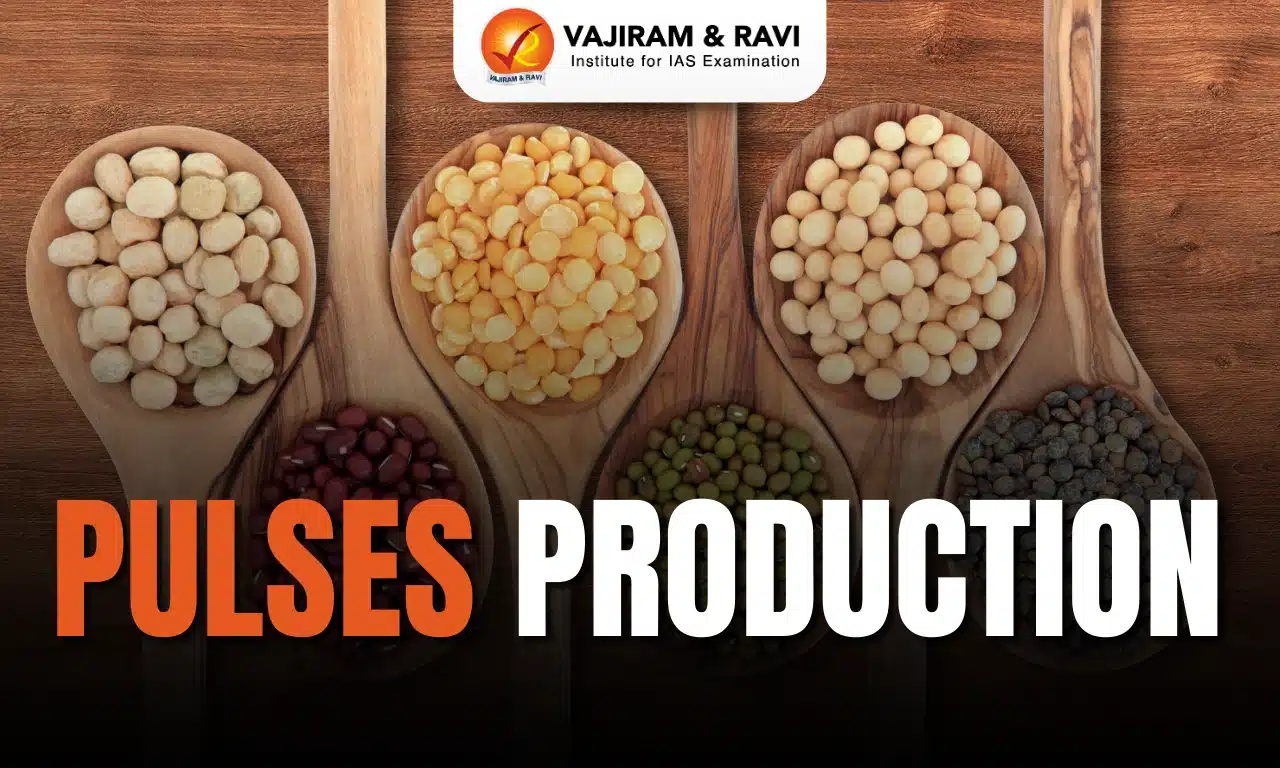
Pulses Production – NITI Aayog’s Plan for Self-Sufficiency

Pulses Production

Pulses Production Latest News

  • NITI Aayog has unveiled a roadmap to boost pulses production in India, aiming for self-sufficiency and reduced import dependence by 2047.

Introduction

  • Pulses are central to India’s food and nutritional security, providing protein-rich diets while also contributing to sustainable agriculture through nitrogen fixation and low water requirements. 
  • India is the world’s largest producer, consumer, and importer of pulses, making self-reliance in production a national priority. 
  • Recognising this, NITI Aayog has released a report titled Strategies and Pathways for Accelerating Growth in Pulses towards the Goal of Atmanirbharta, laying out a comprehensive roadmap to reduce import dependency and enhance domestic production.

Pulses Production in India

  • India’s diverse agro-climatic conditions allow the cultivation of 12 pulse crops across kharif, rabi, and summer seasons. 
  • Major producing states, Madhya Pradesh, Maharashtra, and Rajasthan, account for over 55% of production, while the top ten states contribute over 91% of the national output.
  • Historically, the country’s dependence on imports was high. Production dipped to 16.35 million tonnes (MT) in 2015-16, necessitating 6 MT of imports. 
  • However, government interventions, including the National Food Security Mission (NFSM) and Minimum Support Price (MSP) policies, improved output significantly. 
  • By 2022-23, production rose by nearly 59.4% to 26.06 MT, with productivity increasing by 38%. Import dependence simultaneously fell from 29% to just 10.4%.
  • Despite this progress, challenges persist. Nearly 80% of pulses cultivation is rain-fed, making production vulnerable to climatic fluctuations. 
  • The sector supports the livelihood of over five crore farmers and their families, underscoring the importance of a stable policy framework.

NITI Aayog’s Recommendations

  • NITI Aayog’s roadmap emphasises tailored interventions for different states and districts to boost productivity and sustainability. Key recommendations include:
    • Area Retention and Diversification: Encouraging region-specific crop clusters to optimise cultivation.
    • Technology Adoption: Promoting customised farming technologies suited for varied agro-ecological sub-regions.
    • Seed Quality and Distribution: Focusing on high-quality seed treatment kits and ensuring widespread distribution, particularly in 111 high-potential districts that contribute 75% of national output.
    • Cluster-Based Hubs: Introducing the “One Block–One Seed Village” model through farmer-producer organisations (FPOs) to enhance local productivity.
    • Mission for Atmanirbharta in Pulses: A six-year initiative targeting key crops such as pigeonpea, black gram, and lentil to further strengthen self-sufficiency.
  • The report projects that India’s pulse production will reach 30.59 MT by 2030 and 45.79 MT by 2047, aligning with the nation’s long-term goal of food security and reduced import reliance.

Nutritional and Environmental Importance

  • Beyond food security, pulses are vital for nutrition, especially in a country where vegetarian diets dominate. 
  • They are a major source of protein, iron, and other micronutrients, helping combat malnutrition. 
  • Environmentally, pulses enhance soil fertility through nitrogen fixation, require less water compared to cereals, and reduce the carbon footprint of agriculture.

Conclusion

  • India has made remarkable progress in pulses production over the past decade, but achieving self-sufficiency requires sustained and region-specific interventions. 
  • NITI Aayog’s strategic recommendations, focused on seeds, technology, and targeted clusters, are expected to accelerate progress towards Atmanirbharta in pulses. 
  • By 2047, India envisions not just meeting its domestic demand but also positioning itself as a key player in the global pulses market.

Source: TH

Pulses Production FAQs

Q1: Why are pulses important for India?

Ans: Pulses are crucial for nutritional security, providing protein-rich diets and supporting sustainable agriculture.

Q2: What was India’s pulses production in 2022–23?

Ans: India produced 26.06 million tonnes of pulses in 2022–23.

Q3: How has India reduced its dependence on pulse imports?

Ans: Import dependence fell from 29% in 2015–16 to 10.4% in 2022–23 due to government interventions and increased productivity.

Q4: What is NITI Aayog’s “One Block–One Seed Village” initiative?

Ans: It is a cluster-based model promoting high-quality seed production and distribution through farmer producer organizations.

Q5: What is the projected pulse production target for 2047?

Ans: India aims to produce 45.79 million tonnes of pulses by 2047.

Understanding PVTGs in India: Census Significance, Population, and Challenges

Particularly Vulnerable Tribal Groups

Particularly Vulnerable Tribal Groups (PVTGs) Latest News

  • The Ministry of Tribal Affairs (MoTA) has urged the Registrar General and Census Commissioner of India (RGI) to enumerate particularly vulnerable tribal groups (PVTGs) separately in the upcoming Census.
  • The ministry requested that data on households, individuals, and unique demographic, cultural, and socio-economic traits of PVTGs be collected. 
  • This would enable more accurate planning and effective execution of targeted welfare schemes, including the Pradhan Mantri Janjati Adivasi Nyay Maha Abhiyan (PM JANMAN).

Understanding Particularly Vulnerable Tribal Groups (PVTGs)

  • PVTGs are a sub-category of Scheduled Tribes (STs) characterised by declining or stagnant populations, geographical isolation, pre-agrarian practices, economic backwardness, and low literacy levels.
  • The category was created following the Dhebar Commission (1960–61), which highlighted disparities among tribal groups and noted that some were far more vulnerable than others. 
  • Initially, 52 groups were identified as PVTGs (then called Primitive Tribal Groups) during the Fifth Five-Year Plan (1974–79). 
  • Later, in 2006, 23 more groups were added, bringing the total to 75 PVTGs across 18 states and the Andaman & Nicobar Islands.
  • Experts have raised concerns about the criteria used, particularly the emphasis on geographical isolation.
  • They suggested that the government should revisit and update inclusion parameters before conducting a fresh enumeration to reflect improvements or worsening conditions among different groups.

Separate Enumeration of PVTGs

  • So far, no separate enumeration of PVTGs has taken place in any Census. Since PVTGs are a sub-category of Scheduled Tribes (STs), they are generally counted within the broader ST category. 
  • Many PVTGs are not listed individually but grouped under a common nomenclature, leading to limited visibility in Census data.
  • According to the Ministry of Tribal Affairs (MoTA), 40 out of 75 PVTGs are listed as ‘single entry’ in the notified ST list under Article 342 of the Constitution
  • For example, in the 2011 Census, Baigas of Madhya Pradesh were counted separately, but groups like Abujh Marias, Bharias, Hill Korbas, and Kamars were not. 
  • Later, in 2013, Abujh Maria and Hill Korba were formally added to Chhattisgarh’s ST list through legislation.
  • By convention, the Registrar General of India (RGI) only publishes data for the main STs, with sub-groups and synonyms automatically included, which has prevented focused data collection on PVTGs until now.

Estimates of PVTG Population

  • In November 2023, the government launched the ₹24,104 crore PM JANMAN scheme to uplift PVTGs through improved health, education, livelihoods, and infrastructure in over 200 districts. 
  • To support its rollout, the Ministry of Tribal Affairs (MoTA) and state governments conducted a habitation-level survey, estimating the total PVTG population at 47.5 lakh.
  • Among states, Madhya Pradesh had the largest estimated PVTG population at 13.22 lakh, followed by Maharashtra (6.7 lakh) and Andhra Pradesh (5.18 lakh).
  • The 2011 Census data showed that some PVTG groups had populations of fewer than 1,000 people, including: 
    • the Jarawas, Onges, Sentinelese, and Shompens (Andaman and Nicobar Islands), 
    • Raji (Uttarakhand), 
    • Kota (Tamil Nadu), 
    • Birhor (Odisha), 
    • Kamar (Madhya Pradesh), and 
    • small tribal groups in Bihar. 
  • The Sentinelese were the smallest community with just 15 individuals, while the Baiga of Madhya Pradesh were the largest, numbering 4,14,526.
  • Officials emphasise that accurate enumeration will plug gaps in welfare implementation, particularly in health and education, and help reassess whether current PVTG classification criteria remain relevant.

Source: IE | VP | PIB

Particularly Vulnerable Tribal Groups (PVTGs) FAQs

Q1: What are Particularly Vulnerable Tribal Groups (PVTGs)?

Ans: PVTGs are sub-categories of Scheduled Tribes marked by isolation, economic backwardness, low literacy, and stagnant or declining populations.

Q2: Why does the government want separate enumeration of PVTGs?

Ans: Separate counting will ensure accurate data for planning and better implementation of targeted schemes like PM JANMAN.

Q3: How many PVTGs are there in India?

Ans: There are 75 recognised PVTGs spread across 18 states and the Andaman & Nicobar Islands, identified initially during the Fifth Five-Year Plan.

Q4: Has India ever enumerated PVTGs separately?

Ans: No, PVTGs have never been separately counted in any Census; they are generally included under the broader Scheduled Tribes category.

Q5: What is the estimated population of PVTGs?

Ans: A 2023 habitation-level survey estimated 47.5 lakh PVTGs across India, with Madhya Pradesh having the largest population at 13.22 lakh.

Manipur Violence – Centre Signs Revised Pact for Peace

Manipur Violence

Manipur Violence Latest News

  • The Centre has signed a revised Suspension of Operations pact with Kuki-Zo groups, tightening monitoring norms and relocating camps to restore peace in Manipur.

Introduction

  • Manipur, plagued by ethnic violence between the Meitei and Kuki-Zo communities since May 2023, has witnessed a major policy development with the Centre announcing a revised Suspension of Operations (SoO) pact with Kuki-Zo insurgent groups. 
  • The move comes ahead of Prime Minister Narendra Modi’s scheduled visit to the state, marking the government’s most significant step to restore peace and stability. 
  • The new pact seeks to tighten oversight of cadres, relocate militant camps, and ensure compliance with the constitutional framework while opening channels for dialogue.

Free Movement and Confidence-Building Measures

  • The Centre claimed that Kuki civil society groups had agreed to allow free movement along National Highway-02, a vital lifeline for commuters and essential goods in the state. 
  • This move was seen as the beginning of normalcy, but the Kuki-Zo Council (KZC) issued clarifications stating that the highway had never been officially blocked and that its appeal was limited to the Kangpokpi district stretch.
  • While the government portrayed the development as an agreement on “free movement,” Kuki groups insisted that buffer zones between Meitei and Kuki areas would continue to be respected, highlighting persistent mistrust and the fragility of peace. 

About The SoO Pact

  • The new SoO pact was signed on September 4, 2025, between the Ministry of Home Affairs (MHA), the Government of Manipur, and 24 Kuki-Zo insurgent groups under the umbrellas of the Kuki National Organisation (KNO) and the United People’s Front (UPF).
  • Key Features of the Revised Pact:
    • Stricter Monitoring: A Joint Monitoring Group (JMG) led by the Manipur Principal Secretary (Home) will conduct physical verification of cadres, maintain detailed lists, and ensure removal of foreign nationals allegedly present in Kuki camps.
    • Relocation of Camps: The pact mandates reducing the number of designated camps to six each for KNO and UPF, relocating them away from highways, populated areas, and the Myanmar border.
    • Financial Transparency: Cadres will receive stipends only through Aadhaar-linked bank accounts, ensuring payments are restricted to those physically verified at camps.
    • Restrictions on Activities: Groups are barred from recruiting new cadres, carrying weapons outside camps, associating with other armed outfits, or engaging in offensive operations.
    • Respect for Constitution: The preamble emphasises that all signatories must abide by the Constitution of India and respect the territorial integrity of Manipur.

Political and Security Dimensions

  • The signing of the pact has raised concerns among civil society groups. 
  • The Zomi Council, based in Churachandpur, rejected the KZC’s claim of representation, arguing that it does not legitimately represent the Zo people. 
    • This reflects deeper divisions within Kuki-Zo society and complicates negotiations.
  • For the Meiteis, relocation of camps from valley-fringe areas to the hills addresses a long-standing demand, as these camps were allegedly used to launch attacks in the valley. 
  • Simultaneously, Naga groups such as the United Naga Council have voiced their displeasure over exclusion from talks, and have even threatened a trade embargo in response to the border fencing issue with Myanmar.

Path Towards a Political Settlement

  • The revised SoO pact is designed as a confidence-building framework. It will be followed by a tripartite dialogue among the Centre, the Manipur government, and Kuki groups to pave the way for a negotiated political settlement within the Constitution.
  • Parallelly, the Centre is working with other insurgent groups such as the United National Liberation Front (UNLF), for whom designated camps are being set up. This signals a wider attempt to bring insurgent movements under a structured peace process.

Source : TH | IE

Manipur Violence FAQs

Q1: What is the Suspension of Operations (SoO) pact in Manipur?

Ans: The SoO pact is a ceasefire agreement between the Centre , Manipur government, and Kuki-Zo insurgent groups to suspend hostilities and negotiate peace.

Q2: What are the key changes in the revised SoO pact of 2025?

Ans: The revised pact mandates Aadhaar-linked stipends, relocation of camps, physical verification of cadres, and strict adherence to India’s Constitution.

Q3: Why is National Highway-02 significant in the Manipur peace process?

Ans: NH-02 is a vital supply route, and its free movement is seen as a step towards restoring normalcy between Meitei and Kuki areas.

Q4: What role does the Joint Monitoring Group (JMG) play in the pact?

Ans: The JMG verifies cadres, monitors compliance with ground rules, and ensures foreign nationals are excluded from insurgent lists.

Q5: What is the ultimate goal of the revised SoO agreement?

Ans: The pact aims to prepare the ground for a negotiated political settlement under the Constitution of India, ensuring peace and stability in Manipur.

Daily Editorial Analysis 5 September 2025

Daily Editorial Analysis

Trump’s Tariff War as Opportunity for the Global South

Context

  • The contemporary world order is undergoing severe disruptions at the intersection of economics, geopolitics, and technology.
  • Much attention has focused on the role of the United States and the policies of President Donald Trump, but the more urgent task for India and the wider world is to interrogate the underlying motivations of these disruptions and craft a measured strategic response.
  • The global polycrisis, a condition where crises in economics, politics, and technology reinforce one another, requires India to recalibrate its national strategy to defend its interests and to contribute to building a more equitable multipolar world order.

Trump’s Motivations and Economic Warfare

  • Appealing to Domestic Discontent
    • Trump has positioned himself as the champion of a silent majority in the United States that feels betrayed by globalisation.
    • This constituency, extending beyond his core Make America Great Again base, perceives itself as the victim of capital accumulation, cheap labour, and the erosion of environmental safeguards.
    • Instead of restructuring global capitalism to redress these inequalities, Trump has turned to xenophobia, populist economic nationalism, and racially charged politics.
    • The result is a sustained attack on the liberal international order through sanctions, tariffs, weakened multilateral institutions, reduced foreign aid, and stricter immigration controls.
    • These measures, cloaked in the rhetoric of national interest, are in fact instruments of aggressive sovereign self-interest.
  • Reinforcing U.S. Economic Power

    • Tariffs, though ultimately borne by American consumers and companies, serve as coercive tools to extract concessions from other nations.
    • While the United States still dominates global GDP with a 26% share, China’s rapid growth at 17% represents a strategic challenge.
    • America’s subsidies for its own industries, punitive tariffs on foreign goods, and efforts to preserve the dollar’s hegemony reflect a long history of protectionist practices dressed up as free-market policies.
    • India has suffered disproportionately from these measures, facing steep tariffs on its exports, even as the U.S. shields its own markets with extreme protectionism.
  • Containing China and Reasserting Unipolarity

    • Although Trump’s style is unique, the bipartisan consensus in Washington supports checking China’s rise and restoring American industrial strength.
    • Tariffs against India, linked to U.S. manoeuvres on Russia and Ukraine, also reflect a broader strategy to counter multipolar aspirations.
    • These policies serve not only to pressure competitors but also to consolidate U.S. national security objectives in Asia, where China is viewed as the principal rival.

Implications for India

  • Strategy and India’s Security Dilemma

    • The assumption that Washington views India as a democratic counterweight to China must be reassessed.
    • The S. has continued to engage Pakistan, hesitated over commitments to the Quad, and placed barriers on technological collaboration and manufacturing investment in India.
    • These moves complicate India’s security calculus, forcing it into concessions with China to avoid simultaneous confrontation with both Beijing and Islamabad.
  • India’s Compliance Under U.S. Pressure

    • India’s response to American pressure has often been marked by compliance rather than resistance.
    • While China has leveraged its control over critical rare metals to shield itself from U.S. tariffs, India has yielded to demands on oil imports from Iran and Venezuela and even on agricultural duties.
    • This behaviour risks emboldening Washington while undermining India’s own strategic autonomy.
  • Limits of Personalised Diplomacy

    • The Modi government’s foreign policy approach, marked by personalised diplomacy, diaspora mobilisation, and symbolic gestures, has not translated into tangible strategic gains.
    • Instead, India finds itself facing an entrenched China-Pakistan alliance, strained neighbourhood relations, punitive tariffs, and heightened racism against its diaspora in the U.S.

The Way Forward: Leveraging the Polycrisis for Strategic Gains

  • Despite the challenges, the current global disruptions also present India with opportunities to reshape the world order.
  • The weakening of neoliberal globalisation and the discrediting of unipolarity create space for India to champion multipolarity as a more equitable alternative.
  • A New Economic Deal that prioritises fair distribution of resources, stronger multilateral institutions, and debt relief for developing nations would resonate across the Global South.
  • However, to assume such leadership, India must address its own structural deficiencies.
  • Manufacturing remains weak, unemployment high, private investment stagnant, and research underfunded.
  • Without equitable economic growth and greater investor confidence, India cannot position itself as a reliable global partner.
  • This demands bold reforms in industrial policy, scientific development, and public sector restructuring.

Conclusion

  • The disruptions of the Trump era are not passing anomalies but symptoms of deeper global fractures.
  • For India, the challenge lies in resisting coercive U.S. policies while avoiding entanglement in great-power rivalries.
  • At the same time, India must seize the moment to advocate for multipolarity and economic fairness, both regionally and globally.
  • Achieving this vision requires confronting structural weaknesses at home, pursuing policies of equitable growth, and forging unified strategies that transcend partisanship.

Trump’s Tariff War as Opportunity for the Global South FAQs

Q1. What are the three main motivations behind Trump’s economic policies?
Ans. Trump’s policies are driven by appealing to domestic discontent, reinforcing U.S. economic power, and containing China while reasserting American unipolarity.

Q2. How have U.S. tariffs affected India?
Ans. U.S. tariffs have severely impacted India’s key export sectors such as textiles, jewellery, auto components, and metals.

Q3. Why does the essay argue that India must reassess its partnership with the U.S.?
Ans. India must reassess because Washington continues to engage Pakistan, limit technology collaboration, and disrupt the carefully built India-U.S. partnership.

Q4. What opportunity does the global polycrisis offer India?
Ans. The polycrisis allows India to champion multipolarity and push for a New Economic Deal that ensures fairness for the Global South.

Q5. What domestic reforms must India prioritise to strengthen its global role?
Ans. India must revitalise manufacturing, reduce unemployment, boost private investment, support scientific research, and ensure equitable economic growth.

Source: The Hindu


GST 2.0 is a Landmark in India’s Tax Journey 

Context

  • The 56th meeting of the Goods and Services Tax (GST) Council on September 3, 2025, will be remembered as a landmark moment in India’s economic history.
  • Far more than a routine tax reform exercise, the decisions made reflect a paradigm shift toward a simpler, fairer, and growth-oriented taxation
  • In alignment with the vision of Viksit Bharat 2047, the Council’s reforms are not only technical adjustments but transformative steps that touch the lives of citizens, businesses, and industries alike.

Significant Transformation in GST Structure

  • Simplification of the Tax Structure

    • One of the most significant changes is the transition from multiple GST slabs, 5%, 12%, 18%, and 28%, to a streamlined system featuring two principal rates: 18% as the Standard Rate and 5% as the Merit Rate, alongside a 40% de-merit rate for select luxury or harmful goods.
    • This simplification reduces compliance burdens, enhances predictability for businesses, and aligns India with global best practices in taxation.
    • For decades, industry stakeholders had advocated for such rationalisation, and the Council’s decision demonstrates responsiveness and foresight.
  • Benefits for Households and Consumers

    • By reducing GST on everyday essentials such as soap, shampoo, toothpaste, bicycles, and kitchenware to 5%, the government has directly lowered the cost of living.
    • Even more impactful is the complete exemption on life and health insurance, which promises to expand access to financial protection, particularly for senior citizens and low-income groups.
    • Healthcare, too, has been given a boost through exemptions and reduced rates on life-saving drugs, diagnostic equipment, and treatments for critical illnesses, ensuring affordability and wider access.
    • This consumer-centric approach extends to agriculture.
    • By lowering GST on tractors, farm machinery, fertilizers, and vital inputs, the reforms ease the cost of cultivation and enhance farm productivity.
    • For farmers, these changes are not abstract policy shifts but tangible economic relief that improves livelihoods.

Direct Implications of GST Reforms

  • Boost to Labour-Intensive and Traditional Sectors

    • The reforms also address India’s employment challenge by supporting labour-intensive sectors such as handicrafts, leather goods, marble, and granite.
    • Reduced GST rates will enhance demand, preserve traditional industries, and create new growth opportunities.
    • In doing so, the Council has reinforced the role of taxation policy as an enabler of social as well as economic development.
  • Correcting Structural Anomalies

    • Perhaps the most strategically significant reforms lie in the correction of inverted duty structures that had long created inefficiencies in sectors such as textiles and cement.
    • The reduction of GST on man-made fibre and yarn to 5% eliminates distortions in the textile value chain, boosting competitiveness and supporting both exports and domestic manufacturing.
    • Likewise, reducing GST on cement from 28% to 18% will have a multiplier effect on housing and infrastructure development.
  • Strengthening Institutions and Processes

    • Equally transformative is the announcement that the Goods and Services Tax Appellate Tribunal (GSTAT) will be operational by the end of 2025.
    • This marks a historic advance in institutional capacity, offering taxpayers faster dispute resolution and more consistent rulings.
    • Coupled with process reforms such as provisional refunds, risk-based compliance checks, and harmonisation of valuation rules, these steps build trust in the tax system and reduce uncertainty for businesses.
  • Balancing Growth with Fiscal Prudence

    • The careful phasing of these reforms, beginning September 22, 2025, reflects the Council’s pragmatic approach.
    • By sequencing implementation, the government ensures that revenue stability is maintained even as consumers and industries reap the benefits of lower rates.
    • This balance between fiscal prudence and growth stimulus strengthens the credibility of the reforms.
  • A People’s Reform for a Growth-Oriented Future

    • At its core, GST 2.0 is more than a tax overhaul; it is a people’s reform.
    • By simplifying structures, lowering rates on essentials, correcting distortions, and institutionalizing dispute resolution, the reforms reach across all sections of society, citizens, farmers, workers, entrepreneurs, and industrialists.
    • They signal a strong commitment to fairness, inclusivity, and growth.
    • The Confederation of Indian Industry (CII), which had long advocated these measures, has welcomed the Council’s responsiveness.
    • Its readiness to support implementation ensures that the benefits will flow seamlessly to every stakeholder in the economy.

Conclusion

  • The 56th GST Council meeting stands as a defining milestone in India’s reform trajectory.
  • By merging simplification with inclusivity, and growth with prudence, GST 2.0 lays the foundation for a taxation regime that supports India’s aspirations of becoming a developed economy by 2047.
  • These reforms are not merely technical adjustments, they embody a vision of governance that is participatory, forward-looking, and deeply attuned to the needs of its people.

GST 2.0 is a Landmark in India’s Tax Journey FAQs

 Q1. What was the most significant reform announced in the 56th GST Council meeting?
Ans. The most significant reform was the simplification of GST slabs into two main rates—5% and 18%—with a 40% de-merit rate for select goods.

Q2. How do the reforms benefit ordinary households?
Ans. The reforms benefit households by reducing GST on daily essentials, exempting insurance, and lowering costs on food and healthcare.

Q3. Why are the changes in agriculture important?
Ans. The changes are important because reduced GST on tractors, machinery, and fertilizers lowers cultivation costs and improves farm productivity.

Q4. What role will the Goods and Services Tax Appellate Tribunal (GSTAT) play?
Ans. The GSTAT will provide faster dispute resolution, ensure consistent rulings, and strengthen trust in the tax system.

Q5. How do these reforms balance growth with fiscal stability?
Ans. They balance growth and fiscal stability by phasing implementation to protect revenues while allowing immediate benefits for consumers and businesses.

Source: The Hindu

Daily Editorial Analysis 5 September 2025 FAQs

Q1: What is editorial analysis?

Ans: Editorial analysis is the critical examination and interpretation of newspaper editorials to extract key insights, arguments, and perspectives relevant to UPSC preparation.

Q2: What is an editorial analyst?

Ans: An editorial analyst is someone who studies and breaks down editorials to highlight their relevance, structure, and usefulness for competitive exams like the UPSC.

Q3: What is an editorial for UPSC?

Ans: For UPSC, an editorial refers to opinion-based articles in reputed newspapers that provide analysis on current affairs, governance, policy, and socio-economic issues.

Q4: What are the sources of UPSC Editorial Analysis?

Ans: Key sources include editorials from The Hindu and Indian Express.

Q5: Can Editorial Analysis help in Mains Answer Writing?

Ans: Yes, editorial analysis enhances content quality, analytical depth, and structure in Mains answer writing.

Enquire Now