UPSC Daily Quiz 6 September 2025

UPSC Daily Quiz

The Daily UPSC Quiz by Vajiram & Ravi is a thoughtfully curated initiative designed to support UPSC aspirants in strengthening their current affairs knowledge and core conceptual understanding. Aligned with the UPSC Syllabus 2025, this daily quiz serves as a revision resource, helping candidates assess their preparation, revise key topics, and stay updated with relevant issues. Whether you are preparing for Prelims or sharpening your revision for Mains, consistent practice with these Daily UPSC Quiz can significantly enhance accuracy, speed, and confidence in solving exam-level questions.

[WpProQuiz 62]  

UPSC Daily Quiz FAQs

Q1: What is the Daily UPSC Quiz?

Ans: The Daily UPSC Quiz is a set of practice questions based on current affairs, static subjects, and PYQs that help aspirants enhance retention and test conceptual clarity regularly.

Q2: How is the Daily Quiz useful for UPSC preparation?

Ans: Daily quizzes support learning, help in revision, improve time management, and boost accuracy for both UPSC Prelims and Mains through consistent practice.

Q3: Are the quiz questions based on the UPSC syllabus?

Ans: Yes, all questions are aligned with the UPSC Syllabus 2025, covering key areas like Polity, Economy, Environment, History, Geography, and Current Affairs.

Q4: Are solutions and explanations provided with the quiz?

Ans: Yes, each quiz includes detailed explanations and source references to enhance conceptual understanding and enable self-assessment.

Q5: Is the Daily UPSC Quiz suitable for both Prelims and Mains?

Ans: Primarily focused on Prelims (MCQ format), but it also indirectly helps in Mains by strengthening subject knowledge and factual clarity.

Terrestrial Ecosystem, Meaning, Types, Important Details

Terrestrial Ecosystem

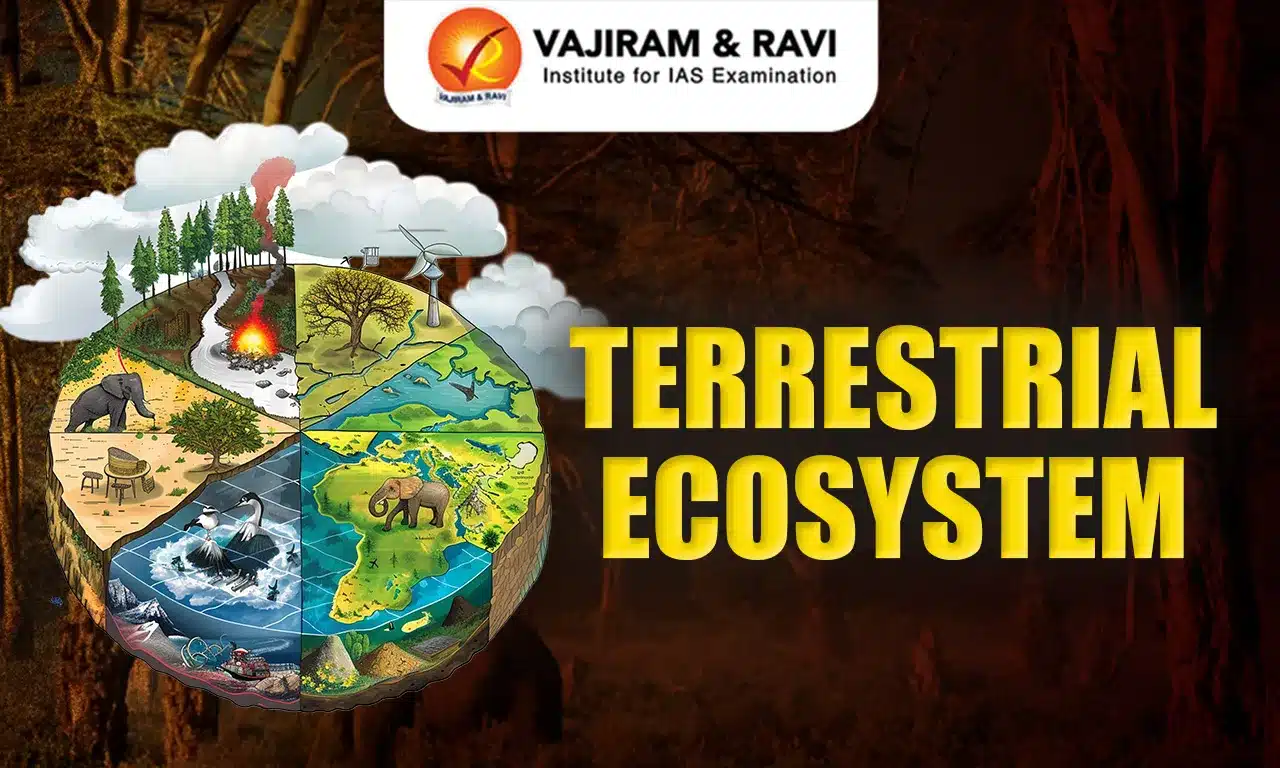
Terrestrial ecosystems are important for the sustenance of life on Earth. Having an understanding of this ecosystem, helps in understanding the ecological concepts and tackling environmental challenges. In this article, we are going to cover the meaning of a terrestrial ecosystem, its categories including forest ecosystems, grassland ecosystems, desert ecosystems, tundra ecosystems, mountain ecosystems and ghats ecosystems. 

Ecosystem 

An ecosystem is a functional unit of nature where living organisms coexist, interact with each other and engage with their surrounding physical environment. Ecosystems exists in different sizes including oceans, forests or a small pond or puddle that sustains aquatic plants, insects and microorganisms. 

Terrestrial Ecosystem 

A terrestrial ecosystem is one that exists on land, where the interactions between the biotic (living) and abiotic (non-living) components occur across land surfaces rather than aquatic zones.

Terrestrial Ecosystems Types

Broadly, terrestrial ecosystems can be classified into four main categories:

  1. Forest Ecosystem
  2. Grassland Ecosystem
  3. Desert Ecosystem
  4. Tundra Ecosystem

In India, Mountain Ecosystems and Ghats Ecosystems are also considered important subtypes of terrestrial ecosystems due to their distinct geographical and ecological significance.

Forest Ecosystem

  • A forest refers to a land covered predominantly with trees, undergrowth, shrubs, and associated vegetation.
  • As a terrestrial ecosystem, forests sustain dense growth of trees and serve as habitats for a wide range of fauna.
  • Based on tree density, forests are broadly divided into dense forests and open forests.
  • Forests collectively cover nearly 30% of the Earth’s land area.
    Examples: Tropical rainforests, deciduous forests, coniferous forests, etc.

Grassland Ecosystem

  • Grasslands are terrestrial ecosystems dominated by grasses and herbaceous plants, with very few or no trees.
  • They occur in regions that receive moderate rainfall and not enough to support forests but sufficient to sustain grasses and shrubs.
  • Grasslands often represent intermediate stages of ecological succession, which ultimately culminates into forests.

Grasslands Types

  • Tropical Grasslands (Savannahs): Located in tropical regions that lack enough rainfall for dense forests. Example regions include the Sahel (Africa), East Africa, and northern Australia.
  • Temperate Grasslands: Found in mid-latitudes, characterized by hot summers, cold winters, and low to moderate rainfall. They are named differently across the world like Pampas (Argentina), Prairies (North America), Steppes (Russia), Downs (Australia), Velds (South Africa), Pustaz (Hungary).

Desert Ecosystem

Deserts are terrestrial ecosystems characterized by extremely low rainfall (below 25 cm annually), sparse vegetation, and large temperature variations.

Deserts Types 

  • Hot Deserts: These have sandy plains, low rainfall, and coarse, well-drained soils. Examples include the Sahara (North Africa), Kalahari (Southern Africa), Monte (Argentina), and Thar Desert (India).
  • Cold Deserts: Found in higher latitudes or high-altitude regions. They have dry conditions due to isolation from coasts or mountain barriers. In India, cold deserts exist in the Western Himalayas, stretching from Ladakh to Kinnaur in Himachal Pradesh.

Tundra Ecosystem

  • The Tundra ecosystem is marked by extreme cold conditions, long harsh winters, and short cool summers. The word "tundra" literally means "barren land."
  • Annual precipitation is usually less than 25 cm, mostly in the form of snow.

Tundra Types

  • Arctic Tundra: Found near the Arctic Circle, with permafrost soil that remains frozen throughout the year except for a thin surface layer that thaws in summer.
  • Alpine Tundra: Found in high mountain regions above the treeline across the world. These areas are cold, windy, and unsuitable for tree growth.
  • In India, tundra ecosystems are found in the upper reaches of the Himalayas (above 3600 meters). Vegetation includes silver fir, juniper, birch, mosses, and lichens.

Mountain Ecosystem

  • Mountain ecosystems are unique terrestrial ecosystems found in elevated regions with steep slopes and rugged terrain.
  • They are defined by harsh conditions like cold temperatures, reduced oxygen, and heavy winds at higher altitudes.
  • The Himalayan mountain system in India is of immense ecological, climatic, and cultural importance. It shapes monsoon rainfall patterns, sustains glaciers and rivers, and houses rich biodiversity.

Ghats Ecosystem

The Ghats of India consists of two mountain ranges running along the edges of the Deccan Plateau that are the Western Ghats and the Eastern Ghats.

  • Western Ghats: Stretch from the Tapti River to Kanyakumari. Known as Sahyadri ranges, they receive high orographic rainfall (100–500 cm). Recognized as one of the 36 global biodiversity hotspots.
  • Eastern Ghats: Discontinuous hills running parallel to India’s east coast, cut by rivers like Mahanadi, Godavari, and Krishna. Vegetation ranges from dry savannas to evergreen forests. Rich in medicinal plants such as Aegle marmelos and Acorus calamus.
Also Check Other Posts
Climate Change Coastal Regulation Zone
Global Plastic Treaty Nitrogen Cycle
Carbon Cycle

Terrestrial Ecosystem FAQs

Q1: What is the terrestrial ecosystem?

Ans: A terrestrial ecosystem is a land-based ecosystem where plants, animals, and other organisms interact with soil, air, and climate.

Q2: What are the major types of terrestrial ecosystems?

Ans: The major terrestrial ecosystems are forests, grasslands, deserts, tundra, and mountains.

Q3: What are the 4 terrestrial habitats?

Ans: The four terrestrial habitats are forest, grassland, desert, and tundra.

Q4: What is the tundra ecosystem?

Ans: The tundra ecosystem is a cold, treeless land with frozen soil (permafrost), low rainfall, and short growing seasons.

Q5: What is grassland ecosystem?

Ans: The grassland ecosystem is a land area dominated by grasses and herbaceous plants, with few trees and moderate rainfall.

Devices of Parliamentary Proceedings in India, Importance, Key Details

Devices of Parliamentary Proceedings

The devices of parliamentary proceedings are the key instruments by which India’s supreme legislative bodies namely Parliament and State legislature conduct their business. Understanding these devices is important to understand how lawmaking and legislative accountability work in India. In this article, we are going to cover the meaning of parliament proceedings, its classification and its uses and importance in these devices.

Devices of Parliamentary Proceedings 

Devices of Parliamentary Proceedings are procedural mechanisms, formal tools and practices used in legislatures to manage debates, discussions and decisions. These tools are indispensable to maintain order, enable smooth conduct of business, ensure government accountability and address issues of public importance effectively.

Devices of Parliamentary Proceedings in India 

The Parliament of India has implemented many devices in order to ensure smooth functioning of parliamentary functions. These devices are:

Question Hour

  • Question Hour is the time allocated for Members of Parliament (MPs) to pose questions to ministers on issues of public interest.
  • It takes place during the first hour of every sitting of both Lok Sabha and Rajya Sabha.
  • Questions are classified as:
    • Starred Questions: Require oral replies and allow supplementary questions; printed in green.
    • Unstarred Questions: Need written replies only, with no supplementary allowed; printed in white.
    • Short Notice Questions: Can be asked with less than 10 days’ notice and are orally answered; printed in light pink.
    • Questions to Private Members: Directed at non-ministers on issues concerning them; printed in yellow.

Zero Hour

  • Zero Hour begins immediately after Question Hour and continues till the listed business of the House starts.
  • It allows MPs to raise urgent matters without prior notice.
  • It is an informal innovation unique to India, not mentioned in the official Rules of Procedure.

Motions

A motion is a formal proposal by a legislator to initiate debate on an issue of public significance. No discussion occurs unless the presiding officer admits it. Motions can be:

  • Substantive Motion: Independent proposals on major issues like impeachment of the President.
  • Substitute Motion: Suggests alternatives, replacing the original motion if adopted.
  • Subsidiary Motion: Dependent on another motion; includes:
    • Ancillary Motion: Routine business procedure.
    • Superseding Motion: Supersedes ongoing debate.
    • Amendment Motion: Seeks to alter part of the original motion.

Special Types of Motions

  • Closure Motion: Ends debate and brings the issue to vote. It has four types:
    • Simple Closure: Calls for immediate voting.
    • Closure by Compartments: Groups clauses for collective voting.
    • Kangaroo Closure: Skips some clauses for faster voting.
    • Guillotine Closure: Undiscussed clauses put to vote due to lack of time.

  • Privilege Motion: Raised when a member feels ministerial misconduct or breach of House privilege.
  • Calling Attention Motion: Indian device enabling MPs to draw ministerial attention to urgent public matters.
  • Adjournment Motion: Suspends normal business to discuss urgent public issues, requiring 50 MPs’ support; carries an element of censure and is not permitted in Rajya Sabha.
  • No-Confidence Motion: Expresses loss of majority support in Lok Sabha. If passed, the Council of Ministers must resign.
  • Censure Motion: Disapproves specific government policies or actions. Unlike no-confidence, it need not force resignation.
  • Motion of Thanks: Moved after the President’s address to Parliament; must be passed or else the government is considered defeated.
  • No-Day-Yet-Named Motion: Admitted by the Speaker but scheduled later for discussion.

Other Devices

  • Point of Order: Raised if proceedings violate established rules; halts business temporarily.
  • Half-an-Hour Discussion: Provides clarification on debated issues of factual importance.
  • Short Duration Discussion: Also called Two-Hour Discussion, taken up on urgent public issues.
  • Special Mention (Rajya Sabha) & Rule 377 (Lok Sabha): Devices for raising matters not covered by other rules.
  • Resolutions: Formal statements highlighting issues of public concern. They may be:
    • Private Members’ Resolution (raised by MPs other than ministers).
    • Government Resolution (moved by ministers).
    • Statutory Resolution (based on constitutional/legislative provisions).

Devices of Parliamentary Proceedings Importance

The use of these devices ensures:

  • Debate & Deliberation: Platforms to discuss issues and shape laws.
  • Decision-Making: Formal approval or rejection of proposals.
  • Accountability: Ministers answerable for policies and actions.
  • Representation: MPs voice concerns of citizens in legislatures.
  • Transparency: Questions and motions expose government functioning.
  • Consensus Building: Encourages democratic dialogue.
  • Good Governance: Ensures checks, balances, and responsive policies.
  • Empowerment of Citizens: Their interests are articulated through elected representatives.
Also Check Other Posts
Constitutional Amendment Indian Constitution
schedules of the Indian Constitution Preamble embodies the Constitution
Citizenship

Devices of Parliamentary Proceedings FAQs

Q1: Which of the following is not a device of parliamentary proceedings?

Ans: Budget is not a device of parliamentary proceedings; it is a financial statement.

Q2: What are the 4 types of bills in Parliament?

Ans: The 4 types of bills are Ordinary Bills, Money Bills, Finance Bills, and Constitutional Amendment Bills.

Q3: What do you mean by parliamentary proceedings?

Ans: Parliamentary proceedings refer to the formal activities, discussions, and decisions conducted in Parliament.

Q4: What is Question Hour?

Ans: Question Hour is the first hour of a parliamentary sitting where MPs ask questions to ministers.

Q5: What is Privilege Motion?

Ans: A Privilege Motion is raised when a member feels a minister has breached parliamentary privilege by giving false or withholding facts.

Indian Healthcare Sector, Primary, Secondary & Tertiary Sector

Indian Healthcare Sector

The Indian Healthcare System performs functions across different levels, that is the primary level, the secondary level and the tertiary level in order to meet the diverse needs of the huge Indian population. The importance of the healthcare sector in India lies not only in improving public health outcomes and providing equitable access to medieval services but also in contributing to overall economic development by increasing productivity. In this article, we are going to cover the Indian Healthcare system, its structure, strategies and government initiatives. 

Indian Healthcare Sector 

The Indian Healthcare Sector is very complex as well as constantly evolving with the aim of serving people in both rural as well as urban areas. The sector operates at three levels- primary, secondary and tertiary. Each level particularly focuses on ensuring the health and well-being of citizens. Recently, the government has introduced many digital health initiatives to integrate them 

Indian Healthcare System Structure

The Indian Healthcare System can be divided in the following structures- Primary, Secondary and Tertiary Sector. 

Primary Indian Healthcare System 

The primary healthcare system forms the foundation of India’s medical network, delivering essential health services at the ground levels. It focuses on prevention, early detection, and treatment of common ailments while spreading health awareness.

Important Components:

  • Health education and awareness campaigns.
  • National immunisation programmes.
  • Maternal and child healthcare support.
  • Basic treatment and control of common diseases.
  • Sanitation, nutrition, and hygiene promotion.

Infrastructure:

  • Sub-Centres (SCs): Staffed by Auxiliary Nurse Midwives (ANMs), serving rural populations.
  • Primary Health Centres (PHCs): The first formal point for professional medical care, offering promotive, preventive, and curative services.

Secondary Indian Healthcare System

The secondary healthcare system provides more advanced treatment for patients referred from primary centres, with specialist care and district-level hospitals playing an important role.

Important Components:

  • District Hospitals and Community Health Centres (CHCs).
  • Specialist services in gynecology, pediatrics, internal medicine, and surgery.
  • Emergency services and minor surgical procedures.

Infrastructure:

  • CHCs: Serve as a link between PHCs and tertiary care institutions.
  • District Hospitals: Offer comprehensive medical facilities for larger communities.

Tertiary Indian Healthcare System

The tertiary healthcare system provides the most advanced level of medical treatment with highly specialized services and cutting-edge technology.

Important Components:

  • Super-Specialty Hospitals: For advanced procedures like organ transplants, cancer care, and neurosurgery.
  • Teaching Hospitals: Linked to medical colleges and research bodies.
  • Private Hospitals: A significant contributor in urban areas, offering specialized services.

Infrastructure:

  • Premier institutes like AIIMS and other centres of excellence.
  • Corporate hospitals equipped with global-level infrastructure.

Indian Healthcare System Challenges

While the Indian Healthcare System has been divided into an organised structure in order to cater to the very specific needs of each level, there are yet many challenges faced by the healthcare sector. These challenges include: 

  • Unequal Access: Rural areas remain underserved in comparison to urban healthcare facilities.
  • Workforce Shortages: The lack of doctors availability, nurses, and allied health staff, especially in rural India.
  • Infrastructure Gaps: Outdated equipment, inadequate facilities, and poor infrastructure persist in most government hospitals. 
  • High Out-of-Pocket Costs: Families continue to bear most medical expenses, leading to financial stress.
  • Disease Burden: India struggles with both communicable diseases like tuberculosis and non-communicable diseases such as diabetes, cancer, and heart conditions.
  • Pandemic Preparedness: The COVID-19 crisis exposed major gaps in hospital capacity, oxygen supply, and public health infrastructure, highlighting the need for resilience in future.

Indian Healthcare System Government Initiatives

The government introduced multiple Indian Healthcare initiatives in the form of schemes and reforms to increase access and quality of healthcare: 

  • Ayushman Bharat (PM-JAY): Gives free health insurance coverage to low-income families for secondary and tertiary care.
  • National Health Mission (NHM): Focuses on improving healthcare delivery in rural and underserved areas.
  • Jan Aushadhi Yojana: Expands access to affordable generic medicines.
  • Mission Indradhanush: Ensures immunisation coverage for children and pregnant women.
  • Ayushman Bharat Digital Mission (ABDM 2021): A landmark initiative creating unique digital health IDs, electronic health records, and telemedicine services for better accessibility and transparency.
  • COVID-19 Response Measures: Emergency vaccination drives, rapid creation of COVID care centres, and scaling of oxygen plants taught India the importance of public-private coordination in health.

Indian Healthcare System Strategies for Improvement 

In order to address the challenges related to the Indian Healthcare system and strengthen the healthcare delivery, it is important to implement long term strategies that can help in strengthen the healthcare sector: 

  • Strengthening Primary Care: Increased investment in primary and secondary healthcare sectors, better staffing, and uninterrupted supply of essential medicines.
  • Public-Private Partnerships (PPPs): Joint efforts with private players to upgrade infrastructure and expand healthcare coverage.
  • Preventive Healthcare: Awareness campaigns on lifestyle changes, regular screenings, and preventive checkups to reduce disease burden.
  • Medical Education Reforms: Expansion of medical colleges, modern training programmes, and incentives for doctors to serve in rural areas.
  • Universal Health Coverage: Expansion of affordable healthcare to all, supported by digital integration under ABDM.
  • Resilience for Pandemics: Strengthening critical care capacity, vaccine infrastructure, and supply chains to handle future health emergencies.
Also Check Other Posts
Civil Society Foreign Contribution Regulation Act
Foreign Exchange Managment Act 1999 1st ARC Report

Indian Healthcare Sector FAQs

Q1: What are the three main health care sectors?

Ans: The three main healthcare sectors are primary care, secondary care, tertiary care.

Q2: What is Mission Indradhanush?

Ans: Mission Indradhanush is a Government of India immunisation programme aimed at achieving full vaccination coverage for children and pregnant women.

Q3: Where does India rank in healthcare?

Ans: As per the 2024 World Index of Healthcare Innovation, India ranks as a low to middle performer globally, reflecting challenges in access, quality, and infrastructure.

Q4: What is the Ayushman Bharat Digital Mission?

Ans: The Ayushman Bharat Digital Mission (2021) is a government initiative to create digital health IDs, electronic health records, and telemedicine access for every citizen.

Q5: What is Jan Aushadhi Yojana?

Ans: The Jan Aushadhi Yojana is a scheme that provides affordable quality generic medicines through Pradhan Mantri Bhartiya Janaushadhi Kendras across India.

Biodiversity Loss, Meaning, Causes, Examples, Consequences

Biodiversity Loss

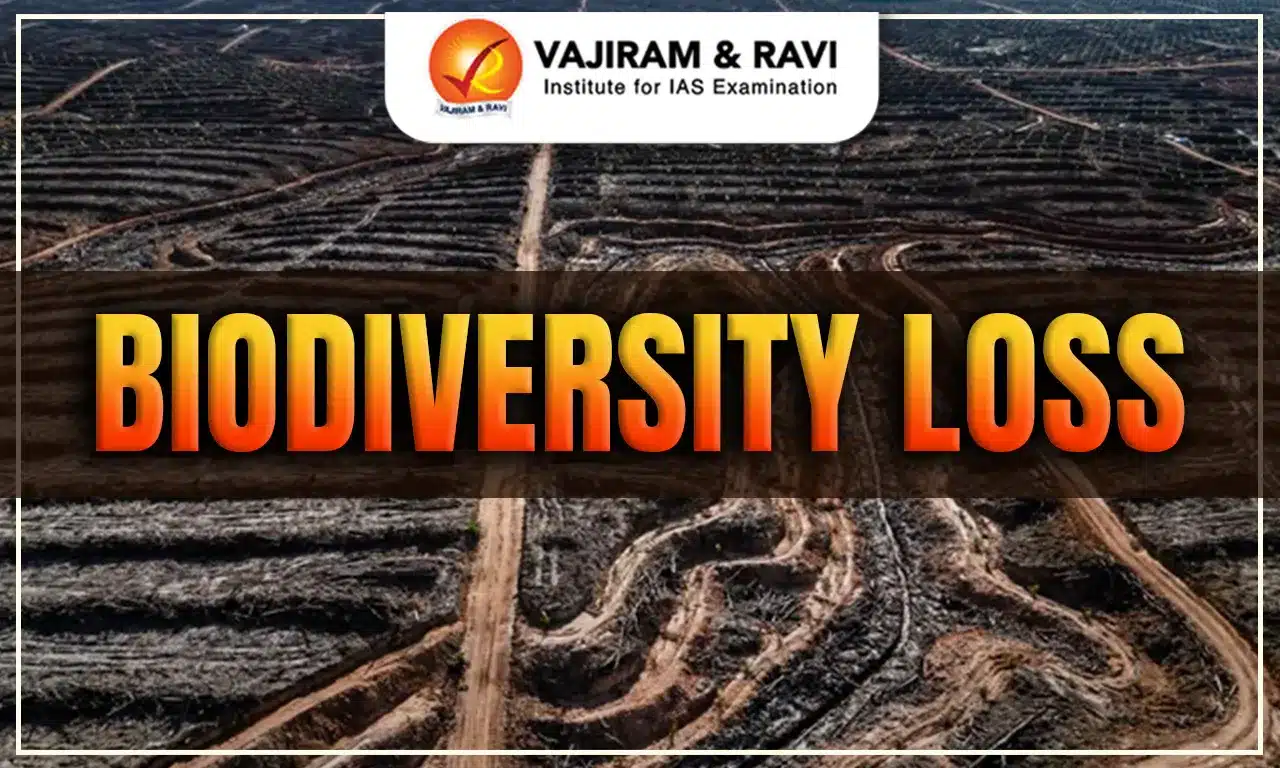
Biodiversity Loss is the most alarming environmental concern of our time as it impacts the stability of the ecosystem, well-being of human beings and the balance of the planet as a whole. This loss reduces the availability of important ecosystem services, endangered global food security, weak human health, unstable economy and cultural values to nature. In this article, we are going to cover biodiversity loss, its causes, the consequences and other related issues. 

Biodiversity Loss in India

Biodiversity Loss in India means the reduction or disappearances of many types of life forms like particular species, an ecosystem, a geographic region in India. It leads to the decline in richness and variety of living organisms that together make up the Earth’s ecosystem. For example, rhinoceros are under the threat of extinction due to the factors of biodiversity loss. 

Biodiversity Loss Causes

Causes of Biodiversity Loss is not only due to a single entity but due to several natural and human-driven activities contributing to the decline in biodiversity. These causes include: 

  1. Habitat Destruction: This happens when human activities drastically modify or eliminate natural landscapes. Deforestation, urban expansion, mining, industrial projects, and overpopulation have destroyed ecosystems all over the world. For example, in the Chotanagpur plateau, elephant corridors have been destroyed due to excessive mining, leading to fragmentation of habitats.

  2. Invasive Species: The introduction of alien species threatens native organisms as they compete for food, water, and shelter, often altering ecosystem balance. Species like Lantana camara and water hyacinth in Assam’s wetlands are invasive, choking out local flora and fauna.

  3. Climate Change: Rapid, human-induced climate change alters weather patterns, ocean chemistry, and habitat conditions, forcing species to adapt too quickly or perish. For example, ocean acidification is directly linked to coral bleaching, destroying fragile marine ecosystems.

  4. Overexploitation of Resources: Overhunting, poaching, overfishing, and excessive harvesting of natural resources have led to the decline of many species. The removal of apex predators, in particular, causes ripple effects that destabilize entire ecosystems.

  5. Pollution: From industrial discharge to agricultural runoff, pollution has long-lasting negative effects on biodiversity. Marine and freshwater ecosystems suffer particularly, with chemical and thermal pollution killing sensitive species. For instance, the discharge of hot coolant water from thermal power plants raises sea temperatures, disrupting marine life.

Biodiversity Loss Consequences

The loss of biodiversity has many impacts and consequences on both animal, ecosystem and human life. These consequences include: 

  • Ecological Costs: Loss of species disturbs the ecosystem, reduces resilience to climate change, increases pollution, and increases extinction. According to the IUCN Red List, over 784 species have disappeared in the last 500 years.
  • Economic Costs: Ecosystem services such as pollination, nutrient cycling, and water purification would need artificial substitutes if biodiversity is lost, costing trillions of dollars globally.
  • Reduced Food Security: Agricultural systems depend on diverse species to withstand pests, diseases, and climate challenges. Declining biodiversity reduces the adaptability of crops and livestock, threatening long-term food supply.
  • Health Risks and Diseases: As biodiversity reduces, human exposure to new pathogens increases. Loss of balanced ecosystems can fuel the spread of vector-borne diseases like malaria and dengue.
  • Loss of Livelihoods: Millions of people depend on biodiversity for survival. Farmers, fishermen, and forest dwellers lose their means of living when ecosystems collapse. For instance, overfishing and ocean acidification threaten the existence of coastal communities.

Biodiversity Conservation

Biodiversity Conservation refers to protecting, preserving and sustainability in managing the biological wealth of the planet. Conservation of biodiversity includes restoring degraded habitats and adopting practices for species survival despite any human pressures. The biodiversity conservation practices includes: 

  • In-Situ Conservation: Protects species in their natural habitats through national parks, wildlife sanctuaries, and biosphere reserves.
  • Ex-Situ Conservation: Safeguards species outside their natural habitats through methods like zoos, botanical gardens, gene banks, and seed vaults.

These practices are important for sustaining ecosystems and securing the survival of countless species.

Biodiversity Loss Examples

Following are a few examples of biodiversity loss all across the planet: 

  • Extinction of the Dodo Bird (Mauritius): Wiped out in the 17th century due to hunting and habitat destruction.
  • Passenger Pigeon (North America): Once billions in number, declared extinct in 1914 from overhunting.
  • Cheetah in India: Declared extinct in 1952 due to hunting and habitat loss (currently under reintroduction project).
  • Chinese River Dolphin (Baiji): Functionally extinct in 2006 due to pollution and overfishing.
  • Amazon Rainforest Deforestation: Large-scale loss of species due to agriculture and logging.
  • Coral Bleaching in Great Barrier Reef (Australia): Rising sea temperatures leading to mass coral death.
  • Polar Bears (Arctic): Habitat loss from melting sea ice due to global warming.
  • Atlantic Cod Collapse (North Atlantic): Overfishing caused fisheries to collapse in the 1990s.
  • Rhino Poaching (Africa & India): Driven by illegal trade in horns, leading to drastic population decline.
  • Decline of Vultures in India: Caused by diclofenac poisoning, disrupting ecological balance.

The Sixth Mass Extinction

Human activities, combined with climate change, are accelerating extinction rates to levels far above natural patterns. Scientists warn that the current pace of extinction is so high that the modern era is now referred to as the “Sixth Mass Extinction.” Plants, animals, and even microorganisms are vanishing or seeing their habitats drastically shrink due to anthropogenic pressures.

Also Check Other Posts
Climate Change Coastal Regulation Zone
Global Plastic Treaty Nitrogen Cycle
Carbon Cycle

Biodiversity Loss FAQs

Q1: What is the biodiversity loss?

Ans: Biodiversity loss refers to the decline or complete disappearance of species, genetic diversity, and ecosystems due to human activities and natural factors.

Q2: What are the five major effects of biodiversity loss?

Ans: The five major effects are ecosystem imbalance, loss of food security, decline in ecosystem services, spread of diseases, and economic loss for communities.

Q3: How can loss of biodiversity be prevented?

Ans: Biodiversity loss can be prevented through conservation strategies like afforestation, wildlife protection laws, sustainable resource use, pollution control, and protected areas.

Q4: What are the impacts of Biodiversity Loss?

Ans: The impacts include species extinction, reduced agricultural productivity, loss of livelihoods, climate change vulnerability, and disruption of ecological balance.

Q5: What are the causes of Biodiversity Loss?

Ans: The main causes are habitat destruction, overexploitation, pollution, climate change, and introduction of invasive species.

Sample Registration Survey Statistical Report

Sample Registration

Sample Registration Survey Statistical Report Latest News

The Sample Registration System (SRS) Statistical Report 2023 reveals that seniors make up 9.7 per cent of the population, up from 8.6 per cent in 2011.

About Sample Registration Survey Statistical Report

  • It is carried out by the Office of the Registrar General & Census Commissioner, India (ORGI).
  • It provides the fertility and mortality indicators, also includes data on crude birth rate, crude death rate and infant mortality rates.

Key Highlights of the Sample Registration Survey Statistical  Report

  • Total Fertility Rate: India’s Total Fertility Rate (TFR) has fallen for the first time in two years to 1.9 in 2023
  • It pointed out that 18 States and UTs had reported a TFR of below the replacement level TFR of 2.1.
  • Crude Birth Rate: India’s Crude Birth Rate (CBR) has declined 0.7-point from 19.1 in 2022 to 18.4 in 2023.  (Highest CBR was in Bihar at 25.8, and the lowest was in Tamil Nadu at 12). 
  • Ageing population: 9.7 per cent of India’s people are now aged 60 or above, a sharp increase in just over a decade. (Kerala leads the list. Almost 15 per cent of its population is above 60 years of age)
  • Sex ratio at birth: It is noted that the sex ratio at birth (SRB) in the country stood at 917, denoting that 917 girls are born for every 1,000 boys in the population.

Source: TH

Sample Registration Survey Statistical Report FAQs

Q1: What is the role of Registrar General of India?

Ans: To provide technical guidance for the conduct of Census Operations in the country which include planning and finalization of Houselist and Household schedules.

Q2: What is the total fertility rate?

Ans: The total fertility rate is the average number of children that a woman will have during her lifetime.

HealthAI Global Regulatory Network

HealthAI Global Regulatory Network

HealthAI Global Regulatory Network Latest News

Recently, India joined Health AI Global Regulatory Network (GRN) to strengthen oversight of AI in healthcare.

About HealthAI Global Regulatory Network

  • It is a Geneva-based, independent nonprofit organization that promotes equitable access to AI-powered health innovations.
  •  It is a global network of health regulators dedicated to the safe and effective use of artificial intelligence (AI) in healthcare. 
  • It aims to build trust, improve safety and accelerate responsible innovation through shared learning, joint standards and early warnings of emerging risks.
  • Members of this network group will also have access to a global directory of registered AI health tools to support transparency and collaboration.
  • The Indian Council of Medical Research -National Institute for Research in Digital Health and Data Science (ICMR - NIRDHDS), and IndiaAI will work with HealthAI.

What is IndiaAI?

  • It is the Government of India’s central initiative to build a comprehensive and inclusive AI ecosystem.
  • It is works under the Ministry of Electronics & Information Technology (MeitY) via the Digital India Corporation,
  • It aims to position India as a leader in AI innovation and development.

Source: PIB

HealthAI Global Regulatory Network FAQs

Q1: What is artificial intelligence?

Ans: It is technology that enables computers and machines to simulate human learning, comprehension, problem solving, decision making, creativity and autonomy.

Q2: What is the role of the Indian Council of Medical Research?

Ans: It develops and disseminates guidelines and regulations on a range of public health issues.

P-47 Protein

P-47 Protein

P-47 Protein Latest News

Researchers at the S. N. Bose National Centre for Basic Sciences (SNBNCBS) highlighted protein p47’s unexpected ability to act as a “mechanical chaperone.” 

About P-47 Protein

  • It is a cofactor protein usually known as a helper for the cellular machine p97 (It is a powerhouse involved in moving and degrading proteins).
  • It was long thought to be just an assistant known primarily for its role in protein trafficking, degradation, and membrane fusion.

Highlight of the Study

  • It is revealed that p47 can enhance the mechanical efficiency of protein extraction from the endoplasmic reticulum (ER) lumen into the cytoplasm.
  • P47 stabilizes polypeptides under stress and guides them through narrow pores, reduces the risk of misfolding and improves the success of protein translocation.
  • This finding represents the first direct, single-molecule evidence that cofactors like p47 possess autonomous, force-dependent chaperone-like activity.
  • It is found that p47 is not just a passive helper for p97, it can directly stabilize proteins under force, effectively acting as a “mechanical chaperone.”
  • The findings suggest that targeting mechanical cofactors like p47 could lead to novel therapeutic strategies for diseases linked to protein instability.

Source: PIB

P-47 Protein FAQs

Q1: What is called protein?

Ans: Proteins are large, complex molecules that play many critical roles in the body.

Q2: What is chaperone and its function?

Ans: Chaperones are a family of proteins that play a vital role in the stabilization of unfolded proteins.

Vulture Network Portal

Vulture Network Portal

Vulture Network Portal Latest News

Recently, an Assam-based foundation developed the Vulture Network portal.

About Vulture Network Portal

  • It is a cloud-based portal designed to serve as a comprehensive knowledge and awareness platform on vultures of India.
  • It is first of its kind in India - to build a network of individuals engaged in saving the large scavenger birds.
  • It was started by We Foundation India supported by dedicated partners such as the Assam Bird Monitoring Network and other organisations.
  • Purpose: It was developed to compile scientific information, spread awareness, and provide freely downloadable outreach materials for anyone interested in conducting awareness campaigns.
  • It focuses on the threats of carcass poisoning, harmful veterinary drugs such as diclofenac, and negative social perceptions, all of which continue to drive vulture population decline.
  • It is disseminating information in local languages, beginning with Assamese.

Vultures Found in India

  • Slender-billed vulture(only about 800 mature individuals left) white-rumped vulture, red-headed vulture, Himalayan griffon, Indian vulture, cinereous vulture, Eurasian griffon, Egyptian vulture, and bearded vulture.

Source: TH

Vulture Network Portal FAQ's

Q1: What is a cloud-based portal?

Ans: A cloud portal is a web-based interface that allows users to access and manage cloud services and resources.

Q2: What is the IUCN status of slender billed vulture?

Ans: Critically Endangered

Methandienone Long-Term Metabolite

Methandienone Long-Term Metabolite

Methandienone Long-Term Metabolite Latest News

India has successfully developed a rare and high-purity Reference Material (RM) – Methandienone Long-Term Metabolite (LTM) for enhanced Anti-Doping Testing in sports.

About Methandienone Long-Term Metabolite

  • It is one of the Reference Material (RM) developed by the National Institute of Pharmaceutical Education and Research (NIPER) in collaboration with the National Dope Testing Laboratory (NDTL).
    • RM is the most highly purified and scientifically characterized forms of drug substances or their metabolites, essential for accurate analytical testing.
    • They are crucial for the detection of over 450 substances that are currently prohibited by the World Anti-Doping Agency (WADA).

Significance of Methandienone Long-Term Metabolite

  • These metabolites help in identifying athletes who have used Methandienone
  • It will increase improved detection capabilities and serve as a deterrent for athletes considering the use of anabolic steroids like Methandienone.
  • The new reference material will help in enforcing transparency and integrity in sports by protecting clean athletes and acting as deterrents for use of prohibited substances.

Key Facts about National Dope Testing Laboratory

  • It is a premier analytical testing & research organization established under Government of India.
  • It is the only laboratory in the country responsible for human sports dope testing.
  • It is accredited by National Accreditation Board for Testing & Calibration Laboratories, NABL  and World Anti-Doping Agency (WADA).

Source: PIB

Methandienone Long-Term Metabolite FAQs

Q1: Where is the World Anti-Doping Agency located?

Ans: Montreal, Canada

Q2: What are examples of a metabolite?

Ans: Examples of primary metabolites are ethanol, glutamic acid, aspartic acid, 5′ guanylic acid, acetic acid, lactic acid, glycerol etc.

Daily Editorial Analysis 6 September 2025

Daily Editorial Analysis

Fixing Problems, Unlocking India’s Growth Potential

 Context

  • India’s economic trajectory has historically been marked by bold reforms, from liberalisation in 1991 to the introduction of the Goods and Services Tax (GST) in 2017.
  • Each step has sought to balance efficiency, inclusivity, and competitiveness in a rapidly evolving global economy.
  • The latest set of measures announced at the 56th GST Council meeting on September 3, 2025, represents the next milestone in this journey.
  • Widely referred to as GST 2.0, the reform package is not merely a technical adjustment but a forward-looking transformation designed to simplify taxation, promote growth, and strengthen institutional trust.

Significance of GST 2.0

  • The Promise of Simplification and Fairness

    • For years, businesses and policymakers have called for a GST framework that is simpler, more predictable, and fairer.
    • The reforms directly address these concerns by streamlining rates, harmonising classifications, and clarifying tax rules.
    • By moving towards a two-rate structure, a standard 18% and a merit rate of 5%, with only a few items taxed at 40%, India is aligning itself with global best practices.
    • This reduces complexity for businesses while reassuring investors of policy stability and long-term predictability.
    • Institutional credibility is further reinforced by the operationalisation of the Goods and Services Tax Appellate Tribunal (GSTAT).
    • With faster, more transparent dispute resolution, GSTAT not only unclogs the system but also signals that taxation in India is as much about fairness as it is about revenue collection.
  • Relief for Consumers and Households

    • One of the most immediate impacts of GST 2.0 is its relief for households across income groups.
    • Everyday essentials such as soap, toothpaste, shampoo, and packaged foods have been moved to lower tax brackets, easing budgets and stimulating demand in mass-consumption sectors.
    • The construction sector also benefits from reduced GST on cement and other inputs, which directly supports the government’s Housing for All mission while lowering costs for infrastructure projects.
    • These changes carry a multiplier effect, boosting allied industries like steel, tiles, and paints.
    • Equally significant is the decision to cut GST on life-saving drugs and medical devices.
    • Beyond easing healthcare costs, this reform reinforces India’s global role as a hub for affordable medicines.
    • It illustrates how fiscal policy can achieve social good while sustaining economic advantage.
  • Strengthening Labour-Intensive and Export Sectors

    • Labour-intensive industries, textiles, handicrafts, leather, footwear, and toys, stand to gain considerably from rationalised rates.
    • Lower costs will preserve margins, safeguard livelihoods, and stimulate employment in semi-urban and rural areas.
    • The automotive sector, another key pillar of the economy, is set to benefit from cheaper vehicles, further energising investment in auto-manufacturing hubs.
    • Exporters and micro, small, and medium enterprises (MSMEs) are among the biggest winners of GST 2.0.
    • Long-standing distortions created by inverted duty structures in textiles, fertilizers, and renewables have been corrected, making Indian products more globally competitive.
    • By removing thresholds for refunds on low-value consignments, the government has also extended critical relief to courier and e-commerce exporters, where liquidity issues are often acute.

Broader Significance of GST 2.0 and Challenges Ahead

  • Empowering MSMEs Through Formalisation

    • Perhaps the most transformative measure is the Simplified GST Registration Scheme for small and low-risk businesses.
    • Automated approvals within three days significantly reduce compliance costs, lower entry barriers, and encourage formalisation.
    • For MSMEs, the backbone of India’s economy in terms of jobs, exports, and innovation, this change provides not only immediate relief but also long-term opportunities to expand into new markets.
    • By strengthening MSMEs, GST 2.0 builds resilience at the grassroots level of India’s economy.
  • Towards a Competitive and Inclusive Future

    • The broader significance of GST 2.0 lies in its alignment of domestic reform with global economic realities.
    • By simplifying tax rates and reducing litigation, India presents itself as a more predictable and business-friendly destination for international investors.
    • At a time when global supply chains are being reconfigured, India’s reforms send a clear message: the country is committed to ease of doing business, competitiveness, and sustained growth.
  • Challenges Ahead

    • While the intent and scope of GST 2.0 are ambitious, its success will depend on effective implementation.
    • Procedural delays, compliance burdens, and capacity constraints in enforcement remain challenges that policymakers must address.
    • Yet, the reforms reflect a government willing to listen to industry, act decisively, and craft a taxation framework that fuels growth rather than hinders it.

Conclusion

  • GST 2.0 is more than a tax reform; it is a comprehensive economic reform that aims to boost consumption, empower MSMEs, and reinforce India’s growth momentum.
  • By making goods more affordable, industries more competitive, and the tax system more reliable, these reforms mark the beginning of a new chapter in India’s growth story.
  • If implemented effectively, GST 2.0 could well be remembered as a decisive step in India’s transformation into a globally competitive economy.

Fixing Problems, Unlocking India’s Growth Potential FAQs

Q1. What is GST 2.0 and why is it significant?
Ans. GST 2.0 is the latest set of tax reforms announced in September 2025, and it is significant because it simplifies India’s indirect tax system while boosting competitiveness and fairness.

Q2. How does GST 2.0 benefit households?
Ans. It lowers tax rates on essentials like soap, toothpaste, packaged foods, and housing materials, making daily living more affordable and stimulating demand.

Q3. Which industries are expected to gain the most from these reforms?
Ans. Labour-intensive industries like textiles, handicrafts, leather, and toys, along with the automotive sector and exporters, are expected to gain the most.

Q4. Why are the reforms important for MSMEs?
Ans. The reforms simplify registration and compliance, reduce costs, and improve access to refunds, allowing MSMEs to grow and formalise more easily.

Q5. What message do the reforms send to global investors?
Ans. They signal policy stability, predictability, and ease of doing business, making India a more attractive and competitive investment destination.

Source: The Hindu


India’s Strategic Autonomy in a Multipolar World

Context

  • India’s pursuit of strategic autonomy is neither an abstract ideal nor a rhetorical flourish; it is a pragmatic diplomatic practice, forged in history and tested in contemporary geopolitics.
  • By examining India’s engagements with major powers, the United States, China, and Russia, and its positioning within the Global South, it is important to discuss that strategic autonomy has become the fulcrum of India’s global aspirations and the key to its resilience in an uncertain international order.
  • Once confined to academic debates, the term has now moved into the mainstream of Indian foreign policy discourse, reflecting the country’s determination to retain agency in a volatile, multipolar world.

Defining Strategic Autonomy: Between Dependence and Isolation

  • Strategic autonomy refers to a state’s capacity to make sovereign decisions in foreign and defence policy without being dictated by external pressures or alliance commitments.
  • Importantly, it does not imply isolationism or neutrality but rather flexibility, independence, and adaptability in a world of shifting alignments.
  • For India, the concept has deep historical roots. Colonial subjugation instilled a determination never to allow external powers to decide India’s destiny.

The American Partnership, Chinese Challenge and Russian Connection

  • The American Partnership: Collaboration Without Subordination

    • Over the past two decades, India’s relationship with the United States has transformed dramatically.
    • Strategic cooperation spans defence, intelligence sharing, technology transfers, and joint military exercises.
    • Multilateral initiatives such as the Quad, I2U2, and the India-Middle East-Europe Economic Corridor further underscore converging interests, especially in countering China’s rise.
    • Yet, tensions persist. U.S. pressure to reduce defence and energy ties with Russia, coupled with protectionist trade policies, has tested New Delhi’s ability to safeguard its interests.
    • India’s response, engaging deeply with Washington while asserting independence on global issues, illustrates strategic autonomy in practice.
    • It is not anti-Americanism but rather a principled refusal to subordinate India’s interests to another country’s strategic imperatives.
  • The Chinese Challenge: Rivalry Without Rupture

    • China represents India’s most complex strategic challenge.
    • The 2020 border clashes underscored the limits of cooperative engagement, pushing India to bolster its military posture and deepen partnerships across the Indo-Pacific.
    • At the same time, China remains one of India’s largest trading partners and a co-participant in forums like BRICS and the Shanghai Cooperation Organisation.
    • Here, strategic autonomy translates into dual-track diplomacy: firm deterrence alongside selective engagement.
    • India neither succumbs to Chinese pressure nor wholly decouples from its neighbour.
  • The Russian Connection: Legacy and Pragmatism

    • Despite Moscow’s growing alignment with Beijing and its isolation following the Ukraine war, New Delhi has continued to import Russian oil and arms while engaging diplomatically.
    • This has invited criticism from Western capitals, yet India’s position reflects a consistent principle: external powers cannot dictate its partnerships.
    • At the same time, India has diversified defence imports, invested in indigenous capacity, and cultivated new strategic partners.
    • Its engagement with Russia, therefore, is not nostalgia but pragmatism, a reminder that strategic autonomy is less about loyalty to old allies and more about preserving space for manoeuvre in a rapidly polarising world.

India as the Voice of the Global South

  • India’s G-20 presidency in 2023 highlighted another dimension of strategic autonomy: its leadership of the Global South.
  • Prime Minister Narendra Modi and External Affairs Minister S. Jaishankar articulated a vision of India as a sovereign pole in global politics, plural, pragmatic, and unapologetically independent.
  • This resonated with many middle powers that also seek agency rather than alignment.
  • In this sense, India’s strategic autonomy has normative as well as practical significance: it embodies an alternative path for states unwilling to be trapped in great-power rivalries.

Constraints and Redefinitions: Autonomy in a Globalised Age

  • Despite its appeal, strategic autonomy is not without challenges. Economic vulnerabilities, political polarisation, and institutional constraints can limit India’s capacity for independent action.
  • In an era dominated by cyber threats, artificial intelligence, and space competition, autonomy must extend beyond traditional defence to encompass digital sovereignty, supply chain resilience, and technological self-reliance.
  • India’s recent initiatives in critical minerals, indigenous digital platforms, and global tech governance reflect an effort to expand the scope of autonomy into new domains.

The Way Forward: Standing Tall in a Turbulent World

  • Strategic autonomy, for India, is neither a slogan nor a vestige of non-alignment. It is the art of navigating a turbulent world without losing one’s bearings.
  • In practice, it means engaging with the United States without becoming a junior partner, deterring China without provoking conflict, and maintaining ties with Russia without inheriting its isolation.
  • It requires both diplomatic skill and domestic strength, economic, technological, and institutional.

Conclusion

  • Ultimately, strategic autonomy is about more than survival; it is about agency and it allows India to participate in shaping global norms while protecting its sovereignty.
  • As the global order continues to fragment, India’s ability to walk this tightrope with resilience and confidence will define not only its place in the world but also the future of multipolarity itself.
  • Strategic autonomy, then, is not about standing alone, it is about standing straight, and standing tall.

India’s Strategic Autonomy in a Multipolar World FAQs

Q1. What does strategic autonomy mean for India?
Ans. Strategic autonomy means India’s ability to make independent foreign and defence policy decisions without being dictated by external powers or rigid alliances.

Q2. How has India balanced its relationship with the United States?
Ans. India has deepened defence and economic cooperation with the U.S. while maintaining independent positions on issues like trade disputes and relations with Russia.

Q3. Why is China considered India’s most complex challenge?
Ans. China is both a rival due to border disputes and strategic competition, and a partner in trade and multilateral forums, requiring India to adopt a cautious, dual-track approach.

Q4. How does India justify continuing ties with Russia despite Western criticism?
Ans. India argues that its relationship with Russia is based on history, defence cooperation, and national interest, and cannot be dictated by external pressure.

Q5. What new domains are becoming part of India’s strategic autonomy?
Ans. India is extending strategic autonomy into technology, cyber security, digital infrastructure, and supply chain resilience to remain self-reliant in a globalised age.

Source: The Hindu

Daily Editorial Analysis 6 September 2025 FAQs

Q1: What is editorial analysis?

Ans: Editorial analysis is the critical examination and interpretation of newspaper editorials to extract key insights, arguments, and perspectives relevant to UPSC preparation.

Q2: What is an editorial analyst?

Ans: An editorial analyst is someone who studies and breaks down editorials to highlight their relevance, structure, and usefulness for competitive exams like the UPSC.

Q3: What is an editorial for UPSC?

Ans: For UPSC, an editorial refers to opinion-based articles in reputed newspapers that provide analysis on current affairs, governance, policy, and socio-economic issues.

Q4: What are the sources of UPSC Editorial Analysis?

Ans: Key sources include editorials from The Hindu and Indian Express.

Q5: Can Editorial Analysis help in Mains Answer Writing?

Ans: Yes, editorial analysis enhances content quality, analytical depth, and structure in Mains answer writing.

Mission Mausam

What is Mission Mausam?

Mission Mausam Latest News

The Indian Meteorological Department (IMD) will install four additional radars under Mission Mausam in Jammu & Kashmir for more accurate, district wise specific weather forecasts.

About Mission Mausam

  • It was launched by the Ministry of Earth Sciences in 2024.
  • It is implemented by the India Meteorological Department (IMD), the National Centre for Medium-Range Weather Forecasting (NCMRWF), and the Indian Institute of Tropical Meteorology (IITM).
  • It aims to improve weather and climate services, ensuring timely and precise observation, modeling, and forecasting information for multiple sectors, including agriculture, disaster management, and rural development.

Objectives of Mission Mausam

  • To enhance India's capability in weather forecasting across various scales—short-term, medium-term, extended-range, and seasonal
  • To develop high-resolution models for improved accuracy in predicting monsoon behaviour
  • To strengthen observational networks with advanced radars, satellites, and automated weather stations
  • To provide actionable advisories for agriculture, water resources, energy, health, and disaster management sectors
  • To build capacity through research collaborations with national and international institutions

Significance of Mission Mausam

  • It marks a transformative milestone in India's efforts to address climate variability and its far-reaching socio-economic impacts.
  • It supports sustainable development while safeguarding lives, livelihoods, and critical infrastructure. 

Source: PIB

Mission Mausam FAQs

Q1: What is the purpose India Meteorological Department (IMD)?

Ans: It is the principal agency responsible for meteorological observations, weather forecasting and seismology.

Q2: Where is the headquarter of Meteorology in India?

Ans: New Delhi

Punjab’s Recurrent Flooding Crisis: Rivers, Dams, and Governance Failures

Punjab Flooding Crisis

Punjab Flooding Crisis Latest News

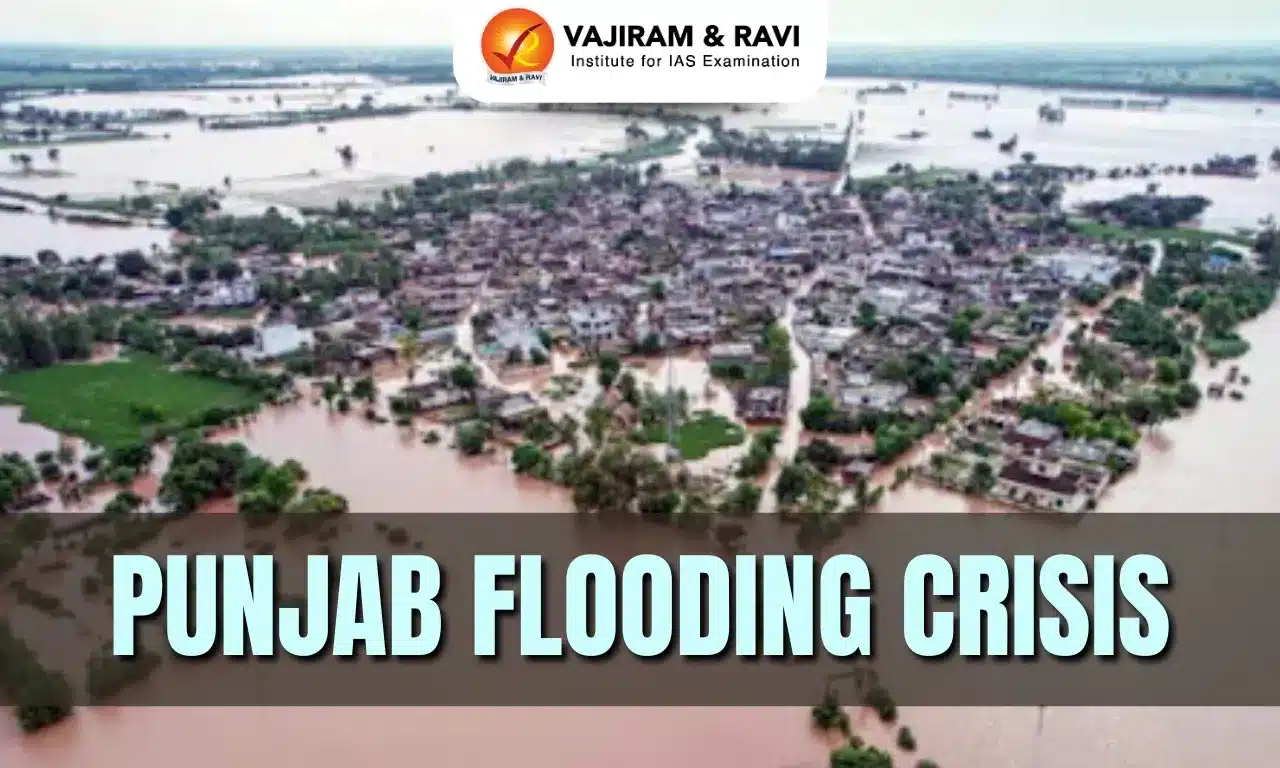
  • Punjab is witnessing one of its worst floods, with all 23 districts declared flood-hit. 
  • Over 1,900 villages, 3.8 lakh people, and 11.7 lakh hectares of farmland have been affected, with 43 deaths reported. Gurdaspur is the worst-hit district. 
  • Across the border, Punjab in Pakistan has also faced severe flooding, displacing over 9 lakh people. 
  • While the region’s riverine geography makes it naturally flood-prone, human factors have worsened the crisis.

Rivers: Boon or Bane for Punjab

  • Punjab is nourished by three perennial rivers — Ravi, Beas, and Sutlej — along with the seasonal Ghaggar and smaller hill streams (choes). 
  • These rivers deposit fertile alluvium, making Punjab one of the most productive agricultural regions globally. 
  • Despite comprising just 1.5% of India’s landmass, Punjab contributes nearly 20% of the nation’s wheat and 12% of its rice, earning it the title “food bowl of India.”

The Bane: Recurrent Flooding

  • The same rivers that sustain agriculture also bring devastation during the monsoon. 
  • Rainfall in Punjab and upstream catchments of Himachal Pradesh and J&K causes rivers to swell. 
  • Though dhussi bundhs (earthen embankments) offer protection, they are often overwhelmed by heavy inflows.

Floods in 2024 and Historical Recurrence

  • Punjab has witnessed major floods repeatedly in 1955, 1988, 1993, 2019, and 2023. 
  • This year, excessive rainfall triggered flooding once again. 
  • The Beas overflowed in August due to heavy rain in Himachal, inundating villages and farmland in Kapurthala, Tarn Taran, Ferozepur, Fazilka, and Hoshiarpur. 
  • Soon after, the Ravi swelled dangerously; the collapse of two gates of Madhopur Barrage led to catastrophic flooding in Pathankot, Gurdaspur, and Amritsar.

Widespread Impact of Excess Rainfall

  • Simultaneously, incessant rainfall across Punjab worsened the crisis. 
  • While Sutlej embankments held, the Malwa region experienced severe waterlogging, affecting Ludhiana, Jalandhar, Ropar, Nawanshahr, and Moga. 
  • According to the Indian Meteorological Department, Punjab, Himachal Pradesh, and J&K have all received over 45% excess rainfall this year, far above seasonal norms.

The Role of Dams in Punjab’s Floods

  • Every time Punjab faces floods, attention turns to three major dams on its perennial rivers. These are: Bhakra dam; Pong dam; Thein dam.
  • The Bhakra Dam on the Sutlej (Bilaspur, Himachal Pradesh) and the Pong Dam on the Beas (Kangra, Himachal Pradesh) are run by the Bhakra Beas Management Board (BBMB).
    • BBMB is a statutory body constituted under the Punjab Reorganisation Act, 1966.
  •  The Thein or Ranjit Sagar Dam on the Ravi (border of J&K and Punjab) is managed by Punjab’s State Power Corporation and Irrigation Department. 
  • These dams regulate river flow and play a critical role in flood control.

Release of Water from Dams

  • When heavy rainfall fills reservoirs beyond safe levels, dam operators must release water to avoid overtopping, which can be disastrous
  • The BBMB follows a “rule curve” that guides how much water should be stored or released based on weather forecasts and hydrology. 
  • However, extreme rainfall events often force sudden releases. This year, inflows into the Pong Dam were about 20% higher than 2023, an unprecedented surge. 
  • The Bhakra Dam also saw very high inflows, though not entirely new in scale.

Punjab’s Concerns with BBMB

  • Punjab has long argued that the BBMB prioritizes irrigation and power generation over flood management. 
  • According to state officials, BBMB keeps reservoir levels too high in July and August to secure water for winter farming and power supply, leaving little cushion for sudden heavy rains in August-September. 
  • Sudden water releases, often without timely warnings, worsen flooding downstream and leave local officials unprepared.

Governance Issues and Tensions

  • At the core of Punjab’s problem is the structure of the BBMB. 
  • It is a Centre-controlled body whose main mandate is irrigation and power, not flood management. 
  • Punjab feels it has too little say in the Board’s decisions. 
  • Tensions increased after the Centre amended BBMB rules in 2022, allowing officers from across India—not just Punjab and Haryana—to hold top positions.
  • Punjab criticized the BBMB, accusing it of holding back water until the last moment before suddenly releasing it. 

Governance Failures Behind Punjab’s Floods

  • Experts stress that poor dam management, delayed warnings, and weak infrastructure worsened Punjab’s floods this year. 
  • The collapse of two Madhopur barrage gates after sudden water release from the Thein dam highlighted gaps in coordination within Punjab’s own Irrigation Department. 
  • Environmentalists noted that reservoirs at Ranjit Sagar, Pong, and Bhakra were kept too full and then emptied abruptly, triggering severe downstream flooding. 
  • Weak dhussi bundhs, further damaged by illegal mining, added to the crisis. 

Source: IE

Punjab Flooding Crisis FAQs

Q1: What makes Punjab prone to recurrent floods?

Ans: Punjab’s geography with perennial rivers and upstream rainfall in Himachal and J&K makes it naturally flood-prone, while weak embankments worsen the risk during monsoon.

Q2: How have Punjab’s rivers contributed to both prosperity and floods?

Ans: Ravi, Beas, and Sutlej make Punjab fertile, sustaining agriculture, but their swelling during monsoons repeatedly devastates villages, farmland, and infrastructure.

Q3: What role do dams play in Punjab’s flooding?

Ans: Bhakra, Pong, and Thein dams regulate water but sudden releases during heavy rains, guided by “rule curves,” often cause flooding downstream.

Q4: Why does Punjab criticize the Bhakra Beas Management Board (BBMB)?

Ans: Punjab alleges BBMB prioritizes irrigation and power over flood control, maintains high reservoir levels, and issues delayed warnings, worsening flood damage.

Q5: What governance failures worsen Punjab’s flood crisis?

Ans: Poor dam coordination, sudden water releases, weak bundhs damaged by illegal mining, and lack of preventive investment amplify Punjab’s flood disasters.

Centre Approves Independent Environment Auditors under Environment Audit Rules 2025

Environment Audit Rules 2025

Environment Audit Rules 2025 Latest News

  • The Environment Ministry has introduced the Environment Audit Rules, 2025, creating a new class of independent “environment auditors.”
  • These accredited private agencies, similar to chartered accountants, will be licensed to inspect and verify project compliance with environmental laws. 
  • Their role will supplement State Pollution Control Boards by conducting environmental impact assessments and ensuring adherence to best practices in pollution prevention and control.

Environment Audit Rules, 2025

  • The Ministry of Environment, Forest and Climate Change (MoEFCC) has introduced the Environment Audit Rules, 2025 as part of India’s commitment to Ease of Doing Business and sustainable governance
  • Drawing on international best practices, the rules address gaps in monitoring environmental compliance, ensuring protection of natural resources while enabling development.

Need for the Rules

  • Monitoring is currently carried out by the Central Pollution Control Board (CPCB), State PCBs, and regional offices, but limited manpower, infrastructure, and resources hamper effective enforcement. 
  • The new scheme bridges these gaps, aiming to enhance transparency, accountability, and credibility in compliance monitoring while building trust among stakeholders.

Main Features of the Rules

  • Certification and Registration: Environment auditors must be certified and registered through the Environment Audit Designated Agency (EADA).
  • Assignment of Auditors: Auditors are assigned randomly to avoid bias and conflict of interest.
  • Responsibilities: Registered auditors will verify compliance, conduct sampling and analysis, calculate compensation, and ensure adherence to laws like the Green Credit Rules, waste management regulations, and forest/environmental legislation.
  • Self-Compliance Verification: Auditors can also verify self-reported compliance by project proponents.

Key Stakeholders

  • Certified Environment Auditor (CEA): Qualified through Recognition of Prior Learning or a National Certification Examination.
  • Registered Environment Auditor (REA): Certified professionals officially licensed to perform audits.
  • Environment Audit Designated Agency (EADA): Responsible for certification, registration, oversight, training, and maintaining an online registry.
  • MoEFCC: Oversees implementation and issues guidelines.
  • CPCB, SPCBs, and Regional Offices: Continue inspections and assist in enforcing the rules.

Oversight Mechanism

  • A Steering Committee, led by an Additional Secretary of MoEFCC with representatives from regulatory bodies, will monitor progress, resolve challenges, and propose reforms for effective implementation.

Expected Outcomes

  • Stronger Compliance: Independent audits will make monitoring more credible and enforceable.
  • Integration with Frameworks: Supports Green Credit Programme, Ecomark certification, and Extended Producer Responsibility under waste rules.
  • Enhanced Capacity: Expands trained professionals, enabling regulators to focus on high-risk enforcement and policymaking.
  • Transparency and Accountability: Random auditor assignment reduces conflicts of interest and promotes trust.
  • Data-Driven Governance: Digitized audit records enable better decision-making, disclosure, and targeted interventions.
  • Proactive Risk Management: Early detection of non-compliance allows timely corrective action and prevents environmental harm.

Analysis: A Shift in Environmental Monitoring

  • The Environment Audit Rules, 2025 mark a major reform in India’s environmental governance. 
  • These rules expand the scope of monitoring and auditing beyond State Pollution Control Boards (PCBs), allowing accredited private agencies to take on the task.

Addressing Regulatory Gaps

  • The current compliance system, managed by the CPCB, State PCBs, and the Environment Ministry’s regional offices, faces severe manpower and resource shortages
  • These limitations hinder comprehensive monitoring of the large number of projects and industries across the country. 
  • The new scheme aims to bridge these deficits and strengthen compliance mechanisms.

Role of Private Environment Auditors

  • Under the rules, private agencies can become licensed environment auditors, similar to chartered accountants. They will be authorised to:
    • Evaluate compliance with environmental laws.
    • Assess adherence to best practices in pollution prevention and control.
    • Support Green Credit Rules, enabling tradeable credits for afforestation, water management, and waste management.
  • Auditors will help companies account for both direct and indirect carbon emissions, requiring complex evaluation beyond the capacity of PCBs.

Challenges at the Grassroots

  • While the reforms strengthen top-level monitoring, challenges remain at the district, block, and panchayat levels, where environmental violations are often most severe. 
  • The success of the new regime depends on empowering local staff and ensuring that core monitoring responsibilities are not compromised.

Conclusion

  • The Environment Audit Rules, 2025 aim to modernise compliance monitoring, bring in private expertise, and prepare India for future climate-related regulations. 
  • At the same time, local-level enforcement must be strengthened to ensure holistic and effective environmental governance.

Source: TH | PIB | TH

Environment Audit Rules 2025 FAQs

Q1: What are the Environment Audit Rules 2025?

Ans: The Environment Audit Rules 2025 are new regulations by MoEFCC introducing certified independent auditors to ensure compliance with environmental laws and improve governance.

Q2: Why were independent environment auditors introduced?

Ans: They were introduced to address manpower and resource shortages in Pollution Control Boards, ensuring credible compliance monitoring and building trust among stakeholders.

Q3: What responsibilities will independent environment auditors have?

Ans: Auditors will verify compliance, conduct sampling, calculate compensation, and oversee adherence to laws like Green Credit Rules and waste management regulations.

Q4: How will the Environment Audit Rules 2025 improve transparency?

Ans: Random assignment of auditors reduces conflicts of interest, while digitized audit records enhance accountability, data-driven governance, and informed decision-making.

Q5: What challenges might affect implementation of the Environment Audit Rules 2025?

Ans: Challenges remain at grassroots levels—districts and panchayats—where local enforcement is weak, making effective monitoring essential for holistic governance.

Indian Science Congress to be Replaced by the ESTIC

Indian Science Congress

Indian Science Congress Latest News

  • The Indian Science Congress has been replaced by the Emerging Science, Technology and Innovation Conclave (ESTIC), with its first edition scheduled for November 2025 in New Delhi.

Introduction

  • For over a century, the Indian Science Congress (ISC) has been the premier platform for Indian scientists, researchers, and policymakers to deliberate on national scientific priorities. 
  • Established in 1914, the ISC grew into a prestigious event inaugurated annually by the Prime Minister, bringing together global and Indian experts. 
  • However, over recent years, concerns over its effectiveness, controversies in its sessions, and institutional disputes have diminished its relevance.
  • In 2025, the government announced a new approach with the Emerging Science, Technology and Innovation Conclave (ESTIC), scheduled to be held in November. 
  • This marks a historic transition in India’s science policy ecosystem, signalling a move toward a more structured, innovation-driven forum aligned with national priorities like Viksit Bharat 2047.

Achievements and Issues with the Indian Science Congress

  • Achievements
    • Platform for Scientific Exchange: The ISC played a crucial role in creating a scientific community in pre- and post-Independence India.
    • Global Participation: It hosted Nobel Laureates, international scholars, and top Indian scientists.
    • Policy Influence: Many national science policies were shaped through discussions at ISC sessions.
    • Public Engagement: It popularised science among school and college students through exhibitions and public lectures.
  • Issues
    • Erosion of Academic Quality: Over time, the ISC faced criticism for allowing unscientific and controversial statements by some participants.
    • Reduced Relevance: Its role as a serious forum for science policy and research exchange declined.
    • Institutional Conflict: Disputes between the Department of Science and Technology (DST) and the Indian Science Congress Association (ISCA), which organised the event, led to funding cuts.
    • COVID-19 Disruptions: After the pandemic, only the 2023 edition was held, with no physical conferences thereafter.
  • The growing disconnect between ISC and India’s contemporary science needs created the ground for ESTIC.

The Emerging Science, Technology and Innovation Conclave (ESTIC)

  • Overview
    • The first ESTIC will be held at Bharat Mandapam, New Delhi, from November 3-4, 2025, and is expected to be inaugurated by Prime Minister Narendra Modi
    • Organised by the DST in collaboration with all science-related ministries, ESTIC aims to become India’s leading forum for advancing innovation-driven research.
  • Key Features
    • Thematic Sessions: 11 technical sessions will focus on frontier areas such as space, biotechnology, deep-tech, and renewable energy.
    • Innovation Showcase: 75 exhibition stalls will be set up by deep-tech startups.
    • Global Participation: Nobel Laureate Andre Geim (Physics, 2010), French space expert Jean-Yves Le Gall, and Japanese biologist Professor Masaru Tomita are among the confirmed international guests.
    • Government Involvement: Unlike the ISC, ESTIC will involve direct participation from all science-related ministries, including atomic energy, IT, and space.
    • Prime Minister’s Presence: PM’s attendance at the inaugural underlines the strategic importance given to ESTIC.
  • Objectives
    • To showcase cutting-edge research and technology breakthroughs.
    • To align India’s science innovation ecosystem with the vision of Viksit Bharat 2047.
    • To provide a serious global platform for scientists and innovators, different from IISF (India International Science Festival), which is designed more as a science popularisation event.

Significance of the Transition

  • Replacing ISC with ESTIC represents:
    • Policy Modernisation: Moving from a general science gathering to a high-level innovation conclave.
    • Focus on Innovation: Prioritising applied research and startup-driven technology ecosystems.
    • Global Leadership: Positioning India as a key player in international science and technology networks.
    • Institutional Clarity: Shifting control directly to DST reduces friction with external associations like ISCA.

Source: TH

Indian Science Congress FAQs

Q1: What is ESTIC?

Ans: The Emerging Science, Technology and Innovation Conclave (ESTIC) is a new government-led forum to replace the Indian Science Congress, focusing on deep-tech and innovation.

Q2: Why is ESTIC replacing the Indian Science Congress?

Ans: ESTIC is being introduced to modernize India’s science forums, addressing issues of relevance, quality, and innovation focus in the Indian Science Congress.

Q3: When and where will the first ESTIC be held?

Ans: The first ESTIC will be held at Bharat Mandapam, New Delhi, on November 3-4, 2025.

Q4: Who are some of the international dignitaries expected at ESTIC?

Ans: Nobel Laureate Andre Geim, French space leader Jean-Yves Le Gall, and Japanese biologist Masaru Tomita are among the participants.

Q5: How is ESTIC different from the India International Science Festival (IISF)?

Ans: Unlike IISF, which popularizes science among the public, ESTIC will serve as a serious forum for scientists, policymakers, and innovators to deliberate on advanced science and technology.

MY Bharat

MY Bharat

MY Bharat  Latest News

Union Minister of Sports and Youth Affairs stated that MY Bharat Aapda Mitras will be mobilised to provide rescue operations in the flood-affected areas of Punjab and Himachal Pradesh. 

About MY Bharat

  • It is an autonomous body that has been set up by the Department of Youth Affairs, Ministry of Youth Affairs and Sport.
  • MY Bharat’s digital platform provides equitable access to opportunities for youth to actualize their aspirations and build Viksit Bharat.
  • It is meticulously designed to cater to the needs of the dynamic youth demographic, aged between 15 and 29 years.
  • This platform offers a wealth of resources, mentorship programs, experiential learning opportunities, networks, and invaluable industry connections.

Key Facts about MY Bharat Aapda Mitras

  • They are trained by the National Disaster Management Authority (NDMA) under the Aapda Mitra programme.
    • Aapda Mitra programme is a unique initiative under MY Bharat, offering structured NDMA-certified disaster response training to young volunteers.
    • It equips them with skills in search and rescue, first aid, crowd management, and emergency coordination, making them valuable assets during natural calamities.
    • These youth volunteers will work at the grassroots to ensure that food, medical aid, and essential supplies reach villages cut off due to floods and landslides.

Source: News On Air

MY Bharat FAQs

Q1: What is National Disaster Management Authority and its role?

Ans: National Disaster Management Authority is an apex Body of Government of India, with a mandate to lay down policies for disaster management.

Q2: What is aapda mitra training?

Ans: It is to provide the community volunteers with the basic skills they will require for responding to their community's immediate needs in the aftermath of a disaster.

India–Europe Energy Dynamics – India’s Rising Diesel Exports to Europe Amid EU’s Upcoming Ban on Russian Crude Products

India-Europe Energy Dynamics

India-Europe Energy Dynamics Latest News

  • The European Union (EU) plans to ban imports of fuels refined from Russian crude starting January 21, 2026.
  • Europe is stockpiling petroleum products, particularly diesel, ahead of the ban.
  • Amid this scenario, India has become a major swing supplier of petroleum products to Europe, bringing a fresh perspective to the India-Europe energy dynamics.

India’s Petroleum Exports to Europe

  • Role in India’s economy:
    • India’s petroleum industry is a key driver of foreign exchange earnings and global trade presence. 
    • Exports to Europe, a market with high energy demand and stringent quality standards, strengthen India’s position as a reliable global energy supplier.
  • Export volumes and revenue:
    • Petroleum exports to Europe in April–January 2024 valued at $18.4 billion.
    • July 2024: Exports rose 26%, reaching 266,000 barrels/day (bpd).
      • Major products: Diesel (238,000 bpd) and aviation fuel (81,000 bpd) exports.
    • Historical growth: Between 2018–19 and 2023–24, petroleum exports to Europe surged by over 253,000% in volume and nearly 250% in value, reflecting Europe’s dependence on Indian refined fuels.
    • Global export comparison: Top global petroleum exporters - Saudi Arabia (16.2%), Russia (9.14%), Canada (8.48%), while India has carved a growing niche through refined product exports.
  • Types of exports:
    • Crude oil derivatives – Diesel, gasoline, naphtha, kerosene, fuel oil.
    • Refined petroleum products – Aviation turbine fuel (ATF), industrial fuels.
    • Petrochemicals – Polypropylene, polyethylene, and polymers for manufacturing.
  • Strategic importance:
    • Europe’s steady energy demand and India’s advanced refining capacity provide mutual benefits
    • The trend underscores India’s growing role in global energy trade, while exporters can leverage logistics solutions to expand further.

India-Europe Energy Dynamics

  • India’s diesel exports to Europe: 
    • It jumped to around 260,000 barrels per day (bpd) in August 2025, up nearly 63% over July 2025 and 103% over August of last year (according to Kpler). 
    • India’s total petroleum product exports to Europe in August jumped 41% month-on-month to nearly 399,000 bpd.
  • Largest exporter: All of India’s diesel exports to Europe in August were from Reliance Industries (RIL), the country’s largest private sector refiner and petroleum product exporter.

Drivers of Export Growth

  • EU stockpiling ahead of the 2026 sanctions.
  • Advancing of maintenance shutdown of Shell’s Pernis refinery in the Netherlands from 2026.
    • This is as part of Europe's strategy to make sure its own refineries are not hampered by turnaround schedules once the January 2026 ban goes into force.
  • West Asia refinery maintenance expected in late 2025, reducing supplies to Europe.
  • India’s role as a swing supplier of middle distillates (diesel, jet fuel, kerosene).

Geopolitical Dimensions

  • Western concerns: US and Western allies allege India is profiteering by refining discounted Russian crude and exporting products to Europe.
  • India rejects allegations, emphasizing:
    • Import of Russian crude is legal.
    • Export of refined fuels is within global trade norms.
    • Countries objecting can stop importing from India.

EU Ban on Russian-Origin Fuels

  • The EU had already banned direct imports of Russian petroleum products in February 2023.
  • From January 2026, the ban extends to fuels refined from Russian crude, even if processed in third countries.
    • Exemptions: Canada, Norway, Switzerland, UK, and US.

Challenges and Uncertainties

  • Enforcement issues:
    • Refineries process mixed crude baskets (60–70% non-Russian in India).
    • Difficult to differentiate refined fuels from Russian vs. non-Russian crude.
    • RIL operates two separate refining systems, aiding compliance flexibility.
  • Impact on India: If Europe halts imports from India -
    • Impact may be transitory.
    • India can divert exports to other markets.
    • Global fuel flows would adjust (e.g., Europe sourcing more from West Asia, India shifting to markets served by West Asia).

Conclusion

  • India’s growing role as a swing supplier of petroleum products positions it as a critical player in Europe’s energy security and India-Europe energy dynamics during the transition away from Russian crude. 
  • Going forward, India must leverage this opportunity to strengthen its global energy trade while preparing for policy shifts like the 2026 EU ban through market diversification and diplomatic engagement.

Source: IE

India-Europe Energy Dynamics FAQs

Q1: Why have India’s diesel exports to Europe surged ahead of the EU’s January 2026 sanctions on Russian-origin fuels?

Ans: It is due to Europe’s stockpiling, refinery maintenance in the Netherlands and West Asia, and India’s role as a swing supplier of middle distillates.

Q2: What are the key allegations made by Western countries against India regarding its crude oil trade with Russia?

Ans: The West alleges India profits by refining discounted Russian crude and exporting to Europe.

Q3: What are the enforcement challenges of the EU’s 2026 ban on petroleum products refined from Russian crude?

Ans: As refineries process mixed crude baskets, it is difficult to trace whether refined fuels are from Russian or non-Russian sources.

Q4: How might the EU’s 2026 fuel import ban affect India’s petroleum product exports?

Ans: The impact may be temporary as India can redirect exports to other markets, with global fuel flows adjusting to regional supply-demand shifts.

Q5: What is the significance of Reliance Industries Limited (RIL) in India’s petroleum exports to Europe?

Ans: RIL, India’s largest private refiner, was the sole exporter of diesel to Europe in August 2025, highlighting its pivotal role in India’s energy trade.

Polymetallic Nodules, Significance, Challenges, Schemes, Mission

Polymetallic Nodules

Polymetallic Nodules, commonly called manganese nodules, are potato-shaped mineral deposits scattered across the seabed, mainly in deep ocean basins such as the Pacific and Indian Oceans. They are rich in key metals like manganese, nickel, cobalt, and copper, making them highly valuable for industries ranging from electronics to renewable energy. 

Considered a source for future mineral supply, these Polymetallic Nodules could reduce dependence on land-based mining. However, their extraction also raises serious environmental and ethical debates, particularly concerning the protection of fragile marine ecosystems and the rights of coastal and island nations.

Polymetallic Nodules

Polymetallic Nodules, or manganese nodules, are rock-like mineral deposits found on the ocean floor, especially in deep-sea regions such as the Clarion-Clipperton Zone of the Pacific Ocean. They are primarily made up of manganese, nickel, copper, and cobalt, along with small quantities of rare earth elements. These nodules form over millions of years through the slow accumulation of minerals from seawater around a core, such as a shell fragment or volcanic particle.

Their high concentration of critical minerals makes them valuable for industries like electronics, renewable energy, and battery manufacturing, which rely heavily on these metals. However, extracting them through deep-sea mining poses serious risks, including disruption of fragile marine ecosystems and biodiversity loss. To harness their potential responsibly, sustainable mining technologies and strong international regulations are essential to strike a balance between resource demand and environmental protection.

Polymetallic Nodules Significance

Polymetallic Nodules carry immense economic, industrial, and scientific importance because of their rich deposits of manganese, nickel, copper, and cobalt. Their role extends beyond mining, linking directly to global development, energy transition, and scientific discovery.

  • Economic Importance
    • These nodules are a major potential source of critical metals used in electronics, battery manufacturing, and renewable energy industries. Nickel and cobalt, in particular, are vital for electric vehicle batteries and energy storage.
    • With rising global demand, they can act as a future reserve of essential minerals, reducing reliance on limited land-based sources.
  • Energy Transition
    • The metals within nodules are key components of clean energy systems, including solar panels, wind turbines, and electric mobility solutions. They are central to supporting the shift towards a low-carbon economy.
  • Scientific Value
    • Nodules form over millions of years and provide rare insights into mineral deposition, ocean chemistry, and deep-sea geological processes. Studying them helps understand Earth’s history and marine ecosystems.
  • Potential for Sustainable Mining
    • As terrestrial reserves shrink, nodules could provide a longer-term supply of critical minerals. Yet, this requires careful adoption of sustainable and eco-sensitive mining practices to avoid irreversible damage to marine biodiversity.

Polymetallic Nodules Challenges

  • Environmental Impact: Destruction of fragile deep-sea ecosystems, biodiversity loss, and toxic release; sediment plumes disrupt food chains and smother marine life.
  • Technological Barriers: Extreme pressure, low temperatures, and corrosive seawater make operations difficult; efficient extraction and transport methods are still under development.
  • Economic Concerns: Very high infrastructure costs, uncertain profitability, and competition from cheaper, established land-based mining.
  • Regulatory Issues: Lack of clear international rules, ownership disputes in international waters, and weak monitoring of environmental safeguards.
  • Public & Ethical Concerns: Strong opposition from scientists and environmental groups, ethical debates on exploiting untouched ocean ecosystems, and reputational risks for industries.

Schemes and Missions for Polymetallic Nodules

Several global and national initiatives have been launched to explore and utilize Polymetallic Nodules while balancing economic interests with environmental concerns. These missions aim to promote sustainable mining practices, advance technology for deep-sea exploration, and regulate activities in international waters. The table below highlights the Schemes and Missions for Polymetallic Nodules:

Schemes and Missions for Polymetallic Nodules

Mission / Scheme

Country / Organization

Purpose / Objective

Key Features / Focus

International Seabed Authority (ISA)

Global (UN body under UNCLOS)

Regulates exploration and extraction from the international seabed

Issues licenses, sets environmental guidelines, ensures sustainable deep-sea mining

Deep Ocean Mission

India (Ministry of Earth Sciences, 2021)

Harness ocean resources, study deep sea, and extract nodules

Identifying nodule-rich regions, developing mining tech, environmental monitoring, building deep-sea mining industry

India–US Joint Deep-Sea Exploration Program

India & United States

Collaborative exploration of deep-sea resources

Focus on research, technology development, environmental protection, and economic feasibility studies

National Institute of Ocean Technology (NIOT)

India (MoES)

Develop technologies for deep-sea mining

ROVs for exploration, marine mapping, extraction techniques, environmental impact assessments

Private & International Companies

Various (with ISA permits)

Explore commercial potential of polymetallic nodules

Joint ventures, exploration in Clarion-Clipperton Zone (CCZ), technological innovation

Horizon 2020 Program

European Union

Fund sustainable mineral extraction research

Develop eco-friendly mining tech, lifecycle analysis, sustainable alternatives

International Geoscience & Geoparks Programme (IGGP)

UNESCO

Support marine geology research & promote sustainable resource use

International collaborations, study of mineral deposits, assess environmental impacts

Polymetallic Nodules FAQs

Q1: What is a polymetallic nodule?

Ans: Polymetallic nodules are potato-shaped mineral deposits found on deep ocean floors, rich in metals like manganese, nickel, cobalt, and copper, crucial for industrial applications.

Q2: What are polymetallic nodules in UPSC?

Ans: In UPSC, polymetallic nodules are deep-sea mineral resources containing key metals, often asked in environment, geography, and current affairs due to India’s exploration rights.

Q3: Why are polymetallic nodules valuable?

Ans: They’re valuable because they contain essential metals, manganese, nickel, cobalt, copper-vital for batteries, renewable energy, steelmaking, and electronics, making them critical for global clean energy demand.

Q4: What minerals are commonly found in polymetallic nodules?

Ans: Polymetallic nodules mainly contain manganese, nickel, cobalt, copper, along with traces of iron, molybdenum, and rare earth elements, useful for strategic and industrial purposes.

Q5: Is nodule harmful?

Ans: The nodules themselves aren’t harmful, but deep-sea mining can damage fragile ecosystems, disturb marine biodiversity, and release sediments, raising environmental sustainability concerns.

International Centre for Integrated Mountain Development

International Centre for Integrated Mountain Development

International Centre for Integrated Mountain Development Latest News

The International Centre for Integrated Mountain Development (ICIMOD) in its report said that the Hindu Kush Himalayas (HKH) region is tapping only 6.1% of its vast renewable energy potential.

About International Centre for Integrated Mountain Development

  • It is an intergovernmental knowledge and learning centre working on behalf of the people of the Hindu Kush Himalaya (HKH).
  • It was formally established and inaugurated on 5 December 1983.
  • Mission: To build and share knowledge that drives regional policy and action and attracts investment that enables the diverse countries and communities of the HKH to transition to greener, more inclusive, and climate resilient development.
  • Member countries: Afghanistan, Bangladesh, Bhutan, China, India, Myanmar, Nepal, and Pakistan.
  • Headquarter: Kathmandu, Nepal.

Functions of International Centre for Integrated Mountain Development

  • It serves the region through information and knowledge generation and sharing to find innovative solutions to critical mountain problems.
  • It bridges science with policies and on-the-ground practices.
  • It provides a regional platform where experts, planners, policymakers, and practitioners can exchange ideas and perspectives towards the achievement of sustainable mountain development.

Key Facts about Hindu Kush Himalaya

  • It extends around 3,500 km over eight countries — Afghanistan, Bangladesh, Bhutan, China, India, Nepal, Myanmar, and Pakistan.
  • It is considered the Third Pole (after the North and South Poles) and has significant implications for climate.
  • It forms the largest area of permanent ice cover outside of the North and South Poles and is home to 4 global biodiversity hotspots.
  • It is the source of ten large Asian river systems: the Amu Darya, Indus, Ganges, Brahmaputra, Irrawaddy, Salween, Mekong, Yangtse, Yellow River, and Tarim.

Source:DTE

International Centre for Integrated Mountain Development FAQs

Q1: Which countries are members of ICIMOD?

Ans: Afghanistan, Bangladesh, Bhutan, China, India, Myanmar, Nepal, and Pakistan

Q2: What is the International Centre for Integrated Mountain Development?

Ans: It is a focal point for research, institutional strengthening, cooperation, and information sharing among the mountain areas of Asia, especially in the Hindu Kush Himalayas.

Enquire Now