Feminization of Agriculture, Meaning, Causes, Implications

Feminization of Agriculture

The feminization of agriculture is the growing involvement of women in farming activities, driven by the migration of men into non-agricultural sectors and influenced by many socio-economic transformations. This shift includes the important role of women in ensuring food security, sustaining rural livelihoods and contributing significantly to the agricultural economy. In this article, we are going to cover the feminization of agriculture, its forms, causes, implications and challenges. 

Feminization of Agriculture

The Feminization of Agriculture is the rising dependence on women in carrying out agricultural work and sustaining rural economies. It emerges as an important global trend, representing a structural transformation in the farming system, especially within the rural landscapes of developing nations. The process shows demographic shifts, transitions in the labor market and changing societal roles of women that together hold big consequences for rural development, agricultural productivity, food security and gender equity. 

Feminization of Agriculture Forms 

The Feminization of Agriculture is sub-divided into three different forms. These forms include: 

  1. High Female Labor Participation: Women are now working in a large segment of agricultural workforce, undertaking farming tasks earlier dominated by men. 
  2. Rise of Female-Headed Farm Households: Male migration, absenteeism, and mortality rates have contributed to a rise in women-led farming households.
  3. Improved Decision-Making Power: Women are gradually assuming greater authority in agricultural decision-making, resource allocation, and leadership roles within farming households.

Feminization of Agriculture Causes

Feminization of Agriculture was caused due to the following reasons: 

  • Male Outmigration: In many rural regions, men migrate to towns and cities for higher incomes in industrial or service jobs, leaving women in charge of agricultural activities. Seasonal migration intensifies this trend and hence increases women’s responsibilities.
  • Economic Transition: The decline in agrarian opportunities and expansion of industrial and service sectors reduce male participation in farming, while women continue to remain engaged in sustaining the agricultural base of rural life.
  • Conflict and Displacement: Armed conflicts, forced displacement, and crises disproportionately affect men, thereby increasing women’s roles in food production and agricultural labor.
  • Policy Gaps: Unequal access to education, skilling, and non-farm employment opportunities restrict women’s ability to diversify their livelihoods, confining them to agriculture.
  • Technological Transformation: Mechanization and the adoption of modern agricultural technologies often exclude women, concentrating them in traditional and labor-intensive agricultural practices.

Feminization of Agriculture Implications

Feminization of Agriculture has the following implications: 

  • Economic Dimensions: Women’s participation in agriculture enhances family incomes and contributes to strengthening rural economies. However, persistent wage gaps and limited access to institutional credit and capital hinder the realization of their full potential.
  • Gender Equality and Empowerment: By assuming agricultural responsibilities, women gain social recognition and improved status within their families and communities. Yet, patriarchal structures and limited decision-making autonomy restrict the scope of empowerment.
  • Food Security: Women’s central role in subsistence farming and nutrition-sensitive agricultural practices makes them key actors in ensuring household food security. However, their restricted access to land ownership, modern technologies, and agricultural finance compromises output and productivity.
  • Environmental Sustainability: Women’s traditional knowledge of local ecosystems supports the practice of sustainable farming. Nevertheless, their exclusion from institutional training limits their ability to adopt and spread modern eco-friendly techniques.

Challenges Faced by Women in Agriculture 

Women have faced many challenges in the field of agriculture: 

  • Restricted Land and Property Rights: Societal customs and legal barriers frequently prevent women from accessing or inheriting land.
  • Limited Financial Access: Women’s absence of collateral assets often results in exclusion from formal credit and financing channels.
  • Technological Disparities: Agricultural training programs and dissemination of modern technologies predominantly target men, leaving women with outdated tools and practices.
  • Health and Safety Concerns: Long working hours, exposure to pesticides, and lack of healthcare increase women’s vulnerability.
  • Time Poverty and Workload: Women balance agricultural responsibilities alongside domestic chores and caregiving duties, leading to exhaustion and lower productivity.
  • Social and Cultural Barriers: Patriarchal social norms restrict women’s decision-making power, mobility, and independence in farming.

Feminization of Agriculture Policy Responses 

Feminization of Agriculture had the following policy and programmatic responses:  

  • Strengthening Land and Property Rights: Reforming laws to guarantee equal inheritance and ownership rights for women farmers.
  • Financial Inclusion Measures: Promoting microfinance, gender-sensitive banking systems, and collateral-free credit facilities.
  • Capacity Building and Skill Development: Expanding inclusive agricultural extension services tailored to the needs of women farmers.
  • Technology Integration: Ensuring access to mechanization, digital tools, and improved agricultural practices through subsidies and targeted training.
  • Social Protection Measures: Designing maternity benefits, childcare facilities, and social safety nets to ease women’s multiple burdens.
  • Women’s Cooperatives: Supporting women-led cooperatives to expand bargaining power, enhance access to markets, and increase collective resilience.

Feminization of Agriculture FAQs

Q1: What is meant by feminization of labour?

Ans: Feminization of labour refers to the rising participation of women in the workforce, often in low-paid, insecure, or informal jobs.

Q2: Do you think that feminization of agriculture can boost the Indian rural economy, especially states like Assam?

Ans: Yes, feminization of agriculture can strengthen rural economies like Assam’s by improving food security, household income, and women’s empowerment.

Q3: What is the term feminization of poverty?

Ans: Feminization of poverty means the growing trend of women experiencing higher levels of poverty compared to men due to gender discrimination and economic inequalities.

Q4: What does high female labour participation mean?

Ans: High female labour participation indicates greater involvement of women in economic activities, contributing significantly to national growth and social development.

Genetic Disorders, Definition, Types, Examples, Key Details

Genetic Disorders

Genetic Disorders are medical conditions that occur due to irregularities in a person’s DNA that impact the development, functioning and overall health. The disorders require careful study as it plays a decisive role in both clinical practice and medical research. The correct knowledge of genetic disorders is important not only for diagnosis but also for appropriate treatment and long-term management. This makes genetics an important branch of modern medicine. In this article, we are going to cover the importance of genetics disorders, its causes, examples.

Genetic Disorders

Genetic Disorder is a disease or health problem that happens due to abnormalities at the genetic level. While some irregularities occur due to mutations within single genes, structural alterations in chromosomes or variations in chromosome number. The disorders are inherited directly from one or both parents, or may emerge  as spontaneous mutations without prior family history. Examples of genetic disorders include cystic fibrosis, sickle-cell anemia and down syndrome. All these diseases are present with a specific group of symptoms, complications and challenges in management. The diagnosis of these disorders require genetic testing and counselling play an important role in guiding both treatment approaches and family  planning decisions. The breakthroughs in gene therapy and personalized medicine have been promising for developing future treatments, offering patients better outcomes and improved quality of life.

Genetics Disorders Types

Genetic Disorders are classified into two main categories: 

  1. Mendelian Disorders
  2. Chromosomal Disorders

Mendelian Disorders

Mendelian disorders are conditions that happen from mutations in a single gene. These may be classified into several forms: autosomal dominant, autosomal recessive, sex-linked dominant, sex-linked recessive, and mitochondrial disorders.
To check such conditions, pedigree analysis is conducted. The mode of inheritance depends on whether the defective gene lies on an autosome or a sex chromosome, and whether it is recessive or dominant in nature.
In the case of autosomal recessive disorders, the condition manifests only when both copies of the defective gene are present. Parents of such patients usually carry one defective allele and one normal allele. Both males and females stand an equal probability of being affected since autosomes are not sex-linked.

Mendelian Disorders Examples

  • Cystic Fibrosis (autosomal recessive)
  • Hemophilia (sex-linked recessive)
  • Albinism (autosomal recessive)
  • Sickle Cell Anemia (autosomal recessive)

Hemophilia

Hemophilia is a sex-linked recessive disorder. It is caused by the deficiency of one protein in the blood-clotting cascade. Due to this an affected individuals suffer prolonged bleeding even from minor injuries. Historically, this disorder is found in the family tree of Queen Victoria, who was a carrier of the hemophilia gene and passed it on to many descendants.

Sickle Cell Anemia

Sickle cell anemia is an autosomal recessive disorder transmitted when both parents are carriers. The disease is controlled by a pair of alleles, HbA and HbS. Under conditions of low oxygen tension, the defective hemoglobin forms polymers, which distort red blood cells into sickle shapes. This structural abnormality results in blockage of blood vessels, anemia, and numerous complications.

Chromosomal Disorders

Unlike Mendelian disorders, chromosomal disorders happen when there are abnormalities in chromosome numbers or structural arrangements. Such defects are often caused by improper segregation of chromatids during cell division.
These abnormalities occur as:

  • Aneuploidy (loss or gain of a chromosome)
  • Trisomy (presence of an additional chromosome)
  • Monosomy (absence of one chromosome from a pair)
  • These  conditions frequently lead to severe developmental and physiological consequences.

Chromosomal Disorders Examples

The following diseases are caused due to Chromosomal Disorders:

  • Down’s Syndrome: Caused by the presence of an extra copy of chromosome 21 (trisomy 21). Individuals typically have short stature, a round head, furrowed tongue, partially open mouth, and broad palms with a single crease. Their physical and cognitive development is significantly delayed. The condition was first described by Langdon Down in 1866.
  • Turner’s Syndrome: Results from the absence of one X chromosome in females (45, XO). Such women are sterile, have rudimentary ovaries, and show underdeveloped secondary sexual traits along with other distinctive features.
  • Klinefelter’s Syndrome: Occurs in males with an extra X chromosome (47, XXY). Such individuals are sterile and may present with feminized physical characteristics.
  • Additionally, polyploidy can occur when cytokinesis fails after telophase in cell division, leading to organisms with increased chromosome sets. This phenomenon is more common in plants.

Mitochondrial Inheritance

Genetic disorders occur from mutations in mitochondrial DNA, which is inherited from the mother. Examples include:

  • Leber’s Hereditary Optic Atrophy (LHON)
  • Myoclonic Epilepsy with Ragged Red Fibres
  • Mitochondrial Encephalopathy
  • Lactic Acidosis

Genetic Disorders FAQs

Q1: What are the top 10 most common genetic disorders?

Ans: Down syndrome, Thalassemia, Cystic Fibrosis, Sickle Cell Anemia, Hemophilia, Huntington’s Disease, Duchenne Muscular Dystrophy, Fragile X Syndrome, Tay-Sachs Disease, and Turner Syndrome.

Q2: What is a genetic disorder?

Ans: A genetic disorder is a disease caused by abnormalities in genes or chromosomes that affect health and development.

Q3: What is mitochondrial inheritance?

Ans: Mitochondrial inheritance refers to genetic traits or disorders passed down exclusively through the mother via mitochondrial DNA.

Q4: What is sickle cell anemia?

Ans: Sickle cell anemia is an autosomal recessive blood disorder where red blood cells become sickle-shaped, leading to anemia and blocked blood flow.

Q5: What is hemophilia?

Ans: Hemophilia is a sex-linked recessive disorder that impairs blood clotting, causing prolonged bleeding even from minor injuries.

Hindi Diwas 2025, History, Theme, Significance, Key Details

Hindi Diwas 2025

Hindi Diwas 2025 is  celebrated annually on September 14, Hindi Diwas honors the Hindi language and its profound impact on India's cultural and social fabric. The 2025 observance marks the 76th anniversary of Hindi's adoption as one of India's official languages by the Constituent Assembly in 1949.

This year's Hindi Diwas underscores the significance of Hindi in bridging diverse linguistic communities across the nation. Explore the history, significance, and related government initiatives of Hindi Diwas 2025, essential for UPSC exam preparation and beyond.

Hindi Diwas 2025

Hindi Diwas 2025 is celebrated on September 14 each year, Hindi Diwas 2025 is dedicated to honoring and promoting the Hindi language throughout India. This year's observance marks the 75th anniversary of Hindi’s adoption as one of the official languages of India by the Constituent Assembly in 1949.

Hindi Diwas emphasizes the significance of Hindi as one of the most widely spoken languages in India and its role in fostering national unity. The day is marked by a range of activities, including competitions, events, and the 'अखिल भारतीय राजभाषा सम्मेलन', aimed at promoting the use of Hindi in both daily and official communication. This special year highlights the ongoing importance of Hindi in uniting diverse linguistic communities across the country.

Rashtriya Hindi Diwas History

The history of Rashtriya Hindi Diwas traces back to September 14, 1949, when the Constituent Assembly of India made a landmark decision to adopt Hindi, written in the Devanagari script, as one of the official languages of the newly independent country. This decision aimed to foster linguistic unity in a diverse nation with many languages and dialects. Hindi Diwas has been celebrated annually since 1953, honoring and promoting the Hindi language and its role in India's cultural and national identity. 

Hindi Diwas 2025 Theme

Each year, Hindi Diwas is celebrated with a unique theme that emphasizes various aspects of the Hindi language and its significance in India's cultural and social landscape.The Government of India will officially announce the theme of Hindi Diwas 2025 before the celebration ceremony. In previous years, the themes highlighted the strength of Hindi in the fields of digital communication and cultural interaction. For 2025, the expected theme is “Hindi: The Strength of National Unity and Global Identity.” This theme will emphasize the expansion of Hindi into new domains.

Significance of Hindi Language

Hindi holds a prominent place in India for various reasons, extending beyond its role as a means of communication:

  • Official Status: Hindi, alongside English, is one of India’s official languages and is listed among the 22 scheduled languages in the 8th Schedule of the Indian Constitution.
  • Global Reach: As the third most spoken language worldwide, Hindi has a notable presence in countries such as Mauritius, Nepal, Guyana, Fiji, Suriname, and Trinidad and Tobago.
  • Constitutional Significance: The inclusion of Hindi in Article 343(I) and Article 351 of the Indian Constitution underscores its role in the country's socio-political framework.
  • Linguistic Bridge: Hindi acts as a unifying force among India's diverse linguistic communities and is deeply embedded in the nation's cultural and literary heritage, serving as an official language in 11 states.
  • Historical Roots: Evolving from ancient languages like Sanskrit, Prakrit, and Apabhramsha, Hindi is rooted in the Indo-Aryan branch of the Indo-European family, reflecting a rich linguistic heritage.

Indian States with Hindi as an Official Language

According to the 2011 Census, 44% of Indians speak Hindi as their mother tongue. Below is a table of Indian states where Hindi is recognized as an official language:

Indian States with Hindi as an Official Language

State

Official Language Status 

Uttar Pradesh

Primary 

Bihar

Primary 

Madhya Pradesh

Primary 

Rajasthan

Primary 

Haryana

Primary 

Himachal Pradesh

Primary 

Uttarakhand

Primary 

Jharkhand

Primary 

Chhattisgarh

Primary 

Delhi

Secondary 

Chandigarh

Secondary

Government Initiatives to Promote Hindi Language

The Government of India has implemented several initiatives to enhance the use and status of the Hindi language. Key efforts include:

  • Hindi Pakhwada: An annual observance from September 1st to September 15th aimed at encouraging the use of Hindi in government offices and institutions.
  • Awards and Scholarships: Honors such as the Rajbhasha Gaurav Puraskar and Rajbasha Kirti Puraskar recognize individuals and organizations for their contributions to promoting Hindi.
  • Hindi Sahitya Sammelan (Recognition) Act, 1956: This act established a body to organize literary events, support authors, and foster Hindi literature.
  • Hindi Language Courses: The Central Hindi Training Institute (CHTI) provides various courses to enhance Hindi proficiency among non-Hindi speakers.
  • Use of Hindi in Technology: Initiatives to increase the accessibility of Hindi on digital platforms and technology, including Unicode support.
  • International Promotion: India and Mauritius established the World Hindi Secretariat (WHS) in 1999 to advocate for Hindi’s global recognition and inclusion as a UN official language.

These measures, supported by public engagement, help sustain and elevate Hindi as a significant language both within India and internationally.

Importance of Hindi Diwas

Hindi Diwas 2025 is of significant importance for multiple reasons. It is dedicated to celebrating and promoting the Hindi language, which is integral to India’s cultural and linguistic identity. This day honors the rich literary heritage of Hindi and its vital role in uniting India’s diverse linguistic communities.

The observance of Hindi Diwas 2025 emphasizes the cultural pride associated with Hindi, encourages its use across official and non-official spheres, and underscores its significance within the Indian education system. It is not merely a celebration but an opportunity to reflect on Hindi’s role in fostering national unity and preserving cultural heritage.

Hindi Diwas 2025 FAQs

Q1: Where will the 13th World Hindi Conference 2025 be held?

Ans: The venue for the 13th World Hindi Conference 2025 is yet to be officially announced by the Government of India.

Q2: What is the theme of World Hindi Day 2025?

Ans: The expected theme is “Hindi: The Strength of National Unity and Global Identity.”

Q3: Why is Hindi Diwas observed on 14th September?

Ans: Hindi Diwas is observed on 14th September to mark the adoption of Hindi as one of the official languages of India in 1949.

Q4: Why is 14th September celebrated as Hindi Diwas?

Ans: It is celebrated because, on 14th September 1949, the Constituent Assembly recognized Hindi in Devanagari script as India’s official language.

Q5: When did Hindi become the national language of India?

Ans: Hindi in Devanagari script was adopted as the official language of India on 14th September 1949.

Transgenic Crops, Types, Advantages, Disadvantages, Issues

Transgenic Crops

Transgenic Crops are plants that have been genetically modified by introducing specific genes from another organism. This process gives them desirable traits such as resistance to pests, diseases, drought, or tolerance to herbicides. Through genetic engineering, these crops are developed to improve productivity and adaptability under different environmental conditions.

Transgenic Crops

Transgenic Crops are plants altered through genetic engineering to include genes from other species, giving them targeted advantages. These traits may include resistance to pests, tolerance to herbicides, or enhanced nutritional value. By transferring foreign genes using biotechnology, such crops are designed to increase yields, cut down the need for chemical pesticides, and support sustainable farming practices. The ultimate aim is to benefit both farmers, through reduced costs and higher productivity, and consumers, through better-quality food.

Transgenic Crops Types

  • Insect-Resistant Crops - Engineered to produce toxins, such as in Bt cotton, which protect plants from insect pests.
  • Herbicide-Tolerant Crops - Modified to withstand specific herbicides, as seen in GM soybean, enabling easier and more efficient weed management.
  • Disease-Resistant Crops - Developed to resist infections caused by viruses, bacteria, or fungi; virus-resistant papaya is a common example.
  • Nutritionally Enhanced Crops - Enriched with additional vitamins or minerals to improve food quality, like Golden Rice fortified with provitamin A.
  • Stress-Tolerant Crops - Adapted to survive harsh conditions such as drought or soil salinity; drought-tolerant maize is one such variety.
  • Delayed Ripening Crops - Modified to slow the ripening process, helping extend shelf life, as in the Flavr Savr tomato.

Transgenic Crops Advantages

  • Increased Yield - These crops boost productivity by minimizing losses from pests, diseases, and harsh environmental conditions.
  • Reduced Pesticide Use - Varieties like Bt cotton resist insect attacks, lowering the dependence on chemical pesticides and reducing pollution.
  • Improved Nutrition - Biofortified crops, such as Golden Rice enriched with vitamin A, help combat nutrient deficiencies and improve public health.
  • Herbicide Tolerance - Farmers can manage weeds more effectively, saving both time and labor.
  • Stress Resistance - Crops modified for drought or salinity tolerance ensure reliable harvests even in challenging climates.
  • Lower Farming Costs - With less spending on pesticides and herbicides, overall input costs are reduced.
  • Longer Shelf Life - Crops engineered for delayed ripening, like the Flavr Savr tomato, cut down spoilage during storage and transport.
  • Environmental Benefits - By reducing chemical use and preserving soil quality, transgenic crops contribute to more sustainable farming practices.

Transgenic Crops Disadvantages

  • Pest Resistance - With time, target pests can adapt to engineered traits, such as resistance to the Bt toxin, reducing the effectiveness of these crops.
  • Harm to Non-Target Species - Beneficial insects, including pollinators and natural predators, may be unintentionally affected.
  • Environmental Risks - Cross-pollination with conventional crops or wild plant relatives can cause genetic contamination and threaten biodiversity.
  • Herbicide Overuse - Herbicide-tolerant crops often encourage excessive chemical use, which can lead to soil damage and water pollution.
  • Health Concerns - Although still debated, some fear that GM foods could pose risks such as allergenicity or other unforeseen health impacts.
  • Seed Monopoly - Control of transgenic seed production rests largely with a few corporations, creating dependency and limiting farmer choice.
  • High Development Costs - The research and technology behind GM crops are expensive, often resulting in higher seed prices.
  • Ethical and Social Issues - Many oppose genetic modification on ethical grounds, citing concerns about interfering with nature and its unknown long-term consequences.

Transgenic Crops Issues

  • Transgenic crops raise concerns about environmental, health, and regulatory risks.
  • In India, the approval of GM Mustard (HT Mustard DMH-11) faced legal challenges.
  • The Supreme Court gave a split verdict, questioning regulatory processes and biosafety checks.
  • Critics argue that poor risk evaluation and lack of transparency may harm biodiversity and human health.
  • Supporters believe GM Mustard (HT Mustard DMH-11) can increase yields and strengthen food security.
  • In Canada, gene-edited crops are receiving regulatory approval.
  • Authorities present them as solutions to drought, pest resistance, and other environmental challenges.
  • Questions remain about consumer trust, trade alignment, and market access.
  • The debate reflects a conflict between agricultural innovation and the precautionary principle.
  • Balancing progress with ecological safety and public health is essential.

Transgenic Crops Research

Recent studies in agricultural biotechnology are exploring new ways to strengthen crop performance, promote sustainability, and secure global food supplies. Some of the key developments include:

  • Enhanced Photosynthesis and Cold Tolerance in Maize - Researchers have inserted Rubisco-activating proteins into maize, allowing the plant to use sunlight more efficiently and withstand low temperatures. This breakthrough has the potential to boost yields in regions with variable climates.
  • Gene Editing in Rice to Improve Photosynthesis - The RIPE (Realizing Increased Photosynthetic Efficiency) project has used CRISPR/Cas9 technology to adjust specific photosynthetic genes in rice. Unlike traditional transgenic methods, this approach avoids introducing foreign genes, making it more acceptable in terms of regulation and biosafety while still increasing productivity.

Stress-Resilient Crops through Genetic Modifications - Scientists are also working on targeted changes to help crops cope with drought, heat, and other stress factors. These innovations are crucial for adapting agriculture to climate change while reducing dependence on intensive resource use.

Transgenic Crops FAQs

Q1: What is a transgenic crop?

Ans: A transgenic crop is genetically modified by introducing foreign genes to improve traits like pest resistance, yield, or nutritional value.

Q2: What are examples of transgenic plants?

Ans: Examples include Bt cotton, Bt brinjal, Golden Rice, Flavr Savr tomato, and Roundup Ready soybean.

Q3: Which is the first transgenic crop?

Ans: The Flavr Savr tomato (1994, USA) was the first approved transgenic crop, engineered for delayed ripening.

Q4: Which crops are transgenic in India?

Ans: In India, Bt cotton is the only commercially approved transgenic crop, while Bt brinjal and GM mustard remain under regulatory review.

Q5: Why are transgenic crops used?

Ans: They are used to increase yield, reduce pesticide use, improve resistance to pests/diseases, enhance nutrition, and ensure food security.

Sex Determination, Mechanism, Methods, Use of Technology

Sex Determination

Sex Determination is the biological process that establishes whether an organism develops as male or female. In humans and many other species, this is controlled by chromosomes. The presence of two X chromosomes usually leads to female development, while one X and one Y chromosome result in male development. These chromosomes influence reproductive traits as well as secondary sexual characteristics.

Sex Determination

Sex Determination is the process that decides whether an organism develops as male or female. In most species, including humans, this depends on the combination of sex chromosomes inherited from the parents.

Humans typically have two sex chromosomes. Females carry two X chromosomes (XX), while males carry one X and one Y (XY). The Y chromosome contains crucial genes, such as the SRY gene, that trigger the development of male reproductive organs.

In some animals, however, genetics is not the only factor. Certain reptiles show temperature-dependent sex determination, where the incubation temperature of eggs decides whether the offspring will be male or female. Studying Sex Determination is important in genetics, medicine, and evolutionary biology, as it helps explain reproductive processes and the development of sexual traits across species.

Sex Determination Mechanism

In humans, Sex Determination is controlled genetically through the sex chromosomes, X and Y. The process involves several key Sex Determination Mechanism:

  • Chromosomal Basis: Humans have 46 chromosomes arranged in 23 pairs, with one pair designated as the sex chromosomes. Females carry two X chromosomes (XX), while males carry one X and one Y chromosome (XY). These chromosomes play the central role in determining an individual’s biological sex.
  • Fertilization and Chromosome Inheritance: During fertilization, each parent contributes one set of chromosomes. The mother always provides an X chromosome, while the father can contribute either an X or a Y chromosome. If the child inherits an X from the father (XX), the individual develops as female. If the child inherits a Y (XY), male development occurs.
  • SRY Gene Activation: The SRY gene on the Y chromosome is critical for male sex determination. Its presence triggers the formation of testes, which in turn produce male hormones, guiding the development of male reproductive organs.
  • Hormonal Influence: After testes formation, testosterone drives the development of male sexual characteristics, such as the penis, scrotum, and other male-specific features. Without the Y chromosome and SRY gene, the default developmental pathway is female, leading to the formation of ovaries and female sexual characteristics.

Sex Determination Methods

Sex Determination varies widely across species. While humans and many other animals rely on genetic mechanisms, different organisms have evolved diverse strategies. The main Sex Determination Methods include:

Sex Determination Methods

Method

Examples/Species

Mechanism/Key Features

XY System

Humans, most mammals

Males XY, females XX; SRY gene on Y triggers male development

ZW System

Birds, some reptiles and fish

Females ZW, males ZZ; Z chromosome carries male-determining genes

Haplodiploidy

Bees, ants, wasps

Unfertilized eggs - haploid males; fertilized eggs - diploid females

Temperature-Dependent Sex Determination (TSD)

Turtles, crocodiles, some lizards

Sex determined by egg incubation temperature; higher temp - female, lower temp - male

Social/Environmental Factors

Some fish and amphibians

Sex influenced by population density, social status, or resource availability

X0 System

Grasshoppers, some insects

Males have one X (X0), females have two X (XX)

Multiple Sex Chromosomes

Certain reptiles and amphibians

More than two sex chromosomes; varied combinations determine sex

Sequential Hermaphroditism

Some fish, invertebrates

Individuals can change sex during life based on social/environmental cues

Sex Determination Use of Technology

Modern technology has greatly improved the accuracy and methods of Sex Determination, benefiting fields like genetics, medicine, agriculture, and conservation. Key technological applications include:

Sex Determination Use of Technology

Technology/Method

Application/Use

Key Features

Polymerase Chain Reaction (PCR)

Humans, animals

Detects sex chromosomes (e.g., Y chromosome, SRY gene) for early and accurate sex determination

DNA Sequencing

Humans, research species

Identifies sex-linked genes or chromosomal markers at the molecular level

Fluorescent In Situ Hybridization (FISH)

Humans

Visualizes sex chromosomes; helps diagnose chromosomal disorders like Turner or Klinefelter syndrome

Non-Invasive Prenatal Testing (NIPT)

Humans

Uses fetal DNA in maternal blood to determine sex as early as 7 weeks without invasive procedures

Sex Chromosome Analysis in Animals

Livestock, breeding programs

Determines sex of embryos or fertilized eggs for selective breeding

Digital and Automated Imaging

Research, clinical studies

Uses automated microscopy and computer algorithms to identify sex chromosomes visually

Gene Editing (CRISPR/Cas9)

Research

Potential to modify sex-determining genes; applications in genetic modification and medical studies

Environmental Monitoring

Reptiles, fish, amphibians

Controls environmental factors like temperature to influence sex ratios for conservation or breeding

Artificial Intelligence (AI) & Machine Learning

Research, genetics

Analyzes genetic data and predicts sex; identifies sex-linked traits efficiently

Sex Determination FAQs

Q1: How do you determine your sex?

Ans: Sex is determined by sex chromosomes: XX for female, XY for male. The sperm (X or Y) from father decides the offspring’s sex.

Q2: Do girls have XY or YY?

Ans: Girls have XX chromosomes. They never have XY or YY; males are XY, and YY is not viable in humans.

Q3: Is XXY a boy or girl chromosome?

Ans: XXY is a male karyotype, causing Klinefelter syndrome, with male physical traits and sometimes reduced fertility.

Q4: What gender is a YY chromosome?

Ans: A YY combination cannot survive in humans; it is non-viable as an embryo requires at least one X chromosome.

Q5: How is sex calculated?

Ans: Sex is determined by the combination of sex chromosomes inherited: mother contributes X, father contributes X (female) or Y (male).

INS Aravali

INS Aravali

INS Aravali Latest News

Recently, the Indian Navy commissioned its latest Naval Base, INS Aravali, at Gurugram.

About INS Aravali

  • It is named after the Aravali mountain range.
  • It is designed to strengthen the Navy’s information and communication infrastructure.
  • It is located at Gurugram, Haryana.
  • Motto: It is guided by the motto ‘Maritime Security through Collaboration’.
  • It is designed to support naval information and communication centres that are critical to India’s maritime security, command and control operations, and Maritime Domain Awareness (MDA).
  • It embodies a spirit of cooperation with other naval units, MDA centres, and allied stakeholders.
  • It marks a strategic step forward in the Navy’s efforts to enhance situational awareness and inter-agency coordination across India’s maritime domain.
  • The emblem reflects the base’s commitment to safeguarding India’s maritime interests through constant readiness and innovation.
  • It also fulfill the India’s collaborative vision of MAHASAGAR, or Mutual and Holistic Advancement for Security and Growth Across Regions.
  • Symbolism of the crest: It features a central mountain symbol, representing the steadfast strength of the Aravali range, and a rising sun, signifying eternal vigilance, resilience, and the dawn of advanced technological capabilities in communications and domain awareness.
  • Strategic Role: It would strengthen India's role as the Preferred Security Partner in the Indian Ocean Region.

Source: TH

INS Aravali FAQs

Q1: What is INS Aravali?

Ans: It is named after the Aravali mountain range, is designed to strengthen the Navy's information and communication infrastructure.

Q2: When was the MAHASAGAR initiative launched?

Ans: MAHASAGAR Vision (Mutual and Holistic Advancement for Security and Growth across Regions) for the Global South was launched in 2025.

Murikooti Pacha

Murikooti Pacha

Murikooti Pacha Latest News

Researchers at the Jawaharlal Nehru Tropical Botanic Garden & Research Institute (JNTBGRI), Palode, have tapped into the wound-healing properties of the red ivy plant, known locally as “murikooti pacha”.

About Murikooti Pacha

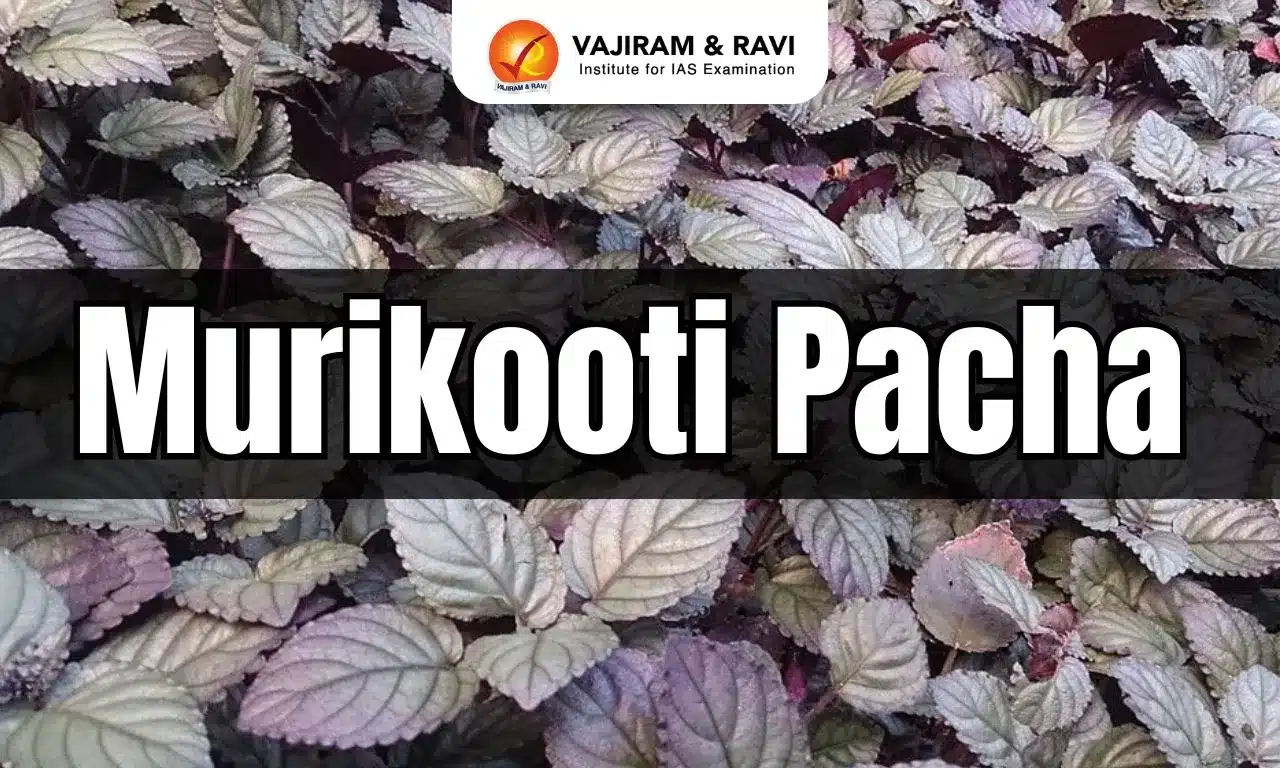
  • Murikooti Pacha or Red Ivy plant (Strobilanthes alternate), belongs to the Acanthaceae family.
  • Other names: Red Flame Ivy, Purple Waffle Plant.

Habitat & Distribution of Murikooti Pacha

  • It is native to tropical Asia, particularly Java.
  • It is widely cultivated in India, Indonesia, China, and Japan.
  • It thrives in moist, shaded environments and is commonly found in gardens and as ground cover. ​

Applications of Murikooti Pacha

  • Traditional practitioners use its leaf paste applied to fresh wounds, cuts, ulcers, and inflamed areas to promote healing and reduce inflammation.
  • Also its leaf extracts are used traditionally to treat anemia, gallstones, prolonged menstruation, hemorrhoids, and diabetes. ​

Key Features of Wound-Healing Pad

  • The key ingredient in the multi-layered wound pad developed by the scientists is the acteoside molecule derived from the red ivy plant, which has high efficacy even at lower concentrations of 0.2%.
  • It has been designed with a specially engineered electro-spun nanofiber layer, made from biodegradable and non-toxic polymers and is incredibly thin.
  • Acteoside is a natural compound found in many plants and its pharmacological activities and therapeutic potential is well-known. This is the first time acteoside has been linked to the red ivy plant.
  • Along with acteoside, it also incorporates the antibiotic neomycin sulfate, blended with FDA-approved polymers.

Source: TH

Murikooti Pacha FAQ's

Q1: What is the use of murikootti for skin?

Ans: It is used as a folklore medicine for wound healing.

Q2: What is the main cause of anemia?

Ans: Iron deficiency, blood loss, or damaged red blood cells to issues with red blood cell production.

Border Wing Home Guards

Border Wing Home Guards

Border Wing Home Guards Latest News

The Union Ministry of Home Affairs (MHA) is contemplating a plan to raise Border Wing Home Guards (BWHG) along the border with China, similar to the guards on the India-Pakistan border.

About Border Wing Home Guards

  • It acts as ancillaries to the Army and other border forces during emergencies.
  • Home Guards are raised under the Home Guards Act and Rules of the States/Union Territories.
  • There are seven States authorised to have BWHGs: Meghalaya, Tripura, Assam, West Bengal, Punjab, Rajasthan, and Gujarat.
    • Rajasthan is the only State which has BWHGs in the present times.
    • They perform the responsibilities of a Constable and are usually enlisted for three to four years.
    • 25% cost of training and financial support is borne by the Government of India.
  • Who are recruited?: They are recruited from amongst all classes of people and walks of life, who give their spare time to the organisation for betterment of the community.

Role of Home Guards

  • They work in conjunction with the army in guarding the vital Installations, the vital points and the vulnerable areas during break out of hostilities on the International Border.
  • It works as an auxiliary Force to the Police in maintenance of internal security situations, help the community in any kind of emergency such as an air-raid, fire, cyclone, earthquake, epidemic etc.
  • They help in maintenance of essential services, promote communal harmony and assist the administration in protecting weaker sections.

Source: TH

Border Wing Home Guards FAQs

Q1: What is the duty of a Home Guard?

Ans: The role of Home Guards is to serve as an auxiliary Force to the Police in maintenance of internal security situations, help the community in any kind of emergency.

Q2: Under which act Home Guards are raised?

Ans: Home Guards are raised under the Home Guards Act and Rules of the Central Government.

Doctrine of Contributory Negligence

Doctrine of Contributory Negligence

Doctrine of Contributory Negligence Latest News

The Andhra Pradesh High Court recently held that the doctrine of contributory negligence does not apply to criminal actions, and a driver who commits an accident by driving rashly and negligently, which leads to the death of a person, is liable under Section 304A of IPC, even if there has been a degree of negligence on part of the victim.

About Doctrine of Contributory Negligence

  • It operates on the principle that individuals have a duty to exercise reasonable care for their own safety and well-being. 
  • When someone fails to meet this duty and their actions or omissions contribute to their own injury or damages, they may be considered partially at fault for the harm suffered. 
  • Contributory negligence occurs when the plaintiff, through their own lack of care, contributes to the damage resulting from the defendant's negligence or wrongful conduct.
  • The concept of Contributory negligence is based on the principles of “Volenti non-fit injuria”. 
    • The maxim means that the injury has suffered voluntarily and the defendant is not fully liable.  
  • It serves as a defence wherein the defendant must demonstrate that the plaintiff's failure to exercise reasonable care for their safety played a role in the harm suffered.
    • For instance, if A, while travelling on the wrong side of the road, is struck by a vehicle driven recklessly by B coming from the opposite direction, A may be met with the defence of contributory negligence.
  • The application of contributory negligence principles allows courts to assess the relative fault of each party and determine the appropriate allocation of liability and damages in such cases.
  • But if both the plaintiff and the defendant take due care and all the measures to avoid the accident or the injury, then the plaintiff cannot sue the defendant for that.
  • The Burden of Proof: The burden of proof is on the defendant to prove that the plaintiff is equally liable for the act and the plaintiff was not careful, due to which he suffered injuries.
  • The defence of contributory negligence is not available when it is proved that the defendant has the duty to take full care and he is legally bound to take full care and diligence. So, if any injury is caused to the plaintiff, then the defendant will be held liable.
    • For example- A and B were travelling in a bus, and A, in order to show something to B, pointed his hand outside the window, and the window suddenly got open, and A was injured. Although it was A’s duty to not take out his hands from the window, the staff and the crew were liable, as it was their duty to check all the windows and the doors.
  • While India does not have a specific statute codifying contributory negligence, courts often consider principles of fairness and equity in determining liability and apportioning damages.
  • In India, the concept of comparative negligence is applied, where damages are allocated based on the comparative fault of each party involved and judges exercise discretion based on the facts and circumstances of each case.

Source: LL

Doctrine of Contributory Negligence FAQs

Q1: The doctrine of contributory negligence is based on which legal maxim?

Ans: Volenti non-fit injuria

Q2: What does contributory negligence mean in law?

Ans: The plaintiff contributes to their own harm due to lack of care.

Q3: When is the defence of contributory negligence not available to the defendant?

Ans: When the defendant owed a full duty of care and failed to exercise it.

Scarlet Dragonfly

Scarlet Dragonfly

Scarlet Dragonfly Latest News

In a recent discovery, a rare scarlet dragonfly has been spotted in the valleys of Munnar, somewhere in Kerala’s Western Ghats.

About Scarlet Dragonfly

  • It is a species of dragonfly in the family Libellulidae.
  • Scientific Name: Crocothemis erythraea
  • Its common names include broad scarlet, common scarlet-darter, and scarlet darter.

Scarlet Dragonfly Distribution

  • It is a common species in southern Europe and throughout Africa. 
  • It also occurs across western Asia as far as southern China.
  • Sometimes, these dragonflies travel far from their usual homes.

Scarlet Dragonfly Habitat 

  • Scarlet dragonflies like to live near water. 
  • They can be found near many types of water, like rivers, streams, and ponds. 
  • They prefer sunny spots, not places that are too shady.

Scarlet Dragonfly Features

  • It can reach a length of 33–44 millimetres (1.3–1.7 in). 
  • These dragonflies have a flattened and rather broad abdomen.
  • The adult male scarlet dragonfly has a bright scarlet red, widened abdomen, with small amber patches at the bases of the hindwings.
  • Also the veins on the leading edges of the wings are red. 
  • Females and immatures are yellow-brown and have a conspicuous pale stripe along the top of the thorax.

Scarlet Dragonfly Conservation Status

It is classified as 'Least Concern' under the IUCN Red List.

Source: TOI

Scarlet Dragonfly FAQs

Q1: To which family does the scarlet dragonfly belong?

Ans: It is a species of dragonfly in the family Libellulidae.

Q2: What is the distinguishing feature of adult male scarlet dragonflies?

Ans: The adult male scarlet dragonfly has a bright scarlet red, widened abdomen, with small amber patches at the bases of the hindwings.

Q3: What is the IUCN conservation status of the scarlet dragonfly?

Ans: Least Concern

Sarcoidosis

Sarcoidosis

Sarcoidosis Latest News

A peer-reviewed study published recently provides an in-depth analysis of sarcoidosis, highlighting its variable course and the factors that influence disease severity.

About Sarcoidosis

  • Sarcoidosis is a condition that causes your immune system to overreact and make lumps or nodules called granulomas. 
  • A granuloma is an area of inflammation caused by your immune system. 
  • It’s made up of a cluster of white blood cells that have been “walled off” from the rest of your body to try to protect you from something your immune system thought was harmful. 
  • Granulomas are surrounded by fibrous (dense) tissue, which makes them feel hard and lumpy.
  • Granulomas can be found almost anywhere in your body, but they’re most commonly found in your lungs or lymph nodes. 
  • They also can occur in the eyes, skin, heart, and other organs.

Sarcoidosis Cause

  • Experts don't know the exact cause of sarcoidosis, but it's likely a mix of genetic and environmental factors. 
  • Some people appear to have gene changes that make them more likely to develop sarcoidosis. 
  • The condition may then be triggered by bacteria, viruses, dust, or chemicals. 
  • Their immune system overreacts to the trigger, causing inflammation that forms granulomas.

Sarcoidosis Symptoms

  • Depending on location and size, granulomas can cause mild to severe symptoms or no symptoms at all. 
  • Symptoms include cough, shortness of breath, tender sores on your shins, eye pain, and redness. 
  • Many cases go away on their own or with treatment, but sometimes it becomes a chronic condition.
  • In some cases, they can turn into fibrosis, causing permanent lung scarring.

Sarcoidosis Treatment

  • There is no cure for sarcoidosis, but most people do not need treatment. 
  • Sarcoidosis may go away on its own. 
  • Other people need treatment to lessen their body's immune system response.
  • Sometimes sarcoidosis can last for years and may cause organ damage.

Source: TOI

Sarcoidosis FAQs

Q1: What is sarcoidosis?

Ans: Sarcoidosis is a condition that causes your immune system to overreact and make lumps or nodules called granulomas.

Q2: What are the main causes of sarcoidosis?

Ans: Experts don't know the exact cause of sarcoidosis, but it's likely a mix of genetic and environmental factors.

Q3: Sarcoidosis most commonly affects which organs?

Ans: Lungs and lymph nodes

Q4: In chronic cases, granulomas in sarcoidosis may develop into what?

Ans: Fibrosis (lung scarring)

Crop Diversification, Meaning, Advantages, Challenges

Crop Diversification

Crop Diversification is an important agricultural strategy that provides farmers with a wide range of choices in cultivating many types of crop within a specific area. By increasing the range of production activities across various crops, it helps reduce the dependency on a single crop, minimizes risks and promotes sustainable farming. In this article, we are going to cover crop diversification, its methods, benefits, challenges and role in strengthening Indian agriculture. 

Crop Diversification

Crop diversification is the practice of cultivating a variety of crops on the same farm instead of relying on a single crop. This approach helps farmers reduce risks from market fluctuations, crop failures, or climate-related events, while simultaneously enhancing soil fertility and improving profits. 

Crop Diversification Methods

Common methods of diversification include:

  • Growing multiple crops in the same field: Minimizes crop loss if one crop is hit by pests, disease, or bad weather.
  • Crop rotation: Rotating crops annually maintains soil nutrients and prevents pest and disease buildup.
  • Cultivating high-value crops: Such crops fetch better prices and boost farmer income.
  • Integrating crops with livestock: Provides extra income and enriches soil through organic inputs.

Crop Diversification Implementation

Global agriculture is heavily dependent on a handful of staple crops, which has reduced biodiversity and stressed ecosystems. However, crop diversification promotes resilience.

  • Problems of mono-cropping: Continuous cultivation of one crop depletes soil nutrients, increases water needs, and escalates pesticide and fertilizer use, raising costs and harming consumer health.
  • Risks to farmers: Farmers face high vulnerability to market prices, climate shocks, and rising input costs.
  • Solution through diversification: Introducing multi-cropping and intercropping balances soil health, reduces dependence on chemicals, and lowers production costs while ensuring stable returns.

Crop Diversification Advantages 

Practicing Crop Diversification has the following advantages:

  1. Risk Mitigation and Income Stability
    • Diversification of crops spreads the risk across multiple crops.
    • If one crop fails due to pests, diseases, or climatic shocks, income from others balances the loss.
    • Helps protect small and marginal farmers from financial distress.
  2. Climate Change Adaptation and Resilience
    • Different crops react differently to droughts, floods, or heat waves.
    • Growing a mix ensures that at least some crops survive under extreme conditions.
    • Builds long-term resilience against climate variability.
  3. Reduced Input Dependency and Cost Efficiency
    • Mono-cropping leads to overuse of fertilizers, pesticides, and water.
    • Diversification reduces pest cycles, improves soil fertility naturally, and lowers chemical dependence.
    • Decreases production costs while improving returns.
  4. Soil Fertility Improvement and Sustainable Use of Resources
    • Crop rotation and intercropping restore soil nutrients.
    • Leguminous crops fix nitrogen, reducing fertilizer demand.
    • Enhances water-use efficiency and prevents soil erosion.
  5. Promotion of Nutritious and Diverse Diets
    • Encourages cultivation of pulses, millets, oilseeds, vegetables, and fruits.
    • Provides consumers with balanced nutrition, addressing hidden hunger and malnutrition.
  6. Environmental Sustainability and Biodiversity Conservation
    • Maintains ecological balance by avoiding monoculture dominance.
    • Supports pollinators, beneficial insects, and microbial diversity.
    • Reduces carbon footprint by lowering chemical and water usage.
  7. Income Enhancement through High-Value Crops
    • Farmers can diversify into horticulture, floriculture, medicinal plants, or organic crops.
    • Opens avenues for exports and niche markets, raising profitability.

Crop Diversification Challenges in India 

Farmers face many challenges while practicing crop diversification in India:

  1. Financial Barriers and Credit Constraints
    • Diversification requires investment in new seeds, irrigation, machinery, and storage.
    • Small farmers often lack access to affordable credit.
  2. Climatic Vulnerability and Uncertainty
    • Crops other than rice and wheat are often more sensitive to irregular monsoons and temperature extremes.
    • Inadequate irrigation facilities worsen this problem.
  3. Weak Market Infrastructure and Demand Limitations
    • Market linkages for non-traditional crops like millets, pulses, and oilseeds remain underdeveloped.
    • Lack of assured procurement (like MSP for rice and wheat) discourages farmers.
  4. Price Instability and Income Risks
    • Prices of fruits, vegetables, and pulses fluctuate heavily due to demand-supply mismatches.
    • Farmers struggle with income predictability, discouraging crop shift.
  5. Knowledge and Awareness Gaps
    • Many farmers are unaware of the benefits of diversification, suitable crop combinations, and improved practices.
    • Weak extension services and poor training remain major obstacles.
  6. Conservatism and Risk Aversion
    • Farmers prefer continuing with crops they have grown traditionally.
    • Fear of uncertain markets and crop failures stops them from experimenting.
  7. Post-Harvest and Storage Challenges
    • Perishable crops like vegetables and fruits need cold storage and processing units.
    • Lack of infrastructure leads to high post-harvest losses and wastage.
  8. Policy and Institutional Limitations
    • Most government support, subsidies, and MSPs are skewed towards rice and wheat.
    • Limited policy incentives for diversification discourage farmers.
  9. Supply Chain and Transport Bottlenecks
    • Weak rural roads, high transport costs, and middlemen exploitation reduce farmer profits.
    • Farmers cannot directly access large urban or export markets.
Also Check Other Posts
Soils of India Western Disturbances
Geomorphology Coastal States of India

Crop Diversification FAQs

Q1: What is the concept of crop diversification?

Ans: Crop diversification refers to growing a variety of crops instead of relying on a single crop to reduce risk and improve sustainability.

Q2: Why is crop diversification important in agriculture?

Ans: It enhances income security, improves soil fertility, reduces pest risks, and ensures food and nutritional security.

Q3: What is the government scheme for crop diversification?

Ans: The Government supports diversification through schemes like the Crop Diversification Programme (CDP) under RKVY and National Food Security Mission (NFSM).

Q4: What crops can be grown using crop diversification?

Ans: Farmers can grow pulses, oilseeds, millets, fruits, vegetables, fodder, and horticultural crops alongside traditional cereals.

Q5: What is intercropping?

Ans: Intercropping is the practice of growing two or more crops simultaneously on the same field in a planned pattern.

Daily Editorial Analysis 13 September 2025

Daily Editorial Analysis

The RTI’s Shift to a ‘Right to Deny Information’

Context

  • The Right to Information (RTI) Act in India has long been celebrated as a landmark legislation that deepened democracy by empowering citizens with access to government-held information.
  • By establishing transparency as the default mode of governance, the RTI transformed the relationship between citizens and the state, enabling ordinary people to scrutinize decisions, demand accountability, and expose corruption.
  • Yet, the recent amendments to Section 8(1)(j) through the Digital Personal Data Protection (DPDP) Act mark a significant departure from this vision.
  • What was once a nuanced balance between privacy and transparency now risks becoming a legal framework for denying access to vital public information.

The Original Balance of Section 8(1)(j) of the RTI Act

  • When first enacted, Section 8(1)(j) of the RTI Act sought to carefully reconcile the citizen’s right to information with the individual’s right to privacy.
  • It allowed public authorities to withhold personal information only if it had no connection to public activity or if disclosure would amount to an unwarranted invasion of privacy.
  • Even then, disclosure was permitted when a larger public interest justified it.
  • A crucial safeguard in this provision was its proviso: information that could not be denied to Parliament or a State Legislature could not be denied to an ordinary citizen either.
  • This acid test ensured that privacy could not be used as a blanket excuse to restrict transparency, while also acknowledging that privacy is an evolving concept, to be assessed case by case.

The Ambiguity of Personal Information

  • The DPDP Act’s intervention has radically altered this equilibrium. By reducing Section 8(1)(j) to a mere six words, it introduces ambiguity and expands the scope of “personal information” to the point of absurdity.
  • Two interpretations of person now compete: one confined to natural persons, the other, derived from the DPDP Bill, encompassing entities as diverse as companies, associations, and even the state itself.
  • If the latter definition prevails, nearly every document or decision could be shielded as personal information.
  • In effect, the RTI risks being transformed into a Right to Deny Information (RDI).
  • This expansive interpretation is compounded by the DPDP Act’s overriding effect on other laws and its severe penalties for disclosure violations, which may reach as high as ₹250 crore.
  • Faced with such risks, Public Information Officers (PIOs) are incentivised to adopt a defensive posture, erring on the side of denial rather than disclosure.
  • This chilling effect undermines the very spirit of the RTI, replacing openness with opacity.

Implications for Corruption and Accountability

  • Corruption thrives in secrecy, and transparency has long been one of the few effective tools available to citizens in combating it.
  • With broadened definitions of personal information, even routine and seemingly harmless documents, such as a corrected marksheet, a signed official order, or lists of pension beneficiaries, can now be withheld.
  • Examples like Rajasthan’s public disclosure of pension details, which once exposed ghost employees and ghost cards, may no longer be permissible.
  • This legal transformation effectively institutionalises opacity. Information that directly exposes corruption or malpractice could be dismissed as personal.
  • Even the clause allowing disclosure in cases of larger public interest provides little relief, as it is rarely invoked in practice and demands an onerous justification from citizens.
  • Thus, the DPDP amendments not only weaken the RTI but also embolden corruption by making concealment the default.

Apathy and the Need for Collective Action

  • Unlike previous RTI amendments, such as those altering the salaries and tenures of commissioners, these changes have not sparked widespread outrage.
  • Part of the reason lies in their presentation: couched in the language of data protection, they appear benign or even necessary.
  • Moreover, many citizens mistakenly believe that their own data, however collected or used by the government, should remain private at all costs, overlooking the broader implications for collective accountability.
  • Addressing this requires urgent and coordinated action.
  • First, media and citizen engagement must intensify, creating awareness and debate across the country.
  • Second, political accountability should be demanded, with parties required to commit to reversing these amendments in their manifestos.
  • Third, strong public opinion must be cultivated, treating this issue with the same gravity as other national crises.

Conclusion

  • The RTI Act was never merely a piece of legislation; it was a democratic promise that citizens would have the means to hold their government accountable.
  • By hollowing out Section 8(1)(j) and prioritising privacy in an indiscriminate manner, the DPDP Act risks converting this promise into an illusion.
  • Transparency and accountability, the lifeblood of democracy, are imperilled by legal ambiguities that empower denial rather than disclosure.
  • The future of transparency in India now depends on whether its people can reclaim the RTI before it is too late.

The RTI’s Shift to a ‘Right to Deny Information’ FAQs 

Q1. What principle is the RTI Act based on?
Ans. The RTI Act is based on the principle that all government-held information belongs to the citizens in a democracy.

Q2. How did the original Section 8(1)(j) balance privacy and transparency?
Ans. It allowed denial of personal information only if it invaded privacy without public interest, while ensuring that information available to Parliament could not be denied to citizens.

Q3. What major change did the DPDP Act bring to the RTI Act?
Ans. The DPDP Act reduced Section 8(1)(j) to a vague six words, making it easier to deny most information as “personal.”

Q4. How do these changes affect the fight against corruption?
Ans. The changes weaken transparency, allowing corruption-related information to be hidden under the excuse of personal data.

Q5. Why has public outrage been limited over these amendments?
Ans. Public outrage has been limited because the changes were presented under the guise of data protection, making them appear harmless to ordinary citizens.

Source: The Hindu


Property Rights, Tribals and the Gender Parity Gap

Context:

  • Over a month after the International Day of the World’s Indigenous Peoples (August 9), the issue of indigenous rights remains pressing—especially following the Supreme Court’s July 17, 2025 ruling in Ram Charan & Ors. vs Sukhram & Ors.
  • This judgement held that excluding daughters from ancestral property violates the fundamental right to equality.
  • Viewed through a gender-equality lens, this underscores deep injustice: most tribal women lack statutory inheritance rights (except some matrilineal communities in the Northeast).
  • The moment calls for legal reform to secure tribal women’s equal property rights.
  • In this context, this article highlights the urgent need to address gender inequality in tribal property rights, examining recent court rulings, customary laws, and the call for a dedicated Tribal Succession Act.

Plea for Equal Share in Tribal Property Rights

  • In Ram Charan & Ors. vs Sukhram & Ors., the appellant-plaintiffs, legal heirs of Dhaiya, a Scheduled Tribe woman from Sarguja, Chhattisgarh, sought partition of property belonging to their maternal grandfather, Bhajju Gond.
  • Dhaiya, one of six children (five sons and a daughter), was denied her share, as tribal custom excluded women from ancestral property.
  • The Trial Court and First Appellate Court dismissed the plea, also rejecting arguments that Hindu traditions and the Hindu Succession Act should apply, citing lack of evidence.
  • However, the Chhattisgarh High Court granted Dhaiya’s heirs an equal share, ruling that customs denying women property rights perpetuate gender discrimination.
  • The Court emphasized that such discrimination must be weeded out by law.
  • This marked a departure from the 1996 Madhu Kishwar vs State of Bihar case, where the Supreme Court, while recognising gender disparity in tribal inheritance customs, declined to strike them down, fearing legal chaos.

Customary Laws and Tribal Women’s Land Rights

  • In Scheduled Five Area States like Chhattisgarh, Jharkhand, and Odisha, tribal communities follow customary laws in matters of marriage, succession, and adoption.
  • Despite women contributing more to farm work, these customs deny them inheritance rights in ancestral property.
  • Data from the Agriculture Census 2015-16 shows only 7% of Scheduled Tribe women own land, compared to 83.3% of men.
  • Arguments against granting women rights often cite land as communitarian property or fears of alienation if women marry non-tribal men.
  • However, money from land sales rarely benefits the gram sabha, undermining this reasoning.
  • Courts stress that customs must meet tests of antiquity, certainty, continuity, reasonableness, and alignment with public policy to be valid.
  • In 2022, the Jharkhand High Court upheld inheritance rights for Oraon women in Prabha Minz vs Martha Ekka, ruling that the community failed to prove a continuous custom of excluding daughters from property rights.

Need for a Separate Tribal Succession Act

  • The Supreme Court, in Kamala Neti (Dead) Thr. Lrs. vs Special Land Acquisition Officer (December 2022), took a progressive step toward gender parity in tribal women’s property rights.
  • Since Section 2(2) of the Hindu Succession Act, 2005 excludes tribal communities, a dedicated Tribal Succession Act could address this gap.
  • Codifying tribal succession laws, similar to those for Hindus and Christians, would ensure clarity, reduce gender discrimination, and provide statutory inheritance rights for tribal women, strengthening equality and justice.

Conclusion

  • Ensuring equal property rights for tribal women requires codifying succession laws, reforming discriminatory customs, and embracing legal measures that uphold justice, equality, and inclusive development.

Property Rights, Tribals and the Gender Parity Gap FAQs

Q1. What was the significance of the Ram Charan vs Sukhram judgment?

Ans. The judgment affirmed that excluding daughters from ancestral property violates fundamental equality rights, setting a precedent against gender discrimination in tribal inheritance customs.

Q2. How do customary laws in Scheduled Five Area States affect tribal women?

Customary laws deny women inheritance rights despite their larger contribution to farm work, perpetuating gender disparity in land ownership among Scheduled Tribes.

Q3. What data reflects the land ownership gap between tribal men and women?

Ans. The Agriculture Census 2015-16 shows only 16.7% of tribal women own land compared to 83.3% of tribal men, highlighting stark inequality.

Q4. How did the Jharkhand High Court ruling in Prabha Minz vs Martha Ekka impact women’s rights?

Ans. The court upheld Oraon women’s inheritance rights, rejecting claims of continuous custom excluding daughters, reinforcing that customs must align with equality and public policy.

Q5. Why is a Tribal Succession Act considered necessary?

Ans. Since the Hindu Succession Act excludes tribals, a separate Tribal Succession Act would codify inheritance rights, reduce discrimination, and secure equality for tribal women.

Source: TH


Building Sovereign Capability in Critical Technologies - India’s Talent Imperative

Context:

  • Critical technologies are increasingly shaping global power hierarchies.
  • While India has made significant strides in science and technology, its research ecosystem reveals imbalances in talent attraction, institutional mechanisms, and quality of breakthroughs.
  • The challenge is not numbers, but the capacity to attract and embed top-tier researchers in mission-driven domains that ensure strategic autonomy.

India’s Current Research Profile:

  • India accounts for only 2.5% of highly cited papers and 2% of global top-cited scientists (Stanford–Elsevier report).
  • India ranks in the top five in 29 technologies, but lacks consistent global breakthroughs due to a fragmented ecosystem.
  • Restrictions on high-tech transfers from the US and China exacerbate the gap.

Global Dynamics and Emerging Window of Opportunity:

  • China:

    • It not only dominates 37 of 44 critical technologies (ASPI) but also converts this into sovereign strength through aggressive talent recruitment.
    • Through the Young Thousand Talents Program, China recruited 3,500 scientists, resulting in exponential growth in research output and institutional rankings.
  • US:

    • Decline in research funding: The Trump administration has announced budget cuts of over 50% for federal science grant-making bodies such as the National Science Foundation and NASA.
    • Limited tenure opportunities: Only 15% of STEM PhDs secure tenure track jobs within five years, down from 25% two decades ago.
    • Visa restrictions: Tightened visa regimes have left many Indian-origin PhDs and postdoctoral fellows stranded.
  • Europe’s strategy:

    • France announced a €100 million fund to attract global researchers.

India’s Policy Landscape:

  • Anusandhan National Research Foundation (ANRF):

    • Through the Rs 1 lakh crore Research and Development Innovation Fund, the government has (for the first time in decades) committed large-scale, mission-oriented investments in science.
    • This has been coupled with rapid Ease of Doing Science
  • Weaknesses:

    • Despite multiple fellowship schemes, India has not been very successful in attracting and retaining global academic talent.
    • Compensation remains uncompetitive compared to global benchmarks, world-class laboratories and sustained research grants are often absent.
    • Also, there are no clear pathways for long-term absorption or career progression.
    • Recruitment has not been tied to mission-oriented research streams in areas where India must develop sovereign capability.

The Focused Research Organisations (FRO) Model:

  • Key features:

    • Establishing a limited number of FROs embedded in Institutes of National Importance with proven expertise (e.g., IIT Delhi for quantum communication).
    • Structured as Section 8 companies with 51% industry participation, creating a public–private–academy partnership.
    • Attract 500 top-class researchers in 5 years, prioritising early-career talent.
    • Ensure integration of existing Indian academics via joint appointments, rotational leadership, and project-based entry.
  • Strategic domains of focus:

    • Focus areas: Domains that will define strategic autonomy in the decades ahead are semiconductors, propulsion and hypersonics, synthetic biology, quantum communication, etc.
    • IIT Delhi milestone:
      • In collaboration with DRDO, it has recently achieved a milestone in quantum entanglement-based free-space quantum secure communication over distances exceeding 1 km.
      • This stands out as a natural anchor for a national FRO on quantum communication. This model has four distinct design principles.
    • Four design principles:
      • Globally competitive compensation through pooled resources.
      • Strategic focus on sovereign capability in select domains.
      • Hybrid ecosystem combining global expertise, indigenous knowledge, and industry resources.
      • Institutional permanence with predictable funding and talent pathways.

Conclusion:

  • India stands at a crossroads in its technological sovereignty journey.
  • External shifts in the global research landscape offer a rare window to attract and embed top-tier researchers.
  • Establishing FROs is vital to ensure long-term capability-building, sovereign autonomy, and economic competitiveness.
  • Delay in action risks losing a generation of scientific talent and deepening dependence on foreign powers.
  • The choice is clear: invest now in talent-driven critical technologies, or embracing long-term technological dependence.

Building Sovereign Capability in Critical Technologies FAQs

Q1. Why is India’s research profile considered imbalanced?

Ans. Because India lacks an ecosystem for consistent global breakthroughs and high-quality research, despite having numbers and talent.

Q2. How has China successfully converted scientific research into sovereign technological strength?

Ans. By aggressively recruiting global talent through initiatives like the Young Thousand Talents Program and focusing on mission-driven research.

Q3. What global factors have created a window of opportunity for India to attract top scientific talent?

Ans. US science funding cuts, limited STEM career pathways, tightened visa regimes, and Europe’s aggressive researcher recruitment drive.

Q4. What structural gaps hinder India’s ability to attract and retain global academic talent?

Ans. Uncompetitive compensation, absence of world-class labs, fragmented recruitment, and lack of mission-oriented research pathways.

Q5. How can Focused Research Organisations (FROs) contribute to India’s strategic autonomy in critical technologies?

Ans. By creating permanent, mission-driven, industry-backed institutions that attract top global researchers and build sovereign capabilities.

Source: IE

Daily Editorial Analysis 13 September 2025 FAQs

Q1: What is editorial analysis?

Ans: Editorial analysis is the critical examination and interpretation of newspaper editorials to extract key insights, arguments, and perspectives relevant to UPSC preparation.

Q2: What is an editorial analyst?

Ans: An editorial analyst is someone who studies and breaks down editorials to highlight their relevance, structure, and usefulness for competitive exams like the UPSC.

Q3: What is an editorial for UPSC?

Ans: For UPSC, an editorial refers to opinion-based articles in reputed newspapers that provide analysis on current affairs, governance, policy, and socio-economic issues.

Q4: What are the sources of UPSC Editorial Analysis?

Ans: Key sources include editorials from The Hindu and Indian Express.

Q5: Can Editorial Analysis help in Mains Answer Writing?

Ans: Yes, editorial analysis enhances content quality, analytical depth, and structure in Mains answer writing.

Market Reforms 2025: Boosting FPI Access and IPO Flexibility

Market Reforms

Market Reforms Latest News

  • SEBI has announced major market reforms, including the SWAGAT-FI framework for foreign investors, relaxed IPO dilution norms, and stronger governance measures for exchanges.

Introduction

  • The Securities and Exchange Board of India (SEBI) has announced sweeping reforms aimed at enhancing foreign investment inflows, easing IPO norms for large companies, and strengthening governance within market infrastructure institutions. 
  • These measures come at a time of heightened global economic uncertainty, with foreign portfolio investors (FPIs) pulling out significant capital due to U.S. tariffs, rich valuations, and weak corporate earnings. 
  • The reforms are expected to reinforce India’s reputation as a competitive and investor-friendly market while balancing investor protection and regulatory compliance.

Foreign Investor Access through SWAGAT-FI

  • One of the most significant announcements is the introduction of the Single Window Automatic & Generalised Access for Trusted Foreign Investors (SWAGAT-FI) framework.
  • Scope: It covers FPIs and Foreign Venture Capital Investors (FVCIs) from categories such as sovereign wealth funds, central banks, insurance companies, pension funds, and regulated retail funds.
  • Features:
    • A unified 10-year registration and KYC cycle (up from 3 years).
    • Exemption from the 50% cap on aggregate contributions by NRIs, OCIs, and resident Indians.
    • Simplified compliance and reduced paperwork through the India Market Access portal, launched alongside SWAGAT-FI.
  • Impact: The move aims to restore investor confidence amid record foreign outflows of nearly Rs. 63,500 crore since July 2025.

Relaxed IPO Norms for Large Companies

  • SEBI has also eased the minimum public offer (MPO) and public shareholding requirements for large issuers:
  • Companies with Rs. 1-5 lakh crore market cap must now offer 2.75-2.8% of their post-issue market cap, compared with 5% earlier.
  • MPO size threshold raised to Rs. 6,250 crore for very large issuers.
  • Public float timeline: Firms with less than 15% public shareholding at listing now get 10 years (up from 3–5 years) to meet the 25% minimum requirement.
  • Anchor Investor rules:
    • Anchor quota raised to 40% from one-third, including allocations for mutual funds, life insurers, and pension funds.
    • Minimum allotment size set at Rs. 5 crore.
    • Broader anchor investor participation permitted.
  • These reforms are particularly beneficial for mega-IPOs, where immediate high dilution often deters promoters.

Strengthened Governance in Market Infrastructure Institutions

  • SEBI has introduced structural changes to improve the governance of stock exchanges and clearing corporations:
    • Two executive directors will head separate verticals - critical operations (trading, clearing, settlement) and regulatory compliance (risk management, investor grievances).
    • Defined roles for managing directors and key managerial personnel, enhancing accountability and succession planning.
  • This comes in the wake of past governance concerns in major exchanges, where lapses undermined market trust.

Mutual Fund and Retail Investor-Centric Reforms

  • To deepen financial inclusion, SEBI has announced measures to improve retail participation, especially from smaller towns and underrepresented groups:
    • Exit load in mutual funds has been reduced to 3% from 5%.
    • Distributor incentives revised to promote investments from beyond top-30 cities (B-30) and to encourage participation by women investors.
    • Enhanced disclosure and compliance norms for related-party transactions (RPTs), with thresholds linked to company turnover.

Significance of the Reforms

  • For India’s markets: They provide flexibility for large companies tapping equity markets and simplify investment processes for trusted foreign players.
  • For global competitiveness: SWAGAT-FI positions India as a stable long-term investment hub amid global capital volatility.
  • For retail investors: The focus on smaller cities and women investors aligns with India’s push for inclusive financial growth.

Source: IE | TOI

Market Reforms FAQs

Q1: What is the SWAGAT-FI framework introduced by SEBI?

Ans: SWAGAT-FI is a single-window system for trusted foreign investors offering a 10-year registration and simplified compliance.

Q2: How have IPO norms been relaxed for large issuers?

Ans: Companies with ₹1–5 lakh crore market cap now need to dilute only 2.75–2.8% public shareholding instead of 5%.

Q3: What changes were made for anchor investors in IPOs?

Ans: The anchor quota has been increased to 40% with allocations for mutual funds, insurers, and pension funds.

Q4: What governance reforms were introduced for stock exchanges?

Ans: SEBI mandated two executive directors to separately handle trading/settlement and compliance/risk functions.

Q5: What steps has SEBI taken for mutual fund investors?

Ans: Exit loads were reduced to 3%, and incentives were introduced for distributors targeting small-town and women investors.

PM Modi’s Manipur Visit: Key Challenges in the Conflict-Hit State

PM Modi Manipur Visit

PM Modi Manipur Visit Latest News

  • Prime Minister Narendra Modi will visit Manipur on September 13, his first trip since ethnic clashes between Meiteis and Kuki-Zo erupted in May 2023. 
  • Over 27 months, the state has endured violence, mass displacement, weakened law and order, the rise of armed groups, President’s Rule, and national elections. 
  • While tensions have eased somewhat, five key issues — displacement, security, governance, inter-community trust, and political resolution — remain central to Manipur’s fragile recovery.

Rehabilitation of Manipur’s Displaced Population

  • Over 57,000 people remain in 280 relief camps across Manipur, displaced for over two years due to ethnic clashes. 
  • Displacement occurred mainly in two ways: 
    • Kuki-Zo people forced out of Imphal and valley towns, and Meiteis from border and hill towns like Moreh, Kangpokpi, and Churachandpur; and 
    • those from “fringe areas” at the valley-hill frontiers fleeing attacks or threats. 
  • In July, Manipur govt announced a three-phase resettlement plan to close all relief camps by year-end, beginning with phased return of fringe-area residents, followed by prefabricated housing for others once normalcy is restored. 
  • While around 5,000 people had returned before the plan, progress has since been slow.

Restricted Movement and Buffer Zones in Manipur

  • During the conflict, sharp boundaries between the valley and hill districts have turned into “buffer zones” manned by security forces, blocking safe passage between Meitei and Kuki-Zo areas. 
  • Meiteis remain confined to the valley without highway access, while Kuki-Zos cannot reach Imphal or use key facilities like the airport. 
  • After President’s Rule in February, the Centre attempted to enforce “free movement” on highways, but violence erupted, leaving one dead and many injured. 
  • Currently, Kuki-Zo groups permit only essential goods to reach the valley but refuse Meitei movement across buffer zones. 
  • Meanwhile, no reciprocal arrangement exists for Kuki-Zo passage in Meitei-dominated areas.

Lack of Dialogue and Ethnic Tensions in Manipur

  • Over 250 people have died in Manipur’s ethnic violence, the last major outbreak in November 2024. 
  • While large-scale clashes have ebbed, officials warn the state remains fragile, as both Meitei and Kuki-Zo communities are heavily armed and lack inter-community dialogue. 
  • The Centre continues separate talks with both sides, recently renewing a Suspension of Operations pact with Kuki-Zo insurgent groups
  • These groups agreed to uphold Manipur’s “territorial integrity,” but still demand a Union Territory with legislature, contradicting the pact’s spirit. 
  • Meitei groups see the agreement as legitimising insurgents, while Kuki-Zos allege past bias by ex-Chief Minister Biren Singh’s government favouring Meitei militias, fuelling mistrust.

Political Transition and President’s Rule in Manipur

  • Former Chief Minister N Biren Singh resigned in February after opposition from both Kuki-Zo and many Meitei BJP MLAs. 
  • Soon after, President’s Rule was imposed, fulfilling a key Kuki-Zo demand and initially welcomed across communities. 
  • However, nearly two months later, valley-based and Naga MLAs began pressing for restoration of an elected government, citing public pressure. 
  • Despite this, the Centre has shown no urgency to lift President’s Rule, preferring stability over political transition in the conflict-hit state.

Border Tensions and Fencing with Myanmar

  • Manipur’s porous border with Myanmar remains a flashpoint, with Meiteis blaming illegal Chin immigration for fueling unrest. 
  • In response, the Centre scrapped the Free Movement Regime — which allowed cross-border tribal travel up to 16 km — and announced fencing. 
  • This decision has angered both Kuki-Zo and Naga communities, who share deep ethnic, social, and economic ties across the border. 
  • Ahead of PM Modi’s visit, the United Naga Council protested by imposing a “trade embargo” on major supply routes but has since suspended it temporarily.

Source: IE | MC

PM Modi Manipur Visit FAQs

Q1: What is the significance of PM Modi’s Manipur visit in 2025?

Ans: It marks his first visit since ethnic clashes began in May 2023, highlighting displacement, buffer zones, political instability, and cross-border tensions.

Q2: How many people remain displaced in Manipur?

Ans: Over 57,000 people live in 280 relief camps, displaced for more than two years due to violence between Meitei and Kuki-Zo communities.

Q3: What are buffer zones in Manipur?

Ans: Buffer zones are security-controlled boundaries between Meitei and Kuki-Zo areas, restricting free movement and dividing the state socially and geographically.

Q4: Why is Manipur under President’s Rule?

Ans: After CM Biren Singh’s resignation in February 2025, President’s Rule was imposed, fulfilling Kuki-Zo demands but raising calls for restoring an elected government.

Q5: Why is the Manipur-Myanmar border a flashpoint?

Ans: Scrapping the Free Movement Regime and fencing the border angered Kuki-Zo and Naga groups with close cross-border ethnic and economic ties.

Understanding America’s Gun Obsession: History, Culture, and Violence

America’s Gun Obsession

America’s Gun Obsession Latest News

  • Charlie Kirk, a 31-year-old American conservative leader who once defended gun rights despite yearly deaths, was killed by a sniper in Utah. 
  • His death underscores the irony and tragedy of America’s entrenched gun obsession, reigniting the divisive debate that many believe is tearing U.S. society apart.

America’s Gun Crisis in Global Perspective

  • The United States has more guns than people, with 1.2 guns per person—far higher than any other nation. 
  • Though home to less than 5% of the world’s population, Americans own 45% of civilian firearms globally. 
  • This widespread access fuels staggering violence: in 2023, the U.S. recorded 46,728 gun deaths—128 daily, with over half suicides. 
  • The gun homicide rate stands at 4.38 per 100,000, 26 times higher than other wealthy nations, compared to under 0.05 in the UK and virtually zero in Japan.

Guns and the Myth of Freedom in America

  • America’s deep-rooted gun culture is tied to historical myths of firearms as protectors of liberty, from the Revolution to the Wild West
  • The Second Amendment (1791) enshrined this belief, framing arms as safeguards against tyranny. 
  • Founding Father James Madison even argued that armed citizens could topple oppressive governments, unlike Europe’s monarchies. 
  • Historian Richard Hofstader observed in 1970 that many Americans stubbornly saw guns as essential to democracy, a notion echoed by Charlie Kirk in 2023, who defended the Second Amendment as protection against government overreach.

The Making of America’s Gun Culture

  • A 1969 U.S. Justice Department report highlighted the explosive rise of guns — doubling from 45 million in 1945 to nearly 90 million by 1969, even as population grew by less than 50%. 
  • By 2018, gun numbers were ten times higher than 1945, while the population grew only 2.5 times. 
  • Historians trace this culture to racism: firearms enabled White slave owners to control Black slaves, and post-Civil War fears of retribution spurred groups like the Ku Klux Klan. 
  • In the 20th century, crime, immigration, and Cold War anxieties intensified gun demand. 
  • Abundant post-WWII weapon supplies, with Europe’s surplus arms flooding the U.S. market, created a mass gun economy, embedding firearms deeply into American society.

America’s Romantic Obsession with Guns

  • In the U.S., gun culture has been shaped by powerful advocacy groups like the NRA and gun capitalism, which transformed firearms into symbols of identity and freedom
  • Historian Andrew McKevitt notes that 19th-century gunmakers sold not just weapons but stories, imbuing guns with cultural meaning — a case of “commodity fetishism.” 
    • Commodity fetishism means giving an object (like a gun, phone, or brand item) a kind of “magical” value, while forgetting how and why it was actually made.
    • For example, instead of seeing a gun as just metal and parts made in a factory, people treat it as a symbol of freedom, power, or identity.
  • This fetishization distorts America’s gun debate, unlike other countries that embraced strict gun control. 
  • For example, Australia reduced gun deaths from 2.9 per 100,000 in 1996 to 0.88 in 2018 after reforms. 
  • The U.S., however, loosened laws, with the 2008 Supreme Court ruling in Columbia v. Heller affirming individual gun ownership rights, fueling further resistance to restrictions.

The Deadly Link Between Guns and Everyday Violence

  • NRA advocates claim “a good guy with a gun” stops violence, but historian Dominic Erdozain notes even “good people” can act aggressively, creating risks. 
  • Data disproves the simple good-versus-bad binary. Research revealed most U.S. gun homicides stemmed from arguments with friends or spouses, often under alcohol’s influence. 
  • It showed that keeping a gun at home significantly raised homicide risk. 
  • As experts warned in 2008, the real danger is not strangers but those with “a key to the house.”

Source: IE | PRC

America’s Gun Obsession FAQs

Q1: Why is America considered obsessed with guns?

Ans: The U.S. has 1.2 guns per person, more than any nation, with deep cultural, historical, and political roots reinforcing firearm ownership.

Q2: What role does the Second Amendment play in gun culture?

Ans: Ratified in 1791, it enshrines the right to bear arms, linking guns to liberty, self-defense, and protection against tyranny in American imagination.

Q3: How did racism shape America’s gun culture?

Ans: Firearms enabled White slave owners to control slaves; post-Civil War fears of Black retaliation further entrenched gun ownership and fueled groups like the KKK.

Q4: What is meant by ‘commodity fetishism’ in the U.S. gun debate?

Ans: It’s the cultural glorification of guns beyond their function — turning them into symbols of freedom and identity, distorting rational policy discussions.

Q5: How does U.S. gun violence compare globally?

Ans: With 46,728 gun deaths in 2023 and a homicide rate 26 times higher than other wealthy nations, U.S. violence far exceeds global levels.

UPSC Daily Quiz 13 September 2025

UPSC Daily Quiz

The Daily UPSC Quiz by Vajiram & Ravi is a thoughtfully curated initiative designed to support UPSC aspirants in strengthening their current affairs knowledge and core conceptual understanding. Aligned with the UPSC Syllabus 2025, this daily quiz serves as a revision resource, helping candidates assess their preparation, revise key topics, and stay updated with relevant issues. Whether you are preparing for Prelims or sharpening your revision for Mains, consistent practice with these Daily UPSC Quiz can significantly enhance accuracy, speed, and confidence in solving exam-level questions.

[WpProQuiz 69]  

UPSC Daily Quiz FAQs

Q1: What is the Daily UPSC Quiz?

Ans: The Daily UPSC Quiz is a set of practice questions based on current affairs, static subjects, and PYQs that help aspirants enhance retention and test conceptual clarity regularly.

Q2: How is the Daily Quiz useful for UPSC preparation?

Ans: Daily quizzes support learning, help in revision, improve time management, and boost accuracy for both UPSC Prelims and Mains through consistent practice.

Q3: Are the quiz questions based on the UPSC syllabus?

Ans: Yes, all questions are aligned with the UPSC Syllabus 2025, covering key areas like Polity, Economy, Environment, History, Geography, and Current Affairs.

Q4: Are solutions and explanations provided with the quiz?

Ans: Yes, each quiz includes detailed explanations and source references to enhance conceptual understanding and enable self-assessment.

Q5: Is the Daily UPSC Quiz suitable for both Prelims and Mains?

Ans: Primarily focused on Prelims (MCQ format), but it also indirectly helps in Mains by strengthening subject knowledge and factual clarity.

Cicada

Cicadas

Cicadas Latest News

Scientists with the Botanical Survey of India (MoEF&CC), Southern Regional Centre, Coimbatore, said that resurgence of cicadas in Silent Valley is a telling sign of ecological upheaval.   

About Cicadas

  • Cicadas are hemipteran insects known for their loud, complex and species-specific acoustic signals or songs.
  • A cicada will have the best chance of survival if it can emerge from the ground when its predators are lying dormant. 
  • Cicadas are insects that spend most of their lives underground and emerge from the soil mainly to mate. 
  • Habitat: Most cicadas are canopy dwellers and are found in natural forests with large trees.
  • Types: Scientists divide the over 3,000 cicada species into two groups: annual and periodical.
    • Annual cicadas: They emerge from the ground at different times each summer.
    • They’re usually dark with greenish markings.
    • These insects avoid predators by camouflaging themselves in the trees and flying from hungry birds and moles.
    • Periodical cicadas: Only seven species of cicadas are in the periodical cicadas.
    • These bugs all emerge from the ground at the same time(Summer).
    • These groups appear after a dormant period of either 13 or 17 years.
  • Ecological Significance: They prune mature trees, aerate the soil, and once they die, their bodies serve as an important source of nitrogen for growing trees.

Source: DTE

Cicadas FAQs

Q1: What is a cicada?

Ans: Cicadas are large, plant-feeding insects known for their loud, shrill noise and discarded shells (called exoskeletons) that cling to trees and other vegetation.

Q2: What are the insect pests of hemipterans?

Ans: Most notable of the phytophagous hemipterans are aphids, plant bugs, stink bugs, psyllids and whiteflies.

Tipeshwar Wildlife Sanctuary

Tipeshwar Wildlife Sanctuary

Tipeshwar Wildlife Sanctuary Latest News

Recently, a Forest Department team conducting a routine patrol at Tipeshwar Wildlife Sanctuary (TWS) discovered a poached pangolin.

About Tipeshwar Wildlife Sanctuary

  • Location: It is located in the district of Yavatmal, Maharashtra.
  • Spanning across 148.63 sq.km., the sanctuary derives its name from the nearby 'Goddess Tipai' shrine located in the Tipeshwar village.
  • Mainly, the sanctuary sprawls amongst the Patanbori and Parwa Ranges of the Pandarkawad Forest Division.
  • Four rivers—Purna, Krishna, Bhima, and Tapti—flow gracefully through the sanctuary, earning it the poetic title “Green Oasis of Eastern Maharashtra.”
  • The land here is rich with basaltic soil, a remnant of ancient volcanic activity.
  • The sanctuary is home to several villages whose inhabitants rely on the forest for their daily livelihoods.
  • Vegetation
    • The place is quite hilly and undulating and thus has different types of vegetation cover that varies with the altitude. 
    • The major forest type here is the ‘Southern Tropical Dry Deciduous Forests’.
  • Flora
    • The forests of Tipeshwar are dominated by teak, which forms about 60% of the canopy, alongside other tree species like Ain, Bija, and Dhawda. 
    • The undergrowth features a variety of grasses, bamboo groves, and medicinal plants.
  • Fauna: The place shelters a wide array of animals that include Hyena, Chital, Black buck, Sambar, Jackal, Wild boar, Peacock, Monkey, Blue bull, Wild cat, Bear and many more.

Source: TOI

Tipeshwar Wildlife Sanctuary FAQ's

Q1: In which Indian state is Tipeshwar Wildlife Sanctuary located?

Ans: Maharashtra

Q2: Tipeshwar Wildlife Sanctuary mainly sprawls across which forest ranges?

Ans: Patanbori and Parwa Ranges of the Pandarkawad Forest Division.

Q3: Which rivers flow through the Tipeshwar Wildlife Sanctuary?

Ans: Four rivers—Purna, Krishna, Bhima, and Tapti—flow gracefully through the sanctuary.

Q4: Which type of forest is dominant in Tipeshwar Wildlife Sanctuary?

Ans: Southern Tropical Dry Deciduous Forests’

Sahyadri Tiger Reserve

Sahyadri Tiger Reserve

Sahyadri Tiger Reserve Latest News

Recently, the Union Environment Ministry has approved the capture of eight tigers from the Tadoba-Andhari and Pench reserves for their translocation to the Sahyadri Tiger Reserve in western Maharashtra.

About Sahyadri Tiger Reserve

  • It is located in the Sahyadri Ranges of the Western Ghats in Maharashtra.
  • It is the first Tiger Reserve of Western Maharashtra and the fourth Tiger Reserve of the State spreading over two Protected Areas of Koyana Sanctuary (KWLS) and Chandoli National Park (CNP).
  • The central portion of Sahyadri Tiger Reserve is occupied by the “Shivsagar” reservoir of the Koyana River and the “Vasant Sagar” reservoir of the Warana River.
  • Terrain: The total area of STR is undulating, with steep escarpments along the western boundary.
  • The most distinct feature is the presence of numerous barren rocky and lateritic plateaus, locally called “Sadas”, with less perennial vegetation and overhanging cliffs on the edges, along with numerous fallen boulders with dense thorny bushes.
  • Vegetation: The forest cover here is that of moist evergreen, semi-evergreen, moist, and dry deciduous vegetation.
  • It is the only place where climax and near-climax vegetation are plentiful and prospects of adverse anthropogenic influence in the future are minimal.

Flora and Fauna of Sahyadri Tiger Reserve

  • There are many medicinal and fruit-bearing trees along with the commercial hard wood trees in the reserve.
  • The most common floral species found here are Anjani (Memecylon umbellatum), Jambhul (Syzygium cumini), and Pisa (Actinodaphaone Angustifolia). 
  • The main carnivores are the tiger, leopard, and some lesser cats along with the wolf, jackal, and wild dog.
  • The large herbivores are several deer species like Barking Deer, Sambar etc.

Source: IE

Sahyadri Tiger Reserve FAQs

Q1: Which river is located in Sahyadri Tiger Reserve?

Ans: The central portion of Sahyadri Tiger Reserve is occupied by "Shivsagar" reservoir of Koyana River and "Vasant Sagar" reservoir of Warana River.In which state is Sahyadri Tiger Reserve?

Q2: In which state is Sahyadri Tiger Reserve?

Ans: Maharashtra

Congo River

Congo River

Congo River Latest News

Over 107 people have died following a whaleboat fire on the Congo River recently.

About Congo River

  • The Congo River, or Zaire River, is a river in west-central Africa. 
  • With a length of 2,900 miles (4,700 km), it is the continent’s second longest river, after the Nile.
  • It is also the world’s second-largest river by discharge volume after the Amazon River.
  • It is also the world’s deepest river, with a maximum depth of 720 feet (220m), too deep for light to penetrate.
  • It is the only major river that crosses the Equator twice.
  • Course:
    • Origin: It rises in the highlands of northeastern Zambia between Lakes Tanganyika and Nyasa (Malawi) as the Chambeshi River at an elevation of 5,760 feet (1,760 metres) above sea level.
    • Its course then takes the form of a giant counterclockwise arc, flowing to the northwest, west, and southwest before draining into the Atlantic Ocean at Banana (Banane) in the Democratic Republic of the Congo.
    • It also empties water and sediment into one of the largest carbon sinks in the world, the Congo Plume in the Atlantic.
    • The riverbed continues offshore with an 800 km-long submarine canyon that reaches a depth of 1,220 m.
    • The Congo River system runs through the Republic of the Congo, the Democratic Republic of the Congo, the Central African Republic, western Zambia, northern Angola, and parts of Cameroon and Tanzania.
  • Its drainage basin covers an area of 1,335,000 square miles (3,457,000 square km). It’s the world’s second-largest river basin, after the Amazon River Basin.
  • The basin is bordered by the Sahara Desert to the north, the Atlantic Ocean to the south and west, and the East African lakes region to the east.
  • Because the river’s many large tributaries (including the Lomami, Kasai, Lulonga, Ubangi, Aruwimi, Itimbiri, and Mongala rivers) drain areas with rainy seasons that alternate on either side of the equator, the Congo has a fairly constant flow of water throughout the year. 
  • The mix of equatorial climate and massive water source provided by the river provides the perfect ingredients for the second-largest tropical rainforest in the world, the Congo Basin rainforest.
  • The Congo is easily navigable for most of its length, and much of the trade of Central Africa passes along it.

Source: DEVD

Congo River FAQs

Q1: Which is the second longest river in Africa after the Nile?

Ans: Congo River

Q2: What is the total length of the Congo River?

Ans: 2,900 miles (4,700 km)

Q3: The Congo River empties water and sediment into which water body?

Ans: Atlantic Ocean

Q4: Which desert borders the Congo Basin to the north?

Ans: The basin is bordered by the Sahara Desert to the north.

Enquire Now