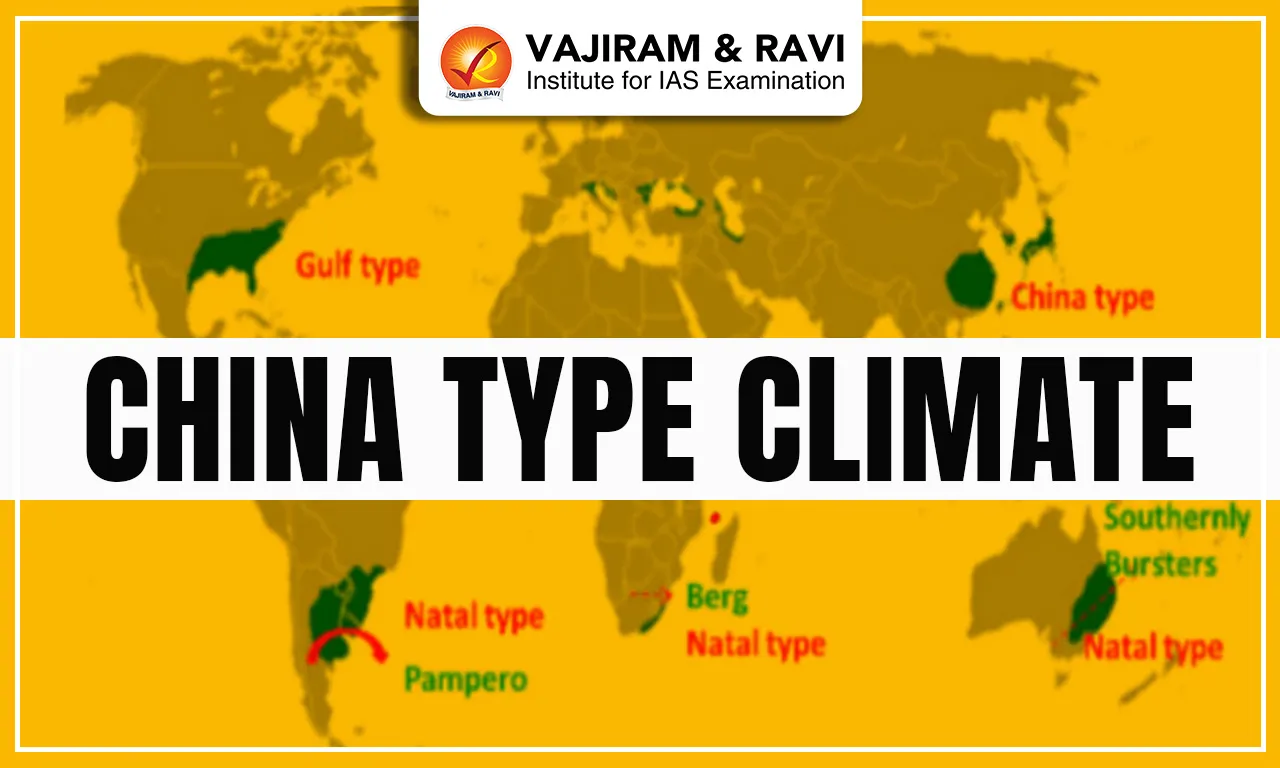
China Type Climate, Vegetation, Map, Season, Characteristics

China Type Climate

The China Type Climate, also known as the Warm Temperate Eastern Margin Climate, is one of the world’s major climatic types characterized by hot, humid summers and cool, dry winters. This climate type plays a vital role in shaping the geography, vegetation, and economy of eastern Asia, especially in China, Korea, and Japan.

China Type Climate

The China Type Climate lies along the eastern coasts of continents between 20° and 35° latitudes in both hemispheres. It is influenced by monsoonal winds, with the summer monsoon bringing heavy rainfall from the ocean and the winter monsoon bringing dry, cold air from inland areas. The climate is often described as subtropical monsoon climate in Asia.

China Type Climate Distribution

The China Type Climate is found mainly in eastern margins of continents in the warm temperate belt. This distribution shows that while the climate is named after China, it has global presence in both hemispheres due to similar latitude and oceanic influence.

Major regions include:

  • Asia: Eastern China, Taiwan, South Korea, Southern Japan
  • North America: Southeastern USA (North Carolina, Georgia, Florida)
  • South America: Southeast Brazil, Uruguay
  • Australia: Southeastern coastal areas (New South Wales, Queensland)

Read About: Equatorial Climate

China Type Climate Map

[my_image src="https://vajiramandravi.com/current-affairs/wp-content/uploads/2025/10/China-Type-Climate-Map.avif" size="full" align="none" alt="China Type Climate Map" title="China Type Climate Map"]

The China Type Climate Map highlights the regions lying between 20°N and 35°N latitudes along the eastern continental margins. It includes eastern and southern China, Korea, Japan, and parts of Taiwan. These areas show clear monsoonal influence, with dense population and agricultural dominance. The map also marks major rivers like the Yangtze and Xi Jiang, vital for farming.

China Type Climate Characteristics

The China Type Climate shows distinct seasonal variations caused by shifting monsoon winds and ocean currents.

Main features:

  • Temperature: Hot, humid summers (25°C-30°C) and mild to cool to cold winters often dropping temperature below freezing points..
  • Rainfall: Annual rainfall ranges between 1000-1500 mm, mostly during summer.
  • Humidity: High in summer due to maritime influence.
  • Seasonality: Four well-defined seasons-spring, summer, autumn, and winter.
  • Typhoons: Late summer and autumn often experience tropical cyclones in coastal China and Japan.

Factors Affecting China Type Climate

Several natural and geographical factors shape the characteristics of this climate:

  1. Monsoonal Influence- The East Asian Monsoon dominates the region, bringing wet summers and dry winters.
  2. Latitude- The region lies in the warm temperate zone, influencing moderate temperature ranges.
  3. Ocean Currents- The Kuroshio (Japan Current) warms eastern coasts, while cold currents reduce temperatures further north.
  4. Topography- The Himalayas act as a massive barrier that prevents the warm, moist monsoonal winds from reaching Central Asia, contributing to the formation of the Gobi and other deserts.
  5. Continental and Maritime Interaction- Inland areas face greater temperature extremes compared to coastal zones.

Read About: Tropical Climate

China Type Climate Vegetation

  1. Natural Vegetation

The vegetation is mainly mixed forests due to moderate rainfall and warm temperatures. Dominant species:

  • Evergreen trees: Camphor, laurel, and magnolia
  • Deciduous trees: Oak, maple, beech, chestnut
  • Conifers: Pine and cypress in cooler regions
  1. Shrubs and Herbs
  • Shrubs: Bamboo, rhododendron, azalea
  • Herbs: Ferns, mosses, and flowering grasses
  1. Soil
  • Red and Yellow soils dominate due to heavy rainfall and leaching.
  • Fertile alluvial soils are found in river basins such as the Yangtze River Valley.
  • The drier and cooler north has different, often more alkaline soils (pedocals), while the wetter and hotter south has leached, more acidic soils (pedalfers).
  1. Fauna
  • Animal species include giant panda, red fox, deer, squirrel, and pheasants.
  • Coastal areas have rich marine biodiversity due to warm currents.

China Type Climate Agriculture

Agriculture is the economic backbone of regions under the China Type Climate. The warm and moist conditions are ideal for crop growth. Double cropping is common, especially in China’s Yangtze and Xi River valleys, due to the long growing season. Main crops include:

  • Rice: Principal summer crop in river plains and deltas.
  • Wheat and Barley: Winter crops in cooler regions.
  • Tea, Silk, and Cotton: Major commercial crops.
  • Sugarcane and Tobacco: Grown in southern parts with high rainfall.
  • Fruits: Citrus, peach, and mulberry thrive in subtropical zones.

China Type Climate Seasons

The China Type Climate experiences four distinct seasons due to its mid-latitude position and the strong influence of monsoons.

  • Spring (March-May): Moderate temperatures (15-20°C) and light rainfall help sowing of early crops.
  • Summer (June-August): Hot and humid; temperatures reach 28-35°C with heavy monsoon rains exceeding 1000 mm, ideal for rice cultivation.
  • Autumn (September-November): Cool, dry, and pleasant; crops sown in winters are harvested.
  • Winter (December-February): Cool to Cold (5-10°C) and dry below freezing point due to continental winds; frost occurs in northern China and Korea.

China Type Climate Human Adaptations

People living in China Type Climate regions have developed ways to adjust to changing temperatures, monsoons, and seasonal variations.

  • Agriculture: Farmers practice double cropping, growing rice in summer and wheat in winter to use the long growing season.
  • Housing: Buildings are designed with sloped roofs and raised platforms to prevent flood damage.
  • Clothing: Lightweight cotton is worn in summer, and layered wool in winter.
  • Infrastructure: Drainage systems and embankments are built to manage monsoon floods.
  • Technology: Urban areas use climate control systems and irrigation technologies for year-round farming efficiency.

Economic Activities in China Type Climate

The regions under the China Type Climate are economically very active and support both agriculture and industry. The warm and wet climate, fertile soil, and long growing season help people engage in multiple forms of economic activities.

  1. Agriculture
  • Major crops include rice, tea, silk, wheat, and cotton.
  • Double cropping is common due to long frost-free seasons.
  • Regions like Yangtze Basin and South China Plain are top farming zones.
  1. Fishing and Forestry
  • Fishing is highly developed in coastal areas of China, Japan, and Korea.
  • Forests provide timber, bamboo, and lacquer, used for crafts and trade.
  1. Industry and Urbanization
  • Cities such as Shanghai, Tokyo, and Seoul have become major industrial and manufacturing hubs.
  • Textile, electronics, and automobile industries are highly developed.
  1. Trade and Ports
  • Large ports like Shanghai, Yokohama, and Busan handle international trade.
  • Coastal trade supports regional development and connects local industries to global markets.

China Type Climate Region Challenges

Despite its productivity, the China Type Climate region faces several environmental and economic challenges:

  1. Floods and Typhoons- Frequent storms cause destruction to crops and settlements.
  2. Droughts in Winter- Dry winters impact water supply.
  3. Soil Erosion- Heavy monsoon rains wash away fertile topsoil.
  4. Urban Pollution- Industrialization leads to severe air and water pollution.
  5. Climate Change Impacts- Rising temperatures and irregular monsoons affect agriculture.

Way Forward:

Addressing these issues requires sustainable practices, climate adaptation, and cooperation between governments to ensure long-term ecological and economic stability in the region.

  • Adopt climate-resilient crops to reduce agricultural losses.
  • Implement integrated water resource management to control floods and droughts.
  • Afforestation and soil conservation programs to prevent erosion.
  • Promote clean energy and pollution control in industrial cities.
  • Enhance regional cooperation for climate monitoring and disaster management.

Impact of Climate Change on China Type Climate

Climate change has started to alter the natural pattern of the China Type Climate, affecting agriculture, rainfall, and living conditions.

  1. Rising Temperatures
  • IPCC report (2022) states regional trends in Asia varied, with some areas experiencing increases between 1°C to 3°C per century.
  • Longer summers and extreme heatwaves are becoming more frequent.
  1. Irregular Rainfall
  • Shifting monsoon patterns cause floods in some areas and droughts in others, disrupting farming cycles.
  1. Increased Typhoons and Storms
  • The frequency of severe typhoons has increased, causing coastal flooding and loss of life.
  1. Agricultural Impact
  • Crops such as rice and wheat face reduced productivity due to heat stress and water shortages.
  1. Threat to Biodiversity
  • Changes in rainfall and temperature threaten forest species, soil fertility, and wildlife habitats.

China Type Climate UPSC 

In 2025, few regions of eastern China and South Korea reported record-breaking summer heatwaves, with average temperatures crossing 38°C, causing water shortages and energy demand spikes. Additionally, Japan and Taiwan faced strong typhoons in July 2025 and Super Typhoon Ragasa, also hit the region in September 2025, resulting in severe coastal flooding and crop damage. These events highlight the growing influence of climate change on China Type Climate regions.

Also Check Other Posts
Coastal Regulation Zone Global Plastic Treaty
Nitrogen Cycle Carbon Cycle

China Type Climate FAQs

Q1: What is China Type Climate?

Ans: It is a warm temperate eastern margin climate with hot, wet summers and cool, dry winters influenced by monsoons.

Q2: Where is China Type Climate found?

Ans: It occurs mainly in eastern China, Japan, Korea, and southeastern USA.

Q3: What are the main crops in China Type Climate?

Ans: Rice, tea, cotton, wheat, and sugarcane are the key crops.

Q4: What vegetation grows in China Type Climate?

Ans: Mixed forests with camphor, oak, pine, bamboo, and magnolia dominate the region.

Q5: What challenges affect China Type Climate regions?

Ans: Floods, typhoons, soil erosion, and climate change are major challenges.

UPSC Daily Quiz 7 October 2025

UPSC Daily Quiz

The Daily UPSC Quiz by Vajiram & Ravi is a thoughtfully curated initiative designed to support UPSC aspirants in strengthening their current affairs knowledge and core conceptual understanding. Aligned with the UPSC Syllabus 2025, this daily quiz serves as a revision resource, helping candidates assess their preparation, revise key topics, and stay updated with relevant issues. Whether you are preparing for Prelims or sharpening your revision for Mains, consistent practice with these Daily UPSC Quiz can significantly enhance accuracy, speed, and confidence in solving exam-level questions.

[WpProQuiz 89]  

UPSC Daily Quiz FAQs

Q1: What is the Daily UPSC Quiz?

Ans: The Daily UPSC Quiz is a set of practice questions based on current affairs, static subjects, and PYQs that help aspirants enhance retention and test conceptual clarity regularly.

Q2: How is the Daily Quiz useful for UPSC preparation?

Ans: Daily quizzes support learning, help in revision, improve time management, and boost accuracy for both UPSC Prelims and Mains through consistent practice.

Q3: Are the quiz questions based on the UPSC syllabus?

Ans: Yes, all questions are aligned with the UPSC Syllabus 2025, covering key areas like Polity, Economy, Environment, History, Geography, and Current Affairs.

Q4: Are solutions and explanations provided with the quiz?

Ans: Yes, each quiz includes detailed explanations and source references to enhance conceptual understanding and enable self-assessment.

Q5: Is the Daily UPSC Quiz suitable for both Prelims and Mains?

Ans: Primarily focused on Prelims (MCQ format), but it also indirectly helps in Mains by strengthening subject knowledge and factual clarity.

Wildlife Conservation Projects in India, List, Challenges, Impact

Wildlife Conservation Projects in India

India, home to nearly 8% of global biodiversity, harbors over 103,258 animals (Zoological Survey of India, 2022) and 55,000 plant species (Botanical Survey of India. 2022). Rapid industrialization, deforestation, and poaching have endangered many species. To protect its ecological heritage, India launched various wildlife conservation projects under the Wildlife (Protection) Act, 1972. These projects aim to preserve critical habitats, ensure species survival, and maintain balance between human activity and biodiversity.

Wildlife Conservation Projects in India

Wildlife conservation projects in India focus on saving endangered species, restoring their natural habitats, and fostering human-wildlife coexistence. These projects are implemented by central and state agencies such as the National Tiger Conservation Authority (NTCA) and Project Elephant Division. As per the WWF Living Planet Report (2022), wildlife populations have globally declined by 69% since 1970, highlighting the urgent need for focused conservation efforts.

List of Wildlife Conservation Projects in India

India has launched several species-specific projects to protect its rich biodiversity and maintain ecological balance. These initiatives involve scientific monitoring, habitat restoration, and community participation. The following are the major wildlife conservation projects in India implemented by the MoEFCC and related authorities:

  1. Project Tiger
  2. Project Elephant
  3. Project Lion
  4. Project Snow Leopard
  5. Project Cheetah
  6. Project Hangul
  7. Project Crocodile
  8. Project Great Indian Bustard
  9. Indian Rhino Vision 2020
  10. Project Dolphin

Project Tiger

Launched in 1973 at Jim Corbett National Park, this project safeguards tigers and their habitats using a core-buffer strategy. It is managed by the National Tiger Conservation Authority (NTCA) under MoEFCC.

  • Tiger Count: 1,411 (2006) → 3,167 (2022); over 75% of global population.
  • Coverage: 53 Tiger Reserves covering 75,000 sq. km.
  • Protection Status:
    • IUCN: Endangered
    • WPA: Schedule I
    • CITES: Appendix I

Project Elephant

Started in 1992, this project conserves elephants and their migration corridors, aiming to minimize human-elephant conflict.

  • Elephant Reserves: 33 across 14 states, covering 76,500 sq. km.
  • Population: Around 29,964 (Census 2017).
  • Key Measures:
    • Radio-collaring for tracking
    • Corridor restoration
    • Welfare of captive elephants
  • Protection Status:
    • IUCN: Endangered
    • WPA: Schedule I
    • CITES: Appendix I

Project Lion

Initiated in 2020, Project Lion focuses on conserving the Asiatic Lion (Panthera leo persica), found exclusively in Gir National Park, Gujarat.

  • Population Increase: 177 (1968) → 891 (2025).
  • Key Measures:
    • Habitat improvement
    • Disease prevention
    • Relocation to Kuno National Park, Madhya Pradesh (not executed completely)
  • Protection Status:
    • IUCN: Vulnerable
    • WPA: Schedule I

Project Snow Leopard 

Launched in 2009, this project protects snow leopards and their fragile high-altitude ecosystems across Jammu & Kashmir (including Ladakh), Himachal Pradesh, Uttarakhand, Sikkim, and Arunachal Pradesh.

  • Population: Around 718 (SPAI 2023; WWF-India & MoEFCC).
  • Focus Areas:
    • Community-based conservation
    • Livelihood diversification
    • Camera-trap monitoring
  • Protection Status:
    • IUCN: Vulnerable
    • WPA: Schedule I
    • CITES: Appendix I

Project Cheetah

Started in 2022, this project aims to reintroduce cheetahs in India after 70 years of extinction.

  • Implementation: MoEFCC & NTCA with Namibia and South Africa.
  • Introduced Cheetahs: The first batch was 8 from Namibia (2022) and later 12 from South Africa (2023), totalling 20 in the initial stages in Kuno National Park.
  • Objectives:
    • Restore grassland ecosystems
    • Establish self-sustaining populations
  • Significance: World’s first intercontinental large-carnivore translocation.
  • Status:
    • IUCN: Vulnerable
    • WPA: Schedule I

Project Hangul

Launched in 1970, this project conserves the Kashmir Red Deer (Cervus hanglu hanglu), once widespread in the Kashmir Valley but now confined to Dachigam National Park.

  • Population: ~3,000-5,000 (1900s) → ≈150 (1970s) → recovered to ~260-290 in recent counts (263 in a 2021 census; some 2023 reports give 289).
  • Key Measures:
    • Habitat restoration
    • Predator management
    • Local community involvement
  • Protection Status:
    • IUCN: Critically Endangered
    • WPA: Schedule I

Indian Crocodile Conservation Project

Started in 1975 with UNDP and FAO support, this project revived India’s three crocodile species- Gharial, Mugger, and Saltwater Crocodile- through breeding and release programs.

Indian Crocodile Conservation Project
Species IUCN Status WPA Major Habitat

Gharial

Critically Endangered

Schedule I

Chambal River

Mugger

Vulnerable

Schedule I

Gujarat, MP

Saltwater

Least Concern

Schedule I

Bhitarkanika, Odisha

Project Great Indian Bustard 

Launched in 2013, the project protects the Great Indian Bustard (Ardeotis nigriceps), one of the world’s heaviest flying birds, now critically endangered.

  • Population: Estimated below 150 (2025); In 2013, the Rajasthan Forest Department cited “not more than 125”.
  • Key Measures:
    • Breeding centre in Jaisalmer
    • Bird diverters on power lines to reduce collision mortality
    • Habitat protection and restoration
  • Protection Status:
    • IUCN: Critically Endangered
    • WPA: Schedule I

Indian Rhino Vision 2020

Launched in 2005, this project aims to expand the one-horned rhino population in Assam to 3,000 by 2022 through translocation and protection. The project formally ended in April 2021, after the final rhino transfers to Manas. Though the full goal of 3,000 across all target sites was not realized, significant gains were made: additional rhino populations in Manas, improved genetic mixing, and strengthened rhino numbers in core sites.

  • Partners: Assam Forest Dept., WWF-India, International Rhino Foundation.
  • Achievements: 4000 (2022)
  • Key Sites: Kaziranga, Manas, Orang, Pobitora.
  • Protection Status:
    • IUCN: Vulnerable
    • WPA: Schedule I

Project Dolphin 

Announced in 2020 and operationalised in 2021, Project Dolphin focuses on conserving the Gangetic River Dolphin (Platanista gangetica), India’s National Aquatic Animal.

  • Population: Around 6327 (2024).
  • Key Rivers: Ganga, Brahmaputra and tributaries.
  • Objectives:
    • Reduce river pollution
    • Improve riverine habitats
    • Community-based awareness programs
  • Protection Status:
    • IUCN: Endangered
    • WPA: Schedule I
  • Taxonomy: Ganges and Indus river dolphins were earlier subspecies; Since 2021 recognized separately.

Wildlife Conservation Projects in India

The summary of the major Wildlife Conservation Projects in India is tabulated below:

Wildlife Conservation Projects in India

Project Name

Launch Year & Implementing Agency

Target Species / Objective

Latest Population / Status

Key Measures / Features

Protection Status

Project Tiger

1973 - NTCA, MoEFCC

Tiger (Panthera tigris)

1,411 (2006) → 3,167 (2022); ~75% of global population

Core-buffer management; 53 Tiger Reserves over 75,000 sq. km; community participation

IUCN: Endangered

WPA: Schedule I

CITES: Appendix I

Project Elephant

1992 - MoEFCC

Asian Elephant (Elephas maximus)

29,964 (Census 2017)

33 reserves across 14 states (76,500 sq. km); corridor restoration; radio-collaring; welfare of captive elephants

IUCN: Endangered

WPA: Schedule I

CITES: Appendix I

Project Lion

2020 - MoEFCC

Asiatic Lion (Panthera leo persica)

177 (1968) → 891 (2025)

Habitat improvement; disease management; proposed relocation to Kuno NP

IUCN: Vulnerable

WPA: Schedule I

Project Snow Leopard

2009 - MoEFCC & GSLEP

Snow Leopard (Panthera uncia)

718 (SPAI 2023) across 5 Himalayan states

Community-based conservation; livelihood diversification; camera-trap monitoring

IUCN: Vulnerable

WPA: Schedule I

CITES: Appendix I

Project Cheetah

2022 - MoEFCC & NTCA (with Namibia & South Africa)

African Cheetah (Acinonyx jubatus) - reintroduction after 70 years

20 cheetahs translocated to Kuno National Park (8 from Namibia in 2022, 12 from South Africa in 2023)

Restore grasslands; ensure genetic viability; world’s first intercontinental carnivore translocation

IUCN: Vulnerable

WPA: Schedule I

Project Hangul

1970 - J&K Forest Dept.

Kashmir Red Deer (Cervus hanglu hanglu)

~150 (1970s) → 263 (2021) → 289 (2023 est.)

Habitat restoration; predator control; local community participation

IUCN: Critically Endangered

WPA: Schedule I

Indian Crocodile Conservation Project

1975 - MoEFCC with UNDP & FAO

Gharial, Mugger, and Saltwater Crocodiles

Gharial: Critically Endangered

Mugger: Vulnerable

Saltwater: Least Concern

Captive breeding & reintroduction programs in Chambal, Gujarat, Odisha

WPA: Schedule I (all species)

Project Great Indian Bustard

2013 - MoEFCC

Great Indian Bustard (Ardeotis nigriceps)

Fewer than 150 (2025)

Breeding centre (Jaisalmer); bird diverters on power lines; habitat restoration

IUCN: Critically Endangered

WPA: Schedule I

Indian Rhino Vision 2020

2005 - Assam Forest Dept., WWF, IRF

One-horned Rhino (Rhinoceros unicornis)

4,000 (2022); target 3,000 achieved partially

Rhino translocation & genetic mixing; Manas, Kaziranga, Orang, Pobitora

IUCN: Vulnerable

WPA: Schedule I

Project Dolphin

2020 (Operational 2021) - MoEFCC

Gangetic River Dolphin (Platanista gangetica)

6,327 (2024)

Reduce river pollution; habitat improvement; awareness programs

IUCN: Endangered

WPA: Schedule I

Impact of Wildlife Conservation Projects in India

Wildlife conservation efforts have significantly strengthened India’s ecological and biodiversity profile.

  • Tiger numbers have more than increased since 2006.
  • Asiatic lions and rhinos show positive population trends.
  • Crocodile and elephant conservation have stabilized species once nearing extinction.
  • Improved habitats have promoted eco-tourism, benefiting local economies.
  • India now ranks as the largest tiger range country and plays a leading role in CITES and CBD global conservation commitments.

Wildlife Conservation Projects in India Challenges

Despite progress, challenges persist in effective wildlife management.

Challenges:

  • Habitat fragmentation and loss due to urbanization.
  • Human-wildlife conflicts in border regions.
  • Poaching and illegal wildlife trade.
  • Climate change affecting species migration and breeding.
  • Limited local awareness and community participation.

Way Forward:

  • Enhance technology-based monitoring (drones, camera traps).
  • Promote community-led conservation models.
  • Strengthen anti-poaching networks and legal frameworks.
  • Integrate wildlife corridors in developmental planning.
  • Expand public awareness and eco-tourism initiatives for sustainable coexistence.

Wildlife Conservation Projects in India UPSC

India has 1014 Protected Areas (MoEFCC 2023) and 24.62% forest cover (ISFR 2021). Key wildlife counts include 3,682 tigers (2022), 29,964 elephants (2017), 891 lions (2025), 4000+ rhinos (2024), and 6,327 dolphins (2024). Conservation is governed by the Wildlife (Protection) Act, 1972, projects are managed by NTCA (2005) and MoEFCC divisions. India participates in global frameworks like CITES, CBD, CMS, and Ramsar Convention. Recent highlights include Project Cheetah (2022), GIB power line order (2021), and Project Dolphin under Namami Gange.

[Note: Different surveys/ censuses report slightly different recent totals (methods and years vary).]

Wildlife Conservation Projects in India FAQs

Q1: What are Wildlife Conservation Projects in India?

Ans: Government-led programs by MoEFCC to protect endangered species and habitats under the Wildlife Protection Act, 1972.

Q2: What is the aim of Project Tiger?

Ans: To conserve Bengal tigers through the core-buffer strategy and habitat restoration.

Q3: Why was Project Cheetah launched?

Ans: To reintroduce cheetahs in India and restore grassland ecosystems in Kuno National Park.

Q4: What does Project Elephant focus on?

Ans: Protecting elephant corridors and reducing human-elephant conflict across India.

Q5: Which crocodiles are conserved under Project Crocodile?

Ans: Gharial, Mugger, and Saltwater Crocodile species through breeding and habitat protection.

Karnak Temple

Karnak Temple

Karnak Temple Latest News

A sweeping new geoarchaeological study has revealed how Egypt’s famed Karnak Temple complex rose from an island amid Nile floods to become one of the ancient world’s most enduring sacred centers.

About Karnak Temple

  • The Karnak Temple, or rather the complex of temples of Karnak in Luxor, Egypt, is one of the most impressive of Ancient Egyptian sites and once formed part of the city of Thebes. 
  • It is located in Karnak, Luxor Governorate, south of Egypt on the east side of the Nile River bank.
  • It was built between 2055 BC and around 100 AD. 
  • It was built as a cult temple and was dedicated to the gods Amun, Mut, and Khonsu. 
  • Being the largest building for religious purposes ever to be constructed, the Karnak Temple was known as “most select of places” by ancient Egyptians. 
  • While the height of its importance was during the New Kingdom, and during the reigns of famous pharaohs such as Hatshepsut, Tuthmose III, Seti I, and Ramesses II, all contributed significant additions to the complex, construction continued into the Greco-Roman Period, with the Ptolemies, Romans, and early Christians all leaving their mark there.
  • Together with the Luxor Temple and the Valley of the Kings, the Karnak Temple is a UNESCO World Heritage site.

Source: SD

Karnak Temple FAQs

Q1: Where is the Karnak Temple located?

Ans: It is located in Karnak, Luxor Governorate, south of Egypt on the east side of the Nile River bank.

Q2: The Karnak Temple complex was primarily built as a temple dedicated to which gods?

Ans: It was built as a cult temple and was dedicated to the gods Amun, Mut, and Khonsu.

Q3: Karnak Temple forms a part of which ancient city?

Ans: Thebes

Viridans Streptococci

Viridans Streptococci

Viridans Streptococci Latest News

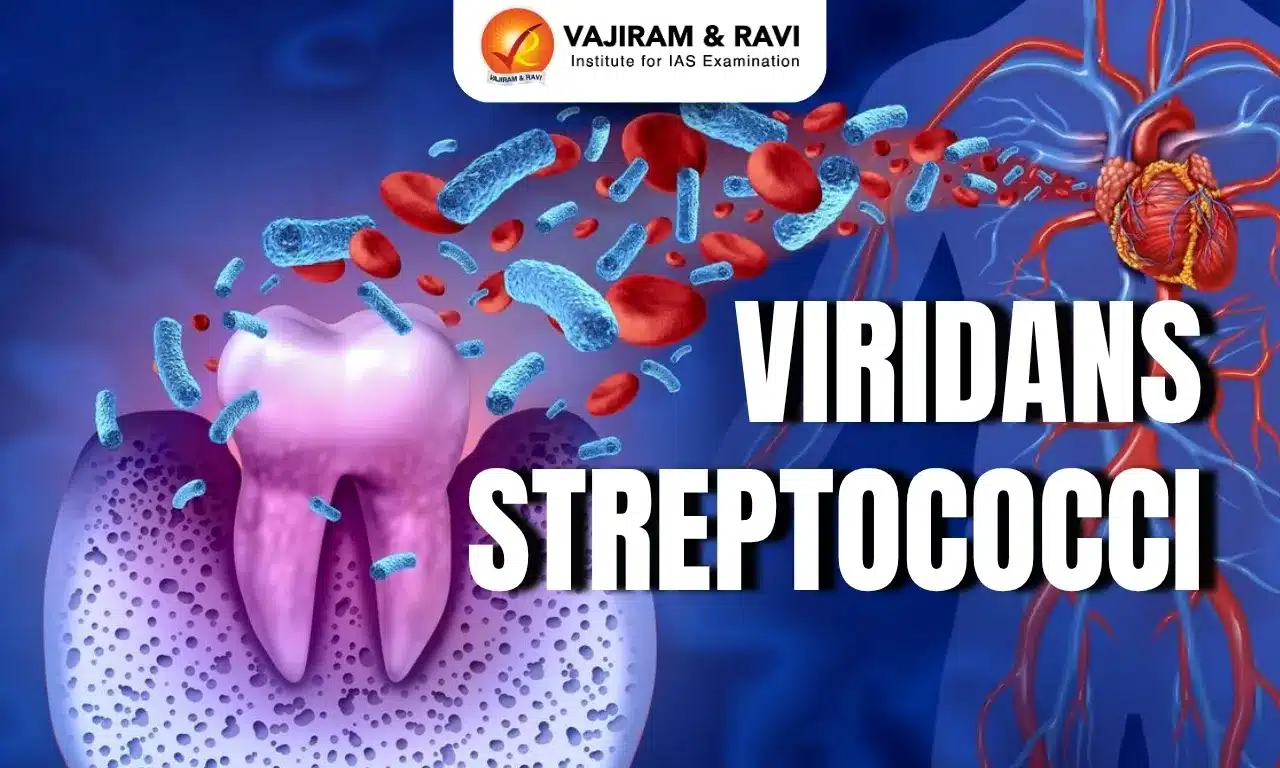
The new study, by a research team at Tampere University in Finland, examined coronary arteries from 121 sudden-death autopsies and found Viridans streptococci were the most frequent species, present in about 42% of both autopsy and surgical cases.

About Viridans Streptococci

  • It is a group of common oral bacteria.
  • It can form sticky bacterial layers called biofilms deep inside atherosclerotic plaques, remaining hidden from the immune system until the moment of rupture. 
  • Viridans streptococci are commensals in the gastrointestinal, respiratory and female genital tracts and are most prevalent in the oral cavity. 
  • It is a group of gram-positive cocci that are commonly associated with infective endocarditis (IE) and typically colonize previously damaged cardiac tissue.
  • Viridans Streptococcal Biofilm Evades Immune Detection and Contributes to Inflammation.
  • Importantly, the bacterial clusters were often arranged in biofilms, protective layers that allow bacteria to survive unnoticed by the body’s immune system.  

How do Oral Bacteria Trigger Heart Attacks?

  • The biofilm formed by this bacteria remains hidden, parts of it can break loose. Once released, the bacteria trigger inflammation in the artery wall.
  • This weakens the fibrous “cap” covering the fatty plaque, making it more likely to rupture.
  • Plaque rupture is a critical event that leads to clot formation and, ultimately, a heart attack.

Source: TH

Viridans streptococci FAQs

Q1: What is a common antibiotic used to treat Viridans Streptococci infections?

Ans: Penicillin.

Q2: What is a significant disease association of Viridans Streptococci?

Ans: Viridans Streptococci are a common cause of endocarditis, particularly in individuals with pre-existing heart conditions

Mig La Pass

Mig La Pass

Mig La Pass Latest News

Recently, Project Himank of the Border Roads Organisation (BRO) has constructed the world’s highest motorable road at Mig La Pass, 19,400 feet above sea level in Ladakh.

About Mig La Pass

  • Mig La Pass is located on the Changthang Plateau in Ladakh. 
  • World Record Altitude: At 19,400 ft, Mig La Pass is the highest motorable road in the world.
  • Strategic Axis: It connects Likaru–Mig La–Fukche, creating the third vital corridor from Hanle to Fukche near the Indo-China border.
  • All-Weather Road: Built with advanced features to withstand harsh winters, shifting glaciers, and oxygen-thin air, making it the highest all-season road globally.

What is Project Himank?

  • The Project was raised on 04 Dec 1985 at Leh for the development of road communication in Ladakh region.
  • The entire area of responsibility of the Project falls in high altitude with challenging working conditions and limited working season.
  • It has the distinction of supporting the Army during various operations undertaken in the region.
  • The Project ensures the maintenance of communication and access to strategic areas close to the Line of Actual Control with China and had been instrumental in keeping both the Leh - Manali and the Zojila axis open during Op VIJAY.
  • It has done yeoman service in restoration of road communication, clearing landslides and avalanches, constructions of bridges, snow clearance and opening of air fields.

Source: News On Air

Mig La Pass FAQs

Q1: Who constructed the Likaru-Mig La-Fukche road?

Ans: Border Roads Organisation (BRO)

Q2: Where is Mig La Pass located?

Ans: Mig La Pass is situated on the Changthang Plateau in Ladakh.

MY Bharat-National Service Scheme (NSS) Awards

MY Bharat-National Service Scheme (NSS) Awards

MY Bharat-National Service Scheme (NSS) Awards Latest News

Recently, the President of India presented the MY Bharat-National Service Scheme (NSS) Awards for the year 2022-23 at Rashtrapati Bhavan.

About MY Bharat-National Service Scheme (NSS) Awards

  • It was instituted by the Ministry of Youth Affairs and Sports in 1993-94.
  • Objective: To honour and celebrate the outstanding contributions of youth in the fields of social service, community development and nation-building.
  • It is given every year to recognise and reward outstanding contributions towards voluntary community service made by the Programme Officers/NSS Units and NSS Volunteers.

Key Facts about National Service Scheme

  • NSS is a Central Sector Scheme which was launched in the year 1969 during the birth centenary celebrations of Mahatma Gandhi.
  • Objective:  The primary objective of developing the personality and character of the student youth through voluntary community service.
  • The ideological orientation of the NSS is inspired by the ideals of Mahatma Gandhi.
  • It provides an opportunity to the student youth of the 11th & 12th Class of schools at +2 Board level and student youth of Technical Institution, Graduate & Post Graduate at colleges and University level of India to take part in various Government led community service activities & programmes.

Source: PIB

MY Bharat-National Service Scheme (NSS) Awards FAQs

Q1: What is my Bharat NSS award?

Ans: It honours and celebrates the outstanding contributions of youth in the fields of social service, community development and nation-building

Q2: What is MY Bharat?

Ans: It is an autonomous body that has been set up by the Department of Youth Affairs, Ministry of Youth Affairs and Sport.

Bhavani River

Bhavani River

Bhavani River Latest News

The Tamil Nadu Forest Department is monitoring an injured makhna (tuskless male elephant) that has been standing in the river Bhavani along the Tamil Nadu-Kerala border.

About Bhavani River

  • It is a major tributary of the Cauvery River.
  • It flows through the states of Kerala and Tamil Nadu.
  • It is the second largest river in Tamil Nadu.
  • Course
    • It originates from the Western Ghats in the Nilgiri Hills, located in the Tiruppur District of Tamil Nadu.
    • From there, it flows into Kerala, passing through the Silent Valley National Park. 
    • After flowing through Kerala, the river turns and flows back into Tamil Nadu.
    • The river confluences with the Cauvery river at the town of Bhavani in Tamil Nadu.
    • Bhavani Sangameshwarar Temple, situated at the meeting point of the Bhavani and the Cauvery Rivers, is a prominent pilgrim center.
  • Total Length: 217 km.
  • It is a perennial river.
  • The drainage basin of the Bhavani River spans approximately 6,200 sq.km., covering parts of Tamil Nadu, Kerala, and Karnataka:
    • Tamil Nadu: 87% of the basin area
    • Kerala: 9% of the basin area
    • Karnataka: 4% of the basin area
  • About 90 percent of the river water is used for agriculture.
  • Tributaries: The largest tributaries of the Bhavani River are West and East Varagar, which come from the Nilgiris. 
  • There are two major dams on the Bhavani River:
    • Bhavani Sagar Dam
    • Kodiveri Dam

Source: TH

Bhavani River FAQs

Q1: The Bhavani River is a major tributary of which river?

Ans: Cauvery River

Q2: Bhavani River flows through which state?

Ans: It flows through the states of Kerala and Tamil Nadu.

Q3: The Bhavani River originates from which hills?

Ans: It originates from the Western Ghats in the Nilgiri Hills.

Q4: What is the total length of the Bhavani River?

Ans: 217 km

Jal Jeevan Mission (JJM)

Jal Jeevan Mission

Jal Jeevan Mission Latest News

The Union government plans to map all drinking water assets including pipelines created under its Jal Jeevan Mission (JJM) on PM Gati Shakti, a Geographic Information System (GIS)-based platform.

About Jal Jeevan Mission

  • It was launched on August 15, 2019.
  • JJM is envisioned to provide safe and adequate drinking water through individual Functional Household Tap Connections (FHTCs) by 2024 to all households in rural India. 
  • It is based on a community approach to water and will include extensive Information, Education and communication as key components of the mission.
  • Nodal Ministry: Ministry of Jal Shakti.

Components of Jal Jeevan Mission

  • Development of in-village piped water supply infrastructure to provide tap water connections to every rural household.
  • Bottom-up planning: Community engagement in planning, implementation and Operation and Maintenance (O&M)
  • Women empowerment: Involvement of women in planning, decision-making, implementation, monitoring, and O&M
  • Focus on future generations: Provision of tap water supply to schools, tribalhostels, and anganwadi (daycare) centers
  • Skill development and employment generation: Local people are skilled for building and maintaining water supply structures
  • Greywater management: Reuse and recycle waste water for source sustenance
  • Source sustainability: Promote groundwater recharge and water conservation
  • Water Quality: Ensure safe drinking water to reduce water-borne ailments

Funding Pattern for Jal Jeevan Mission

  • 50:50 between Centre and States
  • 90:10 for Himalayan and North-Eastern States.
  • In case of UTs, 100% of the funding is provided by the Central government.

 Source: IE

Jal Jeevan Mission FAQs

Q1: When was the Jal Jeevan Mission launched?

Ans: August 15, 2019.

Q2: What is the primary goal of the Jal Jeevan Mission?

Ans: To provide piped water connection to all rural households.

New START Treaty

New START Treaty

New START Treaty Latest News

Recently, US President Donald Trump said that Russian President Vladimir Putin's idea of the New START Treaty was a good one.

About New START Treaty

  • It is known as The New Strategic Arms Reduction Treaty (New START).
  • It is the last remaining nuclear arms deal between Russia and the United States of America, and it was extended for five years in 2021. (Extended the treaty till February 4 2026.)
  • Objective: The New START caps the number of nuclear warheads well below Cold War limits.
  • This treaty entered into force on February 5, 2011
  • The treaty concerns strategic weapons: usually long-range weapons designed to influence the outcome of a war, not merely a battle, by destroying power centres, command and control facilities, or key infrastructure.
  • Timeline of Treaty
    • It was signed by then-presidents Barack Obama and Dmitry Medvedev in Prague in 2010; it came into force in 2011.
    • New START replaced the 1991 START I treaty, which expired in December 2009, and superseded the 2002 Strategic Offensive Reductions Treaty (SORT), which terminated when New START entered into force.
    • Both Russia and the United States announced that they met New START limitations by Feb. 5, 2018.

Source: IE

New START Treaty FAQs

Q1: The New START Treaty is a treaty between which two countries?

Ans: USA and Russia

Q2: What is the primary goal of the New START Treaty

Ans: To limit the number of nuclear warheads

Daily Editorial Analysis 7 October 2025

Daily Editorial Analysis

Calling Out the Criticism of the Indian Judiciary 

Context

  • In societies seeking swift progress, the temptation to find a scapegoat for structural failures is strong and in contemporary India, this tendency has found its latest target in the judiciary.
  • For many within the ruling establishment, the courts have become convenient symbols of inefficiency and obstruction, institutions that supposedly stand in the way of India’s ambitions to become a Viksit Bharat, or developed nation.
  • Yet, this narrative, often repeated by influential policymakers, distorts the judiciary’s role within a constitutional democracy and misdiagnoses the deeper causes of India’s developmental challenges.

Blaming the Judiciary: A Convenient Narrative

  • Sanjeev Sanyal, a member of the Prime Minister’s Economic Advisory Council, recently described the judicial system as the single biggest hurdle to India’s progress.
  • His claim, made at the Nyaya Nirman conference, is emblematic of a broader rhetoric that simplifies complex governance issues into a tale of judicial obstruction.
  • While Sanyal’s call for introspection within the justice system is not entirely misplaced, his critique rests on sweeping generalisations that ignore the judiciary’s structural constraints and the government’s own complicity in creating them.

Flawed Criticisms and Misplaced Blame

  • Sanyal’s argument falters at several points. For instance, his reference to the failure of pre-suit mediations under Section 12A of the Commercial Courts Act, 2015 misattributes legislative inefficacy to judicial enforcement.
  • The provision mandating mediation was not devised by the courts but enacted by Parliament; judges merely apply what legislators enact.
  • Blaming the judiciary for the shortcomings of poorly drafted laws obscures the real issue: the persistent problem of imprecise and reactive law-making in India.
  • Similarly, Sanyal’s so-called 99-to-1 problem, that regulations are overcomplicated to prevent misuse by a minority, misunderstands the source of legal complexity.
  • The judiciary does not create this problem; rather, it inherits it from a legislative process prone to overregulation and vagueness.
  • The courts often serve as the last line of defence when ambiguous laws collide with administrative arbitrariness.

The Government as the Largest Litigant and Myths About Workload and Vacations

  • The Government as the Largest Litigant

    • The inefficiency of India’s justice system cannot be analysed in isolation from the behaviour of its largest litigant, the government itself.
    • Union and State authorities frequently clog court dockets with frivolous or avoidable litigation.
    • Ministries pursue appeals against routine orders, tax departments challenge minor decisions, and public enterprises engage in contractual disputes that could easily be resolved administratively.
    • Ordinary citizens, teachers, pensioners, and public servants, are compelled to litigate for basic entitlements that should be delivered as a matter of course.
    • The resulting backlog is less a failure of judicial lethargy than a reflection of bureaucratic irresponsibility and the absence of litigation discipline within government machinery.
  • Myths About Workload and Vacations

    • Another popular misconception concerns the supposed indolence of judges. Critics often cite short court hours and long vacations as evidence of inefficiency.
    • This perception, however, ignores the invisible labour that underpins judicial work.
    • Judges routinely hear between 50 to 100 cases a day, requiring extensive preparation, research, and deliberation outside formal court hours.
    • Vacations, far from being leisure periods, often serve as time to write reserved judgments and manage pending caseloads.
    • Considering the crushing volume of cases and persistent vacancies, Indian judges work under some of the most demanding conditions in the world.

Broader Problems Faced by Indian Judiciary

  • Structural Flaws in Law-Making

    • Much of the burden on the judiciary arises not from inefficiency but from legislative and administrative incoherence.
    • Recent criminal law reforms, which merely rebranded colonial-era codes as sanhitas without substantive innovation, exemplify the government’s penchant for cosmetic change.
    • Likewise, the proposed Income-Tax Act of 2025, marketed as a simplification effort, merely substitutes one set of technical ambiguities for another.
    • Replacing legally entrenched terms like notwithstanding with irrespective may appear modern, but it generates fresh uncertainty and invites new rounds of litigation.
    • Such instances reveal that the roots of legal confusion lie in imprecise drafting, not in judicial interpretation.
  • The Real Crisis: Under-Resourced Courts

    • Acknowledging the judiciary’s limitations is essential, but criticism must be grounded in reality.
    • Judicial delays are undeniable, yet they stem from chronic underfunding, outdated infrastructure, and inadequate staffing, issues squarely within the executive’s control.
    • Vacancies in the lower judiciary, where most citizens encounter the justice system, remain alarmingly high.
    • These courts bear the brunt of procedural inefficiency, operating with minimal resources while shouldering an overwhelming share of India’s litigation load. Reform, therefore, must begin with capacity building, not vilification.

Conclusion

  • The narrative that India’s judiciary is the single biggest hurdle to development is both misleading and dangerous.
  • It diverts attention from the deeper structural flaws in governance, legislation, and administration.
  • The courts are imperfect, yes, but they mirror rather than create the inefficiencies that plague India’s institutions.

Calling Out the Criticism of the Indian Judiciary FAQs 

Q1. Why blaming the judiciary for India’s slow development is misguided?
Ans. Blaming the judiciary is misguided because many of the system’s problems arise from poor governance, vague laws, and excessive government litigation, not from judicial inefficiency itself.

Q2. What are the examples to show that legislative flaws are wrongly attributed to the courts?
Ans. Section 12A of the Commercial Courts Act, 2015, noting that it was created by Parliament, not by the judiciary, so its failure reflects poor drafting, not judicial obstruction.

Q3. How does the government contribute to judicial delays?
Ans. The government contributes to delays by being the largest litigant, filing unnecessary appeals, and forcing citizens to go to court for basic entitlements.

Q4. What are some common misconceptions about judges’ work?
Ans. Judges handle massive caseloads and often work beyond court hours to write judgments and study cases.

Q5. What is the true path toward a “Viksit Bharat”?
Ans. True progress lies in strengthening judicial independence and improving governance, not in weakening or blaming the courts.

Source: The Hindu


Reforming Passive Euthanasia in India

Context:

  • The U.K.’s proposed Terminally Ill Adults (End of Life) Bill allows physician-assisted dying for mentally competent adults with less than six months to live, pending House of Lords approval. This marks a major ethical and legal step aligning with trends in several Western nations.
  • In contrast, India recognizes only passive euthanasia through Supreme Court rulings, avoiding active euthanasia due to cultural sensitivities, institutional limitations, and socio-economic realities.
  • This article highlights how India, while refraining from adopting active euthanasia like the U.K., must reform its passive euthanasia framework.
  • It explores the ethical, legal, and procedural challenges that make current provisions inaccessible and proposes digital, institutional, and educational reforms to ensure dignity in dying while safeguarding against misuse.

India’s Ethical Conservatism on Euthanasia: Law in Principle, Barriers in Practice

  • While passive euthanasia is legally recognised in India, stringent procedures—advance directives, dual medical boards, and occasional judicial oversight—render it practically inaccessible.
  • Families often make end-of-life decisions informally, exposing doctors to legal risk and undermining the law’s humane intent.
  • In contrast, the U.K.’s progressive model rests on robust healthcare and institutional safeguards.
  • India’s fragmented system, coupled with social and religious sensitivities, makes active euthanasia risky, potentially coercing the vulnerable.
  • Though Article 21 ensures the right to die with dignity, it does not extend to a right to be killed.
  • Hence, India’s cautious stance reflects ethical prudence aligned with its socio-economic realities.

Strengthening India’s Passive Euthanasia Framework through Digital and Ethical Reforms

  • Instead of moving toward active euthanasia, India should improve its passive euthanasia system by making it more humane, transparent, and efficient.
  • Experts agree that the current process is overly complicated.
  • A national digital portal linked with Aadhaar could allow patients to easily create, update, or revoke advance directives, with doctors verifying mental capacity and intent online.
  • Hospital ethics committees—comprising senior doctors, a palliative care specialist, and an independent member—should be empowered to approve life-support withdrawal within 48 hours, while exceptional cases undergo higher review.
  • Rather than relying on slow and ineffective ombudsman models, India could adopt a decentralised oversight mechanism using hospital-based digital dashboards and independent medical auditors.
  • To prevent misuse, essential safeguards like a seven-day cooling-off period, psychological counselling, and palliative care reviews must be retained.
  • Such reforms would balance compassion with caution and align India’s end-of-life care system with global best practices.

Ensuring Dignity in Dying: The Road Ahead for India

  • India must extend its constitutional promise of dignity in life to dignity in dying by making passive euthanasia truly workable.
  • Rather than adopting the U.K.’s active euthanasia model, India should focus on digital reforms, empowering hospital-based ethics committees, and creating efficient yet non-burdensome oversight mechanisms.
  • These measures align with Indian values, protect against misuse, and give patients greater autonomy.
  • Equally important is integrating end-of-life ethics and legal education into medical training, ensuring doctors are equipped to handle such sensitive decisions.
  • Public awareness campaigns should also promote open discussion on advance care planning.
  • Only through trust, awareness, and compassionate implementation can India make its end-of-life care system both humane and effective.

Conclusion

  • India’s focus should remain on refining passive euthanasia through digital systems, ethical oversight, and awareness, ensuring end-of-life care is compassionate, accessible, and consistent with constitutional dignity.

Reforming Passive Euthanasia in India FAQs

Q1. What recent legislative move by the U.K. reignited global debate on euthanasia?

Ans. The U.K.’s Terminally Ill Adults (End of Life) Bill permits physician-assisted dying for competent adults expected to live less than six months, pending final approval.

Q2. How does India’s stance on euthanasia differ from that of the U.K.?

Ans. India recognises only passive euthanasia through Supreme Court rulings, avoiding active euthanasia due to moral, cultural, and institutional constraints.

Q3. Why is passive euthanasia difficult to implement in India?

Ans. Complex procedures involving advance directives, dual medical boards, and judicial oversight make it slow and inaccessible, forcing families to act outside the legal framework.

Q4. What digital reforms are proposed to improve India’s euthanasia process?

Ans. Creating a national Aadhaar-linked portal for advance directives and empowering hospital ethics committees for quick, transparent decisions within 48 hours are key proposals.

Q5. What additional measures are needed to ensure ethical end-of-life care in India?

Ans. Integrating end-of-life ethics in medical training, promoting public awareness, and maintaining safeguards like counselling and cooling-off periods are essential for humane implementation.

Source: TH

Daily Editorial Analysis 7 October 2025 FAQs

Q1: What is editorial analysis?

Ans: Editorial analysis is the critical examination and interpretation of newspaper editorials to extract key insights, arguments, and perspectives relevant to UPSC preparation.

Q2: What is an editorial analyst?

Ans: An editorial analyst is someone who studies and breaks down editorials to highlight their relevance, structure, and usefulness for competitive exams like the UPSC.

Q3: What is an editorial for UPSC?

Ans: For UPSC, an editorial refers to opinion-based articles in reputed newspapers that provide analysis on current affairs, governance, policy, and socio-economic issues.

Q4: What are the sources of UPSC Editorial Analysis?

Ans: Key sources include editorials from The Hindu and Indian Express.

Q5: Can Editorial Analysis help in Mains Answer Writing?

Ans: Yes, editorial analysis enhances content quality, analytical depth, and structure in Mains answer writing.

Black Sea

Black Sea

Black Sea Latest News

Russia recently reported destroying 251 Ukrainian drones overnight, mostly over its southwest and the Black Sea, with one targeting Moscow.

About Black Sea

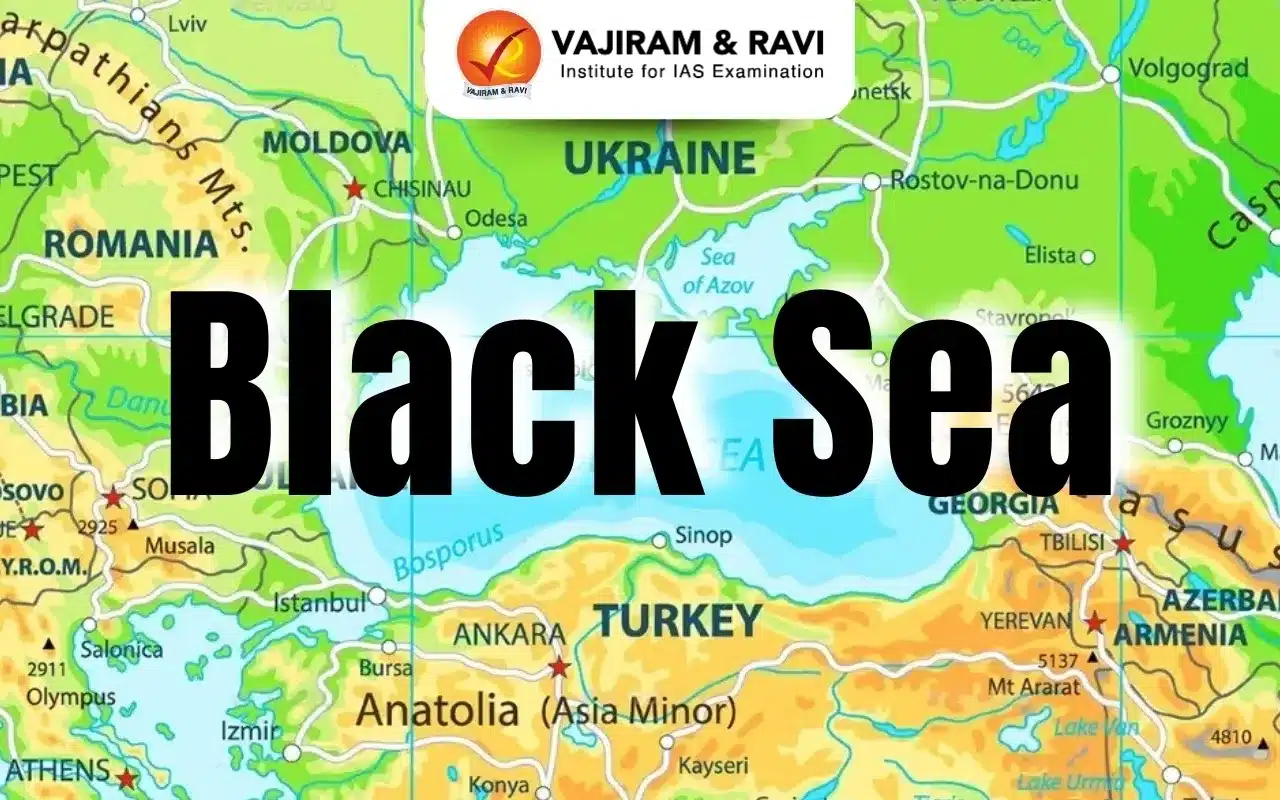
  • It is a large inland sea situated at the southeastern extremity of Europe.
  • It is one of the marginal seas of the Atlantic Ocean.
  • The roughly oval-shaped body of water has a surface area of  436,000 sq.km.
  • Bordering Regions:
    • West: Balkan Peninsula (Southeastern Europe).
    • East: Caucasus Mountains.
    • North: East European Plains (Russia & Ukraine).
    • South: Anatolia (Turkey, Western Asia).
  • Countries bordering the Black Sea are Turkey to the south, Bulgaria and Romania to the west, Ukraine to the north, Russia to the northeast, and Georgia to the east. The Crimean Peninsula juts into the Black Sea from the north.
  • Russia has the longest coastline (2,300 km), followed by Turkey (1,329 km) and Ukraine (1,282 km).
  • It connects to the Aegean Sea (Mediterranean) via the Bosporus Strait, the Sea of Marmara, and the Dardanelles Strait.
  • To its east, the Kerch Strait links the Black Sea to the smaller Sea of Azov. 
  • The Black Sea has lower salinity than the world’s oceans due to isolation from the Mediterranean.
  • Major rivers flowing into it include the Danube, Dnieper, Southern Bug, Rioni, and Dniester.

Environmental and Strategic Importance of the Black Sea

  • World’s Largest Meromictic Basin: 
    • Movement of water between the lower and upper layers of the Sea is rare
    • This creates considerable temperature and nutrient differences between these layers, with the lower layers being absolutely free of oxygen and anoxic. 
    • This complex water chemistry is fueled by extensive freshwater inputs from multiple large rivers and rainfall, with salt water exchanges with the Aegean Sea only through the Bosphorus and Dardanelles Strait.
  • Anoxic zones: One of the largest anoxic basins, meaning low dissolved oxygen in deeper layers, affecting marine biodiversity.
  • Crucial for global trade, particularly for Russia and Ukraine’s grain and energy exports.
  • NATO and Russia frequently conduct naval operations in the region.
  • Russia’s Black Sea Fleet is stationed in Sevastopol, Crimea, making the region highly militarized.
  • Key Islands: Snake Island (Ukraine); Giresun Island (Turkey); St. Ivan Island (Bulgaria).

Source: ET

Black Sea FAQs

Q1: The Black Sea is a marginal sea of which ocean?

Ans: Atlantic Ocean

Q2: Which countries border the Black Sea to the north?

Ans: Ukraine and Russia

Q3: Which mountain range borders the Black Sea to the east?

Ans: Caucasus Mountains

Q4: The Black Sea connects to the Aegean Sea through which straits?

Ans: It connects to the Aegean Sea (Mediterranean) via the Bosporus Strait, the Sea of Marmara, and the Dardanelles Strait.

Male Mahadeshwara Wildlife Sanctuary

Male Mahadeshwara Wildlife Sanctuary

Male Mahadeshwara Hills Wildlife Sanctuary Latest News

Another 12-year-old male tiger was brutally hunted, dismembered, and buried at Male Mahadeshwara Wildlife Sanctuary recently, four months after a previous poisoning incident.

About Male Mahadeshwara Hills Wildlife Sanctuary

  • It is located at the intersection of the Western and the Eastern Ghats and falls in the Chamarajanagara District of Karnataka.
  • It was declared a wildlife sanctuary in 2013.
  • It is contiguous to Biligiri Rangaswamy Temple (BRT) Tiger Reserve, Sathyamangalam Tiger Reserve, and the Cauvery Wildlife Sanctuary.
  • It's the home of the famous Male Mahadeshwara Temple, dedicated to Lord Shiva, known here as Mahadeshwara.
  • Male Mahadeshwara Hills is bound by the Kaveri River to the northeast and by the Palar River to the south.
  • Vegetation: The forests of MM Hills Wildlife Sanctuary are principally of the dry deciduous type, degrading to scrub forest in the fringe areas, and are interspersed with patches of moist deciduous, semi-evergreen, evergreen and shola forests occurring at varying altitudes.
  • Flora: Anogeissus latifolia, Boswellia serrata, Hardwikia binata and Chloroxylon swietenia etc.
  • Fauna
    • It is home to several animals, including elephants, Indian bison, wild dogs, leopards, foxes, sambars, spotted deer, and many species of birds.
    • It is also a tiger habitat noted for its increasing number of tigers.

Source: TOI

Male Mahadeshwara Hills Wildlife Sanctuary FAQs

Q1: In which state is the Male Mahadeshwara Hills Wildlife Sanctuary located?

Ans: Karnataka

Q2: Which river forms the northeastern boundary of the Male Mahadeshwara Hills Wildlife Sanctuary?

Ans: Kaveri River

Q3: What type of vegetation is predominant in the Male Mahadeshwara Hills Wildlife Sanctuary?

Ans: Dry deciduous forests

Delhi’s Air Pollution Explained: How the DSS Tracks the Real Polluters

Delhi Air Pollution

Delhi Air Pollution Latest News

  • As Delhi braces for its annual winter air pollution spike, the Decision Support System (DSS) for Air Quality Management has been reactivated. 
  • Developed by the Indian Institute of Tropical Meteorology (IITM), Pune, the DSS uses numerical models to identify and estimate daily contributions of different pollution sources — including vehicles, industries, dust, and farm fires — to particulate matter levels (PM2.5 and PM10).
  • It also projects how various emission-control measures could impact air quality. 
  • While recent rain and winds have temporarily kept pollution levels low, officials warn that cooler temperatures, shifting wind patterns, and increasing stubble burning in Punjab and Haryana are likely to worsen air quality in the coming weeks.

What’s Choking Delhi’s Air: Farm Fires or Traffic 

  • According to Decision Support System (DSS) data, farm fires have so far contributed minimally to Delhi’s pollution
  • On October 5, stubble burning accounted for only 0.22% of PM2.5 levels, and on October 6, it contributed nothing at all, based on VIIRS satellite data that track active fire counts.
    • VIIRS, or Visible Infrared Imaging Radiometer Suite, is a set of instruments aboard polar-orbiting weather satellites that produce data streams that monitor changes in surface vegetation, including fires.
  • Though paddy harvesting has started in Punjab, the Indian Agricultural Research Institute (IARI) reported no residue burning events across six states on October 6, and only 210 fires since September 15 — far below previous years.
  • At present, transport emissions are the biggest source of Delhi’s pollution
  • Other contributors include residential sources (4–5%) and industries (3–5%), underscoring that urban emissions, not farm fires, currently dominate Delhi’s air pollution.

How the DSS Tracks and Forecasts Delhi’s Pollution

  • The Decision Support System (DSS), developed by IITM Pune, operates on a 10-km horizontal grid to generate five-day forecasts and insights on Delhi’s air quality. 
  • It quantifies:
    • how emissions from Delhi and 19 neighbouring districts affect the city’s air;
    • the share of eight key emission sectors (like transport, industries, and households) in Delhi’s pollution;
    • the impact of biomass burning in nearby states; and
    • how emission-control measures could influence severe pollution events.
  • The DSS also uses climatological fire and emission data to predict short-term pollution levels. 
  • However, it currently runs only during winter, limiting year-round tracking. 
  • The Council on Energy, Environment and Water (CEEW) has recommended continuous operation and advanced modelling to make it more effective.

DSS Accuracy Questioned Amid Outdated Emissions Data

  • Experts have raised concerns over the accuracy of the Decision Support System (DSS) due to its reliance on a four-year-old emissions inventory from 2021, which affects the precision of source-wise pollution estimates.
  • According to IITM officials, a new emissions inventory is being prepared to improve forecasting accuracy. 
  • Environmental researchers stressed that updated, real-time data are vital for implementing targeted pollution-control measures.
  • Last year, the Commission for Air Quality Management (CAQM) had temporarily suspended the DSS over data reliability issues, but it remains the only active system providing source-wise pollution analysis for Delhi. 
  • IITM maintains that once the new dataset is integrated, the DSS’s estimates will become significantly more accurate and reliable.

Source: IE | ToI

Delhi Air Pollution FAQs

Q1: What is the Decision Support System (DSS)?

Ans: The DSS is a modelling tool developed by IITM Pune to identify and forecast the contribution of different pollution sources to Delhi’s air quality.

Q2: Which source contributes most to Delhi’s air pollution now?

Ans: Currently, the transport sector is the largest contributor to PM2.5 levels, followed by residential and industrial emissions, according to DSS data.

Q3: How does DSS forecast pollution?

Ans: It runs on a 10-km grid, using emissions and climatological data to provide five-day forecasts and sector-wise contributions to air pollution.

Q4: Why is DSS data questioned?

Ans: Experts say DSS relies on a four-year-old emissions inventory from 2021, which can reduce the accuracy of its real-time source attribution.

Q5: How can the DSS be improved?

Ans: Researchers recommend updating emissions data and operating DSS year-round to strengthen forecasting accuracy and inform policy decisions.

Tomahawk Missile

Tomahawk Missile

Tomahawk Missile Latest News

Russian President Vladimir Putin recently warned that US President Donald Trump would severely damage relations between Washington and Moscow if he approved the delivery of long-range Tomahawk missiles to Ukraine.

About Tomahawk Missile

  • It is an American-made long-range cruise missile used for deep land attack warfare.
  • It is launched from ships or submarines through a Vertical Launch System.
  • Tomahawks were first deployed in combat during Operation Desert Storm in 1991. Since then, they have been used in several major conflicts, including strikes in Syria in 2017.

Tomahawk Missile Features

  • Tomahawks measure 18.3 feet in length and weigh about 3,200 pounds (4,400 with booster). 
  • They carry a 1,000-pound conventional warhead or cluster munitions.
  • It is powered by a solid propellant during its launch phase. Thereafter, it is powered by a turbofan engine that does not emit much heat, which makes infrared detection difficult.
  • It flies at low altitudes to strike fixed targets, such as communication and air-defense sites, in high-risk environments where manned aircraft may be vulnerable to surface-to-air missiles.
  • Tomahawks are guided by advanced GPS, inertial navigation, and terrain contour mapping. 
  • This makes them highly accurate-with a margin of error of just 10 meters. 
  • They are built to follow a non-linear path, reducing the chance of interception.
  • It has a range of up to approximately 2,400 km and can travel as fast as 885 km per hour.
  • Each Tomahawk missile reportedly costs around $2 million.

Source: TI

Tomahawk Missile FAQs

Q1: What type of missile is the Tomahawk?

Ans: It is a long-range, subsonic cruise missile.

Q2: Which country developed the Tomahawk missile?

Ans: United States

Q3: What is the approximate range of a Tomahawk missile?

Ans: 1,550–2,500 km

Q4: What feature allows the Tomahawk missile to avoid radar detection?

Ans: Low-altitude flight and non-linear paths

Q5: What is the estimated cost of a single Tomahawk missile?

Ans: $2 million

Nobel Prize 2025 in Medicine: How Scientists Unlocked the Body’s Immune Secrets

Nobel Prize in Medicine

Nobel Prize in Medicine Latest News

  • The 2025 Nobel Prize in Physiology or Medicine, the first of this year’s awards, has been jointly given to Mary E. Brunkow and Fred Ramsdell of the USA, and Shimon Sakaguchi of Japan, for their groundbreaking discoveries on the human immune system.
  • Their work represents two interconnected phases — Sakaguchi’s earlier research laid the foundation, while Brunkow and Ramsdell’s later findings complemented and completed it, together advancing understanding of immune regulation and tolerance. 
  • The Medicine Prize traditionally opens the Nobel season, followed by those for Physics, Chemistry, Literature, Peace, and Economics.

The Discovery: Key Cells That Prevent the Body from Attacking Itself

  • The 2025 Nobel Prize in Medicine laureates — Mary Brunkow, Fred Ramsdell, and Shimon Sakaguchi — were honoured for discovering the mechanism of peripheral immune tolerance
  • Their research revealed regulatory T cells, the body’s “immune security guards,” which prevent immune cells from attacking healthy tissues. 
  • This breakthrough has been crucial to understanding autoimmune diseases and developing targeted therapies for immune-related disorders and cancers.
    • For years, scientists were puzzled by how the immune system fights infections without harming the body’s own cells. 
    • By the 1980s, they understood central tolerance, where self-reactive T cells are eliminated. But this couldn’t explain all immune regulation.
    • In 1995, Shimon Sakaguchi provided groundbreaking evidence for a special class of T cells, later called regulatory T cells, which act as “police” preventing other T cells from attacking healthy tissues.

Read About: Nobel Prize Winners 2025

The Immune System and the Discovery of Regulatory T Cells

  • The immune system protects the body from thousands of microbes daily, distinguishing between harmful invaders and the body’s own healthy cells. 
  • When this identification fails, it leads to autoimmune diseases or organ transplant rejection.
  • T cells are central to this defence: helper T cells detect threats, while killer T cells destroy them. 
  • Traditionally, scientists believed the thymus gland ensured immune tolerance by filtering out self-attacking T cells — a process called central tolerance.
  • However, the 2025 Nobel laureates — Mary Brunkow, Fred Ramsdell, and Shimon Sakaguchi — discovered an additional layer of control.
  • This control involved regulatory T cells, which act as immune system “security guards”, preventing other T cells from attacking the body’s own tissues. 
  • This breakthrough transformed the understanding of immune regulation and opened new paths for treating autoimmune and transplant-related disorders.

Shimon Sakaguchi’s Discovery of Regulatory T Cells

  • In the mid-1990s, Shimon Sakaguchi challenged prevailing scientific views by proposing that certain specialised T cells act as “security guards” of the immune system, preventing excessive immune reactions.
  • Through experiments on mice without a thymus, into which mature T cells were later injected, he identified a unique class of cells — now known as regulatory T cells — that suppress other T cells attacking the body’s own tissues.
  • Although initially overlooked due to skepticism from earlier unconvincing studies, Sakaguchi’s insight later became a cornerstone of modern immunology, redefining how the body maintains self-tolerance.

Brunkow and Ramsdell Linked the FOXP3 Gene to Immune Regulation

  • Working independently from Sakaguchi, Mary Brunkow and Fred Ramsdell studied sick male mice and traced their condition to a mutation linked to a rare human autoimmune disorder called IPEX. 
  • Both the mouse disease and IPEX were caused by defects in the FOXP3 gene.
  • Subsequent research confirmed that the FOXP3 gene is crucial for the development of regulatory T cells — the same immune “security guards” that Sakaguchi had discovered earlier. 
  • Together, their complementary findings explained how the immune system maintains self-tolerance and laid the scientific foundation for the 2025 Nobel Prize in Medicine.

How the Nobel-Winning Discoveries Are Transforming Medicine

  • The discoveries of regulatory T cells and the FOXP3 gene have revolutionised immune-regulation research, opening new therapeutic pathways for several major diseases.
  • In cancer, scientists are exploring ways to block regulatory T cells that shield tumours from immune attacks, helping the body’s defences target cancer cells more effectively.
  • In contrast, for autoimmune diseases, treatments aim to enhance regulatory T cell activity to suppress harmful immune responses that damage healthy tissues.
  • These insights are also improving organ transplant success, helping prevent rejection by fine-tuning the immune system’s response. 
  • Overall, the discoveries have laid the groundwork for precision immunotherapy and targeted treatment innovations.

Source: IE | IE | TH

Nobel Prize in Medicine FAQs

Q1: Who won the 2025 Nobel Prize in Medicine?

Ans: Mary Brunkow, Fred Ramsdell, and Shimon Sakaguchi won for discoveries revealing how the immune system prevents attacking the body’s own cells.

Q2: What did the laureates discover?

Ans: They identified regulatory T cells and the FOXP3 gene, explaining how the immune system maintains balance and prevents autoimmune diseases.

Q3: What is the role of regulatory T cells?

Ans: Regulatory T cells act as “security guards,” stopping other T cells from attacking healthy tissues and maintaining immune tolerance.

Q4: Why is the FOXP3 gene important?

Ans: The FOXP3 gene controls the development of regulatory T cells; mutations in it cause autoimmune disorders like IPEX syndrome.

Q5: How do these discoveries impact medicine?

Ans: Their work underpins new immunotherapies — weakening regulatory T cells to fight cancer, or boosting them to treat autoimmune diseases and aid transplants.

MGNREGA – Centre Mandates Minimum Spending on Water Conservation Works

MGNREGA

MGNREGA Latest News

  • The Ministry of Rural Development (MoRD) has amended Schedule-I of the Mahatma Gandhi National Rural Employment Guarantee Act (MGNREGA), 2005.
  • This is to ensure a minimum proportion of funds is allocated for water conservation and harvesting works across rural India. 
  • The amendment aims to address India’s deepening groundwater crisis and promote sustainable rural livelihoods.

Background - Understanding Schedule-I of MGNREGA

  • MGNREGA provision: Every state government shall introduce a scheme to provide at least 100 days of guaranteed employment in a financial year to every rural household, based on demand.
  • Schedule-I: Lists permissible public works and defines the scheme’s minimum features.
  • Amendment power: While changes to the Act need Parliament’s approval, the Centre can amend the Schedule via notification (issued by the Ministry of Rural Development [MoRD]) — done nearly 24 times since 2005.

The Latest Amendment

  • The amendment inserts a new proviso mandating minimum expenditure on water-related works at the block level, depending on groundwater status.
  • Earlier, 60% of district-level works (in terms of cost) had to create productive assets directly linked to agriculture and allied activities through development of land, water and trees.
  • Now, the focus has shifted from district-level to block-level implementation.
  • Proportion of expenditure on water works: Categories as per -
    • For over-exploited rural blocks (groundwater extraction>100%), minimum 65% of MNREGA funds for water-related works.
    • For critical rural blocks (90–100%) - 65%
    • For semi-critical (70–90%) - 40%
    • For safe (≤70%) - 30%
  • Reference of (above) categorisation: 
    • The Central Ground Water Board’s (CGWB) Dynamic Ground Water Resources Assessment Report (2024) serves as the reference for categorisation.
    • As per CGWB’s report, there are total 6,746 blocks, out of which -
      • Over-exploited blocks are 751 (11.13%)
      • Critical: 206 (3.05%)
      • Semi-critical: 711 (10.54%)
      • Safe: 4,951 (73.39%)
      • Saline: 127 blocks

Likely Benefits of the Decision

  • Out of the Rs 86,000 crore allocated for MGNREGS in FY 2025–26, about Rs 35,000 crore is expected to be directed toward water-related works.
  • The states with the highest number of over-exploited and critical blocks will gain the most funds - Rajasthan (214), Punjab (115), Tamil Nadu (106), Haryana (88), Uttar Pradesh (59).

Significance for Rural India

  • Encourages climate-resilient rural infrastructure.
  • Aligns MGNREGA with the Jal Shakti Abhiyan and Atal Bhujal Yojana.
  • Reduces groundwater stress through community-based interventions.
  • Promotes employment generation in water management sectors.

Way Forward

  • Integrated planning: Convergence with schemes like PM Krishi Sinchayi Yojana (PMKSY) and watershed programmes.
  • Capacity building: Training for Gram Sabhas and local engineers for scientific water management.
  • Monitoring and transparency: Use of GIS mapping and real-time dashboards for implementation tracking.
  • Sustainability focus: Promote recharge structures, afforestation, and soil-water conservation.

Conclusion

  • The amendment marks a strategic shift in India’s rural employment and water management framework. 
  • By linking MGNREGA works to groundwater sustainability, the government seeks to tackle one of India’s most pressing environmental challenges while strengthening rural livelihoods and climate resilience. 
  • Effective execution at the block and Gram Panchayat levels will be crucial for realising these objectives.

Source: IE

MNREGA FAQs

Q1: Why did the Centre amend Schedule-I of the MGNREGA, 2005?

Ans: The amendment mandates a minimum expenditure on water conservation and harvesting works to address groundwater depletion.

Q2: What are the key changes introduced in the recent amendment to Schedule-I of MGNREGA?

Ans: The Centre has specified block-level minimum spending targets on water-related works—65% for over-exploited/critical, etc., based on CGWB categorisation.

Q3: How does the Central Ground Water Board (CGWB) classify blocks under the new framework?

Ans: Blocks are classified as Over-exploited (>100% extraction), Critical (90–100%), Semi-critical (70–90%), and Safe (≤70%).

Q4: Which states are expected to benefit most from the amended MGNREGA norms?

Ans: States like Rajasthan, Punjab, Tamil Nadu, Haryana, and UP will benefit most due to their high number of over-exploited groundwater blocks.

Q5: How does the MGNREGA amendment contribute to India’s broader water security goals?

Ans: By ensuring targeted investments in water conservation, the amendment strengthens groundwater recharge and promotes sustainable agriculture.

Securities Transaction Tax – Explained

Securities Transaction Tax

Securities Transaction Tax Latest News

  • The Supreme Court has agreed to examine the constitutional validity of the Securities Transaction Tax (STT) under the Finance Act, 2004, following a petition alleging that the levy amounts to double taxation and violates fundamental rights.

About Securities Transaction Tax (STT)

  • The Securities Transaction Tax (STT) is a direct tax levied on the purchase and sale of securities listed on recognised stock exchanges in India. 
  • Introduced through the Finance Act of 2004, STT was designed to simplify taxation on securities trading and curb tax evasion in the capital market. 
  • It is administered by the Central Board of Direct Taxes (CBDT) under the Ministry of Finance.

Objective and Rationale

  • Before 2004, profits from stock market trading were taxed under capital gains, but tax evasion was rampant due to underreporting of transactions. 
  • STT was introduced to create a transparent and traceable mechanism for collecting taxes on market transactions. 
  • The idea was to impose a small, upfront tax at the point of transaction, ensuring tax compliance and generating consistent revenue for the government.
  • Essentially, STT acts as a Transaction-Based Tax (TBT), collected automatically when a security is traded, making it difficult to evade. 
  • This has improved tax buoyancy from capital market activities and reduced speculative trading in the long term.

Structure and Applicability

  • STT applies to transactions executed on recognised stock exchanges involving:
    • Equity shares of listed companies.
    • Derivatives, including futures and options.
    • Equity-oriented mutual funds (purchase and sale of units).
    • Equity-oriented ETFs (Exchange-Traded Funds).
  • The rates of STT vary depending on the type of transaction and whether it is a purchase or sale
  • STT is automatically deducted by the stock exchange and deposited into the government’s account, ensuring administrative simplicity and minimal scope for evasion.

Impact on Investors and Traders

  • While STT has streamlined the taxation process and improved compliance, its impact varies across investor categories:
    • Long-term investors view STT as manageable, given that it simplifies reporting and exempts them from certain documentation.
    • High-frequency traders and day traders, however, argue that STT increases transaction costs and reduces profit margins, particularly for intraday or derivative trading where profit spreads are minimal.
    • Unlike Tax Deducted at Source (TDS), STT is non-refundable, even if the trader incurs losses. This makes it punitive for loss-making transactions, as the tax applies to all trades, irrespective of profit or loss.
  • Despite these concerns, STT has been a steady revenue contributor, generating over ₹30,000 crore annually for the central exchequer in recent years.

News Summary

  • On October 6, 2025, the Supreme Court of India decided to examine the constitutional validity of the Securities Transaction Tax (STT) under the Finance Act, 2004
  • The Court issued a formal notice to the Union Government, specifically the Ministry of Finance, seeking its response to the petition.

Key Grounds of the Challenge

  • Violates Fundamental Rights: The tax allegedly infringes on the fundamental rights to equality (Article 14), the right to trade or practice a profession (Article 19(1)(g)), and the right to livelihood and dignity (Article 21).
  • Constitutes Double Taxation: The petitioner argues that market participants already pay Capital Gains Tax on profits from trading, and paying STT on the same transaction constitutes double taxation.
  • Arbitrary and Unjustified: The plea highlights that STT is imposed irrespective of profit or loss. A trader operating at a loss must still pay STT, making it punitive in nature and equivalent to taxing the act of the profession itself.
  • Lacks Refund Provisions: Unlike TDS, which is adjusted or refunded at the end of the financial year, STT offers no such provision for refund, even in the case of losses or no gains.
  • The petition also pointed out that while STT was initially introduced as a deterrent to tax evasion, its continued imposition without adjustment mechanisms has led to unfair tax burdens on retail and professional traders alike.

Background and Judicial Context

  • The STT has been in force since 2004 and has faced criticism from sections of market participants, though previous challenges were dismissed as policy matters. 
  • This fresh petition, however, brings constitutional arguments into focus, prompting the Supreme Court to scrutinise its fairness and proportionality under Article 265, which states that no tax shall be levied or collected except by authority of law.
  • If the court finds merit in the arguments, it could potentially redefine the legal basis of transaction-based taxes in India.

Possible Implications

  • A ruling against the tax could affect government revenue streams and compel a redesign of securities taxation.
  • Alternatively, the Court could uphold STT but recommend procedural reforms, such as introducing refund or offset mechanisms similar to TDS.
  • The verdict will likely set a precedent for how transactional taxes are treated under the constitutional framework of economic equality and fairness.

Source: TH

Securities Transaction Tax FAQs

Q1: What is the Securities Transaction Tax (STT)?

Ans: STT is a direct tax levied on the purchase and sale of securities listed on recognized stock exchanges in India.

Q2: When was STT introduced in India?

Ans: STT was introduced through the Finance Act of 2004 to prevent tax evasion and ensure transparency in market transactions.

Q3: Why is the constitutional validity of STT being challenged?

Ans: The Supreme Court is reviewing a petition claiming that STT violates fundamental rights and results in double taxation.

Q4: Who filed the petition against STT?

Ans: The petition was filed by Aseem Juneja, a stock market trader, through advocate Siddhartha K. Garg.

Q5: What could be the implications of the Supreme Court’s ruling on STT?

Ans: The verdict could lead to reforms in securities taxation, refund provisions, or potential changes in government revenue mechanisms.

Maharishi Valmiki Jayanti 2025, Biography, Contributions, Philosophy

Maharishi Valmiki Jayanti 2025

Maharishi Valmiki Jayanti, also known as Pargat Diwas, is celebrated to honor the birth anniversary of Sage Valmiki, the revered author of the epic Ramayana and regarded as the Adi Kavi (first poet) of Sanskrit literature. This occasion highlights India’s deep-rooted literary, cultural, and moral traditions, making it an event of immense religious, historical, and social significance across the country.

Maharishi Valmiki Jayanti 2025

Maharishi Valmiki Jayanti falls on the full moon day (Purnima Tithi) of the Hindu month of Ashwin, corresponding to September-October in the Gregorian calendar. In 2025, the festival will be celebrated on 7 October, with the Purnima Tithi beginning at 12:23 PM on 6 October and ending at 9:16 AM on 7 October (Drik Panchang, 2025). Devotees observe the day with prayers, Ramayana recitations, and charitable activities symbolizing compassion and enlightenment.

Maharishi Valmiki Biography

Valmiki was originally known as Ratnakar, a highway robber who plundered travelers. Legend holds he encountered Narada Muni, who challenged him morally. Ratnakar attempted to chant “Rama” but found it difficult; Narada asked him to chant “Mara” (which reversed becomes Rama). Through prolonged meditation, a divine voice finally acknowledged his penance, and anthills formed around him, giving him the name Valmiki (from Sanskrit valmika meaning “anthill”). In this transformation, he shifted from a life of violence to deep spiritual penance, a powerful symbol of redemption and inner change.

Maharishi Valmiki Personal Details
Aspect Description

Original Name

Ratnakar

Spiritual Name

Maharishi Valmiki

Birthplace

Near River Tamasa, present-day Uttar Pradesh

Era

Treta Yuga

Title

Adi Kavi (First Poet)

Major Work

Ramayana (24,000 verses, 7 Kandas)

Disciples

Lava and Kusha

Philosophy

Dharma, Compassion, Self-Realization

Maharishi Valmiki Contributions

Maharishi Valmiki’s intellectual and spiritual contributions have shaped India’s cultural and moral foundation. His legacy extends beyond literature into ethics, philosophy, and universal human values.

  1. Composition of the Ramayana
  • Valmiki authored the Ramayana, consisting of 24,000 verses across seven Kandas, narrating Lord Rama’s life as an ideal human and ruler.
  • The epic is India’s first classical poem and forms the moral and philosophical core of Hindu civilization.
  1. Foundation of Sanskrit Poetry
  • He introduced the Shloka metre, marking the beginning of Sanskrit poetic tradition.
  • This innovation earned him the title Adi Kavi, establishing the literary framework for future Indian poets.
  1. Ethical and Moral Teachings
  • Valmiki’s writings emphasize truth, compassion, self-discipline, and righteous conduct.
  • His portrayal of Lord Rama as Maryada Purushottama sets standards of virtue, leadership, and duty.
  1. Global Literary Influence
  • The Ramayana inspired literary works across Asia:
    • Indonesia (Kakawin Ramayana),
    • Thailand (Ramakien),
    • Cambodia (Reamker).
  • UNESCO recognizes Ramayana traditions as part of Intangible Cultural Heritage of Humanity, showcasing Valmiki’s global impact.

Maharishi Valmiki Jayanti Significance

Valmiki Jayanti carries immense cultural and social importance, representing values of transformation, equality, and devotion. It serves as a bridge between India’s ancient wisdom and its modern moral fabric.

  1. Symbol of Moral Transformation
  • Valmiki’s transformation from sinner to saint exemplifies the human ability to overcome ignorance and achieve self-realization.
  • The story inspires moral introspection and reformation in society.
  1. Celebration of Equality and Learning
  • Among the Balmiki community, the day is celebrated as Pargat Diwas, reflecting social pride and inclusion.
  • Cultural events, community gatherings, and literacy drives promote empowerment and education.
  1. Cultural Heritage and Continuity
  • Valmiki Jayanti reinforces the continuity of India’s epic tradition and oral culture.
  • Temples and cultural centers conduct Ramayana readings, plays, and exhibitions that sustain India’s collective memory.
  1. Government Initiatives
  • The Ministry of Culture promotes Valmiki Jayanti under its cultural preservation programs.
  • The Ramayana Circuit (Swadesh Darshan Scheme) includes Valmiki heritage sites to enhance spiritual tourism.
  • The Bhagwan Valmiki Tirath Sthal renovation in Amritsar (2016) has become a major national pilgrimage destination.
  1. Recent Developments
  • In 2025, during Mann Ki Baat, Prime Minister Narendra Modi encouraged pilgrims visiting Ayodhya to also visit the newly established Valmiki and Nishadraj temples.

Maharishi Valmiki Jayanti Celebrations and Rituals

Valmiki Jayanti is celebrated nationwide through devotional rituals, processions, and community welfare programs. The day unites people across regions in reverence and service.

  1. Devotional Observances
  • Temples organize bhajans, aarti, and Ramayana Path.
  • Devotees read scriptures and reflect on Valmiki’s teachings on dharma and compassion.
  1. Acts of Charity and Community Service
  • Devotees distribute food (langar), clothes, and educational materials to the poor.
  • These activities embody the sage’s principles of kindness and equality.
  1. Prominent Celebration Sites
  • Bhagwan Valmiki Tirath Sthal (Amritsar): Believed to be where Sita gave birth to Lava and Kusha.
  • Thiruvanmiyur Valmiki Temple (Chennai): Associated with Valmiki’s penance and enlightenment.
  • Ayodhya Temples: Recently established Valmiki and Nishadraj temples emphasize inclusivity in the Ramayana legacy.
  1. Common Practices
  • Shobha Yatras (Processions): Devotees carry images or statues of Valmiki, chant verses from Ramayana, sing hymns, and traverse through streets.
  • Ramayana Recitations & Kirtans: Temples and community centres organize public recitations and discourses.
  • Puja and Offerings: Devotees perform aarti, offer flowers, fruits, incense, and read verses in front of portraits or idols of Valmiki.

Maharishi Valmiki Philosophy

Valmiki’s philosophy centers on spiritual discipline, moral conduct, and equality. His teachings are timeless and continue to guide ethical and spiritual living.

  1. Truth and Dharma
  • Valmiki taught that truth (Satya) and righteousness (Dharma) sustain the universe.
  • His writings stress duty, justice, and moral leadership.
  1. Power of Transformation
  • His own journey from darkness to enlightenment proves that self-effort and faith can overcome sin and ignorance.
  • The Ramayana illustrates spiritual growth through perseverance and devotion.
  1. Equality and Social Harmony
  • Valmiki believed in equality of all beings, irrespective of caste or birth.
  • His ashram welcomed everyone, reflecting inclusivity and fraternity.
  1. Role of Education
  • By educating Lava and Kusha, Valmiki emphasized the role of learning in building moral and social order.
  • His pedagogy blended spiritual values with practical wisdom.

Maharishi Valmiki Jayanti USPC

Maharishi Valmiki Jayanti holds multidimensional relevance in India’s cultural and historical discourse. The Bhagwan Valmiki Tirath Sthal in Amritsar, renovated in 2016, is India’s largest Valmiki temple complex. The Ramayana Circuit under the Swadesh Darshan Scheme includes Valmiki-related sites, promoting spiritual tourism. Valmiki’s teachings were referenced in UNESCO lists "Ramlila, the traditional performance of the Ramayana" as an intangible cultural heritage from 2008. The annual Pargat Diwas processions in northern India also reflect community-led heritage preservation.

Maharishi Valmiki Jayanti 2025 FAQs

Q1: When is Maharishi Valmiki Jayanti 2025?

Ans: Maharishi Valmiki Jayanti 2025 will be celebrated on 7 October, marking the Ashwin Purnima Tithi from 6-7 October.

Q2: Why is Maharishi Valmiki Jayanti celebrated?

Ans: It honors Sage Valmiki, the Adi Kavi and author of the Ramayana, symbolizing transformation, wisdom, and spiritual enlightenment.

Q3: What are the main rituals of Valmiki Jayanti?

Ans: Devotees perform bhajans, Ramayana recitations, aarti, and charity (langar), spreading dharma, compassion, and equality.

Q4: What are Maharishi Valmiki’s major contributions?

Ans: He composed the Ramayana, introduced the Shloka metre, and promoted truth, dharma, and social equality in Sanskrit literature.

Q5: Where is Maharishi Valmiki Jayanti celebrated prominently?

Ans: Major celebrations occur at Bhagwan Valmiki Tirath Sthal (Amritsar), Thiruvanmiyur Temple (Chennai), and Ayodhya Valmiki temples.

Enquire Now