Enforcement Directorate, Headquarter, Establishment, Functions

Enforcement Directorate

The Enforcement Directorate, formally known as the Directorate of Enforcement, stands as one of India’s foremost financial investigation and economic intelligence agencies. Tasked with probing economic crimes, enforcing foreign exchange laws, and curbing money laundering, the ED plays an important role in safeguarding India’s financial integrity. With increasing globalization, complex financial transactions, and cross-border crimes, the importance of a robust regulatory and investigative mechanism like the ED has never been greater. In this article, we are going to cover the Enforcement Directorate, its origin, evolution, objectives, functions, organisational structure, jurisdiction, importance and reforms. 

Enforcement Directorate

The Enforcement Directorate is a specialized financial law enforcement and economic intelligence agency operating under the Department of Revenue, Ministry of Finance, Government of India. It primarily focuses on the enforcement of economic laws and combatting financial crimes, particularly violations under the Foreign Exchange Management Act (FEMA, 1999), Prevention of Money Laundering Act (PMLA, 2002), and Fugitive Economic Offenders Act (FEOA, 2018). Its role is important in investigating cases involving complex financial crimes, tracing illicit assets, and ensuring adherence to legal provisions concerning foreign exchange and money laundering. By acting as a deterrent against financial misconduct, the ED contributes significantly to economic stability and the enforcement of law in India.

Enforcement Directorate Establishment and Evolution 

The Enforcement Directorate traces its origins to 1956 when an Enforcement Unit was formed within the Department of Economic Affairs to address violations of the Foreign Exchange Regulation Act (FERA), 1947. The evolution can be traced through key milestones:

  • 1956: Creation of the Enforcement Unit in the Department of Economic Affairs to investigate cases of foreign exchange violations. It was headquartered in New Delhi and led by a Director of Enforcement.
  • 1957: The unit was officially renamed the Enforcement Directorate (ED), marking its emergence as a dedicated agency.
  • 1960: Administrative control shifted from DEA to the Department of Revenue (DoR), Ministry of Finance.
  • 1973-1977: For a brief period, the Directorate was placed under the Department of Personnel & Administrative Reforms.
  • 1977 onwards: The ED was reinstated under the Department of Revenue, where it continues to function to date.

This historical evolution reflects India’s response to growing complexities in financial crimes and the need for specialized institutions to enforce economic regulation.

Enforcement Directorate Organisational Structure

The ED operates with a hierarchical and multi-tiered organizational structure, ensuring effective administration and investigation across the country:

  1. Headquarters:
    • Located in New Delhi, the ED headquarters is led by the Director of ED, who oversees overall administration and strategic decision-making.
  2. Regional Offices:
    • There are five regional offices in Mumbai, Chennai, Chandigarh, Kolkata, and Delhi. Each office caters to specific regions and is headed by a Special Director.
  3. Zonal Offices:
    • Below the regional offices, the ED maintains 27 zonal offices in key cities like Hyderabad, Gurugram, and others. These offices are led by Joint Directors.
  4. Sub-Zonal Offices:
    • Supporting the zonal offices are around 12-13 sub-zonal offices, each managed by a Deputy Director, operating in cities such as Mangalore, Allahabad, and Indore.

The multi-layered structure ensures that the ED can maintain a strong presence across India while facilitating specialized, region-specific investigations.

Enforcement Directorate Composition and Recruitment

The ED comprises a mix of directly recruited officers and those drawn from established government services such as the Indian Revenue Service (IRS), Indian Police Service (IPS), and Indian Administrative Service (IAS).

  • Director of ED: The Director heads the ED and is appointed by the Central Government on the recommendation of a high-level committee including the Central Vigilance Commissioner (CVC), Vigilance Commissioners, and Secretaries of the Ministries of Home, Personnel, and Finance.
  • Tenure: Initially fixed at two years, the Delhi Special Police Establishment (Amendment) Act, 2021 allows extensions up to a maximum of five years, in one-year increments, in the public interest.
  • Other Ranks: Include Special Directors, Joint Directors, Deputy Directors, and investigative officers, ensuring a professional and skilled workforce for tackling complex financial crimes.

Enforcement Directorate Functions

The ED’s functions are multi-faceted, encompassing investigation, enforcement, and prosecution within its statutory framework:

  1. Enforcement of Economic Laws:
    Implements FEMA (1999), PMLA (2002), and FEOA (2018).
  2. Investigation of Financial Crimes:
    • Probes money laundering, bank fraud, foreign exchange violations, and other financial misconduct.
  3. Prosecution and Adjudication:
    • Powers include arrests, searches, seizures, and summoning individuals or records for investigation.
  4. Collaboration with Other Agencies:
    • Works alongside CBI, Income Tax Department, and Customs, ensuring coordinated enforcement.
  5. Financial Regulation and Monitoring:
    • Enhances the integrity of India’s financial system and deters economic offences.

ED Statutory Functions and Important Acts

The Enforcement Directorate has the following statutory functions and important acts: 

  1. Prevention of Money Laundering Act (PMLA), 2002:
    • Provides for investigation, provisional attachment of property, and prosecution of offenders. The ED ensures assets derived from proceeds of crime are confiscated through Special Courts.
  2. Foreign Exchange Management Act (FEMA), 1999:
    • A civil law focusing on external trade, payments, and the orderly development of India’s foreign exchange market. The ED investigates violations and imposes penalties.
  3. Fugitive Economic Offenders Act (FEOA), 2018:
    • Targets economic offenders evading Indian courts by fleeing abroad. The ED attaches and confiscates their properties.
  4. Conservation of Foreign Exchange and Prevention of Smuggling Activities Act (COFEPOSA), 1974:
    • Grants powers for preventive detention related to FEMA violations.

ED Territorial Jurisdiction and Powers 

The Enforcement Directorate has the following territorial jurisdiction and powers: 

  • Jurisdiction: The ED has nationwide jurisdiction over any person or legal entity involved in economic crimes.
  • Powers: While the ED cannot act suo motu, it may investigate upon receiving a complaint or referral. Once a case is registered, it can seize assets, make arrests, and initiate proceedings under FEMA and PMLA. Adjudication is conducted by Special Courts or PMLA Courts.

Enforcement Directorate Importance

Enforcement Directorate has the following importance: 

  1. Financial Stability: The ED deters economic crimes that could destabilize India’s financial system.
  2. Economic Growth: Protects legitimate businesses by ensuring a level playing field.
  3. Recovery of Stolen Funds: Confiscated assets can be utilized for public welfare.
  4. Maintaining Financial Integrity: Promotes transparency, accountability, and investor confidence.
  5. Global Cooperation: Collaborates internationally to combat cross-border financial crimes.
  6. Public Trust: High-profile investigations enhance citizen confidence in the legal and financial system.

Enforcement Directorate Criticism and Challenges

  1. Political Misuse: The ED has faced allegations of being used for political vendetta, particularly against opposition figures.
  2. Lack of Transparency: Investigations are often opaque, raising concerns about impartiality.
  3. Extended Detentions: Accused individuals may face prolonged interrogations without charges.
  4. Procedural Lapses: Instances of bypassing standard legal protocols have been challenged in courts.
  5. Low Conviction Rates: Despite numerous cases, convictions remain limited, raising questions about investigative effectiveness.
  6. Impact on Business Climate: Frequent raids may create fear among investors and entrepreneurs.

Enforcement Directorate Recommendations 

The Enforcement Directorate remains a cornerstone of India’s financial law enforcement architecture. By detecting, investigating, and prosecuting economic offences, the ED ensures the stability and integrity of India’s financial system. 

  1. Guarding Against Political Misuse: Strengthen oversight mechanisms to ensure independence.
  2. Balancing Swiftness and Fairness: Streamline investigations to avoid punitive actions while ensuring timely prosecutions.
  3. Coordination with Other Agencies: Clear delineation of responsibilities with CBI, Customs, and other agencies.
  4. Enhanced Legal Framework: Reform PMLA to clarify definitions of offences and powers of the ED.
  5. Transparency and Accountability: Open investigative processes and provide access to key documents like the Enforcement Case Information Report (ECIR).

Review of Powers: Supreme Court review of ED’s powers under PMLA can help safeguard due process.

Also Check Other Post
Directive Principles of State Policy Federalism in Indian Polity
Uniform Civil Code Sarkaria Commission
Fundamental Duties Punchhi Commission
Ordinance Making Power of President Inter State Council
Prime Minister of India Fiscal Federalism

Enforcement Directorate FAQs

Q1: What does an Enforcement Directorate do?

Ans: The Enforcement Directorate (ED) investigates economic crimes, enforces foreign exchange and money laundering laws, and prosecutes offenders under statutes like FEMA, PMLA, and FEOA.

Q2: Who controls ED in India?

Ans: The ED operates under the administrative control of the Department of Revenue, Ministry of Finance, Government of India.

Q3: What is the difference between ED and CBI?

Ans: The ED primarily deals with financial crimes, money laundering, and foreign exchange violations, whereas the CBI investigates broader criminal cases, including corruption, fraud.

Q4: Who appoints the ED director in UPSC?

Ans: The Central Government appoints the Director of ED based on recommendations from a high-level committee including the Central Vigilance Commissioner, Vigilance Commissioners, and Secretaries of key ministries.

Q5: Is ED more powerful than CBI?

Ans: ED has specialized powers under financial laws like PMLA and FEMA, but CBI has broader investigative jurisdiction; power depends on the context of enforcement, not absolute hierarchy.

SARFAESI Act 2002, History, Objectives, Provisions, Challenges

SARFAESI Act 2002

The Securitisation and Reconstruction of Financial Assets and Enforcement of Security Interest (SARFAESI) Act, 2002, is a landmark legislation enacted by the Parliament of India to empower banks and financial institutions to recover non-performing assets (NPAs) and manage distressed financial assets efficiently. The act provides a legal framework that enables creditors to enforce security interests without the intervention of courts, thereby accelerating the recovery of defaulted loans and enhancing the efficiency of the banking system. In this article, we are going to cover SARFAESI Act, 2002, its historical context, evolution, objectives, provisions, reforms and importance.

SARFAESI Act, 2002

The SARFAESI Act, 2002, empowers banks and financial institutions to take possession of secured assets, manage or sell them, and recover outstanding dues from defaulting borrowers. Unlike traditional recovery methods, which often involve prolonged litigation in civil courts, the SARFAESI Act provides a streamlined, time-bound process that allows financial institutions to enforce their security interests directly. This not only reduces the burden on courts but also strengthens the overall financial stability of the banking sector.

The act applies to all scheduled banks, cooperative banks, housing finance companies, and select non-banking financial companies (NBFCs) that meet specified thresholds. For instance, an NBFC must have assets worth ₹100 crore or more, and the loan extended must be at least ₹20 lakh for SARFAESI applicability. This inclusivity ensures that both large and medium-sized financial institutions can leverage the act for efficient asset recovery.

SARFAESI Act, 2002 Historical Background and Evolution

The genesis of the SARFAESI Act can be traced to recommendations made by the Narasimham Committee on the Financial System in 1991. The committee highlighted that borrowers often obtained stay orders from ordinary courts, delaying the recovery of non-performing assets and impeding banks’ financial stability. In response, Debt Recovery Tribunals (DRTs) were established in 1993 to fast-track loan recovery, moving cases beyond the purview of civil courts.

Later, the Narasimham Committee II in 1998 emphasized the need for a dedicated law to support these recovery mechanisms. Consequently, the SARFAESI Act was enacted in 2002, providing statutory backing to asset reconstruction and securitisation measures. Over time, the act has been amended to include cooperative banks, empower asset reconstruction companies (ARCs), and improve regulatory oversight by the Reserve Bank of India (RBI).

SARFAESI Act Objectives

The SARFAESI Act was enacted with the following key objectives:

  1. Efficient Recovery of Secured Assets: To provide a mechanism that allows banks and financial institutions to recover dues from defaulting borrowers quickly and effectively.
  2. Reduction of Recovery Costs: By bypassing the traditional litigation route, the act helps reduce the time and cost involved in recovering NPAs.
  3. Protection of Borrowers and Depositors: While ensuring creditor rights, the act also safeguards borrowers’ interests by providing notice periods and the right to appeal.
  4. Promotion of Financial Stability: Faster recovery of loans contributes to the stability of financial institutions, thereby strengthening the overall financial system.

SARFAESI Act Key Provisions

The SARFAESI Act, 2002 has the following important provisions: 

  1. Asset Reconstruction Companies (ARCs):
    The first ARC, ARCIL, was established in 2002 by four major banks: SBI, ICICI Bank, PNB, and IDBI Bank. ARCs play a critical role in managing distressed assets by purchasing NPAs from banks, restructuring them, and optimizing their recovery. The Sudarshan Sen Committee (2021) was constituted by RBI to evaluate the role of ARCs and enhance their efficiency in debt resolution.
  2. Secured Creditors’ Rights:
    Under Section 13 of the SARFAESI Act, secured creditors have the right to enforce security interests in the event of borrower default. This includes:
  • Seizing the collateral provided for the loan.
  • Selling or leasing the asset.
  • Selling or assigning the rights to ARCs.
  • Changing the management of the defaulting company.
  1. Applicability to Lenders:
    The SARFAESI Act covers all banks (public, private, foreign, cooperative), housing finance companies, and qualifying NBFCs.
  2. Protection Against Frivolous Appeals:
    Borrowers seeking to challenge recovery actions must approach DRTs, and subsequently DRATs, depositing at least 50% of the loan amount to prevent misuse of the legal process.

SARFAESI Act, 2002 Working Mechanism

The SARFAESI Act follows a structured process:

  1. Issuance of Notice: Banks issue a 60-day notice to the defaulting borrower demanding repayment of dues.
  2. Possession of Collateral: If the borrower fails to respond, the bank can take possession of the secured asset.
  3. Management and Sale: Banks may manage, lease, or sell the asset directly or appoint a designated manager.
  4. Borrower Rights: Borrowers are entitled to receive notices, object to actions, redeem the asset by paying dues, and seek compensation for wrongful actions.

SARFAESI Act, 2002 Methods of Recovery

The SARFAESI Act provides three primary mechanisms to recover NPAs:

  1. Securitisation: Financial assets are converted into tradable securities and sold to Qualified Institutional Buyers (QIBs), allowing banks to raise funds efficiently.
  2. Asset Reconstruction: ARCs or banks may manage the borrower’s business, sell assets, or restructure loans to optimize recovery.
  3. Enforcement of Security Without Court Intervention: Banks can issue notices and take direct action to recover dues without lengthy litigation.

SARFAESI Act, 2002 Recent Amendments

The SARFAESI Act, 2002 went through the following amendments and judicial developments: 

  1. 2013 Amendment: Cooperative banks were brought under the SARFAESI Act.
  2. 2016 Amendment:
  • Empowered RBI to audit and inspect ARCs and penalize non-compliance.
  • Authorized District Magistrates to seize collateral within 30 days to protect creditors.
  • Enabled DM assistance for taking over management if companies default.
  1. Supreme Court Ruling (May 2020): Multi-State cooperative societies are now included under the SARFAESI Act, expanding its applicability.

SARFAESI Act, 2002 Limitations and Challenges

Despite its effectiveness, the SARFAESI Act has limitations:

  1. Pending Cases in DRTs and DRATs: With over 1 lakh cases pending, recovery processes are delayed, leading to asset depreciation.
  2. Auction and Liquidation Limitations: Not all assets can be liquidated efficiently; some businesses, like remote hotels or niche industries, may not attract buyers.
  3. Lack of Flexibility in Loan Restructuring: The act does not provide a framework for negotiating interest rates, extending tenures, or restructuring debt to optimize recovery.

SARFAESI Act, 2002 Applicability and Scope

The SARFAESI Act, 2002 applies nationwide, including Jammu & Kashmir, with certain exclusions:

  • Agricultural loans are exempt.
  • Loans below ₹1 lakh are not covered.
  • Cases where 80% of the loan is repaid are excluded.

The act also empowers the central government to extend its provisions to non-banking financial companies and other entities, ensuring broad applicability in the financial sector.

SARFAESI Act, 2002 Role of Committees and Institutional Support

Several committees have shaped the SARFAESI framework:

  • Narasimham Committee I (1991): Highlighted the need for debt recovery reforms.
  • Narasimham Committee II (1998): Recommended the enactment of a dedicated law for securitisation and asset reconstruction.
  • Andhyarujina Committee (1998): Suggested further refinements to recovery mechanisms.

SARFAESI Act Importance

The act plays an important role in India’s financial sector by:

  1. Reducing NPAs: Ensures quicker recovery, improving banks’ financial health.
  2. Strengthening Financial Institutions: Facilitates efficient asset management and reconstruction.
  3. Promoting Investor Confidence: Transparent recovery mechanisms attract investors and reinforce trust in the banking system.
  4. Enhancing Economic Stability: Prevents systemic risks arising from prolonged NPAs and distressed assets.

SARFAESI and Modern Reforms

While the SARFAESI Act has streamlined asset recovery, persistent challenges led to the enactment of the Insolvency and Bankruptcy Code (IBC), 2016, which complements SARFAESI by providing a comprehensive framework for corporate insolvency and liquidation. The IBC addresses limitations such as lengthy DRT proceedings and limited restructuring options, ensuring faster resolution of stressed assets.

Also Check Other posts 
Indian Constitution Sources of Indian Constitution
Constituent Assembly Comparison of India-UK Constitution
Indian Constitution Amendments Constitutionalism
44th Constitutional Amendment Act Important Articles of Indian Constitution
103rd Constitutional Amendment Act Doctrine of Checks and Balances
Basic Structure Doctrine Separation of Powers in India

SARFAESI Act 2002 FAQs

Q1: What is the limit of SARFAESI Act 2002?

Ans: The Act applies to secured loans of ₹20 lakh or more and to NBFCs with assets of ₹100 crore or more.

Q2: What is the main objective of SARFAESI?

Ans: To facilitate speedy recovery of NPAs and strengthen financial stability by enforcing security interests.

Q3: What is the difference between SARFAESI and DRT?

Ans: SARFAESI allows banks to recover dues directly without court intervention, while Debt Recovery Tribunals (DRTs) are quasi-judicial forums where borrowers can appeal against recovery actions.

Q4: What is the limitation period under SARFAESI?

Ans: Banks can take recovery action within 2 years from the date of default or non-payment.

Q5: Which loans are not covered under the SARFAESI Act?

Ans: Agricultural loans, loans below ₹1 lakh, and loans where 80% of the principal has already been repaid.

Pradhan Mantri Jan Arogya Yojana, Benefits, Eligibility, Features

Pradhan Mantri Jan Arogya Yojana

PM Jan Arogya Yojana was launched under the Ayushman Bharat, by the Government of India, as a flagship initiative aimed at achieving Universal Health Coverage (UHC) in line with the National Health Policy of 2017. The scheme represents India’s commitment to the Sustainable Development Goals (SDGs), particularly the principle of “leaving no one behind.” It seeks to transform the country’s fragmented healthcare delivery system into a comprehensive, equitable, and need-based model that addresses preventive, promotive, and curative healthcare at all levels. In this article, we are going to cover the PM Jan Arogya Yojana.

Overview of Ayushman Bharat

Ayushman Bharat aims to shift India from a sectoral and segmented approach to a holistic, integrated healthcare system. The program has been designed to cater to healthcare needs at the primary, secondary, and tertiary levels through two interrelated components:

  1. Health and Wellness Centres (HWCs)
  2. Pradhan Mantri Jan Arogya Yojana (PM-JAY)

Together, these components provide a continuum of care, focusing not only on curative services but also on prevention, health promotion, and management of non-communicable diseases.

Health and Wellness Centres (HWCs)

In February 2018, the Government of India announced the creation of 1,50,000 Health and Wellness Centres (HWCs) by upgrading existing Sub Centres and Primary Health Centres. These centres are designed to deliver Comprehensive Primary Health Care (CPHC) closer to communities. HWCs provide services that include maternal and child health, management of chronic non-communicable diseases, and essential drugs and diagnostics—all at no cost to patients.

The vision of HWCs focuses on prevention and health promotion, aiming to empower individuals and communities to adopt healthy behaviours and reduce the risk of chronic illnesses. By extending primary healthcare services to underserved populations, HWCs enhance accessibility, universality, and equity in the Indian healthcare system.

Pradhan Mantri Jan Arogya Yojana (PM-JAY)

The second pillar of Ayushman Bharat, PM-JAY, was launched on 23rd September 2018 in Ranchi, Jharkhand by Prime Minister Narendra Modi. PM-JAY is recognized as the largest government-funded health assurance scheme in the world, providing coverage of ₹5 lakh per family per year for secondary and tertiary hospitalization. The scheme targets over 12 crore poor and vulnerable families, which amounts to around 55 crore beneficiaries, constituting the bottom 40% of India’s population.

PM-JAY Eligibility and Coverage

The eligibility criteria are based on the Socio-Economic Caste Census (SECC) 2011 for both rural and urban areas. PM-JAY subsumes the earlier Rashtriya Swasthya Bima Yojana (RSBY) and ensures that families previously covered under RSBY but not in SECC 2011 are included. The scheme is fully funded by the Government of India, with implementation costs shared between the Central and State Governments.

PM-JAY Features

Features of PM-JAY include: 

  1. World’s Largest Health Assurance Scheme: Provides a cashless cover of ₹5 lakh per family per year.
  2. Coverage of Beneficiaries: Over 12 crore families (~55 crore people) are eligible.
  3. Cashless Access: Beneficiaries receive treatment at empanelled hospitals without upfront payment.
  4. Comprehensive Treatment: Covers 1,929 procedures including diagnostics, medicines, room charges, physician fees, surgeries, and ICU care.
  5. Family Floater Scheme: Coverage applies to the entire family, with no restriction on age, gender, or family size.
  6. Pre-Existing Conditions: All pre-existing illnesses are covered from day one.
  7. Portability Across India: Benefits can be availed at any empanelled hospital nationwide.
  8. Pre- and Post-Hospitalization Coverage: Includes 3 days pre-hospitalization and 15 days post-hospitalization care.

PM-JAY Benefits to the Beneficiaries

PM-JAY addresses the shortcomings of previous state-run health insurance schemes, which had lower ceilings (₹30,000–₹3,00,000) and often imposed restrictions on family size. Under PM-JAY, the entire treatment cost is covered for the eligible family, encompassing:

  • Medical consultation, diagnosis, and treatment
  • Pre-hospitalization and post-hospitalization care
  • Medicines and consumables
  • Intensive and non-intensive care services
  • Implantation services and surgical procedures
  • Accommodation, food, and complications arising during treatment

The coverage makes sure that economically vulnerable families are shielded from catastrophic medical expenditures, which push nearly 6 crore Indians into poverty annually.

PM-JAY Importance

Pradhan Mantri Jan Arogya Yojana is significant due to the following reasons: 

  1. Financial Protection: Shields poor families from catastrophic healthcare expenses by providing cashless coverage of ₹5 lakh per year.
  2. Largest Government Health Scheme: Serves over 50 crore individuals, focusing on the poorest segments of society.
  3. Improved Access to Healthcare: Facilitates treatment in public and empanelled private hospitals, covering serious illnesses like cancer, cardiac ailments, and renal disorders.
  4. Reduced Out-of-Pocket Expenditure: Encourages beneficiaries to seek medical care without financial constraints.
  5. Strengthening Healthcare System: Promotes preventive care through HWCs and improves service quality through private sector participation.
  6. Digital & Transparent System: Aadhaar-based identification ensures transparency and prevents fraudulent claims.
  7. Boost to Economy & Employment: Expands demand for healthcare services, creating jobs in hospitals, insurance, and healthcare administration.

PM-JAY Challenges and Lacunae

The scheme Pradhan Mantri Jan Arogya Yojana has faced the following challenges: 

  1. Limited Coverage: OPD services, diagnostics, and medicines outside hospitalization are not covered. Some high-cost procedures may also be excluded.
  2. Insufficient Hospital Participation: Many private hospitals avoid participation due to low reimbursement rates, while overburdened public hospitals face excessive patient loads.
  3. Fraud and Misuse: Ghost beneficiaries, fake claims, and unnecessary procedures have been reported.
  4. Awareness and Implementation Gaps: Many eligible beneficiaries remain unaware of their entitlements, and digital literacy gaps hinder access.
  5. Financial Sustainability: Rapidly increasing demand strains government finances, and state-level disparities affect consistent implementation.
  6. Quality of Care: Shortages of specialists and variation in service standards across states affect healthcare outcomes.
  7. Claim Settlement Challenges: Delays in reimbursement and complex documentation processes discourage hospital participation.

PM-JAY Funding and Implementation

PM-JAY is fully funded by the Central and State Governments, typically on a 60:40 cost-sharing basis. States can adopt Insurance, Trust, or Mixed Models for implementation, allowing flexibility based on local infrastructure and capabilities.

Related Initiatives

  • Health and Wellness Centres (HWCs): Focus on preventive and primary healthcare.
  • PMJAY-MA (Mukhya Mantri Amrutum Yojana): State-specific adaptations like Gujarat’s scheme for localized implementation.

PM-JAY Way Forward

The future trajectory of PM-JAY involves:

  1. Expanding Coverage: Including more vulnerable groups and reducing exclusion gaps.
  2. Strengthening Infrastructure: Enhancing the capacity of hospitals and HWCs to meet rising demand.
  3. Fraud Detection: Using AI and data analytics to detect ghost beneficiaries and fake claims.
  4. Digital Health Records: Integrating digital platforms for seamless beneficiary tracking and claims management.
  5. Private Sector Engagement: Increasing empanelment of private hospitals while ensuring quality standards.
  6. Awareness Programs: Conducting campaigns to educate beneficiaries on entitlements and processes.
  7. Sustainable Funding: Ensuring long-term financial viability through central and state collaboration.

PM-JAY for UPSC

Ayushman Bharat and PM-JAY have fundamentally transformed India’s approach to healthcare. By providing financial protection to economically vulnerable families and improving access to quality treatment, these initiatives represent a landmark step towards Universal Health Coverage.

PM-JAY not only mitigates catastrophic healthcare costs but also strengthens preventive, promotive, and curative care through HWCs. With ongoing reforms, expanded coverage, and digital integration, the scheme is poised to ensure equitable, transparent, and efficient healthcare delivery, reinforcing India’s commitment to leaving no one behind.

Through Ayushman Bharat, India envisions a healthcare system that is inclusive, accessible, and financially protective, empowering every citizen to lead a healthier, more productive life. This transformative approach lays the foundation for a sustainable, resilient, and robust health system aligned with the Sustainable Development Goals and India’s socio-economic priorities.

Pradhan Mantri Jan Arogya Yojana FAQs

Q1: What is PM-JAY?

Ans: Pradhan Mantri Jan Arogya Yojana (PM-JAY) is India’s flagship government-funded health insurance scheme providing cashless coverage of ₹5 lakh per family per year for secondary and tertiary hospitalization.

Q2: What is the eligibility criteria for PM-JAY?

Ans: Eligibility for PM-JAY is based on the Socio-Economic Caste Census (SECC) 2011, covering poor and vulnerable families in both rural and urban areas.

Q3: What is Ayushman Bharat?

Ans: Ayushman Bharat is a flagship health initiative aimed at achieving Universal Health Coverage through Health and Wellness Centres (HWCs) and PM-JAY.

Q4: What is the objective of PM-JAY?

Ans: The main objective of PM-JAY is to provide financial protection to poor and vulnerable families, ensuring access to quality healthcare without incurring medical expenses.

Q5: What are the benefits of PM-JAY?

Ans: PM-JAY provides cashless treatment for hospitalization, covers pre- and post-hospitalization expenses, and includes all pre-existing conditions.

Surrogacy (Regulation) Act, 2021

Surrogacy (Regulation) Act, 2021

Surrogacy (Regulation) Act, 2021 Latest News

The Supreme Court recently ruled that the age limits under the Surrogacy (Regulation) Act, 2021, do not apply to couples who had frozen their embryos and initiated the surrogacy process before the law came into force on January 25, 2022.

About Surrogacy (Regulation) Act, 2021

  • In India, surrogacy is regulated by the Surrogacy Regulation Act, 2021. 
  • This act prohibits commercial surrogacy. 
  • The object of this Act is to prevent the exploitation of the women who may be lured into the arrangements of the commercial surrogacy. 
  • Under the provisions of the Act altruistic surrogacy is permitted whereby the surrogate mother is required to carry the child to help another individual or couple without receiving the monetary benefit other than medical and insurance expenses.
  • It provides for the prohibition and regulation of surrogacy clinics. It states that “No Surrogacy Clinic shall conduct or associate with or assist in the performance of the activities relating to the surrogacy and surrogacy procedures unless such clinic has been registered under this Act”.
  • It prohibits any person or entity, including the surrogacy clinic, paediatrician, gynaecologist, embryologist, or even the registered medical practitioner to engage in any form of the commercial surrogacy practices.
  • It further prohibits the abortion during the period of the surrogacy without the written consent of the surrogate mother and the registered medical practitioner, including the gynaecologist, paediatrician, and embryologist.
  • Surrogacy procedures shall not be performed or initiated unless the certificate of essentiality is obtained by the intended couple.
  • It provides that a surrogate must be a woman who has been married and has at least one child of her own. 
    • She must be between the age of 25 -35 years on the date of implantation. 
    • The surrogate mother should refrain from providing her own gametes and from acting as a surrogate mother more than once.
  • It states that the intended couple must be married. 
    • The women must be between the age of 23-50 years, and the man must be between the age of 26-55 years on the date of the certification. 
    • Intended partners must have been married for the period of 5 years and must be nationals of India.
    • Further it states that the intended couple should not have any surviving children, whether biologically or through adoption or from any earlier surrogacy procedures.
  • “A child born out of the surrogacy procedure shall be deemed to be the biological child of the intended couple and shall be entitled to all the rights and privileges which are available to the natural child.

Source: TH

Surrogacy (Regulation) Act, 2021 FAQs

Q1: Which type of surrogacy is permitted under the Surrogacy (Regulation) Act, 2021?

Ans: Altruistic surrogacy.

Q2: What is the main objective of the Surrogacy (Regulation) Act, 2021?

Ans: To prevent exploitation of women in commercial surrogacy.

Q3: Under what condition can abortion be performed during surrogacy?

Ans: With written consent of the surrogate mother and the medical practitioner.

Q4: What is the age range prescribed for a surrogate mother under the Act?

Ans: 25–35 years

Insecure Direct Object Reference (IDOR)

Insecure Direct Object Reference

Insecure Direct Object Reference Latest News

A serious data leak was narrowly avoided after the Indian government fixed a major security flaw known as an IDOR, or “insecure direct object reference,” in its income tax e-filing portal.

About Insecure Direct Object Reference 

  • It is a web application security vulnerability that occurs when an application exposes internal object identifiers, such as database keys or file paths, to users without proper access controls.
  • It can enable attackers to manipulate these identifiers and gain unauthorized access to sensitive data or perform unauthorized actions on the system. 
  • IDOR vulnerabilities arise due to inadequate validation and authorization checks on user-supplied input, which may allow malicious users to bypass intended access restrictions.
  • How does it happen?
    • Websites often want to serve different content to different users: for example, a shopping website might let each user view their purchase history. 
    • Websites can identify users by authenticating them, using a method such as a password or a passkey. 
    • Often, once a website has authenticated a user, they will set a session cookie in that user's browser: then, when the user makes a request, the server will know that the request came from this authenticated user.
    • However, as well as checking that the request came from an authenticated user, the server must implement access control for the resources that the user requests: that is, they must check that this user is allowed to access the specific resource requested. 
    • For example, each authenticated user must only be allowed to see their own purchase history.
    • If a server does not implement access control for resources, then an attacker who is signed into the site may be able to access the resources belonging to a different user. 
    • This is called an Insecure Direct Object Reference (IDOR) attack.

Source: IT

Insecure Direct Object Reference FAQs

Q1: What kind of vulnerability is Insecure Direct Object Reference (IDOR)?

Ans: Web application security vulnerability.

Q2: What can an attacker gain through an Insecure Direct Object Reference (IDOR) vulnerability?

Ans: Unauthorized access to data or resources.

Q3: Why do Insecure Direct Object Reference (IDOR) vulnerabilities occur in web applications?

Ans: Because of improper authorization checks.

International Solar Alliance (ISA)

International Solar Alliance

International Solar Alliance Latest News

Presided over by India, the International Solar Alliance will convene its assembly later this month to assess progress and address challenges in promoting affordable solar energy globally.

About International Solar Alliance

  • It is a treaty-based international intergovernmental organization.
  • It was launched in 2015 by India and France at the COP21 summit in Paris to promote solar energy as a sustainable solution for energy access and climate change. 
  • Headquarters: National Institute of Solar Energy (NISE) in Gurugram, India.
  • It is the first international organization established in the country.
  • ISA’s objective is to scale up solar energy and reduce the cost of solar power generation through aggregation of demand for solar finance, technologies, innovation, research and development, and capacity building.
  • ISA plays a key role in advancing global solar cooperation, enhancing energy security, and supporting the transition to cleaner energy systems.
  • The ISA is guided by its ‘Towards 1000’ strategy, which aims:
    • To mobilize USD 1000 billion of investments in solar energy solutions by 2030.
    • To deliver energy access to 1000 million people using clean energy solutions.
    • To install 1000 GW of solar energy capacity.
    • To mitigate global solar emissions to the tune of 1000 million tonnes of CO2 every year.
  • ISA is partnering with multilateral development banks (MDBs), development financial institutions (DFIs), private and public sector organisations, civil society, and other international institutions to deploy cost-effective and transformational solutions through solar energy, especially in the least Developed Countries (LDCs) and the Small Island Developing States (SIDS).
  • Membership:  
    • Membership is open to those solar-resource-rich States which lie fully or partially between the Tropic of Cancer and the Tropic of Capricorn, and which are members of the United Nations. 
    • Partner country status may be granted to the States which fall outside the Tropic of Cancer and the Tropic of Capricorn, are members of the United Nations.
    • Currently, 100+ countries are signatories, with 90+ countries having ratified to become full members.
  • ISA Assembly: 
    • It is the apex decision-making body that comprises representatives from each member country. 
    • The Assembly deliberates matters of substance, such as the selection of the Director General, the functioning of ISA, approval of the operating budget, etc.
    • The first Assembly of the ISA was held in October 2018 in Greater Noida, India.

Source: ET

International Solar Alliance FAQs

Q1: The International Solar Alliance (ISA) was jointly launched by which two countries?

Ans: India and France

Q2: Where is the headquarters of the International Solar Alliance (ISA) located?

Ans: National Institute of Solar Energy (NISE) in Gurugram, India.

Q3: When and where was the first Assembly of the International Solar Alliance (ISA) held?

Ans: October 2018 in Greater Noida, India

AIM-120 AMRAAM Missile

AIM-120 AMRAAM Missile

AIM-120 AMRAAM Missile Latest News

After sending its first consignment of mineral samples to Washington under a rare earths deal, Pakistan may soon receive the AIM-120 Advanced Medium-Range Air-to-Air Missiles (AMRAAM) from the United States.

About AIM-120 AMRAAM Missile

  • The AIM-120 Advanced Medium-Range Air-to-Air Missile (AMRAAM) is an active, radar-guided, medium-range, air-to-air missile.
  • It is among the most widely used beyond-visual-range (BVR) air combat weapons in the world. 
  • Developed in the US in the late 1970s and 1980s, it became operational in 1991 with the US Air Force, replacing older radar-guided missiles.
  • The AIM-120 is employed by over 35 countries, including key U.S. allies in NATO, the Asia-Pacific region, and the Middle East. 
  • Notable users include the United States, United Kingdom, Japan, Australia, and several NATO member countries. 
  • From American F-15s, F-16s, and F-35s to European aircraft like the Typhoon and Gripen, it is installed on a wide variety of fighter jets.

AIM-120 AMRAAM Missile Features

  • It is powered by a solid-fuel rocket motor capable of propelling it to speeds exceeding Mach 4, or roughly 3,000 miles per hour.
  • The missile can be launched in all weather, day or night.
  • It has a “fire-and-forget” capability, which allows the missile to be fired over long distances and manoeuvre without a radar lock. 
  • The missile uses the onboard radar to track and follow the target, freeing the pilot from having to keep it guided.
  • It has a range exceeding 160 kilometers under optimal launch conditions.
  • It also incorporates a two-way data link, which allows real-time updates to the missile’s trajectory, enhancing its accuracy against maneuvering targets.

Source: NDTV

AIM-120 AMRAAM Missile FAQs

Q1: Which country developed AIM-120 AMRAAM Missile?

Ans: United States

Q2: Which guidance method does the AIM-120 AMRAAM Missile primarily use to home on targets?

Ans: Active radar homing with onboard radar.

Q3: Approximately what is the reported maximum range of the AIM-120 AMRAAM Missile under optimal conditions?

Ans: It has a range exceeding 160 kilometers under optimal launch conditions.

AgriEnIcs Programme

AgriEnIcs Programme

AgriEnIcs Programme Latest News

Recently, the Ministry of Electronics and Information Technology (MeitY) has announced the transfer of technology under the AgriEnIcs Programme.

About AgriEnIcs Programme

  • It is a national programme of the Ministry of Electronics and Information Technology (MeitY).
  • Objective: It involves research, development, deployment, demonstration, and commercialization of technologies in the agriculture and environment domain.
  • It serves as a national platform for R&D and technology translation in agriculture and environmental management.
  • By integrating AI, IoT, machine vision, and sensor networks, the initiative aims to bring digital precision to sectors that directly impact farmers and communities.
  • The programme’s collaborative framework—uniting research institutions, industry partners, and government agencies.
  • Nodal Agency: The programme is being implemented by the Centre for Development of Advanced Computing (C-DAC), Kolkata, as the nodal agency with participating agencies from Academic Institutes, R&D laboratories, and Industries.

What is C-DAC?

  • It is the apex research and development wing of the Ministry of Electronics and Information Technology.
  • It was established in 1988.
  • Purpose: Its main purpose was to carry out research and development in Electronics, IT and other associated areas.
  • It was set up to build Supercomputers in the context of denial of import of Supercomputers by the USA.
  • C-DAC built India’s first indigenously built supercomputer Param 8000 in 1991.

Source: PIB

AgriEnIcs Programme FAQs

Q1: Who is implementing the Agrienics Programme?

Ans: Centre for Development of Advanced Computing (C-DAC), Kolkata.

Q2: What is the objective of the Agrienics Programme?

Ans: To develop and deploy technologies in agriculture and environment domain.

DRAVYA Portal

DRAVYA Portal

DRAVYA Portal Latest News

In its first phase, the DRAVYA portal aims to catalogue information on 100 key medicinal substances.

About DRAVYA Portal

  • Digitized Retrieval Application for Versatile Yardstick of AYUSH Substances (DRAVYA) portal is the largest collection of data on Ayurvedic Ingredients and Products.
  • It is an ever growing, ever evolving database that covers classical Ayurveda textbooks as well as contemporary scientific literature and field studies.
  • It is an initiative of the Central Council for Research in Ayurvedic Sciences (CCRAS).

Features of DRAVYA Portal

  • It is AI-ready and will eventually interlink with the Ayush Grid and other Ministry initiatives on medicinal substances and drug policy.
  • The platform also features QR code integration, enabling standardised information display in medicinal plant gardens and drug repositories nationwide.
  • It serves as a comprehensive, open-access database that dynamically consolidates data from classical Ayurvedic texts and standard online research platforms.
  • It enables users to search for medicinal substances used across Ayush systems and access detailed profiles spanning Ayurvedic pharmacotherapeutics, botany, chemistry, pharmacy, pharmacology, and safety information.

Source: PIB

DRAVYA Portal FAQs

Q1: Which ministry launched DRAVYA Portal recently?

Ans: Ministry of Ayush

Q2: Where is the headquarter of Central Council for Research in Ayurvedic Sciences?

Ans: New Delhi

SAKSHAM System

SAKSHAM System

SAKSHAM System Latest News

The Indian Army has initiated procurement of the indigenously developed ‘Saksham’ Counter-Unmanned Aerial System (CUAS) Grid System.

About SAKSHAM System

  • The Situational Awareness for Kinetic Soft and Hard Kill Assets Management (SAKSHAM) is an indigenously developed Counter-Unmanned Aerial System (UAS) Grid System. 
  • It is a modular, high-end Command and Control (C2) system operating on the secure Army Data Network (ADN).  
  • It ensures comprehensive airspace security across the newly defined Tactical Battlefield Space (TBS), which now includes the Air Littoral (airspace up to 3,000 metres, or 10,000 feet, above ground level).
  • It is developed by Bharat Electronics Limited (BEL).

Features of SAKSHAM System

  • Real time detection and tracking: It is designed to detect, track, identify, and neutralise hostile drones and unmanned aerial systems in real time.
  • Integrated Recognised UAS Picture: It creates a real-time, integrated Recognised UAS Picture (RUASP) for commanders, merging sensor data, counter-drone systems, and AI-driven analytics.
  • AI-enabled predictive analysis: It consists of real-time threat detection and AI-enabled predictive analysis, integration of CUAS sensors and weapons for synchronised response, automated decision support and 3D battlefield visualization.
  • It can integrate its own as well as hostile UAS data, C-UAS sensors, and soft- and hard-kill systems on a common GIS-based platform.
  • The system will also receive inputs from the Akashteer System, further enhancing situational awareness by mapping all airspace users; friendly, neutral, or hostile; within the combat zone.

Source: TH

SAKSHAM System FAQs

Q1: What is the primary purpose of the SAKSHAM System?

Ans: To detect and neutralize hostile drones

Q2: Who developed the SAKSHAM System?

Ans: Bharat Electronics Limited (BEL).

Core Values and Changing Role of Civil Services in India

Core Values and Changing Role of Civil Services in India

Civil services in India are guided by enduring core values such as integrity, objectivity, impartiality, and accountability principles that provide ethical governance and sustain public trust. These values form the moral and administrative foundation upon which the Indian state functions. At the same time, the role of civil services has evolved significantly, adapting to the complex challenges of globalization, technological advancement, and socio-economic transformation. In this article, we are going to cover Core Values and the Changing role of Civil Services in India along with their dynamic role in the rapidly changing national and global landscape.  

Core Values and Changing Role of Civil Services in India

Civil services in India continue to be the cornerstone of governance, driven by unwavering ethical values and a commitment to public welfare. As India advances towards becoming a global leader, the civil services must uphold integrity, accountability, and empathy while embracing innovation and adaptability.

In an era marked by rapid change, the moral and ethical compass of civil servants remains the guiding light for transparent, accountable, and inclusive governance. Through their dedication and professionalism, civil servants not only uphold the faith of citizens but also play a transformative role in shaping India’s socio-economic destiny.

Civil Services in India

The civil services constitute the backbone of India’s administrative machinery. They embody the principles of democracy, justice, and equality as enshrined in the Constitution. Acting as the primary instruments for policy implementation and governance, civil servants bridge the gap between the government and citizens, making sure that the benefits of development reach every section of society.

Since independence, the civil services have been entrusted with the dual responsibility of maintaining stability and driving change. They not only uphold the rule of law but also facilitate the socio-economic transformation envisioned in India’s developmental goals. To fulfill this mission, civil servants operate under a comprehensive framework of values, ethics, and professionalism, enabling them to serve the nation with efficiency and integrity.

Core Values of Civil Services in India

The functioning of civil services rests upon a strong ethical foundation. These values act as guiding principles for public officials, ensuring that governance remains fair, transparent, and people-centric.

1. Allegiance to the Constitution and the Law

Civil servants must remain steadfastly loyal to the Constitution, which serves as the ultimate guide for all administrative actions. Upholding constitutional principles makes sure that governance remains aligned with democratic ideals, social justice, and the rule of law.

2. Objectivity

Decisions must be evidence-based, rational, and devoid of personal preferences or external influence. Objectivity fosters fairness and equality in policy formulation and implementation.

3. Impartiality and Non-Partisanship

Civil servants are required to remain neutral, serving governments of all political orientations with the same commitment. Merit-based decision-making ensures that governance is insulated from political or personal bias.

4. Honesty and Integrity

Integrity forms the cornerstone of public service. Civil servants must uphold transparency and honesty in their conduct, avoiding misuse of authority or public resources for personal gain.

5. Empathy

An empathetic understanding of the needs of the poor and marginalized enables inclusive and equitable governance. Empathy allows administrators to design and deliver welfare schemes that genuinely uplift vulnerable sections of society.

6. Transparency

Transparent functioning promotes accountability and builds public confidence in institutions. It ensures that citizens can access information about governmental decisions, fostering openness and trust.

7. Commitment to Public Service

A sense of dedication and selflessness defines the true spirit of public service. Civil servants must work towards national development and social welfare, keeping public interest above personal ambition.

8. Probity and Ethical Standards

Upholding probity means maintaining integrity in decision-making and making sure that all administrative actions are guided by moral correctness and ethical judgment.

9. Exemplary Behaviour

Civil servants are expected to conduct themselves with dignity, courtesy, and respect in their dealings with the public, thereby reinforcing the credibility of public institutions.

10. Accountability

Accountability ensures that civil servants remain answerable for their actions and decisions. It promotes transparency, deters corruption, and enhances the quality of governance.

Public Services Code in India

The Public Services Code acts as a moral compass for civil servants, defining the standards of ethical conduct and professionalism expected from them. Public Services Code in India focuses on the following principles:

  • Performing duties with honesty, integrity, and impartiality.
  • Managing public resources efficiently and responsibly.
  • Providing services without discrimination, particularly safeguarding the rights of the poor and marginalized.
  • Promoting leadership, teamwork, and mutual respect in public administration.

This code makes sure that public servants act as trustees of public resources and remain committed to democratic ideals and constitutional obligations.

2nd ARC Recommendations on Civil Services Code

Recognizing the need for structured ethical governance, the Second Administrative Reforms Commission (2nd ARC) proposed a three-tier Civil Services Code framework:

  1. Top Level: Values and Ethical Standards:
    It articulates the broad ethical principles expected from civil servants, including impartiality, accountability, integrity, and dedication to public interest.
  2. Intermediate Level: Code of Ethics:
    It lays down overarching principles that guide the behavior of public servants in various situations, helping them navigate ethical dilemmas.
  3. Third Level: Code of Conduct:
    This provides specific guidelines on acceptable and unacceptable behaviors in professional conduct, ensuring consistency and discipline in administrative practices.

These recommendations aim to institutionalize ethical governance and reinforce public trust in administrative institutions.

Changing Role of Civil Services in India

The role of civil services has undergone a paradigm shift, particularly in terms of economic liberalization, globalization, and technological progress.

Pre-Liberalization Era

Before 1991, India’s governance structure was characterized by heavy regulation, state control, and bureaucratic rigidity. The “Licence-Permit Raj” stifled economic dynamism and innovation, and the civil services functioned largely as regulatory bodies overseeing public sector dominance.

Post-Liberalization Era

With economic reforms, the role of civil servants transformed from controllers to facilitators of growth and development. The modern civil service now focuses on efficiency, innovation, and citizen-centric governance.

Key areas of transformation include:

  • Facilitating Economic Integration: Civil services now promote India’s participation in global markets, attracting investment and strengthening trade relations.
  • Focusing on Core Governance Functions: The shift from managing commercial enterprises to delivering essential public services such as education, health, and security has enhanced administrative efficiency.
  • Promoting Market Efficiency: Bureaucrats ensure fair competition and effective regulation, enabling the private sector to thrive while safeguarding public welfare.
  • Ease of Doing Business: By simplifying procedures and reducing red tape, civil services have improved India’s business climate, supporting entrepreneurship and innovation.
  • Participatory and Digital Governance: Initiatives like e-Governance, Digital India, and public feedback platforms have empowered citizens and enhanced service delivery transparency.
  • Environmental and Climate Governance: Civil servants now play a pivotal role in implementing sustainable development policies and addressing climate change challenges.
  • Social Inclusion and Empowerment: The administrative focus on reducing inequality, empowering women, and uplifting marginalized communities reflects the inclusive spirit of governance.
  • Skill Development and Capacity Building: Continuous training and modernization of the bureaucracy ensure readiness to tackle emerging global and technological challenges.
Also Check Other Posts
Civil Society FCRA
India's Ranking in Different Indexes 1st ARC Report

Core Values and Changing Role of Civil Services in India FAQs

Q1: What are the core values of a civil servant?

Ans: The core values of a civil servant include integrity, objectivity, impartiality, accountability, empathy, transparency, and commitment to public service.

Q2: What is the Second ARC Report?

Ans: The Second Administrative Reforms Commission (2nd ARC) Report provides recommendations to improve public administration, ethics, and governance in India for more efficient and transparent service delivery.

Q3: What are the core values of public service in UPSC?

Ans: The core values of public service in UPSC include integrity, neutrality, dedication to public welfare, responsiveness, professionalism, and adherence to the Constitution.

Q4: What is the role of civil services in India?

Ans: Civil services in India implement government policies, maintain law and order, ensure social welfare, and act as a link between citizens and the state to promote good governance.

Q5: What is the Public Service Code?

Ans: The Public Service Code lays down ethical and professional standards for civil servants, emphasizing honesty, impartiality, accountability, and commitment to public interest.

Special Intensive Revision Process – Explained

Special Intensive Revision

Special Intensive Revision Latest News

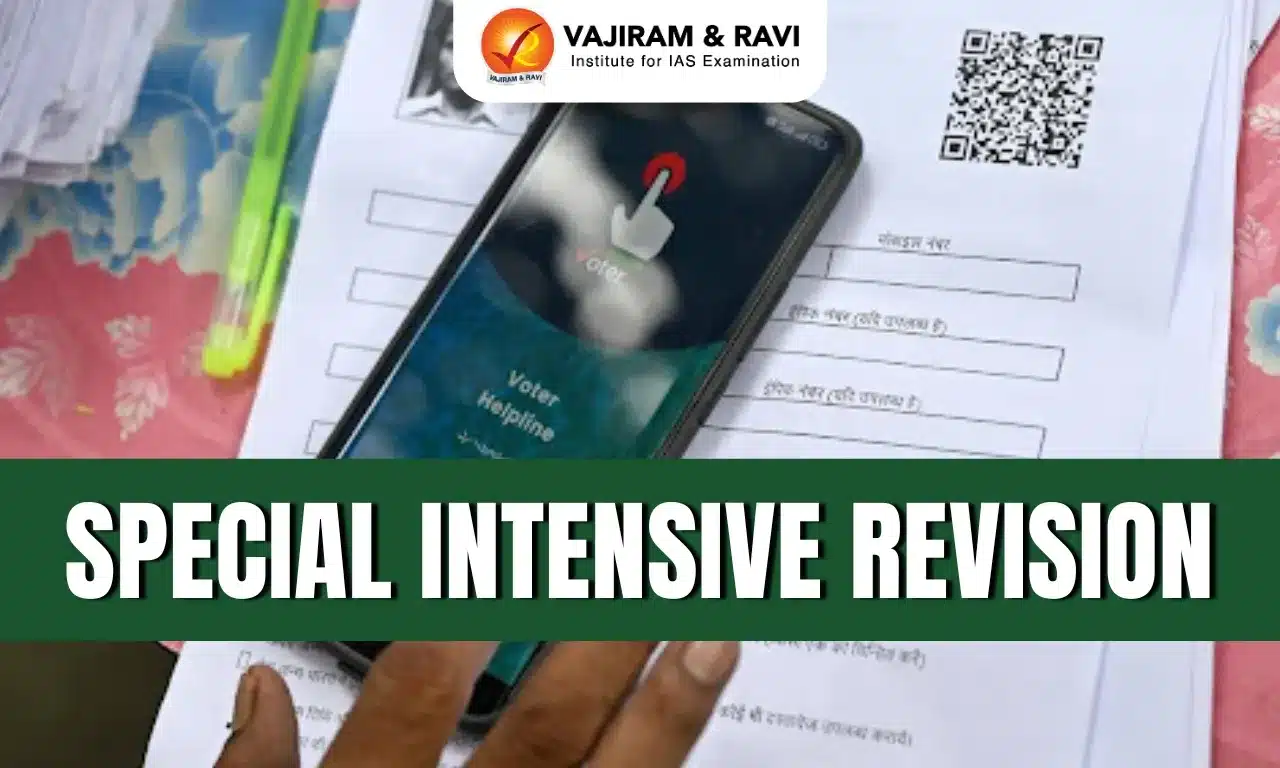
  • The Election Commission of India has launched a Special Intensive Revision (SIR) of electoral rolls across the country, beginning with Bihar, to verify voter details and ensure clean and accurate electoral records ahead of upcoming elections.

The Electoral Roll and Its Importance

  • The electoral roll is the foundation of India’s democratic process. It ensures that every eligible citizen has the right to vote while preventing duplication and impersonation. 
  • The Election Commission of India maintains and updates the rolls regularly under the Representation of the People Act, 1950.
  • Recently, the ECI conducted a Special Intensive Revision (SIR) of electoral rolls in Bihar, with plans to extend it nationwide in a phased manner. 
  • The revision aims to improve accuracy in voter records, eliminate duplicates, and update demographic information before major elections. 
  • The process underscores the need for clean and updated electoral rolls, a key element in ensuring free and fair elections.

The Legal Basis of Electoral Roll Revisions

  • Section 21 of the Representation of the People Act, 1950, empowers the ECI to prepare and revise electoral rolls for each constituency. 
  • Typically, a summary revision occurs before every general or by-election. However, the Act also allows the Commission to carry out a special revision at any time it deems necessary.
  • In June 2025, the ECI issued an order launching a Special Intensive Revision across the country, starting with Bihar, where Assembly elections are due in November 2025. The Commission designated July 1, 2025, as the qualifying date for inclusion in the rolls.

Understanding the SIR Process

  • The SIR process is more detailed than routine revisions. It involves multiple stages:
  • Enumeration Forms Submission:
    • All registered voters must fill out the enumeration forms to confirm or update their details.
  • Document Verification:
    • Voters registered after 2003 must provide valid proof of citizenship. The Supreme Court, in its interim order, directed that Aadhaar be accepted as one of the valid identity proofs for this purpose.
  • Draft Roll Publication:
    • Based on the forms and verification, a draft electoral roll is published for public review.
  • Claims and Objections:
    • Citizens are allowed a specified period to file claims for inclusion or raise objections regarding inaccuracies.
  • Verification and Final Roll Publication:
    • The Electoral Registration Officers (EROs) verify all claims and objections. After this scrutiny, the final electoral roll is published, as was done in Bihar on September 30, 2025.
  • The ECI now plans to conduct similar SIR exercises in other states, aligned with their respective election schedules.

Overview of Electoral Forms in India

  • The Registration of Electors Rules, 1960 (RER) prescribes various forms for voter registration, correction, deletion, and transfer. 
  • Awareness of these forms is essential for citizens to participate meaningfully in the electoral process.
  • Form 6 - Used by new voters (above 18 years) or those shifting constituencies to apply for inclusion in the electoral roll.
  • Form 6A - Used by Overseas Electors (Indian citizens living abroad) to register their names in the electoral rolls of their home constituency.
  • Form 7 - Filed for deletion of a name from the electoral roll, for instance, in case of death, duplication, or change of residence.
  • Form 8 - Used to correct entries in the existing electoral roll, such as name spelling, address, or age.
  • Form 8A - Used for transposition of an elector’s name from one part of a constituency to another (for example, if a voter shifts residence within the same constituency).
  • Form 11 to 13D - Used by electoral officers and booth-level agents during verification and publication stages of the electoral roll.

Role of Citizens and Political Stakeholders

  • The success of the electoral revision process depends not only on the ECI but also on citizens’ active participation. Voters should:
    • Verify their names and details in the published draft rolls.
    • Use the correct electoral form to update their information or file claims.
    • Ensure that supporting documents, such as Aadhaar, passport, or voter ID, are properly attached to avoid rejections.
  • Political parties and civil society organisations play a crucial role in mobilising awareness, especially among marginalised communities, first-time voters, and migrant populations. Their involvement ensures inclusivity in the democratic process.

Significance of Clean Electoral Rolls

  • Maintaining accurate electoral rolls is central to the integrity of elections. Outdated or erroneous rolls can lead to disenfranchisement, bogus voting, or manipulation
  • A clean roll ensures that each legitimate vote is counted, and no illegitimate one is cast.
  • While critics argue that the SIR process might inconvenience voters due to short timelines, the broader goal remains the creation of a transparent and verifiable electoral base. 
  • The Supreme Court’s order to include Aadhaar as a valid document aims to strengthen identity verification, though privacy advocates caution against excessive reliance on biometric data.

Way Forward

  • The ECI’s move to roll out the SIR nationwide marks a significant effort to modernise and standardise voter registration. Future revisions could be made more efficient through:
    • Phased scheduling to prevent administrative overload.
    • Digital verification linked with Aadhaar and other databases.
    • Enhanced public awareness through local campaigns.
  • Ensuring inclusive participation, especially of women, youth, and migrant workers, will be vital to building a comprehensive and accurate electoral roll ahead of the 2029 general elections.

Source: TH

Special Intensive Revision FAQs

Q1: What is the Special Intensive Revision (SIR) of electoral rolls?

Ans: The SIR is a detailed process conducted by the Election Commission to verify, update, and clean electoral rolls across constituencies

Q2: Which law governs the preparation and revision of electoral rolls in India?

Ans: The process is governed by Section 21 of the Representation of the People Act, 1950.

Q3: What is Form 6 used for?

Ans: Form 6 is used for new voter registration or to include one’s name after shifting constituencies.

Q4: What did the Supreme Court direct during the SIR in Bihar?

Ans: The Court allowed Aadhaar to be used as valid proof of identity during the verification process.

Q5: How can citizens verify their electoral details online?

Ans: Citizens can verify and update details on the Voter Service Portal (voters.eci.gov.in) or through the Voter Helpline app.

India-U.K. Relations – Strengthening Strategic and Economic Ties

India-U.K. Relations

India-U.K. Relations Latest News

  • In a significant step towards deepening bilateral relations, Prime Minister Narendra Modi and U.K. Prime Minister Keir Starmer have signed multiple defence and investment agreements worth billions of pounds. 
  • These developments mark a renewed push in the India–U.K. Comprehensive Strategic Partnership, with a focus on defence technology, naval collaboration, education, and mutual investments.
  • These developments are the result of bilateral talks between the two PMs held in Mumbai during Starmer’s first visit to India after assuming office.

India-U.K. Relations - Shared Vision and Strategic Convergence

  • Natural partners in an unstable world:
    • The shared values of democracy, freedom, and rule of law are the core of bilateral relations.
    • Both support dialogue and diplomacy to resolve the Ukraine conflict and the Gaza crisis, underlining its consistent stance on peace-building efforts.
  • India’s global role:
    • Starmer recognized India as a global player, highlighting cooperation in Commonwealth, G20, and supporting India’s bid for a permanent UN Security Council seat.
    • The U.K. seeks to deepen engagement with India to build a rules-based international order and to leverage India’s leadership in the Global South.
  • Indo-Pacific region: Both reaffirmed their commitment to maritime security in the Indo-Pacific region, countering regional assertiveness and ensuring freedom of navigation.

Defence Cooperation - A New Phase

  • Missile procurement deal:
    • India signed a £350 million defence deal with the U.K. to procure Lightweight Multirole Missiles (LMMs) for the Indian Army.
    • The missiles will be U.K.-manufactured and built in Belfast, strengthening India’s tactical capabilities.
    • The agreement aims to lay the foundation for a “broader complex weapons partnership” between the two nations, promoting defence industrial collaboration and technology transfer.
  • Naval collaboration:
    • Both countries have agreed to advance cooperation on electric-powered engines for naval ships, worth an initial £250 million.
    • The Implementing Arrangement was signed to push this project to the next stage, aligning with global efforts for green and sustainable defence technologies.
  • A new military training agreement: Under which Indian Air Force (IAF) instructors will train at the Royal Air Force (RAF) in the U.K.

Expanding Economic Linkages

  • Massive U.K. trade delegation:
    • PM Starmer arrived in India with a record 126-member trade delegation, the largest ever from the U.K., comprising CEOs, entrepreneurs, and academic leaders.
    • The visit follows the signing of the India–U.K. Free Trade Agreement (CETA) in July 2025, aimed at boosting bilateral trade and technology transfer.
  • Indian investments in the U.K.:
    • 64 Indian companies have committed to invest £1.3 billion (₹15,430 crore) in the U.K., expected to create nearly 7,000 jobs.
    • Investment sectors include engineering, technology, clean energy, mobility, and creative industries.
  • Major Indian investments:
    • TVS Motor company: £250 million investment in Solihull to expand Norton Motorcycles and develop next-generation electric vehicles.
    • Cyient: £100 million investment in semiconductors, clean energy, and geospatial technologies, creating 300 jobs in the U.K.
    • Muthoot Finance UK Ltd.: £100 million to expand branch network to 20 locations.
    • Hero Motors: £100 million in e-mobility, e-bicycles, and aerospace divisions over the next five years.
  • Investment by the U.K. companies in India: For example, Rolls-Royce expressed interest in developing India as a key production hub, underscoring potential future collaboration in aerospace and defence manufacturing.

Critical Minerals and Supply Chain Cooperation

  • India will establish an Industry Guild and Supply Chain Observatory to strengthen cooperation on critical minerals, with a satellite campus at ISM Dhanbad.
  • This initiative aims to secure resilient global value chains and reduce dependency on single-source suppliers, aligning with the G7-led Mineral Security Partnership framework.

Technological Synergy

  • Synergy: Both nations have demonstrated a “win-win partnership” that blends the U.K.’s research and finance expertise with India’s scale and talent.
  • India–U.K. Technology Security Initiative: Emphasizing tech and innovation as new frontiers of cooperation in AI, advanced communications, etc.
  • Strengthening the Fintech Corridor:
    • The Indian PM announced the creation of a U.K.–India Fintech Corridor to connect startups, institutions, and innovation hubs.
    • The initiative will promote joint innovation, piloting of startups, and facilitate collaboration between the London Stock Exchange (LSE) and GIFT City (Gujarat International Finance Tec-City).

Educational Collaboration

  • U.K. universities enter India:
    • 9 U.K. universities will soon open campuses in India, including the University of Southampton in Gurugram, whose first batch has already been admitted.
    • This initiative aligns with India’s National Education Policy (NEP) 2020, which encourages the entry of foreign universities into India.
  • Industry-academia linkages: The move promotes educational diplomacy and facilitates cross-border knowledge exchange, boosting the India-U.K. education corridor.

Cultural Diplomacy

  • Starmer’s visit also had a cultural dimension—he toured Yash Raj Films Studio, where he announced that three Bollywood films will be shot in the U.K. beginning in 2026.
  • British Airways will add a third daily Delhi–London flight and IndiGo will launch a Delhi–Manchester route, enhancing people-to-people connectivity.

Strategic Significance

  • For India:
    • Enhances defence self-reliance (Atmanirbhar Bharat) through technology partnerships.
    • Boosts Make in India in defence and manufacturing.
    • Expands higher education infrastructure with global standards.
  • For the U.K.:
    • Strengthens post-Brexit trade and strategic partnerships.
    • Attracts major foreign direct investment (FDI) and job creation.
  • Reinforces its defence and technology export potential.

Way Forward

  • Finalise the Free Trade Agreement (FTA) implementation to unlock the full economic potential.
  • Institutionalise the Complex Weapons Partnership under structured defence cooperation.
  • Promote joint R&D and co-production in emerging sectors such as AI, clean energy, and maritime security.
  • Expand education and skill partnerships to cater to both Indian and U.K. labour market needs.

Conclusion

  • The 2025 India–U.K. defence and investment deals mark a turning point in bilateral relations, combining strategic defence cooperation with economic and educational partnerships. 
  • By fostering technology sharing, sustainable naval collaboration, and mutual investments, both nations are moving toward a comprehensive and future-oriented partnership aligned with global geopolitical and economic shifts.

Source: TH | IE

India-U.K. Relations FAQs

Q1: How does the recent Modi–Starmer summit reinforce India–U.K. relations?

Ans: The summit emphasized shared democratic values and cooperation in defence, trade, and technology.

Q2: What are the major outcomes of the recent India–U.K. defence cooperation agreements?

Ans: The agreements include a £350 million missile deal, a military training programme involving, and collaboration on electric naval propulsion systems.

Q3: How does the expansion of U.K. universities in India align with India’s NEP 2020?

Ans: The approval for nine U.K. universities to establish campuses in India enhancing access to world-class learning and research.

Q4: In what ways will the India–U.K. partnership in trade contribute to mutual economic growth?

Ans: Through India–U.K. Free Trade Agreement both commit to generate jobs and promote inclusive growth.

Q5: What objectives does the newly established Industry Guild and Supply Chain Observatory aim to serve?

Ans: The observatory will facilitate cooperation on critical minerals and resilient supply chains, supporting sustainable industrial growth in coordination with the U.K.

Assam–Meghalaya Border Clash Highlights Longstanding Boundary Dispute

Assam–Meghalaya Border Dispute

Assam–Meghalaya Border Dispute Latest News

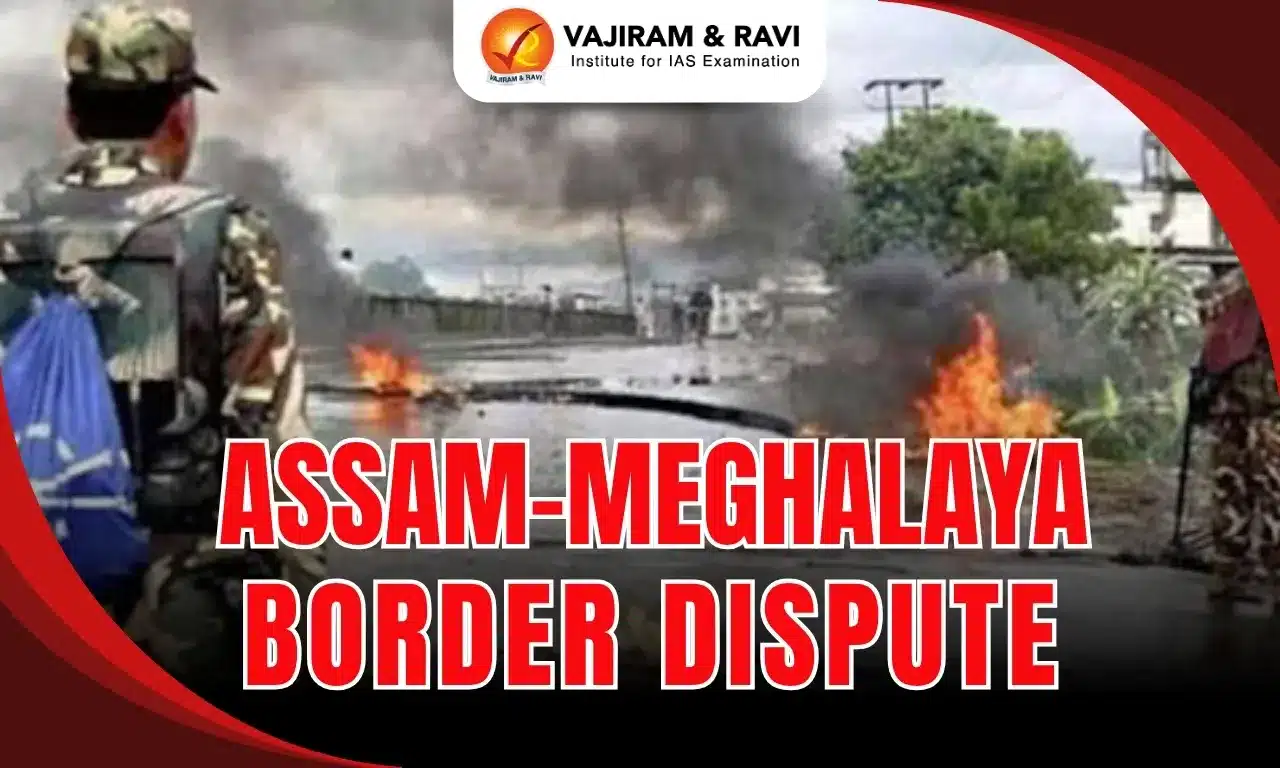
  • A 44-year-old man from Tapat village in Assam’s West Karbi Anglong, was killed during a clash between residents of Assam’s Tapat and Meghalaya’s Lapangap village in West Jaintia Hills, along a disputed stretch of the Assam-Meghalaya border.
  • Police said the violence erupted when villagers from Lapangap were harvesting paddy in the contested area, a practice followed “for generations.”
  • The site of the incident is among six unresolved areas along the 884-km Assam-Meghalaya border, where tensions persist despite a 2022 MoU settling disputes in six other zones. 
  • The same region witnessed the Mukroh firing incident in 2022, which killed six people.

Assam–Meghalaya Border Dispute: Historical Roots and Key Issues

  • The Assam–Meghalaya border dispute dates back to the colonial era, when undivided Assam included present-day Nagaland, Arunachal Pradesh, Meghalaya, and Mizoram.
  • When Meghalaya was carved out of Assam as an autonomous state in 1970 and later became a full-fledged state in 1972, boundary differences arose. 
  • The separation was formalised under the Assam Reorganisation (Meghalaya) Act of 1969, which Meghalaya refused to accept.

Reasons Behind Meghalaya’s Refusal to Accept the 1969 Act

  • The 1969 Act was based on the recommendations of a 1951 committee that sought to define the boundary between the two states.
  • According to these recommendations, parts of East Jaintia Hills, Ri-Bhoi, and West Khasi Hills (in present-day Meghalaya) were transferred to Assam’s Karbi Anglong and Kamrup districts.
  • After achieving statehood, Meghalaya contested these transfers, arguing that the areas historically belonged to indigenous tribal chieftains under its traditional governance system.

Assam’s Position

  • The Assam government has maintained that Meghalaya lacks documentary and archival evidence to substantiate its territorial claims.
  • Assam insists that the boundary defined in 1969 is legally valid and that Meghalaya’s claims are not supported by historical or administrative records.

Extent of the Dispute

  • Following years of claims and counterclaims, the boundary conflict was narrowed down to 12 disputed sectors in 2011, covering parts of West Khasi Hills, Ri-Bhoi, and Jaintia Hills in Meghalaya and adjoining districts of Assam.
  • These areas remain points of contention, occasionally triggering tensions and clashes between communities living along the border.

Efforts to Resolve the Assam–Meghalaya Border Dispute

  • Joint Official Committee (1983) - A joint official committee was established in 1983 to address the boundary dispute. It recommended that the Survey of India should re-delineate the border in consultation with both state governments.
  • Independent Panel (1985) - An independent commission, headed by Justice Y.V. Chandrachud, was formed in 1985 to examine the issue. However, Meghalaya rejected the panel’s report, citing disagreement with its findings.
  • Survey of India’s Role and Partial Demarcation (1991) - In 1991, around 100 km of the inter-state border was demarcated with the help of the Survey of India. Despite this technical effort, Meghalaya refused to accept the demarcation, keeping the dispute unresolved.

Central Intervention (2011)

  • In 2011, the Meghalaya Assembly passed a resolution seeking the Centre’s intervention and demanded the creation of a boundary commission.
  • The Union Government directed both states to appoint nodal officers to facilitate discussions and collect relevant records for negotiation.

Renewed Political Will (2021–2022)

  • In June 2021, Assam and Meghalaya adopted a give-and-take approach to advance talks and formed three regional committees each, headed by cabinet ministers, to examine ground realities and gather local inputs.
  • Based on the committees’ recommendations, a draft resolution was prepared in January 2022.
  • Subsequently, in March 2022, both states signed a historic Memorandum of Understanding (MoU) to resolve disputes in six of the 12 contested sectors, covering around 36.7 sq km.

2022 Border Pact

  • In March 2022, Assam and Meghalaya partially resolved their 50-year-old border dispute, settling differences in six of the 12 disputed sectors along their 884-km boundary. 
  • The pact marked a major milestone in inter-state cooperation in the Northeast.

Key Features of the Agreement

  • The agreement covers 36.79 sq. km of disputed land.
  • Assam will retain 18.51 sq. km, while Meghalaya will receive 18.28 sq. km.
  • Following the pact, around 70% of the boundary between the two states is now dispute-free.
  • Negotiations will continue over the remaining six areas, including Langpih, Borduar, and Block I & II regions, which are more sensitive and complex.

Source: IE | HT | GoA

Assam–Meghalaya Border Dispute FAQs

Q1: What caused the Assam–Meghalaya border clash?

Ans: The clash erupted when villagers from Meghalaya’s Lapangap and Assam’s Tapat fought over paddy harvesting in a disputed area, leading to one fatality.

Q2: How old is the Assam–Meghalaya border dispute?

Ans: The dispute dates back to Meghalaya’s creation in 1972, when boundary demarcations under the 1969 Reorganisation Act were contested by Meghalaya

Q3: What efforts have been made to resolve the dispute?

Ans: Multiple panels since 1983 have worked on the issue, culminating in a 2022 MoU resolving six of the 12 contested areas.

Q4: What is the Assam–Meghalaya border pact of 2022?

Ans: The 2022 agreement settled six sectors, dividing 36.79 sq km almost equally, making 70% of the border dispute-free.

Q5: What lies ahead for the remaining disputed areas?

Ans: Negotiations continue over the remaining six sectors, with the Centre overseeing talks for a peaceful and permanent settlement.

Punjab Floods Threaten Soil Health but Recovery Still Possible

Punjab Floods

Punjab Floods Latest News

  • Punjab faced one of its worst floods in recent years, with all 23 districts affected and nearly two lakh hectares of farmland inundated or waterlogged. 
  • As the state prepares for the wheat-sowing season, concerns have emerged over soil fertility and crop productivity.
  • However, experts believe the damage to soil health may be reversible, provided timely recovery measures such as drainage, soil treatment, and balanced fertiliser use are implemented to restore productivity.

Erosion and Silt: The Twofold Impact of Floods on Punjab’s Soil

  • Floods impact soil in multiple ways depending on their duration, intensity, and soil type
  • The two major consequences are erosion and silt deposition, both of which influence soil fertility and crop productivity differently.
  • Prolonged waterlogging leads to soil compaction, which reduces aeration and disrupts the nutrient balance. 
  • This limits root respiration and microbial activity, ultimately lowering soil productivity.

Erosion: Loss of Nutrient-Rich Topsoil

  • Floodwaters often erode the topsoil, stripping away the uppermost, nutrient-enriched layer that farmers painstakingly cultivate over time.
  • This topsoil is rich in phosphorus, nitrogen, and carbon, essential for healthy plant growth. 
  • Its loss directly affects soil fertility, leading to reduced crop yields and higher recovery costs.

Silt Deposition: A Mixed Blessing

  • Floods also deposit silt on the surface, especially in low-lying and riverbank areas. 
  • While excessive silt can block root growth and disrupt microbial activity, fine alluvial silt can actually enhance soil structure and replenish nutrients.
  • According to soil experts, if the silt layer is not too deep, it can be mixed with existing soil to restore fertility. 
  • Farmers near rivers have historically benefited from such natural nutrient replenishment following floods.

Soil Tests Show Manageable Impact of Floods on Punjab’s Farmlands

  • Soil sampling conducted by the Punjab Agricultural University (PAU), Ludhiana, across several flood-affected districts indicates that while flooding has impacted soil health, the situation remains manageable with timely intervention.
  • The tests revealed nutrient leaching, especially of nitrogen, and a temporary pH imbalance due to waterlogging. 
  • In areas where topsoil erosion occurred, nutrient levels dropped, but experts say this can be restored through deep ploughing, soil test–based fertilisation, and organic amendments.
  • Experts noted that although the floods have disrupted cropping cycles, timely soil management and coordinated testing can help farmers restore fertility and strengthen resilience.
  •  They are urging farmers to conduct individual soil tests before applying fertilisers to ensure targeted nutrient management and long-term recovery.

Post-Flood Recovery: Managing Silt and Restoring Punjab’s Fields

  • The recovery strategy for flood-affected farmland in Punjab depends on the depth of silt deposits and the type of soil.
  • In areas with 2–3 inches of silt, normal ploughing can mix it with native soil, while lighter soils can handle deposits up to 9 inches through deep chiselling. 
  • In heavy soils, where deep silt restricts root growth, mechanical or manual removal is advised. Adding compost or organic matter helps restore soil structure and fertility.
  • Experts emphasise early intervention to ensure fields are ready for the rabi crop, and warn farmers to control weeds brought by floodwaters.
  • The Punjab government’s policy, “Jisda Khet Usdi Ret” (the sand/silt belongs to the landowner), allows farmers to sell deposited sand or silt, helping them clear fields quickly without environmental clearances and recover some income.

Punjab Farmers Likely to Resume Normal Cropping Cycles This Rabi Season

  • Agricultural experts believe that most farmers in Punjab can resume their rabi cropping cycles on time, especially in areas with light or moderate silt deposits. 
  • Even in heavily affected regions, prompt field management can help align with the regular schedule.
  • For wheat, sown between late October and November 20, timely field preparation is crucial. 
  • Fields retaining residual flood moisture may not require pre-irrigation, while bed planting of wheat or transplanting gobhi and sarson is advised in low-lying or waterlogged areas.
  • In regions where fields were prepared early, short-duration crops like toria, potato, or maize can be grown before wheat. 
  • For fodder, combinations such as maize with cowpea or sorghum with cowpea are recommended to maximise land use and recovery.
  • Although floods disrupted farming in some zones, Punjab’s resilient farmers — with the support of scientists and government schemes — are expected to restore productivity and maintain soil fertility in the upcoming rabi season.

Source: IE

Punjab Floods FAQs

Q1: How have floods affected Punjab’s farmlands?

Ans: All 23 districts were flood-hit, with erosion and silt deposition damaging soil health across nearly two lakh hectares of farmland.

Q2: What are the main soil problems after floods?

Ans: Floods caused topsoil erosion, nutrient loss, silt deposits, and waterlogging, affecting aeration and microbial activity essential for soil fertility.

Q3: What do recent soil tests show?

Ans: Punjab Agricultural University found nutrient leaching and temporary pH imbalance but confirmed fertility can be restored with timely soil management.

Q4: How can farmers recover soil productivity?

Ans: Experts recommend deep ploughing, organic amendments, compost use, and silt removal or mixing, depending on soil type and silt depth.

Q5: Will Punjab farmers return to normal cropping cycles?

Ans: Yes. Most can resume rabi sowing on schedule with prompt recovery steps, aided by favourable soil moisture and scientific support.

World Mental Health Day 2025, Theme, History, Govt Schemes

World Mental Health Day 2025

World Mental Health Day is observed every year on 10 October to promote awareness about mental health issues and support global well-being. It is an initiative by the World Federation for Mental Health (WFMH), supported by the World Health Organization (WHO) and the United Nations. The goal is to make mental health a universal human right and to encourage open discussions about emotional well-being, stigma, and access to care across the world.

World Mental Health Day 2025

The theme for World Mental Health Day 2025 highlights the need to ensure mental health care during crises like wars, pandemics, and natural disasters. A 2019 analysis published in The Lancet and highlighted by World Health Organisation found that more than one in five people (22.1%) in conflict-affected areas suffer from mental health conditions like depression, anxiety, or post-traumatic stress disorder (PTSD). Emergencies not only cause physical damage but also trigger long-term trauma, stress, and loss of community bonds. This year’s campaign calls for integrating mental health and psychosocial support in all humanitarian responses.

World Mental Health Day 2025 Historical Background

The idea for World Mental Health Day originated in 1992, led by the World Federation for Mental Health (WFMH) to promote global understanding of mental illnesses.

  • In 1992, WHO officially recognized the day and began global collaboration for mental health awareness.
  • In 2001, WHO’s World Health Report stressed that mental well-being was a fundamental part of human development.
  • The UN’s Sustainable Development Goals (2015) included mental health in Goal 3.4, linking it to overall health and well-being.
  • The COVID-19 pandemic (2020) brought mental health into focus, with WHO reporting a 25% rise in depression and anxiety worldwide.
  • In 2025, the theme addresses mental health during humanitarian crises, ensuring global commitment to psychological care in emergencies.

World Mental Health Day 2025 Theme

This year’s theme is “Access to Services- Mental Health in Catastrophes and Emergencies,” which emphasizes how natural disasters, conflicts, and global health emergencies deeply impact psychological health. According to the UNHCR (2024), over 123 million people were forcibly displaced worldwide, with limited access to mental health care in low-income countries. Mental health support during emergencies helps people rebuild their lives, recover from trauma, and regain community strength. Evidence-based interventions and community-based approaches can significantly improve resilience and emotional recovery.

Indian Aspect of World Mental Health Day 2025

India observes World Mental Health Day through campaigns led by the Ministry of Health and Family Welfare (MoHFW), NIMHANS, and several NGOs. As per National Mental Health Survey 2016, nearly 13.7% of Indians suffer from mental health disorders, while WHO (2023) notes that India accounts for about 18% of global mental health burden. India faces specific challenges such as rural inaccessibility, stigma, and shortage of professionals. Many educational institutions, corporates, and health organizations conduct seminars, counseling sessions, and awareness drives on this day to promote emotional wellness and destigmatize mental health discussions.

Government Programmes for Mental Health

The Indian government has launched multiple initiatives to strengthen mental health care:

  • National Mental Health Programme (NMHP, 1982): Aims to provide community-based mental health services and integrate mental health with primary care.
  • District Mental Health Programme (DMHP): Offers counseling, awareness, and psychiatric services at district levels.
  • National Tele Mental Health Programme (Tele-MANAS, 2022): Provides free tele-counseling through a 24×7 helpline accessible across India.
  • Manodarpan Initiative (2020): Part of the Atmanirbhar Bharat Abhiyan, it supports mental well-being of students and teachers.
  • Ayushman Bharat Health and Wellness Centres: Include mental health as a key component of holistic health care.

WHO Action Plan for Mental Health

The 2025 theme focuses on strengthening psychological care during crises. The Comprehensive Mental Health Action Plan 2013-2030 aims to integrate mental health into emergency response systems. Global initiatives by WHO, UNHCR, and UNICEF promote inclusive mental health frameworks, training community workers, and expanding tele-counseling to ensure equitable, accessible mental health services worldwide.

Challenges in Mental Health Accessibility

Despite policy progress, India faces major barriers in achieving universal mental health coverage:

  1. Shortage of professionals: As per WHO standards, India has only 0.75 psychiatrists per 100,000 population, far below the required 3 per lakh.
  2. Urban-rural divide: 70% of India’s population resides in rural areas with limited access to trained psychologists and facilities.
  3. Stigma and discrimination: Cultural taboos often prevent people from seeking help, especially among youth and men.
  4. Low budget allocation: The 2024-25 budget allocated less than 1% of the health ministry's total budget to mental health, limiting infrastructure and manpower. [The overall health budget for 2024-25 was roughly 2% of India's total budget.]

Lack of awareness: Many people still equate mental illness with weakness or personal failure, delaying diagnosis and treatment. The NMHS (2015-16) reported a significant treatment gap, with 70%-92% of people with mental disorders not receiving adequate treatment, largely due to lack of awareness.

World Mental Health Day 2025 FAQs

Q1: What is the theme of World Mental Health Day 2025?

Ans: The theme is “Access to Services- Mental Health in Catastrophes and Emergencies.”

Q2: Why is World Mental Health Day 2025 important?

Ans: It stresses providing mental health services during crises like wars and natural disasters.

Q3: Who organizes World Mental Health Day 2025 globally?

Ans: The World Federation for Mental Health (WFMH) and the World Health Organization (WHO) lead this global campaign.

Q4: How does India observe World Mental Health Day 2025?

Ans: India organizes mental health awareness drives, seminars, and counseling sessions across institutions and public platforms.

Q5: What are India’s main Mental Health programmes?

Ans: The key initiatives include NMHP, DMHP, Tele-MANAS, and Manodarpan.

UPSC Daily Quiz 10 October 2025

UPSC Daily Quiz

The Daily UPSC Quiz by Vajiram & Ravi is a thoughtfully curated initiative designed to support UPSC aspirants in strengthening their current affairs knowledge and core conceptual understanding. Aligned with the UPSC Syllabus 2025, this daily quiz serves as a revision resource, helping candidates assess their preparation, revise key topics, and stay updated with relevant issues. Whether you are preparing for Prelims or sharpening your revision for Mains, consistent practice with these Daily UPSC Quiz can significantly enhance accuracy, speed, and confidence in solving exam-level questions.

[WpProQuiz 92]  

UPSC Daily Quiz FAQs

Q1: What is the Daily UPSC Quiz?

Ans: The Daily UPSC Quiz is a set of practice questions based on current affairs, static subjects, and PYQs that help aspirants enhance retention and test conceptual clarity regularly.

Q2: How is the Daily Quiz useful for UPSC preparation?

Ans: Daily quizzes support learning, help in revision, improve time management, and boost accuracy for both UPSC Prelims and Mains through consistent practice.

Q3: Are the quiz questions based on the UPSC syllabus?

Ans: Yes, all questions are aligned with the UPSC Syllabus 2025, covering key areas like Polity, Economy, Environment, History, Geography, and Current Affairs.

Q4: Are solutions and explanations provided with the quiz?

Ans: Yes, each quiz includes detailed explanations and source references to enhance conceptual understanding and enable self-assessment.

Q5: Is the Daily UPSC Quiz suitable for both Prelims and Mains?

Ans: Primarily focused on Prelims (MCQ format), but it also indirectly helps in Mains by strengthening subject knowledge and factual clarity.

Coco Islands

Coco Islands

Coco Islands Latest News

Recently, Myanmar has assured India that there is no Chinese presence at Coco Islands in Bay of Bengal.

About Coco Islands

  • Location: They are a small group of islands located in the Bay of Bengal.
  • Great Coco Island, the largest in the group, lies just 55 km from India’s strategic Andaman and Nicobar Islands. 
  • They are part of the Yangon Region of Myanmar. 
  • Geography: It is geologically an extended division of the Arakan Mountains or Rakhine Mountains, submerges as a chain of islands in the Bay of Bengal for a long stretch and emerges again in the form of the Andaman and Nicobar Islands. 
  • They are part of the same topography as India’s Andaman & Nicobar Islands.

History of Coco Islands

  • In the early 19th century, the British government in India established a penal colony in the Andaman for the convicts in the Indian subcontinent, and the Coco Islands were a source of food for it.
  • The British government had reportedly leased out the islands to the Jadwet family of Burma.
  • The leasing of control of the Coco Islands resulted in poor governance of the islands, which made the British government in India to transfer its control to the government of Lower Burma in Rangoon.
  • In 1882, the islands officially became part of British Burma.
  • The islands became a self-governing crown colony even after Burma was separated from British India in 1937.

Source: HT

Coco Islands FAQs

Q1: Where are the Coco Islands located?

Ans: The Coco Islands are a group of islands in the northeastern part of the Bay of Bengal.

Q2: Which island group is located near the Coco Islands?

Ans: Andaman and Nicobar Islands.

Daily Editorial Analysis 10 October 2025

Daily Editorial Analysis

India’s Mental Health Crisis, The Cries and Scars 

Context

  • In recent years, India has witnessed an alarming rise in suicides and mental health distress that cuts across class, gender, geography, and age.
  • From the tragic deaths of a young couple in Shahjahanpur, Uttar Pradesh, to the recurring suicides of students in Kota, Rajasthan, these events are not isolated incidents but symptoms of a deeper, systemic crisis.
  • Despite rapid economic and technological progress, India’s collective psyche is in turmoil, burdened by social pressure, economic uncertainty, and institutional neglect.

The Data Behind the Despair

  • According to the National Crime Records Bureau’s Accidental Deaths and Suicides in India (ADSI) 2023 report, India recorded 1,71,418 suicides, the highest number globally.
  • While the overall rate per 1,00,000 people decreased slightly due to population growth, the absolute figures reveal a consistent and pervasive crisis.
  • Men constitute nearly 73% of victims, pointing to gendered burdens rooted in financial stress, familial expectations, and social stigma.
  • States such as Maharashtra, Tamil Nadu, and Karnataka account for the majority of suicides, while cities continue to report higher rates than rural regions, reflecting the psychological strain of urban life.
  • The agrarian sector remains in distress, with over 10,000 farmers taking their lives in 2023 alone.
  • Between 1995 and 2015, nearly 3 lakh farmers died by suicide, casualties of debt, crop failure, and institutional neglect.

The Human Face of Loneliness and the Turn to Technology

  • Amidst this crisis, an unsettling phenomenon has emerged: individuals increasingly turn to artificial intelligence for emotional support.
  • Studies capture a poignant moment, someone overwhelmed by existential fatigue finding comfort not in human company but in an AI chatbot. This shift is deeply symbolic.
  • It reflects not a triumph of technology but the collapse of human connection and institutional care.
  • AI platforms such as ChatGPT are becoming surrogate confidants for millions of Indians, a trend acknowledged even by OpenAI’s leadership.
  • Yet, these digital tools lack confidentiality, empathy, and professional safeguards.

Systemic Failures: Gaps in Policy and Infrastructure

  • India’s mental health infrastructure is woefully inadequate.
  • With only 0.75 psychiatrists per 1,00,000 people, the country falls far below the WHO’s minimum benchmark.
  • The treatment gap, ranging from 70% to 92%, leaves millions without access to care. While the Mental Healthcare Act (2017) and the National Suicide Prevention Strategy (2022) appear progressive on paper, their implementation has been sluggish and ineffective.
  • Government initiatives such as Manodarpan, designed to provide psychosocial support to students, remain largely inactive.
  • Even the modest ₹270-crore mental health budget is underutilized, revealing bureaucratic apathy.
  • Educational institutions, coaching centres, and workplaces offer token counselling services, often handled by untrained staff.
  • Consequently, India’s suicide prevention and mental health programs remain fragmented, underfunded, and detached from the realities of everyday distress.

Towards a Compassionate Framework: What Must Be Done

  • Cross-Ministerial Task Force

    • If India is to avert a full-blown mental health catastrophe, it must treat mental well-being as a national emergency rather than a peripheral concern.
    • The government should establish a cross-ministerial task force integrating health, education, agriculture, and social welfare to coordinate policy and funding.
    • The goal should be to achieve three to five mental health professionals per 1,00,000 people within five years through expanded training programs, scholarships, and incentives for rural service.
  • Counselling as Part of Public Infrastructure

    • Counselling must become part of public infrastructure, as essential as hospitals or schools, with full-time, trained professionals in every district, college, and farming block.
    • Public campaigns should challenge stigma, normalise therapy, and share stories of recovery. Moreover, specific interventions are required for high-risk groups such as farmers, homemakers, and students.
  • Targeted Approach for Different Groups

    • For farmers, mental health support must coincide with debt relief and livelihood reforms. For homemakers, community-based therapy networks can break isolation.
    • In coaching hubs like Kota, mental health care must be proactive, preventive, and institutionalised.
  • Regulation of Digital Mental Health Programs

    • Simultaneously, the government must regulate digital mental health platforms.
    • Emotional-support apps and AI tools should disclose privacy risks, embed emergency response links, and ensure connection to licensed professionals.
    • Until ethical and legal safeguards are in place, AI should complement, not replace, human care.

Conclusion

  • The mental health crisis in India is not merely a health statistic; it is a reflection of societal failure.
  • Suicide remains the leading cause of death among youth aged 15–29, and India accounts for a disproportionate share of global female suicides.
  • Beyond the loss of human life lies an economic cost, projected to exceed $1 trillion by 2030 in lost productivity.
  • Policies, budgets, and technology must converge to send one simple but powerful message to every struggling citizen: You matter.

India’s Mental Health Crisis, The Cries and Scars FAQs

 Q1. What central issue does the suicide rate highlight?
Ans. Studies reflect India’s growing mental health crisis, reflected in rising suicide rates and widespread emotional distress across different sections of society.

Q2. Why are more people turning to AI platforms for emotional support?
Ans. Many people turn to AI platforms because they find them less judgmental and more accessible than human company, revealing a deep sense of loneliness and mistrust in human support systems.

Q3. What are the major shortcomings in India’s mental health system?
Ans. India faces a severe shortage of trained professionals, underfunded programs, and poorly implemented policies, leaving millions without access to adequate care.

Q4. What are some recommendations improving mental health care in India?
Ans. Treating mental health as an emergency, increasing trained personnel, integrating counselling into public institutions, and regulating digital mental health platforms.

Q5. What must be done to prevent rising rate of suicides?
Ans. India must act with compassion and urgency to show every struggling person that their life matters.

Source: The Hindu

Daily Editorial Analysis 10 October 2025 FAQs

Q1: What is editorial analysis?

Ans: Editorial analysis is the critical examination and interpretation of newspaper editorials to extract key insights, arguments, and perspectives relevant to UPSC preparation.

Q2: What is an editorial analyst?

Ans: An editorial analyst is someone who studies and breaks down editorials to highlight their relevance, structure, and usefulness for competitive exams like the UPSC.

Q3: What is an editorial for UPSC?

Ans: For UPSC, an editorial refers to opinion-based articles in reputed newspapers that provide analysis on current affairs, governance, policy, and socio-economic issues.

Q4: What are the sources of UPSC Editorial Analysis?

Ans: Key sources include editorials from The Hindu and Indian Express.

Q5: Can Editorial Analysis help in Mains Answer Writing?

Ans: Yes, editorial analysis enhances content quality, analytical depth, and structure in Mains answer writing.

IUCN World Conservation Congress

IUCN World Conservation Congress

IUCN World Conservation Congress

Recently, India unveiled its National Red List Roadmap and Vision 2025-2030 at the IUCN World Conservation Congress 2025.

About IUCN World Conservation Congress

  • It is the largest gathering of nature conservation experts, leaders and decision-makers in the world.
  • It will help shape global priorities for nature conservation and climate change for the coming decade and beyond.
  • It is held once-every-four-years.
  • Theme of IUCN Congress 2025: Under the theme “Powering transformative conservation”.

Components of IUCN World Conservation Congress

  • Forum: It is the largest knowledge marketplace for conservation and sustainable development science, practice and innovation. 
  • Exhibition: In the Exhibition, IUCN Members and Commissions, businesses, partners, and academia host pavilions, booths and events. 
  • Member’s Assembly: It is IUCN’s highest decision-making body. During the Assembly, IUCN’s Member organisations vote on pressing conservation and sustainable development issues.

Key Facts about IUCN

  • The International Union for Conservation of Nature (IUCN) is a membership Union of government and civil society organisations.
  • It was created in 1948, IUCN is now the world’s largest and most diverse environmental network, harnessing the knowledge, resources. 

Governance of IUCN

  • President and Council: The council is IUCN’s principal governing body in between sessions of the World Conservation Congress. The IUCN President presides over the IUCN Council.
  • IUCN World Conservation Congress: The Members’ Assembly of the IUCN World Conservation Congress is IUCN’s highest governing body.
  • IUCN Members discuss strategic topics, adopt motions defining IUCN’s general policy, approve the IUCN programme, amend IUCN’s statutes and elect the IUCN Council.
  • IUCN Statutes: It lays out the governance of IUCN.

Source: News On Air

IUCN World Conservation Congress FAQs

Q1: Where is the IUCN World Conservation Congress 2025 being held?

Ans: Abu Dhabi, United Arab Emirates

Q2: What is the primary purpose of the IUCN World Conservation Congress?

Ans: To set priorities and drive conservation and sustainable development action.

Enquire Now