UPSC Daily Quiz 17 October 2025

UPSC Daily Quiz

The Daily UPSC Quiz by Vajiram & Ravi is a thoughtfully curated initiative designed to support UPSC aspirants in strengthening their current affairs knowledge and core conceptual understanding. Aligned with the UPSC Syllabus 2025, this daily quiz serves as a revision resource, helping candidates assess their preparation, revise key topics, and stay updated with relevant issues. Whether you are preparing for Prelims or sharpening your revision for Mains, consistent practice with these Daily UPSC Quiz can significantly enhance accuracy, speed, and confidence in solving exam-level questions.

[WpProQuiz 98]  

UPSC Daily Quiz FAQs

Q1: What is the Daily UPSC Quiz?

Ans: The Daily UPSC Quiz is a set of practice questions based on current affairs, static subjects, and PYQs that help aspirants enhance retention and test conceptual clarity regularly.

Q2: How is the Daily Quiz useful for UPSC preparation?

Ans: Daily quizzes support learning, help in revision, improve time management, and boost accuracy for both UPSC Prelims and Mains through consistent practice.

Q3: Are the quiz questions based on the UPSC syllabus?

Ans: Yes, all questions are aligned with the UPSC Syllabus 2025, covering key areas like Polity, Economy, Environment, History, Geography, and Current Affairs.

Q4: Are solutions and explanations provided with the quiz?

Ans: Yes, each quiz includes detailed explanations and source references to enhance conceptual understanding and enable self-assessment.

Q5: Is the Daily UPSC Quiz suitable for both Prelims and Mains?

Ans: Primarily focused on Prelims (MCQ format), but it also indirectly helps in Mains by strengthening subject knowledge and factual clarity.

Cooperative Banks, Structure, Functions, Regulation, Impact

Cooperative Banks

Cooperative banks form a vital part of India’s financial system, combining the goals of banking and social welfare. They operate on the principle of mutual assistance and democratic control, providing credit and banking services primarily to farmers, small businesses, and rural communities.

These banks are crucial for financial inclusion, especially where commercial banks have limited penetration. They not only promote savings and credit but also play a key role in agriculture, rural industries, and small-scale enterprises, thereby strengthening the rural economy.

Cooperative Banks

Cooperative banks are member-owned financial institutions registered under the Cooperative Societies Act and governed by banking regulations of the Reserve Bank of India (RBI). Their operations are guided by the principles of cooperation, self-help, and mutual benefit.

They accept deposits, provide loans, and extend banking services to members and the public. Unlike commercial banks, cooperative banks are non-profit entities, and their primary objective is to serve members rather than maximize profit.

Cooperative Banks Structure

The structure of Cooperative Banks in India is a well-defined multi-tiered network designed to serve both urban and rural populations. As of 2025, there are around 96,000 PACS, 370 DCCBs, and 33 SCBs operating under NABARD’s supervision. (Source: NABARD Annual Report 2024).

It is broadly divided into two main categories: Urban Cooperative Banks (UCBs) and Rural Cooperative Banks (RCBs).

1. Urban Cooperative Banks (UCBs)

  • Operates mainly in urban and semi-urban areas.
  • Provide services like housing finance, personal loans, MSME credit, and deposits to small borrowers, traders, and small-scale industries.
  • As of 2025, India has over 1,500 Urban Cooperative Banks, of which more than 90% operate under Core Banking Solutions (CBS). (Source: RBI & NABARD Reports, 2024-25)
  • Categorized as:
    • Scheduled UCBs- Listed under the Second Schedule of the RBI Act, 1934.
    • Non-Scheduled UCBs- Not included in the Schedule but regulated by the RBI.

2. Rural Cooperative Banks (RCBs)

These serve the agricultural and rural sectors and are further divided into:

(a) Short-Term Cooperative Credit Structure (3-Tier System)

  • State Cooperative Banks (SCBs)- Apex body at the state level; acts as a link between RBI/NABARD and DCCBs/PACS.
  • District Cooperative Central Banks (DCCBs)- Operate at the district level; finance PACS.
  • Primary Agricultural Credit Societies (PACS)- Base-level institutions at village/gram panchayat level providing short-term loans (1-3 years).

(b) Long-Term Cooperative Credit Structure (2-Tier System)

  • State Cooperative Agriculture and Rural Development Banks (SCARDBs)- Provide long-term credit (up to 25 years) for agricultural and rural development.
  • Primary Cooperative Agriculture and Rural Development Banks (PCARDBs)- Offer medium and long-term finance to small farmers and rural artisans.

Cooperative Banks Functions

Cooperative banks perform multiple economic and social functions in the Indian banking landscape. These functions make cooperative banks a pillar of the rural credit system, contributing directly to inclusive economic growth.

  • Credit Provision: Provide short-term and medium-term loans to farmers, artisans, traders, and small entrepreneurs.
  • Deposit Mobilization: Collect savings through current, savings, and fixed deposit schemes.
  • Rural Development: Promote agricultural and allied activities, self-employment, and cottage industries.
  • Implementation of Government Schemes: Channel credit for programs like PM-Kisan, KCC (Kisan Credit Card), and PMFME.
  • Financial Literacy & Inclusion: Spread awareness and provide financial services in remote and unbanked villages.

Cooperative Banks Regulation

Cooperative banks are regulated by multiple authorities, depending on their type and jurisdiction.

  • RBI: Oversees banking operations under the Banking Regulation Act, 1949.
  • NABARD: Supervises rural cooperative banks and provides refinance support.
  • Registrar of Cooperative Societies (RCS): Handles registration and administrative control at the state level.
  • Ministry of Cooperation (Government of India): Formed in 2021 to strengthen cooperative institutions across India.
  • Amendment to the Banking Regulation Act, 2020: Empowered RBI to exercise control over both urban and multi-state cooperative banks.
  • Digitization Drive (NABARD, 2024): All cooperative banks to be fully digitized by March 2025, including PACS under Core Banking Solution (CBS). (Source: Business Standard, Nov 2024)
  • Cooperative Policy Framework (2023): Proposed to streamline governance and accountability in cooperatives under a single code.

Cooperative Banks Challenges

Despite their outreach, cooperative banks face numerous systemic and operational challenges.

Challenges:

  • Governance and Political Interference: Frequent political influence in management and lending decisions reduces professionalism.
  • Dual Control Confusion: Shared oversight between RBI and state governments often delays corrective action.
  • Financial Weakness: Many banks suffer from low Capital Adequacy Ratio (CAR) and high Non-Performing Assets (NPAs).
  • Technological Backwardness: Lack of digital banking infrastructure and cybersecurity frameworks.
  • Frauds and Mismanagement: Scandals such as PMC Bank (2019) and New India Cooperative Bank (2025) damaged depositor trust.
  • Limited Profitability: Focus on social objectives and concessional lending reduces revenue margins.

Way Forward:

  • Strengthen governance and accountability with professional management.
  • Complete digitization under NABARD’s Core Banking Solutions initiative.
  • Promote mergers and consolidation to improve financial strength.
  • Enforce uniform audit and transparency standards.
  • Encourage capacity building and training for staff and directors.
  • Introduce a Cooperative Banks Credit Guarantee Scheme for depositor safety.

Cooperative Banks Impacts

Cooperative banks have a deep impact on rural development, credit availability, and economic equality, especially in rural India. Below are key impact areas:

  1. Expansion of Agricultural & Rural Credit
  • In FY 2024, NABARD’s short-term refinance to cooperative banks increased by 15 % over FY 2023, with 73.3 % of that amount directed to State Cooperative Banks (StCBs).
  • SCARDBs (long-term cooperative banks) remain heavily reliant on borrowings: as of 31 March 2023, borrowings made up 45.2 % of their liabilities; 83.6 % of those borrowings came from NABARD.
  1. Improved Profitability & Financial Health
  • According to NABARD key statistics, the consolidated operating profits of StCBs rose by 50.5 %, and for DCCBs by 24.8 % (year not specified, but recent reporting period).
  • In Uttar Pradesh, the UP Cooperative Bank (UPCB) saw its net profit tripling since 2017, with business at DCCBs crossing ₹41,234 crores credited to digital initiatives like “Sahkar Sarthi”.
  1. Strengthening Financial Inclusion Metrics
  • The RBI Financial Inclusion Index climbed from 64.2 in March 2024 to 67 in March 2025, registering a 4.3 % growth across segments. This reflects deeper reach of banking and cooperative services in underserved regions.
  • Cooperative banks now number 1,457 Urban Cooperative Banks, along with 34 State Cooperative Banks and 351 DCCBs, according to PIB (2025).
  1. Governance & Regulatory Oversight Impact
  • In FY 2024-25, RBI imposed 264 penalties on cooperative banks across India, higher in number than for any other banking category, with total fines amounting to ₹15.63 crore. This underscores the regulatory tightening and demand for better governance. 
  • RBI also recently imposed individual penalties on UCBs in Maharashtra and Karnataka (total ~ ₹9.20 lakh) for non-compliance, indicating granular supervisory action.

Cooperative Banks Significances

The significance of cooperative banks lies in their inclusive character, grass-root penetration, and socio-economic contribution.

  • Bridging the Rural-Urban Divide: They ensure flow of funds from surplus urban sectors to rural needs.
  • Supporting Agricultural Growth: By offering timely and affordable credit.
  • Empowering Local Economies: Encourage local savings and investment.
  • Reducing Income Inequality: By promoting equitable access to financial services.
  • Complementing Government Schemes: Facilitate the success of schemes like PM-KISAN and Atmanirbhar Bharat.
  • Strengthening Self-Reliance (Atmanirbharta): Promotes community-driven development and local entrepreneurship.

Cooperative Banks Legal Framework

Cooperative banks are governed by a mix of constitutional, legal, and policy provisions, reflecting their unique socio-economic role.

Constitutional Provisions

  • 97th Constitutional Amendment Act (2011):
    • Added Part IX-B (Articles 243-ZH to 243-ZT), granting constitutional status to cooperatives.
    • Ensured autonomous functioning, democratic management, and regular elections.
  • Entry 32, State List (Seventh Schedule): “Incorporation, regulation and winding up of cooperative societies” is a state subject.
  • Entry 43, Union List: Covers “Incorporation, regulation of cooperative societies operating in more than one state.”

Legal Provisions

  • Banking Regulation Act, 1949: Applicable to cooperative banks post-2020 amendments.
  • Multi-State Cooperative Societies Act, 2002: Governs cooperatives operating across states.
  • Cooperative Societies Acts (State-specific): Define structure, registration, and governance.
  • Deposit Insurance and Credit Guarantee Corporation (DICGC) Act, 1961: Provides deposit insurance up to ₹5 lakh per depositor.

Government Policies and Initiatives

  1. Ministry of Cooperation (2021): Created to strengthen cooperative institutions, improve oversight, and modernize governance.
  2. Computerization of PACS (NABARD, 2024): Project to digitize 63,000 PACS with ₹2,516 crore outlay.
  3. National Cooperative Policy (Proposed 2024): Aims to unify cooperative laws and promote efficiency.
  4. Formation of National Cooperative Export Society (NCES) and National Cooperative Organic Society (NCOS): To expand cooperatives’ market access.
  5. Financial Assistance through NABARD: Refinance and liquidity support to cooperative credit institutions.

Cooperative Banks UPSC

The cooperative banking sector is witnessing rapid modernization and regulatory tightening.

  1. Digitization Deadline: NABARD directed all cooperative banks to achieve 100% digital operations by March 2025.
  2. Merger of New India Cooperative Bank with Saraswat Bank (2025): Approved by RBI after governance failures to protect depositor interests.
  3. Deposit Growth: Cooperative banks’ deposits increased by 10.34%, reaching ₹4.47 lakh crore by Sept 2025. 
  4. New Cooperative Code: Several states (like Rajasthan and Maharashtra) initiated frameworks to improve transparency and governance in cooperatives. 
  5. Ministry of Cooperation Initiatives: Under the leadership of Amit Shah, projects like Computerization of 63,000 PACS and formation of multi-state cooperative societies for dairy and seeds were launched in 2024.
  6. Cooperative banks account for nearly 11% of India’s rural credit.
  7. There are over 1 lakh cooperative credit institutions operating under NABARD’s supervision.
  8. Deposits with cooperative banks grew by 10.3% in FY2024-25, surpassing commercial bank growth.

Cooperative Banks FAQs

Q1: What Are Cooperative Banks?

Ans: Cooperative Banks Are Member-Owned Financial Institutions Promoting Rural Credit, Savings, Financial Inclusion, And Supporting Agriculture, Small Businesses, And Local Economies.

Q2: How Are Cooperative Banks Regulated?

Ans: Cooperative Banks Are Regulated By RBI, NABARD, And State Registrars, Ensuring Compliance With Banking Laws, Governance, And Financial Stability.

Q3: What Is The Structure Of Cooperative Banks?

Ans: Cooperative Banks Structure Includes Urban Cooperative Banks, Rural Cooperative Banks, SCBs, DCCBs, PACS, SCARDBs, And PCARDBs For Inclusive Credit.

Q4: What Are Cooperative Banks Challenges?

Ans: Cooperative Banks Face Governance Issues, Political Interference, Financial Weakness, Technological Backwardness, Fraud Risk, And Low Profitability Hindering Growth.

Q5: How Do Cooperative Banks Promote Financial Inclusion?

Ans: Cooperative Banks Promote Financial Inclusion By Providing Rural Credit, Implementing Government Schemes, Digitizing Services, Encouraging Savings, And Supporting Local Economies.

Narmada Bachao Andolan, Causes, Origin, Leaders, Impact

Narmada Bachao Andolan

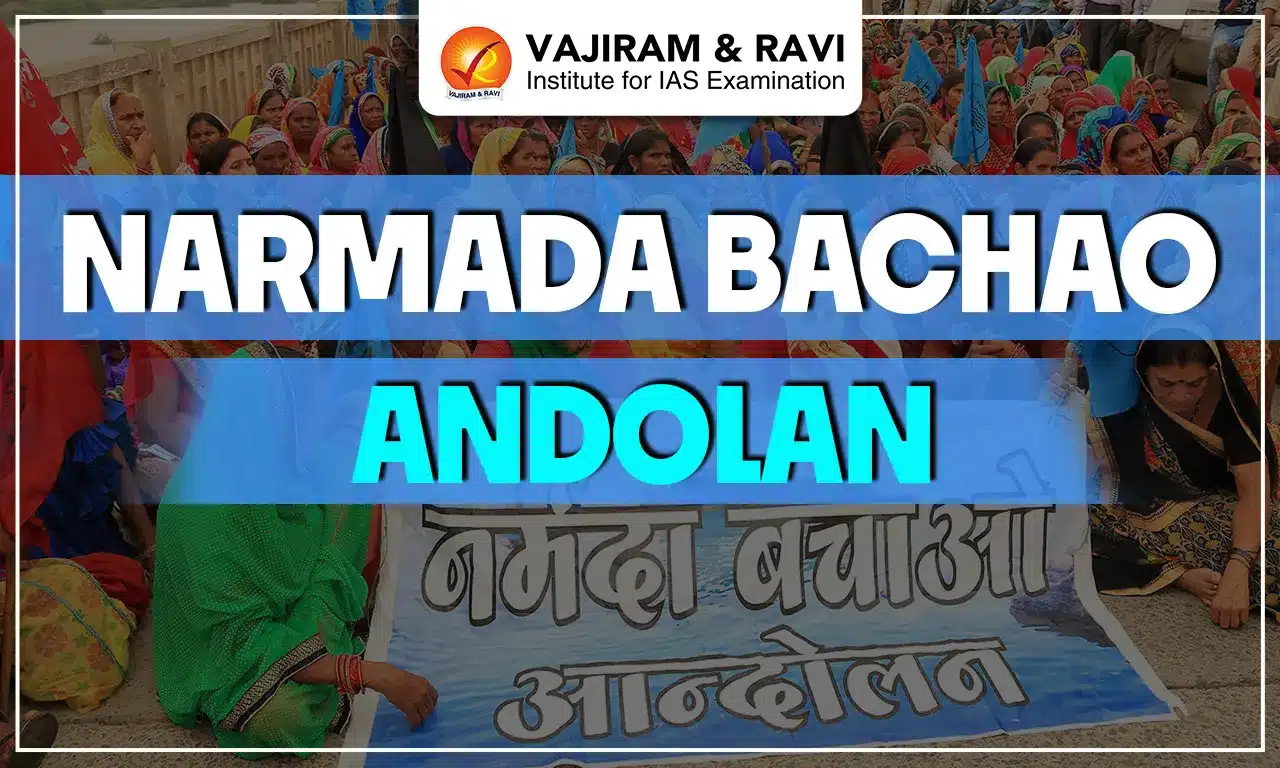
The Narmada Bachao Andolan, also known as the “Save the Narmada Movement,” is one of India’s most iconic social and environmental movements. Starting in the 1980s, it became a symbol of resistance against large-scale dam projects on the Narmada River, particularly the Sardar Sarovar Dam. The movement shows the struggles of thousands of tribal communities, farmers, laborers, and other marginalized groups who faced displacement due to these projects. Beyond advocating for the rights of affected communities, NBA brought environmental issues, ethical development, and social justice to the forefront, uniting people across Madhya Pradesh, Maharashtra, and Gujarat. In this article, we are going to cover Narmada Bachao Andolan, its origin, objectives, its leaders and its impact. 

Narmada Bachao Andolan

The Narmada Bachao Andolan is one of India’s most enduring and influential social movements. It has brought attention to the delicate balance between development and human and environmental rights, showing that progress should not come at the cost of people and nature. While the Sardar Sarovar Dam stands as a testament to India’s engineering ambitions, Narmada Bachao Andolan makes sure that the voices of the displaced and the need for sustainable development are not forgotten. Through years of protest, legal battles, and awareness campaigns, NBA has shown that collective action, informed advocacy, and peaceful resistance can challenge powerful institutions and bring meaningful change. Its legacy continues to inspire environmental movements worldwide, proving that development without justice is incomplete.

Narmada Bachao Andolan Origin

The roots of the Narmada Bachao Andolan trace back to the 1960s when plans for the Sardar Sarovar Dam were first proposed in 1961 at Navagam, Gujarat. By the 1970s and 1980s, it became evident that the dam would submerge many villages, displacing tens of thousands of people and disrupting lives dependent on the river, forests, and farmland. Local resistance groups initially sprang up, which later merged to form the Narmada Bachao Andolan in 1985.

This marked the beginning of a sustained, peaceful struggle that combined grassroots mobilization with legal challenges, media advocacy, and public awareness campaigns. Narmada Bachao Andolan soon gained national and international attention for highlighting the human cost of large infrastructure projects and questioning the developmental model that prioritized industrial growth over social welfare.

Year Event

1961

Proposal for Sardar Sarovar Dam

1969

Narmada Water Disputes Tribunal (NWDT) established

1979

NWDT issues award on water sharing and dam construction

1985

NBA begins as a protest movement

1989

NBA formally established; gains national attention

1993

World Bank withdraws funding after Morse Commission report

1994-1999

Dam construction halted due to legal and public pressure

2000

Supreme Court allows conditional continuation with strict R&R guidelines

2017

Sardar Sarovar Dam completed and inaugurated

Narmada Bachao Andolan Objectives 

The primary goal of the Narmada Bachao Andolan was to prevent the forced displacement of vulnerable communities without adequate rehabilitation and to make sure that development projects respect the environment and human rights. Key objectives included:

  • Halting the construction of large dams causing mass displacement.
  • Securing fair rehabilitation and compensation for affected people.
  • Protecting the ecological balance of the Narmada Valley.
  • Raising awareness about the environmental and social impacts of mega-dams.
  • Holding global financial institutions, like the World Bank, accountable for funding projects without proper safeguards.

The movement focused on how development should not mean destruction, encapsulated in slogans such as “Vikas Chahiye, Vinash Nahin” (We want development, not destruction) and “Koi nahi hatega, bandh nahi banega” (No one will move, the dam will not be built).

Narmada Bachao Andolan Leaders

Narmada Bachao Andolan was not driven by a single individual but was a collective effort. However, many leaders became synonymous with the movement:

  • Medha Patkar – Born on December 1, 1954, in Mumbai, Medha Patkar became the leading face of the NBA. With a master’s degree in social work from TISS, she dedicated her life to the Narmada Valley, bringing national and international attention to the plight of displaced communities. Her leadership style emphasized nonviolent protest and participatory mobilization of affected communities.
  • Baba Amte – Renowned for his work with leprosy patients, Baba Amte joined NBA in the 1990s, lending his moral authority and visibility to the movement. Even at the age of 75, he lived among displaced families to protest the dam projects. His involvement underscored the humanitarian and ethical dimensions of the movement, highlighting that development cannot ignore human suffering.
  • Local organizations such as the Narmada Dharangrast Samiti (Maharashtra), Narmada Ghati Navnirman Samiti (Madhya Pradesh), and Narmada Asargrast Samiti (Gujarat) also played pivotal roles through marches, rallies, hunger strikes, and Jal Satyagrahas (water protests).

Narmada Bachao Andolan Important Activities and Methods

The Narmada Bachao Andolan became known for its nonviolent approach. Its methods included:

  • Peaceful protests and mass marches.
  • Hunger strikes by Medha Patkar, Baba Amte, and other leaders.
  • Legal battles and petitions in Indian courts.
  • Awareness campaigns and media advocacy.
  • The Narmada Jan Vikas Sangharsh Yatra in 1990, which traversed several states to highlight the issue.

These methods combined traditional grassroots activism with modern legal and media strategies, making NBA a multi-dimensional movement that could address social, environmental, and political dimensions simultaneously.

Narmada Bachao Andolan vs Union of India

A landmark case, Narmada Bachao Andolan vs Union of India (2020), highlighted the ongoing issue of rehabilitation. Petitioners argued that the 1987 environmental clearance lacked proper study and violated fundamental rights. They demanded an independent environmental review and better rehabilitation for affected families. The government countered that the project followed due process and was vital for water and power needs.

The Supreme Court emphasized balancing development with human rights, allowing the dam’s construction up to 90 meters while mandating strict compliance with environmental and rehabilitation conditions. The case reinforced NBA’s relevance in advocating for justice even in ongoing projects.

Narmada Bachao Andolan Impact

Though the dams were eventually completed, Narmada Bachao Andolan achieved important milestones that reshaped India’s approach to development projects:

Social Impact:

  • Brought mass displacement into the national spotlight.
  • Empowered local communities to voice concerns.
  • Raised awareness about the social and environmental costs of development.

Legal and Policy Impact:

  • Led to halts in dam construction between 1994 and 1999.
  • Forced the World Bank to withdraw its funding in 1993.
  • Influenced the formulation of better rehabilitation policies for displaced persons.

Environmental Impact:

  • Initiated rigorous environmental assessments.
  • Promoted sustainable and people-centric development practices.
  • Highlighted the ecological consequences of large dams, including impacts on river ecosystems, forests, and biodiversity.

The success of Narmada Bachao Andolan showed that public participation and advocacy can shape government policies and hold international institutions accountable. It also inspired similar movements across India and globally, proving that peaceful, organized protest backed by evidence and mass support can influence large infrastructure projects.

Narmada Bachao Andolan Lessons and Legacy

The Narmada Bachao Andolan provides many lessons for environmental and social movements:

  • People-Centered Development: Development projects should prioritize the well-being of local communities.
  • Nonviolent Resistance: Peaceful protest combined with legal and media strategies can yield results even against powerful institutions.
  • Environmental Awareness: Large infrastructure projects must consider ecological balance and long-term sustainability.
  • Global Engagement: International funding agencies and policymakers can be influenced through awareness campaigns and advocacy.

The NBA remains relevant today, reminding policymakers that human rights and environmental protection must accompany development goals. The movement’s insistence on ethical, inclusive, and sustainable development continues to inform debates around dams, urbanization, and natural resource management in India and abroad.

Narmada Bachao Andolan Recognition

For its commitment to nonviolent struggle and social justice, Narmada Bachao Andolan received the Right Livelihood Award, often referred to as the “Alternative Nobel Prize.” Its work continues to serve as a benchmark for environmental activism, ethical development, and human rights advocacy.

Also Check Other Posts
Coastal Regulation Zone Global Plastic Treaty
Nitrogen Cycle Carbon Cycle

Narmada Bachao Andolan FAQs

Q1: Who started Narmada Bachao Andolan and why?

Ans: Medha Patkar started the Narmada Bachao Andolan in 1985 to protest against large dam projects like the Sardar Sarovar Dam that displaced thousands of people and harmed the environment.

Q2: What is the Narmada Bachao movement 1985?

Ans: It is a people’s movement launched in 1985 to oppose displacement, demand fair rehabilitation, and protect the environment along the Narmada River.

Q3: What is Chipko movement and Narmada Bachao Andolan?

Ans: Chipko focused on forest conservation through tree-hugging protests, while Narmada Bachao Andolan focused on protecting the river and displaced communities from dam projects.

Q4: Who introduced Narmada Bachao Andolan?

Ans: Medha Patkar introduced the Narmada Bachao Andolan in 1985 as a grassroots movement for social justice and environmental protection.

Environmental Biotechnology, Advantages, Disadvantages, Facts

Environmental Biotechnology

Environmental biotechnology is an innovative branch of science that applies biological systems, organisms, and processes to solve pressing environmental challenges. It focuses on developing eco-friendly solutions for waste management, pollution control, and renewable energy production ensuring sustainability while protecting natural ecosystems. Through the use of microorganisms, plants, and biotechnological tools, this field seeks to clean contaminated environments, generate biofuels, and recycle waste materials, thus contributing to a cleaner and greener planet.

Environmental Biotechnology

Environmental biotechnology involves using living organisms and biological processes to address environmental issues and promote sustainability. It is applied in various sectors such as wastewater treatment, air pollution control, solid waste management, and renewable energy generation.

Key applications include:

  • Waste treatment: Microorganisms are used for the microbial degradation of sewage and hazardous waste.
  • Pollution control: Bioremediation processes help remove contaminants from soil, water, and air.
  • Bioenergy generation: Organic waste is converted into biofuels like biogas, ethanol, and biodiesel.
  • Biodegradable materials: It supports the creation of green chemicals and eco-friendly materials that reduce environmental harm.

By integrating biotechnology into industrial, agricultural, and urban systems, this field minimizes ecological footprints, mitigates climate change, and supports the vision of sustainable development.

Environmental Biotechnology Important Facts

  • Plastic Waste Management: Over 350 million tonnes of plastic waste are generated annually worldwide, driving research into biodegradable plastics and microbial plastic degradation.
  • Bioenergy Research: Scientists are developing advanced biofuels and bio-batteries as alternatives to fossil fuels and lithium-ion batteries.
  • Biomaterials and 3D Printing: Biodegradable polymers and bioinks are revolutionizing the medical and manufacturing industries.
  • Global Relevance: Environmental biotechnology plays a vital role in climate action, sustainable industry practices, and the circular economy.

Environmental Biotechnology Advantages

Environmental Biotechnology has the following advantages: 

  1. Efficient Waste Management and Pollution Control:  Environmental biotechnology uses microbes to treat industrial, municipal, and agricultural waste. Bioremediation cleans contaminated soils and water bodies by breaking down toxic pollutants naturally, minimizing health and ecological risks.
  2. Renewable Bioenergy Production: Organic waste is transformed into biofuels like biogas and ethanol. This reduces dependence on fossil fuels and promotes a sustainable energy future.
  3. Eco-Friendly Alternatives: It creates the development of biodegradable plastics, biofertilizers, and green chemicals reducing reliance on harmful synthetic products and minimizing pollution.
  4. Resource Conservation: Technologies like bioleaching help recover valuable metals from waste materials, reducing the environmental burden of mining and preserving natural resources.
  5. Climate Change Mitigation: Environmental biotechnology supports carbon sequestration, where carbon dioxide is absorbed and stored by biological systems. This reduces greenhouse gas emissions and combats global warming.
  6. Promoting a Circular Economy: By turning waste into useful products, it supports a zero-waste, circular production system, crucial for sustainable industry and urban development.

Overall, environmental biotechnology strengthens the foundation for sustainable industrialization, eco-conscious agriculture, and improved public health.

Environmental Biotechnology Disadvantages

Despite its immense potential, environmental biotechnology faces several challenges:

  1. High Implementation Costs: Establishing bioreactors, research labs, and large-scale biotreatment facilities demands significant investment, limiting accessibility in developing regions.
  2. Slow Biological Processes: Bioremediation and microbial treatment often take longer than chemical or mechanical methods, making them less suitable for emergencies or large-scale contamination.
  3. Limited Applicability in Extreme Conditions: Many microbial systems cannot survive in environments with extreme toxicity, pH, or temperature levels, limiting their efficiency.
  4. Potential for Secondary Pollution: Improper management of genetically modified organisms (GMOs) or biological by-products may introduce new ecological risks.
  5. Regulatory and Ethical Concerns: The use of GMOs in environmental cleanup faces public skepticism and stringent biosafety regulations. Ethical considerations about ecosystem interference remain a global concern.
  6. Awareness and Training Gaps:Lack of trained personnel and limited public understanding restrict the widespread adoption of green technologies.

These drawbacks underscore the need for strict regulation, continuous innovation, and robust biosafety measures.

Recent Tools and Innovations in Environmental Biotechnology

  1. Nanobiotechnology: Nanoparticles are being used to remove pollutants from air, water, and soil with greater precision and efficiency.
  2. Bioinformatics: Artificial intelligence and data analytics help monitor environmental conditions and optimize microbial remediation processes.
  3. Synthetic Biology: Scientists design customized microbes for pollution degradation and biofuel production, improving the scalability of green technologies.
  4. CRISPR Gene Editing: Genetic modification of microorganisms enhances their ability to absorb heavy metals, degrade pollutants, and produce bioenergy.

These innovations mark a new era in environmental management—one driven by biotechnology and digital intelligence.

Environmental Biotechnology Way Forward

To unlock the full potential of environmental biotechnology, a collective approach involving governments, industries, and research institutions is important. Key measures include:

  • Strengthening digital and physical infrastructure for biotechnology research.
  • Providing biosafety through strict regulatory oversight.
  • Encouraging investments in green innovation through public-private partnerships.
  • Promoting education and awareness about eco-friendly technologies.
  • Expanding international cooperation for sustainable solutions.

The integration of biotechnology with policy, innovation, and community action will accelerate the transition to a green economy.

Environmental Biotechnology UPSC

Environmental biotechnology stands as a transformative force in the quest for sustainability. By offering biobased solutions for pollution control, waste management, and renewable energy, it bridges the gap between environmental protection and economic progress.

While challenges such as high costs and biosafety concerns persist, continued innovation, ethical regulation, and global collaboration can overcome these hurdles. Ultimately, environmental biotechnology not only preserves our planet but also reshapes industries, cities, and lifestyles toward a more sustainable future where growth and nature coexist in harmony.

Also Check Other Posts
Coastal Regulation Zone Global Plastic Treaty
Nitrogen Cycle Carbon Cycle

Environmental Biotechnology FAQs

Q1: What is environmental biotechnology?

Ans: Environmental biotechnology is the use of biological processes and organisms to solve environmental problems such as pollution control, waste management, and sustainable energy production.

Q2: What does an environmental biotechnologist do?

Ans: An environmental biotechnologist develops and applies biological methods to treat waste, clean pollutants, and create eco-friendly technologies for environmental protection.

Q3: What are the benefits of environmental biotechnology?

Ans: It reduces pollution, promotes waste recycling, conserves resources, produces renewable energy, and supports sustainable development.

Q4: What is nanobiotechnology?

Ans: Nanobiotechnology is the application of nanotechnology and biological principles to create nanoscale materials and tools for pollution removal, diagnostics, and sustainable solutions.

Q5: What is bioenergy generation?

Ans: Bioenergy generation is the process of producing renewable energy, such as biogas or biofuels, from organic waste materials using biological methods.

Difference between Genomics and Proteomics, Key Details

Difference between Genomics and Proteomics

The fields of genomics and proteomics are changing the way we study life, medicine, and healthcare. They help us understand our genes, the instructions that make us who we are, and the proteins, which are the molecules that actually do the work in our bodies. While genomics looks at the genetic code, proteomics focuses on the proteins made from that code.

Understanding the difference between these two is important not only for scientists but also for anyone interested in biotechnology, medical research, and health innovations. In this article, we are going to cover the difference between Genomics and Proteomics and their application and importance. 

What is Genomics?

  • Genomics is the study of all the genes in an organism, called the genome. It looks at how genes are structured, how they work, and how they interact with each other. Genomics also studies how genes change over time and how they affect our health.
  • Scientists use advanced tools like DNA sequencing and bioinformatics to study genomes. Bioinformatics is the use of computers to store, analyze, and understand large amounts of biological data. Genomics helps identify genes responsible for diseases, understand how organisms evolve, and even develop personalized medical treatments based on an individual’s genetic makeup.
  • One of the most famous achievements in genomics is the Human Genome Project, which mapped all human genes. This project laid the foundation for modern medicine and genetic research.

Read About: Genome Sequencing

What is Proteomics?

  • While genomics studies the blueprint (DNA), proteomics studies the actual machinery, proteins that make life happen. Proteins perform almost all functions in our bodies, including building tissues, supporting metabolism, and defending against diseases.
  • The proteome is the complete set of proteins expressed by a genome. Unlike genes, the proteome can change depending on the type of cell, the environment, and stress conditions.
  • Proteomics involves identifying proteins, studying their structures, functions, and interactions. Tools like mass spectrometry and immunoassays are commonly used in proteomics. By studying proteins, scientists can understand how diseases develop, discover new drugs, and improve diagnostics.

Differences Between Genomics and Proteomics 

Following are the differences in between Genomics and Proteomics: 

Aspect Genomics Proteomics

Focus

All the genes in an organism

All the proteins produced by the genes

Nature

Genome is mostly fixed in every cell

Proteome varies in different cells and conditions

Function

Shows the potential of genes

Shows what is actually happening in the body

Technologies

DNA sequencing, bioinformatics

Mass spectrometry, protein assays

Example

Human Genome Project

Protein studies for disease diagnosis and drug discovery

In simple terms, genomics tells us what could happen, while proteomics tells us what is happening in the body.

Importance of Difference between Genomics and Proteomics

Knowing the difference between genomics and proteomics helps in many areas:

  • Personalized Medicine: Genomics identifies genetic risks, and proteomics shows which proteins are active. Together, they help doctors design treatments for individual patients.
  • Drug Discovery: Proteins are the actual targets for most drugs, so studying them can lead to better treatments.
  • Early Diagnosis: Protein changes in the body can indicate diseases even before symptoms appear.

Read About: Gene Therapy

The Role of Bioinformatics in Genomics and Proteomics 

Both genomics and proteomics generate huge amounts of data. Bioinformatics uses computers and software to organize, analyze, and interpret this data.

In genomics, bioinformatics helps to:

  • Analyze DNA sequences.
  • Predict which genes are linked to diseases.
  • Personalize treatments based on a person’s genetic profile.

In proteomics, bioinformatics helps to:

  • Identify and measure proteins in cells.
  • Study how proteins interact with each other.
  • Predict the 3D structure of proteins for drug development.

Without bioinformatics, it would be almost impossible to make sense of all the data from genomics and proteomics research.

Genomics and Proteomics Applications in Medicine and Research 

Genomics and Proteomics have multiple uses in the field of Medicine and Research:

  • Precision Medicine: Helps tailor treatment to a patient’s genes and protein activity.
  • Drug Development: Speeds up finding effective medicines.
  • Disease Diagnosis: Early detection through protein markers.
  • Research: Helps understand how cells and organisms function, and how diseases progress.

Read About: DNA Barcoding

Difference Between Genomics and Proteomics UPSC

Genomics and proteomics are two sides of the same coin. Genomics decodes the instructions of life, while proteomics shows how these instructions are carried out. Together, they provide a complete picture of how our bodies function, helping in disease diagnosis, drug discovery, and personalized medicine.

With advances in bioinformatics and biotechnology, the integration of genomics and proteomics is opening new opportunities in medicine and research. By understanding both, scientists and healthcare professionals can improve treatments, predict diseases, and design better therapies, making these fields essential for the future of healthcare.

Difference between Genomics and Proteomics FAQs

Q1: What is the difference between genomics and proteomics?

Ans: Genomics studies the complete set of genes (DNA) in an organism, while proteomics studies all the proteins expressed by those genes.

Q2: What is the difference between structural genomics and proteomics?

Ans: Structural genomics focuses on mapping and understanding the 3D structure of genes and genomes, whereas structural proteomics studies the 3D structures and interactions of proteins.

Q3: What are Genomics?

Ans: Genomics is the study of an organism’s entire set of genes, their functions, interactions, and influence on traits and diseases.

Q4: What are Proteomics?

Ans: Proteomics is the study of all proteins produced by a genome, including their structure, functions, and interactions in the body.

Q5: What are the applications of Genomics and Proteomics?

Ans: They are used in precision medicine, disease diagnosis, drug discovery, personalized therapy, and understanding biological systems.

Maritime Security, Definition, Challenges, Significance

Maritime Security

Maritime security is one of the most important dimension of national and international security in the contemporary world. With growing threats in the maritime domain and the increasing significance of sea-based trade, energy, and strategic interests, nations are prioritizing measures to ensure the safety and stability of their maritime boundaries. In this article, we are going to cover Maritime Security, its importance, mechanisms employed to secure the maritime domain, India’s initiatives, international cooperation, the role of coastal communities, challenges in addressing maritime threats, and the way forward. 

Maritime Security 

Maritime security is a multidimensional challenge that requires proactive, coordinated, and technologically advanced measures. For India, safeguarding its extensive coastline and ensuring the stability of the Indian Ocean region is critical for national security, economic growth, and international influence. National mechanisms, international cooperation, and active participation of coastal communities collectively strengthen maritime security. Addressing challenges like jurisdictional complexity, resource constraints, and technological advancements of adversaries is essential to create a secure and resilient maritime domain. Moving forward, continuous investment in technology, capacity building, and international collaboration will be key to sustaining maritime security in the rapidly evolving global landscape.

Maritime Security Significance

Maritime security includes the protection of national waters, economic interests, and maritime resources from threats such as terrorism, piracy, smuggling, and environmental hazards. The following factors underline its relevance:

  • India's Geo-Strategic Location: India possesses a long coastline of 7,516 km, spanning the Arabian Sea, Bay of Bengal, and Indian Ocean. Its strategic location in the Indo-Pacific region necessitates robust maritime security measures to protect national interests and regional stability.
  • Security Imperative: Securing territorial waters and maritime borders is important to prevent unauthorized intrusions and safeguard sovereignty. The 2008 Mumbai attacks, where terrorists entered via the sea, underscored the vulnerabilities in coastal security.
  • Changing Dynamics of International Politics: The maritime domain has grown central to global geopolitics, compelling nations to focus on maritime security. The formation of QUAD (India, USA, Japan, and Australia) is an example of cooperation to maintain a free, open, and inclusive Indo-Pacific.
  • Geo-Economics of the Indian Ocean: Making sure that the security of sea lanes is important for uninterrupted trade, energy transport, and economic growth. Additionally, the potential for deep-sea exploration enhances the economic potential of the region. For instance, Operation Sankalp by the Indian Navy ensures the safety of Indian vessels in conflict zones.
  • Prevention of Smuggling: Effective maritime security prevents illegal transportation of goods, narcotics, and weapons into national territory.
  • Environmental Protection: Maritime security also plays a role in safeguarding marine ecosystems, protecting biodiversity, and mitigating pollution impacts. The 2017 Ennore oil spill exemplified the need for prompt maritime response to environmental crises.
  • Humanitarian Assistance and Disaster Relief (HADR): Maritime capabilities are vital during humanitarian emergencies, such as evacuations during the Yemeni civil war under Operation Rahat.
  • Stability and Diplomacy: Maritime security fosters regional cooperation. Exercises like Malabar, conducted with the USA, Japan, and Australia, aim to ensure a free, open, and stable Indo-Pacific.
  • Safeguarding Offshore Energy Installations: Offshore oil and gas platforms, like Mumbai High, require robust maritime protection to ensure uninterrupted energy supplies.
  • Preventing Illegal Fishing: Security measures regulate illegal, unreported, and unregulated fishing in coastal waters. In 2020, the Indian Navy intercepted a Sri Lankan fishing vessel violating Indian waters near the Lakshadweep Islands.

The increasing relevance of maritime security shows it multifaceted importance in national defense, economic growth, environmental protection, and regional stability.

Maritime Security Available Mechanism

India has a combination of naval, coast guard, and law enforcement mechanisms to provide maritime security.

  • Indian Navy and Coast Guard Patrols: Regular patrols in territorial waters and the Exclusive Economic Zone (EEZ) deter unauthorized activities. In 2019, the Indian Coast Guard intercepted a Sri Lankan boat carrying narcotics off Tamil Nadu.
  • Coastal Surveillance Network (CSN): This network integrates coastal radars and Automatic Identification System (AIS) stations to monitor maritime activities. CSN was instrumental in tracking terrorists during the 2008 Mumbai attacks.
  • Maritime Exercises and Joint Operations: India conducts exercises with foreign navies to enhance interoperability and cooperation. The Varuna exercise with France exemplifies such collaboration.
  • Legislative and Legal Frameworks: India has enacted laws to address piracy, terrorism, and environmental protection, such as the Suppression of Unlawful Acts against the Safety of Maritime Navigation and Fixed Platforms on Continental Shelf Act, 2002.
  • International Cooperation: India actively collaborates through platforms like the Indian Ocean Naval Symposium (IONS) and Indian Ocean Rim Association (IORA) to strengthen regional security.
  • Capacity Building and Technology Adoption: Investments in advanced surveillance systems, patrol vessels, and aircraft enhance maritime domain awareness. The acquisition of the P-8I Poseidon maritime patrol aircraft has significantly bolstered reconnaissance capabilities.
  • Port Security Measures: Implementation of International Ship and Port Facility Security (ISPS) Code ensures the safety of ports such as Mumbai, Chennai, and Visakhapatnam.

Maritime Security and India’s Initiative

India has undertaken strategic initiatives to strengthen its maritime domain:

  • SAGAR (Security and Growth for All in the Region): This strategic doctrine emphasizes security and sustainable development in the Indian Ocean region.
  • Information Fusion Centre - Indian Ocean Region (IFC-IOR): Established in 2018, IFC-IOR acts as a hub for information sharing and maritime situational awareness.
  • The Blue Economy Vision 2030: This initiative aims to harness maritime resources while conserving marine ecosystems.
  • National Committee for Strengthening Maritime and Coastal Security (NCSMCS): Set up in 2013, this committee coordinates maritime security initiatives across agencies.
  • National Command Control Communication and Intelligence (NC3I) Network: Integrates surveillance data to enhance maritime domain awareness and response capability.

Maritime Security for International Mechanisms

Global cooperation complements national efforts in ensuring maritime security. This includes:

  • International Legislation: Treaties like the United Nations Convention on the Law of the Sea (UNCLOS) define maritime rights and responsibilities, reducing disputes.
  • International Organizations: The International Maritime Organization (IMO) oversees safety, security, and environmental regulations in global shipping.
  • Regional Maritime Security Initiatives: Agreements such as the Djibouti Code of Conduct (DCoC) and forums like IONS enhance cooperation in regional waters.
  • Maritime Exercises and Drills: Exercises like the US-led Sea Dragon or Combined Maritime Forces operations improve interoperability and readiness against piracy, terrorism, and other threats.
  • Information Sharing and Fusion Centers: MAOC-N in Europe, for instance, facilitates collaboration to combat drug trafficking.
  • Capacity Building and Assistance Programs: The Africa Partnership Station (APS) program trains and equips African maritime forces, enhancing regional security capabilities.

Maritime Security and Role of Coastal Communities

Coastal communities are important to maritime security due to their proximity and interaction with maritime activities:

  • Early Warning and Reporting: Communities often detect suspicious activities first. In 2019, Kerala fishermen reported a suspicious boat involved in drug trafficking.
  • Supporting Maritime Law Enforcement: Local knowledge aids law enforcement in monitoring maritime threats. Initiatives like Sagar Rakshak Dal involve residents in coastal surveillance.
  • Safeguarding Fisheries and Marine Resources: Coastal communities help prevent illegal fishing. In Gujarat, the Porbandar community actively reports unlawful fishing activities.
  • Disaster Rescue Operations: Communities assist in evacuation and disaster relief. During Cyclone Fani in 2019, Odisha’s coastal communities played a key role.
  • Promoting Maritime Awareness: Communities educate members about maritime security and safety, such as Mandvi in Gujarat.
  • Cultural and Social Ties: Deep-rooted maritime traditions foster ownership and responsibility for maritime security.

Maritime Security Challenges

Despite extensive efforts, maritime security faces many challenges:

  • Jurisdictional Complexity: Transnational threats complicate enforcement. For example, disputes in the Bay of Bengal between India and Bangladesh posed security challenges.
  • Information Sharing and Intelligence Gaps: Limited cooperation can hinder timely response. The 2008 Mumbai attacks highlighted intelligence-sharing failures.
  • Resource Constraints: Some strategic maritime regions, especially island nations, face shortages of trained personnel and naval assets.
  • Corruption and Illicit Networks: Corruption can facilitate smuggling and piracy. West African maritime zones have been impacted by such issues.
  • Lack of Coordination among Agencies: Disjointed responses reduce efficiency. Post-2019 Gulf of Oman oil tanker attacks exposed such coordination gaps.
  • Technological Advancements of Adversaries: Threats evolve rapidly with technology. In 2020, drones were used for smuggling gold from India to Sri Lanka.
  • Political Considerations: Territorial disputes can complicate cooperation, such as the complex dynamics involving India, Pakistan, and China in the Indian Ocean.
  • Maritime Environment and Weather: Vast areas and adverse weather conditions challenge surveillance and rescue operations, particularly during the monsoon in the Bay of Bengal and Arabian Sea.

Way Forward

To strengthen maritime security, nations must adopt a comprehensive approach:

  • Enhanced Maritime Domain Awareness: Invest in radar systems, satellite surveillance, and AIS tracking to monitor real-time maritime activity.
  • Information Sharing and Intelligence Cooperation: Establish agreements among countries and agencies to close intelligence gaps and coordinate responses.
  • Public-Private Partnerships: Collaborate with port authorities, shipping companies, and private stakeholders to identify and mitigate risks.
  • Coastal Community Engagement: Leverage local knowledge through awareness campaigns, reporting mechanisms, and community-based surveillance.
  • Research and Development: Innovate in counter-UAV technologies, underwater surveillance, and cybersecurity to address evolving threats.

Public Diplomacy and Maritime Awareness: Promote awareness on maritime security issues and encourage international collaboration for a stable maritime environment.

Maritime Security FAQs

Q1: What is Maritime Security?

Ans: Maritime security is the protection of a nation’s territorial waters, sea lanes, and maritime interests from threats like piracy, terrorism, smuggling, and environmental hazards.

Q2: What is UNCLOS?

Ans: UNCLOS is an international treaty that defines the rights and responsibilities of nations in their use of the world’s oceans, including navigation, resource exploitation, and maritime boundaries.

Q3: What is Blue Economy Vision 2030?

Ans: The Blue Economy Vision 2030 is India’s initiative to sustainably harness marine resources for economic growth while conserving marine ecosystems.

Q4: What is EEZ?

Ans: EEZ (Exclusive Economic Zone) is a sea zone extending up to 200 nautical miles from a country’s coast, where the nation has exclusive rights over the exploration and use of marine resources.

Q5: What is HADR?

Ans: HADR (Humanitarian Assistance and Disaster Relief) refers to maritime operations aimed at providing aid, rescue, and relief during natural disasters or humanitarian crises.

Direct Benefit Transfer, Meaning, Features, Objectives

Direct Benefit Transfer

The Direct Benefit Transfer is an initiative undertaken by the Government of India to reform the subsidy and welfare delivery mechanism. Launched in January 2013, DBT seeks to make sure that government benefits such as subsidies, pensions, scholarships, and social welfare payments reach the intended beneficiaries directly, swiftly, and transparently. By transferring funds straight into the beneficiaries’ bank accounts, DBT eliminates intermediaries, curtails corruption, and improves efficiency in governance. Over the years, it has evolved into a key pillar of India’s digital governance and inclusive growth model, reflecting the government's commitment to “Minimum Government, Maximum Governance.” In this article, we are going to cover Direct Benefit Transfer, its features, objectives and importance. 

Direct Benefit Transfer (DBT)

  • The Direct Benefit Transfer (DBT) initiative aims to reform the delivery system for subsidies and benefits by minimizing delays and leakages. Before its introduction, India’s welfare programs were often plagued by inefficiency, red tape, and diversion of funds. DBT introduced a technology-driven, transparent, and accountable mechanism that leverages the power of digital India.
  • The program operates on the JAM Trinity, Jan Dhan Yojana, Aadhaar, and Mobile connectivity to make sure that the right person receives the right amount at the right time. Each beneficiary’s Aadhaar number is linked with their bank account, providing seamless identification and direct transfer of funds.
  • Initially launched in 43 districts, DBT now covers almost all central sector and centrally sponsored schemes across various ministries such as education, agriculture, rural development, and social justice. 
  • The PAHAL scheme, for instance, has become one of the world’s largest direct cash transfer programs, where LPG subsidies are directly credited to consumers’ accounts.
  • Through digitization, DBT has not only reduced administrative burden but also empowered beneficiaries, particularly in rural and marginalized communities, by giving them control over their own entitlements. 

Direct Benefit Transfer Features

Direct Benefit Transfer stands out for its technological and governance-driven features that have reshaped welfare delivery. Key features include:

  1. Direct Fund Transfer: Benefits are credited straight to the beneficiaries’ bank accounts, bypassing intermediaries.
  2. Transparency and Efficiency: Every transaction is digitally traceable, reducing the scope for manipulation.
  3. Targeted Delivery: Aadhaar verification ensures that only genuine beneficiaries receive subsidies.
  4. Reduced Leakages: Eliminating the middlemen curtails corruption and duplication.
  5. Financial Inclusion: Encourages banking habits and brings marginalized groups into the formal financial system.
  6. Real-Time Monitoring: Through the DBT Bharat Portal, ministries and departments track fund flow and implementation status.

Direct Benefit Transfer Objectives

The DBT scheme was introduced with many important objectives that align with India’s governance reforms:

  • Efficiency: Streamline welfare delivery by minimizing delays in fund disbursement.
  • Transparency: Enhance accountability and reduce pilferage.
  • Accountability: Ensure that benefits reach only the intended recipients.
  • Cost-Effectiveness: Reduce administrative costs through automation and digitization.
  • Empowerment: Strengthen citizens by giving them direct access to financial resources.

These objectives collectively aim to transform welfare delivery from a paper-based, intermediary-driven system into a digital, beneficiary-centric model.

Direct Benefit Transfer Significance

  • The Direct Benefit Transfer initiative marks a big shift in public welfare governance. By directly transferring subsidies and benefits into beneficiaries’ accounts, it has highly improved transparency, efficiency, and inclusiveness.
  • Before DBT, a large portion of government funds failed to reach the needy due to leakages and corruption. The new system makes sure that each rupee allocated for welfare directly benefits the citizen for whom it is intended.
  • DBT has also played an important role in financial inclusion. The Pradhan Mantri Jan Dhan Yojana, by expanding access to bank accounts, has made it possible for millions of poor households to participate in the formal economy. Women, farmers, and laborers now have direct access to subsidies and wages, which has improved their economic autonomy and social empowerment.
  • Moreover, DBT has strengthened the targeting of subsidies. The PAHAL LPG subsidy scheme, for instance, eliminated fake connections and made sure that benefits reached genuine households. Similarly, programs like MGNREGA, PM-KISAN, and National Scholarship Schemes have leveraged DBT to ensure timely payment to beneficiaries.
  • During emergencies, such as the COVID-19 pandemic, DBT served as a lifeline. Through different welfare schemes, financial assistance was given quickly to millions of vulnerable citizens across the country. This ability to deliver timely support shows DBT’s potential as a social safety net during crises.
  • Thus, DBT not only improves governance efficiency but also strengthens India’s vision of an inclusive and self-reliant society.

Direct Benefit Transfer Challenges

While Direct Benefit Transfer has transformed welfare delivery, challenges remain that limit its full potential. Some of the challenges include:

  1. Digital and Infrastructure Gaps: Many rural areas continue to face poor internet connectivity and inadequate banking infrastructure, which hampers real-time transactions.
  2. Exclusion of Marginalized Groups: Individuals lacking Aadhaar cards or bank accounts especially those from tribal and remote regions often remain outside the DBT network.
  3. Banking Challenges: Insufficient bank branches, long queues, and limited access to ATMs or banking correspondents create difficulties for beneficiaries, particularly in rural areas.
  4. Aadhaar-Related Issues: Problems like biometric mismatches, authentication errors, and data inconsistencies lead to delays or denial of benefits to eligible recipients.
  5. Corruption and Mismanagement: Though DBT reduces middlemen, reports of unauthorized deductions or withdrawal fees persist in some regions.
  6. Lack of Awareness:Limited awareness about DBT schemes and entitlements often results in underutilization, especially among financially illiterate populations.
  7. Operational Hurdles: Technical glitches, delays in fund release, and weak monitoring mechanisms reduce the program’s overall efficiency.

To overcome these, the government must focus on improving digital literacy, banking outreach, and grievance redressal mechanisms.

Recommendation to Improve Direct Benefit Transfer

To further strengthen the DBT framework, India must focus on the following:

  • Improving Digital Infrastructure: Strengthen rural internet connectivity and banking facilities.
  • Providing Universal Coverage: Guarantee every eligible beneficiary has a functional Aadhaar-linked bank account.
  • Technological Upgradation: Deploy blockchain and AI tools for secure fund transfer and real-time tracking.
  • Financial Literacy Programs: Educate citizens about DBT schemes, rights, and complaint mechanisms.
  • Strengthening Monitoring Systems: Establish robust audit and feedback mechanisms to ensure accountability.
  • Expanding Coverage: Bring more welfare schemes especially in healthcare, agriculture, and education under the DBT umbrella.With these reforms, DBT can evolve into a truly universal and resilient welfare delivery system.

Direct Benefit Transfer UPSC 

  • Launch Year: 2013
  • Initial Coverage: 43 districts
  • Key Schemes: LPG Subsidy (PAHAL), MGNREGA, PM-KISAN, Scholarships, Pensions
  • Core Platforms: Aadhaar, Jan Dhan Accounts, Mobile Connectivity (JAM Trinity)
  • Portal: DBT Bharat Portal monitors implementation and progress
  • Key Objectives: Reduce leakages, enhance efficiency, promote financial inclusion
  • Impact: Improved targeting of subsidies, reduced corruption, increased transparency

Direct Benefit Transfer FAQs

Q1: What are Direct Benefit Transfers?

Ans: Direct Benefit Transfers (DBT) are government payments where subsidies and benefits are directly deposited into beneficiaries’ bank accounts to reduce leakages and ensure transparency.

Q2: How do I activate DBT in my bank account?

Ans: You can activate DBT by linking your Aadhaar number with your bank account and ensuring it is updated in government scheme records.

Q3: Who is eligible for DBT payment?

Ans: Beneficiaries who are registered under specific government welfare schemes and have Aadhaar-linked bank accounts are eligible for DBT payments.

Q4: What are the Objectives of DBT?

Ans: The main objectives of DBT are to eliminate intermediaries, reduce leakages, ensure targeted delivery, and improve transparency in welfare distribution.

Q5: What is Jan Dhan Yojana?

Ans: Pradhan Mantri Jan Dhan Yojana (PMJDY) is a financial inclusion programme that provides every household with access to a bank account, enabling direct transfer of benefits under DBT schemes.

Community Reserves and Conservation Reserves, Example, Significance

Community Reserves and Conservation Reserves

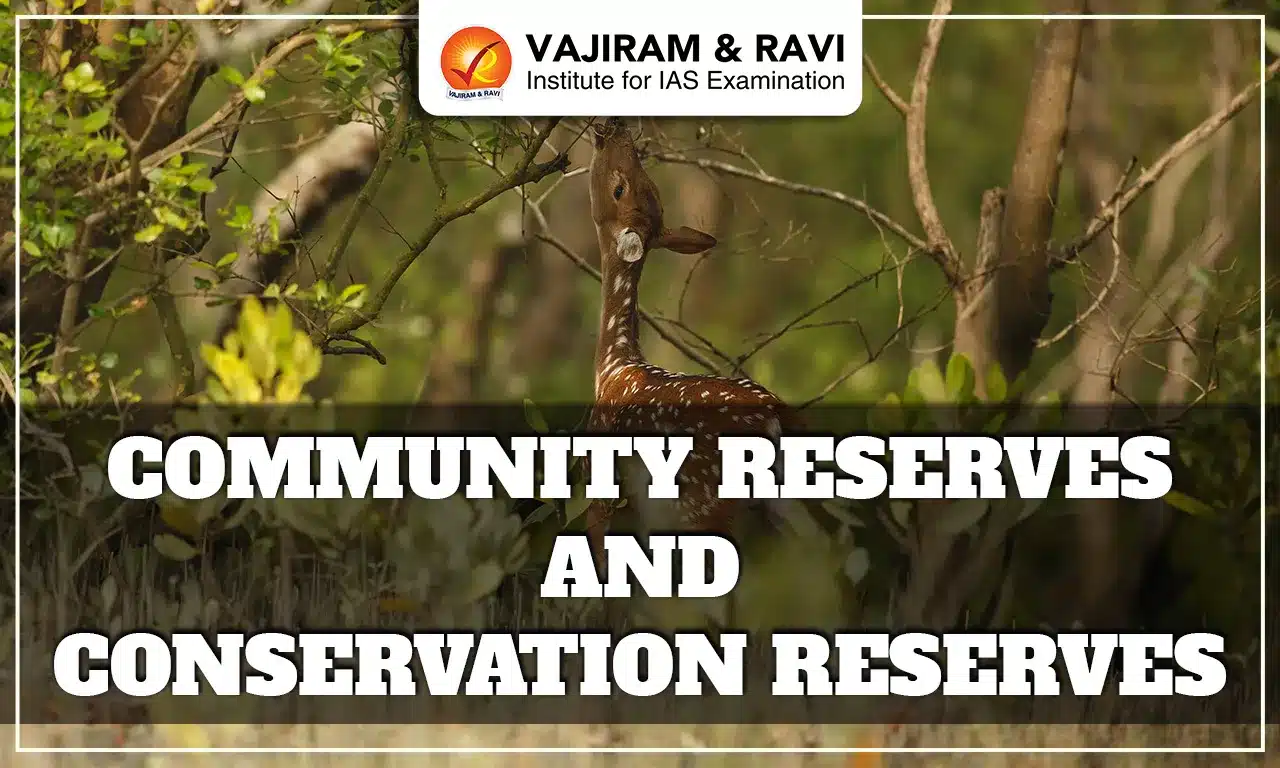
India’s diverse ecosystems host unique species of flora and fauna, making biodiversity conservation a national priority. While protected areas like national parks and wildlife sanctuaries have long played a key role, newer categories such as Community Reserves and Conservation Reserves bridge the gap between strict protection and community participation. These reserves encourage local stewardship and ensure that ecological preservation coexists with livelihoods.

Community Reserves and Conservation Reserves

The concept of Community and Conservation Reserves was introduced through the Wildlife (Protection) Amendment Act, 2002, which came into effect in 2003. It added two new categories under Sections 36A to 36D of the Wildlife Protection Act, 1972 to strengthen participatory conservation outside traditional protected areas.

These reserves act as buffers and linkages between core habitats such as national parks, wildlife sanctuaries, and human habitations. They empower local communities and private landowners to protect biodiversity voluntarily, ensuring inclusive conservation in both government and community-owned lands.

Community Reserves

A Community Reserve is an area owned by individuals or a community that is voluntarily designated for wildlife conservation, with the approval of the State Government. The key idea is to recognize the role of local communities in biodiversity protection while ensuring sustainable resource use.

Introduced under Section 36C of the Wildlife (Protection) Act, 1972, community reserves can be declared when private or community landowners agree to conserve wildlife and its habitat without losing ownership rights.

Key Features:

  • Ownership remains with the community or individuals.
  • Managed by a Community Reserve Management Committee (CRMC) constituted by the State Government.
  • Regulated use of natural resources based on conservation plans.
  • Hunting, tree felling, or habitat destruction prohibited without authorization.

Community Reserves Objectives

The major Objectives of Community Reserves has been listed below:

  1. To promote participatory conservation by engaging local stakeholders.
  2. To protect biodiversity-rich private or community lands outside government reserves.
  3. To serve as ecological corridors linking protected areas.
  4. To encourage sustainable livelihoods and eco-development practices.
  5. To strengthen traditional conservation ethics among local people.

Community Reserves in India Examples

The Examples for Community Reserves in India include:

  1. Keshopur-Miani Community Reserve, Punjab: A pioneering wetland reserve known for its biodiversity, this was the first Community Reserve in India.
  2. Senchal Community Reserve, West Bengal: Located near Darjeeling, this reserve involves local communities in managing forests and wildlife.
  3. Ziro Community Reserve, Arunachal Pradesh: Focused on conserving the unique agro-biodiversity of the Apatani plateau through traditional rice-fish cultivation.
  4. Khonoma Nature Conservation and Tragopan Sanctuary, Nagaland: Managed by the Angami tribe to protect species like the Blyth's Tragopan.
  5. Boriya-Kharadi Community Reserve, Maharashtra: Established by the local panchayat to help increase the population of the Great Indian Bustard.

Community Reserves Significance

Community reserves enhance grassroots environmental governance and foster a sense of ownership among locals. They integrate conservation with local livelihoods, promoting eco-tourism, non-timber forest produce management, and traditional knowledge systems. They are vital for meeting India’s Aichi Biodiversity Targets and SDG 15 (Life on Land) commitments.

Conservation Reserves

A Conservation Reserve is an area owned by the government, particularly on marginal or buffer zones adjacent to national parks or sanctuaries, declared for the protection of wildlife and biodiversity. It is introduced under Section 36A of the Wildlife (Protection) Act, 1972.

Conservation Reserves aim to protect corridors and landscapes connecting major protected areas, ensuring the free movement of species while involving local communities in management.

Key Features:

  • Ownership lies with the government, but management is community-inclusive.
  • Managed by a Conservation Reserve Management Committee (CRMC).
  • Sustainable resource use allowed under guidelines.
  • No change in land use permitted without State approval.

Conservation Reserves Objectives

The major Objectives of Conservation Reserves has been listed below:

  1. To preserve biological corridors between core habitats.
  2. To reduce man-animal conflicts near protected areas.
  3. To involve local communities, NGOs, and panchayats in habitat management.
  4. To protect critical ecosystems not covered under existing national parks or sanctuaries.
  5. To promote eco-tourism and awareness programs.

Conservation Reserves in India Examples

The Examples for Conservation Reserves in India include:

  1. Kutch Desert Wildlife Conservation Reserve, Gujarat: Acts as a buffer zone for the Indian Wild Ass Sanctuary.
  2. Tsarap Chu Conservation Reserve, Himachal Pradesh: India's largest conservation reserve, located in Spiti Valley.
  3. Tiruppadaimarathur Conservation Reserve, Tamil Nadu: The first conservation reserve declared in the country.
  4. Jawai Bandh Forests Conservation Reserve, Rajasthan: Declared by the Rajasthan government in 2012.

Conservation Reserves Significance

Conservation reserves ensure connectivity between fragmented habitats, maintain ecological balance, and support species migration and breeding. They act as transition zones balancing human activity and conservation, vital for landscape-level biodiversity planning.

Community Reserves and Conservation Reserves Need 

The purpose of Community Reserves and Conservation Reserves in India have been listed below:

  • To expand India’s Protected Area Network (PAN) without displacing local populations.
  • To integrate traditional ecological knowledge into modern conservation frameworks.
  • To ensure ecological connectivity across fragmented landscapes.
  • To support climate resilience through ecosystem-based adaptation.
  • To strengthen India’s commitment to Convention on Biological Diversity (CBD) targets.

Community Reserves and Conservation Reserves Government Initiatives

Several Government initiatives serve as a pathway to promote and support the Community Reserves and Conservation Reserves in India. Few of them are:

  1. Wildlife (Protection) Amendment Act, 2002: Introduced legal framework for declaring community and conservation reserves.
  2. National Biodiversity Action Plan (NBAP) 2014: Promotes community-led conservation as part of biodiversity governance.
  3. National Wildlife Action Plan (2017-2031): Emphasizes landscape-level management and integration of local communities.
  4. Integrated Development of Wildlife Habitats (IDWH) Scheme (MoEFCC): Provides financial support for reserve creation and management.
  5. Green India Mission (GIM): Encourages restoration of degraded ecosystems, including those managed as community reserves.
  6. UNDP-GEF Small Grants Programme: Supports community-led biodiversity projects, especially in the Northeast.

Community Reserves and Conservation Reserves Challenges

Despite several significance and benefits, Community Reserves and Conservation Reserves in India face several challenges and criticism. These challenges can be resolved by addressing them with relevant solutions, policies and initiatives as discussed below:

Challenges:

  1. Limited Awareness: Many communities remain unaware of the legal and ecological benefits of forming reserves.
  2. Insufficient Funding: Dependence on state funds limits effective management and monitoring.
  3. Encroachment and Land Pressure: Growing population and agriculture expansion threaten reserve boundaries.
  4. Institutional Weakness: Inadequate training and coordination among management committees.
  5. Human-Wildlife Conflict: Expansion of reserves near human settlements sometimes increases conflict incidents.

Way Forward:

  1. Capacity Building: Regular training for local committees and forest officials.
  2. Community Incentives: Promote eco-tourism and payment for ecosystem services (PES).
  3. Technological Monitoring: Use GIS, drones, and biodiversity mapping for better surveillance.
  4. Integration with Climate Goals: Link reserves to India’s Nationally Determined Contributions (NDCs) on climate change.
  5. Legal Strengthening: Simplify declaration procedures and ensure adequate funding through central schemes.

Community Reserves and Conservation Reserves UPSC

As of 2023, India has 320 combined Community and Conservation Reserves across 19 states, according to the Ministry of Environment, Forest and Climate Change (MoEFCC). Conservation Reserves area is ~5,548.75 km² (for 115 Conservation Reserves) and Community Reserves are ~1,445‐1,455 km² sum to ~7,000 km² overall area, strengthening India’s network of protected areas.

These reserves not only safeguard wildlife corridors but also enhance carbon sequestration, watershed protection, and sustainable rural development. Their success exemplifies India’s move toward inclusive, decentralized, and participatory conservation, aligning with global biodiversity commitments.

  • As per the Wildlife Institute of India (WII) 2023 report, India has 220 Community Reserves, spread across states such as Nagaland, Meghalaya, Himachal Pradesh, and Kerala.
  • The North-Eastern states lead with the highest number, reflecting strong community-based conservation traditions.
  • According to the National Wildlife Database (2023) maintained by the Wildlife Institute of India, India has 100 Conservation Reserves across 18 states and union territories.
  • States like Jammu & Kashmir (35 reserves), Karnataka, and Maharashtra lead in establishing such reserves.
  • Together, Community and Conservation Reserves cover around ~0.21-0.22% of India’s total geographic area, contributing significantly to the National Biodiversity Action Plan (NBAP).

Community Reserves and Conservation Reserves FAQs

Q1: What are Community Reserves in India?

Ans: Community Reserves are areas owned by communities or individuals, voluntarily conserved under the Wildlife Protection Act for biodiversity protection.

Q2: What are Conservation Reserves in India?

Ans: Conservation Reserves are government-owned lands, often buffer zones, declared to protect wildlife and ecological corridors with community participation.

Q3: How are Community Reserves managed?

Ans: Community Reserves are managed by a State Government- constituted committee, ensuring sustainable resource use while protecting wildlife habitats.

Q4: What is the significance of Conservation Reserves?

Ans: Conservation Reserves maintain habitat connectivity, support species migration, reduce human-wildlife conflict, and involve communities in ecological management.

Q5: How can new Community or Conservation Reserves be declared?

Ans: New reserves are declared under Sections 36A-36D of the Wildlife Protection Act, involving government approval and local community cooperation.

India to Host Commonwealth Games 2030 in Ahmedabad

Commonwealth Games

The Commonwealth Games is a major international multi-sport event held every four years among the Commonwealth of Nations, mostly former British territories. It brings together athletes to compete in various sports while promoting equality, friendship, and shared values. Unlike the Olympics, the Games include smaller nations and territories, creating unique opportunities for athletes worldwide. It has grown into a global spectacle featuring men, women, and para-athletes, celebrating inclusivity and sportsmanship

Commonwealth Games

Originally known as British Empire Games (first edition: 1930 in Hamilton, Canada), the event has gone through name changes and format evolutions. Over time, it expanded in the number of sports, inclusion of women, and para-sport. The governing body was originally the Commonwealth Games Federation (CGF), now rebranded as Commonwealth Sport from March 2025, reflecting its ambition to be more movement than just event organizer. 

Today, 72 Commonwealth Games Associations participate in events ranging from athletics to netball and lawn bowls. Its traditions include the King’s Baton Relay and ceremonial hoisting of the Commonwealth flag, symbolizing unity among member nations.

Commonwealth Games Ahmedabad 2030

On October 15, 2025, the Commonwealth Sport Executive Board has finalized Ahmedabad (Gujarat, India) as the host city for the 2030 Commonwealth Games (XXIV Games), which will mark the 100-year anniversary (since 1930 Hamilton Games). Indian Cabinet, on August 27, 2025, approved the bid and nominated Ahmedabad as “ideal host city,” highlighting its infrastructure, democratic support, and sporting culture. Formal proposal presented to the Commonwealth Sport Evaluation Committee (September 2025) emphasizes affordability, inclusivity, sustainability, gender equity, para-sport integration, and long-term legacy. 2030 bid is India’s second time hosting (first was Delhi 2010). The centenary edition holds symbolic value.

Infrastructure & Urban Planning for Ahmedabad:

  • The bid includes the Sardar Vallabhbhai Patel Sports Enclave, estimated at Rs 6,000 crore, with features: aquatic centre, indoor arena, athlete village, upgraded stadiums.
  • Transport and hospitality upgrades are underway: airport terminal expansion costing ~Rs 3,130 crore, metro & BRTS networks being enhanced, new hotels & accommodations being built.
  • Rezoning of agricultural land (~200 hectares) approved for sports and related infrastructure development around Ahmedabad, e.g. for sports zone, residential zones near sports complexes.

Commonwealth Games 2030 Ahmedabad Hosting Significance

  • Sports Infrastructure Expansion: Hosting 2030 will require/ accelerate improvements in stadiums, athlete villages, training centres, transport, and hospitality. This infrastructure can benefit local communities and future events.
  • Economic Benefits: Job creation through construction, services, tourism; potential boost to local business; tourism inflow; increased investment and urban development, especially in Gujarat/Ahmedabad.
  • Soft Power & Global Image: Successfully hosting centenary edition would enhance India’s standing in international sports; ability to host Olympics (2036) may be bolstered.
  • Social & Youth Engagement: Increased participation in sports, training of officials/ volunteers, youth development, community health and recreation centres.
  • Promotion of Sports Diversity: With reinstatement of sports dropped, broader talent base can benefit; improved competitiveness in lesser-funded sports.

Commonwealth Games Glasgow 2026

The 2026 Commonwealth Games, officially the XXIII Games, will be held in Glasgow, Scotland, from 23 July to 2 August 2026. Originally awarded to Victoria, Australia, the state withdrew due to rising costs. Glasgow was confirmed as the replacement host, becoming the third city in Scotland to host the Games. The 2026 edition will be smaller, featuring 10 sports, four venues, and no athletes' village. It is also the first Games after King Charles III became Head of the Commonwealth.

Commonwealth Games Ceremonies

The opening and closing ceremonies celebrate the culture of the host nation, include flag hoisting, and introduce athletes.

  • Opening Ceremony: The ceremony begins with the hoisting of the host nation's flag and national anthem. Flags of the previous and next host nations, along with the Commonwealth Games Federation flag, are also raised. Artistic performances showcase music, dance, and theater reflective of the host’s culture. Athletes enter grouped by nation, with the previous host first and the host nation last. Speeches formally open the Games, and the King’s Baton, carried by a distinguished athlete, symbolizes unity and goodwill.
  • Closing Ceremony: The closing ceremony occurs after all competitions conclude. Athletes enter together, without national distinction, symbolizing unity. Officials give speeches, and the Commonwealth Games flag is handed to the mayor of the next host city. Artistic displays highlight the next host nation’s culture. The David Dixon Award, honoring an athlete for exceptional performance and contribution, is presented. The ceremony reinforces the spirit of sportsmanship, cultural exchange, and camaraderie among participating nations.
  • Medal Presentation: After each event, medals are awarded to the top three competitors or teams on a three-tiered podium. National anthems are played for gold medallists, and flags of medallists are raised. Volunteers assist in ceremonies, acting as flag bearers or presenting medals, ensuring smooth proceedings and reinforcing community involvement.

Commonwealth Games Sports

The Games feature a diverse sports program blending Olympic sports with events unique to the Commonwealth.

  • Core and Optional Sports:
      • The 2026 program will include 10 sports: athletics, para-athletics, 3x3 basketball, 3x3 wheelchair basketball, boxing, gymnastics (artistic), judo, lawn bowls, netball, swimming (including para-swimming), track cycling, para track cycling, weightlifting, and para powerlifting. Several previous sports like rugby sevens, badminton, squash, diving, and wrestling have been removed due to infrastructure and time constraints.
  • Parasports Inclusion:
    • The 2026 Games will feature 47 para-sport events, the largest in Commonwealth Games history. Athletics will include jumping, throwing, and track events. Swimming has added men’s 800m and women’s 1500m freestyle events. Wheelchair basketball and 3x3 basketball have expanded team quotas, highlighting inclusivity and equal opportunity for athletes with disabilities.

Commonwealth Games 2026 Changes Announced

Significant changes have been made to make the 2026 Games more sustainable and cost-effective.

  • Event Scaling
      • Originally, Victoria, Australia, was to host, but rising costs led to cancellation. Glasgow agreed to host a scaled-down version featuring 10-13 sports, using existing venues without constructing a new athletes’ village. This approach demonstrates fiscal responsibility while maintaining the Games’ competitive integrity.
  • Funding Arrangements
      • The rescue plan relied on CGF funding and commercial income; the Commonwealth Games Federation provided £100 million, supplemented by £30-50 million from commercial sources. Australia contributed AU$200 million as compensation (reports cite figures from ~AU$200m to AU$380m). The low-cost approach reduces public financial burden while ensuring smooth execution. 
  • Sports Program Removal
      • Several sports were removed due to logistical challenges, including rugby sevens, badminton, triathlon, and squash. Athletics and swimming added new events, parasport events increased, and lawn bowls moved indoors. This ensures the Games remain competitive, inclusive, and manageable for athletes and organizers alike.
  • Sports Format Changes
    • Cycling will maintain 26 events despite dropping mountain biking. Lawn bowls will now be held indoors with a reduced number of events. Athletics has added the mixed 4x400m relay and reintroduced the Mile race for men and women, paying tribute to the historic “Miracle Mile” of 1954 between Roger Bannister and John Landy. These changes reflect flexibility, modernization, and audience engagement.

Commonwealth Games Mascot 2026

The official mascot for Glasgow 2026 is Finnie, a Glaswegian unicorn. Finnie’s design was created by schoolchildren, promoting youth engagement. Her horn is a traffic cone, a playful nod to Glasgow’s Duke of Wellington statue tradition. The unicorn symbolizes Scotland’s national animal and is linked to the royal coat of arms. Finnie represents creativity, cultural pride, and a friendly ambassador for the Games, helping build excitement and identity among fans and participants.

Commonwealth Games Historical Background

The idea for a multi-nation sporting event arose in 1891, proposed by John Astley Cooper to promote unity across the British Empire. Key Historical Milestones

  • 1911 Inter-Empire Championships: Held in London; Australasia, Canada, South Africa, and UK participated.
  • 1930 British Empire Games: First official Games in Hamilton, Canada; organized by Melville Marks Robinson.
  • Name Changes: British Empire Games → British Empire & Commonwealth Games → British Commonwealth Games → Commonwealth Games.
  • Inclusion of Para-athletes: Full participation from 2002.
  • Equal Medal Events: Achieved by 2018; women’s events outnumbered men by 2022

Commonwealth Games Federation

The Commonwealth Games Federation (CGF) is the governing body overseeing the Games. Headquartered at Commonwealth House, London, it ensures the smooth running of each event, sets sports programs, and awards hosting rights. English is the official language, while the host nation may include other local languages in announcements and ceremonies. CGF ensures inclusive communication for athletes, officials, and spectators.

Structure and Roles:

  • International Federations (IFs): Supervise sports at global levels, e.g., FIBA for basketball.
  • Commonwealth Games Associations (CGAs): Represent countries or territories, similar to National Olympic Committees. Currently, 72 CGAs are recognized.
  • Organising Committees (OCCWGs): Temporary bodies managing individual Games, dissolved post-event.

Commonwealth Games Medals 

Australia leads all-time medal counts with 2,604 medals, followed by England (2,322), Canada (1,647), India (564), and New Zealand (706).

Top 5 Leading Countries:

  • Australia: Dominates in swimming and athletics, consistently topping medal tables in 13 editions.
  • England: Strong in gymnastics, athletics, and team sports, historically second in medal count.
  • Canada: Notable performances in athletics and hockey, leading in early Empire Games.
  • India: Excelling in shooting, wrestling, weightlifting, and hockey, gradually improving international standing.
  • New Zealand: Strong in athletics, rowing, and cycling, maintaining consistent podium finishes.

Commonwealth Games Criticism

Criticism often centers on high costs, social inequities, and political controversies. Environmental impacts, underutilized infrastructure, and commercial pressures also attract scrutiny.

  • Controversial Host Cities: Edinburgh 1986 and Durban 2022 faced financial and political challenges, requiring withdrawals or boycotts. Proper planning, sustainable budgeting, and transparent governance are recommended to mitigate criticism.
  • Sporting Fairness: Changes in sports inclusion, such as dropping rugby sevens or squash, sometimes generate debate. CGF balances tradition with practicality, athlete safety, and global appeal when making program adjustments.

Commonwealth Games India Participation and Role

India has participated in every Games since 1934, gradually improving performance. India excels in shooting, wrestling, weightlifting, and hockey. Athletes like Abhinav Bindra and P.V. Sindhu have enhanced international recognition.

  • In 2022 Birmingham, India won 61 medals (22 Gold, 16 Silver, 23 Bronze) finishing 4th in medal tally. (Reported widely)
  • In 2010 Delhi, India’s best home performance: 101 medals including 38 Golds; hosted 71/ 72 nations, 6,081 athletes, 21 sports & 272 medal events.
  • India’s strong sports include shooting, wrestling, weightlifting; but in recent editions some sports where India traditionally does well were dropped, affecting medal yield (e.g. in 2026 program cuts).
  • Potential is large: with home advantage in 2030, reinstatement of dropped sports, improved infrastructure, India can improve total medals & athlete readiness.

Commonwealth Games Challenges

Several challenges and they solutions related to the Commonwealth Games has been listed below categorized based on the global and Indian aspects:

General Challenges Globally:

  • Hosting large multi-sport events incurs high capital & operational costs; many cities/ regions withdraw due to budget overruns or risk.
  • Ensuring infrastructure is used post-games (avoiding underused capacity).
  • Balancing sporting event schedules with cost, sports inclusion, athlete welfare.
  • Sustainability pressures: carbon emissions, environmental impact, climate resilience.

India-Specific Challenges:

  • Political & administrative capacity to deliver promised infrastructure in time (past issues from 2010 Delhi).
  • Ensuring transparency, cost control, avoiding corruption, ensuring quality of facilities.
  • Transport, accommodation, athlete village readiness, and urban planning in Ahmedabad. Rezoning and land acquisition must balance community concerns & environmental impact.
  • Ensuring that sports dropped in 2026 Games, especially those where India traditionally won medals, are part of the program in 2030. The proposal explicitly seeks reinstatement. 
  • Long-term legacy planning: after Games, ensuring community access, sporting participation, maintenance of facilities, and benefits to local people beyond event.

Way Forward:

  • In Ahmedabad’s bid and future planning, prioritize sustainability: green buildings, renewable energy, minimized environmental footprint.
  • Ensure inclusive governance: para-sport integration, gender equity, community participation, transparent procurement and monitoring.
  • Build affordable, multi-use infrastructure to ensure post-Games utilization (sport for schools, public access).
  • Strengthen athlete pipeline: coaching, grassroots sports, sports science support so that India competes well across all sports included.
  • Ensure financial prudence: realistic budgets, leveraging public-private partnerships, accountability, risk-sharing.
  • Embed legacy/social impact evaluation frameworks to monitor benefits in employment, health, tourism, social cohesion.

Commonwealth Games UPSC

  • Ahmedabad has been formally recommended by Commonwealth Sport Executive Board to host 2030 Commonwealth Games. Final decision expected at General Assembly scheduled November 2025 in Glasgow.
  • India’s central government has approved the bid; Gujarat government preparing infrastructure, sports enclave, stadiums, transport upgrades.
  • The bid is aligned with “Games Reset” principles of affordability, inclusivity, sustainability. Officials promise to integrate community benefits, improve athlete experience, gender equity, para-sport and human rights commitments
  • Meanwhile, global pressures on hosting multi-sport events (cost escalations, bids withdrawing) make India’s potential hosting important to maintain continuity of Commonwealth Games movement. Reports say Glasgow 2026 took over from Victoria, Australia because the latter withdrew citing rising costs.

Commonwealth Games FAQs

Q1: What are the Commonwealth Games?

Ans: The Commonwealth Games are an international multi-sport event held every four years among 72 Commonwealth nations.

Q2: When will the next Commonwealth Games be held?

Ans: The next Commonwealth Games will take place in Glasgow, Scotland, from 23 July to 2 August 2026.

Q3: Who organizes the Commonwealth Games?

Ans: The Commonwealth Games are governed by the Commonwealth Games Federation, rebranded as Commonwealth Sport in 2025.

Q4: Which country leads the Commonwealth Games medal tally?

Ans: Australia leads the all-time Commonwealth Games medal tally, followed by England, Canada, India, and New Zealand.

Q5: Where will the 2030 Commonwealth Games be hosted?

Ans: Ahmedabad, India, has been recommended to host the 2030 Commonwealth Games, marking the event’s centenary edition.


United Nations Global Geospatial Information Management for Asia and the Pacific

United Nations Global Geospatial Information Management for Asia and the Pacific

United Nations Global Geospatial Information Management for Asia and the Pacific Latest News

India has been elected as Co-Chair of the Regional Committee of the United Nations Global Geospatial Information Management for Asia and the Pacific (UN-GGIM-AP) for a three-year term till 2028.

About United Nations Global Geospatial Information Management for Asia and the Pacific

  • The UN-GGIM-AP is one of the five regional committees of the United Nations Committee of Experts on Global Geospatial Information Management.
  • It is the apex inter-governmental mechanism for making joint decisions and setting directions with regard to the production, availability and use of geospatial information within national, regional and global policy frameworks.
  • History of UN-GGIM-AP
    • It was initially established in 1995 as the Permanent Committee on GIS Infrastructure for Asia and the Pacific (PCGIAP).
    • It was rebranded as UN-GGIM-AP in 2012, subsequent to the establishment of UN-GGIM in 2011.
  • Aim: To address global challenges regarding the use of geospatial information.
  • Members: It is represented by the National Geospatial Information Agencies of 56 countries in Asia and the Pacific region,
  • Functions: It works to maximize the economic, social, and environmental benefits of geospatial information through cooperation, capacity development, and shared solutions.
  • Secretariat: United Nations Economic and Social Commission for Asia and the Pacific (ESCAP) serves as secretariat since 2018. 

 Source: News On Air

United Nations Global Geospatial Information Management for Asia and the Pacific FAQs

Q1: What is the primary objective of UN-GGIM-AP?

Ans: To coordinate global geospatial information management

Q2: Where was the 13th Plenary meeting of UN-GGIM-AP held?

Ans: New Delhi, India

Taftan Volcano

Taftan Volcano

Taftan Volcano Latest News

New research shows that Taftan volcano in Iran seems to be waking up after a 700,000-year-long sleep.

About Taftan Volcano

  • It is a 12,927-foot (3,940 meters) semi-active stratovolcano located in southeastern Iran, 56 km from the Pakistan border.
  • It is the only active volcano in the Makran continental volcanic arc.
  • It is situated among a rumple of mountains and volcanoes that was formed by the subduction of the Arabian ocean crust under the Eurasian continent. 
  • It hosts an active hydrothermal system and smelly, sulfur-emitting vents called fumaroles.
  • The volcano contains two summits (Narkuh and Matherkuh).
  • It isn't known to have erupted in human history.

What is a Stratovolcano?

  • It is a tall, steep, and cone-shaped type of volcano.
  • Unlike flat shield volcanoes, they have higher peaks.
  • They are typically found above subduction zones, and they are often part of large volcanically active regions, such as the Ring of Fire that frames much of the Pacific Ocean.
  • Stratovolcanoes comprise the largest percentage (~60%) of the Earth’s individual volcanoes, and most are characterized by eruptions of andesite and dacite, lavas that are cooler and more viscous than basalt.
  • These more viscous lavas allow gas pressures to build up to high levels. Therefore, these volcanoes often suffer explosive eruptions. 
  • They are usually about half-half lava and pyroclastic material, and the layering of these products gives them their other common name of composite volcanoes.
  • At the peak, stratovolcanoes usually have a small crater.

Source: LS

Taftan Volcano FAQs

Q1: Where is the Taftan Volcano located?

Ans: Southeastern Iran

Q2: What type of volcano is the Taftan Volcano?

Ans: Stratovolcano

Q3: What is the approximate height of the Taftan Volcano?

Ans: 3,940 meters

Q4: What geological process led to the formation of the Taftan Volcano?

Ans: Subduction of the Arabian ocean crust under the Eurasian continent.

Public Trust Doctrine

Public Trust Doctrine

Public Trust Doctrine Latest News

The Supreme Court recently held that the doctrine of public trust is not confined only to natural waterbodies such as rivers, lakes, and wetlands but also extends to man-made or artificially created waterbodies that serve ecological or environmental purposes.

About Public Trust Doctrine

  • It is a legal principle establishing that certain natural and cultural resources are preserved for public use. 
  • Rooted in Roman law and developed through English common law, this doctrine encompasses various public assets such as tidal waters, lakes, rivers, wetlands, and ecosystems. 
  • It rests on the principle that certain resources have such great importance to the people as a whole that it would be wholly unjustified to make them a subject of private ownership.
  • The public is considered the owner of the resources, and the government protects and maintains these resources for the public's use.
  • The doctrine enjoins upon the government to safeguard the resources for the enjoyment of the final public instead of to allow their use for personal possession or industrial functions.
  • Three types of restrictions on governmental authority are often thought to be imposed by the public trust: 
    • the property subject to the trust must not only be used for a public purpose, but it must be held available for use by the general public; 
    • the property may not be sold, even for a fair cash equivalent;
    • the property must be maintained for particular types of uses.

Source: LAWB

Public Trust Doctrine FAQs

Q1: What is the main objective of the Public Trust Doctrine?

Ans: To preserve certain natural and cultural resources for public use.

Q2: What does the Public Trust Doctrine consider the role of the government to be?

Ans: Trustee of natural resources for the benefit of the public.

Q3: What fundamental idea does the Public Trust Doctrine uphold?

Ans: Certain resources belong collectively to the people.

Q4: Which landmark case applied the Public Trust Doctrine in India?

Ans: M.C. Mehta v. Kamal Nath

Scheme for Innovation and Technology Association with Aadhaar

Scheme for Innovation and Technology Association with Aadhaar

Scheme for Innovation and Technology Association with Aadhaar Latest News

Recently, the Unique Identification Authority of India (UIDAI) has launched the Scheme for Innovation and Technology Association with Aadhaar (SITAA).

About Scheme for Innovation and Technology Association with Aadhaar

  • It was launched to strengthen India’s digital identity ecosystem and combat emerging security threats such as deepfakes, spoofing, and presentation attacks.
  • It aims to bring together startups, academic institutions, and industry players to co-develop secure, scalable, and globally benchmarked solutions that enhance Aadhaar authentication.
  • The program will particularly focus on advanced biometric technologies, authentication frameworks, artificial intelligence, and data privacy.
  • The SITAA pilot phase will roll out three targeted challenges designed to address critical areas of Aadhaar authentication security:
    • Face Liveness Detection: Startups are invited to develop software development kits (SDKs) for passive and active face liveness detection.
      • Solutions must prevent spoofing through photos, videos, masks, morphs, deepfakes, and adversarial inputs.
    • Presentation Attack Detection (PAD): Academic and research institutions can submit proposals for advanced PAD solutions that leverage AI/ML to detect a wide range of attacks, including print, replay, masks, morphs, and deepfakes.
      • Solutions must be privacy-compliant, scalable, and capable of real-time or near-real-time detection.
    • Contactless Fingerprint Authentication: It focuses on developing SDKs for fingerprint authentication using standard smartphone cameras or low-cost imaging devices.
      • The solutions must ensure high-quality image capture, spoof detection, and compatibility with Aadhaar’s authentication ecosystem.

 Source: PIB

Scheme for Innovation and Technology Association with Aadhaar FAQs

Q1: What is the primary purpose of Aadhaar?

Ans: To serve as a digital identity proof

Q2: What information does an Aadhaar contain?

Ans: Personal details, biometric data, and demographic information.

Celestial Body –Chiron

Celestial Body –Chiron

Celestial Body –Chiron Latest News

Recently, astronomers for the first time observed a ring system formation around icy celestial body Chiron.

About Celestial Body –Chiron

  • Chiron is part of a class of objects called centaurs (which populate the outer solar system between Jupiter and Neptune), displaying characteristics of both asteroids and comets.
  • It was discovered in 1977 by astronomer Charles Kowal.

Features of Celestial Body –Chiron

  • It has a diameter of about 200 kilometers (125 miles) and takes about 50 years to complete one orbit around the sun.
  • Ring system: Its observations clearly showed that it is surrounded by well-defined 4 rings. The three inner rings are embedded within dust swirling around in a disk-like shape.
  • These rings are likely composed mainly of water ice mixed with small amounts of rocky material, like those of Saturn. 
  • Composition: It mainly consists of rock, water ice and complex organic compounds.
  • Chiron exhibits occasional comet-like activity – ejecting gas and dust into space.
  • A method called stellar occultation was used by a team including Brazilian, French and Spanish researchers to observe the rings. 

Source: DD News

Celestial Body –Chiron FAQs

Q1: What is Chiron?

Ans: A centaur (icy body with characteristics of both asteroids and comets)

Q2: Why is Chiron considered significant?

Ans: It's a potential source of water and organic materials.

Chikungunya

Chikungunya

Chikungunya Latest News

The New York State Department of Health recently confirmed the first locally acquired case of chikungunya in the United States in over six years.

About Chikungunya

  • It is a mosquito-borne viral disease caused by the chikungunya virus (CHIKV). 
  • It causes fever and severe joint pain. 
  • It was first described during an outbreak in southern Tanzania in 1952 and has now been reported in more than 110 countries in Asia, Africa, the Americas, and Europe.
  • The name “chikungunya” derives from a word in the Kimakonde language of southern Tanzania, meaning “that which bends up” and describes the stooped appearance of infected people with severe joint pain (arthralgia).

Chikungunya Transmission

  • It is transmitted to humans by the bites of infected female mosquitoes, most commonly Aedes aegypti and Aedes albopictus mosquitoes. 
  • These two species can also transmit other viruses, including dengue and Zika viruses.
  • It is not transmitted from one person to another. (i.e., it is not a contagious disease).

Chikungunya Symptoms

  • In symptomatic patients, CHIKV disease onset is typically 4–8 days (range 2–12 days) after the bite of an infected mosquito. 
  • The most common symptom is an abrupt onset of fever, often accompanied by joint pain. 
  • Other symptoms include muscle pain, headache, nausea, fatigue, and rash. 
  • Severe joint pain usually lasts a few days but can persist for months or even years. 
  • Serious complications are uncommon, but atypical severe cases can cause long-term symptoms and even death, especially in older people and in children under one year old.

Chikungunya Treatment

  • There is no vaccine or antiviral drug treatment for chikungunya.
  • Treatment is focused on relieving the symptoms.

Source: FE

Chikungunya FAQs

Q1: What causes the disease Chikungunya?

Ans: A virus.

Q2: How is Chikungunya transmitted to humans?

Ans: It is transmitted to humans by the bites of infected female mosquitoes, most commonly Aedes aegypti and Aedes albopictus mosquitoes.

Q3: What is the most common symptom of Chikungunya?

Ans: Fever and severe joint pain.

Henley Passport Index

Henley Passport Index 2025

Henley Passport Index Latest News

India’s passport has slipped to 85th rank in Henley Passport Index 2025, down five places from the previous year.

About Henley Passport Index

  • It is a popular ranking of global passports that measures passport strength by the number of destinations that holders can visit without a prior visa.
  • The index ranks countries based on statistics provided by the International Air Transport Association (IATA).
  • It started in 2006 as the Henley & Partners Visa Restrictions Index (HVRI).
  • The index includes 199 different passports and 227 different travel destinations
  • Significance: The stronger the passport, the more countries its holders can enter without a prior visa — a privilege that reflects diplomatic ties, economic influence, and international trust.

Key Highlights of Henley Passport Index 2025

  • Globally, Singapore leads the 2025 list with visa-free access to 193 destinations, followed by South Korea (190) and Japan (189).
  • Several European nations, including Germany, Italy, Spain, Luxembourg, and Switzerland, share the next few ranks with access to around 188–189 countries.
  • The United States has slipped out of the top 10 for the first time in two decades, ranking 12th this year with access to 180 destinations.
  • Afghanistan sits at the bottom (106th) offering visa-free access to just 24–26 countries.

Source: IE

Henley Passport Index FAQs

Q1: Which country topped the Henley Passport Index 2025?

Ans: Singapore

Q2: What is India's rank in the Henley Passport Index 2025?

Ans: 85th rank

Blackbuck

Blackbuck

Blackbuck Latest News

Over the last five years, the Chhattisgarh government has successfully reintroduced the blackbuck back into the state’s forests through its five-year reintroduction plan.

About Blackbuck

  • It is a species of antelope native to India and Nepal.
  • Scientific Name: Antilope cervicapra
  • Distribution
    • It is widespread in the states of Rajasthan, Gujarat, Madhya Pradesh, Tamil Nadu, Odisha, and other areas throughout peninsular India.
    • It has been declared as the state animal by the governments of Punjab, Haryana, and Andhra Pradesh. 
  • Habitat: The blackbuck mostly lives in open grasslands, dry scrub areas, and thinly forested areas.

Blackbuck Features

  • It is a medium-sized antelope. 
  • It is known for its beautiful spiraling horns. Only the male blackbucks have these horns. They can grow quite long, sometimes over 20 inches.
  • Male blackbucks are usually dark brown or black on their backs and sides. They have white fur on their bellies, inner legs, and around their eyes. This creates a striking contrast. 
  • Young males and females are lighter in color, often yellowish-brown.
  • They have very good eyesight and are also very fast runners, which comprise their main defense against predators. They can reach speeds of up to 50 miles per hour.
  • They are gregarious and social animals with herds generally ranging from 5 to 50 animals.

Blackbuck Conservation Status

It is classified as 'Least Concerned' under the IUCN Red List.

Source: IE

Blackbuck FAQs

Q1: What is the scientific name of the Blackbuck?

Ans: Antilope cervicapra

Q2: In which countries is the Blackbuck naturally found?

Ans: India and Nepal

Q3: In which Indian states is the Blackbuck commonly distributed?

Ans: Rajasthan, Gujarat, Madhya Pradesh, Tamil Nadu, and Odisha.

Q4: What type of habitat does the Blackbuck prefer?

Ans: Open grasslands and dry scrublands.

IN-RoKN Exercise

IN-RoKN Exercise

IN-RoKN Exercise Latest News

Indian Naval Ship (INS) Sahyadri recently arrived at Busan Naval Harbour, South Korea, on 13 October 2025 to participate in the inaugural India–Republic of Korea Navy (IN–RoKN) Bilateral Exercise.

About IN-RoKN Exercise

  • It is the Indian Navy (IN)–Republic of Korea Navy (RoKN) bilateral naval exercise.
  • The inaugural IN–RoKN Exercise is taking place in South Korea.
  • It will be conducted in two phases—harbour and sea—to deepen interoperability, enhance coordination, and promote professional exchanges between the two navies.
  • As part of the harbour phase, IN and RoKN officials will engage in reciprocal cross-deck visits, sharing of best practices, cross-training sessions, and sport fixtures. 
  • The Commanding Officer of INS Sahyadri will also call on senior officers of the Republic of Korea Navy, local dignitaries, and representatives from the Indian community in South Korea, reaffirming India's diplomatic goodwill and naval outreach.
  • The harbour phase will be followed by the sea phase, wherein, INS Sahyadri and ROKS Gyeongnam will undertake joint exercises.

Key Facts about INS Sahyadri

  • Commissioned in 2012, INS Sahyadri (F49) is the third ship of the Shivalik Class of Guided Missile Stealth Frigates.
  • It was designed and built indigenously by Mazagon Dock Shipbuilders Limited (MDL), Mumbai. 
  • Armed with advanced stealth features, state-of-the-art weapon systems, and cutting-edge sensors, INS Sahyadri can conduct multi-dimensional warfare operations—surface, subsurface, and air—making it a versatile asset for India's blue-water naval ambitions.
  • The frigate is based at Visakhapatnam, under the Eastern Fleet of the Eastern Naval Command.

Source: DEVD

IN-RoKN Exercise FAQs

Q1: What does the IN–RoKN Exercise?

Ans: A bilateral naval exercise between India and South Korea.

Q2: Where is the inaugural IN–RoKN Exercise taking place?

Ans: South Korea

Q3: Which Indian naval ship is participating in the inaugural IN–RoKN Exercise?

Ans: INS Sahyadri

Daily Editorial Analysis 17 October 2025

Daily Editorial Analysis

Ensure Safeguards for India’s Carbon Market 

Context

  • The contemporary development paradigm, inherited from the Industrial Revolution, has propelled economic growth at an unprecedented pace but at a severe ecological cost.
  • While some propose degrowth as a corrective, this approach is neither just nor feasible for developing nations that continue to struggle with poverty, hunger, and underdevelopment.
  • The challenge, therefore, lies not in halting growth, but in decoupling it from environmental degradation.
  • Within this context, carbon credit systems and sustainable technologies have emerged as potential tools for reconciling growth with ecological balance.

Decoupling Growth from Environmental Harm

  • Economic growth and environmental protection have long been viewed as opposing forces.
  • However, the need to achieve both simultaneously is increasingly urgent, especially for the Global South.
  • Developing nations such as India cannot afford degrowth; instead, they must pursue sustainable growth that uplifts livelihoods while mitigating environmental harm.
  • This can be achieved through clean technologies, renewable energy, and sustainable agricultural practices.
  • India’s rapid expansion in solar energy and micro-irrigation offers tangible evidence that green innovation and economic progress can coexist.
  • These examples illustrate the concept of green growth, a model in which technological and policy interventions drive both environmental protection and inclusive prosperity.

Carbon Credits: Promise and Pitfalls

  • Promise
  • Among the various mechanisms designed to facilitate this transition, carbon credits have gained prominence.
  • A carbon credit represents a verified reduction or removal of greenhouse gas emissions, tradable in markets to offset emissions elsewhere.
  • In theory, this allows firms, especially in industrialised countries, to finance low-carbon activities in developing regions, rewarding sustainable practices such as renewable energy generation, reforestation, and agroforestry.
  • India’s Carbon Credit Trading Scheme (CCTS) embodies this ambition, establishing benchmarks for emission intensity and creating a national registry and trading platform.
  • By including voluntary offsets and methodologies for low-emission practices such as biochar and sustainable rice cultivation, India seeks to position itself as a leader in equitable carbon trading.
  • Pitfalls
  • The global experience with carbon markets exposes a critical paradox: projects meant to empower local communities often end up marginalising them.
  • Despite the high potential of agriculture-based carbon projects, only a fraction in India have successfully registered or issued credits.
  • Studies, such as those by CIMMYT, attribute this gap to poor farmer engagement, limited training, and weak institutional support, particularly among smallholders and marginalised caste groups.
  • This pattern underscores a persistent structural issue: carbon markets risk reproducing inequalities if not designed with local realities and justice at their core.

Carbon Projects and the Shadow of Exploitation

  • The danger of exploitation within carbon markets becomes starkly evident in the Northern Kenya Rangelands Carbon Project, a high-profile case intended to demonstrate community-led climate action.
  • Despite claims of participatory governance, investigations revealed serious violations—lack of consent, weakened land rights, and opaque management.
  • The project’s suspension by Verra, following evidence of flawed carbon measurement and disregard for free, prior, and informed consent (FPIC), exposes systemic weaknesses in current carbon governance.
  • The Lake Turkana Wind Power Project, also in Kenya, further illustrates this tension.
  • Though lauded as a renewable energy success story, it displaced herders by fencing vast tracts of communal land, restricting access to grazing routes and water.
  • These cases reveal an unsettling irony: sustainability initiatives, if not equitably structured, can perpetuate the very injustices they aim to correct.

Structural Vulnerabilities in India’s Carbon Market and The Way Forward

  • Structural Vulnerabilities in India’s Carbon Market
  • India’s carbon market is expanding rapidly, yet it remains vulnerable to power asymmetries.
  • Small farmers, tribal communities, and marginalised groups often face profound information gaps and limited negotiating power.
  • Current regulations under the CCTS emphasise technical compliance, such as verification and accounting, but neglect critical issues like land tenure, FPIC, and equitable distribution of revenues.
  • This creates fertile ground for opaque contracts, elite capture, and greenwashing, where companies project sustainability while perpetuating inequality.
  • Toward a Just and Inclusive Climate Transition
  • Building a credible carbon market demands not only sound economics but also ethical governance.
  • A just transition requires adaptive regulation, stakeholder engagement, and context-sensitive design.
  • Policies must embed social safeguards, such as FPIC, transparent contracts, and grievance mechanisms, to prevent the replication of extractive patterns.

Conclusion

  • For developing nations like India, the path forward lies in equitable decarbonisation, achieving growth and poverty reduction while upholding community rights and environmental integrity.
  • Carbon credits and markets, though powerful tools, are not inherently just; they become so only when grounded in fairness, participation, and transparency.
  • India can either build a carbon market that mirrors historical inequalities or pioneer a model that harmonises growth, sustainability, and justice.
  • The choice will determine whether the green transition becomes a new form of extraction, or a genuine path toward shared prosperity.

Ensure Safeguards for India’s Carbon Market FAQs

Q1. Why is “degrowth” considered unjust for developing countries?
Ans. Degrowth is unjust for developing countries because they still face poverty and hunger, and need economic growth to improve living standards.

Q2. What is the main goal of decoupling growth from environmental harm?
Ans. The goal is to allow countries to expand their economies and reduce poverty without increasing pollution or damaging the environment.

Q3. How do carbon credits help in reducing emissions?
Ans. Carbon credits reward activities that reduce or remove greenhouse gases, allowing companies to offset their emissions while supporting sustainable projects.

Q4. What risk do carbon markets pose to local communities?
Ans. Carbon markets can exploit local communities if projects ignore land rights, lack consent, or fail to share benefits fairly.

Q5. What kind of regulation does India need for its carbon market?
Ans. India needs balanced regulation that ensures transparency and community rights without creating excessive bureaucracy.

Source: The Hindu


A Reading of a Revisionism in Constitutional History 

Context

  • Some commentators now claim that Sir Benegal Narsing Rau, the Constitutional Adviser to the Constituent Assembly, was the true architect of the Indian Constitution.
  • Bhimrao Ramji Ambedkar, the Chairman of the Drafting Committee, merely refined an already complete text.
  • It reflects not only an effort to reinterpret history but also a conscious attempt to marginalise Dalit agency and dilute the moral vision that Ambedkar infused into India’s founding document.
  • A careful reading of history reveals that while Rau and Ambedkar played complementary roles, Ambedkar’s leadership gave the Constitution its enduring soul.

Rau and Ambedkar: Complementary Roles, Not Competing Claims

  • As Constitutional Adviser appointed in July 1946, Rau’s task was technical and preparatory.
  • Drawing upon his experience as a civil servant and his involvement in drafting the Government of India Act of 1935, he produced a working draft informed by comparative study of constitutions from the United States, Canada, Ireland, Australia, and Weimar Germany.
  • In October 1947, he submitted this preliminary draft to the Constituent Assembly, a framework that provided the foundation for subsequent deliberations. However, Rau held no political mandate.
  • His expertise was scholarly, not representative; his document a starting point, not the final covenant of the Republic.
  • Ambedkar’s task, by contrast, was profoundly political and moral. As Chairman of the Drafting Committee, he inherited Rau’s draft but had to transform it into a living document capable of uniting a newly independent, fractured nation.
  • He carried the Constitution through the turbulence of Partition, the assassination of Mahatma Gandhi, and the complex debates of the Assembly.

The Politics Behind Revisionism

  • The recent campaign to elevate Rau as the real author of the Constitution is not rooted in new archival evidence or scholarship.
  • Rather, it reflects a discomfort with the prominence of a Dalit intellectual at the heart of India’s national founding.
  • This reinterpretation seeks to reclaim constitutional authorship for caste privilege, recasting Ambedkar’s radical social vision as a mere bureaucratic exercise.
  • In doing so, it attempts to domesticate the transformative potential of the Constitution, reducing it from a manifesto of social justice to a technocratic manual of governance.
  • Such revisionism ignores the profoundly moral dimension that Ambedkar brought to constitution-making.

The Moral Centre: Ambedkar’s Vision and Legacy

  • His intellectual and moral leadership turned the making of the Constitution into an act of social redemption.
  • His imprint is most visible in the provisions on Fundamental Rights, Directive Principles, and affirmative action, mechanisms through which the Republic sought to dismantle centuries of caste-based exclusion and inequality.
  • His speeches in the Assembly articulated a vision of democracy rooted not merely in institutions but in the moral conscience of society.
  • Ambedkar’s warning remains one of the most powerful statements in Indian constitutional history:

Memory and the Republic

  • To elevate Rau above Ambedkar is to participate in a larger project of draining the Constitution of its radical, transformative spirit.
  • It reframes the founding of the Indian Republic as a matter of technical competence rather than moral courage.
  • Yet, the Constitution was conceived not in bureaucratic serenity but amidst Partition’s violence, Gandhi’s martyrdom, and the persistent wounds of caste oppression. To centre Ambedkar in this narrative is not symbolic generosity, it is historical truth.
  • India’s founding leaders, including Nehru, Patel, and Rajendra Prasad, recognised Ambedkar’s central role.
  • None claimed that Rau was the principal author. They understood the difference between drafting a text and shaping a nation’s conscience.
  • Rau deserves admiration as a constitutional engineer; Ambedkar deserves reverence as the Republic’s moral architect.

Conclusion

  • The Indian Constitution is both a legal and moral document, an affirmation of liberty, equality, and fraternity against centuries of hierarchy and exclusion.
  • While Sir B.N. Rau’s scholarship laid its technical foundations, it was Dr. B.R. Ambedkar who breathed life into it, giving it purposes and conscience.
  • To deny Ambedkar’s primacy is not merely to misread history; it is to betray the Republic’s founding promise of justice and dignity for all.

A Reading of a Revisionism in Constitutional History FAQs

Q1. What is the main argument of the B.N Rau vs Ambedkar Debate?
Ans. While Sir B.N. Rau prepared the initial draft of India’s Constitution, Dr. B.R. Ambedkar transformed it into a moral and political document that gave life to the Republic.

Q2. How were Rau’s and Ambedkar’s roles in the Constitution different?
Ans. Rau’s role was technical and preparatory, while Ambedkar’s role was political and moral, involving consensus-building and shaping the Constitution’s final vision.

Q3. Why is the attempt to credit Rau over Ambedkar seen as problematic?
Ans. It is seen as an effort to diminish Dalit agency and weaken the radical, egalitarian spirit that Ambedkar brought to India’s founding.

Q4. What did Ambedkar warn about in his final speech to the Constituent Assembly?
Ans. Ambedkar warned that political democracy would fail if social and economic inequality continued to exist.

Q5. What is the Constitution’s true nature?
Ans. The essay describes the Constitution as both a legal and moral document that embodies justice, equality, and fraternity rather than merely a technical framework of governance.

Source: The Hindu

Daily Editorial Analysis 17 October 2025 FAQs

Q1: What is editorial analysis?

Ans: Editorial analysis is the critical examination and interpretation of newspaper editorials to extract key insights, arguments, and perspectives relevant to UPSC preparation.

Q2: What is an editorial analyst?

Ans: An editorial analyst is someone who studies and breaks down editorials to highlight their relevance, structure, and usefulness for competitive exams like the UPSC.

Q3: What is an editorial for UPSC?

Ans: For UPSC, an editorial refers to opinion-based articles in reputed newspapers that provide analysis on current affairs, governance, policy, and socio-economic issues.

Q4: What are the sources of UPSC Editorial Analysis?

Ans: Key sources include editorials from The Hindu and Indian Express.

Q5: Can Editorial Analysis help in Mains Answer Writing?

Ans: Yes, editorial analysis enhances content quality, analytical depth, and structure in Mains answer writing.

Restoring Fiscal Space for the States in India – Explained

Fiscal Space

Fiscal Space Latest News

  • The growing fiscal imbalance between the Centre and States has reignited debates on restoring fiscal autonomy and equitable tax devolution to States.

Changing Fiscal Dynamics in India

  • India’s fiscal architecture is built upon a multi-tiered system of governance, where the Centre and States share both taxation powers and expenditure responsibilities
  • However, this balance has been steadily shifting toward centralisation, particularly after the introduction of the Goods and Services Tax (GST) in 2017.
  • While GST simplified indirect taxation and improved tax efficiency, it also altered the resource autonomy of States
  • The abolition of the GST compensation cess, a five-year mechanism that ensured States were reimbursed for potential revenue losses, has intensified debates on the erosion of fiscal space available to States.
  • The restructuring of GST slabs in 2025, expected to pass on over Rs. 2 lakh crore in tax benefits to consumers, has further strained State finances. 
  • Although it may boost consumption and tax revenue indirectly, States argue that no proper estimation of revenue loss has been made, and the abolition of the compensation system leaves them fiscally vulnerable.

Fiscal Federalism and Constitutional Framework

  • Fiscal relations between the Centre and the States are governed by Articles 268 to 293 of the Constitution. These provisions delineate taxation powers through the Union and State Lists, with the residuary power resting with Parliament. 
  • The Finance Commission, established under Article 280, determines the principles of tax devolution and grants-in-aid.
  • Historically, India’s fiscal system has evolved from tax-by-tax sharing to a global sharing principle, which allocates a fixed percentage of the Centre’s gross tax revenue to the States. 
  • The 80th Constitutional Amendment (2000) initiated this system, with the 11th Finance Commission recommending a 29.5% devolution to States. 
    • The share was successively raised, 30.5% (12th FC), 32% (13th FC), and 42% (14th FC), before being revised to 41% after the reorganisation of Jammu and Kashmir.
  • However, the actual devolution has often fallen short due to the Centre’s increasing reliance on cesses and surcharges, which are excluded from the divisible pool of revenue. 
  • In FY 2025-26, cesses and surcharges are projected at Rs. 4.23 lakh crore, giving the Union government additional fiscal leverage while limiting the States’ shareable resources.

The Impact of GST on States’ Fiscal Autonomy

  • Before GST, States had independent authority to levy taxes such as Value Added Tax (VAT), octroi, and entry taxes, which provided them significant control over their own revenues. 
  • With GST, taxation powers have been pooled into a common system, jointly managed by the GST Council, where the Centre holds greater voting weight.
  • GST also introduced a destination-based tax model, replacing the earlier origin-based system, meaning revenues accrue to the State where goods are consumed rather than where they are produced. 
  • This shift adversely affects industrialised States such as Maharashtra, Tamil Nadu, and Gujarat, which were traditionally net producers and major revenue contributors.
  • While studies show that the compensation mechanism initially benefited all States, the post-compensation regime has reignited concerns about revenue adequacy and fiscal dependence. 
  • The cess and surcharge system, which allows the Centre to mobilise non-divisible revenue, further accentuates asymmetry in fiscal power.

Declining Fiscal Independence and Central Transfers

  • Central transfers constitute around 44% of total State revenue receipts, varying from 72% for Bihar to 20% for Haryana
  • Wealthier and industrialised States, including Maharashtra, Tamil Nadu, Karnataka, and Gujarat, receive substantially less, underscoring unequal fiscal dependence.
  • Comparing the pre- and post-GST periods also reveals a stagnation in fiscal balance:
    • The Centre collected 67% of total tax revenue, while the States collected 33%, both before and after GST.
    • Expenditure responsibilities, however, remained skewed, with States accounting for over 52% of total public spending, primarily in areas like health, education, agriculture, and local governance.
  • This imbalance, coupled with increasing Centrally Sponsored Schemes (CSS) that often overlap with State subjects, reduces fiscal flexibility. 
  • States have expressed frustration over delayed fund transfers, conditional grants, and political bias in allocations, particularly in opposition-ruled regions.

Rethinking Fiscal Devolution and Autonomy

  • Many States and economists advocate revisiting the principles of fiscal federalism. One proposal suggests sharing the personal income tax base with States, akin to GST revenue sharing. 
  • If States were allowed a 50:50 share of the personal income tax base (estimated at Rs. 13.57 lakh crore for FY 2025-26), their fiscal dependence on central transfers could be significantly reduced.
  • Alternatively, States could be empowered to ‘top-up’ income tax rates, allowing them to mobilise additional revenue without altering the central tax structure. Such measures would:
    • Strengthen States’ fiscal capacity and liquidity.
    • Reward progressive and high-performing States for their revenue generation.
    • Enhance accountability by aligning tax collection with expenditure responsibilities.
  • Another suggested model, inspired by Canada’s federal structure, envisions the Centre collecting 46% of total revenue and spending 40%, while sub-national governments collect 54% and spend 60%.

Way Ahead

  • The erosion of fiscal space for States is not merely a financial issue; it strikes at the core of India’s cooperative federalism
  • With rising developmental aspirations and expanding welfare responsibilities, States require greater financial autonomy to deliver efficient public services.
  • Going forward, reforms should focus on:
    • Incorporating cesses and surcharges into the divisible pool.
    • Revising Finance Commission criteria to balance equity with efficiency.
    • Strengthening GST Council deliberations to ensure parity in decision-making.
    • Encouraging fiscal innovations, such as State bonds and public-private partnerships.

Source: TH

Fiscal Space FAQs

Q1: What does fiscal federalism mean in India?

Ans: Fiscal federalism refers to the financial relationship between the Centre and the States, including the division of taxation powers and revenue sharing.

Q2: What led to the loss of fiscal autonomy for States after GST?

Ans: The pooling of tax powers under the GST Council and the abolition of independent State taxes reduced fiscal control for States.

Q3: Why are States demanding inclusion of cesses and surcharges in the divisible pool?

Ans: Because these revenues are not shared with States, leading to reduced actual devolution despite higher constitutional recommendations.

Q4: What is the Finance Commission’s role in fiscal devolution?

Ans: It recommends how Central tax revenues should be distributed among States and provides grants to correct fiscal imbalances.

Q5: What reforms can enhance States’ fiscal autonomy?

Ans: Sharing personal income tax, merging cesses with shareable taxes, and empowering States to levy top-up taxes can strengthen fiscal independence.

RBI Governor Advocates CBDCs Over Stablecoins for Safer Global Payments

CBDC vs Stablecoin

CBDC vs Stablecoin Latest News

  • RBI Governor Sanjay Malhotra urged global central banks to adopt and promote Central Bank Digital Currencies (CBDCs) over stablecoins for cross-border payments. 
  • Speaking at the World Bank–IMF annual meeting in Washington, DC, he reiterated India’s caution on cryptocurrencies, citing risks to monetary policy, capital flows, and financial integrity, including money laundering concerns.

Stablecoins

  • Stablecoins are a type of cryptocurrency designed to maintain a stable value by being pegged to a reserve asset such as a fiat currency (like the US dollar), a commodity (like gold), or a basket of assets.

Key Features

  • Aim to reduce price volatility common in cryptocurrencies like Bitcoin or Ethereum.
  • Backed by collateral reserves, algorithms, or a combination of both.
  • Enable faster and cheaper transactions across borders compared to traditional banking systems.

Types of Stablecoins

  • Fiat-backed Stablecoins: Backed by reserves of fiat currency (e.g., Tether (USDT), USD Coin (USDC)).
  • Crypto-backed Stablecoins: Collateralised by other cryptocurrencies (e.g., DAI).
  • Algorithmic Stablecoins: Maintain value through algorithms that control supply and demand (e.g., UST – now defunct).

Risks and Concerns

  • Regulatory uncertainty and lack of global standards.
  • Reserve transparency and liquidity risks if not fully backed.
  • Potential for financial instability and “dollarisation” in developing countries.

Central Bank Digital Currency (CBDC)

  • CBDC is the legal tender issued by a central bank in a digital form.
    • E.g., CBDC of India is the digital form of the Indian rupee, issued and regulated by the Reserve Bank of India (RBI).
  • It represents sovereign currency in an electronic form and is backed by the full faith and credit of the government, just like physical cash.

Types of CBDC in India

  • Retail CBDC (e₹-R)
    • Meant for use by the public, including individuals and businesses.
    • Functions as a digital alternative to cash for everyday transactions.
    • Pilot launched in December 2022 in select cities.
  • Wholesale CBDC (e₹-W)
    • Designed for financial institutions to settle interbank transfers and securities transactions efficiently.
    • Aims to improve the speed, transparency, and cost-effectiveness of large-value payments.
    • Pilot project to use digital rupee in the wholesale market for secondary trade in government securities (G-secs) was launched in November 2022.

Objectives

  • To reduce dependence on physical cash and printing costs.
  • To enhance payment efficiency and financial inclusion.
  • To support cross-border payments and improve monetary policy transmission.
  • To provide a secure, sovereign alternative to private cryptocurrencies and stablecoins.

Promoting CBDCs 

  • Speaking at the IMF–World Bank annual meeting, RBI Governor urged central banks worldwide to promote Central Bank Digital Currencies (CBDCs) over stablecoins to facilitate international payments.
  • He argued that CBDCs, being fiat-backed and tokenisable, offer the benefits of stability, monetary integrity, and the singleness of money — advantages that private stablecoins cannot ensure.
  • He emphasised that global adoption was crucial for realising CBDCs’ full potential in cross-border transactions and urged coordinated promotion among central banks.
    • The RBI is currently conducting pilot projects for both retail and wholesale CBDCs, focusing on their potential to ease cross-border settlements, as domestic payment systems in India are already efficient.
  • RBI Governor reiterated India’s longstanding caution on cryptocurrencies, warning that their use could affect monetary policy, capital flows, and financial integrity, particularly through money laundering risks.

Shift in Government’s Tone on Stablecoins

  • RBI Governor’s remarks come soon after Finance Minister Nirmala Sitharaman indicated a more open stance toward stablecoins.
  • Recently, she said stablecoins and similar innovations were transforming global finance and forcing nations to adapt or risk exclusion from evolving monetary systems.
  • She noted that while countries may differ in response, none could insulate themselves from systemic change in global finance.

Rising Global Acceptance of Stablecoins

  • Across major economies, stablecoins — private digital currencies pegged to fiat currencies like the US dollar — are gaining regulatory acceptance:
    • In June 2025, the US Senate passed the GENIUS Act to regulate stablecoins.
    • South Korea’s National Assembly introduced the Digital Asset Basic Act, allowing firms to issue won-backed stablecoins.
    • Hong Kong passed a stablecoin licensing law in May 2025 for local issuers.
  • Governments see such frameworks as ways to strengthen their currencies’ global roles. 
  • US govt argued that stablecoins could boost demand for US Treasuries, lower borrowing costs, and reinforce dollar dominance.
    • Currently, Tether and USDC, both pegged to the US dollar, command 90% of the $285 billion global stablecoin market.

RBI’s Concerns

  • The RBI has consistently warned that widespread use of US dollar-backed stablecoins could lead to the dollarisation of India’s economy, reducing the rupee’s role in domestic transactions.
  • Such a shift could weaken India’s monetary sovereignty, as the RBI and government would lose control over the supply and circulation of the US dollar in domestic markets.

Source: IE | RBI | CNBC

CBDC vs Stablecoin FAQs

Q1: What did RBI Governor Sanjay Malhotra advocate?

Ans: He urged global central banks to promote CBDCs instead of stablecoins, citing their stability, transparency, and role in improving cross-border payments.

Q2: What is a Central Bank Digital Currency (CBDC)?

Ans: A CBDC is the digital form of a nation’s fiat currency, issued and regulated by its central bank as a secure, legal tender.

Q3: Why is the RBI cautious about stablecoins?

Ans: The RBI warns that widespread use of US dollar-backed stablecoins could cause dollarisation, weaken monetary control, and threaten India’s financial sovereignty.

Q4: How is India developing its CBDC?

Ans: India is piloting retail and wholesale digital rupee projects to enhance payment efficiency, cross-border settlements, and reduce reliance on physical cash.

Q5: How are stablecoins gaining global acceptance?

Ans: The US, South Korea, and Hong Kong have passed laws to regulate stablecoins, viewing them as tools to strengthen national currencies’ international roles.

India’s Taliban Policy: Pragmatic Engagement Without Recognition

India Taliban Engagement

India Taliban Engagement Latest News

  • Afghanistan’s Foreign Minister Amir Khan Muttaqi’s eight-day visit to New Delhi marks the highest-level Taliban engagement with India since the group seized power in 2021.
  • During the visit, India announced plans to re-establish its Embassy in Kabul, which has operated as a “technical mission” since June 2022 to oversee humanitarian aid and development projects.
  • India’s approach mirrors that of other nations and global institutions — engaging the Taliban only on practical, humanitarian, and security grounds, without offering diplomatic recognition or political endorsement.

India’s ‘Engagement Without Recognition’ Policy Toward the Taliban Government

  • Under international law, the acts of recognising a government and establishing diplomatic relations are separate processes.
    • Recognition implies acceptance of a government’s legitimacy and lawful authority (de jure).
    • Diplomatic engagement, however, allows communication with a de facto authority without conferring formal legitimacy.
  • If India were to officially recognise the Taliban-led Islamic Emirate, it would effectively validate the violent overthrow of the elected Afghan government in 2021 as a legitimate transition — a politically sensitive stance.
  • India had done something similar once before, in the 1980s, when it became the only country to recognise the Soviet-backed Democratic Republic of Afghanistan established after the 1978 coup.
  • However, under the Vienna Conventions on Diplomatic (1961) and Consular Relations (1963), nations are permitted to maintain or establish diplomatic contact with a de facto regime without extending formal recognition.
    • These conventions only codify the functions and rights of diplomatic missions, not the legitimacy of governments.

Managing the Afghan Embassy in New Delhi: A Diplomatic Compromise

  • Following the Taliban’s return to power, the Afghan Embassy in New Delhi became a focal point of the legitimacy tussle between the former Republic’s diplomats and the Taliban authorities.
  • Throughout 2023, both sides reached a practical compromise that allowed the Embassy to function without resolving the question of formal representation.
  • The MEA informed Parliament in December 2023 that the Afghan Embassy “continues to function”, with remaining diplomats maintaining essential operations even after some officials departed.
  • By October 2025, Afghan Foreign Minister Amir Khan Muttaqi confirmed that “even those from the former government now work with us,” signalling de facto coordination between the Taliban and existing Afghan diplomats in India.

India’s Broader ‘Engagement Without Recognition’ Strategy

  • India’s approach to Afghanistan is part of a broader foreign policy model of engagement without recognition.
  • This strategy allows India to protect strategic and humanitarian interests while avoiding the political implications of formal recognition.
  • Similar approaches are seen in India’s dealings with:
    • Taiwan, which operates through the Taipei Economic and Cultural Centre in New Delhi; and
    • Myanmar, where the junta-appointed diplomats continue to manage the Embassy following the 2021 military coup.

UN’s Stand: No Recognition Yet

  • The United Nations remains the benchmark for legitimacy, and recognition by it is the Taliban’s top foreign policy goal.
  • To gain recognition, the Taliban must ensure:
    • An inclusive government,
    • Dismantling terror networks, and
    • Respecting human rights, especially of women and girls.
  • Having failed to meet these conditions, the UN General Assembly Credentials Committee has rejected the Taliban’s claim to Afghanistan’s UN seat for the fourth consecutive year in November 2024.

Divergent Global Approaches

  • Russia became the first country to formally recognise the Taliban government in July 2025.
  • China (2023) was the first to send an Ambassador and accept a Taliban-appointed envoy.
  • The UAE and Uzbekistan soon followed, accepting Taliban ambassadors.
  • Despite strained relations, Pakistan upgraded its diplomatic ties in May 2025, appointing an Ambassador to Kabul, with the Taliban reciprocating by sending one to Islamabad.

India’s Evolving Taliban Strategy: Pragmatism, Pakistan Rift, and Economic Leverage

  • The Taliban’s full control over Afghanistan and the absence of foreign-backed resistance have enabled India to adopt a more pragmatic approach than in the 1990s, when New Delhi supported the Northern Alliance.
  • Today, three key factors underpin India’s growing comfort with “engagement without recognition.”

Taliban’s Proactive Outreach and Anti-Terror Assurances

  • Unlike its 1990s predecessor, the Taliban has sought foreign engagement, lobbying for India’s re-entry even as New Delhi’s missions remained closed.
  • It has promised not to shelter anti-India groups, addressing India’s long-standing security concerns rooted in the IC-814 hijacking.
  • The Taliban’s condemnation of the Pahalgam terror attack in May 2025 was viewed as a significant gesture of goodwill.
  • This move helped India see the Taliban as distinct from Pakistan-backed terror networks, reinforcing cautious trust.

Pakistan-Afghanistan Rift: A Strategic Opening for India

  • Ties between Pakistan and the Taliban have deteriorated sharply since 2021, reversing early optimism in Islamabad.
  • The Taliban refuses to recognise the Durand Line as the official border and maintains ties with the Tehreek-e-Taliban Pakistan (TTP), whose attacks in Pakistan have surged.
  • This breakdown has created diplomatic space for New Delhi to expand engagement with Kabul while watching Pakistan’s influence wane.

Economic Leverage: India’s Re-Entry Through Development

  • India remains one of Afghanistan’s largest development partners, with over $3 billion in past investments across infrastructure, healthcare, and education.
  • Following the Trump administration’s withdrawal of foreign aid, the Taliban now seeks regional investment, particularly from India.
  • In New Delhi, Muttaqi invited Indian companies to invest in Afghanistan’s mining sector and reiterated support for projects like the TAPI gas pipeline and Chabahar port connectivity.

Conclusion

  • India’s renewed engagement with the Taliban is driven by security pragmatism, Pakistan’s diminishing influence, and economic opportunity
  • By carefully balancing outreach without formal recognition, New Delhi aims to protect its strategic interests while retaining flexibility in Afghanistan’s uncertain geopolitical environment.

Source: IE

India Taliban Engagement FAQs

Q1: Why is India engaging with the Taliban now?

Ans: With the Taliban’s full control and no effective resistance, India has shifted to a pragmatic engagement model to safeguard strategic, economic, and security interests.

Q2: What does ‘engagement without recognition’ mean?

Ans: It allows India to interact with the Taliban government for practical purposes without formally recognising its legitimacy, aligning with international diplomatic norms.

Q3: How has the UN responded to Taliban recognition requests?

Ans: The UN has repeatedly rejected Taliban claims to Afghanistan’s seat due to lack of inclusivity, ongoing terrorism, and human rights violations against women and minorities.

Q4: What role does Pakistan’s rift with the Taliban play?

Ans: Strained Pakistan-Taliban relations over border disputes and rising TTP attacks have opened diplomatic space for India to engage Kabul more confidently.

Q5: What are India’s economic objectives in Afghanistan?

Ans: India aims to re-enter Afghanistan through development projects, mining investments, and connectivity initiatives like TAPI and Chabahar to strengthen its regional foothold.

MERCOSUR Group

MERCOSUR group

MERCOSUR Group Latest News

Recently, India and Brazil agreed to significantly expand their existing trade agreement between India and the MERCOSUR bloc.

About MERCOSUR Group

  • The Southern Common Market (MERCOSUR for its Spanish initials) is a South American regional economic organization.
  • It is the fourth largest integrated market after the European Union (EU), North American Free Trade Agreement (NAFTA), and ASEAN.
  • It was created in 1991 by signing the Treaty of Asunción.
  • Objective: Free movement of goods, services, capital and people and it became a customs union in January 1995. 
  • Member countries: 
    • It originally comprised Argentina, Brazil, Paraguay, and Uruguay as its members. 
    • Bolivia and Venezuela joined it later. (Venezuela has been suspended since December 1, 2016).
    • Mercosur also counts Chile, Colombia, Ecuador, Guyana, Peru, and Suriname as associate members.
  • Headquarters: Montevideo, Uruguay.
  • Its official working languages are Spanish and Portuguese.
  • Governance of MERCOSUR Group
    • Common Market Council:  It is the bloc's highest decision-making body, and provides a high-level forum for coordinating foreign and economic policy. 
    • The group consists of the foreign and economic ministers of each member state, or their equivalent, and decisions are made by consensus. 
    • The group’s presidency rotates every six months among its full members.
  • India and MERCOSUR: India and MERCOSUR signed a Preferential Trade Agreement (PTA) in 2004.

Source: DD News

MERCOSUR Group FAQs

Q1: What is the primary objective of MERCOSUR?

Ans: To facilitate free trade and economic cooperation

Q2: Where is the headquarters of MERCOSUR located?

Ans: Montevideo, Uruguay

Enquire Now