India’s Rooftop Solar (RTS) Program: Policies, Progress, and Future Goals

India's Rooftop Solar (RTS) Program: Policies, Progress, and Future Goals

What’s in today’s article?

  • Why in News?
  • What is Rooftop solar (RTS) programme?
  • Leading States in Rooftop Solar (RTS) Installations
  • Pradhan Mantri Surya Ghar: Muft Bijli Yojana
  • Way forward

Why in News?

Rooftop solar (RTS) holds significant promise for transforming India's energy sector by providing a sustainable, decentralized, and cost-effective way to address the nation's increasing electricity demand and promoting self-reliance among consumers. 

In the fiscal year 2023-2024, India's installed RTS capacity surged by 2.99 GW, marking the highest annual growth to date. By March 31, 2024, the total installed RTS capacity reached 11.87 GW, according to the Ministry of New and Renewable Energy. 

To adequately meet the escalating energy needs, India must intensify its efforts to expand its RTS infrastructure.

What is Rooftop solar (RTS) programme?

  • Jawaharlal Nehru National Solar Mission: A Major Solar Initiative
    • Launched in January 2010, the Jawaharlal Nehru National Solar Mission marked India's first significant effort to boost solar energy production. 
    • Initially targeting 20 GW of solar energy (including RTS) in three phases (2010-2013, 2013-2017, 2017-2022), the goal was revised in 2015 to 100 GW by 2022, with a 40 GW RTS component.
  • Revised Targets and Achievements
    • By December 2022, India achieved an installed RTS capacity of approximately 7.5 GW. Consequently, the 40 GW target deadline was extended to 2026.
  • Drivers of Growth in RTS Installations
  • Over the years, improvements to the RTS installation numbers have been driven by favourable initiatives.
    • These include: 
      • the Sustainable Partnership for RTS Acceleration in Bharat, SUPRABHA, and 
      • the Sustainable Rooftop Implementation for Solar Transfiguration of India, SRISTI, schemes, 
      • financial incentives, technological advances, awareness campaigns, and training programmes.
  • Untapped Potential and Future Goals
    • Despite progress, India's overall RTS potential remains vast at approximately 796 GW. 
    • Many States have yet to fully harness this potential. 
    • To meet the ambitious targets of 500 GW of renewable energy capacity (including 280 GW of solar) by 2030, and net-zero goals by 2070, RTS needs to contribute about 100 GW by 2030.

Leading States in Rooftop Solar (RTS) Installations

  • Gujarat: A Model of Success
    • Installed Capacity: 3,456 MW
    • Key Factors: Proactive government policies, efficient approval processes, numerous RTS installers, high consumer awareness
    • Notable Achievement: Modhera, India’s first solar-powered village with 1,300 RTS systems of 1 kW each
  • Maharashtra: Strong Performance
    • Installed Capacity: 2,072 MW
    • Key Factors: Robust solar policies, favorable regulatory environment
  • Rajasthan: High Potential
    • Installed Capacity: 1,154 MW
    • Key Factors: Largest state by land area, high solar irradiance, streamlined approvals, financial incentives, public-private partnerships
  • Other Notable Performers
    • Kerala: 675 MW
    • Tamil Nadu: 599 MW
    • Karnataka: 594 MW
  • States Lagging Behind
    • Uttar Pradesh, Bihar, Jharkhand
    • Challenges: Bureaucratic hurdles, inadequate infrastructure, lack of public awareness
  • Conclusion
    • While states like Gujarat, Maharashtra, and Rajasthan are making significant progress in RTS installations, others still face substantial challenges that need to be addressed to fully tap into their solar potential.

Pradhan Mantri Surya Ghar: Muft Bijli Yojana

  • Objective
    • Goal: Equip 1 crore households with rooftop solar (RTS) systems, providing up to 300 units of free electricity per month
    • Capacity Addition: 20 GW from 2 kW systems per household
    • The scheme aims to revolutionize India's energy landscape by significantly boosting RTS capacity, ensuring energy equity, and fostering sustainable development.
    • It also aims to train professionals for installing, operating, and maintaining RTS systems, fostering a skilled workforce.
    • Target: Rural and urban households, especially in regions with limited electricity access, high solar potential, and vulnerable communities.
      • It aims to ensure equitable distribution of benefits.
  • Financial Outlay
    • Total Budget: Rs 75,021 crore
      • Central Financial Assistance: Rs 65,700 crore
      • Incentives for Distribution Companies: Rs 4,950 crore
      • Other Allocations: Incentives for local bodies, model solar villages, innovative projects, payment security mechanisms, capacity building, awareness, and outreach
  • Technology and Infrastructure
    • Focus: Advanced solar technologies, energy storage solutions, smart grid infrastructure
    • Goal: Enhance efficiency, reliability, and resilience of RTS installations
  • Streamlined Processes
    • Intention: Simplify approvals, permits, and regulatory clearances for RTS installations
    • Outcome: Reduce administrative hurdles and promote ease of business

Way forward

  • Awareness
    • To encourage widespread adoption of RTS technologies, comprehensive awareness campaigns led by distribution companies and local bodies are essential. 
    • These campaigns should include grassroots initiatives and door-to-door promotions targeting every administrative level—from wards to districts.
  • Ensure economic viability
    • Economic viability is crucial for RTS adoption. Government subsidies help reduce costs, and expanding low-cost financing options from banks and non-bank financial companies (NBFCs) will further facilitate affordability. 
    • Making RTS loans as accessible as typical vehicle loans will encourage more households to consider solar energy solutions.
  • Research and Development (R&D) in Solar Technology
    • Emphasizing R&D in solar technology, energy storage solutions, and smart-grid infrastructure can reduce costs, enhance performance, and improve reliability of RTS systems.
    • Innovative technologies like drone and satellite imagery for shadow analysis, rooftop suitability assessments, and energy consumption patterns can optimize RTS system designs and support achieving adoption targets.
  • Investment in Training and Skill Development
    • Initiatives like the 'Suryamitra' training programme, which has trained over 51,000 solar PV technicians since 2015, illustrate the importance of investing in training, vocational courses, and skill development. 
    • Accelerating such programmes will help build a skilled workforce necessary for the RTS sector's growth and sustainability.
  • Update and review RTS policies
    • To support the effective implementation of the ‘Muft Bijli Yojana’ and enhance RTS adoption, there is a need to update and review RTS policies. 
    • This includes revising net-metering regulations, grid-integration standards, and building codes to address current challenges.

Q.1. What are non-bank financial companies (NBFCs)?

Non-Bank Financial Companies (NBFCs) are financial institutions that offer banking services like loans and credit facilities but do not hold a banking license. They provide a range of financial services such as loans and advances, asset management, stock broking, and money market instruments. NBFCs play a crucial role in extending credit to individuals and businesses, especially in sectors underserved by traditional banks.

Q.2. What is SUPRABHA scheme?

The SUPRABHA scheme (Sustainable Partnership for RTS Acceleration in Bharat) aims to accelerate rooftop solar (RTS) adoption in India through partnerships, incentives, and support for sustainable energy initiatives at the grassroots level.

Source: How well is India tapping its rooftop solar potential? | Explained

Uniform 28% Tax on Online Gaming

Uniform 28% Tax on Online Gaming

What’s in Today’s Article?

  • Why in News?
  • What Exactly is the Goods and Services Tax (GST)?
  • What is the GST Council?
  • Decision to Levy a Uniform 28% GST on Online Gaming
  • Implementation at the Level of the States and Online Gaming Companies

Why in News?

  • With all states yet to pass legal amendments for the 28% GST on face value at entry level for online gaming, casinos and horse racing, the Union government is fully prepared to implement the amended legal provisions from October 1.

What Exactly is the Goods and Services Tax (GST)?

  • It is an indirect tax (not directly paid by customers to the government), that came into effect from 1 July 2017 through the implementation of the 101st Amendment to the Constitution of India by the Indian government.
  • It has actually replaced various indirect taxes such as - service taxes, VAT, excise and others in the country.
  • It is levied on the manufacturer or seller of goods and the providers of services.
  • It is divided into five different tax slabs for collection of tax - 0%, 5%, 12%, 18% and 28%.
  • Types of GST: State Goods and Services Tax (SGST), Central Goods and Services Tax (CGST) and the Integrated Goods and Services Tax (IGST, on exports and imports).

What is the GST Council?

  • Article 279A of the Indian Constitution gives power to the President of India  to constitute a joint forum of the Centre and States called the GST Council, consisting of the -
    • Union Finance Minister - Chairperson
    • The Union Minister of State, in-charge of Revenue of finance - Member
    • The Minister in-charge of finance or taxation or any other Minister nominated by each State Government - Members
  • The GST Council is an apex committee to modify, reconcile or to make recommendations to the Union and the States on GST, like the goods and services that may be subjected or exempted from GST, model GST laws, etc.
  • Decisions in the GST Council  are taken by a majority of not less than three-fourth of weighted votes cast.
    • Centre has one-third weightage of the total votes cast and all the states taken together have two-third of weightage of the total votes cast.
    • All decisions taken by the GST Council have been arrived at through


Decision to Levy a Uniform 28% GST on Online Gaming:

  • The 50th GST Council in its meeting (on July 11) had decided to levy a uniform 28% on full face value for online gaming, casinos and horse racing.
  • However, after concerns raised by some states, the Council in its 51st meeting (on August 2) had decided to levy 28% tax at face value at entry level.
  • The Council gave some relief by deciding not to impose the tax levy on the amount entered into games/bets out of winnings of previous games/bets in online money gaming or on total value of each bet placed.
  • Recently, the Centre passed the required legal amendments in the Central GST (CGST) and Integrated GST (IGST) laws in the Parliament to give effect to the Council’s decision.
  • States are also required to make the corresponding legal changes in their State GST laws to bring it into effect.

Implementation at the Level of the States and Online Gaming Companies:

  • So far, close to a dozen states are learnt to have passed the required amendments or ordinances.
  • Some states, like Goa, MP and Maharashtra, have passed ordinances. Karnataka is reported to have deferred its decision to approve the ordinance to the next Cabinet meeting.
  • Show Cause notices have been sent to online gaming companies like Dream11, Nazara Tech and Delta Corp for non-payment of GST at 28% rate on full face value.
  • The government has been embroiled in a legal battle with online gaming companies.
  • Recently, the SC had ordered an interim stay on the Karnataka HC ruling that online games like rummy are not taxable as ‘betting’ and ‘gambling’ under the CGST Act 2017.
  • The CJI-led Bench was acting on the GST department’s plea against the Karnataka HC order, which had quashed the department’s show-cause notice to the online gaming company GamesKraft Technologies for dues worth Rs 21,000 crore.


Q1) What is the difference between Game of skill and Game of chance?

Online games which are played using human intellect are known as ‘games of skill’, and they are legal in India. In contrast, online games where results are obtained by chance not using human intellect is a ‘Game of chance’, which is not legal in India.


Q2) What are the recent developments in the online gaming laws in India?

In 2023, the Ministry of Electronics and IT, after looking into the loopholes in state laws on online gaming, announced amendments to the IT (Intermediary Guidelines and Digital Media Ethics Code) Rules 2021, which will mainly look into online real money games.


Source: Centre says ready to bring 28% online gaming GST from Oct 1; all states yet to pass laws
 

What is the Negotiable Instruments Act, 1881?

What is the Negotiable Instruments Act, 1881?

About Negotiable Instruments Act, 1881

  • It came into force on 1st March 1881, and it extends to the whole of India.
  • It was enacted to provide a uniform legal framework for the use of negotiable instruments in India.
    • A negotiable instrument is a piece of paper that guarantees the payment of a certain sum of money, either immediately upon demand or at any predetermined period, and whose payer is typically identified.
    • It is a document that is envisioned by or made up of a contract that guarantees the unconditional payment of money and may be paid now or at a later time.
  • Section 13 of the Act states that, “A negotiable instrument means a promissory note, bill of exchange or cheque payable either to order or to bearer”.
    • However, no section of this act affects the usage of paper currency, which is governed by the Indian Paper Currency Act of 1871.
  • The Act has been amended several times to ensure that it is in line with changing business practices and legal requirements.
    • It was amended in 1988 and now includes cheque defaulters as well. A person who issues cheques without sufficient balance in their account is considered a ‘defaulter’ and the act of ‘cheque bounce’ is a criminal offence.
    • The 2015 amendment allows filing cheque bounce cases in a court at a place where the cheque was presented for clearance and not the place of issue.
  • Promissory Notes:
    • It is a written promise to pay a specific amount of money to the person named in the document.’
    • It can be transferred by endorsement and delivery.
    • In the case of State Bank of India vs. Gangadhar Ramchandra Panse, the court held that a promissory note must contain an unconditional promise to pay a specific amount of money. If the promise is conditional, the document will not be considered a promissory note.
  • Bills of Exchange:
    • It is a written order by the maker to the payee to pay a certain amount of money to a third party.
    • The person who issues the bill is called the ‘drawer,’ and the person to whom the payment is to be made is called the ‘drawee.’ The person in whose favor the payment is to be made is called the ‘payee.’
    • It can be transferred by endorsement and delivery.
    • In the case of Bank of India vs. O.P. Swarnakar, the court held that a bill of exchange is a negotiable instrument that can be transferred by endorsement and delivery. The transfer of a bill of exchange is valid even if the transferor does not own the instrument at the time of transfer.
  • Cheques:
    • A cheque is a written order by the drawer to the bank to pay a certain amount of money to the payee. The bank is required to pay the amount mentioned in the cheque to the payee or their authorized representative.
    • It can be transferred by endorsement and delivery.
    • In the case of Canara Bank vs. Nuclear Power Corporation of India Ltd, the court held that a cheque must be drawn on a specified bank and must not be expressed to be payable otherwise than on demand.
    • The court also held that the bank is under a legal obligation to pay the cheque amount to the payee or their authorized representative, even if the drawer has insufficient funds in their account.

Q1) What are Promissory Notes?

A promissory note is a written promise by one party (the note's issuer or maker) to pay another party (the note's payee) a definite sum of money, either on demand or at a specified future date. A promissory note typically contains all the terms involved, such as the principal debt amount, interest rate, maturity date, payment schedule, the date and place of issuance, and the issuer's signature.

Source: S.143A NI Act | Interim Compensation In Cheque Dishonour Cases Isn't Mandatory : Supreme Court Lays Down Broad Parameters

Lab-grown Minibrains

Lab-grown Minibrains

About Lab-grown Minibrains

  • These are scientifically known as brain organoids, but often called "minibrains" and serve as miniature, simplified models of full-size human brains.
  • How are minibrains made?
    • Scientists typically grow brain organoids from stem cells, a type of immature cell that can give rise to any cell type, whether blood, skin, bowel or brain.
    • The stem cells used to grow organoids can either come from adult human cells, or more rarely, human embryonic tissue.
    • Scientists collect adult cells and then expose them to chemicals in order to revert them into a stem cell-like state. The resulting stem cells are called "induced pluripotent stem cells" (iPSC), which can be made to grow into any kind of tissue.
    • To give rise to a minibrain, scientists embed these stem cells in a protein-rich matrix, a substance that supports the cells as they divide and form a 3D shape. Alternatively, the cells may be grown atop a physical, 3D scaffold.

Application: These organoids can potentially be useful in basic research, drug development and even computer science.


Q1: What are Stem Cells?

These are cells with the potential to develop into many different types of cells in the body. Under the right conditions in the body or a laboratory, stem cells divide to form more cells called daughter cells. These daughter cells become either new stem cells or specialized cells (differentiation) with a more specific function, such as blood cells, brain cells, heart muscle cells or bone cells.

Source: Lab-grown 'minibrains' help reveal why traumatic brain injury raises dementia risk

Veerangana Durgavati Tiger Reserve

Veerangana Durgavati Tiger Reserve

About Veerangana Durgavati Tiger Reserve:

  • Location: It is spread across Sagar, Damoh, and Narsinghpur districts of Madhya Pradesh.
  • Covering an expansive area of 2,339 square kilometres, it encompasses areas within the Nauradehi Wildlife Sanctuary and Durgavati Wildlife Sanctuary.
  • It is the seventh tiger reserve in Madhya Pradesh.
  • It is named for Rani Durgavati, the queen of the Gondi people.
  • The reserve also boasts a diverse landscape, with hills, valleys, rivers, streams, waterfalls, and grasslands. 
  • Rivers: It straddles parts of the Narmada and Yamuna River basins
  • The Singorgarh Fort is located within the reserve.
  • Vegetation: Dry deciduous type
  • Flora: The chief floral elements include Teak, Saja, Dhaora, Ber, Amla, etc.
  • Fauna:
    • Tiger, leopard, wolf, jackal, Indian fox, striped hyena, Nilgai, Chinkara, Chital, Sambhar, Black Buck, Barking deer, Commom Langur, Rhesus Macaque, etc.
    • It is one of the few remaining strongholds for the White-Rumped and the Indian Vultures, critically endangered raptors of India. 

A green corridor linking Panna Tiger Reserve (PTR) with Durgavati will be developed for the natural movement of the tiger to the new reserve.


Q1: Where is Panna Tiger Reserve (PTR)?

Panna Tiger Reserve (PTR) is a critical tiger habitat located in the Vindhya mountain range in the northern part of Madhya Pradesh. It was declared a Project Tiger Reserve by the Government of India in 1994. It is characterized by a 'Table Top' topography. It consists of extensive plateaus and gorges. Ken River flows from south to north through the reserve.

Source: Madhya Pradesh launches probe into alleged irregularities poaching in new tiger reserve

What is the Halwa Ceremony?

What is the Halwa Ceremony?

About Halwa Ceremony: 

  • The ceremony is a ritual in which traditional dessert ‘halwa’ is prepared and served to officials and staff members of the finance ministry who are involved in the preparation of the budget.
  • It is a kind of a ‘send-off’ for finance ministry officials and staff involved in the preparation of the Union government’s annual financial statement.
  • They enter what is called a ‘lock-in’ period, during which they stay in the basement of North Block, cut off from the world outside with a view to maintaining the secrecy around the final budget document.
  • These stringent measures date back to a leak that occurred in 1950. A portion of the Union Budget was leaked while it was being printed at Rashtrapati Bhawan. As a result of the leak, the then Finance Minister, John Matthai, resigned.

Key facts about the Union Budget of India

  • The Union Budget of India also referred to as the Annual Financial Statement in the Article 112 of the Constitution of India, is the annual budget of the Republic of India.
  • It is also known as the Annual Financial Statement of the Government; however, the term "budget" is not mentioned in the Constitution.

Q1: What is a budget?

It is an annual financial statement for a specific period of time, usually a year, that outlines projected income and expenses. It is used as a tool for managing financial resources and achieving specific goals such as mobilization of resources, fiscal consolidation, etc.

Source: FM participates in customary ‘halwa’ ceremony; marks final stage of Budget preparation

Phosphoric Acid

Phosphoric Acid

About Phosphoric Acid:

  • It is a non-combustible, colorless, odorless phosphorus-containing inorganic acid. 
  • Phosphoric acid is not directly found in nature. It can be obtained from phosphate rock deposits.
  • Uses
    • It is used to make phosphate salts for fertilizers.
    • It is also used in dental cements, in the preparation of albumin derivatives, and in the sugar and textile industries.
    • It serves as an acidic, fruitlike flavouring in food products.
    • It is also used in lithium-iron-phosphate (LFP) batteries.
    • It is used in the manufacture of superphosphate fertilisers, livestock feeds, phosphate salts, polyphosphates, soaps, waxes, polishes and detergents.
  • It is an irritant or corrosive to the skin, eyes, and other mucous membranes.
  • India imports phosphoric acid mainly from Jordan, Morocco, Senegal, and Tunisia.

Key facts about Phosphate Rock

  • It is the natural source of phosphorus, an element that provides nutrients to plants for their growth and development.
  • How is phosphate formed? It is a sedimentary rock formed millions of years ago by the accumulation of organic matter on the ocean floor.
  • Its reserves are found in Africa, North America, Kazakhstan, the Middle East and Oceania.
  • The world’s largest deposits are located in Morocco, which is also one of the global leaders in phosphate extraction.
  • Phosphorus in India: Phosphate rocks are majorly produced only from two States in India, namely Rajasthan and Madhya Pradesh.

Q1: What are Sedimentary rocks?

These are formed from the accumulation and lithification (compaction and cementation) of sediments. Sediments are small particles of rocks, minerals, organic matter, or shells that are eroded and transported by water, wind, ice, or gravity. 

Source: After ‘food vs fuel’, a looming ‘food vs cars’ dilemma

Supreme Court Upholds West Bengal’s Suit Against CBI – Key Details and Implication

Supreme Court Upholds West Bengal’s Suit Against CBI - Key Details and Implication

What’s in today’s article?

  • Why in News?
  • What is the Central Bureau of Investigation (CBI)?
  • Consent Required by the CBI for Conducting Investigation in a State
  • Withdrawal of General Consent and its Impact
  • SC holds Bengal’s suit maintainable

Why in News?

The Supreme Court upheld the maintainability of a lawsuit filed by the State of West Bengal against the Union Government. 

The suit accuses the Centre of "constitutional overreach" and violating federal principles by deploying the Central Bureau of Investigation (CBI) in the state without obtaining prior consent from the state government.

The Centre had argued that the Union government had no superintendence or control over the CBI.

What is the Central Bureau of Investigation (CBI)?

  • The CBI is the premier investigating agency of India operating under the jurisdiction of the Ministry of Personnel, Public Grievances and Pensions, Government of India.
  • It traces its origin from the Delhi Special Police Establishment (DPSE) Act, 1946, which regulates the CBI.
  • As the DPSE Act is not passed by Parliament of India, CBI is created by an executive order of the government, hence not a statutory body yet and is exempted from the purview of the Right to Information (RTI) Act.
  • Originally set up to probe cases of corruption in the government departments, CBI’s jurisdiction expanded to include several economic crimes, special crimes, cases of corruption and other cases. 
  • Investigating powers of CBI are divided into: 
  • Anti-Corruption Division: It investigates cases against central government employees, public servants working under state governments (entrusted to the CBI by the state).
  • The Economic Offences Division: It investigates financial crimes, bank frauds, money laundering, illegal money market operations, graft in PSUs and banks.
  • The Special Crimes Division: It handles cases of conventional nature such as offences relating to internal security, espionage, narcotics and psychotropic substances, etc. 

Consent Required by the CBI for Conducting Investigation in a State:

  • Legal basis: Section 6 of the DPSE Act authorises the central government to direct CBI to probe a case within the jurisdiction of any state but only with the consent of the concerned state government.
    • However, the SC and HCs can order CBI to investigate such a crime anywhere in the country without the consent of the state.
  • Types of consent:
    • General consent: When a state gives a general consent to the CBI for probing a case, the agency is not required to seek fresh permission every time it enters that state in connection with investigation or for every case.
  • It is normally given by states to help the CBI in the seamless investigation of corruption cases against central government employees in their states.
  • Specific consent: When a general consent is withdrawn, CBI needs to seek case-wise (specific) consent for investigation from the concerned state government. 
    • If specific consent is not granted, the CBI officials will not have the power of police personnel when they enter that state, preventing the CBI from conducting a thorough inquiry. 

Withdrawal of General Consent and its Impact:

  • The withdrawal of general consent does not stop CBI probes in all cases.
  • The CBI continues to probe in old cases until specifically taken back by the state government. 
  • Further, it continues to investigate cases that were given to it by a court order.
  • The CBI can also challenge the decision (of withdrawal of general consent) in a court showcasing its progress of investigation in the case. 
  • When the CBI does not have a general consent, it can approach a local court (as per a provision in theCrPC) for a search warrant and conduct investigation. 

SC holds Bengal’s suit maintainable

  • The Supreme Court dismissed the Centre's initial objections against a lawsuit filed by West Bengal. 
  • The state challenged the CBI's authority to register and investigate cases in West Bengal after the state withdrew its general consent on November 16, 2018.
  • Key takeaways of the judgement
    • The Supreme Court noted that the Union government is deeply involved with the CBI, as the agency can only investigate offences notified by the Centre under the Delhi Special Police Establishment (DSPE) Act.
      • According to Section 4 of the DSPE Act, the Central Vigilance Commission oversees offences under the Prevention of Corruption Act, while the Central government supervises all other matters.
    • The court reminded the Centre that the DSPE Act requires the state's prior consent for CBI investigations within its jurisdiction.
    • The agency (CBI) not being the ‘Government of India’
    • The Centre had earlier contended that the CBI too could not be made a defendant in the suit as the agency was not the ‘Government of India’.
      • Original suits filed directly in the Supreme Court under Article 131 of the Constitution exclusively deal with disputes involving the Union and the States.
      • And CBI is an agency not the GoI.
  • However, the SC Bench said the suit raised serious questions concerning the wider ramifications of federalism.

Q.1. What is Central Vigilance Commission (CVC)?

The Central Vigilance Commission (CVC) is an apex Indian governmental body that addresses corruption in public administration. It oversees vigilance and integrity in public sector activities, promoting transparency and accountability across government organizations.

Q.2. What is Right to Information (RTI) Act?

The Right to Information (RTI) Act grants Indian citizens the right to access information held by public authorities, promoting transparency and accountability in governance. It empowers individuals to seek and receive information from government bodies.

Source: West Bengal suit against CBI probes maintainable: Supreme Court | News on Air | Indian Express

Qutb Shahi tomb complex

Qutb Shahi tomb complex

About Qutb Shahi tomb complex: 

  • It was built by the Qutb Shahi dynasty that ruled the region from 1518 A.D. to 1687 A.D.
  • This complex is located in - Ibrahim bagh in Hyderabad.
  • It consists of 30 tombs, mosques and a mortuary bath. The tombs belong to the rulers of the Qutb Shahi Dynasty.
  • It is a 500-year-old cluster of grand mausoleums, idgah, graves, funerary mosques, a hammam (bath), and baolis (stepwells). 
  • Architecture style:
    • It collectively constitutes an outstanding example of an Indo-Muslim dynastic necropolis.
    • These tombs are present in a large group on a raised platform. They resemble Persian, Pathan and Hindu architectural styles that make use of grey granite, with stucco ornamentation and is a one-of-its-kind place in the world where the whole dynasty is buried at a single spot.
    • They lie amidst beautifully landscaped gardens with intricately carved stonework.

Key facts about Qutb Shahi dynasty

  • They are Muslim rulers of the kingdom of Golconda in the southeastern Deccan of India, one of the five successor states of the Bahmanī kingdom.
  • The founder was Qulī Quṭb Shah, a Turkish governor of the Bahmanī eastern region.
  • Time period: 1518–1687
  • Quṭb Shah declared his independence in 1518 and moved his capital to Golconda.
  • Toward the end of the century, Muḥammad Qulī Quṭb Shah built a new capital at Hyderabad, a few miles away.
  • The kingdom stretched from the Godavari river in the north, sharing a border with Tamil Nadu to the south, Bijapur to the west, and the Bay of Bengal to the east.

Q1: Who are Bahmani Sultans?

The Bahmani Kingdom rose to power after the Turkish Governor Ala-ud-din Hassan Bahman Shan established an independent empire by revolting against the Sultan of Delhi Sultanate, Muhammad Bin Tughlaq in 1347. They are the first independent Islamic kingdom in South India that rose to power.

Source: From Golconda dynasty’s necropolis to heritage park: The restoration of Qutb Shahi tombs

Global Electricity Review 2024 – India’s Rank, Key Highlights

Global Electricity Review 2024 - India’s Rank, Key Highlights

What’s in today’s article?

  • Why in News?
  • What is Global Electricity Review 2024?
  • What are the Key highlights of the Global Electricity Review 2024?
  • India specific observations made in the Global Electricity Review 2024
  • Opportunities for Solar energy in India

Why in News?

As per the Global Electricity Review 2024, India surpassed Japan to claim the title of the world's third-largest solar power generator in 2023 as it has climbed from ninth ranking in 2015.

What is Global Electricity Review 2024?

  • The Global Electricity Review 2024 was published by global energy think tank Ember.
  • The report offers a comprehensive examination of the global power landscape in 2023, drawing on data from individual countries.
    • It has analysed the data from 80 nations that represent 92 percent of global electricity demand, along with historical data from 215 countries.
  • It provides a realistic summary of how on track the electricity transition is for limiting global heating to 1.5 degrees.

What are the Key highlights of the Global Electricity Review 2024?

  • Share of solar energy in global electricity in 2023
    • The report finds that solar produced a record 5.5 per cent of global electricity in 2023.
  • The trajectory of solar energy has been accelerating rapidly
    • For the nineteenth consecutive year, solar maintained its status as the fastest-growing electricity source worldwide.
      • It outpaced coal in new electricity additions by more than twofold in 2023.
  • Share of renewable energy in global electricity produced
    • Globally however, renewable sources of energy made up 30% of global electricity produced. 
    • Renewables have expanded from 19% of global electricity in 2000, driven by an increase in solar and wind power, to 30% in 2023.
    • Combined with nuclear, the world generated almost 40% of its electricity from low-carbon sources in 2023.
  • Fossil fuel generation to drop in 2024
    • The report forecasts fossil fuel generation to drop in 2024 and the trend to continue in other years.
    • It suggests that 2023 might be the year when the fossil fuel production may have peaked globally.
  • China is the main contributor in renewable energy
    • China was the main contributor in 2023, accounting for 51% of the additional global solar generation and 60% of new global wind generation.

India specific observations made in the Global Electricity Review 2024

  • India as third-largest solar power generator in 2023
    • India's growth in solar generation in 2023 pushed the country past Japan to become the world's third-largest solar power generator. 
      • It has climbed from ranking ninth in 2015.
      • China and USA are two major producers ahead of India in 2023.
    • In terms of installed solar power capacity, India at 73 gigawatt (1 GW is one billion watts) ranks fifth in the world while Japan is at third place (83 GW).
  • Share of solar energy in overall electricity produced
    • In 2023, India generated 5.8 percent of its electricity from solar energy.
  • India experienced the world's fourth-largest surge in solar generation in 2023
    • India experienced the world's fourth-largest surge in solar generation in 2023.
    • It added 18 Terawatt hours (TWh) to its capacity, following China (+156 TWh), the United States (+33 TWh), and Brazil (+22 TWh). 
    • These top four countries collectively accounted for 75 percent of global solar growth that year.
  • Solar energy generation in 2023 as compared to 2015
    • Global solar generation in 2023 exceeded six times that of 2015, with India experiencing a seventeen-fold increase during the same period.
  • India needs to significantly ramp up annual capacity additions
    • India stands among the select few nations committed to tripling renewable capacity by 2030. 
    • The report suggests that India will need to significantly ramp up annual capacity additions to meet this ambitious target.

Opportunities for Solar energy in India

  • Increasing demand
    • The government’s ambitious target of 500 GW of installed capacity from non-fossil fuels by 2030 is the main driver to scale solar power in India. 
    • India also accounts for the fastest rate of growth for demand of electricity through 2026 among major economies.
      • This is because of strong economic activity and expanding consumption of products to mitigate extreme weather.
    • According to NITI Aayog, as of May 2024, solar power while making up 18% of India’s total installed electricity of 442 GW, made up only 6.66% of the power actually produced.
      • This data reflects the gap between potential and actuals as the power produced per year can vary due to fluctuations in a country’s power demand and local circumstances.
  • Estimated solar power potential
    • The country has an estimated solar power potential of 748.99 GW. 
    • Hence, the potential of solar energy is not fully tapped, so far. 
    • The government is making efforts to harness the available potential through various schemes & programs.

Q.1. What is the unit of electrical energy?

The basic unit of electrical energy is the joule or watt-second. The commercial unit of electrical energy is the kilowatt-hour (kWh). 

Q.2. What is renewable energy?

Renewable energy is energy that comes from natural sources that are replenished faster than they are used. Renewable energy sources are abundant and all around us, such as sunlight and wind.

Source: Fall in Japan’s power demand sees India as third largest producer of solar power in 2023 | EMBER | Times of India | Economic Times

How an Iranian Influence Operation Used ChatGPT to Target the U.S. Presidential Election

How an Iranian Influence Operation Used ChatGPT to Target the U.S. Presidential Election

What’s in today’s article?

  • Why in News?
  • What is Storm-2035?
  • Use of ChatGPT to influence U.S. presidential election
  • Steps taken by OpenAI to safeguard its tech

Why in News?

Recently, OpenAI announced that it had banned ChatGPT accounts connected to an Iranian influence operation that aimed to generate content to sway the U.S. presidential election.

The Microsoft-backed company reported that it had identified and removed a "cluster of ChatGPT accounts" and is actively monitoring the situation.

What is Storm-2035?

  • OpenAI identified a group involved in an Iranian influence operation, dubbed "Storm-2035," which operated through four websites posing as news organizations.
  • These sites, including EvenPolitics, Nio Thinker, Westland Sun, Teorator, and Savannah Time, exploited divisive issues such as LGBTQ rights and the Israel-Hamas conflict to influence U.S. voters.
  • According to a Microsoft Threat Analysis Center (MTAC) report, the sites used AI tools to plagiarize content and drive web traffic. The operation targeted both liberal and conservative voters in the U.S.

Use of ChatGPT to influence U.S. presidential election

  • Use
    • OpenAI revealed that operatives from the Storm-2035 group used ChatGPT to generate long-form articles and social media comments, which were then posted on X and Instagram accounts.
    • These AI-generated posts mimicked American language patterns, rehashed existing comments or propaganda, and significantly reduced the time needed to produce and distribute plagiarized content aimed at influencing voters.
    • The operation not only targeted the upcoming U.S. presidential election but also covered global issues such as Venezuelan politics, Latin rights in the U.S., the situation in Palestine, Scottish independence, and Israel's participation in the Olympic Games.
    • It also exploited popular topics like fashion and beauty.
  • Impact
    • OpenAI has downplayed the severity of the Storm-2035 incident, noting that the content generated by the operation received minimal engagement on social media.
    • Using Brookings' BreakoutScale, which rates the impact of covert operations from 1 to 6, the report classified this operation as low-end Category 2.
  • This means the content was posted on multiple platforms but failed to gain traction among real users.
    • Despite this, OpenAI emphasized that it had shared the threat information with relevant government, campaign, and industry stakeholders.
    • While OpenAI viewed the disruption of this Iran-linked influence operation as a positive outcome, it also acknowledged the serious implications of foreign operatives using generative AI tools to target U.S. voters.
    • The incident underscores multiple vulnerabilities across OpenAI, social media platforms like X and Instagram, and the search engines that ranked the sites involved.
  • Other similar issues OpenAI faced in the past
    • In May, OpenAI disclosed that it had spent over three months dismantling covert influence operations using its AI tools to generate social media comments, articles in various languages, fake profiles, and to translate or proofread content.
    • One Russian group, dubbed "Bad Grammar," used Telegram to target Ukraine, Moldova, the Baltic States, and the U.S.
    • Other operations included "Doppelganger" from Russia, "Zeno Zeno" from Israel, "Spamouflage" from China, and "International Union of Virtual Media" (IUVM) from Iran.
  • These groups used ChatGPT to write social media comments and articles on platforms like X and 9GAG.
  • They focused on topics like Russia's invasion of Ukraine, the Gaza conflict, elections in India and Europe, and criticism of the Chinese government.
    • OpenAI also uncovered instances of state-backed actors using AI for malicious purposes.
    • In July, it revealed that a hacker had accessed its internal messaging systems the previous year, stealing information related to its AI technologies.
  • Although the hacker was an individual, the breach raised concerns about potential threats from Chinese adversaries.

Steps taken by OpenAI to safeguard its tech

  • OpenAI found that its AI tools successfully refused to generate certain text or images due to built-in safeguards during its investigation into influence operations.
  • The company also developed AI-powered security tools that can now detect threat actors within days instead of weeks.
  • Although not widely discussed, OpenAI has deepened its ties with U.S. federal agencies.
  • In June, OpenAI appointed cybersecurity expert and retired U.S. Army General Paul M. Nakasone to its Board of Directors.
    • Nakasone, who previously led the U.S. National Security Agency, has extensive experience in cyber units across the U.S., Korea, Iraq, and Afghanistan.
  • Recently, OpenAI also announced a partnership with the U.S. AI Safety Institute, allowing the institute to preview and test its upcoming foundational model, GPT-5.

Q.1. What is Artificial Intelligence (AI)?

Artificial Intelligence (AI) refers to systems or machines that simulate human intelligence to perform tasks and improve over time through learning. It encompasses technologies like machine learning and natural language processing, enabling computers to analyze data, recognize patterns, and make decisions with minimal human intervention.

Q.2. What is ChatGPT?

ChatGPT is an AI language model developed by OpenAI that generates human-like text based on input. It can understand and respond to a wide range of topics, engage in conversations, and assist with various tasks. It leverages machine learning to continually improve its language and interaction capabilities.

Source: How an Iranian group used ChatGPT to influence U.S. presidential election | Times of India

WTO’s Agreement on Agriculture (AoA)

WTO’s Agreement on Agriculture (AoA)

What’s in today’s article?

  • Why in News?
  • What is WTO’s Agreement on Agriculture (AoA)?
  • The AoA Consists of Three Pillars
  • Criticism of WTO’s AoA
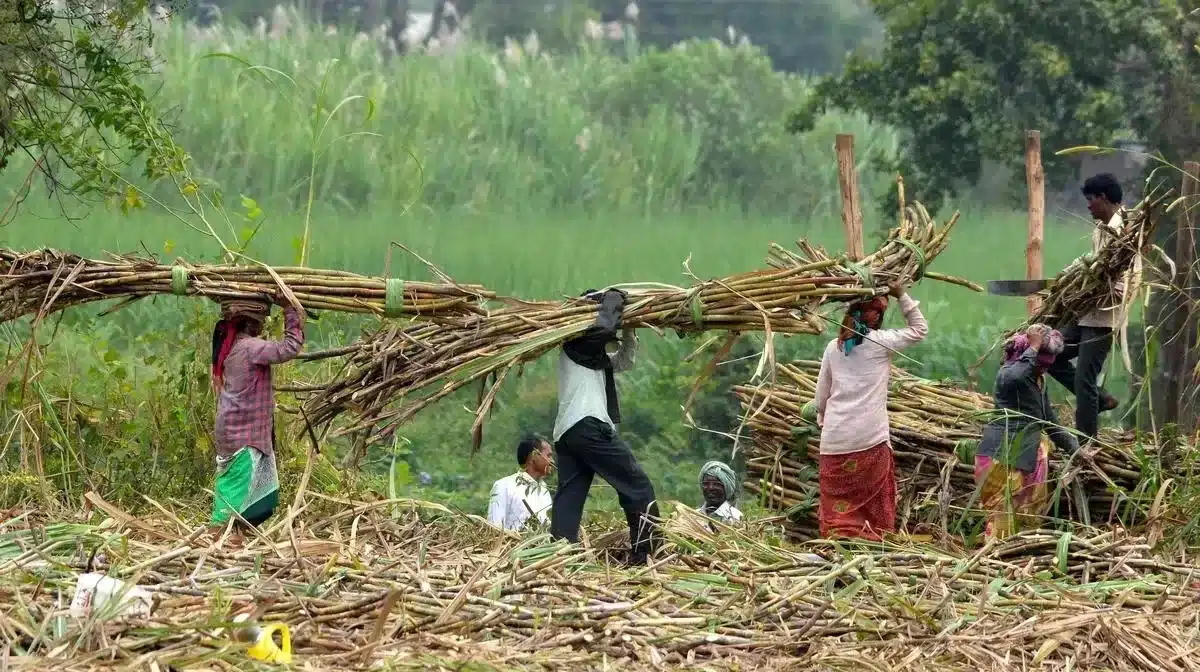
  • Concerns Raised About India’s Sugarcane Subsidies

Why in News?

The US and Australia have contended that India has provided sugarcane subsidy beyond the limits set out in the WTO’s Agreement on Agriculture (AoA), which may have distorted global trade.

What is WTO’s Agreement on Agriculture (AoA)?

  • The AoA is an international treaty of the World Trade Organisation (WTO), negotiated during the Uruguay Round of the General Agreement on Tariffs and Trade.
    • It entered into force with the establishment of the WTO on 1 January 1995.
  • It includes the classification of subsidies by "boxes" depending on consequences of production and trade:
    • Amber (most directly linked to production levels),
    • Blue (production-limiting programmes that still distort trade), and
    • Green (minimal distortion).
  • While payments in the amber box had to be reduced, those in the green box were exempt from reduction commitments. However, all must comply with the "fundamental requirement" -
    • To cause not more than minimal distortion of trade or production, and
    • Must be provided through a government-funded programme that does not involve transfers from consumers or price support to producers.

The AoA Consists of Three Pillars:

  • Domestic support:
    • AoA divides domestic support into two categories: trade-distorting and non-trade-distorting (or minimally trade-distorting).
    • The system currently allows Europe and the US to spend $380 billion a year on agricultural subsidies.
    • These subsidies end up flooding global markets with below-cost commodities, depressing prices, and undercutting producers in poor countries, a practice known as dumping.
  • Market access: Market access refers to the reduction of tariff (or non-tariff) barriers to trade by WTO members. The AoA consists of tariff reductions of:
    • 36% average reduction — developed countries — with a minimum of 15% per-tariff line reduction in next six years.
    • 24% average reduction — developing countries — with a minimum of 10% per-tariff line reduction in next ten years.
    • Least developed countries (LDCs) were exempt from tariff reductions. But they either had to convert non-tariff barriers to tariffs or "bind" their tariffs, creating a ceiling that could not be increased in future.
  • Export subsidies:
    • It requires developed countries to reduce export subsidies by at least 36% (by value) or by 21% (by volume) over six years.
    • For developing countries, the agreement required cuts were 24% (by value) and 14% (by volume) over ten years.

Criticism of WTO’s AoA:

  • It has been criticised by civil society groups for
    • Reducing tariff protections for small farmers, a key source of income in developing countries,
    • While simultaneously allowing rich countries to continue subsidising agriculture at home.
  • The Agreement was criticised by NGOs for categorising subsidies into
    • Trade-distorting domestic subsidies (the "amber box"), which have to be reduced, and
    • Non-trade-distorting subsidies (blue and green boxes), which escape discipline and thus can be increased.
  • As efficient agricultural exporters press WTO members to reduce their trade-distorting "amber box" and "blue box" support, developed countries' green box spending has increased.

Concerns Raised About India’s Sugarcane Subsidies:

  • US-Australia report
  • It argued that during all the four years (2018-19 to 2021-22) India’s sugar subsidies crossed 90% of the value of production against the permissible level of 10%.
  • However, for calculating subsidy (Aggregate Measurement of Support [AMS]) levels, the report referred to the methodology recommended by a WTO panel that had ruled against Indian sugar subsidies in 2021.
    • AMS is a trade distorting (amber box) subsidy. Since it distorts trade, the AMS is categorized as a ‘reducible’, ‘non-permissible’ or ‘non-exempted’ subsidy.
    • The AMS consists of two parts — product-specific subsidies and non-product specific subsidies.
    • Product-specific subsidy refers to the total level of support provided for each individual agricultural commodity. E.g., wheat AMS is the subsidy given specifically to wheat.
    • Non-product specific subsidy, refers to the total level of support given to the agricultural sector as a whole, i.e., subsidies on inputs such as fertilizers, electricity, irrigation, seeds, credit etc.
  • India’s stand
    • Each sugar season, India sets the Fair and Remunerative Price (FRP) for sugarcane.
    • The FRP is an administered price that effectively acts as a floor price for sugar mills to pay farmers for sugarcane.
    • In addition, farmers are paid premiums for increased production efficiency, and farmers in some States are eligible for additional payments by sugar mills under specific State-level support, known as State-Advised Prices (SAPs).
    • In its appeal against the WTO panel report of 2021, India argued that the panel had erred in finding that the country’s FRP and SAP constituted market price support under the AoA.
  • 2021 Panel Report could not be adopted
    • The US-Australia report said India’s appeal prevented the panel report from being adopted by the WTO Dispute Settlement Body.
    • As the Appellate Body of the WTO is not functional because of non-appointment of members, no decisions on appeals can be taken till it starts functioning again.

Q.1. What is the Fair and Remunerative Price (FRP) for sugarcane?

FRP is the minimum price that mills have to pay to sugarcane growers. With the amendment of the Sugarcane (Control) Order 1966 in 2009, the concept of Statutory Minimum Price (SMP) of sugarcane was replaced with the FRP of sugarcane.

Q.2. What is the WTO’s Dispute Settlement Body?

The Dispute Settlement Body of the World Trade Organisation (WTO) makes decisions on trade disputes between governments that are adjudicated by the Organisation.

Source: India’s sugarcane subsidy breaches WTO norms, allege US & Australia

India Meteorological Department (IMD)

India Meteorological Department (IMD)

About India Meteorological Department (IMD):

  • IMD was established in 1875. It is the National Meteorological Service of the country and the principal government agency in all matters relating to meteorology and allied subjects.
  • The Director General of Meteorology is the Head of the India Meteorological Department.
  • There are 6 Regional Meteorological Centres, each under a Deputy Director General with headquarters at Mumbai, Chennai, New Delhi, Calcutta, Nagpur and Guwahati.
  • Its headquarter is in New Delhi.
  • At present IMD is under the Ministry of Earth Sciences (MoES).
  • IMD Mandate:
    • To take meteorological observations and to provide current and forecast meteorological information for weather-sensitive activities like agriculture, shipping, aviation, offshore oil explorations, etc.
    • To warn against severe weather phenomena like tropical cyclones, norwesters, duststorms, heavy rains and snow, cold and heat waves,,
    • To provide meteorological statistics required for agriculture, water resource management, industries, oil exploration and other nation-building activities.
    • To conduct and promote research in meteorology and allied disciplines.


Source : Newsonair

A Green Transformation of Warming Antarctic Peninsula

A Green Transformation of Warming Antarctic Peninsula

What’s in today’s article?

  • Why in News?
  • About the Antarctic Peninsula
  • Key Findings of the Study on Antarctic Peninsula
  • What are the Impacts of Increased Vegetation in the Antarctic Peninsula?
  • What are the Implications of Rising Temperatures in the Antarctic Peninsula?
  • Recommendations to Preserve the Integrity of the Antarctica

Why in News?

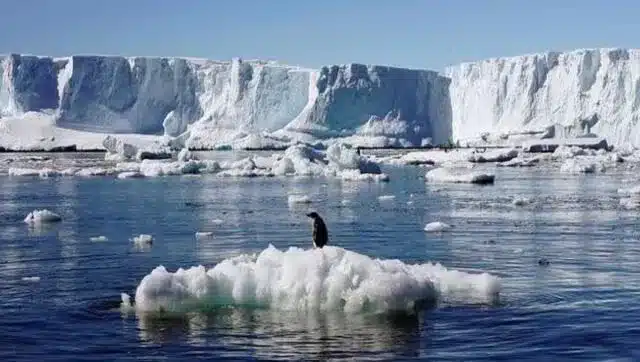
  • The Antarctic Peninsula, a mountainous region pointing toward South America, is experiencing significant changes due to climate change.
  • A recent study has shown that plant cover in this area has increased dramatically over the past few decades, raising concerns about the future of this unique ecosystem.

About the Antarctic Peninsula:

  • The Antarctic Peninsula is the northernmost and most accessible part of the Antarctica continent.
  • The peninsula’s Antarctic tundra features mountainous landscapes, glaciers and ice shelfs.
  • The west coast of the peninsula, the area most commonly explored, has the mildest weather in all of Antarctica, where the warmest month is January with an average temperature of 1 to 2 °C.

Key Findings of the Study on Antarctic Peninsula:

  • Rapid increase in vegetation:
    • Research published in Nature Geoscience reveals that vegetation, mainly consisting of mosses and lichen, has expanded significantly.
    • In 1986, plant life covered less than 1 square kilometer, but by 2021, it had grown to nearly 12 square kilometers.
    • This is a remarkable fourteen-fold increase over just 35 years, with more than 30% of this growth occurring between 2016 and 2021.
  • Climate change:
    • The Antarctic Peninsula is warming at an alarming rate - five times faster than the global average. The average temperature has risen nearly 3 degrees Celsius since 1950.
    • This rapid warming is linked to extreme weather events, including record-breaking heatwaves.
    • For example, in July 2023, some areas experienced temperatures around 10 degrees Celsius higher than usual.

What are the Impacts of Increased Vegetation?

  • Soil and ecosystem changes:
    • Mosses can help create soil in an otherwise barren landscape.
    • This soil formation could make the region more hospitable for invasive species, which may threaten local flora and fauna.
    • The changing landscape is a clear sign of human-induced climate change, even in such a remote area.
  • Alteration in Albedo effect:
    • More vegetation could also alter the Antarctic Peninsula's albedo effect, which refers to the ability of surfaces to reflect sunlight.
    • This change can create a feedback loop, further accelerating warming and impacting global climate patterns.

What are the Implications of Rising Temperatures?

  • Ice loss:
    • A study from 2019 indicated that the continent has lost 280% more ice mass in the 2000s and 2010s compared to the previous decades.
    • The 2024 sea ice extent was reported to be the second smallest on record, only slightly more than the record low set in 2023.
    • As greenhouse gas emissions continue to rise, the situation is expected to worsen, leading to more vegetation growth and additional ice loss.
  • Rising global sea levels: The loss of ice in Antarctica contributes to rising global sea levels, which poses risks for coastal communities worldwide.

Recommendations to Preserve the Integrity of the Antarctica:

  • The changes occurring in the Antarctic Peninsula serve as a stark reminder of the impacts of climate change.
  • As temperatures rise and vegetation increases, the delicate balance of this unique ecosystem is at risk.
  • The consequences of these transformations could have far-reaching effects, not only for Antarctica but for the entire planet.
  • Addressing climate change is crucial to mitigate these impacts and preserve the integrity of this remote wilderness.

Q.1. What is the tundra biome?

The tundra is a biome characterised by cold temperatures, short growing seasons, and little to no trees. The tundra biome covers about 10% of Earth's surface. There are three types of tundra: Arctic tundra, alpine tundra, and Antarctic tundra.

Q.2. What is the significance of the Albedo effect?

The albedo effect is a key concept in climate science that explains how the Earth's surface reflects sunlight and how this affects the planet's temperature. It's important because it helps scientists calculate the Earth's energy budget and predict climate change.

Source: As green patch spreads in Antarctica, here’s what is worrying scientists | DTE

North Atlantic right whales

North Atlantic right whales

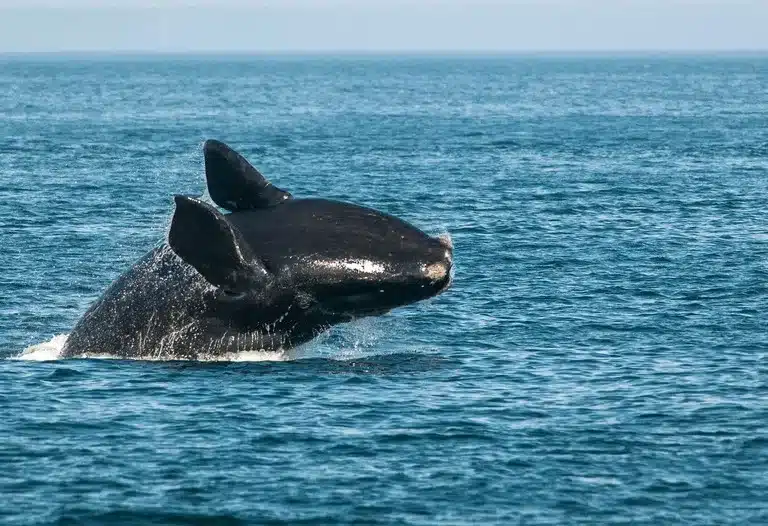
About North Atlantic right whale:

  • These whales are migratory animals, spending the winter in warmer waters and migrating to the poles for cooler waters in late summer.
  • These whales inhabit the temperate and subpolar waters of the north Atlantic and north Pacific oceans.
  • Habitat: Depending on the time of year and which hemisphere they're found, right whales will spend much of their time near bays and peninsulas and in shallow, coastal waters.
  • Distribution: These are generally restricted to the coastal waters of the East coast of the United States and Canada.
  • There are three recognized species of right whales that occur in different parts of the world. These are Southern right whales (Eubalaena australis), North Atlantic right whales (Eubalaena glacialis) and North Pacific right whales.
  • These whales often skim feed at or just below the water surface, slowly swimming through clouds of plankton with their mouths half open and then straining the plankton through their long baleen plates.
  • Conservation status
    • IUCN: Critically endangered
    • CITES: Appendix I

Q1: What is the International Whaling Commission?

It was set up under the International Convention for the Regulation of Whaling (ICRW) which was signed in Washington DC in 1946. It has the objective to provide for the proper conservation of whale stocks and thus make possible the orderly development of the whaling industry.

News: Right whale population grows 4% but extinction remains a threat

MHA Directive: Ensuring Translations for Zero FIRs Across States

MHA Directive: Ensuring Translations for Zero FIRs Across States

What’s in today’s article?

  • Why in News?
  • Zero FIRs

Why in News?

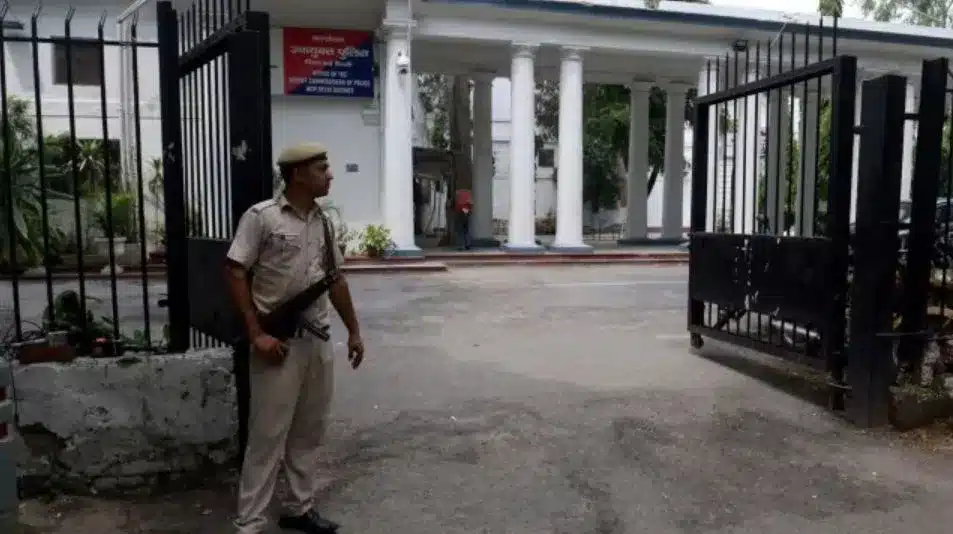
The Union Ministry of Home Affairs (MHA) has directed Union Territories (UTs) to ensure that 'zero FIRs' recorded in local languages are accompanied by a translated copy of the same when forwarded to states with different languages.

This directive aims to preserve the legal value of FIRs. Complying, the UTs have started sending out the original zero FIRs along with their English translation.

Zero FIRs

  • About FIRs
    • The term first information report (FIR) is not defined in the Indian Penal Code (IPC), Code of Criminal Procedure (CrPC) 1973 or in any other law.
    • In police regulations or rules, information recorded under Section 154 of CrPC is known as FIR.
    • Section 154 states that every information relating to the commission of a cognizable offence, if given orally to an officer in charge of a police station, shall be reduced to writing.
    • A copy of the information (as recorded) shall be given (free of cost) to the informant.
  • In essence, 3 important elements of an FIR:
    • the information must relate to the commission of a cognizable offence,
    • it should be given in writing or orally to the head of the police station and
    • it must be written down and signed by the informant, and its key points should be recorded in a daily diary.
  • Zero FIRs
    • A zero FIR can be filed in any Police Station by the victim, irrespective of their residence or the place of occurrence of crime.
    • A police station that receives a complaint regarding an alleged offence committed in the jurisdiction of another police station, registers an FIR and then transfers it to the relevant police station for further investigation.
  • No regular FIR number is given and after receiving the Zero FIR, the revenant police station registers a fresh FIR and starts the investigation.
    • It came up after the recommendation in the report of the Justice Verma Committee set up after the 2012 Nirbhaya gang rape case to suggest amendments to the Criminal Law.
    • The objective of a Zero FIR is to ensure the victim doesn’t have to run from pillar to post to get a police complaint registered.
    • The provision is meant to provide speedy redressal to the victim so that timely action can be taken after the filing of the FIR.
  • FIR under new criminal laws
    • The three new criminal laws came into effect from July 1, 2024.
  • The Bharatiya Nyaya Sanhita 2023, Bharatiya Nagarik Suraksha Sanhita 2023 and Bharatiya Sakshya Adhiniyam 2023, replaced the British-era Indian Penal Code, Code of Criminal Procedure and the Indian Evidence Act, respectively.
    • Under the new laws, a person can now report incidents by electronic communication, without the need to physically visit a police station.
  • This allows for easier and quicker reporting, facilitating prompt action by the police.
    • Under the Bharatiya Nagarik Suraksha Sanhita (BNSS) police are now bound to register a ‘zero FIR’.
  • Under Section 176 (3) of BNSS, collection of forensic evidence and video-recording of the crime scene in case of offences punishable with seven years or more is mandatory.
  • If the forensic facility is not available in a state, it can notify the utilisation of such facility of any other state.
    • Victims will receive a free copy of the FIR, ensuring their participation in the legal process.

Q.1. What is a Zero FIR?

A Zero FIR is an FIR that can be filed at any police station, regardless of jurisdiction. It ensures the victim can register a complaint without delays, and the FIR is later transferred to the appropriate police station for investigation.

Q.2. Why must Zero FIRs be translated?

The MHA has mandated translations of Zero FIRs when forwarded to states with different languages to preserve their legal accuracy and value, ensuring clear communication during cross-state investigations under the new criminal laws.

Source: Zero FIRs filed in local languages must have translated copy: MHA to UTs | Indian Express | Hindustan Times

Swachh Vayu Survekshan Award

Swachh Vayu Survekshan Award

About Swachh Vayu Survekshan Award:

  • It is an initiative by the Ministry of Environment, Forest and Climate Change (MoEF&CC) to rank cities on the basis of implementation of activities approved under the city action plan and air quality in 130 NCAP cities.
  • In September 2022, the MoEF&CC released guidelines on ‘Swachh Vayu Sarvekshan- Ranking of Cities’ under the National Clean Air Programme (NCAP).
  • The aim of launching Swachh Vayu Sarvekshan is to give a ranking to 130 cities in the country for implementing City Action Plans prepared as part of NCAP for reducing air pollution up to 40% by 2025-26.
  • Objectives
    • To create awareness among all sections of the society
    • Inform citizens about the health impacts related due to exposure
    • Comparing air quality conditions at different locations/cities
    • To achieve the goal of NCAP “Clean air for all”.
  • All 130 cities covered under NCAP are assessed based on information submitted under ranking framework by cities/ULBs on PRANA portal (dashboard to capture progress under NCAP programme).
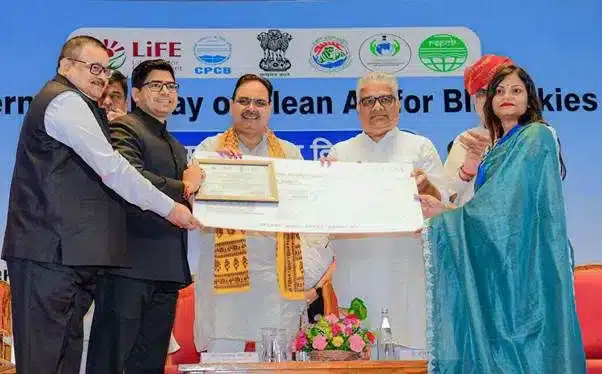
  • Swachh Vayu Survekshan Awards 2024 were presented to the best performing NCAP cities under
    • Category-1 (population over 10 Lakhs) to Surat, Jabalpur, and Agra;
    • Category-2 (population between 3 and 10 Lakhs) to Firozabad, Amravati, and Jhansi; and
    • Category-3 (population under 3 Lakhs) to Raebareli, Nalgonda, and Nalagarh.

Q1: What is the National Clean Air Programme?

It is a long-term, time-bound, national level strategy to tackle the air pollution problem across the country in a comprehensive manner. Objectives: Stringently implementing mitigation measures to prevent, control, and abate air pollution. Strengthening an air quality monitoring network across the country.

Source: Union Environment Minister Bhupender Yadav and Chief Minister of Rajasthan Bhajan Lal Sharma presented Swachh Vayu Survekshan Award, 2024

Supreme Court to Decide on Aligarh Muslim University’s Minority Status

Supreme Court to Decide on Aligarh Muslim University’s Minority Status

What’s in today’s article?

  • Why in News?
  • Article 30 of the Indian Constitution
  • Background of the Controversy around AMU’s Minority Status
  • What Minority Status Entails for AMU?
  • Arguments from the Centre and AMU
  • Conclusion

Why in News?

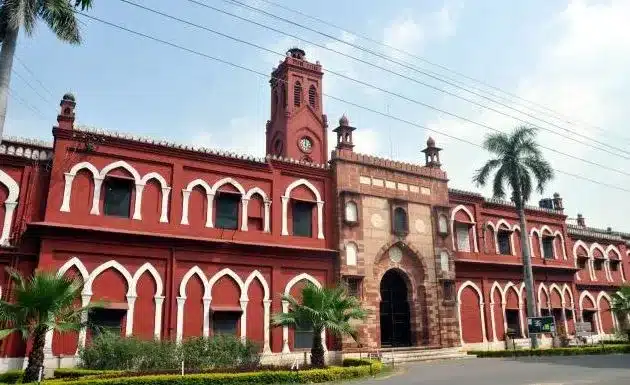
A Bench headed by the CJI will deliver its verdict (on CJI’s last working day in office) on whether Aligarh Muslim University (AMU) can claim minority status under Article 30 of the Indian Constitution.

Article 30 of the Indian Constitution:

  • It consists of provisions that safeguard various rights of the minority community in the country keeping in mind the principle of equality as well.
  • Article 30(1) says that all minorities, whether based on religion or language, shall have the right to establish and administer educational institutions of their choice.
  • Article 30(1A) deals with the fixation of the amount for acquisition of property of any educational institution established by minority groups.
  • Article 30(2) states that the government should not discriminate against any educational institution on the ground that it is under the management of a minority, while giving aid.

Background of the Controversy around AMU’s Minority Status:

  • It originated in 1967 when the Supreme Court (SC) ruled on challenges to amendments to the university’s founding Act, arguing that they stripped the Muslim community of the right to administer the institution.
    • In 1951, non-Muslims were allowed to join the University Court (the supreme governing body at the time), and the Visitor - a role held by the President of India, replaced the university’s Lord Rector.
    • In 1965, the Executive Council’s powers were expanded, diminishing the University Court’s authority.
  • The SC concluded that AMU was not established by the Muslim minority but by an Act of Parliament (Aligarh Muslim University Act, 1920).
  • This judgement, known as the S. Azeez Basha vs. Union of India case, held that AMU lacked minority institution status.
  • In 1981, the government amended the AMU Act to assert that the institution was created by the Muslim community to advance their cultural and educational goals.
  • However, the Allahabad HC struck down both this amendment and AMU’s 50% Muslim reservation in 2006, reaffirming the Azeez Basha ruling.
  • The issue was then referred to a larger bench and decision follows years of legal debates and a seven-judge bench led by CJI reserving its judgement in February
  • The upcoming judgement will determine if Azeez Basha will be overturned.

What Minority Status Entails for AMU?

  • Article 15(5) of the Constitution exempts minority educational institutions from reserving seats for Scheduled Castes (SCs) and Scheduled Tribes (STs).
  • Since AMU’s minority status is sub judice, and the SC directed in 2006 that status quo be maintained, the university does not have SC/ST quotas.
  • If the SC declares AMU a minority institution:
    • AMU would not have to reserve seats for SC/ST/OBC/EWS groups but could reserve seats for Muslims, potentially up to 50% or more.
    • The university’s administrative structure would shift from its current setup, which includes a diverse Executive Council, and it would have a separate admissions process.

Arguments from the Centre and AMU:

  • The St. Stephen’s college precedent: The SC had previously recognised the minority status of Delhi’s St. Stephen’s College in 1992, affirming its right to admit Christian students up to 50% and administer itself autonomously.
  • The centre’s argument:
    • The Centre distinguished St. Stephen’s from AMU, noting that the former was founded privately, while AMU was created by an Act of Parliament and continuously receives government funding.
    • The Centre argued that AMU, as a national institution, should uphold its secular foundations and not prioritise one community’s interests.
  • Counter arguments:
    • AMU contended that exempting it from certain quotas does not harm public interest, as Article 30 provides minorities with special rights.
    • Senior advocate Kapil Sibal argued -
      • That minority rights contribute to societal equality by balancing the needs of diverse social sections.
      • That (according to the St. Stephen’s ruling) minority communities have a “continuing right to administer” institutions they establish, irrespective of government involvement.
    • Senior advocate Rajeev Dhavan pointed to institutions like Aliah University in Kolkata, which retain minority status despite government funding.

Conclusion:

  • The SC’s upcoming decision will be pivotal for AMU, determining whether it can claim minority status and retain autonomy over its admissions and governance under Article 30.
  • This verdict will also impact minority educational institutions’ rights and their relationship with state policies on social justice and equality.

Q.1. What is Article 29 of the Indian Constitution?

According to Article 29, any section of the citizens residing in the territory of India or any part thereof having a distinct language, script or culture of its own shall have the right to conserve the same.

Q.2. What is the Supreme Court of India's verdict in the TMA Pai Foundation case of 2002?

For the purpose of Article 30, who are religious or linguistic minority, the Court held that it would be determined on the basis of their numbers in a State or Union Territory and not in the country.

News: CJI Chandrachud’s last working day: Is AMU a minority institution? 7-judge bench to rule today | IE

What is INS Teg?

What is INS Teg?

About INS Teg:

  • INS Teg (F45) is the first of three guided missile frigates of the modified INS Talwar-class that India commissioned Russian shipyard Yantar to build under Project-17 A (the other two are INS Tarkash and INS Trikand).
  • INS Teg was commissioned into Navy service on 27 April 2012.
  • The Talwar-class guided missile frigates are modified Krivak III-class frigates built by Russia.
    • These ships use stealth technologies and a special hull design to ensure a reduced radar cross-section.
    • Much of the equipment on the ship is Russian-made, but a significant number of systems of Indian origin have also been incorporated.
  • The main differences between Tegand the earlier Talwar-class ships are the use of BrahMos missiles in place of the Klub-N missiles.
  • Features of INS Teg:
    • It is a 3,970-tonne frigate and is armed with eight 290-km BrahMos supersonic cruise missiles. 
    • It is 125-metre-long and can operate an anti-submarineor early-warning helicopter from its deck.
    • It can reach a top speed of 30 knots (56 km/h; 35 mph).
    • It has an operating range of 4,500 nautical miles (8334 km).
    • The stealth frigate, with its unique design, ensures a reduction in its radar cross-section,infrared, magnetic, and acoustic signatures, as well as radiated underwater noise, to heighten its stealth capabilities.

Q1: What is BrahMos?

BrahMos supersonic cruise missile that can be launched from land, sea, and air. It has been developed by Brahmos Aerospace, a joint venture of India and Russia. It is named after the rivers Brahmaputra (India) and Moskva (Russia). It is a two-stage missile with a solid propellant booster engine as its first stage, which brings it to supersonic speed and then gets separated. The liquid ramjet, or second stage then takes the missile closer to 3 Mach speed in the cruise phase.It is one of the fastest cruise missiles currently operationally deployed, with a speed of Mach 2.8.

Source: INS Teg saves eight Indians from stricken tanker, search continues for other crew members

RBI Cuts Repo Rate by 25 bps to 6%, Lowers GDP Forecast to 6.5% Amid Global Trade Tensions

RBI Cuts Repo Rate by 25 bps to 6%, Lowers GDP Forecast to 6.5% Amid Global Trade Tensions

What’s in Today’s Article?

  • RBI Repo Rate Cut 2025 Latest News
  • Key Highlights of the MPC Meeting
  • Reason Behind RBI's Decision to Cut Repo Rate
  • RBI Repo Rate Cut 2025 FAQs

RBI Repo Rate Cut 2025 Latest News

  • The Reserve Bank of India’s Monetary Policy Committee cut the repo rate by 25 basis points to 6% and lowered the FY2026 growth forecast from 6.7% to 6.5%, citing global uncertainties from ongoing trade wars. 
  • RBI Governor warned that new tariffs could hamper domestic growth and exports, though inflation risks remain limited due to falling commodity and crude oil prices.

Key Highlights of the MPC Meeting

  • RBI Cuts Repo Rate Amid Global Uncertainties
    • MPC reduced the repo rate by 25 basis points to 6%, marking the second consecutive rate cut
      • The repo rate is the interest rate at which commercial banks take or borrow money from the Reserve Bank of India.
    • This move aims to support economic growth amid increasing global trade tensions and uncertainties arising from reciprocal tariffs announced by the US.
  • Monetary Policy Stance Turned Accommodative
    • The MPC also shifted its stance from ‘neutral’ to ‘accommodative’, signalling the possibility of further rate cuts in the future. 
      • A neutral stance gives the central bank flexibility to adjust rates based on inflation and growth conditions. 
      • An accommodative stance focuses on promoting economic growth by lowering interest rates. 
      • In contrast, a withdrawal of accommodation aims to control inflation through rate hikes or tighter monetary policies.
    • RBI Governor clarified that this stance indicates only two possible directions ahead — either status quo or further cuts.
  • Growth Forecast Lowered
    • The RBI revised India’s GDP growth forecast for FY2026 down to 6.5% from 6.7%, citing the negative impact of trade wars and policy uncertainties on global and domestic economic activity.
  • Inflation Risks Under Control
    • While global uncertainties pose risks to inflation through possible currency pressures and imported inflation, the fall in commodity and crude oil prices is expected to keep domestic inflation within control. 
    • The CPI inflation forecast for FY2026 was revised down to 4% from 4.2%.
    • As per the RBI, growth concerns outweigh inflation worries at present. 
    • Trade frictions are expected to hurt investment, consumption, and net exports, thereby impeding domestic economic momentum.
  • Additional Measures Announced by the RBI
    • Introduction of forward contracts in Government securities
    • Access of SEBI-registered non-bank brokers to NDS-OM
    • Comprehensive review of trading and settlement timings across various market segments
    • Introduction of ‘bank.in’ exclusive Internet Domain for Indian banks and ‘fin.in’ domains for other non-bank entities
    • Enabling Additional Factor of authentication in cross-border Card Not Present transactions

image4.webp

Reason Behind RBI's Decision to Cut Repo Rate

  • Global Trade Tensions Drive Caution
    • The US administration’s 26% reciprocal tariff on Indian goods and rising global trade tensions have increased economic uncertainty, prompting a cautious and proactive monetary response from the RBI.
  • Risks to Growth Take Priority
    • The MPC emphasized that growth remains fragile, especially after a weak first half in FY2024-25, and now faces fresh risks due to the global slowdown. 
    • Domestic recovery needs continued support, even though inflation is under control.
  • Improved Inflation Outlook Enables Policy Support
    • Falling food inflation and a decisive improvement in the inflation outlook have given the MPC the room to prioritize non-inflationary, sustainable growth.

RBI Repo Rate Cut 2025 FAQs

Q1. Why did RBI cut the repo rate in 2025?

Ans. Due to global trade tensions and low inflation, RBI cut rates to support fragile domestic growth.

Q2. What is the new RBI repo rate?

Ans. The RBI reduced the repo rate by 25 basis points to 6% in the latest Monetary Policy Committee meeting.

Q3. What is RBI's FY2026 GDP growth forecast?

Ans. RBI lowered India’s GDP growth forecast for FY2026 from 6.7% to 6.5% due to global economic uncertainties.

Q4. What does an accommodative stance mean?

Ans. An accommodative stance signals RBI’s intent to support growth by maintaining or further reducing interest rates if needed.

Q5. Is inflation a concern for RBI now?

Ans. No, RBI noted that inflation is under control, aided by falling commodity and crude oil prices.

Source: IE | ToI | LM

What is Asia-Pacific Telecommunity (APT)?

What is Asia-Pacific Telecommunity (APT)?

About Asia-Pacific Telecommunity (APT):

  • APT is an intergovernmental organization established in February 1979 with the aim of promoting ICT development in the Asia-Pacific region. 
  • APT was founded on the joint initiatives of the United Nations Economic and Social Commission for Asia and the Pacific (UNESCAP) and the International Telecommunication Union (ITU).
  • Currently, the APT has a strength of 38 Members, 4 Associate Members and more than 140 Affiliate Members (private companies and academia whose works are relevant to the ICT field).
  • Functions:
    • APT fosters the development of telecommunication services and information infrastructure throughout the region.
    • It plays a crucial role in coordinating and harmonizing policies, regulations, and technical standards related to ICT.
    • APT conducts various preparatory activities for international conferences, including the ITU Plenipotentiary Conference (PP), World Radiocommunication Conferences (WRCs), World Telecommunication Standardization Assemblies (WTSAs), World Summit on the Information Society (WSIS), and World Telecommunication Development Conferences (WTDCs).
    • The organization also hosts working groups and forums to address specific issues such as spectrum management, policy, and standardization.
    • APT also organizes a variety of capacity building programs related to ICT topics and implements several pilot projects to promote ICT development in the region.
    • In addition, APT provides sub-regional platforms to facilitate achieving sub-regional common interests.
    • For example, the South Asian Telecommunication Regulators’ Council (SATRC), under the umbrella of APT, organizes working groups for policy and regulation, and spectrum to facilitate harmonization among parties concerned.
  • The SATRC meeting is an annual event where heads of telecommunication regulatory bodies from SATRC member countries discuss and coordinate regulatory and other issues related to telecommunication and ICT. 
  • SATRC is composed of the heads of the regulatory bodies of nine South Asian countries, namely, Afghanistan, Bangladesh, Bhutan, India, Iran, Maldives, Nepal, Pakistan, and Sri Lanka.
  • Affiliate members from these countries are also taking active participation in SATRC activities.

Q1: What is the International Telecommunication Union (ITU)?

It is the United Nations specialized agency for information and communication technologies. It was established in 1865 as the International Telegraph Union. In 1947 the ITU became a specialized agency of the United Nations. It is an intergovernmental organization that coordinates between governments and private sector bodies with respect to global telecommunication and information communication technology (ICT) services.

News: TRAI chief to chair South Asian Telecom Regulators’ Council

Pradhan Mantri Mudra Yojana (PMMY)

Pradhan Mantri Mudra Yojana (PMMY)

About Pradhan Mantri Mudra Yojana (PMMY)

  • Pradhan Mantri Mudra Yojana (PMMY) is a flagship initiative by the Government of India that was launched in 2015 and aimed at providing affordable credit to micro and small enterprises.
    • It focuses on integrating underserved enterprises into the formal financial system by offering them easy access to credit.

Objective Of PMMY

The scheme is designed to "fund the unfunded," enabling small borrowers to secure loans from various financial institutions including Public Sector Banks (PSBs), Regional Rural Banks (RRBs), Cooperative Banks, Private Sector Banks, Foreign Banks, Micro Finance Institutions (MFIs), and Non-Banking Financial Companies (NBFCs).

Loan Details Of PMMY

  • PMMY Loan amount: Up to ₹10 lakh for non-farm income-generating activities in sectors such as manufacturing, processing, trading, and services.
  • PMMY Eligibility: Any Indian citizen with a viable business plan for a non-farm sector income-generating activity requiring credit below ₹10 lakh can apply for a MUDRA loan through banks, MFIs, or NBFCs.

Categories of Loans under PMMY

  • Shishu: Loans up to ₹50,000, aimed at new and micro enterprises.
  • Kishore: Loans ranging from ₹50,000 to ₹5 lakh, for businesses in the growth phase.
  • Tarun: Loans from ₹5 lakh to ₹10 lakh, for businesses looking to expand further.
  • Subsidy: There is no direct subsidy under PMMY. However, if a loan is linked to a government scheme that provides capital subsidies, the loan can be availed under PMMY with the associated benefits.

Impacts of MUDRA 1.0

  • Loan disbursement: Over Rs 27.75 lakh crore was disbursed to 47 crore small and new entrepreneurs, significantly boosting the grassroots economy and providing access to formal credit for previously excluded populations.
  • Inclusivity: Approximately 69% of MUDRA loan accounts are held by women, and 51% by SC/ST and OBC entrepreneurs, promoting gender equality and social equity.
  • Job creation: The scheme has been instrumental in creating jobs, particularly in rural and semi-urban areas, encouraging self-employment and the growth of small businesses.

Vision for MUDRA 2.0

  • Expanded scope: MUDRA 2.0 should widen its scope, focusing on improving outreach, especially in rural and semi-urban areas, and providing comprehensive services like financial literacy, mentorship, and business support.
  • Financial literacy programmes: Nationwide initiatives should be introduced covering budgeting, savings, credit management, investment strategies, and digital literacy to reduce default rates and improve business operations.
  • Enhanced Credit Guarantee Scheme (ECGS): To encourage more lending to small and microenterprises, MUDRA 2.0 should include an ECGS, reducing risk for financial institutions.
  • Robust Monitoring and Evaluation Framework (RMEF): Leveraging technology, MUDRA 2.0 should implement a framework for real-time tracking of loan disbursements, utilisation, and repayments, ensuring transparency, minimising misuse, and improving efficiency.

Beneficiary impact assessments should be included to measure socio-economic outcomes and guide policy enhancements.

Pradhan Mantri Mudra Yojana FAQs

Q1: What is PM Mudra Yojana?

Ans: PM Mudra Yojana is a government scheme launched in 2015 to provide financial support to micro and small enterprises in India through loans.

Q2: What is the Objective of PM Mudra Yojana?

Ans: The objective of PM Mudra Yojana is to promote entrepreneurship, enhance access to credit, and support the growth of small businesses in the country.

Q3: What is the eligibility criteria of PM Mudra Yojana?

Ans: The eligibility criteria include individuals, micro-enterprises, and small business owners in non-farm and non-corporate sectors, excluding professionals like doctors, lawyers, and architects.

What is Common Grass Yellow?

What is Common Grass Yellow?

About Common Grass Yellow:

  • It is a small, charming butterfly species that can be found across Asia, North America, Africa, and Australia.
  • Scientific Name: Eurema hecabe
  • Habitat: They like to fly quickly, close to the ground, are found in open grassy or bushy terrain, hence their name. 
  • Features:
    • They have vibrant yellow wings that can range from a sultry sulfur shade to a lush lemon yellow, shifting with the seasons and their location. This is known as 'seasonal polyphenism'.
    • There is black, broad, irregular outer marking on the forewing. The underside of the wing has variousblack mark with a yellow centre
    • They are often seen in large groups, and the females usually fly about by themselves to find nectar from a wide variety of plants.
    • They are migratory in behavior and are found migrating in large numbers across the entire African, throughout most of Asia south of the Himalayas. 
  • Conservation Status:
    • IUCN Red List: Least Concern
    • This species is not legally protected in India under any schedules of the Wild Life (Protection) Act, 1972.

Q1: Where is Mudumalai Tiger Reserve?

Mudumalai Tiger Reserve is located in the Nilgiris District of Tamil Nadu state at the tri-junction of three states, viz, Karnataka, Kerala and Tamil Nadu. The name Mudumalai means the ancient hill range because it is as old as 65 million years when the Western Ghats were formed. It has a common boundary with Wayanad Wildlife Sanctuary (Kerala) on the West, and Bandipur Tiger Reserve (Karnataka) on the North.

Source: Large migration of Common Grass Yellow butterfly seen in Mudumalai Tiger Reserve

Australia, U.S., U.K. Sign Landmark Nuclear Transfer Deal for AUKUS Submarines

Australia, U.S., U.K. Sign Landmark Nuclear Transfer Deal for AUKUS Submarines

What’s in today’s article?

  • Why in News?
  • AUKUS partnership

Why in News?

Australia has signed a deal with the United States and Britain to exchange nuclear secrets and materials, advancing its plan to equip its navy with nuclear-powered submarines as part of the 2021 AUKUS security accord.

This agreement binds the three countries to secure arrangements for transferring sensitive nuclear material and know-how.

AUKUS partnership

  • About
    • Signed in September 2021, the new enhanced trilateral security partnership between Australia, the United Kingdom, and the United States is named as “AUKUS”.
  • This is a trilateral defence deal for Indo-Pacific.
    • The first major initiative of AUKUS would be to deliver a nuclear-powered submarine fleet for Australia.
    • These countries, however, made it clear that their aim is not to arm the new submarines with nuclear weapons.
    • This is because Australia is a signatory to the Nuclear Non-proliferation Treaty (NPT) which bans it from acquiring or deploying nuclear weapons.
  • Key highlights of the deal
    • Under the deal, the United States intends to sell Australia three US Virginia class nuclear-powered submarines, in the early 2030s, with an option for Australia to buy two more if needed.
    • The multi-stage project would culminate with British and Australian production and operation of a new submarine class – SSN-AUKUS.
  • SSN-AUKUS will be a trilaterally developed vessel based on Britain’s next-generation design.
  • It would be built in Britain and Australia and include cutting edge U.S. technologies.
    • Britain would take delivery of its first SSN-AUKUS submarine in the late 2030s, and Australia would receive its first in the early 2040s.
  • Significance of this deal
    • For US
      • US has only shared nuclear submarine technology once before in 1958 with Great Britain.
    • For Indo-Pacific Region
      • Under this partnership, technology, scientists, industries and defence forces of these three countries will work together to deliver a safer and more secure region.
      • Some analysts feel that this partnership will lead to intensified arms race in the region.
    • For Australia
      • Australia has never had nuclear-powered submarines.
      • Hence, this step will give Australia naval heft in the Pacific, where China has been particularly aggressive.
      • Critics, on the other hand, claim that this deal would antagonise Beijing which will not be good for Australia.
      • Australia is now set to join an elite group of only six countries – India, US, UK, France, Russia and China – that operate nuclear-powered submarines.
      • It will also be the only country to have such submarines without having a civilian nuclear power industry.
    • For India
      • The new pact will add to the global efforts to balance China in the region.
      • It should be noted that Australia and India are close strategic partners in the Indo-Pacific region.
      • Australia is also a member of QUAD group. A stronger Australia would lead to further strengthening of QUAD.
    • For France
      • France is not happy with the deal and has termed this deal a “stab in the back”.
      • Australia had signed a contract to buy 12 Attack-class submarines from France in 2016. The first submarine was expected to be operational around 2034.
      • As a result of the current deal, Australia ditched the contract.
  • How China views this agreement?
    • China denounced a new Indo-Pacific security alliance saying such partnerships should not target third countries.
    • It claims that the current cooperation would gravely undermine regional peace and stability, aggravate arms race and hurt the international non-proliferation efforts.
    • China claimed that western powers are using nuclear exports for geopolitical gaming tools.
    • Under this deal, highly-sensitive nuclear powered submarine technology will be exported to Australia.

Q.1. What is QUAD group?

The QUAD group, or Quadrilateral Security Dialogue, is a strategic forum comprising the United States, Japan, India, and Australia. It focuses on enhancing regional security, economic cooperation, and democratic values in the Indo-Pacific region. The group aims to address common challenges and promote a free, open, and inclusive Indo-Pacific.

Q.2. What is a submarine?

A submarine is a watercraft designed to operate underwater. It is equipped with propulsion systems, navigation tools, and weapons for various missions, including defense, research, and reconnaissance. Submarines can submerge to avoid detection and surface to perform tasks, making them versatile in naval operations.

Source: Australia, U.S., U.K. sign nuclear transfer deal for AUKUS submarines | India Today | Times of India

Kasturi Cotton Bharat

Kasturi Cotton Bharat

About Kasturi Cotton Bharat:

  • It is an initiative of the Ministry of Textiles, Textile Trade Bodies, and Industry with the objective of creating premium value for cotton grown in India as per benchmarked specifications.
  • It is a pioneering effort in traceability, certification, and branding of Indian cotton
  • It was formalised through the signing of a memorandum of understanding (MoU)between the Cotton Corporation of India and the Cotton Textiles Export Promotion Council on 15 December 2022.
  • To provide complete traceability of Kasturi Cotton Bharat-tagged bales across the supply chain, QR-based certification technology are being used at each stage of the processing, and a Block-chain based software platform will provide end-to-end traceability and transaction certificates.
    • In this regard, Microsite with QR code verification and Block Chain technology has been developed.
  • The Kasturi Cotton Bharat programme is operational at the national level, and its promotion is being made at national and international platform. Hence, the allocation of funds is not at state level.
  • Ginners across the country have been empowered to produce Kasturi Cotton Bharat brand as per stipulated protocol.

What is Ginning?

  • It is one of the most important steps of the spinning process.
  • After collecting seed cotton from the farm or field, cotton moves to nearby Gins for separation of seed, lint, and any other foreign particles.
  • Ginning is the process to get the cleaned cotton by separating or removing the seeds, dust, or any other foreign particles, so that better cotton can be offered for the cotton spinning mills.
  • It was traditionally done by hand, but nowadays, machines are used. 

Q1: What is the Cotton Textiles Export Promotion Council?

The Cotton Textiles Export Promotion Council is the first Council set up after Independence by the Government of India in 1954 is an autonomous, nonprofit body dedicated to promotion of exports. The Cotton Textiles Export Promotion Council, popularly known as TEXPROCIL has been the international face of cotton textiles from India facilitating exports worldwide. Texprocil has a membership of around 3,000 companies spread across major textile clusters in India. Its members are well established manufacturers and exporters of cotton textile products like Cotton, Yarns, Fabrics and Home Textiles, showcasing a dazzling array of products across the value chain.

Source: Ginners across the country empowered to produce Kasturi Cotton Bharat brand: minister

Death of Iranian president Ebrahim Raisi

Death of Iranian president Ebrahim Raisi

What’s in today’s article?

  • Why in News?
  • Authority of the President in Iran
  • Ramifications of Raisi’s death in Iran
  • India’s concern
  • India’s response after President’s death

Why in News?

Iran's president Ebrahim Raisi, country's foreign minister and several other officials were found dead hours after their helicopter crashed in the country's northwest. Iran's Supreme Leader Ayatollah Ali Khamenei said that First Vice President Mohammad Mokhber would take over as interim president.

Authority of the President in Iran

  • Role of President
    • Iran’s President works under the authority of the Supreme Leader but is still a powerful figure in Iran's political system. 
    • He plays a key role in how the country operates. 
    • The President mediates between the legislature and the executive, and appoints ministers and vice presidents.
    • The President also makes key foreign policy decisions. Then President Hassan Rouhani acted with significant authority during the JCPOA negotiations.
      • The Joint Comprehensive Plan of Action (JCPOA), also known as the Iran nuclear deal, is an agreement signed in July 2015 between Iran and the P5+1.
      • The agreement limits Iran's nuclear program in exchange for sanctions relief.
    • The Iranian President’s authority is superseded only in the event of a clash between him and the Supreme Leader.
  • Major achievements of Ibrahim Raisi as a President
    • Among Raisi’s major achievements was the Iran-Saudi deal, brokered by China. 
    • It was he who raised the pitch for an ‘Axis of Resistance’,
      • It is an informal, Iran-led political-military coalition comprising the Islamic resistance in Iraq, the Syrian government, the Lebanese Hezbollah, Yemeni Houthis, and Palestinian groups including Hamas.

Ramifications of Raisi’s death in Iran

  • Conservatives Vs. reformists
    • Since the Islamic Revolution of 1979, Iran’s politics has developed between two poles.
    • On the one side are the conservatives who want to strictly follow the principles of Twelver Shi’ism, the state religion. 
      • They aim to enforce its religious codes throughout society. They view the Revolution as a strong stance against Western imperialism. 
      • They have significant support, especially from the poorer sections of the population.
    • On the other side are the so-called ‘reformists’ who, while remaining loyal to the Revolution, want more flexibility both in domestic and international matters.
      • For instance, they support greater rights for women, strengthening civil society and human rights.
      • They also want free elections and more conciliatory relations with the West.
    • The untimely death of Raisi will result in increased tussle between conservatives and reformists has been the central theme in Iranian politics.
      • President Raisi was considered to be a hardline cleric, had been seen as the likely successor to Iran’s Supreme Leader, Ayatollah Ali Khamenei.
  • On succession
    • According to Iran’s Constitution, the First Vice President takes over in case the President dies or is incapacitated. 
      • There are several appointed Vice Presidents in Iran, who serve in the Iranian Cabinet. 
      • The office of the First Vice President is considered to be the first among equals.
    • This is Mohammad Mokhber, who was appointed by President Raisi to the post in August 2021.
      • He will serve as President until an election to the post of President can be held, which must happen within the next 50 days.

India’s concern

  • Iran as part of its extended neighbourhood
    • India, which considers Iran to be part of its extended neighbourhood, has been watching Iran’s dynamics in the region quite closely and cautiously.
    • The assessment in Delhi is that the supreme leader Ali Khamenei being the most powerful player in the Iranian establishment is around.
    • Hence, the death of President Raisi will not create a political vacuum. 
  • Iran’s response after the war in Gaza
    • Iran’s response after the war in Gaza, and the Israeli attack on its consulate in Syria which killed a top Iranian military officer, was a direct attack on Israel in April 2024.
    • Israel being a close friend of India, India will be keenly watching the political development in Iran after Rais’s death. 
  • Iran’s active support to some of the regional groups during Raisi’s regime
    • Iran’s active support to some of the regional groups, often referred to as the 3Hs — Hezbollah, Houthis and the Hamas — is seen to have impacted the peace and stability in the region. 
    • While Hezbollah has kept Israel busy on the northern border, the Houthis attacks on the ships passing through the Red Sea had disrupted the shipping sea routes for maritime trade.
  • India was actively engaging with Raisi’s regime
    • In August 2023, Prime Minister Narendra Modi met with President Raisi in Johannesburg on the sidelines of the BRICS Summit.
      • As a result, both the countries signed a long-term contract on Chabahar Port in May 2024.
    • External Affairs minister S Jaishankar had also engaged with Iranian Foreign Amir, that had been key to securing Indian interests.
      • The latest one being the release of Indian sailors who were on board a ship that was seized by the Iranian navy.
  • Various agreements between both the countries
    • The two countries had signed a friendship treaty on March 15, 1950, and the visit of PM Vajpayee to Iran and the signing of the Tehran Declaration in April 2001.
    • However, the relationship was hampered by Delhi’s proximity to the US, signing of the Indo-US nuclear deal, and Iran’s nuclear programme faced sanctions.
      • India has not been able to buy oil since 2018, and managed to get a waiver on the Chabahar port citing access to Afghanistan as the key reason.

India’s response after President’s death

  • PM Modi expressed grief
    • Modi expressed grief over the death of Iranian President Ebrahim Raisi.
  • One-day state mourning
    • A one-day state mourning will be observed across India on May 21 as a mark of respect for the Iranian President.

Q.1. What does supreme leader mean in Iran?

The Supreme Leader is the commander-in-chief of the armed forces and the provisional head of the three branches of the state (the Judiciary, the Legislature, and the Executive).

Q.2. What is Iran’s first Vice-President?

There are several appointed Vice Presidents in Iran, who serve in the Iranian Cabinet. The office of the First Vice President is considered to be the first among equals.

Source: An Expert Explains: What Ebrahim Raisi’s death means for Iran | Indian Express | BBC | India Today

The Evolution and Essentials of India’s Climate Policy

The Evolution and Essentials of India’s Climate Policy

What’s in today’s article?

  • Why in News?
  • Evolution of India’s Climate Policy
  • Key Determinants of India’s Climate Policy
  • The Essentials of India’s Climate Policy

Why in News?

India is faced with the challenges of sustaining rapid economic growth while dealing with the global threat of climate change. In this context, the article tries to analyse the evolution and essentials of India’s Climate Policy.

Evolution of India’s Climate Policy:

  • Over-exploitation by the developed world:
    • Climate change has been brought to a crisis stage by the excessive, unsustainable production and consumption patterns of the developed countries.
    • Only 16% of the world's population lives in high-income nations (like the US, EU), however they account for 74% of the excess resource use (between 1970-2017) that exceeds fair share.
    • China has also overshot its sustainability limit by 15% of resource overuse.
    • Therefore, the high-income countries must reduce resource use by ~70% from existing levels to reach the sustainability range.
      • Resource use by the developing world: Over the same period, 58 countries representing 3.6 billion people - including India, Indonesia, Pakistan, Nigeria, and Bangladesh - stayed within their sustainability limits.
  • Evolution of India’s Climate Policy:
    • India and the world saw significant change in the 1990s, which prompted the creation of new regulations in a number of fields, including the environment.
    • The Rio Summit of 1992 saw the emergence of the United Nations Framework Convention on Climate Change (UNFCCC) and the Convention on Biological Diversity (CBD) and Forest Principles.
    • The divisions of biodiversity and climate change in India's former Ministry of Environment and Forests gradually emerged following Rio.
    • Since then, India’s climate policy has always been clear, consistent, and coordinated.

Key Determinants of India’s Climate Policy:

  • Disturbance in the seasonal cycle:
    • India’s civilization and economy have developed in harmony with the seasonal cycle.
    • In recent decades, climate change has disrupted this harmony by blurring the distinction between seasons, which has led to increased unpredictability and negative consequences for nature and society.
  • Limited land resources:
    • In India, the human to land ratio is very low at 0.0021 sq km, and is continuing to recede.
    • Therefore, we must learn to survive with this serious limitation, which requires understanding and an integrated management of land and water.
  • Extreme weather events:
    • The Germanwatch’s Global Climate Risk Index 2020 puts India as the fifth most affected country in terms of experiencing extreme weather events, a sharp rise from its 14th position in 2017.
    • By 2050, rising temperatures and shifting patterns of monsoon rainfall might cost India 2.8% of its GDP and lower living conditions of about half of the nation's population. (WB)
  • India’s resolution:
    • The logo of the Ministry of Environment, Forest and Climate Change (MoEFCC) - Nature Protects if She is Protected - shows India’s reverence, respect for nature, and its focus towards conserving it.
    • Despite having historical cumulative emissions of less than 4% (1850-2019) and 1.9 tonnes CO2 per capita emissions, India has not dissuaded itself from taking resolute domestic and international actions that benefit the planet.

The Essentials of India’s Climate Policy:

  • Vision of India’s climate policy:
    • Inclusive growth for all-round economic and social development,
    • Eradication of poverty,
    • Declining carbon budget,
    • Firm adherence to the foundational principles of the UNFCCC, and
    • Climate-friendly lifestyles.
  • Some of the Initiatives at the domestic level:
  • The National Action Plan on Climate Change (NAPCC) 2008:
    • Its eight missions have laid the ground for understanding climate change and acting on it.
    • 34 Indian states and Union Territories have prepared State Action Plans on Climate Change (SAPCCs) consistent with the objectives of NAPCC.
  • Adding two more Cs to its climate policy: This addition (confidence and convenient action) signifies the relevance of the slogan of ‘Sabka Saath, Sabka Vikas, Sabka Vishwas, Sabka Prayaas’. For example,
    • The Leadership Group for Industry Transition (an initiative of India and Sweden) and
    • The ‘Lifestyle for Environment’ movement shows that convenient actions are the only way possible.
  • Net zero:
    • India demonstrates its support for the multilateral approach to attain net zero emissions by 2070 in its long-term low emissions development strategy submitted to the UNFCCC. 
    • India has been successfully decoupling its economic growth from greenhouse gas (GHG) emissions.
    • This has resulted in a reduction of the emission intensity of its GDP by 33% between 2005 and 2019.
    • This is despite having no binding mitigation obligations under the UNFCCC in the pre-2020 period.
  • Renewable energy
    • India’s solar energy capacity has increased by more than 26 times, and wind energy capacity has more than doubled in the last 10 years.
    • It now has the 5th largest installed capacity of wind, and 5th largest solar in the world, achieving a target of 40% installed electric capacity from non-fossil fuels in November 2021 (9 years ahead of schedule).
  • Initiatives at the global level:
    • The CBDR-RC (Common but Differentiated Responsibilities and Respective Capabilities) principle was developed largely through Indian interventions at the Rio Summit, 1992.
    • Building global institutions: Such as the International Solar Alliance (ISA), the Coalition for Disaster Resilient Infrastructure (CDRI) and the Global Biofuels Alliance (GBA).

Q.1. What is the Leadership Group for Industry Transition (LeadIT)?

India and Sweden had co-launched LeadIT at the UN Climate Action Summit in New York in 2019 for inclusive and just industry transition, co-development and transfer of low-carbon technology, etc.

Q.2. What is the Global Biofuels Alliance (GBA)?

GBA is a multi-stake holder alliance of Governments, International Organizations and Industries, an initiative by India as the G20 Chair, bringing together the biggest consumers and producers of biofuels to drive development and deployment of biofuels.

Source: An Expert Explains: The evolution and essentials of India’s climate policy

Personality Rights and Their Protection

Personality Rights and Their Protection

What’s in today’s article?

  • Why in News?
  • Background: Personality Rights and Their Protection
  • What are the personality rights?
  • Personality rights in India

Why in News?

Recently, Hollywood Actress Scarlett Johansson claimed that the GPT-4o's voice, sounds very similar to her own. She has accused OpenAI of using her voice without permission despite previously declining licensing requests from CEO Sam Altman.

Background: Personality Rights and Their Protection

  • GPT-4o
    • Recently, OpenAI unveiled its latest AI model called GPT-4o, saying it would improve on the existing features of ChatGPT. 
    • One such feature, named Voice Mode, lets users have voice conversations with the AI chatbot, and lets them choose from five kinds of voices.
  • Johansson and Sky
    • Johansson said one of these voices, named ‘Sky’, was allegedly copying her voice.
  • Response of OpenAI
    • OpenAI later said it was pausing the availability of Sky. 
    • It added in a statement that Sky was not Johansson’s voice but another voice actor’s, and was never intended to resemble hers.

What are the personality rights?

  • About
    • The name, voice, signature, images or any other feature easily identified by the public are markers of a celebrity’s personality and are referred loosely as personality rights.
    • These could include a pose, a mannerism or any aspect of their personality.
    • Many celebrities even register some aspects as a trademark to use them commercially.
      • For example, Usain Bolt’s “bolting” or lightning pose is a registered trademark.
    • The idea is that only the owner or creator of these distinct features has the right to derive any commercial benefit from it.
  • Types of personality rights
    • Personality rights are divided into two categories:
      • The right of publicity, or the right to keep one’s image and likeness from being commercially exploited without permission. It is similar (but not identical) to the use of a trademark.
      • The right to privacy or the right to not have one’s personality represented publicly without permission. 

Personality rights in India

  • Legal/Constitutional basis
    • Personality rights or their protection are not expressly mentioned in a statute in India.
    • However, these rights are traced to fall under the right to privacy and the right to property
      • Even as the Delhi High Court and the Madras High Court have passed interim orders, the law is at a nascent stage in India.
  • Existing provisions
    • In India, the publicity rights are governed by statutes like the Trademarks Act 1999 and the Copyright Act 1957. 
    • With the 2017 judgment (Justice K. S. Puttaswamy (Retd.) v. Union of India), the personality rights were elevated to the position of constitutional rights. 
      • The ruling formally recognised the right to privacy as a fundamental right derived from the right to life and personal liberty, as provided by Article 21 of the Indian Constitution.
      • The court ruled that an individual may be permitted to prevent others from using his/her image, name and other aspects of his/her personal life and identity for commercial purposes without his/her consent.
  • Other SC judgements
    • Shivaji Rao Gaikwad (aka Rajinikanth) v. Varsha Production: Though there is no definition for the personality right under any statute in India, the Courts in India have recognized the personality right in various judgments.
    • ICC Development (International) Ltd., Vs. Arvee Enterprises: The right of publicity has evolved from the right of privacy and any effort to take away this right from the individuals would be violative of Articles 19 and 21 of the Constitution of India. 
    • Personality rights on internet
    • In 2011, the Delhi HC (in Arun Jaitley vs Network Solutions Pvt Ltd) stated that the popularity or fame of individuals will be no different on the internet than in reality.
    • Name, due to its peculiar nature/distinctive character, coupled with the gained popularity has become a well-known personal mark under the trademark law.
  • Personal rights vs consumer rights 
  • Recent examples from India
    • In September 2023, the Delhi High Court had passed an interim order protecting the personality rights of Anil Kapoor.
      • Anil Kapoor had sought to restrain the use of his name, the acronym AK, his voice, image, as well as his characters like Lakhan, Mr. India, Majnu Bhai, Nayak and the phrase jhakaas with his photo without his consent.
    • In May 2024, the Delhi High Court protected the personality and publicity rights of Jackie Shroff.
      • It restrained various e-commerce stores, AI chatbots, etc. from misusing the actor’s name, image, voice, and likeness without his consent.

Q.1. What is OpenAI?

OpenAI is an American research organization that focuses on developing safe and beneficial artificial general intelligence (AGI). AGI is software that is as smart as humans.

Q.2. What is GPT-4o?

GPT-4o (“o” for “omni”) is a step towards much more natural human-computer interaction—it accepts as input any combination of text, audio, image, and video and generates any combination of text, audio, and image outputs. It can respond to audio inputs in as little as 232 milliseconds, with an average of 320 milliseconds, which is similar to human response time(opens in a new window) in a conversation.

Source: Scarlett Johansson vs OpenAI: What are personality rights and how are they protected? | Live law | Times of India

Naegleria fowleri or brain-eating amoeba

Naegleria fowleri or brain-eating amoeba

What’s in today’s article?

  • Why in News?
  • What is Naegleria fowleri?
  • What are the Symptoms of PAM?
  • What are the chances of survival?
  • What are the Treatment options?
  • Prevention measures that a swimmer should consider

Why in News?

A five-year-old girl receiving treatment for a rare brain infection called primary amoebic meningoencephalitis (PAM), caused by the "brain-eating amoeba" Naegleria fowleri, has died at the Government Medical College Hospital in Kozhikode.

What is Naegleria fowleri?

  • About
    • Naegleria fowleri, commonly known as “brain-eating amoeba,” is a single-cell organism.
    • It is found in a warm freshwater environment such as lakes, hot springs and even in poorly maintained swimming pools. 
    • First discovered in Australia in 1965, it is so small that it can only be seen with a microscope. 
    • Only one species of Naegleria, Naegleria fowleri, infects people.
  • Human infection - process
    • The amoeba enters the human body through the nose and then travels up to the brain. 
      • This can usually happen when someone goes for a swim, or dive or even when they dip their head in a freshwater body. 
      • In some cases, it was found that people got infected when they cleaned their nostrils with contaminated water.
      • So far, scientists haven’t found any evidence of the spreading of Naegleria fowleri through water vapour or aerosol droplets.
    • Once Naegleria fowleri goes to the brain, it destroys brain tissues and causes a dangerous infection known as primary amebic meningoencephalitis (PAM).
  • Non-communicable in nature
    • Naegleria fowleri infection does not spread from person to person, nor does it manifest symptoms when contracted in other forms. 
    • The infection is primarily associated with a warm freshwater environment, especially during hot summer months when water temperatures are higher.

What are the Symptoms of PAM?

  • As per the US Centers for Disease Control and Prevention (CDC), the first signs of PAM start showing within one to 12 days after the infection. 
  • In the initial stages, they might be similar to symptoms of meningitis, which are headache, nausea and fever. 
  • In the later stages, one can suffer from a stiff neck, seizures, hallucinations, and even coma.

What are the chances of survival?

  • Brain-eating amoeba can be fatal, with a recorded death rate of 97 per cent. The chances of survival from this infection are unfortunately low. 
  • The infection rapidly destroys brain tissue, leading to inflammation and neurological symptoms such as severe headache, fever, nausea, vomiting, stiff neck, seizures and coma.
  • Early diagnosis and prompt initiation of treatment are crucial, but even then, the prognosis remains grim.

What are the Treatment options?

  • The US-based Centers for Disease Control (CDC) recommends treatment with a combination of drugs, often including amphotericin B, azithromycin, fluconazole, rifampin, miltefosine, and dexamethasone. 
  • These drugs have been used to treat patients who survived. Miltefosine is the newest of these drugs. 
  • It has been shown to kill Naegleria fowleri in the laboratory and has been used to treat three survivors.

Prevention measures that a swimmer should consider

  • Limit activities in warm fresh water bodies such as lakes, hot springs and ponds unless they are disinfected with chlorine. 
  • Use nose protection while swimming or diving, maintain clean swimming pools, follow proper hygiene, washing your hands thoroughly with soap and water before and after water activities, as well as before eating. 
  • Use sterile water for nasal cleaning.

Q.1. What is Centers for Disease Control and Prevention (CDC)?

The Centers for Disease Control and Prevention is the national public health agency of the United States. It is a United States federal agency under the Department of Health and Human Services, and is headquartered in Atlanta, Georgia. 

Q.2. What is Amoeba?

Amoeba are single-celled organisms that can change their shape by extending and retracting pseudopods. They are also known as amoeboids and can be found in many types of eukaryotic organisms, including fungi, algae, animals, and protozoa.

Source: What is Naegleria fowleri or ‘brain-eating amoeba’, which led to a 5-year-old girl’s death in Kerala? | Indian Express | The Hindu

European Council

European Council

About European Council: 

  • It is the European Union’s institution that defines the general political direction and priorities of the European Union.
  • It was created as an informal forum in 1974 for discussion between heads of state or government of the EU member states.
  • Treaty of Maastricht: Under this treaty the European Council acquired a formal status and role to provide the impetus and general political guidelines for the EU.
  • Members: The members of the European Council are the heads of state or government of the 27 EU member states, the European Council President and the President of the European Commission.
  • It usually meets 4 times a year – but the President can convene additional meetings to address urgent issues.
  • It generally decides issues by consensus – but by unanimity or qualified majority in some cases. Only the heads of state/government can vote.
  • What are the functions?
    • It decides on the EU's overall direction and political priorities – but does not pass laws.
    • It deals with complex or sensitive issues that cannot be resolved at lower levels of intergovernmental cooperation
    • It sets the EU's common foreign & security policy, taking into account EU strategic interests and defence implications
    • It nominates and appoints candidates to certain high profile EU level roles, such as the ECB and the Commission
  • Headquarters: Brussels, Belgium.

 Q1: What is the European Free Trade Association (EFTA)?

European Free Trade Association (EFTA) is an intergovernmental organisation established in 1960 by the Stockholm Convention.It promotes free trade and economic integration between its members within Europe and globally.

Source: Prime Minister congratulates H.E António Costa on being elected as President of the European Council

Threats Posed by Asteroids and Need for Planetary Defence

Threats Posed by Asteroids and Need for Planetary Defence

What’s in today’s article?

  • Why in News?
  • What is the Intent of ISRO?
  • Threats from Space and the Need of a Planetary Defence Programme
  • Why is Apophis Considered an Alarming Asteroid?

Why in News?

  • Indian Space Research Organisation’s (ISRO) Chairman S Somanath recently showed its intent to develop capabilities in planetary defence - an area it has so far not entered.

What is the Intent of ISRO?

  • The Indian space agency might send its own spacecraft to the asteroid Apophis, when it passes by Earth at a distance of 32,000 km in 2029.
  • As NASA's mission to the asteroid Apophis has already been confirmed, ISRO may also collaborate with other space agencies.
  • A mission to study an asteroid would be the first step towards building a programme aimed at preventing celestial bodies from colliding with Earth with potentially catastrophic consequences.

Threats from Space and the Need of a Planetary Defence Programme:

  • Background:
    • The planets of the Solar System were born in a violent storm of asteroid-like objects that began 4.6 thousand million years ago and lasted for roughly 500 million years.
    • It's ironic that this process, which at first helped life emerge by supplying the planet with valuable organic compounds, is now posing a threat to it.
    • The planets failed to consume all of the asteroids and the planetary leftovers are still orbiting the Sun today.
    • Most of them are confined to the ‘main belt’ of asteroids, in between the orbits of Mars and Jupiter.
    • They may be pushed out by the planets' gravitational pull and fall in the direction of the Sun, which means that they may cross Earth’s orbit and potentially collide with it.
  • Threats from asteroids:
    • Asteroids are headed towards Earth all the time and thousands enter the Earth’s atmosphere every day.
    • Most are very small and burn up in the atmosphere due to friction. Some of the larger ones burn spectacularly, and show up as fireballs in the sky.
    • In some cases, unburnt fragments make it to the surface, although they are not large enough to cause much damage.
    • However, a 20-metre-wide asteroid entered the atmosphere and exploded about 30 km above a Russian town in 2013.
    • This resulted in the release of energy ~30 times the energy released by the atom bomb that detonated over Hiroshima.
  • Need of a planetary defence programme:
    • An asteroid was detected only after it entered the atmosphere because it came from the direction of the Sun, and was hidden by its glare.
    • At least 1.3 million asteroids are known to scientists, although there may be more surprising discoveries.
    • A planetary defence programme seeks to track and neutralise these threats.

Why is Apophis Considered an Alarming Asteroid?

  • When Apophis was discovered in 2004, scientists thought there was a 2.7% chance of a collision with Earth - the highest probability of any large asteroid hitting Earth in the recent past.
  • Initial observations showed that if not in 2029 (when it will come the closest to Earth and flying by at a distance of 32,000 km), Apophis could hit Earth in 2036 or 2068.

Given the asteroid’s size - scientists believe that a collision with Earth could cause large-scale damage, drawing comparison with the event that wiped out dinosaurs and most other extant life some 66 million years ago.


Q.1. How is the ISRO expanding its horizon?

The Indian space agency has diversified its operations and has entered new areas for study. It has since the Chandrayaan-1 mission of 2008 moved into areas like exploration of space and heavenly bodies like the sun, the moon and the planets.

Q.2. What is the difference between asteroids and meteors?

An asteroid is a small rocky object that orbits the Sun. A meteor is what happens when a small piece of an asteroid or comet, called a meteoroid, burns up upon entering Earth's atmosphere.

Source: Protecting earth from asteroids: India wants to be part of global missions, says Isro chief | IE

What is a Cloud chamber?

What is a Cloud chamber?

About Cloud chamber: 

  • A cloud chamber is a scientific apparatus that mimics the conditions required for cloud formation.
  • It resembles a closed cylindrical or tubular drum, inside which water vapour, aerosols, etc. are injected.
  • Under the desired humidity and temperature inside this chamber, a cloud can develop.
  • India is building a cloud chamber with convection properties, as required to study Indian monsoon clouds. Globally, there are only a handful of convective cloud chambers.
  • Objective: The objective of establishing a convective cloud chamber is to gain a better understanding of cloud physics under conditions commonly affecting Indian weather systems. Thereafter, this knowledge can be used for strategic planning of weather modification.
  • The Pune facility will allow scientists to study the seed particles that form cloud droplets or ice particles in a sustained manner.
    • Cloud physics basically involves the study of cloud behaviour during normal and extreme conditions; intra-particle interactions inside a cloud; the formation of rain droplets and ice particles; the influence of moisture added into the atmosphere due to cyclones or low pressure systems; and interactions between different cloud layers, among others.
  • Significance: Scientists will have the flexibility to tailor physical and atmospheric parameters to suit environmental requirements that influence the Indian weather and climate.

Q1: What is Convection?

Convection is a way for heat to move, also referred to as a heat transfer mechanism. This transfer of heat happens when a fluid such as air or water is in motion. Convection is driven by temperature differences across that fluid.

News: Why India is building a cloud chamber as part of Mission Mausam

Serum Institute ships first set of its malaria vaccine to Africa

Default Image

What’s in today’s article?

  • Why in News?
  • What is Malaria?
  • What is R21/Matrix-M?
  • First set of its malaria vaccine to Africa

Why in News?

Pune-based Serum Institute of India (SII), announced on Monday that it has shipped its first batch of malaria vaccines— R21/Matrix-M— to Africa. Close to half-a-million children die of malaria each year in the African region, according to the World Health Organisation (WHO). In 2022, the WHO Africa region was home to 94% of malaria cases (233 million) and 95% (580,000) of malaria deaths. India had an estimated 3.38 million cases and 5,511 deaths.

What is Malaria?

  • About
    • Malaria is an acute febrile illness caused by Plasmodium parasites, which are spread to people through the bites of infected female Anopheles mosquitoes. 
    • It is a life-threatening disease primarily found in tropical countries.
    • It is preventable and curable.
  • Transmission of Malaria
    • Malaria is not contagious and cannot spread from one person to another; the disease is transmitted through the bites of female Anopheles mosquitoes.
  • Five species of parasites can cause malaria in humans and 2 of these species – Plasmodium falciparum and Plasmodium vivax – pose the greatest threat.
  • Symptoms 
    • The first symptoms of malaria usually begin within 10–15 days after the bite from an infected mosquito. 
    • Fever, headache and chills are typically experienced, though these symptoms may be mild and difficult to recognize as malaria. 
    • In malaria endemic areas, people who have developed partial immunity may become infected but experience no symptoms.
  • Prevention
    • Vector control interventions 
      • Vector control is the main approach to prevent malaria and reduce transmission.
      • Two forms of vector control are effective for people living in malaria-endemic countries: 
        • insecticide-treated nets, and 
        • indoor residual spraying, which is the application of an insecticide to surfaces where mosquitoes tend to rest.
  • Chemopreventive therapies and chemoprophylaxis 
    • Although designed to treat patients already infected with malaria, some antimalarial medicines can also be used to prevent the disease.

What is R21/Matrix-M?

  • About
    • The R21 vaccine is the second malaria vaccine recommended by WHO, following the RTS,S/AS01 vaccine, which received a WHO recommendation in 2021.
    • This vaccine has been developed by the University of Oxford and manufactured and scaled up by the Serum Institute of India (SII).
    • The vaccine leverages Novavax’s adjuvant technology and has met the required safety, quality and effectiveness standards.
      • Adjuvants are substances that enhance the immune system's response to a vaccine. 
      • They are commonly used to improve the effectiveness of a vaccine.
      • In the vaccine, Matrix-M component is a proprietary saponin-based adjuvant developed by Novavax.
  • Key features
    • High efficacy when given just before the high transmission season
    • Good efficacy when given in an age-based schedule
    • High impact
      • Mathematical modelling estimates indicate the public health impact of the R21 vaccine is expected to be high in a wide range of malaria transmission settings, including low transmission settings. 
    • Cost effectiveness
      • At prices of US$ 2 – US$ 4 per dose, the cost-effectiveness of the R21 vaccine would be comparable with other recommended malaria interventions and other childhood vaccines. 

First set of its malaria vaccine to Africa

  • Initial shipment to the Central African Republic (CAR) region
    • The initial shipment will be sent to CAR, followed by other African countries such as South Sudan and the Democratic Republic of Congo in the coming days.
  • Malaria vaccine is for the African continent
    • As per the SII, this is a malaria vaccine for the African continent and not for India as the parasite is found in Africa.
      • SII pointed out that the particular parasite (found in Africa) was not in India. Hence for India, it will take another five years for a malaria vaccine.
  • It should be noted that, no Malaria vaccine is currently being used in India under the national programme.

Q.1. What is Adjuvant technology?

Adjuvant technology is a combination of immunostimulatory molecules that are added to vaccines to help the body's immune response. Adjuvants can be used in vaccines for many diseases, including tetanus, diphtheria, polio, pneumonia, and hepatitis.

Q.2. What is Serum Institute of India (SII)?

Serum Institute of India is ranked as India's No. 1 biotechnology company, manufacturing highly specialized life saving biologicals like vaccines using cutting edge genetic and cell based technologies, antisera and other medical specialties.

Source: SII ships first set of malaria vaccine doses to Africa | WHO | Hindustan Times

Scheme for Partial Reimbursement of Exploration Expenses for Holders of Exploration Licences (EL)

Scheme for Partial Reimbursement of Exploration Expenses for Holders of Exploration Licences (EL)

About Scheme for Partial Reimbursement of Exploration Expenses for Holders of Exploration Licences (EL):

  • It was launched by the Ministry of Mines to offer partial reimbursement of exploration expenses to licence holders. 
  • It offers a 50 percent reimbursement on expenses incurred during the exploration of critical minerals, with a maximum cap of Rs 20 crore.
  • The maximum cap can be increased to Rs 24 crore if the EL holder hands over a G2 (general exploration) block for auction for the grant of a mining lease within three years from the execution of the exploration licence and it is successfully auctioned.
  • The incentives for all selected licensees will be provided from the Rs 5,000 crore National Mineral Exploration Trust (NMET) fund.
  • However, the EL holder must repay the amount received from the NMET within ten years, in equal annual instalments, starting from the beginning of mineral production and the receipt of auction premium shares from any mining leases auctioned based on their exploration.
  • If the EL holder receives a lump sum payment instead of annual premiums, they must repay the full amount to NMET within one month of receiving the lump sum payment.
  • Though EL holders will have to return the money, there is no limit on the number of applications or the scheme’s outlay. 
  • The initiative is part of the National Mineral Exploration Policy (NMEP) of 2016, which aims to involve the private sector in mineral exploration by leveraging their expertise, technology, and financial resources.
  • The exploration of critical and deep-seated minerals became possible after the 2023 amendment to the Mines and Minerals (Development and Regulation) Act, 1957 (MMDR Act).
    • This amendment introduced a new mineral concession for the exploration of 29 critical and deep-seated minerals listed in the Seventh Schedule of the Act, aiming to encourage private sector participation.
  • The scheme allows optional participation for EL holders granted licences through auction after the scheme's introduction.
  • To avail these benefits, the holders must submit an exploration expense reimbursementproposal within six months of receiving their EL.
  • Decisionson reimbursement under the scheme—whether accepted, rejected, or disputed — will not impact the obligations of EL holders as per the terms of their EL set by the State Government at the time of auction.
  • The ministry has divided the exploration exercise into six stages, each eligible for 50per cent reimbursement with a maximum cap of Rs 20 crore.
  • The guidelines have also outlined specific maximum outlays for each stage in the scheme.
    • During the geological mapping and sampling stage, an EL holder can seek reimbursement up to Rs 1.50 crore.
    • For geophysical investigations, the reimbursement limit is Rs 3 crore, and for exploratory drilling, it stood at Rs 10 crore.
    • Additionally, the expenses for chemical and petrological analysis, mineral beneficiation, research collaborations, and consultancy services can be reimbursed up to Rs 2.50 crore, Rs 1.50 crore, and Rs 1.50 crore respectively.
    • Logistics expenses, which include setting up camp offices and hiring personnel, can be reimbursed up to Rs 1.50 crore annually, with a maximum of Rs 30 lakh per year.

Q1: What are Critical Minerals?

A mineral is critical when the risk of supply shortage and associated impact on the economy is (relatively) higher than other raw materials. These minerals are essential for economic development and national security, and their lack of availability/ the concentration of extraction/ processing in a few geographical locations could potentially lead to supply chain vulnerabilities. These (such as lithium, graphite, cobalt, titanium, and rare earth elements) are essential for the advancement of many sectors, including high-tech electronics, telecommunications, transport, and defence.

Source: Govt offers 50% refund to licence holders for critical mineral exploration

The Tug of War for CERT-IN: IT Ministry vs. Home Affairs

The Tug of War for CERT-IN: IT Ministry vs. Home Affairs

What’s in today’s article?

  • Why in News?
  • What is Computer Emergency Response Team (CERT-IN)?
  • Control of CERT-IN
  • Conclusion

Why in News?

Two ministries, Information Technology and Home Affairs, are making a strong pitch for the ownership of Computer Emergency Response Team (CERT-IN), the country’s nodal cybersecurity watchdog.

At present, Cert-In comes under the administrative control of the IT Ministry.

What is Computer Emergency Response Team (CERT-IN)?

  • About
    • The Computer Emergency Response Team (CERT-IN) is an organization under the Ministry of Electronics and Information Technology, Government of India.
    • It has been operational since 2004.
    • As per the Information Technology Amendment Act, 2008, CERT-In has been designated to serve as the national nodal agency responsible:
      • for responding to computer security incidents as they occur and
      • for enhancing the security of India's communications and information infrastructure.
  • Functions

Incident Response

  • Providing technical assistance and advice to individuals and organizations in case of a cyber incident.
  • Coordinating responses to security incidents on the national level.

Cyber Security Awareness and Training

  • Organizing training programs, workshops, and conferences to educate stakeholders about cyber security threats and best practices.
  • Disseminating information on cyber threats, vulnerabilities, and protective measures.

Vulnerability Handling and Coordination

  • Identifying and analyzing vulnerabilities in computer systems and networks.
  • Coordinating with stakeholders to mitigate the impact of vulnerabilities and advising on preventive measures.

Security Quality Management Services

  • Offering security quality management services, including risk assessment, penetration testing, and security audits.
  • Developing guidelines, standards, and policies for the protection of information infrastructure.

Cyber Threat Monitoring

  • Continuously monitoring cyber threats to the country's information infrastructure.
  • Providing early warning and alerts on potential and ongoing cyber threats.

Collaboration and Coordination

  • Collaborating with domestic and international cyber security organizations, law enforcement agencies, and industry partners.
  • Sharing information and best practices to enhance collective cyber security defenses.

Policy Development and Implementation

  • Assisting in the formulation of national policies and strategies related to cyber security.
  • Ensuring the implementation of government policies and regulations pertaining to cyber security.

Research and Development

  • Engaging in research and development activities to innovate and improve cyber security technologies and methodologies.
  • Promoting the development of indigenous cyber security solutions.
  • Few notable works of CERT-IN
    • CERT-In has been involved in high-profile investigations, such as the 2022 cyberattack on AIIMS Delhi.
    • It issued a cybersecurity directive in 2022, requiring VPN and cloud service providers to store customer information for five years.
    • CERT-In handled approximately 1.4 million cybersecurity incidents in 2022, with mitigation of vulnerable services being the most common.

Control of CERT-IN

  • Two key ministries in India, Information Technology (IT) and Home Affairs (MHA), are in a dispute over control of the CERT-IN.
  • Positions of the Ministries
    • Ministry of Home Affairs (MHA): Advocates for CERT-In to come under its control to enhance law enforcement capabilities, particularly in cyberspace, given CERT-In's technical expertise and the MHA's enforcement powers.
  • The MHA believes this integration would streamline cybercrime investigations.
    • Ministry of Information Technology (IT): Argues that CERT-In's role is technical and extends beyond law enforcement, focusing on incident reporting, malware alerts, and advising on security infrastructure improvements.
  • The IT Ministry emphasizes that CERT-In's technical functions are distinct from investigative powers, which the MHA holds.
  • Background
    • CERT-In, under the IT Ministry, performs technical functions like analyzing and disseminating information on cyber incidents, issuing alerts, and coordinating responses.
  • It does not have investigative powers like search and seizure.
    • The MHA, through the Indian Cyber-crime Coordination Centre (I4C), focuses on cybercrimes and coordination among law enforcement agencies.
    • Control of CERT-In could provide the MHA with needed technical expertise.
  • Dispute highlights an associated issue
    • The dispute is partly due to ambiguous Allocation of Business Rules (AoBR).
    • These rules do not designate cybersecurity solely to any one ministry, leading to overlapping responsibilities among the Prime Minister’s Office, Home Ministry, and IT Ministry.
    • Globally, CERTs can fall under either the Home office or the IT ministry, depending on the country.

Conclusion

The tussle between the IT Ministry and MHA over CERT-In highlights the evolving challenges in cybersecurity management and the need for clear delineation of roles and responsibilities among various governmental agencies.


Q.1. What is Indian Cyber-crime Coordination Centre (I4C)?

The Indian Cyber-crime Coordination Centre (I4C) is a government initiative aimed at addressing cybercrime in India. It coordinates law enforcement efforts, facilitates capacity building, and fosters collaboration among agencies to combat cyber threats and enhance cybersecurity.

Q.2. What is cyber security?

Cybersecurity is the practice of protecting computer systems, networks, and data from digital attacks, unauthorized access, and damage. It involves implementing measures such as encryption, firewalls, and intrusion detection to ensure the confidentiality, integrity, and availability of information.

Source: Both Home and IT ministries pitch for control of nodal cyber security watchdog Cert-In

Container Port Performance Index (CPPI) 2023

Container Port Performance Index (CPPI) 2023

About Container Port Performance Index

  • It is a highly regarded benchmark that assesses the performance of ports on parameters such as productivity, efficiency, and reliability.
  • It is released by the World Bank and S&P Global Market Intelligence.
  • It serves as a reference point for key stakeholders, including national governments, port authorities, development agencies, supra-national organisations, and private operators, in trade, logistics and supply chain services.
  • Highlights of CPPI 2023:
    • Yangshan port in China and Salalah port in Oman emerged as the top two ports in the rankings.
    • Nine Indian ports have secured places among the top 100 global ports.
    • While Visakhapatnam Port made it to the top 20 ports of the world at 19 in 2023, Mundra Port also climbed up the index at 27 in the current ranking.
    • This also marks an advancement from Visakhapatnam’s 115th rank and Mundra’s 48th position in the 2022 rankings.
    • Vishakhapatnam Port has demonstrated impressive performance with a turnaround time (TRT) of 21.4 hours, achieving 27.5 moves per crane hour, and minimising berth idle time.
    • Additionally, seven more Indian ports, secured ranks in the top 100: Pipavav (ranked 41), Kamarajar (47), Cochin (63), Hazira (68), Krishnapatnam (71), Chennai (80), and Jawaharlal Nehru JNPA (96).

Q1: Which are the major ports in India?

Major ports in India are Chennai Port, Kolkata Port, Haldia Port (West Bengal), Jawaharlal Nehru Port (Maharashtra), Kamarajar Port or Ennore Port (Chennai), Kandla Port (Gujarat), Kochin Port (Kerala), New Mangalore Port (Karnataka), Mormugao Port (Goa), Mumbai Port, Paradip Port (Odisha), Tuticorin Port (Tamil Nadu), Visakhapatnam Port (Andhra Pradesh).

Source: Nine Indian ports ranked among top 100 in Container Port Performance Index 2023

Easing Food Inflation in India: Impact of El Niño, Wheat Recovery & 2025 Monsoon Outlook

Easing Food Inflation in India: Impact of El Niño, Wheat Recovery & 2025 Monsoon Outlook

What’s in Today’s Article?

  • India Food Inflation Latest News
  • Food Inflation Impact: A Chain Reaction
  • Easing Pressure on Food Inflation
  • Wheat Relief: A Turnaround in 2024-25
  • Future Outlook: Signs of Economic Relief
  • India Food Inflation FAQs

India Food Inflation Latest News

  • The El Niño event from April 2023 to May 2024 was both prolonged and intense, with Pacific Ocean Sea surface temperatures rising up to 2°C above the 30-year average—far exceeding the 0.5°C threshold for El Niño classification. 
  • This strong El Niño led to deficient rainfall across much of India during the 2023-24 monsoon, post-monsoon, and winter seasons. It also delayed winter onset, caused warmer-than-normal temperatures, and triggered heat waves from late March to mid-June 2024.
  • As a result, 2023-24 was a below-average agricultural year, with both kharif and rabi crops performing poorly.

Food Inflation Impact: A Chain Reaction

  • The 2023-24 agricultural year was disappointing, with subpar kharif and rabi harvests due to an unusually long and strong El Niño. 
  • This weather anomaly disrupted rainfall patterns, directly affecting farm productivity.

Surge in Food Prices

  • The poor crop yields triggered a sharp rise in food inflation. 
  • Between July 2023 and December 2024, the consumer food price index rose by an average of over 8.5%, marking one of India’s longest food inflation spells in recent times.

Strain on Household Budgets

  • High food prices forced households to divert a larger share of their income towards essentials, reducing their ability to spend on non-food items.

Impact on Consumption

  • Consumer demand, especially for fast-moving consumer goods, was hit. 
  • Hindustan Unilever recorded modest sales volume growth, with figures dropping to 0% by the last quarter of 2024.

The El Niño Effect

  • El Niño’s disruption of global weather patterns reduced rainfall across India, damaging crop output, inflating food prices, and ultimately squeezing household consumption.

Easing Pressure on Food Inflation

  • Retail food inflation eased significantly to 2.7% year-on-year in March 2025 — the lowest since November 2021 — offering relief after an extended period of high prices.

Agricultural Recovery in 2024-25

  • The drop in inflation was driven by a recovery in farm output during 2024-25, supported by a favorable monsoon and the absence of disruptive weather events like El Niño.

Mild La Niña Influence

  • While a full-fledged La Niña didn’t materialize, mild cooling of sea surface temperatures in the Pacific (–0.5 to –0.6°C during Nov–Feb) helped stabilize weather patterns. 
  • This contributed to a normal winter and a healthy rabi crop.

Improved Supply, Lower Prices

  • The improved kharif and rabi harvests began reaching markets, aligning with the softening of food inflation, bringing much-needed relief to both consumers and the economy.

Wheat Relief: A Turnaround in 2024-25

  • As of April 1, 2024, government wheat stocks had fallen to 7.5 million tonnes—the lowest for that date since 2008. 
  • The 2023-24 wheat crop struggled in central India due to delayed winter and poor sunshine in January, while only northern regions saw good yields.
  • Due to weak overall production, wheat prices remained elevated throughout 2023 and early 2024. The new marketing season also began with uncomfortable stock levels.

Bumper Crop in 2024-25

  • This year’s wheat harvest in central India has been strong, thanks to stable weather and the absence of fog or extreme temperature swings. 
  • Although yields in northern states are slightly lower than last year, national output is expected to be higher.

Favorable Weather Aided Grain Quality

  • A cool March allowed proper grain filling.

New High-Yielding Varieties Boost Output

  • Improved wheat varieties like HD-3386, DW-327, PBW-826, and PBW-872 played a crucial role in enhancing grain weight and overall yield, especially in Punjab and Haryana.

Market Signals a Good Harvest

  • Prices of fair average quality wheat have dropped to ₹2,400–2,500 per quintal in MP’s markets, below the ₹3,000–3,100 range three months ago and closer to the MSP of ₹2,425 — indicating ample supply.

Stock Rebuilding Expected

  • With strong procurement expected this season, wheat stocks are likely to be replenished, supplementing already high levels of rice in government granaries.

Future Outlook: Signs of Economic Relief

  • The India Meteorological Department (IMD) has forecast an “above normal” southwest monsoon for June–September 2025, with rainfall expected at 105% of the long-period average. 
  • This is likely under ENSO-neutral conditions, with neither El Niño nor La Niña active.

Potential for Lower Food Inflation

  • A good monsoon would support healthy agricultural production, reinforcing the recent softening of food inflation and ensuring price stability in essential commodities.

Favorable External Factors

  • Falling global crude oil prices (Brent below $68 per barrel) and a weakening U.S. dollar (from ₹87.5 to ₹85.4) are reducing import costs and easing subsidy burdens for the Indian government.

Positive Terms of Trade Shock

  • The combination of lower food prices, cheaper oil imports, and favorable currency movement presents a positive terms of trade shock. This benefits:
    • Households, by improving purchasing power,
    • Businesses, through reduced input costs, and
    • The Government, by lowering subsidy expenditures.

Boost to Consumption

  • With lower inflationary pressure and improved disposable income, household consumption could see a rise. 
  • This may help offset headwinds from global economic uncertainties, including disruptions from U.S. tariff actions under President Donald Trump.

India Food Inflation FAQs

Q1. What caused high food inflation in 2023-24?

Ans. A prolonged El Niño disrupted monsoons, reduced crop yields, and pushed food inflation above 8.5% for over a year.

Q2. Why is food inflation easing in 2025?

Ans. Favorable weather and improved harvests in 2024-25 eased supply constraints, bringing retail food inflation down to 2.7% in March.

Q3. How did wheat production recover in 2024-25?

Ans. Stable weather, improved grain varieties, and proper winter timing boosted wheat yields, especially in central India.

Q4. What is the 2025 monsoon forecast by IMD?

Ans. The India Meteorological Department forecasts an above-normal monsoon with 105% rainfall under ENSO-neutral conditions.

Q5. How will falling crude oil prices help India’s economy?

Ans. Lower oil prices reduce import costs, ease government subsidy burdens, and improve purchasing power for consumers.

Source: IE | BW

Nobel Prize in Chemistry for Decoding Protein Design and Structures

Nobel Prize in Chemistry for Decoding Protein Design and Structures

What’s in today’s article?

  • Why in News?
  • Why is Work on Protein Important?
  • What the 2024 Chemistry Nobel was Awarded For?
  • What Makes the 2024 Chemistry Nobel Significant?
  • Some Interesting Facts About the 2024 Chemistry Nobel

Why in News?

  • The 2024 Nobel Prize for chemistry will be shared by (American scientist) David Bakerfor computational protein design” along with (Briton scientist) Demis Hassabis and (American scientist) John Jumper “for protein structure prediction.”
  • Last year the Nobel Prize for Chemistry was jointly awarded to Moungi G. Bawendi, Louis E. Brus and Alexei I. Ekimov for the discovery and synthesis of quantum dots.

Why is Work on Protein Important?

  • The role played by proteins:
    • Proteins are vital for life and participate in nearly all biological processes. For example: Haemoglobin transports oxygen and Insulin aids in glucose absorption.
    • Hence, any disruption in protein production can impact human health.
  • Significance of protein structure:
    • Made of long chains of 20 different amino acids, their unique sequences determine their structure and function.
    • Understanding a protein's shape is key to knowing how it works.
  • Challenges in determining protein structure: Historically, determining protein structures has been slow, often taking months or years using x-ray crystallography.

What the 2024 Chemistry Nobel was Awarded For?

  • For creating innovative tool - AlphaFold:
    • AlphaFold isan AI tool created by Hassabis and Jumper that accurately predicts protein structures in a fraction of the time.
    • It utilises known amino acid sequences to make fast and reliable predictions.
  • For designing new proteins:
    • Baker created Rosetta software to predict protein structures.
    • He used Rosetta to reverse-engineer protein design, allowing the creation of new proteins by entering desired structures.
    • David Baker developed synthetic proteins that do not exist in nature.
    • As his methods are more efficient, it allowed for quicker development of proteins for specific tasks, like breaking down plastics.

What Makes the 2024 Chemistry Nobel Significant?

  • Simplifies understanding of proteins: Enhanced visualisation of protein structures helps understand biological functions and disease mechanisms, including antibiotic resistance and microbial degradation of plastics.
  • Key to understanding critical areas: The ability to design proteins with novel functions opens doors to: nanomaterials, targeted pharmaceuticals, rapid vaccine development and environmental solutions.
  • Curing diseases: These innovations have far-reaching implications for developing new treatments and addressing protein-related diseases.
  • Recognition to AI: The Nobel Prize emphasises the transformative role of AI in biological research.

Some Interesting Facts About the 2024 Chemistry Nobel:

  • Winners: Baker works at the University of Washington in Seattle and Hassabis and Jumper work at Google DeepMind in London.
  • Comes relatively quicker:
    • The Nobel Prize for Hassabis and Jumper comes relatively quickly after the corresponding work (of around 4 to 6 years).
    • There is usually a gap of a few decades between the work and the prize because the former doesn’t immediately prove to be of greatest benefit to humankind, which is a criterion for winning.
    • For example, John Goodenough shared the 2019 chemistry prize for his work on lithium-ion batteries in the late 1970s.
  • Given to non-chemists:
    • The Chemistry Nobel this year also continues a relatively new tradition in this category of the prize going to non-chemists.
    • In 1981, chemistry laureate Roald Hoffmann interpreted this to be a mark of chemistry’s far and influential reach, especially in biochemistry and molecular biology.

Q.1. Why is the discovery and synthesis of quantum dots significant?

Quantum dots or semiconductor nanocrystals are semiconductor particles a few nanometers in size with optical and electronic properties that differ from those of larger particles via quantum mechanical effects. They are a central topic in nanotechnology and materials science.

Source: Nobel Prize in Chemistry awarded to David Baker, Demis Hassabis and John Jumper for decoding protein design and structures | IE | NobelPrize

India’s 5-Point Action Plan Against Pakistan After Pahalgam Terror Attack

India’s 5-Point Action Plan Against Pakistan After Pahalgam Terror Attack

What’s in Today’s Article?

  • India Pakistan 5-Point Action Plan Latest News
  • India’s Response to the Pahalgam Terror Attack
  • Geopolitical Isolation of Pakistan
  • Perception in Islamabad: India is Taking Advantage
  • The Pahalgam Attack: Pakistan’s Desperate Gambit
  • India’s Strategic Path Forward
  • Conclusion: Focus on Kashmir’s Development
  • India Pakistan 5-Point Action Plan FAQs

India Pakistan 5-Point Action Plan Latest News

  • The Cabinet Committee on Security (CCS), India’s top national security body, has taken strict measures against Pakistan after finding cross-border links in a terror attack in Pahalgam, Jammu and Kashmir, which killed 26 people. 
  • In response, India has launched a 5-point action plan targeting Pakistan’s infrastructure, diplomatic presence, and cross-border movement.

Pahalgam Terror Attack

India’s Response to the Pahalgam Terror Attack

  • Suspension of Indus Waters Treaty
    • India has suspended the Indus Waters Treaty with Pakistan, which governs river water sharing, until Pakistan stops supporting cross-border terrorism. 
    • This marks a major diplomatic shift since the treaty was signed in 1960.
  • Closure of Attari-Wagah Border Check Post
    • India has closed the Attari Integrated Check Post, halting all cross-border movement of people and goods. 
    • Those already in India with valid documents may return by 01 May 2025.
  • Cancellation of SAARC Visa Exemption Scheme (SVES)
    • India has suspended the SAARC Visa Exemption Scheme for Pakistani nationals. 
    • All existing SVES visas are cancelled, and Pakistani nationals in India under the scheme must leave within 48 hours.
  • Expulsion of Pakistani Military Advisors
    • India has expelled all Pakistani military, naval, and air advisors from the Pakistani High Commission in New Delhi, declaring them Persona Non Grata. 
    • Indian military advisors in Islamabad will also be withdrawn.
  • Reduction of Diplomatic Personnel
    • India will reduce its diplomatic staff in Pakistan from 55 to 30 by 01 May 2025, significantly scaling down bilateral diplomatic engagement.

Geopolitical Isolation of Pakistan

  • Loss of US Leverage
    • Post-US withdrawal from Afghanistan in 2021, Pakistan lost strategic importance.
    • The US no longer provides economic support, unlike in previous years.
  • Declining Gulf Support
    • Gulf nations have refused financial aid, showing frustration with Pakistan’s lack of reciprocity and repeated bailouts.
  • Strained China Relations
    • Despite China’s major investments under the Belt and Road Initiative, projects are stalled due to:
      • Corruption
      • Insecurity, including attacks on Chinese personnel
      • China’s trust and enthusiasm for Pakistan have declined.
  • Afghanistan Turns Hostile
    • Taliban-ruled Afghanistan, once expected to offer Pakistan “strategic depth”, has become a security threat.
    • Increased attacks along the Afghan-Pakistan border.
  • Tensions with Iran
    • Baloch militants killed Pakistani workers in Iran recently.
    • Both countries have engaged in cross-border strikes targeting militant camps.

Perception in Islamabad: India is Taking Advantage

  • Pakistan sees India’s growing confidence and regional assertiveness as an attempt to marginalise and isolate it.
  • India now treats Pakistan as irrelevant, especially in its Kashmir policy, evidenced by the abrogation of Article 370 in 2019.
  • Record tourism in Kashmir and economic improvements signal stability, reinforcing India’s narrative of normalcy.
  • US "de-hyphenation" of its relations (treating India and Pakistan separately) underscores Pakistan’s diminished relevance.
  • PM Modi’s visit to Saudi Arabia and US VP J.D. Vance’s visit to India, while skipping Pakistan, highlight its geopolitical isolation.

The Pahalgam Attack: Pakistan’s Desperate Gambit

  • Seen as a calculated provocation to signal that Pakistan still matters in regional geopolitics.
  • Army Chief General Asim Munir’s rhetoric on the “two-nation theory” and Kashmir being the “jugular vein” lays the ideological groundwork.
  • The timing of the attack coinciding with global diplomatic engagements suggests a message to the world: Pakistan remains a critical regional actor.
  • Even negative global attention, Pakistan hopes, could result in renewed engagement, breaking its current isolation.

India’s Strategic Path Forward

  • Immediate Internal Response
    • Conduct a security audit to identify lapses.
    • Avoid politicisation; involve elected state government (e.g., National Conference) in stabilisation efforts.
    • Ensure that tourism and development in Kashmir are not derailed.
  • Diplomatic Strategy
    • Maintain pressure to keep Pakistan diplomatically isolated.
    • Prevent international actors from seeing terror as a valid means to draw engagement.

Conclusion: Focus on Kashmir’s Development

  • India’s long-term approach should centre on the people of Kashmir. The Pahalgam attack must not reverse the progress towards stability and prosperity in the region.
  • India must strike a balance between strategic assertiveness and pragmatic engagement.

India Pakistan 5-Point Action Plan FAQs

Q1. What triggered India’s 5-point action plan against Pakistan?

Ans. The terror attack in Pahalgam, Jammu and Kashmir, which killed 26 people, prompted India’s strict response.

Q2. What are the key actions India took after the Pahalgam attack?

Ans. India suspended the Indus Treaty, closed borders, cancelled visas, expelled advisors, and reduced diplomatic staff.

Q3. Why is the Indus Waters Treaty suspension significant?

Ans. It marks the first time India suspended the 1960 treaty, using water diplomacy as a pressure tactic.

Q4. How is Pakistan diplomatically isolated regionally?

Ans. Pakistan faces reduced US leverage, Gulf disinterest, strained ties with China, Iran, and a hostile Afghanistan.

Q5. What is India’s long-term strategy post-attack?

Ans. India focuses on Kashmir’s development while diplomatically isolating Pakistan and avoiding escalation or politicisation of the issue.

Source: IE | IE

Biodiversity and Climate Change: COP16 and the Global Efforts to Address the Crisis

Biodiversity and Climate Change: COP16 and the Global Efforts to Address the Crisis

What’s in today’s article?

  • Introduction
  • The Kunming-Montreal Global Biodiversity Framework
  • Interconnection Between Climate Change and Biodiversity
  • High Seas Treaty and Ocean Conservation
  • Access and Benefit Sharing: The Nagoya Protocol
  • Financial Mechanisms for Biodiversity Conservation
  • Conclusion

Introduction

  • As the world grapples with the twin crises of climate change and biodiversity loss, global conferences like the UN Biodiversity Conference (COP16), scheduled in Cali, Colombia, are gaining significance.
  • Following the Convention on Biological Diversity (CBD), which was established at the 1992 Rio Earth Summit, COP16 focuses on protecting biodiversity, restoring ecosystems, and ensuring fair distribution of the benefits derived from the world's biological resources.
  • This meeting comes after a landmark agreement, the Kunming-Montreal Global Biodiversity Framework (2022), which set ambitious targets for conserving biodiversity by 2030.
  • These conferences are increasingly gaining attention as the impact of environmental degradation becomes more apparent globally.

The Kunming-Montreal Global Biodiversity Framework

  • The Kunming-Montreal Framework, finalized at COP15 in 2022, established four major goals and 23 specific targets to be achieved by 2030. One of the most prominent of these is the 30 x 30 target, which aims to:
    • Conserve 30% of the world’s lands and oceans by 2030, particularly focusing on biodiversity-rich areas.
    • Restore 30% of degraded land or marine ecosystems by 2030.
  • This framework is an essential step in reversing biodiversity loss and restoring natural ecosystems.
  • However, progress has been slow, and one of the main objectives of COP16 is to accelerate efforts to meet these targets.
  • Countries are required to submit their National Biodiversity Strategies and Action Plans (NBSAPs), which are equivalent to the Nationally Determined Contributions (NDCs) under the Paris Climate Agreement.
  • Despite the ambitious framework, only 32 countries have submitted their NBSAPs, and more are expected to do so during COP16.

Interconnection Between Climate Change and Biodiversity

  • The crises of climate change and biodiversity loss are deeply intertwined:
    • Climate change accelerates biodiversity loss, with rising temperatures and erratic weather patterns destroying ecosystems.
    • In return, ecosystem changes—such as deforestation and ocean warming—contribute to global warming, further exacerbating climate issues.
  • Although these two crises have been addressed on separate tracks for decades, there is now a growing recognition of their interdependence.
  • As a result, biodiversity and climate discussions are starting to converge, with COP16 focusing on biodiversity while parallel efforts continue in climate change negotiations.

High Seas Treaty and Ocean Conservation

  • Another significant development in the fight against biodiversity loss is the finalization of the High Seas Treaty, also known as the Biodiversity Beyond National Jurisdictions (BBNJ) agreement.
  • This treaty aims to protect biodiversity in oceans outside of national boundaries.
  • The treaty calls for the creation of protected areas in biodiversity-rich parts of the oceans where human activities can be regulated, similar to national parks on land.
  • Additionally, the treaty ensures equitable sharing of benefits from the exploitation of genetic resources in the oceans.
  • These genetic resources, ranging from microbes to large marine species, hold immense commercial potential, especially in the fields of medicine, biotechnology, and agriculture.
  • The High Seas Treaty ensures that these benefits are shared among all nations, not just a few.

Access and Benefit Sharing: The Nagoya Protocol

  • The Nagoya Protocol, finalized at COP10 in 2010, laid down rules for Access and Benefit Sharing (ABS).
  • This mechanism ensures that the benefits from the commercial use of biological resources are fairly distributed, especially to the countries and communities that own or manage these resources.
  • At COP16, countries are expected to discuss the sharing of benefits from the digital genetic information of plants and organisms.
  • Advances in science now allow genetic sequences to be stored and shared digitally, and these sequences are highly valuable for the creation of high-yield crops, medicines, and beauty products.
  • The debate centres around how these digital sequences can be used and who gets to share in the profits, particularly indigenous populations who might have originally owned these resources.

Financial Mechanisms for Biodiversity Conservation

  • Like in climate change discussions, finance plays a critical role in biodiversity negotiations.
  • One of the 23 targets of the Kunming-Montreal Framework is to mobilize $200 billion per year by 2030 from all sources for biodiversity conservation. This includes:
    • $20 billion annually from developed countries to developing nations for their biodiversity efforts.
    • An increase in this amount to $30 billion per year by 2030.
  • At COP16, the focus will also be on how countries can eliminate or repurpose harmful subsidies that negatively affect biodiversity, such as subsidies for fossil fuels, deforestation, and overfishing.
  • The goal is to redirect these subsidies to sustainable activities and scale up efforts to $500 billion by 2030.

Conclusion

  • As the world moves towards addressing the twin crises of climate change and biodiversity loss, conferences like COP16 play a pivotal role in driving international cooperation and action.
  • The 30 x 30 target, the High Seas Treaty, and the push for financial mobilization are crucial elements in the global fight to preserve biodiversity.
  • As biodiversity loss accelerates, there is a growing understanding that both developed and developing countries must work together to achieve these ambitious goals.
  • COP16 will be a critical platform for countries to make meaningful progress towards protecting our planet's biodiversity.

Q1. What do you mean by CBD?

The Convention on Biological Diversity (CBD) is an international legal agreement that aims to conserve biodiversity, sustainably use its components, and fairly share the benefits of genetic resources.

Q2. What is the meaning of Climate Resilience?

Climate resilience is the ability to anticipate, prepare for, and respond to hazardous events, trends, or disturbances related to climate. Improving climate resilience involves assessing how climate change will create new, or alter current, climate-related risks, and taking steps to better cope with these risks.

News: The Biodiversity COP

Snowblind malware

Snowblind malware

About Snowblind malware: 

  • It is a new Android malware that uses a built-in Android security feature to bypass anti-tamper mechanisms and steal banking credentials.
  • This malware exploits a built-in security feature to bypass anti-tamper protection in apps handling sensitive information.
  • It works by repacking an app so it is unable to detect the use of accessibility features that can be used to extract sensitive information like login credentials and get remote access to the app.
  • It exploits a feature called ‘seccomp’, which stands for ‘secure computing’.
    • It is part of the underlying Linux kernel and the Android operating system and is used to check applications for signs of tampering.
  • The security firm discovered that Snowblind injects a piece of code that loads before seccomp initialises the anti-tampering measures. This enables the malware to bypass security mechanisms and utilize accessibility services to remotely view the victim’s screen.
  • Snowblind can also disable biometric and two-factor authentication, two security features commonly used by banking apps to thwart unauthorised access. Like typical Android malware, Snowblind infects users who install apps from untrusted sources.

While the security firm was unable to identify how many devices are affected by the new malware, it says that Snowblind is mostly active in Southeast Asia.


Q1: What is the Raccoon Stealer?

Raccoon Stealer is a kind of malware that steals various data from an infected computer. It is a classic example of information-stealing malware, which cybercriminals typically use to gain possession of sensitive data saved in users’ browsers and cryptocurrency wallets.

Source: Snowblind malware uses an Android security feature to bypass security

SheSTEM 2024

SheSTEM 2024

About SheSTEM 2024:

  • SheSTEM is an annual event by Atal Innovation Mission (AIM), and the Office of Science and Innovation, at the Embassy of Sweden.
  • It celebrates the contributions of women in STEM and serves as a catalyst to inspire the next generation of innovators by encouraging young minds to explore careers in science, technology, engineering, and mathematics (STEM).
  • The SheSTEM 2024 challenge invited students from grades 6–12 across India to submit innovative ideas focused on Battery Technology and Energy Storage (BEST) systems
  • Part of the India-Nordic BEST project, the challenge aims to foster sustainability by advancing energy solutions.
  • Participants were tasked with presenting their prototypes or concepts for energy storage and sustainability in a two-minute video format. 
  • The competition received an exceptional response, with over 1000 submissions demonstrating the creativity, problem-solving skills, and forward-thinking mindset of India's youth. 
  • SheSTEM 2024 provided a platform for students to engage with critical STEM topics and contribute to global sustainability efforts.

Key Facts about Atal Innovation Mission (AIM):

  • AIM is a flagship initiative set up by the NITI Aayog in 2016 with an objective to create and encourage an environment of innovation and entrepreneurship across schools, educational organisations, research institutes, and industries, including MSMEs.
  • AIM has two functions:
    • Promote entrepreneurship by encouraging innovators to become entrepreneurs through financial support as well as mentorship.
    • Promote innovation by creating a platform where ideas are generated through like-minded individuals.
  • AIM has created four programs to support these functions:
  • Atal Tinkering Labs
  • Atal Incubation Centres
  • Atal New India Challenges and Atal Grand Challenges
  • Mentor India
    • Apart from these programs, AIM also seeks and collaborates with academia, industries, NGOs, and individuals to enable an atmosphere of innovation. 
  • All the initiatives of AIM are currently monitored and managed systematically using real-time MIS systems and dynamic dashboards. 

Q1: What are Atal Tinkering Labs?

Atal Tinkering Labs are state-of-the-art space established in a school with a goal to foster curiosity and innovation in young minds, between grade 6th to 12th across the country through tools and technologies such as Internet of Things, 3D printing, rapid prototyping tools, robotics etc.

News: Atal Innovation Mission, Swedish Embassy celebrate SheSTEM 2024, pioneering youth-led solutions for a Sustainable Future

Arrest warrants against leaders of Hamas and Prime Minister of Israel

Arrest warrants against leaders of Hamas and Prime Minister of Israel

What’s in today’s article?

  • Why in News?
  • What is International Criminal Court (ICC)?
  • How does the ICC function?
  • Demand of arrest warrants by the Office of Prosecutor

Why in News?

The Prosecutor of the International Criminal Court (ICC) requested arrest warrants against leaders of Hamas and Prime Minister Benjamin Netanyahu of Israel about the October 7, 2023 attacks on Israel and the subsequent war in Palestine.

What is International Criminal Court (ICC)?

  • About
    • The International Criminal Court is a permanent court to prosecute serious international crimes committed by individuals. 
    • It tries crimes such as genocide, war crimes, crimes against humanity, and aggression.
    • The court was established to fight global impunity and bring to justice criminals under international law, regardless of their rank or stature.
      • It is different from the United Nations’ International Court of Justice, also at The Hague.
  • HQ
    • The Hague, The Netherlands
  • Statute 
    • Before the ICC became functional in 2002, its founding treaty was adopted by the UN General Assembly in 1998 in Rome, Italy, thereby making it the Rome Statute.
  • Membership
    • To become a member of the ICC or State party to the Rome Statute, countries have to sign the statute and ratify it under their respective legislatures. 
    • 124 countries are currently members of the ICC, with African countries making up the largest bloc. 
      • Armenia joined the ICC in February 2024.
    • Notably, countries including India, China, Iraq, North Korea and Turkey never signed the Rome Statute.
    • Others including the US, Russia, Israel and Syria signed, but never ratified it.

How does the ICC function?

  • Judges & Prosecutors
    • The court carries out its investigations through the Office of the Prosecutor and has 18 judges. 
    • Both the judges and prosecutors hold non-renewable nine-year terms.
  • Process
    • There are pre-trial, trial, and appellate benches in the ICC. 
    • The prosecutor conducts a preliminary examination in a matter, before seeking permission from pre-trial judges to open a full investigation. 
      • The initial examination must conclude that the crimes in question are of sufficient gravity.
  • Ways to open investigations
    • The prosecutor can open an investigation in three ways: 
      • when a case is referred by a member country in its own territory.
      • when a case is referred by the UN Security Council; and 
      • when the prosecutor takes up a case proprio motu or on his own. 
    • Non-member states can also be investigated in three ways: 
      • if alleged crimes were perpetrated by non-members in member states, 
      • if the non-members accept the court’s jurisdiction, or 
      • when the Security Council authorises it.
  • Jurisdiction over Israel
    • Israel is not a Party to the Rome Statute. 
    • However, the ICC does have jurisdiction over crimes committed by nationals of both State Parties and non-state Parties (such as Israel) on the territory of a State Party (such as Palestine).
      • Palestine became the 123rd member of the Rome Treaty on April 1, 2015. 
      • Also, in February 2021, the ICC decided that it could exercise jurisdiction over Palestine, including Gaza and the West Bank.
    • Hence, ICC’s jurisdiction is extended to Israel as well.

Demand of arrest warrants by the Office of Prosecutor

  • Persons against whom arrest warrants have been demanded
    • The Prosecutor has sought arrest warrants for three senior leaders of the Palestinian militant group Hamas:
      • its leader in the Gaza Strip Yahya Sinwar; 
      • the commander-in-chief of its militant wing, the Al-Qassam Brigades, Mohammed Deif; and 
      • the head of the Hamas Political Bureau, Ismail Haniyeh.
    • On the Israeli side, warrants have been sought for Netanyahu and Israel’s Minister of Defence Yoav Gallant.
  • Accusations on these leaders
    • All five individuals have been charged with crimes against humanity and war crimes.
  • Crimes against humanity
    • Crimes against humanity include murder, extermination, torture, rape, and sexual offenses. 
    • They also cover persecution and other inhumane acts causing great suffering or serious injury. 
    • These acts must be part of a widespread or systematic attack on civilians, carried out under a state or organizational policy.
  • War Crimes
    • War crimes include serious violations of the Geneva Conventions during armed conflict. 
    • These crimes involve the willful killing or torture of civilians or prisoners of war, and the unlawful destruction or appropriation of property. 
    • Taking hostages and intentionally attacking civilians or civilian objects are also war crimes. 
    • Using starvation as a weapon and obstructing relief supplies are prohibited as well.
  • What happens next?
    • The ICC’s decisions are binding.
    • However, it relies on the cooperation of States for support, particularly for making arrests and transferring the arrested individuals to the ICC detention centre, for freezing assets, and enforcing sentences.
    • If ICC issues the arrest warrant (as demanded by the prosecutor), all 124 State Parties would be under obligation to cooperate with the court, and to arrest and extradite these individuals to The Hague.
    • This would make international travel difficult for these leaders.

Q.1. What is Rome Statute of the International Criminal Court?

The Rome Statute of the International Criminal Court is the treaty that established the International Criminal Court.

Q.2. What are war crimes as per the Geneva convention?

War crimes per the Geneva Conventions include willful killing, torture, unlawful property destruction, hostage-taking, targeting civilians, using starvation as warfare, and obstructing relief supplies during armed conflict.

Source: Expert Explains: Why the ICC Prosecutor has asked for an arrest warrant against Netanyahu, and what could happen now | International Criminal Court | Government of the Netherlands | Financial Express

The Ongoing Task of Effectuating Fundamental Duties in India

The Ongoing Task of Effectuating Fundamental Duties in India

What’s in today’s article?

  • Why in News?
  • What are Fundamental Duties?
  • Effectuation of fundamental duties
  • Observation made by Attorney General of India in Supreme Court

Why in News?

The Attorney General of India, R. Venkataramani, addressed the Supreme Court regarding the "effectuation of Fundamental Duties". He emphasized that it is a continuing task requiring duty-specific legislation, schemes, and supervision

What are Fundamental Duties?

  • About
    • Fundamental Duties are moral obligations laid down by the Constitution of India that every citizen is expected to follow. 
    • These duties are enshrined in Article 51A under Part IV-A of the Constitution. 
    • These duties emphasize the responsibility of citizens to uphold the spirit of the Constitution and contribute to the nation’s development and well-being. 
    • Although these duties are not legally enforceable, they serve as a guiding principle to foster a sense of civic responsibility.
  • Fundamental duties taken from
    • The fundamental duties are taken from the USSR (Russia) constitution. 
    • The addition of fundamental duties in our constitution have brought our constitution aligned with the Article 29(1) of the Universal Declaration of Human Rights and with various provisions of the modern constitution of other countries.
  • Number of duties as mentioned in Indian constitution
    • The 42nd Amendment (1976) originally added ten Fundamental Duties to the Constitution, and the 86th Amendment (2002) added an eleventh duty. 
    • As of now, Article 51A outlines the following 11 Fundamental Duties for Indian citizens.
  • Evolution and Amendments
    • Original Constitution (1950): The Indian Constitution, at the time of its adoption, did not contain any provisions related to Fundamental Duties.
    • 42nd Amendment (1976): During the Emergency period, the Swaran Singh Committee was appointed by the government to suggest constitutional amendments. 
      • Based on its recommendations, Part IV-A and Article 51A were added, incorporating 10 Fundamental Duties to remind citizens of their moral responsibilities.
    • 86th Amendment (2002): The 11th Fundamental Duty was added, making it the duty of parents or guardians to provide opportunities for education to their children.
    • Important Supreme Court Judgments Regarding Fundamental Duties
    • Chandra Bhavan Boarding and Lodging v State of Mysore (1969)
    • The Judgment emphasised that the Constitution conceives of both rights and duties.
  • M.C. Mehta v Kamal Nath II (2000)
    • The court recognized the importance of protecting the environment as one of the fundamental duties and upheld the responsibility of citizens to contribute toward its preservation.
    • It emphasised that Article 51A(g) imposes a duty on every citizen to protect and improve the natural environment and to have compassion for living creatures. 
  • Rangnath Mishra Commission Case (2003)
    • The Supreme Court directed the Centre to implement the recommendations of the Justice J.S. Verma Committee with respect to disseminating information on Fundamental Duties to the public.
  • Javed v State of Haryana (2003)
    • The apex Court emphasized that Fundamental Duties are just as important as Fundamental Rights and must be honored for the progress of society.
    • The Judgment stressed that Fundamental Rights must be read in conjunction with the Directive Principles of State Policy and Fundamental Duties. 
  • In Re Ramlila Maidan Incident v Home Secretary (2012)
    • The court emphasised that while citizens are entitled to Fundamental Rights, a Fundamental Duty to obey lawful orders and extend full cooperation in maintaining public order and tranquillity is cast on citizens.

Effectuation of fundamental duties

  • About
    • The "effectuation of fundamental duties" refers to the process or measures taken to ensure that the Fundamental Duties enshrined in the Indian Constitution are actively implemented, observed, and followed by citizens.
  • Ways To Effectuate These Duties:
    • Awareness and education campaigns
    • Inclusion in school curricula to instill a sense of responsibility in children.
    • Government initiatives or policies encouraging compliance (e.g., promoting respect for the national symbols, environmental conservation).
    • Judicial interpretation: Courts sometimes reference Fundamental Duties when interpreting laws or issuing judgments to reinforce civic responsibility.
  • Justice Verma Committee for effectuation of duties
    • The committee was formed in 1998 in response to the need for an effective plan for the enforcement of Fundamental Duties, with the goal of instilling a sense of responsibility and civic consciousness in individuals from an early age.
    • The following laws were identified by the committee for the enforcement of some of the Fundamental Duties:
      • Prevention of Insults to National Honour Act, 1971: Disrespecting the National flag, the Constitution of India, and the National Anthem is deemed unlawful under this act.
      • Protection of Civil Rights Act, 1955: This act provides legal provisions and punishments for offences related to caste and religion, safeguarding civil rights and promoting equality.
      • Representation of the People Act, 1951: Members of Parliament or state legislatures indulging in corrupt practices, such as seeking votes in the name of religion, can be held accountable under this act, ensuring ethical conduct in elections.
      • Wildlife (Protection) Act, 1972: Promotes conservation efforts and preserving biodiversity.
      • Forest (Conservation) Act, 1980: Implemented to ensure the proper implementation of Article 51A(g).

Observation made by Attorney General of India in Supreme Court

  • Background of the case
    • The top court was hearing a plea filed by lawyer Durga Dutt which sought direction to the Centre for enacting well defined laws/rules to ensure adherence to the fundamental duties as enshrined in the Constitution.
    • The plea also stressed that non-adherence to Fundamental Duties impacts Fundamental Rights under Articles 14, 19, and 21, and called for the creation of schemes incentivizing citizens to follow these duties. 
    • Additionally, it sought guidelines from the Centre and states to raise public awareness and encourage compliance with these duties.
  • Observations made by the Attorney General of India
    • He emphasized that effectuation of FD is a continuing task requiring duty-specific legislation, schemes, and supervision.
    • He noted that the judiciary should refrain from directing the legislature to enact laws, especially when such matters are under legislative consideration.
    • He highlighted that the judiciary, including the Supreme Court, has consistently recognized the importance of Fundamental Duties in interpreting constitutional matters and imposing a social obligation on citizens. 
    • However, he also pointed out that Fundamental Duties are non-justiciable and that their implementation lies primarily with the executive.
    • He referenced a 1998 committee constituted by the Centre to teach and operationalize Fundamental Duties. 
    • The Attorney General argued that incorporating these duties in Article 51A is insufficient without active efforts from the government, particularly in education and culture
    • He urged the court to acknowledge the steps already taken and to close the case with appropriate directions.

Q.1. What did the Attorney General of India say about the effectuation of Fundamental Duties? 

The Attorney General emphasized that effectuating Fundamental Duties is a continuous process requiring specific legislation and government oversight. He highlighted the importance of public awareness and the judiciary’s recognition of these duties in interpreting constitutional matters.

Q.2. What are some key Supreme Court judgments related to Fundamental Duties? 

Important judgments include M.C. Mehta v. Kamal Nath, which emphasized environmental protection as a Fundamental Duty, and Javed v. State of Haryana, where the Supreme Court stressed that Fundamental Duties are as essential as Fundamental Rights for societal progress.

Source: Effectuation of fundamental duties a continuing task: Attorney General to SC | Supreme Court Observer

India-US Ties under Trump as US President

India-US Ties under Trump as US President

What’s in today’s article?

  • Why in News?
  • Trump's First Term - Strengthening Indo-US Strategic Ties
  • Trump's First Term - Issues in the India-US Ties
  • Trump's Return and its Impact on India-US Relations
  • Conclusion

Why in News?

As Donald Trump has gained the votes required to become the U.S.’s 47th President, we will try to analyse India-US ties during Trump 1.0 and what Trump 2.0 means for India.

Trump's First Term - Strengthening Indo-US Strategic Ties:

  • Overview:

During Donald Trump’s presidency (2017-2021), the United States and India transitioned from strategic partners to indispensable allies.

This period saw unprecedented cooperation in defence, counter-terrorism, and energy but also presented certain challenges, particularly around trade and immigration.

  • Enhanced cooperation in defence, terrorism, and energy:
    • High-level diplomatic engagement: PM Narendra Modi's 2017 White House visit set the tone for close diplomatic ties, culminating in Trump's historic visit to India in 2020.
    • Counter-terrorism support: The US firmly supported India’s stance on terrorism, including backing the designation of Jaish-e-Mohammad chief, Masood Azhar, as a global terrorist and advocating Pakistan's grey-listing by the FATF.
    • Defence technology and trade: Under Trump, India’s defence imports from the US reached $18 billion, and India gained access to advanced American defence technology, strengthening military capabilities and diversifying defence procurement.
    • Strategic energy partnership: The 2018 Strategic Energy Partnership facilitated India’s import of American crude and LNG, making the US India’s sixth largest source of hydrocarbon imports.
  • Confronting China as a common strategic rival:
    • Trump’s policies framed China as a mutual threat, enhancing Indo-US alignment in strategic goals.
    • His administration revived the Quad alliance and promoted the Indo-Pacific strategy to counter China's growing influence.

Trump's First Term - Issues in the India-US Ties:

  • Energy restrictions: Trump pressured India to halt oil imports from Iran, marking a stark shift in India's energy sourcing strategy.
  • Trade and tariffs: Trade disputes arose as Trump demanded lower tariffs, notably on Harley Davidson motorcycles, reflecting his broader stance on a fairer trade balance.
  • Immigration policy: The Trump administration’s restrictive immigration stance, including limits on H1-B visas, strained the relationship due to India’s reliance on skilled migration to the US.
  • Kashmir mediation controversy: Trump’s offer to mediate between India and Pakistan on Kashmir sparked backlash in India, as it went against India’s stance on third-party involvement in the issue.

Trump's Return and its Impact on India-US Relations:

  • Overview:
    • With Donald Trump set to re-enter the White House, India anticipates both benefits and challenges in the upcoming phase of bilateral relations.
    • Building on Trump’s earlier tenure, New Delhi expects continuity in defence, energy cooperation, and strategic ties, alongside possible friction in trade and sensitive diplomatic interactions.
  • Opportunities for stronger India-US ties under Trump:
    • Reviving trade and defence deals:
      • Trump has expressed interest in resuming the Free Trade Agreement talks.
      • Expanded U.S. military hardware sales could further bolster India’s defence capabilities.
    • Focus on energy independence: As seen with the earlier MoU for the Driftwood LNG plant, potentially reviving investments and boosting India's energy security.
    • Less pressure on domestic issues: Compared to the Biden administration, issues like press freedoms, treatment of NGOs, and human rights may see less scrutiny under Trump, easing diplomatic tensions.
    • Stance on regional issues:
      • Trump’s stance of cancelling the majority of U.S. funding to Pakistan during his last term is likely to continue.
      • Also, crackdown on Khalistani organisations is anticipated during Trump 2.0.
  • Potential areas of friction:
    • Trump’s tariff policy: Trump's focus on reducing trade tariffs might reignite disputes over India’s tariffs, straining the economic partnership.
    • Diplomatic mis-steps: For instance, Trump’s previous remarks on Kashmir mediation and India’s conflict with China were met with strong denials from New Delhi.
    • Unpredictable sanctions on oil imports:
      • Under Trump, India faced pressure to cut off oil imports from Iran and Venezuela, risking its energy stability.
      • Similar policies could emerge, impacting India’s energy policy and regional diplomacy.

Conclusion:

  • Trump’s first term reshaped Indo-US relations and India anticipates both opportunities and obstacles with Trump’s return to the presidency.
  • Shifting regional dynamics will require careful navigation to maintain a balanced and productive partnership.

Q.1. What is the Strategic Trade Authorisation (STA)?

The Strategic Trade Authorisation (STA) is a licence exception that allows for the export, reexport, and transfer of certain items to low-risk destinations without a licence. The STA is intended to make trade easier between the United States and its allies.

Q.2. What is FATF?

The Financial Action Task Force (FATF) is an intergovernmental organisation founded in 1989 on the initiative of the G7. It leads global action to tackle money laundering, terrorist and proliferation financing.

News: Recalling India-US relations in Trump 1.0 | TH

IL-35 Protein

IL-35 Protein

About IL-35 Protein: 

  • It is a specific protein of IL-12α and IL-27β chains.
  • It helps protect against type 1 and autoimmune diabetes.
  • It regulates macrophage activation, T-cell proteins, and regulatory B cells.
  • It inhibited pancreatic beta cell-attacking immune cells. Additionally, IL-35 lowered particular immune cells that produce inflammatory chemicals, reducing pancreatic cell infiltration, a key contributor in type 1 diabetes and autoimmune diabetes mellitus.

What is autoimmune diabetes mellitus?

  • Autoimmune diabetes mellitus or T1DM is an organ-specific autoimmune disease.
  • It affects the insulin-producing pancreatic beta cells, after an inflammatory process leads to a chronic deficiency of insulin in genetically susceptible individuals.
  • It ultimately results in lifelong dependence on exogenous insulin.
  • It is a complex multifactorial disease in which both genetic susceptibility and environmental factors promote the autoimmune responses against beta cells.
  • Several environmental risk factors have been suggested as candidate triggers of islet autoimmunity, including certain viruses higher birthweight, infant weight gain, dysbiosis of the gut microbiota and various dietary factors (e.g., vitamin D deficiency, omega-3 fatty acid deficiency, high milk consumption) 
  • There are no preventive or immunosuppressive therapies that can prevent damage or disease manifestations.

Q1: What is Immune Imprinting?

Immune imprinting is a tendency of the body to repeat its immune response based on the first variant it encountered (through infection or vaccination) when it comes across a newer or slightly different variant of the same pathogen.

News: IL-35-Mediated Immunotherapy: A New Treatment for Type I and Autoimmune Diabetes Mellitus

Key Facts about Kadar Tribe

Key Facts about Kadar Tribe

About Kadar Tribe:

  • The Kadars are an indigenous community residing primarily in the southern parts of India.
  • They are predominantly found in the forests of Kerala and Tamil Nadu.
  • The Kadar tribe is classified as a particularly vulnerable tribal group (PVTG) by the Government of India.
  • Their name, “Kadar,” is derived from the word “kaadu,” which means forest in Tamil and Malayalam, reflecting their deep connection with the forest environment.
  • Language: They speak a Dravidian language known as Kadar or Kadars, which is influenced by Tamil and Malayalam. 
  • Occupation:
    • They are traditionally a nomadic group, known for their hunter-gatherer lifestyle.
    • They have a profound knowledge of the forest and its resources, relying on gathering honey, fruits, tubers, and medicinal plants for their sustenance. 
    • Hunting, though less prevalent today, was also a significant part of their livelihood.
    • In recent years, some Kadars have taken up small-scale agriculture and wage labor, but they continue to depend heavily on forest produce for their livelihood.
  • They are known for their traditional medicinal knowledge, particularly in the use of herbs and plants for healing. 
  • Kadar have a symbiotic relationship with nature, and they believe in the coexistence of Kadar and Kaadu (forest). 
    • The Kadar have traditional protocols to ensure the sustainable use of forest resources.
    • Every practice of resource collection—be it honey, firewood, resin, or herbs—is designed to allow time for regeneration.
  • The Kadar community follows a simple social structure, typically organized around extended families.
  • They live in small settlements called “hamlets” or “oorus,” usually comprising a few huts made of bamboo, leaves, and other forest materials. 
  • Their population was estimated at approximately 2,000 individuals in the early 21st century. 
  • They worship jungle spirits and their own kindly creator couple, as well as local forms of the Hindu deities.\

Q1: What is a Particularly Vulnerable Tribal Group (PVTG)?

PVTGs are a more vulnerable group among tribal groups in India. These groups have primitive traits, geographical isolation, low literacy, zero to negative population growth rate and backwardness. Moreover, they are largely dependent on hunting for food and a pre-agriculture level of technology. Currently, there are 2.8 million PVTGs belonging to 75 tribes across 22,544 villages in 220 districts across 18 states and Union Territories in India.

News: A tribal community takes charge against invasive alien species

National Engineers Day 2024, Theme, History, Significance, Facts

Default Image

National Engineers Day, celebrated every year on September 15th in India, honors the remarkable contributions of engineers to society. This day is a tribute to the legendary engineer Sir Mokshagundam Visvesvaraya, whose birth anniversary is commemorated through this occasion. Engineers are instrumental in driving technological advancements, infrastructure development, and innovation, making this day a reminder of their essential role in the nation's growth and progress.

National Engineers Day 2024 Theme

National Engineers Day 2024, celebrated on September 15th, will focus on the theme "Innovating for a Sustainable Future". This theme highlights the crucial role engineers play in developing solutions that address current challenges while paving the way for a sustainable future.

History of National Engineers Day

India observes National Engineers’ Day on September 15th each year to honor the birth anniversary of Sir Mokshagundam Visvesvaraya, a pioneering figure in engineering. Declared in 1968, this day celebrates his monumental contributions to the field.

Born on September 15, 1861, in Karnataka, Visvesvaraya was a distinguished civil engineer known for his transformative work on major irrigation projects, including the Krishna Raja Sagara Dam and the Khadakwasla Dam. His influence also extended to education with the establishment of the Bangalore Engineering College, later renamed Visvesvaraya Technological University in his honor. Sir Visvesvaraya's visionary engineering and dedication to development have left an enduring legacy in India.

Significance of National Engineer’s Day

The significance of National Engineers’ Day lies in its tribute to the immense contributions of engineers to society and the nation. Celebrated on September 15, it honors Sir Mokshagundam Visvesvaraya, whose pioneering work in civil engineering and infrastructure set benchmarks for future generations.

Key aspects of its significance include:

  1. Acknowledgment of Contributions: It recognizes the vital role engineers play in shaping technology, infrastructure, and progress in society.
  2. Inspiration for Future Engineers: The day serves as a source of inspiration for aspiring engineers, highlighting the impact of innovation and dedication in the field.
  3. Promotion of Engineering Excellence: It emphasizes the importance of engineering excellence and the need for continued advancement and innovation.
  4. Commemoration of Visionary Leadership: By honoring Sir Visvesvaraya, it celebrates visionary leadership and the transformative projects that drive national development.
  5. Awareness and Education: The day helps in raising awareness about the engineering profession and its contributions to economic and social development.

Who was Sir M Visvesvaraya

Sir Mokshagundam Visvesvaraya (1861–1962) was a renowned Indian engineer and statesman, celebrated for his exceptional contributions to civil engineering and public administration. Here are key points about his life and achievements:

  1. Early Life and Education: Born on September 15, 1861, in Karnataka, India, Visvesvaraya graduated with a degree in civil engineering from the College of Engineering, Pune.
  2. Engineering Contributions: He is best known for his work on major irrigation and water supply projects, including the Krishna Raja Sagara Dam in Mysore and the Khadakvasla Dam in Pune. His innovative engineering techniques and contributions significantly advanced India's infrastructure.
  3. Public Service: Visvesvaraya held various government positions, including serving as the Diwan (Prime Minister) of Mysore State. His administrative expertise contributed to the state's economic development.
  4. Educational Impact: He played a crucial role in establishing the Bangalore Engineering College, now known as the Visvesvaraya Technological University, promoting higher education in engineering.
  5. Honors and Recognition: His pioneering work earned him numerous accolades, including the prestigious Bharat Ratna, India's highest civilian award, in 1955.
  6. Legacy: Sir Visvesvaraya's visionary engineering and leadership have left an enduring legacy in India's development, making him a celebrated figure in Indian history.

15th September 2024 Special Day

On September 15, 2024, India will celebrate National Engineers’ Day, a special occasion dedicated to honoring the extraordinary contributions of engineers to society. This day coincides with the birth anniversary of the visionary engineer Sir Mokshagundam Visvesvaraya, paying tribute to his legacy. Join us in recognizing and applauding the ingenuity and dedication of engineers, who play a crucial role in shaping our world and driving technological advancements for the betterment of society.

National Engineers Day FAQs

Q1. Why do we celebrate National Engineers Day?

Ans. National Engineers Day is celebrated to honor the contributions of engineers and commemorate the birth anniversary of Sir Mokshagundam Visvesvaraya.

Q2. Is there a national day for engineers?

Ans. Yes, National Engineers Day is celebrated in India on September 15.

Q3. Is there a World Engineers Day?

Ans. Yes, World Engineering Day is celebrated globally on March 4.

Uncommon Cyclones in the Arabian Sea

Uncommon Cyclones in the Arabian Sea

What’s in today’s article?

  • Background
  • Why is the Indian Ocean Unique?
  • Monsoonal Influence on Cyclogenesis
  • Impact of Climate Change on the Indian Ocean
  • The Role of the Indian Ocean in Global Warming
  • Cyclone Seasons in the North Indian Ocean
  • Cyclones in the Arabian Sea and Bay of Bengal
  • Cyclone Asna
  • The Broader Impact of Climate Change on Cyclones
  • Conclusion

Background

  • The North Indian Ocean plays a crucial role in influencing India’s weather patterns, especially during the summer monsoon.
  • It supplies a significant amount of moisture, which is critical for the monsoon rains.
  • Despite this, the region experiences fewer cyclones compared to other oceanic basins globally.
  • This article analyzes the unique nature of the North Indian Ocean, how climate change is impacting it, and the recent developments concerning cyclones in the region.

Why is the Indian Ocean Unique?

  • The Indian Ocean stands out due to its complex climate interactions. It is connected to both the Pacific and Southern Oceans through "oceanic tunnels".
  • The Pacific Ocean brings warm water into the Indian Ocean, while the Southern Ocean brings cooler water.
  • This unique combination leads to varied sea temperatures, which in turn impact monsoon winds and cyclogenesis (the formation of cyclones).

Monsoonal Influence on Cyclogenesis

  • The Arabian Sea and the Bay of Bengal, both parts of the Indian Ocean, warm up significantly before the monsoon.
  • The Bay of Bengal, in particular, becomes a hotbed for atmospheric convection, which leads to rainfall and low-pressure systems.
  • These systems, however, rarely turn into cyclones because of a phenomenon known as "vertical shear".
  • This shear strips cyclones of their energy, especially during the monsoon season.

Impact of Climate Change on the Indian Ocean

  • Climate change is significantly altering the Indian Ocean’s dynamics.
  • Increased warming from the Pacific Ocean and changes in atmospheric conditions are causing rapid warming of the Indian Ocean itself.
  • This warming is influencing the monsoon and leading to new challenges in terms of cyclogenesis and extreme weather events.
    • Cyclogenesis refers to the process of cyclone formation and intensification, which occurs when favorable atmospheric and oceanic conditions come together.

The Role of the Indian Ocean in Global Warming

  • The Indian Ocean acts as a clearinghouse for global ocean warming, impacting other oceans like the Pacific and the North Atlantic.
  • As the Indian Ocean warms, it alters global ocean currents and affects climate patterns across the world.
  • This has had a direct impact on cyclogenesis, contributing to the increasing unpredictability of cyclones in the region.

Cyclone Seasons in the North Indian Ocean

  • The North Indian Ocean is unique in that it has two distinct cyclone seasons, one before the monsoon and one after, unlike other regions of the world, which typically experience only one cyclone season.
  • During the pre-monsoon season, the Arabian Sea experiences less cyclone activity due to cooler sea temperatures and limited convection.
  • On the other hand, the Bay of Bengal remains more active during both seasons.

Cyclones in the Arabian Sea and Bay of Bengal

  • The Arabian Sea sees fewer cyclones compared to the Bay of Bengal.
  • This is due to lower convective activity, stronger wind shear, and cooler sea temperatures, especially after the monsoon season.
  • While the number of cyclones in the Bay of Bengal has remained relatively stable, the Arabian Sea has seen a slight increase in cyclone activity since 2010, although it has been calm in recent years.

Cyclone Asna

  • Cyclone Asna was an unusual cyclone that formed in August 2023, marking the first North Indian Ocean cyclone in August since 1981.
  • What made Asna particularly unusual was that it originated from a land-based low-pressure system.
  • Such systems typically form over the Bay of Bengal and bring heavy monsoon rains to India.
  • However, this particular system transitioned into a full-fledged cyclone after moving into the Arabian Sea.
  • Unusual Nature of Asna:
    • The transition of this low-pressure system into a cyclone over land and its subsequent growth over the Arabian Sea was unexpected.
    • The warming Arabian Sea, fueled by global warming and regional weather patterns, provided the necessary energy for Asna to intensify.
    • However, it eventually dissipated due to dry desert air entering the cyclone’s circulation.

The Broader Impact of Climate Change on Cyclones

  • Climate change is making cyclones in the Indian Ocean more unpredictable.
  • Factors such as global warming, El Niño, and even underwater volcanic eruptions have contributed to extreme weather events worldwide, including India.
  • The monsoon season has also become increasingly erratic, with unpredictable rainfall patterns across the country.

Conclusion

  • The Indian Ocean is at the center of many climate change-driven phenomena, especially concerning cyclones.
  • While the region remains less prone to cyclones compared to other parts of the world, the increasing unpredictability of these storms, driven by climate change, presents significant challenges for India and its neighbors.

As climate change continues to affect global weather patterns, understanding and predicting these changes will be crucial for mitigating their impacts on vulnerable populations.


Q1. What do you mean by Indian Ocean Dipole?

The Indian Ocean Dipole, also known as the Indian Niño, is an irregular oscillation of sea surface temperatures in which the western Indian Ocean becomes alternately warmer and then colder than the eastern part of the ocean.

Q2. Which Ocean is the coldest ocean?

The Arctic Ocean is the smallest and shallowest of the world's five oceanic divisions. It is the coldest ocean amongst all.

Source: On uncommon cyclones in the Arabian Sea

Gene Therapy Success in India

Gene Therapy Success in India

What’s in today’s article?

  • Why in News?
  • What is Gene Therapy?
  • Understanding Hemophilia A
  • The Promise of Gene Therapy
  • Global Context of Gene Therapy
  • Significance of the Gene Therapy Success in India
  • Conclusion

Why in News?

  • Indian scientists have achieved a major milestone by using gene therapy to treat severe Hemophilia A, a rare genetic condition causing life-threatening bleeding episodes.
  • This pioneering work, tested on five patients in Tamil Nadu, has shown promising results, with no bleeding episodes reported over an average follow-up period of 14 months.

What is Gene Therapy?

  • Human gene therapy seeks to modify or manipulate the expression of a gene or to alter the biological properties of living cells for therapeutic use.
  • It is used to treat or cure disease including cancer, genetic diseases, and infectious diseases.
  • Gene therapies can work by several mechanisms:
    • Replacing a disease-causing gene with a healthy copy of the gene.
    • Inactivating a disease-causing gene that is not functioning properly.
    • Introducing a new or modified gene into the body to help treat a disease.
  • There are a variety of types of gene therapy products, including:
    • Plasmid DNA: Circular DNA molecules can be genetically engineered to carry therapeutic genes into human cells.
    • Viral vectors: Once viruses have been modified to remove their ability to cause infectious disease, these modified viruses can be used as vectors (vehicles) to carry therapeutic genes into human cells.
    • Bacterial vectors: Bacteria can be modified to prevent them from causing infectious disease and then used as vectors (vehicles) to carry therapeutic genes into human tissues.
    • Human gene editing technology: The goals of gene editing are to disrupt harmful genes or to repair mutated genes.
    • Patient-derived cellular gene therapy products: Cells are removed from the patient, genetically modified (often using a viral vector) and then returned to the patient.

Understanding Hemophilia A:

  • What is Hemophilia?
    • Hemophilia is a rare, inherited blood disorder that prevents blood from clotting properly.
    • Hemophilia can be classified as minor or severe depending on the percentage of clotting factors present in those afflicted.
  • What is Hemophilia A?
    • Meaning: It is a rare hereditary disorder caused by the absence of Factor VIII, a critical blood-clotting protein.
    • Severity: Classified as minor or severe based on clotting factor levels; severe cases have less than 1% clotting factor.
    • Global context: India has the world’s second-largest patient pool, estimated at 40,000-100,000.
  • Current treatments:
    • Frequent interventions: Repeated Factor VIII infusions, monoclonal antibodies, or mimicking substances are used.
    • High costs: Treatment costs in India are approximately ₹2.54 crore per patient over 10 years, making it inaccessible for many.

The Promise of Gene Therapy:

  • How does it work?
    • One-time solution: Gene therapy introduces a functional gene that enables the body to produce sufficient Factor VIII, reducing or eliminating the need for repeated infusions.
    • Innovative technique used: The Indian trial fused stem cells with the clotting factor gene using lentivirus (a safer vector compared to adenovirus), which eliminates the need for immunosuppressive drugs.
  • Results from the trial:
    • Patients: Five individuals treated, with no bleeding episodes over 14 months.
    • Research team: Led by Alok Srivastava from the Christian Medical College (CMC), Vellore.
    • Support: Funded by the Union Department of Biotechnology.

Global Context of Gene Therapy:

  • Roctavian: Approved by the U.S. FDA in 2023, reducing bleeding incidents significantly in patients.
  • Mechanism: Uses adenovirus vectors to deliver the therapeutic gene, requiring immune suppression.

Significance of the Gene Therapy Success in India:

  • Experts called the study “ground-breaking” due to:
    • Resource constraints: Demonstrating the feasibility of conducting advanced gene therapy in a developing country.
    • Cost reduction: Potential for localising gene therapy manufacturing in India, improving accessibility.
    • Broader access: Overcoming barriers like immunosuppressive therapy and age limitations. This method may allow younger patients to receive treatment, overcoming challenges like liver maturity and health.

Conclusion:

  • The success of this gene therapy trial in India represents a transformative step in treating Hemophilia A, offering a safer, more accessible, and effective solution.
  • This breakthrough not only holds promise for India but also sets a global precedent for advancing medical care in resource-constrained settings.

Q.1. What is CRISPR-Cas9?

CRISPR-Cas9 is a unique technology that enables geneticists and medical researchers to edit parts of the genome by removing, adding or altering sections of the DNA sequence.

Q.2. What is the Human Genome Project (HGP)?

The HGP was an international scientific research project with the goal of determining the base pairs that make up human DNA, and of identifying, mapping and sequencing all of the genes of the human genome from both a physical and a functional standpoint. It started in 1990 and was completed in 2003.

News: Indian scientists develop novel gene therapy treatment for haemophilia | BS

RBI Raises WMA Limits for States/UTs to ₹60,118 Crore: What You Need to Know

RBI Raises WMA Limits for States/UTs to ₹60,118 Crore: What You Need to Know

What’s in today’s article?

  • Why in News?
  • What is Special Drawing Facility (SDF)?
  • What are Auction Treasury Bills?
  • What are Ways and Means Advances (WMA)?

Why in News?

The Reserve Bank of India (RBI) has increased the Ways and Means Advances (WMA) limits of State governments and Union territories to ₹60,118 crore from ₹47,010 crore.

This decision is based on the suggestions from a group formed by the Reserve Bank, which included some state Finance Secretaries, and after reviewing the states' recent spending data. This increase will come into effect from July 1, 2024.

The RBI further said that Special Drawing Facility (SDF) availed by State Governments/ UTs will continue to be linked to the quantum of their investments in marketable securities, issued by the Government, including Auction Treasury Bills (ATBs).

What is Special Drawing Facility (SDF)?

  • SDF is a type of short-term borrowing arrangement provided by the Reserve Bank of India (RBI) to state governments and Union Territories (UTs)
  • This facility is intended to help them manage temporary mismatches in their cash flows, similar to the Ways and Means Advances (WMA) but with different terms and conditions.
  • SDF is provided against the collateral of government securities held by the state governments or Union Territories. 
  • The amount available under SDF is directly linked to the value of these securities.

What are Auction Treasury Bills?

  • Auction Treasury Bills (T-Bills) are short-term debt instruments issued by the government to meet its immediate financial needs. 
  • They are sold through a competitive bidding process, also known as an auction, conducted by the Reserve Bank of India (RBI) on behalf of the government.

What are Ways and Means Advances (WMA)?

  • About
    • Ways and Means Advances (WMA) are temporary loan facilities provided by the Reserve Bank of India (RBI) to the central and state governments to help them manage temporary mismatches in their receipts and expenditures.
    • These borrowings are meant purely to help them to tide over temporary mismatches in cash flows of their receipts and expenditures.
    • The WMA scheme was introduced on April 1, 1997.
  • Legal provision
    • Section 17(5) of the RBI Act, 1934 authorizes the central bank to lend to the Centre and state governments subject to their being repayable “not later than three months from the date of the making of the advance”.
  • Types
    • Normal WMA: A fixed limit is set, and borrowing within this limit is charged at the repo rate.
    • Special WMA: Additional borrowing over and above the normal WMA, backed by the government securities held by the state government.
      • After the state exhausts the limit of SDF, it gets normal WMA.
      • The interest rate for SDF is one percentage point less than the repo rate.
  • Key features
    • Duration: The advances are typically short-term, with a duration of up to 90 days.
      • If the amount is not returned within this period, it would be treated as an overdraft.
      • The interest rate on overdrafts is 2 percentage points more than the repo rate.
    • Interest Rates: Interest rates on WMA are linked to the repo rate.
      • For Normal WMA: interest rate = repo rate
      • For Special WMA: interest rate = one percentage points less than repo rate
      • For overdraft: interest rate = 2 percentage points more than the repo rate
    • Limits: The RBI, in consultation with the government, sets limits for WMA for both the central and state governments. These limits are reviewed periodically.
    • Number of loans: Number of loans under normal WMA is based on a three-year average of actual revenue and capital expenditure of the state.
  • Benefits of WMA
    • Liquidity Management: Helps the government manage its day-to-day liquidity requirements, ensuring that short-term cash flow mismatches do not disrupt essential spending.
    • Fiscal Discipline: Encourages better fiscal management as the governments are expected to repay the advances within a stipulated period, promoting timely receipt and disbursement of funds.
    • Interest Cost Savings: The interest rate on WMA is typically lower than market borrowing rates, reducing the interest burden on the government.
    • Flexible Funding: Provides a flexible source of funds for immediate and unforeseen expenditures without having to resort to market borrowings, which might be time-consuming and more expensive.
    • Market Stability: By avoiding sudden large borrowings from the market, WMA helps in maintaining stability in the government securities market.
    • Limitations and Risks
    • Short-Term Solution: WMA is only a short-term solution and cannot be relied upon for long-term fiscal issues.
    • Repayment Pressure: The need to repay within a short period might create additional pressure on the government’s finances.

Interest Costs: While the interest rate is lower than market borrowings, prolonged use of WMA can still add to the interest burden if not managed properly.


Q.1. What is the Reserve Bank of India (RBI)?

The Reserve Bank of India (RBI) is India's central banking institution responsible for regulating the country's monetary policy, issuing currency, overseeing financial markets, and maintaining economic stability through its various monetary and regulatory functions.

Q.2. What is Fiscal Discipline?

Fiscal discipline refers to the government's ability to manage its finances prudently by maintaining control over spending, ensuring revenue meets expenditure, and adhering to budgetary targets. It aims to promote financial stability, avoid excessive debt accumulation, and support sustainable economic growth.

Source: RBI raises WMA limits of States/UTs by 28% to ₹60,118 crore | RBI | Money Control

PM Modi’s U.S. Visit Strengthens Strategic Ties with Joint Clean Energy and Defense Partnerships

PM Modi's U.S. Visit Strengthens Strategic Ties with Joint Clean Energy and Defense Partnerships

What’s in today’s article?

  • Why in News?
  • Key highlights of the visit
  • Key highlights of the Joint Fact Sheet
  • Roadmap For U.S.-India Initiative to Build Safe and Secure Global Clean Energy Supply Chains

Why in News?

PM Modi is on official visit to the United States of America. During this visit, he met with the President of the USA, Joseph Biden on the sidelines of the Quad Summit in Delaware.

In a special gesture, President Biden hosted the meeting at his home in Wilmington.

Key highlights of the visit

  • During the meeting, the following documents were adopted:
    • Joint Fact Sheet: The United States and India Continue to Expand Comprehensive and Global Strategic Partnership
    • Roadmap For U.S.-India Initiative to Build Safe and Secure Global Clean Energy Supply Chains

Key highlights of the Joint Fact Sheet

  • India to launch national security semiconductor fabrication plant
    • Under a transformative collaboration with the United States, India is set to launch its inaugural national security semiconductor fabrication plant.
    • This plant is designed to produce chips for military applications and critical telecommunications.
    • It will be supported by the India Semiconductor Mission and involves a strategic technology partnership between Bharat Semi, 3rdiTech, and the US Space Force.
    • Named ‘Shakti’, the fab will concentrate on producing infrared, gallium nitride, and silicon carbide semiconductors.
    • This facility will not only mark India’s first such plant but will also be among the world’s pioneering multi-material fabs focused on national security.
    • It represents a significant step, comparable to the civil nuclear agreement, as it is the first time the US military has engaged in a partnership for high-value technologies with India.
  • Establishment of the GF Kolkata Power Centre
    • Both the leaders acknowledged efforts to build resilient and secure semiconductor supply chains, which includes establishment of GlobalFoundries’ (GF).
    • GF) Kolkata Power Center will contribute to semiconductor supply chains and innovation in zero/low-emission vehicles, AI, and connected devices.
  • NASA and ISRO to conduct scientific research onboard the International Space Station
    • The Leaders welcomed the first joint NASA-ISRO research project aboard the International Space Station planned for 2025.
  • Establishment of the U.S.-India Global Challenges Institute
    • The establishment of the U.S.-India Global Challenges Institute, mobilizing $90+ million over five years, will support high-impact R&D partnerships between U.S. and Indian universities.
    • Seventeen new awards for research in AI and quantum technology were announced through the U.S.-India Science and Technology Endowment Fund.
  • Joint Funding Initiatives in Science and Research
    • A combined $15 million in funding was announced to support U.S.-India joint research in next-gen telecommunications, semiconductors, AI, and sustainable technologies.
  • Next Generation Defense Partnership
    • Both the leaders praised progress in U.S.-India defense ties, including India's procurement of 31 MQ-9B drones and co-production deals for jet engines and munitions.
    • They welcomed defense partnerships, like Liquid Robotics' collaboration with Sagar Defence, a new C-130J MRO facility, and INDUS-X innovation challenges.
    • The Leaders also emphasized military interoperability, space and cyber cooperation, and upcoming initiatives like Liaison Officer deployments and joint exercises such as TIGER TRIUMPH.
    • Efforts to strengthen India's MRO ecosystem and align defense procurement systems were also highlighted.
    • The Leaders applauded the recent conclusion of the Security of Supply Arrangement (SOSA), enhancing the mutual supply of defense goods and services. 
  • Catalyzing the Clean Energy Transition
    • Both sides celebrated U.S.-India collaboration on clean energy, launching a roadmap to expand safe energy supply chains.
    • This includes unlocking $1 billion for renewable energy projects, U.S. International Development Finance Corporation (DFC) loans for solar manufacturing, and partnerships on hydrogen safety and critical minerals.
    • They emphasized the Strategic Clean Energy Partnership (SCEP) for innovation, climate change, and job creation.
    • Both leaders endorsed initiatives like the Green Transition Fund, public-private task forces, and India's progress towards IEA membership, reaffirming their commitment to accelerating clean energy deployment and manufacturing.
  • Empowering Future Generations and Promoting Global Health and Development
    • Both sides celebrated the new U.S.-India Drug Policy Framework for the 21st Century and its accompanying Memorandum of Understanding.
    • This will deepen collaboration to disrupt the illicit production and international trafficking of synthetic drugs and precursor chemicals, and deepen a holistic public health partnership.
    • The Leaders applauded the recently launched Bio5 partnership between the United States, India, ROK, Japan, and the EU, driving closer cooperation on pharmaceutical supply chains.
    • The Leaders welcomed the formal launch of the new U.S.-India Global Digital Development Partnership.
    • It aims to bring together U.S. and Indian private sector companies, technology and resources to deploy the responsible use of emerging digital technologies in Asia and Africa.
    • The Leaders welcomed strengthened trilateral cooperation with Tanzania through the Triangular Development Partnership.
    • It is led by the U.S. Agency for International Development and India’s Development Partnership Administration to jointly address global development challenges and foster prosperity in the Indo-Pacific.
    • The partnership focuses on advancing renewable energy projects, including solar energy, to enhance energy infrastructure and access in Tanzania, thereby bolstering energy cooperation in the Indo-Pacific. 
  • Repatriation of 297 Indian antiquities from the U.S. to India in 2024
    • In July 2024, the U.S. and India signed a Cultural Property Agreement to implement the 1970 Convention on preventing the illicit import, export, and transfer of cultural property.
    • This marked the culmination of years of collaboration between the two nations. As part of this effort, 297 Indian antiquities were repatriated from the U.S. to India in 2024.

Roadmap For U.S.-India Initiative to Build Safe and Secure Global Clean Energy Supply Chains

  • Objectives of the roadmap
    • Job Creation: Generate high-quality employment through clean energy initiatives.
    • Accelerate Clean Energy Deployment: Foster rapid global adoption of clean technologies.
    • Global Climate Goals: Work towards mutual climate objectives.
  • Key Initiatives
    • Financial Support:
      • Unlock $1 billion in multilateral finance via the International Bank for Reconstruction and Development (IBRD) for clean energy projects.
      • Support manufacturing capacity expansion in solar, wind, batteries, and energy grid systems.
    • Manufacturing Focus:
      • Identify investment opportunities in clean energy supply chains, targeting:
        • Solar wafers and cells
        • Wind turbine components
        • Energy storage systems
        • Electric vehicle battery packs
        • High-efficiency cooling technologies
    • Collaboration with Private Sector:
      • Work with industry to scope pilot projects and facilitate partnerships, particularly in Africa for solar and EV deployment.
      • Engage U.S. Development Finance Corporation (DFC) and Indian entities to finance clean energy component manufacturing.
    • Trilateral Relationships:
      • Build partnerships with African nations committed to clean energy, focusing on project success conditions and financing models.
    • Policy Development
      • Share insights on policies to strengthen demand for locally manufactured clean technologies.
      • Leverage existing laws like the U.S. Bipartisan Infrastructure Law and India's Production Linked Incentive Schemes to enhance investment security.

Q.1. What are the key outcomes of PM Modi’s U.S. visit?

PM Modi’s U.S. visit led to launching India’s first national security semiconductor plant, strengthening U.S.-India defense cooperation, boosting green technology investments, and collaborations in AI, quantum technology, and renewable energy.

Q.2. How will India benefit from the clean energy roadmap with the U.S.?

The U.S.-India clean energy roadmap unlocks $1 billion in finance for renewable projects, promotes solar and wind manufacturing, creates jobs, and supports global climate goals through trilateral relationships and public-private partnerships.

Source: India to establish first national security semiconductor plant in partnership with US | MEA | Ministry of External Affairs

Tri-boelectric Nanogenerator (TENG) Technology

Tri-boelectric Nanogenerator (TENG) Technology

About Tri-boelectric Nanogenerator (TENG) Technology: 

  • It is a self-powered, feasible solution to convert mechanical energy into electricity.
  • The electricity will get stored in a device fixed in the soles and can be used to operate small appliances
  • Features: It is equipped with a global positioning system (GPS) and radio frequency identification (RFID) technologies, these shoes can help determine the location of personnel in real-time.
  • Applications
  • The TENG technology can be used to track the location of senior citizens suffering from Alzheimer's, school children and climbers and can help monitor the attendance and work of workers in factories
  • These shoes can also accurately analyse the movements of sportspersons to improve their performance.
  • For trekking and mountaineering enthusiasts, the shoes provide reliable tracking during expeditions with their self-powered GPS feature, ensuring safety and efficient navigation.

Q1: What is Radio frequency ?

It refers to the rate of oscillation of electromagnetic radio waves in the range of 3 kHz to 300 GHz, as well as the alternating currents carrying the radio signals. This is the frequency band that is used for communications transmission and broadcasting.

Source: IIT Indore develops shoes that generate electricity, track location in real time for Armed forces

Multidimensional Vulnerability Index

Multidimensional Vulnerability Index

About Multidimensional Vulnerability Index:

  • It is a new international quantitative benchmark to measure structural vulnerability and the lack of structural resilience across multiple dimensions of sustainable development at the national level.
  • It is set to act as a complement to Gross Domestic Product (GDP) and other development metrics.
  • Aim: It aims to capture exogenous vulnerabilities and lack of resilience to exogenous shocks of all developing countries, so as to ensure credibility and comparability.
  • Background
    • Since the 1990s, small island developing states (SIDS) that are not poor enough in terms of GDP per capita to access low-interest development financing but nonetheless face vulnerability to external shocks like climate change have been calling for such a measure.
  • It incorporates indicators linked to a state’s structural vulnerabilities and lack of economic, environmental and social resilience.
  • These factors include import dependency, exposure to extreme weather events and pandemics, impacts of regional violence, refugees, demographic pressure, water and arable land resources and mortality of children under five.
  • Significance: It is a vital tool to help Small Island nations gain access to the concessional financing that they need to survive the climate catastrophe, to improve their long-term national planning, service their debts, and sign up to insurance and compensation schemes that may be their last hope when the waters rise.

Q1: What Is Gross Domestic Product (GDP)?

Gross domestic product (GDP) is the total monetary or market value of all the finished goods and services produced within a country’s borders in a specific time period. As a broad measure of overall domestic production, it functions as a comprehensive scorecard of a given country’s economic health.

Source: UN launches new way to measure nations' economic vulnerability

Rajaji Tiger Reserve

Rajaji Tiger Reserve

About Rajaji Tiger Reserve:

  • It is spread over three districts of Uttarakhand: Haridwar, Dehradun, and Pauri Garhwal.
  • It is located in the Shivalik range of the Himalayas and spread over 820 kms. 
  • It was named after the famous freedom fighter Rajgopalachari, popularly known as "Rajaji"
  • It's location in a transition zone between temperate western Himalaya and central Himalaya enhances the species diversity.
  • It forms an important part of the Terai-Arc landscape (7500 km) between the Yamuna River in the northwest and the Sharda River in the southeast. 
  • Vegetation: The area is covered with diverse forest types ranging from semi-evergreento deciduous and from mixed broad-leaved to Terai grassland and has been classified as Indus-Ganges Monsoon Forest type.
  • Flora: Some popular floras found in this park include: Rohini, Palash, Shisham, Sal, Sandan, Khair, Arjun, Baans, Semul, Chamaror, etc.
  • Fauna: It has a sizeable population of Tigers and Asian Elephants. It is home to a variety of wild animals like Leopard, Jungle cat, Himalayan Black Bear, Sloth Bear, Striped Hyena, Goral, Sambar, Wild Pig, Spotted Deer, Barking Deer, etc.

Q1: What is Terai?

Terai, or Tarai, is a lowland belt of flat, alluvial land stretching along the Nepal-India border and running parallel to the lower ranges of the Himalayas. A strip of undulating former marshland, it stretches from the Yamuna River in the west to the Brahmaputra River in the east. It is the northern extension of the Gangetic Plain in India, commencing at about 300 meters above sea level and rising to about 1,000 meters at the foot of the Siwalik Range. In India, the Terai extends over the states of Haryana, Uttarakhand, Uttar Pradesh, Bihar, and West Bengal. 

News: Centre defers nod to 4-lane project passing via Uttarakhand tiger reserve

Govt to Review Clean Air Action Plan of Cities

Govt to Review Clean Air Action Plan of Cities

What’s in today’s article?

  • Why in the News?
  • About National Clean Air Programme (NCAP)
  • Progress & Challenges of NCAP
  • News Summary

Why in the News?

  • The review of air quality improvement action plans of 131 cities is likely to be held by the Government this month as part of the Centre’s 100-day agenda.

About National Clean Air Programme (NCAP)

  • National Clean Air Programme (NCAP) is a comprehensive initiative launched by the Government of India to tackle the pressing issue of air pollution across the country.
  • Initiated in January 2019 by the Ministry of Environment, Forest and Climate Change (MoEFCC), NCAP aims to systematically reduce air pollution levels and improve air quality through a multi-pronged approach.
  • Objectives:
    • The primary objective of NCAP is to achieve a 40% reduction in particulate matter (PM2.5 and PM10) concentrations by 2026, taking 2017 as the base year.
    • The program targets both short-term and long-term measures to mitigate air pollution across various sectors.
  • Key Features:
    • City-Specific Plans:
      • NCAP focuses on 131 non-attainment cities identified by the Central Pollution Control Board (CPCB), where air quality standards have consistently been exceeded.
      • Each city has developed customized action plans that address local sources of pollution, such as vehicular emissions, industrial discharges, dust from construction activities, and waste burning.
    • Monitoring and Enforcement:
      • Strengthening the existing air quality monitoring network with the addition of more monitoring stations and sensors to provide real-time data.
      • Enhancing enforcement of air quality regulations and ensuring strict compliance with emission norms.
    • Public Awareness and Participation:
      • Conducting awareness campaigns to educate citizens about the health impacts of air pollution and promoting community participation in pollution control activities.
      • Encouraging the adoption of cleaner technologies and practices by industries, businesses, and households.
    • Inter-Agency Coordination:
      • Facilitating coordination between various government departments, including transport, urban development, agriculture, and power, to implement integrated pollution control measures.
      • Establishing inter-ministerial task forces and committees to oversee the implementation and progress of the NCAP.
    • Technological and Financial Support:
      • Promoting the adoption of clean technologies through financial incentives and subsidies.
      • Allocating funds to states and municipalities to support the implementation of their respective action plans.
    • Research and Development:
      • Encouraging scientific research to develop innovative solutions for air pollution control.
      • Collaborating with academic institutions and research organizations to study the sources and health impacts of air pollution.
    • PRANA (Portal for Regulation of Air-pollution in Non-Attainment Cities), is a portal for monitoring of implementation of NCAP.

Progress & Challenges of NCAP

  • Air Information Centers and Pollution Forecasting:
    • Goal: Establish air information centres at central and regional levels by 2020.
    • Status: Only the central PRANA portal by CPCB is functional.
    • Goal: Implement air pollution forecasting systems in non-attainment cities by 2022.
    • Status: Only Delhi has a functional system.
  • Committee Setup and Utilization of Funds:
    • Committees: Proposed at various levels, but issues remain with functionality, transparency, and public information.
    • Fund Utilization:
      • Of ₹1,253 crore allocated to 82 non-attainment cities, only ₹498 crore (40%) was used.
      • Of ₹9,610 crore allocated to 49 million-plus cities, ₹5,909 crore (62%) was utilized, indicating significant underutilization.
    • Monitoring Stations:
      • Goal: Increase manual monitoring stations under NAMP from 703 to 1,500 by 2024.
      • Status: Only 931 manual stations operational, showing a critical shortfall.
    • Continuous Ambient Air Quality Monitoring Stations (CAAQMS):
      • Goal: Establish 150 stations.
      • Status: 531 stations are operational, indicating very good progress.
    • Rural Monitoring Network:
      • Current: 26 manual stations.
      • Goal: Set up 100 stations by 2024.
      • Status: Full realization of this goal seems difficult.
  • Source Apportionment:
    • Only 44 out of 131 non-attainment cities conducted source apportionment studies.
  • Data Availability and Compliance:
    • Data Availability: 227 cities had over 75% data availability days in 2023, with 85 under NCAP and 142 not covered by NCAP.
    • PM10 Levels: 78 NCAP cities and 118 non-NCAP cities exceeded National Ambient Air Quality Standards (NAAQS) for PM10.

News Summary

  • The review of air quality improvement action plans of 131 cities is likely to be held by the Government this month as part of the Centre’s 100-day agenda.
  • While one meeting of the NCAP monitoring committee to review progress in 82 cities took place earlier this month.
  • Another meeting of the NCAP steering committee will be chaired by the secretary, Ministry of Environment, Forest and Climate Change (MoEF&CC) next week.
  • The upcoming meeting will review the actions taken by city administrations in key areas like dust control, electric vehicle charging stations, public transport improvement, waste management, and urban greening.
  • The Ministry's review aims to ensure quick utilization of funds, especially as the National Green Tribunal scrutinizes the NCAP for unused funds.

Submissions to the tribunal revealed that many cities spent funds on non-essential projects such as football grounds, water fountains, and desludging machines.


Q1.How is AQI calculated?

The AQI is calculated by converting measured pollutant concentrations to a uniform index which is based on the health effects associated with a pollutant. The health benchmarks used for calculating the AQI are pollutant specific and are established by the EPA through the National Ambient Air Quality Standards.

Q2. What is PM2.5 and why is it so harmful?

Fine particles in the air (measured as PM2.5) are so small that they can travel deeply into the respiratory tract, reaching the lungs, causing short-term health effects such as eye, nose, throat and lung irritation, coughing, sneezing, runny nose, and shortness of breath.

Source: Govt to review clean air action plan of cities, to ensure fast-track use of funds | Energy and Clean Air

Research and Analysis Wing (R&AW)

Research and Analysis Wing (R&AW)

About Research and Analysis Wing (R&AW):

  • It was established in 1968 to handle India’s international intelligence affairs.
  • At present, R&AW is under the aegis of the Prime Minister’s Office.
  • Working mechanism: It collects military, economic, scientific, and political intelligence through covert and overt operations.
  • The agency is also charged with monitoring terrorist elements and smuggling rings that transport weapons and ammunition into India.
  • Formation:
    • Until 1968, the Intelligence Bureau (IB) was responsible for India’s internal intelligence and also handled external intelligence.
    • However, after the 1962 China-India war and the Indo-Pakistani war in 1965, India established a separate and distinct external intelligence organization–the R&AW.
    • Since its inception, RAW is credited with providing intelligence support to many significant operations on foreign soil.

Q1: What is the Intelligence Bureau (IB)?

IB is an internal intelligence agency of India which is used to gather intelligence from within India and also execute counter-intelligence and counter-terrorism tasks. In addition to domestic intelligence responsibilities, the IB is particularly tasked with intelligence collection in border areas, following the 1951 recommendations of the Himmatsinhji Committee (also known as the North and North-East Border Committee), a task entrusted to military intelligence organizations, prior to independence in 1947. It comes under the administrative control of the Ministry of Home Affairs. The IB activities are highly confidential, and no publications other than the internal ones reveal their arcane workings.

Source: Man posing as R&AW officer held in Noida, fake ID papers seized

What are Vampire Stars?

What are Vampire Stars?

About Vampire Stars: 

  • These are known to astronomers as blue straggler stars (BSS), are identified easily in star clusters. 
  • These stars, found in clusters, appear younger than their neighbours, defying simple models of stellar evolution.
  • The mystery behind their youthful appearance has long puzzled astronomers, with theories suggesting they might be consuming material from companion stars.
  • They are also known as Symbiotic Binaries because they are normally in pairs. 
  • The Vampire star will start as the smaller star but, nearing the end of the sucking process will inevitably be the larger of the two.
  • The sucking star, when it has consumed a large amount from its victim, will become a blue star, also known as a blue straggler.

Highlights of the research

  • The scientists studied the surface composition of the vampire star in M67, called WOCS 9005, an open cluster in the constellation Cancer. 
  • They discovered that WOCS 9005’s atmosphere is unusually rich in heavy elements such as barium, yttrium, and lanthanum. These elements are typically associated with much older, more massive stars in their final stages of life.
  • This star is expected to show chemistry very similar to our Sun, but they found that its atmosphere is rich in heavy elements. This chemical anomaly pointed to a fascinating possibility: WOCS 9005 had been “polluted” by material from a companion star.
  • Using AstroSat’s Ultraviolet Imaging Telescope (UVIT), they detected significant ultraviolet emissions from WOCS 9005. 
  • The blue straggler star that we see now must have eaten up most of this barium-rich material due to its gravitational pull, and is now presenting itself as a rejuvenated star.

Q1: What are Star clusters ?

Star Clusters are groups of stars that share an origin, forming at roughly the same time and location, and are tied together by gravity for up to millions or even billions of years.

Source: AstroSat exposes the mystery of vampire star rejuvenation

SEBI’s Proposal on New Asset Class

Default Image

What’s in today’s article?

  • Why in the News?
  • About Securities and Exchange Board of India (SEBI)
  • Why Was SEBI Formed?
  • Powers of SEBI
  • News Summary
  • Conclusion

Why in the News?

  • The Securities and Exchange Board of India (SEBI) has proposed a new asset class aimed at bridging the gap between mutual funds and portfolio management services (PMS).
  • This aims to cater to investors with investible funds ranging from Rs 10 lakh to Rs 50 lakh.

About Securities and Exchange Board of India (SEBI)

  • The SEBI is a statutory regulatory body established by the Government of India in 1992. It was given statutory powers through the SEBI Act, 1992.
  • Objective: To regulate the securities market in India and protect the interests of investors in securities.

Why Was SEBI Formed?

  • SEBI was established to keep a check on unfair and malpractices and protect the investors from such malpractices.
  • The organization was created to meet the requirements of the following three groups:
    • Issuers: SEBI works toward providing a marketplace to the investors where they can efficiently and fairly raise their funds.
    • Intermediaries: SEBI works towards providing a professional and competitive market to the intermediaries
    • Investors: SEBI protects and supplies accurate information to investors.

Powers of SEBI

  • Quasi-judicial powers:
    • In case of frauds and unethical practices pertaining to the securities market, SEBI has the power to pass judgments.
    • The said power facilitates to maintain transparency, accountability and fairness in the securities market.
  • Quasi-executive powers:
    • SEBI has the power to examine the Book of Accounts and other vital documents to identify or gather evidence against violations.
    • If it finds one violating the regulations, the regulatory body has the power to impose rules, pass judgements and take legal actions against violators.
  • Quasi-legislative powers:
    • To protect the interest of investors, the authoritative body has been entrusted with the power to formulate suitable rules and regulations.
    • Such rules tend to encompass the listing obligations, insider trading regulations and essential disclosure requirements.
    • The body formulates such rules and regulation to get rid of malpractices that are prevalent in the securities market.

News Summary

  • The Securities and Exchange Board of India (SEBI) has proposed a new asset class designed to bridge the gap between mutual funds and portfolio management services (PMS).
  • This new asset class targets investors with a higher risk appetite, offering potentially higher returns.
  • Need for the New Asset Class:
    • SEBI identified a gap in the current investment spectrum.
    • Mutual funds cater to retail investors with varying risk appetites, while PMS and alternative investment funds (AIFs) serve sophisticated, high-net-worth investors.
    • The new asset class aims to provide an intermediate investment option that combines higher returns with higher risk.
  • Investment Strategies:
    • The proposed asset class will include SEBI-approved strategies such as Long-Short Equity Funds and Inverse ETFs/Funds:
    • Long-Short Equity Funds: Involve taking both long and short positions in equity and equity-related instruments.
    • Inverse ETFs/Funds: Aim to generate returns that are negatively correlated with the underlying index.
  • Global Availability:
    • Globally, these strategies are already available.
    • For instance, the US, regulated by the SEC, offers long-short equity funds with hedge fund-like strategies and the liquidity of mutual funds.
    • Similarly, Australia has various inverse ETF products that allow investors to hedge against market downturns or speculate on market declines.
  • Investment Threshold:
    • The minimum investment requirement for this new asset class is Rs 10 lakh per investor.
    • This threshold is set to discourage retail investors while attracting those with an investible surplus ranging from Rs 10 lakh to Rs 50 lakh.
    • Investors can use options like Systematic Investment Plans (SIP), Systematic Withdrawal Plans (SWP), and Systematic Transfer Plans (STP) for investing in this new asset class.
    • The total invested amount should not drop below Rs 10 lakh due to withdrawals or systematic transactions.
  • Eligibility for Launch:
    • Mutual funds with an average AUM exceeding Rs 10,000 crore over three years or those managed by experienced CIOs and fund managers are eligible to launch this new asset class.
  • Proposed Relaxations
    • Debt Securities: Limited to 10 percent of NAV, extendable to 12 percent with approval, and up to 20 percent with further approval.
    • Credit Risk-Based Limits: Ranges from 10 percent for AAA-rated securities to 6 percent for A and below, each extendable by 2 to 5 percent with approval.

Conclusion

  • SEBI's proposed new asset class seeks to provide a regulated, flexible investment option for investors, addressing the gaps between mutual funds and PMS.
  • By attracting sophisticated investors and curbing unauthorized investments, this initiative aims to enhance investment options and manage risks effectively.

Public comments on the proposal are invited by August 6, 2024.


Q1. What is the difference between Debt and Equity?

"Debt" involves borrowing money to be repaid, plus interest, while "equity" involves raising money by selling interests in the company. Essentially you will have to decide whether you want to pay back a loan or give shareholders stock in your company.

Q2. What is the basic difference between FPI and FDI?

Foreign Direct Investment (FDI) involves foreign investors directly investing in another nation's productive assets. Conversely, Foreign Portfolio Investment (FPI) entails investing in financial assets, like stocks and bonds, of entities situated in a different country.

Source: 'Sebi proposal on new asset class for high risk takers looks promising' | Money Control

ISRO’s Chandrayaan-4 Mission

ISRO’s Chandrayaan-4 Mission

What’s in today’s article?

  • Chandrayaan-4 Mission
  • Key Objectives of the Mission
  • Mission Strategy and Components
  • Detailed Payloads
  • Dual Rocket Launch Strategy
  • Advanced Technology and Space Docking Experiment (SPADEX)
  • News Summary

Chandrayaan-4 Mission

  • Following the success of Chandrayaan-3, ISRO is now turning its attention to Chandrayaan-4, a lunar sample-return mission.
  • This ambitious project aims to achieve a soft landing on the Moon, collect lunar rock samples, and return them to Earth.
  • If successful, India would join the ranks of the United States, Russia, and China in accomplishing this challenging feat.

Key Objectives of the Mission

  • Achieving a safe and gentle landing on the lunar surface.
  • Collecting and storing lunar samples.
  • Lifting off from the Moon's surface.
  • Docking and undocking in lunar orbit.
  • Transferring samples between spacecraft modules.
  • Returning the collected samples safely to Earth.

Mission Strategy and Components

  • Chandrayaan-4’s strategy is notably complex, involving five distinct components of the spacecraft:
    • Propulsion System: Responsible for transporting the lander and ascender stages to the Moon.
    • Descender: Designed for the lunar landing, carrying equipment for soil sampling.
    • Ascender: Detaches from the lander after collecting samples, then lifts off from the lunar surface.
    • Transfer Module: Receives samples from the Ascender and transports them to the Re-entry module.
    • Re-entry Module: Safely brings the lunar samples back to Earth, designed to withstand the re-entry into Earth's atmosphere.

Detailed Payloads

  • Lunar Propulsion Module: Transports the Lunar Lander and Ascender stages to the Moon, similar to the propulsion module used in Chandrayaan-3.
  • Lunar Lander: Touches down on the Moon, carrying instruments to support the Ascender stage and soil sampling equipment.
  • Lunar Module Ascender: After collecting samples, it detaches from the Lander, ascends to lunar orbit, and prepares for docking.
  • Transfer Module: Transfers the samples from the Ascender to the Re-entry Module, propelling them back to Earth.
  • Re-entry Module: Designed to safely return to Earth with the lunar samples.

Dual Rocket Launch Strategy

  • Chandrayaan-4 will utilize two different rockets:
    • Launch Vehicle Mark-3 (LMV-3): The heavy lifter will carry the propulsion, descender, and ascender modules.
    • Polar Satellite Launch Vehicle (PSLV): The workhorse will transport the transfer and re-entry modules to their designated lunar orbits. These rockets will be launched on different dates, with the earliest launch not expected before 2028.

Advanced Technology and Space Docking Experiment (SPADEX)

  • The mission’s success will hinge on the successful docking of the Ascender Module with the Transfer Module in lunar orbit, a process that relies on the completion of the Space Docking Experiment (SPADEX).
  • This experiment, developed by ISRO, involves two spacecraft and aims to advance technologies for orbital rendezvous, docking, and formation flying, which are crucial for the Chandrayaan-4 mission.
  • By leveraging these sophisticated technologies and innovative strategies, ISRO aims to advance India’s capabilities in lunar exploration and bring back samples from the Moon, marking another significant milestone in the country's space exploration journey.

News Summary

  • ISRO has finalized the design for Chandrayaan-4, India’s next Moon mission, which aims to bring lunar rock and soil samples back to Earth, with the mission likely to occur in 2027.
  • Chandrayaan-4 will be more complex than its predecessor, involving five separate modules and requiring two space docking operations— a first for ISRO.
  • Two key capabilities for this mission were successfully tested during Chandrayaan-3.

Final government approval is awaited. Additionally, ISRO has also completed the design for Chandrayaan-5, though its objectives and timeline are yet to be disclosed


Source: ISRO: Chandrayaan-4 design final, samples from Moon by 2027 | ET | The Week

What is National Savings Certificate (NSC)?

What is National Savings Certificate (NSC)?

About National Savings Certificate (NSC): 

  • It is a fixed-income investment scheme launched by the government of India.
  • It aims at encouraging users, who are primarily low- to mid-income investors, to invest as well as save taxes.
  • You can invest in NSC from the nearest post office in your name, for a minor or with another adult as a joint account.
  • Features:
    • Interest Rates: The certificates earn an annual fixed interest, which is revised every quarter by the government, thus guaranteeing a regular income for the investor.
    • Maturity Period: Five years.
    • The amount of NSCs that can be purchased has no upper limit.
    • Tax Saver: As a government-backed tax-saving scheme, the principal invested in NSC qualifies for tax savings under Section 80C of the Income Tax Act up to Rs. 1.5 lakhs annually.
    • Accessible: It can be easily bought from any post office on submission of the required KYC documents. Also, it is easy to transfer the certificate from one PO to another, as well as from one person to another, without impacting the interest accrual/maturity of the original certificate.
    • Loan Collaterals: NSC certificates are accepted as collateral or security for secured loans in Banks and NBFCs.
    • Nomination: The investor can nominate any family member (even a minor) so that they can inherit it in the unfortunate event of the investor’s demise.
    • Premature Withdrawal: Generally, one cannot exit the scheme early except on the death of an investor, on a court order, or on forfeiture by a pledgee who is a Gazetted Government Officer for it.
  • Eligibility Criteria for NSC:
    • Hindu Undivided Families (HUFs), Trusts, and Private and public limited companies are not eligible to invest in NSC.
    • The individual must be a resident Indian citizen. Non-resident Indians (NRIs) are not eligible to invest in NSC.
    • There is no age limit for individuals to purchase an NSC.

Q1 What is Section 80C of the Income Tax?

Section 80C of the Income Tax Act allows for certain expenditures and investments to be exempt from income tax.

Source: PM Modi Invests In This Post Office Scheme: Check All Major Schemes At Post Offices

Finternet

Finternet

About Finternet:

  • It is multiple financial ecosystems interconnected with each other – much like the internet. 
  • It would lower barriers between different financial services and systems, drastically reducing the complex clearing and messaging chains and other frictions that hinder financial systems.
  • Working: Finternet would be built on unified ledgers which will bring multiple financial markets such as tokenized assets, shares, bonds, real estate, on a single programmable platform.
  • This has the capability to enable individuals and businesses to transfer any financial asset they like, in any amount, at any time, using any device, to anyone else, anywhere in the world. Financial transactions would be cheap, secure, and near-instantaneous.
  • Advantages: Finternet will be user-centric, unified, which means it will cover all types of assets, with a universal infrastructure.
  • Significance: This would reduce the complex processes that happen behind-the-scenes today and make transactions slower and expensive.
  • Central banks would remain at the core of the system, ensuring trust in money, but (like today) work closely with commercial banks.

Q1: What is a Card-on-File transaction?

Card-on-File transaction is a transaction where cardholders authorizes merchants to store their payment information securely and bill cardholders’ stored accounts for future purchases.

Source: Nandan Nilekani gives a glimpse of the next decade of India’s ‘Finternet’

Delhi’s AQI Hits Severe Plus: Grap Stage IV Restrictions Explained

Delhi's AQI Hits Severe Plus: Grap Stage IV Restrictions Explained

What’s in today’s article?

  • Why in News?
  • What is Air Quality Index (AQI)?
  • What is Commission for Air Quality Management (CAQM)?
  • What is Graded Response Action Plan (Grap)?
  • What is banned under Grap Stage IV? 

Why in News?

The Commission for Air Quality Management (CAQM) has enforced Stage 4 of the Graded Response Action Plan (Grap) in Delhi-NCR. This measure follows the region’s Air Quality Index (AQI) crossing into the ‘severe plus’ category, signalling a critical air pollution emergency.

What is Air Quality Index (AQI)?

AQI.webp
  • AQI was launched in October 2014 to disseminate information on air quality in an easily understandable form for the general public.
  • The measurement of air quality is based on eight pollutants, namely, PM10, PM2.5, NO2, SO2, CO, O3, NH3, and Pb
  • The AQI transforms complex air quality data of various pollutants into a single number for ease of understanding.

What is Commission for Air Quality Management (CAQM)?

  • CAQM is a statutory body formed under the Commission for Air Quality Management in National Capital Region and Adjoining Areas, Act 2021.
  • The commission aims at better coordination, research, identification, and resolution of problems related to air quality in NCR and adjoining areas.

What is Graded Response Action Plan?

  • About
    • GRAP is a set of emergency measures that kick in to prevent further deterioration of air quality once it reaches a certain threshold in the Delhi-NCR region.
    • It was approved by the Supreme Court in 2016 and notified in 2017.
  • The plan was formulated after several meetings between Environment Pollution (Prevention and Control) Authority (EPCA), state government and experts.
    • GRAP works only as an emergency measure.
    • The plan does not include action by various state governments to be taken throughout the year to tackle industrial, vehicular and combustion emissions.
  • Nature
    • GRAP is incremental in nature and thus, when the air quality dips from ‘poor’ to ‘very poor,’ measures listed under both sections have to be followed.
    • Grap-I (AQI 201-300): Advisories, dust control, and bans on open burning.
    • Grap-II (AQI 301-400): Diesel generator restrictions, enhanced cleaning, and road sprinkling. 
    • Grap-III (AQI 401-450): Non-essential construction bans, vehicle entry restrictions, and curbs on industrial activity. 
    • Grap-IV (AQI above 450): Complete construction halts, school closures, and stringent vehicle limitations. 

What is banned under Grap Stage IV? 

  • Entry of non-essential trucks and non-BS-VI light commercial vehicles into Delhi is prohibited. 
  • Diesel-operated medium and heavy goods vehicles (BS-IV and older) are barred, except those carrying essential items. 
  • All construction and demolition activities for public infrastructure projects, such as roads, highways, flyovers, and power lines, are suspended. 
  • The order prohibits entry of trucks into Delhi unless they are carrying essential goods or operating on clean fuels.
    • Non-essential light commercial vehicles registered outside Delhi are also barred, except for those running on electric, CNG, or BS-VI diesel engines. 
  • The panel suggested that offices in the National Capital Region operate at 50 per cent capacity, with the remainder working from home.
    • Work-from-home options may also be implemented for central government employees. 
  • State governments have been advised to consider closing colleges, restricting non-essential commercial activities, and introducing odd-even vehicle rules. 

Q.1. What is the Air Quality Index (AQI)?

AQI, launched in 2014, simplifies air pollution data into a single number. It measures eight pollutants, including PM2.5 and NO2, making air quality understandable for the public.

Q.2. What are Grap Stage IV restrictions?

Stage IV bans non-essential trucks, BS-IV diesel vehicles, construction activities, and recommends work-from-home for employees. Schools go online for most classes to combat severe air pollution.

News: GRAP 4 Restrictions: Delhi air ‘severe plus’, more curbs kick in, schools go online barring Classes 10, 12

CAQM | Business Standard | Economic Times
The Grave Threat from Antimicrobial Resistance

The Grave Threat from Antimicrobial Resistance

What’s in today’s article?

  • Why in the News?
  • Brief History of Antibiotics and Resistance
  • Antimicrobial Resistance (AMR)
  • Causes of AMR
  • Prevention & Control
  • What are the Most Common Resistant Pathogens in India?
  • Major initiatives taken by India to combat AMR

Why in the News?

  • Ahead of the September 26 UN General Assembly High-Level Meeting on antimicrobial resistance, the World Health Organization last week published its first-ever guidance on antibiotic pollution from manufacturing.

Brief History of Antibiotics and Resistance

  • Penicillin, the first commercialized antibiotic, was discovered in 1928 by Alexander Fleming.
  • Ever since, there has been discovery and acknowledgement of resistance alongside the discovery of new antibiotics.

Antimicrobial Resistance (AMR)

  • Antimicrobials – including antibiotics, antivirals, antifungals and antiparasitic – are medicines used to prevent and treat infections in humans, animals and plants.
  • Antimicrobial Resistance (AMR) occurs when bacteria, viruses, fungi and parasites change over time and no longer respond to medicines making infections harder to treat and increasing the risk of disease spread, severe illness and death.
  • As a result of drug resistance, antibiotics and other antimicrobial medicines become ineffective and infections become increasingly difficult or impossible to treat.

Causes of AMR

  • Selective Pressure:
    • In the presence of an antimicrobial, microbes are either killed or, if they carry resistance genes, survive.
    • These survivors will replicate, and their progeny will quickly become the dominant type throughout the microbial population.
  • Mutation:
    • Most microbes reproduce by dividing every few hours, allowing them to evolve rapidly and adapt quickly to new environmental conditions.
    • During replication, mutations arise and some of these mutations may help an individual microbe survive exposure to an antimicrobial.
  • Inappropriate Use:
    • Unnecessary and injudicious use of antibiotic fixed dose combinations could lead to emergence of bacterial strains resistant to multiple antibiotics.
  • Hospital Use:
    • Critically ill patients are more susceptible to infections and, thus, often require the aid of antimicrobials.
    • However, extensive use of antimicrobials and close contact among sick patients creates a fertile environment for the spread of antimicrobial-resistant germs.
  • Agricultural Use:
    • Scientists also believe that the practice of adding antibiotics to agricultural feed promotes drug resistance.

Prevention & Control

  • Steps can be taken at individual as well as State level to reduce the impact and limit the spread of resistance:
  • Individuals:
    • Only use antibiotics when prescribed by a certified health professional.
    • One should always follow the health worker’s advice while using antibiotics.
    • One can prevent infections by regularly washing hands, preparing food hygienically, avoiding close contact with sick people, and keeping vaccinations up to date.
  • Policy Makers:
    • Ensure a robust national action plan to tackle antibiotic resistance.
    • Improve surveillance of antibiotic-resistant infections.
    • Strengthen policies, programmes, and implementation of infection prevention and control measures.
    • Regulate and promote the appropriate use and disposal of quality medicines.
    • Make information available on the impact of antibiotic resistance.

What are the Most Common Resistant Pathogens in India?

  • The three most common pathogens isolated in patient samples from tertiary care centres in the ICMR surveillance network are:
    • E. coli - can cause gut infections;
    • Klebsiella pneumoniae - can cause pneumonia and urinary tract infections; and
    • Acinetobacter baumannii- mainly associated with hospital acquired infections
    • Major initiatives taken by India to combat AMR
  • National Action Plan on Antimicrobial Resistance (NAP-AMR):
    • Government of India launched National Action Plan in 2017, two years after the World Health Organisation (WHO) launched its Global Action Plan on AMR.
    • The Indian NAP focuses on six strategic priority areas:
      • Awareness and understanding through education, communication and training,
      • Strengthening knowledge and evidence through surveillance,
      • Infection prevention and control,
      • Optimised antimicrobial use in health, animals and food,
      • AMR-related research and innovation and
      • Strengthened leadership and commitment at international, national and sub-national levels.
      • National Centre for Disease Control (NCDC), New Delhi is the focal point for implementation and coordination of the NAP-AMR.
  • Red Line Campaign:
    • Under the Red Line Campaign, the Government of India urges people not to use medicines marked with a red vertical line, without a doctor’s prescription.
    • To check the irrational use of antibiotics, the ‘red line’ will help the users to differentiate them from other drugs.

This campaign is aimed at discouraging unnecessary prescription and over-the-counter sale of antibiotics causing drug resistance for several critical diseases including TB, malaria, dengue, etc.


Q1. What is the difference between Antimicrobial & Antibiotics?

Antimicrobials refer to a group of agents that share the common aim of reducing the possibility of infection and sepsis. Antibiotics are often derived from moulds or are made synthetically and are absorbed into the body with the aim of killing bacteria (bactericidal) or preventing their multiplication (bacteriostatic).

Q2. Why Antibiotics are ineffective against viruses?

Antibiotics are ineffective against viruses because viruses have different structures and ways of surviving than bacteria.

Source: The grave threat from AMR

Understanding Dark Patterns and Promoting Digitally Conscious Products in India

Understanding Dark Patterns and Promoting Digitally Conscious Products in India

What’s in today’s article?

  • Why in News?
  • What are Dark Patterns?
  • Dark patterns and digitally conscious products

Why in News?

The Advertising Standards Council of India (ASCI), in collaboration with Parallel, a product design studio, recently released a report focusing on the prevalence of deceptive patterns in leading Indian apps.

This study highlighted the use of one or more of 12 deceptive/dark patterns in most of these apps.

What are Dark Patterns?

  • About
    • Dark patterns refer to deceptive design techniques used in user interfaces to manipulate or deceive users into taking certain actions or making specific choices online.
    • Such patterns are unethical user interface designs that deliberately make Internet experience harder or even exploit the users.
    • These patterns exploit cognitive biases and behavioural tendencies to trick or mislead users, often for the benefit of the platform or business implementing them.
    • These tricks can include creating a false sense of urgency, making people feel bad for not doing something, forcing them to take certain actions, trapping them into subscriptions, or constantly bothering them.
  • Examples
    • Social media companies and Big Tech firms such as Apple, Amazon, Skype, Facebook, LinkedIn, Microsoft, and Google use dark or deceptive patterns to downgrade the user experience to their advantage.
    • Amazon
      • It came under fire in the EU for its confusing, multi-step cancellation process for the Amazon Prime subscription.
    • LinkedIn
      • LinkedIn users often receive unsolicited, sponsored messages from influencers.
      • Disabling this option is a difficult process with multiple steps that requires users to be familiar with the platform controls.
  • Types
    • Regulation of dark patterns in India
      • In September 2023, Department of Consumer Affairs has sought public comments on Draft Guidelines for Prevention and Regulation of Dark Patterns.
    • The objective was to clearly identify and define tactics as dark patterns so that the Ministry of Consumer Affairs can act against platforms indulging in this under Section 18 of the Consumer Protection Act, 2019.
      • Advertising Standards Council of India (ASCI), a self-regulatory body of the advertising industry in India, recently said that it wants to expand its code to address concerns around dark patterns in digital advertising.

Dark patterns and digitally conscious products

  • About the news
    • The ASCI study highlights several deceptive patterns used by Indian apps to manipulate users.
    • One such pattern is "Interface Interference," where apps use contrasting colors to draw attention to certain options while blending other parts of the screen, subtly steering users toward a specific choice.
  • The study found that over 45% of leading Indian apps use this tactic.
    • Another deceptive pattern is "Confirm Shaming," where apps use guilt or social pressure to influence user decisions.
  • For example, an app might offer choices like "Upgrade now" or "I don’t want a smarter software," implying that choosing not to upgrade is foolish.
    • A third example is "Basket Sneaking," where apps add unwanted items to a user's shopping cart, such as a charity donation, without explicit consent, requiring users to actively remove it if they do not wish to contribute.
  • These examples illustrate how apps manipulate user behavior through deceptive design tactics.
  • Other types
    • The report identifies 12 deceptive patterns used in Indian apps, including the previously mentioned Interface Interference, Confirm Shaming, and Basket Sneaking.
  • Other notable patterns are:
    • Privacy Deception, where users are tricked into sharing more personal data than intended;
    • Drip Pricing, where additional fees are gradually revealed during the purchase process; and
    • the Subscription Trap, where users are led into recurring subscriptions without fully understanding the commitment.
  • Significance
    • The study is significant as it raises awareness among marketers about these deceptive patterns, which could unintentionally be incorporated into app interfaces.
    • It emphasizes the importance for brands with digital interfaces to review ASCI's guidelines and those from the Department of Consumer Affairs.
    • As a practical step, marketers can use resources like the Conscious Patterns website to test their apps and receive a "conscious score," helping them balance business needs with user protection.
    • The report also stresses that both marketers and designers need to prioritize ethical design practices, as the responsibility for app interfaces often lies with specialist designers rather than marketers.
    • This awareness is crucial in the evolving digital landscape.

Q.1. What is Advertising Standards Council of India (ASCI)?

The Advertising Standards Council of India (ASCI) is a self-regulatory organization that ensures ethical advertising practices in India. It aims to protect consumer interests by promoting truthful, fair, and responsible advertising, while resolving disputes and upholding standards across various media platforms.

Q.2. What are Cognitive biases?

Cognitive biases are systematic errors in thinking that affect decision-making and judgment. They arise from shortcuts the brain takes, leading to irrational conclusions and skewed perceptions. Examples include confirmation bias, where people favor information that confirms their beliefs, and anchoring, where initial information disproportionately influences decisions.

Source: The Curious Marketer . Dark patterns and digitally conscious products | PIB | Ministry of Consumer Affairs

What Constitutes a Money Bill: Supreme Court’s Upcoming Review and Key Cases

What Constitutes a Money Bill: Supreme Court's Upcoming Review and Key Cases

What’s in today’s article?

  • Why in News?
  • What is a Money Bill?
  • Difference between money Bills and financial Bills
  • Important bill passed using money bill route
  • What constitutes a Money Bill: The important cases in SC

Why in News?

The Supreme Court has agreed to consider petitions challenging the government's use of the "Money Bill route" to pass contentious legislation in Parliament.

The issue of which Bills can be designated as Money Bills was referred to a seven-judge Bench in November 2019 by a five-judge Bench led by then CJI Ranjan Gogoi in the case of Rojer Mathew vs South Indian Bank Ltd.

In October 2023, CJI Chandrachud announced that the seven-judge Bench would be established soon.

What is a Money Bill?

  • Article 110 defines a money Bill as one containing provisions dealing with taxes, regulation of the government’s borrowing of money, and expenditure or receipt of money from the Consolidated Fund of India, among others.
  • Article 109 delineates the procedure for the passage of such a Bill and confers an overriding authority on the Lok Sabha in the passage of money Bills.
    • Under Article 109, a Money Bill shall be introduced only in Lok Sabha and, upon passage, transmitted to Rajya Sabha for its recommendations.
    • Rajya Sabha must revert within 14 days, but it is up to Lok Sabha to accept or reject any or all of its recommendations. If the Bill is not returned b
  • The Speaker certifies a Bill as a Money Bill, and the Speaker’s decision is final.
    • Under Article 110(3), If any question arises whether a Bill is a Money Bill or not, the decision of the Speaker of the House of the People thereon shall be final.
  • Over the last seven years, the government has introduced multiple legislations through the money Bill route, the most notable of which are the Aadhaar Act, 2016, and the Finance Act, 2017.

Difference between money Bills and financial Bills

  • While all Money Bills are Financial Bills, all Financial Bills are not Money Bills. 
    • E.g., the Finance Bill which only contains provisions related to tax proposals would be a Money Bill. 
    • However, a Bill that contains some provisions related to taxation or expenditure, but also covers other matters would be considered as a Financial Bill. 
    • The Compensatory Afforestation Fund Bill, 2015, which establishes funds under the Public Account of India and states, was introduced as a Financial Bill.
  • The procedure for the passage of the two bills varies significantly. 

The Rajya Sabha has no power to reject or amend a Money Bill

  • After being passed by the Lok Sabha, money Bills are sent to the Rajya Sabha for its recommendations.
  • Within 14 days, the Upper House must submit the Bill back to the Lower House with its non-binding recommendations.
  • If the Lok Sabha rejects the recommendations, the Bill is deemed to have passed by both Houses in the form in which it was passed by the Lok Sabha without the recommendations of the Rajya Sabha.
  • Even if the Rajya Sabha doesn’t respond with its recommendations within 14 days, the same consequences would follow.
    • However, a Financial Bill must be passed by both Houses of Parliament.
  • While an ordinary Bill can originate in either house, a money Bill can only be introduced in the Lok Sabha, as laid down in Article 117 (1).
  • Additionally, no one can introduce or move money Bills in the Lok Sabha, except on the President’s recommendation.
  • Amendments relating to the reduction or abolition of any tax are exempt from the requirement of the President’s recommendation.
  • The two prerequisites for any financial Bill to become a money Bill are that
    • It must only be introduced in the Lok Sabha and not the Rajya Sabha.
    • These bills can only be introduced on the President’s recommendation.

Important bill passed using money bill route

What constitutes a Money Bill: The important cases in SC

  • Challenge to Aadhaar Act
    • In September 2018, the Supreme Court upheld the constitutionality of the Aadhaar Act by a 4-1 majority.
    • Petitioners argued it was improperly passed as a Money Bill, including unrelated provisions.
    • Justice Ashok Bhushan supported the majority, stating the Act's primary aim was to provide subsidies and benefits, justifying its passage as a Money Bill.
    • Justice D.Y. Chandrachud dissented, calling it an abuse of the constitutional process, which undermines the Rajya Sabha's role in lawmaking.
  • Finance Act, 2017
    • The Finance Act, 2017, amended various laws and allowed the government to set rules for Tribunal members' service conditions.
    • Petitioners argued it should be struck down for including unrelated provisions.
    • In November 2019, a five-judge Bench invalidated the Tribunal Rules for infringing on judicial independence but referred the Money Bill issue to a larger seven-judge Bench.
    • The court noted the Aadhaar case did not clearly define a valid Money Bill.
  • Since 2019
    • The court has avoided addressing the Money Bill issue in several cases due to the pending seven-judge Bench review.
    • These cases include challenges to the Enforcement Directorate's wide powers under the PMLA (Finance Act, 2018) and the Centre's Electoral Bond scheme, both facilitated through the Money Bill route.

Q.1. What is Foreign Contributions Regulations Act, 2010?

The Foreign Contributions Regulations Act, 2010 (FCRA) is an Indian law regulating the acceptance and utilization of foreign contributions and hospitality by individuals, associations, and companies. It aims to ensure that such contributions do not affect national security, sovereignty, or public interest. Compliance and registration are mandatory under the Act.

Q.2. What is Aadhaar Act, 2016?

The Aadhaar Act, 2016, establishes the legal framework for issuing Aadhaar, a unique identity number based on biometric and demographic data. It aims to provide efficient, transparent, and targeted delivery of subsidies, benefits, and services to residents of India, while ensuring data security and privacy.

Source: Key issue will be back in SC: What constitutes a Money Bill? | PRS | Legal Service India

Freebies in Indian Politics and the Growing Debate

Freebies in Indian Politics and the Growing Debate

What’s in Today’s Article?

  • Freebies in Politics Latest News
  • Background
  • About Disaster Management (Amendment) Bill, 2024
  • News Summary
  • Significance of the Amendment Bill
  • Disaster Management (Amendment) Bill, 2024 FAQs

Freebies in Politics Latest News

  • The Rajya Sabha passed the Disaster Management (Amendment) Bill, 2024 by a voice vote.

Background

  • In recent years, the practice of offering freebies, free electricity, cash transfers, consumer goods, or subsidies, has become common in Indian politics. 
  • Political parties often announce such schemes before elections to attract voters. While some of these are legitimate welfare measures, others are considered unsustainable and can strain state finances.
  • Critics argue that freebies divert public funds from essential services like health, education, and disaster relief. 
  • The Supreme Court, former RBI Governors, and even government officials have raised concerns about the long-term economic effects of this culture. 
  • The latest development in this debate is the passage of the Disaster Management (Amendment) Bill, 2024, which seeks to prevent states from using disaster funds to compensate for populist spending.

About Disaster Management (Amendment) Bill, 2024

  • The Disaster Management (Amendment) Bill, 2024 was passed by voice vote in the Rajya Sabha on March 25, 2025. 
  • It aims to bring clarity to the use of funds under the State Disaster Response Fund (SDRF) and the National Disaster Response Fund (NDRF).
  • Speaking in Parliament, Union Home Minister Amit Shah made it clear that these funds must be used strictly according to Finance Commission guidelines—for genuine disaster relief only.
  • He strongly criticised states that send inflated fund requests, citing demands for ₹50,000 crore when guidelines allow only ₹5,000 crore
  • He stressed that states cannot use these funds to compensate for freebies already given by them.
  • He also clarified that if states are unclear about the fund usage norms, Chief Ministers should contact him directly, and he will ensure they receive the necessary documentation.

News Summary

  • The Rajya Sabha passed the Disaster Management (Amendment) Bill, 2024 on March 25.
  • Home Minister Amit Shah said freebies distributed by states cannot be covered using disaster relief funds. The Finance Commission has fixed norms for SDRF and NDRF fund allocation.
  • He urged states to send realistic proposals that comply with these norms.
  • He criticised the State government in Tamil Nadu, alleging corruption and misuse of funds.
  • Shah defended the PM-CARES fund, calling it transparent and well-managed, in contrast to the earlier PMNRF (Prime Minister’s National Relief Fund), which he claimed was controlled by one political family.
  • Opposition leaders criticised the bill, calling it incomplete and demanding that it be sent to a Joint Parliamentary Committee.
  • Some MPs also pointed out that the bill doesn’t include manmade disasters, like stampedes or law-and-order failures, in its relief framework.

Significance of the Amendment Bill

  • The new law aims to bring accountability and transparency in how disaster relief funds are used. 
  • It also signals the Centre’s intent to stop the misuse of public money meant for emergencies.
  • At the same time, it brings back the larger debate over the freebie culture in Indian politics. 
  • While welfare schemes are essential for public support, their funding must come from planned budgets, not from emergency reserves meant for floods, cyclones, or earthquakes.
  • The challenge going forward will be ensuring that genuine relief efforts are not hampered, while still putting an end to financial misuse disguised as disaster aid.

Disaster Management (Amendment) Bill, 2024 FAQs

Q1. What is the main goal of the Disaster Management (Amendment) Bill, 2024?

Ans. To ensure that disaster relief funds are used only for genuine disasters and not for compensating freebies.

Q2. Can states use SDRF or NDRF funds for welfare schemes?

Ans. No, the bill clearly prohibits using disaster relief funds to cover welfare or freebie costs.

Q3. Who sets the norms for disaster fund usage?

Ans. The norms are set by the Finance Commission, and states must follow them strictly.

Q4. What did Amit Shah say about the PM-CARES fund?

Ans. He defended it as transparent and well-managed, unlike the earlier PMNRF.

Q5. Why did some MPs oppose the bill?

Ans. They felt it ignored manmade disasters and lacked adequate accountability measures.

Source: TH

Srinagar Designated World Craft City by World Craft Council

Srinagar Designated World Craft City by World Craft Council

What’s in today’s article?

  • Why in News?
  • What is World Craft Council (WCC)?
  • What is UNESCO’s Creative Cities Network (UCCN)?

Why in News?

Srinagar has become the fourth Indian city to be recognized as a ‘World Craft City’ by the World Craft Council (WCC), following its designation as part of the UNESCO Creative City Network (UCCN) for crafts and folk arts three years ago.

Jaipur, Malappuram and Mysore are the other Indian cities that have previously been recognised as World Craft Cities.

What is World Craft Council (WCC)?

  • About
    • The World Craft Council (WCC) is a non-profit, non-governmental organization affiliated with UNESCO. 
    • Established in 1964, it aims to promote the preservation, protection, and development of traditional crafts and foster economic development through crafts.
  • World Craft City Recognition by WCC
    • World Craft City recognition by the WCC is an esteemed designation given to cities that excel in the promotion and development of traditional crafts and artisanship. 
    • This recognition acknowledges the city's commitment to preserving and promoting its unique craft heritage and supporting local artisans.
  • Significance of World Craft City Recognition
    • International Prestige: The recognition elevates the city's status on a global platform, enhancing its reputation as a center of excellence for crafts.
    • Economic Benefits: This designation can boost the local economy by attracting tourists, investors, and buyers interested in authentic crafts, thereby increasing market opportunities for artisans.
    • Cultural Preservation: It highlights the city's dedication to preserving traditional crafts, ensuring that these cultural practices are passed down to future generations.
    • Support for Artisans: The recognition often leads to increased support for local artisans, including funding, training, and opportunities for international collaboration and exchange.
    • Promotion of Innovation: It encourages innovation within the craft sector by blending traditional techniques with modern designs, fostering creativity and sustainability.
    • Enhanced Visibility: The city and its crafts receive greater visibility through international media coverage, exhibitions, and events associated with the WCC.
  • Criteria for Recognition
    • To be recognized as a World Craft City, a city typically needs to demonstrate:
    • A rich tradition of crafts and a significant population of skilled artisans.
    • Active promotion and development of craft traditions.
    • Commitment to preserving cultural heritage and supporting sustainable practices.
    • Evidence of innovation and creativity in craft practices.
    • Strong community involvement and support for the craft sector.

What is UNESCO’s Creative Cities Network (UCCN)?

  • About
    • The UCCN was created in 2004 to promote cooperation among cities that have identified creativity as a strategic factor for sustainable urban development. 
    • It now includes 350 cities in over a hundred countries.
    • It was launched to promote UNESCO’s goals of cultural diversity and strengthen resilience to threats such as climate change, rising inequality, and rapid urbanisation.
  • Aim
    • The network is aimed at leveraging the creative, social, and economic potential of cultural industries.
    • It encourages a culture of creativity in urban planning and solutions to urban problems.
  • Objective of the CCCN
    • It allows member cities to recognise creativity as an essential component of urban development, notably through partnerships involving the public and private sectors and civil society. 
    • It envisages to develop hubs of creativity and innovation and broaden opportunities for creators and professionals in the cultural sector. 
    • These cities have to achieve the UN agenda of sustainable development.
  • Areas of action
    • The objectives of the network are implemented both at the level of the member cities and at the international level, notably through sharing experiences, knowledge and best practices. 
    • There are professional and artistic exchange programmes, research and evaluations on the experience of the creative cities, among other activities.
  • The annual conference of network cities
    • A highlight of the network is the annual conference of mayors and other stakeholders of network cities.
    • This offers a unique occasion to strengthen ties between creative cities from across the world.
    • The last conference was held in Santos, Brazil, and this year’s conference was in Istanbul. The next conference will be held in July 2024 in Braga, Portugal.
  • Responsibilities of members
    • Every four years, member cities are required to submit a Membership Monitoring Report.
    • This report is presented with an aim of demonstrating their steadfast commitment towards the implementation of the UCCN Mission Statement. 
    • They present an action plan for the following four years, providing insights into their achievements and lessons learnt, as well as the impact of the designation.
  • Indian cities in the network

Apart from Kozhikode and Gwalior, Varanasi (music), Srinagar (crafts and folk arts) and Chennai (music) are part of the network.


Q.1. What is UNESCO?

UNESCO stands for the United Nations Educational, Scientific and Cultural Organization. It is a specialized agency of the United Nations (UN) aimed at promoting international cooperation in education, science, culture, and communication. UNESCO's mission includes fostering global peace and sustainable development through initiatives that promote cultural diversity, preserve heritage, support education, advance scientific knowledge, and promote freedom of expression.

Q.2. What is World Craft City?

"World Craft City" is a designation conferred by the World Craft Council (WCC) upon cities that demonstrate excellence in promoting and preserving traditional crafts and artisanal practices. Cities recognized as World Craft Cities are acknowledged for their commitment to cultural heritage preservation, economic development through crafts, and innovation in craft practices.

Source: Srinagar gets tag of ‘World Craft City’, fourth from country | UNESCO | The Hindu

PM e-VIDYA

PM e-VIDYA

About PM e-VIDYA

  • It was launched as part of the Atmanirbhar Bharat Abhiyaan by the Ministry of Education on 17th May 2020.
  • It is aimed at bridging the digital divide and ensuring inclusive, quality education for all learners across the nation.
  • Through its diverse components, it provides the necessary tools for both students and educators to adapt to a digital learning environment.
  • It provides multi-mode access to education through digital, online, and on-air platforms to minimise learning losses.
  • It supports the vision of the National Education Policy (NEP) 2020, ensuring equitable and quality education across the country.
  • The initiative leverages technology to make education accessible to all students, including those in rural and remote areas, by providing a wide range of digital resources, courses, and interactive content.
  • Components
    • DIKSHA (Digital Infrastructure for School Education): A national digital platform providing high-quality e-content, including QR-coded Energized Textbooks for all grades (one nation, one digital platform).
    • PM e-Vidya DTH TV Channels: It had initially 12 DTH channels, now expanded to 200 channels, providing supplementary education in multiple Indian languages for classes 1-12 across States/UTs.
    • SWAYAM (Study Webs of Active-Learning for Young Aspiring Minds): A national MOOC platform offering higher education courses with credit transfer provisions. It also offers school courses (9th–12th) via NIOS and NCERT. Currently, over 10,000 courses are available, with 4.1 lakh students enrolled for NCERT courses.
    • Radio, Community Radio & CBSE Podcast - Shiksha Vani: These platforms are used to broadcast educational content to a wider audience, especially in areas with limited internet access.
    • e-Content for Teachers: It provides various e-courses and digital resources for school and teacher education include interactive videos, audiobooks, and digital events like quizzes for teachers and students.

Key facts about the PM e-Vidya DTH Channel 31 

  • It is devoted to the promotion of the Indian Sign Language has been conceptualised to promote ISL as a language as well as a school subject, so that the larger population has access to learning the language.
  • It is a 24x7 Channel that disseminates learning content for school children (Central & State Curriculum), teachers, teacher educators and other stakeholders.

Q1: What is digital divide?

The digital divide is the gap between those who have access to technology, the internet and digital literacy training and those who do not. It affects all generations – both rural and urban communities – and a wide variety of industries and sectors.

News:Shri Dharmendra Pradhan launches PMeVIDYA DTH 24x7 Channel No. 31 for Indian Sign Language

SC Strengthening Law Against Child Pornography in India

SC Strengthening Law Against Child Pornography in India

What’s in today’s article?

  • Why in News?
  • The Protection of Children from Sexual Offences (POCSO) Act
  • Examining the SC's Decision to Tighten the Law on Child Pornography
  • SC’s Recommendations to the Centre to Address the Issue of Child Pornography

Why in News?

  • Marking a significant move in the fight against child exploitation, the Supreme Court of India emphasised that the consumption of sexually explicit content involving minors is a severe criminal offence under the POCSO Act.
  • The top court overruled a controversial judgement by the Madras HC, which held that passive consumption of child pornography did not constitute an offence under the POCSO Act or the Information Technology (IT) Act.

The Protection of Children from Sexual Offences (POCSO) Act:

  • About:
    • It is the first comprehensive law in the country enacted in 2012 for dealing specifically with sexual abuse of children.
    • Administered by the Ministry of Women and Child Development, the law is intended to
      • Protect children from sexual assault, sexual harassment and pornographic violations.
      • Establish Special Courts for such trials.
    • In 2019, the Act was amended to strengthen the penalties for specified offences in order to deter abusers and promote a dignified upbringing.
  • Key provisions:
    • Gender-neutral legislation: The Act defines a child as "any person" under the age of 18.
    • Non-reporting is a crime: Any person in charge of an institution (excluding children) who fails to report the commission of a sexual offence involving a subordinate faces punishment.
    • No time limit for reporting abuse: A victim may report an offence at any time, even years after the abuse has occurred.
    • Keeping the victim's identity confidential: The Act forbids the disclosure of the victim's identity in any form of media unless authorised by the special courts established by the Act.
  • Concerns:
    • Such abuse is on the rise: Particularly since the Covid-19 outbreak, when new forms of cybercrime have emerged.
    • Lack of awareness or knowledge: On the part of minor girls, boys, parents and society as a whole.

Examining the SC's Decision to Tighten the Law on Child Pornography:

  • The provision of the POCSO Act in question: The Bench (led by the CJI) expanded the interpretation of Section 15 of the POCSO Act, which deals with the “Punishment for storage of pornographic material involving child”.
  • Section 15 of the POCSO Act:
    • It punishes any person, who stores or possesses pornographic material in any form involving a child,
      • With an intention to share or transmit child pornography;
      • For commercial purposes, etc.
    • With a three-to-five-year jail sentence.
  • SC’s verdict:
    • Section 15 is not limited to punishing the sharing or transmitting of child pornographic material, and could even be used to punish the “intent” to commit such an act.
    • For instance, the court held that a failure to “delete or destroy or report” child pornography would allow the court to “indirectly” infer that the concerned individual intended to share or distribute it under Section 15.
    • Overturning the Madras HC judgement, the SC expanded the definition of “possession” in child pornography cases to include cases -
      • Where the individual may not have physical possession of child pornographic material.
      • But they have the power to control the material in question and the knowledge of exercise of such control.
    • The court termed this “constructive possession” and held that “viewing, distributing or displaying” such material would still amount to it being in the accused’s “possession” under Section 15.

SC’s Recommendations to the Centre to Address the Issue of Child Pornography:

  • Amend the POCSO Act: To replace the term “child pornography” with “child sexual exploitative and abuse material” (CSEAM) to better reflect the nature of the crime.
  • Help victims to heal and reintegrate into society: By providing psychological counselling, therapeutic interventions and educational support to victims.
  • Introducing cognitive behavioural therapy (CBT) programmes: To help address the cognitive distortions that fuel such behaviour among offenders.
  • Promoting coordinated effort: Among educators, health care providers, law enforcement and child welfare services to identify individuals with problematic sexual behaviours early and implement intervention strategies.
  • Raising awareness: Public campaigns should aim to destigmatise reporting and encourage vigilance within the community.
  • Formation of an expert committee:
    • To devise comprehensive programmes for health and sex education and increasing awareness of POCSO among children from an early age, and
    • To give effect to the above suggestions.

Q.1. What is the National Commission for Protection of Child Rights (NCPCR)?

The NCPCR is an Indian statutory body, which became operational on 5 March 2007. It ensures that all Laws, Policies, Programmes, are in consonance with the Child Rights perspective as enshrined in the Constitution of India and the UN Convention on the Rights of the Child.

Q.2. What is POCSO e-Box?

The POCSO e-Box is an online complaint management system that allows children to report sexual abuse directly to the National Commission for Protection of Child Rights (NCPCR).

Source: Supreme Court: Viewing 'child porn' is offence under Pocso, IT Acts | IE

India and China Restore Patrolling Rights Along the LAC in Ladakh

India and China Restore Patrolling Rights Along the LAC in Ladakh

What’s in today’s article?

  • Why in News?
  • Galwan attack and situation thereafter
  • Key highlights of the recent patrolling agreement along the LAC
  • Significance of this agreement

Why in News?

In a major diplomatic breakthrough, India and China have agreed to resume patrolling at key friction points along the Line of Actual Control (LAC) in eastern Ladakh. This agreement follows years of military standoffs since the 2020 Galwan Valley clash, which had left both nations in a deadlock.

Galwan attack and situation thereafter

Timeline of events after Galwan Clash.webp
  • Galwan Clash
  • These points included: Pangong Tso, Galwan Nalah and Demchok in Ladakh and at Naku La (a mountain pass at an altitude of over 5000 metres) in Sikkim.
    • Later, a violent clash at Galwan Valley started between Indian troops and soldiers of the People's Liberation Army (PLA) on the night of June 15, 2020.
    • After this incident, both sides deployed a large number of troops in the area along with heavy weaponry.
  • Corps Commander level talks
    • Since then, India and China have held multiple rounds of the talks at Corps Commander level on the LAC in Eastern Ladakh area to resolve the standoff.
  • Friction points
    • There are seven friction points in eastern Ladakh where Indian and Chinese troops have had confrontations since May 2020.
    • These include PP 14 (Galwan), PP 15 (Hot Springs), PP 17A (Gogra), north and south banks of Pangong Tso, Depsang Plains (the Chinese had cut off Indian access to the PPs there) and Charding Nullah.
Friction Points between India and China in Eastern Ladakh.webp

Key highlights of the recent patrolling agreement along the LAC

  • Restoration of Patrolling Rights in Depsang Plains and Demchok
    • India and China have agreed to restore patrolling rights in the Depsang Plains and Demchok regions of eastern Ladakh, addressing long-standing "legacy issues" that predate the 2020 Chinese incursions.
    • Indian troops will now be able to patrol up to Patrolling Points (PP) 10 to 13 in Depsang and Charding Nullah in Demchok.
  • Agreement on Patrolling Protocols
    • Both sides will patrol up to the old points along the Line of Actual Control (LAC), with Indian patrols occurring twice a month.
    • The strength of each patrol will consist of 14-15 troops to avoid clashes.
    • Patrol programmes will be coordinated, with any clashing dates being mutually modified to prevent misunderstandings.
  • Eastern Theatre and Other Friction Points
    • While agreements have been reached on Depsang and Demchok, friction points like Galwan Valley and Pangong Tso remain unchanged.
    • Discussions regarding the eastern sectors, particularly sensitive areas in Arunachal Pradesh, are still ongoing.
  • Confidence-Building Measures
    • The pact aims to restore trust between the two countries through monthly commander-level meetings and case-specific talks.
    • Both sides aim to reduce the overall deployment of troops along the LAC, a process already planned for winter.

Significance of this agreement

  • Rekindling hope
    • The pact has rekindled hopes of early restoration of diplomatic and bilateral political ties.
    • This agreement assumes significance since the Chinese side, until a year ago, showed reluctance to even discuss them while it agreed on disengagement at other friction points.
  • Depsang Plains is significant
    • The Depsang Plains is 30 km southeast of the strategically important Daulat Beg Oldie post near the Karakoram Pass in the north.
    • Also, in the midst of mountainous terrain, it offers a flat surface which can be used by either of the two countries to launch a military offensive, similar to the Spanggur Gap in the Chushul sub-sector.
    • Bottleneck, a rocky outcrop about 7 km east of Burtse (an Indian Army base), connects key areas in the Depsang Plains.
  • Located on the Darbuk-Shyok-Daulat Beg Oldie (DSDBO) road, Bottleneck is also known as the Y-Junction due to its forked track.

Q.1. What is the significance of the patrolling agreement between India and China in Ladakh?

The agreement to resume patrolling at key points like Depsang Plains and Demchok helps ease military tensions along the Line of Actual Control, rekindling hopes for restored diplomatic ties and de-escalation after the 2020 Galwan Valley clash.

Q.2. How will India and China manage patrolling along the LAC after the agreement?

Patrolling along the Line of Actual Control will be coordinated, with both sides informing each other of patrol schedules to avoid clashes. Patrols will occur twice a month, involving 14-15 troops for better security and conflict prevention.

News: India China border agreement: Patrol rights in Depsang Plains, Demchok to be restored, will be closely coordinated  | India Today | Hindustan Times

FATF Commends India’s Anti-Money Laundering and Terror Financing Measures in 2024 Report

FATF Commends India’s Anti-Money Laundering and Terror Financing Measures in 2024 Report

What’s in today’s article?

  • Why in News?
  • What is Financial Action Task Force (FATF)?
  • What is FATF’s Mutual Evaluation Process?
  • Key highlights of the FATF’s mutual evaluation report on India

Why in News?

Global anti-money laundering and terror financing body FATF has launched its mutual evaluation report on India. The report commending the country's systems to tackle the menace of money laundering and terror financing. It also urged India to expedite its prosecutions in financial fraud cases.

What is Financial Action Task Force (FATF)?

  • About
    • Set up in 1989, FATF is the global money laundering and terrorist financing watchdog.
    • It was established during the G7 Summit in Paris.
    • It currently comprises 38 member jurisdictions and 2 regional organisations.
    • India became an Observer at FATF in 2006. On June 25, 2010 India was taken in as the 34th country member of FATF.
    • The inter-governmental body sets international standards that aim to prevent these illegal activities and the harm they cause to society.
    • The FATF functions as an independent body guiding policy, with its president selected by the plenary for a one-year period.
    • The FATF Secretariat is located at the OECD headquarters in Paris.
  • Functions
    • The FATF has developed the FATF Recommendations, or FATF Standards, which ensure a co-ordinated global response to prevent organised crime, corruption and terrorism.
    • It also works to identify national-level vulnerabilities with the aim of protecting the international financial system from misuse.
    • They help authorities go after the money of criminals dealing in illegal drugs, human trafficking and other crimes.
    • It also works to stop funding for weapons of mass destruction.

What is FATF’s Mutual Evaluation Process?

  • About
    • Mutual Evaluation Process is a comprehensive and rigorous assessment conducted to evaluate a country's compliance with international standards for combating money laundering (ML) and terrorist financing (TF)
    • India and FATF’s mutual evaluation report
    • In its previous evaluation in June 2010, India was placed in the “regular follow-up” category, which was removed in June 2013.
    • India's next assessment is set for 2031.

Key highlights of the FATF’s mutual evaluation report on India

  • India in the regular follow-up category
    • FATF placed India in the “regular follow-up” category for its compliance with anti-money laundering (AML) and counter-terror financing (CTF) recommendations.
      • This category signifies a high level of compliance in combating ML and TF, though some non-financial sectors require improvement in supervision and preventive measures.
    • This classification is shared by only four other G20 countries [the UK, France, Italy and Russia (now suspended from FATF)]. 
      • Most of the developing countries are in the enhanced follow-up category, which requires submission of reports on an annual basis, as against once in three years in the “regular follow-up” category.
    • India complied/largely complied with 37 of 40 recommendations and all of the “Big-Five”.
  • Lauds India’s PMLA, terror financing
    • The report praised India’s systems to tackle the menace of money laundering and terror financing.
    • India is taking steps to address the fast-tracking of trials in terror financing and money laundering cases, which was identified as a priority.
  • Areas for Improvement
    • Limited Prosecutions and Convictions: India has seen a limited number of prosecutions and convictions in money laundering and terror financing cases.
      • It flagged delays in the prosecution of terror financing cases due to challenges in the constitutionality of the Prevention of Money Laundering Act (PMLA) between 2014-2022.
      • Though the Enforcement Directorate (ED) increased investigations, the number of prosecutions and concluded trials has not shown a proportionate increase.
    • Risk-Profiling: Customer risk-profiling in financial institutions requires improvement.
    • MCA Registry Monitoring: Accurate ownership information in the Ministry of Corporate Affairs (MCA) registry needs better oversight.
    • Human Trafficking Link: Greater focus is required on the connection between money laundering and human trafficking.
  • Jan Dhan-Aadhaar-Mobile Initiative & GST
    • FATF praised India’s Jan Dhan-Aadhaar-Mobile (JAM) initiative for boosting financial inclusion and reducing the cash-based economy.
    • The implementation of GST, requiring e-invoices and e-bills, was recognized for increasing transparency in the supply chain.
  • Key Compliance Measures
    • India's Cybercrime Coordination Centre, beneficial ownership registry by the Ministry of Corporate Affairs, and Central KYC Records Registry (CKYCR) were highlighted as positive steps.
    • The establishment of task forces and high-level committees to combat corruption, black money, drug trafficking, and fake currency was commended.
  • Enforcement Achievements
    • The ED was recognized for confiscating assets worth ₹16,537 crore and securing restitution of ₹141.3 billion in the Vijay Mallya case.
    • ED's success in pursuing complex, large-scale, cross-border money laundering cases and “hawala” operations was noted.
  • Shell Companies Task Force
    • The report highlighted the removal of 3,82,875 shell companies and the disqualification of over 3 lakh directors who failed to file financial statements.
  • International Cooperation and Asset Recovery
    • India’s strong coordination on illicit financial flows, financial intelligence, and international cooperation was appreciated. 
    • The FATF also noted India’s ability to implement targeted financial sanctions.
  • Terrorism Threats in India
    • India faces a “disparate range” of terrorism threats, including regional insurgencies in the Northeast and North, Left-Wing Extremist groups, and Islamic State or al-Qaeda-linked threats in Jammu and Kashmir.
    • The largest money laundering risks stem from fraud, corruption, and drug trafficking.
  • Non-Profit Sector Oversight
    • India needs to ensure that non-profit organizations (NPOs) are safeguarded against misuse for terror financing. 
    • The FATF recommended more focused, coordinated outreach to help NPOs understand these risks better.
  • Targeted Financial Sanctions
    • The FATF urged India to improve the framework for implementing targeted financial sanctions to ensure the prompt freezing of funds and assets. 
    • The current process needs streamlining for better communication.
  • Definition of Domestic Politically Exposed Persons (PEPs)
    • The report highlighted the absence of a definition for domestic PEPs under anti-money laundering laws. 
    • Foreign PEPs have already been defined, but domestic PEPs require proper identification and risk-based enhanced measures.

Q.1. What did FATF highlight in its 2024 report on India?

The FATF praised India’s robust anti-money laundering systems, recognizing achievements in financial inclusion through the JAM initiative and the enforcement actions taken by the ED.

Q.2. What areas did FATF suggest India should improve?

FATF urged improvements in customer risk profiling, better prosecution of financial crimes, and enhanced oversight of shell companies and the non-profit sector.

Source: FATF on India: Effective anti-money laundering system, low prosecution | FATF | The Hindu | Economic Times
Bluetongue disease

Bluetongue disease

About Bluetongue Disease:

  • It is an infectious, non-contagious, vector-borne viral disease that affects wild and domestic ruminants such as sheep, goats, cattle, buffaloes, deer, most species of African antelope, and camels. 
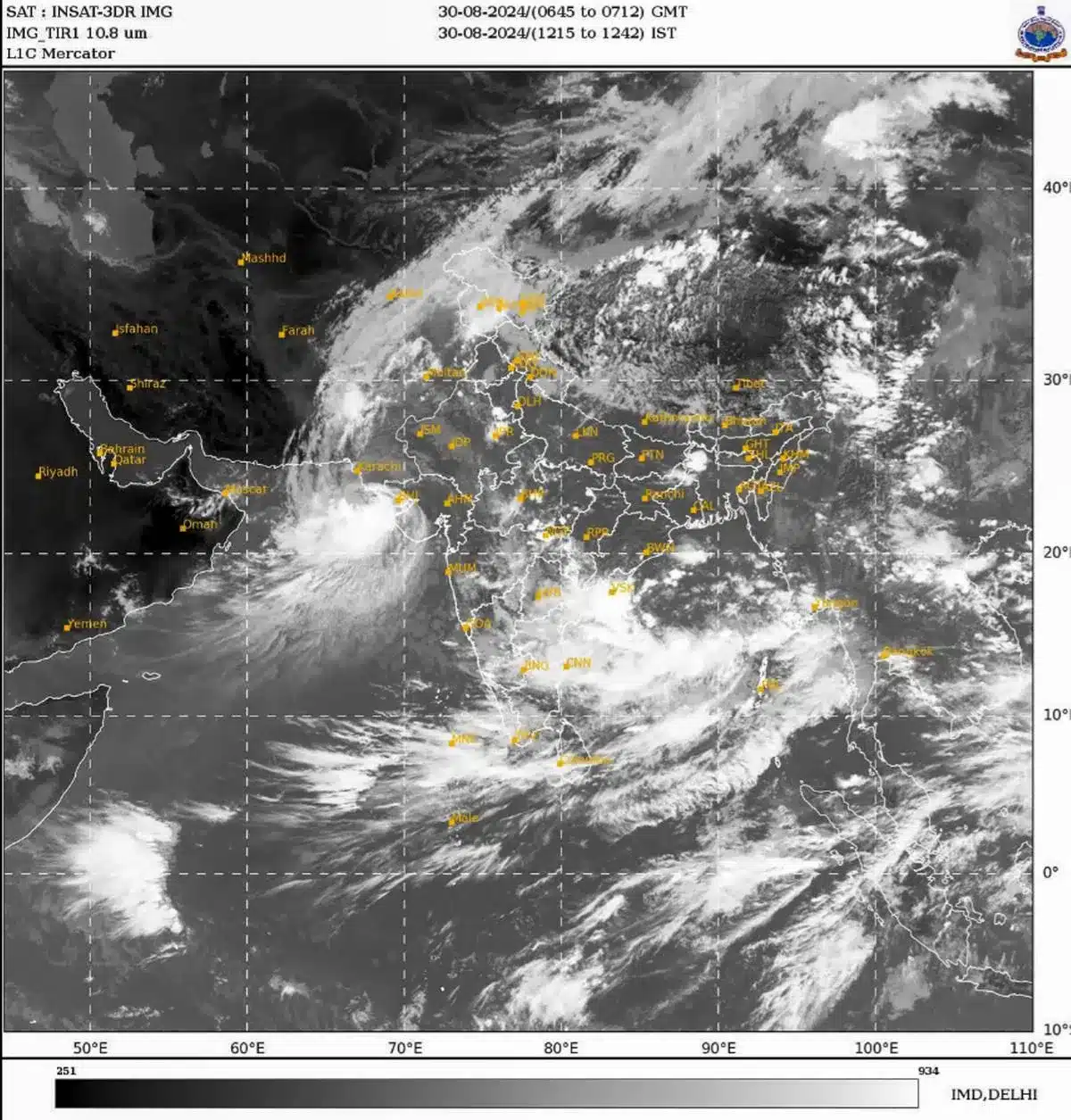
  • Transmission:
    • The bluetongue virus is transmitted by biting midges (Culicoides spp.).
    • It is not transmitted through contact with animals or wool, or through consumption of milk. 
  • Infections range from mild to severe, depending on the speciesaffected.
  • Most infections in cattle are asymptomatic.
  • Sheep are most likely to show symptoms.
    • In infected sheep, bluetongue damages the blood vessels, resulting in hemorrhage (internal bleeding), lack of oxygen in the blood, and necrosis (death) of affected tissues.
    • Infections are more obvious in young lambs, and the mortality rate can be high (up to 30 percent).

Vaccination is used as the most effective and practical measure to minimize losses related to the disease and to potentially interrupt the cycle from infected animal to vector along withinsect control measures.


Q1: What is a Virus?

A virus is an infectious microbe consisting of a segment of nucleic acid (either DNA or RNA) surrounded by a protein coat. A virus cannot replicate alone; instead, it must infect cells and use components of the host cell to make copies of itself. Often, a virus ends up killing the host cell in the process, causing damage to the host organism. Well-known examples of viruses causing human disease include AIDS, COVID-19, measles and smallpox.

Source: Bluetongue disease reported in all Dutch provinces

Govt Report to Delhi HC Stresses Deepfake Content Disclosure & Labeling

Govt Report to Delhi HC Stresses Deepfake Content Disclosure & Labeling

What’s in Today’s Article?

  • Deepfake Content Regulation Latest News
  • Regulation of Deepfakes in India
  • Background
  • Government Report on Deepfakes: Key Concerns and Stakeholder Insights
  • Deepfake Content Regulation FAQs

Deepfake Content Regulation Latest News

  • The Ministry of Electronics and Information Technology (MeitY) submitted a status report to the Delhi High Court highlighting key concerns about deepfakes
  • These include the rise of deepfake content targeting women during state elections, increasing AI-driven scam content, the need for better enforcement rather than new laws, and the absence of a uniform definition for "deepfake."
  • Deepfake technology creates realistic videos, audio, and images. It can change a person’s face, voice, and actions. This can mislead people and spread false information.

Regulation of Deepfakes in India

  • In India, there is no specific law directly addressing deepfakes.
  • Existing provisions under the Information Technology Act (IT Act) and other laws can be used to address their misuse, such as defamation, impersonation, and copyright infringement. 

Existing Legal Framework

  • Information Technology Act, 2000:
    • Section 66D: Penalizes cheating by impersonation using a computer resource, which could apply to deepfakes used for fraudulent impersonation. 
    • Section 66E: Addresses violation of privacy, which could be relevant if deepfakes are used to share private content. 
    • Sections 67, 67A, and 67B: Prohibit and punish the publication or transmission of obscene or sexually explicit material. 
    • Defamation Laws: Deepfakes used to spread misinformation or damage someone's reputation can be challenged under defamation laws. 
    • Copyright Act, 1957: Copyright holders can initiate legal proceedings against individuals who use copyrighted material without permission to create deepfakes, with penalties outlined in Section 51. 

Background

  • Several petitions have been filed in the Delhi High Court seeking regulation of deepfakes and AI-generated content.

Three petitions Filed 

  • Rajat Sharma's Petition (Journalist, India TV Editor-in-Chief)
    • Seeks regulation of deepfake technology.
    • Requests blocking of public access to apps enabling deepfake creation.
    • Argues that deepfakes pose a threat to society by spreading misinformation and disinformation, undermining public discourse and democracy.
  • Chaitanya Rohilla's Petition (Lawyer)
    • Calls for regulations on AI usage, addressing concerns over its unregulated deployment.
  • Kanchan Nagar's Petition (Model)
    • Seeks a ban on non-consensual commercial deepfakes.
    • Advocates for fair compensation for original artists in commercial advertising.

Formation of Committee

  • In November 2024, the court instructed the Centre to appoint members to the committee.
  • The Union Ministry of Electronics and Information Technology (MeitY) had announced the formation of a committee on November 20, 2024, to address this issue.
  • A nine-member MeitY committee, formed in November 2024, met stakeholders on January 21, 2025.

Government Report on Deepfakes: Key Concerns and Stakeholder Insights

  • Rising Threats from Deepfakes
    • Deepfakes targeting women during state elections.
    • Increasing AI-generated scam content, particularly post-elections.
    • Lack of a uniform definition for "deepfake."
  • Call for AI Content Regulation
    • Stakeholders emphasized mandatory AI content disclosure, labeling standards, and grievance redressal mechanisms, focusing on malicious actors rather than creative uses of deepfake technology.
  • Debate on Intermediary Liability
    • MeitY's panel proposed mandatory compliance for intermediaries regarding deepfake content.
    • Stakeholders cautioned against over-reliance on intermediary liability frameworks, advocating better investigative and enforcement mechanisms instead of new regulations.
      • Intermediary liability frameworks determine the extent to which intermediaries can be held liable for content on their platforms. 
      • The frameworks range from holding intermediaries entirely responsible for the content posted on their platform to complete immunity.
    • A representative from X stressed the need to distinguish between deceptive and benign AI content.
  • Challenges in Deepfake Detection
    • The Data Analysis Unit (DAU), part of the Meta-supported Misinformation Combat Alliance, highlighted:
      • Deepfakes targeting women during elections.
      • A post-election spike in AI-driven scam content.
      • Audio-based deepfakes are harder to detect.
      • Stakeholders underscored the need for collaboration and standard detection frameworks.
  • Law Enforcement and Regulatory Actions
    • The Indian Cyber Crime Coordination Centre (I4C) has been tasked with gathering data on deepfake-related cases from law enforcement agencies.
    • Proposed solutions include awareness campaigns via platforms like YouTube.
  • Ongoing Consultations and Next Steps
    • MeitY has requested three more months from the Delhi High Court to complete its consultations.
    • The ministry is yet to consult victims of deepfakes and is collaborating with the Ministry of Information and Broadcasting to gather their inputs.
    • Discussions so far have focused more on reactive measures rather than preventive solutions.

Deepfake Content Regulation FAQs

Q1. What are deepfake regulations in India?

Ans. The government emphasizes content labeling and transparency to regulate deepfake misinformation and misuse.

Q2. Why is the Delhi HC involved in deepfake regulation?

Ans. The court reviews legal measures to curb deepfake threats, ensuring public awareness and accountability.

Q3. How does labeling help regulate deepfake content?

Ans. Labels inform viewers about AI-generated content, reducing misinformation and enhancing digital safety.

Q4. What penalties exist for deepfake misuse in India?

Ans. Legal consequences include fines and imprisonment under IT laws and the Indian Penal Code.

Q5. What role does AI play in detecting deepfakes?

Ans. AI tools analyze inconsistencies in videos and images to identify deepfake manipulations.

Source: IE | inc42 | LC

Enquire Now