UPSC Daily Quiz 7 November 2025

UPSC Daily Quiz

The Daily UPSC Quiz by Vajiram & Ravi is a thoughtfully curated initiative designed to support UPSC aspirants in strengthening their current affairs knowledge and core conceptual understanding. Aligned with the UPSC Syllabus 2025, this daily quiz serves as a revision resource, helping candidates assess their preparation, revise key topics, and stay updated with relevant issues. Whether you are preparing for Prelims or sharpening your revision for Mains, consistent practice with these Daily UPSC Quiz can significantly enhance accuracy, speed, and confidence in solving exam-level questions.

[WpProQuiz 16]

UPSC Daily Quiz FAQs

Q1: What is the Daily UPSC Quiz?

Ans: The Daily UPSC Quiz is a set of practice questions based on current affairs, static subjects, and PYQs that help aspirants enhance retention and test conceptual clarity regularly.

Q2: How is the Daily Quiz useful for UPSC preparation?

Ans: Daily quizzes support learning, help in revision, improve time management, and boost accuracy for both UPSC Prelims and Mains through consistent practice.

Q3: Are the quiz questions based on the UPSC syllabus?

Ans: Yes, all questions are aligned with the UPSC Syllabus 2025, covering key areas like Polity, Economy, Environment, History, Geography, and Current Affairs.

Q4: Are solutions and explanations provided with the quiz?

Ans: Yes, each quiz includes detailed explanations and source references to enhance conceptual understanding and enable self-assessment.

Q5: Is the Daily UPSC Quiz suitable for both Prelims and Mains?

Ans: Primarily focused on Prelims (MCQ format), but it also indirectly helps in Mains by strengthening subject knowledge and factual clarity.

National Anthem of India, Jana Gana Mana, Code of Conduct, History

National Anthem of India

The National Anthem of India, Jana Gana Mana, holds a deep place in the nation’s collective consciousness. It stands not merely as a song but as a symbol of unity, diversity, national identity and respect for our democracy. Adopted officially on 24 January 1950, the anthem is more than lyrics and melody: it reflects India’s plural heritage, cultural unity, and aspirations. 

National Anthem of India

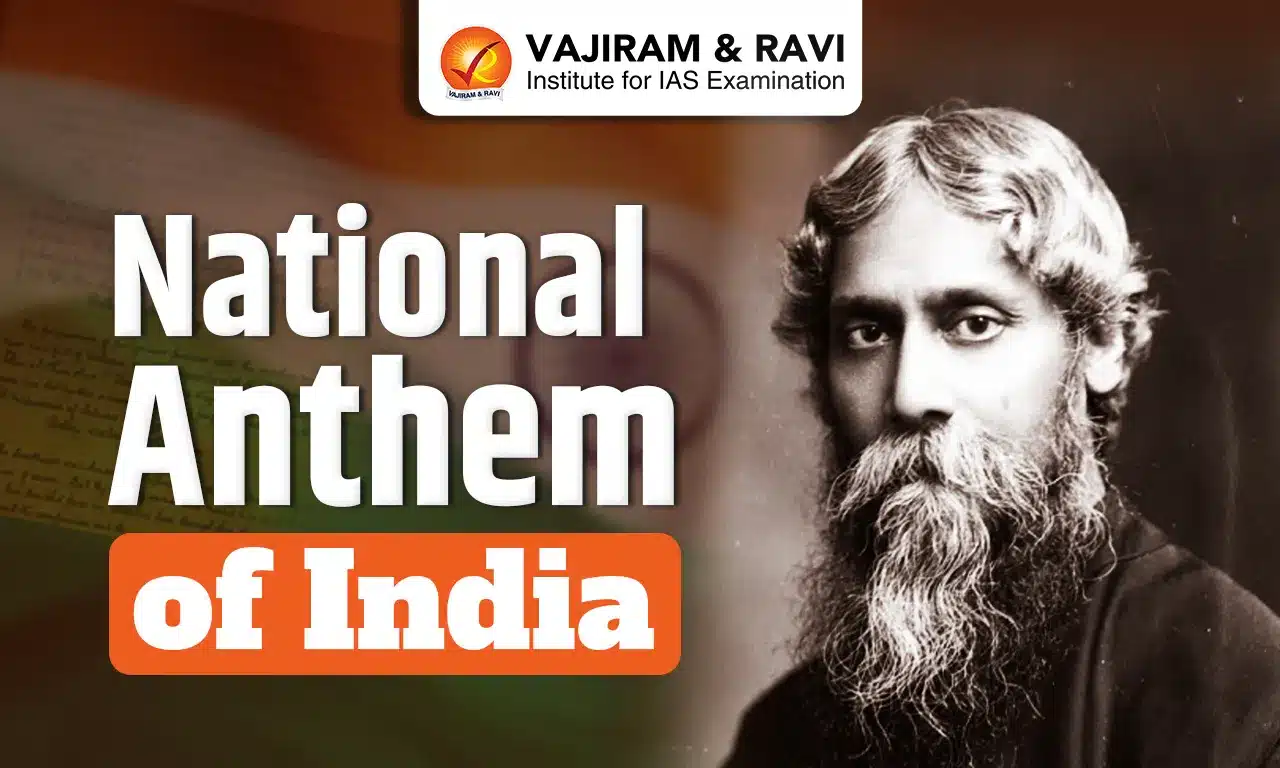
The National Anthem of India is the first stanza (and lines) of the larger hymn titled Bharoto Bhagyo Bidhata, composed by Rabindranath Tagore on December 11, 1911. The words are in highly Sanskritised Bengali, and the official Hindi version is used for national purposes.

The anthem celebrates India’s geographical spread, cultural diversity, and spiritual unity by invoking the names of regions, rivers and mountains. It is meant to be sung standing, with respect, and evokes a sense of national pride. Also official government documentation lists how and when it must be played or sung. 

National Anthem of India Historical Background

The National Anthem of India, Jana Gana Mana, reflects unity, pride, and patriotism, evolving through history and legal recognition.

  1. Composition and Origin
    • Composed by Rabindranath Tagore in Bengali on December 11, 1911.
    • It was part of a five-stanza Brahmo hymn titled "Bharoto Bhagyo Bidhata"
    • It was first sung at the Indian National Congress session in Calcutta, performed by Tagore's niece, Sarala Devi Chowdhurani, and other students on December 27, 1911.
  2. Official Adoption
    • Adopted as the National Anthem on January 24, 1950, by the Constituent Assembly after independence.
    • The anthem’s authorized Hindi version retains Tagore’s poetic essence.
    • The duration is officially fixed at 52 seconds when sung in full.
  3. Legal and Constitutional Recognition
    • Governed under the Prevention of Insults to National Honour Act, 1971, ensuring respect for the anthem.
    • Violations such as mocking or disrupting its performance attract legal consequences.
  4. National Anthem in Cinemas (Supreme Court Directive)
    • In November 2016, the Supreme Court mandated the playing of the anthem before all movie screenings.
    • The rule aimed to instill respect and unity among citizens.
    • In January 2018, the Court revised the order, making the practice optional, but urged audiences to stand as a mark of respect. 

National Anthem of India Lyrics

The official lyrics of the National Anthem of India consist of the first stanza of Jana Gana Mana composed by Rabindranath Tagore.

Full version (52 seconds):

“Jana-gana-mana-adhinayaka jaya hey, Bharata-bhagya-vidhata;

Panjaba-Sindhu-Gujarata-Maratha, Dravida-Utkala-Banga;

Vindhya-Himachala-Yamuna-Ganga, Ucchala-Jaladhi-Taranga;

Tava Shubha Name Jage, Tava Shubha Ashisa Mage, Gahe Tava Jaya-Gatha;

Jana-gana-mangala-dayaka jaya hey, Bharata-bhagya-vidhata;

Jaya hey, Jaya hey, Jaya hey, Jaya Jaya Jaya Jaya hey.”

Short version (for selected occasions, 20 seconds):

“Jana-gana-mana-adhinayaka jaya hey,

Bharata-bhagya-vidhata;

Jaya hey, Jaya hey, Jaya hey, Jaya Jaya Jaya Jaya hey.”

National Anthem of India Meaning

The lyrics of ‘Jana Gana Mana’ contain deep meaning and symbolism. The first stanza refers to India (Bharat) by invoking different regions (Punjab, Sindh, Gujarat, Maratha, Dravid, Utkala) and physical features (Vindhya, Himachal, Yamuna, Ganga, waves of the sea). 

The National Anthem of India addresses “Thou art the Ruler of the Minds of all people, Thou Dispenser of India’s Destiny”. It acknowledges the varied regions and peoples of India and unites them in one expression of hope, destiny and victory. Language Features of National Anthem of India:

  • The song was originally written in the Bengali language in a highly Sanskritized dialect (Sadhu Bhasha), giving it a pan-Indian tone rather than being regional.
  • Every state and region is explicitly mentioned, signifying unity in diversity.
  • Musical composition: The melody is based on the Hindustani classical raga Alhaiya Bilaval. 

National Anthem of India Code of Conduct

The Government of India has laid down clear guidelines for performing the national anthem to ensure respect and decorum. 

  • Everyone present must stand at attention when the anthem is sung or played.
  • The anthem may be sung in any location- indoors or outdoors, but it must be the original version without any addition or omission.
  • The full version (~52 seconds) is played at formal state occasions; a shorter version (~20 seconds) may be used for other events.
  • It should not be used for commercial purposes or mis-appropriated so as to demean its dignity.

National Anthem of India Case Laws

The National Anthem of India has been the subject of several important judicial interpretations that define the duties, rights, and limits of citizens concerning respect and freedom of expression. Indian courts have consistently emphasized that showing respect to the National Anthem is a constitutional duty under Article 51A(a), yet individuals cannot be forced to participate in ways that violate personal beliefs or freedoms.

  1. Bijoe Emmanuel vs. State of Kerala (1986)
    • Three school students belonging to the Jehovah’s Witnesses faith were expelled for not singing the National Anthem, though they stood respectfully during it.
    • The Supreme Court ruled in their favor, holding that freedom of conscience and religion (Article 25) protects individuals from being compelled to sing the anthem.
    • The Court clarified that standing in respect is sufficient and that refusal to sing does not amount to disrespect.
  2. Shyam Narayan Chouksey vs. Union of India (2016-2018)
    • A petition sought mandatory playing of the anthem in cinema halls before every movie screening.
    • In 2016, the Supreme Court directed all theaters to play the National Anthem and required the audience to stand in respect.
    • However, in 2018, the Court modified its order, making it optional and allowing the government to frame suitable guidelines instead.
    • The judgement emphasized voluntary patriotism over enforced nationalism.

National Anthem of India Significance

The cultural and political significance of the National Anthem of India has been discussed below:

  • Unity, Diversity and Identity: The national anthem is a powerful expression of India’s unity in diversity: by referencing every major geographical and cultural region, it highlights that though Indians differ in language, faith and region, they share a single national identity.
  • Freedom Movement & Symbolism: While Vande Mataram played a key role during India’s freedom struggle, Jana Gana Mana became an inclusive anthem suited for a plural nation. The anthem is played at schools, stadiums, public events and international forums, reinforcing national pride.
  • International Use: The Indian anthem is used at international sporting events, diplomatic ceremonies and missions abroad to signal India’s identity. For example, Indian embassies use the anthem in their pages and videos. 
  • Symbol of Sovereignty: The anthem embodies India’s independence, Constitution and democratic identity.
  • Nation-Building Tool: It fosters respect for national symbols and creates a shared sense of belonging.
  • Cultural Soft Power: At global events, the anthem projects India’s identity and values.
  • Educational Role: At schools and institutions, it serves as a daily reminder of civic responsibility.

National Anthem of India Criticism

In contemporary India, National Anthem of India faces several backlashes for: 

  • Inclusivity and Representation: Though the anthem explicitly mentions many regions, the reference to Sindh (now in Pakistan) is sometimes discussed in debates. Yet the anthem continues to be seen as all-India inclusive.
  • Obligatory Nature and Debate: Recent government directives in states (e.g., Rajasthan) mandating anthem singing in schools stirred debate on balance between patriotism, freedom and discipline.
  • Digital Age Usage: The anthem is used widely online, in videos and social media, raising questions about proper use, copyright, and respect. Official portals provide authorized versions for download.

National Anthem of India Status in Present Day

The National Anthem of India continues to be deeply relevant in India’s evolving context. With digital media, mass participation campaigns and usage at global events, Jana Gana Mana remains a living symbol of national cohesion. In 2023-24, over millions of students in schools across India sang the anthem every morning. 

Amid social change, the anthem keeps reminding us of our collective identity and the values of the Indian Republic. It remains central to public ceremonies, educational rituals and national expressions. The Government of India launched campaigns encouraging mass singing of the national anthem. For example, in 2020 the Ministry of Culture invited citizens to sing Jana Gana Mana together, which broke records and galvanized national sentiment.

National Anthem of India UPSC

The National Anthem of India, Jana Gana Mana, is far more than a melody; it is the voice of the nation. It encapsulates India’s diversity, history, aspirations and unity in one elegant hymn. From its origin in 1911 to formal adoption in 1950, from classrooms to stadiums, the anthem remains a unifying force for over a billion Indians. As India marches ahead into the future, the anthem will continue to echo in our hearts, inspiring respect, patriotism and pride.

National Anthem of India FAQs

Q1: When was the National Anthem of India Jana Gana Mana composed and by whom?

Ans: It was composed by Rabindranath Tagore on 11 December 1911.

Q2: When was it officially adopted as the National Anthem of India?

Ans: It was adopted by the Constituent Assembly on 24 January 1950. 

Q3: What is the duration of the full National Anthem of India?

Ans: The full version takes about 52 seconds; a short version is about 20 seconds.

Q4: What is the language of the National Anthem of India?

Ans: Originally Bengali-Sanskritised; officially used in Hindi transliteration nationwide.

Q5: On what occasions is the full version of National Anthem of India played?

Ans: On state ceremonies, parades, arrival/departure of President, and other formal occasions.

National Cancer Awareness Day 2025, Theme, Significance, Initiatives

National Cancer Awareness Day 2025

National Cancer Awareness Day 2025 is observed on 7 November across India to raise public awareness about early detection, prevention, and treatment of cancer. This day serves as a national reminder of the importance of understanding cancer, its risk factors, and preventive measures. Various health organisations, NGOs, and government bodies conduct screening camps, awareness drives, and educational events to mark the occasion. The day emphasizes timely diagnosis and lifestyle changes to reduce India’s growing cancer burden.

National Cancer Awareness Day 2025

National Cancer Awareness Day plays a crucial role in educating citizens about cancer’s impact on society and the importance of regular health checkups. Cancer is one of India’s fastest-growing public health challenges, responsible for over 8 lakh deaths annually. The day focuses on promoting early detection, healthy lifestyles, and timely medical intervention. Awareness campaigns help reduce stigma, empower communities, and encourage preventive action through screenings, vaccinations, and awareness programs at schools, hospitals, and workplaces.

National Cancer Awareness Day 2025 Theme

While the official theme for 2025 has not been announced separately, it is expected to continue focusing on “United by Unique”, aligned with WHO’s World Cancer Day 2025 campaign. The theme highlights equity in cancer care, ensuring that every individual, regardless of income or location, has access to early diagnosis and effective treatment.

National Cancer Awareness Day 2025 Historical Background

National Cancer Awareness Day was first introduced in 2014 by Dr. Harsh Vardhan, the then Union Minister of Health and Family Welfare. The day coincides with the birth anniversary of Marie Curie, the Nobel laureate whose pioneering research on radioactivity contributed significantly to cancer treatment. The government launched this observance to spread awareness about different cancers, their symptoms, and treatment options. Since then, the day has been observed annually to educate people about preventive care and early screening.

National Cancer Awareness Day 2025 Causes of Cancer

Cancer develops when abnormal cells grow uncontrollably, often influenced by genetic, environmental, and lifestyle factors. Tobacco use remains the major cause, accounting for 50% of male cancers and 25% of female cancers. The rise in sedentary lifestyles, pollution, and unhealthy diets further contribute to this growing concern. The major risk factors include:

  • Tobacco consumption- leading cause of oral, lung, and throat cancers.
  • Unhealthy diet- high intake of processed foods and low consumption of fruits and vegetables.
  • Alcohol abuse- increases risk of liver and esophageal cancer.
  • Obesity and inactivity- linked with breast and colon cancer.
  • Exposure to radiation and chemicals- from workplaces or pollution.
  • Genetic predisposition- family history of cancer.
  • Although in the present time this disease has become common among people irrespective of age, diet, habits, etc.

National Cancer Awareness Day 2025 Early Detection Significance

Early detection significantly improves survival rates and treatment success. In India, however, two-thirds of cancer cases are detected at advanced stages, reducing the chances of cure. Regular health checkups, self-examination, and participation in screening programs for breast, cervical, and oral cancers can make a crucial difference. The government promotes these screenings through initiatives like the National Programme for Prevention and Control of Cancer, Diabetes, Cardiovascular Diseases and Stroke (NPCDCS).

National Cancer Awareness Day 2025 Preventive Measures for Cancer

Cancer prevention focuses on reducing exposure to known risk factors and adopting a healthy lifestyle. Simple steps can significantly reduce cancer risk:

  • Avoid tobacco in all forms.
  • Maintain a healthy weight through regular exercise.
  • Eat a diet rich in fruits, vegetables, and whole grains.
  • Limit alcohol consumption.
  • Protect yourself from UV radiation.
  • Get vaccinated against HPV and Hepatitis B.
  • Undergo regular cancer screenings as per age and risk group.

National Cancer Awareness Day 2025 Global Burden

According to the World Health Organization (WHO), cancer accounted for over 10 million deaths in 2020, making it one of the leading causes of death worldwide. The most common cancer types were:

National Cancer Awareness Day 2025 Global Burden
Type of Cancer New Cases (2020) Deaths (2020)

Breast Cancer

22.6 lakh

6.85 lakh

Lung Cancer

22.1 lakh

18 lakh

Colon & Rectum Cancer

19.3 lakh

9.16 lakh

Prostate Cancer

14.1 lakh

-

Stomach Cancer

10.9 lakh

7.69 lakh

National Cancer Awareness Day 2025 Indian Aspects

India faces an increasing cancer burden, with 20-25 lakh active cancer patients at any given time. As per GLOBOCAN 2020, India recorded 13.24 lakh new cases and 8.51 lakh cancer-related deaths. The data shows gender-based variations:

National Cancer Awareness Day 2025 Indian Aspects
Gender Common Cancer Types

Men

Lip/ Oral Cavity (16.2%), Lung (8%), Stomach (6.3%)

Women

Breast (26.3%), Cervix Uteri (18.3%), Ovary (6.7%)

National Cancer Awareness Day 2025 Role of NGOs

Non-profit organisations such as the Indian Cancer Society, Cancer Patients Aid Association (CPAA), Tata Memorial Centre, Mahalakshmi Foundation, etc. play an essential role in supporting patients and families. They conduct awareness programs, provide financial aid, and promote research. Partnerships between government bodies, NGOs, and corporate sectors are crucial for comprehensive cancer control.

National Cancer Awareness Day 2025 Government Initiatives

The Government of India has implemented several initiatives to reduce the cancer burden. These programs aim to make cancer diagnosis and treatment accessible and affordable for all.

  1. National Cancer Control Programme (NCCP)- focuses on prevention, early detection, and palliative care.
  2. NPCDCS- integrates cancer screening into primary healthcare.
  3. Tertiary Care Cancer Centres Scheme- supports 27 regional cancer centers nationwide.
  4. National Cancer Grid (NCG)- a network of over 300 hospitals for uniform cancer care standards.
  5. Ayushman Bharat (PM-JAY)- provides free cancer treatment to eligible families.
  6. Financial Assistance- Various States Governments such as Maharashtra, Jharkhand, Chhattisgarh, Bihar, etc. provide financial assistance to the patients undergoing treatment for the Cancer based on the policies as per the state. Along with this the patient is also eligible to get one time financial assistance for Cancer Treatment from the Central Government after qualifying the required criteria.
  7. NGO Aid: Several NGOs dedicate their funding and contributions to the patients undergoing cancer treatment by helping the patient and their families financially, providing shelter for outstation treatments, meals and fruits, continuation of education of the child patients, etc. 

Cancer Treatment in India

India has some of the world’s best cancer hospitals providing high-quality, affordable treatment. These hospitals offer advanced diagnostics, surgery, chemotherapy, and radiation:

  • Tata Memorial Hospital, Mumbai- Government-funded and globally recognized for affordable oncology care.
  • AIIMS, New Delhi- Offers subsidized treatment with modern oncology facilities.
  • Adyar Cancer Institute, Chennai- Provides free or low-cost treatment to low-income patients.
  • Kidwai Memorial Institute, Bengaluru- Regional cancer center serving South India.
  • Rajiv Gandhi Cancer Institute, Delhi- Known for advanced care at accessible rates.

National Cancer Awareness Day 2025 Challenges

Despite progress, several challenges persist in India’s fight against cancer. Each challenge requires a clear way forward for effective implementation:

  • Late diagnosis due to low awareness
  • Limited access to specialized healthcare
  • High cost of treatment
  • Rural-urban healthcare gap
  • Tobacco addiction
  • Lack of research and data
  • Stigma and fear among patients
  • Shortage of trained oncologists
  • Environmental pollution
  • Rising lifestyle-related cancers

Way Forward:

  • Strengthen community-based screening programs.
  • Expand regional cancer centers under NCG.
  • Broaden insurance coverage through PM-JAY.
  • Improve telemedicine and mobile screening units
  • Implement stricter anti-tobacco laws and education.
  • Promote cancer registries and digital health records.
  • Conduct awareness drives to normalize early testing.
  • Enhance training programs for healthcare workers.
  • Strengthen regulations on industrial and air pollutants.
  • Promote preventive health education at schools and workplaces.

National Cancer Awareness Day 2025 UPSC

National Cancer Awareness Day 2025 is an important occasion to renew India’s commitment to fighting cancer through awareness, prevention, and early detection. With over 13 lakh new cases annually, the need for community participation, government action, and healthcare innovation is stronger than ever. Empowering citizens with knowledge about symptoms, preventive measures, and screening can save countless lives. By addressing risk factors, improving healthcare access, and fostering early diagnosis, India can move toward a healthier, cancer-aware society.

India has made major progress in oncology through innovation and research. Advanced technologies like immunotherapy, robotic surgery, and targeted therapy are now available in leading centers. Institutes such as Tata Memorial Centre, AIIMS, and National Cancer Institute (Jhajjar) are developing indigenous cancer drugs and precision diagnostic tools. The use of Artificial Intelligence (AI) in early detection and molecular profiling of tumors has enhanced treatment accuracy. The government’s collaboration with ICMR and private sectors ensures affordable access to new therapies, strengthening the nation’s cancer care ecosystem.

National Cancer Awareness Day 2025 FAQs

Q1: When is National Cancer Awareness Day observed in India?

Ans: National Cancer Awareness Day is observed every year on 7 November to promote awareness about cancer prevention and early detection.

Q2: Who started National Cancer Awareness Day?

Ans: It was initiated in 2014 by Dr. Harsh Vardhan, the Union Minister of Health and Family Welfare, to educate citizens about cancer.

Q3: What is the main objective of National Cancer Awareness Day?

Ans: The main goal is to encourage early screening, reduce stigma, and promote healthy lifestyle habits to prevent cancer.

Q4: Which are the most common types of cancer in India?

Ans: In men, oral and lung cancers are most common, while in women, breast and cervical cancers are highly prevalent.

Q5: How can Cancer be prevented?

Ans: Avoiding tobacco, maintaining a balanced diet, exercising regularly, limiting alcohol, and going for timely screenings can help prevent cancer.


Khangchendzonga National Park

Khangchendzonga National Park

Khangchendzonga National Park Latest News

The International Union for Conservation of Nature (IUCN) recently rated Khangchendzonga National Park as “good” in its latest global review of natural World Heritage sites.

About Khangchendzonga National Park

  • It is located in the north of Sikkim.
  • It is a part of the Khangchendzonga Biosphere Reserve (KBR).
    • KBR is India’s first “mixed” UNESCO World Heritage Site, recognised in 2016 for its combination of natural beauty and cultural importance. 
  • It is home to Mt. Khangchendzonga, the third highest peak in the world. 
  • It lies entirely along the Sikkim-Nepal border.
  • It is a part of the Himalaya global biodiversity hotspot.
  • It encompasses an area covering 1784 sq.km. 
  • It exhibits one of the widest altitudinal ranges of any protected area worldwide. The park has an extraordinary vertical sweep of over 7 kilometres (1,220 m to 8,586 m).
  • It has a unique diversity of plains, valleys, lakes, glaciers, and spectacular, snow-capped mountains covered with ancient forests.
  • It has, in total, 18 glaciers, the largest one being Zemu Glacier, one of the largest glaciers in Asia. 
  • It is one of the very few places where you will find the Lepcha tribal settlements. 
  • Flora: Subtropical to alpine vegetation; includes oak, fir, birch, maple, and rhododendron.
  • Fauna:
    • It is home to important flagship species such as the snow leopard, Tibetan wolf, red panda, blue sheep, Himalayan Tahr, and mainland serow, among many.
    • It is home to nearly half of India's bird diversity.

Source: NOA

Khangchendzonga National Park FAQs

Q1: In which Indian State is the Khangchendzonga National Park located?

Ans: Sikkim

Q2: Which country shares an international boundary with Khangchendzonga National Park?

Ans: Nepal

Q3: What is the altitudinal range of Khangchendzonga National Park?

Ans: 1,220 m to 8,586 m

Q4: Which is the largest glacier found in Khangchendzonga National Park?

Ans: Zemu Glacier

Vedanthangal Bird Sanctuary

Vedanthangal Bird Sanctuary

Vedanthangal Bird Sanctuary Latest News

The Vedanthangal Bird Sanctuary has come alive with the arrival of thousands of migratory birds marking the start of the season.

About Vedanthangal Bird Sanctuary

  • It is located in the Chengalpattu District of Tamil Nadu
  • It is one of the oldest bird protected areas in the country as well as in the State of Tamil Nadu.
  • This freshwater wetland is a people-protected water bird area.
    • The history of which goes back to centuries where local people have been protecting this heronry (Breeding ground of Herons) and in return, have been benefited by the manure-rich water from the lake that increases the agriculture yield multifold–Liquid Guano Effect.
  • This site is also recognized internationally, as an Important Bird and Biodiversity Area (IBA). It belongs to the Coromandel Coast biotic province.
  • It was designated as Ramsar Site in 2022.
  • Flora: It includes Alangium salviflorum trees, Acacia nilotica, thorn forests and dry evergreen scrub.
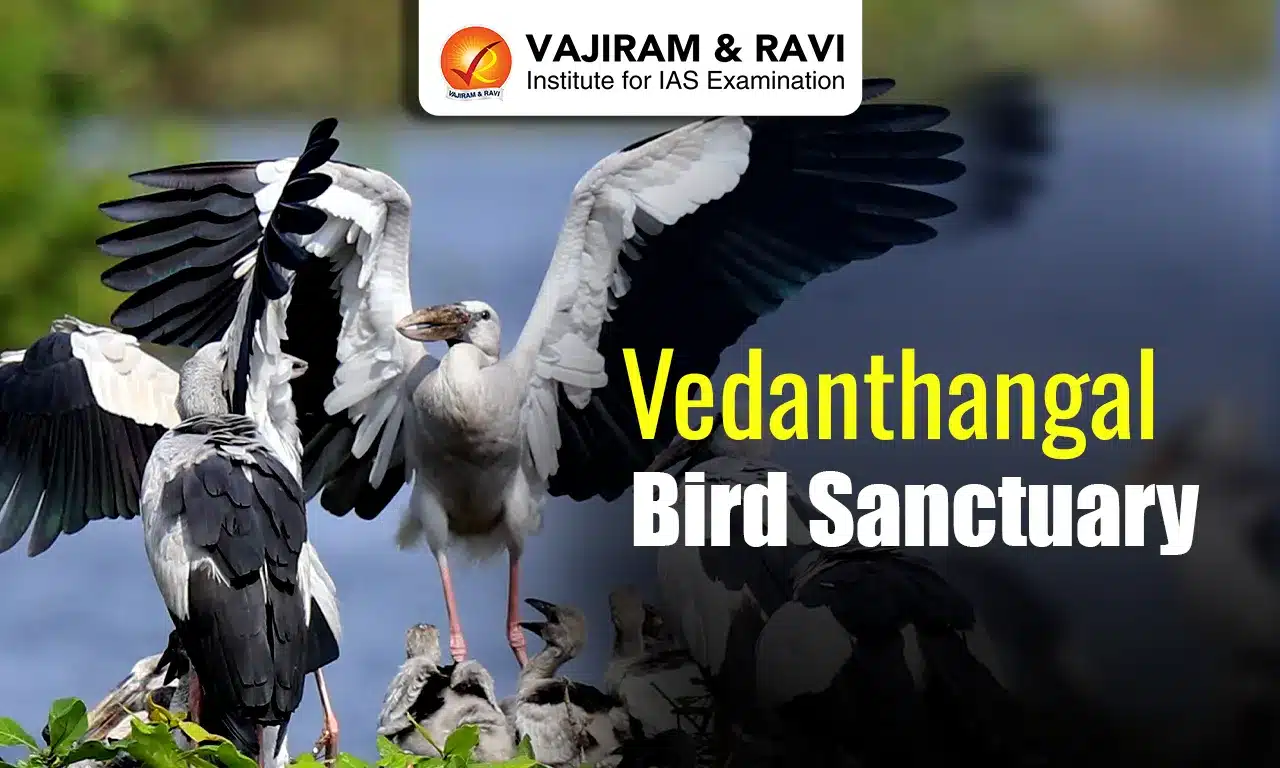
  • Fauna: It is home to black-headed ibis (Threskiornis melanocephalus), Eurasian spoonbill (Platalea leucorodia), black-crowned night heron (Nycticorax nycticorax) and painted stork (Mycteria leucocephala)

Source: TOI

Vedanthangal Bird Sanctuary FAQs

Q1: Where is the Vedanthangal Bird Sanctuary located?

Ans: Tamil Nadu

Q2: When is the best time to visit Vedanthangal Bird Sanctuary?

Ans: November to March

Baliyatra Festival

Baliyatra Festival

Baliyatra Festival Latest News

Recently, the President of India extended greetings on the occasion of the historic ‘Baliyatra’ festival and ‘Boita Bandana’ to all the countrymen.

About Baliyatra Festival

  • It is celebrated annually in Cuttack, Odisha.
  • The term Bali Jatra literally means ‘Voyage to Bali’.
  • It is celebrated every year on Kartika Purnima that marks the day that the seafaring traders departed for the Indonesian islands.

Historical Significance of Baliyatra Festival

  • It is organised every year to commemorate the 2,000-year-old maritime and cultural links between ancient Kalinga (today’s Odisha) and Bali and other South and Southeast Asian regions like Java, Sumatra, Borneo, Burma (Myanmar) and Ceylon (Sri Lanka).

Celebration of Baliyatra Festival

  • The celebration features grand fairs, elaborate rides, food and dance.
  • Indian women perform ‘Boita Bandana’, they make boats of paper or banana leaf (sholapith) with lighted lamps inside and float them down the Mahanadi as a part of the celebrations.
  • The Bali Jatra celebrates the ingenuity and skill of those expert sailors who made Kalinga, one of the most prosperous empires of its time.

Source: News On Air

Baliyatra Festival FAQs

Q1: Where is the Baliyatra Festival celebrated?

Ans: Cuttack, Odisha

Q2: Which occasion is commemorated by the Baliyatra Festival?

Ans: Maritime trade and cultural exchange between Odisha and Southeast Asian countries.

Daily Editorial Analysis 7 November 2025

Daily Editorial Analysis

Redraw Welfare Architecture, Place a Universal Basic Income in the Centre

Context

  • As India’s wealth gap widens and technology outpaces policy, the nation faces converging crises, automation-led job losses, gig economy precarity, and climate-driven displacement.
  • Amid this turbulence, Universal Basic Income (UBI), once deemed utopian, now demands serious policy attention.
  • The idea offers not just an economic cushion but a way to restore dignity, stability, and citizenship in a rapidly changing society.
  • Therefore, it is important to analyse how the argument for UBI in India unfolds through economic, moral, administrative, and political dimensions, positioning it as a foundation for a renewed social contract in the 21st century.

Economic Inequality and the Moral Imperative

  • India’s widening wealth inequality underscores the moral urgency of UBI.
  • While official narratives celebrate 4% GDP growth (2023–24), the benefits remain concentrated at the top, the richest 1% own 40% of national wealth, and the top 10% control 77%.
  • As Nobel laureate Joseph Stiglitz warns, GDP alone cannot measure equity, sustainability, or well-being. India’s 126th rank in the 2023 World Happiness Report reveals the disconnect between economic output and social health.
  • Against this backdrop, UBI is framed as both an economic stabiliser and a moral response.
  • It ensures a basic income floor for all citizens, empowering them with autonomy and security.
  • By simplifying welfare into a direct, unconditional transfer, UBI bypasses the leakages and exclusions that plague India’s targeted schemes.
  • The measure not only redistributes income but also recognises unpaid care work, especially by women, which sustains the formal economy yet remains invisible in national statistics.

Universality as Administrative and Philosophical Strength

  • The essay identifies universality as UBI’s greatest strength. Unlike traditional means-tested welfare systems, a UBI ties entitlement to citizenship, not poverty.
  • This eliminates stigma, bureaucracy, and corruption, making welfare delivery efficient and inclusive.
  • Philosophically, universality transforms UBI into a rights-based guarantee, not a political favour.
  • It aligns with the vision of a modern welfare state, ensuring that social protection is streamlined, unconditional, and resilient to shocks such as automation and climate change.
  • By anchoring welfare in citizenship, UBI redefines inclusion, making every citizen a rightful stakeholder in the national economy.

Economic Rationale and Practical Evidence

  • Empirical evidence strengthens the case. The SEWA-led pilot in Madhya Pradesh (2011–13) showed that unconditional cash transfers led to better nutrition, school attendance, and productivity.
  • Similar trials in Finland, Kenya, and Iran found improvements in mental health, food security, and economic stability, disproving fears that UBI discourages work.
  • With automation threatening up to 800 million jobs globally by 2030, India’s informal and semi-skilled workforce is especially at risk.
  • UBI provides a transition buffer, allowing workers to upskill and adapt. Thus, it is not a welfare expense but a strategic investment in resilience and human capital.

Reconstructing the Citizen–State Relationship

  • Beyond economics, UBI carries a profound philosophical and political significance.
  • It challenges India’s transactional welfare politics, where parties exchange short-term freebies for votes.
  • By decoupling income security from political patronage, UBI empowers citizens to evaluate governments on systemic outcomes, education, health, justice, and sustainability, rather than material handouts.
  • This marks a shift from consumer-as-voter to citizenship-based democracy.
  • UBI transforms the citizen–state relationship from one of dependency to one of rights and accountability.
  • When income security is guaranteed, voters can demand good governance instead of negotiating for subsidies.
  • Thus, UBI becomes a tool of democratic renewal, replacing the politics of paternalism with a rights-based social contract.

Funding and Implementation Challenges

  • The biggest challenge is UBI’s fiscal and logistical challenges. A modest income of ₹7,620 per person annually, roughly the poverty line, would cost about 5% of India’s GDP.
  • Financing such a scheme demands tax reform, subsidy rationalisation, or phased rollout. Yet the essay reframes the debate: the question is not Can India afford UBI? but Can it afford the cost of mass insecurity?
  • A phased introduction offers a realistic path, starting with vulnerable groups like women, the elderly, and persons with disabilities.
  • As India’s digital infrastructure (Aadhaar, DBT, Jan Dhan) matures, these systems can facilitate seamless delivery.
  • However, gaps in digital literacy and access, especially in remote areas, must be bridged to ensure true universality.
  • Crucially, UBI should complement, not replace, existing safety nets like PDS and MGNREGA, particularly in the early stages of implementation.

Conclusion

  • UBI is more than a fiscal proposal, it is a vision for equitable citizenship in an age of automation and inequality.
  • It embeds dignity, autonomy, and security at the heart of welfare policy, offering India a new social contract for the 21st century.
  • By ensuring a minimum level of income for all, UBI promotes both economic stability and democratic vitality. It reframes welfare from charity to citizenship, from transaction to trust.
  • The true question is no longer whether India can afford a UBI, but whether it can afford the democratic cost of leaving millions behind.

Redraw Welfare Architecture, Place a Universal Basic Income in the Centre FAQs

 Q1. What is the central argument around Universal Basic Income?
Ans. A Universal Basic Income (UBI) is essential for India to address rising inequality, automation-related job losses, and social insecurity while redefining the relationship between citizens and the state.

Q2. What is the moral significance of UBI?
Ans. UBI can be perceived as a moral response to inequality, recognising unpaid care work and ensuring every citizen a basic level of dignity and autonomy.

Q3. What evidence supports the effectiveness of UBI?
Ans. Pilot studies in Madhya Pradesh and international trials in Finland, Kenya, and Iran, all showing improvements in nutrition, education, and mental health without reducing people’s willingness to work.

Q4. How can UBI change the nature of Indian politics?
Ans. UBI can reduce dependency on political handouts, shifting welfare from populist freebies to a rights-based model that empowers citizens to demand better governance and accountability.

Q5. What challenges must India overcome to implement UBI successfully?
Ans. India must address funding constraints, digital access gaps, and gradual rollout logistics, ensuring UBI complements existing welfare schemes like PDS and MGNREGA.

Source: The Hindu


As the Next Phase of SIR Rolls On, The Case of Assam

Context

  • As the Election Commission of India (ECI) conducts a new phase of the Special Intensive Revision (SIR) of electoral rolls across several states, Opposition parties have accused it of attempting a “backdoor NRC”, drawing parallels with the National Register of Citizens (NRC) exercise carried out in Assam.
  • The Chief Election Commissioner (CEC) clarified that the second phase of the SIR would exclude Assam, which faces elections next year.
  • He stated that citizenship verification in Assam, being conducted under Supreme Court supervision as per the Citizenship Act, 1955, is nearing completion.
  • The situation raises questions about the ECI’s jurisdiction and overlap with citizenship determination, a process typically beyond the poll body’s constitutional mandate.
  • This article highlights the controversy surrounding the ECI’s SIR of electoral rolls and the jurisdictional concerns it raises, particularly in Assam—a state with a unique legal and historical framework on citizenship under Section 6A of the Citizenship Act, 1955.

ECI’s Jurisdiction Questioned in Citizenship Verification

  • A major criticism of the SIR in Bihar was that the ECI allegedly sought citizenship proof from individuals not on the 2003 electoral rolls, using limited documentation.
  • This move conflicted with the ECI’s own guidelines, which require that cases of doubtful citizenship be referred to the competent authority under the Citizenship Act, 1955, rather than being decided by the Commission itself.
  • Assam’s Exception and the Legal Dilemma
    • In excluding Assam from the current SIR, the ECI cited that citizenship ascertainment there was “about to be completed.”
    • However, critics argue this reasoning conceals a jurisdictional issue:
      • any fresh verification in Assam would overlap with the National Register of Citizens (NRC), already prepared under Supreme Court supervision.
      • This would require re-evaluating citizenship in a state where that process has legally concluded.
    • NRC in Assam: A Completed Legal Exercise
      • The final NRC in Assam was published on August 31, 2019, after five years of work under the Supreme Court’s direct monitoring.
        • Total Applicants:30 crore (through 68.38 lakh applications)
        • Included in NRC: 3,11,21,004 people
        • Excluded: 19,06,657 people
      • The process was a constitutionally valid, large-scale verification of citizenship, making Assam the only Indian state to have completed such an exercise post-Independence.
    • Why the CEC’s Justification Falls Short
      • The Chief Election Commissioner’s claim that Assam’s citizenship verification is still underway is misleading, as the NRC process concluded in 2019.
      • Reopening the issue risks duplicating an already settled legal process and would exceed the ECI’s constitutional jurisdiction, effectively turning it into a parallel citizenship tribunal, which the law does not permit.
      • Subjecting Assam’s residents to another round of scrutiny would erode public trust, strain administrative resources, and disturb the fragile social fabric of the state.
      • The ECI should limit itself to its constitutional mandate — ensuring free and fair elections — rather than engaging in citizenship determination, a function that lies solely with authorities empowered under the Citizenship Act.

Section 6A: Assam’s Distinct Citizenship Framework Upheld by Supreme Court

  • At the core of Assam’s citizenship debate lies Section 6A of the Citizenship Act, 1955, introduced in 1985 under the Assam Accord.
  • This provision established a special legal regime for Assam, setting unique cut-off dates for identifying and deporting foreigners — separate from the rest of India.
  • In October 2024, a five-judge Bench of the Supreme Court, in In Re: Section 6A of the Citizenship Act, 1955, upheld its constitutional validity, recognising it as a special measure tailored for Assam’s historical and demographic realities.
  • The Court held that Section 6A aligns with the constitutional value of fraternity and affirmed that Assam’s citizenship issues must be treated with distinct legal and political sensitivity, not through a uniform national approach.

Why ECI Must Tread Carefully in Assam’s Citizenship-Linked Voter Revision

  • Assam’s citizenship and migration issues have long been legally distinct from the rest of India, shaped by decades of court rulings and the unique framework under Section 6A of the Citizenship Act.
  • Given this exceptional legal context, any Special Intensive Revision (SIR) by the Election Commission of India (ECI) in Assam that touches upon citizenship verification must proceed with extreme caution.
  • While some argue that the NRC data—finalised in August 2019 under Supreme Court supervision after extensive stakeholder consultations—could be used to expedite the process, the ECI faces a complex dilemma.
  • Using or disregarding the NRC could risk inconsistencies between the NRC and the voters’ list, potentially excluding eligible citizens and undermining public trust in electoral and institutional integrity.

As the Next Phase of SIR Rolls On, The Case of Assam FAQs

Q1. What is the controversy surrounding the Election Commission’s Special Intensive Revision (SIR)?

Ans. Opposition parties accuse the ECI of conducting a “backdoor NRC” during the SIR, questioning its jurisdiction in verifying citizenship, which lies outside its constitutional mandate.

Q2. Why was Assam excluded from the second phase of the SIR?

Ans. The Chief Election Commissioner said Assam was excluded since citizenship verification there, under Supreme Court monitoring, was “nearing completion” as part of the NRC process.

Q3. What was the outcome of the NRC exercise in Assam?

Ans. The final NRC, published on August 31, 2019, verified 3.11 crore citizens and excluded 19.06 lakh applicants, marking India’s only full-scale citizenship verification under court supervision.

Q4. What is Section 6A of the Citizenship Act, 1955, and why is it important?

Ans. Section 6A, added via the Assam Accord (1985), creates a special legal regime for Assam’s citizenship, upheld as constitutionally valid by the Supreme Court in 2024.

Q5. Why must the ECI act cautiously in Assam?

Ans. Any new verification risks contradicting the NRC and may exclude eligible voters, threatening social harmony and undermining confidence in democratic institutions in Assam.

 Source: TH

Daily Editorial Analysis 7 November 2025 FAQs

Q1: What is editorial analysis?

Ans: Editorial analysis is the critical examination and interpretation of newspaper editorials to extract key insights, arguments, and perspectives relevant to UPSC preparation.

Q2: What is an editorial analyst?

Ans: An editorial analyst is someone who studies and breaks down editorials to highlight their relevance, structure, and usefulness for competitive exams like the UPSC.

Q3: What is an editorial for UPSC?

Ans: For UPSC, an editorial refers to opinion-based articles in reputed newspapers that provide analysis on current affairs, governance, policy, and socio-economic issues.

Q4: What are the sources of UPSC Editorial Analysis?

Ans: Key sources include editorials from The Hindu and Indian Express.

Q5: Can Editorial Analysis help in Mains Answer Writing?

Ans: Yes, editorial analysis enhances content quality, analytical depth, and structure in Mains answer writing.

Black-Headed Ibis

Black-Headed Ibis

Black-Headed Ibis Latest News

A flock of rare White Ibis, commonly known as Black-headed Ibis, was recently sighted in the salt pan regions of Thoothukudi district, Tamil Nadu.

About Black-headed Ibis

  • The black-headed ibis, also known as the Oriental white ibis, Indian white ibis, and black-necked ibis, is a species of wading bird of the ibis family Threskiornithidae.
  • Scientific Name: Threskiornis melanocephalus
  • These are called wader birds due to their adaptability to a wide variety of aquatic environments.

Black-headed Ibis Habitat and Distribution

  • It is found in South- and Southeast Asia from India to the west and as far east as Japan.
  • Found primarily around wetlands including agricultural fields and occasionally around coastal areas, but also seen foraging in dry fields and human-modified landscapes.

Black-headed Ibis Features

  • It is a large wader bird,  with adults measuring 65–76 cm in length. 
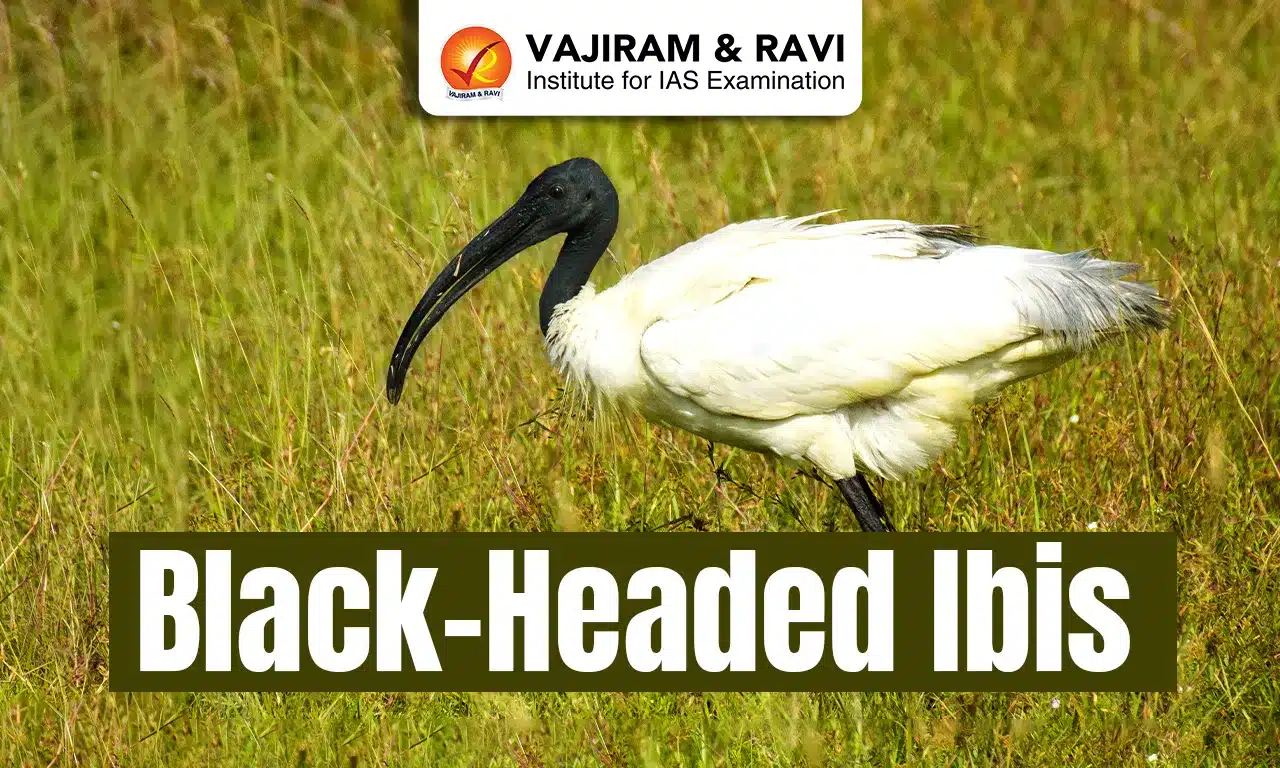
  • It is the only native ibis species in its range that has an overall white plumage with a black neck and head. 
  • Males and females look similar and both have greyish tail feathers. 
  • Tails of adults bear light grey ornamental feathers that turn jet black during the breeding season. 

Black-Headed Ibis Conservation Status

It is classified as 'Least Concern' under the IUCN Red List. 

Source: ANI

Black-Headed Ibis FAQs

Q1: What is the scientific name of the Black-headed Ibis?

Ans: Threskiornis melanocephalus

Q2: Is the black-headed ibis found in India?

Ans: It is found in South- and Southeast Asia from India to the west and as far east as Japan.

Q3: What is the IUCN status of the black-headed ibis?

Ans: Least Concern

National Technical Textiles Mission (NTTM)

National Technical Textiles Mission (NTTM)

National Technical Textiles Mission Latest News

Recently, the National Technical Textiles Mission supported the development of Indigenous Thermal Testing Instruments for Protective Textiles in association with Northern India Textile Research Association (NITRA).

About National Technical Textiles Mission

  • It was launched in 2020 by the Ministry of Textiles to boost technical textiles in India.
  • It was launched for a period from 2020-21 to 2025-26 with an outlay of Rs.1,480 crores. 

Components of the National Technical Textiles Mission

  • Research, Innovation and Development: It supports R&D in technical textiles, inviting proposals to develop new materials and processes.
  • Promotion and Market Development: It aims to increase technical textile adoption in India through market promotion and international collaborations.
  • Export Promotion: Focuses on boosting exports of technical textiles with a dedicated export council. Outlay
  • Education, Training, and Skill Development: Promotes technical textiles education, skill training, and internships in top institutes and industries.

What are Technical Textiles?

  • Technical textiles are defined as textile materials and products used primarily for their technical performance and functional properties rather than their aesthetic or decorative characteristics. 
  • Other terms used for defining technical textiles include industrial textiles, functional textiles, performance textiles,engineering textiles, invisible textiles, and hi-tech textiles.
    • These products are broadly classified into 12 different categories- Agrotech, Oekotech, Buildtech, Meditech, Geotech, Clothtech, Mobiltech, Hometech, Sportstech,Indutech, Protech, Packtech.
  • Applications: They are used in products that help protect people, improve machinery, and solve practical problems, such as in car parts, building materials, medical equipment, and safety gear.

Source: PIB

National Technical Textiles Mission FAQs

Q1: Which Ministry launched the National Technical Textiles Mission (NTTM)?

Ans: Ministry of Textiles

Q2: What is the primary objective of the NTTM?

Ans: To increase the domestic market size of technical textiles to $40-50 billion.

Reforming Election Nomination Process – Explained

Nomination Process

Nomination Process Latest News

  • Frequent disqualifications of candidates on procedural grounds have reignited calls for reforming India’s election nomination process to make it more transparent, fair, and citizen-friendly.

Introduction

  • India’s electoral process, the cornerstone of the world’s largest democracy, begins long before votes are cast. 
  • Yet, one of its most undemocratic aspects lies in the nomination scrutiny stage, where candidates can be disqualified on minor procedural grounds. 
  • From missing signatures to delayed certificates, technicalities often override democratic principles. 
  • The Representation of the People Act (RPA), 1951, which governs this process, has accumulated layers of procedural rigidity, granting excessive discretion to Returning Officers (ROs). 
  • Experts now argue that this system needs urgent reform to uphold the spirit of free and fair elections.

The Legal Framework Governing Nominations

  • The Representation of the People Act, 1951, along with the Conduct of Elections Rules, 1961, lays down the framework for candidate nominations.
    • Section 33 - Specifies eligibility and procedure for filing nominations.
    • Section 34 - Mandates security deposits by candidates.
    • Section 36 - Grants the Returning Officer power to scrutinise nominations and reject them for “defects of a substantial character.”
  • However, the term “substantial character” is undefined, giving ROs sweeping authority. 
  • Furthermore, Article 329(b) of the Constitution bars judicial review during the election process, meaning any challenge can only be raised after the polls, when the harm is already done.
  • This combination of discretionary power and delayed remedy has made the nomination stage a potential chokepoint for political exclusion, often weaponised against opposition candidates.

Procedural Technicalities and Arbitrary Rejections

  • Examples across India reveal how technicalities are misused to eliminate candidates even before campaigning begins:
    • In Bihar, an RJD candidate was disqualified for leaving a few fields blank in the nomination form.
    • In Surat (2024), opposition candidates were rejected after proposers allegedly denied their signatures, leading to an unopposed win for the ruling party.
    • In Varanasi (2019), ex-BSF jawan Tej Bahadur Yadav’s nomination was rejected for failing to obtain a certificate within a day.
    • In Birbhum, a former IPS officer’s form was invalidated due to a delayed “no-dues” certificate.
  • Such rejections are legally valid under the current framework but morally corrosive to democracy. They expose how bureaucratic discretion can effectively curtail voter choice.

The Growing Burden of Compliance

  • The Supreme Court’s ruling in Resurgence India v. Election Commission (2013), which mandated detailed affidavits on assets and criminal records, increased procedural complexity. 
  • Ironically, this created a paradox: false declarations don’t invalidate nominations, but incomplete ones do
  • Thus, a candidate who omits a minor detail in good faith can be rejected, while one who lies outright can remain on the ballot.
  • Common procedural traps include:
    • The Oath Trap: Candidates must take the oath after filing but before scrutiny, too early or too late renders it invalid.
    • The Treasury Trap: Deposits must be made via treasury challans, often disqualifying candidates who pay via incorrect modes or outside the 3 PM filing window.
    • The Notarisation Trap: Missing notarization of affidavits leads to automatic rejection.
    • The Certificate Trap: Delay in “no-dues” or clearance certificates from government offices can eliminate a candidacy entirely.
  • These conditions reward bureaucratic precision over democratic participation, turning the process into a test of procedural compliance rather than popular legitimacy.

Learning from Global Best Practices

  • In contrast, other democracies treat election officials as facilitators, not gatekeepers.
    • United Kingdom: ROs help candidates correct minor errors before deadlines.
    • Canada: Provides a 48-hour window for corrections post-scrutiny.
    • Germany: Mandates written notice of deficiencies and opportunities for remedy.
    • Australia: Encourages early submission to allow corrections and appeals.
  • These systems recognise that elections should promote participation, not exclusion. 

Way Forward

  • Experts suggest several structural reforms to make the nomination process more democratic and accountable:
  • Codify Clear Classification of Defects:
    • Technical Errors (missing signatures, blank columns, typos) should not justify rejection.
    • Authenticity Issues (disputed signatures, false documents) should require verification.
    • Statutory Disqualifications (age, dual citizenship, corruption convictions) should lead to outright disqualification.
  • Guarantee a Correction Window:
    • ROs should issue a written notice detailing the defect, citing the legal provision violated, and allow 48 hours for rectification.
  • Mandate Reasoned Orders:
    • Every rejection must include the specific grounds, evidence considered, and justification for why the defect is “substantial.”
  • Digital-by-Default System:
    • The Election Commission of India (ECI) could develop a unified digital portal integrating voter rolls, affidavit submissions, proposer verification, and deposits. 
    • A public dashboard could display the nomination status, ensuring transparency and minimising human discretion.

Source: TH

Nomination Process FAQs

Q1: What governs India’s election nomination process?

Ans: The Representation of the People Act, 1951, and the Conduct of Elections Rules, 1961, govern the nomination and scrutiny procedures.

Q2: Why are nominations often rejected?

Ans: Nominations are rejected for minor procedural errors such as missing signatures, blank fields, or delayed certificates.

Q3: What reforms are being proposed?

Ans: Experts suggest clear defect classifications, a 48-hour correction window, reasoned rejection orders, and digital submissions.

Q4: How do other countries handle nomination scrutiny?

Ans: Nations like the U.K. and Canada allow candidates to correct errors before final rejection, ensuring broader participation.

Q5: What role should the Election Commission play?

Ans: The EC should act as a facilitator ensuring fairness, transparency, and inclusivity in the nomination process.

UN Water Convention

UN Water Convention

UN Water Convention Latest News

Bangladesh became the first country in South Asia to join the U.N.’s Water Convention earlier. 

About UN Water Convention

  • It is also known as the Convention on the Protection and Use of Transboundary Watercourses and International Lakes which was adopted in Helsinki in 1992 and entered into force in 1996.

History of UN Water Convention

  • It was originally negotiated as a regional framework for the pan-European region.
  • Following an amendment procedure, since March 2016 all UN Member States can accede to it.

Features of UN Water Convention

  • It is a unique legally binding instrument promoting the sustainable management of shared water resources, the implementation of the Sustainable Development Goals, the prevention of conflicts, and the promotion of peace and regional integration.
  • It requires Parties to prevent, control and reduce transboundary impact, use transboundary waters in a reasonable and equitable way and ensure their sustainable management.
  • Parties bordering the same transboundary waters have to cooperate by entering into specific agreements and establishing joint bodies.
  • As a framework agreement, the Convention does not replace bilateral and multilateral agreements for specific basins or aquifers; instead, it fosters their establishment and implementation, as well as further development.
  • The United Nations Economic Commission for Europe (UNECE), which services the UN Water Convention.
  • Significance: It is a powerful tool to promote and operationalize the achievement of the 2030 Agenda for Sustainable Development and its SDGs.

Source: DTE

UN Water Convention FAQs

Q1: What is the primary objective of the UN Water Convention?

Ans: To promote sustainable development and protect the environment

Q2: When was the UN Water Convention came into force?

Ans: 1996

Minuteman III Missile

Minuteman III Missile

Minuteman III Missile Latest News

The US Air Force successfully launched an unarmed Minuteman III ICBM, a test scheduled months in advance.

About Minuteman III Missile

  • The LGM-30G Minuteman III is an American-made intercontinental ballistic missile (ICBM).
  • “L” in LGM is the US Department of Defense designation for silo-launched;G” means surface attack; and “M” stands for guided missile.
  • Introduced in the early 1970s, the Minuteman III was the first missile in the US arsenal to feature multiple independently targetable reentry vehicles (MIRVs).
  • It is the sole land-based component of the U.S. nuclear triad.
  • It was developed for the United States by Douglas Aircraft Company, which later became part of McDonnell Douglas and then Boeing
  • Originally, it was only supposed to be kept in service for about ten years, but instead, it has been modernized as its replacement, the Ground-Based Strategic Deterrent (GBSD), is due to become available for use in 2029.
  • The United States currently has an estimated 440 Minuteman III missiles in its arsenal.

Minuteman III Missile Features

  • It weighs more than 30 tons and measures 18 meters long.
  • Propulsion: Three-stage solid fuel rocket motors; post-boost stage for positioning re-entry vehicle is liquid-fueled.
  • Speed: Approximately 15,000 mph (Mach 23 or 24,000 kph) at burnout (Hypersonic).
  • Range: It has a maximum range of approximately 13,000 kilometres.
  • It is capable of carrying a payload of three re-entry vehicles.
  • Originally capable of carrying three nuclear warheads, current configurations carry a single warhead, in compliance with arms control agreements between the United States and Russia.
  • Each missile is housed in a hardened underground silo, connected to a launch control center via reinforced cables.
  • It has a fast launch time, nearly 100 percent testing reliability, and backup airborne launch controllers to preserve retaliatory capabilities.

Source: TOI

Minuteman III Missile FAQs

Q1: What type of missile is the Minuteman III?

Ans: Intercontinental ballistic missile.

Q2: When was the Minuteman III missile first introduced?

Ans: Early 1970s

Q3: What is the approximate maximum range of the Minuteman III missile?

Ans: 13,000 km

Q4: What is the top speed of the Minuteman III missile?

Ans: Mach 23

Rationalising Penal Provisions under Van Adhiniyam 1980

Van Adhiniyam

Van Adhiniyam 1980 Latest News

  • The Union Environment Ministry’s Forest Advisory Committee (FAC)—the body responsible for evaluating proposals for diversion of forest land—has given certain recommendations.
  • The FAC has recommended uniformity and rationalisation in the penal provisions applied under the Van (Sanrakshan Evam Samvardhan) Adhiniyam, 1980 (formerly Forest Conservation Act, 1980).
  • This step aims to ensure consistency, fairness, and proportionality in penal actions related to forest land violations.

Understanding the Van (Sanrakshan Evam Samvardhan) Adhiniyam, 1980

  • The Act mandates prior approval of the Central Government before using forest land for non-forest purposes, including -
    • De-reservation of forests
    • Non-forest use or leasing of forest land
    • Clear felling of trees
  • Violation occurs when these activities are undertaken without prior approval.

Penal Compensatory Afforestation (CA) - Concept and Evolution

  • Definition:
    • Penal CA involves restoration or afforestation activities ordered in addition to the legally mandated CA for non-forestry uses such as infrastructure or industrial projects.
    • It acts as a punitive restoration measure to offset ecological loss due to unauthorized forest land use.
  • Earlier practice:
    • Penal CA was earlier imposed equivalent to twice the violated forest area, especially when no other monetary penalties existed.
    • However, after the introduction of monetary penalties and penal Net Present Value (NPV) guidelines, the practice became inconsistent and case-specific.

Introduction of Penal Net Present Value (NPV)

  • Concept:
    • NPV quantifies the economic worth of environmental services provided by forest ecosystems.
    • Under the Van Adhiniyam Rules 2023, penal NPV (up to five times the standard NPV) can be levied for violations.
    • This system emerged from Supreme Court directions (2017) that aimed to strengthen environmental accountability.
  • Need for rationalisation:
    • The FAC noted overlapping provisions of penal CA and penal NPV, leading to inconsistent enforcement.
    • It therefore recommended rationalising both measures to ensure uniformity and proportionality across cases.

FAC Recommendations

  • Uniform penal structure:
    • Charge penal compensatory afforestation equivalent to the violated forest land area (1:1 ratio).
    • Ensure alignment between penal CA and penal NPV mechanisms.
  • Detailed violation reporting: States must submit detailed reports to the regional offices or ministry headquarters, including the nature of violation, officials responsible for approval or negligence, and action taken under the Act.
  • Committee formation: A dedicated committee of regional officers and FAC members was constituted to - 
    • Examine past violations
    • Recommend uniform penalty structures
    • Submit a consolidated report
  • Integration with 2023 Amendments: The recommendations are in sync with the Forest (Conservation) Amendment Act, 2023, which introduced streamlined and consolidated guidelines for forest diversion and penal actions.

Way Forward

  • Codify uniform penalty guidelines to eliminate ambiguity and ensure proportional punishment.
  • Integrate digital monitoring and reporting systems to track forest land violations in real time.
  • Enhance inter-agency coordination between the FAC, regional offices, and state forest departments.
  • Capacity building of enforcement officials to ensure accurate assessment of violations and penalty computation.

Conclusion

  • The FAC’s recommendations signify a shift towards transparent, consistent, and scientifically grounded enforcement under the Van (Sanrakshan Evam Samvardhan) Adhiniyam, 1980.
  • By rationalising penal compensatory afforestation and NPV provisions, India seeks to balance developmental needs with ecological integrity, ensuring that forest conservation remains central to environmental governance.

Source: IE

Van Adhiniyam 1980 FAQs

Q1: What is the Van (Sanrakshan Evam Samvardhan) Adhiniyam, 1980?

Ans: The Act regulates diversion of forest land for non-forest use and is violated when activities like clear felling occur without prior Central Government approval.

Q2: What is penal Compensatory Afforestation (CA)?

Ans: Penal CA refers to additional restoration or afforestation measures imposed over and above standard compensatory afforestation to offset ecological loss from unauthorized forest land use.

Q3: What is Penal Net Present Value (NPV)?

Ans: Penal NPV quantifies the environmental value of forests and allows levying up to five times standard NPV for violations.

Q4: Why did the Forest Advisory Committee (FAC) recommend rationalisation of penal provisions?

Ans: To ensure uniformity, proportionality, and consistency between penal CA and penal NPV.

Q5: What are the key recommendations of the FAC to strengthen enforcement under the Forest Conservation framework?

Ans: Uniform penal structure (1:1 penal CA), detailed violation reporting by states, committee-led review, and integration of recommendations with the 2023 amendment.

GPS Spoofing

GPS Spoofing

GPS Spoofing Latest News

Delhi's Indira Gandhi International Airport faced massive disruptions recently when the flight operations witnessed GPS spoofing.

What is a Spoofing Attack?

  • A “spoofing attack” is a broad category of cyberattack where fake data is disguised as originating from a trusted source to deceive systems or users. 
  • Kinds of spoofing include GPS Spoofing, IP spoofing—often used to avoid detection while performing Distributed Denial of Service (DDoS)—as well as SMS spoofing and caller ID spoofing, where messages or calls appear to be from another number or caller ID.

About GPS Spoofing

  • GPS spoofing involves manipulating navigation data with malicious intent. 
  • Unlike jamming, which blocks GPS signals, spoofing involves transmitting fake satellite signals to override genuine ones.
  • The aircraft’s navigation systems pick up these counterfeit signals and calculate wrong data for position, altitude, time, and speed.
  • The aim is for the target to act on false navigation information. 
  • The fake signals over-ride the genuine satellite signals using specialised hardware or software.  
  • Since GPS satellite signals are weaker, the receiver considers the amplified spoofed signals as authentic.
  • Aircraft may end up flying blind, or even worse, dangerously off-course. 
  • Spoofing is often reported in:
    • Conflict zones like the Black Sea region
    • West Asia and the Middle East
    • Military action areas or electronic warfare zones
  • Globally, spoofing and jamming of GPS signals have become a growing menace for airlines.
  • The International Air Transport Association (IATA) recorded 4.3 lakh cases of GPS jamming or spoofing over conflict zones in 2024, up 62 percent from 2023.

Source: INDIATV

GPS Spoofing FAQs

Q1: What does GPS spoofing involve?

Ans: Transmitting fake GPS signals to deceive receivers.

Q2: How does GPS spoofing differ from GPS jamming?

Ans: Spoofing transmits fake signals, jamming blocks genuine ones.

Q3: What is the primary goal of GPS spoofing?

Ans: o force targets to act on false navigation information.

Q4: Why are GPS receivers vulnerable to spoofed signals?

Ans: Genuine GPS signals are weak and spoofed signals are stronger.

CAG to Audit Major Railway Projects, Green Initiatives and E-Procurement

CAG

CAG Latest News

  • The Comptroller and Auditor General of India (CAG) will audit four key Indian Railways programmes — including suburban train services, the e-procurement platform, and multimodal transport and logistics initiatives — with reports to be presented during the Monsoon Session of Parliament in 2026.
  • In a parallel move, the CAG has approved the creation of two centralised audit cadres within the Indian Audit and Accounts Department — the Central Revenue Audit (CRA) Cadre and the Central Expenditure Audit (CEA) Cadre — to strengthen expertise and enhance audit quality. The new cadres will become operational from January 1, 2026.

Comptroller and Auditor General of India

  • CAG of India is the supreme audit authority of the country, responsible for ensuring accountability and transparency in the use of public funds.
  • The CAG audits receipts and expenditure of the Central and State Governments, public sector undertakings (PSUs), and autonomous bodies, presenting reports to the President or Governor, which are then laid before Parliament or State Legislatures.
  • The CAG is often called the “Guardian of the Public Purse.”

Constitutional Provision

  • The CAG’s office is established under Article 148 of the Constitution of India.
  • Articles 149–151 outline the duties, powers, and reporting responsibilities of the CAG.

Functions and Powers

  • Audits all receipts and expenditure of the Union and States.
  • Examines financial propriety, efficiency, and performance in government operations.
  • Audits government-owned corporations, autonomous bodies, and projects funded by public money.
  • Submits reports to Parliament and State Legislatures through the Public Accounts Committee (PAC).

Notable Works Across the Globe

  • The CAG of India is a member of international audit bodies such as:
    • INTOSAI (International Organization of Supreme Audit Institutions)
    • ASOSAI (Asian Organization of Supreme Audit Institutions)
  • UN Board of Auditors, where India has audited key UN entities like:
    • World Health Organization (WHO)
    • Food and Agriculture Organization (FAO)
    • UNESCO
    • International Atomic Energy Agency (IAEA)
    • United Nations Headquarters (New York)

CAG to Audit Key Railway Programmes Ahead of 2026 Parliament Session

  • The Comptroller and Auditor General of India (CAG) will audit four major Indian Railways programmes —
    • Suburban train services,
    • E-procurement platform,
    • Multi-Modal Transport and Logistics Initiatives, and
    • Sustainable Rail Transport (ESG and Green Energy).
  • The reports will be presented in the Monsoon Session of Parliament in 2026.

Focus on Multi-Modal Transport and Logistics Initiatives

  • The audit will focus on “First Mile–Last Mile” connectivity, Origin-Destination (O-D) pairs, and integration with logistics hubs.
  • This review gains importance under the National Rail Plan (NRP) 2030, which aims to make Indian Railways “future-ready”.
    • The NRP 2030 aims to develop a “future-ready” railway system by creating capacity ahead of demand to meet growth up to 2050.
    • Its primary goal is to increase the Railways’ freight modal share to 45% through improved operational capacity, infrastructure expansion, and commercial policy reforms.
  • The Railway Audit Wing will conduct the audit in FY 2025–26, covering the Eastern and Western Dedicated Freight Corridors and the Golden Quadrilateral network.
  • The Indian Institute of Management (IIM) Mumbai has been engaged as a knowledge partner for the audit.

IT Audit of Railways’ E-Procurement System

  • The CAG will conduct an information technology audit of the Indian Railways E-Procurement System, which manages all procurement activities across the railway network.
  • The objective is to assess efficiency, transparency, and data security in the digital procurement process.

Audit on Sustainable Rail Transport and Green Energy

  • Another key focus will be an audit on “Sustainable Rail Transport: ESGs and Green Energy” to evaluate Indian Railways’ progress toward net-zero carbon emissions by 2030.
  • This aligns with India’s climate commitments and global sustainability goals, aiming to assess Railways’ role in promoting environment-friendly transport.

Broader Objective

  • Through these audits, the CAG aims to provide data-backed insights to help Indian Railways improve operational efficiency, sustainability, and accountability, while ensuring alignment with the country’s infrastructure and climate goals.

CAG to Form Two Specialised Cadres for Centralised Audit Oversight

  • CAD has approved the creation of two new specialised audit cadres within the Indian Audit and Accounts Department (IA&AD) — the Central Revenue Audit (CRA) and Central Expenditure Audit (CEA) cadres.
  • Effective January 1, 2026, the reform aims to centralise and professionalise audit operations, enhancing the quality and efficiency of audits of Central Government finances.
  • Currently, audits of Central receipts and expenditure are conducted by multiple dispersed state offices, causing fragmentation. 
  • The new system will consolidate over 4,000 audit professionals under central control, enabling better manpower management, reduced dependence on redeployments, and stronger audit coherence nationwide.

Source: IE | TH | ToI

CAG FAQs

Q1: What key Indian Railways projects will the CAG audit?

Ans: The CAG will audit suburban services, e-procurement, multi-modal logistics, and sustainable rail transport, focusing on efficiency, transparency, and environmental goals.

Q2: When will the audit reports be presented?

Ans: The audit reports are scheduled to be presented during the Monsoon Session of Parliament in 2026.

Q3: What is the focus of the multi-modal logistics audit?

Ans: It will assess “First Mile–Last Mile” connectivity, freight corridors, and logistics hubs under the National Rail Plan (NRP) 2030 for boosting freight share.

Q4: What institutional reforms has the CAG introduced?

Ans: Two new cadres — Central Revenue Audit (CRA) and Central Expenditure Audit (CEA) — will enhance audit expertise and centralise operations from January 1, 2026.

Q5: What is the goal of the sustainable rail transport audit?

Ans: To evaluate Indian Railways’ progress toward net-zero carbon emissions by 2030, aligning with national and global sustainability targets.

8th Pay Commission Needs Better Inflation Measurement for Realistic Pay Revision

8th Pay Commission

8th Pay Commission Latest News

  • At first glance, the 8th Central Pay Commission (CPC)—whose terms of reference were approved on October 28—and the Statistics Ministry’s proposal to revise housing inflation in the Consumer Price Index (CPI) may appear unrelated.
  • However, the two are closely linked. The CPC’s recommendations on pay and pensions significantly influence government expenditure and consumer demand, while CPI inflation determines the dearness allowance (DA) component of government salaries and pensions.
  • If housing inflation continues to be measured under outdated parameters, it could misrepresent actual inflation trends, leading to distorted pay adjustments. 
  • The MoSPI’s proposed changes aim to update the inflation calculation method, preventing potential over- or under-estimation of inflation once the 8th CPC’s recommendations take effect.

Flaws in Measuring Housing Inflation in India

  • Housing carries a 10.07% weight in India’s Consumer Price Index (CPI).
  • To compute this, the Statistics Ministry (MoSPI) surveys 13,000+ houses across 300 towns, including a significant share of government and PSU accommodation.

The Core Problem: Use of HRA as a Proxy for Rent

  • For government-provided homes, MoSPI uses the House Rent Allowance (HRA) foregone—along with a small licence fee—as a substitute for rent to measure housing inflation.
  • However, HRA doesn’t reflect market rent; it depends on the occupant’s position and pay grade, not on demand-supply dynamics.
  • If a senior employee vacates a surveyed house and a junior employee replaces them, the HRA component falls, showing an artificial dip in inflation, even though actual housing conditions remain unchanged.

Pay Revisions Distort the Inflation Trend

  • Whenever government salaries are revised, such as under the upcoming 8th Central Pay Commission (CPC), HRA values rise automatically, inflating the housing component of CPI — irrespective of real market trends.
  • A similar distortion occurred eight years ago after a previous Pay Commission revision, confusing both investors and policymakers about the true inflation trajectory.

Why Reform Is Needed

  • This outdated method causes artificial spikes or drops in housing inflation, undermining the accuracy of CPI and complicating monetary policy decisions.
  • Revising the approach to reflect real rental values is crucial to ensure credible inflation measurement before the 8th CPC recommendations take effect.

How the 7th Pay Commission Distorted India’s Inflation Data

  • When the 7th Central Pay Commission (CPC) recommendations took effect in July 2017, they included a 105.6% hike in House Rent Allowance (HRA) for Central government employees.
  • This administrative change triggered a sharp, artificial surge in housing inflation — from 4.7% in June 2017 to 8.45% in June 2018 — pushing headline CPI inflation up to 4.92%, despite no real increase in housing costs.
    • Recognising the distortion, RBI policymakers chose to disregard the inflated data
    • Housing inflation only stabilised by mid-2019, dropping below 5% and later staying around 3–4%, though this understated reality.
  • In contrast, RBI’s House Price Index showed 6% growth, and MagicBricks’ Rental Index reported 20% quarterly rent increases.
  • This revealed a growing gap between official data and real market trends — a key reason the 8th CPC now needs a more accurate inflation measure.

MoSPI Proposes Overhaul of Housing Inflation Measurement

  • To address distortions in housing inflation, the Ministry of Statistics and Programme Implementation (MoSPI) has proposed major revisions to the Consumer Price Index (CPI) methodology, effective February next year.
  • Key changes include:
    • Excluding government and employer-provided housing from the CPI sample to remove HRA-linked distortions.
    • Collecting rent data monthly instead of once every six months for more real-time accuracy.
    • Including rural housing inflation in the CPI for the first time.
  • Economists note that with the 8th CPC due to submit its report in the next 18 months, these updates are timely and crucial.
  • While housing inflation may appear higher initially, the new approach will make it more representative of actual rental trends and improve the credibility of inflation data.


Source: IE | IT

8th Pay Commission FAQs

Q1: Why is inflation measurement crucial for the 8th Pay Commission?

Ans: Pay and pension hikes are linked to inflation; flawed CPI calculations can lead to distorted pay adjustments and inaccurate economic policymaking.

Q2: What was the issue with housing inflation calculation?

Ans: MoSPI used HRA foregone for government housing as a rent proxy, which depends on employees’ ranks, not market conditions, leading to misleading inflation data.

Q3: How did the 7th Pay Commission distort inflation trends?

Ans: A 105.6% HRA hike in 2017 inflated housing inflation from 4.7% to 8.45%, doubling CPI readings without actual rent increases.

Q4: What reforms has MoSPI proposed?

Ans: Exclude government housing from CPI, collect rent data monthly, and include rural housing inflation to make the index more realistic.

Q5: Why do these reforms matter now?

Ans: With the 8th CPC due in 18 months, updated CPI methods will ensure pay revisions reflect true inflation and ground-level rental trends.

Bankim Chandra Chatterjee, Literary Contributions, Notable Work

Bankim Chandra Chatterjee

Bankim Chandra Chatterjee stands as one of the defining figures of Bengali literature and modern Indian thought. His writings not only reshaped the literary landscape but also stirred a sense of national pride during British colonial rule. Born in 1838 at Naihati in Bengal, Bankim received both Bengali and English education, which exposed him to Western philosophy and literature while grounding him in Indian traditions.

He studied at Presidency College in Calcutta and later served in various administrative roles under the British East India Company. Through his novels, essays, and poetry, Bankim articulated the cultural spirit of India and inspired generations with a vision of freedom and selfhood, leaving an indelible mark on both literature and the nationalist movement.

Bankim Chandra Chatterjee

  • Bankim Chandra Chatterjee was not just a novelist but also a poet, journalist, and intellectual voice of his time.
  • As a member of the Brahmo Samaj, he advocated for social and religious reforms aimed at addressing issues within contemporary Hindu society.
  • Widely regarded as the father of modern Bengali literature, his writings combined literary excellence with social consciousness.
  • His philosophical works captured the socio-political environment of the era, inspiring the growth of Indian nationalism.
  • While deeply influenced by European literature and philosophy, his narratives remained rooted in Indian culture, often drawing from Hindu mythology and history.

Bankim Chandra Chatterjee Literary Contributions

Bankim Chandra Chatterjee contributions to Indian literature stand out for their originality and impact. He broke away from the classical mold and infused modern themes such as social reform, nationalism, and the conflict between colonial rule and Indian identity into his works. As one of the first to write novels in Bengali, he shaped the language into a powerful medium of modern literature. His fiction introduced realism, portraying human emotions, societal challenges, and the tension between tradition and modernity.

Beyond literature, Bankim became a voice of awakening. His writings carried the spirit of nationalism, celebrating India’s unity and heritage while inspiring self-reliance and the struggle for freedom. His legacy lies in how he used literature not just for storytelling, but as a tool to ignite collective pride and resistance against colonial domination.

Bankim Chandra Chatterjee Notable Work

  • Anandmath (1882): His most famous and influential novel, set during the Sannyasi Rebellion of the 1770s. It blends history, mythology, and patriotism, highlighting the struggle of Bengalis against British imperialism. The book is remembered above all for introducing Vande Mataram, which later became a rallying cry of India’s independence movement.
  • Durgeshnandini (1865): One of his earliest historical novels, set in 17th-century Bengal. It follows the trials of Lady Durgeshnandini as she navigates political intrigue and personal challenges.
  • Kapalkundala (1866): A powerful narrative centered on a young woman caught between love and moral duty. The novel critiques contemporary social practices while weaving in strong emotional and ethical dilemmas.
  • Rajmohan’s Wife (1864): His first novel, written in English, before he switched to Bengali. It explores human emotions, domestic strife, and societal constraints, offering a glimpse of Bankim’s early literary style.
  • Vande Mataram (1870): A patriotic poem that transcended literature to become a cultural symbol. It was first sung at the Indian National Congress session in 1896 and went on to inspire generations during the freedom struggle.

Bankim Chandra Chatterjee Death

Bankim Chandra Chatterjee passed away on 27 September 1833, leaving a legacy that continues to shape Indian literature, reform, and politics. A true pioneer of the Bengal Renaissance, Raja Ram Mohan Roy laid the foundation for India’s cultural and intellectual awakening in the 19th century. His reformist zeal challenged outdated traditions and inspired generations to dream of a modern, progressive nation.

Roy’s legacy goes beyond social reform. He helped build the political and cultural consciousness of India, creating an intellectual environment that later guided leaders like Rabindranath Tagore and Subhas Chandra Bose. Though the iconic patriotic song Vande Mataram was penned by Bankim Chandra Chattopadhyay, the spirit of national resurgence that Roy initiated made such expressions of freedom possible. His life’s work remains a cornerstone of India’s journey toward independence.

Bankim Chandra Chatterjee FAQs

Q1: Which national anthem was written by Bankim Chandra Chatterjee?

Ans: Bankim Chandra Chatterjee did not write India’s national anthem (Jana Gana Mana by Rabindranath Tagore). He wrote Vande Mataram, which became India’s national song, not anthem.

Q2: Who is the father of Vande Mataram?

Ans: Bankim Chandra Chatterjee is regarded as the author and father of Vande Mataram. He included the song in his 1882 novel Anandamath.

Q3: Are Bankim Chandra Chattopadhyay and Chatterjee the same?

Ans: Yes. “Chattopadhyay” is the original Bengali surname, while “Chatterjee” is its anglicized form. Both refer to the same person.

Q4: Which poem was written by Bankim Chandra Chatterjee?

Ans: His most famous poem is Vande Mataram. Apart from that, he wrote several works of poetry and prose, including Anandamath, Kapalkundala, and Durgeshnandini.

Q5: Why do Muslims oppose Vande Mataram?

Ans: Some Muslim groups opposed Vande Mataram because parts of it personify the nation as a Hindu goddess (Durga).

What is Junk DNA?

What is Junk DNA?

About Junk DNA:

  • In genetics, the term junk DNA refers to regions of DNA that are noncoding.
  • DNA contains instructions (coding) that are used to create proteins in the cell.
  • However, the amount of DNA contained inside each cell is vast, and not all of the genetic sequences present within a DNA molecule actually code for a protein.
  • Some of this noncoding DNA is used to produce non-coding RNA components such as transfer RNA, regulatory RNA and ribosomal RNA. 
  • However, other DNA regions are not transcribed into proteins, nor are they used to produce RNA molecules, and their function is unknown. These are known as junk regions of DNA.
  • The proportion of coding versus noncoding DNA varies significantly between species.
    • In the human genome, for example, almost all (98%) of the DNA is noncoding, while in bacteria, only 2% of the genetic material does not code for anything.
  • However, over the years, researchers have found evidence to suggest that junk DNA may provide some form of functional activity.
  • Some lines of evidence suggest that fragments of what were originally non-functional DNA have undergone the process of exaptation throughout evolution.
    • Exaptation refers to the acquisition of a function through means other than natural selection.

Q1: What is DNA?

DNA, or deoxyribonucleic acid, is the hereditary material in humans and almost all other organisms. Nearly every cell in a person’s body has the same DNA. Most DNA is located in the cell nucleus (where it is called nuclear DNA), but a small amount of DNA can also be found in the mitochondria (where it is called mitochondrial DNA or mtDNA). Mitochondria are structures within cells that convert the energy from food into a form that cells can use.

Source: New class of cancer mutations discovered in so-called 'junk' DNA

Guidelines for Organ Transport in India

Guidelines for Organ Transport in India

About Guidelines for Organ Transport in India:

  • Organ transportation is required when the organ donor and recipient are in different hospitals or cities.
  • As per the new SOPs, in the case of air transportation, airlines carrying the organs can request the Air Traffic Control for aircraft’s priority takeoff and landing and arrange front-row seats.
  • They can also request priority reservations and provisions for late check-in for medical personnel transporting organs. 
  • The source airport will notify the destination airport to facilitate the arrival process.
  • The flight captain may announce in flight that human organs are being transported.
  • Arrangements for carrying the organ box on trolleys from the aircraft to the ambulance post arrival can also be made by the airport and airline staff.
  • Additionally, when the ambulance is only permitted up to the runway, the airline crew can guide and assist the accompanying medical personnel in carrying the organ box directly from the aircraft via the staircase to the waiting ambulance on the runway.
  • Green corridor at airports:
    • The SOPs specify that airport officials should establish a “green corridor” and provide a trolley for transporting the organ box from the ambulance to the aircraft at the departure airport and vice versa at the destination airport.
    • They also say that the green corridor may be provided on the request of specific authorities or agencies.
  • Sensitising traffic police:
    • The SOPs also emphasize the importance of sensitising state traffic police across various states about organ donation and transplant.
    • They highlight the crucial role of traffic police in expediting organ transport through the creation of green corridors.
  • Organ transportation via Metro:
    • Metro Traffic Control must give priority transit for the metro carrying the live human organs.
    • The metro security staff should escort the clinical team carrying the organ box up to their boarding at the metro station.
    • Additionally, a metro official should accompany the clinical teamon the metro and secure the necessary area for the organ box.
    • They add that the Security Hold Area (SHA) should be notified by metro security regarding the transport of live human organs to avoid any delay during security checks.
    • Additionally, the relevant metro personnel at the destination should be informed to ensure proper arrangements for carrying the organs.
  • Organ box should be kept incorrect position and orientation i.e. upright straightvertical at 90 degrees to the surface during transport, and label of "handle with care" can be put on the organ box.

The organ box should be secured with a seat belt for greater safety.


Q1: What is the National Organ and Tissue Transplant Organization (NOTTO)?

NOTTO is a national level organization set up under the Ministry of Health and Family Welfare. Besides laying down policy guidelines and protocols for various functions, it coordinates all the activities associated with organ donation at national level.

Source: Centre issues first-ever guidelines for organ transport across travel modes

Karni Mata Temple

Karni Mata Temple

Karni Matha Temple Latest News

A recent viral video has once again brought global attention to one of India's most unusual temples - the Karni Mata Temple, also known as the 'Rat Temple' of Rajasthan.

About Karni Matha Temple

  • Karni Mata Temple, also known as the Madh Deshnoke, is a prominent Hindu shrine located in the town of Deshnoke, 30 km south of Bikaner, in Rajasthan.
  • The temple is dedicated to Karni Mata, who the locals believe is an incarnation of Goddess Durga.
    • Karni Mata was a Hindu warrior sage from the Charan caste who lived in the fourteenth century. 
    • Living the life of an ascetic, Karni Mata was highly revered by the locals and earned many followers too. 
    • Having received requests from the Maharajas of Jodhpur and Bikaner, she even laid the foundation stones of the Mehrangarh and Bikaner Forts.
  • Although there are many temples dedicated to her, this temple in the town of Deshnoke is the most widely recognized.
  • It is also known as the Temple of Rats.
    • It is home to over 20,000 revered rats, called kaba, making it one of the most unique spiritual landmarks in India.
    • Out of all the rats, white rats are held specifically sacred as they are believed to be the incarnations of Karni Mata and her sons.
  • Architecture:
    • The present structure of the Karni Mata Temple was completed in the early 20th century under Maharaja Ganga Singh of Bikaner. 
    • Built entirely of marble, the temple's design bears Mughal architectural influences. 
    • Its silver doors are intricately carved with scenes from the goddess's legends, while the sanctum houses a 75-centimetre idol of Karni Mata holding a trident and adorned with a silver crown and garlands.

Source: NDTV

Karni Mata Temple FAQs

Q1: Where is the Karni Mata Temple located?

Ans: Deshnoke, near Bikaner, Rajasthan

Q2: Karni Mata is known to have laid the foundation stones of which famous forts?

Ans: Mehrangarh Fort and Bikaner Fort

Q3: What is the Karni Mata Temple popularly known as?

Ans: Temple of Rats

Q4: Under which ruler was the present structure of Karni Mata Temple completed?

Ans: The present structure of the Karni Mata Temple was completed in the early 20th century under Maharaja Ganga Singh of Bikaner.

Enquire Now