Manchurian Walnut Tree

Manchurian Walnut Tree

Manchurian Walnut Tree Latest News

Recently, researchers found that plant leaves from the Manchurian walnut tree showed extraordinary weed-killing potential.

About Manchurian Walnut Tree

  • It is a hardy deciduous tree known for its robust growth and adaptability to a range of soil types.
  • Distribution: It is found in Manchuria (China) and also grows on the Korean Peninsula and in the Far East of Russia.

Features of Manchurian Walnut Tree

  • Soil: The Manchurian nut tree likes well-drained fertile soils with a neutral PH reaction.
  • Cold Resistance: It is very cold-resistant and can withstand frost down to -45 ° C.
  • Growth: Under natural conditions it can reach upto 30 m, and the life expectancy is high – up to 300 years.
  • Fruiting: The plant begins to bear fruit at the age of 7-10 years.
  • Growth Rate: It grows at a tremendous pace for the first 20 years up to 2 m per year. In its lifetime, it grows up to 30 m and even higher. 

Applications of Manchurian Walnut Tree

  • Medicinal Use: The plant is widely used in pharmaceuticals and folk medicine. Preparations made from Manchurian walnuts have a strong analgesic, antifungal, and antiparasitic effect.
  • Other uses: Green fruits are used to make jams, and wood is used in furniture production.

Source: TOI

Manchurian Walnut Tree FAQs

Q1: What is the medicinal use of Manchurian Walnut Tree preparations?

Ans: Analgesic, antifungal, and antiparasitic

Q2: What is the wood of the Manchurian Walnut Tree used for?

Ans: Furniture production.

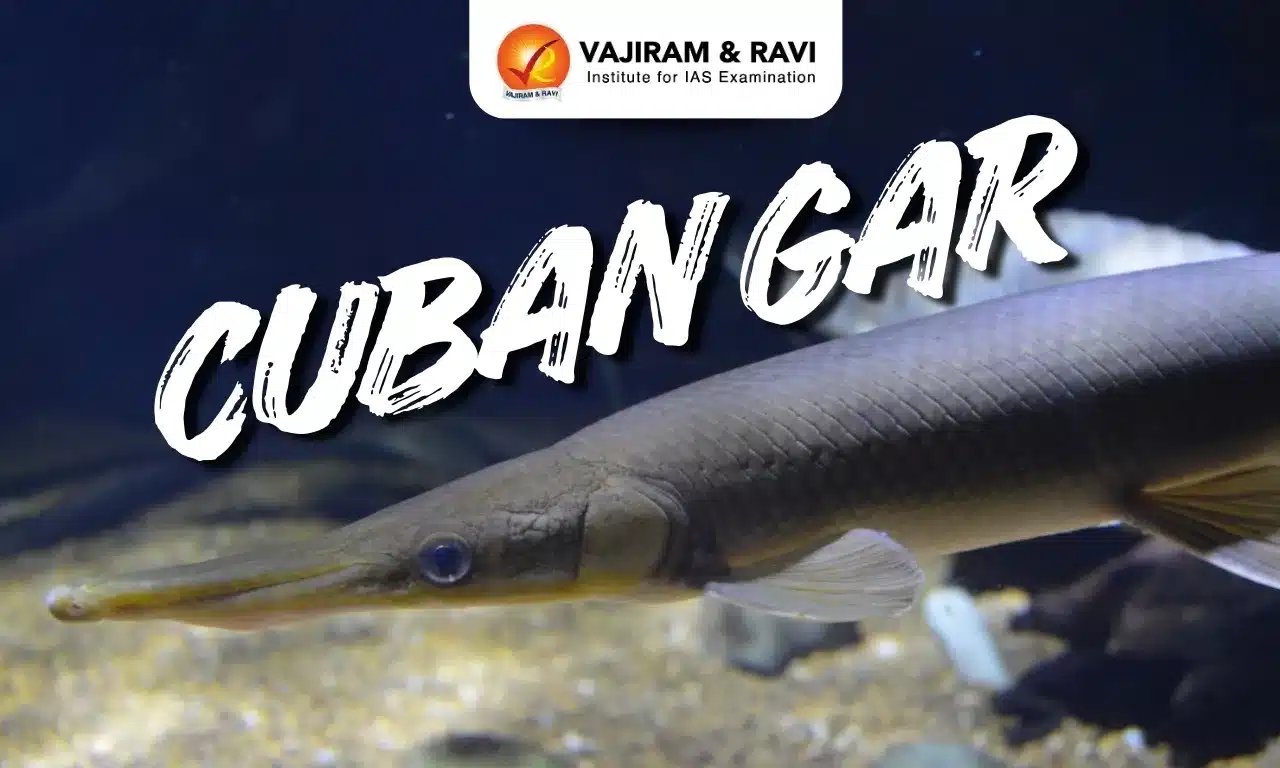
Cuban gar

Cuban gar

Cuban gar Latest News

Cuban scientists have taken restoration efforts in Cuba's Zapata Swamp to save the Cuban gar from extinction. 

About Cuban gar

  • The Cuban gar (Atractosteus tristoechus), also known as the manjuarí, is a fish in the family Lepisosteidae.
  • This fish is part of a family called "gars," which have been around for about 100 million years.
  • It is a tropical, freshwater species, although it also inhabits brackish water.
  • Characteristics of Cuban gar
    • It is also notable for its high tolerance of high ammonia and nitrate levels in water.
    • It has the ability to breathe some atmospheric air in absence of sufficiently oxygenated water.
  • Habitat: It is found in various habitats from large lakes and rivers to sluggish tributaries, backwaters and pools, and can surive in both fresh and brackish waters.
  • Distribution: It is found in rivers and lakes of western Cuba and the Isla de la Juventud
  • Diet: Gars are ambush predators feeding on smaller fishes and aquatic crustaceans in nature.
  • Threats: Habitat loss, and introduction of invasive species African walking catfish.
  • Conservation Status: IUCN: Critically Endangered

Source: India Today

Cuban gar FAQs

Q1: What is the habitat of the Cuban Gar?

Ans: Waters of Cuba and surrounding areas

Q2: What is the conservation status of the Cuban Gar?

Ans: Critically Endangered

Abujhmadiya Tribe

Abujhmadiya Tribe

Abujhmadiya Tribe Latest News

Recently, the Bastar Olympics’ tournament has seen increasing participation of the Abujhmadiya tribe.

About Abujhmadiya Tribe

  • They are an ancestral and patriarchal tribe primarily residing in the Abujmarh region in Chhattisgarh, India.
  • Abujhmadiya tribal community is a sub-group of Gond tribe of Central India region. 
  • It is a Particularly Vulnerable Tribal Group (PVTG).

Culture and Traditions of Abujhmadiya Tribe

  • Language: They speak Abuj Maria, Hindi or Chhattisgarhi.
  • Belief: They follow a form of animism, worshipping nature spirits and deities associated with natural elements.
  • Abujhmaria women consider (Godana) tattoo a permanent jewel. 
  • Festivals: Celebrate various festivals which includes:
    Saja Festival: A traditional festival celebrating agricultural success and honoring nature spirits.
    Bastar Dussehra: Which features traditional dances, rituals, and community gatherings.
  • Economy: The Abuj Maria primarily engage in subsistence agriculture, cultivating crops like rice, maize, and pulses. They also practice hunting, fishing, and gathering forest products.
  • Social Structure: Their society is organized into clans, each with its own customs and traditions.

Source: IE

Abujhmadiya Tribe FAQs

Q1: Where is the Abujhmadiya Tribe primarily located?

Ans: Chhattisgarh

Q2: What is the name of the traditional youth dormitory of the Abujhmadiya Tribe?

Ans: Ghotul

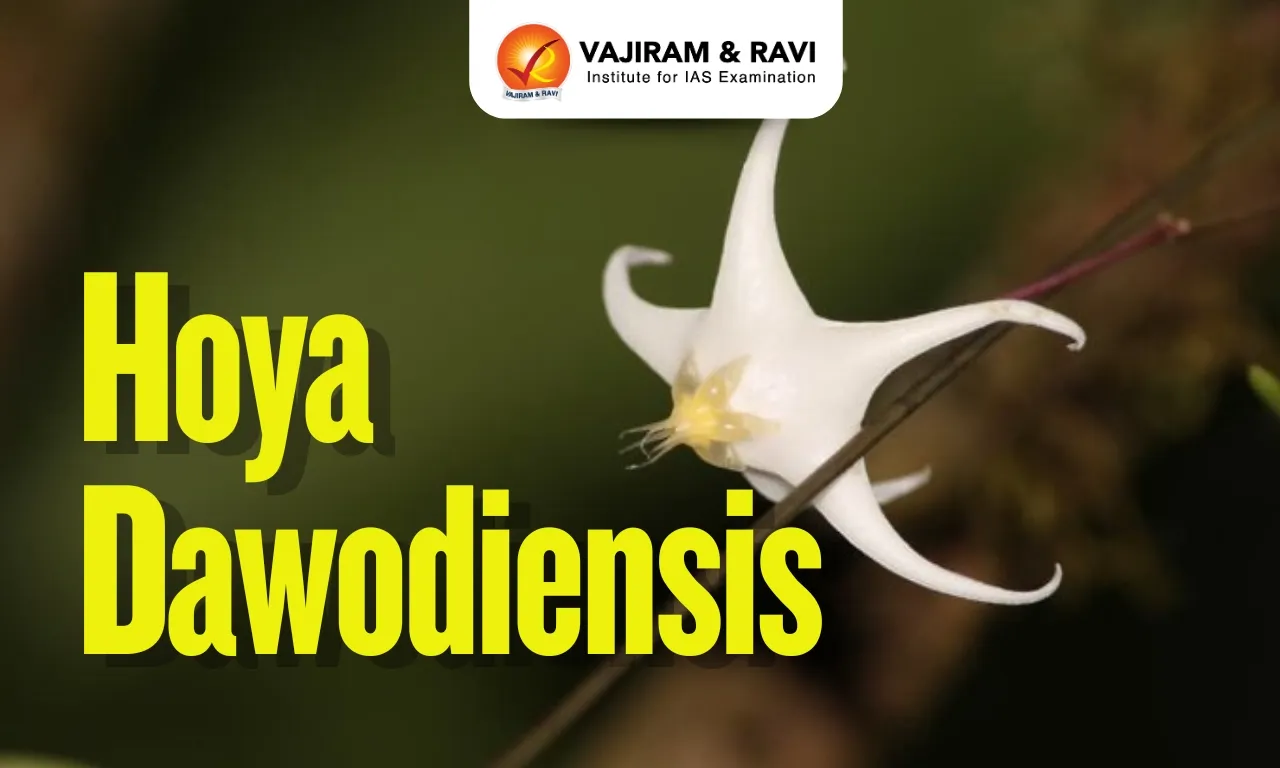
Hoya dawodiensis

Hoya dawodiensis

Hoya dawodiensis Latest News

Arunachal Pradesh recently reported a major scientific milestone with the discovery of a new plant species, Hoya dawodiensis.

About Hoya dawodiensis

  • It is a new plant species.
  • It was discovered in the Vijaynagar region in Changlang district, Arunachal Pradesh.
    • Vijoynagar landscape, accessible only by air or multi-day treks, remains one of the least explored but biologically richest regions of the state.

Key Facts About Hoya Plants

  • Hoyas constitute a diverse group of tropical flowering species, many of which are valued for their ecological roles and unique morphology. 
  • Hoyas are also known as wax plants or porcelain flowers because of their unique and beautiful flowers that look like they are made of wax. 
  • Hoyas are native to tropical and subtropical regions of Asia, Australia, and the Pacific Islands, but they can be grown indoors as houseplants in most climates. 
  • Hoya plants thrive in bright, indirect light.
  • Hoyas prefer well-draining, airy soil.
  • Hoyas are accustomed to high-humidity environments, though their waxy, thick leaves do help them tolerate periods of dry air.

Source: PTI

Hoya dawodiensis FAQs

Q1: What is Hoya dawodiensis?

Ans: Arunachal Pradesh

Q2: In which region of Arunachal Pradesh was Hoya dawodiensis discovered?

Ans: It was discovered in the Vijaynagar region in Changlang district.

Q3: Hoya dawodiensis belongs to which group of plants?

Ans: Tropical flowering species

Q4: Hoyas are primarily native to which regions?

Ans: Tropical and subtropical Asia, Australia, and Pacific Islands.

Ningaloo Reef

Ningaloo Reef

Ningaloo Reef Latest News

A new survey finds nearly 70% of corals at UNESCO-listed Ningaloo Reef have died.

About Ningaloo Reef

  • It is located on Western Australia's remote coast along the East Indian Ocean.
  • It is Australia’s largest fringing coral reef, extending across 300 kilometres of coastline. 
  • It is one of the world’s most pristine, longest, and largest coral reefs. 
  • However, it is unusually narrow and covers an area of about 50 sq.km.
  • The reef sustains both temperate and tropical marine life, including mammals and reptiles. 
  • It has about 250 corals, of which 200 are hard coral species.
  • Besides corals, the reef hosts over 500 fish species. Some of the mega marine species found here are manta rays, whale sharks, humpback whales, potato cod, dugongs, and sea turtles. 
  • The Ningaloo Reef is also a popular spot for snorkeling and scuba diving.
  • It is a UNESCO World Heritage Site.

Source: DTE

Ningaloo Reef FAQs

Q1: Ningaloo Reef is located along the coast of which region?

Ans: Western Australia.

Q2: Approximately how long is the Ningaloo Reef?

Ans: 300 km

Q3: Ningaloo Reef covers roughly how much area?

Ans: It covers an area of about 50 sq.km.

Q4: How many coral species are found in Ningaloo Reef?

Ans: About 250, including 200 hard corals.

Operation Pawan

Operation Pawan

Operation Pawan Latest News

For the first time, Chief of the Army Staff (COAS) General Upendra Dwivedi recently paid homage to soldiers who laid down their lives during Operation Pawan, the 1987 Indian Peace Keeping Force (IPKF) mission in Sri Lanka.

About Operation Pawan

  • It was launched by the Rajiv Gandhi government in 1987, sending the Indian Peace Keeping Force (IPKF) to Sri Lanka to help quell the civil war between the Tamil and Sinhala communities. 
  • It was India's first major overseas military campaign post-Independence
  • It was launched under the Indo-Sri Lanka Accord of July 29, 1987.
  • It involved sending nearly 100,000 Indian troops into Sri Lanka to disarm the Tamil militant groups, including the Liberation Tigers of Tamil Eelam (LTTE), and restore peace. 
  • The mission soon escalated into intense counter-insurgency combat as the LTTE turned hostile.
  • It took until October 26, 1987, for IPKF troops to capture the city of Jaffna. 
  • However, the LTTE melted away into the jungle, and their leader V.Prabhakaran eluded capture. 
  • 1,171 Indian soldiers were martyred, and over 3,500 were injured. 
  • So intense was the conflict that many bodies of personnel could not be recovered.
  • One of the most notable martyrs of Operation Pawan was Major Ramaswamy Parameswaran, a Param Vir Chakra recipient, who was killed on 25 November, 1987.
  • ‘Operation Pawan’ formally ended on 24 March 1990 with the withdrawal of the IPKF. 
  • Although Sri Lanka has constructed a memorial acknowledging the IPKF’s role, the operation did not receive formal commemoration at the National War Memorial (Rashtriya Samar Smarak) in New Delhi.
  • For decades, veterans and families sought formal recognition. In 2025, the Army finally acknowledged their long-overlooked sacrifice.

Source: TH

Operation Pawan FAQs

Q1: What was the primary objective of Operation Pawan?

Ans: To disarm Tamil militant groups and restore peace.

Q2: Operation Pawan was launched during the tenure of which Indian Prime Minister?

Ans: Rajiv Gandhi

Q3: Which militant organization turned hostile and fought against the Indian forces during Operation Pawan?

Ans: Liberation Tigers of Tamil Eelam (LTTE)

Q4: Who was the Param Vir Chakra awardee martyred during Operation Pawan?

Ans: Major Ramaswamy Parameswaran

Obstructive Sleep Apnea (OSA)

Obstructive Sleep Apnea

Obstructive Sleep Apnea Latest News

New findings reveal that untreated obstructive sleep apnea can significantly raise the likelihood of developing Parkinson’s disease.

About Obstructive Sleep Apnea

  • It is the most common sleep-related breathing disorder. 
  • People with OSA repeatedly stop and start breathing while they sleep. 
  • These breath pauses are known as apneas.
  • There are several types of sleep apnea. OSA occurs when the throat muscles relax and block the airway. 
  • This happens off and on many times during sleep. 
  • You may wake up frequently, which can lead to daytime exhaustion and other frustrating symptoms.
  • Loud snoring is a telltale symptom of OSA. Snoring is caused by air squeezing through the narrowed or blocked airway. Not everyone who snores has OSA.
  • Anyone at any age can have OSA. But it's most common in middle-aged and older adults. 
  • This condition has significant implications for cardiovascular health, mental well-being, quality of life, and driving safety. 
  • Treatment for OSA may include:
    • Making lifestyle changes like sleeping position adjustments (not sleeping on your back) or maintaining a weight that’s healthy for you.
    • Using a continuous positive airway pressure (CPAP) machine.
    • Wearing oral appliances (mouthpieces).
    • Undergoing surgery.

Key Facts about Obstructive Sleep Apnea 

  • It is a progressive neurodegenerative disorder that primarily affects movement.
  • It causes nerve cells (neurons) in parts of the brain to weaken, become damaged, and die, leading to symptoms that include problems with movement, tremor, stiffness, and impaired balance. 
  • As symptoms progress, people with PD may have difficulty walking, talking, or completing other simple tasks. 
  • Although many brain areas are affected in Parkinson’s disease, the most common symptoms result from the loss of neurons in an area near the base of the brain called the substantia nigra.
  • Who Does It Affect?
    • The disease usually occurs in older people, but younger people can also be affected. 
    • Men are affected more often than women.
    • The cause of PD is unknown but people with a family history of the disease have a higher risk. 
    • Exposure to air pollution, pesticides, and solvents may increase risk.
    • People with PD often develop a “parkinsonian gait.” 
      • This includes a tendency to lean forward, taking small, quick steps as if hurrying (called festination), and reduced swinging in one or both arms
      • They may have trouble initiating movement (called “start hesitation”) and stop suddenly as they walk, freezing in place.
  • Diagnosis: Currently, no blood laboratory or radiological tests are available to diagnose Parkinson’s disease. 
  • Treatment: There’s no cure for this disease, but treatments can help significantly improve your symptoms.

Source: SCTD

Obstructive Sleep Apnea FAQs

Q1: What is Obstructive Sleep Apnea (OSA)?

Ans: It is the most common sleep-related breathing disorder.

Q2: What causes Obstructive Sleep Apnea (OSA)?

Ans: OSA occurs when the throat muscles relax and block the airway.

Q3: What is the common symptom of Obstructive Sleep Apnea (OSA)?

Ans: Loud snoring.

Exercise SURYAKIRAN

Exercise SURYAKIRAN

Exercise SURYAKIRAN Latest News

Recently, the 19th edition of the “Exercise SURYAKIRAN XIX - 2025” commenced at Pithoragarh, Uttarakhand.

About Exercise SURYAKIRAN

  • It is the joint military exercise conducted between India and Nepal.
  • The Indian contingent is being represented mainly by troops from the ASSAM Regiment.
  • The aim of the exercise is to jointly rehearse conduct of Sub Conventional operations under Chapter VII of the United Nations Mandate.’

Key Facts about Exercise SURYAKIRAN–XIX

  • Scope: To strengthen battalion-level synergy in Jungle Warfare, Counter-Terrorism Operations in Mountainous Terrain, Humanitarian Assistance & Disaster Relief (HADR), Environmental Conservation, and Integrated Ground–Aviation Operations.
  • It will focus on incorporating niche and emerging technologies, including Unmanned Aerial Systems (UAS), drone-based ISR,   AI-enabled decision support tools, unmanned logistic vehicles and armoured protection platforms.
  • Significance: It will further enhance the level of defence cooperation between Indian Army and Nepal Army.

Source: PIB

Exercise SURYAKIRAN FAQs

Q1: What is the primary objective of Exercise Suryakiran?

Ans: To enhance interoperability in jungle warfare and counter-terrorism operations.

Q2: Which countries participate in Exercise Suryakiran?

Ans: India and Nepal

Fujiwhara Effect

Fujiwhara Effect

Fujiwhara Effect Latest News

Two cyclonic storms are predicted to form in the Bay of Bengal, with a potential Fujiwhara interaction.

About Fujiwhara Effect

  • The Fujiwhara Effect (also named as the Fujiwhara interaction or the binary interaction) is a natural phenomenon that takes place when two nearby cyclones or hurricanes interact with each other. 
  • It was first described by a Japanese meteorologist, Dr. Sakuhei Fujiwhara, in 1921. The phenomenon was thus named after him.
  • Many years later, the occurrence was observed in the western Pacific Ocean when typhoons Marie and Kathy merged in 1964.

What Happens During The Fujiwhara Effect?

  • The Fujiwhara Effect can occur when two cyclones form near each other or approach each other close enough to allow the Fujiwhara interaction to take place. 
  • Extratropical cyclones can exhibit binary interaction when within a distance of 2,000 km of each other. 
  • Tropical cyclones exhibit this type of effect when separated by a distance of less than 1,400 km. 
  • During the Fujiwhara interaction, the centers of the two cyclones involved in the phenomenon begin to mutually orbit in a counterclockwise direction about a point between the two cyclones.
  • The position of the point is dependent on the intensity and relative mass of the cyclonic vortices. 
  • The smaller cyclone involved in the Fujiwhara Effect moves at a faster rate than the bigger one about the central point.
  • The Fujiwhara Effect might lead the two cyclones to spiral into the central point and merge with each other, or it might trigger the development of a larger cyclone. 
  • The effect might also divert the original path of one or both the cyclones.

Source: DTE

Fujiwhara Effect FAQs

Q1: What is the Fujiwhara Effect?

Ans: It is a natural phenomenon that takes place when two nearby cyclones or hurricanes interact with each other.

Q2: Who first described the Fujiwhara Effect?

Ans: It was first described by a Japanese meteorologist, Dr. Sakuhei Fujiwhara, in 1921.

Q3: How close must two tropical cyclones be (in km) for the Fujiwhara Effect to occur?

Ans: Less than 1,400 km.

Q4: Can the Fujiwhara Effect change the original path of one or both cyclones?

Ans: Yes, the Fujiwhara Effect can alter or divert the original path of one or both cyclones.

Draft Seeds Bill 2025 – Key Provisions Explained

Seeds Bill 2025

Seeds Bill Latest News

  • The Union Agriculture Ministry has released the Draft Seeds Bill 2025, inviting public comments until December 11. 
  • The Bill aims to modernise seed regulation by amending the Seeds Act, 1966 and the Seeds (Control) Order 1983, ensuring quality seeds for farmers while reducing compliance burdens for the seed industry. 

Context and Rationale Behind the Seeds Bill 2025

  • India’s seed sector has undergone a massive transformation since the 1960s, through advances in biotechnology, hybridisation, commercial seed processing, and international trade.
  • According to the Agriculture Ministry, in 2023-24, the national requirement for seeds was 462.31 lakh quintals, while availability reached 508.60 lakh quintals, creating a surplus of 46.29 lakh quintals.
  • Industry associations have argued that the 1966 Act is outdated and ill-equipped to deal with new scientific and commercial realities. 

Regulatory Architecture Proposed Under the Bill

  • Clear Definition of Stakeholders
    • The Bill defines key actors, farmer, dealer, distributor, and producer, as separate entities engaged in seed use and trade. This creates regulatory clarity across the supply chain. 
  • Central and State Seed Committees
    • Two statutory bodies are proposed:
      • Central Seed Committee (27 members)
      • State Seed Committees (15 members)
  • The Central Committee will recommend standards such as:
    • Minimum germination levels,
    • Genetic and physical purity,
    • Traits and seed health norms,
    • Additional quality parameters.
  • The State Committees will advise on the registration of seed producers, dealers, nurseries, and processing units. 

Quality Control and Registration Systems

  • Mandatory Registration of Seed Processing Units
    • All processing units must register with the State government. This ensures quality control but may increase operational costs for small seed entrepreneurs.
    • To ease compliance for companies operating across multiple States, a Central Accreditation System may be introduced, merit-based, transparent, and uniform. 
  • National Seed Variety Register
    • The Bill creates the office of a Registrar responsible for maintaining a National Register of Seed Varieties under the Central Seed Committee. 
    • Field trials to determine the Value for Cultivation and Use (VCU) are also standardised in the Bill.
  • Seed Testing Laboratories
    • Central and State seed testing laboratories will be strengthened to:
      • Analyse genetic purity,
      • Assess germination and health parameters,
      • Assist in compliance monitoring. 
  • Role of Seed Inspectors

Offences and Penalties

  • The new draft significantly revises the penalty framework compared to the 2019 draft. 
  • The Bill classifies offences as: Trivial, Minor, Major, with corresponding penalties.
  • This stronger penal architecture reflects the government’s intent to curb seed fraud and maintain quality standards. 

Farmers’ Rights and New Safeguards

  • The Bill reiterates that farmers retain the right to save, use, exchange, and sell farm-saved seeds, except under a brand name. This aligns with long-standing protections under Indian law.
  • The draft also links seed regulation to the Protection of Plant Varieties and Farmers’ Rights (PPV&FR) Act 2001, attempting to ensure that quality norms and intellectual property rights are harmonised. 

Concerns Raised by Farmers’ Organisations

  • Farmers’ unions, including the All India Kisan Sabha, have criticised the Bill for:
    • Potential increase in seed costs, enabling large companies to engage in “predatory pricing.”
    • Risk to seed sovereignty, as centralisation may favour multinational and domestic seed corporations.
    • Dilution of biodiversity protections, arguing that the Bill conflicts with global treaties such as the CBD and the International Treaty on Plant Genetic Resources for Food & Agriculture.
    • Creating a “corporatised regulatory structure” that may overshadow the PPV&FR Act’s progressive farmer-centric provisions.
  • These groups demand that the Bill must complement, not undermine, India’s biodiversity and farmers’ rights legal architecture. 

Source: TH

Seeds Bill FAQs

Q1: What is the purpose of the Draft Seeds Bill 2025?

Ans: To modernise seed regulation, ensure quality standards, and streamline compliance.

Q2: Does the Bill restrict farmers’ rights to use or share seeds?

Ans: No farmers may save, exchange, or sell seeds, except under a brand name.

Q3: What penalties does the Bill impose for violations?

Ans: Fines range from Rs. 50,000 to Rs. 30 lakh, with imprisonment up to three years.

Q4: What new committees will be formed under the Bill?

Ans: Central and State Seed Committees for standard-setting and regulatory oversight.

Q5: Why are farmers’ groups opposing the Bill?

Ans: They fear corporatisation, loss of seed sovereignty, and higher cultivation costs.

India’s Q2 FY26 GDP Surpasses RBI Forecast, Driven by Consumption & Capex

India’s Q2 GDP

India’s Q2 GDP Latest News

  • Economists expect India’s Q2 FY26 GDP to surpass the RBI’s 7% forecast, potentially reaching 7.3%, slightly below the previous quarter’s 7.8% high. 
  • Growth remains robust despite 50% US tariffs introduced in late August. 
  • Broad-based rural recovery, supported by strong labour markets and good crop output, along with increased urban consumer durable spending following GST cuts, is driving the expansion. Q3 FY26 is also expected to benefit from the GST cuts.

Nominal GDP Growth Slows, Poses Risks to Budget Targets

  • April-June GDP data showed nominal growth at a three-quarter low of 8.8%, below the Finance Ministry’s 10.1% Budget assumption. 
    • Nominal growth refers to the growth of an economic variable without adjusting for inflation. 
    • In other words, it measures the increase in value at current prices, so it includes the effects of rising prices (inflation) along with the actual increase in output or income.
  • Economists expect July-September and FY26 nominal growth could fall below 8%, potentially impacting tax collections and raising fiscal deficit and debt-to-GDP ratios, despite strong real growth of 7.8%. 
    • Fiscal deficit is the gap between the government’s total expenditure and its total revenue (excluding borrowings) in a financial year.
    • Debt-to-GDP ratio measures a country’s total government debt relative to its GDP. It shows the government’s ability to repay debt. A higher ratio means debt is growing faster than the economy, which can strain public finances.
  • Monitoring nominal GDP is crucial for fiscal planning.

GDP Growth Likely Lags GVA Due to Slower Tax Collections

  • In Q2, GDP growth may trail GVA growth, projected at 7.5–8% versus 8% GVA growth. 
    • GDP (Gross Domestic Product): It measures total value of goods and services produced within a country in a given period. It is calculated as GVA + net indirect taxes (indirect taxes minus subsidies).
    • GVA (Gross Value Added) – It measures total value of goods and services produced by all sectors, excluding net indirect taxes. It indicates actual production and sectoral performance. 
      • GDP growth can differ from GVA growth if net indirect taxes rise or fall.
  • GDP includes net indirect taxes (GST minus subsidies), which fell year-on-year after a 10% rise in Q1. 
  • Slower growth in these taxes explains why GDP growth may be lower than GVA.

Q2 FY26 Sees Surge in Private Consumption 

  • Private consumption likely rose by 8% in Q2 FY26, the highest since Q3FY25.
  • It was boosted by the late-September GST rate cuts, low retail inflation (1.7%), rural wage growth (~6%), personal income tax cuts, and a 7.8% rise in employee costs of listed companies. 
  • Growth could have been higher if households had not delayed purchases ahead of the GST rollout. Q1FY26 consumption had risen to 7% from 6% in Q4FY25.

Q2 FY26 Sees Strong Corporate Profits Amid Low Inflation

  • Q2 FY26 was the best quarter for companies in two years, with sales up 6% YoY and profits rising 13%, aided by low retail inflation (1.7%) and zero wholesale inflation. 
  • Limited impact from US tariffs and subdued input costs boosted profitability, supporting value-added growth and likely contributing to GDP growth around 7% for FY26, above the RBI’s 6.8% forecast.

Government Capex Surges, Private Investment Shows Early Signs of Revival

  • In Q2 FY26, Central government capital expenditure rose 31% YoY to ₹3.06 lakh crore, supporting overall investment. 
  • Private sector interest also increased, accounting for 71% of fresh investments in H1 FY26 versus 61% last year. 
  • Q1FY26 gross fixed capital formation grew 7.8%, down from 9.4% in the previous quarter but above 6.7% in Q1FY25.

Source: IE | LM

India’s Q2 GDP FAQs

Q1: What is India’s expected Q2 FY26 GDP growth rate compared to the RBI's forecast?

Ans: India's Q2 FY26 GDP is expected to reach 7.3%, surpassing the Reserve Bank of India's (RBI) 7% forecast for the quarter.

Q2: What factors primarily drove the surge in private consumption in Q2 FY26?

Ans: Private consumption was boosted by low retail inflation, rural wage growth, personal income tax cuts, and late-September GST rate cuts.

Q3: Why might GDP growth lag GVA growth in Q2 FY26?

Ans: GDP growth may lag GVA growth because net indirect taxes, which are included in GDP but not GVA, fell year-on-year in Q2.

Q4: What is nominal GDP growth, and why is its current slowdown a concern?

Ans: Nominal GDP growth is the growth at current prices, including inflation; its slowdown poses a risk to tax collections and Budget deficit targets.

Q5: How did corporate performance in Q2 FY26 contribute to economic growth?

Ans: Corporate profits rose 13% YoY, aided by low retail and zero wholesale inflation and limited tariff impact, supporting value-added growth.

Supreme Court Slams Centre on Custodial Torture & Failure to Install CCTVs

Custodial Torture

Custodial Torture Latest News

  • The Supreme Court criticised the Union government for not responding to its five-year-old directive to install CCTV cameras in all police stations and central agency offices such as the CBI, ED and NIA. Only 11 States/UTs submitted compliance reports; the Centre did not.
  • The Bench expressed shock that custodial torture continues unabated, citing 11 custodial deaths in Rajasthan within eight months. 
  • The judges observed that custodial brutality persists despite earlier judicial orders.

Custodial Torture in India: A Persisting Human Rights Crisis

  • Custodial torture in India is a widespread and systemic human rights violation involving physical and psychological abuse of individuals in police or judicial custody. 
  • Despite the high number of custodial deaths each year, conviction rates remain extremely low, reflecting deep-rooted impunity and weak accountability mechanisms within the system.
  • Prisoners’ dignity and fundamental rights are protected under international law. 
  • The UN Charter (1945) emphasizes humane treatment, and the Universal Declaration of Human Rights (1948) safeguards individuals from torture, cruel treatment, and enforced disappearances, ensuring security and dignity.

Scale of the Problem

  • Custodial torture—both physical and psychological—remains widespread and systemic.
  • NHRC reported 2,739 custodial deaths in 2024, up from 2,400 in 2023.
  • Marginalised groups—Dalits, Adivasis, Muslims, daily-wage earners—are disproportionately targeted.
  • Accountability is abysmal: Zero convictions in 345 judicial inquiries (2017–2022) despite arrests and charge sheets.

Why Custodial Torture Persists

  • Absence of Specific Anti-Torture Law - India lacks a dedicated legislation criminalising torture as per global standards. Although India signed UN Convention Against Torture (UNCAT, 1997), it has not ratified it.
  • Culture of Impunity - Police personnel often shield each other, discouraging accountability. Systemic misuse of coercive interrogation methods remains widespread.
  • Systemic and Institutional Failures - Overworked police forces, inadequate training in non-coercive techniques. Weak prison infrastructure and insufficient oversight mechanisms.
  • Weak Legal Protection for Victims - Fear of retaliation and lack of legal aid prevent victims from reporting abuse.

Legal & Judicial Safeguards

  • Article 14: Ensures that all individuals are treated equally, reinforcing that law enforcement agencies are not above the law.
  • Article 21: Right to life includes protection from torture.
  • Article 20(1): Prohibits conviction for acts that were not offences when committed and guards against excessive or arbitrary punitive actions.
  • Article 20(3): Protection against self-incrimination.
  • D.K. Basu Guidelines (1997): Mandate arrest memo, medical exam, identification of police officers, etc.

New Criminal Laws

  • Section 120, Bharatiya Nyaya Sanhita (BNS) - Criminalises causing hurt or grievous hurt to extract confessions or information through violence or coercion.
  • Section 35, Bharatiya Nagarik Suraksha Sanhita (BNSS) - Requires that all arrests and detentions follow legally valid, clearly documented procedures.
  • Section 22, Bharatiya Sakshya Adhiniyam (BSA) - Declares confessions obtained under inducement, threat, coercion, or promise as legally inadmissible.

Supreme Court Pulls Up Centre for Ignoring CCTV Directions

  • The Supreme Court expressed displeasure that only 11 States/UTs had filed compliance affidavits regarding the installation of functional CCTVs in police stations. 
  • The Union government had not filed its response either.

Background: The 2020 Nariman Judgment

  • In Paramvir Singh Saini vs Baljit Singh (2020), the Supreme Court mandated CCTV installation in police stations and offices of all agencies with arrest and interrogation powers — including the NIA, CBI, ED, NCB, DRI, and SFIO.
  • This was ordered to safeguard fundamental rights and deter custodial torture.

Debate on CCTVs and Security Concerns

  • The Centre argued that CCTV installation outside police stations could be counter-productive, citing security concerns. 
  • The court disagreed, referring to live-streamed police stations in the U.S. and the need for more open correctional facilities to reduce overcrowding.

Source: TH | IE | SCCO

Custodial Torture FAQs

Q1: Why did the Supreme Court criticize the Union government recently?

Ans: The Supreme Court criticized the government for failing to respond to its five-year-old directive to install CCTV cameras in all police stations and central agency offices.

Q2: What specific judicial order did the Centre fail to comply with regarding CCTVs?

Ans: The Centre failed to comply with the 2020 Paramvir Singh Saini vs Baljit Singh (Nariman Judgment) that mandated CCTV installation in all police and agency offices.

Q3: Which central agencies were included in the Supreme Court's 2020 CCTV directive?

Ans: The directive covered offices of all agencies with arrest/interrogation powers, including the CBI, ED, NIA, NCB, DRI, and SFIO.

Q4: What is the scale of the custodial torture problem in India, according to recent reports?

Ans: Custodial torture remains widespread; the NHRC reported 2,739 custodial deaths in 2024, an increase from 2,400 in 2023.

Q5: Which new criminal law section criminalizes causing hurt to extract confessions?

Ans: Section 120 of the Bharatiya Nyaya Sanhita (BNS) criminalizes causing hurt or grievous hurt to extract confessions or information through coercion or violence.


Satpura Tiger Reserve

Satpura Tiger Reserve (STR)

Satpura Tiger Reserve Latest News

A forest team on routine patrol in the buffer zone of Satpura Tiger Reserve (STR) saw a tigress effortlessly swimming through the Denwa River.

About Satpura Tiger Reserve

  • Location: It is located in the state of Madhya Pradesh.
  • It is situated in the Satpura ranges of the Central Indian Landscape.
  • It lies south of the river Narmada.
  • The tiger reserve comprises three protected areas, Satpura National Park, Bori Wildlife Sanctuary, and Pachmarhi Sanctuary.
  • Terrain: The terrain here is extremely rugged and consists of sandstone peaks, narrow gorges, ravines, and dense forests.
    • It houses more than 50 rock shelters, which are almost 1,500 to 10,000 years old.
    • Geological formations include the Deccan trap series, Gondwanas, and metamorphic rocks.
  • Vegetation: It mainly consists of mixed deciduous forest with a variety of flora typical of the Central Indian Highlands.
  • Flora: It includes teak, bamboo, Indian ebony, various acacias, wild mango, Indian gooseberry, satinwood, etc.
  • Twenty-six species of the Himalayan region and 42 species of the Nilgiri areas are found. Hence, STR is also known as the northern extremity of the Western Ghats.
  • Fauna:  It is home to a wide range of wildlife, including tigers, leopards, sloth bears, Indian gaurs (bison), and sambar deer.

Key Facts about Denwa River

  • It is a lifeline river of Satpura National Park.
  • This river originates from the south-eastern part of the Hoshangabad district in Madhya Pradesh State.
  • It flows from east to west before joining the Tawa River.

Source: TOI

Satpura Tiger Reserve FAQs

Q1: Where is the Satpura Tiger Reserve located?

Ans: Madhya Pradesh

Q2: What is the main vegetation type in the Satpura Tiger Reserve?

Ans: Tropical moist deciduous forest

Enquire Now