UPSC Daily Quiz 15 December 2025

UPSC Daily Quiz

[WpProQuiz 46]

UPSC Daily Quiz FAQs

Q1: What is the Daily UPSC Quiz?

Ans: The Daily UPSC Quiz is a set of practice questions based on current affairs, static subjects, and PYQs that help aspirants enhance retention and test conceptual clarity regularly.

Q2: How is the Daily Quiz useful for UPSC preparation?

Ans: Daily quizzes support learning, help in revision, improve time management, and boost accuracy for both UPSC Prelims and Mains through consistent practice.

Q3: Are the quiz questions based on the UPSC syllabus?

Ans: Yes, all questions are aligned with the UPSC Syllabus 2025, covering key areas like Polity, Economy, Environment, History, Geography, and Current Affairs.

Q4: Are solutions and explanations provided with the quiz?

Ans: Yes, each quiz includes detailed explanations and source references to enhance conceptual understanding and enable self-assessment.

Q5: Is the Daily UPSC Quiz suitable for both Prelims and Mains?

Ans: Primarily focused on Prelims (MCQ format), but it also indirectly helps in Mains by strengthening subject knowledge and factual clarity.

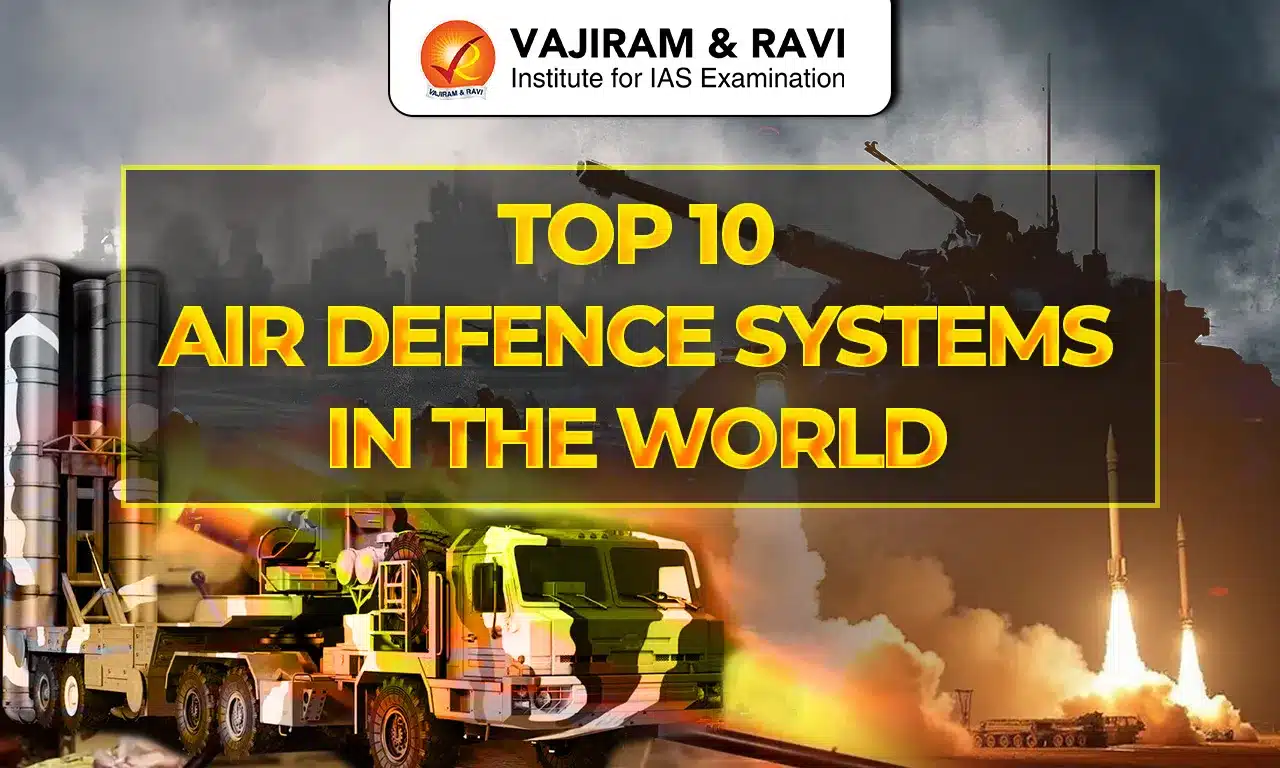
Top 10 Air Defence Systems in the World, List, Range, Uses

Top 10 Air Defence Systems In The World

The Top 10 Air Defence Systems in the World reflect a strategic shift toward layered, networked, and high-speed interception capabilities. Modern warfare is increasingly dominated by aerial threats such as ballistic missiles, hypersonic glide vehicles, armed drones, and stealth aircraft. To counter these threats, nations rely on advanced air defence systems that integrate radars, interceptor missiles, command-and-control networks, and real-time surveillance. With rising geopolitical conflicts and missile proliferation, air defence systems now play a crucial role in protecting airspace, strategic assets, and civilian infrastructure worldwide.

Air Defence Systems

Air defence systems are military technologies designed to detect, track, intercept, and destroy hostile aerial objects including aircraft, cruise missiles, ballistic missiles, and unmanned aerial vehicles. These systems combine long-range surveillance radars, fire control radars, interceptor missiles, and battle management systems into Integrated Air Defence Systems (IADS). As per global defence market estimates, the air defence systems market was valued at USD 46.55 billion in 2024 and is projected to reach USD 81.92 billion by 2035 (market projected to grow at a CAGR of 5.27% between 2025 and 2035), driven by hypersonic threats, drone warfare, and missile modernisation.

Top 10 Air Defence Systems in the World List

The Top 10 Air Defence Systems in the World are ranked based on operational range, interception altitude, target spectrum, combat performance, and technological sophistication.

  1. S-500 Prometheus- Russia
  2. S-400 Triumph- Russia
  3. THAAD- United States
  4. David’s Sling- Israel/USA
  5. Patriot PAC-3- United States
  6. S-300VM/ Antey-2500- Russia
  7. Aster 30 SAMP/T- France/ Italy
  8. HQ-9- China
  9. Barak-8- India/Israel
  10. Iron Dome- Israel

1. S-500 Prometheus

The S-500 Prometheus is Russia’s most advanced strategic air and missile defence system, designed for next-generation warfare.

  • Maximum interception range of up to 600 km for ballistic targets and 500 km for aerial targets
  • Capable of intercepting targets at altitudes up to 180-200 km, including low Earth orbit threats
  • Interceptor missile speed reaches Mach 20, enabling hypersonic interception
  • Can simultaneously engage 10 hypersonic targets travelling at 7 km per second
  • Designed to counter ballistic missiles, hypersonic weapons, UAVs, and satellites

2. S-400 Triumph

The S-400 Triumph is a long-range, multi-target air defence system widely deployed globally.

  • Maximum engagement range of 400 km with altitude coverage of 30-56 km
  • Tracks and engages up to 36 targets simultaneously
  • Uses multiple interceptor missiles including 40N6, 48N6, and 9M96 variants
  • Effective against aircraft, cruise missiles, ballistic missiles, and UAVs
  • Operational in Russia, India, China, Turkey, and other countries

3. THAAD (Terminal High Altitude Area Defense)

THAAD is a high-altitude ballistic missile defence system developed by the United States.

  • Engagement range of approximately 200 km
  • Interception altitude up to 150 km, enabling exo-atmospheric kills
  • Uses hit-to-kill kinetic interceptors without explosives
  • Interceptor speed exceeds Mach 8
  • Deployed in South Korea, UAE, and integrated with Patriot and Aegis systems

4. David’s Sling

David’s Sling is a medium-to-long range missile defence system jointly developed by Israel and the United States.

  • Effective range up to 300 km
  • Designed to intercept tactical ballistic missiles, cruise missiles, drones, and aircraft
  • Uses Stunner interceptor missile with dual seeker technology
  • Interceptor speed exceeds Mach 7
  • Forms a key layer between Iron Dome and Arrow systems in Israel’s defence architecture

5. Patriot PAC-3

Patriot PAC-3 is a combat-proven air and missile defence system manufactured by Raytheon.

  • Engagement range of 160-170 km
  • Effective interception altitude up to 24 km
  • PAC-3 variant uses hit-to-kill technology
  • Widely deployed in over 17 countries, including Japan, Germany, Saudi Arabia
  • Integrated into multi-layered missile defence networks alongside THAAD

6. S-300VM/ Antey-2500

The S-300VM is a mobile long-range air and missile defence system developed by Russia.

  • Maximum engagement range of 250 km
  • Effective interception altitude up to 30 km
  • Capable of engaging aircraft, cruise missiles, and intermediate-range ballistic missiles
  • Interceptor missile speed exceeds Mach 7
  • Deployed in countries such as Egypt and Venezuela

7. Aster 30 SAMP/T

Aster 30 SAMP/T is a European air defence system developed jointly by France and Italy.

  • Operational range between 120-150 km
  • Interception altitude up to 25 km
  • Uses Aster 30 missile with active radar homing
  • Capable of engaging short-range ballistic missiles and cruise missiles
  • Deployed by France, Italy, and Singapore

8. HQ-9

HQ-9 is China’s long-range surface-to-air missile system.

  • Maximum engagement range of 200 km
  • Effective altitude of approximately 27 km
  • Incorporates phased-array radar technology
  • Designed to counter aircraft, cruise missiles, and ballistic missiles
  • Advanced variants include HQ-9B and HQ-9C

9. Barak-8

Barak-8 is a joint India-Israel air defence system designed for land and naval operations.

  • Engagement range of 70-100 km
  • Interception altitude up to 20 km
  • Uses active radar seeker missiles
  • Effective against aircraft, UAVs, cruise missiles, and anti-ship missiles
  • Deployed by Indian Navy, Indian Air Force, and Israeli Defence Forces

10. Iron Dome

Iron Dome is a short-range air defence system developed by Israel for rocket interception.

  • Effective range up to 70 km
  • Interception altitude around 10 km
  • Uses Tamir interceptor missiles
  • Achieved a combat success rate of over 90%
  • Designed to neutralise rockets, artillery shells, and mortars in real time

Top 10 Air Defence Systems in the World FAQs

Q1: What are Top 10 Air Defence Systems in the World used for?

Ans: Air defence systems detect, track, and destroy hostile aircraft, missiles, drones, and rockets to protect national airspace and critical assets.

Q2: Which is the most advanced among Top 10 Air Defence Systems in the World?

Ans: The S-500 Prometheus of Russia is considered the most advanced due to its hypersonic interception and satellite-targeting capability.

Q3: Which has the highest combat success rate among Top 10 Air Defence Systems in the World?

Ans: Israel’s Iron Dome has achieved a combat interception success rate of over 90 percent against rockets and artillery shells.

Q4: Which air defence system is jointly developed by India and Israel?

Ans: Barak-8 is jointly developed by India and Israel for land and naval air defence against aircraft and missile threats.

Q5: Why are air defence systems gaining global importance?

Ans: Rising use of ballistic missiles, drones, and hypersonic weapons has made air defence systems critical for modern national security.

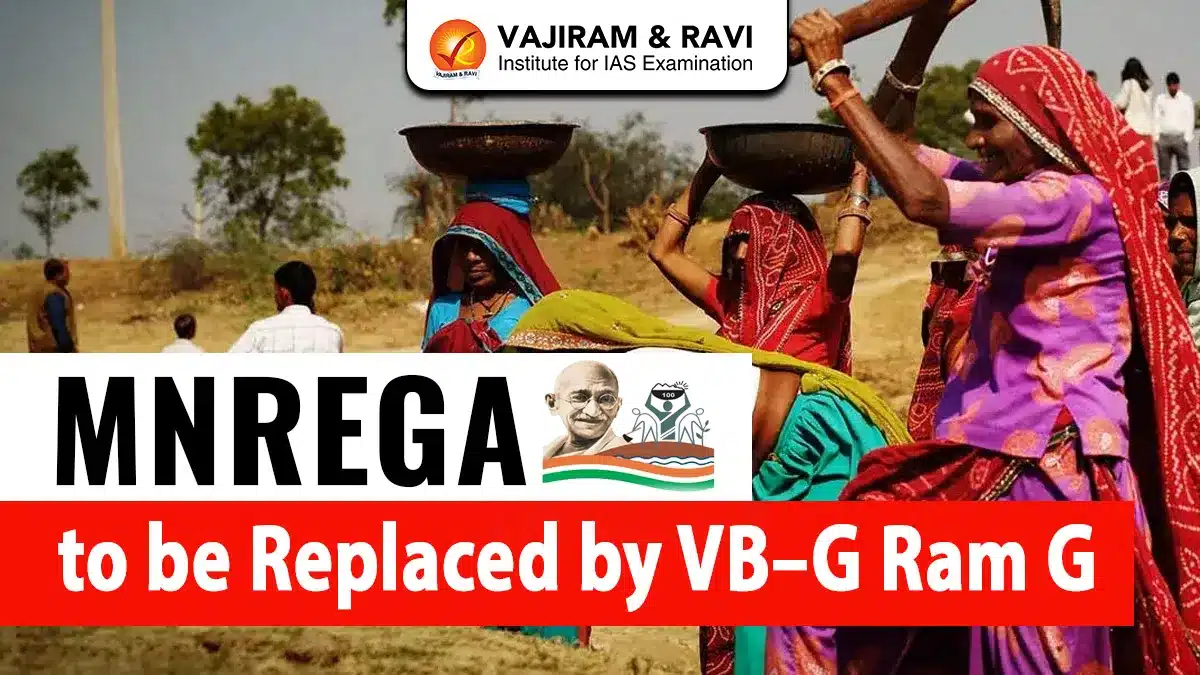
MNREGA to be Replaced by VB-G Ram G, Benefits, Challenges

MNREGA to be Replaced by VB-G Ram G

The Viksit Bharat Guarantee for Rozgar and Ajeevika Mission (Gramin) VB-G Ram G Bill, 2025 is set to replace the Mahatma Gandhi National Rural Employment Guarantee Act (MGNREGA), 2005, bringing major reforms to rural employment programs in India. This bill proposes increased employment days, new funding patterns, weekly wage payments, and a pause during peak agricultural seasons.

About MNREGA Act, 2005

The MGNREGA Act, 2005 was launched to provide at least 100 days of wage employment per financial year to rural households whose adults volunteer for unskilled manual labor. Key features included:

  • Full funding by the central government for unskilled wages.
  • States contributed to material costs, administrative expenses, and unemployment allowances.
  • Provision of additional workdays in case of drought, natural calamities, or for tribal households in forest areas.
  • Payments within 15 days of work completion with compensation for delays.

Why VB-G Ram G Bill, 2025 Was Proposed?

  • Provide More Jobs - Give rural households 125 days of work every year.
  • Ensure Faster Payments - Pay workers every week to make income timely and reliable.
  • Share Costs Between Centre and States - Both government levels will fund the scheme to make it more sustainable.
  • Support Farmers - Stop work during busy sowing and harvesting times so farmers have enough labor.
  • Better Planning - Allocate funds based on state requirements to use money efficiently.
  • Secure Rural Livelihoods - Help rural families earn a steady income and reduce migration.
  • Consider Local Needs - Take local farming and regional conditions into account for fair work distribution.
  • Make the Scheme Work Smoothly - Ensure proper execution, monitoring, and payments for better results.

Changes Under VB-G Ram G Bill, 2025

The VB-G Ram G Bill, 2025 introduces important changes to improve rural employment programs. It aims to make wage payments faster, plan resources better, and ensure work is available when needed, while also supporting farmers during busy agricultural seasons. The changes under VB-G Ram G Bill, 2025, have been shared below in detail:

1. Guaranteed 125 Days of Wage Employment

  • Every rural household whose adults volunteer for work is now entitled to 125 days of employment per year, up from 100 days under MGNREGA.
  • Additional workdays beyond 100 are available for special cases like drought-affected areas or tribal households.

2. Funding Responsibility: Shared Between Centre and States

  • Northeastern & Himalayan States, and certain UTs: 90:10 Centre-State share
  • Other States with Legislature: 60:40 Centre-State share
  • UTs without Legislature: Centre bears the full cost

This is a major change from MGNREGA, where the Centre funded the entire wage bill, making states more accountable for their rural employment schemes.

3. Normative Allocation Replaces Labour Budget

  • The Centre determines a state-wise normative allocation for each financial year.
  • Any expenditure exceeding the allocation must be borne by the state government.
  • This replaces the previous labour budget system, which allowed open-ended funding based on anticipated demand.

4. Pause During Peak Agricultural Seasons

  • Employment guarantee will be paused for 60 days in a financial year during sowing and harvesting seasons.
  • States can notify these periods based on agro-climatic zones and local farming patterns.
  • Ensures availability of agricultural labor while slightly reducing the window to avail full employment days.

5. Weekly Wage Payments

  • Weekly Wage Payments - Under VB-G Ram G Bill, workers will receive their daily wages every week, unlike MGNREGS which has a 15-day payment limit.
  • Delayed payments will still attract compensation, ensuring timely income for rural workers.

Benefits of VB-G Ram G Bill 2025

  • Increased Employment Days - The bill raises the guaranteed workdays from 100 under MGNREGA to 125 days per rural household per year, providing additional income opportunities for millions of rural families.
  • Timely Wage Payments - Wages will be disbursed weekly or at most within 15 days, unlike the earlier 15-day limit, ensuring workers have quicker access to income and reducing financial stress.
  • Shared Funding Responsibility - Funding will now be shared between the Centre and States: 60:40 for most states and 90:10 for northeastern and Himalayan states, promoting financial sustainability and accountability at the state level.
  • Better Planning with Normative Allocation - Each state will receive a pre-determined annual allocation from the Centre, reducing uncertainty in funding and allowing more efficient planning of rural employment projects.
  • Support to Agriculture - By pausing work for 60 days during peak sowing and harvesting seasons, the bill ensures adequate labor is available for farming, supporting agricultural productivity.
  • Strengthening Rural Livelihoods - The increase in workdays and timely payments help reduce rural distress, prevent seasonal migration, and provide a steady income source for households dependent on unskilled labor.

Challenges

  • Higher Financial Burden on States - Since states now share a portion of the funding (60:40 or 90:10), some states may face budgetary pressures to meet their share of wage payments.
  • Reduced Work Availability During Peak Farming - The 60-day pause during sowing and harvesting may shorten the window for rural households to avail all 125 days of guaranteed work.
  • Implementation Challenges - Effective execution will require strong coordination between Centre and States, especially for fund allocation, monitoring, and wage disbursement.
  • Risk of Delayed Payments - Despite weekly payments being mandated, delays can still occur due to administrative or technical issues at the local level.
  • Regional Disparities - Different agro-climatic zones may face unequal work opportunities due to variations in local notifications for peak seasons.
  • Dependence on Accurate Normative Allocation - Over- or under-estimation of allocations could affect the number of workdays provided and disrupt employment plans.

Way Forward

  • Better Coordination Between Centre and States - With states sharing funding (60:40 or 90:10), smooth planning and fund transfer are needed to avoid delays in wages.
  • Increase Awareness Among Rural Workers - Over 8 crore households benefit under MGNREGA; informing them about 125 guaranteed workdays and weekly payments is important.
  • Use Technology Effectively - Digital systems can help track work, ensure weekly wage payments, and monitor projects efficiently.
  • Plan According to Local Needs - Peak farming periods differ across regions; pausing work for 60 days should match local sowing and harvesting seasons.
  • Regular Monitoring - Timely audits and supervision can prevent delays in wage payments and ensure proper use of allocated funds.
  • Support States Financially - States need guidance to manage their share of funding without affecting work availability.

MNREGA to be Replaced by VB-G Ram G FAQs

Q1: What is VB-G Ram G Bill, 2025?

Ans: The VB-G Ram G Bill, 2025 is a new rural employment law that will replace MGNREGA, 2005. It aims to provide 125 days of guaranteed wage employment, timely payments, and better planning for rural livelihoods.

Q2: How many days of work will be guaranteed under VB-G Ram G?

Ans: Every rural household will be entitled to 125 days of wage employment per financial year, up from 100 days under MGNREGA.

Q3: Will wages be paid on time under the new scheme?

Ans: Yes, the bill ensures weekly wage payments, or at most within 15 days, which is faster than MGNREGA’s 15-day payment window.

Q4: How will the scheme be funded?

Ans: Funding will be shared between the Centre and States. Most states will follow a 60:40 ratio, while northeastern and Himalayan states follow 90:10. UTs without legislature will get full funding from the Centre.

Q5: What is the pause in employment guarantee?

Ans: To ensure farm labor is available during peak seasons, the bill allows a 60-day pause in work during sowing and harvesting periods

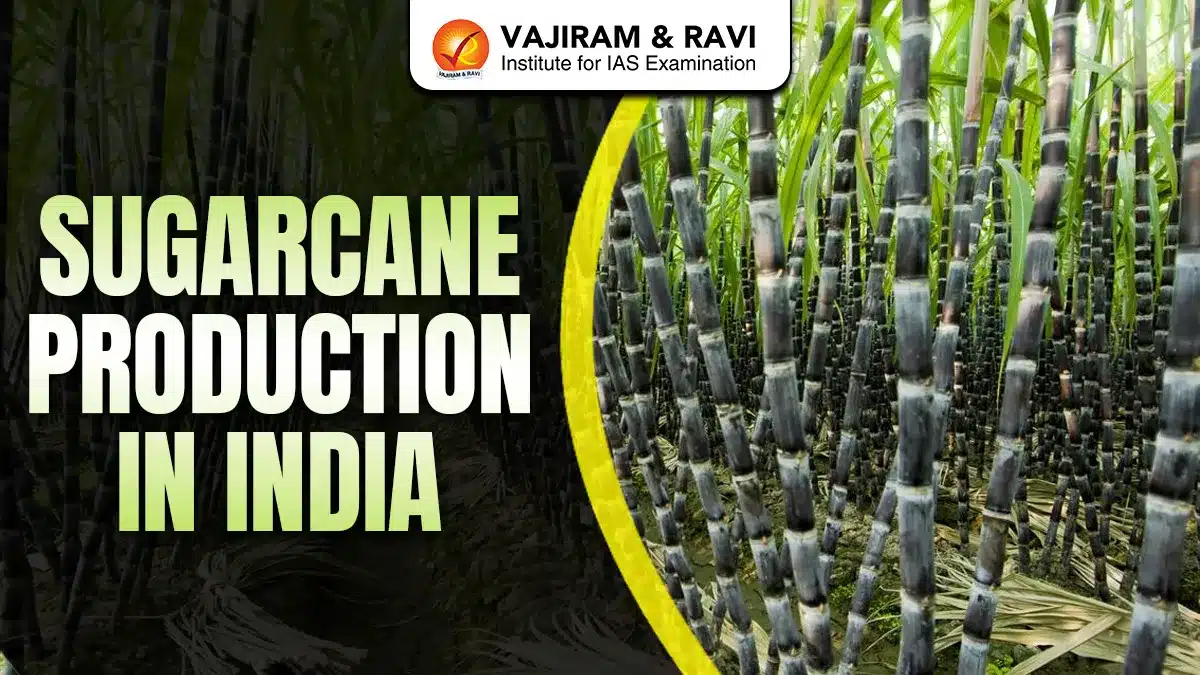
Sugarcane Production in India, Climatic Requirements, Government Policies

Sugarcane Production in India

Sugarcane is one of the most important commercial and industrial crops in India. India ranks second in the world after Brazil in sugarcane production. It forms the backbone of the sugar industry and is closely linked with ethanol production, power generation, and rural employment. Nearly 50 million farmers and workers depend directly or indirectly on sugarcane-based activities.

Sugarcane Production in India

India produces around 490–500 million tonnes of sugarcane annually from about 5.5 million hectares of cultivated area. Sugarcane Production in India contributes significantly to agricultural GDP and plays a key role in ensuring energy security through ethanol blending. Its long growing period and multiple uses make it economically valuable but resource-intensive.

Also Read: Rice Cultivation in India

Climatic Requirements for Sugarcane

Sugarcane is a tropical and sub-tropical crop that requires hot, humid conditions during growth and cooler, dry weather during ripening for high sugar accumulation. A long frost-free period with adequate sunlight and moisture is essential for healthy cane development and good sugar recovery.

  • Temperature: Prefers 20–30°C for overall growth; 12–14°C during ripening helps increase sucrose content
  • Rainfall: Requires 75–150 cm annually, mainly during the growing phase; low rainfall during maturity is desirable
  • Sunlight: Needs bright sunshine for efficient photosynthesis and sugar formation
  • Humidity: Hot and humid climate supports vegetative growth
  • Frost/Cold: Highly sensitive to frost and prolonged low temperatures, which reduce yield and damage the crop.

Climate needs at different growth stages:

  • Germination/Sprouting: Warm soil conditions, ideally 32–38°C, ensure good sprouting
  • Active Growth (Tillering & Elongation): Hot, humid, and rainy conditions promote rapid vegetative growth
  • Ripening (Maturity): Cool, dry, sunny days with cool nights are ideal for maximum sugar (sucrose) accumulation

Cropping Seasons of Sugarcane in India

Sugarcane is mainly grown in Autumn, Spring, Adsali (Preseasonal), and Eksali seasons. North India largely follows autumn and spring planting, while southern states practice long-duration crops.

Cropping Season and Varieties of Sugarcane
Cropping Season Planting Months Major Regions Crop Duration Features

Autumn

October–November

North India

12 months

Slow growth in winter, rapid growth in spring; higher yield

Spring

February–March (sometimes up to April–May)

North India

6–8 months

Shorter duration; delayed planting reduces yield

Adsali / Preseasonal

July–August

South India

15–18 months

Long-duration crop; higher biomass and yield

Eksali

January–February

South India

12 months

One-year crop, widely practiced

Also Read: Wheat Cultivation in India

Varieties of Sugarcane in India

India grows a wide range of sugarcane varieties suited for high yield, sugar recovery, and jaggery production. Selection depends on climate, soil, and end use.

Varieties of Sugarcane in India
Category Major Varieties Characteristics

General / High Yield

Co 86032 (Nayana), Co 0238 (Karan 4), Co 94012, Co 8014

High productivity, good sugar recovery

Jaggery (Gur) Production

CoG 6, Co 0212, Co 06022, Co 11015

Higher sucrose content, good for gur making

Early Season (Dec–Jan)

CoC 25, CoG 6, Co 09004

Early maturity, suitable for short seasons

Mid–Late Season (Feb–Mar)

Co 86032, Co 06030, Co 0212

Longer growth period, higher yields

Method of Cultivation of Sugarcane in India

Sugarcane cultivation in India involves a series of well-defined stages, from land preparation to harvesting, and combines traditional practices with modern techniques.

  • Land preparation: Fields are deeply ploughed 2–3 times and leveled to make the soil loose and well-aerated. Proper drainage is ensured to avoid waterlogging, which is harmful to sugarcane roots.
  • Seed material selection: Healthy, disease-free cane setts are selected from approved varieties. Traditionally, 2–3 bud setts are used, requiring a large quantity of seed cane.
  • Bud chip settlings method: Single buds are removed from cane and raised in a nursery. These settlings are later transplanted into the main field, leading to substantial saving in seed material, uniform crop stand, and better germination.
  • Tissue culture planting: Sugarcane can also be cultivated using settlings prepared from tissue culture, which are genetically uniform and disease-free, resulting in higher yield and better sugar recovery.
  • Planting methods: Furrow method is most common in irrigated areas; trench and ring pit methods are used in high rainfall or water-scarce regions to improve moisture use and root growth.
  • Spacing and planting depth: Proper row spacing allows better sunlight penetration, aeration, and nutrient absorption, leading to healthier crop growth.
  • Irrigation management: Sugarcane requires frequent irrigation, especially during tillering and elongation stages. Drip irrigation is increasingly adopted to save water and improve efficiency.
  • Nutrient management: Adequate application of organic manure, nitrogen, phosphorus, and potassium is essential for sustained growth and high yield.
  • Harvesting: The crop is harvested at full maturity when sugar content is highest, usually 10–18 months after planting, depending on the variety and season.

Major Sugarcane Producing States in India

Sugarcane cultivation in India is mainly concentrated in the Northern and Southern belts due to suitable climate, fertile soils, and irrigation facilities. Uttar Pradesh is the largest producer by area, while Maharashtra, Karnataka, and Tamil Nadu are leading producers with higher productivity.

Major Sugarcane Producing States in India
Region / Belt State Features

Northern Belt

Uttar Pradesh

Largest producer in India; maximum area under sugarcane; fertile alluvial soil and canal irrigation

Bihar

Important eastern producer; revival of sugar mills; expanding cultivated area

Punjab

High yield due to intensive farming and assured irrigation

Haryana

Good productivity; well-developed irrigation facilities

Southern Belt

Maharashtra

High productivity; strong cooperative sugar industry; large number of sugar mills

Karnataka

Modern sugar mills; improved irrigation and technology adoption

Tamil Nadu

Highest productivity per hectare; favorable climate and efficient water use

Andhra Pradesh

Cultivation in irrigated and delta regions

Telangana

Growing production with command-area irrigation

Western Belt

Gujarat

Efficient sugar cooperatives; high sugar recovery rates

Economic Importance of Sugarcane in India

  • Sugarcane is one of India’s most important commercial and industrial crops, contributing significantly to the agricultural economy.
  • It supports the sugar industry, which is among the largest agro-based industries and has strong linkages with transport, packaging, and marketing sectors.
  • The crop provides direct livelihood to millions of farmers and employment to workers in sugar mills, distilleries, and power plants.
  • Sugarcane is the main raw material for ethanol production, playing a crucial role in the ethanol blending programme and helping reduce crude oil imports.
  • Bagasse, a by-product of sugarcane, is widely used for electricity generation, promoting renewable and clean energy.
  • Molasses derived from sugarcane supports the alcohol, pharmaceutical, and chemical industries.
  • Production of jaggery (gur) and khandsari supports rural and small-scale industries and provides income to local farmers.
  • The sugarcane sector encourages the growth of cooperative institutions, especially in states like Maharashtra and Gujarat.
  • Sugar exports and ethanol-related products contribute to foreign exchange earnings.
  • Overall, sugarcane cultivation promotes rural development, industrial growth, and energy security in India.

Also Read: Millets in India

Government Policies and Support Mechanisms

  • Fair and Remunerative Price (FRP): The government fixes FRP annually to protect farmers from price fluctuations; it is linked to sugar recovery rates, ensuring better returns for higher-quality cane.
  • State Advised Price (SAP): States like Uttar Pradesh announce SAP, which is often higher than FRP, to provide additional income support to farmers.
  • Ethanol Blending Programme (EBP): Promotes diversion of sugarcane and molasses for ethanol; blending targets have increased steadily, helping reduce surplus sugar and saving foreign exchange on fuel imports.
  • Interest Subvention Scheme: Provides subsidized loans to sugar mills to clear cane arrears, improving timely payments to farmers.
  • Buffer Stock Scheme: The government supports maintenance of buffer stock to stabilize sugar prices during surplus production years.
  • Export Assistance Measures: Export incentives and policy support help dispose of excess sugar in international markets and prevent domestic price crashes.
  • Support for Ethanol Distilleries: Financial assistance is provided to set up and expand ethanol production capacity from sugarcane-based feedstock.

Fair and Remunerative Price (FRP)

  • The Fair and Remunerative Price (FRP) for sugarcane is fixed every year by the Union government (Cabinet Committee on Economic Affairs (CCEA) on the basis of recommendations of the Commission for Agricultural Costs and Prices (CACP) before the start of the crushing season.
  • While determining FRP, factors such as cost of production of sugarcane, return to farmers, domestic and international sugar prices, demand–supply situation, and inter-crop price parity are considered.
  • Sugar recovery rate is an important parameter; higher recovery attracts a premium over the base FRP, encouraging quality production.
  • The final FRP is notified under the Sugarcane (Control) Order, making it mandatory for sugar mills to pay farmers at least this price.
  • The FRP acts as a minimum guaranteed price, protecting farmers from market volatility and ensuring stable income.

Challenges in Sugarcane Production in India

  • High water requirement: Sugarcane is a water-intensive crop, leading to over-extraction of groundwater, especially in water-stressed regions.
  • Delayed payment to farmers: Financial stress in sugar mills often results in cane arrears, affecting farmers’ income security.
  • Low mechanisation: Manual harvesting dominates, increasing labour costs and reducing efficiency.
  • Pests and diseases: Attacks such as red rot, borers, and wilt reduce yield and sugar recovery.
  • Rising input costs: High expenditure on seeds, fertilisers, labour, and irrigation lowers profitability.
  • Price volatility: Cyclical surplus and deficit in sugar production cause unstable prices.
  • Environmental concerns: Excessive use of water and fertilisers degrades soil health and ecosystems.
  • Climate variability: Irregular rainfall and temperature extremes affect productivity and crop quality.

Way Forward

  • Promote water-efficient irrigation: Expanding drip irrigation can reduce water use in sugarcane cultivation by 30–40% while maintaining or increasing yields, as seen in states like Maharashtra.
  • Encourage crop diversification: In water-stressed regions, shifting part of the area from sugarcane to less water-intensive crops can reduce pressure on groundwater.
  • Strengthen ethanol production: Achieving the 20% ethanol blending (E20) target will absorb surplus sugarcane, stabilize prices, and save billions in fuel import costs.
  • Improve mechanization: Increasing the use of mechanical harvesters can reduce labor costs and improve efficiency, especially in large farms.
  • Develop climate-resilient varieties: Investment in research can produce drought- and disease-resistant sugarcane varieties to cope with climate variability.
  • Ensure timely payments: Financial reforms and better mill management can help clear cane arrears, improving farmer income security.

UPSC CSE Prelims PYQs

Q.1 The Fair and Remunerative Price (FRP) of sugarcane is approved by the (2015)

(a) Cabinet Committee on Economic Affairs

(b) Commission for Agricultural Costs and Prices

(c) Directorate of Marketing and Inspection, Ministry of Agriculture

(d) Agricultural Produce Market Committee

Ans: (a)

Q.2 With reference to the current trends in the cultivation of sugarcane in India, consider the following statements: (2020)

  1. A substantial saving in seed material is made when ‘bud chip settlings’ are raised in a nurse and transplanted in the main field.
  2. When direct planting of setts is done, the germination percentage is better with single-budded setts as compared to setts with many buds.
  3. If bad weather conditions prevail when setts are directly planted, single-budded setts have better survival as compared to large setts
  4. Sugarcane can be cultivated using settlings prepared from tissue culture.

Which of the statements given above is/are correct?

(a) 1 and 2 only

(b) 3 only

(c) 1 and 4 only

(d) 2, 3 and 4 only

Ans: (c)

Sugarcane Production in India FAQs

Q1: What is the position of India in global sugarcane production?

Ans: India is the second-largest producer of sugarcane in the world, after Brazil.

Q2: How much rainfall is required for sugarcane cultivation?

Ans: Sugarcane requires about 75–150 cm of rainfall annually or equivalent irrigation.

Q3: Which state is the largest producer of sugarcane in India?

Ans: Uttar Pradesh is the largest sugarcane-producing state in India by area and total output.

Q4: Why is sugarcane considered a water-intensive crop?

Ans: It needs continuous water supply throughout its long growing period of 12–18 months.

Q5: What are the main by-products of sugarcane?

Ans: Major by-products include bagasse, molasses, press mud, jaggery, and ethanol.

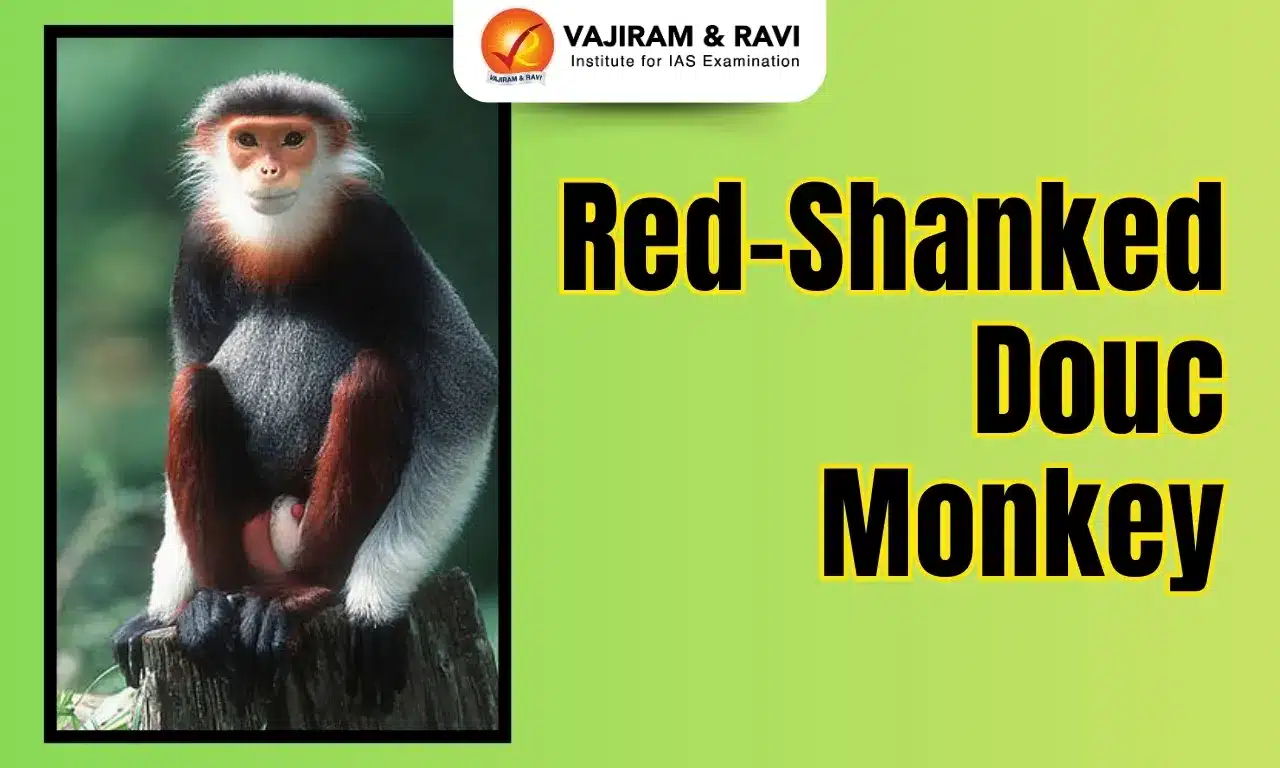
Red-Shanked Douc Monkey

Red-Shanked Douc Monkey

Red-Shanked Douc Monkey Latest News

Recently, customs officials at the Kempegowda International Airport (KIA) arrested a passenger who was smuggling two red-shanked douc monkeys.

About Red-Shanked Douc Monkey

  • The Red-shanked douc (Pygathrix nemaeus) is an Old World monkey which is considered as a “Queen of primates”.
  • Habitat: They occur in subtropical and tropical broadleaf evergreen or semi-deciduous forests and to a lesser extent in secondary evergreen and mixed bamboo forests.
  • Distribution: Red-shanked doucs are found in Southeast Asia mainly in Vietnam, Southern Laos and Cambodia.

Characteristics of Red-Shanked Douc Monkey

  • Appearance: It is referred to as “the costumed ape,” the red-shanked douc langur is among the most colorful of primates. 
  • These are arboreal, herbivores and diurnal monkeys that eat and sleep in the trees of the forest.
  • Communication: They communicate with each other using various facial expressions.
  • Conservation Status: IUCN: Critically Endangered 
  • Threats: Hunting is the main threat – for subsistence use and traditional medicine – they are also hunted for the international pet trade. 

Source: TH

Red-Shanked Douc Monkey FAQs

Q1: What is the scientific name of the Red-Shanked Douc Monkey?

Ans: Pygathrix nemaeus

Q2: What is distinctive about the Red-Shanked Douc Monkey's appearance?

Ans: Red legs and hands

Dandami Madia Tribe

Dandami Madia Tribe

Dandami Madia Tribe Latest News

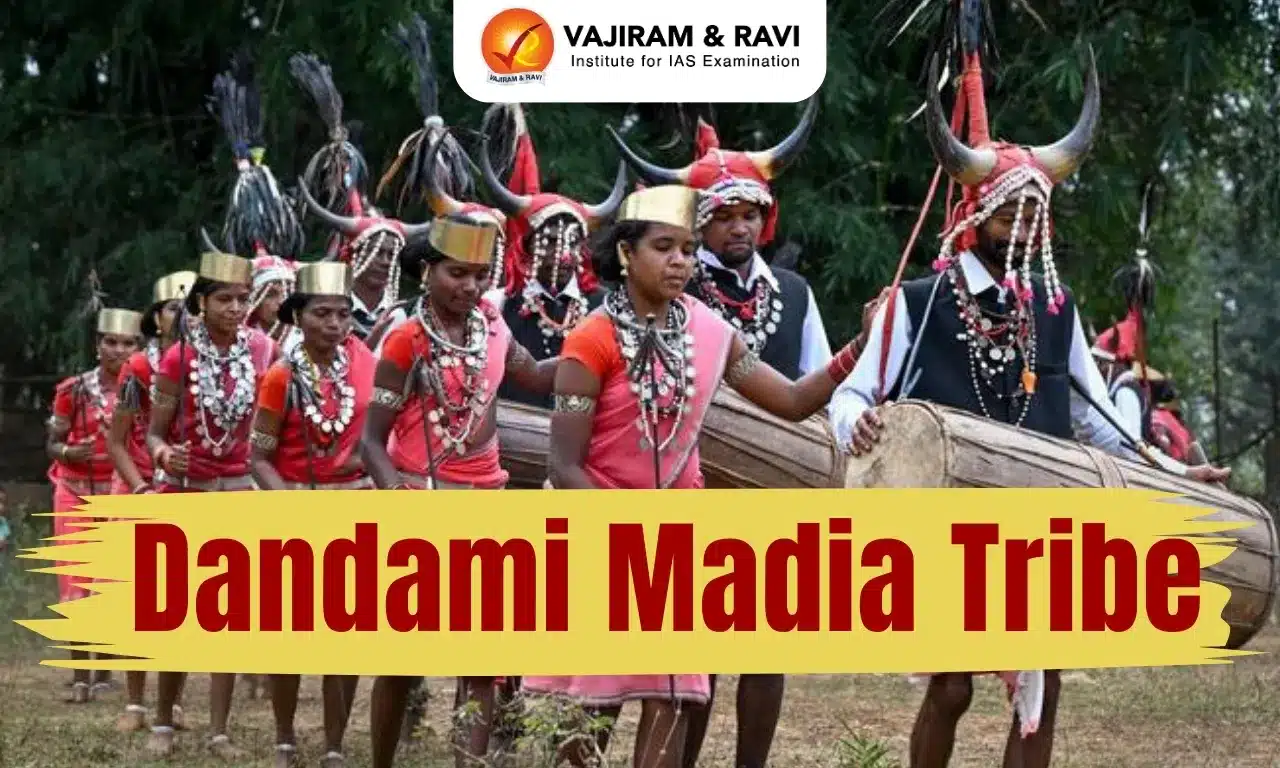
Recently, members of the Dandami Madia tribe perform the traditional Bison Horn Maria dance during a village festival at Judiya Para in Jagdalpur.

About Dandami Madia Tribe

  • Dandami Maria, also known by other names like Bison Horn Maria and Khalpati Maria.
  • It is a tribal community which lives in Chhattisgarh.
  • They have derived their name from their unique custom of wearing a distinctive head-gear, which resembles the horns of a wild bison.
  • They generally wear that head-gear during ceremonies.
  • They identify themselves as part of the larger Gond tradition.
  • Language: The main distinct language spoken by this tribe is Dandami Maria. Some of them speak Gondi dialects, which is an oral language of Dravidian origins.

Society and Customs of Dandami Madia Tribe

  • Economy: They live by agriculture, supplemented by hunting and fishing.
  • Belief: Their belief is a combination of Hinduism with Animistic beliefs.
  • Their ghotul (youth dormitory for unmarried boys and girls) is an important social institution.
  • They permit divorce and widow remarriage.
  • They perform the traditional Bison Horn Maria dance during a village festival. It is performed by both men and women.

Source: TH

Dandami Madia Tribe FAQs

Q1: In which state is the Dandami Madia Tribe primarily found?

Ans: Chhattisgarh

Q2: What is the primary language spoken by the Dandami Madia Tribe?

Ans: Gondi

Perumbidugu Mutharaiyar

Perumbidugu Mutharaiyar

Perumbidugu Mutharaiyar Latest News

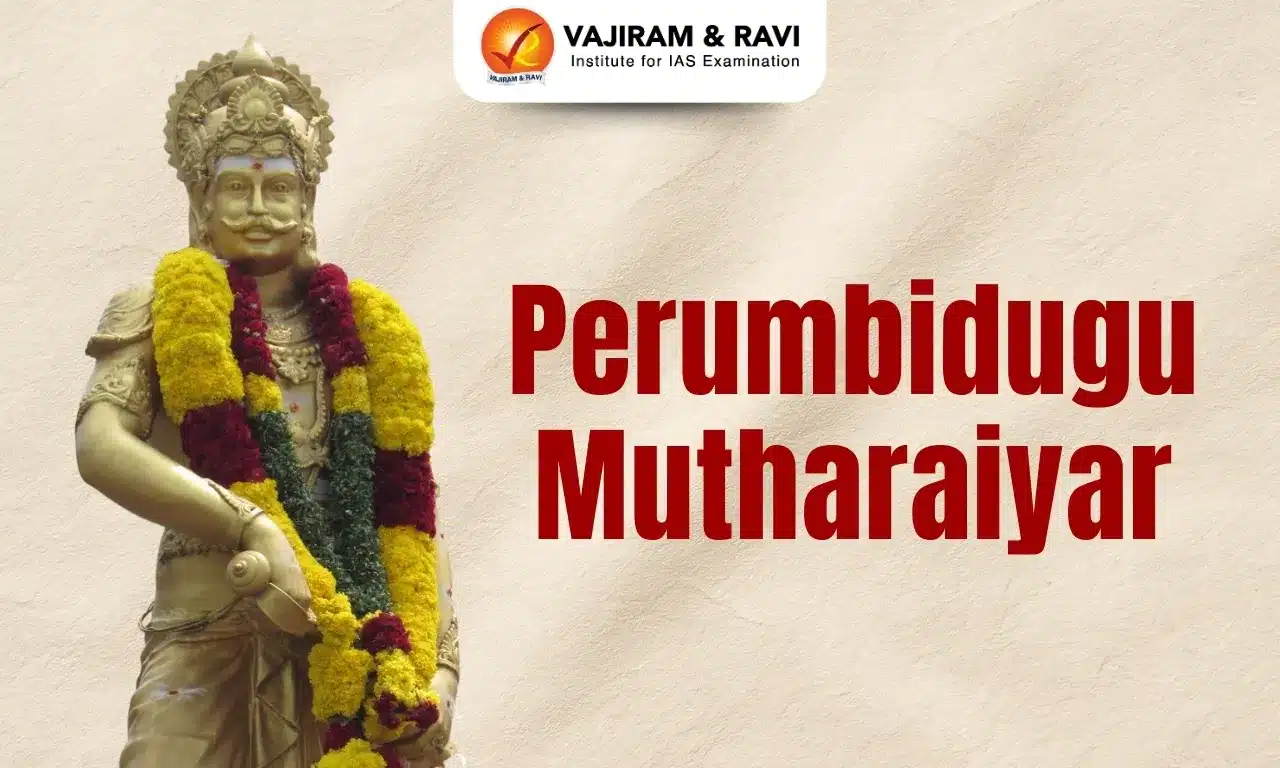
Recently, a commemorative postage stamp in honour of the king Perumbidugu Mutharaiyar II (Suvaran Maran) was released by the Vice President of India. 

About Perumbidugu Mutharaiyar

  • Perumbidugu Mutharaiyar (705 AD-745 AD), also known as Suvaran Maran, was a ruler of the Mutharaiyar lineage.
  • Suvaran Maran was also known as Shatrubhayankar.
  • Perumbidugu Mutharaiyar is believed to have fought bravely in several battles alongside the Pallava king Nandivarman, and is remembered as a great administrator.
  • He seems to have patronised Shaivya and other scholars, as a Jain monk Vimalachandra is mentioned as visiting his court to debate them.

Who are Mutharaiyars?

  • They were the feudatories of the Pallavas.
  • As the Pallavas’ rule weakened, many such chiefs earned more power and prominence and were treated as rulers in their own right.
  • The Mutharaiyars held sway over areas including Thanjavur, Pudukkottai, Perambalur, Tiruchirappalli, and others near the Cauvery river.
  • As the feudatories of the Pallavas, the Mutharaiyars were great temple builders.
  • Muttarayars were engaged in cave temple enterprises up to the opening decades of the ninth century.

Source: IE

Perumbidugu Mutharaiyar FAQs

Q1: Who was Perumbidugu Mutharaiyar?

Ans: A Mutharaiyar king

Q2: What was Perumbidugu Mutharaiyar's other name?

Ans: Suvaran Maran

Moei River

Moei River

Moei River Latest News

Promises of data-entry jobs drew young men from the State of Gujarat across the Moei River into Myanmar’s alleged cyber-fraud compounds.

About Moei River

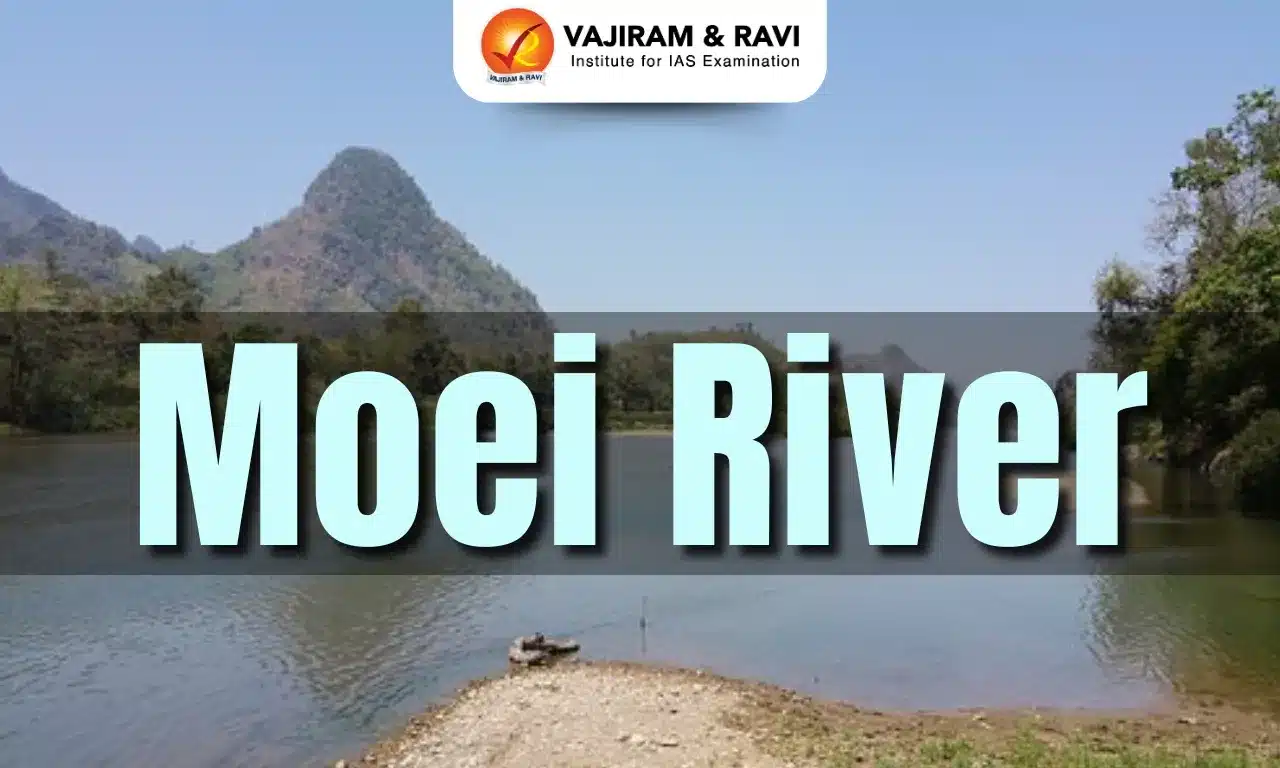
  • The Moei River, known in Myanmar as the Tonge Yin River, is an important river in northern Thailand.
  • It is a tributary of the Salween River.
  • SourceOriginates in the Tenasserim Hills (Myanmar–Thailand border region)
  • Unlike most rivers in Thailand, the Moei River flows north in a northwest direction.
  • It stretches approximately 327 kilometers, flowing from the south to the north of Thailand before joining the Salween River in Myanmar. 
  • This river serves as a natural border between Thailand and Myanmar.
  • Key Towns Along the River:
    • Mae Sot (Thailand)
    • Myawaddy (Myanmar)
  • Historically, the Moei River was a key waterway for communication and transporting goods between Thai and Burmese communities.

Source: TH

Moei River FAQs

Q1: Which two countries does the Moei River form a natural boundary between?

Ans: Thailand and Myanmar

Q2: The Moei River is a tributary of which major river?

Ans: Salween River

Q3: Where does the Moei River originate from?

Ans: Tenasserim Hills (Myanmar–Thailand border region)

Q4: Approximately how long is the Moei River?

Ans: 327 kilometers

Chakrashila Wildlife Sanctuary

Chakrashila Wildlife Sanctuary

Chakrashila Wildlife Sanctuary Latest News

Community-led conservation efforts at the Chakrashila Wildlife Sanctuary have successfully restored wild honey bee colonies and revitalized associated wildlife.

About Chakrashila Wildlife Sanctuary

  • It is locatеd in thе Kokrajhar and Dhubri districts of Assam.
  • The sanctuary is well-known as the second protected habitat for the endangered golden langur, hosting over 600 individuals.
  • It spans over 45.5 sq.km. of hilly tеrrain and dеnsе forеsts.
  • There are two lakes (Dheer Beel and Diplai Beel) on either side, which are integral to the ecosystem of the sanctuary. 
  • Flora
    • The vegetation of the sanctuary is predominantly tropical moist deciduous forests, mixed deciduous forests, and semi-evergreen forests.
    • Sal tree is a dominant tree in this forest.
  • Fauna:
    • It is home to various species, including elephants, tigers, leopards, clouded leopards, sambar deer, barking deer, and gaur. 
    • The sanctuary is also home to several species of birds, including the endangered Bengal Florican, Great Hornbill, and White-winged Wood Duck.

Source: SENT

Chakrashila Wildlife Sanctuary FAQs

Q1: Chakrashila Wildlife Sanctuary is located in state?

Ans: Assam

Q2: Chakrashila Wildlife Sanctuary is especially known for being the protected habitat of which endangered species?

Ans: Golden Langur

Q3: What is the approximate area of Chakrashila Wildlife Sanctuary?

Ans: It spans over 45.5 sq.km. of hilly tеrrain and dеnsе forеsts.

Q4: What is the dominant vegetation type of Chakrashila Wildlife Sanctuary?

Ans: Tropical moist deciduous and mixed deciduous forests

Man-Portable Air Defence Systems (MANPADS)

Man-Portable Air Defence Systems (MANPADS)

Man-Portable Air Defence Systems (MANPADS) Latest News

The Indian Army is undertaking a major strategic shift in its air defence operations, repurposing its Man-Portable Air Defence Systems (MANPADS) to specifically counter the rising threat of sub-sonic cruise missiles.

About Man-Portable Air Defence Systems (MANPADS)

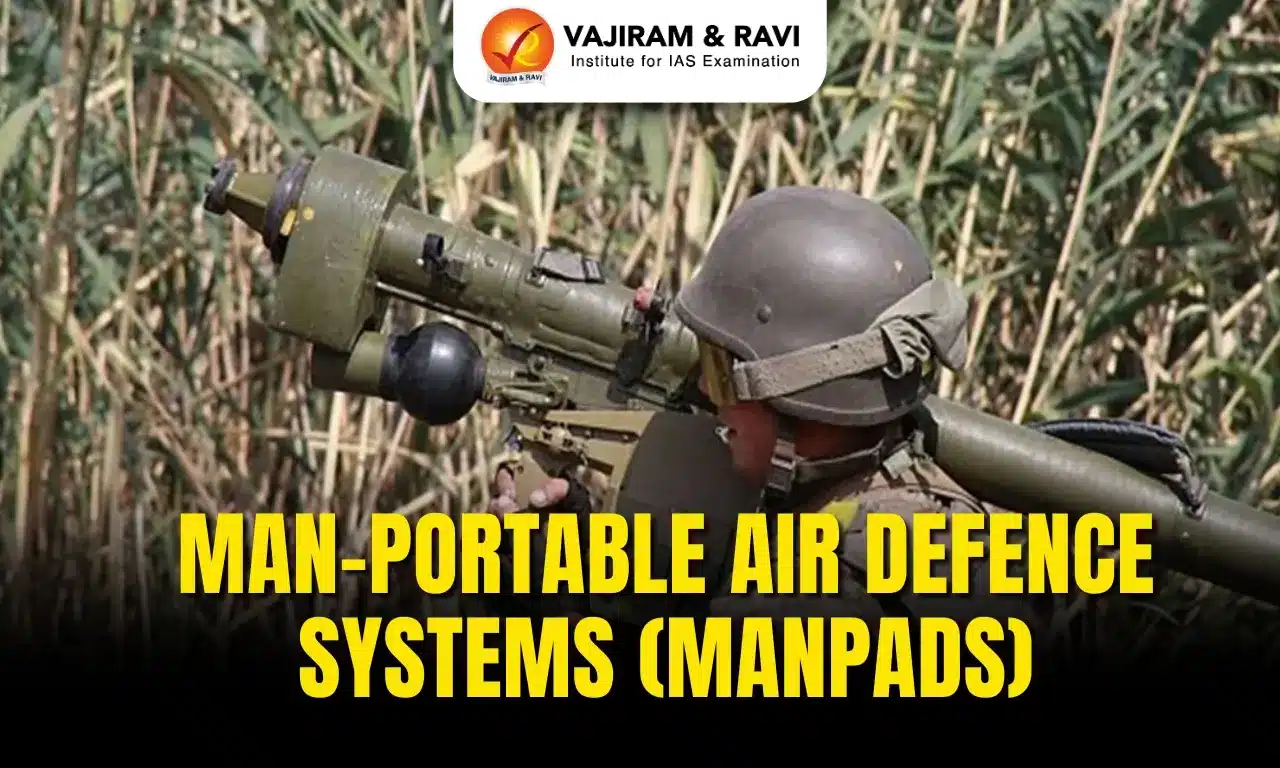
  • MANPADS are surface-to-air missiles that can be fired by an individual or a small team of people against aircraft.
  • These weapon systems often are described as shoulder-fired anti-aircraft missiles. 
  • MANPADS are generally less than 2 metres in length and weigh around 20 kg. 
  • The United States and the Soviet Union first deployed MANPADS—the Redeye and Strela systems, respectively—in the 1960s to provide their infantries with portable anti-aircraft weapons. 
  • The militaries of about 105 countries across the world operate MANPADS, although only 12 countries, including India, produce them. 
  • The most famous MANPADS are the US-made ‘Stinger’ and the Soviet 9K32 Strela-2, or simply ‘SA-7' with the China-made ‘FN-16’ being the latest entrant. 
  • Three general types of MANPADS exist: command line of sight, laser guided, and infrared seekers.
    • Command line-of-sight MANPADS are guided to their targets through the use of a remote control. 
    • Laser-guided or laser beam rider MANPADS follow a laser projected onto the target. 
    • The most common MANPADS, frequently called heat seeking missiles, however, are infrared seekers that acquire their target by detecting the heat of an aircraft’s engine.
  • Most MANPADS consist of: 
    • a missile packaged in a tube; 
    • a launching mechanism (commonly known as a “gripstock”); and 
    • a battery

Source: DEF

Man-Portable Air Defence Systems (MANPADS) FAQs

Q1: What are MANPADS?

Ans: Surface-to-air missile systems that can be fired by an individual or a small team against aircraft.

Q2: What is the typical length of a Man-Portable Air Defence Systems (MANPADS) missile?

Ans: Generally less than 2 metres.

Q3: Which two countries first deployed Man-Portable Air Defence Systems (MANPADS) in the 1960s?

Ans: The United States and the Soviet Union.

Q4: How many countries worldwide operate Man-Portable Air Defence Systems (MANPADS)?

Ans: The militaries of about 105 countries across the world operate MANPADS.

Q5: What are the three general types of Man-Portable Air Defence Systems (MANPADS) based on guidance?

Ans: Command line-of-sight, laser-guided, and infrared seeker MANPADS.

Shilp Didi Programme, Objectives, Features, Significance

Default Image

The Shilp Didi Programme is a government initiative to help women artisans in India earn money and grow their skills. It started in June 2024 with a 100-day pilot program. The Ministry of Textiles, through the Office of the Development Commissioner (Handicrafts), runs this programme.

The goal is to help women artisans, called Shilp Didis, improve their craft, learn business and digital skills, and sell their products to more people across India and abroad. This helps them become independent and support their families.

Shilp Didi Programme Objectives

The primary objectives of the Shilp Didi Programme are:

  1. Economic Empowerment - Enable women artisans to earn sustainable incomes through handicrafts.
  2. Skill Development - Enhance design, entrepreneurship, and business skills through structured training modules.
  3. Digital Inclusion - Equip artisans with digital skills, including e-commerce and social media, to expand their customer base.
  4. Market Access - Facilitate exposure to curated exhibitions, craft fairs, and e-commerce platforms to sell products nationwide and globally.
  5. Entrepreneurship Promotion - Encourage micro-entrepreneurship and self-employment in rural and non-farm sectors.

Shilp Didi Programme Features

The Shilp Didi Programme includes several unique features designed to empower women artisans:

  • E-Training Modules - Comprehensive courses covering entrepreneurship, regulatory compliance, social media marketing, and e-commerce onboarding.
  • Marketing Opportunities - Platforms like Dilli Haat, craft fairs, and curated events showcase artisans’ products to a wider audience.
  • E-Commerce Integration - Artisans gain access to digital marketplaces, increasing visibility and sales potential across India and abroad.
  • Inclusive Pilot Phase - Initially involving 100 women artisans from 72 districts across 23 states, covering 30 handicraft types such as textiles, pottery, metal crafts, and embroidery.
  • Capacity Building - Collaboration with National Handicrafts Development Programme (NHDP) clusters ensures skill enhancement and quality improvement.

Shilp Didi Programme Significance

The Shilp Didi Programme plays a significant role in empowering women and strengthening India’s handicraft sector:

  • Sustainable Livelihoods - Provides consistent income sources for rural and non-farm communities.
  • Women’s Entrepreneurship - Encourages micro-business creation, making women economically self-sufficient.
  • Digital Empowerment - Helps artisans use technology and social media to reach new markets.
  • Cultural Preservation - Supports the continuation of traditional Indian crafts while modernising business approaches.

Women's Empowerment in India

Women’s Empowerment in India focuses on financial independence, social equality, and increased participation in economic and social activities. Several government schemes have played a major role in supporting women across sectors.

Key Points and Facts:

  1. Financial Inclusion through PMJDY (Pradhan Mantri Jan Dhan Yojana):
    • Launched in 2014, PMJDY aims to provide bank accounts for every household.
    • Over 50% of accounts are held by women, empowering them to save and access credit.
    • Women gain access to savings accounts, overdraft facilities, and insurance, promoting financial independence.
  2. Entrepreneurship through Stand-Up India Scheme:
    • Launched in 2016, it promotes women and SC/ST entrepreneurship.
    • Provides loans between ₹10 lakh and ₹1 crore for starting new businesses in manufacturing, services, or trading.
    • Since inception, over 70% of Stand-Up India loans have been sanctioned to women entrepreneurs, helping them build small and medium enterprises.
  3. Affordable Housing through PM Awas Yojana (PMAY):
    • Launched in 2015, it aims to provide housing for all by 2025, especially for women-headed households.
    • Women are prioritized as primary beneficiaries, ensuring security and social empowerment.
    • Over 1.2 crore houses have been sanctioned for women beneficiaries under the scheme.
  4. Micro-Enterprise Support through PM SVANidhi (Street Vendors’ Scheme):
    • Launched in 2020 to provide working capital loans to street vendors, many of whom are women.
    • Offers collateral-free loans up to ₹10,000, encouraging women entrepreneurs to restart and expand their businesses post-COVID.
    • Benefited over 12 lakh women street vendors so far.
  5. Employment and Skill Development:
    • Women’s empowerment is also supported through schemes like Skill India and National Rural Livelihood Mission (NRLM).
    • Focuses on training women artisans, craftsmen, and workers to improve employability and income.
  6. Digital and Social Inclusion:
    • Women now increasingly access online banking, digital payments, and e-commerce platforms.
    • Initiatives like Shilp Didi Programme help women artisans leverage technology for marketing and sales.
  7. Impact of Empowerment:
    • According to World Bank data, women’s financial inclusion and entrepreneurship contribute significantly to poverty reduction and economic growth.
    • Empowered women improve household income, education, and health outcomes, creating long-term societal benefits.

Shilp Didi Programme FAQs

Q1: Who can join the Shilp Didi Programme?

Ans: Women artisans working in handicrafts across India can take part.

Q2: How do artisans sell their products?

Ans: They can sell at craft fairs, exhibitions, and online e-commerce platforms.

Q3: What training do they get?

Ans: Training includes business skills, social media, e-commerce, and rules for selling.

Q4: How many artisans joined the pilot phase?

Ans: 100 women artisans from 72 districts in 23 states joined the first phase.

Q5: What handicrafts are included?

Ans: The programme covers 30 types of handicrafts, including textiles, pottery, metal crafts, and embroidery.

Daily Editorial Analysis 15 December 2025

Daily Editorial Analysis

Courts Must Protect, Not Regulate Free Speech

Context

  • Freedom of speech is a foundational pillar of democracy, ensuring dissent, accountability, and the exchange of ideas.
  • Recent proceedings of the Supreme Court of India, particularly in Ranveer Allahbadia v. Union of India and allied cases, have raised concerns that judicial interventions themselves may endanger free expression.
  • On November 27, 2025, the Court questioned the adequacy of existing regulatory bodies for online content and suggested the creation of neutral, autonomous authorities along with draft regulatory guidelines.
  • These developments raise serious constitutional questions regarding separation of powers and judicial restraint.

Existing Legal Framework and Regulatory Saturation

  • India already has an extensive legal framework regulating speech, including online expression.
  • The Information Technology Act, 2000 penalises obscenity, privacy violations, cyber terrorism, and computer-related offences through Sections 66, 66E, 66F, and 67.
  • Similarly, Sections 294, 295, and 296 of the Bharatiya Nyaya Sanhita criminalise obscene and offensive conduct.
  • In addition, the Information Technology (Intermediary Guidelines and Digital Media Ethics Code) Rules, 2021 impose oversight mechanisms and obligations on digital publishers.
  • These Rules have been criticised for overreach and prior restraint, particularly provisions requiring publishers to exercise “due caution and discretion” when addressing religious or racial issues.
  • Given this already dense regulatory environment, further restrictions risk compounding censorship rather than addressing regulatory gaps.

Judicial Overreach and Expansion of Scope

  • A core concern arises from the nature of the case itself. The matter originally involved challenges to FIRs filed against individuals accused of publishing improper or obscene content.
  • Online content regulation was not the original subject matter. Nevertheless, in proceedings dated March 3, 2025, the Court expanded the scope to examine regulatory measures to prevent content offensive to well-known moral standards of our society.
  • This expansion raises constitutional red flags. Determining societal morality and designing regulatory frameworks fall squarely within the legislative domain.
  • The Supreme Court has previously cautioned against such overreach. In Common Cause v. Union of India (2008), the Court acknowledged that certain problems lie beyond judicial capacity.
  • Online media regulation involves technical expertise, evolving norms, and democratic deliberation, areas where courts face inherent institutional limitations.

Regulation versus Unlawful Restraint

  • The line between reasonable regulation and unconstitutional restraint is extremely thin.
  • In Sahara India Real Estate Corp. Ltd. v. SEBI (2012), a five-judge Bench strongly cautioned against pre-censorship, holding that it must be avoided at all costs.
  • Even postponement orders on court reporting were permitted only as a last resort and subject to strict standards of necessity and proportionality.
  • Judicial encouragement of stricter laws risks crossing this line, potentially legitimising prior censorship and statutory gag orders, especially in the fast-evolving digital sphere.

Constitutional Limits under Article 19(2)

  • The Constitution clearly defines the permissible limits on free speech. Article 19(2) exhaustively lists grounds such as sovereignty, security of the State, public order, and defamation.
  • In Kaushal Kishor v. State of Uttar Pradesh (2023), a five-judge Bench reaffirmed that no additional restrictions beyond those expressly mentioned in Article 19(2) are constitutionally permissible.
  • The Court categorically held that restrictions cannot be expanded under the guise of competing fundamental rights or vague moral considerations.
  • This constitutional clarity leaves no scope for judicially inspired expansion of speech restrictions.

Judicial Self-Restraint and Constitutional Propriety

  • The Supreme Court has previously demonstrated restraint in matters of expression.
  • In Adarsh Co-operative Housing Society Ltd. v. Union of India (2018), the Court rejected a plea to direct filmmakers to add disclaimers, holding that such decisions fall within the jurisdiction of the Censor Board, and only after hearing affected parties.
  • This approach aligns with the constitutional vision. During the Constituent Assembly Debates, it was emphasised that the Supreme Court’s role is to adjudicate the reasonableness of restrictions, not to initiate or design them.
  • Article 19 envisages the Court as a constitutional umpire, not a law-maker.

Comparative Perspectives and Democratic Backsliding

  • Comparative democratic practice underscores the risks of overregulation.
  • The European Union, Germany, the United Kingdom, and Australia focus primarily on content removal and penalties for non-compliance, rather than prior censorship.
  • In contrast, authoritarian regimes such as China and Russia rely heavily on surveillance and pre-censorship.
  • Scholarly research by David Landau and Rosalind Dixon demonstrates how courts can become instruments of democratic erosion when aligned with authoritarian impulses, intentionally or otherwise.

Conclusion

  • Judicial calls for stringent online content regulation, coupled with executive acquiescence, pose a serious threat to free expression.
  • While regulation of harmful content is necessary, constitutional propriety demands judicial restraint.
  • The Supreme Court must confine itself to evaluating the constitutionality of laws, not advocating their creation. As Salman Rushdie observed, Free speech is the whole thing, the whole ball game.
  • Safeguarding it requires vigilance not only against legislative and executive excesses, but also against judicial overreach.

Courts Must Protect, Not Regulate Free Speech FAQs

 Q1. Why do recent Supreme Court proceedings raise concerns about free speech?
Ans. They raise concerns because the Court has suggested creating new regulatory frameworks that may lead to judicial overreach and restrictions on free expression.

Q2. Why is further regulation of online speech considered problematic?
Ans. Further regulation is problematic because India already has extensive laws governing speech, and additional controls risk prior restraint and censorship.

Q3. What constitutional limitation governs restrictions on free speech?
Ans. Restrictions on free speech are limited to the exhaustive grounds listed in Article 19(2) of the Constitution.

Q4. What principle did the Supreme Court emphasise in the Sahara India case?
Ans. The Court emphasised that pre-censorship of the media must be avoided and used only as a last resort under strict conditions.

Q5. How do democratic countries generally regulate online content?
Ans. Democratic countries generally focus on post-publication content removal and penalties rather than prior censorship.

Source: The Hindu


India’s FTA Push - From Trade Liberalisation to Strategic Insurance

Context

  • India is accelerating the signing of Free Trade Agreements (FTAs) and Regional Trade Agreements (RTAs), including a likely FTA with New Zealand, alongside ongoing talks with Oman, Chile, Israel, Canada, the EU and the UK.
  • This surge comes amid global trade uncertainty, weakening of the WTO, and shifting geopolitical alignments, especially after the US retreat from multilateralism under Donald Trump.

Sudden Spurt in FTAs

  • At first glance, India’s enthusiasm appears puzzling because past FTAs have delivered limited economic gains.
  • However, a closer look reveals that the motivation is increasingly strategic and political, rather than purely economic.

FTAs Through the Lens of Trade Theory

  • FTAs rarely create new trade

    • Empirical evidence suggests FTAs usually formalise existing trade flows rather than generate new ones.
    • FTAs create winners (export-oriented firms) and losers (domestic firms facing import competition).
    • Agreements succeed only when political support and opposition balance out, which explains why some FTAs (e.g., ASEAN FTA) underperformed.
  • Limited economic outcomes - Evidence from India’s FTAs

    • Export share (in %) of FTA partners before and after agreements increased from 10.2 to 10.8 with ASEAN, and reduced from 1.9 to 1.4 with South Korea, and from 2.1 to 1.9 with Japan.
    • Key inference:
      • India’s export share with RTA partners has remained flat or declined.
      • FTAs failed to raise intra-RTA trade relative to global trade, undermining their economic rationale.

Structural Problems in India’s FTAs

  • Why India gained little

    • Focus on commodity trade, where partner tariffs were already low.
    • Trade diversion, including Chinese goods routed via RTA partners.
    • Strong domestic industry resistance.
    • Underutilisation of India’s comparative advantage in services, due to resistance by ASEAN countries, and minimal services liberalisation (Singapore as partial exception).
  • Services trade - The missing link

    • India has around 18 RTAs/PTAs (Preferential Trade Agreements), but only 8 include services agreements.
    • Only 2 (ASEAN, South Korea) have defined implementation timelines.
    • Meaningful progress in services trade is visible only with South Korea and Singapore.

FTAs Beyond Economics - Strategic and Geopolitical Drivers

  • FTAs as foreign policy instruments

    • In a fragmented global order, FTAs act as political safety nets.
    • They compensate for WTO paralysis, uncertainty caused by US–China strategic rivalry.
    • Agreements increasingly reinforce strategic alignments, not just market access.
  • India’s strategic logic

    • ASEAN and Australia FTAs aligned with broader Indo-Pacific and QUAD objectives.
    • UAE FTA reflects a clearer services-and-investment rationale.
    • Ongoing talks with the EU and UK may yield gains, but outcomes remain uncertain.
    • Renewed interest in an India–Russia FTA reflects recalibrated geopolitics.

Challenges and Way Forward

  • Limited export gains despite multiple FTAs: Shift focus from tariff cuts to services, digital trade, investment and mobility.
  • Weak integration of services and investment: Align FTAs with India’s comparative advantage (IT, professional services, skilled labour).
  • Domestic industry opposition: Ensure robust safeguards against trade diversion.
  • Risk of FTAs becoming political symbols: Improve domestic competitiveness to leverage FTAs for not only political but also economic gains.
  • Global uncertainty: Due to emerging “Big Two” (US–China) global order - strengthen coordination between Commerce Ministry and MEA - to steer trade diplomacy.

Conclusion

  • India’s evolving FTA strategy reflects a fundamental shift in the global order. RTAs are no longer primarily economic tools but strategic instruments to navigate geopolitical uncertainty.
  • For India, FTAs are less about expanding exports and more about securing strategic space in a volatile world order.

India’s FTA Push FAQs

Q1. Why are FTAs increasingly failing to deliver significant trade expansion for India?

Ans. Because FTAs largely formalise existing trade flows, focus on commodities with already low tariffs, and underutilise India’s comparative advantage in services.

Q2. Why are India's FTAs shifting in the changing global order?

Ans. India’s FTAs are shifting from economic instruments for trade expansion to strategic tools aimed at geopolitical alignment and political risk insurance.

Q3. How does India’s experience with the ASEAN FTA illustrate the political economy of trade agreements?

Ans. It shows that unequal gains, trade diversion, and resistance from domestic industry can neutralise political support, leading to limited economic outcomes.

Q4. Why has India’s strength in services trade not translated into gains through FTAs?

Ans. Due to resistance by partner countries to meaningful services liberalisation and the limited inclusion of enforceable services commitments in FTAs.

Q5. Why is the MEA in the driver’s seat rather than the Commerce Ministry in India’s contemporary trade diplomacy?

Ans. Due to the growing dominance of strategic and foreign policy considerations over pure economic logic in India’s approach to RTAs and FTAs.

Source: IE


The Right Moment to Boost India-Ethiopia Ties

Context

  • Ethiopia, with a population of about 109 million and one of Africa’s fastest-growing economies, is gaining strategic and economic importance for major partners, including India.
  • Its strong manufacturing base, large domestic market, and strategic location in the Horn of Africa make it a pivotal regional state.
  • Despite internal challenges, Ethiopia is seen as a stabilising force with an effective military, hosts the African Union, and holds major potential as a renewable-energy exporter, particularly in
  • Though landlocked and traditionally dependent on Djibouti for sea access, Ethiopia is seeking diversified routes via Somaliland and Eritrea to enhance trade autonomy.
  • As it emerges from civil conflict and works toward national reconciliation, the country presents a timely opportunity to deepen India–Ethiopia cooperation across multiple sectors.
  • With Ethiopia entering a new development phase and joining BRICS, conditions are favourable for elevating the bilateral partnership.

India–Ethiopia Educational Partnership: A Strong and Enduring Bond

  • India and Ethiopia share deep educational ties spanning over a century, with Indian teachers and professors playing a foundational role in Ethiopia’s education system.
  • Ethiopia has been a key partner in India-led initiatives such as the Pan-African e-Network and continues close collaboration with institutions like IIT Delhi in tele-education.
  • It sends large numbers of students to India, including the highest number of African PhD scholars, and has effectively used Indian-trained graduates to build its academic institutions.
  • Strengthening cooperation through digital education, vocational training, university partnerships, and expanded scholarships remains a highly promising pillar of India–Ethiopia relations.

Indian Investment as a Pillar of Bilateral Ties

  • Indian investment in Ethiopia dates back to the 1950s but expanded significantly after India extended major lines of credit from 2006 onward, catalysing private investments exceeding $4 billion.
  • Ethiopian leaders recognise the developmental role of Indian firms, especially as IMF conditionalities push the country to mobilise fresh capital.
  • While earlier investments were concentrated in agriculture and faced taxation and operational hurdles, the partnership remains strong.
  • Mining: A New Strategic Opportunity
    • The most promising avenue for future investment lies in mining, particularly gold, critical minerals, and rare earth elements, where Ethiopia has vast but underexplored reserves.
    • Recent surveys by the Indian Embassy highlight significant potential alongside regulatory and infrastructure constraints.
    • Joint commissioning and operation of mines could secure critical inputs for India’s renewable energy, battery, and semiconductor industries, making mining cooperation a core strategic priority.
  • Defence Cooperation: A Historic and Growing Partnership
    • Defence ties between India and Ethiopia are long-standing.
    • India helped establish the Harar Military Academy in 1956 and has supported Ethiopian military training since 2009.
    • Following years of internal and regional deployments, Ethiopia now seeks modern training and equipment to replace outdated Soviet-era systems.
    • India’s cost-effective, battle-tested defence platforms position it as a strong partner.
  • Institutional Framework for Future Defence Ties
    • A newly signed MoU on defence cooperation and the first meeting of the Joint Defence Cooperation Committee have created a formal structure for expanding training, capacity building, and defence exports.
    • Given Ethiopia’s strong repayment record under India’s Indian Development and Economic Assistance Scheme (IDEAS) programme, it could also be considered for new defence-related lines of credit within IMF norms.

Reforms to Unlock Private-Sector Engagement

  • India can support deeper economic ties by updating key agreements such as the Double Taxation Avoidance Agreement (DTAA) and the Bilateral Investment Treaty.
  • Ethiopia, in turn, needs to address persistent investor concerns over foreign exchange availability, taxation, regulatory approvals, and policy consistency—issues frequently highlighted by the Indian diaspora and the India Business Forum.
  • Cooperation through BRICS, the G-20, and South–South frameworks enhances political and economic alignment.
  • Under the African Continental Free Trade Area (AfCFTA), Ethiopian-based Indian firms can access broader regional markets, positioning Ethiopia as a strategic hub for Indian enterprises in Africa.

Trade Preferences and Export Opportunities

  • Amid global trade uncertainty and tightening regulations in Western markets, India’s duty-free tariff preference scheme remains crucial for Ethiopian exports.
  • By welcoming more Indian investors—especially in export-oriented manufacturing with buy-back arrangements—Ethiopia can maximise these trade benefits.

Outlook: A Dynamic India–Africa Partnership

  • With renewed political momentum, targeted reforms, and strategic alignment, India–Ethiopia relations are poised to become one of the most dynamic partnerships between India and Africa.
  • The recent meeting between Prime Minister Narendra Modi and Prime Minister Abiy Ahmed Ali at the G-20 summit in Johannesburg has provided fresh impetus to this evolving relationship.

The Right Moment to Boost India-Ethiopia Ties FAQs

Q1. Why is Ethiopia strategically important for India today?

Ans. Ethiopia’s large market, manufacturing base, African Union headquarters, regional security role, and renewable energy potential make it a pivotal partner for India in the Horn of Africa.

Q2. How has education shaped India–Ethiopia relations?

Ans. Indian educators, scholarships, and initiatives like the Pan-African e-Network have built strong human-capital ties, with Ethiopia sending the highest number of African PhD students to India.

Q3. Which sectors offer the greatest scope for Indian investment in Ethiopia?

Ans. Mining of critical minerals, pharmaceuticals, agro-processing, light manufacturing, and renewable energy offer strong opportunities aligned with India’s industrial and strategic needs.

Q4. Why is defence cooperation becoming more significant?

Ans. Ethiopia seeks modern training and equipment after prolonged deployments, while India offers cost-effective, battle-tested platforms supported by a new defence cooperation framework.

Q5. How can multilateral platforms strengthen bilateral ties?

Ans. BRICS, G-20, and AfCFTA enhance market access, political alignment, and regional integration, positioning Ethiopia as a hub for Indian firms expanding across Africa.

Source: TH


The Invisible Epidemic: Why Air Pollution is Now India’s Largest Health Threat


Context

  • Air pollution in India has shifted from a seasonal problem to a chronic, nationwide public health emergency.
  • No longer confined to winter smog in the northern plains, toxic air now affects all regions, age groups, and organ systems.
  • Persistent exposure is reshaping disease patterns, impairing childhood development, and silently shortening life expectancy.
  • The crisis reflects deep-rooted structural failures and has become one of the most significant determinants of population health in India.


Scale and Persistence of the Crisis

  • India’s air quality problem is both widespread and severe. Of the 256 cities monitored in 2025, nearly 60% exceeded national PM2.5 standards.
  • For most urban residents, breathing unhealthy air is routine rather than exceptional.
  • The Indo-Gangetic Plain remains the epicentre, with Delhi recording seasonal PM2.5 levels of 107–130 µg/m³, far exceeding both India’s limit (60 µg/m³) and the WHO guideline (15 µg/m³).
  • A major limitation in public understanding stems from India’s outdated Air Quality Index (AQI).
  • The official AQI caps values at 500, masking extreme pollution episodes that often exceed this threshold.
  • While international platforms routinely record values above 600 or even 1,000, Indian reporting collapses these into a single severe category.
  • Outdated thresholds, limited monitoring, and the absence of an upper scale obscure risk perception and weaken policy urgency.


Existing Policies to Tackle Air Pollution and Their Limitations

  • The Graded Response Action Plan (GRAP) is an emergency framework implemented in the National Capital Region to tackle severe air pollution through stage-wise restrictions based on AQI levels.
  • Measures include curbs on construction activity, bans on diesel generators, vehicle restrictions, closure of schools, and suspension of polluting industrial operations as air quality worsens.
  • However, GRAP is largely reactive and episodic, activated only after pollution reaches severe levels rather than preventing its build-up.
  • Its effectiveness is further limited by weak enforcement, inconsistent inter-State coordination, economic disruptions, and its narrow geographic focus on NCR, while failing to address year-round structural sources of pollution or provide a long-term public health solution.


The Human Cost of Air Pollution: Years of Life Lost and Rising Mortality

  • The human cost of polluted air is profound. Nearly 46% of Indians live in regions where air pollution significantly reduces life expectancy.
  • In Delhi, current exposure corresponds to a loss of more than eight years of life, while losses across northern India range from 5 to seven years.
  • Mortality figures are equally alarming. Air pollution contributed to nearly two million deaths in 2023, primarily from cardiovascular disease, stroke, COPD, and diabetes.
  • Notably, pollution-linked deaths have risen by 43% since 2000, highlighting the cumulative impact of long-term exposure. Air pollution now ranks among the deadliest, yet least visible, public health threats in the country.


Biological Pathways of Harm

  • Cardiovascular damage

    • Elevated exposure is linked to hypertension, atherosclerosis, heart attacks, arrhythmias, and ischemic stroke, acting as a powerful accelerant in a population already burdened by heart disease.
  • Respiratory Illness

    • Nearly 6% of Indian children have asthma, and even small increases in PM2.5 cause sharp rises in paediatric emergency visits.
    • Chronic exposure during childhood results in a 10–15% reduction in lung capacity, often persisting into adulthood.
    • Among adults, COPD, chronic bronchitis, and recurrent infections are increasingly common near roads, industries, and waste-burning sites.
  • Neurological Harm

    • 5 can cross the blood–brain barrier, triggering neuroinflammation and oxidative stress.
    • Exposure is linked to poorer academic performance, impaired memory, slower cognitive development, and a 35–49% higher risk of dementia per 10 µg/m³ increase.
    • Polluted air is increasingly recognised as a driver of accelerated brain ageing.
  • Maternal and Neonatal Health

    • High exposure increases the risk of preterm birth, low birth weight, stillbirth, and neonatal mortality, with long-term consequences that deepen health inequities across generations.


Inequality and Misplaced Narratives

  • Air pollution closely mirrors social and economic inequality.
  • Low-income communities are disproportionately exposed due to proximity to highways, industrial clusters, construction zones, and landfills.
  • Poor housing, reliance on biomass fuels, and limited healthcare access further heighten vulnerability. Children in these neighbourhoods face especially high exposure due to greater time spent outdoors.
  • Public discourse often focuses on episodic contributors such as stubble burning or festival fireworks. While these intensify pollution, they are not the primary cause.
  • Year-round structural sources, vehicular emissions, industrial activity, construction dust, informal waste burning, and household fuel use, drive baseline PM2.5 levels.
  • Seasonal events merely exacerbate an already hazardous environment, diverting attention from systemic reform.


The Path Forward

  • Towards a Health-Centred Policy Framework

    • Transport transformation: Large-scale electrification of buses, taxis, auto-rickshaws, and two-wheelers; shifting freight from diesel trucks to rail and electric fleets; real-world emissions monitoring; and low-emission zones and congestion pricing.
    • Industrial control: Strict enforcement of pollution-control technologies and a phased transition away from coal-based processes.
    • Construction regulation: Mandatory dust-suppression protocols, enclosure norms, and mechanised sweeping.
    • Waste management reform: Segregation at source, decentralised treatment, biomethanation, and scientific landfill remediation to eliminate open burning.
    • Health-system integration: District-level AQI-based advisories, lung-function testing in school health programmes, and screening for COPD and cognitive decline.
  • Treat Clean Air as a Fundamental Right

    • Clean air must be recognised as a fundamental right essential to equitable growth and sustainable development.
    • Protecting this right requires policies anchored in science, driven by public health priorities, and executed with urgency.
    • Without decisive action, India risks consigning future generations to shorter lives, poorer health, and diminished potential, a cost no society can afford.


Conclusion

  • India’s air pollution crisis is a systemic public health emergency that shortens lives, deepens inequality, and undermines national development.
  • Scientific evidence clearly links toxic air to widespread cardiovascular, respiratory, neurological, and intergenerational harm, making incremental or seasonal responses inadequate.
  • Recognising clean air as a fundamental right and acting with urgency through health-centred, science-driven policy is essential to safeguard present and future generations.


The Invisible Epidemic: Why Air Pollution is Now India’s Largest Health Threat FAQs

Q1. Why is air pollution in India considered a public health emergency?
Ans. Because it causes widespread disease, reduces life expectancy, and affects all age groups year-round.

Q2. What pollutant is most harmful in India’s air pollution crisis?
Ans. PM2.5, as it penetrates the lungs and bloodstream, damaging multiple organs.

Q3. Why is India’s AQI considered inadequate?
Ans. It has an outdated upper cap of 500, which masks extreme pollution levels.

Q4. Who is most vulnerable to air pollution in India?
Ans. Children, pregnant women, and low-income communities living near emission hotspots.

Q5. What is a key limitation of GRAP?
Ans. It is reactive, addressing pollution only after it becomes severe.

Source: The Hindu

Daily Editorial Analysis 15 December 2025 FAQs

Q1: What is editorial analysis?

Ans: Editorial analysis is the critical examination and interpretation of newspaper editorials to extract key insights, arguments, and perspectives relevant to UPSC preparation.

Q2: What is an editorial analyst?

Ans: An editorial analyst is someone who studies and breaks down editorials to highlight their relevance, structure, and usefulness for competitive exams like the UPSC.

Q3: What is an editorial for UPSC?

Ans: For UPSC, an editorial refers to opinion-based articles in reputed newspapers that provide analysis on current affairs, governance, policy, and socio-economic issues.

Q4: What are the sources of UPSC Editorial Analysis?

Ans: Key sources include editorials from The Hindu and Indian Express.

Q5: Can Editorial Analysis help in Mains Answer Writing?

Ans: Yes, editorial analysis enhances content quality, analytical depth, and structure in Mains answer writing.

Bluebird 6 Satellite

Bluebird Satellite

Bluebird 6 Satellite Latest News

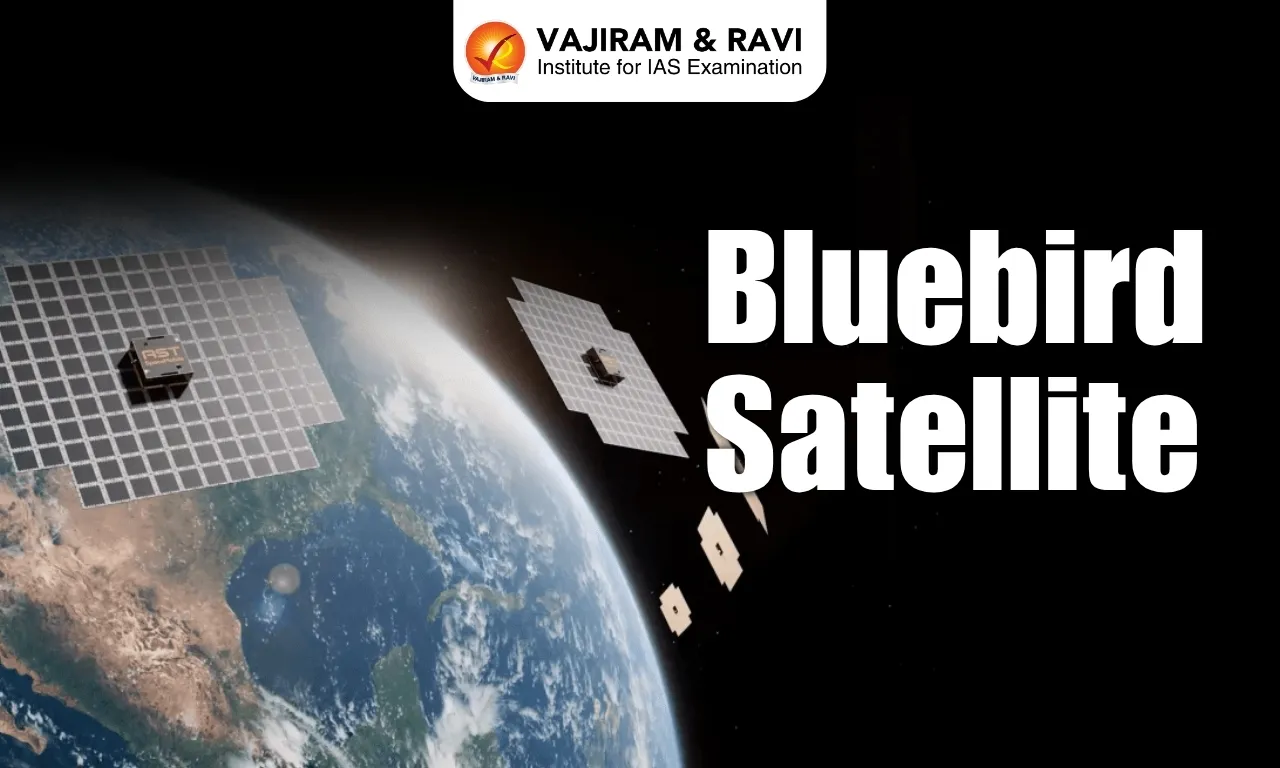
The Indian Space Research Organisation (ISRO) is scheduled to launch the US-based commercial BlueBird-6 satellite developed by US-based AST Spacemobile on 21st December 2025 using ISRO’s LVM-3 rocket.

About Bluebird 6 Satellite

  • Purpose: Designed to provide direct-to-device internet connectivity, enabling mobile phones to access broadband without relying on traditional cell towers.
  • Origin: Developed by the US-based commercial company AST SpaceMobile for global mobile coverage.
  • Weight and Size: Weighs around 6.5 tonnes, making it one of the heaviest satellites launched by ISRO.
  • Orbit Type: Will operate in low-Earth orbit (LEO) to cover large regions of the Earth efficiently.
  • Technology: Features one of the largest phased array antennas ever flown, which covers nearly 2,400 square feet, allowing it to communicate directly with standard mobile phones.
  • Significance: It enhances global mobile broadband connectivity, especially in remote and rural areas.
  • Collaboration: Represents a significant step in Indo-US space cooperation and commercial space ventures.
  • Future Impact: Expected to help bridge the digital divide, providing internet access to regions without cellular infrastructure.

About LVM-3

  • LVM-3, also known as GSLV Mk III or “Bahubali”, is a heavy-lift launch vehicle developed by ISRO.
  • It is designed to carry large satellites into space and support human spaceflight missions.
  • The rocket is approximately 43.43 meters tall and has a lift-off mass of around 640 tonnes, making it India’s heaviest launch vehicle.
  • It can carry up to 4 tonnes to Geostationary Transfer Orbit (GTO) and 10 tonnes to Low Earth Orbit (LEO).
  • It is a three-stage rocket: two solid rocket boosters (S200), a liquid core stage (L110), and a cryogenic upper stage (C25).
  • It has been used for heavier communication satellites, interplanetary missions, and India’s Gaganyaan human spaceflight project.
  • Its first successful experimental flight was in December 2014, and it is known for its reliability and heavy payload capability.

Source: ToI

Bluebird Satellite FAQs

Q1: Who developed the Bluebird satellite?

Ans: It was developed by the U.S.-based AST SpaceMobile.

Q2: What is the primary purpose of the Bluebird satellite?

Ans: Direct smartphone communication from space.

Q3: What is the approximate weight of the Bluebird satellite?

Ans: 6,000 kg

Q4: In which type of Earth orbit will the Bluebird satellite operate?

Ans: Low Earth Orbit (LEO)

Hanukkah

Hanukkah

Hanukkah Festival Latest News

The Jews around the world will celebrate Hanukkah Festival, which will begin on 14 December, 2025 and last until 22 December, 2025. Recently, an attack targeting the Jewish Community took place in Sydney, Austraila, while they were celebrating the Hanukkah Festival.

Hanukkah (Chanukah)

  • Hanukkah, also known as Chanukah, is an eight-day Jewish festival celebrated in winter.
  • It is known as the Festival of Lights and is marked by lighting the menorah, reciting special prayers, and eating fried foods.
  • The word Chanukah means dedication, because it celebrates the rededication of the Holy Temple in Jerusalem.
  • According to the Jewish calendar, Hanukkah begins on the 25th of Kislev and continues until the 2nd day of the month of Tevet, a date known as Zos Chanukah.

Hanukkah Festival Historical Background

  • In the 2nd century BCE, the Holy Land was ruled by the Syrian-Greek (Seleucid) Empire, which tried to force Jews to follow Greek culture and religion.
  • A small group of Jews, which was led by A Jewish priest, Mattathias, fought back, defeated the Syrian-Greek army, and reclaimed the Holy Temple.
  • They rededicated the Temple to the worship of God, which is why this festival is celebrated.

Source: Chabad.org

Hanukkah FAQs

Q1: What is the symbol for Hanukkah?

Ans: The most famous symbol of Hanukkah is hanukkiah, the nine-branched candlestick which is lit each night. As the story goes, one day's worth of oil miraculously lasted for eight days. That's why the Hanukkah menorah has nine candles: one for each of the eight days, and one to light the rest.

Key Facts About Jordan

Key Facts about Jordan

Jordan Latest News

Recently, the Prime Minister of India has embarked on a three-nation visit to Jordan, Ethiopia and Oman.

About Jordan

  • Location: It is a landlocked country located in the rocky desert of the northern Arabian Peninsula.
  • Bordering Countries: It is bordered by 5 Nations: Syria in the north, Iraq in the east, Saudi Arabia in the south and southeast and Israel and Palestine in the west.
  • Water bodies: Dead Sea, the Gulf of Aqaba and the Sea of Galilee.
    • The Dead Sea is located along the western borders of the country.
  • Ports: Al-Aqabah, the only port of Jordan is located in the south-western part of the country along the coasts of the Gulf of Aqaba.
  • Capital City: Amman

Geographical Features of Jordan

  • Terrain: It has arid desert plateau; a great north-south geological rift along the west of the country is the dominant topographical feature.
  • Highest Point: Jabal Umm ad Dami is the highest point of Jordan.
  • Rivers: The Jordan River which drains into the Dead Sea.
  • Natural Resources: It mainly consists of phosphates, potash and shale oil.

Source: DD News

Jordan FAQs

Q1: Which river forms part of Jordan's western border?

Ans: Jordan River

Q2: Which ancient city is a UNESCO World Heritage Site in Jordan?

Ans: Petra

Gulf of Oman

Gulf of Oman

Gulf of Oman Latest News

Iran recently seized an oil tanker in the Gulf of Oman, Iranian media said recently, adding that 18 crew members from India, Sri Lanka, and Bangladesh were on board.

About Gulf of Oman

  • The Gulf of Oman, also known as the Gulf of Makran, is the northwest arm of the Arabian Sea.
  • It forms the only entrance to the Persian Gulf from the Indian Ocean.
  • It covers an area spanning 115,000 sq.km. 
  • It connects the Arabian Sea with the Strait of Hormuz, which then empties into the Persian Gulf.
  • Bordering Countries: It is bordered by Pakistan and Iran in the north, by the United Arab Emirates in the west, and by Oman in the south.
  • The gulf is about 320 km wide at its widest point between Cape al-Hadd in Oman and Gwadar Bay on the Iran-Pakistan border. It narrows to 35 miles (56 km) at the Strait of Hormuz.
  • It is approximately 560 km long.
  • The gulf is relatively shallow because of its origin as a fissure in the mountain spine now divided between Iran and Oman. 
  • Some of the significant islands that are located in the Gulf of Oman include Sheytan Island, Al Fahal Island, Dimaniyat Islands, and the Sawadi Islands.
  • The major international shipping ports that are situated in the Gulf of Oman include Port Sultan Qaboos Muttrah in Muscat, Oman; Chabahar Port in Iran; the Port of Fujairah and Khor Fakkan Container Terminal in the United Arab Emirates.
  • Roughly one-third of the world’s oil is exported via the Strait of Hormuz and the Gulf of Oman.

Source: TH

Gulf of Oman FAQs

Q1: What is the Gulf of Oman also known as?

Ans: Gulf of Makran

Q2: The Gulf of Oman is the northwest arm of which sea?

Ans: Arabian Sea

Q3: Which water body connects the Gulf of Oman to the Persian Gulf?

Ans: Strait of Hormuz

Q4: Which countries border the Gulf of Oman?

Ans: Pakistan and Iran (north), United Arab Emirates (west), and Oman (south).

Dieback Disease

Dieback Disease

Dieback Disease Latest News

The withering of thousands of neem trees over some years had prompted the Mulugu-based Forest College & Research Institute (FCRI), to launch a comprehensive scientific probe into the devastating "dieback disease."

About Dieback Disease

  • It is a fungal disease which kills a wide variety of plants.
  • It is responsible for causing wilting and browning of leaves from the tip of the branch, stem canker, and fruit rot.
  • It was first reported in the country during the 1990s near Dehradun in Uttarakhand.
  • The dieback fungus belongs to the genus Phytophthora
  • Mode of spread: 
    • The fungus is spread through the movement of soil and mud, especially by vehicles and footwear. 
    • It also moves in free water and via root-to root contact between plants.
  • The fungus lives in susceptible plant tissue and soil, and migrates and reproduces in warm, moist conditions. 
  • Infected roots cannot provide the water and nutrients needed to maintain life, and the plants die from dehydration.
  • It causes almost 100% loss of fruit production in severely infected trees.
  • Where the disease occurs, the native vegetation can become devastated, and the delicate fabric of ecosystems seriously impaired; certain species can disappear from the area.
  • The appearance of symptoms starts with the onset of the rainy season and becomes progressively severe in the later part of the rainy season and early winter.
  • Dieback is not easy to detect, as infected plants often appear to be dying from drought.
  • There is no known cure for the disease.

Source: DC

Dieback Disease FAQs

Q1: Dieback disease is caused by which type of pathogen?

Ans: Fungus

Q2: What is the common symptom of dieback disease?

Ans: Browning of leaves from the tip of the branch.

Q3: Why is dieback disease often difficult to detect in its early stages?

Ans: Infected plants appear similar to drought stress

Q4: Where was dieback disease first reported in India?

Ans: Near Dehradun in Uttarakhand.

Ramappa Temple

Ramappa Temple

Ramappa Temple Latest News

Recently, ambassador and Permanent Representative of India to UNESCO-Paris visited the Ramappa Temple and reviewed the preservation and conservation efforts undertaken by the Archaeological Survey of India (ASI) and the State government.

About  Ramappa Temple

  • It is located in the state of Telangana.
  • It was constructed in 1213 AD during the reign of the Kakatiya Empire by RecharlaRudra, a general of Kakatiya king Ganapati Deva.
  • The presiding deity here is RamalingeswaraSwamy.
  • It is also known as the Rudreswara Temple.
  • The temple got its name Ramappa because of its chief sculptor Ramappa.
  • Ramappa Temple is probably the only temple in India that is named after the architect.

Architectural Features of Ramappa Temple

  • The temple stands on a 6 feet high star-shaped platform with walls, pillars and ceilings adorned with intricate carvings.
  • Earthquake-proof: Made out of clay mixed with acacia wood, chaff and myrobalan fruit (a family of amla), the bricks used in building the gopuram of the temple are light enough to float on water.
    • Using this technique has made the temple light, meaning, in case of a natural event like an earthquake, the probability of it collapsing would be very low.
  • Sandbox technique: The temple construction was done using the sandbox technique. This is a technique where the foundation pit is filled with a mixture of sand-lime, jaggery and black myrobalan fruit.
  • This mix acts as a cushion in case of earthquakes. 
  • In 2021, the temple was inscribed as a UNESCO World Heritage Site as “Kakatiya Rudreshwara (Ramappa) Temple, Telangana”.

 Source: TH

Ramappa Temple FAQs

Q1: When was the Ramappa Temple built?

Ans: 13th century

Q2: What is the architectural style of Ramappa Temple?

Ans: Kakatiya

MahaCrimeOS AI: How Maharashtra Police Is Using AI to Fight Cybercrime

MahaCrimeOS AI

MahaCrimeOS AI Latest News

  • Microsoft CEO Satya Nadella announced the statewide rollout of MahaCrimeOS AI, an advanced AI-driven investigation platform for the Maharashtra Police. 
  • Developed in partnership with the Maharashtra Government and its AI policing initiative MARVEL, the platform will equip all 1,100 police stations with next-generation cybercrime tools. 
  • The initiative marks a shift beyond traditional policing, reflecting how law enforcement and the judiciary are embracing AI as a transformative force to enhance investigation, vigilance, and justice delivery.

MahaCrimeOS AI: Transforming Crime Investigation in Maharashtra

  • MahaCrimeOS AI is an AI-powered crime investigation platform developed using Microsoft Foundry. 
  • First deployed in Nagpur Rural in April 2025, it helps police process complaints faster, analyse complex data, and streamline investigative procedures—especially in cybercrime cases. 
  • Recognising its effectiveness, the Maharashtra government and Microsoft announced recently that the platform will be rolled out across all 1,100 police stations in the state.

MARVEL: Maharashtra’s AI Vision for Policing

  • MARVEL (Maharashtra Research and Vigilance for Enhanced Law Enforcement) is a government-owned AI initiative created to integrate advanced technologies into policing. 
  • Established in 2024 as a special-purpose vehicle (SPV), MARVEL aims to modernise investigations, strengthen police intelligence, and improve crime prediction. 
  • Maharashtra is the first Indian state to set up an independent AI body dedicated to law enforcement.

From CrimeOS to MahaCrimeOS AI

  • Working with Microsoft, MARVEL adapted CrimeOS AI—developed by CyberEye, a Microsoft AI partner—into MahaCrimeOS AI, fine-tuned to comply with Maharashtra’s investigation protocols. 
  • The system was also configured in Marathi to ensure easy adoption across the police force. 
  • An MoU between the Maharashtra government and Microsoft includes setting up three AI Centres of Excellence.

Advanced Capabilities of MahaCrimeOS AI

  • MahaCrimeOS AI can ingest complaints in multiple formats, including PDFs, audio files, handwritten notes, and images. 
  • Using multimodal intelligence, it extracts key information in any language, automates analysis, adapts investigation pathways, and rapidly profiles persons of interest, significantly enhancing investigative efficiency.

Transforming Governance Through AI

  • MARVEL’s goal is to collaborate with global technology leaders to build AI copilots that fundamentally transform governance. 
  • The initiative positions Maharashtra as a national leader in AI-driven, future-ready policing.

Benefits of MahaCrimeOS AI

  • MahaCrimeOS AI automates routine administrative tasks, allowing investigating officers to focus more on solving crimes and assisting victims. 
  • Officers access a dashboard showing active cases, updates, and pending actions, improving case management and efficiency.
  • In one case involving a ₹38 lakh bank fraud, the system helped analyse telecom data and open-source intelligence to trace and arrest accused across multiple states.

AI-Generated Investigation Plans

  • A key feature of MahaCrimeOS AI is its ability to read FIRs in Marathi and automatically generate detailed investigation plans. 
  • These are based on Maharashtra Police protocols and guidelines issued by the High Court and Supreme Court for different crime categories.

Investigation Copilot for Faster Decision-Making

  • Developed with CyberEye and Microsoft, the AI-powered investigation copilot analyses case details, creates automated workflows, and suggests investigation pathways. 
  • This reduces delays that earlier arose when officers waited for senior approvals in complex cases.

Advanced Data Analysis and Court Readiness

  • The platform analyses telecom data to identify interlinkages, gathers open-source intelligence by tracing phone numbers across digital platforms, and prepares time-stamped, date-wise case diaries for court submissions, embedding judicial best practices into investigations.

Improved Experience for Complainants

  • By speeding up investigations and reducing bottlenecks, MahaCrimeOS AI delivers quicker, more consistent outcomes for complainants. 
  • Faster response times and smoother case handling enhance public trust and improve overall access to justice.

Key Features of MahaCrimeOS AI

  • MahaCrimeOS AI has been designed primarily in Marathi, ensuring that even constables can use it with ease. 
  • Tasks such as drafting letters to banks and telecom companies, which earlier took 30–45 minutes, are now completed in seconds. 
  • The system can also directly email these documents, significantly cutting investigation time and administrative delays.
  • The platform democratises advanced investigative capabilities. 
    • Previously limited to specialised cybercrime officers, open-source intelligence and data analysis can now be performed by all 3,000 officers in Nagpur Rural, eliminating dependence on a small expert pool.

Handling Complex Crime Categories

  • The system currently supports investigations in four complex crime areas: narcotics, cybercrime, crimes against women, and financial fraud
  • Additional AI models are being developed to extend its application to other types of crimes.

Tailored, Protocol-Based Investigations

  • A key strength of MahaCrimeOS AI is its ability to incorporate best-practice protocols, apply crime-specific knowledge, and generate customised investigation plans, enabling more precise and efficient law enforcement outcomes.

Supporting Faster Investigations Under New Criminal Laws

  • With the Bharatiya Nyaya Sanhita mandating charge sheets within 60–90 days, police officers handling multiple cases face tight deadlines. 
  • MahaCrimeOS AI enables faster, structured investigations, helping officers meet legal timelines and adapt effectively to the new criminal law framework.

Source: IE | TH

MahaCrimeOS AI FAQs

Q1: What is MahaCrimeOS AI and why is it significant?

Ans: MahaCrimeOS AI is an AI-powered investigation platform that helps Maharashtra Police analyse data, automate workflows, and investigate complex crimes, especially cybercrime, more efficiently.

Q2: Who developed MahaCrimeOS AI?

Ans: It was jointly developed by the Maharashtra Government, Microsoft, and MARVEL, with CyberEye as a Microsoft AI partner, using Microsoft Foundry and Azure OpenAI services.

Q3: How does MahaCrimeOS AI assist investigators?

Ans: It automates routine tasks, generates investigation plans from FIRs, analyses telecom and open-source data, and prepares court-ready case diaries aligned with judicial guidelines.

Q4: Which crime categories does MahaCrimeOS AI currently support?

Ans: The platform currently supports cybercrime, financial fraud, narcotics cases, and crimes against women, with plans to expand to other crime categories.

Q5: How does MahaCrimeOS AI align with new criminal laws?

Ans: By enabling faster, structured investigations, it helps police meet Bharatiya Nyaya Sanhita deadlines of filing charge sheets within 60–90 days.

New Insurance Bill 2025 Explained: 100% FDI, IRDAI Powers and Key Omissions

New Insurance Bill 2025

New Insurance Bill 2025 Latest News

  • The Union Cabinet has approved the Sabka Bima Sabki Raksha (Amendment of Insurance Laws) Bill, 2025, paving the way for its introduction in Parliament during the Winter Session.
  • The Bill proposes major reforms to India’s insurance framework by amending the Insurance Act, 1938, LIC Act, 1956, and IRDAI Act, 1999, aiming at modernisation, expanded insurance coverage, and stronger regulatory oversight. 
  • Key positives include the long-awaited provision for 100% FDI in insurance
  • However, several industry demands—such as the introduction of a composite licence—have been excluded or diluted, leading to mixed reactions from stakeholders. 
  • Overall, the Bill seeks to balance industry growth, consumer protection, and broader financial sector reforms, and is expected to generate significant parliamentary debate.

Key Provisions of the New Insurance Bill

  • The Union Cabinet has approved a major change in India’s insurance rules by allowing full foreign ownership in insurance companies. 
  • The decision aims to bring more capital, improve competition, and strengthen customer services across the sector.
  • The Bill advances liberalisation, regulatory capacity, and ease of doing business in insurance, while strengthening policyholder protection.

100% Foreign Direct Investment (FDI) in Insurance

  • Raises FDI cap from 74% to 100% in Indian insurance companies.
  • Aims to attract long-term foreign capital, enhance insurance penetration, promote technology transfer, and support the goal of ‘Insurance for All by 2047’.
  • Expected impacts: greater competition, product innovation, customer-centric services, and adoption of global best practices in underwriting, risk management, and digital claims.

Easing Entry for Foreign Reinsurers

  • Reduces Net Owned Funds (NOF) requirement for foreign reinsurers from ₹5,000 crore to ₹1,000 crore.
  • Addresses a long-standing demand to widen participation beyond the public sector GIC Re.
  • Expected to boost reinsurance capacity, competition, and risk diversification in India.

Enhanced Powers for IRDAI 

  • Grants IRDAI disgorgement powers to recover wrongful gains—bringing it closer to SEBI’s enforcement toolkit.
  • Introduces a one-time registration for insurance intermediaries to simplify compliance.
  • Raises the threshold for IRDAI approval of equity transfers from 1% to 5%, easing business operations.
  • Mandates a formal SOP for regulation-making and clear penalty criteria to improve transparency, predictability, and consistency.

Greater Operational Autonomy for LIC

  • Allows LIC to set up new zonal offices without prior government approval, enabling faster expansion and administrative efficiency.
  • Permits restructuring of overseas operations in line with host-country laws, strengthening LIC’s global footprint.
  • Overall goal: modernise LIC’s governance and enhance competitiveness domestically and internationally.

What the Insurance Amendment Bill Leaves Out

  • No Composite Licence: A Major Miss
    • The Bill is expected to exclude composite licences, a long-pending industry demand.
    • Currently, insurers are confined to strict silos: life insurers cannot sell non-life products and vice versa.
    • A composite licence would have allowed a single insurer to offer life, health, and general insurance under one roof.
    • Its absence preserves long-standing structural rigidities, limits bundled offerings, and curbs competition, despite global best practices favouring integrated models.
  • No Reduction in Capital Norms for New Entrants
    • The Bill is unlikely to lower minimum capital requirements (₹100 crore for insurers, ₹200 crore for reinsurers).
    • High entry barriers continue to deter small, niche, regional, and specialised insurers.
    • Lower capital norms could have boosted insurance penetration, especially in rural areas, among gig workers, MSMEs, and low-income households.
    • The omission is seen as a setback for financial inclusion and innovation.
  • Dropped Proposals from Earlier Drafts
    • Several reforms discussed in earlier versions appear missing:
      • Permission for insurers to distribute other financial products (mutual funds, loans, credit cards).
      • Greater flexibility in investment norms to improve policyholder returns.
      • Allowing individual agents to sell policies of multiple insurers, beyond the current one-life–one-general restriction.
  • No Provision for Captive Insurance Companies
    • The Bill is silent on allowing large corporations to set up captive insurers.
    • A captive insurance company is a wholly-owned subsidiary created by a parent company to insure its own risks.
    • Captives are widely used globally to manage complex risks, reduce insurance costs, and improve underwriting control.
    • Their exclusion delays modernisation of India’s corporate risk-management ecosystem.

Conclusion

  • While the Bill delivers key reforms like 100% FDI and stronger regulation, it stops short of deeper structural changes. 
  • The absence of composite licences, lower capital norms, and captives represents missed opportunities to accelerate competition, inclusion, and innovation in India’s insurance sector.

Source: IE | IT

New Insurance Bill 2025 FAQs

Q1: What is the Sabka Bima Sabki Raksha Bill, 2025?

Ans: It is an amendment bill reforming insurance laws to modernise the sector, expand coverage, strengthen regulation, and align with the goal of Insurance for All by 2047.

Q2: What is the biggest reform introduced in the Bill?

Ans: The Bill raises the FDI limit in insurance companies from 74% to 100%, enabling full foreign ownership and attracting long-term global capital and technology.

Q3: How does the Bill strengthen IRDAI?

Ans: It grants IRDAI disgorgement powers, simplifies intermediary registration, raises equity transfer thresholds, and mandates transparent rule-making and penalty frameworks.

Q4: What operational changes does the Bill make for LIC?

Ans: LIC can open zonal offices without government approval and restructure overseas operations, improving administrative efficiency and strengthening its global presence.

Q5: What are the major omissions in the Bill?

Ans: The Bill excludes composite licences, reduced capital norms for new insurers, captive insurance companies, and multi-insurer agency permissions, limiting deeper structural reform.

Higher Education Overhaul – Viksit Bharat Shiksha Adhishthan Bill 2025

Higher Education

Higher Education Latest News

  • The Union Government has proposed the Viksit Bharat Shiksha Adhishthan Bill, 2025, aimed at overhauling India’s higher education regulatory system by replacing the UGC, AICTE, and NCTE with a new umbrella commission. 
  • This Bill was listed in the Winter Session of Parliament. 

Reform of India’s Higher Education Regulatory Framework

  • India’s higher education sector has long operated with multiple regulatory bodies, often resulting in overlapping mandates, fragmented standards, and inconsistent approval mechanisms. 
  • To address these structural challenges and align with the National Education Policy (NEP) 2020 vision, the government has introduced the Viksit Bharat Shiksha Adhishthan (VBSA) Bill, 2025.
  • The Bill aims to improve academic quality, streamline regulation, and modernise governance in universities and higher educational institutions across India. 
  • It marks one of the most significant policy interventions in the higher education domain in recent years.

Core Objectives of the VBSA Bill

  • The Bill states that its primary purpose is to enable and empower universities to achieve excellence in teaching, learning, research, and innovation. This is to be achieved through:
    • Better coordination between regulatory bodies
    • Clear determination of academic and institutional standards
    • A unified governance mechanism for higher education
  • The Statement of Objects and Reasons emphasises the NEP 2020 principle of a “light but tight” regulatory structure, ensuring reduced bureaucratic complexity while maintaining strong accountability. 

Structure of the VBSA Commission

  • At the centre of the proposed reforms is the Viksit Bharat Shiksha Adhishthan (VBSA), a 12-member umbrella commission that functions as the apex authority. 
  • It will oversee three specialised councils:
  • Viksit Bharat Viniyaman Parishad (Regulatory Council)
    • Responsible for maintaining regulatory standards
    • Coordinates governance norms in universities and colleges
  • Viksit Bharat Gunvatta Parishad (Accreditation Council)
    • Supervises accreditation processes
    • Builds an independent ecosystem for institutional and program accreditation
  • Viksit Bharat Manak Parishad (Standards Council)
    • Establishes academic standards
    • Ensures harmonisation of policies and quality benchmarks
  • Each council can have up to 14 members. The VBSA will include members from the Education Ministry, State higher education institutions, and eminent experts. 

Institutions Covered Under the Bill

  • The proposed law applies to:
    • All Central and State universities
    • Colleges and Higher Educational Institutions (HEIs)
    • Institutions of national importance
    • Institutions of eminence
    • Technical and teacher education institutions
  • However, professional programmes such as Medicine, Dentistry, Nursing, Law, Pharmacology, and Veterinary Sciences are exempted and will continue under their respective regulators. 
  • The Council of Architecture will remain the professional standards-setting body for architecture but will not have regulatory powers. 

Key Changes Proposed Under the Bill

  • Replacing Existing Bodies
    • The VBSA Bill seeks to subsume the UGC, AICTE, and NCTE, integrating their regulatory, accreditation, and standardisation functions under one framework.
  • Separation of Funding from Regulation
    • A major shift is the removal of grant-disbursal powers from the UGC. Funding functions will now be performed through mechanisms devised by the Ministry of Education.
    • This separation aligns with NEP-2020’s recommendation to delink academic regulation from financial control. 
  • Enabling Foreign Universities and Global Outreach
    • The Regulatory Council will:
      • Set standards for foreign universities to operate in India
      • Facilitate high-performing Indian universities to set up offshore campuses
      • Prevent the commercialisation of higher education
  • Strengthening Accreditation
    • The Accreditation Council must develop an outcome-based framework, encouraging institutions to improve learning outputs rather than merely compliance inputs.

Criticism and Concerns

  • Earlier attempts to reform the higher education framework, such as the 2018 Higher Education Commission of India (HECI) Bill, faced strong criticism for placing excessive central control and weakening the role of States. Similar concerns have resurfaced.
  • Key criticisms include:
    • The possibility of the Centre having disproportionate influence in appointments
    • Removal of grant-disbursal powers from an autonomous body
    • Risk of over-centralisation in standard-setting functions
  • However, unlike the HECI Bill, the VBSA Bill includes State representation in all three councils, partly addressing federal concerns. 

Graded Penalties and Enforcement Mechanisms

  • The VBSA will have significant punitive powers, including:
    • Fines beginning at Rs. 10 lakh and going up to Rs. 75 lakh
    • Possible closure of institutions for repeated non-compliance
    • Power to suspend an institution’s authority to grant degrees or diplomas
    • Institutions operating without accreditation may face fines of Rs. 2 crore or more
  • These provisions aim to improve accountability and discourage substandard educational practices. 

Implications for India’s Higher Education System

  • If implemented, the VBSA Bill could:
    • Streamline regulatory processes
    • Ensure uniform academic standards nationwide
    • Enhance India’s global competitiveness in higher education
    • Promote transparency in accreditation and governance
    • Reduce fragmentation among regulators
  • However, concerns about autonomy, funding clarity, and centralisation will require careful implementation and stakeholder dialogue.

Source: TH | IE

Higher Education FAQs

Q1: What is the VBSA Bill 2025?

Ans: It is a proposed law to overhaul India’s higher education regulation through a unified umbrella commission.

Q2: Which bodies will be replaced under the Bill?

Ans: The UGC, AICTE, and NCTE will be subsumed under the new VBSA framework.

Q3: Who will handle grants under the new system?

Ans: The Ministry of Education will take over grant-disbursal functions from the UGC.

Q4: What are the three major councils under the VBSA?

Ans: Regulatory, Accreditation, and Standards Councils.

Q5: What penalties does the Bill propose?

Ans: Fines up to Rs. 75 lakh or closure for violations, with Rs. 2 crore penalties for operating without accreditation.

Enquire Now