Ekam AI and SAMBHAV

Ekam AI and SAMBHAV

Ekam AI and SAMBHAV Latest News

Recently, the Indian Army showcased a wide range of homegrown technologies Ekam AI and SAMBHAV project during Vijay Diwas celebration.

About Ekam AI

  • It is a fully indigenous and secure artificial intelligence platform designed for sensitive environments.
  • Features of Ekam AI
    • It enables users to analyse information, manage documents, and support decision-making without dependence on foreign software or external cloud systems.
    • It allows personnel at different levels to leverage AI-enabled support without requiring specialised technical expertise.
  • Significance: It ensures complete data security and sovereignty, Ekam AI marks a significant step towards building trusted national digital systems.

About SAMBHAV

  • It is a portable communication system that provides mobile connectivity using satellite support.
  • Features: The system can be deployed quickly in remote or disaster-affected areas, improving communication for both soldiers and civilians.
  • Significance: The project highlights how defence innovation can also strengthen national communication infrastructure.

What is Vijay Diwas?

  • Vijay Diwas is commemorated on December 16 every year to honor the victory of the Indian armed forces over Pakistan in the 1971 war which led to the liberation of Bangladesh.

Source: PIB

Ekam AI and SAMBHAV FAQs

Q1: What is SAMBHAV?

Ans: A portable communication system

Q2: What is the primary purpose of SAMBHAV?

Ans: To provide satellite-based communication support.

Channa Bhoi

Channa Bhoi

Channa bhoi Latest News

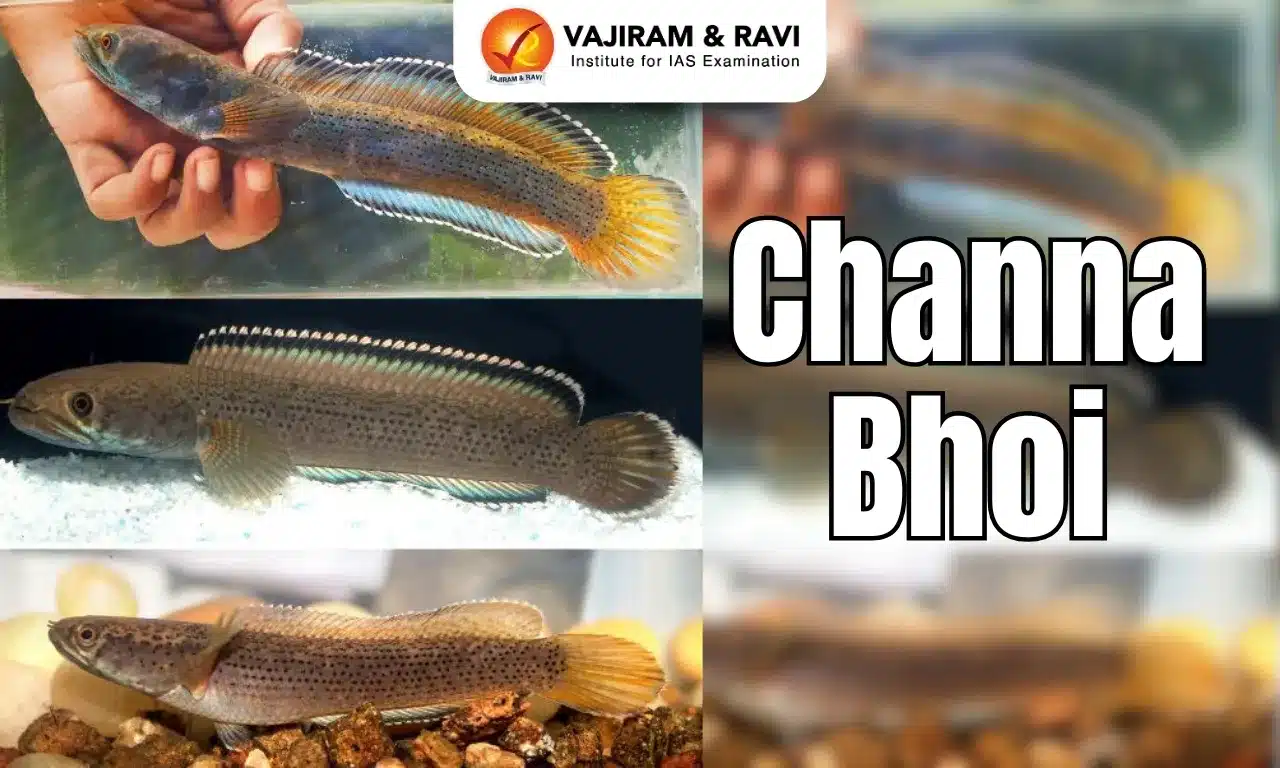
Scientists recently discovered a new species of snakehead fish named Channa bhoi from Meghalaya.

About Channa bhoi

  • It is a new species of snakehead fish.
  • It was discovered from a small mountain stream near Iewmawlong village in the Ri-Bhoi district of Meghalaya.
  • It has been named Channa bhoi, after the indigenous Bhoi people of the Khasi tribe who inhabit the Ri-Bhoi region.
  • It belongs to the “Gachua group” of snakehead fishes, a group known for its high diversity in the Eastern Himalayan region. 
  • It can be distinguished from its close relatives by a unique colour pattern.
  • It is characterised by a bluish-grey body marked with minute black spots on each scale, forming eight to nine horizontal rows of broken lines along the sides. 
  • The fish also exhibits distinctive banding patterns on its pectoral fins.
  • Phylogenetic analysis identified it as a sister species to Channa bipuli, another snakehead found in Northeast India.
  • The discovery brings the total number of Channa species recorded from India to 26.

Source: IS

Channa bhoi FAQs

Q1: What is Channa bhoi?

Ans: It is a newly discovered species of snakehead fish.

Q2: Where was Channa bhoi discovered?

Ans: It was discovered in a small mountain stream near Iewmawlong village in the Ri-Bhoi district of Meghalaya.

Q3: Channa bhoi is named after which community?

Ans: It is named after the indigenous Bhoi people of the Khasi tribe who inhabit the Ri-Bhoi region.

Q4: What is the characteristic body colour of Channa bhoi?

Ans: It has a bluish-grey body with minute black spots forming eight to nine horizontal rows.

National Digital Livestock Mission

National Digital Livestock Mission

National Digital Livestock Mission Latest News

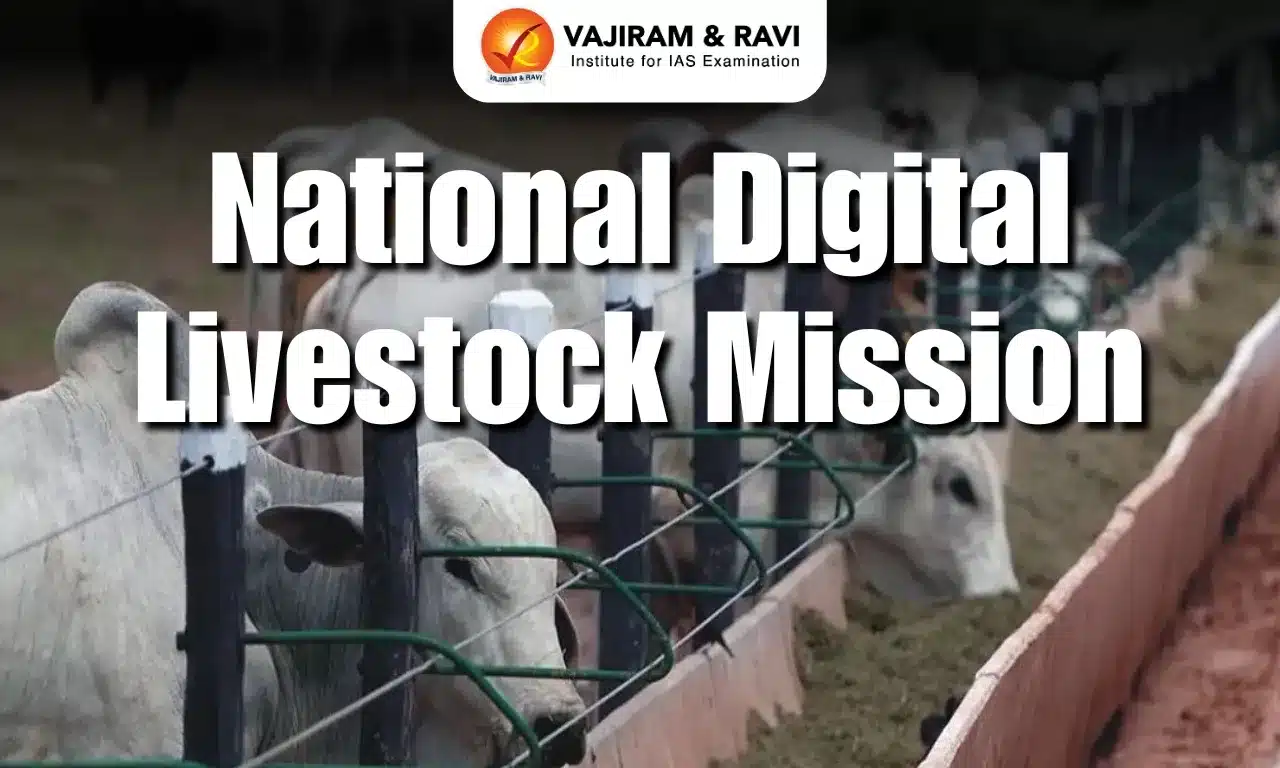
Recently, the Minister of Fisheries, Animal Husbandry and Dairying, Government of India, informed the Lok  Sabha about the National Digital Livestock Mission (NDLM).

About National Digital Livestock Mission

  • It was launched by the Department of Animal Husbandry and Dairying, Government of India for creating a digital database of livestock and related services across the country. 
  • Aims: To enhance livestock productivity and breed improvement, strengthen disease surveillance and control, enable traceability of livestock products and create a farmer-centric digital ecosystem for efficient service delivery. 
  • It has been implemented across all States in India.
  • The digital backbone of the mission is the ‘Bharat Pashudhan’ platform.
    • Bharat Pashudhan’ platform includes mobile and web-based applications used by field workers to record livestock-related activities.
    • Each animal is assigned a unique 12-digit bar-coded ear tag, which serves as its digital identity.
    • Using this system, field workers capture data on animal registration, artificial insemination and breeding, ownership changes, vaccinations, disease reporting, milk recording, ration balancing and e-prescriptions.

Objectives of the National Digital Livestock Mission

  • Improving breeding outcomes suited to India’s diverse agro-climatic conditions.
  • Enabling real-time disease monitoring and control, and establishing a robust traceability mechanism for livestock products.
  • The mission also focuses on empowering farmers by providing easy access to information on government schemes and livestock-related services.

Source: PIB

National Digital Livestock Mission FAQs

Q1: What is the primary objective of National Digital Livestock Mission (NDLM)?

Ans: To create a farmer-centric, technology-enabled ecosystem.

Q2: Which ministry is responsible for implementing NDLM?

Ans: Ministry of Fisheries, Animal Husbandry and Dairying

DHRUV64

DHRUV64

DHRUV64 Latest News

Recently, India unveiled its first fully indigenously developed microprocessor DHRUV64.

About DHRUV64

  • It is a fully indigenously developed microprocessor of India.
  • It is developed by the Centre for Development of Advanced Computing (C-DAC) under the Microprocessor Development Programme (MDP).

Key Features of DHRUV64

  • Processor Core & Speed: It is a 64-bit dual-core processor running at 1.0 GHz, giving it the ability to handle multiple tasks smoothly.
  • Execution Method: It uses superscalar execution, which allows the processor to start more than one instruction in the same moment for better speed.
  • Instruction Handling: It supports out-of-order processing, meaning it can complete instructions that are ready first, improving overall efficiency.
  • Packaging & Integration: It includes built-in communication and control functions inside an advanced FCBGA package, making the chip compact and ready for use in many systems.

Potential Application of DHRUV64

  • It is capable of supporting strategic and commercial applications.
  • DHRUV64 is suitable for sectors such as 5G infrastructure, automotive systems, consumer electronics, industrial automation and the Internet of Things (IoT).
  • It provides homegrown microprocessor technology designed for startups, academia, and industry to build, test, and scale indigenous computing products without relying on foreign processors.
  • DHRUV64 supports prototype development for new system architectures at lower cost.

Source: PIB

DHRUV64 FAQs

Q1: What is the primary application of DHRUVA64?

Ans: It can be used in strategic autonomy and critical infrastructure.

Q2: Who developed DHRUVA64?

Ans: Centre for Development of Advanced Computing (C-DAC)

Natyashastra

Natyashastra

Natyashastra Latest News

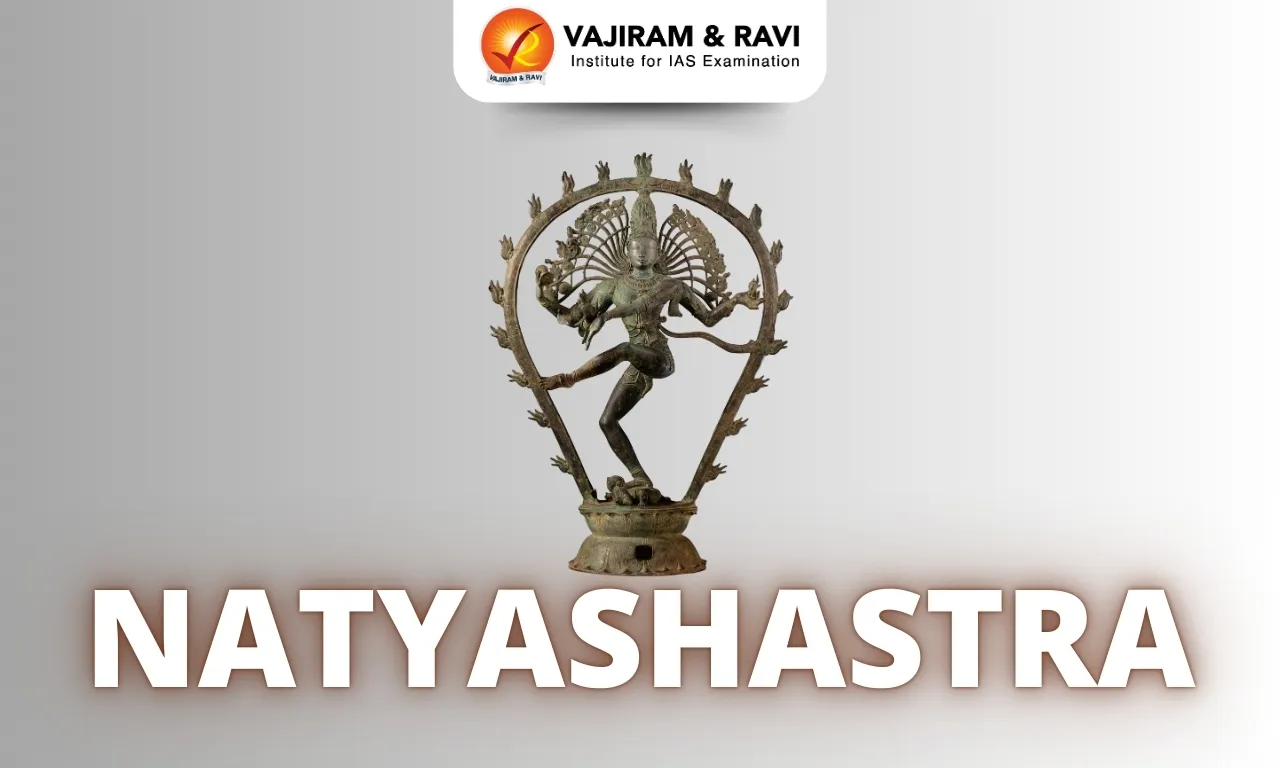
The Indira Gandhi National Centre for the Arts (IGNCA) recently organised the academic programme titled ‘Natyashastra – Synthesis of Theory and Praxis’ during the 20th Session of UNESCO’s Intergovernmental Committee for the Safeguarding of Intangible Cultural Heritage at the iconic Red Fort, Delhi.

About Natyashastra

  • It is an ancient Sanskrit treatise on performing arts.
  • The title is a combination of two Sanskrit words – Natya and Shastra. 
    • Natya refers to the technique of dance and drama, and shastra refers to science.
  • It was composed by the sage Bharata Muni.
  • It has been dated to between the second century BCE and the second century CE. 
  • It is the earliest known treatise on performative arts in South Asia. 
  • Its primary importance lies in its justification of Indian drama as a vehicle of religious enlightenment.
  • It comprises around 36,000 verses detailing drama (natya), performance (abhinaya), music (sangita), emotions (bhava), and aesthetic experience (rasa).
  • One of the text's most profound contributions is the articulation of the concept of Rasa, the essential emotional essence that lies at the heart of any great work of art. 
    • Bharata Muni identified eight primary Rasas - Shringara (love), Hasya (humor), Karuna (compassion), Raudra (anger), Veera (heroism), Bhayanaka (fear), Bibhatsa (disgust), and Adbhuta (wonder).
    • He also explained how the skilled performer, through the skillful deployment of bhava (emotional expression), could evoke these sentiments in the audience.
  • UNESCO added Natyashastra to its Memory of the World Register, recognizing its global cultural significance.

Key Facts about Indira Gandhi National Centre for the Arts (IGNCA)

  • It was established as an autonomous body by the Government of India, under the Ministry of Culture.
  • Mandate
    • Document, preserve, conserve and disseminate the Indian arts and cultural heritage.
    • Train competent professionals to work in the specialized field of culture. 
  • The IGNCA has six functional units:
    • Kalanidhi, the multi-form library; 
    • Kalakosa, devoted mainly to the study and publication of fundamental texts, predominantly in Sanskrit; 
    • Janapada Sampada, the division engaged in lifestyle studies; 
    • Kaladarsana, the executive unit which transforms researches and studies emanating from the IGNCA into visible forms through exhibitions; 
    • Cultural Informatics Lab, which applies technology tools for cultural preservation and propagation;
    • Sutradhara, the administrative section that acts as a spine supporting and coordinating all the activities.

Source: PIB

Natyashastra FAQs

Q1: What is the Natyashastra?

Ans: It is an ancient Sanskrit treatise on performing arts.

Q2: Who composed the Natyashastra?

Ans: The Natyashastra was composed by the sage Bharata Muni.

Q3: During which period is the Natyashastra believed to have been composed?

Ans: It is dated between the second century BCE and the second century CE.

Q4: Which aspects of performing arts are discussed in the Natyashastra?

Ans: It discusses drama (natya), performance (abhinaya), music (sangita), emotions (bhava), and aesthetic experience (rasa).

Q5: How many primary Rasas were identified by Bharata Muni?

Ans: He identified eight primary Rasas.

Narpuh Wildlife Sanctuary

Narpuh Wildlife Sanctuary

Narpuh Wildlife Sanctuary Latest News

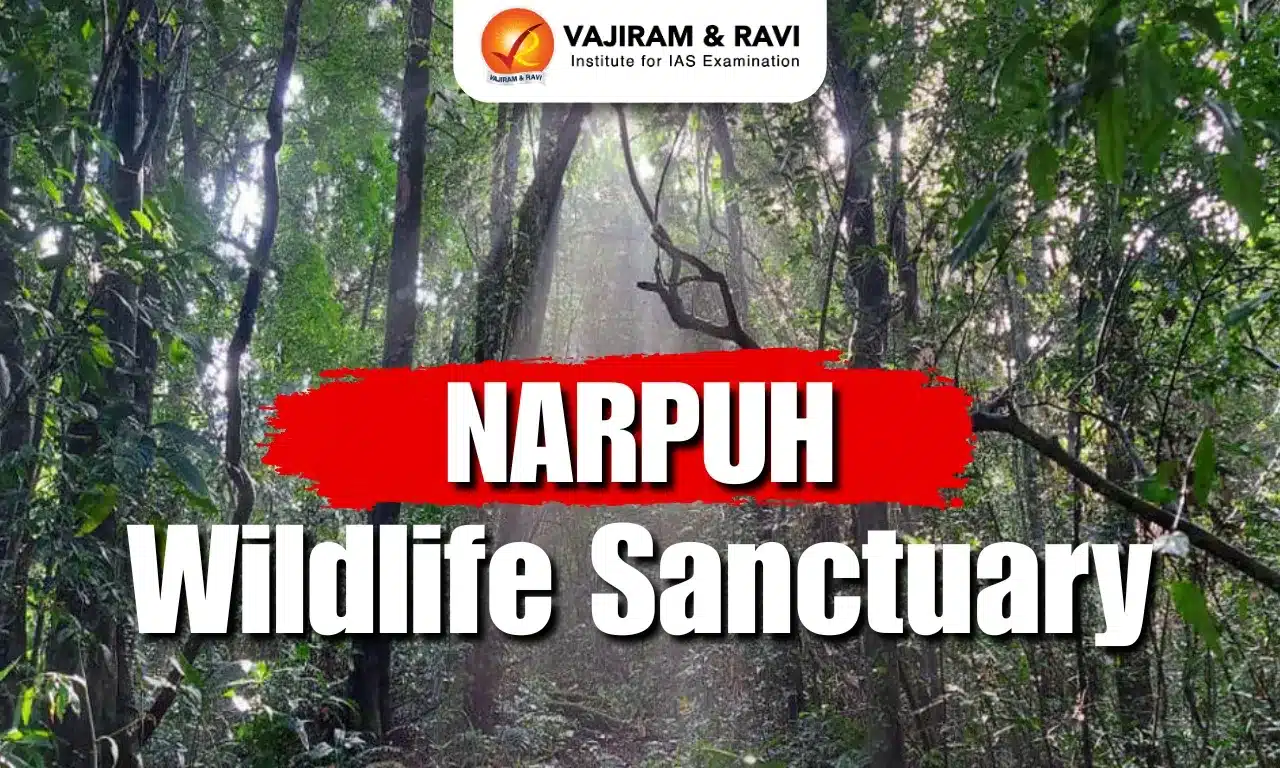
Recently, scientists warned that Narpuh Wildlife Sanctuary is undergoing conservation challenges particularly from limestone mining and cement factories.

About Narpuh Wildlife Sanctuary

  • Location: It is situated in East Jantia Hills in Jowai, Meghalaya.
  • It was declared a wildlife sanctuary in 2014 and is the only protected area in the Jaintia Hills.
  • The Sanctuary is bounded by Reserve Forests on all sides except a part in South West which shares a boundary with the State of Assam.
  • Rivers: The northern part of the sanctuary is bounded by Lukha River forming a physical barrier.
  • It is prone to extremely heavy rainfall, averaging more than 6,000 mm, from the southwest monsoon.
  • Its climate is favorable for the propagation and sustenance of a rich and wide variety of wild, endangered Flora and Fauna.
  • Vegetation: Some of the tallest evergreen and semi-evergreen forests remaining in Meghalaya are found in this region.
  • Fauna: Hoolock Gibbon, Serow, Slow Loris, Sloth Bear, Large Indian Civet, Leopard Cat, Clouded Leopard, Barking Deer etc are found here.
  • Flora : Castanopsis indica, C. tribuloides, Dysoxylum Sp., Elaeocarpus Sp., Engelhardtia spicata, Syzygium Sp. Etc.

Source: HubNetwork

Narpuh Wildlife Sanctuary FAQs

Q1: Where is Narpuh Wildlife Sanctuary located?

Ans: East Jaintia Hills District, Meghalaya

Q2: What type of forest is found in Narpuh Wildlife Sanctuary?

Ans: Evergreen forest and Semi-evergreen forest are found here.

Nitrofurans

Nitrofurans

Nitrofurans Latest News

Recently, FSSAI launched an egg safety drive after ‘nitrofurans presence’ triggers uproar.

About Nitrofurans

  • Nitrofurans are synthetic broad-spectrum antibiotics.
  • There are four parent compounds that comprise the nitrofuran class: furazolidone, furaltadone, nitrofurazone, and nitrofurantoin.
  • The defining structural component is a furan ring with a nitro group.
  • These were once widely used in poultry, pigs, shrimp and other livestock because they are cheap and highly effective.

Key Features of Nitrofurans

  • These are synthetic chemotherapeutic agents with a broad antimicrobial spectrum.
  • They are active against both gram-positive and gram-negative bacteria, including Salmonella and Giardia spp, trichomonads, amebae, and some coccidial species.
  • They are much more active in acidic environments (a pH of 5.5 is optimal for nitrofurantoin activity). 
  • They are primarily bacteriostatic, but at high doses they are also bactericidal.

Impacts on Human Health

  • Carcinogenic potential: Some nitrofurans have shown carcinogenic effects in animal studies.
  • Toxicity concerns: Potential toxicity and side effects in humans, particularly with prolonged use or high doses.

Source: New India Express

Nitrofurans FAQs

Q1: What is the primary use of Nitrofurans?

Ans: Antibacterial agents

Q2: What is the mechanism of action of Nitrofurans?

Ans: What are the applications of Nitrofurans?

Arun-3 Hydropower Project

Arun-3 Hydropower Project

Arun-3 Hydropower Project Latest News

The Chairman and Managing Director (CMD) of SJVN recently visited the 900 MW Arun-3 hydroelectric project (HEP) in Nepal to review the status of construction and assess progress across key components of the project.

About Arun-3 Hydropower Project

  • It is a 900 MW run-of-the-river hydropower project located on the Arun River in the Sankhuwasabha District of Eastern Nepal. 
    • Arun is a tributary of the Koshi River in Nepal.
  • It envisages about 70 m high concrete gravity dam and Head Race Tunnel (HRT) of 11.74 km with an underground Power House containing four generating units of 225 MW each on the Left Bank.
  • Estimated to cost more than $1.6 bn, the hydropower plant will produce 4,018.87 million units of electricity a year.
  • Once completed, it will be the biggest hydroelectric facility in Nepal.
  • SJVN Arun-III Power Development Company (SAPDC), a wholly-owned subsidiary of India’s Satluj Jal Vidyut Nigam (SJVN), is developing the project on a build-own-operate-transfer (BOOT) basis. 
    • SJVN is a joint venture between the Government of India and the Government of Himachal Pradesh.
  • SAPDC will operate the facility for a period of 25 years, excluding the construction period of five years, before transferring ownership to the Nepal government.
  • Nepal will receive 21.9% of the electricity generated at the power plant as free power during these initial 25 years of commercial operations.
  • The project will provide surplus power to India, strengthening economic linkages with Nepal. 
  • The power from the project shall be exported from Dhalkebar in Nepal to Muzaffarpur in India.

Source: WPM

Arun-3 Hydropower Project FAQs

Q1: What is the Arun-3 Hydropower Project?

Ans: It is a run-of-the-river hydropower project in eastern Nepal.

Q2: The Arun River is a tributary of which major river system?

Ans: It is a tributary of the Koshi River.

Q3: What is the total installed capacity of the Arun-3 project?

Ans: The total installed capacity is 900 MW.

Q4: Which company is developing the Arun-3 project?

Ans: SJVN Arun-III Power Development Company (SAPDC), a wholly-owned subsidiary of India’s Satluj Jal Vidyut Nigam (SJVN)

Apache AH-64E Attack Helicopter

Apache AH-64E Attack Helicopter

AH-64E Apache Attack Helicopter Latest News

The Indian Army recently received the final batch of three AH-64E Apache attack helicopters, completing its six-unit fleet at the 451 Army Aviation Squadron based in Jodhpur, Rajasthan.

About AH-64E Apache Attack Helicopter

  • It is the world’s most advanced multi-role combat helicopter.
  • It is widely used for advanced reconnaissance, precision strikes, and close air support missions globally.
  • Country of Origin: United States
  • Manufacturer: Boeing
  • It is also known as the Apache Guardian.
  • The AH-64E attack helicopter is the latest version of the Apache used by the US Army.
  • Other purchasers: India, Egypt, Greece, Indonesia, Israel, Japan, South Korea, Kuwait, Netherlands, Qatar, Saudi Arabia, Singapore, UAE, and UK.
  • Apache for Indian defence forces: The Indian Air Force has a fleet of 22 AH-64E Apache attack helicopters, and in 2020, Boeing signed an agreement with the Government of India for the acquisition of six more Apache helicopters for the Indian Army.

AH-64E Apache Attack Helicopter Features

  • Length: 17.8 m 
  • Max Speed: 300 kph 
  • It has a maximum operating weight of 10,432 kg and can climb up to more than 2,800 feet per minute.
  • It is a heavily armed, twin-engine ground-attack helicopter.
  • Armed with Hellfire missiles, 70 mm rockets, and a 30 mm chain gun, the helicopter can engage tanks, vehicles, troop concentrations, communications and logistics centres, etc. 
  • It can also fire short-range air-to-air missiles like the Stinger.
  • The AH-64E includes a new integrated infrared laser that allows for easier target designation and enhanced infrared imagery that blends infrared and night vision capabilities.
  • It can track up to 128 targets per minute and prioritise threat levels.

Source: TH

AH-64E Apache Attack Helicopter FAQs

Q1: What is the AH-64E Apache?

Ans: It is the world’s most advanced multi-role combat attack helicopter.

Q2: Which country developed the AH-64E Apache?

Ans: The United States developed the AH-64E Apache.

Q3: Which company manufactures the AH-64E Apache attack helicopter?

Ans: It is manufactured by Boeing.

Q4: How many AH-64E Apache helicopters are currently operated by the Indian Air Force?

Ans: The Indian Air Force operates 22 AH-64E Apache helicopters.

Q5: What are the primary weapons carried by the AH-64E Apache?

Ans: It carries Hellfire missiles, 70 mm rockets, a 30 mm chain gun, and Stinger air-to-air missiles.

Sabka Bima Sabki Raksha Bill 2025 – Strengthening Insurance Regulation

Insurance Regulation

Insurance Regulation Latest News

  • The Union government has introduced the Sabka Bima Sabki Raksha (Amendment of Insurance Laws) Bill, 2025, in the Lok Sabha.

Background: India’s Insurance Sector

  • India’s insurance sector plays a critical role in financial security, risk mitigation, and long-term savings. 
  • Despite steady growth in insurance penetration, the sector has faced persistent challenges such as mis-selling of policies, opaque commission structures, weak enforcement against intermediaries, and delays in grievance redressal.
  • Insurance distribution has expanded rapidly through agents, brokers, banks, NBFCs, fintech platforms, and web aggregators. 
  • However, regulatory capacity has not always kept pace with this expansion, creating gaps in supervision. 
  • The new Bill seeks to address these gaps by strengthening IRDAI’s legal authority and enforcement mechanisms.

Overview of the Sabka Bima Sabki Raksha Bill, 2025

  • The Bill proposes amendments to existing insurance laws to give IRDAI stronger supervisory, investigative, and enforcement powers
  • It marks a shift from a largely compliance-based regulatory model to a more proactive enforcement-driven framework.
  • The proposed changes apply not only to insurance companies but also to a wide range of insurance intermediaries, including agents, brokers, corporate agents (such as banks and NBFCs), web aggregators, third-party administrators (TPAs), surveyors, and insurance marketing firms. 

Expanded Search and Seizure Powers

  • A key feature of the Bill is granting the IRDAI Chairperson the authority to order searches, seizures, and inspections
  • These powers can be exercised when there is reason to believe that regulated entities are:
    • Withholding or concealing information,
    • Failing to produce the required documents, or
    • Attempting to tamper with or destroy records.
  • The Chairperson may authorise senior officers to enter premises, inspect documents, seize records, and even break open locks if keys are unavailable. 
  • This brings IRDAI’s powers closer to those already exercised by regulators such as SEBI. 

Stronger Enforcement and Penalty Framework

  • The Bill also empowers IRDAI to disgorge wrongful gains made by insurers or intermediaries through illegal practices such as excess commissions, rebates, or mis-selling.
  • Further, IRDAI will have enhanced authority to issue binding directions to insurers in the public interest. 
  • These directions may be aimed at protecting policyholders, preventing mismanagement, or ensuring sound corporate governance. 
  • While insurers will be given an opportunity to be heard, compliance with such directions will be mandatory. 

Regulation of Commissions and Intermediaries

  • Another significant provision relates to tighter control over commissions and remuneration paid to agents and intermediaries. IRDAI will be empowered to:
    • Prescribe commission limits,
    • Mandate disclosure norms, and
    • Regulate payment structures.
  • The objective is to curb mis-selling driven by high commissions and ensure that policyholder interests remain central to insurance distribution. 
  • This is particularly important in the context of growing digital and fintech-led insurance platforms. 

Significance for Policyholders and Governance

  • For policyholders, the Bill promises stronger safeguards against fraud, mis-selling, and unfair practices. 
  • Enhanced enforcement powers are expected to improve trust in the insurance system and strengthen grievance redressal mechanisms.
  • From a governance perspective, the Bill reinforces IRDAI’s role as a modern financial regulator capable of proactive supervision rather than post-facto action. 
  • It aligns insurance regulation with global best practices in financial sector oversight.

Challenges and Way Forward

  • While the Bill strengthens regulation, concerns may arise regarding excessive concentration of powers and the need for safeguards against arbitrary use. 
  • Effective implementation will depend on transparency, due process, and institutional capacity within IRDAI.
  • Going forward, regulatory reforms must be complemented by consumer awareness, digital literacy, and faster dispute resolution mechanisms to ensure inclusive insurance growth.

Source: IE | Fortune

Insurance Regulation FAQs

Q1: What is the Sabka Bima Sabki Raksha Bill, 2025?

Ans: It is an amendment Bill aimed at strengthening IRDAI’s regulatory and enforcement powers in the insurance sector.

Q2: Which authority gains search and seizure powers under the Bill?

Ans: The Insurance Regulatory and Development Authority of India (IRDAI).

Q3: Who are covered as insurance intermediaries under the Bill?

Ans: Agents, brokers, banks, NBFCs, fintech platforms, web aggregators, TPAs, surveyors, and insurance marketing firms.

Q4: Why does the Bill regulate commissions more strictly?

Ans: To curb mis-selling and protect policyholder interests.

Q5: How does the Bill benefit insurance consumers?

Ans: It strengthens oversight, reduces unfair practices, and enhances consumer protection.

Revising India’s GDP Framework – Phasing Out ‘Discrepancies’ for Greater Statistical Credibility

Revising India’s GDP Framework

Revising India’s GDP Framework Latest News

  • As part of the ongoing revision of India’s GDP data series, the Ministry of Statistics and Programme Implementation (MoSPI) has proposed eliminating the contentious ‘discrepancies’ component from GDP estimates. 
  • This reform is outlined in MoSPI’s discussion paper on methodological improvements and coincides with the new GDP base year of 2022–23, scheduled for launch on 27 February 2026. 
  • The GDP back series under the revised base year is expected by February 2027.

‘Discrepancies’ in GDP

  • GDP compilation methods: Production (value-added/income) approach; expenditure approach.
  • Reason for discrepancies:
    • Due to differences in data sources, coverage, valuation methods, and time lags, GDP estimates from these two approaches often do not match.
    • This difference is recorded as ‘discrepancies’ under the expenditure-side GDP, which is considered relatively less accurate.
  • Interpretation:
    • Positive discrepancy: Production-side GDP is higher than Expenditure-side GDP
    • Negative discrepancy: Expenditure-side GDP is higher than Production-side GDP

Why are Discrepancies Problematic

  • They obscure the true drivers of GDP growth, complicating macroeconomic analysis. Large discrepancies can lead to significant future revisions in GDP growth rates.
  • Example (July–September quarter):
    • Real GDP growth: 8.2%
    • Discrepancies: ₹1.63 lakh crore (3.3% of GDP) in real terms
    • In nominal terms: (–)₹2.46 lakh crore ([–]2.9% of GDP)
  • The post-pandemic period has seen volatile swings, e.g., (–)3% of GDP (Jan–Mar 2023), +3.3% of GDP (Apr–Jun 2023).

Proposed Reform - Removing Discrepancies

  • MoSPI plans to integrate Supply and Use Tables (SUTs) with annual national accounts. Use SUTs to ensure that total supply is equal to total use for every good and service.
  • It aims to limit discrepancies in early GDP estimates, eliminate them entirely in final estimates once full data becomes available.
  • SUTs:
    • Map domestic production and imports against intermediate consumption, final consumption, capital formation, and exports.
    • Follow System of National Accounts (SNA) accounting constraints.

Expert Opinion

  • Economists view the move positively:
    • Eliminating discrepancies will improve transparency and interpretability of GDP data.
    • Persistent or rising discrepancies in past revisions have undermined confidence in growth estimates.
  • However, concerns remain about data quality, especially reliance on outdated survey data (over a decade old).

Challenges and Way Forward

  • Inherent complexity: Of GDP estimation in a large, informal, and diverse economy. Improve institutional capacity for national accounts compilation.
  • Outdated surveys and data gaps: Particularly in services and informal sectors. Regularly update surveys and base-year datasets.
  • Time lags and uneven quality of administrative data: Strengthen administrative data systems and real-time data collection.
  • Transparency concerns
    • Risk that eliminating discrepancies may involve judgement-based adjustments, raising transparency concerns. 
    • Ensure methodological transparency while adjusting data to remove discrepancies. Align closely with international best practices under SNA.

Conclusion

  • The proposed removal of ‘discrepancies’ from India’s GDP estimates marks a significant methodological reform aimed at enhancing statistical credibility, consistency, and policy relevance. 
  • While integration of Supply and Use Tables can improve accuracy, the success of this reform ultimately depends on robust, updated data sources and transparent statistical practices. 
  • For policymakers, investors, and analysts, a cleaner GDP framework will enable better interpretation of India’s growth dynamics.

Source: IE

Revising India’s GDP Framework FAQs

Q1: What are ‘discrepancies’ in India’s GDP estimates and why do they arise?

Ans: Discrepancies arise due to differences in data sources, coverage, valuation and time lags between the production and expenditure approaches to GDP estimation.

Q2: Why has MoSPI proposed the elimination of ‘discrepancies’ from GDP calculations?

Ans: Because large and volatile discrepancies distort interpretation of growth drivers and lead to significant revisions in GDP estimates.

Q3: How will the integration of Supply and Use Tables (SUTs) help improve GDP estimation in India?

Ans: SUTs ensure balance between total supply and total use of goods and services, thereby limiting and eventually eliminating discrepancies in GDP estimates.

Q4: What risks do large GDP discrepancies pose for economic policymaking?

Ans: Large discrepancies undermine data credibility, obscure sectoral growth trends, and can result in sharp future revisions affecting policy decisions.

Q5: What structural challenges in India’s GDP estimation remain?

Ans: Dependence on outdated survey data, data gaps in the informal sector, etc.

MGNREGS and Farm Labour Availability: What the Data Really Shows

MGNREGS and Farm Labour

MGNREGS and Farm Labour Latest News

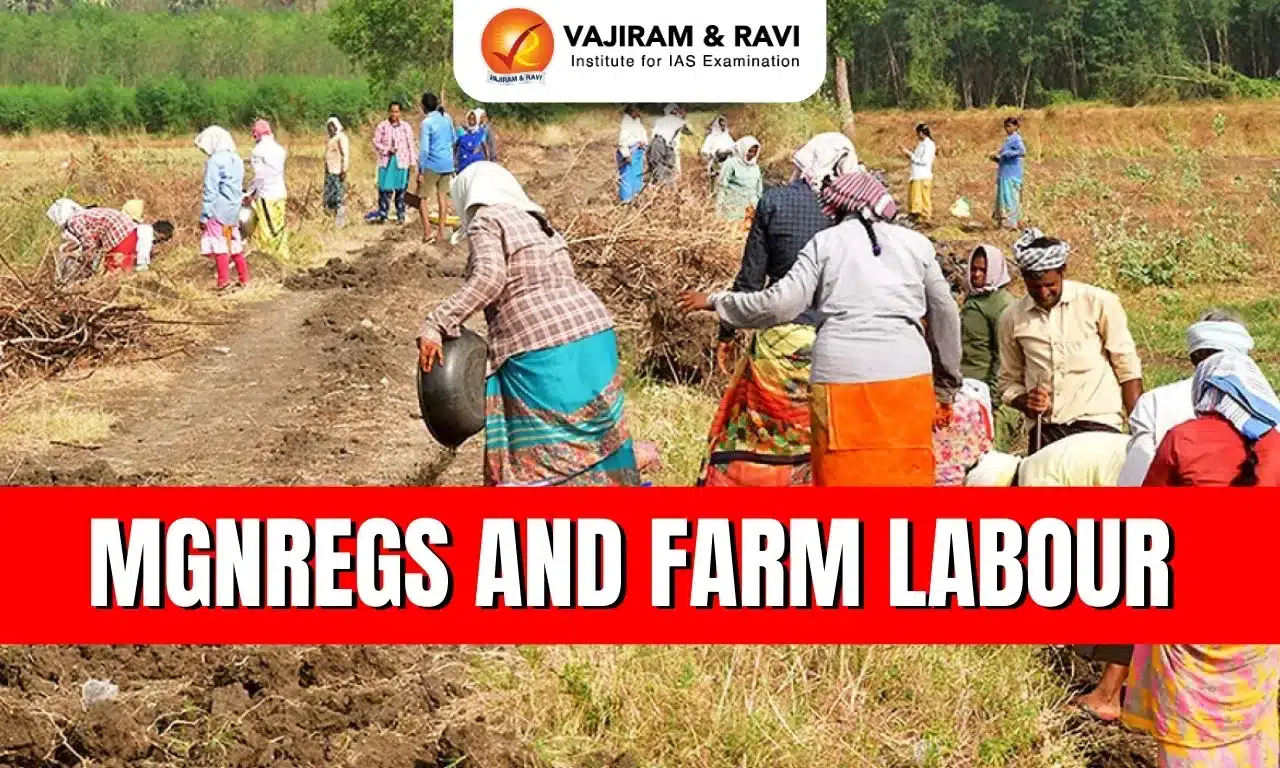
  • The Viksit Bharat-Guarantee for Rozgar and Ajeevika Mission Gramin (VB-G RAM G) Bill proposes a 60-day pause on rural employment works during peak sowing and harvesting seasons. 
  • Notified in advance by States, the measure aims to ensure adequate farm labour availability. 
  • The Bill seeks to replace MGNREGA, which has long been criticised for contributing to agricultural labour shortages, a concern earlier raised even by former Agriculture Ministers.

Rural Wages Under MGNREGA: What the Data Show

  • MGNREGA is often credited with tightening rural labour markets and strengthening workers’ bargaining power. 
  • However, this has not translated into a strong or sustained rise in wages.
  • Labour Bureau data covering 25 occupations across 20 States show that all-India rural wage growth for male workers ranged between 3.6% and 6.4% annually over the past decade.
  • In four of the ten years (2015-16, 2019-20, 2021-22 and 2022-23), nominal rural wage growth lagged behind consumer price inflation, implying a fall in real wages. 
    • Real wage growth exceeded 1% only in 2017-18.
  • Agricultural wages grew faster than overall rural wages in eight out of ten years. Only in 2015-16 and 2019-20 did non-farm rural wages grow faster.

Limited Gains Despite MGNREGA

  • Even agricultural wages merely kept pace with inflation, showing no significant surge over the past decade. 
  • Overall, the data suggest that despite MGNREGA, rural wage growth under the current government has remained modest and often inflation-adjusted stagnant.

Why Rural Wage Growth Has Remained Modest

  • A key factor behind tepid rural wage growth is the sharp rise in women’s participation in the rural workforce. 
  • According to the Periodic Labour Force Survey, rural female LFPR rose from 24.6% in 2017-18 to 47.6% in 2023-24 — almost doubling in seven years, significantly expanding labour supply.
    • Labour Force Participation Rate (LFPR) measures the share of people aged 15+ who are working or seeking work.

Role of Government Welfare Schemes

  • The Economic Survey 2023-24 attributes this rise to schemes like Ujjwala, Har Ghar Jal, Saubhagya and Swachh Bharat, which reduced women’s unpaid household burdens by improving access to LPG, water, electricity and sanitation.

Expansion of Rural Labour Supply

  • By freeing women’s time for paid work, these schemes increased the size of the rural workforce. Economically, this “rightward shift” in labour supply exerted downward pressure on wages.

Questioning the Farm Labour Shortage Narrative

  • The data weakens the claim that MGNREGA created a widespread labour shortage. Increased female participation, especially in nearby farm work, may have offset workers drawn into MGNREGA.
  • While farmers face seasonal labour shortages, directly blaming MGNREGA — and justifying work curbs during peak seasons — requires stronger, ground-level evidence rather than broad assumptions.

Alternative Causes of Farm Shortage

  • Low Farm Wages: Agricultural wages are often lower than both MGNREGS wages and non-farm wages, making farm work less attractive.
  • Poor Working Conditions: Farm labourers frequently suffer from health issues like musculoskeletal disorders due to harsh working conditions. MGNREGS work is often perceived as less toilsome with less supervision.
  • Out-migration: A significant cause of labour shortage is the long-standing trend of rural out-migration to urban areas for better-paying jobs and opportunities, a trend that predates the implementation of NREGS.
  • Increased Bargaining Power: MGNREGS has provided a baseline of employment security, increasing the bargaining power of rural workers for better wages in both the farm and non-farm sectors, which some farmers interpret as a "shortage".

Conclusion

  • Policy discussions have explored improved alignment with farm cycles, including temporary work suspensions during peak seasons or permitting MGNREGS activities on private farms for specific agricultural operations.
  • While some farmers attribute labour shortages to MGNREGS, broader evidence points to deeper structural issues in agriculture and the availability of better work options for rural labourers.

Source: IE

MGNREGS and Farm Labour FAQs

Q1: Does MGNREGS significantly increase rural wages?

Ans: Data show rural wage growth remained modest, often below inflation, with real wages declining in several years despite MGNREGS, indicating no major wage surge.

Q2: Why have agricultural wages not risen sharply under MGNREGS?

Ans: Agricultural wages largely tracked inflation, as rising labour supply—especially from increased female participation—offset any tightening effect caused by MGNREGS.

Q3: How has women’s labour force participation affected rural wages?

Ans: Rural female LFPR nearly doubled since 2017–18, expanding labour supply and exerting downward pressure on wages, limiting real wage growth.

Q4: Is MGNREGS the main reason for farm labour shortages?

Ans: Evidence suggests otherwise; structural issues like low farm wages, migration, and working conditions play a larger role than MGNREGS.

Q5: What policy solutions are being discussed?

Ans: Options include aligning MGNREGS work with lean seasons, temporary peak-season pauses, or permitting limited work on private farms for agriculture-related activities.

Post-Maoist India and the Next Phase of Governance in Scheduled Areas

Post-Maoist India

Post-Maoist India Latest News

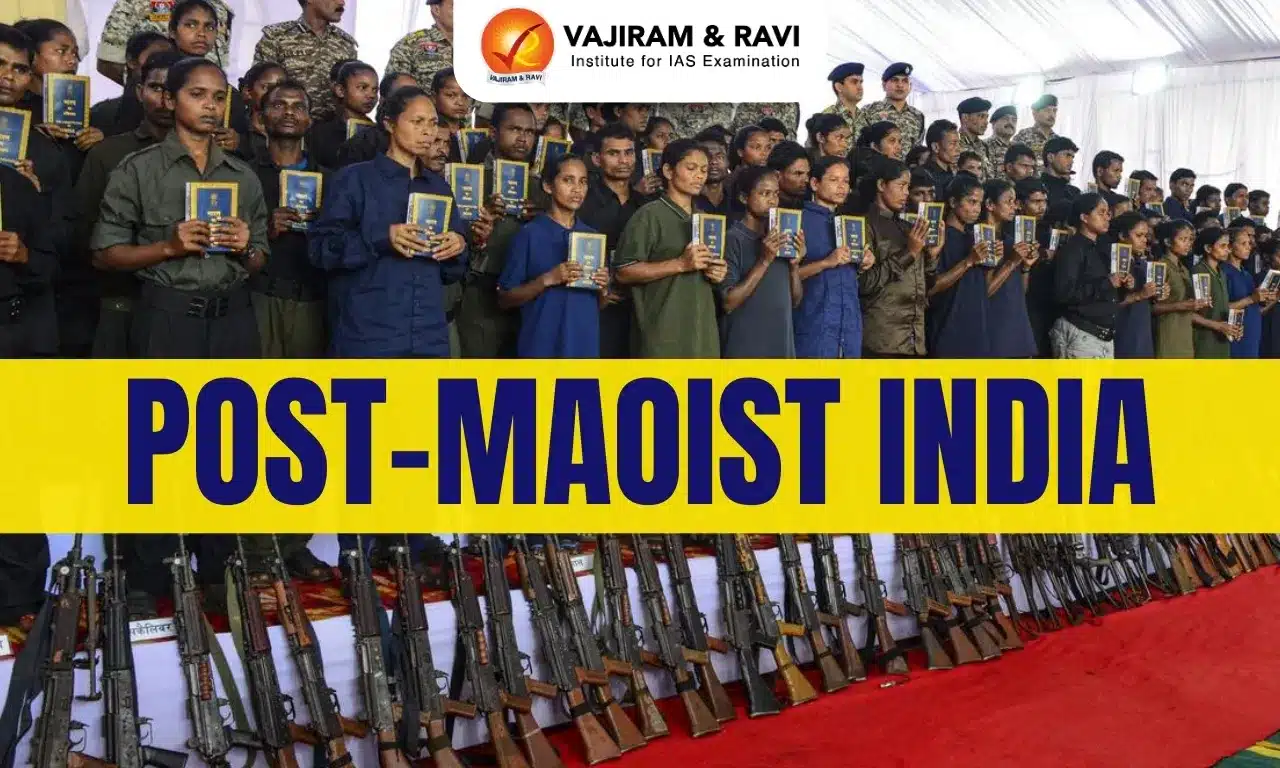
  • Discussions on the rise of the Maoist movement in the 1990s and early 2000s have largely focused on underdevelopment and structural socio-economic deprivation in India’s Red Corridor. 
  • Most official and scholarly analyses traced the insurgency to poverty and marginalisation, prompting the State to adopt a two-pronged strategy combining security operations with development initiatives. 
  • While governance and justice delivery have occasionally featured in policy debates, there has been limited effort to systematically examine how governance failures, weak institutions, and poor grievance redressal mechanisms deepened and sustained cycles of Maoist insurgency.

Governance Failures in Scheduled Areas

  • The contemporary Maoist insurgency is largely concentrated in Fifth Schedule areas of central and eastern India, regions with significant tribal populations. 
  • These areas were envisaged by the Constitution as a special social contract for Adivasis, recognising their distinct needs and vulnerabilities.

Promise of the Fifth Schedule

  • The Fifth Schedule created a dedicated governance framework for tribal regions.
  • This included Tribal Advisory Councils with substantial Adivasi representation, financial support through the Tribal Sub-Plan, and discretionary powers for Governors to prevent land alienation and safeguard tribal interests.

Reality of State Neglect and Exploitation

  • Despite these safeguards, tribal communities experienced persistent discrimination, exploitation, and marginalisation. 
  • The Planning Commission’s Expert Committee (2008) highlighted how resource-rich regions were reduced to extreme poverty due to weak governance and state neglect. 
  • Social and economic indicators for tribal populations remained far below national averages, with multidimensional poverty levels worse than Sub-Saharan Africa.

Land Alienation and Dispossession

  • The gravest challenge for Adivasis has been the loss of land and forest rights. 
  • Despite constitutional protections, millions were dispossessed, particularly after economic liberalisation. 
  • Studies show that tribal land alienation has been at its highest in the post-liberalisation period.

Structural Governance Deficit

  • Successive governments failed to build governance structures suited to tribal realities. 
  • Colonial-era administrative systems, complex legal processes, and inaccessible justice mechanisms were retained in Scheduled Areas, leaving low-literacy tribal communities unable to effectively assert their rights or benefit from constitutional protections.

Alienation Through Administrative Exclusion

  • A key factor deepening Adivasi alienation in Fifth Schedule areas has been the near-total absence of local representation in administrative structures. 
  • Officials implementing tribal safeguards were overwhelmingly outsiders, often carrying social bias and limited understanding of local realities.

Institutional Failure to Protect Tribal Interests

  • Constitutional and statutory bodies such as the Ministry of Tribal Welfare, the National Commission for Scheduled Tribes, and State Governors—formally entrusted with safeguarding tribal rights—largely failed in practice. 
  • The Mungekar Committee (2009) observed that these institutions did little to curb exploitation, while Governors rarely exercised their discretionary powers in Scheduled Areas. 
  • Weak service delivery in health, education, policing, revenue administration, and the judiciary compounded these failures.

PESA: Promise and Persistent Violations

  • The Panchayat Extension to Scheduled Areas (PESA) Act, 1996, was a notable exception, aiming to promote tribal self-governance and empower Gram Sabhas over land, resources, and livelihoods. 
  • While PESA improved political representation at the grassroots, its core provisions—especially those related to land acquisition—were routinely violated, as highlighted by the Planning Commission’s Expert Committee (2008).

Governance Deficits and Maoist Mobilisation

  • Chronic governance failures, weak grievance redressal, and low political priority accorded to the Fifth Schedule created fertile ground for Maoist mobilisation. 
  • Adivasi frustrations and distrust in state institutions drove many to support Maoist ideology, which promised justice, land rights, and dignity under the slogan Jal, Jungle, Zameen.

Parallel Governance Structures

  • In regions like Dandakaranya, persistent underdevelopment enabled Maoists to establish parallel administrations.
  • They started offering basic services such as healthcare, schooling, food distribution, and swift—though extrajudicial—justice. 
  • These “Janatana Sarkars” filled governance vacuums left by the state, further entrenching Maoist influence.

Reimagining Governance in Post-Maoist Regions

  • Recent years have seen improvements in welfare delivery and core infrastructure—roads, electricity, telecom—across Maoist-affected Fifth Schedule areas, aided by digital platforms and direct benefit transfers. 
    • However, critical institutions—justice, health, education, policing, and revenue—remain weak and understaffed, limiting effective governance.

Structural Bottlenecks and Under-Representation

  • A core paradox persists: local Adivasi under-representation in administration. 
  • Despite quotas at local levels, real power and finances remain with a largely non-tribal permanent bureaucracy, rendering representation largely symbolic and undermining trust.

Erosion of Rights-Based Frameworks

  • Key protective laws face dilution:
    • Forest Rights Act (FRA): Central to Adivasi and forest-dweller livelihoods, its implementation has been weakened by violations, amendments, and judicial interventions.
    • CAF Act, 2016: Expanded compensatory afforestation has diluted safeguards and harmed forest-based livelihoods.
    • PESA: Despite its promise of self-governance, States—especially mineral-rich ones like Chhattisgarh—have undermined Gram Sabha consent powers, particularly for mining and land acquisition.

Political Push Needed

  • Revitalising FRA and PESA requires strong political will from the Centre and States to restore original mandates and enforce safeguards against land alienation and resource extraction without consent.

Toward a New Governance Charter

  • Post-Maoist governance must reverse political and administrative under-representation, empower local institutions with real autonomy and finances, and rebuild trust. 
  • Adapting elements from Sixth Schedule models—Autonomous District/Zonal Councils—could offer a viable path.

Source: TH

Post-Maoist India FAQs

Q1: Why is governance central to understanding Maoist insurgency?

Ans: Beyond poverty, weak institutions, poor justice delivery, and administrative exclusion in Fifth Schedule areas deepened alienation and sustained Maoist mobilisation.

Q2: What was the original promise of the Fifth Schedule?

Ans: It aimed to protect tribal rights through special governance, land safeguards, Tribal Advisory Councils, and Governor oversight, but failed in implementation.

Q3: How did land alienation affect Adivasi communities?

Ans: Despite constitutional protections, large-scale land dispossession—especially post-liberalisation—undermined livelihoods and intensified distrust in state institutions.

Q4: What role did PESA play, and why did it fall short?

Ans: PESA promised tribal self-governance via Gram Sabhas, but routine violations—especially in land acquisition—eroded its effectiveness.

Q5: What reforms are needed in post-Maoist regions?

Ans: India needs a new governance charter focusing on local representation, stronger FRA and PESA enforcement, and possibly adapting Sixth Schedule-style autonomy models.


Param Vir Chakra

Param Vir Chakra

Param Vir Chakra Latest News

Portraits of all 21 Param Vir Chakra awardees are now on display at Rashtrapati Bhavan, replacing the previously displayed portraits of 96 British Aide-de-Camps (ADCs).

About Param Vir Chakra

  • It is India’s highest military decoration, awarded for displaying the most exceptional acts of valour, courage, and self-sacrifice during war.
  • It was introduced on January 26, 1950, on the first Republic Day with retrospective effect from 15 August 1947.
  • Literally, Param Vir Chakra means ‘Wheel (or Cross) of the Ultimate Brave’.
  • It can be awarded to officers, men, and women of all ranks of the Army, the Navy, and the Air Force; of any of the Reserve Forces, of the Territorial Army Militia; and of any other lawfully constituted Armed Forces. 
  • It can be, and often has been, awarded posthumously. 
  • It is similar to the British Victoria Cross, the US Medal of Honor, the French Legion of Honor, or the Russian Cross of St. George.
  • Design: 
    • The medal was designed by Mrs. Savitri Khanolkar. 
    • The medal is cast in bronze and circular in shape.
    • In the centre, on a raised circle, is the state emblem, surrounded by four replicas of Indra’s Vajra, flanked by the sword of Shivaji.  
    • On its reverse, it shall have embossed Param Vir Chakra both in Hindi and English with two lotus flowers between Hindi and English.  The fitting will be swivel mounting.
    • The decoration is suspended from a straight swiveling suspension bar and is held by a 32 mm purple ribbon.
  • First winner: Major Somanth Sharma, from the Kumaon regiment.
  • Till now, only 21 people had been given the Param Vir Chakra award, of which 14 are posthumous.

What are Gallantry Awards?

  • They have been instituted by the Government of India to honour the acts of bravery and sacrifice of the officers/personnel of the Armed Forces, other lawfully constituted forces, and civilians.
  • They are announced twice in a year – first on the occasion of the Republic Day and then on the occasion of the Independence Day.
  • All the gallantry awards may be awarded posthumously.
  • India’s Gallantry Awards in the Order of Precedence:
    • Param Vir Chakra
    • Ashoka Chakra
    • Mahavir Chakra
    • Kirti Chakra
    • Vir Chakra
    • Shaurya Chakra.
  • The President awards the gallantry awards to the awardees or their next of kin at the Defence Investiture Ceremony held every year at the Rashtrapati Bhawan.
  • However, the Param Vir Chakra and the Ashoka Chakra are conferred by the President to the awardees on the occasion of the Republic Day Parade at the Rajpath.

Source: TH

Param Vir Chakra FAQs

Q1: What is the Param Vir Chakra?

Ans: It is India’s highest military decoration for exceptional acts of valour, courage, and self-sacrifice during war.

Q2: When was the Param Vir Chakra instituted?

Ans: t was introduced on January 26, 1950, with retrospective effect from 15 August 1947.

Q3: What does the term ‘Param Vir Chakra’ literally mean?

Ans: It means “Wheel of the Ultimate Brave.”

Q4: Can the Param Vir Chakra be awarded posthumously?

Ans: Yes, it can be and has often been awarded posthumously.

Q5: Who designed the Param Vir Chakra medal?

Ans: The medal was designed by Mrs. Savitri Khanolkar.

Enquire Now